Tag Archives: Correspondence

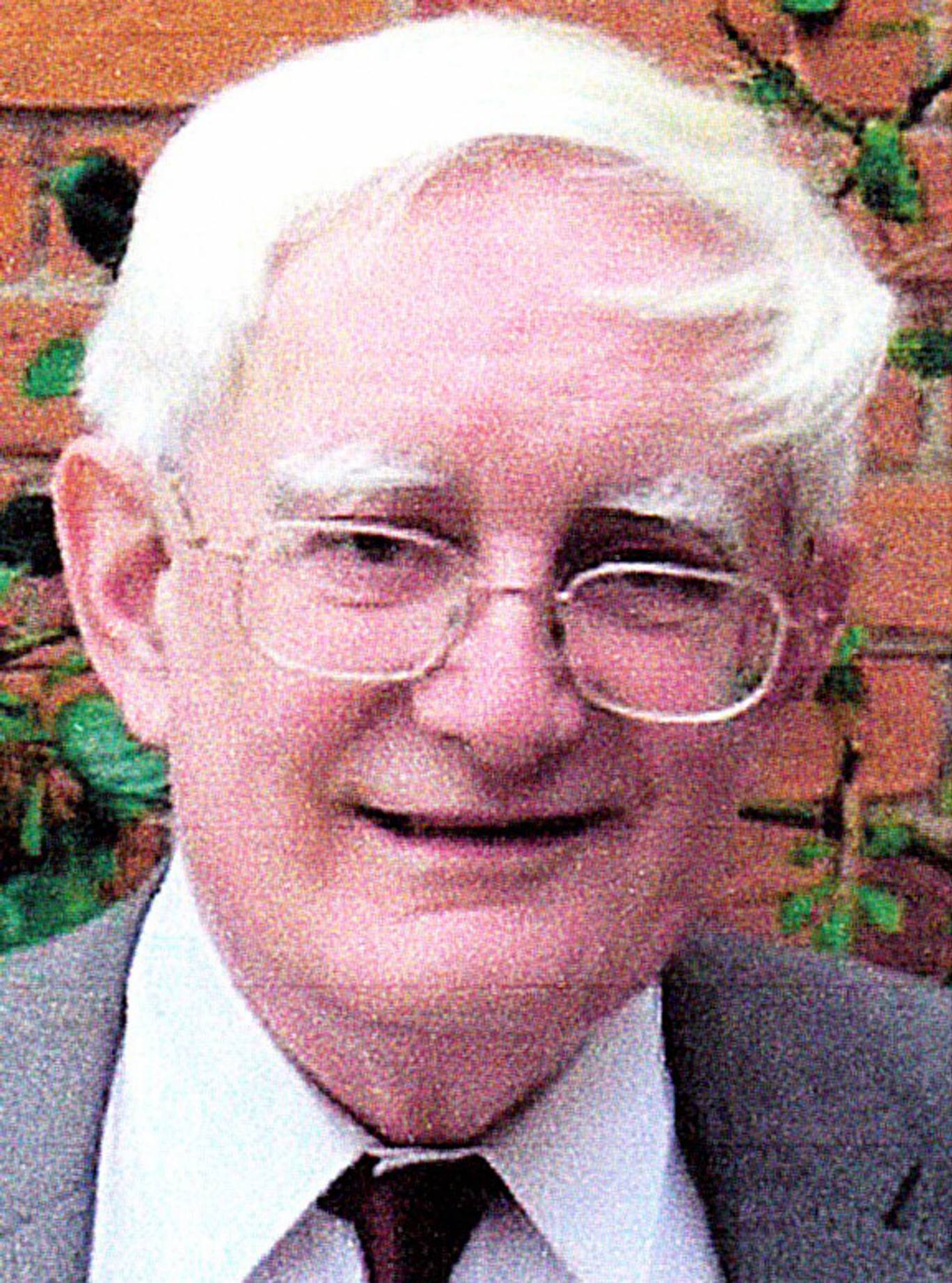
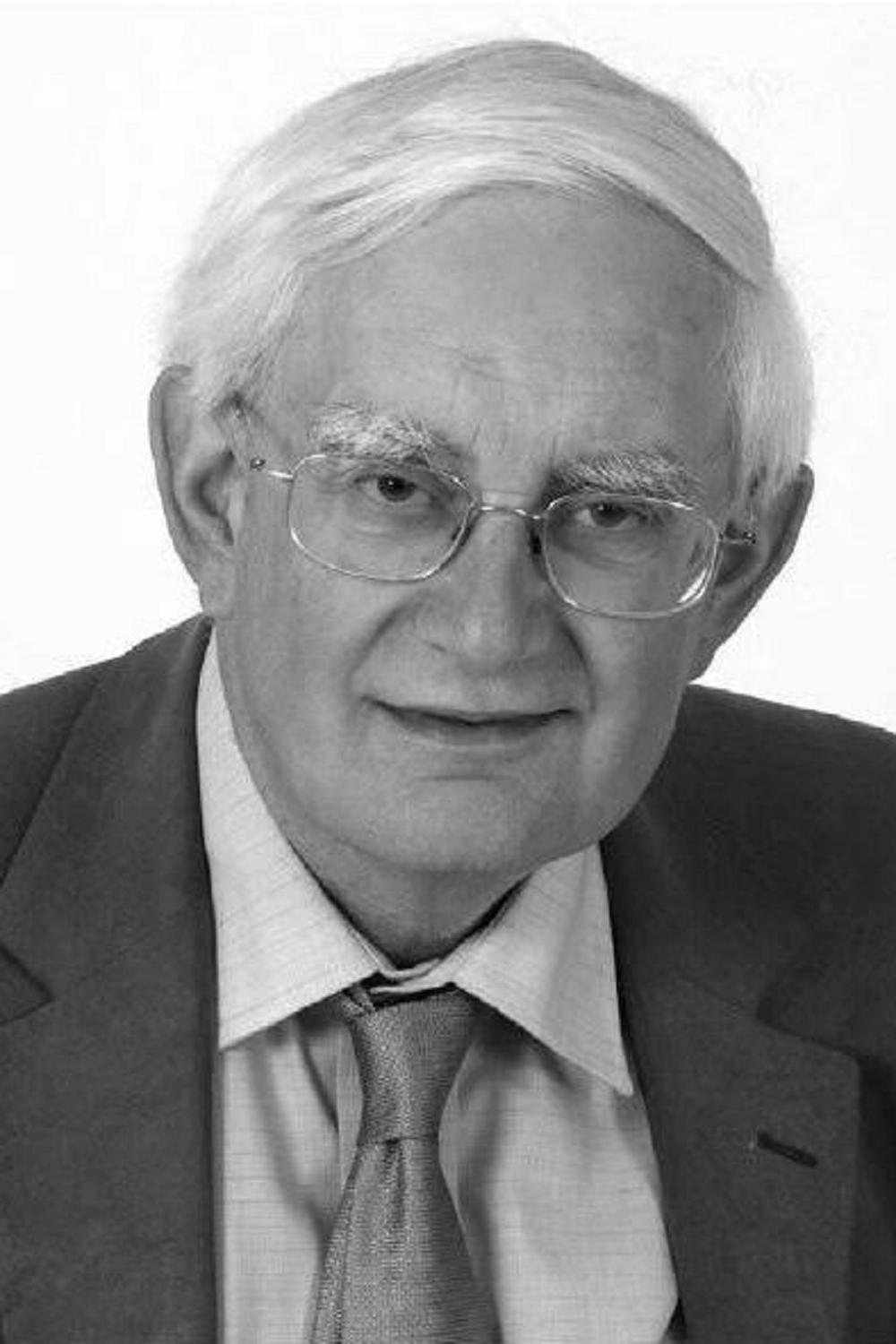
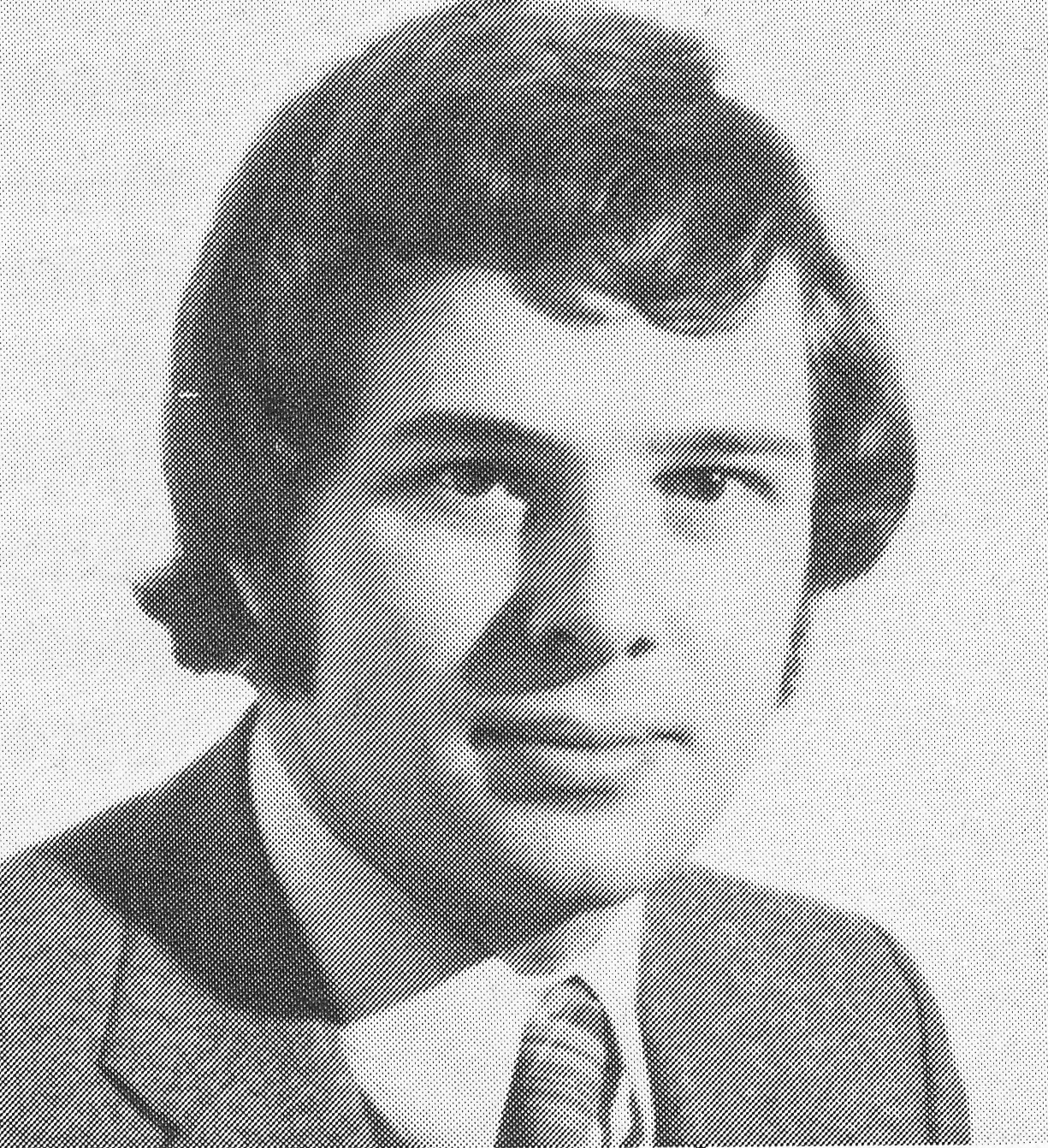
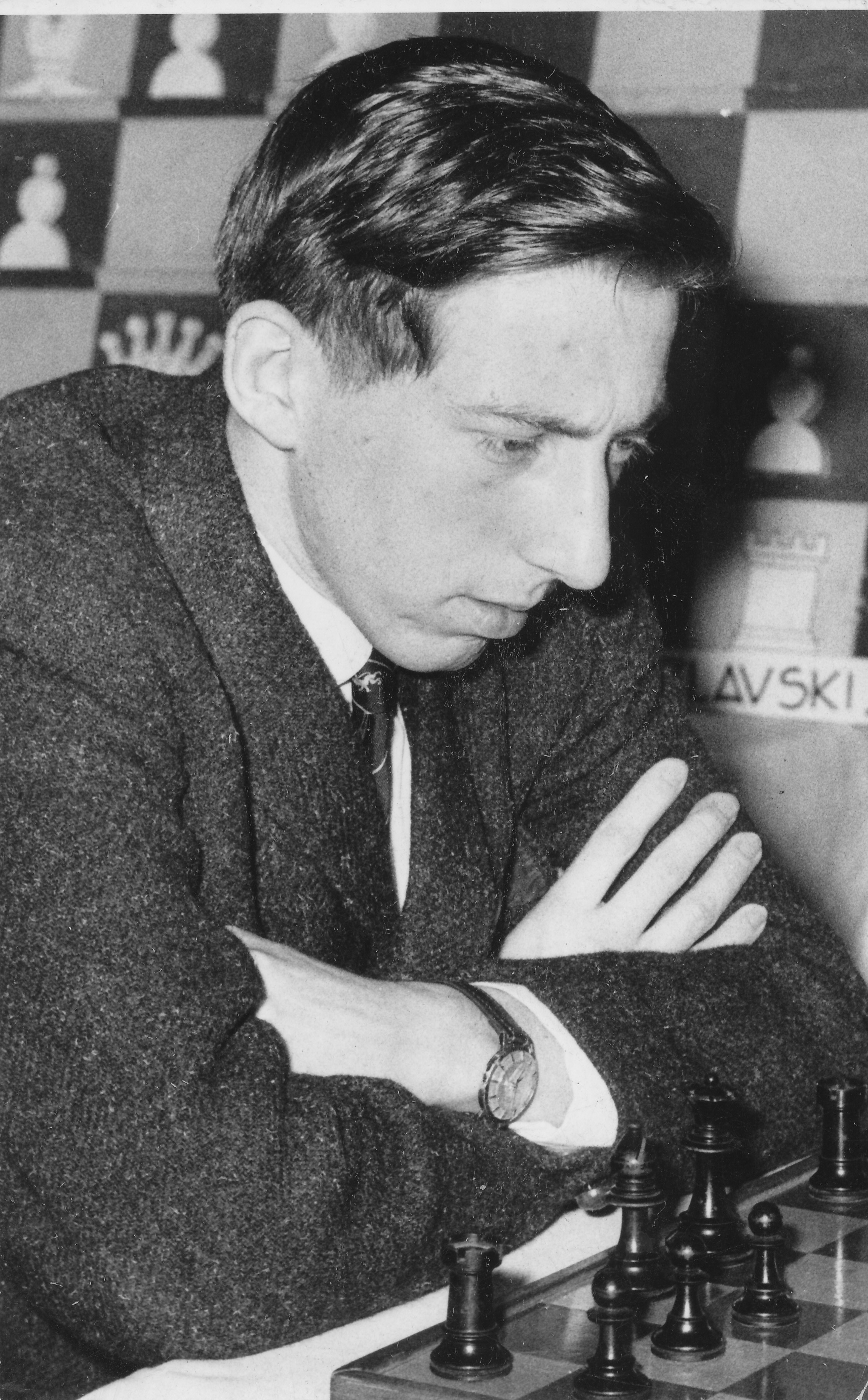
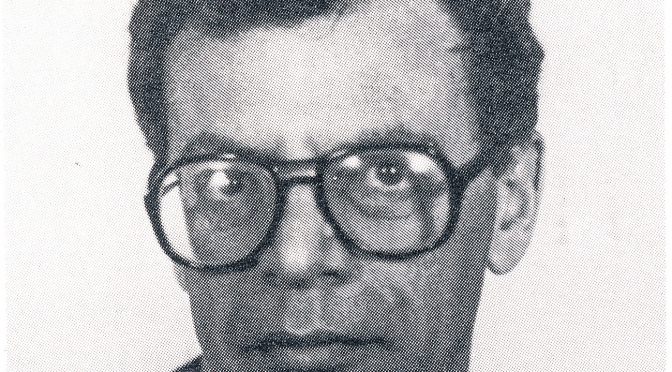
Death Anniversary of IMC Ken Messere OBE (16-iv-1928 31-iii-2005)

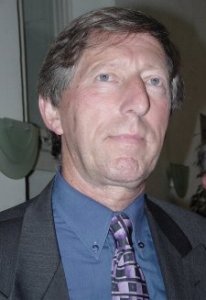
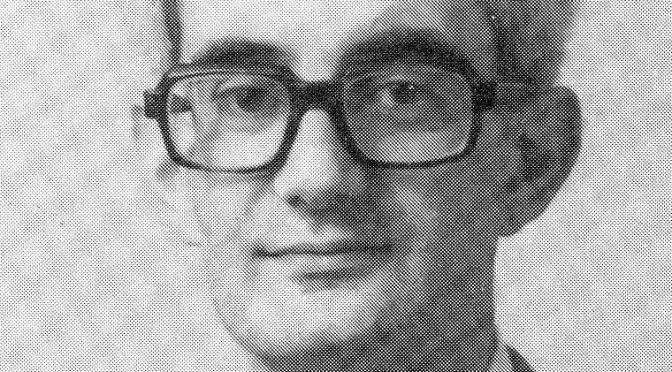
BCN remembers Ken Messere who passed away on Thursday, March 31st 2005 aged 76 in Paris-16E-Arrondissement, Paris, France.

Kenneth Charles Messere was born on Monday, April 16th, 1928 in Richmond-on-Thames, Surrey. His father was Charles (George) Messere (1901-1974) or Eisenberg and aged 26. His mother was Gertrude Marie Newman (1899-1978) and aged 29.

Ken had three siblings: Barbara Marie Messere (1930–2005), Hugh Martin Messere (1932–1985) and Derek R Messere (1934–2012)

Ken attended St. Peter’s College, Oxford from 1946 – 1951 to read philosophy and is reported in the 1951 St. Edmund Hall Magazine, as a member of the Trillick (debating) Society as follows:

‘ That this House would rather be a live Communist than
a dead Democrat.’ The proposer established to his own satisfaction that democracy was founded on ‘selfishness, capitalism and bourgeois hypocrisy.’ He did not satisfy J. F. R. Bonguard of St. Peter’s Hall who opposed, using arguments taken from Hindu philosophy. K. C. Messere of St. Peter’s Hall, spoke third and added some able arguments.

In June 1954 Ken married Mary Elizabeth Humphrey (1929-2003) in Ealing. They had a son Miles Jonathan Messere born in 1964 who passed away in 1965.

Prior the time of his passing his wife Mary was living at 142B, Herbert Road, Woolwich, London, SE18 3PU.

In 1991 he was awarded the OBE (Civil Division) in the Queen’s Birthday honours list. The citation reads: Kenneth Charles Messere, lately Head of Fiscal Affairs Division, OECD, Paris.

Ken appears each year from 1953 to 1967 in the noted publication Britain, Royal And Imperial Calendars the function of which is to list entries for those engaged in UK public service. He worked for HM Customs and Excise. Prompted by this we consulted the venerable A History of Chess in the English Civil Service by Kevin Thurlow (Conrad Press, 2021) on page 447 and found

“He played for Customs. In 1964, he went to work for the Organisation for Economic Cooperation and Development and was head of fiscal affairs from 1971 – 1991. In 1954 he began playing postal chess and became a leading player. He won a semi-final of the 5th World Correspondence Championship (1961 – 64) and became the first English player to compete in a World Championship Final.”

There are 31 games listed at his personal entry at chessgames.com starting with games from 1965.

Chessbase’s Correspondence Database 2020 records 69 games the earliest being from 1958 listing Ken’s federation as being France.

From British Chess (Pergamon Press, 1983) we have this lengthy contribution from Ken himself:

“Between the ages of 6, when I learnt to play and 23 (ed: 1951), when I ceased to be a student, chess had a relatively low priority among various time-competing interests and activities, so I never got around to studying theory. Things changed when I became a civil servant and needed a replacement for philosophy as an intellectually absorbing subject which could be argued about with friends over beers, and for the next 12 years chess became my main interest.

Since 1964 I have been working for the OECD in Paris, where my friends are not chess enthusiasts and, although chess remains a major pleasure, my commitment to it has lessened. Nowadays, out-side correspondence chess, I play only occasional blitz games.

Coming late to serious chess has probably had at least some influence on my deficiencies and stylistic preferences. The deficiencies include an inability to visualize ahead with sufficient clarity to support accurate analysis, slow sight of the board which leads to silly errors through time trouble or failing stamina and less familiarity with theory than my better opponents. As to chess style, I have had to play romantically and subjectively to get good results.

If a game takes the form of a clear-cut position, where strategical objectives are clear and superior technique prevails, then mine generally does not. Consequently I have tended to play either sharp gambits or counter-gambits or to try to render the position sufficiently obscure for imagination and intuition to assume maximum importance. In keeping, my chess heroes have been Alekhine, Bronstein and Tal who revel in fantasy, however much Alekhine may claim that it is logically based.

When I took up competitive chess seriously in 1952, I made some progress and won a few minor tournaments, but in view of the defects already mentioned, it soon became clear that my potential for improvement was limited and that nearly all my games were aesthetically flawed. Fortunately, these defects represent no great handicap at correspondence chess, where I found myself pleased with a reasonable proportion of the game I played, and in addition, capable on the day (or more accurately over the years) of winning against almost anyone. Thus, against world champions I have two wins and one loss, (see below). I also have 80 per cent from five games against Russian grandmasters, even if a meagre 28 per cent from my eighteen games against all correspondence grandmasters. In 1954 when I began playing postal chess competitively, I did sufficiently well in a few British Postal tournaments to be accepted at a reasonably high level in the official international tournaments.

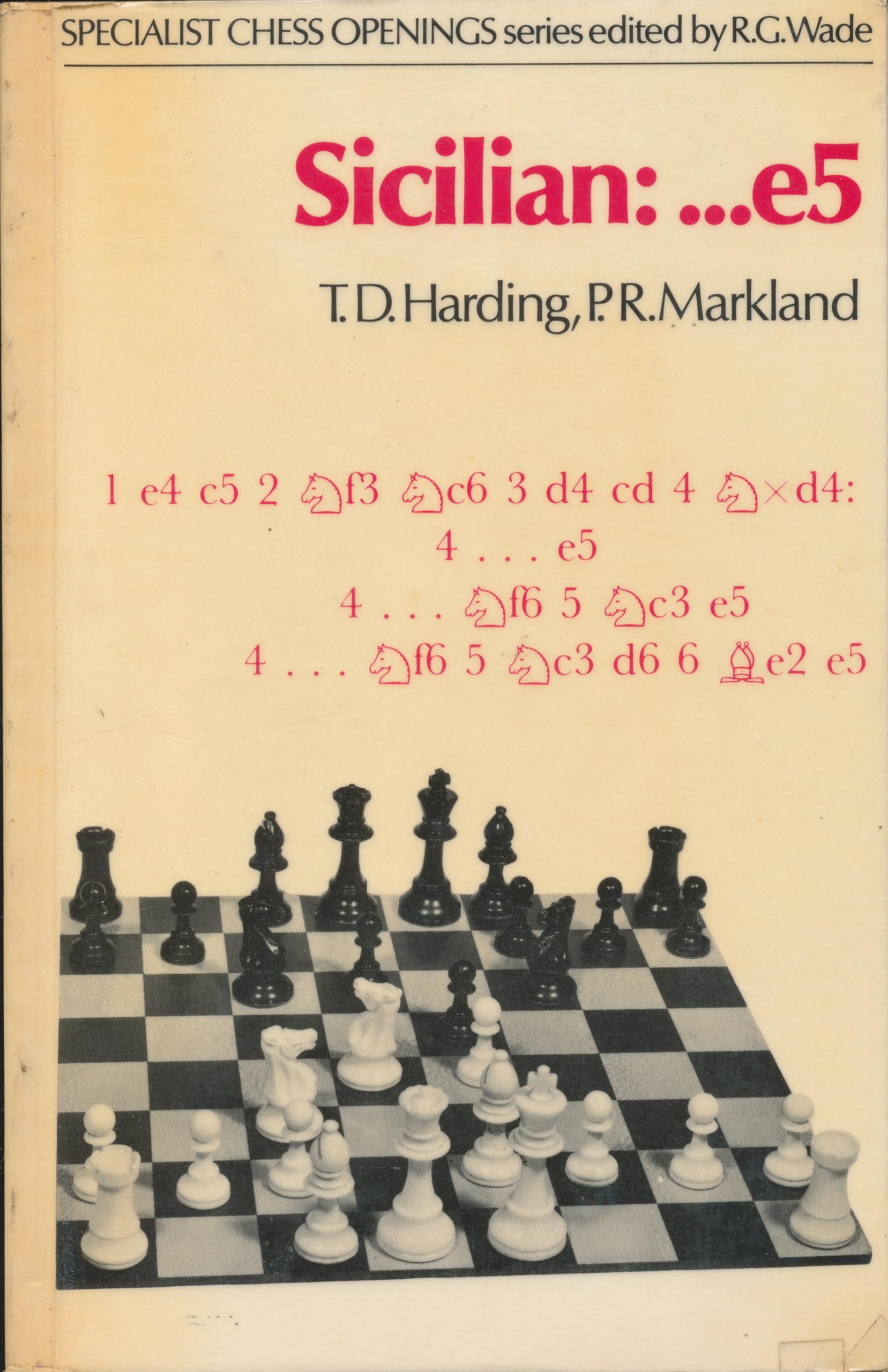
[pgn]
[Event “ICCF Championship 1958-60”]
[Site “?”]
[Date “1958.??.??”]
[Round “?”]
[White “Messere, Kenneth Charles”]
[Black “Bergquist, Rune”]
[Result “1-0”]
[Annotator “Ken Messere and BCN”]
[SetUp “1”]
[FEN “8/1p1bk3/pK5p/2R1P1p1/2pP4/8/8/8 w – – 0 46”]
[PlyCount “11”]
[EventDate “1958.??.??”]
[EventType “tourn”]
[SourceTitle “British Chess, page 168”]

{[%evp 0,11,-29,-29,-59,-59,-11,-90,0,65,207,237,260,260] [#]} 46. d5 $1 {
KCM: Capturing either b or c-pawn loses.} ({In fact} 46. Rxc4 $16 {is also
winning but not as strong.} g4 47. d5 h5 48. e6 Bb5 49. Kc7 $1 Bxc4 50. d6+
Kxe6 51. d7 $18) (46. Kxb7 $2 g4 47. d5 g3 48. Rxc4 h5 49. Rc2 h4 $19) 46… g4
47. Rxc4 h5 48. e6 $18 Bb5 $2 {KCM: the move played enables White to sacrifice
rook and pawn to win with his last pawn.} ({KCM: Correct is} 48… Bxe6 $1 {
KCM: which should draw after} 49. Re4 $1 Kd6 $1 50. Rxe6+ $1 (50. dxe6 $2 Ke7
$1 {KCM: wins for Black. BCN: in fact this is winning for white as follows:}
51. Kc5 g3 52. Re1 b5 53. Kd4 h4 54. Ke5 g2 55. Rc1 a5 56. Rc7+ Ke8 57. Kd6 Kf8
58. e7+ Kf7 59. Rc8 Kf6 60. e8=Q {etc but this was hideously complicated to
work out and SF10 did the work for us!}) 50… Kxd5 51. Rh6 $11) 49. Kc7 $1
Bxc4 50. d6+ Kxe6 51. d7 {and Black resigned six moves later.} 1-0
[/pgn]

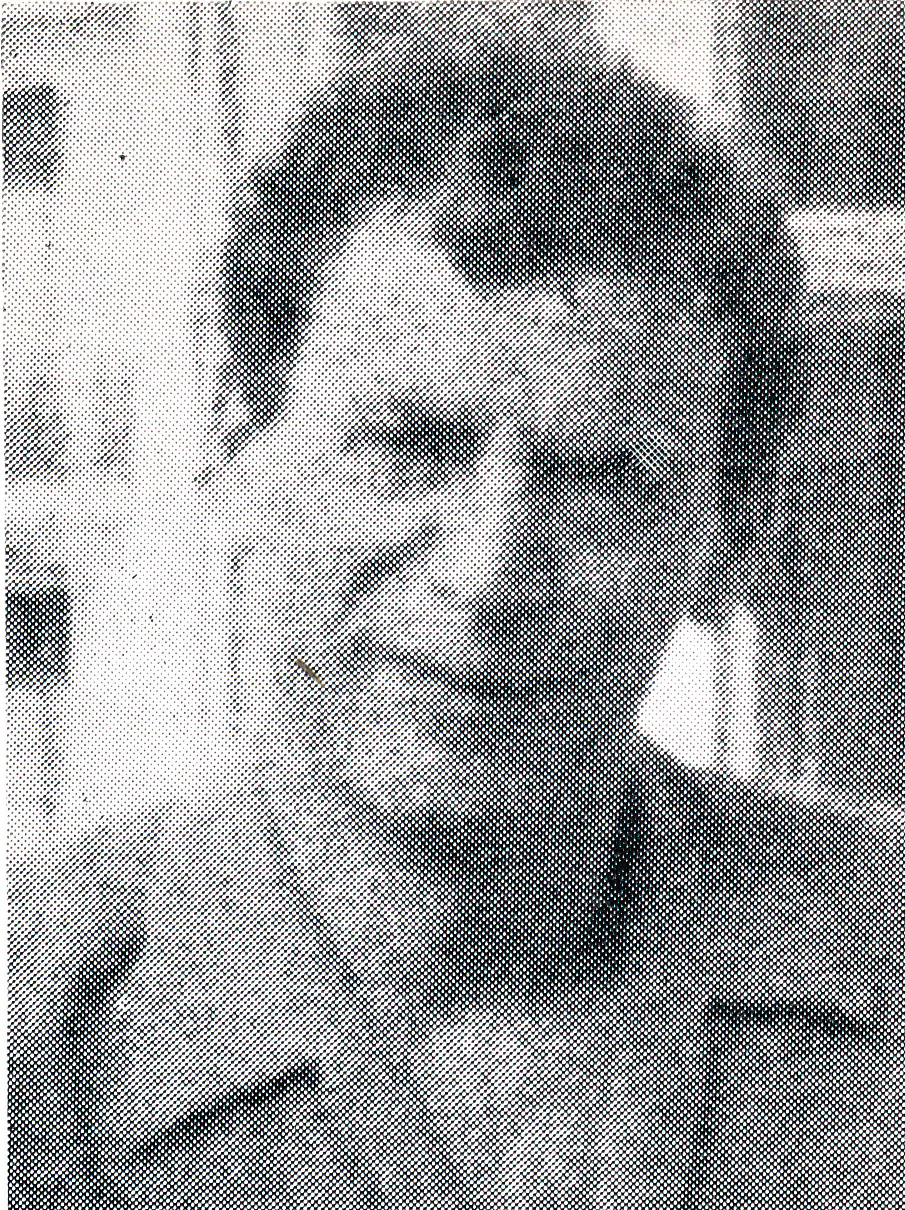
Not without luck (see Diagram l), I secured the 75 per cent necessary in two seven-player tournaments to qualify for the fourteen player preliminaries, the winner of which was to qualify for the following world championship. In the 1961-64 preliminaries, I played the best chess of my life, including valid opening innovations, imaginative pawn and piece sacrifices and even a technically efficient win in a queen and pawn end-game. I won the tournament with eleven wins, one draw and one loss, 1.5 points ahead of Maly of Czechoslovakia and two points ahead of Masseev, the Russian favourite, thereby obtaining my first norm towards the International Master title. My first annotated game is the win against Maly (ed: to be inserted once we have tracked down the game score!) which was typical stylistically and also crucial, since if he had won it, he would have qualified for the World Championship instead of me: the second against Bartha of the United States is the most compulsive and difficult tactical game I have ever played, the last five moves alone requiring over 100 hours of analysis.
[pgn]
[Event “W-ch05 sf03 corr”]
[Site “ICCF corr”]
[Date “1962.??.??”]
[Round “?”]
[White “Bartha, Ferenc”]
[Black “Messere, Kenneth Charles”]
[Result “0-1”]
[ECO “A41”]
[Annotator “Messere”]
[PlyCount “92”]
[EventDate “1962.??.??”]
[EventType “tourn (corr)”]
[SourceTitle “Myers”]
[Source “Myers”]
[SourceDate “2012.11.12”]
[SourceVersion “1”]
[SourceVersionDate “2012.11.12”]
[SourceQuality “1”]

{[%mdl 36928][%evp 0,92,19,27,80,59,88,37,24,24,52,32,36,55,64,5,8,10,18,-40,0,
-17,9,-3,-8,-8,1,-20,-13,-123,-40,-48,-27,-55,-48,-48,-11,-2,6,-21,58,92,92,92,
92,102,99,104,150,139,143,135,128,35,153,91,95,-17,-17,23,34,34,26,-18,-18,-18,
-18,-66,0,-6,-1,-47,-72,-72,-72,-105,-40,-40,-52,-51,-50,-50,-50,-70,-40,-28,0,
-86,0,-5,0,0,0,-63,-63] Messere: My game with Bartha, superficially a wild
tactical skirmish, required a number of unexpected moves by both players for
survival even in the beginning. The last five moves, which took me at least
100 hours of analysis going nearly twenty moves deep in several variations,
rendered it quite the most compulsive game I have ever played. That the margin
between win and draw was so fine and that in many variations K and two pawns
defeated K, R, N and pawns made it even more deeply absorbing.} 1. Nf3 {
Myers Harding Messere} d6 2. d4 g6 3. c4 Bg7 4. e4 Bg4 5. Be2 Nc6 6. Be3 e5 7.
d5 Bxf3 8. Bxf3 Nd4 {[#]} 9. Bg4 $146 (9. Bxd4 $1 exd4 10. Nd2 (10. Na3 Ne7 11.
O-O c6 12. Rb1 O-O 13. Nc2 c5 14. b4 Nc8 15. Qd3 Qc7 16. Be2 Re8 17. bxc5 dxc5
18. f4 b5 19. Rxb5 Nd6 20. e5 Nxb5 21. cxb5 Qa5 22. d6 Qxa2 23. Qc4 Qb2 24. Bf3
Rab8 25. Bc6 Red8 26. Qxc5 d3 27. Nb4 d2 28. Nd3 Qb3 29. Nf2 Qa4 30. g3 a6 31.
b6 Rdc8 32. b7 Rxc6 33. Qa7 Rxb7 34. Qxb7 Rc1 35. Qf3 Qd4 36. Kg2 Re1 37. Nd1
Bf8 38. Qf2 Qd5+ 39. Kg1 Rxf1+ 40. Kxf1 f6 41. exf6 Bxd6 42. Qe3 Kf7 43. Ke2
Bc5 44. Qc3 Qe4+ 45. Kf1 Qh1+ 46. Ke2 Qxh2+ 47. Kf3 Qh1+ {0-1 Portisch,
L-Timman,J/Antwerp 1989/}) 10… Ne7 (10… c5 11. dxc6 bxc6 12. b4 Rb8 (12…
Ne7 13. O-O O-O 14. Nb3 Qb6 15. a3 Rab8 16. c5 dxc5 17. Nxc5 Rfd8 18. Nd3 a5
19. Qc2 axb4 20. axb4 Ra8 21. g3 Ra7 22. Rxa7 Qxa7 23. e5 Qa6 24. Re1 Nd5 25.
e6 Qb5 26. exf7+ Kxf7 27. Qe2 Bf6 28. Qe6+ Kg7 29. Ne5 Rf8 30. Bxd5 cxd5 31.
Nd7 Rf7 32. Nxf6 Rxf6 33. Qe7+ Rf7 34. Qe5+ Kh6 35. Qxd4 Qc4 36. Qd2+ Kg7 37.
Rc1 Qe4 38. b5 d4 39. Qb2 Rb7 40. b6 Qe5 41. Ra1 Qc5 42. Rb1 h5 43. Qb5 Qd6 44.
Qb4 Qf6 45. Rb3 Qd8 46. Qb5 Qd6 47. h4 d3 48. Qa6 Rd7 49. Qa1+ Qd4 50. Qd1 d2
51. Rb1 Qe4 {1/2-1/2 Epishin,V-Gulko,B/Yerevan 1996/}) 13. Rb1 Ne7 14. a3 O-O
15. Nb3 c5 16. b5 f5 17. O-O Kh8 18. a4 fxe4 19. Bxe4 d5 20. Bd3 dxc4 21. Bxc4
Qd6 22. Rc1 Rbc8 23. Qd3 Rf5 24. Nd2 Nd5 25. Bxd5 Qxd5 26. Nc4 Rcf8 27. Rce1
Rg5 28. Re4 Rf4 29. Rfe1 h5 30. a5 Kh7 31. g3 Rxe4 32. Rxe4 Rf5 33. b6 axb6 34.
axb6 Rf7 35. Kg2 Re7 36. f3 Rxe4 37. fxe4 Qb7 38. Qf3 Qa6 39. Qb3 Be5 40. Qd3
Bb8 41. e5 Qa2+ 42. Kg1 Kg7 43. Qf1 Qc2 44. Nd6 d3 45. Qf6+ Kh7 46. Qe7+ Kg8
47. Qd8+ Kg7 48. Qd7+ Kh6 49. Nf7+ Kg7 50. Ng5+ Kh6 51. Nf7+ Kg7 52. Nd6+ Kh6
53. Nf7+ {1/2-1/2 Epishin,V-McNab,C/Catalan Bay 2003/}) (10… Nf6 11. O-O Nd7
12. Be2 d3 13. Bxd3 Bxb2 14. Rb1 Bg7 15. f4 O-O 16. Nf3 Qf6 17. Qd2 Bh6 18. g3
Nc5 19. Rbe1 Rae8 20. Bb1 Qd8 21. h4 Qd7 22. Kg2 Qa4 23. Qc2 Re7 24. Rf2 Rfe8
25. Rfe2 Bg7 26. e5 a6 27. h5 Qxc2 28. Bxc2 dxe5 29. hxg6 hxg6 30. fxe5 f5 31.
e6 Bf6 32. g4 fxg4 33. Ne5 Bh4 34. Rh1 Nxe6 35. dxe6 Rxe6 36. Rxh4 Rxe5 37. Rf2
Rg5 38. Rd2 Re7 39. Bd1 Kg7 40. Rxg4 Rxg4+ 41. Bxg4 Re4 42. Bc8 b6 43. Bxa6 Kf7
44. Rd7+ Re7 45. Rxe7+ Kxe7 46. c5 bxc5 47. a4 Kd6 48. a5 {1-0 Epishin,
V-Djuric,S/Cutro 1999/}) 11. Be2 O-O 12. O-O c5 (12… c6 13. Nf3 Qb6 14. Qd2
f5 15. Bd3 fxe4 16. Bxe4 cxd5 17. cxd5 Rac8 18. Qe2 Bf6 19. Ne1 Bg7 20. Nd3
Rce8 21. Rfe1 Qb5 22. g3 Nxd5 23. Nf4 Nc7 24. Qxb5 Nxb5 25. Ne6 Rxe6 26. Bd5
Kh8 27. Rxe6 d3 28. Rd1 Bd4 29. Rxd3 Bxf2+ 30. Kg2 Nd4 31. Re4 Nc2 32. Rf3 Ne1+
33. Rxe1 Rxf3 34. Re8+ {1-0 Epishin,V-Gulko,B/Philadelphia 1998/}) 13. f4 (13.
g3 Nc8 14. h4 Nb6 15. h5 Nd7 16. hxg6 hxg6 17. Kg2 Re8 18. Rh1 Rb8 19. f4 a6
20. a4 d3 21. Bxd3 Bxb2 22. Ra2 Bf6 23. e5 dxe5 24. f5 g5 25. Ne4 Bg7 26. f6
Nxf6 27. Rf2 b5 28. Nxf6+ Bxf6 29. Rh7 e4 30. Qh5 Rb7 31. Be2 bxc4 32. d6 Qxd6
33. Bxc4 Re6 34. Rxf6 Rb2+ 35. Kh3 g4+ 36. Qxg4+ {1-0 Epishin,V-De la Villa
Garcia,J/Lausanne 2001/}) 13… a6 14. Bd3 Rb8 15. h4 b5 16. h5 Nc8 17. hxg6
fxg6 18. Qg4 Kh8 19. b3 Nb6 20. Nf3 Qd7 21. Qxd7 Nxd7 22. g3 bxc4 23. bxc4 Rb2
24. Rf2 Rxf2 25. Kxf2 Rb8 26. Re1 Rb2+ 27. Re2 Rxe2+ 28. Kxe2 Bf6 29. Bc2 Kg7
30. Kd3 g5 31. Ba4 Nb6 32. Be8 Kf8 33. Bh5 gxf4 34. gxf4 Na4 35. e5 Be7 36. Nd2
Nc3 37. Ne4 dxe5 38. d6 Bxd6 39. Nxd6 exf4 40. Ne4 Na4 41. Kc2 {1-0 Epishin,
V-Hennig,D/Hamburg 1997/}) (9. Nc3 Ne7 10. h4 (10. g4 c5 11. h4 a6 12. Be2 Rb8
13. h5 h6 14. hxg6 fxg6 15. g5 hxg5 16. Rxh8+ Bxh8 17. Bxg5 b5 18. b3 bxc4 19.
Bxc4 Qd7 20. Bxa6 Qh3 21. Be3 Nf3+ 22. Ke2 Nd4+ 23. Kd3 Bf6 24. Qh1 Qd7 25. Bc4
Kd8 26. Qg2 Qa7 27. Rh1 Qa3 28. Bc1 Qa5 29. Rh7 Rb7 30. Rf7 Nxd5 31. Bxd5 {
1-0 Ftacnik,L-Lipka,J/Czechia 2001/}) 10… h5 (10… c5 11. h5 a6 12. Be2 f5
13. hxg6 hxg6 14. Rxh8+ Bxh8 15. Bd3 Kd7 16. b4 f4 17. Bxd4 exd4 18. Na4 cxb4
19. c5 Ke8 20. Qg4 dxc5 21. Nxc5 Qc8 22. Qh4 Qxc5 23. Qxh8+ Kf7 24. Qh7+ Kf6
25. Kf1 Re8 26. e5+ Kxe5 27. Qf7 Qc8 28. Re1+ {1-0 Krasenkow,M-Zlotnikov,M/
Voskresensk 1992/}) 11. Be2 c5 12. Bd3 Qd7 13. a3 O-O 14. b4 b6 15. Rb1 f5 16.
bxc5 bxc5 17. Bg5 f4 18. Qa4 Rfd8 19. Qxd7 Rxd7 20. Kd2 Kf7 21. Nb5 Nxb5 22.
Rxb5 Bf6 23. Rhb1 Bxg5 24. hxg5 Ke8 25. Bc2 Kd8 26. Ba4 Rc7 27. Ra5 a6 28. Rb6
Nc8 29. Rbxa6 Rxa6 30. Rxa6 h4 31. Bd1 Rb7 32. Kc2 f3 33. Bxf3 Rf7 34. Bg4
Rxf2+ 35. Kb3 Rxg2 36. Be6 h3 37. Ra8 Rxg5 38. Rxc8+ Ke7 39. Rh8 Rg3+ 40. Ka4
Rc3 41. Kb5 {1-0 Krasenkow,M-Kakageldyev,A/Oviedo 1993/}) ({Relevant:} 9. Nc3
Ne7 10. h4 c5 11. Bg4 f5 12. exf5 gxf5 13. Bh5+ Ng6 14. g4 Qd7 15. gxf5 Qxf5
16. Bg4 Qc2 17. Rb1 h5 18. Bxh5 Qxd1+ 19. Bxd1 Nxh4 20. Ba4+ Ke7 {1/2-1/2 (20)
Salm,M-O’Kelly de Galway,A ICCF corr 1959}) 9… c5 $2 (9… Nf6 $142 $1 {
Messere} 10. Bxd4 exd4 11. Nd2 O-O 12. O-O c5 13. Rb1 Qa5 (13… Re8 14. Bf3
Bh6 15. b4 b6 16. b5 Bxd2 17. Qxd2 Nxe4 18. Bxe4 Rxe4 19. Rfe1 Rxe1+ 20. Rxe1
Qd7 21. a4 a6 22. Qg5 axb5 23. axb5 Kg7 24. h3 h6 25. Qc1 Qf5 26. Rd1 Ra2 27.
Rd2 Qf4 28. Rc2 Qxc1+ 29. Rxc1 d3 30. Kf1 Rc2 31. Rd1 Rxc4 32. Rxd3 Rb4 33. Ke2
Rxb5 34. Re3 c4 35. Rc3 Rb2+ 36. Ke1 b5 37. h4 Kf6 38. g4 Ke5 39. Rf3 f5 40. h5
gxh5 41. Rxf5+ Ke4 42. Rxh5 c3 43. Rxh6 Rb1+ 44. Ke2 c2 45. f3+ Kd4 {0-1
Fernandes,E-Silveira,N/Vitoria BRA 2006/}) 14. Bh3 Qxa2 15. f4 Rae8 16. Re1 Qa5
17. e5 Nh5 18. e6 fxe6 19. Bxe6+ Kh8 20. g3 Qc7 21. Ne4 Bh6 22. Qd3 Ng7 23. Nf2
Nf5 24. Ng4 Bg7 25. h4 b5 26. b3 Qa5 27. Rec1 Rb8 28. Ra1 Qb6 29. Rab1 bxc4 30.
bxc4 Qc7 31. Nf2 Ne3 32. Ne4 Rxb1 33. Rxb1 Rb8 34. Ng5 Bf6 35. Ne4 Bd8 36. Re1
Rb2 37. Nxd6 Rg2+ 38. Kh1 Rxg3 39. Nf7+ Kg7 40. Qe4 Qe7 41. Qe5+ Qf6 42. Nxd8
Qxe5 43. fxe5 d3 44. d6 d2 45. Rb1 Rg2 46. Bg4 Rxg4 47. Ne6+ Kf7 48. d7 Rxh4+
49. Kg1 Rg4+ 50. Kh1 Rd4 51. Nxd4 Ke7 52. Nc2 d1=Q+ 53. Rxd1 Nxd1 54. e6 Nf2+
55. Kg2 Ne4 56. Ne3 Ng5 57. Nd5+ Kd8 58. Nf4 a5 59. Kg3 a4 60. Kg4 h6 61. Nxg6
Nxe6 62. Ne5 a3 63. Kf5 Nf8 {0-1 Beutelhoff,J-Bednarski,J/Dortmund 1975/}) (
9… Ne7 10. Nc3 (10. f4 O-O 11. fxe5 dxe5 12. O-O c5 13. dxc6 bxc6 14. Nc3 Qb6
15. Na4 Qb4 16. b3 Rad8 17. Qc1 f5 18. Bd1 fxe4 19. Nc3 Rxf1+ 20. Kxf1 Rf8+ 21.
Ke1 Nef5 22. a3 Qb6 23. Bf2 e3 24. Bg1 Nh4 25. Qb2 e4 26. b4 Ndf3+ 27. gxf3
exf3 28. c5 f2+ 29. Bxf2 exf2+ 30. Qxf2 Bxc3+ {0-1 Chekhova Kostina,T-Frog,I/
Moscow 1991/}) (10. h4 h5 11. Bh3 O-O 12. Nc3 c5 13. Rc1 f5 14. exf5 Nexf5 15.
Bg5 Bf6 16. Ne4 Be7 17. Rc3 a6 18. Bxf5 Nxf5 19. g4 Nxh4 20. Bh6 Rf7 21. gxh5
g5 22. Rg1 Kh7 23. Nxg5+ Bxg5 24. Bxg5 Qg8 25. Rcg3 Nf5 26. Qc2 e4 27. Rg4 Rg7
28. Qe2 Re8 29. Bf6 Rxg4 30. Rxg4 Qf7 31. Rg6 Nd4 32. Qg4 Rg8 33. Rxg8 Qxg8 34.
Qxe4+ Kh6 35. Bxd4 cxd4 36. Qe6+ Kh7 37. Qxg8+ Kxg8 38. c5 {1-0 Luna,J-Duin,L/
Buenos Aires 1965/}) (10. O-O c5 11. Bxd4 cxd4 12. Qa4+ Kf8 13. f4 exf4 14.
Rxf4 Be5 15. Rf1 Kg7 16. Qb3 b6 17. Nd2 Rf8 18. Qd3 a6 19. Nf3 b5 20. c5 f6 21.
Nxd4 Bxd4+ 22. Qxd4 g5 23. Bf5 Ng6 24. Bxg6 hxg6 25. b4 Qe7 26. Rac1 Rh8 27. h3
g4 28. cxd6 Qxd6 29. Rc6 Qe5 30. Qxe5 fxe5 31. Rff6 gxh3 32. Rxg6+ Kf7 33. Rxa6
hxg2 34. Raf6+ Ke7 35. Re6+ Kf7 36. Rxg2 Rac8 37. Rf2+ Kg7 38. Rxe5 Rh4 39. d6
Rc1+ 40. Kg2 Rd1 41. Rg5+ Kh6 42. Rd5 Rxd5 43. exd5 Rd4 44. Rf8 Rxd5 45. Rd8
Kg5 46. d7 {1-0 Glawischnig,A-Wilczek,R/Feffernitz 1999/}) 10… O-O 11. Nb5 c5
12. dxc6 Nexc6 13. O-O a6 14. Nxd4 exd4 15. Bf4 Re8 16. Re1 Ne5 17. Be2 Qb6 18.
Qb3 Qc6 19. Bf1 Nd7 20. f3 Nc5 21. Qa3 a5 22. Rad1 Ra6 23. Bg3 Qb6 24. b3 Qb4
25. Qxb4 axb4 26. Bd3 Rxa2 27. Bxd6 b6 28. Re2 Rea8 29. Rxa2 Rxa2 30. Bc7 Bh6
31. h4 Nd7 32. Bf1 Rb2 33. Bd6 Rxb3 34. f4 Nc5 35. Rxd4 Ne6 36. Rd3 Rxd3 37.
Bxd3 b3 38. g3 Bg7 39. e5 Bf8 40. Kf2 Bxd6 41. exd6 Kf8 42. Ke3 Ke8 43. f5 Nc5
44. fxg6 fxg6 45. h5 Nxd3 46. hxg6 hxg6 47. Kxd3 Kd7 48. Kc3 Kxd6 49. Kxb3 Ke5
50. Kb4 Kd4 51. g4 g5 52. Kb5 Kd3 53. Kb4 {1/2-1/2 Krijgelmans,J-Marechal,A/
Belgium 2002/}) (9… h5 10. Bxd4 hxg4 11. Bc3 Qh4 12. Qa4+ Kf8 13. Nd2 Bh6 14.
Nf1 Nf6 15. Ng3 Bf4 16. Qb4 b6 17. Bd2 Kg7 18. O-O-O Nh5 19. Qc3 Qf6 20. Rdf1
Rh7 21. Ne2 Rah8 22. f3 Qg5 23. fxg4 Bxd2+ 24. Qxd2 Qxg4 25. Qe3 Nf6 26. Nc3
Rxh2 27. Rxh2 Rxh2 28. Qf3 Qg5+ 29. Kd1 Rxg2 30. Rf2 Rxf2 31. Qxf2 Qg4+ 32. Qe2
a6 {0-1 Facino,H-Dolezal,C/San Fernando 1992/}) 10. Qa4+ $146 (10. Nc3 $5 h5 (
10… Nh6 11. h3 f5 12. exf5 Nhxf5 13. O-O O-O 14. Bd2 a6 15. Be2 b5 16. cxb5
Nxe2+ 17. Qxe2 Nd4 18. Qc4 axb5 19. Nxb5 Nxb5 20. Qxb5 Rb8 21. Qc4 Rxb2 22. Bc3
Rf4 23. Qd3 Rb7 24. a4 Qa8 25. a5 c4 26. Qd2 Bh6 27. Qe2 Qa6 28. Rfb1 Rbf7 29.
Bd2 Rh4 30. Rb6 Qc8 31. Bxh6 Rxh6 32. a6 c3 33. a7 Rxa7 34. Rxa7 c2 35. Qxc2
Qxc2 36. Rb8+ {1-0 Janjgava,L-Fang,J/Philadelphia 1990/}) 11. Qa4+ Kf8 12. Bh3
g5 13. g3 a6 14. Qd1 b5 15. Bf1 b4 16. Nb1 Nh6 17. Nd2 Bf6 18. Bd3 Ng8 19. a3
a5 20. Qa4 Rb8 21. axb4 axb4 22. Qa5 Qe7 23. Qa7 Rb7 24. Qa8+ Kg7 25. Qc8 Rc7
26. Qh3 g4 27. Qg2 Bg5 28. h3 Nh6 29. h4 Bf6 30. Rf1 Ra7 31. Rb1 Ra2 32. Kd1
Qd7 33. Bxd4 exd4 34. Kc1 b3 35. Kd1 Rha8 36. Ke2 Qa4 37. Rfd1 Re8 38. Kf1 Qb4
39. Kg1 Bd8 40. Qf1 Ba5 41. Kh1 Qb7 42. f4 f5 43. Qg2 Bxd2 44. Rxd2 fxe4 45.
Bxe4 Qe7 46. Bd3 Qe3 47. Rbd1 Kf6 48. Re2 Qxe2 49. Bxe2 Rxb2 50. f5 Rexe2 51.
Qf1 Rf2 52. Qe1 Rbe2 53. Qa5 Nxf5 54. Qd8+ Kf7 {0-1 Knyshenko-Katalymov,B/
Sochi 1952/}) 10… Kf8 11. Nd2 (11. Nc3 a6 12. Bxd4 $2 (12. O-O $142 $1 Nf6
13. Qd1 b5 14. cxb5 axb5 15. f3 $16 {Myers}) 12… exd4 13. Ne2 Nf6 14. Bf3 Nd7
15. O-O Ne5 16. Ng3 h5 17. Bd1 h4 18. Ne2 b5 19. cxb5 axb5 20. Qxb5 Rb8 21. Qa6
Rxb2 22. f4 Ng4 23. Qd3 Ne3 24. Rf3 c4 25. Qa3 Nxd1 26. Rxd1 Rxe2 27. e5 d3 28.
Qb4 Rc2 29. a4 Kg8 30. e6 fxe6 31. dxe6 h3 32. Qb7 Bd4+ 33. Rf2 Bxf2+ {0-1
Jackson,D-Harper,B/London 1972/}) 11… h5 (11… Bh6 12. O-O Kg7 13. Bd1 f5
14. Qa3 $16 {[%cal Gb2b4,Ge4f5] Myers}) 12. Bd1 $1 a6 13. Bxd4 (13. b4 $5 b5
14. Qa3 cxb4 15. Qxb4 a5 16. Qc3 b4 17. Qd3 Qh4 18. Nf3 Nxf3+ 19. Bxf3 Bh6 20.
c5 Bxe3 21. Qxe3 dxc5 22. Rc1 $16 {Myers}) (13. O-O $5 a5 14. f4 Nh6 15. h3 Kg8
16. Nb3 Kh7 17. fxe5 Bxe5 18. Nxd4 Bxd4 19. Bxd4 cxd4 20. Bc2 $16 {Myers})
13… exd4 (13… cxd4 $5) 14. b4 $6 (14. O-O $142 $5 h4 15. Rb1 h3 16. g3 Qe8
17. Qa3 Nf6 18. Re1 $16 {Myers}) 14… Bh6 (14… d3 $5) 15. Nf3 b5 $6 (15…
b6 16. bxc5 bxc5 17. O-O $14) (15… Qe7 $2 16. O-O $1 Qxe4 $2 17. Re1 $16) (
15… Qe8 $142 $1 $14 {Harding}) (15… Nf6 $142 $5 $14 {Myers}) 16. Qb3 (16.
cxb5 $5) 16… Nf6 17. Bc2 Kg7 $6 (17… Qb6 $142 $1 $14 {Myers}) 18. O-O Re8 (
18… Qb6 $5) 19. Rae1 $6 (19. bxc5 $142 $1 dxc5 20. Rfe1 Rb8 21. e5 $1 $16 {
Myers}) 19… a5 $2 (19… Qb6 $5) 20. bxc5 bxc4 21. Qxc4 dxc5 22. d6 $1 (22.
e5 $6 Nxd5 23. Be4 $8 (23. Bb3 $2 a4 $17) 23… Nb6 $5 (23… Nf4 $6 24. Bxa8
Qxa8 25. Qxc5 d3 26. Rd1 $16) 24. Qxc5 Rc8 25. Qb5 Nc4 26. Bb7 Rc7 27. Bd5 $14
{Harding}) (22. Qxc5 $2 Rc8 23. Qxd4 Rxc2 24. d6 Re6 25. e5 Nd7 26. Qa7 $132 {
[%cal Yf3d4] Myers}) 22… Nd7 23. e5 $1 Bf4 24. Qd5 $1 Rc8 25. g3 (25. Bb3 $5
Rf8 26. Qe4 Bh6 27. Bc2 $18 {Harding}) 25… Bh6 26. Nh4 $2 (26. e6 $3 {Harding
} fxe6 27. Rxe6 Rxe6 28. Qxe6 Qe8 (28… Nf8 29. Qd5 $1 Qd7 30. Ne5 $18 {
Harding}) 29. Qh3 $1 {[%cal Yf1e1]} Qf7 (29… Nf8 30. Re1 Qc6 31. Ne5 $18 {
Harding}) 30. Nh4 $1 Rd8 31. Bxg6 Qf6 32. Re1 Nf8 33. Bd3 $18 {Myers}) (26. Rb1
{[%cal Yb1b7]} Rb8 27. Rxb8 Qxb8 28. Bb3 Rf8 29. Qe4 $5 Qc8 30. Re1 $18 {Myers}
) 26… Nb6 27. Qe4 Nc4 {[%cal Yc4d6,Yc4e5]} 28. Qb7 $2 (28. Nxg6 $142 $5 {
Messere} Nxd6 $8 (28… Nd2 $2 29. Qf5 Qg5 30. Ne7 Qxf5 31. Nxf5+ $18 {[%cal
Ge5e6]}) 29. Qd3 {[%csl Rh7][%cal Yg6e7]} c4 $8 30. Qxd4 $8 Nf5 31. Qxd8 $8
Rcxd8 $8 (31… Rexd8 $2 32. Bxf5 $18) 32. Bxf5 fxg6 33. Bb1 $14 {Harding}) (
28. Nf5+ $142 $1 {Harding} gxf5 29. Qxf5 $1 Rh8 $8 (29… Kf8 $2 30. d7 $18)
30. Bb3 $5 (30. d7 Rb8 31. e6 Qf6 32. Qxc5 Nb6 33. f4 $1 fxe6 34. Bb3 Nxd7 35.
Qd6 Rbe8 36. Qxd7+ $16 {Harding}) 30… Qg5 31. Qxg5+ Bxg5 32. Bxc4 Bd2 33. Re2
Bc3 34. f4 Rcd8 35. f5 Rhf8 36. Re4 $18 {Myers}) 28… Rxe5 (28… Rb8 29. Qd5
Nd2 30. e6 $1 $16 Rxe6 (30… Nxf1 $2 31. Nf5+ $1 $18) (30… fxe6 31. Qxc5
Nxf1 $2 32. Qa7+ $18) 31. Rxe6 fxe6 32. Qe5+ Qf6 33. Qxc5 Kg8 34. Qc7 Rf8 (
34… Qd8 35. Bxg6 $18) 35. Nxg6 Nxf1 36. Nxf8 Be3 37. fxe3 Nd2 38. Bh7+ Kxf8
39. Qc8+ Kg7 40. Qg8+ Kh6 41. Qg6+ Qxg6 42. Bxg6 dxe3 43. d7 e2 44. Kf2 Nf3 45.
Kxe2 Nd4+ 46. Ke3 Nc6 47. Be4 Nd8 48. Kd4 $18 {Harding}) 29. Rxe5 Nxe5 30. Bxg6
$5 (30. f4 Qd7 {Tait} (30… Nc4 $5 31. Bxg6 Nxd6 32. Nf5+ Kxg6 33. Nxd6 Qxd6
34. Qxc8 d3 35. Qh8 d2 36. Rd1 $11) (30… Nd7 31. Bxg6 fxg6 32. Re1 Rb8 33.
Re7+ Qxe7 34. dxe7 Rxb7 35. e8=Q Nf8 36. Qe5+ $18 {Myers}) 31. Qe4 Nc6 (31…
Qxd6 $1 32. fxe5 Qc6 33. Qg2 Qxg2+ 34. Kxg2 c4 $15 {Myers}) 32. Nxg6 Qxd6 33.
Ne5 (33. Nh4 Kf8 $1 34. Qh7 Qf6 35. Bd3 Ne7 36. Rc1 $11 {Myers}) (33. Qf5 Qe6
34. Nh4 Kf8 35. Qxh5 Ne7 36. Nf5 $11 {Myers}) 33… d3 34. Bxd3 Qd4+ 35. Qxd4
Nxd4 36. Rb1 Nc6 37. Nxc6 Rxc6 38. Bc4 Kg6 39. Rb7 f5 40. Ra7 $16) (30. Qd5 $2
Nd7 $1 31. Bb3 Qf6 32. Rd1 Rd8 $17 {Myers}) (30. Re1 $5 d3 31. Ba4 d2 32. Rxe5
Qxd6 33. Rd5 {Harding} Qe6 34. Rd7 Rb8 35. Rxf7+ Qxf7 36. Qxb8 Bg5 37. Qb2+ $16
{Myers}) 30… Qd7 $8 (30… Nd7 $2 31. Bxh5 Rb8 32. Nf5+ Kh7 33. Qd5 $18 {
Myers}) (30… Rb8 $6 31. Qd5 fxg6 (31… Nxg6 $2 32. Nf5+ $18) 32. Qxe5+ Kh7 (
32… Qf6 33. Qxc5 $18) 33. Qxc5 $1 Bf8 34. Qa7+ Bg7 35. d7 $1 $18) (30… Nxg6
$2 31. Nf5+ Kf8 32. Nxh6 Ne5 33. Re1 $18) 31. Nf5+ $2 (31. Qxd7 $142 $1 Nxd7
32. Bxh5 Bg5 33. Nf5+ Kf6 34. Ne7 $1 Rh8 35. Bg4 Ne5 36. Nd5+ Kg6 37. Bd1 $16 {
Myers}) 31… Kf6 32. Qxd7 Nxd7 33. Ne7 Rb8 $2 (33… fxg6 $6 34. Nxc8 c4 35.
f4 c3 36. Kf2 Bg7 37. Ke2 Ke6 38. Re1 Kd5 39. h3 $14 {Myers}) (33… Rh8 $142
$1 34. Bxh5 $1 c4 $5 (34… Bf8 35. Nd5+ Ke6 $15 {Harding}) 35. Bg4 Ne5 $1 36.
Nd5+ Kg6 37. Bc8 Bd2 38. f4 Nd3 39. d7 c3 $17 {Myers}) 34. Bf5 $2 (34. Bxh5
$142 $1 Bd2 35. Bg4 $1 Nf8 36. Rd1 Rb2 37. Nc6 Rxa2 38. d7 $1 Nxd7 39. Bxd7 d3
40. Be8 $16 {Myers}) 34… Rb7 $1 (34… Ne5 35. f4 $5 (35. Bc8 Bf8 36. Nd5+
Kg7 37. d7 Nc6 38. Rc1 $14) 35… Nc4 36. Nc6 Nxd6 37. Nxb8 Kxf5 38. Nc6 d3 39.
Kf2 c4 40. Nxa5 $14) 35. Be4 $2 (35. f4 $5 Bf8 $1 (35… c4 36. Rd1 d3 37. Bxd7
Rxd7 38. Nd5+ Ke6 39. Ne3 Rxd6 40. Nxc4 $14 {Harding}) 36. Re1 $1 (36. Rc1 $2
Bxe7 37. dxe7 Kxe7 38. Bxd7 Rxd7 39. Rxc5 d3 40. Rc1 Kf6 $17 {Harding}) 36…
c4 37. Bxd7 Rxd7 38. Nd5+ Kg6 39. Nb6 Rxd6 40. Nxc4 Rd5 41. Rd1 $11 {Myers}) (
35. Re1 $5 c4 36. Bxd7 Rxd7 37. Nd5+ Kg7 38. Nb6 Rxd6 39. Nxc4 Rd5 40. Rd1 $11
{Myers}) 35… Rb2 36. Ng8+ Ke5 $1 (36… Kg7 $2 37. Nxh6 Kxh6 38. Bf5 $1 Nf6
39. d7 Nxd7 40. Bxd7 Rxa2 41. Rd1 $16 {Myers}) 37. Bc6 Kxd6 $2 (37… Nb8 $142
$1 {Myers} 38. Be8 (38. f4+ Kxd6 39. Be8 Bg7 40. Bxf7 Nd7 $17) 38… Bd2 39.
Bxf7 (39. d7 Nxd7 40. Bxd7 c4 41. Be8 Ke6 42. Ba4 c3 $19 {Myers}) 39… Kxd6
40. f4 Nd7 41. Nh6 Ke7 42. Bxh5 c4 $1 (42… Rxa2 43. Nf5+ Kf6 44. Nd6 Be3+ 45.
Kh1 a4 46. g4 a3 $17 {Harding}) 43. Nf5+ Kf8 44. Nxd4 Be3+ 45. Kh1 Bxd4 46. Rd1
c3 47. Rxd4 c2 48. Rc4 Rxa2 49. Rc8+ Ke7 50. Re8+ Kf6 51. Rc8 Ra1+ 52. Kg2 c1=Q
53. Rxc1 Rxc1 $19 {Myers}) 38. Bxd7 Bd2 (38… Kxd7 39. Nxh6 Ke6 $1 40. Re1+
Kd5 41. Re8 c4 42. Nf5 c3 $1 (42… Rxa2 43. Rd8+ Ke4 44. Nxd4 c3 45. Nb3 a4
46. Nc5+ Ke5 47. Nd3+ Ke4 48. Nc5+ $11 {Harding}) 43. Rd8+ Ke4 44. Nxd4 Rd2 45.
f3+ Ke5 46. Nc6+ Kf6 47. Rc8 c2 48. Nxa5 Rd1+ 49. Kg2 $1 c1=Q 50. Rxc1 Rxc1 51.
Nb3 Rc2+ 52. Kh3 Rxa2 53. f4 {Harding} Kf5 54. Nd4+ Ke4 55. Nb5 Rd2 56. Nc7 Rd7
57. Na6 Kd5 $1 58. Kh4 Rb7 59. Kxh5 Kd6 60. Kg5 Rb6 $19 {Myers}) 39. Bf5 $6 (
39. Be8 $2 c4 40. Bxf7 c3 41. Bg6 c2 42. Bxc2 Rxc2 43. Nf6 Rxa2 (43… Ke5 44.
Nxh5 d3 {Messere} 45. a4 Ra2 46. Rd1 Kd4 47. Nf6 Bc3 48. Kf1 Rxa4 $17 {Myers})
44. Ne4+ Kd5 45. Nxd2 Rxd2 46. Ra1 d3 47. Rxa5+ Kd4 48. Ra1 Kc3 $17 {Myers}) (
39. Ba4 $5 c4 40. Nf6 Rxa2 (40… Ke5 41. Nd7+ Kd6 42. Nf6 Rxa2 43. Bb5 c3 $15)
41. Bb5 Kc5 (41… c3 $5 42. Bc4 Rb2 43. Ne4+ Ke7 44. Bd3 f5 45. Nxd2 Rxd2 46.
Bxf5 Kf6 (46… c2 47. Bxc2 Rxc2 48. Rd1 Rc4 $15) 47. Be4 d3 (47… Ke5 {
Harding} 48. Re1 Kf6 49. f4 a4 50. Ra1 $14) 48. Rc1 c2 49. Bf3 Ke5 50. Bxh5 Kd4
$19 {Myers}) 42. Be8 d3 43. Bxf7 Rb2 (43… Kd4 $5) 44. Ne4+ Kd4 45. Nxd2 Rxd2
46. Ra1 $8 Rb2 $3 (46… c3 $5 47. Ra4+ Ke5 48. Rxa5+ Kf6 49. Bxh5 c2 50. Ra1
Re2 51. Bxe2 d2 $1 52. Rd1 $1 c1=Q 53. h4 $14) 47. Rxa5 (47. Ra4 $5 d2 (47…
Rb4 $5 48. Rxa5 c3 49. Rd5+ Ke4 $11) 48. Bxh5 Rb5 49. Bg4 (49. Be2 Rb4 50. Ra1
c3 51. Bd1 Kd3 52. Kg2 a4 $11) 49… Rb4 50. Ra1 c3 51. Bf5 Ke5 52. Bd3 Rb2 53.
Kf1 $16) 47… c3 48. Rd5+ $8 Ke4 49. f3+ $8 Ke3 50. Bg6 Rb1+ 51. Kg2 Rd1 52.
Re5+ $8 (52. Bxd3 Rd2+ 53. Kh3 Rxd3 $17) 52… Kd4 53. Re4+ Kc5 54. Re8 d2 $1
55. f4 Rc1 56. Bxh5 c2 57. Rd8 d1=Q 58. Bxd1 cxd1=Q 59. Rxd1 Rxd1 $19) 39… c4
40. Rb1 (40. a4 d3 41. Kg2 Ke5 42. Bh7 Ke6 43. Kf3 f5 44. Nh6 $8 Bxh6 45. Bg8+
Ke5 46. Bxc4 Kd4 $17 {Myers}) 40… Rxa2 41. Rb8 $6 (41. Rb7 $142 $5 $17 {Myers
}) 41… a4 $5 (41… d3 $1 42. Rd8+ (42. Nf6 $2 Ke5 43. Bxd3 cxd3 44. Nxh5
Ra1+ 45. Kg2 Bc3 $19 {Harding}) 42… Ke5 43. Bxd3 cxd3 44. Rxd3 a4 45. Kg2 Ke6
(45… Bb4 46. Nh6 a3 47. Nxf7+ Kf6 48. Rf3+ Kg7 49. Ne5 Re2 $19 {Harding}) 46.
Rd8 a3 47. Re8+ Kd5 48. Nf6+ Kc4 49. Rc8+ Kb3 50. Rb8+ Ka4 51. Nd7 Rc2 52. Nb6+
Ka5 53. Ra8+ Kxb6 54. Rxa3 f6 $19 {Myers}) 42. Rc8 c3 43. Be4 Bg5 (43… a3 $5
44. Rc6+ Ke5 (44… Kd7 $2 45. Nf6+ Ke7 46. Nd5+ Kf8 47. Ra6 c2 48. Bxc2 Rxc2
49. Rxa3 Kg7 $15 {Harding}) 45. Bh7 Rb2 46. f4+ Bxf4 47. gxf4+ Kxf4 48. Ne7 a2
49. Rf6+ Ke5 50. Rf1 c2 51. Nc6+ Kd5 52. Bxc2 Kxc6 53. Be4+ Kd6 $17 {Myers})
44. h4 (44. f4 $5 Re2 45. Bf3 Rb2 $2 (45… a3 $142 $1 46. fxg5 (46. Bxe2 a2
47. Ra8 c2 $17) 46… a2 $1 47. Rc6+ Kd7 48. Nf6+ Ke7 49. Nd5+ Kf8 50. Bxe2
a1=Q+ $17 {Harding}) 46. Rc6+ $5 (46. fxg5 c2 47. Rc6+ Kd7 48. Nf6+ Kd8 49.
Bxh5 (49. Bd5 Ke7 50. Ng8+ Ke8 51. Nf6+ Ke7 52. Ng8+ $11 {Myers}) (49. Rd6+ Ke7
50. Rd7+ Ke6 51. Bd5+ Ke5 52. Re7+ Kd6 53. Rd7+ $11 {Myers}) 49… d3 50. Ne4
Ke7 51. Rc7+ Kd8 52. Rc5 Ke7 53. Rc7+ $11 {Harding}) 46… Kd7 47. fxg5 a3 48.
Nf6+ Kd8 (48… Ke7 $142 49. Nd5+ $11 {Harding}) 49. Rd6+ Kc7 50. Rc6+ (50.
Rxd4 $4 a2 $19 {Harding}) 50… Kd8 51. Bd5 c2 52. Bxf7 d3 53. Ne4 a2 54. Bxa2
Rxa2 55. g6 $16 {Myers}) (44. Rc6+ Ke5 $1 45. Bh7 (45. f3 $2 Re2 46. Rc5+ Kd6
47. Rxg5 Rxe4 48. fxe4 c2 49. Rd5+ Ke6 50. Rc5 d3 $19 {Messere}) 45… f5 46.
f4+ Bxf4 47. gxf4+ Kxf4 48. Ne7 Kf3 {[%cal Ra2a1]} 49. h3 c2 50. Nxf5 Ra1+ 51.
Kh2 c1=Q 52. Rxc1 Rxc1 53. Nxd4+ Ke3 $17 {Harding}) 44… Re2 $1 45. Bd3 (45.
Bf3 Re1+ 46. Kg2 a3 $1 (46… Be7 47. Bxh5 a3 48. Bxf7 Kd7 $1 49. Nxe7 Rxe7 $17
) 47. Rc6+ Kd7 48. hxg5 a2 49. Nf6+ Ke7 50. Rc7+ Kd8 51. Ra7 c2 $19 {Myers})
45… Rd2 $6 (45… a3 $142 $5 {Harding} 46. Rc4 $3 (46. Bxe2 a2 47. Ra8 c2 48.
Rxa2 c1=Q+ 49. Kg2 Qc8 50. Ra5 Qc2 (50… Qxg8 51. Rxg5 Qc8 52. Rxh5 $11 {Tait}
) 51. Bxh5 Be3 52. Ra6+ Kc5 53. Rf6 d3 54. Ne7 Bd4 $17 {Myers}) (46. hxg5 Re1+
47. Kg2 a2 48. Ra8 a1=Q 49. Rxa1 Rxa1 50. Nh6 Ra7 51. Kf3 Kc5 $17 {Harding})
46… a2 47. Rxd4+ Ke5 48. Ra4 c2 49. Bxc2 Rxc2 50. hxg5 Rc1+ 51. Kg2 a1=Q 52.
Rxa1 Rxa1 53. f4+ $5 (53. Nf6 Ra2 54. Nxh5 Kf5 55. Nf4 Kxg5 56. Nd5 Kf5 $11 {
Tait}) 53… Kf5 54. Nh6+ Kg6 55. g4 Ra2+ 56. Kh3 Ra3+ 57. Kh4 hxg4 58. Kxg4
Ra1 59. Nf5 $11 {Myers}) 46. Be4 $2 (46. Bb5 $3 a3 47. Rc6+ $1 (47. hxg5 a2 48.
Rc6+ Ke5 49. Rc5+ Ke6 $15) 47… Kd5 (47… Ke5 48. Rc5+ Kd6 49. Rc6+ Ke5 50.
Rc5+ Kd6 51. Rc6+ $11 {Harding}) 48. hxg5 a2 49. Nf6+ $8 Ke5 50. Ra6 (50. f4+
Kf5 51. Ra6 $8 Rd1+ $8 52. Kf2 a1=Q 53. Bd3+ $1 Rxd3 54. Rxa1 c2 $1 $11 {Myers}
) 50… Rd1+ 51. Kg2 a1=Q 52. f4+ Kf5 53. Bd3+ Rxd3 54. Rxa1 c2 $11 {Myers})
46… a3 $1 (46… Be7 47. Rc6+ (47. Ra8 d3 48. Rxa4 Rd1+ 49. Kg2 d2 50. Bc2
Rc1 51. Bb3 $11 {Messere}) 47… Ke5 48. Bg2 Bd6 49. Nh6 Ke6 50. Bh3+ Kd5 51.
Bg2+ $11 {Myers}) (46… Rd1+ $5 47. Kg2 a3 $1 48. Rc6+ Ke5 49. Kf3 a2 50. Rc5+
Kd6 51. Rc6+ Kd7 52. Ra6 a1=Q 53. Rxa1 Rxa1 54. hxg5 Ra2 $19 {Myers}) (46… a3
$1 47. hxg5 a2 48. Rd8+ (48. Ra8 $5 Rd1+ 49. Kg2 a1=Q 50. Rxa1 Rxa1 51. Nh6 Ra7
$17) 48… Kc5 49. Ra8 (49. Rc8+ $5 Kb4 50. Rb8+ Kc5 51. Rc8+ Kd6 52. Rd8+ Kc7
53. Ra8 Rd1+ $17) 49… Rd1+ (49… Kc4 50. Kg2 d3 51. Nf6 $11 {Myers}) (49…
c2 50. Bxc2 Rxc2 51. Kg2 d3 52. Kf3 d2 53. Ke2 Kd4 $17 {Myers}) 50. Kg2 a1=Q
51. Rxa1 Rxa1 52. Nh6 $1 {Messere} Re1 53. Bc2 Re2 54. Bf5 c2 $19 {Myers}) (
46… Bxh4 47. gxh4 a3 48. Kg2 a2 49. Ra8 c2 50. Bxc2 Rxc2 51. Nh6 d3 $17) 0-1
[/pgn]

IMC Ken Messere OBE (16-iv-1928 31-iii-2005)

The quality of my chess in the 1965-68 World Championship was much inferior. The tournament began disastrously. I went in for three losing variations as Black and made a suicidal clerical error in the opening so that after 3 months I had four losses from four games. Later, there were compensations. I won against V. Zagarovsky, the reigning world champion (the third annotated game) and obtained just (but only just) the necessary 33.3% per cent to obtain the correspondence chess international master title. For this I needed a win and draw from my last two games which
after 3.5 years, had to be adjudicated.

[pgn]
[Event “W-ch05 corr6568”]
[Site “ICCF corr”]
[Date “1965.??.??”]
[Round “?”]
[White “Estrin, Yakov Borisovich”]
[Black “Messere, Kenneth Charles”]
[Result “0-1”]
[ECO “C45”]
[Annotator “Ken Messere and BCN”]
[PlyCount “110”]
[EventDate “1965.??.??”]
[EventType “tourn (corr)”]
[EventRounds “16”]
[SourceTitle “Corr Nr. 1, British Ches”]
[Source “ChessBase”]
[SourceDate “1997.09.01”]
[SourceVersion “2”]
[SourceVersionDate “2000.04.19”]
[SourceQuality “1”]

1. e4 Nc6 2. d4 e5 3. Nf3 exd4 4. Nxd4 Bc5 5. Nb3 Bb4+ 6. c3 Be7 {[#]} 7. Be2
$146 ({Relevant:} 7. f4 d6 8. Bc4 Nf6 9. O-O Nxe4 10. Bxf7+ Kxf7 11. Qd5+ Be6
12. Qxe4 Bf6 13. f5 Bxb3 14. axb3 Re8 15. Qd5+ Kf8 16. Bf4 Qe7 17. Nd2 a6 18.
Ra4 Qf7 19. Qd3 d5 20. Nf3 h6 21. Qd2 Re4 22. Rxe4 dxe4 23. Nd4 Nxd4 24. cxd4
Rd8 25. Qb4+ Kg8 26. Be5 Qd5 27. Bxf6 gxf6 28. Qe7 Qd6 29. Qxe4 Qxd4+ 30. Qxd4
Rxd4 31. Rc1 c6 32. Rc3 Rf4 33. Rg3+ Kf7 34. Rg6 Rxf5 35. Rxh6 Kg7 36. Rh3 a5 {
Lazarevic,M-Gaprindashvili,N Leningrad 1964 1/2-1/2}) 7… Nf6 8. N1d2 d5 9.
exd5 Nxd5 10. Nf3 O-O 11. O-O Bf5 12. Nbd4 Nxd4 13. Nxd4 Bg6 14. Qb3 Nb6 15.
Bf3 c6 16. Bf4 Bd6 17. Ne6 fxe6 18. Qxe6+ Rf7 19. Qxd6 Qxd6 20. Bxd6 Nc4 21.
Rfd1 Nxb2 22. Rd4 Re8 23. h4 h6 24. a4 Nd3 25. a5 Ne1 $16 {Here I offered
Estrin a draw but he turned the offer down.} 26. a6 $17 (26. Bd1) 26… Nxf3+
27. gxf3 b6 28. f4 {KCM: I refused draw offers from Estrin at 28 and 30 and
later the shadow of adjudication came into play.} c5 29. Rdd1 Bc2 30. Re1 Rc8
31. Re3 Rc6 32. Be5 b5 33. Kh2 h5 34. Rg3 g6 35. Ra2 Bf5 36. Rg1 Rd7 37. Re1
Kf7 38. Ree2 b4 $2 {KCM:Believing there were only three moves left to play, I
wanted to show the adjudicator a passed pawn on the sixth rank and sent this
and the 39th move as a conditional; BCN: The engines both rate this as the
best move by some margin.} ({KCM: Both the slower} 38… Ke6) ({and} 38… Be6
{were both better.}) 39. Reb2 (39. Rab2 Rb6 40. cxb4 cxb4 $19) 39… Rb6 $2 {
BCN: The ? is rather harsh since this move is still good for Black.} ({KCM:
Better} 39… Be6 40. Ra4 b3 41. c4 Rb6) 40. Ra5 bxc3 41. Rxb6 $2 (41. Bxc3 $1
{draws after} Rxb2 42. Bxb2 c4 ({or} 42… Rc7 43. Be5 {KCM: Another
adjudication induced error?}) 43. Rc5) 41… axb6 42. a7 Be4 $1 43. Ra4 $1 {
KCM: Other moves lose quickly.} Ba8 $1 ({BCN: According to SF} 43… c2 $1 44.
Rxe4 Rxa7 45. Rc4 Ra2 46. Bc7 b5 47. Rxc5 b4 $17) 44. Bxc3 Ke6 ({KCM: Not}
44… b5 $2 45. Ra6 {draws. At this point we learnt adjudication was postponed
5 months, but now I am winning. BCN: SF evaluates this as dead level!}) 45.
Ra6 Rd6 46. Ra1 b5 $1 47. Ra5 Rb6 (47… b4 {KCM: Not} 48. Be5 {draws}) 48. Bd2
$11 Kd5 49. Be3 Kc4 50. Ra1 Rc6 51. Rd1 Rc8 ({KCM: Not} 51… Rc7 $4 52. Rd8 $1
Rxa7 53. Rc8 {draws}) 52. Rd6 $2 {BCN: this is Black’s losing move although
KCM does not mention this.} ({BCN: In fact, Estrin should have played} 52. Rc1+
Kd5 53. Rd1+ {and Black cannot make progress.}) 52… b4 $1 {KCM: Only this
pawn sacrifice wins} 53. Rxg6 ({KCM: is no better} 53. Rb6 Rc7) 53… b3 54. f5
Rc7 55. f6 b2 {and wins} 0-1
[/pgn]

Fortunately, the win and draw were relatively clear, though this would not have been so a few moves earlier. An an illustration of how the threat of adjudication breeds irrationality, Diagram II gives the closing stages of my win against J.Estrin of the USSR – a more recent correspondence chess world champion. My only other game against a world champion was against the winner of this tournament, Hans Berliner of the United States, with whom I collaborated on a book of the tournament. The collaboration was stimulating but not without friction, since I had to write 75 per cent of the book to see it ever finished. It took a year to complete, 3 years to appear (published by BCM) but in the end was well-reviewed, sold over 2000 copies and royalties are still (gently) drifting in.
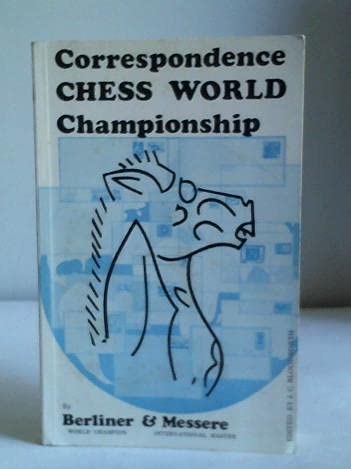
The Fifth Correspondence Chess World Championship, Hans Berliner & Ken Messere, British Chess Magazine, BCM Quarterly Nunber 14, 5th December 1971, ISBN 978-0-900846-05-2.


In the early seventies, in order to reduce numbers of games, I retreated altogether from individual tournaments, just playing twice for England in the Olympiads. Whether team play did not suit my style, or whether my technique had improved but imagination withered, I drew nine of my seventeen games from the two tournaments, winning four and losing four. As England looked likely to aspire to medals for the first time ever, my 50 per cent would not help matters and I gladly retreated to first reserve, which to my dismay required taking over five unfinished games of Hugh Alexander, who died during the tournament, and who, for me, has always been England’s most attractive player and writer. My most uncomfortable decision in correspondence chess was a rejection of Hugh’s intended continuation in one of these games, {Diagram III). Of these five games, I lost one and drew four and England won a bronze medal.

In 1974 was invited to compete in the Potter Memorial Tournament of four postal grandmasters and nine international masters. After so many years of responsible’ team chess for England, I went beserk and sacrificed a pawn in ten of the twelve games, trying later to salvage inferior end-games. Result 33 % per cent. B. H. Wood invited me to write a book of the tournament, to which a number of the players contributed and this was published in 1979.
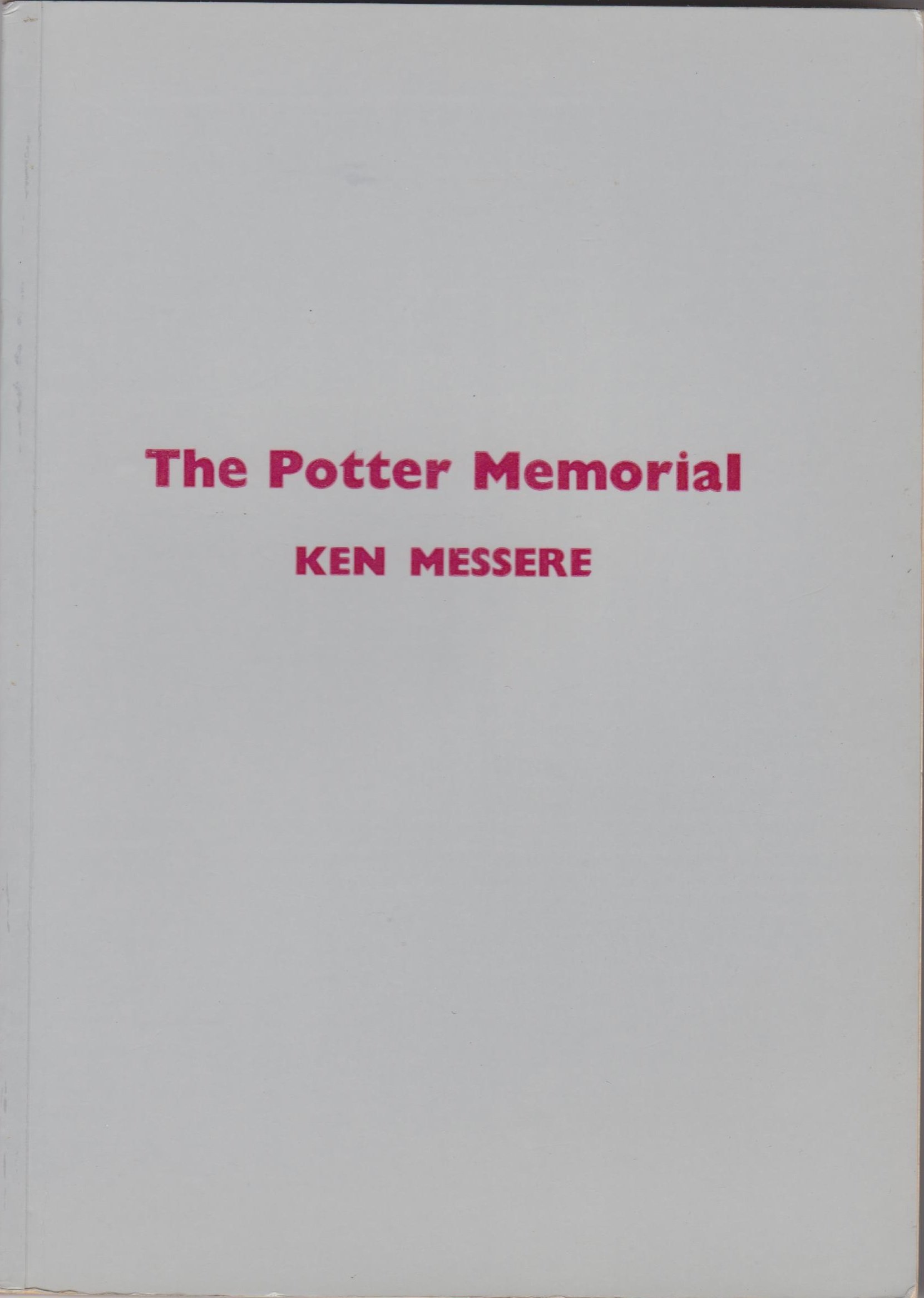
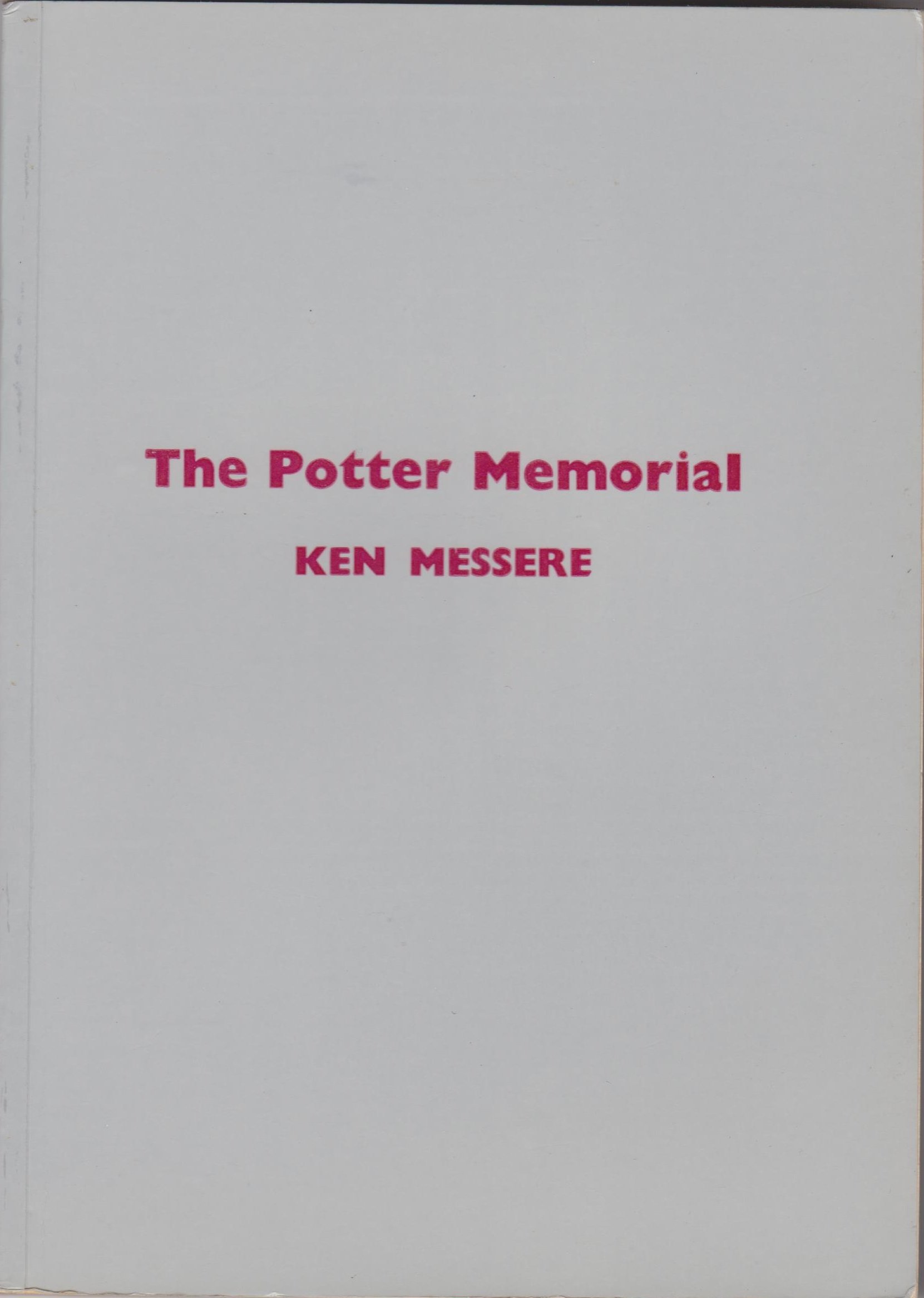
The Potter Memorial, Ken Messere, CHESS (Sutton Coldfield), 1975

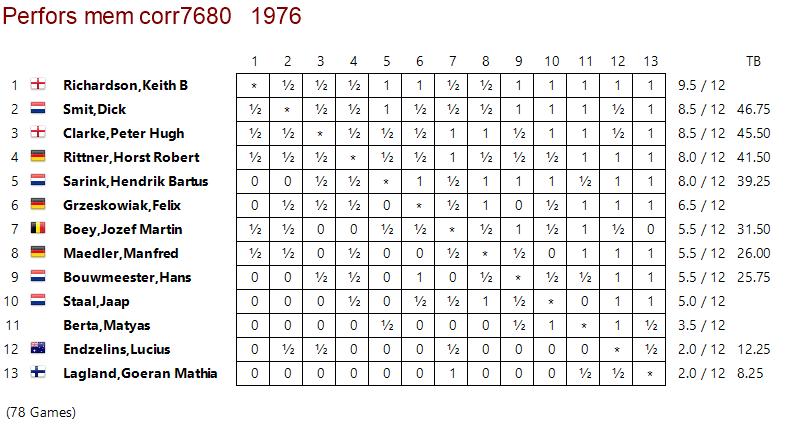
Also in 1979 I began to play in another invitation tournament of thirteen players organised by the Australian Correspondence Chess League, which became a memorial to CJS Purdy, its president and the first world postal champion, who died soon after the tournament began. At the time of writing, this tournament, comprising four grandmasters (including one former world champion and two runners-up) and eight international masters, is still in its early stages.”

From British Chess Magazine, Volume CXXV (125, 2005), Number 5 (May), page 226 we have this obituary:

“Kenneth Charles Messere (16 iv 1928, Richmond – 31 iii 2005, Paris) was one of Britain’s strongest correspondence players (he held the correspondence IM title) and well-known author of books on the subject. After graduating from Oxford University, Ken Messere went to HM Customs and Excise, and thence to the Organisation for Economic Development (OECD) where he became head of the fiscal affairs division and a world expert on fiscal law. He reached the final of 1965-8 world correspondence championship, beating world champions Zagorovsky and Estrin, and wrote the book of the tournament with Hans Berliner (published by BCM)”

From The Potter Memorial by Ken Messere, CHESS (Sutton Coldfield), “Chess for Modern Times” Series, 1975 we have this potted biography:

“Compiler of this book, took 3rd place in 1957 and 2nd in 1968 in the championship of the Postal Chess Club. Scores of 4.5 out of 6 in the ICCF Masters 1957-8 and 4/6 in the 1959-61 Championship took him to victory with 11/5 out of 13 in the 1961-3 semi-finals, securing him his first international master norm and qualifying him for the 5th World Championship 1964-7 in which he scored 5.5, just enough for the IM title, with wins over Zagorovsky, then world champion and Estrin, world champion now. Ken Messere collaborated with Berliner, who won it, in a book on the tournament.

He then switched to play exclusively as a member of the British Olympiad team, taking over 2nd board when Alexander died.

The switch back from rather cautious team play to enterprising individual games in 1974-7 provides some of the subject matter of this book.”
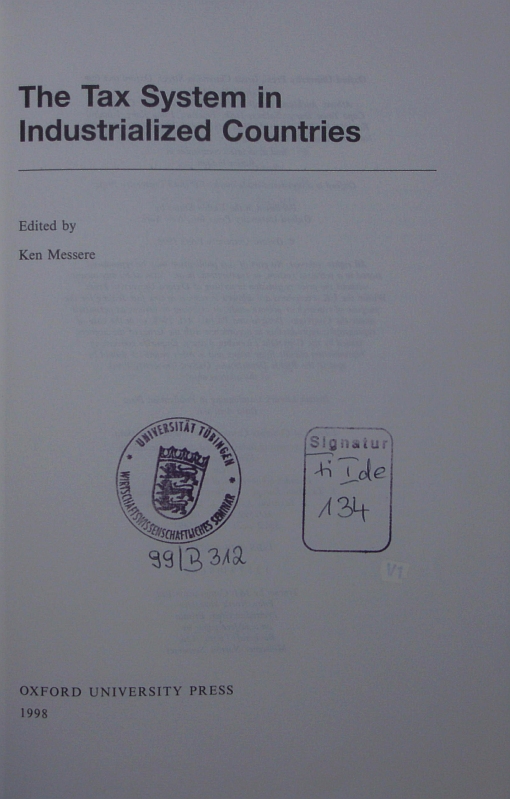
 

The Tax System in Industrialized Countries, Ken Messere, Oxford University Press, 1998, ISBN 10: 1982933135 / ISBN 13: 9781982933135

Death Anniversary for CGM Adrian Hollis (02-viii-1940 26-ii-2013)

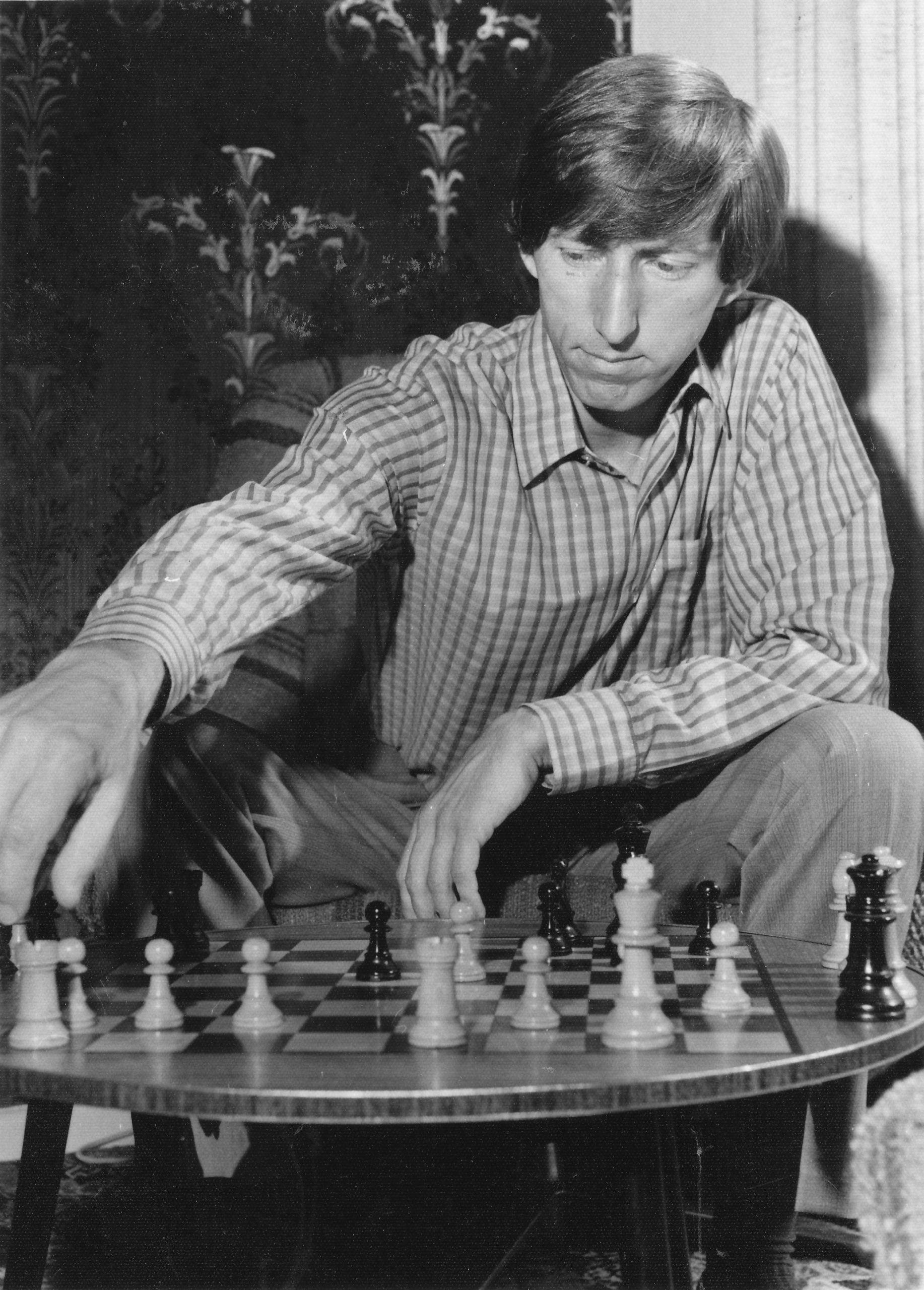
BCN remembers CGM Adrian Hollis who passed away in Wells, Somerset on Tuesday, February 26th 2013  at the age of seventy-two.

Adrian Swayne Hollis was born in Bristol, Avon on Friday, August 2nd 1940. During this critical period the Luftwaffe was wisely extending its Battle of Britain targets to include Britain’s airfields. Furthermore, Bristol was bombed heavily between June 1940 and May 1944. The longest period of regular bombing, known as the ‘Bristol Blitz’ began in autumn 1940 and ended the following spring. The first bombs of the Bristol Blitz fell at around 6 pm on Sunday 24 November 1940.

Adrian was the only child of MI5 director general Roger Henry Hollis KB CBE (later to become Sir Roger Hollis) and Evelyn Esme Hollis (née Swayne) who was Roger’s first wife. Roger was from Wells and Evelyn from Burnham-on-Sea and they were married on July 17th 1937 in Wells Cathedral with Evelyn’s father performing the ceremony.

Adrian won a scholarship in classics to Eton College and then went up to Keble College, Oxford where he took a first in mods and greats. Whilst at Keble Adrian represented Oxford in four varsity matches between 1959 and 1962. Indeed, his support for varsity matches was maintained for many years attending a large number into and beyond the Lloyds Bank era. Stalwart organiser Henry Mutkin would always be sure to extend an invitation.

In 1961 Adrian become the youngest ever West of England Champion at the age of 21.

Adrian met Margaret Mair Cameron Edwards in 1967 at St. Andrew’s University where he taught Classics and she taught German. They married and had two daughters, Jennifer (b. 1974) and Veronica (b. 1977) and a son.

He was the Games Editor for the British Correspondence Chess Association (BCCA) resigning in 1969.

In 1984 Adrian was forced to endure allegations against his father by Chapman Pincher (in CPs book Too Secret too Long) that Sir Roger had been a Soviet spy / mole. These allegations were demonstrated to be false. He may well also have been aware of allegations against his friend and chess mentor Graham Mitchell earlier in 1963. Ironically, it was Adrian’s father who initiated the investigation into Graham. Again, the rumours were shown to be unfounded.

Adrian became a director of the company Centre for Medieval and Renaissance Studies Limited on the September 1st 1996 and resigned on May 12th 2007. He was also a Vice President of the West of England Chess Union (WECU).

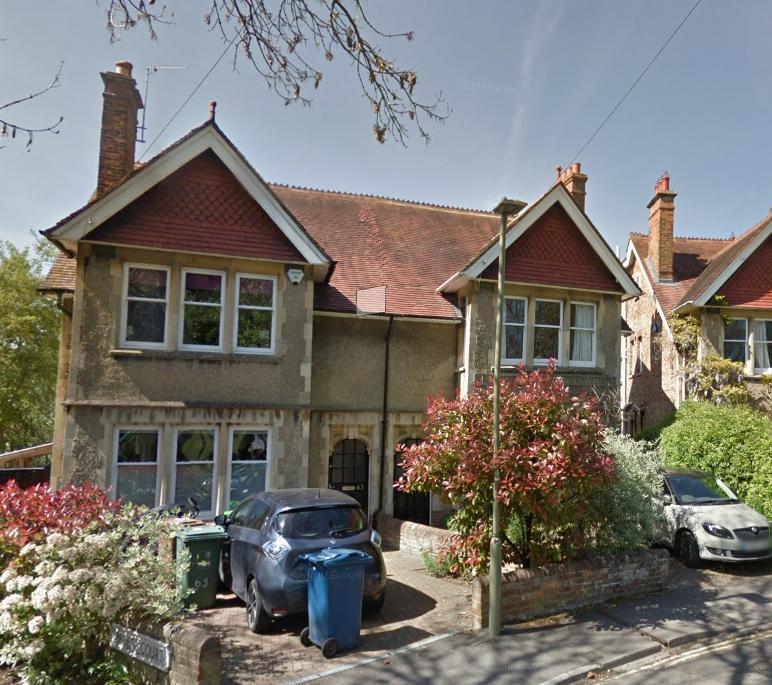
Between 2003 and 2007 (according to the Electoral Roll) Adrian lived at 63, Bainton Road, Oxford, OX2 7AG :

63, Bainton Road, Oxford, OX2 7AG

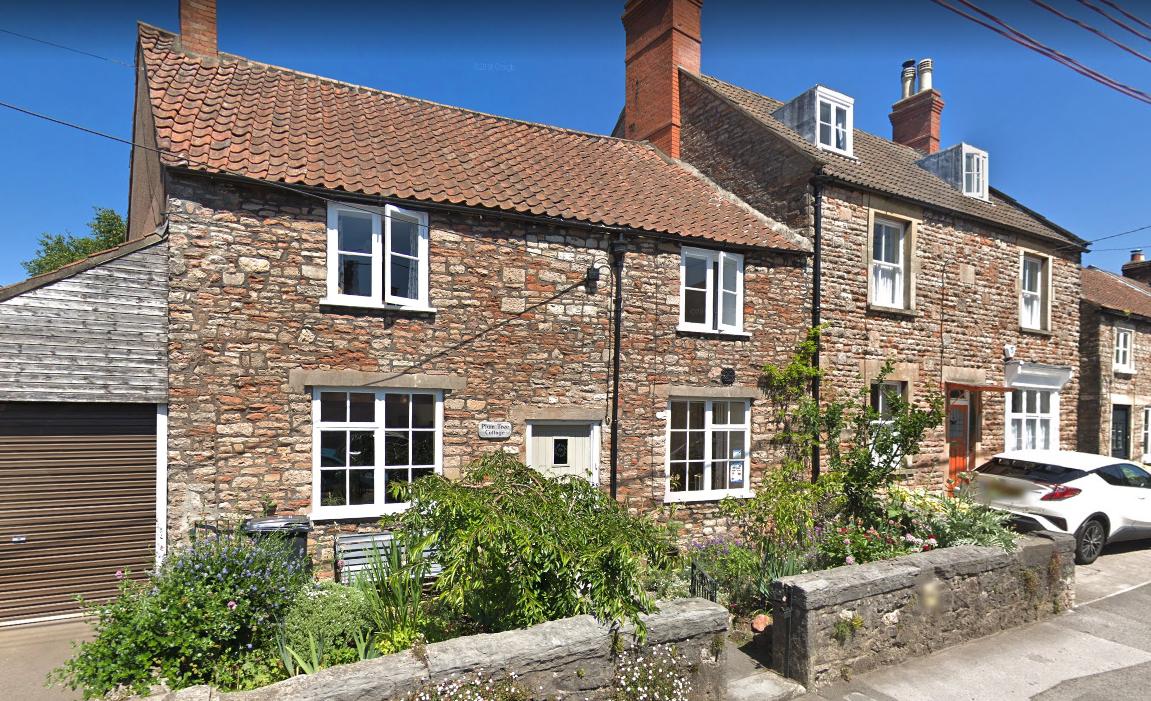
and following his retirement (and the time of the 2008 electoral roll) Adrian had moved to Pound House, Southover, Wells, BA5 1UH :

Pound House, Southover, Wells, BA5 1UH

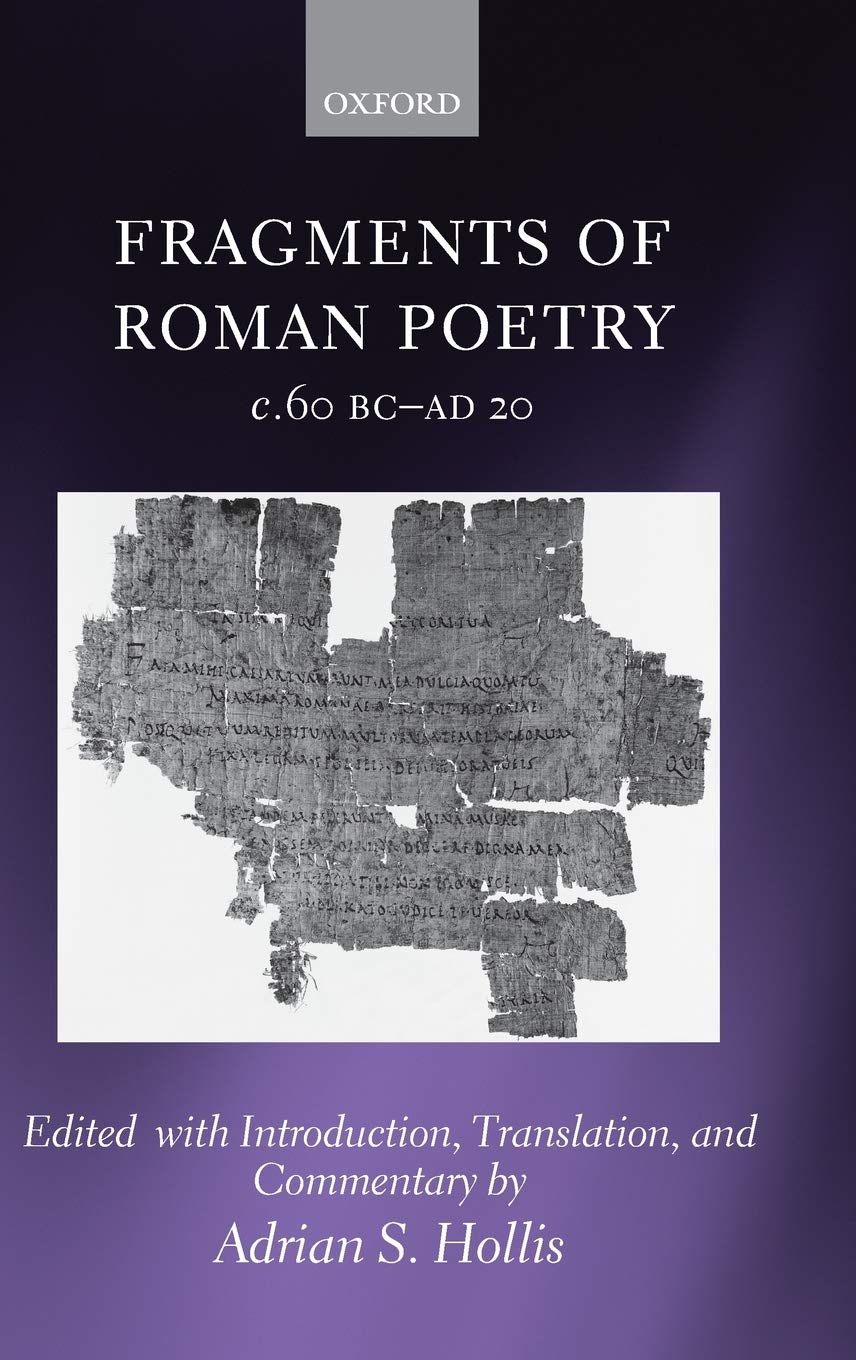
Adrian has written many learned papers and has had two books published :

Fragments of Roman Poetry C.60 BC-Ad 20, AS Hollis, Oxford University Press, 2007

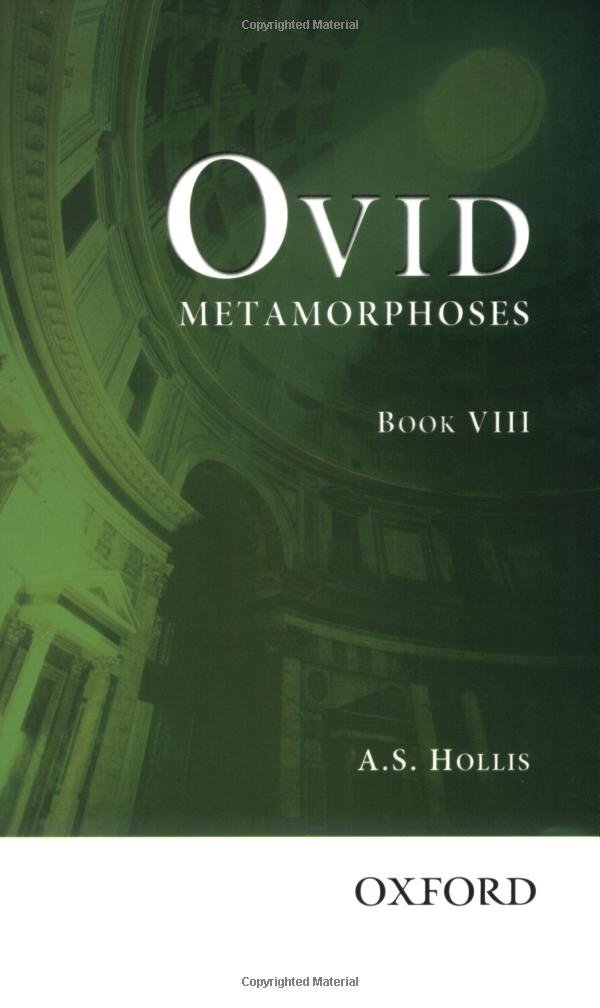
and

Ovid Metamorphoses VIII (Schools Edition): Bk. 8, AS Hollis. Oxford University Press, 2008

During his time at Keble College, Adrian engaged with and mentored many chess players including Jonathan Rowson (1996), David Norwood (1988), Julian Way, David Goodman (1977) and Dharshan Kumaran (1993).

CGM Adrian Hollis
CGM Adrian Hollis

Julian was a personal student of Adrian’s and was kind enough to tell us :

I do remember Adrian well. He could quote Latin verse ad infinitum. He was an expert on Ovid.
In terms of chess he had a huge pile of Informators in his study still in their cardboard packaging. He was very kind to me and insisted I play above him for Keble in the intercollegiate matches.

I gave him a copy of Developments in the Orthodox QGD which I had written in 1987. He was quite taken back when I didn’t want any money for it. He seemed to have quite a lot of respect for me.

I once asked him why he had given me a place at Oxford. He replied that he couldn’t have rejected someone with my passion and enthusiasm.
I kept in touch with Adrian until his passing. He gave me a lovely reference when I resumed my studies in 2007 at Kingston University.
I remember him as a kind and unassuming man. He became a lifelong friend.

CGM Adrian Hollis
CGM Adrian Hollis

From British Chess (Pergamon Press, 1983) Botterill, Levy, Rice and Richardson :

“I was born on August 2nd, 1940, educated at Eton and Christ Church, Oxford and now teach Classics at Keble College, Oxford. I learned the moves at the advanced age of thirteen from a cousin who himself could have made a good chess player had he not been seduced by Philosophy and brain-teasers; all that remains in the mind from these encounters is a vision of perpetually losing my rooks to fianchettoed bishops.

Adrian Hollis. Source : The Potter Memorial

My first ever tournament was the London Boys’ Championship 1956-7. In the opening round fate allotted me Black against David Rumens. As it happened, the brochure included a game of his from the previous year in which he had answered 1.d4 with 1…Nc6, quite enough, in my opinion, to condemn his utterly.

[fen]r1bqkbnr/pppppppp/2n5/8/3P4/8/PPP1PPPP/RNBQKBNR w KQkq – 0 1[/fen]

(Ed: The above position did not impress Adrian hugely.)

This view seemed confirmed when within twelve moves of an advance French I was two pawns up. Then, however, aided by my over confidence he worked up a fierce attack, and I just escaped with a draw. Nevertheless, I won the tournament; an opponent remarked how quickly I played my moves.

Thereafter the game was never so easy, but I did reasonably, well, winning the championships of the British Universities, West of England and East of Scotland, and playing for England quite regularly during the 1960s (including 7.5/12 in six Anglo-Dutch matches).

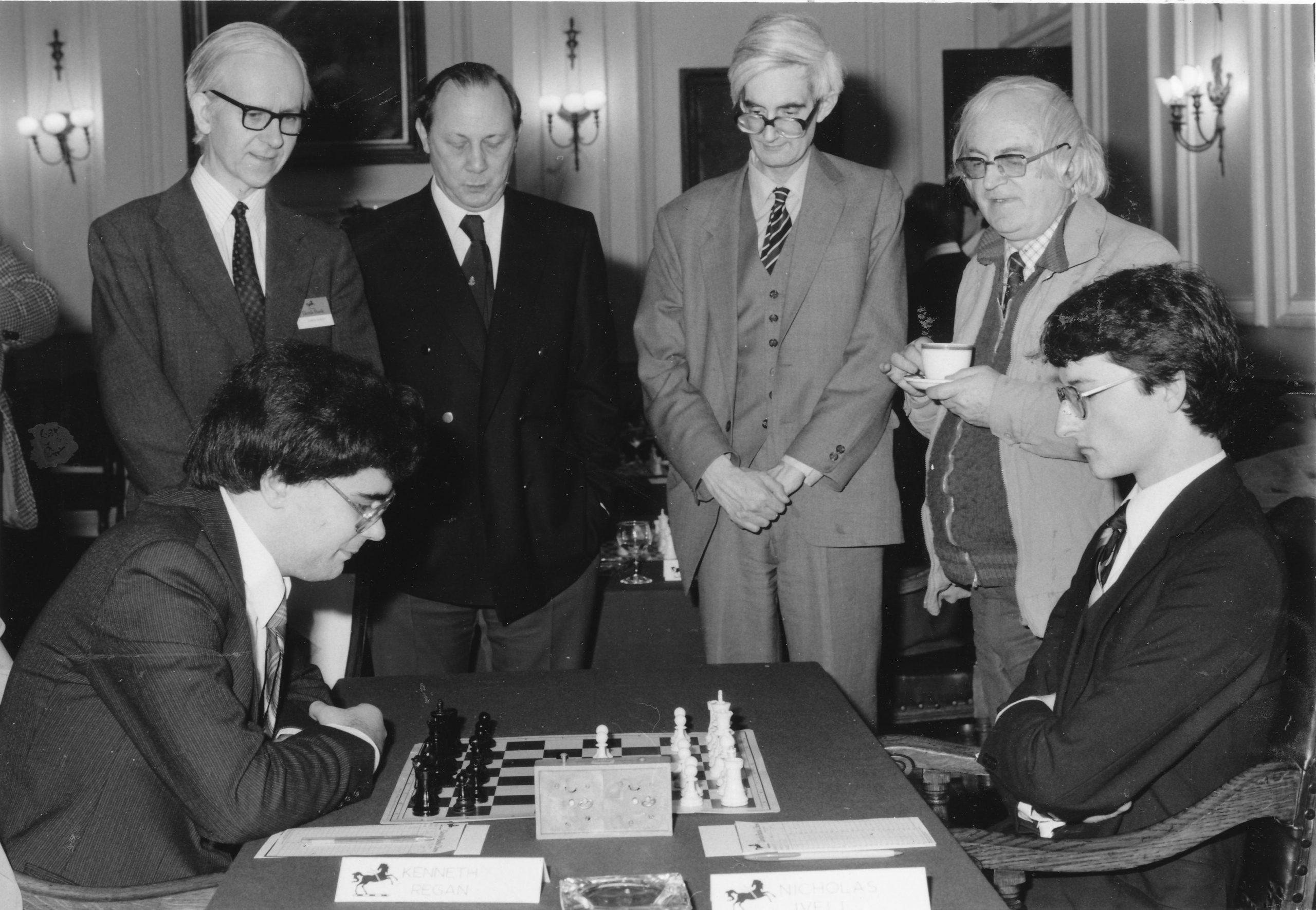
Leonard Barden, Henry Mutkin, Adrian Hollis and Bob Wade observe Nick Ivell vs Ken Regan at the 1983 Varsity match

The high spot of my over-the-board chess was the series of World Student team championships from 1960 to 1964 in glamorous places (Leningrad, Helsinki, Mariánské Lázně, Budva and Cracow); most enjoyable of these being Budva, 1963 where one could bathe every day in the Adriatic and I won the (?) gold medal on Board 1 with 7.5/9., the year after Spassky (this must look good in the records, unless they happen to reveal that for the first time in preliminary and final sections, and that England did not qualify for the top final).

[pgn]
[Event “Paignton”]
[Site “?”]
[Date “1966.09.??”]
[Round “?”]
[White “Hollis, Adrian Swayne”]
[Black “Beach, Richard A”]
[Result “1-0”]
[ECO “E63”]
[Annotator “BCN”]
[PlyCount “35”]
[SourceTitle “BCM, 1966, page 289, game”]

{[%evp 0,25,61,14,28,-9,54,37,37,18,25,20,27,19,18,29,45,2,38,27,5,20,14,3,7,
-4,24,-17]} 1. d4 Nf6 2. c4 g6 3. Nf3 Bg7 4. g3 O-O 5. Bg2 d6 6. O-O Nc6 7. Nc3
a6 8. b3 Rb8 9. Bb2 b5 10. cxb5 axb5 11. d5 Na5 12. Nd4 b4 13. Nb1 $11 {[#]} (
13. Na4 e5 14. Nc2 Bd7 15. Ne3 Bh6 16. Bc1 Bxa4 17. bxa4 b3 18. Bd2) 13… e6 (
13… e5) 14. a3 bxa3 15. Rxa3 c5 $2 ({Correct was} 15… e5 16. Rxa5 exd4 17.
Ra3 $16) 16. dxc6 {[#]} {Black punted} Nc4 $2 {but had missed} 17. Qc1 $1 $18 (
{Black was hoping for} 17. bxc4 Rxb2 18. Nc3 $18) 17… Bh6 18. Qxc4 $1 {
and Black resigned} 1-0
[/pgn]

My best chess was probably played at Mariánské Lázně, 1962, where in successive rounds I had favourable draws with Radulov and Hort, coming close to beating the latter. Ironically, I was awarded the British Master title after I had virtually retired from over-the-board chess.

[pgn]
[Event “Paignton”]
[Site “?”]
[Date “1966.09.??”]
[Round “3”]
[White “Hartston, William Roland”]
[Black “Hollis, Adrian Swayne”]
[Result “0-1”]
[ECO “A05”]
[Annotator “Hollis, Keene & BCN”]
[PlyCount “80”]
[SourceTitle “The Spectator, 20th April”]

{[%evp 0,18,19,-22,0,-31,-9,-5,9,-19,-25,-22,-34,-17,-10,5,21,21,31,5,13]} {
This game appeared in The Spectator, April 20th, 2013 as part of an obituary
from Ray Keene. The original source was British Chess Magazine, 1966, page 302,
game #14,225.} 1. g3 Nf6 2. Bg2 d5 3. Nf3 g6 4. b4 {ASH : This set-up, in fact
a primitive form of the Reti, has been patronised recently by Smyslov, among
others. RDK : This set-up, a form of the Reti, has been championed by,
amongst others, Vassily Smyslov.} Bg7 5. Bb2 O-O 6. O-O a5 ({BCN : Nowadays}
6… c6 7. d3 a5 8. a3 axb4 9. axb4 Rxa1 10. Bxa1 Qb6 11. c3 Nbd7 12. Nbd2 e5
13. e4 Re8 {is the modern (2020) continuation.}) 7. b5 ({ASH :} 7. a3 {, or}) (
{even} 7. c3 {came into consideration here.}) 7… c5 $146 {BCN : This was the
first game to feature this position.} 8. d3 (8. bxc6 {ASH: was quite possible.}
) 8… b6 $146 {BCN : This is the only recorded game with this move.} 9. c4 e6
{ASH : Black decides to maintain a pawn centre, without worrying if the pawns
should hang. RDK : Black decides to create a pawn centre without worrying if
the pawns will end up hanging.} 10. Qc2 Bb7 11. Nbd2 Nbd7 {[#]} 12. e3 {
RDK : White has to prevent … d4 and … e5.} Qc7 13. Rad1 ({ASH : Harston
later preferred RDK: Hartston later preferred} 13. Rac1 Rad8) 13… Rad8 14.
Qb1 e5 {ASH : Somewhat risky, but the only way to progress. RDK : Somewhat
risky, but the only way to make progress.} 15. cxd5 Nxd5 16. Nc4 Rfe8 17. Qa1
f6 18. Rc1 Nf8 19. d4 exd4 20. exd4 Ne6 21. Rfd1 {[#]} Ndf4 $1 $17 {ASH :
Seizing his chance. This sacrifice is necessary because the central position
is beginning to look rickety, and appears to be sound. White has terrible
weaknesses and his queen is marooned far away. RDK : Seizing his chance.
This sacrifice is necessary because the central position is beginning to look
rickety. The sacrifice looks sound as White has terrible weaknesses and his
queen is miles away.} 22. gxf4 Nxf4 23. Ne3 (23. Bh1 Qd7 {ASH : is too slow.})
(23. d5 {ASH : Might be a shade better – see next note.}) 23… Nxg2 $19 24.
Kxg2 Be4 $1 (24… Qf4 {ASH : is also possible but the win would not be so
easy after} 25. d5 Rxd5 26. Rxd5 Bxd5 27. Nxd5 Qg4+ {ASH : etc}) 25. Nf1 Qf4
26. Rc3 cxd4 27. Rcd3 Rd5 28. Qc1 Qg4+ 29. Ng3 Rf5 30. h3 {ASH : There is
nothing better} Bxf3+ 31. Kh2 Rh5 32. Rxf3 Qxf3 33. Nxh5 {ASH : The rest is
straightforward} Qxf2+ {RDK : Now it’s straightforward for Black.} 34. Kh1
Qf3+ 35. Kg1 gxh5 36. Bxd4 Qg3+ 37. Kh1 Qxh3+ 38. Kg1 Qg4+ 39. Kh1 Rc8 40. Qd2
Rd8 {and White resigned.} 0-1
[/pgn]

In 1964 I decided that henceforth for me ‘serious’ chess would mean correspondence, while OTB became a pleasant social activity. My introduction to the postal game had been made about 1955 by a colleague of my father’s, International Master Graham Mitchell, to whom I owe an enormous debt for the patience and kindness with which he played a series of games, bearing with me when I lost interest in worsening positions. The switch to postal play was caused by a number of factors, negative and positive : an impending move to Scotland, where there was less OTB chess, frustration at constantly spoiling good positions through mistakes in time pressure – on the other hand a feeling that correspondence chess should suit an academic temperament, and a particularly fascinating game played in 1963-4 with Michael Haygarth (see below) on which I spent so much time and energy that I almost feared it would ruin my post-graduate exams.

[pgn]
[Event “County Correspondence Championship”]
[Site “?”]
[Date “1963.??.??”]
[Round “?”]
[White “Haygarth, Michael John”]
[Black “Hollis, Adrian Swayne”]
[Result “0-1”]
[ECO “B78”]
[Annotator “ASH & British Chess News”]
[PlyCount “106”]
[SourceTitle “British Chess, page 104”]
[WhiteTeam “Yorkshire”]
[BlackTeam “Somerset”]

{[%evp 0,20,19,38,40,41,66,77,66,55,55,20,70,53,40,34,30,28,47,32,47,-3,30]} 1.
e4 c5 2. Nf3 d6 3. d4 cxd4 4. Nxd4 Nf6 5. Nc3 g6 6. Be3 Bg7 7. f3 O-O 8. Bc4 (
8. Qd2 Nc6 9. O-O-O d5 10. exd5 Nxd5 11. Nxc6 bxc6 12. Bd4 e5 13. Bc5 Be6 14.
Ne4 Re8 15. h4 h6 16. g4 Qc7 17. g5 h5 18. Bc4 Red8 19. Qf2 {is modern
practise.}) 8… Nc6 9. Qd2 Bd7 10. h4 (10. O-O-O Rc8 11. Bb3 Ne5 12. h4 h5 13.
Bg5 Rc5 14. Kb1 b5 15. g4 hxg4 16. h5 Nxh5 17. Nd5 Re8 18. Rxh5 gxh5 19. Qh2
Rxd5 20. Bxd5 Qb6 21. Qxh5 e6 22. Bb3) 10… Rc8 {ASH : At that time people
always played the queen’s rook to c8. Later it became the custom to play …
Qa5 and …Rfc8. Later still fashion swung back.} 11. Bb3 Ne5 (11… h5 12.
O-O-O Ne5) 12. Bh6 {ASH : Of all the attacking possibilities, White chooses a
relatively ineffective one.} ({The modern way is} 12. O-O-O h5 13. Bg5 Rc5 14.
Kb1 b5 15. g4 hxg4 16. h5 Nxh5 17. Nd5 Re8 18. Rxh5 gxh5 19. Qh2 Rxd5 20. Bxd5
Qb6 {transposes to a previous line.}) 12… Nc4 {ASH : A nice little finesse.}
13. Bxc4 Bxh6 ({more usual is} 13… Rxc4 14. Bxg7 Kxg7 15. h5 Qa5 16. hxg6
fxg6 (16… hxg6 $4 17. Qh6+ Kg8 18. Qh8#) 17. O-O-O) 14. Qxh6 ({Believe it or
not,} 14. Bxf7+ $4 Kg7 $1 {ASH : Resigns, has actually occurred in an
international (over-the-board!) tournament. BCN : It was, in fact, Zuidema
– Lee, Zurich Junior, 1964.} (14… Kxf7 $2 15. Qxh6) (14… Rxf7 $2 15. Qxh6
$14)) 14… Rxc4 15. O-O-O Rxc3 16. bxc3 Qa5 {ASH : Black has carried out his
exchange sacrifice under unusually favourable circumstances.} 17. Kb2 Rc8 {[#]}
18. Rd3 ({ASH : In a later game (British Correspondence Championship 1965-6).
S.Milan played against me} 18. Qd2 Rc4 19. Nb3 {, keeping more active chances
(the game was drawnin 50 moves).}) 18… Bb5 19. Nxb5 {The exchange of minor
peices suite Black.} (19. Qg5 Rc5 {would be ingenious but not better.}) 19…
Qxb5+ 20. Ka1 Rc5 21. Rb1 Qa6 22. Qc1 Ra5 23. Rb2 b6 24. Qb1 Nd7 25. Rb4 Ne5
26. Re3 Nc4 {[#] ASH : Black’s knight has reached ideal squares, and for the
next few moves makes the White rooks dance to his tune.} 27. Rd3 Rc5 28. Qe1
Ra5 29. Qb1 Ne5 30. Re3 ({ASH : Not} 30. Rd5 Rxd5 31. exd5 Qe2 {and White’s
position collapses.}) 30… Rc5 31. Rb3 b5 32. Qd1 Qc6 33. Qd4 Nc4 34. Rd3 a5
35. g4 {ASH : Natural, but in the end providing a target.} a4 36. Rb4 Ne5 37.
Re3 Qc8 $1 38. Kb1 {[#] ASH : Something must fall so White decides to return
the exchange.} h5 $1 39. gxh5 Nc6 40. Qd3 Nxb4 41. cxb4 Rxh5 42. e5 {Unable to
protect his weaknesses, White tries to break out.} Rxe5 43. Rxe5 dxe5 44. Qxb5
Qc3 45. Qxa4 Qxf3 46. b5 e4 47. b6 e3 48. Qb3 Qf1+ 49. Kb2 e2 50. b7 e1=Q 51.
b8=Q+ Kh7 52. Q8b6 Qc1+ 53. Kc3 Qcf4 {White resigns. A remarkable position,
with four queens on the board. Material is level, but the exposed White king
is helpless. This game was played just before I left Oxford to teach in
Scotland (where, at that time, over-the-board chess was not so strong as it
has since become), and it was to a great extent responsible for turning my
main interest to postal chess.} 0-1
[/pgn]

In 1964-5 I qualified for the British Championship by winning a candidates’ section with 100%, and then competed three times in the British Championship itself (1965-6, 1966-7, 1970-71), winning on each occasion (the first time jointly with S. Milan) and remaining unbeaten. International play also proved successful, and I soon collected the two norms necessary for the IM title (Ed: awarded in 1970).

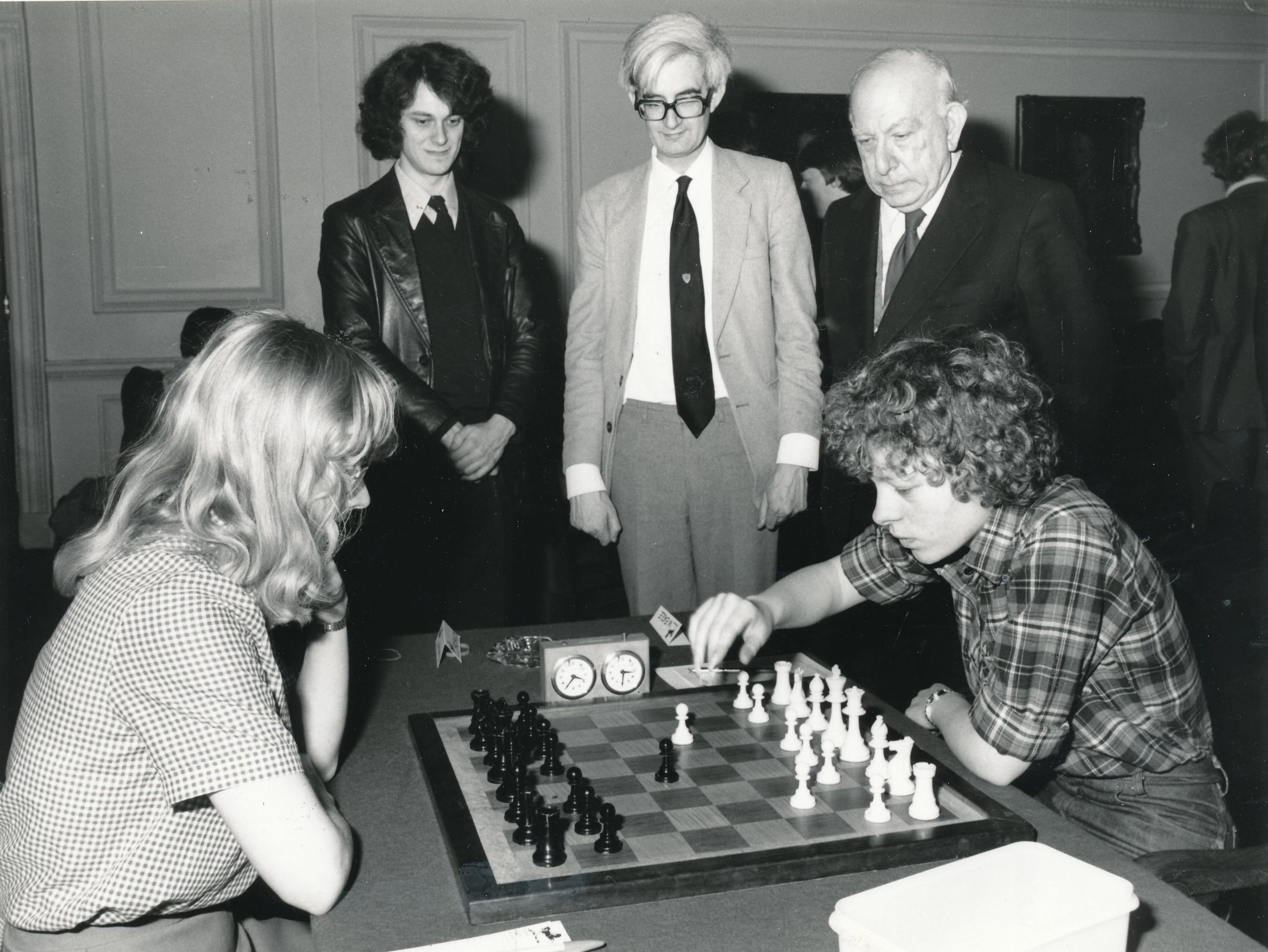
Linda Brownson (Newnham & Basildon), left, playing Maria Eagle (Pembroke & Formby) being observed by John Nunn, Adrian Hollis and Harry Golombek posing for the obligatory "staring at the board" picture for the 1981 Varsity Match sponsored by Lloyds Bank.
Linda Brownson (Newnham & Basildon), left, playing Maria Eagle (Pembroke & Formby) being observed by John Nunn, Adrian Hollis and Harry Golombek posing for the obligatory “staring at the board” picture for the 1981 Varsity Match sponsored by Lloyds Bank.

The first chance for the Grandmaster title came on Board 1 in the Seventh Olympiad final. Despite a rare loss with the White pieces(my only defeat with white for a stretch of 15 years), things went well, including a lucky win against the reigning World Champion, Horst Rittner, and the enticing prospect beckoned if only I could beat the Russian Moiseyev. He held a slight advantage since the opening, but I thought I saw the chance of tempting him to an incorrect sacrifice. Back came his move; he had indeed made the sacrifice and the envelope burnt a hole in my pocket during an important meeting (my mind was elsewhere). After a mere two days’ thought I sent my reply. The post between England and the USSR takes about a month for the return trip. Soon after posting my move, as I was walking from the Ashmolean Museum to Keble, just passing the front gate of St. John’s, the realisation of what I had overlooked hit me, and there followed an inexorable wait for the death blow which I now saw only too clearly.

So no Grandmaster title, but Great Britain still took the bronze medals, and I scored 6/9 (+5=1-2).

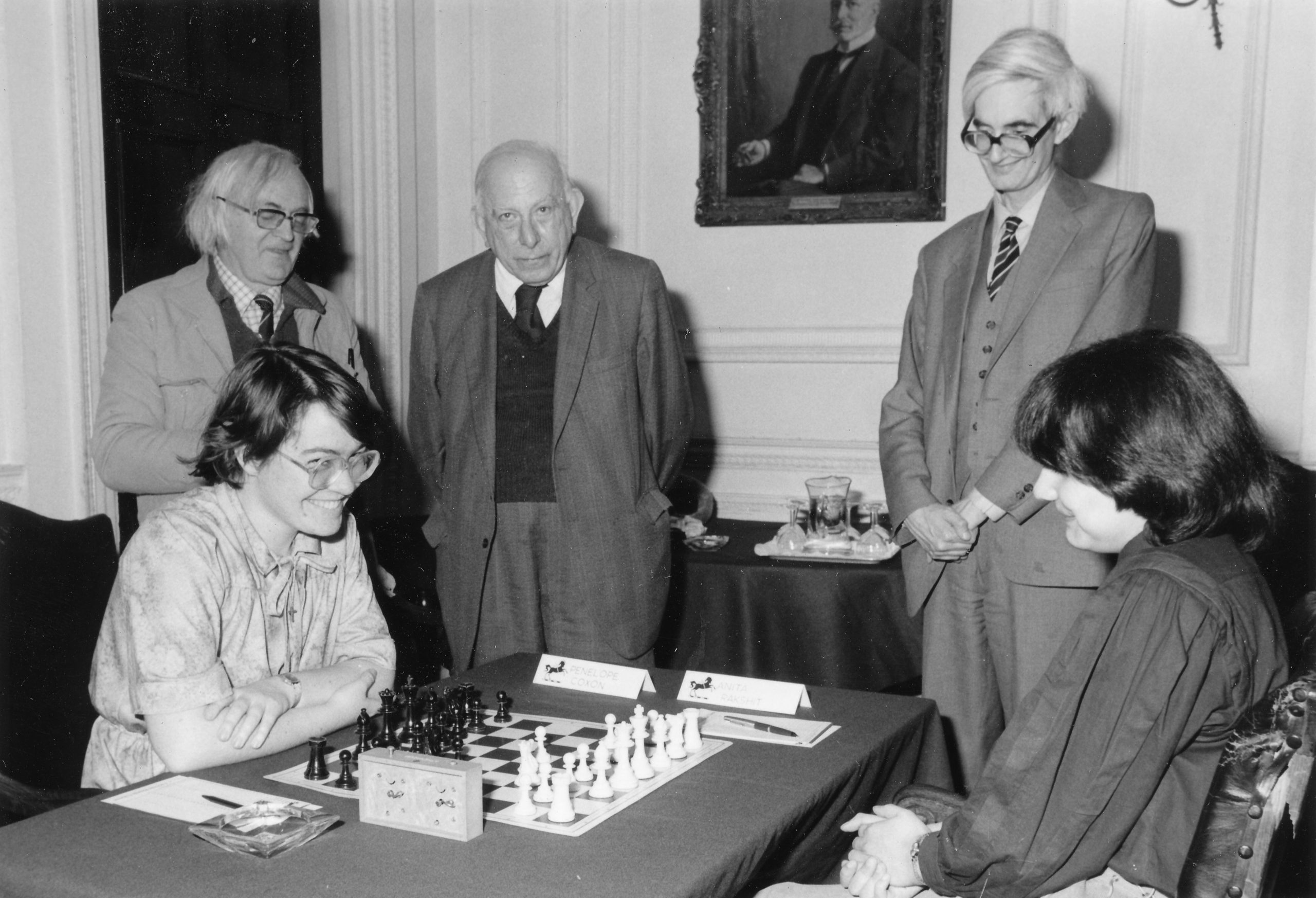
Bob Wade, Harry Golombek and Adrian Hollis observe Penny Coxon (Newnam) and Anita Rakshit (St. Hilda's) during the 1983 Varsity match sponsored by Lloyds Bank
Bob Wade, Harry Golombek and Adrian Hollis observe Penny Coxon (Newnam) and Anita Rakshit (St. Hilda’s) during the 1983 Varsity match sponsored by Lloyds Bank

Another opportunity came when the British Postal Chess Federation organised a tournament (1974-6) in memory of its former secretary RJ Potter.  This started inauspiciously for me with a heavy defeat at the hands of Grandmaster Endzelins of Australia., a country which has so far provided my least favourite opposition (not only is the postage extremely expensive, but my score to date is 0/2).

From The Potter Memorial, Ken Messere, Chess (Sutton Coldfield), 1979 we have this potted biography from Ken Messere :

The Potter Memorial, Ken Messere, Chess (Sutton Coldfield), 1979

“Adrian Hollis is 36, was educated at Eton and Oxford, has written two books on the poet Ovid and is a Fellow and Tutor in Classics at Keble College, Oxford. He is a British Master at over the board chess and has been Champion of British Universities, West of England and East Scotland.

In 1964, he went to teach at St. Andrews University where his wife, Margaret, taught German. They were married and moved to Keble College in 1967 and now have two daughters. Jennifer is nearly five and Veronica is two.

Adrian began to concentrate on correspondence chess in 1964 and won the British Correspondence Chess Championship jointly in 1966 and outright in 1967 and 1971. He won the I.M. title in 1970 and his fine score of 6/9 on top board for Great Britain in the I.C.C.F. VIIth Correspondence Chess Olympiad Final contributed to the team’s winning the bronze medal in this event.”

and now back to Adrian’s British Chess article…

Thereafter my fortunes improved; one opponent accepted too trustingly some faulty analysis by Szabo in Informator (for a while it seemed that the Hungarian might earn me not one but two points). The East German Dr. Baumbach failed to find an improvement in a line with which I had been successful in the Seventh Olympiad Final.

[pgn]
[Event “Potter Memorial corr7376”]
[Site “corr”]
[Date “1973.??.??”]
[Round “?”]
[White “Hollis, Adrian Swayne”]
[Black “Baumbach, Fritz”]
[Result “1-0”]
[ECO “D44”]
[Annotator “Baumbach, ASH and BCN”]
[PlyCount “63”]
[EventDate “1973.??.??”]
[EventType “tourn (corr)”]
[EventRounds “12”]
[SourceTitle “Myers”]
[Source “Myers”]
[SourceDate “2012.11.12”]
[SourceVersion “1”]
[SourceVersionDate “2012.11.12”]
[SourceQuality “1”]

{[%mdl 33284][%evp 0,63,19,31,32,-10,25,31,29,4,44,-4,-8,27,27,28,23,24,23,20,
42,40,29,37,29,-15,64,23,79,45,12,14,15,24,38,32,81,93,66,30,25,25,35,-38,122,
205,196,191,184,184,272,340,340,293,333,518,527,532,534,534,534,534,527,533,
537,541] Speelman: Really serious correspondence chess players are a breed
apart. In order to play “over-the-board” chess one must be able to maintian a
reasonable level of concentration for up to five hours at a time; and also
possibly to produce a quite prodigious amount of energy after (say) about four
and a half hours. Correspondence players, however, must require a quite
different nervous system. In their case a game may last months or even years.
It will be necessary to sustain sufficient interest in, and contact with,
possibly dozens of games simultaneously. There will not be a sudden explosion
of frenetic activity in any game–i.e., time trouble–but rather a long hard
grind of analytical work, work which can involve many hours of analysis on a
single critical move. Adrian Hollis is, together with Keith Richardson and
Peter Clarke, one of Great Britian’s three correspondence Grandmasters. A
classics don at Keble College, Oxford, he makes the time to play up to thirty
(!) correspondence games simultaneously. This game, against the East German
Fritz Baumbach, is from the Potter Memorial tournament which Hollis won to
gain the Grandmaster title. It is a very fine example of correspondence chess.
An exceedingly complicated theoretical opening leaves White with a clear
advantage, which he exploits with beautifully precise middlegame play.} 1. d4 {
Myers Speelman Baumbach} d5 2. c4 c6 3. Nf3 Nf6 4. Nc3 e6 5. Bg5 dxc4 6. e4 b5
7. e5 h6 8. Bh4 g5 9. Nxg5 {ASH : More natural} ({than} 9. exf6 {which also
has its supporters.}) 9… hxg5 ({ASH : Round about 1957 I spent many happy
hours analysing} 9… Nd5 {, a move which has recently been played and
recommended by George Botterill.} {is an intriguing possibility, which remains
quite unclear after} 10. Nxf7 Qxh4 11. Nxh8 Bb4) 10. Bxg5 Nbd7 11. exf6 ({
ASH : The immediate} 11. g3 {avoids any danger on the long white diagonal, but
black can cause complications by} Qa5 12. exf6 b4) 11… Bb7 12. g3 $1 Qb6 ({
ASH : Whites move order may seem peverse, in that it invites} 12… c5 {
Answered by} 13. d5 {However, Black should look again at 12…c5, and after 13.
d5 probably 13…Ne5.}) 13. Bg2 O-O-O 14. O-O Ne5 {ASH : Botvinnik’s move in
the fifth game of the 1954 World Championship match against Smyslov, who
declined to put the idea to the test,} (14… c5 {is still possible.}) 15. dxe5
$1 ({ASH : Smyslov replied} 15. Qe2 {with a minimal advantage. Presumably
Botvinnik had taken into account white’s queen sacrifice, but it still seems
very strong.} Qxd4 16. Be3 Qd3 17. Rfd1 Qxe2 18. Rxd8+ Kxd8 19. Nxe2 Nd3 20. b3
Kc7 21. bxc4 bxc4 22. Bxa7 c5 23. Rb1 Bxg2 24. Bb8+ Kc6 25. Kxg2 Bh6 26. f4 e5
27. a4 exf4 28. gxf4 c3 29. Nxc3 Bxf4 30. Bxf4 Nxf4+ 31. Kg3 Nh5+ 32. Kg4 Nxf6+
33. Kg5 Nd5 34. Nxd5 Kxd5 35. h4 f6+ 36. Kg4 c4 37. a5 c3 38. a6 Ra8 39. Kf5
Rxa6 40. h5 Ra2 41. Kxf6 {Smyslov – Botvinnink, 1954.}) 15… Rxd1 {[#]} 16.
Rfxd1 {MegaBase 2020 has moved the wrong rook to d1 but the position
transposes. Attempting to hack the pgn breaks many of the sub-variations as
there would be positions where either rook may move to e1 but the notation
says merely Re1. Ho hum!} ({The actual game move order was} 16. Raxd1 Bc5 17.
Ne4 Bd4 18. Nd6+ Kc7 19. Bf4 Rf8 20. Bh6 Rh8 21. Bg7 Rd8 22. Nxf7 Bxf2+ 23. Kh1
Rxd1 24. Rxd1 {transposes.}) 16… Bc5 (16… c5 17. Bf4 (17. Ne4 Bd5 18. h4 (
18. Bf4 Qb7 19. Rxd5 exd5 20. Nc3 Bh6 21. Bxh6 Rxh6 22. Rd1 b4 23. Nxd5 Qa6 24.
Ne7+ Kc7 25. h4 Rh8 26. Rd6 Qa5 27. Nd5+ Kb8 28. Rd7 b3 29. axb3 Qe1+ 30. Bf1
Rg8 31. Rxf7 Rxg3+ 32. fxg3 Qxg3+ 33. Bg2 Qe1+ 34. Bf1 Qg3+ 35. Kh1 Qxh4+ 36.
Kg2 {1/2-1/2 Eldridge,M-Van Damme,L/corr ICCF 2009/}) 18… Qc6 19. Re1 Kb8 20.
f3 a5 21. Kf2 a4 22. Nc3 Qa6 23. Nxd5 exd5 24. e6 fxe6 25. Bh3 a3 26. Rab1 Qa4
27. Re2 e5 28. bxa3 Kc7 29. Rbe1 Bd6 30. f7 Rf8 31. Be6 d4 32. Bh6 d3 33. Bxf8
Bxf8 34. Rd2 c3 35. Rxd3 Qc2+ 36. Ke3 c4 37. Rd7+ Kb6 38. Red1 Bc5+ {0-1
Rutkowski,P-Konieczny,A/corr ICCF 2009/}) (17. Bxb7+ Qxb7 18. Rd2 (18. Re1 a5
19. Ne4 a4 20. Bf4 Qa8 21. a3 Kc7 22. Rac1 Qc6 23. Rc2 Qa8 24. f3 Bh6 25. Bxh6
Rxh6 26. Rd1 Rh5 27. Rdd2 Rxe5 28. h4 Rxe4 29. fxe4 Qxe4 30. Re2 Qg4 31. Kh2 b4
32. Rcd2 c3 33. bxc3 b3 34. Kg2 Qf5 35. Re1 Qxf6 {0-1 Hassim,U-Kireev,S/corr
IECG 2009/}) 18… b4 19. Rad1 Qc6 20. Rd8+ Kc7 21. Ne2 Qa4 22. Be3 Bh6 23.
R1d7+ Qxd7 24. Rxd7+ Kxd7 25. f4 Kc6 26. Kg2 a5 27. h4 Bf8 28. Kf3 Kd5 29. Bc1
c3 30. bxc3 c4 31. Ng1 b3 32. a4 Kc6 33. Bb2 Bc5 34. Ne2 Rd8 35. Nd4+ Bxd4 36.
cxd4 Kd5 37. Ke3 Rg8 38. Kf3 c3 39. Bxc3 Rc8 40. Bb2 Rc2 41. Ba3 Ra2 42. Bc1
Rxa4 43. Ke3 Ra2 44. Kd3 b2 45. Bxb2 Rxb2 46. f5 a4 47. fxe6 Kxe6 {0-1 Epiney,
F-Zielinski,S/corr IECG 2003/}) 17… b4 (17… Bc6 18. Rd2 Bxg2 19. Kxg2 a6
20. Rad1 Qc7 21. Ne4 a5 22. f3 a4 23. h4 a3 24. bxa3 Rh5 25. Kh3 Rh8 26. g4 Qa5
27. Rd7 c3 28. Rxf7 c2 29. Rc1 Qxa3 30. Kg3 c4 31. g5 Qd3 32. Rxf8+ Rxf8 33. g6
{1-0 Ingersol,H-Almeida,R/corr IECG 2009/}) 18. Ne4 Bd5 (18… Qb5 19. Rac1
Bxe4 20. Bxe4 Qa4 21. Rd2 c3 22. bxc3 bxc3 23. Re2 c4 24. Kg2 Qa5 25. h4 Ba3
26. Rh1 Bf8 27. g4 Qd8 28. h5 Qd4 29. g5 Rg8 30. Kf3 Rh8 31. Kg4 {1-0 Lehnhoff,
H-Djoudi,A/corr IECG 2006/}) 19. Rxd5 exd5 20. Ng5 Bh6 21. Nxf7 Bxf4 22. gxf4
Rf8 23. Bxd5 c3 24. Nd6+ (24. bxc3 bxc3 25. Nd6+ Kc7 26. Rc1 c2 27. Bb3 Rg8+
28. Kf1 Rg4 29. Rxc2 Qc6 30. Be6 Rxf4 31. Kg1 Qf3 32. Rxc5+ Kb6 33. Rb5+ Kc6
34. Bd5+ Qxd5 35. Rxd5 Kxd5 36. Nc8 Kxe5 37. Nxa7 Rxf6 {1/2-1/2 Schrancz,
I-Kireev,S/corr IECG 2009/}) 24… Kd8 25. Nc4 Qb5 26. bxc3 bxc3 27. Ne3 Qb4
28. Bb3 Qxf4 29. Rd1+ Kc8 30. Rd5 Kb8 31. Rxc5 Qg5+ 32. Kf1 Rxf6 33. exf6 Qxc5
34. f7 a5 35. Nd5 a4 36. Nb6 Kc7 37. Nxa4 c2 38. Bxc2 Qc4+ 39. Kg2 Qxf7 40. Bb3
Qg7+ 41. Kf3 Qd4 42. Kg3 Kd6 43. Kg2 Ke5 44. Kg3 Qe4 45. h3 Qf4+ 46. Kg2 Qd4
47. Kg3 Ke4 48. Bc2+ Kd5 49. Bb3+ Ke5 50. Kf3 Kf5 51. Kg3 Kg5 52. Kf3 Kh4 53.
Kg2 Qf6 54. Kf1 Kxh3 55. Ke2 Qd4 56. Be6+ Kg2 57. Bb3 Qe4+ 58. Kd2 Kxf2 59. Nb2
Qe2+ 60. Kc3 Qe5+ 61. Kc2 Ke2 62. Nc4 Qd4 63. a4 Qf4 64. Kc3 Qf6+ 65. Kc2 Qd4
66. Na3 Qd2+ 67. Kb1 Qc3 68. Ka2 Qf6 69. Nc4 Kd3 70. Nb2+ Kc3 {0-1 Skeels,
J-Kireev,S/corr IECG 2008/}) (16… b4 17. Ne4 c5 (17… Qa5 18. Bf4 Bc5 19.
Rac1 (19. h4 c3 20. bxc3 bxc3 21. Rac1 Bb4 22. Nd6+ Bxd6 23. Rxd6 Rd8 24. Rxd8+
Kxd8 25. h5 Qxa2 26. h6 Qe2 27. h7 Qh5 28. Be4 Ba6 29. Kg2 {1-0 Borisenko
Belovba,V-Matveeva,S/Tbilisi URS 1973/}) 19… c3 20. bxc3 bxc3 21. Rxc3 Bb4
22. Rb3 Rd8 23. Rdb1 c5 24. Nd6+ Rxd6 25. Bxb7+ Kxb7 26. exd6 Kc6 27. Rd1 Kd7
28. a3 Qa4 29. Rdb1 a5 30. axb4 c4 31. Rc3 Qa2 32. Rbc1 axb4 33. Rxc4 {1-0
Kolin,J-Menges,G/corr ICCF 2003/}) 18. a3 Bd5 (18… c3 19. bxc3 b3 20. c4 Qa6
21. Nd2 Bxg2 22. Kxg2 Qb7+ 23. f3 a5 24. a4 Qb4 25. Rab1 b2 26. Ne4 Qxa4 27.
Rd2 Qxc4 28. Rdxb2 a4 29. Be3 a3 30. Rb8+ Kc7 31. R1b7+ Kc6 32. Rxf7 a2 33. Ra7
{1-0 Rensen,M-Schild,R/corr IECG 2009/}) 19. axb4 Qb7 20. Rxd5 exd5 21. Nc3
cxb4 22. Nxd5 Qd7 23. Be3 Kb8 24. Bf4 Qe6 25. Be3 Qd7 26. Ra5 c3 27. bxc3 b3
28. Bxa7+ Qxa7 29. Rxa7 Kxa7 30. Be4 b2 31. f4 Ba3 32. Kg2 Rc8 33. h4 Rc5 34.
Ne7 Rxc3 35. h5 Re3 36. Bf5 Re2+ 37. Kf3 Rh2 38. Kg4 Kb6 39. Kg5 Rh3 40. g4 Bc5
41. Be4 Kb5 42. h6 Bf2 43. Nf5 Kc4 44. h7 Kb3 45. Nh6 Re3 46. Bb1 Re1 47. h8=Q
Rxb1 48. Qb8+ Kc2 49. Qc7+ Kd2 50. Qa5+ Kc2 51. Qa4+ Kc3 52. Qc6+ Kd2 53. Qd5+
Kc1 54. Qh1+ Kc2 55. Qg2 {1-0 Illescas Cordoba,M-Morovic Fernandez,I/Spain ESP
1993/}) (16… Qc5 17. Bf4 b4 18. Ne4 Qa5 19. Rd4 c5 20. Rxc4 Bd5 21. Rcc1 Bxe4
22. Bxe4 Bh6 23. Bxh6 Rxh6 24. Rc4 Kc7 25. Rac1 Kb6 26. a3 bxa3 27. bxa3 Qxa3
28. Rb1+ Kc7 29. Rb5 Rh5 30. Rcxc5+ Kd7 31. Kg2 Qa1 32. Bc6+ Kd8 33. Rb8+ Kc7
34. Rb7+ Kd8 35. Bd7 {1-0 Budde,V-Hoffmann,H/BL GER 1982/}) (16… Bb4 17. Ne4
Rd8 18. h4 Rd3 19. h5 Qd8 20. Rxd3 cxd3 21. Rd1 Kc7 22. a3 Ba5 23. Nd6 Qg8 24.
Be3 Bb6 25. Bxb6+ Kxb6 26. Bf3 Qh7 27. b4 Ba8 28. g4 a5 29. Kg2 axb4 30. axb4
Bb7 31. Kg3 Ba6 32. Be4 Qg8 33. h6 c5 34. h7 Qf8 35. bxc5+ Kxc5 36. Nxf7 {
1-0 Mollov,E-Thierry,C/Orange FRA 1994/}) (16… Qa5 17. Ne4 Bb4 (17… c5 18.
Nd6+ Bxd6 19. Bxb7+ Kxb7 20. Rxd6 c3 21. bxc3 Qxc3 22. Rad1 Rc8 23. Rd7+ Rc7
24. Re7 Kc8 25. h4 b4 26. Rc1 Qb2 27. h5 Qe2 28. h6 Qh5 29. Be3 Rd7 30. Kg2 Rd3
31. Rxc5+ Kd8 32. Rb5 Kc8 33. Bxa7 Qf3+ 34. Kh2 Qh5+ 35. Kg2 Qf3+ {1/2-1/2
Loskamp,S-Behle,B/Porz GER 1995/}) 18. h4 Qc7 19. a3 Bf8 20. Nd6+ Bxd6 21. exd6
Qd7 22. a4 a6 23. Be3 Rh5 24. Bf3 Rf5 25. Bg4 Rd5 26. Bf4 Rxd1+ 27. Rxd1 c5 28.
axb5 axb5 29. h5 b4 30. h6 Be4 31. Ra1 c3 32. bxc3 bxc3 33. f3 Bh7 34. Ra5 c2
35. Rxc5+ Kd8 36. Rc7 Qa4 37. Bxe6 Qa1+ 38. Kf2 Qd4+ 39. Kg2 c1=Q 40. Bxc1 fxe6
41. Rxh7 Qxd6 42. Ra7 Qc5 43. h7 Qxa7 44. h8=Q+ {1-0 Poletov,V-Kuznezov,A/Tula
RUS 2006/}) 17. Ne4 $1 Bd4 (17… Rd8 $2 18. Rxd8+ Kxd8 19. Rd1+ Kc7 20. h4 $16
Bd4 21. h5 c5 22. h6 Bxe4 23. Bxe4 Bxe5 24. h7 Qb8 25. Kg2 Qh8 26. Rh1 Kb6 27.
Rd1 Kc7 28. Bf4 Bxf4 29. gxf4 Qxf6 30. Rh1 Qh8 31. f5 exf5 32. Bxf5 Kd6 33. Rh5
f6 34. f4 Qe8 35. Bg4 Qh8 36. Kf1 b4 37. Bf5 Kd5 38. Rh3 Kd4 39. Rg3 Qa8 40.
Rh3 Qh8 41. Kf2 a5 42. Rh1 c3 43. Rd1+ Kc4 44. b3+ Kb5 45. Rd6 c4 46. Rd5+ Kc6
47. bxc4 a4 48. Be4 Kc7 49. Rc5+ Kd6 50. Rc6+ Ke7 51. Bf5 Qd8 52. Kg3 b3 53.
axb3 axb3 54. Rc8 Qxc8 55. Bxc8 c2 56. h8=Q c1=Q 57. Qg7+ Kd6 58. c5+ Kd5 59.
Qb7+ Kd4 60. Qb4+ Kd5 61. Bb7+ Ke6 62. Qe4+ Kf7 63. Qh7+ Ke6 64. f5+ Ke5 65.
Qe7+ Kd4 66. Qxf6+ Kc4 67. Qe6+ Kb4 68. f6 Qg1+ 69. Bg2 b2 70. Qe4+ Kc3 71. f7
b1=Q 72. Qxb1 Qxb1 73. f8=Q Qe1+ 74. Kh2 Qe5+ 75. Kg1 Qe1+ 76. Qf1 Qe3+ 77. Qf2
Qc1+ 78. Bf1 Qg5+ 79. Kh2 Qh5+ 80. Kg2 Qd5+ 81. Qf3+ Kd4 82. c6 Qg5+ 83. Kh3
Qh6+ 84. Kg3 Kc5 85. Bg2 Qg5+ 86. Qg4 Qe5+ 87. Kh4 Qe1+ 88. Qg3 Qb4+ 89. Kh5
Qb2 90. Qg5+ Kd6 91. Qd5+ Ke7 92. Qd7+ Kf6 93. Qd6+ Kf5 94. Qg6+ {1-0 Alster,
L-Kupka,S/Prague CSR 1963/}) 18. Nd6+ $1 (18. Rd2 Rd8 19. Rad1 c5 20. Nd6+ Rxd6
21. Bxb7+ Qxb7 22. exd6 Qf3 23. Re1 e5 24. d7+ Kd8 25. h4 Qxg3+ 26. Kf1 Qh3+
27. Ke2 Bxb2 28. Rb1 Bc3 29. Rd6 Bd4 30. Be3 Qg4+ 31. Kf1 a6 32. Ra1 Qh3+ 33.
Kg1 Qf5 34. h5 Qxh5 {0-1 Tan Hiong Liong-Sydor,A/Warsaw POL 1959/}) (18. Be3
Bxe3 19. fxe3 Qxe3+ 20. Kh1 Kb8 21. Re1 Qd4 22. Nd6 Qf2 23. Nxf7 c5 24. Rg1 Rh5
25. Rad1 Qxg3 26. Rd8+ Kc7 {0-1 Vente,J-Officier,T/corr NED 1995/}) (18. Bf4
Bxb2 19. Nd6+ Kc7 20. Nxf7 Rf8 21. Ng5 Bc8 22. Rab1 Bd4 23. Ne4 a5 24. g4 Bd7
25. h4 b4 26. h5 c3 27. Rd3 a4 28. g5 c2 29. Rf1 b3 30. axb3 axb3 31. g6 b2 32.
g7 Ra8 33. f7 b1=Q 34. f8=Q Rxf8 35. gxf8=Q Q1b4 36. Qxb4 Qxb4 37. h6 {1-0
Moscoso,F-Brunet,R/corr IECG 1996/}) 18… Kc7 (18… Kb8 19. Nxf7 Rf8 20. Rxd4
$6 (20. Nh6 $2 Bxf2+ 21. Kf1 Bd4 $19) (20. Nd6 $1 Bxf2+ 21. Kh1 Be3 22. Bh4 $16
) 20… Qxd4 21. Nd6 $8 Qxb2 22. Re1 Qc3 23. Rb1 Qxe5 24. Bf4 Qe2 25. Nxb5+ e5
26. Nd6 Ka8 27. Be3 c3 $17 {Myers}) 19. Bf4 (19. Nxf7 $1 Rf8 20. Nd6 Bxe5 21.
Be3 Qa6 22. Ne4 Bc8 23. Bc5 Rxf6 24. Nxf6 Bxf6 25. Bd4 Bxd4 26. Rxd4 c5 27.
Rdd1 Bb7 28. Bxb7 Qxb7 29. Re1 Kd6 30. Rad1+ Ke7 31. Re3 a5 32. Rde1 a4 33.
Rxe6+ Kf7 34. R6e5 Qd7 35. h4 b4 36. Rxc5 Qd2 37. Re3 c3 38. bxc3 b3 39. axb3
Qc1+ 40. Kg2 axb3 {1-0 Vilela,J-Frey Beckman,K/Havana CUB 1985/}) 19… Rf8 (
19… Bxf2+ $1 20. Kh1 Be3 21. Nxf7 Rg8 22. a4 $1 Bxf4 23. gxf4 Qf2 $132 {Myers
}) 20. Bh6 $1 Rh8 {[#]} 21. Bg7 $2 (21. Nxf7 $142 Bxf2+ 22. Kh1 Rh7 23. Nd8
Rxh6 24. Nxe6+ Kc8 25. Rd8+ Qxd8 26. Nxd8 Kxd8 27. Rf1 $16 {[%cal Gf6f7] Myers}
) 21… Rd8 $4 (21… Bxf2+ $1 22. Kh1 Rh7 23. Rd2 (23. Nxf7 $2 Rxh2+ $1 24.
Kxh2 Qe3 $19 {[%cal Re3g3]}) 23… Qe3 {[%cal Ye3g3]} 24. Rxf2 Qxf2 25. Nxf7
Qxg3 26. Bh6 Qh4 $19 {Myers}) 22. Nxf7 $1 Bxf2+ (22… Rd7 23. Ng5 Kb8 (23…
Bxe5 24. Rxd7+ Kxd7 25. Rd1+ $18) 24. Bf8 Bc8 25. f7 Bxf2+ 26. Kh1 Rxf7 27.
Nxf7 Bd4 28. Bd6+ Kb7 29. a4 $18 {Myers}) 23. Kh1 Rxd1+ 24. Rxd1 Qe3 (24… c5
$2 25. Nd6 Bxg2+ 26. Kxg2 Bd4 27. f7 Qc6+ 28. Kh3 Qf3 29. Rxd4 cxd4 30. f8=Q
$18 {Myers}) 25. Nd6 Qe2 {[#]} 26. Ra1 $3 (26. Rf1 $2 Ba8 $1 27. Ne4 (27. f7
$140 c5 28. f8=Q Qxf1#) 27… c5 $1 28. Rxf2 Qe1+ 29. Rf1 Qe2 30. Kg1 Bxe4 31.
Bxe4 Qe3+ $1 $11) (26. Rb1 $6 Qh5 27. f7 (27. g4 $2 Qh7 28. Rf1 $8 Bg3 $8 29.
h3 Bxe5 30. f7 c5 $11) 27… Bxg3 28. h3 c5 $1 29. Nxb7 Qxf7 30. Nd6 Qg6 31.
Rf1 $18) 26… Qh5 (26… Qxb2 27. Rf1 c3 28. f7 c2 29. Bh6 $18) 27. g4 $1 (27.
f7 $2 Bxg3 28. h3 c5 29. Nxb7 Qxf7 {Speelman} 30. Nd6 Qg6 31. Bf6 Qc2 32. Nxb5+
Kd7 33. Nxa7 Bf2 34. Nc6 Be3 35. h4 $1 $18 {Myers}) 27… Qh7 28. f7 Bg3 29. h3
c5 30. Nxb7 Qxg7 31. Rf1 Qf8 32. Nxc5 $1 1-0
[/pgn]

Also, I had a win with the Black pieces against the Russian Kopylov. The result was a score of 9/12 (+8=2-2), which sufficed for the grandmaster title and first place half a point ahead of the Finn Kauranen.

Since then I have played quite well on second board behind Keith Richardson in the Eighth Olympiad Final (+5=7-0), and very badly indeed (scoring just about 50% in the Heilimo Memorial Tournament organised from Finland (I was much impressed by the strength of the Finnish players, most of whom I had not encountered before). Having twice narrowly failed, I would still like to qualify for the Final of the Individual World Championship. Of course life becomes increasingly busy, but the examples of Hugh Alexander and Graham Mitchell encourage me to believe that one can continue to play well at postal chess longer than over-the-board. So perhaps around the year 2000, when the children are grown up….”

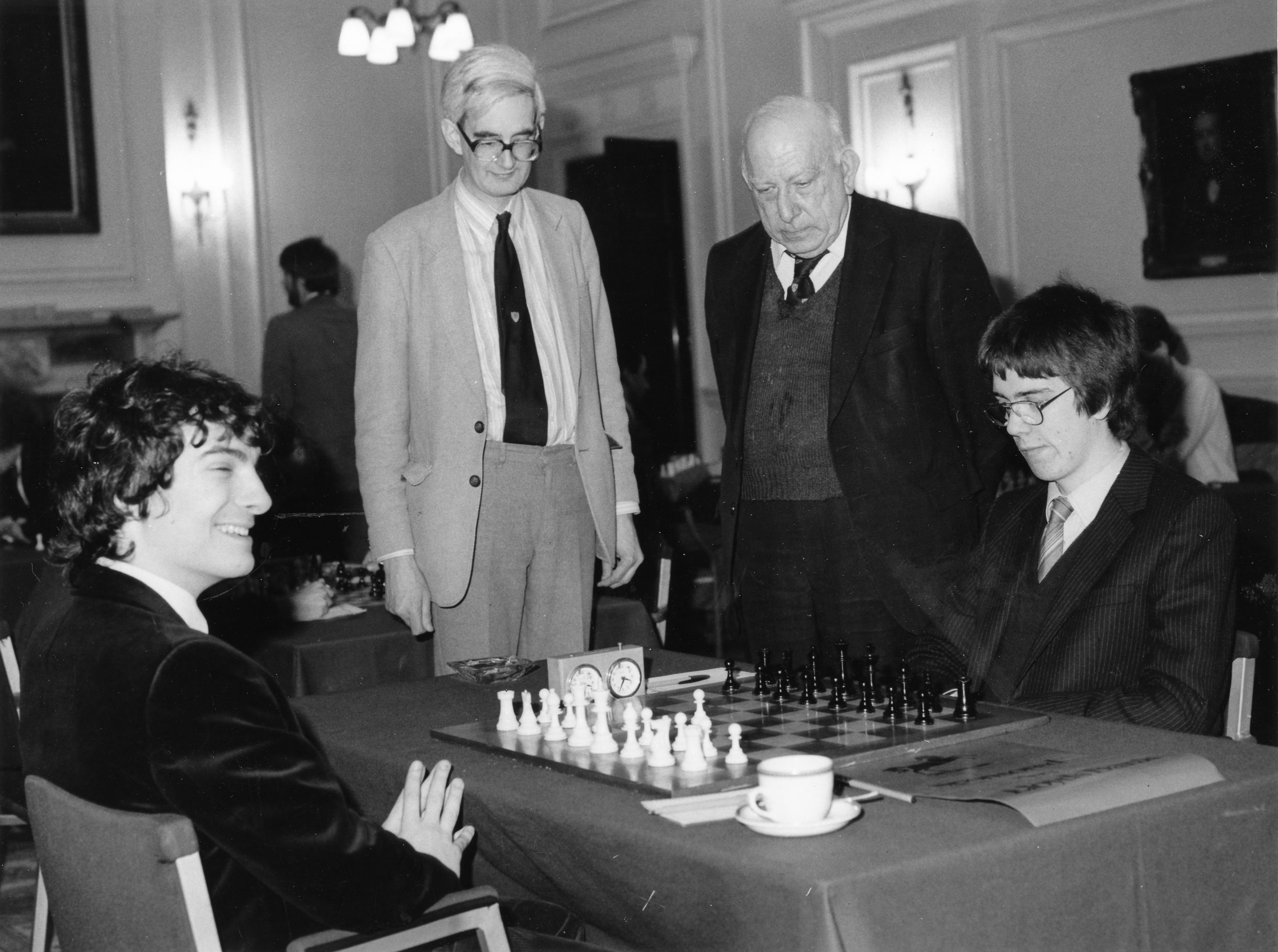
Adrian Hollis and Harry Golombek observer Andrew Dyson (Trinity) having played 1.d4 versus IM William Watson (Merton) during the 1984 Varsity match sponsored by Lloyds Bank

[pgn]
[Event “olm7 fin B1 corr”]
[Site “ICCF corr”]
[Date “1972.??.??”]
[Round “?”]
[White “Hollis, Adrian Swayne”]
[Black “Florian, Tibor”]
[Result “1-0”]
[ECO “D76”]
[Annotator “Averbakh/Hollis/Howell & BCN”]
[PlyCount “121”]
[EventDate “1972.??.??”]
[EventType “team (corr)”]
[EventRounds “9”]
[SourceTitle “Corr 2002”]
[Source “ChessBase”]
[SourceDate “2002.05.23”]
[SourceVersion “1”]
[SourceVersionDate “2002.05.23”]
[SourceQuality “1”]

{[%evp 0,121,18,26,36,-22,54,32,37,19,27,28,30,3,26,19,17,42,20,13,27,31,31,31,
19,24,27,11,47,61,50,85,90,77,66,63,67,54,73,53,40,43,55,36,46,65,45,46,49,49,
48,54,48,69,83,93,102,102,103,112,98,89,114,100,99,91,98,98,94,79,79,82,90,87,
91,85,91,82,78,76,96,101,96,75,100,91,92,103,118,118,118,118,118,118,121,139,
179,182,206,240,191,212,205,205,205,192,192,192,192,183,192,104,155,96,96,96,
100,527,537,28911,29983,29984,29985,29986]} 1. d4 Nf6 2. c4 g6 3. Nf3 Bg7 4. g3
d5 5. cxd5 Nxd5 6. Bg2 O-O ({ASH : It is rather more challenging for Black to
postpone castling, and to organise an immediate attack on White’s d-pawn with}
6… Nb6 7. Nc3 Nc6) 7. O-O Nb6 8. Nc3 Nc6 9. d5 Na5 ({ASH : I have never yet
found an opponent to accept the pawn with} 9… Bxc3 $6 {too risky to accept P}
10. dxc6 Bg7 11. Qc2 bxc6 12. Rd1 Bf5 13. Qb3 Qe8 14. Nd4 Bd7 15. Qc2 {BCN :
is a typical line.}) 10. Bf4 c6 11. dxc6 {ASH : Such are the subtleties of
transposition that, although occasionally played before, this line does not
appear in the Grunfeld books of Hartston or Richardson and Boyd.} Nxc6 ({
ASH : In Olympiad VIII Finals (1977) Dr. S. Aarseth (Norway) played against me
} 11… Qxd1 12. Rfxd1 Nxc6 13. Nd2 $1 Bf5 (13… Be6 {Hollis}) 14. Rac1 Rac8
15. Nde4 Nc4 16. b3 Na3 $6 (16… N4e5 {wastes two tempi}) 17. Nd5 Rfe8 (17…
Kh8 18. Nxe7 $1 Nxe7 19. Bd6) 18. Bg5 Kf8 (18… f6 $5 {although Hollis says
it “hardly appeals”}) 19. Nxe7 Nxe7 20. Nd6 b6 (20… Rxc1 21. Bxc1 {xNa3}) 21.
Nxc8 Bxc8 22. Bxe7+ Kxe7 23. Rc7+ Kf6 24. Bc6 Rf8 25. Rxa7 Nc2 26. Be4 $18 {
Hollis-Aarseth, corr-CCOL8 fin 1975-77}) 12. Qc1 e5 13. Be3 {13 Rd1 was theory
but why drive Black Q where she wants to go?} Nd4 {An outpost which cannot be
maintained.} 14. Rd1 Be6 15. Nxd4 exd4 16. Bxd4 Bxd4 17. e3 Bxe3 18. Qxe3 $14 {
[#] ASH : So White emerges with a small but clear advantage (better placed
pieces, pressure on the b-pawn and on the Black squares).} Qe7 19. Ne4 Bd5 20.
Qc5 Qxc5 21. Nxc5 Bxg2 22. Kxg2 Rac8 $6 {ASH : A difficult decision. Black
surrenders a pawn for some counterplay.} ({ASH : He might have had better
chances of a draw with the passive} 22… Rab8 {better drawing chance despite}
23. Nd7 Nxd7 24. Rxd7 {not sufficient to win}) 23. Nxb7 Rc2 24. b4 Re8 25. Rd8
Rxd8 26. Nxd8 Na4 27. a3 Rc3 28. Re1 Kf8 29. Re5 Rc7 30. h4 h6 31. Ra5 Nc3 32.
Ra6 {threat Nc6 forces play} Rd7 33. Nc6 Rd6 34. a4 Nxa4 35. Rxa4 Rxc6 36. Rxa7
Rc3 37. b5 Rb3 {See page 80 in Essential Chess Endings by Howell.} 38. Rb7 Kg7
39. b6 h5 {This move produces a model endgame as analysed by Hollis etc. [#]
cf ending in Portisch-Petrosian [INF 17-0568] after Portisch’s 47th move.
White plan is to play K to d-file, Black captures f-pawn but then K goes to
c-file and R cannot return behind passed P (only works with b-pawn)} ({Hollis
suspected Black should have played} 39… g5 $5 {not fearing h4-h5}) 40. Kf1 {
The general case of a draw is threatened but not overturned. Averbakh
“Comprehensive Chess Endings” vol 5 (Pergamon ed) analyses both the Hollis and
Portisch endgames (see pp291-292)} Rb2 41. Ke1 Kf6 {As White threatens to
support the advance of his passed P with his K, it is very important for Black
to seek counterplay on the other wing – Averbakh} 42. f3 Rb3 43. Kd2 Rxf3 44.
Kc2 {ASH : The idea is realized.} Rf5 $2 (44… Ke6 $2 45. Rc7 $1 (45. Re7+ $6
Kxe7 46. b7 Rf5 47. b8=Q {hard to see how White can win}) 45… Rf5 {see game})
(44… Rxg3 $6 45. Rc7 $1 {Howell wrongly attributes this move to Hollis but I
don’t find it in Hollis’ notes. Averbakh claims as his?} (45. Rxf7+ Kxf7 46. b7
{Hollis said this may win as Pg6 weak but Averbakh gives:} Rg2+ $1 47. Kc3 Rg3+
48. Kc4 Rg4+ 49. Kc5 Rf4 $1 50. b8=Q Rf5+ 51. Kd6 Kg7 $1 {“Black creates an
impregnable fortress” – Averbakh}) 45… Rg2+ $140 46. Kb3 Rg1 47. Kb2 Rg2+ 48.
Rc2 $1 Rg4 49. Rc3 Rxh4 50. Ka3 Re4 51. b7 Re8 52. Rc8 Re3+ 53. Kb2 Re2+ 54.
Kc3 Re3+ 55. Kc2 Re2+ 56. Kd3 Rb2 57. b8=Q Rxb8 58. Rxb8 Kf5 59. Rf8 f6 60. Ke3
g5 61. Kf3 $18 {Averbakh}) (44… Re3 $3 {is the right plan:} 45. Rc7 Re8 46.
b7 Rb8 {Hollis thought White could now win:} 47. Kd3 Kf5 $1 48. Rxf7+ Kg4 49.
Rf4+ $1 Kxg3 50. Rb4 {[#]} g5 $1 {The saving move not considered in Hollis
article, but later discovered by Russian analysts. Black creates a
countervailing passed pawn.} (50… Kh3 $2 51. Ke2 $1 Kg3 (51… Kg2 52. Rb3) (
51… Re8+ 52. Kf2 Rf8+ 53. Ke3 Rb8 54. Kf3 {as in main line}) 52. Ke3 Kh3 53.
Kf3 Rf8+ 54. Ke4 Rb8 55. Ke5 $18) 51. hxg5 h4 52. g6 (52. Ke2 h3 53. Kf1 h2 54.
Rb3+ Kf4 55. Kg2 Kxg5 $11) 52… h3 53. g7 h2 54. Rb1 Kg2 $11 {Averbakh}) 45.
Rc7 Rb5 46. b7 {“The outwardly active position of Black R prevents his K from
approaching the pawns” – Averbakh} Ke6 (46… Kf5 {according to Fine’s recipe
(idea 47 Rxf7+? Kg4) but..} 47. Kc3 $1 {threat 48 Rxf7+ Kg4 49 Rf4+ and 50 Rb4;
prevents …Kg4 by same idea} f6 $140 (47… Kg4 48. Rc4+ $1 Kxg3 49. Rb4 Rxb7
50. Rxb7 Kxh4 (50… f5 51. Rg7) 51. Rxf7 Kg3 52. Kd2 g5 53. Ke1 $18) 48. Kc4
Rb1 49. Rc5+ Kg4 50. Rb5) 47. Kc3 f6 48. Kc4 Rb1 49. Kc5 Kf5 50. Rd7 $1 $18 {
prevents Kg4 and threatens Rd5+ followed by either Rd6+ or Rd4+ and then
inserting R on b-file} Rc1+ 51. Kd6 Rb1 52. Kc7 Rc1+ 53. Kd8 Rb1 54. Kc8 Kg4
55. Rd6 g5 56. Rxf6 gxh4 57. gxh4 Kxh4 58. Rg6 $1 Kh3 59. Kc7 {According to
Howell, Black resigned here but Hollis gives further moves, see e.g. ‘British
Chess’ pp105-107} Rxb7+ 60. Kxb7 h4 61. Kc6 {ASH : It would be extremely rash
to claim this ending as a theoretical win. The outcome nearly always depends
on a single tempo, and may be swayed by secondary factors (e.g. it proved
vital in the above for White’s rook to be on the seventh rather than the
eighth). But at least this game can be added to the example for future
research. Perhaps this is the kind of problem that one day computers might be
able to solve.} 1-0
[/pgn]

From British Chess Magazine, Volume CXXXIII (133, 2013), Number 4 (April), pp.194-5 we have this obituary written by James Pratt :

Adrian Swayne Hollis (2 viii 1940 Bristol – 26 ii 2013 Wells), British Master and Correspondence Grandmaster (1976), three times British Correspondence Champion, has died. He played most of his OTB chess as a young man, finishing seventh equal at the British Aberystwyth, 1961, when he beat, amongst others, A.R.B. Thomas and former champion, Alan Phillips. He gave future champion, Jonathan Penrose, a tough fight in the last round before conceding the half-point. He played in the Hastings Premier, 1962/3 and emerged with a plus score in the Anglo-Dutch matches. He was an occasional reviewer for BCM.

It was, of course, in the realm of postal player that he shone most brightly!

In 1966 we see him playing board two for England, below Slade Milan, and, two years later, Adrian scored 9/12 in a World Postal Qualifier, narrowly missing a place in the final. In 1971 he won the British Correspondence Championship, easily outdistancing a tough field. He played top board for England in the 1972-7 Olympiad. In 1974-6 he won the Reg Potter Memorial. In the ninth Olympiad – 1982-5 – Adrian Hollis was undefeated on board two. And England took the Gold Medal!

[pgn]
[Event “Alekhine mem-A corr9196”]
[Site “corr”]
[Date “1991.??.??”]
[Round “?”]
[White “Gipslis, Aivars P”]
[Black “Hollis, Adrian Swayne”]
[Result “0-1”]
[ECO “B81”]
[Annotator “Hawkes”]
[PlyCount “64”]
[EventDate “1991.??.??”]
[EventType “tourn (corr)”]
[EventRounds “12”]
[SourceTitle “Corr Nr. 1”]
[Source “ChessBase”]
[SourceDate “1997.09.01”]
[SourceVersion “2”]
[SourceVersionDate “2000.04.19”]
[SourceQuality “1”]

{[%evp 0,64,32,37,46,50,80,80,71,47,43,38,82,21,81,78,77,54,60,63,69,68,77,41,
27,22,70,6,6,3,12,33,18,-2,3,-47,-62,-45,-59,-59,-70,-53,-53,-108,-27,-27,-1,
-116,-143,-148,-88,-204,-180,-252,-271,-247,-199,-231,-468,-531,-562,-531,-638,
-660,-627,-704,-510]} 1. e4 c5 2. Nf3 d6 3. d4 cxd4 4. Nxd4 Nf6 5. Nc3 e6 6. g4
a6 (6… Nc6 7. g5 Nd7 8. Be3 Nde5 9. Be2 a6 10. f4 Nxd4 11. Qxd4 Nc6 12. Qd2
b5 13. Bf3 Qa5 14. O-O Be7 15. Qf2 Rb8 16. Ne2 O-O 17. Bg2 Re8 18. c3 Bd7 19.
Rfd1 Qd8 20. Rd2 Bf8 21. Rad1 $14 {Haag-Penrose, 9 Olympiad}) (6… Be7 7. g5
Nfd7 8. Be3 Nc6 9. Rg1 Nb6 10. Qd2 O-O 11. f4 Nxd4 12. Bxd4 e5 13. Be3 d5 14.
fxe5 Bb4 15. O-O-O Be6 16. Rg3 Na4 17. Bd4 Bxc3 18. Bxc3 Nxc3 19. Rxc3 dxe4 20.
Qf4 Qb6 21. Qxe4 Rac8 22. Rxc8 Rxc8 23. Kb1 g6 24. Bd3 $6 Rd8 $1 {0-1 (43)
Palciauskas-Bang, Axelson mem.}) 7. g5 Nfd7 8. Bg2 (8. Be3 b5 9. a3 Bb7 10. h4
Be7 11. Qd2 Nc6 12. f4 h6 13. Bg2 hxg5 14. hxg5 Rxh1+ 15. Bxh1 Nxd4 16. Qxd4 e5
17. Qd2 exf4 18. Bxf4 Ne5 19. O-O-O Nc4 20. Qg2 Qa5 21. Nd5 b4 $1 {1/2-1/2 (44)
Franzen-Hollis, 10 Olympiad bd.2}) (8. h4 b5 9. a3 Nb6 10. Be3 N8d7 11. h5 Bb7
12. Rh3 $1 Ne5 13. g6 Nbc4 $2 14. Bxc4 Nxc4 15. gxf7+ Kxf7 16. Qg4 Qe7 $2 (
16… Qd7) 17. Bg5 Qd7 18. Nd5 $1 Ra7 19. Rf3+ Ke8 20. Nc7+ $1 {1-0
Kauranen-Estrin, 10 world ch. final}) 8… b5 (8… Nc6 9. f4 h6 10. h4 hxg5
11. hxg5 Rxh1+ 12. Bxh1 Qb6 13. Nf3 g6 14. Qd2 Qc7 15. b3 b5 16. Bb2 Bb7 17.
O-O-O O-O-O 18. Nh2 Nb6 19. Ng4 d5 20. e5 d4 21. Ne4 Nd5 22. Qf2 Qa5 23. Nd6+
Bxd6 24. Bxd5 Bc5 $1 {1/2-1/2 Khasin-Walter, 8 world ch. final}) 9. f4 b4 10.
Nce2 Bb7 11. h4 Nc5 12. Ng3 g6 13. b3 Bg7 14. Bb2 O-O 15. Qd2 Qb6 16. O-O-O a5
17. Nde2 Bxb2+ 18. Kxb2 a4 19. Nc1 axb3 20. cxb3 Nc6 21. h5 Qa5 22. Kb1 {[#]}
Na7 $1 23. Qb2 Nb5 24. Ka1 Nc3 25. Rd2 Ra7 26. Rh2 Rfa8 27. Bf3 Qc7 28. Rc2
Nxa2 29. Nxa2 Rxa2+ 30. Qxa2 Rxa2+ 31. Kxa2 Qa5+ 32. Kb1 Qa3 {Hawkes} (32…
Nxb3 $4 33. Ra2 Qc5 34. Rhc2 Qg1+ 35. Kb2 Qxg3 $4 36. Ra8+ $1 Bxa8 37. Rc8+ Kg7
38. h6# {(Hollis)}) 0-1
[/pgn]

Obituary from Raymond Keene in The Specatator

Obituary from Kenneth Shelton in The Independent

Obituary from ? in The Times

Obituary from John Rhodes in The Chess Improver

Obituary from Bob Jones of Keverel Chess.

Wikipedia article.

Death Anniversary for CGM Adrian Hollis (02-viii-1940 26-ii-2013)

BCN remembers CGM Adrian Hollis who passed away in Wells, Somerset on Tuesday, February 26th 2013  at the age of seventy-two.

Adrian Swayne Hollis was born in Bristol, Avon on Friday, August 2nd 1940. During this critical period the Luftwaffe was wisely extending its Battle of Britain targets to include Britain’s airfields. Furthermore, Bristol was bombed heavily between June 1940 and May 1944. The longest period of regular bombing, known as the ‘Bristol Blitz’ began in autumn 1940 and ended the following spring. The first bombs of the Bristol Blitz fell at around 6 pm on Sunday 24 November 1940.

Adrian was the only child of MI5 director general Roger Henry Hollis KB CBE (later to become Sir Roger Hollis) and Evelyn Esme Hollis (née Swayne) who was Roger’s first wife. Roger was from Wells and Evelyn from Burnham-on-Sea and they were married on July 17th 1937 in Wells Cathedral with Evelyn’s father performing the ceremony.

Adrian won a scholarship in classics to Eton College and then went up to Keble College, Oxford where he took a first in mods and greats. Whilst at Keble Adrian represented Oxford in four varsity matches between 1959 and 1962. Indeed, his support for varsity matches was maintained for many years attending a large number into and beyond the Lloyds Bank era. Stalwart organiser Henry Mutkin would always be sure to extend an invitation.

In 1961 Adrian become the youngest ever West of England Champion at the age of 21.

Adrian met Margaret Mair Cameron Edwards in 1967 at St. Andrew’s University where he taught Classics and she taught German. They married and had two daughters, Jennifer (b. 1974) and Veronica (b. 1977) and a son.

He was the Games Editor for the British Correspondence Chess Association (BCCA) resigning in 1969.

In 1984 Adrian was forced to endure allegations against his father by Chapman Pincher (in CPs book Too Secret too Long) that Sir Roger had been a Soviet spy / mole. These allegations were demonstrated to be false. He may well also have been aware of allegations against his friend and chess mentor Graham Mitchell earlier in 1963. Ironically, it was Adrian’s father who initiated the investigation into Graham. Again, the rumours were shown to be unfounded.

Adrian became a director of the company Centre for Medieval and Renaissance Studies Limited on the September 1st 1996 and resigned on May 12th 2007. He was also a Vice President of the West of England Chess Union (WECU).

Between 2003 and 2007 (according to the Electoral Roll) Adrian lived at 63, Bainton Road, Oxford, OX2 7AG :

63, Bainton Road, Oxford, OX2 7AG

and following his retirement (and the time of the 2008 electoral roll) Adrian had moved to Pound House, Southover, Wells, BA5 1UH :

Pound House, Southover, Wells, BA5 1UH

Adrian has written many learned papers and has had two books published :

Fragments of Roman Poetry C.60 BC-Ad 20, AS Hollis, Oxford University Press, 2007

and

Ovid Metamorphoses VIII (Schools Edition): Bk. 8, AS Hollis. Oxford University Press, 2008

During his time at Keble College, Adrian engaged with and mentored many chess players including Jonathan Rowson (1996), David Norwood (1988), Julian Way, David Goodman (1977) and Dharshan Kumaran (1993).

CGM Adrian Hollis
CGM Adrian Hollis

Julian was a personal student of Adrian’s and was kind enough to tell us :

I do remember Adrian well. He could quote Latin verse ad infinitum. He was an expert on Ovid.
In terms of chess he had a huge pile of Informators in his study still in their cardboard packaging. He was very kind to me and insisted I play above him for Keble in the intercollegiate matches.

I gave him a copy of Developments in the Orthodox QGD which I had written in 1987. He was quite taken back when I didn’t want any money for it. He seemed to have quite a lot of respect for me.

I once asked him why he had given me a place at Oxford. He replied that he couldn’t have rejected someone with my passion and enthusiasm.
I kept in touch with Adrian until his passing. He gave me a lovely reference when I resumed my studies in 2007 at Kingston University.
I remember him as a kind and unassuming man. He became a lifelong friend.

CGM Adrian Hollis
CGM Adrian Hollis

From British Chess (Pergamon Press, 1983) Botterill, Levy, Rice and Richardson :

“I was born on August 2nd, 1940, educated at Eton and Christ Church, Oxford and now teach Classics at Keble College, Oxford. I learned the moves at the advanced age of thirteen from a cousin who himself could have made a good chess player had he not been seduced by Philosophy and brain-teasers; all that remains in the mind from these encounters is a vision of perpetually losing my rooks to fianchettoed bishops.

Adrian Hollis. Source : The Potter Memorial

My first ever tournament was the London Boys’ Championship 1956-7. In the opening round fate allotted me Black against David Rumens. As it happened, the brochure included a game of his from the previous year in which he had answered 1.d4 with 1…Nc6, quite enough, in my opinion, to condemn his utterly.

[fen]r1bqkbnr/pppppppp/2n5/8/3P4/8/PPP1PPPP/RNBQKBNR w KQkq – 0 1[/fen]

(Ed: The above position did not impress Adrian hugely.)

This view seemed confirmed when within twelve moves of an advance French I was two pawns up. Then, however, aided by my over confidence he worked up a fierce attack, and I just escaped with a draw. Nevertheless, I won the tournament; an opponent remarked how quickly I played my moves.

Thereafter the game was never so easy, but I did reasonably, well, winning the championships of the British Universities, West of England and East of Scotland, and playing for England quite regularly during the 1960s (including 7.5/12 in six Anglo-Dutch matches).

Leonard Barden, Henry Mutkin, Adrian Hollis and Bob Wade observe Nick Ivell vs Ken Regan at the 1983 Varsity match

The high spot of my over-the-board chess was the series of World Student team championships from 1960 to 1964 in glamorous places (Leningrad, Helsinki, Mariánské Lázně, Budva and Cracow); most enjoyable of these being Budva, 1963 where one could bathe every day in the Adriatic and I won the (?) gold medal on Board 1 with 7.5/9., the year after Spassky (this must look good in the records, unless they happen to reveal that for the first time in preliminary and final sections, and that England did not qualify for the top final).

[pgn]
[Event “Paignton”]
[Site “?”]
[Date “1966.09.??”]
[Round “?”]
[White “Hollis, Adrian Swayne”]
[Black “Beach, Richard A”]
[Result “1-0”]
[ECO “E63”]
[Annotator “BCN”]
[PlyCount “35”]
[SourceTitle “BCM, 1966, page 289, game”]

{[%evp 0,25,61,14,28,-9,54,37,37,18,25,20,27,19,18,29,45,2,38,27,5,20,14,3,7,
-4,24,-17]} 1. d4 Nf6 2. c4 g6 3. Nf3 Bg7 4. g3 O-O 5. Bg2 d6 6. O-O Nc6 7. Nc3
a6 8. b3 Rb8 9. Bb2 b5 10. cxb5 axb5 11. d5 Na5 12. Nd4 b4 13. Nb1 $11 {[#]} (
13. Na4 e5 14. Nc2 Bd7 15. Ne3 Bh6 16. Bc1 Bxa4 17. bxa4 b3 18. Bd2) 13… e6 (
13… e5) 14. a3 bxa3 15. Rxa3 c5 $2 ({Correct was} 15… e5 16. Rxa5 exd4 17.
Ra3 $16) 16. dxc6 {[#]} {Black punted} Nc4 $2 {but had missed} 17. Qc1 $1 $18 (
{Black was hoping for} 17. bxc4 Rxb2 18. Nc3 $18) 17… Bh6 18. Qxc4 $1 {
and Black resigned} 1-0
[/pgn]

My best chess was probably played at Mariánské Lázně, 1962, where in successive rounds I had favourable draws with Radulov and Hort, coming close to beating the latter. Ironically, I was awarded the British Master title after I had virtually retired from over-the-board chess.

[pgn]
[Event “Paignton”]
[Site “?”]
[Date “1966.09.??”]
[Round “3”]
[White “Hartston, William Roland”]
[Black “Hollis, Adrian Swayne”]
[Result “0-1”]
[ECO “A05”]
[Annotator “Hollis, Keene & BCN”]
[PlyCount “80”]
[SourceTitle “The Spectator, 20th April”]

{[%evp 0,18,19,-22,0,-31,-9,-5,9,-19,-25,-22,-34,-17,-10,5,21,21,31,5,13]} {
This game appeared in The Spectator, April 20th, 2013 as part of an obituary
from Ray Keene. The original source was British Chess Magazine, 1966, page 302,
game #14,225.} 1. g3 Nf6 2. Bg2 d5 3. Nf3 g6 4. b4 {ASH : This set-up, in fact
a primitive form of the Reti, has been patronised recently by Smyslov, among
others. RDK : This set-up, a form of the Reti, has been championed by,
amongst others, Vassily Smyslov.} Bg7 5. Bb2 O-O 6. O-O a5 ({BCN : Nowadays}
6… c6 7. d3 a5 8. a3 axb4 9. axb4 Rxa1 10. Bxa1 Qb6 11. c3 Nbd7 12. Nbd2 e5
13. e4 Re8 {is the modern (2020) continuation.}) 7. b5 ({ASH :} 7. a3 {, or}) (
{even} 7. c3 {came into consideration here.}) 7… c5 $146 {BCN : This was the
first game to feature this position.} 8. d3 (8. bxc6 {ASH: was quite possible.}
) 8… b6 $146 {BCN : This is the only recorded game with this move.} 9. c4 e6
{ASH : Black decides to maintain a pawn centre, without worrying if the pawns
should hang. RDK : Black decides to create a pawn centre without worrying if
the pawns will end up hanging.} 10. Qc2 Bb7 11. Nbd2 Nbd7 {[#]} 12. e3 {
RDK : White has to prevent … d4 and … e5.} Qc7 13. Rad1 ({ASH : Harston
later preferred RDK: Hartston later preferred} 13. Rac1 Rad8) 13… Rad8 14.
Qb1 e5 {ASH : Somewhat risky, but the only way to progress. RDK : Somewhat
risky, but the only way to make progress.} 15. cxd5 Nxd5 16. Nc4 Rfe8 17. Qa1
f6 18. Rc1 Nf8 19. d4 exd4 20. exd4 Ne6 21. Rfd1 {[#]} Ndf4 $1 $17 {ASH :
Seizing his chance. This sacrifice is necessary because the central position
is beginning to look rickety, and appears to be sound. White has terrible
weaknesses and his queen is marooned far away. RDK : Seizing his chance.
This sacrifice is necessary because the central position is beginning to look
rickety. The sacrifice looks sound as White has terrible weaknesses and his
queen is miles away.} 22. gxf4 Nxf4 23. Ne3 (23. Bh1 Qd7 {ASH : is too slow.})
(23. d5 {ASH : Might be a shade better – see next note.}) 23… Nxg2 $19 24.
Kxg2 Be4 $1 (24… Qf4 {ASH : is also possible but the win would not be so
easy after} 25. d5 Rxd5 26. Rxd5 Bxd5 27. Nxd5 Qg4+ {ASH : etc}) 25. Nf1 Qf4
26. Rc3 cxd4 27. Rcd3 Rd5 28. Qc1 Qg4+ 29. Ng3 Rf5 30. h3 {ASH : There is
nothing better} Bxf3+ 31. Kh2 Rh5 32. Rxf3 Qxf3 33. Nxh5 {ASH : The rest is
straightforward} Qxf2+ {RDK : Now it’s straightforward for Black.} 34. Kh1
Qf3+ 35. Kg1 gxh5 36. Bxd4 Qg3+ 37. Kh1 Qxh3+ 38. Kg1 Qg4+ 39. Kh1 Rc8 40. Qd2
Rd8 {and White resigned.} 0-1
[/pgn]

In 1964 I decided that henceforth for me ‘serious’ chess would mean correspondence, while OTB became a pleasant social activity. My introduction to the postal game had been made about 1955 by a colleague of my father’s, International Master Graham Mitchell, to whom I owe an enormous debt for the patience and kindness with which he played a series of games, bearing with me when I lost interest in worsening positions. The switch to postal play was caused by a number of factors, negative and positive : an impending move to Scotland, where there was less OTB chess, frustration at constantly spoiling good positions through mistakes in time pressure – on the other hand a feeling that correspondence chess should suit an academic temperament, and a particularly fascinating game played in 1963-4 with Michael Haygarth (see below) on which I spent so much time and energy that I almost feared it would ruin my post-graduate exams.

[pgn]
[Event “County Correspondence Championship”]
[Site “?”]
[Date “1963.??.??”]
[Round “?”]
[White “Haygarth, Michael John”]
[Black “Hollis, Adrian Swayne”]
[Result “0-1”]
[ECO “B78”]
[Annotator “ASH & British Chess News”]
[PlyCount “106”]
[SourceTitle “British Chess, page 104”]
[WhiteTeam “Yorkshire”]
[BlackTeam “Somerset”]

{[%evp 0,20,19,38,40,41,66,77,66,55,55,20,70,53,40,34,30,28,47,32,47,-3,30]} 1.
e4 c5 2. Nf3 d6 3. d4 cxd4 4. Nxd4 Nf6 5. Nc3 g6 6. Be3 Bg7 7. f3 O-O 8. Bc4 (
8. Qd2 Nc6 9. O-O-O d5 10. exd5 Nxd5 11. Nxc6 bxc6 12. Bd4 e5 13. Bc5 Be6 14.
Ne4 Re8 15. h4 h6 16. g4 Qc7 17. g5 h5 18. Bc4 Red8 19. Qf2 {is modern
practise.}) 8… Nc6 9. Qd2 Bd7 10. h4 (10. O-O-O Rc8 11. Bb3 Ne5 12. h4 h5 13.
Bg5 Rc5 14. Kb1 b5 15. g4 hxg4 16. h5 Nxh5 17. Nd5 Re8 18. Rxh5 gxh5 19. Qh2
Rxd5 20. Bxd5 Qb6 21. Qxh5 e6 22. Bb3) 10… Rc8 {ASH : At that time people
always played the queen’s rook to c8. Later it became the custom to play …
Qa5 and …Rfc8. Later still fashion swung back.} 11. Bb3 Ne5 (11… h5 12.
O-O-O Ne5) 12. Bh6 {ASH : Of all the attacking possibilities, White chooses a
relatively ineffective one.} ({The modern way is} 12. O-O-O h5 13. Bg5 Rc5 14.
Kb1 b5 15. g4 hxg4 16. h5 Nxh5 17. Nd5 Re8 18. Rxh5 gxh5 19. Qh2 Rxd5 20. Bxd5
Qb6 {transposes to a previous line.}) 12… Nc4 {ASH : A nice little finesse.}
13. Bxc4 Bxh6 ({more usual is} 13… Rxc4 14. Bxg7 Kxg7 15. h5 Qa5 16. hxg6
fxg6 (16… hxg6 $4 17. Qh6+ Kg8 18. Qh8#) 17. O-O-O) 14. Qxh6 ({Believe it or
not,} 14. Bxf7+ $4 Kg7 $1 {ASH : Resigns, has actually occurred in an
international (over-the-board!) tournament. BCN : It was, in fact, Zuidema
– Lee, Zurich Junior, 1964.} (14… Kxf7 $2 15. Qxh6) (14… Rxf7 $2 15. Qxh6
$14)) 14… Rxc4 15. O-O-O Rxc3 16. bxc3 Qa5 {ASH : Black has carried out his
exchange sacrifice under unusually favourable circumstances.} 17. Kb2 Rc8 {[#]}
18. Rd3 ({ASH : In a later game (British Correspondence Championship 1965-6).
S.Milan played against me} 18. Qd2 Rc4 19. Nb3 {, keeping more active chances
(the game was drawnin 50 moves).}) 18… Bb5 19. Nxb5 {The exchange of minor
peices suite Black.} (19. Qg5 Rc5 {would be ingenious but not better.}) 19…
Qxb5+ 20. Ka1 Rc5 21. Rb1 Qa6 22. Qc1 Ra5 23. Rb2 b6 24. Qb1 Nd7 25. Rb4 Ne5
26. Re3 Nc4 {[#] ASH : Black’s knight has reached ideal squares, and for the
next few moves makes the White rooks dance to his tune.} 27. Rd3 Rc5 28. Qe1
Ra5 29. Qb1 Ne5 30. Re3 ({ASH : Not} 30. Rd5 Rxd5 31. exd5 Qe2 {and White’s
position collapses.}) 30… Rc5 31. Rb3 b5 32. Qd1 Qc6 33. Qd4 Nc4 34. Rd3 a5
35. g4 {ASH : Natural, but in the end providing a target.} a4 36. Rb4 Ne5 37.
Re3 Qc8 $1 38. Kb1 {[#] ASH : Something must fall so White decides to return
the exchange.} h5 $1 39. gxh5 Nc6 40. Qd3 Nxb4 41. cxb4 Rxh5 42. e5 {Unable to
protect his weaknesses, White tries to break out.} Rxe5 43. Rxe5 dxe5 44. Qxb5
Qc3 45. Qxa4 Qxf3 46. b5 e4 47. b6 e3 48. Qb3 Qf1+ 49. Kb2 e2 50. b7 e1=Q 51.
b8=Q+ Kh7 52. Q8b6 Qc1+ 53. Kc3 Qcf4 {White resigns. A remarkable position,
with four queens on the board. Material is level, but the exposed White king
is helpless. This game was played just before I left Oxford to teach in
Scotland (where, at that time, over-the-board chess was not so strong as it
has since become), and it was to a great extent responsible for turning my
main interest to postal chess.} 0-1
[/pgn]

In 1964-5 I qualified for the British Championship by winning a candidates’ section with 100%, and then competed three times in the British Championship itself (1965-6, 1966-7, 1970-71), winning on each occasion (the first time jointly with S. Milan) and remaining unbeaten. International play also proved successful, and I soon collected the two norms necessary for the IM title (Ed: awarded in 1970).

Linda Brownson (Newnham & Basildon), left, playing Maria Eagle (Pembroke & Formby) being observed by John Nunn, Adrian Hollis and Harry Golombek posing for the obligatory "staring at the board" picture for the 1981 Varsity Match sponsored by Lloyds Bank.
Linda Brownson (Newnham & Basildon), left, playing Maria Eagle (Pembroke & Formby) being observed by John Nunn, Adrian Hollis and Harry Golombek posing for the obligatory “staring at the board” picture for the 1981 Varsity Match sponsored by Lloyds Bank.

The first chance for the Grandmaster title came on Board 1 in the Seventh Olympiad final. Despite a rare loss with the White pieces(my only defeat with white for a stretch of 15 years), things went well, including a lucky win against the reigning World Champion, Horst Rittner, and the enticing prospect beckoned if only I could beat the Russian Moiseyev. He held a slight advantage since the opening, but I thought I saw the chance of tempting him to an incorrect sacrifice. Back came his move; he had indeed made the sacrifice and the envelope burnt a hole in my pocket during an important meeting (my mind was elsewhere). After a mere two days’ thought I sent my reply. The post between England and the USSR takes about a month for the return trip. Soon after posting my move, as I was walking from the Ashmolean Museum to Keble, just passing the front gate of St. John’s, the realisation of what I had overlooked hit me, and there followed an inexorable wait for the death blow which I now saw only too clearly.

So no Grandmaster title, but Great Britain still took the bronze medals, and I scored 6/9 (+5=1-2).

Bob Wade, Harry Golombek and Adrian Hollis observe Penny Coxon (Newnam) and Anita Rakshit (St. Hilda's) during the 1983 Varsity match sponsored by Lloyds Bank
Bob Wade, Harry Golombek and Adrian Hollis observe Penny Coxon (Newnam) and Anita Rakshit (St. Hilda’s) during the 1983 Varsity match sponsored by Lloyds Bank

Another opportunity came when the British Postal Chess Federation organised a tournament (1974-6) in memory of its former secretary RJ Potter.  This started inauspiciously for me with a heavy defeat at the hands of Grandmaster Endzelins of Australia., a country which has so far provided my least favourite opposition (not only is the postage extremely expensive, but my score to date is 0/2).

From The Potter Memorial, Ken Messere, Chess (Sutton Coldfield), 1979 we have this potted biography from Ken Messere :

The Potter Memorial, Ken Messere, Chess (Sutton Coldfield), 1979

“Adrian Hollis is 36, was educated at Eton and Oxford, has written two books on the poet Ovid and is a Fellow and Tutor in Classics at Keble College, Oxford. He is a British Master at over the board chess and has been Champion of British Universities, West of England and East Scotland.

In 1964, he went to teach at St. Andrews University where his wife, Margaret, taught German. They were married and moved to Keble College in 1967 and now have two daughters. Jennifer is nearly five and Veronica is two.

Adrian began to concentrate on correspondence chess in 1964 and won the British Correspondence Chess Championship jointly in 1966 and outright in 1967 and 1971. He won the I.M. title in 1970 and his fine score of 6/9 on top board for Great Britain in the I.C.C.F. VIIth Correspondence Chess Olympiad Final contributed to the team’s winning the bronze medal in this event.”

and now back to Adrian’s British Chess article…

Thereafter my fortunes improved; one opponent accepted too trustingly some faulty analysis by Szabo in Informator (for a while it seemed that the Hungarian might earn me not one but two points). The East German Dr. Baumbach failed to find an improvement in a line with which I had been successful in the Seventh Olympiad Final.

[pgn]
[Event “Potter Memorial corr7376”]
[Site “corr”]
[Date “1973.??.??”]
[Round “?”]
[White “Hollis, Adrian Swayne”]
[Black “Baumbach, Fritz”]
[Result “1-0”]
[ECO “D44”]
[Annotator “Baumbach, ASH and BCN”]
[PlyCount “63”]
[EventDate “1973.??.??”]
[EventType “tourn (corr)”]
[EventRounds “12”]
[SourceTitle “Myers”]
[Source “Myers”]
[SourceDate “2012.11.12”]
[SourceVersion “1”]
[SourceVersionDate “2012.11.12”]
[SourceQuality “1”]

{[%mdl 33284][%evp 0,63,19,31,32,-10,25,31,29,4,44,-4,-8,27,27,28,23,24,23,20,
42,40,29,37,29,-15,64,23,79,45,12,14,15,24,38,32,81,93,66,30,25,25,35,-38,122,
205,196,191,184,184,272,340,340,293,333,518,527,532,534,534,534,534,527,533,
537,541] Speelman: Really serious correspondence chess players are a breed
apart. In order to play “over-the-board” chess one must be able to maintian a
reasonable level of concentration for up to five hours at a time; and also
possibly to produce a quite prodigious amount of energy after (say) about four
and a half hours. Correspondence players, however, must require a quite
different nervous system. In their case a game may last months or even years.
It will be necessary to sustain sufficient interest in, and contact with,
possibly dozens of games simultaneously. There will not be a sudden explosion
of frenetic activity in any game–i.e., time trouble–but rather a long hard
grind of analytical work, work which can involve many hours of analysis on a
single critical move. Adrian Hollis is, together with Keith Richardson and
Peter Clarke, one of Great Britian’s three correspondence Grandmasters. A
classics don at Keble College, Oxford, he makes the time to play up to thirty
(!) correspondence games simultaneously. This game, against the East German
Fritz Baumbach, is from the Potter Memorial tournament which Hollis won to
gain the Grandmaster title. It is a very fine example of correspondence chess.
An exceedingly complicated theoretical opening leaves White with a clear
advantage, which he exploits with beautifully precise middlegame play.} 1. d4 {
Myers Speelman Baumbach} d5 2. c4 c6 3. Nf3 Nf6 4. Nc3 e6 5. Bg5 dxc4 6. e4 b5
7. e5 h6 8. Bh4 g5 9. Nxg5 {ASH : More natural} ({than} 9. exf6 {which also
has its supporters.}) 9… hxg5 ({ASH : Round about 1957 I spent many happy
hours analysing} 9… Nd5 {, a move which has recently been played and
recommended by George Botterill.} {is an intriguing possibility, which remains
quite unclear after} 10. Nxf7 Qxh4 11. Nxh8 Bb4) 10. Bxg5 Nbd7 11. exf6 ({
ASH : The immediate} 11. g3 {avoids any danger on the long white diagonal, but
black can cause complications by} Qa5 12. exf6 b4) 11… Bb7 12. g3 $1 Qb6 ({
ASH : Whites move order may seem peverse, in that it invites} 12… c5 {
Answered by} 13. d5 {However, Black should look again at 12…c5, and after 13.
d5 probably 13…Ne5.}) 13. Bg2 O-O-O 14. O-O Ne5 {ASH : Botvinnik’s move in
the fifth game of the 1954 World Championship match against Smyslov, who
declined to put the idea to the test,} (14… c5 {is still possible.}) 15. dxe5
$1 ({ASH : Smyslov replied} 15. Qe2 {with a minimal advantage. Presumably
Botvinnik had taken into account white’s queen sacrifice, but it still seems
very strong.} Qxd4 16. Be3 Qd3 17. Rfd1 Qxe2 18. Rxd8+ Kxd8 19. Nxe2 Nd3 20. b3
Kc7 21. bxc4 bxc4 22. Bxa7 c5 23. Rb1 Bxg2 24. Bb8+ Kc6 25. Kxg2 Bh6 26. f4 e5
27. a4 exf4 28. gxf4 c3 29. Nxc3 Bxf4 30. Bxf4 Nxf4+ 31. Kg3 Nh5+ 32. Kg4 Nxf6+
33. Kg5 Nd5 34. Nxd5 Kxd5 35. h4 f6+ 36. Kg4 c4 37. a5 c3 38. a6 Ra8 39. Kf5
Rxa6 40. h5 Ra2 41. Kxf6 {Smyslov – Botvinnink, 1954.}) 15… Rxd1 {[#]} 16.
Rfxd1 {MegaBase 2020 has moved the wrong rook to d1 but the position
transposes. Attempting to hack the pgn breaks many of the sub-variations as
there would be positions where either rook may move to e1 but the notation
says merely Re1. Ho hum!} ({The actual game move order was} 16. Raxd1 Bc5 17.
Ne4 Bd4 18. Nd6+ Kc7 19. Bf4 Rf8 20. Bh6 Rh8 21. Bg7 Rd8 22. Nxf7 Bxf2+ 23. Kh1
Rxd1 24. Rxd1 {transposes.}) 16… Bc5 (16… c5 17. Bf4 (17. Ne4 Bd5 18. h4 (
18. Bf4 Qb7 19. Rxd5 exd5 20. Nc3 Bh6 21. Bxh6 Rxh6 22. Rd1 b4 23. Nxd5 Qa6 24.
Ne7+ Kc7 25. h4 Rh8 26. Rd6 Qa5 27. Nd5+ Kb8 28. Rd7 b3 29. axb3 Qe1+ 30. Bf1
Rg8 31. Rxf7 Rxg3+ 32. fxg3 Qxg3+ 33. Bg2 Qe1+ 34. Bf1 Qg3+ 35. Kh1 Qxh4+ 36.
Kg2 {1/2-1/2 Eldridge,M-Van Damme,L/corr ICCF 2009/}) 18… Qc6 19. Re1 Kb8 20.
f3 a5 21. Kf2 a4 22. Nc3 Qa6 23. Nxd5 exd5 24. e6 fxe6 25. Bh3 a3 26. Rab1 Qa4
27. Re2 e5 28. bxa3 Kc7 29. Rbe1 Bd6 30. f7 Rf8 31. Be6 d4 32. Bh6 d3 33. Bxf8
Bxf8 34. Rd2 c3 35. Rxd3 Qc2+ 36. Ke3 c4 37. Rd7+ Kb6 38. Red1 Bc5+ {0-1
Rutkowski,P-Konieczny,A/corr ICCF 2009/}) (17. Bxb7+ Qxb7 18. Rd2 (18. Re1 a5
19. Ne4 a4 20. Bf4 Qa8 21. a3 Kc7 22. Rac1 Qc6 23. Rc2 Qa8 24. f3 Bh6 25. Bxh6
Rxh6 26. Rd1 Rh5 27. Rdd2 Rxe5 28. h4 Rxe4 29. fxe4 Qxe4 30. Re2 Qg4 31. Kh2 b4
32. Rcd2 c3 33. bxc3 b3 34. Kg2 Qf5 35. Re1 Qxf6 {0-1 Hassim,U-Kireev,S/corr
IECG 2009/}) 18… b4 19. Rad1 Qc6 20. Rd8+ Kc7 21. Ne2 Qa4 22. Be3 Bh6 23.
R1d7+ Qxd7 24. Rxd7+ Kxd7 25. f4 Kc6 26. Kg2 a5 27. h4 Bf8 28. Kf3 Kd5 29. Bc1
c3 30. bxc3 c4 31. Ng1 b3 32. a4 Kc6 33. Bb2 Bc5 34. Ne2 Rd8 35. Nd4+ Bxd4 36.
cxd4 Kd5 37. Ke3 Rg8 38. Kf3 c3 39. Bxc3 Rc8 40. Bb2 Rc2 41. Ba3 Ra2 42. Bc1
Rxa4 43. Ke3 Ra2 44. Kd3 b2 45. Bxb2 Rxb2 46. f5 a4 47. fxe6 Kxe6 {0-1 Epiney,
F-Zielinski,S/corr IECG 2003/}) 17… b4 (17… Bc6 18. Rd2 Bxg2 19. Kxg2 a6
20. Rad1 Qc7 21. Ne4 a5 22. f3 a4 23. h4 a3 24. bxa3 Rh5 25. Kh3 Rh8 26. g4 Qa5
27. Rd7 c3 28. Rxf7 c2 29. Rc1 Qxa3 30. Kg3 c4 31. g5 Qd3 32. Rxf8+ Rxf8 33. g6
{1-0 Ingersol,H-Almeida,R/corr IECG 2009/}) 18. Ne4 Bd5 (18… Qb5 19. Rac1
Bxe4 20. Bxe4 Qa4 21. Rd2 c3 22. bxc3 bxc3 23. Re2 c4 24. Kg2 Qa5 25. h4 Ba3
26. Rh1 Bf8 27. g4 Qd8 28. h5 Qd4 29. g5 Rg8 30. Kf3 Rh8 31. Kg4 {1-0 Lehnhoff,
H-Djoudi,A/corr IECG 2006/}) 19. Rxd5 exd5 20. Ng5 Bh6 21. Nxf7 Bxf4 22. gxf4
Rf8 23. Bxd5 c3 24. Nd6+ (24. bxc3 bxc3 25. Nd6+ Kc7 26. Rc1 c2 27. Bb3 Rg8+
28. Kf1 Rg4 29. Rxc2 Qc6 30. Be6 Rxf4 31. Kg1 Qf3 32. Rxc5+ Kb6 33. Rb5+ Kc6
34. Bd5+ Qxd5 35. Rxd5 Kxd5 36. Nc8 Kxe5 37. Nxa7 Rxf6 {1/2-1/2 Schrancz,
I-Kireev,S/corr IECG 2009/}) 24… Kd8 25. Nc4 Qb5 26. bxc3 bxc3 27. Ne3 Qb4
28. Bb3 Qxf4 29. Rd1+ Kc8 30. Rd5 Kb8 31. Rxc5 Qg5+ 32. Kf1 Rxf6 33. exf6 Qxc5
34. f7 a5 35. Nd5 a4 36. Nb6 Kc7 37. Nxa4 c2 38. Bxc2 Qc4+ 39. Kg2 Qxf7 40. Bb3
Qg7+ 41. Kf3 Qd4 42. Kg3 Kd6 43. Kg2 Ke5 44. Kg3 Qe4 45. h3 Qf4+ 46. Kg2 Qd4
47. Kg3 Ke4 48. Bc2+ Kd5 49. Bb3+ Ke5 50. Kf3 Kf5 51. Kg3 Kg5 52. Kf3 Kh4 53.
Kg2 Qf6 54. Kf1 Kxh3 55. Ke2 Qd4 56. Be6+ Kg2 57. Bb3 Qe4+ 58. Kd2 Kxf2 59. Nb2
Qe2+ 60. Kc3 Qe5+ 61. Kc2 Ke2 62. Nc4 Qd4 63. a4 Qf4 64. Kc3 Qf6+ 65. Kc2 Qd4
66. Na3 Qd2+ 67. Kb1 Qc3 68. Ka2 Qf6 69. Nc4 Kd3 70. Nb2+ Kc3 {0-1 Skeels,
J-Kireev,S/corr IECG 2008/}) (16… b4 17. Ne4 c5 (17… Qa5 18. Bf4 Bc5 19.
Rac1 (19. h4 c3 20. bxc3 bxc3 21. Rac1 Bb4 22. Nd6+ Bxd6 23. Rxd6 Rd8 24. Rxd8+
Kxd8 25. h5 Qxa2 26. h6 Qe2 27. h7 Qh5 28. Be4 Ba6 29. Kg2 {1-0 Borisenko
Belovba,V-Matveeva,S/Tbilisi URS 1973/}) 19… c3 20. bxc3 bxc3 21. Rxc3 Bb4
22. Rb3 Rd8 23. Rdb1 c5 24. Nd6+ Rxd6 25. Bxb7+ Kxb7 26. exd6 Kc6 27. Rd1 Kd7
28. a3 Qa4 29. Rdb1 a5 30. axb4 c4 31. Rc3 Qa2 32. Rbc1 axb4 33. Rxc4 {1-0
Kolin,J-Menges,G/corr ICCF 2003/}) 18. a3 Bd5 (18… c3 19. bxc3 b3 20. c4 Qa6
21. Nd2 Bxg2 22. Kxg2 Qb7+ 23. f3 a5 24. a4 Qb4 25. Rab1 b2 26. Ne4 Qxa4 27.
Rd2 Qxc4 28. Rdxb2 a4 29. Be3 a3 30. Rb8+ Kc7 31. R1b7+ Kc6 32. Rxf7 a2 33. Ra7
{1-0 Rensen,M-Schild,R/corr IECG 2009/}) 19. axb4 Qb7 20. Rxd5 exd5 21. Nc3
cxb4 22. Nxd5 Qd7 23. Be3 Kb8 24. Bf4 Qe6 25. Be3 Qd7 26. Ra5 c3 27. bxc3 b3
28. Bxa7+ Qxa7 29. Rxa7 Kxa7 30. Be4 b2 31. f4 Ba3 32. Kg2 Rc8 33. h4 Rc5 34.
Ne7 Rxc3 35. h5 Re3 36. Bf5 Re2+ 37. Kf3 Rh2 38. Kg4 Kb6 39. Kg5 Rh3 40. g4 Bc5
41. Be4 Kb5 42. h6 Bf2 43. Nf5 Kc4 44. h7 Kb3 45. Nh6 Re3 46. Bb1 Re1 47. h8=Q
Rxb1 48. Qb8+ Kc2 49. Qc7+ Kd2 50. Qa5+ Kc2 51. Qa4+ Kc3 52. Qc6+ Kd2 53. Qd5+
Kc1 54. Qh1+ Kc2 55. Qg2 {1-0 Illescas Cordoba,M-Morovic Fernandez,I/Spain ESP
1993/}) (16… Qc5 17. Bf4 b4 18. Ne4 Qa5 19. Rd4 c5 20. Rxc4 Bd5 21. Rcc1 Bxe4
22. Bxe4 Bh6 23. Bxh6 Rxh6 24. Rc4 Kc7 25. Rac1 Kb6 26. a3 bxa3 27. bxa3 Qxa3
28. Rb1+ Kc7 29. Rb5 Rh5 30. Rcxc5+ Kd7 31. Kg2 Qa1 32. Bc6+ Kd8 33. Rb8+ Kc7
34. Rb7+ Kd8 35. Bd7 {1-0 Budde,V-Hoffmann,H/BL GER 1982/}) (16… Bb4 17. Ne4
Rd8 18. h4 Rd3 19. h5 Qd8 20. Rxd3 cxd3 21. Rd1 Kc7 22. a3 Ba5 23. Nd6 Qg8 24.
Be3 Bb6 25. Bxb6+ Kxb6 26. Bf3 Qh7 27. b4 Ba8 28. g4 a5 29. Kg2 axb4 30. axb4
Bb7 31. Kg3 Ba6 32. Be4 Qg8 33. h6 c5 34. h7 Qf8 35. bxc5+ Kxc5 36. Nxf7 {
1-0 Mollov,E-Thierry,C/Orange FRA 1994/}) (16… Qa5 17. Ne4 Bb4 (17… c5 18.
Nd6+ Bxd6 19. Bxb7+ Kxb7 20. Rxd6 c3 21. bxc3 Qxc3 22. Rad1 Rc8 23. Rd7+ Rc7
24. Re7 Kc8 25. h4 b4 26. Rc1 Qb2 27. h5 Qe2 28. h6 Qh5 29. Be3 Rd7 30. Kg2 Rd3
31. Rxc5+ Kd8 32. Rb5 Kc8 33. Bxa7 Qf3+ 34. Kh2 Qh5+ 35. Kg2 Qf3+ {1/2-1/2
Loskamp,S-Behle,B/Porz GER 1995/}) 18. h4 Qc7 19. a3 Bf8 20. Nd6+ Bxd6 21. exd6
Qd7 22. a4 a6 23. Be3 Rh5 24. Bf3 Rf5 25. Bg4 Rd5 26. Bf4 Rxd1+ 27. Rxd1 c5 28.
axb5 axb5 29. h5 b4 30. h6 Be4 31. Ra1 c3 32. bxc3 bxc3 33. f3 Bh7 34. Ra5 c2
35. Rxc5+ Kd8 36. Rc7 Qa4 37. Bxe6 Qa1+ 38. Kf2 Qd4+ 39. Kg2 c1=Q 40. Bxc1 fxe6
41. Rxh7 Qxd6 42. Ra7 Qc5 43. h7 Qxa7 44. h8=Q+ {1-0 Poletov,V-Kuznezov,A/Tula
RUS 2006/}) 17. Ne4 $1 Bd4 (17… Rd8 $2 18. Rxd8+ Kxd8 19. Rd1+ Kc7 20. h4 $16
Bd4 21. h5 c5 22. h6 Bxe4 23. Bxe4 Bxe5 24. h7 Qb8 25. Kg2 Qh8 26. Rh1 Kb6 27.
Rd1 Kc7 28. Bf4 Bxf4 29. gxf4 Qxf6 30. Rh1 Qh8 31. f5 exf5 32. Bxf5 Kd6 33. Rh5
f6 34. f4 Qe8 35. Bg4 Qh8 36. Kf1 b4 37. Bf5 Kd5 38. Rh3 Kd4 39. Rg3 Qa8 40.
Rh3 Qh8 41. Kf2 a5 42. Rh1 c3 43. Rd1+ Kc4 44. b3+ Kb5 45. Rd6 c4 46. Rd5+ Kc6
47. bxc4 a4 48. Be4 Kc7 49. Rc5+ Kd6 50. Rc6+ Ke7 51. Bf5 Qd8 52. Kg3 b3 53.
axb3 axb3 54. Rc8 Qxc8 55. Bxc8 c2 56. h8=Q c1=Q 57. Qg7+ Kd6 58. c5+ Kd5 59.
Qb7+ Kd4 60. Qb4+ Kd5 61. Bb7+ Ke6 62. Qe4+ Kf7 63. Qh7+ Ke6 64. f5+ Ke5 65.
Qe7+ Kd4 66. Qxf6+ Kc4 67. Qe6+ Kb4 68. f6 Qg1+ 69. Bg2 b2 70. Qe4+ Kc3 71. f7
b1=Q 72. Qxb1 Qxb1 73. f8=Q Qe1+ 74. Kh2 Qe5+ 75. Kg1 Qe1+ 76. Qf1 Qe3+ 77. Qf2
Qc1+ 78. Bf1 Qg5+ 79. Kh2 Qh5+ 80. Kg2 Qd5+ 81. Qf3+ Kd4 82. c6 Qg5+ 83. Kh3
Qh6+ 84. Kg3 Kc5 85. Bg2 Qg5+ 86. Qg4 Qe5+ 87. Kh4 Qe1+ 88. Qg3 Qb4+ 89. Kh5
Qb2 90. Qg5+ Kd6 91. Qd5+ Ke7 92. Qd7+ Kf6 93. Qd6+ Kf5 94. Qg6+ {1-0 Alster,
L-Kupka,S/Prague CSR 1963/}) 18. Nd6+ $1 (18. Rd2 Rd8 19. Rad1 c5 20. Nd6+ Rxd6
21. Bxb7+ Qxb7 22. exd6 Qf3 23. Re1 e5 24. d7+ Kd8 25. h4 Qxg3+ 26. Kf1 Qh3+
27. Ke2 Bxb2 28. Rb1 Bc3 29. Rd6 Bd4 30. Be3 Qg4+ 31. Kf1 a6 32. Ra1 Qh3+ 33.
Kg1 Qf5 34. h5 Qxh5 {0-1 Tan Hiong Liong-Sydor,A/Warsaw POL 1959/}) (18. Be3
Bxe3 19. fxe3 Qxe3+ 20. Kh1 Kb8 21. Re1 Qd4 22. Nd6 Qf2 23. Nxf7 c5 24. Rg1 Rh5
25. Rad1 Qxg3 26. Rd8+ Kc7 {0-1 Vente,J-Officier,T/corr NED 1995/}) (18. Bf4
Bxb2 19. Nd6+ Kc7 20. Nxf7 Rf8 21. Ng5 Bc8 22. Rab1 Bd4 23. Ne4 a5 24. g4 Bd7
25. h4 b4 26. h5 c3 27. Rd3 a4 28. g5 c2 29. Rf1 b3 30. axb3 axb3 31. g6 b2 32.
g7 Ra8 33. f7 b1=Q 34. f8=Q Rxf8 35. gxf8=Q Q1b4 36. Qxb4 Qxb4 37. h6 {1-0
Moscoso,F-Brunet,R/corr IECG 1996/}) 18… Kc7 (18… Kb8 19. Nxf7 Rf8 20. Rxd4
$6 (20. Nh6 $2 Bxf2+ 21. Kf1 Bd4 $19) (20. Nd6 $1 Bxf2+ 21. Kh1 Be3 22. Bh4 $16
) 20… Qxd4 21. Nd6 $8 Qxb2 22. Re1 Qc3 23. Rb1 Qxe5 24. Bf4 Qe2 25. Nxb5+ e5
26. Nd6 Ka8 27. Be3 c3 $17 {Myers}) 19. Bf4 (19. Nxf7 $1 Rf8 20. Nd6 Bxe5 21.
Be3 Qa6 22. Ne4 Bc8 23. Bc5 Rxf6 24. Nxf6 Bxf6 25. Bd4 Bxd4 26. Rxd4 c5 27.
Rdd1 Bb7 28. Bxb7 Qxb7 29. Re1 Kd6 30. Rad1+ Ke7 31. Re3 a5 32. Rde1 a4 33.
Rxe6+ Kf7 34. R6e5 Qd7 35. h4 b4 36. Rxc5 Qd2 37. Re3 c3 38. bxc3 b3 39. axb3
Qc1+ 40. Kg2 axb3 {1-0 Vilela,J-Frey Beckman,K/Havana CUB 1985/}) 19… Rf8 (
19… Bxf2+ $1 20. Kh1 Be3 21. Nxf7 Rg8 22. a4 $1 Bxf4 23. gxf4 Qf2 $132 {Myers
}) 20. Bh6 $1 Rh8 {[#]} 21. Bg7 $2 (21. Nxf7 $142 Bxf2+ 22. Kh1 Rh7 23. Nd8
Rxh6 24. Nxe6+ Kc8 25. Rd8+ Qxd8 26. Nxd8 Kxd8 27. Rf1 $16 {[%cal Gf6f7] Myers}
) 21… Rd8 $4 (21… Bxf2+ $1 22. Kh1 Rh7 23. Rd2 (23. Nxf7 $2 Rxh2+ $1 24.
Kxh2 Qe3 $19 {[%cal Re3g3]}) 23… Qe3 {[%cal Ye3g3]} 24. Rxf2 Qxf2 25. Nxf7
Qxg3 26. Bh6 Qh4 $19 {Myers}) 22. Nxf7 $1 Bxf2+ (22… Rd7 23. Ng5 Kb8 (23…
Bxe5 24. Rxd7+ Kxd7 25. Rd1+ $18) 24. Bf8 Bc8 25. f7 Bxf2+ 26. Kh1 Rxf7 27.
Nxf7 Bd4 28. Bd6+ Kb7 29. a4 $18 {Myers}) 23. Kh1 Rxd1+ 24. Rxd1 Qe3 (24… c5
$2 25. Nd6 Bxg2+ 26. Kxg2 Bd4 27. f7 Qc6+ 28. Kh3 Qf3 29. Rxd4 cxd4 30. f8=Q
$18 {Myers}) 25. Nd6 Qe2 {[#]} 26. Ra1 $3 (26. Rf1 $2 Ba8 $1 27. Ne4 (27. f7
$140 c5 28. f8=Q Qxf1#) 27… c5 $1 28. Rxf2 Qe1+ 29. Rf1 Qe2 30. Kg1 Bxe4 31.
Bxe4 Qe3+ $1 $11) (26. Rb1 $6 Qh5 27. f7 (27. g4 $2 Qh7 28. Rf1 $8 Bg3 $8 29.
h3 Bxe5 30. f7 c5 $11) 27… Bxg3 28. h3 c5 $1 29. Nxb7 Qxf7 30. Nd6 Qg6 31.
Rf1 $18) 26… Qh5 (26… Qxb2 27. Rf1 c3 28. f7 c2 29. Bh6 $18) 27. g4 $1 (27.
f7 $2 Bxg3 28. h3 c5 29. Nxb7 Qxf7 {Speelman} 30. Nd6 Qg6 31. Bf6 Qc2 32. Nxb5+
Kd7 33. Nxa7 Bf2 34. Nc6 Be3 35. h4 $1 $18 {Myers}) 27… Qh7 28. f7 Bg3 29. h3
c5 30. Nxb7 Qxg7 31. Rf1 Qf8 32. Nxc5 $1 1-0
[/pgn]

Also, I had a win with the Black pieces against the Russian Kopylov. The result was a score of 9/12 (+8=2-2), which sufficed for the grandmaster title and first place half a point ahead of the Finn Kauranen.

Since then I have played quite well on second board behind Keith Richardson in the Eighth Olympiad Final (+5=7-0), and very badly indeed (scoring just about 50% in the Heilimo Memorial Tournament organised from Finland (I was much impressed by the strength of the Finnish players, most of whom I had not encountered before). Having twice narrowly failed, I would still like to qualify for the Final of the Individual World Championship. Of course life becomes increasingly busy, but the examples of Hugh Alexander and Graham Mitchell encourage me to believe that one can continue to play well at postal chess longer than over-the-board. So perhaps around the year 2000, when the children are grown up….”

Adrian Hollis and Harry Golombek observer Andrew Dyson (Trinity) having played 1.d4 versus IM William Watson (Merton) during the 1984 Varsity match sponsored by Lloyds Bank

[pgn]
[Event “olm7 fin B1 corr”]
[Site “ICCF corr”]
[Date “1972.??.??”]
[Round “?”]
[White “Hollis, Adrian Swayne”]
[Black “Florian, Tibor”]
[Result “1-0”]
[ECO “D76”]
[Annotator “Averbakh/Hollis/Howell & BCN”]
[PlyCount “121”]
[EventDate “1972.??.??”]
[EventType “team (corr)”]
[EventRounds “9”]
[SourceTitle “Corr 2002”]
[Source “ChessBase”]
[SourceDate “2002.05.23”]
[SourceVersion “1”]
[SourceVersionDate “2002.05.23”]
[SourceQuality “1”]

{[%evp 0,121,18,26,36,-22,54,32,37,19,27,28,30,3,26,19,17,42,20,13,27,31,31,31,
19,24,27,11,47,61,50,85,90,77,66,63,67,54,73,53,40,43,55,36,46,65,45,46,49,49,
48,54,48,69,83,93,102,102,103,112,98,89,114,100,99,91,98,98,94,79,79,82,90,87,
91,85,91,82,78,76,96,101,96,75,100,91,92,103,118,118,118,118,118,118,121,139,
179,182,206,240,191,212,205,205,205,192,192,192,192,183,192,104,155,96,96,96,
100,527,537,28911,29983,29984,29985,29986]} 1. d4 Nf6 2. c4 g6 3. Nf3 Bg7 4. g3
d5 5. cxd5 Nxd5 6. Bg2 O-O ({ASH : It is rather more challenging for Black to
postpone castling, and to organise an immediate attack on White’s d-pawn with}
6… Nb6 7. Nc3 Nc6) 7. O-O Nb6 8. Nc3 Nc6 9. d5 Na5 ({ASH : I have never yet
found an opponent to accept the pawn with} 9… Bxc3 $6 {too risky to accept P}
10. dxc6 Bg7 11. Qc2 bxc6 12. Rd1 Bf5 13. Qb3 Qe8 14. Nd4 Bd7 15. Qc2 {BCN :
is a typical line.}) 10. Bf4 c6 11. dxc6 {ASH : Such are the subtleties of
transposition that, although occasionally played before, this line does not
appear in the Grunfeld books of Hartston or Richardson and Boyd.} Nxc6 ({
ASH : In Olympiad VIII Finals (1977) Dr. S. Aarseth (Norway) played against me
} 11… Qxd1 12. Rfxd1 Nxc6 13. Nd2 $1 Bf5 (13… Be6 {Hollis}) 14. Rac1 Rac8
15. Nde4 Nc4 16. b3 Na3 $6 (16… N4e5 {wastes two tempi}) 17. Nd5 Rfe8 (17…
Kh8 18. Nxe7 $1 Nxe7 19. Bd6) 18. Bg5 Kf8 (18… f6 $5 {although Hollis says
it “hardly appeals”}) 19. Nxe7 Nxe7 20. Nd6 b6 (20… Rxc1 21. Bxc1 {xNa3}) 21.
Nxc8 Bxc8 22. Bxe7+ Kxe7 23. Rc7+ Kf6 24. Bc6 Rf8 25. Rxa7 Nc2 26. Be4 $18 {
Hollis-Aarseth, corr-CCOL8 fin 1975-77}) 12. Qc1 e5 13. Be3 {13 Rd1 was theory
but why drive Black Q where she wants to go?} Nd4 {An outpost which cannot be
maintained.} 14. Rd1 Be6 15. Nxd4 exd4 16. Bxd4 Bxd4 17. e3 Bxe3 18. Qxe3 $14 {
[#] ASH : So White emerges with a small but clear advantage (better placed
pieces, pressure on the b-pawn and on the Black squares).} Qe7 19. Ne4 Bd5 20.
Qc5 Qxc5 21. Nxc5 Bxg2 22. Kxg2 Rac8 $6 {ASH : A difficult decision. Black
surrenders a pawn for some counterplay.} ({ASH : He might have had better
chances of a draw with the passive} 22… Rab8 {better drawing chance despite}
23. Nd7 Nxd7 24. Rxd7 {not sufficient to win}) 23. Nxb7 Rc2 24. b4 Re8 25. Rd8
Rxd8 26. Nxd8 Na4 27. a3 Rc3 28. Re1 Kf8 29. Re5 Rc7 30. h4 h6 31. Ra5 Nc3 32.
Ra6 {threat Nc6 forces play} Rd7 33. Nc6 Rd6 34. a4 Nxa4 35. Rxa4 Rxc6 36. Rxa7
Rc3 37. b5 Rb3 {See page 80 in Essential Chess Endings by Howell.} 38. Rb7 Kg7
39. b6 h5 {This move produces a model endgame as analysed by Hollis etc. [#]
cf ending in Portisch-Petrosian [INF 17-0568] after Portisch’s 47th move.
White plan is to play K to d-file, Black captures f-pawn but then K goes to
c-file and R cannot return behind passed P (only works with b-pawn)} ({Hollis
suspected Black should have played} 39… g5 $5 {not fearing h4-h5}) 40. Kf1 {
The general case of a draw is threatened but not overturned. Averbakh
“Comprehensive Chess Endings” vol 5 (Pergamon ed) analyses both the Hollis and
Portisch endgames (see pp291-292)} Rb2 41. Ke1 Kf6 {As White threatens to
support the advance of his passed P with his K, it is very important for Black
to seek counterplay on the other wing – Averbakh} 42. f3 Rb3 43. Kd2 Rxf3 44.
Kc2 {ASH : The idea is realized.} Rf5 $2 (44… Ke6 $2 45. Rc7 $1 (45. Re7+ $6
Kxe7 46. b7 Rf5 47. b8=Q {hard to see how White can win}) 45… Rf5 {see game})
(44… Rxg3 $6 45. Rc7 $1 {Howell wrongly attributes this move to Hollis but I
don’t find it in Hollis’ notes. Averbakh claims as his?} (45. Rxf7+ Kxf7 46. b7
{Hollis said this may win as Pg6 weak but Averbakh gives:} Rg2+ $1 47. Kc3 Rg3+
48. Kc4 Rg4+ 49. Kc5 Rf4 $1 50. b8=Q Rf5+ 51. Kd6 Kg7 $1 {“Black creates an
impregnable fortress” – Averbakh}) 45… Rg2+ $140 46. Kb3 Rg1 47. Kb2 Rg2+ 48.
Rc2 $1 Rg4 49. Rc3 Rxh4 50. Ka3 Re4 51. b7 Re8 52. Rc8 Re3+ 53. Kb2 Re2+ 54.
Kc3 Re3+ 55. Kc2 Re2+ 56. Kd3 Rb2 57. b8=Q Rxb8 58. Rxb8 Kf5 59. Rf8 f6 60. Ke3
g5 61. Kf3 $18 {Averbakh}) (44… Re3 $3 {is the right plan:} 45. Rc7 Re8 46.
b7 Rb8 {Hollis thought White could now win:} 47. Kd3 Kf5 $1 48. Rxf7+ Kg4 49.
Rf4+ $1 Kxg3 50. Rb4 {[#]} g5 $1 {The saving move not considered in Hollis
article, but later discovered by Russian analysts. Black creates a
countervailing passed pawn.} (50… Kh3 $2 51. Ke2 $1 Kg3 (51… Kg2 52. Rb3) (
51… Re8+ 52. Kf2 Rf8+ 53. Ke3 Rb8 54. Kf3 {as in main line}) 52. Ke3 Kh3 53.
Kf3 Rf8+ 54. Ke4 Rb8 55. Ke5 $18) 51. hxg5 h4 52. g6 (52. Ke2 h3 53. Kf1 h2 54.
Rb3+ Kf4 55. Kg2 Kxg5 $11) 52… h3 53. g7 h2 54. Rb1 Kg2 $11 {Averbakh}) 45.
Rc7 Rb5 46. b7 {“The outwardly active position of Black R prevents his K from
approaching the pawns” – Averbakh} Ke6 (46… Kf5 {according to Fine’s recipe
(idea 47 Rxf7+? Kg4) but..} 47. Kc3 $1 {threat 48 Rxf7+ Kg4 49 Rf4+ and 50 Rb4;
prevents …Kg4 by same idea} f6 $140 (47… Kg4 48. Rc4+ $1 Kxg3 49. Rb4 Rxb7
50. Rxb7 Kxh4 (50… f5 51. Rg7) 51. Rxf7 Kg3 52. Kd2 g5 53. Ke1 $18) 48. Kc4
Rb1 49. Rc5+ Kg4 50. Rb5) 47. Kc3 f6 48. Kc4 Rb1 49. Kc5 Kf5 50. Rd7 $1 $18 {
prevents Kg4 and threatens Rd5+ followed by either Rd6+ or Rd4+ and then
inserting R on b-file} Rc1+ 51. Kd6 Rb1 52. Kc7 Rc1+ 53. Kd8 Rb1 54. Kc8 Kg4
55. Rd6 g5 56. Rxf6 gxh4 57. gxh4 Kxh4 58. Rg6 $1 Kh3 59. Kc7 {According to
Howell, Black resigned here but Hollis gives further moves, see e.g. ‘British
Chess’ pp105-107} Rxb7+ 60. Kxb7 h4 61. Kc6 {ASH : It would be extremely rash
to claim this ending as a theoretical win. The outcome nearly always depends
on a single tempo, and may be swayed by secondary factors (e.g. it proved
vital in the above for White’s rook to be on the seventh rather than the
eighth). But at least this game can be added to the example for future
research. Perhaps this is the kind of problem that one day computers might be
able to solve.} 1-0
[/pgn]

From British Chess Magazine, Volume CXXXIII (133, 2013), Number 4 (April), pp.194-5 we have this obituary written by James Pratt :

Adrian Swayne Hollis (2 viii 1940 Bristol – 26 ii 2013 Wells), British Master and Correspondence Grandmaster (1976), three times British Correspondence Champion, has died. He played most of his OTB chess as a young man, finishing seventh equal at the British Aberystwyth, 1961, when he beat, amongst others, A.R.B. Thomas and former champion, Alan Phillips. He gave future champion, Jonathan Penrose, a tough fight in the last round before conceding the half-point. He played in the Hastings Premier, 1962/3 and emerged with a plus score in the Anglo-Dutch matches. He was an occasional reviewer for BCM.

It was, of course, in the realm of postal player that he shone most brightly!

In 1966 we see him playing board two for England, below Slade Milan, and, two years later, Adrian scored 9/12 in a World Postal Qualifier, narrowly missing a place in the final. In 1971 he won the British Correspondence Championship, easily outdistancing a tough field. He played top board for England in the 1972-7 Olympiad. In 1974-6 he won the Reg Potter Memorial. In the ninth Olympiad – 1982-5 – Adrian Hollis was undefeated on board two. And England took the Gold Medal!

[pgn]
[Event “Alekhine mem-A corr9196”]
[Site “corr”]
[Date “1991.??.??”]
[Round “?”]
[White “Gipslis, Aivars P”]
[Black “Hollis, Adrian Swayne”]
[Result “0-1”]
[ECO “B81”]
[Annotator “Hawkes”]
[PlyCount “64”]
[EventDate “1991.??.??”]
[EventType “tourn (corr)”]
[EventRounds “12”]
[SourceTitle “Corr Nr. 1”]
[Source “ChessBase”]
[SourceDate “1997.09.01”]
[SourceVersion “2”]
[SourceVersionDate “2000.04.19”]
[SourceQuality “1”]

{[%evp 0,64,32,37,46,50,80,80,71,47,43,38,82,21,81,78,77,54,60,63,69,68,77,41,
27,22,70,6,6,3,12,33,18,-2,3,-47,-62,-45,-59,-59,-70,-53,-53,-108,-27,-27,-1,
-116,-143,-148,-88,-204,-180,-252,-271,-247,-199,-231,-468,-531,-562,-531,-638,
-660,-627,-704,-510]} 1. e4 c5 2. Nf3 d6 3. d4 cxd4 4. Nxd4 Nf6 5. Nc3 e6 6. g4
a6 (6… Nc6 7. g5 Nd7 8. Be3 Nde5 9. Be2 a6 10. f4 Nxd4 11. Qxd4 Nc6 12. Qd2
b5 13. Bf3 Qa5 14. O-O Be7 15. Qf2 Rb8 16. Ne2 O-O 17. Bg2 Re8 18. c3 Bd7 19.
Rfd1 Qd8 20. Rd2 Bf8 21. Rad1 $14 {Haag-Penrose, 9 Olympiad}) (6… Be7 7. g5
Nfd7 8. Be3 Nc6 9. Rg1 Nb6 10. Qd2 O-O 11. f4 Nxd4 12. Bxd4 e5 13. Be3 d5 14.
fxe5 Bb4 15. O-O-O Be6 16. Rg3 Na4 17. Bd4 Bxc3 18. Bxc3 Nxc3 19. Rxc3 dxe4 20.
Qf4 Qb6 21. Qxe4 Rac8 22. Rxc8 Rxc8 23. Kb1 g6 24. Bd3 $6 Rd8 $1 {0-1 (43)
Palciauskas-Bang, Axelson mem.}) 7. g5 Nfd7 8. Bg2 (8. Be3 b5 9. a3 Bb7 10. h4
Be7 11. Qd2 Nc6 12. f4 h6 13. Bg2 hxg5 14. hxg5 Rxh1+ 15. Bxh1 Nxd4 16. Qxd4 e5
17. Qd2 exf4 18. Bxf4 Ne5 19. O-O-O Nc4 20. Qg2 Qa5 21. Nd5 b4 $1 {1/2-1/2 (44)
Franzen-Hollis, 10 Olympiad bd.2}) (8. h4 b5 9. a3 Nb6 10. Be3 N8d7 11. h5 Bb7
12. Rh3 $1 Ne5 13. g6 Nbc4 $2 14. Bxc4 Nxc4 15. gxf7+ Kxf7 16. Qg4 Qe7 $2 (
16… Qd7) 17. Bg5 Qd7 18. Nd5 $1 Ra7 19. Rf3+ Ke8 20. Nc7+ $1 {1-0
Kauranen-Estrin, 10 world ch. final}) 8… b5 (8… Nc6 9. f4 h6 10. h4 hxg5
11. hxg5 Rxh1+ 12. Bxh1 Qb6 13. Nf3 g6 14. Qd2 Qc7 15. b3 b5 16. Bb2 Bb7 17.
O-O-O O-O-O 18. Nh2 Nb6 19. Ng4 d5 20. e5 d4 21. Ne4 Nd5 22. Qf2 Qa5 23. Nd6+
Bxd6 24. Bxd5 Bc5 $1 {1/2-1/2 Khasin-Walter, 8 world ch. final}) 9. f4 b4 10.
Nce2 Bb7 11. h4 Nc5 12. Ng3 g6 13. b3 Bg7 14. Bb2 O-O 15. Qd2 Qb6 16. O-O-O a5
17. Nde2 Bxb2+ 18. Kxb2 a4 19. Nc1 axb3 20. cxb3 Nc6 21. h5 Qa5 22. Kb1 {[#]}
Na7 $1 23. Qb2 Nb5 24. Ka1 Nc3 25. Rd2 Ra7 26. Rh2 Rfa8 27. Bf3 Qc7 28. Rc2
Nxa2 29. Nxa2 Rxa2+ 30. Qxa2 Rxa2+ 31. Kxa2 Qa5+ 32. Kb1 Qa3 {Hawkes} (32…
Nxb3 $4 33. Ra2 Qc5 34. Rhc2 Qg1+ 35. Kb2 Qxg3 $4 36. Ra8+ $1 Bxa8 37. Rc8+ Kg7
38. h6# {(Hollis)}) 0-1
[/pgn]

Obituary from Raymond Keene in The Specatator

Obituary from Kenneth Shelton in The Independent

Obituary from ? in The Times

Obituary from John Rhodes in The Chess Improver

Obituary from Bob Jones of Keverel Chess.

Wikipedia article.

Death Anniversary for CGM Adrian Hollis (02-viii-1940 26-ii-2013)

BCN remembers CGM Adrian Hollis who passed away in Wells, Somerset on Tuesday, February 26th 2013  at the age of seventy-two.

Adrian Swayne Hollis was born in Bristol, Avon on Friday, August 2nd 1940. During this critical period the Luftwaffe was wisely extending its Battle of Britain targets to include Britain’s airfields. Furthermore, Bristol was bombed heavily between June 1940 and May 1944. The longest period of regular bombing, known as the ‘Bristol Blitz’ began in autumn 1940 and ended the following spring. The first bombs of the Bristol Blitz fell at around 6 pm on Sunday 24 November 1940.

Adrian was the only child of MI5 director general Roger Henry Hollis KB CBE (later to become Sir Roger Hollis) and Evelyn Esme Hollis (née Swayne) who was Roger’s first wife. Roger was from Wells and Evelyn from Burnham-on-Sea and they were married on July 17th 1937 in Wells Cathedral with Evelyn’s father performing the ceremony.

Adrian won a scholarship in classics to Eton College and then went up to Keble College, Oxford where he took a first in mods and greats. Whilst at Keble Adrian represented Oxford in four varsity matches between 1959 and 1962. Indeed, his support for varsity matches was maintained for many years attending a large number into and beyond the Lloyds Bank era. Stalwart organiser Henry Mutkin would always be sure to extend an invitation.

In 1961 Adrian become the youngest ever West of England Champion at the age of 21.

Adrian met Margaret Mair Cameron Edwards in 1967 at St. Andrew’s University where he taught Classics and she taught German. They married and had two daughters, Jennifer (b. 1974) and Veronica (b. 1977) and a son.

He was the Games Editor for the British Correspondence Chess Association (BCCA) resigning in 1969.

In 1984 Adrian was forced to endure allegations against his father by Chapman Pincher (in CPs book Too Secret too Long) that Sir Roger had been a Soviet spy / mole. These allegations were demonstrated to be false. He may well also have been aware of allegations against his friend and chess mentor Graham Mitchell earlier in 1963. Ironically, it was Adrian’s father who initiated the investigation into Graham. Again, the rumours were shown to be unfounded.

Adrian became a director of the company Centre for Medieval and Renaissance Studies Limited on the September 1st 1996 and resigned on May 12th 2007. He was also a Vice President of the West of England Chess Union (WECU).

Between 2003 and 2007 (according to the Electoral Roll) Adrian lived at 63, Bainton Road, Oxford, OX2 7AG :

63, Bainton Road, Oxford, OX2 7AG

and following his retirement (and the time of the 2008 electoral roll) Adrian had moved to Pound House, Southover, Wells, BA5 1UH :

Pound House, Southover, Wells, BA5 1UH

Adrian has written many learned papers and has had two books published :

Fragments of Roman Poetry C.60 BC-Ad 20, AS Hollis, Oxford University Press, 2007

and

Ovid Metamorphoses VIII (Schools Edition): Bk. 8, AS Hollis. Oxford University Press, 2008

During his time at Keble College, Adrian engaged with and mentored many chess players including Jonathan Rowson (1996), David Norwood (1988), Julian Way, David Goodman (1977) and Dharshan Kumaran (1993).

CGM Adrian Hollis
CGM Adrian Hollis

Julian was a personal student of Adrian’s and was kind enough to tell us :

I do remember Adrian well. He could quote Latin verse ad infinitum. He was an expert on Ovid.
In terms of chess he had a huge pile of Informators in his study still in their cardboard packaging. He was very kind to me and insisted I play above him for Keble in the intercollegiate matches.

I gave him a copy of Developments in the Orthodox QGD which I had written in 1987. He was quite taken back when I didn’t want any money for it. He seemed to have quite a lot of respect for me.

I once asked him why he had given me a place at Oxford. He replied that he couldn’t have rejected someone with my passion and enthusiasm.
I kept in touch with Adrian until his passing. He gave me a lovely reference when I resumed my studies in 2007 at Kingston University.
I remember him as a kind and unassuming man. He became a lifelong friend.

CGM Adrian Hollis
CGM Adrian Hollis

From British Chess (Pergamon Press, 1983) Botterill, Levy, Rice and Richardson :

“I was born on August 2nd, 1940, educated at Eton and Christ Church, Oxford and now teach Classics at Keble College, Oxford. I learned the moves at the advanced age of thirteen from a cousin who himself could have made a good chess player had he not been seduced by Philosophy and brain-teasers; all that remains in the mind from these encounters is a vision of perpetually losing my rooks to fianchettoed bishops.

Adrian Hollis. Source : The Potter Memorial

My first ever tournament was the London Boys’ Championship 1956-7. In the opening round fate allotted me Black against David Rumens. As it happened, the brochure included a game of his from the previous year in which he had answered 1.d4 with 1…Nc6, quite enough, in my opinion, to condemn his utterly.

[fen]r1bqkbnr/pppppppp/2n5/8/3P4/8/PPP1PPPP/RNBQKBNR w KQkq – 0 1[/fen]

(Ed: The above position did not impress Adrian hugely.)

This view seemed confirmed when within twelve moves of an advance French I was two pawns up. Then, however, aided by my over confidence he worked up a fierce attack, and I just escaped with a draw. Nevertheless, I won the tournament; an opponent remarked how quickly I played my moves.

Thereafter the game was never so easy, but I did reasonably, well, winning the championships of the British Universities, West of England and East of Scotland, and playing for England quite regularly during the 1960s (including 7.5/12 in six Anglo-Dutch matches).

Leonard Barden, Henry Mutkin, Adrian Hollis and Bob Wade observe Nick Ivell vs Ken Regan at the 1983 Varsity match

The high spot of my over-the-board chess was the series of World Student team championships from 1960 to 1964 in glamorous places (Leningrad, Helsinki, Mariánské Lázně, Budva and Cracow); most enjoyable of these being Budva, 1963 where one could bathe every day in the Adriatic and I won the (?) gold medal on Board 1 with 7.5/9., the year after Spassky (this must look good in the records, unless they happen to reveal that for the first time in preliminary and final sections, and that England did not qualify for the top final).

[pgn]
[Event “Paignton”]
[Site “?”]
[Date “1966.09.??”]
[Round “?”]
[White “Hollis, Adrian Swayne”]
[Black “Beach, Richard A”]
[Result “1-0”]
[ECO “E63”]
[Annotator “BCN”]
[PlyCount “35”]
[SourceTitle “BCM, 1966, page 289, game”]

{[%evp 0,25,61,14,28,-9,54,37,37,18,25,20,27,19,18,29,45,2,38,27,5,20,14,3,7,
-4,24,-17]} 1. d4 Nf6 2. c4 g6 3. Nf3 Bg7 4. g3 O-O 5. Bg2 d6 6. O-O Nc6 7. Nc3
a6 8. b3 Rb8 9. Bb2 b5 10. cxb5 axb5 11. d5 Na5 12. Nd4 b4 13. Nb1 $11 {[#]} (
13. Na4 e5 14. Nc2 Bd7 15. Ne3 Bh6 16. Bc1 Bxa4 17. bxa4 b3 18. Bd2) 13… e6 (
13… e5) 14. a3 bxa3 15. Rxa3 c5 $2 ({Correct was} 15… e5 16. Rxa5 exd4 17.
Ra3 $16) 16. dxc6 {[#]} {Black punted} Nc4 $2 {but had missed} 17. Qc1 $1 $18 (
{Black was hoping for} 17. bxc4 Rxb2 18. Nc3 $18) 17… Bh6 18. Qxc4 $1 {
and Black resigned} 1-0
[/pgn]

My best chess was probably played at Mariánské Lázně, 1962, where in successive rounds I had favourable draws with Radulov and Hort, coming close to beating the latter. Ironically, I was awarded the British Master title after I had virtually retired from over-the-board chess.

[pgn]
[Event “Paignton”]
[Site “?”]
[Date “1966.09.??”]
[Round “3”]
[White “Hartston, William Roland”]
[Black “Hollis, Adrian Swayne”]
[Result “0-1”]
[ECO “A05”]
[Annotator “Hollis, Keene & BCN”]
[PlyCount “80”]
[SourceTitle “The Spectator, 20th April”]

{[%evp 0,18,19,-22,0,-31,-9,-5,9,-19,-25,-22,-34,-17,-10,5,21,21,31,5,13]} {
This game appeared in The Spectator, April 20th, 2013 as part of an obituary
from Ray Keene. The original source was British Chess Magazine, 1966, page 302,
game #14,225.} 1. g3 Nf6 2. Bg2 d5 3. Nf3 g6 4. b4 {ASH : This set-up, in fact
a primitive form of the Reti, has been patronised recently by Smyslov, among
others. RDK : This set-up, a form of the Reti, has been championed by,
amongst others, Vassily Smyslov.} Bg7 5. Bb2 O-O 6. O-O a5 ({BCN : Nowadays}
6… c6 7. d3 a5 8. a3 axb4 9. axb4 Rxa1 10. Bxa1 Qb6 11. c3 Nbd7 12. Nbd2 e5
13. e4 Re8 {is the modern (2020) continuation.}) 7. b5 ({ASH :} 7. a3 {, or}) (
{even} 7. c3 {came into consideration here.}) 7… c5 $146 {BCN : This was the
first game to feature this position.} 8. d3 (8. bxc6 {ASH: was quite possible.}
) 8… b6 $146 {BCN : This is the only recorded game with this move.} 9. c4 e6
{ASH : Black decides to maintain a pawn centre, without worrying if the pawns
should hang. RDK : Black decides to create a pawn centre without worrying if
the pawns will end up hanging.} 10. Qc2 Bb7 11. Nbd2 Nbd7 {[#]} 12. e3 {
RDK : White has to prevent … d4 and … e5.} Qc7 13. Rad1 ({ASH : Harston
later preferred RDK: Hartston later preferred} 13. Rac1 Rad8) 13… Rad8 14.
Qb1 e5 {ASH : Somewhat risky, but the only way to progress. RDK : Somewhat
risky, but the only way to make progress.} 15. cxd5 Nxd5 16. Nc4 Rfe8 17. Qa1
f6 18. Rc1 Nf8 19. d4 exd4 20. exd4 Ne6 21. Rfd1 {[#]} Ndf4 $1 $17 {ASH :
Seizing his chance. This sacrifice is necessary because the central position
is beginning to look rickety, and appears to be sound. White has terrible
weaknesses and his queen is marooned far away. RDK : Seizing his chance.
This sacrifice is necessary because the central position is beginning to look
rickety. The sacrifice looks sound as White has terrible weaknesses and his
queen is miles away.} 22. gxf4 Nxf4 23. Ne3 (23. Bh1 Qd7 {ASH : is too slow.})
(23. d5 {ASH : Might be a shade better – see next note.}) 23… Nxg2 $19 24.
Kxg2 Be4 $1 (24… Qf4 {ASH : is also possible but the win would not be so
easy after} 25. d5 Rxd5 26. Rxd5 Bxd5 27. Nxd5 Qg4+ {ASH : etc}) 25. Nf1 Qf4
26. Rc3 cxd4 27. Rcd3 Rd5 28. Qc1 Qg4+ 29. Ng3 Rf5 30. h3 {ASH : There is
nothing better} Bxf3+ 31. Kh2 Rh5 32. Rxf3 Qxf3 33. Nxh5 {ASH : The rest is
straightforward} Qxf2+ {RDK : Now it’s straightforward for Black.} 34. Kh1
Qf3+ 35. Kg1 gxh5 36. Bxd4 Qg3+ 37. Kh1 Qxh3+ 38. Kg1 Qg4+ 39. Kh1 Rc8 40. Qd2
Rd8 {and White resigned.} 0-1
[/pgn]

In 1964 I decided that henceforth for me ‘serious’ chess would mean correspondence, while OTB became a pleasant social activity. My introduction to the postal game had been made about 1955 by a colleague of my father’s, International Master Graham Mitchell, to whom I owe an enormous debt for the patience and kindness with which he played a series of games, bearing with me when I lost interest in worsening positions. The switch to postal play was caused by a number of factors, negative and positive : an impending move to Scotland, where there was less OTB chess, frustration at constantly spoiling good positions through mistakes in time pressure – on the other hand a feeling that correspondence chess should suit an academic temperament, and a particularly fascinating game played in 1963-4 with Michael Haygarth (see below) on which I spent so much time and energy that I almost feared it would ruin my post-graduate exams.

[pgn]
[Event “County Correspondence Championship”]
[Site “?”]
[Date “1963.??.??”]
[Round “?”]
[White “Haygarth, Michael John”]
[Black “Hollis, Adrian Swayne”]
[Result “0-1”]
[ECO “B78”]
[Annotator “ASH & British Chess News”]
[PlyCount “106”]
[SourceTitle “British Chess, page 104”]
[WhiteTeam “Yorkshire”]
[BlackTeam “Somerset”]

{[%evp 0,20,19,38,40,41,66,77,66,55,55,20,70,53,40,34,30,28,47,32,47,-3,30]} 1.
e4 c5 2. Nf3 d6 3. d4 cxd4 4. Nxd4 Nf6 5. Nc3 g6 6. Be3 Bg7 7. f3 O-O 8. Bc4 (
8. Qd2 Nc6 9. O-O-O d5 10. exd5 Nxd5 11. Nxc6 bxc6 12. Bd4 e5 13. Bc5 Be6 14.
Ne4 Re8 15. h4 h6 16. g4 Qc7 17. g5 h5 18. Bc4 Red8 19. Qf2 {is modern
practise.}) 8… Nc6 9. Qd2 Bd7 10. h4 (10. O-O-O Rc8 11. Bb3 Ne5 12. h4 h5 13.
Bg5 Rc5 14. Kb1 b5 15. g4 hxg4 16. h5 Nxh5 17. Nd5 Re8 18. Rxh5 gxh5 19. Qh2
Rxd5 20. Bxd5 Qb6 21. Qxh5 e6 22. Bb3) 10… Rc8 {ASH : At that time people
always played the queen’s rook to c8. Later it became the custom to play …
Qa5 and …Rfc8. Later still fashion swung back.} 11. Bb3 Ne5 (11… h5 12.
O-O-O Ne5) 12. Bh6 {ASH : Of all the attacking possibilities, White chooses a
relatively ineffective one.} ({The modern way is} 12. O-O-O h5 13. Bg5 Rc5 14.
Kb1 b5 15. g4 hxg4 16. h5 Nxh5 17. Nd5 Re8 18. Rxh5 gxh5 19. Qh2 Rxd5 20. Bxd5
Qb6 {transposes to a previous line.}) 12… Nc4 {ASH : A nice little finesse.}
13. Bxc4 Bxh6 ({more usual is} 13… Rxc4 14. Bxg7 Kxg7 15. h5 Qa5 16. hxg6
fxg6 (16… hxg6 $4 17. Qh6+ Kg8 18. Qh8#) 17. O-O-O) 14. Qxh6 ({Believe it or
not,} 14. Bxf7+ $4 Kg7 $1 {ASH : Resigns, has actually occurred in an
international (over-the-board!) tournament. BCN : It was, in fact, Zuidema
– Lee, Zurich Junior, 1964.} (14… Kxf7 $2 15. Qxh6) (14… Rxf7 $2 15. Qxh6
$14)) 14… Rxc4 15. O-O-O Rxc3 16. bxc3 Qa5 {ASH : Black has carried out his
exchange sacrifice under unusually favourable circumstances.} 17. Kb2 Rc8 {[#]}
18. Rd3 ({ASH : In a later game (British Correspondence Championship 1965-6).
S.Milan played against me} 18. Qd2 Rc4 19. Nb3 {, keeping more active chances
(the game was drawnin 50 moves).}) 18… Bb5 19. Nxb5 {The exchange of minor
peices suite Black.} (19. Qg5 Rc5 {would be ingenious but not better.}) 19…
Qxb5+ 20. Ka1 Rc5 21. Rb1 Qa6 22. Qc1 Ra5 23. Rb2 b6 24. Qb1 Nd7 25. Rb4 Ne5
26. Re3 Nc4 {[#] ASH : Black’s knight has reached ideal squares, and for the
next few moves makes the White rooks dance to his tune.} 27. Rd3 Rc5 28. Qe1
Ra5 29. Qb1 Ne5 30. Re3 ({ASH : Not} 30. Rd5 Rxd5 31. exd5 Qe2 {and White’s
position collapses.}) 30… Rc5 31. Rb3 b5 32. Qd1 Qc6 33. Qd4 Nc4 34. Rd3 a5
35. g4 {ASH : Natural, but in the end providing a target.} a4 36. Rb4 Ne5 37.
Re3 Qc8 $1 38. Kb1 {[#] ASH : Something must fall so White decides to return
the exchange.} h5 $1 39. gxh5 Nc6 40. Qd3 Nxb4 41. cxb4 Rxh5 42. e5 {Unable to
protect his weaknesses, White tries to break out.} Rxe5 43. Rxe5 dxe5 44. Qxb5
Qc3 45. Qxa4 Qxf3 46. b5 e4 47. b6 e3 48. Qb3 Qf1+ 49. Kb2 e2 50. b7 e1=Q 51.
b8=Q+ Kh7 52. Q8b6 Qc1+ 53. Kc3 Qcf4 {White resigns. A remarkable position,
with four queens on the board. Material is level, but the exposed White king
is helpless. This game was played just before I left Oxford to teach in
Scotland (where, at that time, over-the-board chess was not so strong as it
has since become), and it was to a great extent responsible for turning my
main interest to postal chess.} 0-1
[/pgn]

In 1964-5 I qualified for the British Championship by winning a candidates’ section with 100%, and then competed three times in the British Championship itself (1965-6, 1966-7, 1970-71), winning on each occasion (the first time jointly with S. Milan) and remaining unbeaten. International play also proved successful, and I soon collected the two norms necessary for the IM title (Ed: awarded in 1970).

Linda Brownson (Newnham & Basildon), left, playing Maria Eagle (Pembroke & Formby) being observed by John Nunn, Adrian Hollis and Harry Golombek posing for the obligatory "staring at the board" picture for the 1981 Varsity Match sponsored by Lloyds Bank.
Linda Brownson (Newnham & Basildon), left, playing Maria Eagle (Pembroke & Formby) being observed by John Nunn, Adrian Hollis and Harry Golombek posing for the obligatory “staring at the board” picture for the 1981 Varsity Match sponsored by Lloyds Bank.

The first chance for the Grandmaster title came on Board 1 in the Seventh Olympiad final. Despite a rare loss with the White pieces(my only defeat with white for a stretch of 15 years), things went well, including a lucky win against the reigning World Champion, Horst Rittner, and the enticing prospect beckoned if only I could beat the Russian Moiseyev. He held a slight advantage since the opening, but I thought I saw the chance of tempting him to an incorrect sacrifice. Back came his move; he had indeed made the sacrifice and the envelope burnt a hole in my pocket during an important meeting (my mind was elsewhere). After a mere two days’ thought I sent my reply. The post between England and the USSR takes about a month for the return trip. Soon after posting my move, as I was walking from the Ashmolean Museum to Keble, just passing the front gate of St. John’s, the realisation of what I had overlooked hit me, and there followed an inexorable wait for the death blow which I now saw only too clearly.

So no Grandmaster title, but Great Britain still took the bronze medals, and I scored 6/9 (+5=1-2).

Bob Wade, Harry Golombek and Adrian Hollis observe Penny Coxon (Newnam) and Anita Rakshit (St. Hilda's) during the 1983 Varsity match sponsored by Lloyds Bank
Bob Wade, Harry Golombek and Adrian Hollis observe Penny Coxon (Newnam) and Anita Rakshit (St. Hilda’s) during the 1983 Varsity match sponsored by Lloyds Bank

Another opportunity came when the British Postal Chess Federation organised a tournament (1974-6) in memory of its former secretary RJ Potter.  This started inauspiciously for me with a heavy defeat at the hands of Grandmaster Endzelins of Australia., a country which has so far provided my least favourite opposition (not only is the postage extremely expensive, but my score to date is 0/2).

From The Potter Memorial, Ken Messere, Chess (Sutton Coldfield), 1979 we have this potted biography from Ken Messere :

The Potter Memorial, Ken Messere, Chess (Sutton Coldfield), 1979

“Adrian Hollis is 36, was educated at Eton and Oxford, has written two books on the poet Ovid and is a Fellow and Tutor in Classics at Keble College, Oxford. He is a British Master at over the board chess and has been Champion of British Universities, West of England and East Scotland.

In 1964, he went to teach at St. Andrews University where his wife, Margaret, taught German. They were married and moved to Keble College in 1967 and now have two daughters. Jennifer is nearly five and Veronica is two.

Adrian began to concentrate on correspondence chess in 1964 and won the British Correspondence Chess Championship jointly in 1966 and outright in 1967 and 1971. He won the I.M. title in 1970 and his fine score of 6/9 on top board for Great Britain in the I.C.C.F. VIIth Correspondence Chess Olympiad Final contributed to the team’s winning the bronze medal in this event.”

and now back to Adrian’s British Chess article…

Thereafter my fortunes improved; one opponent accepted too trustingly some faulty analysis by Szabo in Informator (for a while it seemed that the Hungarian might earn me not one but two points). The East German Dr. Baumbach failed to find an improvement in a line with which I had been successful in the Seventh Olympiad Final.

[pgn]
[Event “Potter Memorial corr7376”]
[Site “corr”]
[Date “1973.??.??”]
[Round “?”]
[White “Hollis, Adrian Swayne”]
[Black “Baumbach, Fritz”]
[Result “1-0”]
[ECO “D44”]
[Annotator “Baumbach, ASH and BCN”]
[PlyCount “63”]
[EventDate “1973.??.??”]
[EventType “tourn (corr)”]
[EventRounds “12”]
[SourceTitle “Myers”]
[Source “Myers”]
[SourceDate “2012.11.12”]
[SourceVersion “1”]
[SourceVersionDate “2012.11.12”]
[SourceQuality “1”]

{[%mdl 33284][%evp 0,63,19,31,32,-10,25,31,29,4,44,-4,-8,27,27,28,23,24,23,20,
42,40,29,37,29,-15,64,23,79,45,12,14,15,24,38,32,81,93,66,30,25,25,35,-38,122,
205,196,191,184,184,272,340,340,293,333,518,527,532,534,534,534,534,527,533,
537,541] Speelman: Really serious correspondence chess players are a breed
apart. In order to play “over-the-board” chess one must be able to maintian a
reasonable level of concentration for up to five hours at a time; and also
possibly to produce a quite prodigious amount of energy after (say) about four
and a half hours. Correspondence players, however, must require a quite
different nervous system. In their case a game may last months or even years.
It will be necessary to sustain sufficient interest in, and contact with,
possibly dozens of games simultaneously. There will not be a sudden explosion
of frenetic activity in any game–i.e., time trouble–but rather a long hard
grind of analytical work, work which can involve many hours of analysis on a
single critical move. Adrian Hollis is, together with Keith Richardson and
Peter Clarke, one of Great Britian’s three correspondence Grandmasters. A
classics don at Keble College, Oxford, he makes the time to play up to thirty
(!) correspondence games simultaneously. This game, against the East German
Fritz Baumbach, is from the Potter Memorial tournament which Hollis won to
gain the Grandmaster title. It is a very fine example of correspondence chess.
An exceedingly complicated theoretical opening leaves White with a clear
advantage, which he exploits with beautifully precise middlegame play.} 1. d4 {
Myers Speelman Baumbach} d5 2. c4 c6 3. Nf3 Nf6 4. Nc3 e6 5. Bg5 dxc4 6. e4 b5
7. e5 h6 8. Bh4 g5 9. Nxg5 {ASH : More natural} ({than} 9. exf6 {which also
has its supporters.}) 9… hxg5 ({ASH : Round about 1957 I spent many happy
hours analysing} 9… Nd5 {, a move which has recently been played and
recommended by George Botterill.} {is an intriguing possibility, which remains
quite unclear after} 10. Nxf7 Qxh4 11. Nxh8 Bb4) 10. Bxg5 Nbd7 11. exf6 ({
ASH : The immediate} 11. g3 {avoids any danger on the long white diagonal, but
black can cause complications by} Qa5 12. exf6 b4) 11… Bb7 12. g3 $1 Qb6 ({
ASH : Whites move order may seem peverse, in that it invites} 12… c5 {
Answered by} 13. d5 {However, Black should look again at 12…c5, and after 13.
d5 probably 13…Ne5.}) 13. Bg2 O-O-O 14. O-O Ne5 {ASH : Botvinnik’s move in
the fifth game of the 1954 World Championship match against Smyslov, who
declined to put the idea to the test,} (14… c5 {is still possible.}) 15. dxe5
$1 ({ASH : Smyslov replied} 15. Qe2 {with a minimal advantage. Presumably
Botvinnik had taken into account white’s queen sacrifice, but it still seems
very strong.} Qxd4 16. Be3 Qd3 17. Rfd1 Qxe2 18. Rxd8+ Kxd8 19. Nxe2 Nd3 20. b3
Kc7 21. bxc4 bxc4 22. Bxa7 c5 23. Rb1 Bxg2 24. Bb8+ Kc6 25. Kxg2 Bh6 26. f4 e5
27. a4 exf4 28. gxf4 c3 29. Nxc3 Bxf4 30. Bxf4 Nxf4+ 31. Kg3 Nh5+ 32. Kg4 Nxf6+
33. Kg5 Nd5 34. Nxd5 Kxd5 35. h4 f6+ 36. Kg4 c4 37. a5 c3 38. a6 Ra8 39. Kf5
Rxa6 40. h5 Ra2 41. Kxf6 {Smyslov – Botvinnink, 1954.}) 15… Rxd1 {[#]} 16.
Rfxd1 {MegaBase 2020 has moved the wrong rook to d1 but the position
transposes. Attempting to hack the pgn breaks many of the sub-variations as
there would be positions where either rook may move to e1 but the notation
says merely Re1. Ho hum!} ({The actual game move order was} 16. Raxd1 Bc5 17.
Ne4 Bd4 18. Nd6+ Kc7 19. Bf4 Rf8 20. Bh6 Rh8 21. Bg7 Rd8 22. Nxf7 Bxf2+ 23. Kh1
Rxd1 24. Rxd1 {transposes.}) 16… Bc5 (16… c5 17. Bf4 (17. Ne4 Bd5 18. h4 (
18. Bf4 Qb7 19. Rxd5 exd5 20. Nc3 Bh6 21. Bxh6 Rxh6 22. Rd1 b4 23. Nxd5 Qa6 24.
Ne7+ Kc7 25. h4 Rh8 26. Rd6 Qa5 27. Nd5+ Kb8 28. Rd7 b3 29. axb3 Qe1+ 30. Bf1
Rg8 31. Rxf7 Rxg3+ 32. fxg3 Qxg3+ 33. Bg2 Qe1+ 34. Bf1 Qg3+ 35. Kh1 Qxh4+ 36.
Kg2 {1/2-1/2 Eldridge,M-Van Damme,L/corr ICCF 2009/}) 18… Qc6 19. Re1 Kb8 20.
f3 a5 21. Kf2 a4 22. Nc3 Qa6 23. Nxd5 exd5 24. e6 fxe6 25. Bh3 a3 26. Rab1 Qa4
27. Re2 e5 28. bxa3 Kc7 29. Rbe1 Bd6 30. f7 Rf8 31. Be6 d4 32. Bh6 d3 33. Bxf8
Bxf8 34. Rd2 c3 35. Rxd3 Qc2+ 36. Ke3 c4 37. Rd7+ Kb6 38. Red1 Bc5+ {0-1
Rutkowski,P-Konieczny,A/corr ICCF 2009/}) (17. Bxb7+ Qxb7 18. Rd2 (18. Re1 a5
19. Ne4 a4 20. Bf4 Qa8 21. a3 Kc7 22. Rac1 Qc6 23. Rc2 Qa8 24. f3 Bh6 25. Bxh6
Rxh6 26. Rd1 Rh5 27. Rdd2 Rxe5 28. h4 Rxe4 29. fxe4 Qxe4 30. Re2 Qg4 31. Kh2 b4
32. Rcd2 c3 33. bxc3 b3 34. Kg2 Qf5 35. Re1 Qxf6 {0-1 Hassim,U-Kireev,S/corr
IECG 2009/}) 18… b4 19. Rad1 Qc6 20. Rd8+ Kc7 21. Ne2 Qa4 22. Be3 Bh6 23.
R1d7+ Qxd7 24. Rxd7+ Kxd7 25. f4 Kc6 26. Kg2 a5 27. h4 Bf8 28. Kf3 Kd5 29. Bc1
c3 30. bxc3 c4 31. Ng1 b3 32. a4 Kc6 33. Bb2 Bc5 34. Ne2 Rd8 35. Nd4+ Bxd4 36.
cxd4 Kd5 37. Ke3 Rg8 38. Kf3 c3 39. Bxc3 Rc8 40. Bb2 Rc2 41. Ba3 Ra2 42. Bc1
Rxa4 43. Ke3 Ra2 44. Kd3 b2 45. Bxb2 Rxb2 46. f5 a4 47. fxe6 Kxe6 {0-1 Epiney,
F-Zielinski,S/corr IECG 2003/}) 17… b4 (17… Bc6 18. Rd2 Bxg2 19. Kxg2 a6
20. Rad1 Qc7 21. Ne4 a5 22. f3 a4 23. h4 a3 24. bxa3 Rh5 25. Kh3 Rh8 26. g4 Qa5
27. Rd7 c3 28. Rxf7 c2 29. Rc1 Qxa3 30. Kg3 c4 31. g5 Qd3 32. Rxf8+ Rxf8 33. g6
{1-0 Ingersol,H-Almeida,R/corr IECG 2009/}) 18. Ne4 Bd5 (18… Qb5 19. Rac1
Bxe4 20. Bxe4 Qa4 21. Rd2 c3 22. bxc3 bxc3 23. Re2 c4 24. Kg2 Qa5 25. h4 Ba3
26. Rh1 Bf8 27. g4 Qd8 28. h5 Qd4 29. g5 Rg8 30. Kf3 Rh8 31. Kg4 {1-0 Lehnhoff,
H-Djoudi,A/corr IECG 2006/}) 19. Rxd5 exd5 20. Ng5 Bh6 21. Nxf7 Bxf4 22. gxf4
Rf8 23. Bxd5 c3 24. Nd6+ (24. bxc3 bxc3 25. Nd6+ Kc7 26. Rc1 c2 27. Bb3 Rg8+
28. Kf1 Rg4 29. Rxc2 Qc6 30. Be6 Rxf4 31. Kg1 Qf3 32. Rxc5+ Kb6 33. Rb5+ Kc6
34. Bd5+ Qxd5 35. Rxd5 Kxd5 36. Nc8 Kxe5 37. Nxa7 Rxf6 {1/2-1/2 Schrancz,
I-Kireev,S/corr IECG 2009/}) 24… Kd8 25. Nc4 Qb5 26. bxc3 bxc3 27. Ne3 Qb4
28. Bb3 Qxf4 29. Rd1+ Kc8 30. Rd5 Kb8 31. Rxc5 Qg5+ 32. Kf1 Rxf6 33. exf6 Qxc5
34. f7 a5 35. Nd5 a4 36. Nb6 Kc7 37. Nxa4 c2 38. Bxc2 Qc4+ 39. Kg2 Qxf7 40. Bb3
Qg7+ 41. Kf3 Qd4 42. Kg3 Kd6 43. Kg2 Ke5 44. Kg3 Qe4 45. h3 Qf4+ 46. Kg2 Qd4
47. Kg3 Ke4 48. Bc2+ Kd5 49. Bb3+ Ke5 50. Kf3 Kf5 51. Kg3 Kg5 52. Kf3 Kh4 53.
Kg2 Qf6 54. Kf1 Kxh3 55. Ke2 Qd4 56. Be6+ Kg2 57. Bb3 Qe4+ 58. Kd2 Kxf2 59. Nb2
Qe2+ 60. Kc3 Qe5+ 61. Kc2 Ke2 62. Nc4 Qd4 63. a4 Qf4 64. Kc3 Qf6+ 65. Kc2 Qd4
66. Na3 Qd2+ 67. Kb1 Qc3 68. Ka2 Qf6 69. Nc4 Kd3 70. Nb2+ Kc3 {0-1 Skeels,
J-Kireev,S/corr IECG 2008/}) (16… b4 17. Ne4 c5 (17… Qa5 18. Bf4 Bc5 19.
Rac1 (19. h4 c3 20. bxc3 bxc3 21. Rac1 Bb4 22. Nd6+ Bxd6 23. Rxd6 Rd8 24. Rxd8+
Kxd8 25. h5 Qxa2 26. h6 Qe2 27. h7 Qh5 28. Be4 Ba6 29. Kg2 {1-0 Borisenko
Belovba,V-Matveeva,S/Tbilisi URS 1973/}) 19… c3 20. bxc3 bxc3 21. Rxc3 Bb4
22. Rb3 Rd8 23. Rdb1 c5 24. Nd6+ Rxd6 25. Bxb7+ Kxb7 26. exd6 Kc6 27. Rd1 Kd7
28. a3 Qa4 29. Rdb1 a5 30. axb4 c4 31. Rc3 Qa2 32. Rbc1 axb4 33. Rxc4 {1-0
Kolin,J-Menges,G/corr ICCF 2003/}) 18. a3 Bd5 (18… c3 19. bxc3 b3 20. c4 Qa6
21. Nd2 Bxg2 22. Kxg2 Qb7+ 23. f3 a5 24. a4 Qb4 25. Rab1 b2 26. Ne4 Qxa4 27.
Rd2 Qxc4 28. Rdxb2 a4 29. Be3 a3 30. Rb8+ Kc7 31. R1b7+ Kc6 32. Rxf7 a2 33. Ra7
{1-0 Rensen,M-Schild,R/corr IECG 2009/}) 19. axb4 Qb7 20. Rxd5 exd5 21. Nc3
cxb4 22. Nxd5 Qd7 23. Be3 Kb8 24. Bf4 Qe6 25. Be3 Qd7 26. Ra5 c3 27. bxc3 b3
28. Bxa7+ Qxa7 29. Rxa7 Kxa7 30. Be4 b2 31. f4 Ba3 32. Kg2 Rc8 33. h4 Rc5 34.
Ne7 Rxc3 35. h5 Re3 36. Bf5 Re2+ 37. Kf3 Rh2 38. Kg4 Kb6 39. Kg5 Rh3 40. g4 Bc5
41. Be4 Kb5 42. h6 Bf2 43. Nf5 Kc4 44. h7 Kb3 45. Nh6 Re3 46. Bb1 Re1 47. h8=Q
Rxb1 48. Qb8+ Kc2 49. Qc7+ Kd2 50. Qa5+ Kc2 51. Qa4+ Kc3 52. Qc6+ Kd2 53. Qd5+
Kc1 54. Qh1+ Kc2 55. Qg2 {1-0 Illescas Cordoba,M-Morovic Fernandez,I/Spain ESP
1993/}) (16… Qc5 17. Bf4 b4 18. Ne4 Qa5 19. Rd4 c5 20. Rxc4 Bd5 21. Rcc1 Bxe4
22. Bxe4 Bh6 23. Bxh6 Rxh6 24. Rc4 Kc7 25. Rac1 Kb6 26. a3 bxa3 27. bxa3 Qxa3
28. Rb1+ Kc7 29. Rb5 Rh5 30. Rcxc5+ Kd7 31. Kg2 Qa1 32. Bc6+ Kd8 33. Rb8+ Kc7
34. Rb7+ Kd8 35. Bd7 {1-0 Budde,V-Hoffmann,H/BL GER 1982/}) (16… Bb4 17. Ne4
Rd8 18. h4 Rd3 19. h5 Qd8 20. Rxd3 cxd3 21. Rd1 Kc7 22. a3 Ba5 23. Nd6 Qg8 24.
Be3 Bb6 25. Bxb6+ Kxb6 26. Bf3 Qh7 27. b4 Ba8 28. g4 a5 29. Kg2 axb4 30. axb4
Bb7 31. Kg3 Ba6 32. Be4 Qg8 33. h6 c5 34. h7 Qf8 35. bxc5+ Kxc5 36. Nxf7 {
1-0 Mollov,E-Thierry,C/Orange FRA 1994/}) (16… Qa5 17. Ne4 Bb4 (17… c5 18.
Nd6+ Bxd6 19. Bxb7+ Kxb7 20. Rxd6 c3 21. bxc3 Qxc3 22. Rad1 Rc8 23. Rd7+ Rc7
24. Re7 Kc8 25. h4 b4 26. Rc1 Qb2 27. h5 Qe2 28. h6 Qh5 29. Be3 Rd7 30. Kg2 Rd3
31. Rxc5+ Kd8 32. Rb5 Kc8 33. Bxa7 Qf3+ 34. Kh2 Qh5+ 35. Kg2 Qf3+ {1/2-1/2
Loskamp,S-Behle,B/Porz GER 1995/}) 18. h4 Qc7 19. a3 Bf8 20. Nd6+ Bxd6 21. exd6
Qd7 22. a4 a6 23. Be3 Rh5 24. Bf3 Rf5 25. Bg4 Rd5 26. Bf4 Rxd1+ 27. Rxd1 c5 28.
axb5 axb5 29. h5 b4 30. h6 Be4 31. Ra1 c3 32. bxc3 bxc3 33. f3 Bh7 34. Ra5 c2
35. Rxc5+ Kd8 36. Rc7 Qa4 37. Bxe6 Qa1+ 38. Kf2 Qd4+ 39. Kg2 c1=Q 40. Bxc1 fxe6
41. Rxh7 Qxd6 42. Ra7 Qc5 43. h7 Qxa7 44. h8=Q+ {1-0 Poletov,V-Kuznezov,A/Tula
RUS 2006/}) 17. Ne4 $1 Bd4 (17… Rd8 $2 18. Rxd8+ Kxd8 19. Rd1+ Kc7 20. h4 $16
Bd4 21. h5 c5 22. h6 Bxe4 23. Bxe4 Bxe5 24. h7 Qb8 25. Kg2 Qh8 26. Rh1 Kb6 27.
Rd1 Kc7 28. Bf4 Bxf4 29. gxf4 Qxf6 30. Rh1 Qh8 31. f5 exf5 32. Bxf5 Kd6 33. Rh5
f6 34. f4 Qe8 35. Bg4 Qh8 36. Kf1 b4 37. Bf5 Kd5 38. Rh3 Kd4 39. Rg3 Qa8 40.
Rh3 Qh8 41. Kf2 a5 42. Rh1 c3 43. Rd1+ Kc4 44. b3+ Kb5 45. Rd6 c4 46. Rd5+ Kc6
47. bxc4 a4 48. Be4 Kc7 49. Rc5+ Kd6 50. Rc6+ Ke7 51. Bf5 Qd8 52. Kg3 b3 53.
axb3 axb3 54. Rc8 Qxc8 55. Bxc8 c2 56. h8=Q c1=Q 57. Qg7+ Kd6 58. c5+ Kd5 59.
Qb7+ Kd4 60. Qb4+ Kd5 61. Bb7+ Ke6 62. Qe4+ Kf7 63. Qh7+ Ke6 64. f5+ Ke5 65.
Qe7+ Kd4 66. Qxf6+ Kc4 67. Qe6+ Kb4 68. f6 Qg1+ 69. Bg2 b2 70. Qe4+ Kc3 71. f7
b1=Q 72. Qxb1 Qxb1 73. f8=Q Qe1+ 74. Kh2 Qe5+ 75. Kg1 Qe1+ 76. Qf1 Qe3+ 77. Qf2
Qc1+ 78. Bf1 Qg5+ 79. Kh2 Qh5+ 80. Kg2 Qd5+ 81. Qf3+ Kd4 82. c6 Qg5+ 83. Kh3
Qh6+ 84. Kg3 Kc5 85. Bg2 Qg5+ 86. Qg4 Qe5+ 87. Kh4 Qe1+ 88. Qg3 Qb4+ 89. Kh5
Qb2 90. Qg5+ Kd6 91. Qd5+ Ke7 92. Qd7+ Kf6 93. Qd6+ Kf5 94. Qg6+ {1-0 Alster,
L-Kupka,S/Prague CSR 1963/}) 18. Nd6+ $1 (18. Rd2 Rd8 19. Rad1 c5 20. Nd6+ Rxd6
21. Bxb7+ Qxb7 22. exd6 Qf3 23. Re1 e5 24. d7+ Kd8 25. h4 Qxg3+ 26. Kf1 Qh3+
27. Ke2 Bxb2 28. Rb1 Bc3 29. Rd6 Bd4 30. Be3 Qg4+ 31. Kf1 a6 32. Ra1 Qh3+ 33.
Kg1 Qf5 34. h5 Qxh5 {0-1 Tan Hiong Liong-Sydor,A/Warsaw POL 1959/}) (18. Be3
Bxe3 19. fxe3 Qxe3+ 20. Kh1 Kb8 21. Re1 Qd4 22. Nd6 Qf2 23. Nxf7 c5 24. Rg1 Rh5
25. Rad1 Qxg3 26. Rd8+ Kc7 {0-1 Vente,J-Officier,T/corr NED 1995/}) (18. Bf4
Bxb2 19. Nd6+ Kc7 20. Nxf7 Rf8 21. Ng5 Bc8 22. Rab1 Bd4 23. Ne4 a5 24. g4 Bd7
25. h4 b4 26. h5 c3 27. Rd3 a4 28. g5 c2 29. Rf1 b3 30. axb3 axb3 31. g6 b2 32.
g7 Ra8 33. f7 b1=Q 34. f8=Q Rxf8 35. gxf8=Q Q1b4 36. Qxb4 Qxb4 37. h6 {1-0
Moscoso,F-Brunet,R/corr IECG 1996/}) 18… Kc7 (18… Kb8 19. Nxf7 Rf8 20. Rxd4
$6 (20. Nh6 $2 Bxf2+ 21. Kf1 Bd4 $19) (20. Nd6 $1 Bxf2+ 21. Kh1 Be3 22. Bh4 $16
) 20… Qxd4 21. Nd6 $8 Qxb2 22. Re1 Qc3 23. Rb1 Qxe5 24. Bf4 Qe2 25. Nxb5+ e5
26. Nd6 Ka8 27. Be3 c3 $17 {Myers}) 19. Bf4 (19. Nxf7 $1 Rf8 20. Nd6 Bxe5 21.
Be3 Qa6 22. Ne4 Bc8 23. Bc5 Rxf6 24. Nxf6 Bxf6 25. Bd4 Bxd4 26. Rxd4 c5 27.
Rdd1 Bb7 28. Bxb7 Qxb7 29. Re1 Kd6 30. Rad1+ Ke7 31. Re3 a5 32. Rde1 a4 33.
Rxe6+ Kf7 34. R6e5 Qd7 35. h4 b4 36. Rxc5 Qd2 37. Re3 c3 38. bxc3 b3 39. axb3
Qc1+ 40. Kg2 axb3 {1-0 Vilela,J-Frey Beckman,K/Havana CUB 1985/}) 19… Rf8 (
19… Bxf2+ $1 20. Kh1 Be3 21. Nxf7 Rg8 22. a4 $1 Bxf4 23. gxf4 Qf2 $132 {Myers
}) 20. Bh6 $1 Rh8 {[#]} 21. Bg7 $2 (21. Nxf7 $142 Bxf2+ 22. Kh1 Rh7 23. Nd8
Rxh6 24. Nxe6+ Kc8 25. Rd8+ Qxd8 26. Nxd8 Kxd8 27. Rf1 $16 {[%cal Gf6f7] Myers}
) 21… Rd8 $4 (21… Bxf2+ $1 22. Kh1 Rh7 23. Rd2 (23. Nxf7 $2 Rxh2+ $1 24.
Kxh2 Qe3 $19 {[%cal Re3g3]}) 23… Qe3 {[%cal Ye3g3]} 24. Rxf2 Qxf2 25. Nxf7
Qxg3 26. Bh6 Qh4 $19 {Myers}) 22. Nxf7 $1 Bxf2+ (22… Rd7 23. Ng5 Kb8 (23…
Bxe5 24. Rxd7+ Kxd7 25. Rd1+ $18) 24. Bf8 Bc8 25. f7 Bxf2+ 26. Kh1 Rxf7 27.
Nxf7 Bd4 28. Bd6+ Kb7 29. a4 $18 {Myers}) 23. Kh1 Rxd1+ 24. Rxd1 Qe3 (24… c5
$2 25. Nd6 Bxg2+ 26. Kxg2 Bd4 27. f7 Qc6+ 28. Kh3 Qf3 29. Rxd4 cxd4 30. f8=Q
$18 {Myers}) 25. Nd6 Qe2 {[#]} 26. Ra1 $3 (26. Rf1 $2 Ba8 $1 27. Ne4 (27. f7
$140 c5 28. f8=Q Qxf1#) 27… c5 $1 28. Rxf2 Qe1+ 29. Rf1 Qe2 30. Kg1 Bxe4 31.
Bxe4 Qe3+ $1 $11) (26. Rb1 $6 Qh5 27. f7 (27. g4 $2 Qh7 28. Rf1 $8 Bg3 $8 29.
h3 Bxe5 30. f7 c5 $11) 27… Bxg3 28. h3 c5 $1 29. Nxb7 Qxf7 30. Nd6 Qg6 31.
Rf1 $18) 26… Qh5 (26… Qxb2 27. Rf1 c3 28. f7 c2 29. Bh6 $18) 27. g4 $1 (27.
f7 $2 Bxg3 28. h3 c5 29. Nxb7 Qxf7 {Speelman} 30. Nd6 Qg6 31. Bf6 Qc2 32. Nxb5+
Kd7 33. Nxa7 Bf2 34. Nc6 Be3 35. h4 $1 $18 {Myers}) 27… Qh7 28. f7 Bg3 29. h3
c5 30. Nxb7 Qxg7 31. Rf1 Qf8 32. Nxc5 $1 1-0
[/pgn]

Also, I had a win with the Black pieces against the Russian Kopylov. The result was a score of 9/12 (+8=2-2), which sufficed for the grandmaster title and first place half a point ahead of the Finn Kauranen.

Since then I have played quite well on second board behind Keith Richardson in the Eighth Olympiad Final (+5=7-0), and very badly indeed (scoring just about 50% in the Heilimo Memorial Tournament organised from Finland (I was much impressed by the strength of the Finnish players, most of whom I had not encountered before). Having twice narrowly failed, I would still like to qualify for the Final of the Individual World Championship. Of course life becomes increasingly busy, but the examples of Hugh Alexander and Graham Mitchell encourage me to believe that one can continue to play well at postal chess longer than over-the-board. So perhaps around the year 2000, when the children are grown up….”

Adrian Hollis and Harry Golombek observer Andrew Dyson (Trinity) having played 1.d4 versus IM William Watson (Merton) during the 1984 Varsity match sponsored by Lloyds Bank

[pgn]
[Event “olm7 fin B1 corr”]
[Site “ICCF corr”]
[Date “1972.??.??”]
[Round “?”]
[White “Hollis, Adrian Swayne”]
[Black “Florian, Tibor”]
[Result “1-0”]
[ECO “D76”]
[Annotator “Averbakh/Hollis/Howell & BCN”]
[PlyCount “121”]
[EventDate “1972.??.??”]
[EventType “team (corr)”]
[EventRounds “9”]
[SourceTitle “Corr 2002”]
[Source “ChessBase”]
[SourceDate “2002.05.23”]
[SourceVersion “1”]
[SourceVersionDate “2002.05.23”]
[SourceQuality “1”]

{[%evp 0,121,18,26,36,-22,54,32,37,19,27,28,30,3,26,19,17,42,20,13,27,31,31,31,
19,24,27,11,47,61,50,85,90,77,66,63,67,54,73,53,40,43,55,36,46,65,45,46,49,49,
48,54,48,69,83,93,102,102,103,112,98,89,114,100,99,91,98,98,94,79,79,82,90,87,
91,85,91,82,78,76,96,101,96,75,100,91,92,103,118,118,118,118,118,118,121,139,
179,182,206,240,191,212,205,205,205,192,192,192,192,183,192,104,155,96,96,96,
100,527,537,28911,29983,29984,29985,29986]} 1. d4 Nf6 2. c4 g6 3. Nf3 Bg7 4. g3
d5 5. cxd5 Nxd5 6. Bg2 O-O ({ASH : It is rather more challenging for Black to
postpone castling, and to organise an immediate attack on White’s d-pawn with}
6… Nb6 7. Nc3 Nc6) 7. O-O Nb6 8. Nc3 Nc6 9. d5 Na5 ({ASH : I have never yet
found an opponent to accept the pawn with} 9… Bxc3 $6 {too risky to accept P}
10. dxc6 Bg7 11. Qc2 bxc6 12. Rd1 Bf5 13. Qb3 Qe8 14. Nd4 Bd7 15. Qc2 {BCN :
is a typical line.}) 10. Bf4 c6 11. dxc6 {ASH : Such are the subtleties of
transposition that, although occasionally played before, this line does not
appear in the Grunfeld books of Hartston or Richardson and Boyd.} Nxc6 ({
ASH : In Olympiad VIII Finals (1977) Dr. S. Aarseth (Norway) played against me
} 11… Qxd1 12. Rfxd1 Nxc6 13. Nd2 $1 Bf5 (13… Be6 {Hollis}) 14. Rac1 Rac8
15. Nde4 Nc4 16. b3 Na3 $6 (16… N4e5 {wastes two tempi}) 17. Nd5 Rfe8 (17…
Kh8 18. Nxe7 $1 Nxe7 19. Bd6) 18. Bg5 Kf8 (18… f6 $5 {although Hollis says
it “hardly appeals”}) 19. Nxe7 Nxe7 20. Nd6 b6 (20… Rxc1 21. Bxc1 {xNa3}) 21.
Nxc8 Bxc8 22. Bxe7+ Kxe7 23. Rc7+ Kf6 24. Bc6 Rf8 25. Rxa7 Nc2 26. Be4 $18 {
Hollis-Aarseth, corr-CCOL8 fin 1975-77}) 12. Qc1 e5 13. Be3 {13 Rd1 was theory
but why drive Black Q where she wants to go?} Nd4 {An outpost which cannot be
maintained.} 14. Rd1 Be6 15. Nxd4 exd4 16. Bxd4 Bxd4 17. e3 Bxe3 18. Qxe3 $14 {
[#] ASH : So White emerges with a small but clear advantage (better placed
pieces, pressure on the b-pawn and on the Black squares).} Qe7 19. Ne4 Bd5 20.
Qc5 Qxc5 21. Nxc5 Bxg2 22. Kxg2 Rac8 $6 {ASH : A difficult decision. Black
surrenders a pawn for some counterplay.} ({ASH : He might have had better
chances of a draw with the passive} 22… Rab8 {better drawing chance despite}
23. Nd7 Nxd7 24. Rxd7 {not sufficient to win}) 23. Nxb7 Rc2 24. b4 Re8 25. Rd8
Rxd8 26. Nxd8 Na4 27. a3 Rc3 28. Re1 Kf8 29. Re5 Rc7 30. h4 h6 31. Ra5 Nc3 32.
Ra6 {threat Nc6 forces play} Rd7 33. Nc6 Rd6 34. a4 Nxa4 35. Rxa4 Rxc6 36. Rxa7
Rc3 37. b5 Rb3 {See page 80 in Essential Chess Endings by Howell.} 38. Rb7 Kg7
39. b6 h5 {This move produces a model endgame as analysed by Hollis etc. [#]
cf ending in Portisch-Petrosian [INF 17-0568] after Portisch’s 47th move.
White plan is to play K to d-file, Black captures f-pawn but then K goes to
c-file and R cannot return behind passed P (only works with b-pawn)} ({Hollis
suspected Black should have played} 39… g5 $5 {not fearing h4-h5}) 40. Kf1 {
The general case of a draw is threatened but not overturned. Averbakh
“Comprehensive Chess Endings” vol 5 (Pergamon ed) analyses both the Hollis and
Portisch endgames (see pp291-292)} Rb2 41. Ke1 Kf6 {As White threatens to
support the advance of his passed P with his K, it is very important for Black
to seek counterplay on the other wing – Averbakh} 42. f3 Rb3 43. Kd2 Rxf3 44.
Kc2 {ASH : The idea is realized.} Rf5 $2 (44… Ke6 $2 45. Rc7 $1 (45. Re7+ $6
Kxe7 46. b7 Rf5 47. b8=Q {hard to see how White can win}) 45… Rf5 {see game})
(44… Rxg3 $6 45. Rc7 $1 {Howell wrongly attributes this move to Hollis but I
don’t find it in Hollis’ notes. Averbakh claims as his?} (45. Rxf7+ Kxf7 46. b7
{Hollis said this may win as Pg6 weak but Averbakh gives:} Rg2+ $1 47. Kc3 Rg3+
48. Kc4 Rg4+ 49. Kc5 Rf4 $1 50. b8=Q Rf5+ 51. Kd6 Kg7 $1 {“Black creates an
impregnable fortress” – Averbakh}) 45… Rg2+ $140 46. Kb3 Rg1 47. Kb2 Rg2+ 48.
Rc2 $1 Rg4 49. Rc3 Rxh4 50. Ka3 Re4 51. b7 Re8 52. Rc8 Re3+ 53. Kb2 Re2+ 54.
Kc3 Re3+ 55. Kc2 Re2+ 56. Kd3 Rb2 57. b8=Q Rxb8 58. Rxb8 Kf5 59. Rf8 f6 60. Ke3
g5 61. Kf3 $18 {Averbakh}) (44… Re3 $3 {is the right plan:} 45. Rc7 Re8 46.
b7 Rb8 {Hollis thought White could now win:} 47. Kd3 Kf5 $1 48. Rxf7+ Kg4 49.
Rf4+ $1 Kxg3 50. Rb4 {[#]} g5 $1 {The saving move not considered in Hollis
article, but later discovered by Russian analysts. Black creates a
countervailing passed pawn.} (50… Kh3 $2 51. Ke2 $1 Kg3 (51… Kg2 52. Rb3) (
51… Re8+ 52. Kf2 Rf8+ 53. Ke3 Rb8 54. Kf3 {as in main line}) 52. Ke3 Kh3 53.
Kf3 Rf8+ 54. Ke4 Rb8 55. Ke5 $18) 51. hxg5 h4 52. g6 (52. Ke2 h3 53. Kf1 h2 54.
Rb3+ Kf4 55. Kg2 Kxg5 $11) 52… h3 53. g7 h2 54. Rb1 Kg2 $11 {Averbakh}) 45.
Rc7 Rb5 46. b7 {“The outwardly active position of Black R prevents his K from
approaching the pawns” – Averbakh} Ke6 (46… Kf5 {according to Fine’s recipe
(idea 47 Rxf7+? Kg4) but..} 47. Kc3 $1 {threat 48 Rxf7+ Kg4 49 Rf4+ and 50 Rb4;
prevents …Kg4 by same idea} f6 $140 (47… Kg4 48. Rc4+ $1 Kxg3 49. Rb4 Rxb7
50. Rxb7 Kxh4 (50… f5 51. Rg7) 51. Rxf7 Kg3 52. Kd2 g5 53. Ke1 $18) 48. Kc4
Rb1 49. Rc5+ Kg4 50. Rb5) 47. Kc3 f6 48. Kc4 Rb1 49. Kc5 Kf5 50. Rd7 $1 $18 {
prevents Kg4 and threatens Rd5+ followed by either Rd6+ or Rd4+ and then
inserting R on b-file} Rc1+ 51. Kd6 Rb1 52. Kc7 Rc1+ 53. Kd8 Rb1 54. Kc8 Kg4
55. Rd6 g5 56. Rxf6 gxh4 57. gxh4 Kxh4 58. Rg6 $1 Kh3 59. Kc7 {According to
Howell, Black resigned here but Hollis gives further moves, see e.g. ‘British
Chess’ pp105-107} Rxb7+ 60. Kxb7 h4 61. Kc6 {ASH : It would be extremely rash
to claim this ending as a theoretical win. The outcome nearly always depends
on a single tempo, and may be swayed by secondary factors (e.g. it proved
vital in the above for White’s rook to be on the seventh rather than the
eighth). But at least this game can be added to the example for future
research. Perhaps this is the kind of problem that one day computers might be
able to solve.} 1-0
[/pgn]

From British Chess Magazine, Volume CXXXIII (133, 2013), Number 4 (April), pp.194-5 we have this obituary written by James Pratt :

Adrian Swayne Hollis (2 viii 1940 Bristol – 26 ii 2013 Wells), British Master and Correspondence Grandmaster (1976), three times British Correspondence Champion, has died. He played most of his OTB chess as a young man, finishing seventh equal at the British Aberystwyth, 1961, when he beat, amongst others, A.R.B. Thomas and former champion, Alan Phillips. He gave future champion, Jonathan Penrose, a tough fight in the last round before conceding the half-point. He played in the Hastings Premier, 1962/3 and emerged with a plus score in the Anglo-Dutch matches. He was an occasional reviewer for BCM.

It was, of course, in the realm of postal player that he shone most brightly!

In 1966 we see him playing board two for England, below Slade Milan, and, two years later, Adrian scored 9/12 in a World Postal Qualifier, narrowly missing a place in the final. In 1971 he won the British Correspondence Championship, easily outdistancing a tough field. He played top board for England in the 1972-7 Olympiad. In 1974-6 he won the Reg Potter Memorial. In the ninth Olympiad – 1982-5 – Adrian Hollis was undefeated on board two. And England took the Gold Medal!

[pgn]
[Event “Alekhine mem-A corr9196”]
[Site “corr”]
[Date “1991.??.??”]
[Round “?”]
[White “Gipslis, Aivars P”]
[Black “Hollis, Adrian Swayne”]
[Result “0-1”]
[ECO “B81”]
[Annotator “Hawkes”]
[PlyCount “64”]
[EventDate “1991.??.??”]
[EventType “tourn (corr)”]
[EventRounds “12”]
[SourceTitle “Corr Nr. 1”]
[Source “ChessBase”]
[SourceDate “1997.09.01”]
[SourceVersion “2”]
[SourceVersionDate “2000.04.19”]
[SourceQuality “1”]

{[%evp 0,64,32,37,46,50,80,80,71,47,43,38,82,21,81,78,77,54,60,63,69,68,77,41,
27,22,70,6,6,3,12,33,18,-2,3,-47,-62,-45,-59,-59,-70,-53,-53,-108,-27,-27,-1,
-116,-143,-148,-88,-204,-180,-252,-271,-247,-199,-231,-468,-531,-562,-531,-638,
-660,-627,-704,-510]} 1. e4 c5 2. Nf3 d6 3. d4 cxd4 4. Nxd4 Nf6 5. Nc3 e6 6. g4
a6 (6… Nc6 7. g5 Nd7 8. Be3 Nde5 9. Be2 a6 10. f4 Nxd4 11. Qxd4 Nc6 12. Qd2
b5 13. Bf3 Qa5 14. O-O Be7 15. Qf2 Rb8 16. Ne2 O-O 17. Bg2 Re8 18. c3 Bd7 19.
Rfd1 Qd8 20. Rd2 Bf8 21. Rad1 $14 {Haag-Penrose, 9 Olympiad}) (6… Be7 7. g5
Nfd7 8. Be3 Nc6 9. Rg1 Nb6 10. Qd2 O-O 11. f4 Nxd4 12. Bxd4 e5 13. Be3 d5 14.
fxe5 Bb4 15. O-O-O Be6 16. Rg3 Na4 17. Bd4 Bxc3 18. Bxc3 Nxc3 19. Rxc3 dxe4 20.
Qf4 Qb6 21. Qxe4 Rac8 22. Rxc8 Rxc8 23. Kb1 g6 24. Bd3 $6 Rd8 $1 {0-1 (43)
Palciauskas-Bang, Axelson mem.}) 7. g5 Nfd7 8. Bg2 (8. Be3 b5 9. a3 Bb7 10. h4
Be7 11. Qd2 Nc6 12. f4 h6 13. Bg2 hxg5 14. hxg5 Rxh1+ 15. Bxh1 Nxd4 16. Qxd4 e5
17. Qd2 exf4 18. Bxf4 Ne5 19. O-O-O Nc4 20. Qg2 Qa5 21. Nd5 b4 $1 {1/2-1/2 (44)
Franzen-Hollis, 10 Olympiad bd.2}) (8. h4 b5 9. a3 Nb6 10. Be3 N8d7 11. h5 Bb7
12. Rh3 $1 Ne5 13. g6 Nbc4 $2 14. Bxc4 Nxc4 15. gxf7+ Kxf7 16. Qg4 Qe7 $2 (
16… Qd7) 17. Bg5 Qd7 18. Nd5 $1 Ra7 19. Rf3+ Ke8 20. Nc7+ $1 {1-0
Kauranen-Estrin, 10 world ch. final}) 8… b5 (8… Nc6 9. f4 h6 10. h4 hxg5
11. hxg5 Rxh1+ 12. Bxh1 Qb6 13. Nf3 g6 14. Qd2 Qc7 15. b3 b5 16. Bb2 Bb7 17.
O-O-O O-O-O 18. Nh2 Nb6 19. Ng4 d5 20. e5 d4 21. Ne4 Nd5 22. Qf2 Qa5 23. Nd6+
Bxd6 24. Bxd5 Bc5 $1 {1/2-1/2 Khasin-Walter, 8 world ch. final}) 9. f4 b4 10.
Nce2 Bb7 11. h4 Nc5 12. Ng3 g6 13. b3 Bg7 14. Bb2 O-O 15. Qd2 Qb6 16. O-O-O a5
17. Nde2 Bxb2+ 18. Kxb2 a4 19. Nc1 axb3 20. cxb3 Nc6 21. h5 Qa5 22. Kb1 {[#]}
Na7 $1 23. Qb2 Nb5 24. Ka1 Nc3 25. Rd2 Ra7 26. Rh2 Rfa8 27. Bf3 Qc7 28. Rc2
Nxa2 29. Nxa2 Rxa2+ 30. Qxa2 Rxa2+ 31. Kxa2 Qa5+ 32. Kb1 Qa3 {Hawkes} (32…
Nxb3 $4 33. Ra2 Qc5 34. Rhc2 Qg1+ 35. Kb2 Qxg3 $4 36. Ra8+ $1 Bxa8 37. Rc8+ Kg7
38. h6# {(Hollis)}) 0-1
[/pgn]

Obituary from Raymond Keene in The Specatator

Obituary from Kenneth Shelton in The Independent

Obituary from ? in The Times

Obituary from John Rhodes in The Chess Improver

Obituary from Bob Jones of Keverel Chess.

Wikipedia article.

Death Anniversary for CGM Adrian Hollis (02-viii-1940 26-ii-2013)

BCN remembers CGM Adrian Hollis who passed away in Wells, Somerset on Tuesday, February 26th 2013  at the age of seventy-two.

Adrian Swayne Hollis was born in Bristol, Avon on Friday, August 2nd 1940. During this critical period the Luftwaffe was wisely extending its Battle of Britain targets to include Britain’s airfields. Furthermore, Bristol was bombed heavily between June 1940 and May 1944. The longest period of regular bombing, known as the ‘Bristol Blitz’ began in autumn 1940 and ended the following spring. The first bombs of the Bristol Blitz fell at around 6 pm on Sunday 24 November 1940.

Adrian was the only child of MI5 director general Roger Henry Hollis KB CBE (later to become Sir Roger Hollis) and Evelyn Esme Hollis (née Swayne) who was Roger’s first wife. Roger was from Wells and Evelyn from Burnham-on-Sea and they were married on July 17th 1937 in Wells Cathedral with Evelyn’s father performing the ceremony.

Adrian won a scholarship in classics to Eton College and then went up to Keble College, Oxford where he took a first in mods and greats. Whilst at Keble Adrian represented Oxford in four varsity matches between 1959 and 1962. Indeed, his support for varsity matches was maintained for many years attending a large number into and beyond the Lloyds Bank era. Stalwart organiser Henry Mutkin would always be sure to extend an invitation.

In 1961 Adrian become the youngest ever West of England Champion at the age of 21.

Adrian met Margaret Mair Cameron Edwards in 1967 at St. Andrew’s University where he taught Classics and she taught German. They married and had two daughters, Jennifer (b. 1974) and Veronica (b. 1977) and a son.

He was the Games Editor for the British Correspondence Chess Association (BCCA) resigning in 1969.

In 1984 Adrian was forced to endure allegations against his father by Chapman Pincher (in CPs book Too Secret too Long) that Sir Roger had been a Soviet spy / mole. These allegations were demonstrated to be false. He may well also have been aware of allegations against his friend and chess mentor Graham Mitchell earlier in 1963. Ironically, it was Adrian’s father who initiated the investigation into Graham. Again, the rumours were shown to be unfounded.

Adrian became a director of the company Centre for Medieval and Renaissance Studies Limited on the September 1st 1996 and resigned on May 12th 2007. He was also a Vice President of the West of England Chess Union (WECU).

Between 2003 and 2007 (according to the Electoral Roll) Adrian lived at 63, Bainton Road, Oxford, OX2 7AG :

63, Bainton Road, Oxford, OX2 7AG

and following his retirement (and the time of the 2008 electoral roll) Adrian had moved to Pound House, Southover, Wells, BA5 1UH :

Pound House, Southover, Wells, BA5 1UH

Adrian has written many learned papers and has had two books published :

Fragments of Roman Poetry C.60 BC-Ad 20, AS Hollis, Oxford University Press, 2007

and

Ovid Metamorphoses VIII (Schools Edition): Bk. 8, AS Hollis. Oxford University Press, 2008

During his time at Keble College, Adrian engaged with and mentored many chess players including Jonathan Rowson (1996), David Norwood (1988), Julian Way, David Goodman (1977) and Dharshan Kumaran (1993).

CGM Adrian Hollis
CGM Adrian Hollis

Julian was a personal student of Adrian’s and was kind enough to tell us :

I do remember Adrian well. He could quote Latin verse ad infinitum. He was an expert on Ovid.
In terms of chess he had a huge pile of Informators in his study still in their cardboard packaging. He was very kind to me and insisted I play above him for Keble in the intercollegiate matches.

I gave him a copy of Developments in the Orthodox QGD which I had written in 1987. He was quite taken back when I didn’t want any money for it. He seemed to have quite a lot of respect for me.

I once asked him why he had given me a place at Oxford. He replied that he couldn’t have rejected someone with my passion and enthusiasm.
I kept in touch with Adrian until his passing. He gave me a lovely reference when I resumed my studies in 2007 at Kingston University.
I remember him as a kind and unassuming man. He became a lifelong friend.

CGM Adrian Hollis
CGM Adrian Hollis

From British Chess (Pergamon Press, 1983) Botterill, Levy, Rice and Richardson :

“I was born on August 2nd, 1940, educated at Eton and Christ Church, Oxford and now teach Classics at Keble College, Oxford. I learned the moves at the advanced age of thirteen from a cousin who himself could have made a good chess player had he not been seduced by Philosophy and brain-teasers; all that remains in the mind from these encounters is a vision of perpetually losing my rooks to fianchettoed bishops.

Adrian Hollis. Source : The Potter Memorial

My first ever tournament was the London Boys’ Championship 1956-7. In the opening round fate allotted me Black against David Rumens. As it happened, the brochure included a game of his from the previous year in which he had answered 1.d4 with 1…Nc6, quite enough, in my opinion, to condemn his utterly.

[fen]r1bqkbnr/pppppppp/2n5/8/3P4/8/PPP1PPPP/RNBQKBNR w KQkq – 0 1[/fen]

(Ed: The above position did not impress Adrian hugely.)

This view seemed confirmed when within twelve moves of an advance French I was two pawns up. Then, however, aided by my over confidence he worked up a fierce attack, and I just escaped with a draw. Nevertheless, I won the tournament; an opponent remarked how quickly I played my moves.

Thereafter the game was never so easy, but I did reasonably, well, winning the championships of the British Universities, West of England and East of Scotland, and playing for England quite regularly during the 1960s (including 7.5/12 in six Anglo-Dutch matches).

Leonard Barden, Henry Mutkin, Adrian Hollis and Bob Wade observe Nick Ivell vs Ken Regan at the 1983 Varsity match

The high spot of my over-the-board chess was the series of World Student team championships from 1960 to 1964 in glamorous places (Leningrad, Helsinki, Mariánské Lázně, Budva and Cracow); most enjoyable of these being Budva, 1963 where one could bathe every day in the Adriatic and I won the (?) gold medal on Board 1 with 7.5/9., the year after Spassky (this must look good in the records, unless they happen to reveal that for the first time in preliminary and final sections, and that England did not qualify for the top final).

[pgn]
[Event “Paignton”]
[Site “?”]
[Date “1966.09.??”]
[Round “?”]
[White “Hollis, Adrian Swayne”]
[Black “Beach, Richard A”]
[Result “1-0”]
[ECO “E63”]
[Annotator “BCN”]
[PlyCount “35”]
[SourceTitle “BCM, 1966, page 289, game”]

{[%evp 0,25,61,14,28,-9,54,37,37,18,25,20,27,19,18,29,45,2,38,27,5,20,14,3,7,
-4,24,-17]} 1. d4 Nf6 2. c4 g6 3. Nf3 Bg7 4. g3 O-O 5. Bg2 d6 6. O-O Nc6 7. Nc3
a6 8. b3 Rb8 9. Bb2 b5 10. cxb5 axb5 11. d5 Na5 12. Nd4 b4 13. Nb1 $11 {[#]} (
13. Na4 e5 14. Nc2 Bd7 15. Ne3 Bh6 16. Bc1 Bxa4 17. bxa4 b3 18. Bd2) 13… e6 (
13… e5) 14. a3 bxa3 15. Rxa3 c5 $2 ({Correct was} 15… e5 16. Rxa5 exd4 17.
Ra3 $16) 16. dxc6 {[#]} {Black punted} Nc4 $2 {but had missed} 17. Qc1 $1 $18 (
{Black was hoping for} 17. bxc4 Rxb2 18. Nc3 $18) 17… Bh6 18. Qxc4 $1 {
and Black resigned} 1-0
[/pgn]

My best chess was probably played at Mariánské Lázně, 1962, where in successive rounds I had favourable draws with Radulov and Hort, coming close to beating the latter. Ironically, I was awarded the British Master title after I had virtually retired from over-the-board chess.

[pgn]
[Event “Paignton”]
[Site “?”]
[Date “1966.09.??”]
[Round “3”]
[White “Hartston, William Roland”]
[Black “Hollis, Adrian Swayne”]
[Result “0-1”]
[ECO “A05”]
[Annotator “Hollis, Keene & BCN”]
[PlyCount “80”]
[SourceTitle “The Spectator, 20th April”]

{[%evp 0,18,19,-22,0,-31,-9,-5,9,-19,-25,-22,-34,-17,-10,5,21,21,31,5,13]} {
This game appeared in The Spectator, April 20th, 2013 as part of an obituary
from Ray Keene. The original source was British Chess Magazine, 1966, page 302,
game #14,225.} 1. g3 Nf6 2. Bg2 d5 3. Nf3 g6 4. b4 {ASH : This set-up, in fact
a primitive form of the Reti, has been patronised recently by Smyslov, among
others. RDK : This set-up, a form of the Reti, has been championed by,
amongst others, Vassily Smyslov.} Bg7 5. Bb2 O-O 6. O-O a5 ({BCN : Nowadays}
6… c6 7. d3 a5 8. a3 axb4 9. axb4 Rxa1 10. Bxa1 Qb6 11. c3 Nbd7 12. Nbd2 e5
13. e4 Re8 {is the modern (2020) continuation.}) 7. b5 ({ASH :} 7. a3 {, or}) (
{even} 7. c3 {came into consideration here.}) 7… c5 $146 {BCN : This was the
first game to feature this position.} 8. d3 (8. bxc6 {ASH: was quite possible.}
) 8… b6 $146 {BCN : This is the only recorded game with this move.} 9. c4 e6
{ASH : Black decides to maintain a pawn centre, without worrying if the pawns
should hang. RDK : Black decides to create a pawn centre without worrying if
the pawns will end up hanging.} 10. Qc2 Bb7 11. Nbd2 Nbd7 {[#]} 12. e3 {
RDK : White has to prevent … d4 and … e5.} Qc7 13. Rad1 ({ASH : Harston
later preferred RDK: Hartston later preferred} 13. Rac1 Rad8) 13… Rad8 14.
Qb1 e5 {ASH : Somewhat risky, but the only way to progress. RDK : Somewhat
risky, but the only way to make progress.} 15. cxd5 Nxd5 16. Nc4 Rfe8 17. Qa1
f6 18. Rc1 Nf8 19. d4 exd4 20. exd4 Ne6 21. Rfd1 {[#]} Ndf4 $1 $17 {ASH :
Seizing his chance. This sacrifice is necessary because the central position
is beginning to look rickety, and appears to be sound. White has terrible
weaknesses and his queen is marooned far away. RDK : Seizing his chance.
This sacrifice is necessary because the central position is beginning to look
rickety. The sacrifice looks sound as White has terrible weaknesses and his
queen is miles away.} 22. gxf4 Nxf4 23. Ne3 (23. Bh1 Qd7 {ASH : is too slow.})
(23. d5 {ASH : Might be a shade better – see next note.}) 23… Nxg2 $19 24.
Kxg2 Be4 $1 (24… Qf4 {ASH : is also possible but the win would not be so
easy after} 25. d5 Rxd5 26. Rxd5 Bxd5 27. Nxd5 Qg4+ {ASH : etc}) 25. Nf1 Qf4
26. Rc3 cxd4 27. Rcd3 Rd5 28. Qc1 Qg4+ 29. Ng3 Rf5 30. h3 {ASH : There is
nothing better} Bxf3+ 31. Kh2 Rh5 32. Rxf3 Qxf3 33. Nxh5 {ASH : The rest is
straightforward} Qxf2+ {RDK : Now it’s straightforward for Black.} 34. Kh1
Qf3+ 35. Kg1 gxh5 36. Bxd4 Qg3+ 37. Kh1 Qxh3+ 38. Kg1 Qg4+ 39. Kh1 Rc8 40. Qd2
Rd8 {and White resigned.} 0-1
[/pgn]

In 1964 I decided that henceforth for me ‘serious’ chess would mean correspondence, while OTB became a pleasant social activity. My introduction to the postal game had been made about 1955 by a colleague of my father’s, International Master Graham Mitchell, to whom I owe an enormous debt for the patience and kindness with which he played a series of games, bearing with me when I lost interest in worsening positions. The switch to postal play was caused by a number of factors, negative and positive : an impending move to Scotland, where there was less OTB chess, frustration at constantly spoiling good positions through mistakes in time pressure – on the other hand a feeling that correspondence chess should suit an academic temperament, and a particularly fascinating game played in 1963-4 with Michael Haygarth (see below) on which I spent so much time and energy that I almost feared it would ruin my post-graduate exams.

[pgn]
[Event “County Correspondence Championship”]
[Site “?”]
[Date “1963.??.??”]
[Round “?”]
[White “Haygarth, Michael John”]
[Black “Hollis, Adrian Swayne”]
[Result “0-1”]
[ECO “B78”]
[Annotator “ASH & British Chess News”]
[PlyCount “106”]
[SourceTitle “British Chess, page 104”]
[WhiteTeam “Yorkshire”]
[BlackTeam “Somerset”]

{[%evp 0,20,19,38,40,41,66,77,66,55,55,20,70,53,40,34,30,28,47,32,47,-3,30]} 1.
e4 c5 2. Nf3 d6 3. d4 cxd4 4. Nxd4 Nf6 5. Nc3 g6 6. Be3 Bg7 7. f3 O-O 8. Bc4 (
8. Qd2 Nc6 9. O-O-O d5 10. exd5 Nxd5 11. Nxc6 bxc6 12. Bd4 e5 13. Bc5 Be6 14.
Ne4 Re8 15. h4 h6 16. g4 Qc7 17. g5 h5 18. Bc4 Red8 19. Qf2 {is modern
practise.}) 8… Nc6 9. Qd2 Bd7 10. h4 (10. O-O-O Rc8 11. Bb3 Ne5 12. h4 h5 13.
Bg5 Rc5 14. Kb1 b5 15. g4 hxg4 16. h5 Nxh5 17. Nd5 Re8 18. Rxh5 gxh5 19. Qh2
Rxd5 20. Bxd5 Qb6 21. Qxh5 e6 22. Bb3) 10… Rc8 {ASH : At that time people
always played the queen’s rook to c8. Later it became the custom to play …
Qa5 and …Rfc8. Later still fashion swung back.} 11. Bb3 Ne5 (11… h5 12.
O-O-O Ne5) 12. Bh6 {ASH : Of all the attacking possibilities, White chooses a
relatively ineffective one.} ({The modern way is} 12. O-O-O h5 13. Bg5 Rc5 14.
Kb1 b5 15. g4 hxg4 16. h5 Nxh5 17. Nd5 Re8 18. Rxh5 gxh5 19. Qh2 Rxd5 20. Bxd5
Qb6 {transposes to a previous line.}) 12… Nc4 {ASH : A nice little finesse.}
13. Bxc4 Bxh6 ({more usual is} 13… Rxc4 14. Bxg7 Kxg7 15. h5 Qa5 16. hxg6
fxg6 (16… hxg6 $4 17. Qh6+ Kg8 18. Qh8#) 17. O-O-O) 14. Qxh6 ({Believe it or
not,} 14. Bxf7+ $4 Kg7 $1 {ASH : Resigns, has actually occurred in an
international (over-the-board!) tournament. BCN : It was, in fact, Zuidema
– Lee, Zurich Junior, 1964.} (14… Kxf7 $2 15. Qxh6) (14… Rxf7 $2 15. Qxh6
$14)) 14… Rxc4 15. O-O-O Rxc3 16. bxc3 Qa5 {ASH : Black has carried out his
exchange sacrifice under unusually favourable circumstances.} 17. Kb2 Rc8 {[#]}
18. Rd3 ({ASH : In a later game (British Correspondence Championship 1965-6).
S.Milan played against me} 18. Qd2 Rc4 19. Nb3 {, keeping more active chances
(the game was drawnin 50 moves).}) 18… Bb5 19. Nxb5 {The exchange of minor
peices suite Black.} (19. Qg5 Rc5 {would be ingenious but not better.}) 19…
Qxb5+ 20. Ka1 Rc5 21. Rb1 Qa6 22. Qc1 Ra5 23. Rb2 b6 24. Qb1 Nd7 25. Rb4 Ne5
26. Re3 Nc4 {[#] ASH : Black’s knight has reached ideal squares, and for the
next few moves makes the White rooks dance to his tune.} 27. Rd3 Rc5 28. Qe1
Ra5 29. Qb1 Ne5 30. Re3 ({ASH : Not} 30. Rd5 Rxd5 31. exd5 Qe2 {and White’s
position collapses.}) 30… Rc5 31. Rb3 b5 32. Qd1 Qc6 33. Qd4 Nc4 34. Rd3 a5
35. g4 {ASH : Natural, but in the end providing a target.} a4 36. Rb4 Ne5 37.
Re3 Qc8 $1 38. Kb1 {[#] ASH : Something must fall so White decides to return
the exchange.} h5 $1 39. gxh5 Nc6 40. Qd3 Nxb4 41. cxb4 Rxh5 42. e5 {Unable to
protect his weaknesses, White tries to break out.} Rxe5 43. Rxe5 dxe5 44. Qxb5
Qc3 45. Qxa4 Qxf3 46. b5 e4 47. b6 e3 48. Qb3 Qf1+ 49. Kb2 e2 50. b7 e1=Q 51.
b8=Q+ Kh7 52. Q8b6 Qc1+ 53. Kc3 Qcf4 {White resigns. A remarkable position,
with four queens on the board. Material is level, but the exposed White king
is helpless. This game was played just before I left Oxford to teach in
Scotland (where, at that time, over-the-board chess was not so strong as it
has since become), and it was to a great extent responsible for turning my
main interest to postal chess.} 0-1
[/pgn]

In 1964-5 I qualified for the British Championship by winning a candidates’ section with 100%, and then competed three times in the British Championship itself (1965-6, 1966-7, 1970-71), winning on each occasion (the first time jointly with S. Milan) and remaining unbeaten. International play also proved successful, and I soon collected the two norms necessary for the IM title (Ed: awarded in 1970).

Linda Brownson (Newnham & Basildon), left, playing Maria Eagle (Pembroke & Formby) being observed by John Nunn, Adrian Hollis and Harry Golombek posing for the obligatory "staring at the board" picture for the 1981 Varsity Match sponsored by Lloyds Bank.
Linda Brownson (Newnham & Basildon), left, playing Maria Eagle (Pembroke & Formby) being observed by John Nunn, Adrian Hollis and Harry Golombek posing for the obligatory “staring at the board” picture for the 1981 Varsity Match sponsored by Lloyds Bank.

The first chance for the Grandmaster title came on Board 1 in the Seventh Olympiad final. Despite a rare loss with the White pieces(my only defeat with white for a stretch of 15 years), things went well, including a lucky win against the reigning World Champion, Horst Rittner, and the enticing prospect beckoned if only I could beat the Russian Moiseyev. He held a slight advantage since the opening, but I thought I saw the chance of tempting him to an incorrect sacrifice. Back came his move; he had indeed made the sacrifice and the envelope burnt a hole in my pocket during an important meeting (my mind was elsewhere). After a mere two days’ thought I sent my reply. The post between England and the USSR takes about a month for the return trip. Soon after posting my move, as I was walking from the Ashmolean Museum to Keble, just passing the front gate of St. John’s, the realisation of what I had overlooked hit me, and there followed an inexorable wait for the death blow which I now saw only too clearly.

So no Grandmaster title, but Great Britain still took the bronze medals, and I scored 6/9 (+5=1-2).

Bob Wade, Harry Golombek and Adrian Hollis observe Penny Coxon (Newnam) and Anita Rakshit (St. Hilda's) during the 1983 Varsity match sponsored by Lloyds Bank
Bob Wade, Harry Golombek and Adrian Hollis observe Penny Coxon (Newnam) and Anita Rakshit (St. Hilda’s) during the 1983 Varsity match sponsored by Lloyds Bank

Another opportunity came when the British Postal Chess Federation organised a tournament (1974-6) in memory of its former secretary RJ Potter.  This started inauspiciously for me with a heavy defeat at the hands of Grandmaster Endzelins of Australia., a country which has so far provided my least favourite opposition (not only is the postage extremely expensive, but my score to date is 0/2).

From The Potter Memorial, Ken Messere, Chess (Sutton Coldfield), 1979 we have this potted biography from Ken Messere :

The Potter Memorial, Ken Messere, Chess (Sutton Coldfield), 1979

“Adrian Hollis is 36, was educated at Eton and Oxford, has written two books on the poet Ovid and is a Fellow and Tutor in Classics at Keble College, Oxford. He is a British Master at over the board chess and has been Champion of British Universities, West of England and East Scotland.

In 1964, he went to teach at St. Andrews University where his wife, Margaret, taught German. They were married and moved to Keble College in 1967 and now have two daughters. Jennifer is nearly five and Veronica is two.

Adrian began to concentrate on correspondence chess in 1964 and won the British Correspondence Chess Championship jointly in 1966 and outright in 1967 and 1971. He won the I.M. title in 1970 and his fine score of 6/9 on top board for Great Britain in the I.C.C.F. VIIth Correspondence Chess Olympiad Final contributed to the team’s winning the bronze medal in this event.”

and now back to Adrian’s British Chess article…

Thereafter my fortunes improved; one opponent accepted too trustingly some faulty analysis by Szabo in Informator (for a while it seemed that the Hungarian might earn me not one but two points). The East German Dr. Baumbach failed to find an improvement in a line with which I had been successful in the Seventh Olympiad Final.

[pgn]
[Event “Potter Memorial corr7376”]
[Site “corr”]
[Date “1973.??.??”]
[Round “?”]
[White “Hollis, Adrian Swayne”]
[Black “Baumbach, Fritz”]
[Result “1-0”]
[ECO “D44”]
[Annotator “Baumbach, ASH and BCN”]
[PlyCount “63”]
[EventDate “1973.??.??”]
[EventType “tourn (corr)”]
[EventRounds “12”]
[SourceTitle “Myers”]
[Source “Myers”]
[SourceDate “2012.11.12”]
[SourceVersion “1”]
[SourceVersionDate “2012.11.12”]
[SourceQuality “1”]

{[%mdl 33284][%evp 0,63,19,31,32,-10,25,31,29,4,44,-4,-8,27,27,28,23,24,23,20,
42,40,29,37,29,-15,64,23,79,45,12,14,15,24,38,32,81,93,66,30,25,25,35,-38,122,
205,196,191,184,184,272,340,340,293,333,518,527,532,534,534,534,534,527,533,
537,541] Speelman: Really serious correspondence chess players are a breed
apart. In order to play “over-the-board” chess one must be able to maintian a
reasonable level of concentration for up to five hours at a time; and also
possibly to produce a quite prodigious amount of energy after (say) about four
and a half hours. Correspondence players, however, must require a quite
different nervous system. In their case a game may last months or even years.
It will be necessary to sustain sufficient interest in, and contact with,
possibly dozens of games simultaneously. There will not be a sudden explosion
of frenetic activity in any game–i.e., time trouble–but rather a long hard
grind of analytical work, work which can involve many hours of analysis on a
single critical move. Adrian Hollis is, together with Keith Richardson and
Peter Clarke, one of Great Britian’s three correspondence Grandmasters. A
classics don at Keble College, Oxford, he makes the time to play up to thirty
(!) correspondence games simultaneously. This game, against the East German
Fritz Baumbach, is from the Potter Memorial tournament which Hollis won to
gain the Grandmaster title. It is a very fine example of correspondence chess.
An exceedingly complicated theoretical opening leaves White with a clear
advantage, which he exploits with beautifully precise middlegame play.} 1. d4 {
Myers Speelman Baumbach} d5 2. c4 c6 3. Nf3 Nf6 4. Nc3 e6 5. Bg5 dxc4 6. e4 b5
7. e5 h6 8. Bh4 g5 9. Nxg5 {ASH : More natural} ({than} 9. exf6 {which also
has its supporters.}) 9… hxg5 ({ASH : Round about 1957 I spent many happy
hours analysing} 9… Nd5 {, a move which has recently been played and
recommended by George Botterill.} {is an intriguing possibility, which remains
quite unclear after} 10. Nxf7 Qxh4 11. Nxh8 Bb4) 10. Bxg5 Nbd7 11. exf6 ({
ASH : The immediate} 11. g3 {avoids any danger on the long white diagonal, but
black can cause complications by} Qa5 12. exf6 b4) 11… Bb7 12. g3 $1 Qb6 ({
ASH : Whites move order may seem peverse, in that it invites} 12… c5 {
Answered by} 13. d5 {However, Black should look again at 12…c5, and after 13.
d5 probably 13…Ne5.}) 13. Bg2 O-O-O 14. O-O Ne5 {ASH : Botvinnik’s move in
the fifth game of the 1954 World Championship match against Smyslov, who
declined to put the idea to the test,} (14… c5 {is still possible.}) 15. dxe5
$1 ({ASH : Smyslov replied} 15. Qe2 {with a minimal advantage. Presumably
Botvinnik had taken into account white’s queen sacrifice, but it still seems
very strong.} Qxd4 16. Be3 Qd3 17. Rfd1 Qxe2 18. Rxd8+ Kxd8 19. Nxe2 Nd3 20. b3
Kc7 21. bxc4 bxc4 22. Bxa7 c5 23. Rb1 Bxg2 24. Bb8+ Kc6 25. Kxg2 Bh6 26. f4 e5
27. a4 exf4 28. gxf4 c3 29. Nxc3 Bxf4 30. Bxf4 Nxf4+ 31. Kg3 Nh5+ 32. Kg4 Nxf6+
33. Kg5 Nd5 34. Nxd5 Kxd5 35. h4 f6+ 36. Kg4 c4 37. a5 c3 38. a6 Ra8 39. Kf5
Rxa6 40. h5 Ra2 41. Kxf6 {Smyslov – Botvinnink, 1954.}) 15… Rxd1 {[#]} 16.
Rfxd1 {MegaBase 2020 has moved the wrong rook to d1 but the position
transposes. Attempting to hack the pgn breaks many of the sub-variations as
there would be positions where either rook may move to e1 but the notation
says merely Re1. Ho hum!} ({The actual game move order was} 16. Raxd1 Bc5 17.
Ne4 Bd4 18. Nd6+ Kc7 19. Bf4 Rf8 20. Bh6 Rh8 21. Bg7 Rd8 22. Nxf7 Bxf2+ 23. Kh1
Rxd1 24. Rxd1 {transposes.}) 16… Bc5 (16… c5 17. Bf4 (17. Ne4 Bd5 18. h4 (
18. Bf4 Qb7 19. Rxd5 exd5 20. Nc3 Bh6 21. Bxh6 Rxh6 22. Rd1 b4 23. Nxd5 Qa6 24.
Ne7+ Kc7 25. h4 Rh8 26. Rd6 Qa5 27. Nd5+ Kb8 28. Rd7 b3 29. axb3 Qe1+ 30. Bf1
Rg8 31. Rxf7 Rxg3+ 32. fxg3 Qxg3+ 33. Bg2 Qe1+ 34. Bf1 Qg3+ 35. Kh1 Qxh4+ 36.
Kg2 {1/2-1/2 Eldridge,M-Van Damme,L/corr ICCF 2009/}) 18… Qc6 19. Re1 Kb8 20.
f3 a5 21. Kf2 a4 22. Nc3 Qa6 23. Nxd5 exd5 24. e6 fxe6 25. Bh3 a3 26. Rab1 Qa4
27. Re2 e5 28. bxa3 Kc7 29. Rbe1 Bd6 30. f7 Rf8 31. Be6 d4 32. Bh6 d3 33. Bxf8
Bxf8 34. Rd2 c3 35. Rxd3 Qc2+ 36. Ke3 c4 37. Rd7+ Kb6 38. Red1 Bc5+ {0-1
Rutkowski,P-Konieczny,A/corr ICCF 2009/}) (17. Bxb7+ Qxb7 18. Rd2 (18. Re1 a5
19. Ne4 a4 20. Bf4 Qa8 21. a3 Kc7 22. Rac1 Qc6 23. Rc2 Qa8 24. f3 Bh6 25. Bxh6
Rxh6 26. Rd1 Rh5 27. Rdd2 Rxe5 28. h4 Rxe4 29. fxe4 Qxe4 30. Re2 Qg4 31. Kh2 b4
32. Rcd2 c3 33. bxc3 b3 34. Kg2 Qf5 35. Re1 Qxf6 {0-1 Hassim,U-Kireev,S/corr
IECG 2009/}) 18… b4 19. Rad1 Qc6 20. Rd8+ Kc7 21. Ne2 Qa4 22. Be3 Bh6 23.
R1d7+ Qxd7 24. Rxd7+ Kxd7 25. f4 Kc6 26. Kg2 a5 27. h4 Bf8 28. Kf3 Kd5 29. Bc1
c3 30. bxc3 c4 31. Ng1 b3 32. a4 Kc6 33. Bb2 Bc5 34. Ne2 Rd8 35. Nd4+ Bxd4 36.
cxd4 Kd5 37. Ke3 Rg8 38. Kf3 c3 39. Bxc3 Rc8 40. Bb2 Rc2 41. Ba3 Ra2 42. Bc1
Rxa4 43. Ke3 Ra2 44. Kd3 b2 45. Bxb2 Rxb2 46. f5 a4 47. fxe6 Kxe6 {0-1 Epiney,
F-Zielinski,S/corr IECG 2003/}) 17… b4 (17… Bc6 18. Rd2 Bxg2 19. Kxg2 a6
20. Rad1 Qc7 21. Ne4 a5 22. f3 a4 23. h4 a3 24. bxa3 Rh5 25. Kh3 Rh8 26. g4 Qa5
27. Rd7 c3 28. Rxf7 c2 29. Rc1 Qxa3 30. Kg3 c4 31. g5 Qd3 32. Rxf8+ Rxf8 33. g6
{1-0 Ingersol,H-Almeida,R/corr IECG 2009/}) 18. Ne4 Bd5 (18… Qb5 19. Rac1
Bxe4 20. Bxe4 Qa4 21. Rd2 c3 22. bxc3 bxc3 23. Re2 c4 24. Kg2 Qa5 25. h4 Ba3
26. Rh1 Bf8 27. g4 Qd8 28. h5 Qd4 29. g5 Rg8 30. Kf3 Rh8 31. Kg4 {1-0 Lehnhoff,
H-Djoudi,A/corr IECG 2006/}) 19. Rxd5 exd5 20. Ng5 Bh6 21. Nxf7 Bxf4 22. gxf4
Rf8 23. Bxd5 c3 24. Nd6+ (24. bxc3 bxc3 25. Nd6+ Kc7 26. Rc1 c2 27. Bb3 Rg8+
28. Kf1 Rg4 29. Rxc2 Qc6 30. Be6 Rxf4 31. Kg1 Qf3 32. Rxc5+ Kb6 33. Rb5+ Kc6
34. Bd5+ Qxd5 35. Rxd5 Kxd5 36. Nc8 Kxe5 37. Nxa7 Rxf6 {1/2-1/2 Schrancz,
I-Kireev,S/corr IECG 2009/}) 24… Kd8 25. Nc4 Qb5 26. bxc3 bxc3 27. Ne3 Qb4
28. Bb3 Qxf4 29. Rd1+ Kc8 30. Rd5 Kb8 31. Rxc5 Qg5+ 32. Kf1 Rxf6 33. exf6 Qxc5
34. f7 a5 35. Nd5 a4 36. Nb6 Kc7 37. Nxa4 c2 38. Bxc2 Qc4+ 39. Kg2 Qxf7 40. Bb3
Qg7+ 41. Kf3 Qd4 42. Kg3 Kd6 43. Kg2 Ke5 44. Kg3 Qe4 45. h3 Qf4+ 46. Kg2 Qd4
47. Kg3 Ke4 48. Bc2+ Kd5 49. Bb3+ Ke5 50. Kf3 Kf5 51. Kg3 Kg5 52. Kf3 Kh4 53.
Kg2 Qf6 54. Kf1 Kxh3 55. Ke2 Qd4 56. Be6+ Kg2 57. Bb3 Qe4+ 58. Kd2 Kxf2 59. Nb2
Qe2+ 60. Kc3 Qe5+ 61. Kc2 Ke2 62. Nc4 Qd4 63. a4 Qf4 64. Kc3 Qf6+ 65. Kc2 Qd4
66. Na3 Qd2+ 67. Kb1 Qc3 68. Ka2 Qf6 69. Nc4 Kd3 70. Nb2+ Kc3 {0-1 Skeels,
J-Kireev,S/corr IECG 2008/}) (16… b4 17. Ne4 c5 (17… Qa5 18. Bf4 Bc5 19.
Rac1 (19. h4 c3 20. bxc3 bxc3 21. Rac1 Bb4 22. Nd6+ Bxd6 23. Rxd6 Rd8 24. Rxd8+
Kxd8 25. h5 Qxa2 26. h6 Qe2 27. h7 Qh5 28. Be4 Ba6 29. Kg2 {1-0 Borisenko
Belovba,V-Matveeva,S/Tbilisi URS 1973/}) 19… c3 20. bxc3 bxc3 21. Rxc3 Bb4
22. Rb3 Rd8 23. Rdb1 c5 24. Nd6+ Rxd6 25. Bxb7+ Kxb7 26. exd6 Kc6 27. Rd1 Kd7
28. a3 Qa4 29. Rdb1 a5 30. axb4 c4 31. Rc3 Qa2 32. Rbc1 axb4 33. Rxc4 {1-0
Kolin,J-Menges,G/corr ICCF 2003/}) 18. a3 Bd5 (18… c3 19. bxc3 b3 20. c4 Qa6
21. Nd2 Bxg2 22. Kxg2 Qb7+ 23. f3 a5 24. a4 Qb4 25. Rab1 b2 26. Ne4 Qxa4 27.
Rd2 Qxc4 28. Rdxb2 a4 29. Be3 a3 30. Rb8+ Kc7 31. R1b7+ Kc6 32. Rxf7 a2 33. Ra7
{1-0 Rensen,M-Schild,R/corr IECG 2009/}) 19. axb4 Qb7 20. Rxd5 exd5 21. Nc3
cxb4 22. Nxd5 Qd7 23. Be3 Kb8 24. Bf4 Qe6 25. Be3 Qd7 26. Ra5 c3 27. bxc3 b3
28. Bxa7+ Qxa7 29. Rxa7 Kxa7 30. Be4 b2 31. f4 Ba3 32. Kg2 Rc8 33. h4 Rc5 34.
Ne7 Rxc3 35. h5 Re3 36. Bf5 Re2+ 37. Kf3 Rh2 38. Kg4 Kb6 39. Kg5 Rh3 40. g4 Bc5
41. Be4 Kb5 42. h6 Bf2 43. Nf5 Kc4 44. h7 Kb3 45. Nh6 Re3 46. Bb1 Re1 47. h8=Q
Rxb1 48. Qb8+ Kc2 49. Qc7+ Kd2 50. Qa5+ Kc2 51. Qa4+ Kc3 52. Qc6+ Kd2 53. Qd5+
Kc1 54. Qh1+ Kc2 55. Qg2 {1-0 Illescas Cordoba,M-Morovic Fernandez,I/Spain ESP
1993/}) (16… Qc5 17. Bf4 b4 18. Ne4 Qa5 19. Rd4 c5 20. Rxc4 Bd5 21. Rcc1 Bxe4
22. Bxe4 Bh6 23. Bxh6 Rxh6 24. Rc4 Kc7 25. Rac1 Kb6 26. a3 bxa3 27. bxa3 Qxa3
28. Rb1+ Kc7 29. Rb5 Rh5 30. Rcxc5+ Kd7 31. Kg2 Qa1 32. Bc6+ Kd8 33. Rb8+ Kc7
34. Rb7+ Kd8 35. Bd7 {1-0 Budde,V-Hoffmann,H/BL GER 1982/}) (16… Bb4 17. Ne4
Rd8 18. h4 Rd3 19. h5 Qd8 20. Rxd3 cxd3 21. Rd1 Kc7 22. a3 Ba5 23. Nd6 Qg8 24.
Be3 Bb6 25. Bxb6+ Kxb6 26. Bf3 Qh7 27. b4 Ba8 28. g4 a5 29. Kg2 axb4 30. axb4
Bb7 31. Kg3 Ba6 32. Be4 Qg8 33. h6 c5 34. h7 Qf8 35. bxc5+ Kxc5 36. Nxf7 {
1-0 Mollov,E-Thierry,C/Orange FRA 1994/}) (16… Qa5 17. Ne4 Bb4 (17… c5 18.
Nd6+ Bxd6 19. Bxb7+ Kxb7 20. Rxd6 c3 21. bxc3 Qxc3 22. Rad1 Rc8 23. Rd7+ Rc7
24. Re7 Kc8 25. h4 b4 26. Rc1 Qb2 27. h5 Qe2 28. h6 Qh5 29. Be3 Rd7 30. Kg2 Rd3
31. Rxc5+ Kd8 32. Rb5 Kc8 33. Bxa7 Qf3+ 34. Kh2 Qh5+ 35. Kg2 Qf3+ {1/2-1/2
Loskamp,S-Behle,B/Porz GER 1995/}) 18. h4 Qc7 19. a3 Bf8 20. Nd6+ Bxd6 21. exd6
Qd7 22. a4 a6 23. Be3 Rh5 24. Bf3 Rf5 25. Bg4 Rd5 26. Bf4 Rxd1+ 27. Rxd1 c5 28.
axb5 axb5 29. h5 b4 30. h6 Be4 31. Ra1 c3 32. bxc3 bxc3 33. f3 Bh7 34. Ra5 c2
35. Rxc5+ Kd8 36. Rc7 Qa4 37. Bxe6 Qa1+ 38. Kf2 Qd4+ 39. Kg2 c1=Q 40. Bxc1 fxe6
41. Rxh7 Qxd6 42. Ra7 Qc5 43. h7 Qxa7 44. h8=Q+ {1-0 Poletov,V-Kuznezov,A/Tula
RUS 2006/}) 17. Ne4 $1 Bd4 (17… Rd8 $2 18. Rxd8+ Kxd8 19. Rd1+ Kc7 20. h4 $16
Bd4 21. h5 c5 22. h6 Bxe4 23. Bxe4 Bxe5 24. h7 Qb8 25. Kg2 Qh8 26. Rh1 Kb6 27.
Rd1 Kc7 28. Bf4 Bxf4 29. gxf4 Qxf6 30. Rh1 Qh8 31. f5 exf5 32. Bxf5 Kd6 33. Rh5
f6 34. f4 Qe8 35. Bg4 Qh8 36. Kf1 b4 37. Bf5 Kd5 38. Rh3 Kd4 39. Rg3 Qa8 40.
Rh3 Qh8 41. Kf2 a5 42. Rh1 c3 43. Rd1+ Kc4 44. b3+ Kb5 45. Rd6 c4 46. Rd5+ Kc6
47. bxc4 a4 48. Be4 Kc7 49. Rc5+ Kd6 50. Rc6+ Ke7 51. Bf5 Qd8 52. Kg3 b3 53.
axb3 axb3 54. Rc8 Qxc8 55. Bxc8 c2 56. h8=Q c1=Q 57. Qg7+ Kd6 58. c5+ Kd5 59.
Qb7+ Kd4 60. Qb4+ Kd5 61. Bb7+ Ke6 62. Qe4+ Kf7 63. Qh7+ Ke6 64. f5+ Ke5 65.
Qe7+ Kd4 66. Qxf6+ Kc4 67. Qe6+ Kb4 68. f6 Qg1+ 69. Bg2 b2 70. Qe4+ Kc3 71. f7
b1=Q 72. Qxb1 Qxb1 73. f8=Q Qe1+ 74. Kh2 Qe5+ 75. Kg1 Qe1+ 76. Qf1 Qe3+ 77. Qf2
Qc1+ 78. Bf1 Qg5+ 79. Kh2 Qh5+ 80. Kg2 Qd5+ 81. Qf3+ Kd4 82. c6 Qg5+ 83. Kh3
Qh6+ 84. Kg3 Kc5 85. Bg2 Qg5+ 86. Qg4 Qe5+ 87. Kh4 Qe1+ 88. Qg3 Qb4+ 89. Kh5
Qb2 90. Qg5+ Kd6 91. Qd5+ Ke7 92. Qd7+ Kf6 93. Qd6+ Kf5 94. Qg6+ {1-0 Alster,
L-Kupka,S/Prague CSR 1963/}) 18. Nd6+ $1 (18. Rd2 Rd8 19. Rad1 c5 20. Nd6+ Rxd6
21. Bxb7+ Qxb7 22. exd6 Qf3 23. Re1 e5 24. d7+ Kd8 25. h4 Qxg3+ 26. Kf1 Qh3+
27. Ke2 Bxb2 28. Rb1 Bc3 29. Rd6 Bd4 30. Be3 Qg4+ 31. Kf1 a6 32. Ra1 Qh3+ 33.
Kg1 Qf5 34. h5 Qxh5 {0-1 Tan Hiong Liong-Sydor,A/Warsaw POL 1959/}) (18. Be3
Bxe3 19. fxe3 Qxe3+ 20. Kh1 Kb8 21. Re1 Qd4 22. Nd6 Qf2 23. Nxf7 c5 24. Rg1 Rh5
25. Rad1 Qxg3 26. Rd8+ Kc7 {0-1 Vente,J-Officier,T/corr NED 1995/}) (18. Bf4
Bxb2 19. Nd6+ Kc7 20. Nxf7 Rf8 21. Ng5 Bc8 22. Rab1 Bd4 23. Ne4 a5 24. g4 Bd7
25. h4 b4 26. h5 c3 27. Rd3 a4 28. g5 c2 29. Rf1 b3 30. axb3 axb3 31. g6 b2 32.
g7 Ra8 33. f7 b1=Q 34. f8=Q Rxf8 35. gxf8=Q Q1b4 36. Qxb4 Qxb4 37. h6 {1-0
Moscoso,F-Brunet,R/corr IECG 1996/}) 18… Kc7 (18… Kb8 19. Nxf7 Rf8 20. Rxd4
$6 (20. Nh6 $2 Bxf2+ 21. Kf1 Bd4 $19) (20. Nd6 $1 Bxf2+ 21. Kh1 Be3 22. Bh4 $16
) 20… Qxd4 21. Nd6 $8 Qxb2 22. Re1 Qc3 23. Rb1 Qxe5 24. Bf4 Qe2 25. Nxb5+ e5
26. Nd6 Ka8 27. Be3 c3 $17 {Myers}) 19. Bf4 (19. Nxf7 $1 Rf8 20. Nd6 Bxe5 21.
Be3 Qa6 22. Ne4 Bc8 23. Bc5 Rxf6 24. Nxf6 Bxf6 25. Bd4 Bxd4 26. Rxd4 c5 27.
Rdd1 Bb7 28. Bxb7 Qxb7 29. Re1 Kd6 30. Rad1+ Ke7 31. Re3 a5 32. Rde1 a4 33.
Rxe6+ Kf7 34. R6e5 Qd7 35. h4 b4 36. Rxc5 Qd2 37. Re3 c3 38. bxc3 b3 39. axb3
Qc1+ 40. Kg2 axb3 {1-0 Vilela,J-Frey Beckman,K/Havana CUB 1985/}) 19… Rf8 (
19… Bxf2+ $1 20. Kh1 Be3 21. Nxf7 Rg8 22. a4 $1 Bxf4 23. gxf4 Qf2 $132 {Myers
}) 20. Bh6 $1 Rh8 {[#]} 21. Bg7 $2 (21. Nxf7 $142 Bxf2+ 22. Kh1 Rh7 23. Nd8
Rxh6 24. Nxe6+ Kc8 25. Rd8+ Qxd8 26. Nxd8 Kxd8 27. Rf1 $16 {[%cal Gf6f7] Myers}
) 21… Rd8 $4 (21… Bxf2+ $1 22. Kh1 Rh7 23. Rd2 (23. Nxf7 $2 Rxh2+ $1 24.
Kxh2 Qe3 $19 {[%cal Re3g3]}) 23… Qe3 {[%cal Ye3g3]} 24. Rxf2 Qxf2 25. Nxf7
Qxg3 26. Bh6 Qh4 $19 {Myers}) 22. Nxf7 $1 Bxf2+ (22… Rd7 23. Ng5 Kb8 (23…
Bxe5 24. Rxd7+ Kxd7 25. Rd1+ $18) 24. Bf8 Bc8 25. f7 Bxf2+ 26. Kh1 Rxf7 27.
Nxf7 Bd4 28. Bd6+ Kb7 29. a4 $18 {Myers}) 23. Kh1 Rxd1+ 24. Rxd1 Qe3 (24… c5
$2 25. Nd6 Bxg2+ 26. Kxg2 Bd4 27. f7 Qc6+ 28. Kh3 Qf3 29. Rxd4 cxd4 30. f8=Q
$18 {Myers}) 25. Nd6 Qe2 {[#]} 26. Ra1 $3 (26. Rf1 $2 Ba8 $1 27. Ne4 (27. f7
$140 c5 28. f8=Q Qxf1#) 27… c5 $1 28. Rxf2 Qe1+ 29. Rf1 Qe2 30. Kg1 Bxe4 31.
Bxe4 Qe3+ $1 $11) (26. Rb1 $6 Qh5 27. f7 (27. g4 $2 Qh7 28. Rf1 $8 Bg3 $8 29.
h3 Bxe5 30. f7 c5 $11) 27… Bxg3 28. h3 c5 $1 29. Nxb7 Qxf7 30. Nd6 Qg6 31.
Rf1 $18) 26… Qh5 (26… Qxb2 27. Rf1 c3 28. f7 c2 29. Bh6 $18) 27. g4 $1 (27.
f7 $2 Bxg3 28. h3 c5 29. Nxb7 Qxf7 {Speelman} 30. Nd6 Qg6 31. Bf6 Qc2 32. Nxb5+
Kd7 33. Nxa7 Bf2 34. Nc6 Be3 35. h4 $1 $18 {Myers}) 27… Qh7 28. f7 Bg3 29. h3
c5 30. Nxb7 Qxg7 31. Rf1 Qf8 32. Nxc5 $1 1-0
[/pgn]

Also, I had a win with the Black pieces against the Russian Kopylov. The result was a score of 9/12 (+8=2-2), which sufficed for the grandmaster title and first place half a point ahead of the Finn Kauranen.

Since then I have played quite well on second board behind Keith Richardson in the Eighth Olympiad Final (+5=7-0), and very badly indeed (scoring just about 50% in the Heilimo Memorial Tournament organised from Finland (I was much impressed by the strength of the Finnish players, most of whom I had not encountered before). Having twice narrowly failed, I would still like to qualify for the Final of the Individual World Championship. Of course life becomes increasingly busy, but the examples of Hugh Alexander and Graham Mitchell encourage me to believe that one can continue to play well at postal chess longer than over-the-board. So perhaps around the year 2000, when the children are grown up….”

Adrian Hollis and Harry Golombek observer Andrew Dyson (Trinity) having played 1.d4 versus IM William Watson (Merton) during the 1984 Varsity match sponsored by Lloyds Bank

[pgn]
[Event “olm7 fin B1 corr”]
[Site “ICCF corr”]
[Date “1972.??.??”]
[Round “?”]
[White “Hollis, Adrian Swayne”]
[Black “Florian, Tibor”]
[Result “1-0”]
[ECO “D76”]
[Annotator “Averbakh/Hollis/Howell & BCN”]
[PlyCount “121”]
[EventDate “1972.??.??”]
[EventType “team (corr)”]
[EventRounds “9”]
[SourceTitle “Corr 2002”]
[Source “ChessBase”]
[SourceDate “2002.05.23”]
[SourceVersion “1”]
[SourceVersionDate “2002.05.23”]
[SourceQuality “1”]

{[%evp 0,121,18,26,36,-22,54,32,37,19,27,28,30,3,26,19,17,42,20,13,27,31,31,31,
19,24,27,11,47,61,50,85,90,77,66,63,67,54,73,53,40,43,55,36,46,65,45,46,49,49,
48,54,48,69,83,93,102,102,103,112,98,89,114,100,99,91,98,98,94,79,79,82,90,87,
91,85,91,82,78,76,96,101,96,75,100,91,92,103,118,118,118,118,118,118,121,139,
179,182,206,240,191,212,205,205,205,192,192,192,192,183,192,104,155,96,96,96,
100,527,537,28911,29983,29984,29985,29986]} 1. d4 Nf6 2. c4 g6 3. Nf3 Bg7 4. g3
d5 5. cxd5 Nxd5 6. Bg2 O-O ({ASH : It is rather more challenging for Black to
postpone castling, and to organise an immediate attack on White’s d-pawn with}
6… Nb6 7. Nc3 Nc6) 7. O-O Nb6 8. Nc3 Nc6 9. d5 Na5 ({ASH : I have never yet
found an opponent to accept the pawn with} 9… Bxc3 $6 {too risky to accept P}
10. dxc6 Bg7 11. Qc2 bxc6 12. Rd1 Bf5 13. Qb3 Qe8 14. Nd4 Bd7 15. Qc2 {BCN :
is a typical line.}) 10. Bf4 c6 11. dxc6 {ASH : Such are the subtleties of
transposition that, although occasionally played before, this line does not
appear in the Grunfeld books of Hartston or Richardson and Boyd.} Nxc6 ({
ASH : In Olympiad VIII Finals (1977) Dr. S. Aarseth (Norway) played against me
} 11… Qxd1 12. Rfxd1 Nxc6 13. Nd2 $1 Bf5 (13… Be6 {Hollis}) 14. Rac1 Rac8
15. Nde4 Nc4 16. b3 Na3 $6 (16… N4e5 {wastes two tempi}) 17. Nd5 Rfe8 (17…
Kh8 18. Nxe7 $1 Nxe7 19. Bd6) 18. Bg5 Kf8 (18… f6 $5 {although Hollis says
it “hardly appeals”}) 19. Nxe7 Nxe7 20. Nd6 b6 (20… Rxc1 21. Bxc1 {xNa3}) 21.
Nxc8 Bxc8 22. Bxe7+ Kxe7 23. Rc7+ Kf6 24. Bc6 Rf8 25. Rxa7 Nc2 26. Be4 $18 {
Hollis-Aarseth, corr-CCOL8 fin 1975-77}) 12. Qc1 e5 13. Be3 {13 Rd1 was theory
but why drive Black Q where she wants to go?} Nd4 {An outpost which cannot be
maintained.} 14. Rd1 Be6 15. Nxd4 exd4 16. Bxd4 Bxd4 17. e3 Bxe3 18. Qxe3 $14 {
[#] ASH : So White emerges with a small but clear advantage (better placed
pieces, pressure on the b-pawn and on the Black squares).} Qe7 19. Ne4 Bd5 20.
Qc5 Qxc5 21. Nxc5 Bxg2 22. Kxg2 Rac8 $6 {ASH : A difficult decision. Black
surrenders a pawn for some counterplay.} ({ASH : He might have had better
chances of a draw with the passive} 22… Rab8 {better drawing chance despite}
23. Nd7 Nxd7 24. Rxd7 {not sufficient to win}) 23. Nxb7 Rc2 24. b4 Re8 25. Rd8
Rxd8 26. Nxd8 Na4 27. a3 Rc3 28. Re1 Kf8 29. Re5 Rc7 30. h4 h6 31. Ra5 Nc3 32.
Ra6 {threat Nc6 forces play} Rd7 33. Nc6 Rd6 34. a4 Nxa4 35. Rxa4 Rxc6 36. Rxa7
Rc3 37. b5 Rb3 {See page 80 in Essential Chess Endings by Howell.} 38. Rb7 Kg7
39. b6 h5 {This move produces a model endgame as analysed by Hollis etc. [#]
cf ending in Portisch-Petrosian [INF 17-0568] after Portisch’s 47th move.
White plan is to play K to d-file, Black captures f-pawn but then K goes to
c-file and R cannot return behind passed P (only works with b-pawn)} ({Hollis
suspected Black should have played} 39… g5 $5 {not fearing h4-h5}) 40. Kf1 {
The general case of a draw is threatened but not overturned. Averbakh
“Comprehensive Chess Endings” vol 5 (Pergamon ed) analyses both the Hollis and
Portisch endgames (see pp291-292)} Rb2 41. Ke1 Kf6 {As White threatens to
support the advance of his passed P with his K, it is very important for Black
to seek counterplay on the other wing – Averbakh} 42. f3 Rb3 43. Kd2 Rxf3 44.
Kc2 {ASH : The idea is realized.} Rf5 $2 (44… Ke6 $2 45. Rc7 $1 (45. Re7+ $6
Kxe7 46. b7 Rf5 47. b8=Q {hard to see how White can win}) 45… Rf5 {see game})
(44… Rxg3 $6 45. Rc7 $1 {Howell wrongly attributes this move to Hollis but I
don’t find it in Hollis’ notes. Averbakh claims as his?} (45. Rxf7+ Kxf7 46. b7
{Hollis said this may win as Pg6 weak but Averbakh gives:} Rg2+ $1 47. Kc3 Rg3+
48. Kc4 Rg4+ 49. Kc5 Rf4 $1 50. b8=Q Rf5+ 51. Kd6 Kg7 $1 {“Black creates an
impregnable fortress” – Averbakh}) 45… Rg2+ $140 46. Kb3 Rg1 47. Kb2 Rg2+ 48.
Rc2 $1 Rg4 49. Rc3 Rxh4 50. Ka3 Re4 51. b7 Re8 52. Rc8 Re3+ 53. Kb2 Re2+ 54.
Kc3 Re3+ 55. Kc2 Re2+ 56. Kd3 Rb2 57. b8=Q Rxb8 58. Rxb8 Kf5 59. Rf8 f6 60. Ke3
g5 61. Kf3 $18 {Averbakh}) (44… Re3 $3 {is the right plan:} 45. Rc7 Re8 46.
b7 Rb8 {Hollis thought White could now win:} 47. Kd3 Kf5 $1 48. Rxf7+ Kg4 49.
Rf4+ $1 Kxg3 50. Rb4 {[#]} g5 $1 {The saving move not considered in Hollis
article, but later discovered by Russian analysts. Black creates a
countervailing passed pawn.} (50… Kh3 $2 51. Ke2 $1 Kg3 (51… Kg2 52. Rb3) (
51… Re8+ 52. Kf2 Rf8+ 53. Ke3 Rb8 54. Kf3 {as in main line}) 52. Ke3 Kh3 53.
Kf3 Rf8+ 54. Ke4 Rb8 55. Ke5 $18) 51. hxg5 h4 52. g6 (52. Ke2 h3 53. Kf1 h2 54.
Rb3+ Kf4 55. Kg2 Kxg5 $11) 52… h3 53. g7 h2 54. Rb1 Kg2 $11 {Averbakh}) 45.
Rc7 Rb5 46. b7 {“The outwardly active position of Black R prevents his K from
approaching the pawns” – Averbakh} Ke6 (46… Kf5 {according to Fine’s recipe
(idea 47 Rxf7+? Kg4) but..} 47. Kc3 $1 {threat 48 Rxf7+ Kg4 49 Rf4+ and 50 Rb4;
prevents …Kg4 by same idea} f6 $140 (47… Kg4 48. Rc4+ $1 Kxg3 49. Rb4 Rxb7
50. Rxb7 Kxh4 (50… f5 51. Rg7) 51. Rxf7 Kg3 52. Kd2 g5 53. Ke1 $18) 48. Kc4
Rb1 49. Rc5+ Kg4 50. Rb5) 47. Kc3 f6 48. Kc4 Rb1 49. Kc5 Kf5 50. Rd7 $1 $18 {
prevents Kg4 and threatens Rd5+ followed by either Rd6+ or Rd4+ and then
inserting R on b-file} Rc1+ 51. Kd6 Rb1 52. Kc7 Rc1+ 53. Kd8 Rb1 54. Kc8 Kg4
55. Rd6 g5 56. Rxf6 gxh4 57. gxh4 Kxh4 58. Rg6 $1 Kh3 59. Kc7 {According to
Howell, Black resigned here but Hollis gives further moves, see e.g. ‘British
Chess’ pp105-107} Rxb7+ 60. Kxb7 h4 61. Kc6 {ASH : It would be extremely rash
to claim this ending as a theoretical win. The outcome nearly always depends
on a single tempo, and may be swayed by secondary factors (e.g. it proved
vital in the above for White’s rook to be on the seventh rather than the
eighth). But at least this game can be added to the example for future
research. Perhaps this is the kind of problem that one day computers might be
able to solve.} 1-0
[/pgn]

From British Chess Magazine, Volume CXXXIII (133, 2013), Number 4 (April), pp.194-5 we have this obituary written by James Pratt :

Adrian Swayne Hollis (2 viii 1940 Bristol – 26 ii 2013 Wells), British Master and Correspondence Grandmaster (1976), three times British Correspondence Champion, has died. He played most of his OTB chess as a young man, finishing seventh equal at the British Aberystwyth, 1961, when he beat, amongst others, A.R.B. Thomas and former champion, Alan Phillips. He gave future champion, Jonathan Penrose, a tough fight in the last round before conceding the half-point. He played in the Hastings Premier, 1962/3 and emerged with a plus score in the Anglo-Dutch matches. He was an occasional reviewer for BCM.

It was, of course, in the realm of postal player that he shone most brightly!

In 1966 we see him playing board two for England, below Slade Milan, and, two years later, Adrian scored 9/12 in a World Postal Qualifier, narrowly missing a place in the final. In 1971 he won the British Correspondence Championship, easily outdistancing a tough field. He played top board for England in the 1972-7 Olympiad. In 1974-6 he won the Reg Potter Memorial. In the ninth Olympiad – 1982-5 – Adrian Hollis was undefeated on board two. And England took the Gold Medal!

[pgn]
[Event “Alekhine mem-A corr9196”]
[Site “corr”]
[Date “1991.??.??”]
[Round “?”]
[White “Gipslis, Aivars P”]
[Black “Hollis, Adrian Swayne”]
[Result “0-1”]
[ECO “B81”]
[Annotator “Hawkes”]
[PlyCount “64”]
[EventDate “1991.??.??”]
[EventType “tourn (corr)”]
[EventRounds “12”]
[SourceTitle “Corr Nr. 1”]
[Source “ChessBase”]
[SourceDate “1997.09.01”]
[SourceVersion “2”]
[SourceVersionDate “2000.04.19”]
[SourceQuality “1”]

{[%evp 0,64,32,37,46,50,80,80,71,47,43,38,82,21,81,78,77,54,60,63,69,68,77,41,
27,22,70,6,6,3,12,33,18,-2,3,-47,-62,-45,-59,-59,-70,-53,-53,-108,-27,-27,-1,
-116,-143,-148,-88,-204,-180,-252,-271,-247,-199,-231,-468,-531,-562,-531,-638,
-660,-627,-704,-510]} 1. e4 c5 2. Nf3 d6 3. d4 cxd4 4. Nxd4 Nf6 5. Nc3 e6 6. g4
a6 (6… Nc6 7. g5 Nd7 8. Be3 Nde5 9. Be2 a6 10. f4 Nxd4 11. Qxd4 Nc6 12. Qd2
b5 13. Bf3 Qa5 14. O-O Be7 15. Qf2 Rb8 16. Ne2 O-O 17. Bg2 Re8 18. c3 Bd7 19.
Rfd1 Qd8 20. Rd2 Bf8 21. Rad1 $14 {Haag-Penrose, 9 Olympiad}) (6… Be7 7. g5
Nfd7 8. Be3 Nc6 9. Rg1 Nb6 10. Qd2 O-O 11. f4 Nxd4 12. Bxd4 e5 13. Be3 d5 14.
fxe5 Bb4 15. O-O-O Be6 16. Rg3 Na4 17. Bd4 Bxc3 18. Bxc3 Nxc3 19. Rxc3 dxe4 20.
Qf4 Qb6 21. Qxe4 Rac8 22. Rxc8 Rxc8 23. Kb1 g6 24. Bd3 $6 Rd8 $1 {0-1 (43)
Palciauskas-Bang, Axelson mem.}) 7. g5 Nfd7 8. Bg2 (8. Be3 b5 9. a3 Bb7 10. h4
Be7 11. Qd2 Nc6 12. f4 h6 13. Bg2 hxg5 14. hxg5 Rxh1+ 15. Bxh1 Nxd4 16. Qxd4 e5
17. Qd2 exf4 18. Bxf4 Ne5 19. O-O-O Nc4 20. Qg2 Qa5 21. Nd5 b4 $1 {1/2-1/2 (44)
Franzen-Hollis, 10 Olympiad bd.2}) (8. h4 b5 9. a3 Nb6 10. Be3 N8d7 11. h5 Bb7
12. Rh3 $1 Ne5 13. g6 Nbc4 $2 14. Bxc4 Nxc4 15. gxf7+ Kxf7 16. Qg4 Qe7 $2 (
16… Qd7) 17. Bg5 Qd7 18. Nd5 $1 Ra7 19. Rf3+ Ke8 20. Nc7+ $1 {1-0
Kauranen-Estrin, 10 world ch. final}) 8… b5 (8… Nc6 9. f4 h6 10. h4 hxg5
11. hxg5 Rxh1+ 12. Bxh1 Qb6 13. Nf3 g6 14. Qd2 Qc7 15. b3 b5 16. Bb2 Bb7 17.
O-O-O O-O-O 18. Nh2 Nb6 19. Ng4 d5 20. e5 d4 21. Ne4 Nd5 22. Qf2 Qa5 23. Nd6+
Bxd6 24. Bxd5 Bc5 $1 {1/2-1/2 Khasin-Walter, 8 world ch. final}) 9. f4 b4 10.
Nce2 Bb7 11. h4 Nc5 12. Ng3 g6 13. b3 Bg7 14. Bb2 O-O 15. Qd2 Qb6 16. O-O-O a5
17. Nde2 Bxb2+ 18. Kxb2 a4 19. Nc1 axb3 20. cxb3 Nc6 21. h5 Qa5 22. Kb1 {[#]}
Na7 $1 23. Qb2 Nb5 24. Ka1 Nc3 25. Rd2 Ra7 26. Rh2 Rfa8 27. Bf3 Qc7 28. Rc2
Nxa2 29. Nxa2 Rxa2+ 30. Qxa2 Rxa2+ 31. Kxa2 Qa5+ 32. Kb1 Qa3 {Hawkes} (32…
Nxb3 $4 33. Ra2 Qc5 34. Rhc2 Qg1+ 35. Kb2 Qxg3 $4 36. Ra8+ $1 Bxa8 37. Rc8+ Kg7
38. h6# {(Hollis)}) 0-1
[/pgn]

Obituary from Raymond Keene in The Specatator

Obituary from Kenneth Shelton in The Independent

Obituary from ? in The Times

Obituary from John Rhodes in The Chess Improver

Obituary from Bob Jones of Keverel Chess.

Wikipedia article.

Death Anniversary for CGM Adrian Hollis (02-viii-1940 26-ii-2013)

BCN remembers CGM Adrian Hollis who passed away in Wells, Somerset on Tuesday, February 26th 2013  at the age of seventy-two.

Adrian Swayne Hollis was born in Bristol, Avon on Friday, August 2nd 1940. During this critical period the Luftwaffe was wisely extending its Battle of Britain targets to include Britain’s airfields. Furthermore, Bristol was bombed heavily between June 1940 and May 1944. The longest period of regular bombing, known as the ‘Bristol Blitz’ began in autumn 1940 and ended the following spring. The first bombs of the Bristol Blitz fell at around 6 pm on Sunday 24 November 1940.

Adrian was the only child of MI5 director general Roger Henry Hollis KB CBE (later to become Sir Roger Hollis) and Evelyn Esme Hollis (née Swayne) who was Roger’s first wife. Roger was from Wells and Evelyn from Burnham-on-Sea and they were married on July 17th 1937 in Wells Cathedral with Evelyn’s father performing the ceremony.

Adrian won a scholarship in classics to Eton College and then went up to Keble College, Oxford where he took a first in mods and greats. Whilst at Keble Adrian represented Oxford in four varsity matches between 1959 and 1962. Indeed, his support for varsity matches was maintained for many years attending a large number into and beyond the Lloyds Bank era. Stalwart organiser Henry Mutkin would always be sure to extend an invitation.

In 1961 Adrian become the youngest ever West of England Champion at the age of 21.

Adrian met Margaret Mair Cameron Edwards in 1967 at St. Andrew’s University where he taught Classics and she taught German. They married and had two daughters, Jennifer (b. 1974) and Veronica (b. 1977) and a son.

He was the Games Editor for the British Correspondence Chess Association (BCCA) resigning in 1969.

In 1984 Adrian was forced to endure allegations against his father by Chapman Pincher (in CPs book Too Secret too Long) that Sir Roger had been a Soviet spy / mole. These allegations were demonstrated to be false. He may well also have been aware of allegations against his friend and chess mentor Graham Mitchell earlier in 1963. Ironically, it was Adrian’s father who initiated the investigation into Graham. Again, the rumours were shown to be unfounded.

Adrian became a director of the company Centre for Medieval and Renaissance Studies Limited on the September 1st 1996 and resigned on May 12th 2007. He was also a Vice President of the West of England Chess Union (WECU).

Between 2003 and 2007 (according to the Electoral Roll) Adrian lived at 63, Bainton Road, Oxford, OX2 7AG :

63, Bainton Road, Oxford, OX2 7AG

and following his retirement (and the time of the 2008 electoral roll) Adrian had moved to Pound House, Southover, Wells, BA5 1UH :

Pound House, Southover, Wells, BA5 1UH

Adrian has written many learned papers and has had two books published :

Fragments of Roman Poetry C.60 BC-Ad 20, AS Hollis, Oxford University Press, 2007

and

Ovid Metamorphoses VIII (Schools Edition): Bk. 8, AS Hollis. Oxford University Press, 2008

During his time at Keble College, Adrian engaged with and mentored many chess players including Jonathan Rowson (1996), David Norwood (1988), Julian Way, David Goodman (1977) and Dharshan Kumaran (1993).

CGM Adrian Hollis
CGM Adrian Hollis

Julian was a personal student of Adrian’s and was kind enough to tell us :

I do remember Adrian well. He could quote Latin verse ad infinitum. He was an expert on Ovid.
In terms of chess he had a huge pile of Informators in his study still in their cardboard packaging. He was very kind to me and insisted I play above him for Keble in the intercollegiate matches.

I gave him a copy of Developments in the Orthodox QGD which I had written in 1987. He was quite taken back when I didn’t want any money for it. He seemed to have quite a lot of respect for me.

I once asked him why he had given me a place at Oxford. He replied that he couldn’t have rejected someone with my passion and enthusiasm.
I kept in touch with Adrian until his passing. He gave me a lovely reference when I resumed my studies in 2007 at Kingston University.
I remember him as a kind and unassuming man. He became a lifelong friend.

CGM Adrian Hollis
CGM Adrian Hollis

From British Chess (Pergamon Press, 1983) Botterill, Levy, Rice and Richardson :

“I was born on August 2nd, 1940, educated at Eton and Christ Church, Oxford and now teach Classics at Keble College, Oxford. I learned the moves at the advanced age of thirteen from a cousin who himself could have made a good chess player had he not been seduced by Philosophy and brain-teasers; all that remains in the mind from these encounters is a vision of perpetually losing my rooks to fianchettoed bishops.

Adrian Hollis. Source : The Potter Memorial

My first ever tournament was the London Boys’ Championship 1956-7. In the opening round fate allotted me Black against David Rumens. As it happened, the brochure included a game of his from the previous year in which he had answered 1.d4 with 1…Nc6, quite enough, in my opinion, to condemn his utterly.

[fen]r1bqkbnr/pppppppp/2n5/8/3P4/8/PPP1PPPP/RNBQKBNR w KQkq – 0 1[/fen]

(Ed: The above position did not impress Adrian hugely.)

This view seemed confirmed when within twelve moves of an advance French I was two pawns up. Then, however, aided by my over confidence he worked up a fierce attack, and I just escaped with a draw. Nevertheless, I won the tournament; an opponent remarked how quickly I played my moves.

Thereafter the game was never so easy, but I did reasonably, well, winning the championships of the British Universities, West of England and East of Scotland, and playing for England quite regularly during the 1960s (including 7.5/12 in six Anglo-Dutch matches).

Leonard Barden, Henry Mutkin, Adrian Hollis and Bob Wade observe Nick Ivell vs Ken Regan at the 1983 Varsity match

The high spot of my over-the-board chess was the series of World Student team championships from 1960 to 1964 in glamorous places (Leningrad, Helsinki, Mariánské Lázně, Budva and Cracow); most enjoyable of these being Budva, 1963 where one could bathe every day in the Adriatic and I won the (?) gold medal on Board 1 with 7.5/9., the year after Spassky (this must look good in the records, unless they happen to reveal that for the first time in preliminary and final sections, and that England did not qualify for the top final).

[pgn]
[Event “Paignton”]
[Site “?”]
[Date “1966.09.??”]
[Round “?”]
[White “Hollis, Adrian Swayne”]
[Black “Beach, Richard A”]
[Result “1-0”]
[ECO “E63”]
[Annotator “BCN”]
[PlyCount “35”]
[SourceTitle “BCM, 1966, page 289, game”]

{[%evp 0,25,61,14,28,-9,54,37,37,18,25,20,27,19,18,29,45,2,38,27,5,20,14,3,7,
-4,24,-17]} 1. d4 Nf6 2. c4 g6 3. Nf3 Bg7 4. g3 O-O 5. Bg2 d6 6. O-O Nc6 7. Nc3
a6 8. b3 Rb8 9. Bb2 b5 10. cxb5 axb5 11. d5 Na5 12. Nd4 b4 13. Nb1 $11 {[#]} (
13. Na4 e5 14. Nc2 Bd7 15. Ne3 Bh6 16. Bc1 Bxa4 17. bxa4 b3 18. Bd2) 13… e6 (
13… e5) 14. a3 bxa3 15. Rxa3 c5 $2 ({Correct was} 15… e5 16. Rxa5 exd4 17.
Ra3 $16) 16. dxc6 {[#]} {Black punted} Nc4 $2 {but had missed} 17. Qc1 $1 $18 (
{Black was hoping for} 17. bxc4 Rxb2 18. Nc3 $18) 17… Bh6 18. Qxc4 $1 {
and Black resigned} 1-0
[/pgn]

My best chess was probably played at Mariánské Lázně, 1962, where in successive rounds I had favourable draws with Radulov and Hort, coming close to beating the latter. Ironically, I was awarded the British Master title after I had virtually retired from over-the-board chess.

[pgn]
[Event “Paignton”]
[Site “?”]
[Date “1966.09.??”]
[Round “3”]
[White “Hartston, William Roland”]
[Black “Hollis, Adrian Swayne”]
[Result “0-1”]
[ECO “A05”]
[Annotator “Hollis, Keene & BCN”]
[PlyCount “80”]
[SourceTitle “The Spectator, 20th April”]

{[%evp 0,18,19,-22,0,-31,-9,-5,9,-19,-25,-22,-34,-17,-10,5,21,21,31,5,13]} {
This game appeared in The Spectator, April 20th, 2013 as part of an obituary
from Ray Keene. The original source was British Chess Magazine, 1966, page 302,
game #14,225.} 1. g3 Nf6 2. Bg2 d5 3. Nf3 g6 4. b4 {ASH : This set-up, in fact
a primitive form of the Reti, has been patronised recently by Smyslov, among
others. RDK : This set-up, a form of the Reti, has been championed by,
amongst others, Vassily Smyslov.} Bg7 5. Bb2 O-O 6. O-O a5 ({BCN : Nowadays}
6… c6 7. d3 a5 8. a3 axb4 9. axb4 Rxa1 10. Bxa1 Qb6 11. c3 Nbd7 12. Nbd2 e5
13. e4 Re8 {is the modern (2020) continuation.}) 7. b5 ({ASH :} 7. a3 {, or}) (
{even} 7. c3 {came into consideration here.}) 7… c5 $146 {BCN : This was the
first game to feature this position.} 8. d3 (8. bxc6 {ASH: was quite possible.}
) 8… b6 $146 {BCN : This is the only recorded game with this move.} 9. c4 e6
{ASH : Black decides to maintain a pawn centre, without worrying if the pawns
should hang. RDK : Black decides to create a pawn centre without worrying if
the pawns will end up hanging.} 10. Qc2 Bb7 11. Nbd2 Nbd7 {[#]} 12. e3 {
RDK : White has to prevent … d4 and … e5.} Qc7 13. Rad1 ({ASH : Harston
later preferred RDK: Hartston later preferred} 13. Rac1 Rad8) 13… Rad8 14.
Qb1 e5 {ASH : Somewhat risky, but the only way to progress. RDK : Somewhat
risky, but the only way to make progress.} 15. cxd5 Nxd5 16. Nc4 Rfe8 17. Qa1
f6 18. Rc1 Nf8 19. d4 exd4 20. exd4 Ne6 21. Rfd1 {[#]} Ndf4 $1 $17 {ASH :
Seizing his chance. This sacrifice is necessary because the central position
is beginning to look rickety, and appears to be sound. White has terrible
weaknesses and his queen is marooned far away. RDK : Seizing his chance.
This sacrifice is necessary because the central position is beginning to look
rickety. The sacrifice looks sound as White has terrible weaknesses and his
queen is miles away.} 22. gxf4 Nxf4 23. Ne3 (23. Bh1 Qd7 {ASH : is too slow.})
(23. d5 {ASH : Might be a shade better – see next note.}) 23… Nxg2 $19 24.
Kxg2 Be4 $1 (24… Qf4 {ASH : is also possible but the win would not be so
easy after} 25. d5 Rxd5 26. Rxd5 Bxd5 27. Nxd5 Qg4+ {ASH : etc}) 25. Nf1 Qf4
26. Rc3 cxd4 27. Rcd3 Rd5 28. Qc1 Qg4+ 29. Ng3 Rf5 30. h3 {ASH : There is
nothing better} Bxf3+ 31. Kh2 Rh5 32. Rxf3 Qxf3 33. Nxh5 {ASH : The rest is
straightforward} Qxf2+ {RDK : Now it’s straightforward for Black.} 34. Kh1
Qf3+ 35. Kg1 gxh5 36. Bxd4 Qg3+ 37. Kh1 Qxh3+ 38. Kg1 Qg4+ 39. Kh1 Rc8 40. Qd2
Rd8 {and White resigned.} 0-1
[/pgn]

In 1964 I decided that henceforth for me ‘serious’ chess would mean correspondence, while OTB became a pleasant social activity. My introduction to the postal game had been made about 1955 by a colleague of my father’s, International Master Graham Mitchell, to whom I owe an enormous debt for the patience and kindness with which he played a series of games, bearing with me when I lost interest in worsening positions. The switch to postal play was caused by a number of factors, negative and positive : an impending move to Scotland, where there was less OTB chess, frustration at constantly spoiling good positions through mistakes in time pressure – on the other hand a feeling that correspondence chess should suit an academic temperament, and a particularly fascinating game played in 1963-4 with Michael Haygarth (see below) on which I spent so much time and energy that I almost feared it would ruin my post-graduate exams.

[pgn]
[Event “County Correspondence Championship”]
[Site “?”]
[Date “1963.??.??”]
[Round “?”]
[White “Haygarth, Michael John”]
[Black “Hollis, Adrian Swayne”]
[Result “0-1”]
[ECO “B78”]
[Annotator “ASH & British Chess News”]
[PlyCount “106”]
[SourceTitle “British Chess, page 104”]
[WhiteTeam “Yorkshire”]
[BlackTeam “Somerset”]

{[%evp 0,20,19,38,40,41,66,77,66,55,55,20,70,53,40,34,30,28,47,32,47,-3,30]} 1.
e4 c5 2. Nf3 d6 3. d4 cxd4 4. Nxd4 Nf6 5. Nc3 g6 6. Be3 Bg7 7. f3 O-O 8. Bc4 (
8. Qd2 Nc6 9. O-O-O d5 10. exd5 Nxd5 11. Nxc6 bxc6 12. Bd4 e5 13. Bc5 Be6 14.
Ne4 Re8 15. h4 h6 16. g4 Qc7 17. g5 h5 18. Bc4 Red8 19. Qf2 {is modern
practise.}) 8… Nc6 9. Qd2 Bd7 10. h4 (10. O-O-O Rc8 11. Bb3 Ne5 12. h4 h5 13.
Bg5 Rc5 14. Kb1 b5 15. g4 hxg4 16. h5 Nxh5 17. Nd5 Re8 18. Rxh5 gxh5 19. Qh2
Rxd5 20. Bxd5 Qb6 21. Qxh5 e6 22. Bb3) 10… Rc8 {ASH : At that time people
always played the queen’s rook to c8. Later it became the custom to play …
Qa5 and …Rfc8. Later still fashion swung back.} 11. Bb3 Ne5 (11… h5 12.
O-O-O Ne5) 12. Bh6 {ASH : Of all the attacking possibilities, White chooses a
relatively ineffective one.} ({The modern way is} 12. O-O-O h5 13. Bg5 Rc5 14.
Kb1 b5 15. g4 hxg4 16. h5 Nxh5 17. Nd5 Re8 18. Rxh5 gxh5 19. Qh2 Rxd5 20. Bxd5
Qb6 {transposes to a previous line.}) 12… Nc4 {ASH : A nice little finesse.}
13. Bxc4 Bxh6 ({more usual is} 13… Rxc4 14. Bxg7 Kxg7 15. h5 Qa5 16. hxg6
fxg6 (16… hxg6 $4 17. Qh6+ Kg8 18. Qh8#) 17. O-O-O) 14. Qxh6 ({Believe it or
not,} 14. Bxf7+ $4 Kg7 $1 {ASH : Resigns, has actually occurred in an
international (over-the-board!) tournament. BCN : It was, in fact, Zuidema
– Lee, Zurich Junior, 1964.} (14… Kxf7 $2 15. Qxh6) (14… Rxf7 $2 15. Qxh6
$14)) 14… Rxc4 15. O-O-O Rxc3 16. bxc3 Qa5 {ASH : Black has carried out his
exchange sacrifice under unusually favourable circumstances.} 17. Kb2 Rc8 {[#]}
18. Rd3 ({ASH : In a later game (British Correspondence Championship 1965-6).
S.Milan played against me} 18. Qd2 Rc4 19. Nb3 {, keeping more active chances
(the game was drawnin 50 moves).}) 18… Bb5 19. Nxb5 {The exchange of minor
peices suite Black.} (19. Qg5 Rc5 {would be ingenious but not better.}) 19…
Qxb5+ 20. Ka1 Rc5 21. Rb1 Qa6 22. Qc1 Ra5 23. Rb2 b6 24. Qb1 Nd7 25. Rb4 Ne5
26. Re3 Nc4 {[#] ASH : Black’s knight has reached ideal squares, and for the
next few moves makes the White rooks dance to his tune.} 27. Rd3 Rc5 28. Qe1
Ra5 29. Qb1 Ne5 30. Re3 ({ASH : Not} 30. Rd5 Rxd5 31. exd5 Qe2 {and White’s
position collapses.}) 30… Rc5 31. Rb3 b5 32. Qd1 Qc6 33. Qd4 Nc4 34. Rd3 a5
35. g4 {ASH : Natural, but in the end providing a target.} a4 36. Rb4 Ne5 37.
Re3 Qc8 $1 38. Kb1 {[#] ASH : Something must fall so White decides to return
the exchange.} h5 $1 39. gxh5 Nc6 40. Qd3 Nxb4 41. cxb4 Rxh5 42. e5 {Unable to
protect his weaknesses, White tries to break out.} Rxe5 43. Rxe5 dxe5 44. Qxb5
Qc3 45. Qxa4 Qxf3 46. b5 e4 47. b6 e3 48. Qb3 Qf1+ 49. Kb2 e2 50. b7 e1=Q 51.
b8=Q+ Kh7 52. Q8b6 Qc1+ 53. Kc3 Qcf4 {White resigns. A remarkable position,
with four queens on the board. Material is level, but the exposed White king
is helpless. This game was played just before I left Oxford to teach in
Scotland (where, at that time, over-the-board chess was not so strong as it
has since become), and it was to a great extent responsible for turning my
main interest to postal chess.} 0-1
[/pgn]

In 1964-5 I qualified for the British Championship by winning a candidates’ section with 100%, and then competed three times in the British Championship itself (1965-6, 1966-7, 1970-71), winning on each occasion (the first time jointly with S. Milan) and remaining unbeaten. International play also proved successful, and I soon collected the two norms necessary for the IM title (Ed: awarded in 1970).

Linda Brownson (Newnham & Basildon), left, playing Maria Eagle (Pembroke & Formby) being observed by John Nunn, Adrian Hollis and Harry Golombek posing for the obligatory "staring at the board" picture for the 1981 Varsity Match sponsored by Lloyds Bank.
Linda Brownson (Newnham & Basildon), left, playing Maria Eagle (Pembroke & Formby) being observed by John Nunn, Adrian Hollis and Harry Golombek posing for the obligatory “staring at the board” picture for the 1981 Varsity Match sponsored by Lloyds Bank.

The first chance for the Grandmaster title came on Board 1 in the Seventh Olympiad final. Despite a rare loss with the White pieces(my only defeat with white for a stretch of 15 years), things went well, including a lucky win against the reigning World Champion, Horst Rittner, and the enticing prospect beckoned if only I could beat the Russian Moiseyev. He held a slight advantage since the opening, but I thought I saw the chance of tempting him to an incorrect sacrifice. Back came his move; he had indeed made the sacrifice and the envelope burnt a hole in my pocket during an important meeting (my mind was elsewhere). After a mere two days’ thought I sent my reply. The post between England and the USSR takes about a month for the return trip. Soon after posting my move, as I was walking from the Ashmolean Museum to Keble, just passing the front gate of St. John’s, the realisation of what I had overlooked hit me, and there followed an inexorable wait for the death blow which I now saw only too clearly.

So no Grandmaster title, but Great Britain still took the bronze medals, and I scored 6/9 (+5=1-2).

Bob Wade, Harry Golombek and Adrian Hollis observe Penny Coxon (Newnam) and Anita Rakshit (St. Hilda's) during the 1983 Varsity match sponsored by Lloyds Bank
Bob Wade, Harry Golombek and Adrian Hollis observe Penny Coxon (Newnam) and Anita Rakshit (St. Hilda’s) during the 1983 Varsity match sponsored by Lloyds Bank

Another opportunity came when the British Postal Chess Federation organised a tournament (1974-6) in memory of its former secretary RJ Potter.  This started inauspiciously for me with a heavy defeat at the hands of Grandmaster Endzelins of Australia., a country which has so far provided my least favourite opposition (not only is the postage extremely expensive, but my score to date is 0/2).

From The Potter Memorial, Ken Messere, Chess (Sutton Coldfield), 1979 we have this potted biography from Ken Messere :

The Potter Memorial, Ken Messere, Chess (Sutton Coldfield), 1979

“Adrian Hollis is 36, was educated at Eton and Oxford, has written two books on the poet Ovid and is a Fellow and Tutor in Classics at Keble College, Oxford. He is a British Master at over the board chess and has been Champion of British Universities, West of England and East Scotland.

In 1964, he went to teach at St. Andrews University where his wife, Margaret, taught German. They were married and moved to Keble College in 1967 and now have two daughters. Jennifer is nearly five and Veronica is two.

Adrian began to concentrate on correspondence chess in 1964 and won the British Correspondence Chess Championship jointly in 1966 and outright in 1967 and 1971. He won the I.M. title in 1970 and his fine score of 6/9 on top board for Great Britain in the I.C.C.F. VIIth Correspondence Chess Olympiad Final contributed to the team’s winning the bronze medal in this event.”

and now back to Adrian’s British Chess article…

Thereafter my fortunes improved; one opponent accepted too trustingly some faulty analysis by Szabo in Informator (for a while it seemed that the Hungarian might earn me not one but two points). The East German Dr. Baumbach failed to find an improvement in a line with which I had been successful in the Seventh Olympiad Final.

[pgn]
[Event “Potter Memorial corr7376”]
[Site “corr”]
[Date “1973.??.??”]
[Round “?”]
[White “Hollis, Adrian Swayne”]
[Black “Baumbach, Fritz”]
[Result “1-0”]
[ECO “D44”]
[Annotator “Baumbach, ASH and BCN”]
[PlyCount “63”]
[EventDate “1973.??.??”]
[EventType “tourn (corr)”]
[EventRounds “12”]
[SourceTitle “Myers”]
[Source “Myers”]
[SourceDate “2012.11.12”]
[SourceVersion “1”]
[SourceVersionDate “2012.11.12”]
[SourceQuality “1”]

{[%mdl 33284][%evp 0,63,19,31,32,-10,25,31,29,4,44,-4,-8,27,27,28,23,24,23,20,
42,40,29,37,29,-15,64,23,79,45,12,14,15,24,38,32,81,93,66,30,25,25,35,-38,122,
205,196,191,184,184,272,340,340,293,333,518,527,532,534,534,534,534,527,533,
537,541] Speelman: Really serious correspondence chess players are a breed
apart. In order to play “over-the-board” chess one must be able to maintian a
reasonable level of concentration for up to five hours at a time; and also
possibly to produce a quite prodigious amount of energy after (say) about four
and a half hours. Correspondence players, however, must require a quite
different nervous system. In their case a game may last months or even years.
It will be necessary to sustain sufficient interest in, and contact with,
possibly dozens of games simultaneously. There will not be a sudden explosion
of frenetic activity in any game–i.e., time trouble–but rather a long hard
grind of analytical work, work which can involve many hours of analysis on a
single critical move. Adrian Hollis is, together with Keith Richardson and
Peter Clarke, one of Great Britian’s three correspondence Grandmasters. A
classics don at Keble College, Oxford, he makes the time to play up to thirty
(!) correspondence games simultaneously. This game, against the East German
Fritz Baumbach, is from the Potter Memorial tournament which Hollis won to
gain the Grandmaster title. It is a very fine example of correspondence chess.
An exceedingly complicated theoretical opening leaves White with a clear
advantage, which he exploits with beautifully precise middlegame play.} 1. d4 {
Myers Speelman Baumbach} d5 2. c4 c6 3. Nf3 Nf6 4. Nc3 e6 5. Bg5 dxc4 6. e4 b5
7. e5 h6 8. Bh4 g5 9. Nxg5 {ASH : More natural} ({than} 9. exf6 {which also
has its supporters.}) 9… hxg5 ({ASH : Round about 1957 I spent many happy
hours analysing} 9… Nd5 {, a move which has recently been played and
recommended by George Botterill.} {is an intriguing possibility, which remains
quite unclear after} 10. Nxf7 Qxh4 11. Nxh8 Bb4) 10. Bxg5 Nbd7 11. exf6 ({
ASH : The immediate} 11. g3 {avoids any danger on the long white diagonal, but
black can cause complications by} Qa5 12. exf6 b4) 11… Bb7 12. g3 $1 Qb6 ({
ASH : Whites move order may seem peverse, in that it invites} 12… c5 {
Answered by} 13. d5 {However, Black should look again at 12…c5, and after 13.
d5 probably 13…Ne5.}) 13. Bg2 O-O-O 14. O-O Ne5 {ASH : Botvinnik’s move in
the fifth game of the 1954 World Championship match against Smyslov, who
declined to put the idea to the test,} (14… c5 {is still possible.}) 15. dxe5
$1 ({ASH : Smyslov replied} 15. Qe2 {with a minimal advantage. Presumably
Botvinnik had taken into account white’s queen sacrifice, but it still seems
very strong.} Qxd4 16. Be3 Qd3 17. Rfd1 Qxe2 18. Rxd8+ Kxd8 19. Nxe2 Nd3 20. b3
Kc7 21. bxc4 bxc4 22. Bxa7 c5 23. Rb1 Bxg2 24. Bb8+ Kc6 25. Kxg2 Bh6 26. f4 e5
27. a4 exf4 28. gxf4 c3 29. Nxc3 Bxf4 30. Bxf4 Nxf4+ 31. Kg3 Nh5+ 32. Kg4 Nxf6+
33. Kg5 Nd5 34. Nxd5 Kxd5 35. h4 f6+ 36. Kg4 c4 37. a5 c3 38. a6 Ra8 39. Kf5
Rxa6 40. h5 Ra2 41. Kxf6 {Smyslov – Botvinnink, 1954.}) 15… Rxd1 {[#]} 16.
Rfxd1 {MegaBase 2020 has moved the wrong rook to d1 but the position
transposes. Attempting to hack the pgn breaks many of the sub-variations as
there would be positions where either rook may move to e1 but the notation
says merely Re1. Ho hum!} ({The actual game move order was} 16. Raxd1 Bc5 17.
Ne4 Bd4 18. Nd6+ Kc7 19. Bf4 Rf8 20. Bh6 Rh8 21. Bg7 Rd8 22. Nxf7 Bxf2+ 23. Kh1
Rxd1 24. Rxd1 {transposes.}) 16… Bc5 (16… c5 17. Bf4 (17. Ne4 Bd5 18. h4 (
18. Bf4 Qb7 19. Rxd5 exd5 20. Nc3 Bh6 21. Bxh6 Rxh6 22. Rd1 b4 23. Nxd5 Qa6 24.
Ne7+ Kc7 25. h4 Rh8 26. Rd6 Qa5 27. Nd5+ Kb8 28. Rd7 b3 29. axb3 Qe1+ 30. Bf1
Rg8 31. Rxf7 Rxg3+ 32. fxg3 Qxg3+ 33. Bg2 Qe1+ 34. Bf1 Qg3+ 35. Kh1 Qxh4+ 36.
Kg2 {1/2-1/2 Eldridge,M-Van Damme,L/corr ICCF 2009/}) 18… Qc6 19. Re1 Kb8 20.
f3 a5 21. Kf2 a4 22. Nc3 Qa6 23. Nxd5 exd5 24. e6 fxe6 25. Bh3 a3 26. Rab1 Qa4
27. Re2 e5 28. bxa3 Kc7 29. Rbe1 Bd6 30. f7 Rf8 31. Be6 d4 32. Bh6 d3 33. Bxf8
Bxf8 34. Rd2 c3 35. Rxd3 Qc2+ 36. Ke3 c4 37. Rd7+ Kb6 38. Red1 Bc5+ {0-1
Rutkowski,P-Konieczny,A/corr ICCF 2009/}) (17. Bxb7+ Qxb7 18. Rd2 (18. Re1 a5
19. Ne4 a4 20. Bf4 Qa8 21. a3 Kc7 22. Rac1 Qc6 23. Rc2 Qa8 24. f3 Bh6 25. Bxh6
Rxh6 26. Rd1 Rh5 27. Rdd2 Rxe5 28. h4 Rxe4 29. fxe4 Qxe4 30. Re2 Qg4 31. Kh2 b4
32. Rcd2 c3 33. bxc3 b3 34. Kg2 Qf5 35. Re1 Qxf6 {0-1 Hassim,U-Kireev,S/corr
IECG 2009/}) 18… b4 19. Rad1 Qc6 20. Rd8+ Kc7 21. Ne2 Qa4 22. Be3 Bh6 23.
R1d7+ Qxd7 24. Rxd7+ Kxd7 25. f4 Kc6 26. Kg2 a5 27. h4 Bf8 28. Kf3 Kd5 29. Bc1
c3 30. bxc3 c4 31. Ng1 b3 32. a4 Kc6 33. Bb2 Bc5 34. Ne2 Rd8 35. Nd4+ Bxd4 36.
cxd4 Kd5 37. Ke3 Rg8 38. Kf3 c3 39. Bxc3 Rc8 40. Bb2 Rc2 41. Ba3 Ra2 42. Bc1
Rxa4 43. Ke3 Ra2 44. Kd3 b2 45. Bxb2 Rxb2 46. f5 a4 47. fxe6 Kxe6 {0-1 Epiney,
F-Zielinski,S/corr IECG 2003/}) 17… b4 (17… Bc6 18. Rd2 Bxg2 19. Kxg2 a6
20. Rad1 Qc7 21. Ne4 a5 22. f3 a4 23. h4 a3 24. bxa3 Rh5 25. Kh3 Rh8 26. g4 Qa5
27. Rd7 c3 28. Rxf7 c2 29. Rc1 Qxa3 30. Kg3 c4 31. g5 Qd3 32. Rxf8+ Rxf8 33. g6
{1-0 Ingersol,H-Almeida,R/corr IECG 2009/}) 18. Ne4 Bd5 (18… Qb5 19. Rac1
Bxe4 20. Bxe4 Qa4 21. Rd2 c3 22. bxc3 bxc3 23. Re2 c4 24. Kg2 Qa5 25. h4 Ba3
26. Rh1 Bf8 27. g4 Qd8 28. h5 Qd4 29. g5 Rg8 30. Kf3 Rh8 31. Kg4 {1-0 Lehnhoff,
H-Djoudi,A/corr IECG 2006/}) 19. Rxd5 exd5 20. Ng5 Bh6 21. Nxf7 Bxf4 22. gxf4
Rf8 23. Bxd5 c3 24. Nd6+ (24. bxc3 bxc3 25. Nd6+ Kc7 26. Rc1 c2 27. Bb3 Rg8+
28. Kf1 Rg4 29. Rxc2 Qc6 30. Be6 Rxf4 31. Kg1 Qf3 32. Rxc5+ Kb6 33. Rb5+ Kc6
34. Bd5+ Qxd5 35. Rxd5 Kxd5 36. Nc8 Kxe5 37. Nxa7 Rxf6 {1/2-1/2 Schrancz,
I-Kireev,S/corr IECG 2009/}) 24… Kd8 25. Nc4 Qb5 26. bxc3 bxc3 27. Ne3 Qb4
28. Bb3 Qxf4 29. Rd1+ Kc8 30. Rd5 Kb8 31. Rxc5 Qg5+ 32. Kf1 Rxf6 33. exf6 Qxc5
34. f7 a5 35. Nd5 a4 36. Nb6 Kc7 37. Nxa4 c2 38. Bxc2 Qc4+ 39. Kg2 Qxf7 40. Bb3
Qg7+ 41. Kf3 Qd4 42. Kg3 Kd6 43. Kg2 Ke5 44. Kg3 Qe4 45. h3 Qf4+ 46. Kg2 Qd4
47. Kg3 Ke4 48. Bc2+ Kd5 49. Bb3+ Ke5 50. Kf3 Kf5 51. Kg3 Kg5 52. Kf3 Kh4 53.
Kg2 Qf6 54. Kf1 Kxh3 55. Ke2 Qd4 56. Be6+ Kg2 57. Bb3 Qe4+ 58. Kd2 Kxf2 59. Nb2
Qe2+ 60. Kc3 Qe5+ 61. Kc2 Ke2 62. Nc4 Qd4 63. a4 Qf4 64. Kc3 Qf6+ 65. Kc2 Qd4
66. Na3 Qd2+ 67. Kb1 Qc3 68. Ka2 Qf6 69. Nc4 Kd3 70. Nb2+ Kc3 {0-1 Skeels,
J-Kireev,S/corr IECG 2008/}) (16… b4 17. Ne4 c5 (17… Qa5 18. Bf4 Bc5 19.
Rac1 (19. h4 c3 20. bxc3 bxc3 21. Rac1 Bb4 22. Nd6+ Bxd6 23. Rxd6 Rd8 24. Rxd8+
Kxd8 25. h5 Qxa2 26. h6 Qe2 27. h7 Qh5 28. Be4 Ba6 29. Kg2 {1-0 Borisenko
Belovba,V-Matveeva,S/Tbilisi URS 1973/}) 19… c3 20. bxc3 bxc3 21. Rxc3 Bb4
22. Rb3 Rd8 23. Rdb1 c5 24. Nd6+ Rxd6 25. Bxb7+ Kxb7 26. exd6 Kc6 27. Rd1 Kd7
28. a3 Qa4 29. Rdb1 a5 30. axb4 c4 31. Rc3 Qa2 32. Rbc1 axb4 33. Rxc4 {1-0
Kolin,J-Menges,G/corr ICCF 2003/}) 18. a3 Bd5 (18… c3 19. bxc3 b3 20. c4 Qa6
21. Nd2 Bxg2 22. Kxg2 Qb7+ 23. f3 a5 24. a4 Qb4 25. Rab1 b2 26. Ne4 Qxa4 27.
Rd2 Qxc4 28. Rdxb2 a4 29. Be3 a3 30. Rb8+ Kc7 31. R1b7+ Kc6 32. Rxf7 a2 33. Ra7
{1-0 Rensen,M-Schild,R/corr IECG 2009/}) 19. axb4 Qb7 20. Rxd5 exd5 21. Nc3
cxb4 22. Nxd5 Qd7 23. Be3 Kb8 24. Bf4 Qe6 25. Be3 Qd7 26. Ra5 c3 27. bxc3 b3
28. Bxa7+ Qxa7 29. Rxa7 Kxa7 30. Be4 b2 31. f4 Ba3 32. Kg2 Rc8 33. h4 Rc5 34.
Ne7 Rxc3 35. h5 Re3 36. Bf5 Re2+ 37. Kf3 Rh2 38. Kg4 Kb6 39. Kg5 Rh3 40. g4 Bc5
41. Be4 Kb5 42. h6 Bf2 43. Nf5 Kc4 44. h7 Kb3 45. Nh6 Re3 46. Bb1 Re1 47. h8=Q
Rxb1 48. Qb8+ Kc2 49. Qc7+ Kd2 50. Qa5+ Kc2 51. Qa4+ Kc3 52. Qc6+ Kd2 53. Qd5+
Kc1 54. Qh1+ Kc2 55. Qg2 {1-0 Illescas Cordoba,M-Morovic Fernandez,I/Spain ESP
1993/}) (16… Qc5 17. Bf4 b4 18. Ne4 Qa5 19. Rd4 c5 20. Rxc4 Bd5 21. Rcc1 Bxe4
22. Bxe4 Bh6 23. Bxh6 Rxh6 24. Rc4 Kc7 25. Rac1 Kb6 26. a3 bxa3 27. bxa3 Qxa3
28. Rb1+ Kc7 29. Rb5 Rh5 30. Rcxc5+ Kd7 31. Kg2 Qa1 32. Bc6+ Kd8 33. Rb8+ Kc7
34. Rb7+ Kd8 35. Bd7 {1-0 Budde,V-Hoffmann,H/BL GER 1982/}) (16… Bb4 17. Ne4
Rd8 18. h4 Rd3 19. h5 Qd8 20. Rxd3 cxd3 21. Rd1 Kc7 22. a3 Ba5 23. Nd6 Qg8 24.
Be3 Bb6 25. Bxb6+ Kxb6 26. Bf3 Qh7 27. b4 Ba8 28. g4 a5 29. Kg2 axb4 30. axb4
Bb7 31. Kg3 Ba6 32. Be4 Qg8 33. h6 c5 34. h7 Qf8 35. bxc5+ Kxc5 36. Nxf7 {
1-0 Mollov,E-Thierry,C/Orange FRA 1994/}) (16… Qa5 17. Ne4 Bb4 (17… c5 18.
Nd6+ Bxd6 19. Bxb7+ Kxb7 20. Rxd6 c3 21. bxc3 Qxc3 22. Rad1 Rc8 23. Rd7+ Rc7
24. Re7 Kc8 25. h4 b4 26. Rc1 Qb2 27. h5 Qe2 28. h6 Qh5 29. Be3 Rd7 30. Kg2 Rd3
31. Rxc5+ Kd8 32. Rb5 Kc8 33. Bxa7 Qf3+ 34. Kh2 Qh5+ 35. Kg2 Qf3+ {1/2-1/2
Loskamp,S-Behle,B/Porz GER 1995/}) 18. h4 Qc7 19. a3 Bf8 20. Nd6+ Bxd6 21. exd6
Qd7 22. a4 a6 23. Be3 Rh5 24. Bf3 Rf5 25. Bg4 Rd5 26. Bf4 Rxd1+ 27. Rxd1 c5 28.
axb5 axb5 29. h5 b4 30. h6 Be4 31. Ra1 c3 32. bxc3 bxc3 33. f3 Bh7 34. Ra5 c2
35. Rxc5+ Kd8 36. Rc7 Qa4 37. Bxe6 Qa1+ 38. Kf2 Qd4+ 39. Kg2 c1=Q 40. Bxc1 fxe6
41. Rxh7 Qxd6 42. Ra7 Qc5 43. h7 Qxa7 44. h8=Q+ {1-0 Poletov,V-Kuznezov,A/Tula
RUS 2006/}) 17. Ne4 $1 Bd4 (17… Rd8 $2 18. Rxd8+ Kxd8 19. Rd1+ Kc7 20. h4 $16
Bd4 21. h5 c5 22. h6 Bxe4 23. Bxe4 Bxe5 24. h7 Qb8 25. Kg2 Qh8 26. Rh1 Kb6 27.
Rd1 Kc7 28. Bf4 Bxf4 29. gxf4 Qxf6 30. Rh1 Qh8 31. f5 exf5 32. Bxf5 Kd6 33. Rh5
f6 34. f4 Qe8 35. Bg4 Qh8 36. Kf1 b4 37. Bf5 Kd5 38. Rh3 Kd4 39. Rg3 Qa8 40.
Rh3 Qh8 41. Kf2 a5 42. Rh1 c3 43. Rd1+ Kc4 44. b3+ Kb5 45. Rd6 c4 46. Rd5+ Kc6
47. bxc4 a4 48. Be4 Kc7 49. Rc5+ Kd6 50. Rc6+ Ke7 51. Bf5 Qd8 52. Kg3 b3 53.
axb3 axb3 54. Rc8 Qxc8 55. Bxc8 c2 56. h8=Q c1=Q 57. Qg7+ Kd6 58. c5+ Kd5 59.
Qb7+ Kd4 60. Qb4+ Kd5 61. Bb7+ Ke6 62. Qe4+ Kf7 63. Qh7+ Ke6 64. f5+ Ke5 65.
Qe7+ Kd4 66. Qxf6+ Kc4 67. Qe6+ Kb4 68. f6 Qg1+ 69. Bg2 b2 70. Qe4+ Kc3 71. f7
b1=Q 72. Qxb1 Qxb1 73. f8=Q Qe1+ 74. Kh2 Qe5+ 75. Kg1 Qe1+ 76. Qf1 Qe3+ 77. Qf2
Qc1+ 78. Bf1 Qg5+ 79. Kh2 Qh5+ 80. Kg2 Qd5+ 81. Qf3+ Kd4 82. c6 Qg5+ 83. Kh3
Qh6+ 84. Kg3 Kc5 85. Bg2 Qg5+ 86. Qg4 Qe5+ 87. Kh4 Qe1+ 88. Qg3 Qb4+ 89. Kh5
Qb2 90. Qg5+ Kd6 91. Qd5+ Ke7 92. Qd7+ Kf6 93. Qd6+ Kf5 94. Qg6+ {1-0 Alster,
L-Kupka,S/Prague CSR 1963/}) 18. Nd6+ $1 (18. Rd2 Rd8 19. Rad1 c5 20. Nd6+ Rxd6
21. Bxb7+ Qxb7 22. exd6 Qf3 23. Re1 e5 24. d7+ Kd8 25. h4 Qxg3+ 26. Kf1 Qh3+
27. Ke2 Bxb2 28. Rb1 Bc3 29. Rd6 Bd4 30. Be3 Qg4+ 31. Kf1 a6 32. Ra1 Qh3+ 33.
Kg1 Qf5 34. h5 Qxh5 {0-1 Tan Hiong Liong-Sydor,A/Warsaw POL 1959/}) (18. Be3
Bxe3 19. fxe3 Qxe3+ 20. Kh1 Kb8 21. Re1 Qd4 22. Nd6 Qf2 23. Nxf7 c5 24. Rg1 Rh5
25. Rad1 Qxg3 26. Rd8+ Kc7 {0-1 Vente,J-Officier,T/corr NED 1995/}) (18. Bf4
Bxb2 19. Nd6+ Kc7 20. Nxf7 Rf8 21. Ng5 Bc8 22. Rab1 Bd4 23. Ne4 a5 24. g4 Bd7
25. h4 b4 26. h5 c3 27. Rd3 a4 28. g5 c2 29. Rf1 b3 30. axb3 axb3 31. g6 b2 32.
g7 Ra8 33. f7 b1=Q 34. f8=Q Rxf8 35. gxf8=Q Q1b4 36. Qxb4 Qxb4 37. h6 {1-0
Moscoso,F-Brunet,R/corr IECG 1996/}) 18… Kc7 (18… Kb8 19. Nxf7 Rf8 20. Rxd4
$6 (20. Nh6 $2 Bxf2+ 21. Kf1 Bd4 $19) (20. Nd6 $1 Bxf2+ 21. Kh1 Be3 22. Bh4 $16
) 20… Qxd4 21. Nd6 $8 Qxb2 22. Re1 Qc3 23. Rb1 Qxe5 24. Bf4 Qe2 25. Nxb5+ e5
26. Nd6 Ka8 27. Be3 c3 $17 {Myers}) 19. Bf4 (19. Nxf7 $1 Rf8 20. Nd6 Bxe5 21.
Be3 Qa6 22. Ne4 Bc8 23. Bc5 Rxf6 24. Nxf6 Bxf6 25. Bd4 Bxd4 26. Rxd4 c5 27.
Rdd1 Bb7 28. Bxb7 Qxb7 29. Re1 Kd6 30. Rad1+ Ke7 31. Re3 a5 32. Rde1 a4 33.
Rxe6+ Kf7 34. R6e5 Qd7 35. h4 b4 36. Rxc5 Qd2 37. Re3 c3 38. bxc3 b3 39. axb3
Qc1+ 40. Kg2 axb3 {1-0 Vilela,J-Frey Beckman,K/Havana CUB 1985/}) 19… Rf8 (
19… Bxf2+ $1 20. Kh1 Be3 21. Nxf7 Rg8 22. a4 $1 Bxf4 23. gxf4 Qf2 $132 {Myers
}) 20. Bh6 $1 Rh8 {[#]} 21. Bg7 $2 (21. Nxf7 $142 Bxf2+ 22. Kh1 Rh7 23. Nd8
Rxh6 24. Nxe6+ Kc8 25. Rd8+ Qxd8 26. Nxd8 Kxd8 27. Rf1 $16 {[%cal Gf6f7] Myers}
) 21… Rd8 $4 (21… Bxf2+ $1 22. Kh1 Rh7 23. Rd2 (23. Nxf7 $2 Rxh2+ $1 24.
Kxh2 Qe3 $19 {[%cal Re3g3]}) 23… Qe3 {[%cal Ye3g3]} 24. Rxf2 Qxf2 25. Nxf7
Qxg3 26. Bh6 Qh4 $19 {Myers}) 22. Nxf7 $1 Bxf2+ (22… Rd7 23. Ng5 Kb8 (23…
Bxe5 24. Rxd7+ Kxd7 25. Rd1+ $18) 24. Bf8 Bc8 25. f7 Bxf2+ 26. Kh1 Rxf7 27.
Nxf7 Bd4 28. Bd6+ Kb7 29. a4 $18 {Myers}) 23. Kh1 Rxd1+ 24. Rxd1 Qe3 (24… c5
$2 25. Nd6 Bxg2+ 26. Kxg2 Bd4 27. f7 Qc6+ 28. Kh3 Qf3 29. Rxd4 cxd4 30. f8=Q
$18 {Myers}) 25. Nd6 Qe2 {[#]} 26. Ra1 $3 (26. Rf1 $2 Ba8 $1 27. Ne4 (27. f7
$140 c5 28. f8=Q Qxf1#) 27… c5 $1 28. Rxf2 Qe1+ 29. Rf1 Qe2 30. Kg1 Bxe4 31.
Bxe4 Qe3+ $1 $11) (26. Rb1 $6 Qh5 27. f7 (27. g4 $2 Qh7 28. Rf1 $8 Bg3 $8 29.
h3 Bxe5 30. f7 c5 $11) 27… Bxg3 28. h3 c5 $1 29. Nxb7 Qxf7 30. Nd6 Qg6 31.
Rf1 $18) 26… Qh5 (26… Qxb2 27. Rf1 c3 28. f7 c2 29. Bh6 $18) 27. g4 $1 (27.
f7 $2 Bxg3 28. h3 c5 29. Nxb7 Qxf7 {Speelman} 30. Nd6 Qg6 31. Bf6 Qc2 32. Nxb5+
Kd7 33. Nxa7 Bf2 34. Nc6 Be3 35. h4 $1 $18 {Myers}) 27… Qh7 28. f7 Bg3 29. h3
c5 30. Nxb7 Qxg7 31. Rf1 Qf8 32. Nxc5 $1 1-0
[/pgn]

Also, I had a win with the Black pieces against the Russian Kopylov. The result was a score of 9/12 (+8=2-2), which sufficed for the grandmaster title and first place half a point ahead of the Finn Kauranen.

Since then I have played quite well on second board behind Keith Richardson in the Eighth Olympiad Final (+5=7-0), and very badly indeed (scoring just about 50% in the Heilimo Memorial Tournament organised from Finland (I was much impressed by the strength of the Finnish players, most of whom I had not encountered before). Having twice narrowly failed, I would still like to qualify for the Final of the Individual World Championship. Of course life becomes increasingly busy, but the examples of Hugh Alexander and Graham Mitchell encourage me to believe that one can continue to play well at postal chess longer than over-the-board. So perhaps around the year 2000, when the children are grown up….”

Adrian Hollis and Harry Golombek observer Andrew Dyson (Trinity) having played 1.d4 versus IM William Watson (Merton) during the 1984 Varsity match sponsored by Lloyds Bank

[pgn]
[Event “olm7 fin B1 corr”]
[Site “ICCF corr”]
[Date “1972.??.??”]
[Round “?”]
[White “Hollis, Adrian Swayne”]
[Black “Florian, Tibor”]
[Result “1-0”]
[ECO “D76”]
[Annotator “Averbakh/Hollis/Howell & BCN”]
[PlyCount “121”]
[EventDate “1972.??.??”]
[EventType “team (corr)”]
[EventRounds “9”]
[SourceTitle “Corr 2002”]
[Source “ChessBase”]
[SourceDate “2002.05.23”]
[SourceVersion “1”]
[SourceVersionDate “2002.05.23”]
[SourceQuality “1”]

{[%evp 0,121,18,26,36,-22,54,32,37,19,27,28,30,3,26,19,17,42,20,13,27,31,31,31,
19,24,27,11,47,61,50,85,90,77,66,63,67,54,73,53,40,43,55,36,46,65,45,46,49,49,
48,54,48,69,83,93,102,102,103,112,98,89,114,100,99,91,98,98,94,79,79,82,90,87,
91,85,91,82,78,76,96,101,96,75,100,91,92,103,118,118,118,118,118,118,121,139,
179,182,206,240,191,212,205,205,205,192,192,192,192,183,192,104,155,96,96,96,
100,527,537,28911,29983,29984,29985,29986]} 1. d4 Nf6 2. c4 g6 3. Nf3 Bg7 4. g3
d5 5. cxd5 Nxd5 6. Bg2 O-O ({ASH : It is rather more challenging for Black to
postpone castling, and to organise an immediate attack on White’s d-pawn with}
6… Nb6 7. Nc3 Nc6) 7. O-O Nb6 8. Nc3 Nc6 9. d5 Na5 ({ASH : I have never yet
found an opponent to accept the pawn with} 9… Bxc3 $6 {too risky to accept P}
10. dxc6 Bg7 11. Qc2 bxc6 12. Rd1 Bf5 13. Qb3 Qe8 14. Nd4 Bd7 15. Qc2 {BCN :
is a typical line.}) 10. Bf4 c6 11. dxc6 {ASH : Such are the subtleties of
transposition that, although occasionally played before, this line does not
appear in the Grunfeld books of Hartston or Richardson and Boyd.} Nxc6 ({
ASH : In Olympiad VIII Finals (1977) Dr. S. Aarseth (Norway) played against me
} 11… Qxd1 12. Rfxd1 Nxc6 13. Nd2 $1 Bf5 (13… Be6 {Hollis}) 14. Rac1 Rac8
15. Nde4 Nc4 16. b3 Na3 $6 (16… N4e5 {wastes two tempi}) 17. Nd5 Rfe8 (17…
Kh8 18. Nxe7 $1 Nxe7 19. Bd6) 18. Bg5 Kf8 (18… f6 $5 {although Hollis says
it “hardly appeals”}) 19. Nxe7 Nxe7 20. Nd6 b6 (20… Rxc1 21. Bxc1 {xNa3}) 21.
Nxc8 Bxc8 22. Bxe7+ Kxe7 23. Rc7+ Kf6 24. Bc6 Rf8 25. Rxa7 Nc2 26. Be4 $18 {
Hollis-Aarseth, corr-CCOL8 fin 1975-77}) 12. Qc1 e5 13. Be3 {13 Rd1 was theory
but why drive Black Q where she wants to go?} Nd4 {An outpost which cannot be
maintained.} 14. Rd1 Be6 15. Nxd4 exd4 16. Bxd4 Bxd4 17. e3 Bxe3 18. Qxe3 $14 {
[#] ASH : So White emerges with a small but clear advantage (better placed
pieces, pressure on the b-pawn and on the Black squares).} Qe7 19. Ne4 Bd5 20.
Qc5 Qxc5 21. Nxc5 Bxg2 22. Kxg2 Rac8 $6 {ASH : A difficult decision. Black
surrenders a pawn for some counterplay.} ({ASH : He might have had better
chances of a draw with the passive} 22… Rab8 {better drawing chance despite}
23. Nd7 Nxd7 24. Rxd7 {not sufficient to win}) 23. Nxb7 Rc2 24. b4 Re8 25. Rd8
Rxd8 26. Nxd8 Na4 27. a3 Rc3 28. Re1 Kf8 29. Re5 Rc7 30. h4 h6 31. Ra5 Nc3 32.
Ra6 {threat Nc6 forces play} Rd7 33. Nc6 Rd6 34. a4 Nxa4 35. Rxa4 Rxc6 36. Rxa7
Rc3 37. b5 Rb3 {See page 80 in Essential Chess Endings by Howell.} 38. Rb7 Kg7
39. b6 h5 {This move produces a model endgame as analysed by Hollis etc. [#]
cf ending in Portisch-Petrosian [INF 17-0568] after Portisch’s 47th move.
White plan is to play K to d-file, Black captures f-pawn but then K goes to
c-file and R cannot return behind passed P (only works with b-pawn)} ({Hollis
suspected Black should have played} 39… g5 $5 {not fearing h4-h5}) 40. Kf1 {
The general case of a draw is threatened but not overturned. Averbakh
“Comprehensive Chess Endings” vol 5 (Pergamon ed) analyses both the Hollis and
Portisch endgames (see pp291-292)} Rb2 41. Ke1 Kf6 {As White threatens to
support the advance of his passed P with his K, it is very important for Black
to seek counterplay on the other wing – Averbakh} 42. f3 Rb3 43. Kd2 Rxf3 44.
Kc2 {ASH : The idea is realized.} Rf5 $2 (44… Ke6 $2 45. Rc7 $1 (45. Re7+ $6
Kxe7 46. b7 Rf5 47. b8=Q {hard to see how White can win}) 45… Rf5 {see game})
(44… Rxg3 $6 45. Rc7 $1 {Howell wrongly attributes this move to Hollis but I
don’t find it in Hollis’ notes. Averbakh claims as his?} (45. Rxf7+ Kxf7 46. b7
{Hollis said this may win as Pg6 weak but Averbakh gives:} Rg2+ $1 47. Kc3 Rg3+
48. Kc4 Rg4+ 49. Kc5 Rf4 $1 50. b8=Q Rf5+ 51. Kd6 Kg7 $1 {“Black creates an
impregnable fortress” – Averbakh}) 45… Rg2+ $140 46. Kb3 Rg1 47. Kb2 Rg2+ 48.
Rc2 $1 Rg4 49. Rc3 Rxh4 50. Ka3 Re4 51. b7 Re8 52. Rc8 Re3+ 53. Kb2 Re2+ 54.
Kc3 Re3+ 55. Kc2 Re2+ 56. Kd3 Rb2 57. b8=Q Rxb8 58. Rxb8 Kf5 59. Rf8 f6 60. Ke3
g5 61. Kf3 $18 {Averbakh}) (44… Re3 $3 {is the right plan:} 45. Rc7 Re8 46.
b7 Rb8 {Hollis thought White could now win:} 47. Kd3 Kf5 $1 48. Rxf7+ Kg4 49.
Rf4+ $1 Kxg3 50. Rb4 {[#]} g5 $1 {The saving move not considered in Hollis
article, but later discovered by Russian analysts. Black creates a
countervailing passed pawn.} (50… Kh3 $2 51. Ke2 $1 Kg3 (51… Kg2 52. Rb3) (
51… Re8+ 52. Kf2 Rf8+ 53. Ke3 Rb8 54. Kf3 {as in main line}) 52. Ke3 Kh3 53.
Kf3 Rf8+ 54. Ke4 Rb8 55. Ke5 $18) 51. hxg5 h4 52. g6 (52. Ke2 h3 53. Kf1 h2 54.
Rb3+ Kf4 55. Kg2 Kxg5 $11) 52… h3 53. g7 h2 54. Rb1 Kg2 $11 {Averbakh}) 45.
Rc7 Rb5 46. b7 {“The outwardly active position of Black R prevents his K from
approaching the pawns” – Averbakh} Ke6 (46… Kf5 {according to Fine’s recipe
(idea 47 Rxf7+? Kg4) but..} 47. Kc3 $1 {threat 48 Rxf7+ Kg4 49 Rf4+ and 50 Rb4;
prevents …Kg4 by same idea} f6 $140 (47… Kg4 48. Rc4+ $1 Kxg3 49. Rb4 Rxb7
50. Rxb7 Kxh4 (50… f5 51. Rg7) 51. Rxf7 Kg3 52. Kd2 g5 53. Ke1 $18) 48. Kc4
Rb1 49. Rc5+ Kg4 50. Rb5) 47. Kc3 f6 48. Kc4 Rb1 49. Kc5 Kf5 50. Rd7 $1 $18 {
prevents Kg4 and threatens Rd5+ followed by either Rd6+ or Rd4+ and then
inserting R on b-file} Rc1+ 51. Kd6 Rb1 52. Kc7 Rc1+ 53. Kd8 Rb1 54. Kc8 Kg4
55. Rd6 g5 56. Rxf6 gxh4 57. gxh4 Kxh4 58. Rg6 $1 Kh3 59. Kc7 {According to
Howell, Black resigned here but Hollis gives further moves, see e.g. ‘British
Chess’ pp105-107} Rxb7+ 60. Kxb7 h4 61. Kc6 {ASH : It would be extremely rash
to claim this ending as a theoretical win. The outcome nearly always depends
on a single tempo, and may be swayed by secondary factors (e.g. it proved
vital in the above for White’s rook to be on the seventh rather than the
eighth). But at least this game can be added to the example for future
research. Perhaps this is the kind of problem that one day computers might be
able to solve.} 1-0
[/pgn]

From British Chess Magazine, Volume CXXXIII (133, 2013), Number 4 (April), pp.194-5 we have this obituary written by James Pratt :

Adrian Swayne Hollis (2 viii 1940 Bristol – 26 ii 2013 Wells), British Master and Correspondence Grandmaster (1976), three times British Correspondence Champion, has died. He played most of his OTB chess as a young man, finishing seventh equal at the British Aberystwyth, 1961, when he beat, amongst others, A.R.B. Thomas and former champion, Alan Phillips. He gave future champion, Jonathan Penrose, a tough fight in the last round before conceding the half-point. He played in the Hastings Premier, 1962/3 and emerged with a plus score in the Anglo-Dutch matches. He was an occasional reviewer for BCM.

It was, of course, in the realm of postal player that he shone most brightly!

In 1966 we see him playing board two for England, below Slade Milan, and, two years later, Adrian scored 9/12 in a World Postal Qualifier, narrowly missing a place in the final. In 1971 he won the British Correspondence Championship, easily outdistancing a tough field. He played top board for England in the 1972-7 Olympiad. In 1974-6 he won the Reg Potter Memorial. In the ninth Olympiad – 1982-5 – Adrian Hollis was undefeated on board two. And England took the Gold Medal!

[pgn]
[Event “Alekhine mem-A corr9196”]
[Site “corr”]
[Date “1991.??.??”]
[Round “?”]
[White “Gipslis, Aivars P”]
[Black “Hollis, Adrian Swayne”]
[Result “0-1”]
[ECO “B81”]
[Annotator “Hawkes”]
[PlyCount “64”]
[EventDate “1991.??.??”]
[EventType “tourn (corr)”]
[EventRounds “12”]
[SourceTitle “Corr Nr. 1”]
[Source “ChessBase”]
[SourceDate “1997.09.01”]
[SourceVersion “2”]
[SourceVersionDate “2000.04.19”]
[SourceQuality “1”]

{[%evp 0,64,32,37,46,50,80,80,71,47,43,38,82,21,81,78,77,54,60,63,69,68,77,41,
27,22,70,6,6,3,12,33,18,-2,3,-47,-62,-45,-59,-59,-70,-53,-53,-108,-27,-27,-1,
-116,-143,-148,-88,-204,-180,-252,-271,-247,-199,-231,-468,-531,-562,-531,-638,
-660,-627,-704,-510]} 1. e4 c5 2. Nf3 d6 3. d4 cxd4 4. Nxd4 Nf6 5. Nc3 e6 6. g4
a6 (6… Nc6 7. g5 Nd7 8. Be3 Nde5 9. Be2 a6 10. f4 Nxd4 11. Qxd4 Nc6 12. Qd2
b5 13. Bf3 Qa5 14. O-O Be7 15. Qf2 Rb8 16. Ne2 O-O 17. Bg2 Re8 18. c3 Bd7 19.
Rfd1 Qd8 20. Rd2 Bf8 21. Rad1 $14 {Haag-Penrose, 9 Olympiad}) (6… Be7 7. g5
Nfd7 8. Be3 Nc6 9. Rg1 Nb6 10. Qd2 O-O 11. f4 Nxd4 12. Bxd4 e5 13. Be3 d5 14.
fxe5 Bb4 15. O-O-O Be6 16. Rg3 Na4 17. Bd4 Bxc3 18. Bxc3 Nxc3 19. Rxc3 dxe4 20.
Qf4 Qb6 21. Qxe4 Rac8 22. Rxc8 Rxc8 23. Kb1 g6 24. Bd3 $6 Rd8 $1 {0-1 (43)
Palciauskas-Bang, Axelson mem.}) 7. g5 Nfd7 8. Bg2 (8. Be3 b5 9. a3 Bb7 10. h4
Be7 11. Qd2 Nc6 12. f4 h6 13. Bg2 hxg5 14. hxg5 Rxh1+ 15. Bxh1 Nxd4 16. Qxd4 e5
17. Qd2 exf4 18. Bxf4 Ne5 19. O-O-O Nc4 20. Qg2 Qa5 21. Nd5 b4 $1 {1/2-1/2 (44)
Franzen-Hollis, 10 Olympiad bd.2}) (8. h4 b5 9. a3 Nb6 10. Be3 N8d7 11. h5 Bb7
12. Rh3 $1 Ne5 13. g6 Nbc4 $2 14. Bxc4 Nxc4 15. gxf7+ Kxf7 16. Qg4 Qe7 $2 (
16… Qd7) 17. Bg5 Qd7 18. Nd5 $1 Ra7 19. Rf3+ Ke8 20. Nc7+ $1 {1-0
Kauranen-Estrin, 10 world ch. final}) 8… b5 (8… Nc6 9. f4 h6 10. h4 hxg5
11. hxg5 Rxh1+ 12. Bxh1 Qb6 13. Nf3 g6 14. Qd2 Qc7 15. b3 b5 16. Bb2 Bb7 17.
O-O-O O-O-O 18. Nh2 Nb6 19. Ng4 d5 20. e5 d4 21. Ne4 Nd5 22. Qf2 Qa5 23. Nd6+
Bxd6 24. Bxd5 Bc5 $1 {1/2-1/2 Khasin-Walter, 8 world ch. final}) 9. f4 b4 10.
Nce2 Bb7 11. h4 Nc5 12. Ng3 g6 13. b3 Bg7 14. Bb2 O-O 15. Qd2 Qb6 16. O-O-O a5
17. Nde2 Bxb2+ 18. Kxb2 a4 19. Nc1 axb3 20. cxb3 Nc6 21. h5 Qa5 22. Kb1 {[#]}
Na7 $1 23. Qb2 Nb5 24. Ka1 Nc3 25. Rd2 Ra7 26. Rh2 Rfa8 27. Bf3 Qc7 28. Rc2
Nxa2 29. Nxa2 Rxa2+ 30. Qxa2 Rxa2+ 31. Kxa2 Qa5+ 32. Kb1 Qa3 {Hawkes} (32…
Nxb3 $4 33. Ra2 Qc5 34. Rhc2 Qg1+ 35. Kb2 Qxg3 $4 36. Ra8+ $1 Bxa8 37. Rc8+ Kg7
38. h6# {(Hollis)}) 0-1
[/pgn]

Obituary from Raymond Keene in The Specatator

Obituary from Kenneth Shelton in The Independent

Obituary from ? in The Times

Obituary from John Rhodes in The Chess Improver

Obituary from Bob Jones of Keverel Chess.

Wikipedia article.

Happy Birthday FM Peter Markland (13-iv-1951)

Peter Markland. Source: British Chess, Pergamon Press, 1983

BCN wishes a happy birthday to Peter Markland born on Friday, April 13th, 1951

From the rear cover of “Sicilian:…e5 :

“P.R. Markland is a British Master, and a member of many English international teams, including those at the 1972 and 1974 Olympiads, and is also a British correspondence international”

Peter first qualified to the British Championship in 1967 (Oxford) and obtained an IM and GM norm at Hastings 1971.

In 1984 he became a Grandmaster for correspondence chess (GMC).

Peter became a banker and lives in Woodbridge, Suffolk, IP13.

Following excellent recent work by Paul McKeown, the English Chess Federation made a request to FIDE to grant Peter the much overdue title of FIDE Master. This was awarded in 2021.

From British Chess (Pergamon Press, 1983) we have this contribution from Peter himself:

“1951 seems to have been a vintage year for chessplayers and although I cannot claim to count myself in the company of Andersson, Karpov, Ribli and Sax we do all share the same year of birth.

Although I learned the moves at the age of 5, I only took any real interest in the game at 13 when I began to play schools chess. Compared with such as Nigel Short I was a very late starter!

I was educated at Bolton School and played for Bolton and Lancashire in my early years. This was fortunate in that all three of these teams enjoyed great success in the late 1960s. In all three teams I played along side Martyn Corden who was to precede my rise to international level himself by playing in the Siegen Olympiad team in 1970. In 1967, I qualified for the British Championship at my first attempt and I was pleased to score 5/11. The following year the school team won The Sunday Times tournament playing without Martyn Corden in the finals.

Up to this time I had concentrated chiefly on junior teams and had won the NCCU junior titles. Over Christmas and New Year of both 1966-7 and 1967-8 I travelled down to play at the Devon Junior Congress at Plymouth but in 1968 I decided to try my luck at Hastings. This proved to be one of the turning points of my career.

I was placed in the Challengers Reserves for 1968-9 and after the first round loss (to the eventual winner) my play gained momentum and I qualified for the Challengers the following year. The intervening year passed quietly with a trip to Ireland in the Glorney Cup. I went up to Balliol College, Oxford in October 1969.

The Scottish Junior International, Glasgow, 1969. l-r: David Watt, Rene Borngässer, David Levy, Heinz Wirthensohn, Peter Markland. Courtesy of Chess Scotland

The Hastings Challengers tournament 1969-70 began when I met the same opponent as in the previous year in the first round. This time I managed to come out on top. By the time the last round came, I had played most of the leaders and had 6/8 including two pleasing wins with my favourite defence at the time – the Sicilian Pelikan variation.

Sicilian:...e5 by TD Harding & PR Markland, Batsford, 1976, ISBN 0 7134 3209 8
Sicilian:…e5 by TD Harding & PR Markland, Batsford, 1976, ISBN 0 7134 3209 8

In the last round I was paired against de Veauce who had a reputation as a good strategist and whom I hoped to unsettle tactically. I had white and my plan failed. He outplayed me in the opening and middlegame and I sacrificed my isolated centre pawn to activate my pieces.

[pgn]
[Event “Christmas Congress 1969/70-Challenger”]
[Site “Hastings”]
[Date “1970.01.07”]
[Round “9”]
[White “Markland, Peter Richard”]
[Black “De Veauce, Louis”]
[Result “1-0”]
[ECO “C54”]
[Annotator “Peter Markland / British Chess News”]
[PlyCount “69”]
[EventDate “1969.12.29”]
[EventType “swiss”]
[EventRounds “9”]
[EventCountry “ENG”]
[SourceTitle “British Chess, page 158.”]
[Source “ChessBase”]
[SourceDate “2000.11.22”]
[SourceVersion “1”]
[SourceVersionDate “2000.11.22”]
[SourceQuality “1”]

{[%evp 0,69,19,28,23,19,22,4,4,2,-2,37,-6,-19,2,2,14,45,42,29,26,28,28,32,32,
23,60,33,67,43,37,30,11,6,84,13,13,-24,1,-3,3,13,0,0,0,-12,-14,-12,-19,-15,-21,
0,0,0,-55,-37,-23,-31,-8,-16,0,0,0,-41,0,-25,-46,0,29993,29994,29995,29996]} {
From British Chess (Pergamon Press, 1983), pp158: In the last round I was
paired against de Veauce who had a reputation as a good strategist and whom I
hoped to unsettle tactically. I had white and my plan failed. He outplayed me
in the opening and middlegame and I sacrificed my isolated centre pawn to
activate my pieces.} 1. e4 e5 2. Nf3 Nc6 3. Bc4 Bc5 4. c3 Nf6 5. d4 exd4 6.
cxd4 Bb4+ 7. Bd2 Bxd2+ 8. Nbxd2 d5 9. exd5 Nxd5 10. Qb3 Nce7 11. O-O O-O 12.
Rfe1 Nb6 13. Bd3 h6 (13… Bf5 14. Rxe7 Bxd3 15. Rae1 Bg6) 14. a4 $6 a5 {[#]}
15. h3 $146 Nc6 16. Rac1 Qd5 17. Qxd5 $6 (17. Be4) 17… Nxd5 18. Nb3 Ncb4 19.
Be4 b6 20. Na1 Bd7 21. Nc2 Ra7 22. Nxb4 Nxb4 $15 23. b3 Be6 24. Re3 Rc8 25. Ne5
Rd8 26. Rd1 c5 27. d5 Bxd5 28. Bxd5 Rxd5 29. Rxd5 Nxd5 30. Rd3 Nb4 31. Rd6 {[#]
} {In the diagrammed position it is clear that a draw should result although
perhaps white has some chances of advantage after the fall of black’s b-pawn.
Instead the game continued} Re7 32. f4 {[#]} f6 $2 33. Ng6 {Now white has a
clear edge.} Rb7 $4 34. Rd8+ Kf7 35. f5 {and Black resigned.} 1-0
[/pgn]

So I then had to wait had to wait to see the other results before I could confirm a somewhat lucky place in the Premier.

In 1970 I had the opportunity to travel with the student team to the Olympiad in Haifa. My score of 5.5/7 was reasonably pleasing but the standard of opposition was far from good.

Peter Markland at Hastings 1970-71

At the end of the year came the Hastings Premier – a tournament which I can only describe as the highlight of my career. I began nervously and lost a nondescript game to Uhlmann in the first round. My confidence grew with two comfortable draws with Portisch (the eventual winner) and Keene. In round four I met the surprise leader, Mestrovic (who had 3/3) and perhaps partly due to the fact that this game was played on 1st January I won convincingly in 18 moves.

Peter Markland during his game with Portisch on December 30th 1970

[pgn]
[Event “Christmas Congress 1970/71-46 Premier”]
[Site “Hastings”]
[Date “1971.01.01”]
[Round “4”]
[White “Markland, Peter Richard”]
[Black “Mestrovic, Zvonimir”]
[Result “1-0”]
[ECO “B00”]
[Annotator “British Chess News”]
[PlyCount “35”]
[EventDate “1970.12.29”]
[EventType “tourn”]
[EventRounds “9”]
[EventCountry “ENG”]
[SourceTitle “EXT 1999”]
[Source “ChessBase”]
[SourceDate “1998.11.16”]
[SourceVersion “1”]
[SourceVersionDate “1998.11.16”]
[SourceQuality “1”]

{[%evp 0,35,19,29,72,-9,56,41,67,53,31,46,46,24,40,-8,-1,0,49,19,91,70,307,341,
444,451,486,486,580,688,754,767,1527,598,633,633,633,622]} {Possibly this game
was influenced by the previous nights celebrations?} 1. e4 c5 2. c3 b6 3. d4 e6
4. Nf3 Bb7 5. Bd3 Nf6 $6 (5… Ne7 6. O-O Ng6 7. Bg5 Be7 8. Bxe7 Qxe7 9. Re1
O-O $10 {Florian-Haag, Gyula 1965}) 6. Nbd2 (6. Qe2 Be7 7. O-O Nc6 8. a3) 6…
d5 (6… Nc6) 7. exd5 {A rare choice} (7. e5) 7… Qxd5 8. O-O Bd6 $6 $146 (
8… Be7 $142 {0-0}) 9. Re1 Qh5 $2 {Black will regret this…} 10. dxc5 $16 {
[#]} (10. Qa4+ Nbd7) 10… Bxc5 $4 ({Not much better is} 10… Qxc5 11. Ne4
Nxe4 12. Rxe4 $1 Nd7 (12… Bxe4 $4 13. Bxe4 $18 Nc6 14. Be3 {and Black can
resign})) 11. Re5 $1 $18 g5 {desperation} (11… Qg4 12. h3 Qf4 13. Ne4 $18)
12. Rxg5 Qh6 13. Ne4 (13. Rxc5 $1 bxc5 14. Ne4) 13… Nxe4 14. Bxe4 Bxe4 {[#]}
15. Rxc5 $1 Qg7 16. Qa4+ (16. Rc8+ Ke7 17. Rc7+ Ke8 18. Qd6) 16… Nd7 17. Qxe4
Rd8 18. Rg5 {and the tournament leader resigned.} 1-0
[/pgn]

The next four rounds brought an uneventful draw with Wade and three exciting encounters with Byrne, Krogius and Gligoric all of which after several reversals of fortune ended in draws.

Peter Markland at Hastings 1970-71

In the last round I was to play Hort who needed to to win to gain a share of first prize. He played a horribly passive opening and by move 14 I was already well on top. To try to compensate he snatched a queenside pawn and gave me the chance to play the type of move one can only dream about!

[pgn]
[Event “Christmas Congress 1970/71-46 Premier”]
[Site “Hastings”]
[Date “1971.01.07”]
[Round “9”]
[White “Markland, Peter Richard”]
[Black “Hort, Vlastimil”]
[Result “1-0”]
[ECO “A24”]
[Annotator “Peter Markland / British Chess News”]
[PlyCount “59”]
[EventDate “1970.12.29”]
[EventType “tourn”]
[EventRounds “9”]
[EventCountry “ENG”]
[SourceTitle “British Chess, Pergamon P”]
[Source “ChessBase”]
[SourceDate “1998.11.16”]
[SourceVersion “1”]
[SourceVersionDate “1998.11.16”]
[SourceQuality “1”]

{[%evp 0,59,35,14,69,16,79,73,73,18,32,38,25,17,43,30,30,13,13,18,21,31,26,25,
66,55,79,54,99,70,93,58,82,75,141,147,149,144,153,103,106,106,85,130,100,-7,22,
-192,317,277,443,310,729,231,301,317,332,414,565,616,29993,29994]} 1. e4 c6 2.
c4 g6 3. Nc3 Bg7 4. g3 e5 5. Bg2 d6 6. Nge2 Nd7 7. O-O Ngf6 8. d3 O-O 9. h3 Nc5
10. Be3 {[#]} a5 (10… Ne6) 11. f4 exf4 $6 12. gxf4 Qe7 13. Qd2 Rb8 $146 14.
Rae1 $18 Ncd7 15. Ng3 Ne8 16. d4 $16 Nc7 17. e5 dxe5 18. fxe5 Qb4 (18… c5 19.
Bg5 Qe8 20. Nce4 $16) 19. Bh6 Qxc4 20. Bxg7 Kxg7 21. Re4 $1 Ne6 22. Rh4 {
Crude but effective!} h5 {[#] Now pause the video as the saying goes….} 23.
Bd5 $3 {PRM : I remember that as soon as I played this move Hort’s face fell.
There was an also an eerie silence in the spectators – no doubt some felt I
had taken leave of my senses. The move is basically a square clearance with
gain of tempo. The piece cannot be accepted. So, the queen is lost and with
it the game.} Qxf1+ ({The peice cannot be accepted as} 23… cxd5 {loses to}
24. Nxh5+ $1 gxh5 ({or} 24… Kh8 25. Nf6+ Kg7 26. Rh7#) ({or} 24… Kg8 25.
Qh6 $1 {wins} gxh5 26. Qxh5 $18) 25. Qg2+ Kh6 26. Rf5 $1 $18 (26. Qg4 $4 Qxd4+
$1 $19) 26… Ng7 27. Qxg7+ Kxg7 28. Rg5+ Kh8 29. Rhxh5# {so, the queen is
lost and with it the game.}) 24. Kxf1 cxd5 25. Nxd5 b6 26. Nf4 Nxf4 27. Qxf4
Ba6+ 28. Kg1 Bd3 29. Qg5 Kh8 30. Qh6+ {and Black resigned.} (30. Qh6+ Kg8 31.
Rxh5 $1 $18) 1-0
[/pgn]

This victory meant an equal second on 5/9 with Gligoric, Hort, Krogius and Uhlmann and both a GM and IM norm.

As a result of this I became a regular member of the England side. During 1971 my results were erratic, possibly caused by too much play. I was pleased with my 3.5 score in my first Clare Benedict, although I lost my first game for England due to nervousness and I was first equal with George Botterill in the Slater Young Masters at Hastings (again). Here I declined a last round draw offer, blundered almost next move and lost to an up-and-coming junior by the name of Michael Stean! On the debit side my performances in the British Championship, The Oxford International Congress and the Robert Silk tournament left room for improvement.

Whilst playing with Bolton in the National Club Championship, we had never won the competition although we had reached the semi-finals many times. This year, 1971, playing for Oxford University, we won the tournament beating our old rivals Cambridge University in the final on board count.

The Hastings tournament of 1971-72 saw me firmly entrenched near the bottom. It is very difficult in this type of international tournament when one becomes marked as an out-of-form player. All the other players make extra efforts to beat you and this drains your strength further.

My main problem at Hastings was a lack of defence to 1.e4. I lost five games against this move. In the last round I had a very interesting struggle against Karpov who needed to win this game to tie first with Korchnoi who had beaten him in the previous round, but the strength of 1.e4 proved too much.

The summer of 1972 saw the advent of my University finals and thus I played very little for the first six months of the year – even I had to decline an invitation to the Teeside GM event. Later in the year I played in the student Olympiad in Graz and then in the Olympiad is Skopje.

In the preliminaries we had drawn Yugoslavia and Switzerland, who were the only other teams likely to qualify for the ‘A’ final. We missed qualification narrowly and I think that every team member had one poor result in the qualifying rounds – mine being a scraped draw against a Syrian team.

We won the ‘B’ final by beating the Israeli team in the last round and I felt pleased by my score of 11.5/16 with no losses. Indeed, in my last round game with Balshan I was quite rightly instructed to agree a draw in a winning position to secure the team’s first place.

I feel that this tournament from my point of view aptly demonstrates the difference in title norms in the early 1970s and today. I played five players who had no Elo ratings and only four titled players. Hence an IM norm would not have been available under any circumstances. The main reason for the lack of Elo ratings in 1972 was that the new system had only just been introduced and for many players this was their first Elo-rated tournament. In the last Elo list, all but one of the sixteen players are rated, there are now four GMs and five IMs amongst my opponents and the norm figures would be 10.5/16 and 12.5/16 for IM and GM respectively.

Here is my best game from the Olympiad. It is indicative of an early combination prevailing through into a winning ending.

[pgn]
[Event “Olympiad-20 Preliminaries B”]
[Site “Skopje”]
[Date “1972.09.22”]
[Round “4”]
[White “Markland, Peter Richard”]
[Black “Bhend, Edwin”]
[Result “1-0”]
[ECO “B10”]
[Annotator “Peter Markland”]
[PlyCount “133”]
[EventDate “1972.09.18”]
[EventType “team-tourn”]
[EventRounds “7”]
[EventCountry “YUG”]
[SourceTitle “EXT 2000”]
[Source “ChessBase”]
[SourceDate “1999.11.16”]
[SourceVersion “1”]
[SourceVersionDate “1999.11.16”]
[SourceQuality “1”]
[WhiteTeam “England”]
[BlackTeam “Switzerland”]
[WhiteTeamCountry “ENG”]
[BlackTeamCountry “SUI”]

{[%evp 0,133,14,14,69,26,20,13,40,7,7,-7,11,12,13,11,3,0,24,6,6,11,11,27,38,
-34,-41,-44,-40,11,45,-28,-34,-42,-50,-32,-29,53,53,137,150,144,122,148,131,
127,160,127,172,127,219,177,206,138,130,119,115,115,129,115,103,117,113,106,
102,95,109,80,66,66,65,-3,151,152,158,147,210,230,183,212,221,224,232,246,182,
182,188,166,176,178,174,176,176,176,126,120,154,248,248,248,0,0,0,0,0,0,0,0,0,
0,0,0,0,0,416,838,982,1012,1016,1002,1012,1022,1022,1032,1032,1032,1032,1032,
1032,1032,1687,1527,29971,1032,29993,29994]} 1. e4 c6 2. c4 d5 3. exd5 cxd5 4.
cxd5 Nf6 5. Nc3 Nxd5 6. Bc4 Nb6 7. Bb3 Nc6 8. Nf3 g6 9. a4 a5 10. d4 Bg7 11.
Be3 Nb4 12. d5 $1 $146 O-O 13. O-O Bf5 14. Bd4 Bh6 $6 15. Ne5 $1 N6xd5 16. Nxd5
Nxd5 17. Qf3 Nf6 {[#]} 18. Nxf7 $1 Qxd4 19. Nxh6+ Kh8 20. Nxf5 gxf5 21. Qxf5
Qxb2 22. Rab1 Qd2 23. Rfd1 Qh6 24. Be6 Ra6 25. Qe5 Qh4 26. Bd5 Qxa4 27. Qxe7
Re8 28. Qxb7 Rd6 29. Bb3 Rxd1+ 30. Rxd1 Qe4 31. Qxe4 Nxe4 32. Re1 Rc8 33. f3
Nc3 34. Re7 a4 35. Bc2 Nd5 36. Rxh7+ Kg8 37. Be4 Rc7 38. Rxc7 Nxc7 39. Bd3 a3
40. Bc4+ Kg7 41. Kf2 Nb5 42. g4 Nc3 43. h4 Kf6 44. Ke3 a2 45. Bxa2 Nxa2 46. Kf4
Nc3 47. g5+ Ke6 48. h5 Nd5+ 49. Ke4 Nc3+ 50. Kf4 Nd5+ 51. Kg4 Ne3+ 52. Kg3 Kf5
53. h6 Kg6 54. f4 Nf5+ {[#]} 55. Kf3 $1 Nd6 56. Kg4 Kh7 57. Kh5 Ne4 58. g6+ Kg8
59. f5 Nf6+ 60. Kg5 Ne4+ 61. Kf4 Nf6 62. h7+ Kg7 63. Ke5 Nd7+ 64. Ke6 Nf8+ 65.
Ke7 Kh8 66. g7+ Kxh7 67. Kxf8 1-0
[/pgn]

In 1973 I was once more plagued by too many invitations and played indifferently throughput the year. The only bright spots were my score of 3/7 on boards 3 and 4 of the European Team Finals and second place in the Woolacombe International.

1974 was once again an Olympiad year. The England team won the Clare Benedict for the first time in Menorca and I was able to contribute 5/6 winning both a board prize and the best score prize. I was drafted into the Olympiad team as a late replacement and although we qualified easily enough for the ‘A’ finals this was in no way due to my efforts as I had a 50% score in the preliminaries.

We had qualified for the ‘A’ final with one round to spare and our last group match against the USE (from which the score was to be carried forward) began the final matches. It had been decided, as a tactical measure and in our view of our differing styles, that I should take black whenever we had this colour on the fourth board, so that Whiteley and Stean could utilize a greater proportion of whites. This worked to a limited extent and indeed, Stean obtained an IM Norm. Also, as it worked out I played in matches against seven of the top eight teams (being rested against Yugoslavia) and only three teams below us. In the end, I was pleased with my +3 =1 -4 with black in the finals to give overall a 50& score.

During 1973 and 1974 I was co-author of two books in the Batsford opening series, both with Tim Harding on Sicilian Defence variations.

The Sicilian Richter-Rauzer, TD Hardign and PR Markland, Batsford, 975, ISBN 0 7134 2979 8
The Sicilian Richter-Rauzer, TD Harding and PR Markland, Batsford, 975, ISBN 0 7134 2979 8
Review Notice for The Sicilian Richter-Rauzer, TD Hardign and PR Markland, Batsford, 975, ISBN 0 7134 2979 8
Review Notice for The Sicilian Richter-Rauzer, TD Harding and PR Markland, Batsford, 975, ISBN 0 7134 2979 8

I also wrote a best game collection of Karpov which was by far the most interesting of the three books to write.

The Best of Karpov, PR Markland, Oxford University Press, 1975, ISBN 10: 0192175343

At about this time, I decided to embark upon a career in banking and to abandon that of a professional chessplayer. Since then I have concentrated on correspondence chess.

Having received  master certificate, I entered a European and World tournament in both of which I finished first. The second of these two results qualified me for the world Championship Semi-finals. But first attempt in the eleventh championship ended in failure to qualify.

As a result of an invitation received by the BPCF I played in the Eino Heilimo Memorial Grandmaster event. I have , however, qualified as a postal IM by scoring the required seven points and had an outside chance of trying for first place at one stage.

Here is my best game from this event.

[pgn]
[Event “Heilimo mem-B corr7782”]
[Site “Finland”]
[Date “1977.??.??”]
[Round “?”]
[White “Duenhaupt, Heinz Wilhelm”]
[Black “Markland, Peter Richard”]
[Result “0-1”]
[ECO “B25”]
[Annotator “Peter Markland”]
[PlyCount “80”]
[EventDate “1977.??.??”]
[EventType “tourn (corr)”]
[EventRounds “13”]
[EventCountry “FIN”]
[SourceTitle “Corr Nr. 1”]
[Source “ChessBase”]
[SourceDate “1997.09.01”]
[SourceVersion “2”]
[SourceVersionDate “2000.04.19”]
[SourceQuality “1”]

{[%evp 0,80,14,12,86,19,14,12,34,21,21,17,24,18,20,17,23,15,15,14,14,12,21,14,
34,58,52,48,65,0,38,9,0,-43,-72,-73,-24,-101,-84,-84,-24,-24,-52,-149,-153,
-153,-19,-127,-35,-52,-27,-27,-2,8,50,-167,-165,-202,-25,-20,-20,-7,-191,-252,
-244,-240,-252,-252,-262,-263,-279,-281,-279,-281,-288,-323,-315,-388,-422,
-421,-336,-309,-288]} 1. Nf3 g6 2. g3 Bg7 3. Bg2 c5 4. e4 Nc6 5. O-O e5 6. d3
Nge7 7. Nc3 O-O 8. Nd2 d6 9. Nc4 Be6 ({Doctor Dunhaupt used this set-up
against Shamkovich in the BdF Jubilee 1970-74, when Black preferred 9…Nd4?
with the result that after} 9… Nd4 $2 10. a4 Be6 11. Nd5 Qd7 12. c3 Ndc6 13.
a5 Rae8 14. Qa4 {White had a considerable advantage.}) 10. Nd5 f5 (10… Qd7 {
Playing Forintos in the Eino Heilimo White once again achieved a good game
after} 11. a4 Kh8 12. c3 Ng8 13. a5 Rae8 14. f4 Qc8 15. Be3) 11. c3 Qd7 12. a4
Rae8 13. a5 Kh8 14. Qa4 $2 {[#] In this position this move leaves the queen
exposed in the forthcoming attack. It is interesting to note that Doctor
Dunhaupt has had some success with this set-up.} f4 15. gxf4 {This capture is
forced to prevent 15…f3} (15. f3 {loses a pawn on d5}) ({If} 15. Nxe7 {
Black can prepare the doubling of rooks with} Rxe7 ({of transfer his queen to
the kingside after} 15… Qxe7)) 15… Bh3 16. f3 ({After} 16. Qd1 Bxg2 17.
Kxg2 exf4 18. Nxf4 d5 $1 {Black still has a strong attack.}) 16… Bxg2 17.
Kxg2 exf4 18. Nxf4 {[#]} d5 $1 {To capture this pawn would allow the black
rook on e8 access to the e2 square with fatal consequences for White.} 19. Na3
{The problem with the knight retreat is that both d2 and e3 are excluded
because of the hanging knight on f4 whilst the retreat chosen leaves the queen
cut off.} ({For example,} 19. exd5 Nxd5 20. Nxd5 Re2+ 21. Rf2 (21. Kh1 Qh3) (
21. Kg1 Qh3) 21… Qxd5) 19… g5 20. Nh5 Ng6 $1 {White must accept the second
pawn because otherwise the threat of 21…Nh4+ is too strong.} 21. Bxg5 h6 22.
Be3 $1 {The only chance. This bishop heads for g1 to defend the weak h2 square.
} d4 23. cxd4 cxd4 24. Bg1 ({A further point is that} 24. Bf2 {is met by} Rxf3
$1) 24… Nh4+ 25. Kh1 (25. Kg3 Be5+ 26. Kxh4 Rg8 {wins quickly.}) 25… Qh3
26. Qc2 Rxf3 27. Rf2 ({The alternative defence of} 27. Rfd1 {could be met by
either} Ref8 {threatening 28…Rf2} ({or} 27… Be5 {and 28…Rg8})) 27… Ref8
28. Raf1 {[#]} Qxf1 $1 {This temporary queen sacrifice wins by force.} 29. Rxf1
Rxf1 30. Qe2 {the best chance to prevent 30…Nf3} ({After} 30. Ng3 Re1 31. Nc4
Nf3 32. Ne2 Nxg1 33. Nxg1 Rff1) 30… Ne5 {preventing 31.Qg4. Now the threat
of 31…Rc1 and 32…Nef3 cannot be prevented even by White’s next move.} 31.
Nxg7 Rc1 $1 32. Nf5 Nhf3 {the most accurate.} 33. Qf2 ({If} 33. Kg2 Rxg1+ 34.
Kf2 Rh1 35. Kg3 Rg8+ {wins. The rest is easy.}) 33… Rg8 34. Ng3 Rxg1+ 35.
Qxg1 Nxg1 36. Kxg1 Nxd3 37. Nc4 Rc8 38. Nd6 Rc1+ 39. Kg2 Nxb2 40. e5 Nd3 {
and White resigned.} 0-1
[/pgn]

Here is his brief Wikipedia entry.

The English Chess Forum has discussed Peter.

Peter’s games are here.

[pgn]
[Event “Olympiad-21 Final A”]
[Site “Nice”]
[Date “1974.06.28”]
[Round “13”]
[White “Debarnot, Roberto Luis”]
[Black “Markland, Peter Richard”]
[Result “0-1”]
[ECO “B38”]
[Annotator “Keene,R”]
[PlyCount “42”]
[EventDate “1974.06.15”]
[EventType “team-tourn”]
[EventRounds “15”]
[EventCountry “FRA”]
[SourceTitle “EXT 2000”]
[Source “ChessBase”]
[SourceDate “1999.11.16”]
[SourceVersion “1”]
[SourceVersionDate “1999.11.16”]
[SourceQuality “1”]
[WhiteTeam “Argentina”]
[BlackTeam “England”]
[WhiteTeamCountry “ARG”]
[BlackTeamCountry “ENG”]

{[%evp 0,42,19,31,14,-14,43,-5,-20,-1,3,-6,41,32,20,23,23,19,28,32,39,39,47,32,
38,30,44,51,62,55,54,32,58,41,45,-95,-6,-169,-169,-162,-208,-233,-231,-280,
-285]} 1. d4 Nf6 2. c4 c5 3. Nf3 cxd4 4. Nxd4 Nc6 5. Nc3 g6 6. e4 d6 7. Be2 Bg7
8. Be3 O-O 9. O-O Nxd4 (9… Bd7) 10. Bxd4 Be6 11. Rc1 Qa5 12.
f4 Rfc8 13. b3 a6 14. f5 Bd7 (14… gxf5 $2 15. exf5 Bxf5 16. b4 $1 $16) 15.
Qe1 (15. Bxf6 Bxf6 16. Nd5 Bg5 17. f6 exf6 $1) 15… Bc6 16. Qh4 (16. fxg6 hxg6
17. Nd5 Qxe1 18. Nxe7+ Kf8 19. Nxg6+ fxg6 20. Rcxe1 Ke7 21. e5 $13) 16… b5
17. g4 $2 b4 18. g5 {[#]} Nxe4 $3 19. f6 (19. Bxg7 Qc5+ 20. Rf2 Qxf2+ $1) 19…
Qxg5+ 20. Qxg5 Nxg5 21. h4 Ne6 0-1
[/pgn]

Remembering CGM Keith Richardson (02-iv-1942 10-iv-2017)

CGM Keith Richardson

BCN remembers CGM Keith Richardson who passed away on Monday, April 10th, 2017.

Keith Bevan Richardson was born in Nottingham, on Thursday ,April 2nd 1942. On this day : The comedy film My Favourite Blonde starring Bob Hope and Madeleine Carroll was released.

Keith’s parents were Arthur (30) and Hilda May (née Nicholls, 25). He married Sandra Sowter on the 11th of September 1971 in Sutton Coldfield, Warwickshire. They had two children, Neil and Ian. They lived at 19, The Ridings in Camberley, Surrey.

Sadly, Keith was diagnosed in the 1990s with Parkinson’s disease and became unwell whilst playing in a chess tournament in Cannes in April 2017 and passed away on the 10th of May 2017. Keith was 75. He continued to actively play chess into his final year.

CGM Keith Richardson

Keith was the Treasurer of the Friends of Chess during the period known the English Chess Explosion (late 1970s and 1980s).

Keith received the ECF President’s Award in 2015 for services to the management of the BCF Permanent Invested Fund (PIF) together with Dr. Julian Farrand and Ray Edwards.

[pgn]
[Date “2007.01.26”]
[Round “4”]
[White “Richardson, Keith Bevan”]
[Black “Stefanova, Antoaneta”]
[Result “1-0”]
[ECO “A12”]
[WhiteElo “2250”]
[BlackElo “2483”]
[Annotator “British Chess News”]
[PlyCount “103”]
[EventDate “2007.01.23”]
[EventType “swiss”]
[EventRounds “9”]
[EventCountry “ENG”]
[SourceTitle “CBM 116 Extra”]
[Source “ChessBase”]
[SourceDate “2007.03.07”]
[SourceVersion “1”]
[SourceVersionDate “2007.03.07”]
[SourceQuality “1”]

{[%evp 0,103,19,-12,34,32,20,7,-18,-16,-16,11,-15,-16,5,12,23,32,74,89,89,90,
42,24,13,18,101,-57,31,54,64,86,86,27,14,-107,0,26,11,0,123,25,53,42,55,0,5,11,
10,22,20,24,45,34,61,61,60,52,49,43,49,51,43,16,25,-14,-1,-24,-55,-19,14,4,100,
9,217,250,408,480,473,430,489,221,234,250,267,286,290,287,309,309,330,275,265,
259,253,4,6,6,567,567,817,809,29993,29994,29995,29996]} 1. c4 c6 2. Nf3 d5 3.
b3 dxc4 4. bxc4 e5 5. Nc3 Bd6 6. g3 f5 7. d3 Nf6 8. Bg2 e4 9. dxe4 fxe4 10. Ng5
Qa5 11. Qd2 Be5 12. Bb2 Bf5 13. O-O h6 14. f4 Qc5+ 15. e3 Bxc3 16. Bxc3 Nbd7
17. Rab1 b6 18. g4 hxg5 19. gxf5 g4 20. Bb4 Qxf5 21. Qd6 c5 22. Be1 Kf7 23. Bg3
Rac8 24. a4 Rhe8 25. a5 Re6 26. Qd2 Nf8 27. Ra1 Re7 28. Rfb1 Rd7 29. Qc2 Rd3
30. axb6 axb6 31. Rxb6 Rxe3 32. Raa6 Nh5 33. Ra7+ Kg8 34. Rbb7 Rd8 35. Re7 Rd4
36. Re5 Qg6 37. Bf2 Red3 38. Bxd4 Rxd4 39. Bxe4 Qb6 40. Rxh5 Qxa7 41. Bh7+ Kf7
42. Rf5+ Ke7 43. Qe2+ Ne6 44. Re5 Qd7 45. Qxg4 g6 46. Bxg6 Rxc4 47. Bf5 Qd4+
48. Kg2 Qb2+ 49. Re2 Qb7+ 50. Kf2 Qh1 51. Rxe6+ Kf8 52. Rf6+ 1-0
[/pgn]

From CHESS, Volume 41 (1975), Numbers 729-730 (September), pp. 380 the news of Keith’s success was initially reported:

“BRITAINS’ FIRST CHESS GRAND MASTER

The first grand master title to be won by a British player has been achieved in the field of correspondence chess by Keith B. Richardson, aged 33, of Camberley.

The title of Correspondence Chess grand master is awarded by the lnternational correspondence Chess Federation. Keith Richardson fulfilled the norm by sharing third place in the final of the 7th World Correspondence Chess Championship with a score of 11 points from 16 games. The tournament began in February 1972 and results of the last adjudicated games were recently announced making J. V. Estrin U.S.S.R. first with l2 points; J. Boey Belgium scored 11.5; K. B. Richardson G.B. and Dr. V. Zagorovski U.S.S.R. 11.

There are only 25 Correspondence Chess Grand masters throughout the world.”

This was followed in the next month’s issue by a correction and more depth in CHESS, Volume 41 (1975), Numbers 731-732 (October), pp. 30-31:

“K. B. Richardson, though the first Britain to become a grand master by play was preceded by Comins Mansfield as grandmaster of problem composition, a title he gained in 1972. Our report last month did not make this clear.

Keith B. Richardson was born 2 April 1942 and was educated at Nottingham High School. At 16, he passed Grade 8 in Royal
Schools of Music at pianoforte. At Durham University, he obtained a B.A. in French and German and was awarded the University Palatinate (equal to a ‘blue’) in cricket and fives. He could have become a professional cricketer or a concert pianist but
made his career instead with Barclays Bank which brought him to London and a home in Camberley, Surrey, where he has settled down with his wife, Sandra (from Sutton Coldfield!). They now have two baby sons, Neil aged three years and Ian who is only two months old – both born since the final of the 7th World Correspondence Chess Championship began.

CGM Keith Richardson (from a Barclays Bank publicity article)
CGM Keith Bevan Richardson (from a Barclays publicity article)

Keith’s other interests include bridge and squash. He plays squash for his bank and is Secretary of the London Squash League. As a young chess player, Keith won the Notts. under l4 Championship, held the Notts. under l8 Championship for four years and the Notts. Championship for two years and was British Junior Champion in 1962. In 1963, he was Durham County Champion and joint winner of the British Universities’ Championship which he won outright the following year. He was twice captain of the British Universities Students’ Olympiad team. He held the Midlands Championship (Forrest Cup) for three years and was joint London Champion and London Banks’ Champion in 1970 but has been content to hold the latter title since then and concentrate on correspondence chess.

Keith Richardson at the 1963 Niemeyer Under-21 Tournament in Groningen. The forerunner of the European Junior Championship
Keith Richardson aged 20 at the 1963 Niemeyer Under-21 Tournament in Groningen. The forerunner of the European Junior Championship
Niemeyer Under-21 Tournament, Groningen 1963. The forerunner of the European Junior Championship.
Under the watchful eye of Mr. Niemeijer, Coen Zuidema and Keith Richardson play a quickie on the board, which served as an honorary prize. Source : Groningen 25 Jaar Europees Schaak Internationale Toernooien 1963 -1987, ISBN 90 9001 500 0

In 1964, Keith Richardson was runner up for the British Correspondence Chess Championship and at the same time won a Master Class tournament of the lnternational Correspondence Chess Federation (I.C.C.F.) which qualified for a place in the World C.C. Championship semi-final. He came second in the 1965-67 semi-final and tried again in the 1968-71 event which he won. At the same time, he was representing Great Britain on Board 5 in the 1965-67 I.C.C.F. Olympiad Preliminary and on Board 4 in the 1968-71 event. His score of 5 points from 7 games helped the British team to win its section in the 1968-71 Preliminary and qualify for a place in the I.C.C.F. Olympiad Final which started in 1972. When Keith began play in the World C.C. Championship Final involving l6 tames, he was also asked to take Board 3 in the Olympiad Final involving another 9 games.

He accepted – a mistake which might possibly have cost him the World C.C. Championship! His next assault on the World title will be in 1979 and in the meantime he plans to play in the next I.C.C.F. Olympiad Preliminary and write a book on the 7th World C.C. Championship.

[pgn]
[Event “W-ch07 corr7278”]
[Site “ICCF corr”]
[Date “1972.??.??”]
[Round “?”]
[White “Richardson, Keith Bevan”]
[Black “Estrin, Yakov Borisovich”]
[Result “1-0”]
[ECO “B36”]
[Annotator “British Chess News”]
[PlyCount “96”]
[EventDate “1972.??.??”]
[EventType “tourn (corr)”]
[EventRounds “16”]
[SourceTitle “Corr Nr. 1”]
[Source “ChessBase”]
[SourceDate “1997.09.01”]
[SourceVersion “2”]
[SourceVersionDate “2000.04.19”]
[SourceQuality “1”]

{[%evp 0,96,28,28,51,46,72,38,35,40,81,14,39,29,51,70,57,2,10,-24,3,15,14,-17,
-24,-15,-26,-18,-21,-36,-38,-36,-48,-46,5,-25,-4,-39,-42,-35,88,91,93,95,98,95,
95,94,94,50,52,53,50,48,73,48,41,30,46,64,74,84,77,97,98,109,109,95,95,91,124,
127,132,125,110,127,124,128,133,136,154,158,159,153,153,163,165,174,183,187,
199,191,191,202,217,219,220,220,209]} 1. e4 c5 2. Nf3 Nc6 3. d4 cxd4 4. Nxd4 g6
5. c4 Nf6 6. Nc3 Nxd4 7. Qxd4 d6 8. Be3 Bg7 9. f3 O-O 10. Qd2 Qa5 11. Nb5 Qxd2+
12. Kxd2 b6 13. a4 Nd7 14. Ra2 Bb7 15. Be2 Rfc8 16. a5 Bc6 17. axb6 axb6 18.
Na7 Bb7 19. Rha1 Rc7 20. Nb5 Rcc8 21. Rxa8 Rxa8 22. Rxa8+ Bxa8 23. b4 Bc6 24.
Na7 Bb7 25. Bd1 Ba6 26. Bb3 e6 27. Kc2 Bf6 28. Ba4 Ne5 29. Bxb6 Nxc4 30. Bf2
Kf8 31. b5 Bb7 32. Nc6 Bxc6 33. bxc6 Bd8 34. f4 Ba5 35. Bb3 Na3+ 36. Kd3 Nb5
37. g4 Ke8 38. f5 gxf5 39. gxf5 exf5 40. exf5 Ke7 41. Bh4+ f6 42. Bg8 Na7 43.
Kc4 Bb6 44. Bd5 Bg1 45. h3 Bb6 46. Bg3 Bc5 47. Be1 Bb6 48. Bc3 h6 49. Bd2 h5 50.Bc3 1-0 [/pgn]

In this position, with Black in Zugzwang, the game went for adjudication (after more than three years’ play, a very necessary evil):

“In order to substantiate White’s claim for a win, it was necessary to submit three pages of analysis proving that every possible move loses for Black. If the knight moves, White’s king claims an entry. If Black moves the bishop along the a7-g1 diagonal, White plays Ba5. If the Black bishop moves on the d8-a5 diagonal, White plays Bd4 : KBR”

The game was adjudicated a win for White. This was only defeat inflicted upon the new World Champion.

CGM Keith Richardson in 1975

This article was followed (with some glee no doubt) by an article in  British Chess Magazine, Volume LIXIV (95, 1975), Number 12 (December), page 526 as follows:

“Keith B. Richardson recently became the third British player to receive a grandmaster title (the other two both in 1972, are Comins Mansfield for chess composition’ and R.W. Bonham’ correspondence grandmaster of the blind). The title of Correspondence Chess Grandmaster is awarded by the International Correspondence  Chess Federation  (ICCF) and Keith Richardson fulfilled the norm by sharing third place in the final of the 7th World Correspondence Championship. Leading scores in the tournament (February 1972 – Summer 1975): 1. Y. Estrin (USSR) 12/16; J.Boey (B) 11.5; 3-4 K.B. Richardson (ENG), V. Zagorovsky (USSR) 11; etc.

Keith, born 2nd April1942, was educated at Nottingham High School and Durham University-. He won the Nottinghamshire U-14 Championship, held the Notts U-18 championship for four years, the senior Notts  Championship for two years and was British Junior Champion in 1962. In 1963, he was  Durham County Champion and joint winner of the British Universities Championship  which he won outright the following year. He was twice captain of the British team in Students Olympiads.

Keith Richardson from BCM, 1984, page 545

In 1964 Keith left university to make a career with Barclays Bank.  In the same year he was runner-up in the British Correspondence Championship and won an ICCF master tournament which qualified him for a place in the World Championship final. He came second in the 1965-7 semi-final, tried again, and won the 1968-71 event thus gaining entry to the 7th final.

Keith Richardson lives in Surrey at Camberley. He is married and has two baby sons – both born since the final of the 7th World Correspondence Championship began. At present he is writing a book on the 7th Championship and, for a change playing some OTB (over-the-board) chess in the London League for the Athenaeum club, to which he makes a great contribution – it is a marvellous feeling to know  that the player next to you (on your side!) is a grandmaster.

Keith Richardson playing for BCM Dragons in the Four Nations Chess League (4NCL, courtesy of John Upham Photography.

The following three games are – Keith’s best from  the -championship. In them he defeats three of the five Russians in the
tournament (his overall score against the Russians was 3.5/5 – a wonderful achievement.”

[pgn]
[Event “W-ch07 corr7278”]
[Site “ICCF corr”]
[Date “1972.??.??”]
[Round “?”]
[White “Richardson, Keith B”]
[Black “Dubinin, Piotr Vasilyevich”]
[Result “1-0”]
[ECO “B78”]
[Annotator “British Chess News”]
[PlyCount “63”]
[EventDate “1972.??.??”]
[EventType “tourn (corr)”]
[EventRounds “16”]
[SourceTitle “Corr Nr. 1”]
[Source “ChessBase”]
[SourceDate “1997.09.01”]
[SourceVersion “2”]
[SourceVersionDate “2000.04.19”]
[SourceQuality “1”]

{[%evp 0,63,19,38,40,41,66,77,66,55,55,20,70,53,40,34,30,13,22,26,44,-4,8,4,23,
-5,1,-4,25,-17,-8,15,87,96,103,80,142,32,40,40,82,91,281,262,318,344,443,459,
452,524,524,524,524,524,1106,1141,29991,29992,29993,29994,29995,29996,29997,
29998,29999,-30000]} 1. e4 c5 2. Nf3 d6 3. d4 cxd4 4. Nxd4 Nf6 5. Nc3 g6 6. Be3
Bg7 7. f3 O-O 8. Qd2 Nc6 9. Bc4 Bd7 10. O-O-O Qa5 11. Kb1 Rfc8 12. Bb3 Ne5 13.
Bg5 $5 Rc5 14. Rhe1 Rac8 15. f4 Neg4 $2 {[#]} 16. Nf3 $1 Rxc3 17. bxc3 Bc6 18.
e5 $1 Ne4 19. Rxe4 Bxe4 20. Bxe7 dxe5 21. Ng5 Bf5 22. Nxf7 Ra8 23. h3 Nf6 {[#]}
24. Bxf6 $1 Bxf6 25. fxe5 Bg7 26. g4 Bc8 27. Ng5+ Kh8 28. Qd8+ Qxd8 29. Rxd8+
Bf8 30. Rxf8+ Kg7 31. Rg8+ Kh6 32. Nf7# 1-0
[/pgn]

and here is the printed version of the above report:

British Chess Magazine, Volume LIXIV (95, 1975), Number 12 (December), page 526
British Chess Magazine, Volume LIXIV (95, 1975), Number 12 (December), page 527

[pgn]
[Event “W-ch07 corr7278”]
[Site “ICCF corr”]
[Date “1972.??.??”]
[Round “?”]
[White “Richardson, Keith B”]
[Black “Zagorovsky, Mikhail Pavlovich”]
[Result “1-0”]
[ECO “D42”]
[Annotator “British Chess News”]
[PlyCount “61”]
[EventDate “1972.??.??”]
[EventType “tourn (corr)”]
[EventRounds “16”]
[SourceTitle “Corr Nr. 1”]
[Source “ChessBase”]
[SourceDate “1997.09.01”]
[SourceVersion “2”]
[SourceVersionDate “2000.04.19”]
[SourceQuality “1”]

{[%evp 0,61,19,38,72,69,71,70,45,17,13,28,33,27,32,25,25,15,18,32,28,28,40,33,
59,47,56,55,17,-1,77,28,55,70,133,96,89,132,303,259,263,268,268,278,293,293,
293,308,368,291,372,389,493,504,511,520,532,535,572,592,765,797,802,877]} 1. e4
c6 2. d4 d5 3. exd5 cxd5 4. c4 Nf6 5. Nc3 e6 6. Nf3 Be7 7. cxd5 Nxd5 8. Bd3 O-O
9. O-O Nc6 10. Re1 Bf6 11. Be4 Nce7 12. Ne5 g6 $2 {[#]} 13. Qf3 $5 Bg7 14. h4
Nf5 15. Bxf5 gxf5 16. h5 Nb4 17. Qg3 Kh8 18. Bg5 f6 $2 {[#]} 19. Ng6+ $3 Kg8
20. Nxf8 Kxf8 21. Bf4 Nc2 22. h6 Bh8 23. Nb5 Nxa1 24. Rxa1 Bd7 25. Bc7 Qe8 26.
Bd6+ Kf7 27. Nc7 Qg8 28. Nxa8 Qxa8 29. Rc1 Bc6 30. d5 $1 f4 31. Qxf4 1-0
[/pgn]

From The Encyclopaedia of Chess by Hooper & Whyld :

“English player. International Correspondence Chess Grandmaster (1975), bank manager. Around 1961 Richardson decided that over-the- board play, which had brought him some successes as a. junior, would interfere with his professional career and he took to postal chess instead. His best performance in this field was his sharing of third place with Zagorovsky after Estrin and Boey in the 7th World Correspondence Championship, 1968-71. ”

In October 1984 Keith took part in the A. E. Axelson Memorial tournament organised by the Swedish CC Committee and with fifteen grandmasters was one of the strongest CC tournaments in history.  Keith finished in 11th place ahead of Boey.

In 1991 Jonathan Berry wrote a potted biography in  Diamond Dust, International Chess Enterprises, ISBN 1-879479-00-1 as follows :

“Camberley, Surrey, England. Born 2 April 1942. Married with two sons. Bank Manager.

He was British Under-21 Champion in 1962. At Groningen 1962/63, he was placed 2nd in the European Junior Championship. At Bristol 1967 he was equal 5th in the British Championship.

In CC, he gained the IMC in 1968, GMC in 1975. In CC WCh VII, he won the semi-final with 9.5/12, and placed =3rd in the final, 11/16. In CC WCh X, he again tied for third in the final with 10/15. Playing board 3 for Britain in OL-VIII, finals, 1972-76, he scored 7.5/9, the highest score on any board. He won the Prefors Memorial, 1976-1980, 9.5.12”

1976-1980 Prefors Memorial

Keith was a founding member of Camberley Chess Club in 1972.

A one-day tournament (The Keith Richardson Memorial) in memory of Keith was started in 2017 and has been held four times in total being played on-line for the first time in 2021.

Ken Coates presents Clive Frostick with the trophy for the 2019 Keith Richardson Memorial Tournament.

From Chessgames.com :

“Keith Bevan Richardson was born in Nottingham, England. Awarded the IMC title in 1968 and the GMC title in 1975, he finished 3rd= in the World Correspondence Championships of 1975 and 1984.”

Here are his games from chessgames.com

An obituary from Ray Edwards / ECF.

Here is an excellent biography by Peter Rust from the web site of the Hamilton Russell Cup

Barclay’s Bank pay tribute to Keith on the corporate site.

Here is an entry from the Belgian chess history web site.

Birthday of FM Peter Markland (13-iv-1951)

BCN wishes a happy birthday to Peter Markland born on Friday, April 13th, 1951

From the rear cover of “Sicilian:…e5 :

“P.R. Markland is a British Master, and a member of many English international teams, including those at the 1972 and 1974 Olympiads, and is also a British correspondence international”

Peter first qualified to the British Championship in 1967 (Oxford) and obtained an IM and GM norm at Hastings 1971.

In 1984 he became a Grandmaster for correspondence chess (GMC).

Peter became a banker and lives in Woodbridge, Suffolk, IP13.

From British Chess (Pergamon Press, 1983) we have this contribution from Peter himself:

“1951 seems to have been a vintage year for chessplayers and although I cannot claim to count myself in the company of Andersson, Karpov, Ribli and Sax we do all share the same year of birth.

Although I learned the moves at the age of 5, I only took any real interest in the game at 13 when I began to play schools chess. Compared with such as Nigel Short I was a very late starter!

I was educated at Bolton School and played for Bolton and Lancashire in my early years. This was fortunate in that all three of these teams enjoyed great success in the late 1960s. In all three teams I played along side Martyn Corden who was to precede my rise to international level himself by playing in the Siegen Olympiad team in 1970. In 1967, I qualified for the British Championship at my first attempt and I was pleased to score 5/11. The following year the school team won The Sunday Times tournament playing without Martyn Corden in the finals.

Up to this time I had concentrated chiefly on junior teams and had won the NCCU junior titles. Over Christmas and New Year of both 1966-7 and 1967-8 I travelled down to play at the Devon Junior Congress at Plymouth but in 1968 I decided to try my luck at Hastings. This proved to be one of the turning points of my career.

I was placed in the Challengers Reserves for 1968-9 and after the first round loss (to the eventual winner) my play gained momentum and I qualified for the Challengers the following year. The intervening year passed quietly with a trip to Ireland in the Glorney Cup. I went up to Balliol College, Oxford in October 1969.

The Scottish Junior International, Glasgow, 1969. l-r: David Watt, Rene Borngässer, David Levy, Heinz Wirthensohn, Peter Markland. Courtesy of Chess Scotland

The Hastings Challengers tournament 1969-70 began when I met the same opponent as in the previous year in the first round. This time I managed to come out on top. By the time the last round came, I had played most of the leaders and had 6/8 including two pleasing wins with my favourite defence at the time – the Sicilian Pelikan variation.

Sicilian:...e5 by TD Harding & PR Markland, Batsford, 1976, ISBN 0 7134 3209 8
Sicilian:…e5 by TD Harding & PR Markland, Batsford, 1976, ISBN 0 7134 3209 8

In the last round I was paired against de Veauce who had a reputation as a good strategist and whom I hoped to unsettle tactically. I had white and my plan failed. He outplayed me in the opening and middlegame and I sacrificed my isolated centre pawn to activate my pieces.

[pgn]
[Event “Christmas Congress 1969/70-Challenger”]
[Site “Hastings”]
[Date “1970.01.07”]
[Round “9”]
[White “Markland, Peter Richard”]
[Black “De Veauce, Louis”]
[Result “1-0”]
[ECO “C54”]
[Annotator “Peter Markland / British Chess News”]
[PlyCount “69”]
[EventDate “1969.12.29”]
[EventType “swiss”]
[EventRounds “9”]
[EventCountry “ENG”]
[SourceTitle “British Chess, page 158.”]
[Source “ChessBase”]
[SourceDate “2000.11.22”]
[SourceVersion “1”]
[SourceVersionDate “2000.11.22”]
[SourceQuality “1”]

{[%evp 0,69,19,28,23,19,22,4,4,2,-2,37,-6,-19,2,2,14,45,42,29,26,28,28,32,32,
23,60,33,67,43,37,30,11,6,84,13,13,-24,1,-3,3,13,0,0,0,-12,-14,-12,-19,-15,-21,
0,0,0,-55,-37,-23,-31,-8,-16,0,0,0,-41,0,-25,-46,0,29993,29994,29995,29996]} {
From British Chess (Pergamon Press, 1983), pp158: In the last round I was
paired against de Veauce who had a reputation as a good strategist and whom I
hoped to unsettle tactically. I had white and my plan failed. He outplayed me
in the opening and middlegame and I sacrificed my isolated centre pawn to
activate my pieces.} 1. e4 e5 2. Nf3 Nc6 3. Bc4 Bc5 4. c3 Nf6 5. d4 exd4 6.
cxd4 Bb4+ 7. Bd2 Bxd2+ 8. Nbxd2 d5 9. exd5 Nxd5 10. Qb3 Nce7 11. O-O O-O 12.
Rfe1 Nb6 13. Bd3 h6 (13… Bf5 14. Rxe7 Bxd3 15. Rae1 Bg6) 14. a4 $6 a5 {[#]}
15. h3 $146 Nc6 16. Rac1 Qd5 17. Qxd5 $6 (17. Be4) 17… Nxd5 18. Nb3 Ncb4 19.
Be4 b6 20. Na1 Bd7 21. Nc2 Ra7 22. Nxb4 Nxb4 $15 23. b3 Be6 24. Re3 Rc8 25. Ne5
Rd8 26. Rd1 c5 27. d5 Bxd5 28. Bxd5 Rxd5 29. Rxd5 Nxd5 30. Rd3 Nb4 31. Rd6 {[#]
} {In the diagrammed position it is clear that a draw should result although
perhaps white has some chances of advantage after the fall of black’s b-pawn.
Instead the game continued} Re7 32. f4 {[#]} f6 $2 33. Ng6 {Now white has a
clear edge.} Rb7 $4 34. Rd8+ Kf7 35. f5 {and Black resigned.} 1-0
[/pgn]

So I then had to wait had to wait to see the other results before I could confirm a somewhat lucky place in the Premier.

In 1970 I had the opportunity to travel with the student team to the Olympiad in Haifa. My score of 5.5/7 was reasonably pleasing but the standard of opposition was far from good.

Peter Markland at Hastings 1970-71

At the end of the year came the Hastings Premier – a tournament which I can only describe as the highlight of my career. I began nervously and lost a nondescript game to Uhlmann in the first round. My confidence grew with two comfortable draws with Portisch (the eventual winner) and Keene. In round four I met the surprise leader, Mestrovic (who had 3/3) and perhaps partly due to the fact that this game was played on 1st January I won convincingly in 18 moves.

Peter Markland during his game with Portisch on December 30th 1970

[pgn]
[Event “Christmas Congress 1970/71-46 Premier”]
[Site “Hastings”]
[Date “1971.01.01”]
[Round “4”]
[White “Markland, Peter Richard”]
[Black “Mestrovic, Zvonimir”]
[Result “1-0”]
[ECO “B00”]
[Annotator “British Chess News”]
[PlyCount “35”]
[EventDate “1970.12.29”]
[EventType “tourn”]
[EventRounds “9”]
[EventCountry “ENG”]
[SourceTitle “EXT 1999”]
[Source “ChessBase”]
[SourceDate “1998.11.16”]
[SourceVersion “1”]
[SourceVersionDate “1998.11.16”]
[SourceQuality “1”]

{[%evp 0,35,19,29,72,-9,56,41,67,53,31,46,46,24,40,-8,-1,0,49,19,91,70,307,341,
444,451,486,486,580,688,754,767,1527,598,633,633,633,622]} {Possibly this game
was influenced by the previous nights celebrations?} 1. e4 c5 2. c3 b6 3. d4 e6
4. Nf3 Bb7 5. Bd3 Nf6 $6 (5… Ne7 6. O-O Ng6 7. Bg5 Be7 8. Bxe7 Qxe7 9. Re1
O-O $10 {Florian-Haag, Gyula 1965}) 6. Nbd2 (6. Qe2 Be7 7. O-O Nc6 8. a3) 6…
d5 (6… Nc6) 7. exd5 {A rare choice} (7. e5) 7… Qxd5 8. O-O Bd6 $6 $146 (
8… Be7 $142 {0-0}) 9. Re1 Qh5 $2 {Black will regret this…} 10. dxc5 $16 {
[#]} (10. Qa4+ Nbd7) 10… Bxc5 $4 ({Not much better is} 10… Qxc5 11. Ne4
Nxe4 12. Rxe4 $1 Nd7 (12… Bxe4 $4 13. Bxe4 $18 Nc6 14. Be3 {and Black can
resign})) 11. Re5 $1 $18 g5 {desperation} (11… Qg4 12. h3 Qf4 13. Ne4 $18)
12. Rxg5 Qh6 13. Ne4 (13. Rxc5 $1 bxc5 14. Ne4) 13… Nxe4 14. Bxe4 Bxe4 {[#]}
15. Rxc5 $1 Qg7 16. Qa4+ (16. Rc8+ Ke7 17. Rc7+ Ke8 18. Qd6) 16… Nd7 17. Qxe4
Rd8 18. Rg5 {and the tournament leader resigned.} 1-0
[/pgn]

The next four rounds brought an uneventful draw with Wade and three exciting encounters with Byrne, Krogius and Gligoric all of which after several reversals of fortune ended in draws.

Peter Markland at Hastings 1970-71

In the last round I was to play Hort who needed to to win to gain a share of first prize. He played a horribly passive opening and by move 14 I was already well on top. To try to compensate he snatched a queenside pawn and gave me the chance to play the type of move one can only dream about!

[pgn]
[Event “Christmas Congress 1970/71-46 Premier”]
[Site “Hastings”]
[Date “1971.01.07”]
[Round “9”]
[White “Markland, Peter Richard”]
[Black “Hort, Vlastimil”]
[Result “1-0”]
[ECO “A24”]
[Annotator “Peter Markland / British Chess News”]
[PlyCount “59”]
[EventDate “1970.12.29”]
[EventType “tourn”]
[EventRounds “9”]
[EventCountry “ENG”]
[SourceTitle “British Chess, Pergamon P”]
[Source “ChessBase”]
[SourceDate “1998.11.16”]
[SourceVersion “1”]
[SourceVersionDate “1998.11.16”]
[SourceQuality “1”]

{[%evp 0,59,35,14,69,16,79,73,73,18,32,38,25,17,43,30,30,13,13,18,21,31,26,25,
66,55,79,54,99,70,93,58,82,75,141,147,149,144,153,103,106,106,85,130,100,-7,22,
-192,317,277,443,310,729,231,301,317,332,414,565,616,29993,29994]} 1. e4 c6 2.
c4 g6 3. Nc3 Bg7 4. g3 e5 5. Bg2 d6 6. Nge2 Nd7 7. O-O Ngf6 8. d3 O-O 9. h3 Nc5
10. Be3 {[#]} a5 (10… Ne6) 11. f4 exf4 $6 12. gxf4 Qe7 13. Qd2 Rb8 $146 14.
Rae1 $18 Ncd7 15. Ng3 Ne8 16. d4 $16 Nc7 17. e5 dxe5 18. fxe5 Qb4 (18… c5 19.
Bg5 Qe8 20. Nce4 $16) 19. Bh6 Qxc4 20. Bxg7 Kxg7 21. Re4 $1 Ne6 22. Rh4 {
Crude but effective!} h5 {[#] Now pause the video as the saying goes….} 23.
Bd5 $3 {PRM : I remember that as soon as I played this move Hort’s face fell.
There was an also an eerie silence in the spectators – no doubt some felt I
had taken leave of my senses. The move is basically a square clearence with
gain of tempo. The piece cannot be accepted.} {So, the queen is lost and
with it the game.} Qxf1+ (23… cxd5 24. Nxh5+ $1 gxh5 (24… Kh8 25. Nf6+ Kg7
26. Rh7#) (24… Kg8 25. Qh6 $1 gxh5 26. Qxh5 $18) 25. Qg2+ Kh6 26. Rf5 $1 $18
(26. Qg4 $4 Qxd4+ $1 $19) 26… Ng7 27. Qxg7+ Kxg7 28. Rg5+ Kh8 29. Rhxh5#) 24.
Kxf1 cxd5 25. Nxd5 b6 26. Nf4 Nxf4 27. Qxf4 Ba6+ 28. Kg1 Bd3 29. Qg5 Kh8 30.
Qh6+ {and Black resigned.} (30. Qh6+ Kg8 31. Rxh5 $1 $18) 1-0
[/pgn]

This victory meant an equal second on 5/9 with Gligoric, Hort, Krogius and Uhlmann and both a GM and IM norm.

As a result of this I became a regular member of the England side. During 1971 my results were erratic, possibly caused by too much play. I was pleased with my 3.5 score in my first Clare Benedict, although I lost my first game for England due to nervousness and I was first equal with George Botterill in the Slater Young Masters at Hastings (again). Here I declined a last round draw offer, blundered almost next move and lost to an up-and-coming junior by the name of Michael Stean! On the debit side my performances in the British Championship, The Oxford International Congress and the Robert Silk tournament left room for improvement.

Whilst playing with Bolton in the National Club Championship, we had never won the competition although we had reached the semi-finals many times. This year, 1971, playing for Oxford University, we won the tournament beating our old rivals Cambridge University in the final on board count.

The Hastings tournament of 1971-72 saw me firmly entrenched near the bottom. It is very difficult in this type of international tournament when one becomes marked as an out-of-form player. All the other players make extra efforts to beat you and this drains your strength further.

My main problem at Hastings was a lack of defence to 1.e4. I lost five games against this move. In the last round I had a very interesting struggle against Karpov who needed to win this game to tie first with Korchnoi who had beaten him in the previous round, but the strength of 1.e4 proved too much.

The summer of 1972 saw the advent of my University finals and thus I played very little for the first six months of the year – even I had to decline an invitation to the Teeside GM event. Later in the year I played in the student Olympiad in Graz and then in the Olympiad is Skopje.

In the preliminaries we had drawn Yugoslavia and Switzerland, who were the only other teams likely to qualify for the ‘A’ final. We missed qualification narrowly and I think that every team member had one poor result in the qualifying rounds – mine being a scraped draw against a Syrian team.

We won the ‘B’ final by beating the Israeli team in the last round and I felt pleased by my score of 11.5/16 with no losses. Indeed, in my last round game with Balshan I was quite rightly instructed to agree a draw in a winning position to secure the team’s first place.

I feel that this tournament from my point of view aptly demonstrates the difference in title norms in the early 1970s and today. I played five players who had no Elo ratings and only four titled players. Hence an IM norm would not have been available under any circumstances. The main reason for the lack of Elo ratings in 1972 was that the new system had only just been introduced and for many players this was their first Elo-rated tournament. In the last Elo list, all but one of the sixteen players are rated, there are now four GMs and five IMs amongst my opponents and the norm figures would be 10.5/16 and 12.5/16 for IM and GM respectively.

Here is my best game from the Olympiad. It is indicative of an early combination prevailing through into a winning ending.

[pgn]
[Event “Olympiad-20 Preliminaries B”]
[Site “Skopje”]
[Date “1972.09.22”]
[Round “4”]
[White “Markland, Peter Richard”]
[Black “Bhend, Edwin”]
[Result “1-0”]
[ECO “B10”]
[Annotator “Peter Markland”]
[PlyCount “133”]
[EventDate “1972.09.18”]
[EventType “team-tourn”]
[EventRounds “7”]
[EventCountry “YUG”]
[SourceTitle “EXT 2000”]
[Source “ChessBase”]
[SourceDate “1999.11.16”]
[SourceVersion “1”]
[SourceVersionDate “1999.11.16”]
[SourceQuality “1”]
[WhiteTeam “England”]
[BlackTeam “Switzerland”]
[WhiteTeamCountry “ENG”]
[BlackTeamCountry “SUI”]

{[%evp 0,133,14,14,69,26,20,13,40,7,7,-7,11,12,13,11,3,0,24,6,6,11,11,27,38,
-34,-41,-44,-40,11,45,-28,-34,-42,-50,-32,-29,53,53,137,150,144,122,148,131,
127,160,127,172,127,219,177,206,138,130,119,115,115,129,115,103,117,113,106,
102,95,109,80,66,66,65,-3,151,152,158,147,210,230,183,212,221,224,232,246,182,
182,188,166,176,178,174,176,176,176,126,120,154,248,248,248,0,0,0,0,0,0,0,0,0,
0,0,0,0,0,416,838,982,1012,1016,1002,1012,1022,1022,1032,1032,1032,1032,1032,
1032,1032,1687,1527,29971,1032,29993,29994]} 1. e4 c6 2. c4 d5 3. exd5 cxd5 4.
cxd5 Nf6 5. Nc3 Nxd5 6. Bc4 Nb6 7. Bb3 Nc6 8. Nf3 g6 9. a4 a5 10. d4 Bg7 11.
Be3 Nb4 12. d5 $1 $146 O-O 13. O-O Bf5 14. Bd4 Bh6 $6 15. Ne5 $1 N6xd5 16. Nxd5
Nxd5 17. Qf3 Nf6 {[#]} 18. Nxf7 $1 Qxd4 19. Nxh6+ Kh8 20. Nxf5 gxf5 21. Qxf5
Qxb2 22. Rab1 Qd2 23. Rfd1 Qh6 24. Be6 Ra6 25. Qe5 Qh4 26. Bd5 Qxa4 27. Qxe7
Re8 28. Qxb7 Rd6 29. Bb3 Rxd1+ 30. Rxd1 Qe4 31. Qxe4 Nxe4 32. Re1 Rc8 33. f3
Nc3 34. Re7 a4 35. Bc2 Nd5 36. Rxh7+ Kg8 37. Be4 Rc7 38. Rxc7 Nxc7 39. Bd3 a3
40. Bc4+ Kg7 41. Kf2 Nb5 42. g4 Nc3 43. h4 Kf6 44. Ke3 a2 45. Bxa2 Nxa2 46. Kf4
Nc3 47. g5+ Ke6 48. h5 Nd5+ 49. Ke4 Nc3+ 50. Kf4 Nd5+ 51. Kg4 Ne3+ 52. Kg3 Kf5
53. h6 Kg6 54. f4 Nf5+ {[#]} 55. Kf3 $1 Nd6 56. Kg4 Kh7 57. Kh5 Ne4 58. g6+ Kg8
59. f5 Nf6+ 60. Kg5 Ne4+ 61. Kf4 Nf6 62. h7+ Kg7 63. Ke5 Nd7+ 64. Ke6 Nf8+ 65.
Ke7 Kh8 66. g7+ Kxh7 67. Kxf8 1-0
[/pgn]

In 1973 I was once more plagued by too many invitations and played indifferently throughput the year. The only bright spots were my score of 3/7 on boards 3 and 4 of the European Team Finals and second place in the Woolacombe International.

1974 was once again an Olympiad year. The England team won the Clare Benedict for the first time in Menorca and I was able to contribute 5/6 winning both a board prize and the best score prize. I was drafted into the Olympiad team as a late replacement and although we qualified easily enough for the ‘A’ finals this was in no way due to my efforts as I had a 50% score in the preliminaries.

We had qualified for the ‘A’ final with one round to spare and our last group match against the USE (from which the score was to be carried forward) began the final matches. It had been decided, as a tactical measure and in our view of our differing styles, that I should take black whenever we had this colour on the fourth board, so that Whiteley and Stean could utilize a greater proportion of whites. This worked to a limited extent and indeed, Stean obtained an IM Norm. Also, as it worked out I played in matches against seven of the top eight teams (being rested against Yugoslavia) and only three teams below us. In the end, I was pleased with my +3 =1 -4 with black in the finals to give overall a 50& score.

During 1973 and 1974 I was co-author of two books in the Batsford opening series, both with Tim Harding on Sicilian Defence variations.

The Sicilian Richter-Rauzer, TD Hardign and PR Markland, Batsford, 975, ISBN 0 7134 2979 8

I also wrote a best game collection of Karpov which was by far the most interesting of the three books to write.

The Best of Karpov, PR Markland, Oxford University Press, 1975, ISBN 10: 0192175343

At about this time, I decided to embark upon a career in banking and to abandon that of a professional chessplayer. Since then I have concentrated on correspondence chess.

Having received  master certificate, I entered a European and World tournament in both of which I finished first. The second of these two results qualified me for the world Championship Semi-finals. But first attempt in the eleventh championship ended in failure to qualify.

As a result of an invitation received by the BPCF I played in the Eino Heilimo Memorial Grandmaster event. I have , however, qualified as a postal IM by scoring the required seven points and had an outside chance of trying for first place at one stage.

Here is my best game from this event.

[pgn]
[Event “Heilimo mem-B corr7782”]
[Site “Finland”]
[Date “1977.??.??”]
[Round “?”]
[White “Duenhaupt, Heinz Wilhelm”]
[Black “Markland, Peter Richard”]
[Result “0-1”]
[ECO “B25”]
[Annotator “Peter Markland”]
[PlyCount “80”]
[EventDate “1977.??.??”]
[EventType “tourn (corr)”]
[EventRounds “13”]
[EventCountry “FIN”]
[SourceTitle “Corr Nr. 1”]
[Source “ChessBase”]
[SourceDate “1997.09.01”]
[SourceVersion “2”]
[SourceVersionDate “2000.04.19”]
[SourceQuality “1”]

{[%evp 0,80,14,12,86,19,14,12,34,21,21,17,24,18,20,17,23,15,15,14,14,12,21,14,
34,58,52,48,65,0,38,9,0,-43,-72,-73,-24,-101,-84,-84,-24,-24,-52,-149,-153,
-153,-19,-127,-35,-52,-27,-27,-2,8,50,-167,-165,-202,-25,-20,-20,-7,-191,-252,
-244,-240,-252,-252,-262,-263,-279,-281,-279,-281,-288,-323,-315,-388,-422,
-421,-336,-309,-288]} 1. Nf3 g6 2. g3 Bg7 3. Bg2 c5 4. e4 Nc6 5. O-O e5 6. d3
Nge7 7. Nc3 O-O 8. Nd2 d6 9. Nc4 Be6 ({Doctor Dunhaupt used this set-up
against Shamkovich in the BdF Jubilee 1970-74, when Black preferred 9…Nd4?
with the result that after} 9… Nd4 $2 10. a4 Be6 11. Nd5 Qd7 12. c3 Ndc6 13.
a5 Rae8 14. Qa4 {White had a considerable advantage.}) 10. Nd5 f5 (10… Qd7 {
Playing Forintos in the Eino Heilimo White once again achieved a good game
after} 11. a4 Kh8 12. c3 Ng8 13. a5 Rae8 14. f4 Qc8 15. Be3) 11. c3 Qd7 12. a4
Rae8 13. a5 Kh8 14. Qa4 $2 {[#] In this position this move leaves the queen
exposed in the forthcoming attack. It is interesting to note that Doctor
Dunhaupt has had some success with this set-up.} f4 15. gxf4 {This capture is
forced to prevent 15…f3} (15. f3 {loses a pawn on d5}) ({If} 15. Nxe7 {
Black can prepare the doubling of rooks with} Rxe7 ({of transfer his queen to
the kingside after} 15… Qxe7)) 15… Bh3 16. f3 ({After} 16. Qd1 Bxg2 17.
Kxg2 exf4 18. Nxf4 d5 $1 {Black still has a strong attack.}) 16… Bxg2 17.
Kxg2 exf4 18. Nxf4 {[#]} d5 $1 {To capture this pawn would allow the black
rook on e8 access to the e2 square with fatal consequences for White.} 19. Na3
{The problem with the knight retreat is that both d2 and e3 are excluded
because of the hanging knight on f4 whilst the retreat chosen leaves the queen
cut off.} ({For example,} 19. exd5 Nxd5 20. Nxd5 Re2+ 21. Rf2 (21. Kh1 Qh3) (
21. Kg1 Qh3) 21… Qxd5) 19… g5 20. Nh5 Ng6 $1 {White must accept the second
pawn because otherwise the threat of 21…Nh4+ is too strong.} 21. Bxg5 h6 22.
Be3 $1 {The only chance. This bishop heads for g1 to defend the weak h2 square.
} d4 23. cxd4 cxd4 24. Bg1 ({A further point is that} 24. Bf2 {is met by} Rxf3
$1) 24… Nh4+ 25. Kh1 (25. Kg3 Be5+ 26. Kxh4 Rg8 {wins quickly.}) 25… Qh3
26. Qc2 Rxf3 27. Rf2 ({The alternative defence of} 27. Rfd1 {could be met by
either} Ref8 {threatening 28…Rf2} ({or} 27… Be5 {and 28…Rg8})) 27… Ref8
28. Raf1 {[#]} Qxf1 $1 {This temporary queen sacrifice wins by force.} 29. Rxf1
Rxf1 30. Qe2 {the best chance to prevent 30…Nf3} ({After} 30. Ng3 Re1 31. Nc4
Nf3 32. Ne2 Nxg1 33. Nxg1 Rff1) 30… Ne5 {preventing 31.Qg4. Now the threat
of 31…Rc1 and 32…Nef3 cannot be prevented even by White’s next move.} 31.
Nxg7 Rc1 $1 32. Nf5 Nhf3 {the most accurate.} 33. Qf2 ({If} 33. Kg2 Rxg1+ 34.
Kf2 Rh1 35. Kg3 Rg8+ {wins. The rest is easy.}) 33… Rg8 34. Ng3 Rxg1+ 35.
Qxg1 Nxg1 36. Kxg1 Nxd3 37. Nc4 Rc8 38. Nd6 Rc1+ 39. Kg2 Nxb2 40. e5 Nd3 {
and White resigned.} 0-1
[/pgn]

Here is his brief Wikipedia entry.

The English Chess Forum has discussed Peter.

Peter’s games are here.

[pgn]
[Event “Olympiad-21 Final A”]
[Site “Nice”]
[Date “1974.06.28”]
[Round “13”]
[White “Debarnot, Roberto Luis”]
[Black “Markland, Peter Richard”]
[Result “0-1”]
[ECO “B38”]
[Annotator “Keene,R”]
[PlyCount “42”]
[EventDate “1974.06.15”]
[EventType “team-tourn”]
[EventRounds “15”]
[EventCountry “FRA”]
[SourceTitle “EXT 2000”]
[Source “ChessBase”]
[SourceDate “1999.11.16”]
[SourceVersion “1”]
[SourceVersionDate “1999.11.16”]
[SourceQuality “1”]
[WhiteTeam “Argentina”]
[BlackTeam “England”]
[WhiteTeamCountry “ARG”]
[BlackTeamCountry “ENG”]

{[%evp 0,42,19,31,14,-14,43,-5,-20,-1,3,-6,41,32,20,23,23,19,28,32,39,39,47,32,
38,30,44,51,62,55,54,32,58,41,45,-95,-6,-169,-169,-162,-208,-233,-231,-280,
-285]} 1. d4 Nf6 2. c4 c5 3. Nf3 cxd4 4. Nxd4 Nc6 5. Nc3 g6 6. e4 d6 7. Be2 Bg7
8. Be3 O-O 9. O-O Nxd4 (9… Bd7) 10. Bxd4 Be6 11. Rc1 Qa5 12.
f4 Rfc8 13. b3 a6 14. f5 Bd7 (14… gxf5 $2 15. exf5 Bxf5 16. b4 $1 $16) 15.
Qe1 (15. Bxf6 Bxf6 16. Nd5 Bg5 17. f6 exf6 $1) 15… Bc6 16. Qh4 (16. fxg6 hxg6
17. Nd5 Qxe1 18. Nxe7+ Kf8 19. Nxg6+ fxg6 20. Rcxe1 Ke7 21. e5 $13) 16… b5
17. g4 $2 b4 18. g5 {[#]} Nxe4 $3 19. f6 (19. Bxg7 Qc5+ 20. Rf2 Qxf2+ $1) 19…
Qxg5+ 20. Qxg5 Nxg5 21. h4 Ne6 0-1
[/pgn]

Birthday of FM Peter Markland (13-iv-1951)

BCN wishes a happy birthday to Peter Markland born on Friday, April 13th, 1951

From the rear cover of “Sicilian:…e5 :

“P.R. Markland is a British Master, and a member of many English international teams, including those at the 1972 and 1974 Olympiads, and is also a British correspondence international”

Peter first qualified to the British Championship in 1967 (Oxford) and obtained an IM and GM norm at Hastings 1971.

In 1984 he became a Grandmaster for correspondence chess (GMC).

Peter became a banker and lives in Woodbridge, Suffolk, IP13.

From British Chess (Pergamon Press, 1983) we have this contribution from Peter himself:

“1951 seems to have been a vintage year for chessplayers and although I cannot claim to count myself in the company of Andersson, Karpov, Ribli and Sax we do all share the same year of birth.

Although I learned the moves at the age of 5, I only took any real interest in the game at 13 when I began to play schools chess. Compared with such as Nigel Short I was a very late starter!

I was educated at Bolton School and played for Bolton and Lancashire in my early years. This was fortunate in that all three of these teams enjoyed great success in the late 1960s. In all three teams I played along side Martyn Corden who was to precede my rise to international level himself by playing in the Siegen Olympiad team in 1970. In 1967, I qualified for the British Championship at my first attempt and I was pleased to score 5/11. The following year the school team won The Sunday Times tournament playing without Martyn Corden in the finals.

Up to this time I had concentrated chiefly on junior teams and had won the NCCU junior titles. Over Christmas and New Year of both 1966-7 and 1967-8 I travelled down to play at the Devon Junior Congress at Plymouth but in 1968 I decided to try my luck at Hastings. This proved to be one of the turning points of my career.

I was placed in the Challengers Reserves for 1968-9 and after the first round loss (to the eventual winner) my play gained momentum and I qualified for the Challengers the following year. The intervening year passed quietly with a trip to Ireland in the Glorney Cup. I went up to Balliol College, Oxford in October 1969.

The Scottish Junior International, Glasgow, 1969. l-r: David Watt, Rene Borngässer, David Levy, Heinz Wirthensohn, Peter Markland. Courtesy of Chess Scotland

The Hastings Challengers tournament 1969-70 began when I met the same opponent as in the previous year in the first round. This time I managed to come out on top. By the time the last round came, I had played most of the leaders and had 6/8 including two pleasing wins with my favourite defence at the time – the Sicilian Pelikan variation.

Sicilian:...e5 by TD Harding & PR Markland, Batsford, 1976, ISBN 0 7134 3209 8
Sicilian:…e5 by TD Harding & PR Markland, Batsford, 1976, ISBN 0 7134 3209 8

In the last round I was paired against de Veauce who had a reputation as a good strategist and whom I hoped to unsettle tactically. I had white and my plan failed. He outplayed me in the opening and middlegame and I sacrificed my isolated centre pawn to activate my pieces.

[pgn]
[Event “Christmas Congress 1969/70-Challenger”]
[Site “Hastings”]
[Date “1970.01.07”]
[Round “9”]
[White “Markland, Peter Richard”]
[Black “De Veauce, Louis”]
[Result “1-0”]
[ECO “C54”]
[Annotator “Peter Markland / British Chess News”]
[PlyCount “69”]
[EventDate “1969.12.29”]
[EventType “swiss”]
[EventRounds “9”]
[EventCountry “ENG”]
[SourceTitle “British Chess, page 158.”]
[Source “ChessBase”]
[SourceDate “2000.11.22”]
[SourceVersion “1”]
[SourceVersionDate “2000.11.22”]
[SourceQuality “1”]

{[%evp 0,69,19,28,23,19,22,4,4,2,-2,37,-6,-19,2,2,14,45,42,29,26,28,28,32,32,
23,60,33,67,43,37,30,11,6,84,13,13,-24,1,-3,3,13,0,0,0,-12,-14,-12,-19,-15,-21,
0,0,0,-55,-37,-23,-31,-8,-16,0,0,0,-41,0,-25,-46,0,29993,29994,29995,29996]} {
From British Chess (Pergamon Press, 1983), pp158: In the last round I was
paired against de Veauce who had a reputation as a good strategist and whom I
hoped to unsettle tactically. I had white and my plan failed. He outplayed me
in the opening and middlegame and I sacrificed my isolated centre pawn to
activate my pieces.} 1. e4 e5 2. Nf3 Nc6 3. Bc4 Bc5 4. c3 Nf6 5. d4 exd4 6.
cxd4 Bb4+ 7. Bd2 Bxd2+ 8. Nbxd2 d5 9. exd5 Nxd5 10. Qb3 Nce7 11. O-O O-O 12.
Rfe1 Nb6 13. Bd3 h6 (13… Bf5 14. Rxe7 Bxd3 15. Rae1 Bg6) 14. a4 $6 a5 {[#]}
15. h3 $146 Nc6 16. Rac1 Qd5 17. Qxd5 $6 (17. Be4) 17… Nxd5 18. Nb3 Ncb4 19.
Be4 b6 20. Na1 Bd7 21. Nc2 Ra7 22. Nxb4 Nxb4 $15 23. b3 Be6 24. Re3 Rc8 25. Ne5
Rd8 26. Rd1 c5 27. d5 Bxd5 28. Bxd5 Rxd5 29. Rxd5 Nxd5 30. Rd3 Nb4 31. Rd6 {[#]
} {In the diagrammed position it is clear that a draw should result although
perhaps white has some chances of advantage after the fall of black’s b-pawn.
Instead the game continued} Re7 32. f4 {[#]} f6 $2 33. Ng6 {Now white has a
clear edge.} Rb7 $4 34. Rd8+ Kf7 35. f5 {and Black resigned.} 1-0
[/pgn]

So I then had to wait had to wait to see the other results before I could confirm a somewhat lucky place in the Premier.

In 1970 I had the opportunity to travel with the student team to the Olympiad in Haifa. My score of 5.5/7 was reasonably pleasing but the standard of opposition was far from good.

Peter Markland at Hastings 1970-71

At the end of the year came the Hastings Premier – a tournament which I can only describe as the highlight of my career. I began nervously and lost a nondescript game to Uhlmann in the first round. My confidence grew with two comfortable draws with Portisch (the eventual winner) and Keene. In round four I met the surprise leader, Mestrovic (who had 3/3) and perhaps partly due to the fact that this game was played on 1st January I won convincingly in 18 moves.

Peter Markland during his game with Portisch on December 30th 1970

[pgn]
[Event “Christmas Congress 1970/71-46 Premier”]
[Site “Hastings”]
[Date “1971.01.01”]
[Round “4”]
[White “Markland, Peter Richard”]
[Black “Mestrovic, Zvonimir”]
[Result “1-0”]
[ECO “B00”]
[Annotator “British Chess News”]
[PlyCount “35”]
[EventDate “1970.12.29”]
[EventType “tourn”]
[EventRounds “9”]
[EventCountry “ENG”]
[SourceTitle “EXT 1999”]
[Source “ChessBase”]
[SourceDate “1998.11.16”]
[SourceVersion “1”]
[SourceVersionDate “1998.11.16”]
[SourceQuality “1”]

{[%evp 0,35,19,29,72,-9,56,41,67,53,31,46,46,24,40,-8,-1,0,49,19,91,70,307,341,
444,451,486,486,580,688,754,767,1527,598,633,633,633,622]} {Possibly this game
was influenced by the previous nights celebrations?} 1. e4 c5 2. c3 b6 3. d4 e6
4. Nf3 Bb7 5. Bd3 Nf6 $6 (5… Ne7 6. O-O Ng6 7. Bg5 Be7 8. Bxe7 Qxe7 9. Re1
O-O $10 {Florian-Haag, Gyula 1965}) 6. Nbd2 (6. Qe2 Be7 7. O-O Nc6 8. a3) 6…
d5 (6… Nc6) 7. exd5 {A rare choice} (7. e5) 7… Qxd5 8. O-O Bd6 $6 $146 (
8… Be7 $142 {0-0}) 9. Re1 Qh5 $2 {Black will regret this…} 10. dxc5 $16 {
[#]} (10. Qa4+ Nbd7) 10… Bxc5 $4 ({Not much better is} 10… Qxc5 11. Ne4
Nxe4 12. Rxe4 $1 Nd7 (12… Bxe4 $4 13. Bxe4 $18 Nc6 14. Be3 {and Black can
resign})) 11. Re5 $1 $18 g5 {desperation} (11… Qg4 12. h3 Qf4 13. Ne4 $18)
12. Rxg5 Qh6 13. Ne4 (13. Rxc5 $1 bxc5 14. Ne4) 13… Nxe4 14. Bxe4 Bxe4 {[#]}
15. Rxc5 $1 Qg7 16. Qa4+ (16. Rc8+ Ke7 17. Rc7+ Ke8 18. Qd6) 16… Nd7 17. Qxe4
Rd8 18. Rg5 {and the tournament leader resigned.} 1-0
[/pgn]

The next four rounds brought an uneventful draw with Wade and three exciting encounters with Byrne, Krogius and Gligoric all of which after several reversals of fortune ended in draws.

Peter Markland at Hastings 1970-71

In the last round I was to play Hort who needed to to win to gain a share of first prize. He played a horribly passive opening and by move 14 I was already well on top. To try to compensate he snatched a queenside pawn and gave me the chance to play the type of move one can only dream about!

[pgn]
[Event “Christmas Congress 1970/71-46 Premier”]
[Site “Hastings”]
[Date “1971.01.07”]
[Round “9”]
[White “Markland, Peter Richard”]
[Black “Hort, Vlastimil”]
[Result “1-0”]
[ECO “A24”]
[Annotator “Peter Markland / British Chess News”]
[PlyCount “59”]
[EventDate “1970.12.29”]
[EventType “tourn”]
[EventRounds “9”]
[EventCountry “ENG”]
[SourceTitle “British Chess, Pergamon P”]
[Source “ChessBase”]
[SourceDate “1998.11.16”]
[SourceVersion “1”]
[SourceVersionDate “1998.11.16”]
[SourceQuality “1”]

{[%evp 0,59,35,14,69,16,79,73,73,18,32,38,25,17,43,30,30,13,13,18,21,31,26,25,
66,55,79,54,99,70,93,58,82,75,141,147,149,144,153,103,106,106,85,130,100,-7,22,
-192,317,277,443,310,729,231,301,317,332,414,565,616,29993,29994]} 1. e4 c6 2.
c4 g6 3. Nc3 Bg7 4. g3 e5 5. Bg2 d6 6. Nge2 Nd7 7. O-O Ngf6 8. d3 O-O 9. h3 Nc5
10. Be3 {[#]} a5 (10… Ne6) 11. f4 exf4 $6 12. gxf4 Qe7 13. Qd2 Rb8 $146 14.
Rae1 $18 Ncd7 15. Ng3 Ne8 16. d4 $16 Nc7 17. e5 dxe5 18. fxe5 Qb4 (18… c5 19.
Bg5 Qe8 20. Nce4 $16) 19. Bh6 Qxc4 20. Bxg7 Kxg7 21. Re4 $1 Ne6 22. Rh4 {
Crude but effective!} h5 {[#] Now pause the video as the saying goes….} 23.
Bd5 $3 {PRM : I remember that as soon as I played this move Hort’s face fell.
There was an also an eerie silence in the spectators – no doubt some felt I
had taken leave of my senses. The move is basically a square clearence with
gain of tempo. The piece cannot be accepted.} {So, the queen is lost and
with it the game.} Qxf1+ (23… cxd5 24. Nxh5+ $1 gxh5 (24… Kh8 25. Nf6+ Kg7
26. Rh7#) (24… Kg8 25. Qh6 $1 gxh5 26. Qxh5 $18) 25. Qg2+ Kh6 26. Rf5 $1 $18
(26. Qg4 $4 Qxd4+ $1 $19) 26… Ng7 27. Qxg7+ Kxg7 28. Rg5+ Kh8 29. Rhxh5#) 24.
Kxf1 cxd5 25. Nxd5 b6 26. Nf4 Nxf4 27. Qxf4 Ba6+ 28. Kg1 Bd3 29. Qg5 Kh8 30.
Qh6+ {and Black resigned.} (30. Qh6+ Kg8 31. Rxh5 $1 $18) 1-0
[/pgn]

This victory meant an equal second on 5/9 with Gligoric, Hort, Krogius and Uhlmann and both a GM and IM norm.

As a result of this I became a regular member of the England side. During 1971 my results were erratic, possibly caused by too much play. I was pleased with my 3.5 score in my first Clare Benedict, although I lost my first game for England due to nervousness and I was first equal with George Botterill in the Slater Young Masters at Hastings (again). Here I declined a last round draw offer, blundered almost next move and lost to an up-and-coming junior by the name of Michael Stean! On the debit side my performances in the British Championship, The Oxford International Congress and the Robert Silk tournament left room for improvement.

Whilst playing with Bolton in the National Club Championship, we had never won the competition although we had reached the semi-finals many times. This year, 1971, playing for Oxford University, we won the tournament beating our old rivals Cambridge University in the final on board count.

The Hastings tournament of 1971-72 saw me firmly entrenched near the bottom. It is very difficult in this type of international tournament when one becomes marked as an out-of-form player. All the other players make extra efforts to beat you and this drains your strength further.

My main problem at Hastings was a lack of defence to 1.e4. I lost five games against this move. In the last round I had a very interesting struggle against Karpov who needed to win this game to tie first with Korchnoi who had beaten him in the previous round, but the strength of 1.e4 proved too much.

The summer of 1972 saw the advent of my University finals and thus I played very little for the first six months of the year – even I had to decline an invitation to the Teeside GM event. Later in the year I played in the student Olympiad in Graz and then in the Olympiad is Skopje.

In the preliminaries we had drawn Yugoslavia and Switzerland, who were the only other teams likely to qualify for the ‘A’ final. We missed qualification narrowly and I think that every team member had one poor result in the qualifying rounds – mine being a scraped draw against a Syrian team.

We won the ‘B’ final by beating the Israeli team in the last round and I felt pleased by my score of 11.5/16 with no losses. Indeed, in my last round game with Balshan I was quite rightly instructed to agree a draw in a winning position to secure the team’s first place.

I feel that this tournament from my point of view aptly demonstrates the difference in title norms in the early 1970s and today. I played five players who had no Elo ratings and only four titled players. Hence an IM norm would not have been available under any circumstances. The main reason for the lack of Elo ratings in 1972 was that the new system had only just been introduced and for many players this was their first Elo-rated tournament. In the last Elo list, all but one of the sixteen players are rated, there are now four GMs and five IMs amongst my opponents and the norm figures would be 10.5/16 and 12.5/16 for IM and GM respectively.

Here is my best game from the Olympiad. It is indicative of an early combination prevailing through into a winning ending.

[pgn]
[Event “Olympiad-20 Preliminaries B”]
[Site “Skopje”]
[Date “1972.09.22”]
[Round “4”]
[White “Markland, Peter Richard”]
[Black “Bhend, Edwin”]
[Result “1-0”]
[ECO “B10”]
[Annotator “Peter Markland”]
[PlyCount “133”]
[EventDate “1972.09.18”]
[EventType “team-tourn”]
[EventRounds “7”]
[EventCountry “YUG”]
[SourceTitle “EXT 2000”]
[Source “ChessBase”]
[SourceDate “1999.11.16”]
[SourceVersion “1”]
[SourceVersionDate “1999.11.16”]
[SourceQuality “1”]
[WhiteTeam “England”]
[BlackTeam “Switzerland”]
[WhiteTeamCountry “ENG”]
[BlackTeamCountry “SUI”]

{[%evp 0,133,14,14,69,26,20,13,40,7,7,-7,11,12,13,11,3,0,24,6,6,11,11,27,38,
-34,-41,-44,-40,11,45,-28,-34,-42,-50,-32,-29,53,53,137,150,144,122,148,131,
127,160,127,172,127,219,177,206,138,130,119,115,115,129,115,103,117,113,106,
102,95,109,80,66,66,65,-3,151,152,158,147,210,230,183,212,221,224,232,246,182,
182,188,166,176,178,174,176,176,176,126,120,154,248,248,248,0,0,0,0,0,0,0,0,0,
0,0,0,0,0,416,838,982,1012,1016,1002,1012,1022,1022,1032,1032,1032,1032,1032,
1032,1032,1687,1527,29971,1032,29993,29994]} 1. e4 c6 2. c4 d5 3. exd5 cxd5 4.
cxd5 Nf6 5. Nc3 Nxd5 6. Bc4 Nb6 7. Bb3 Nc6 8. Nf3 g6 9. a4 a5 10. d4 Bg7 11.
Be3 Nb4 12. d5 $1 $146 O-O 13. O-O Bf5 14. Bd4 Bh6 $6 15. Ne5 $1 N6xd5 16. Nxd5
Nxd5 17. Qf3 Nf6 {[#]} 18. Nxf7 $1 Qxd4 19. Nxh6+ Kh8 20. Nxf5 gxf5 21. Qxf5
Qxb2 22. Rab1 Qd2 23. Rfd1 Qh6 24. Be6 Ra6 25. Qe5 Qh4 26. Bd5 Qxa4 27. Qxe7
Re8 28. Qxb7 Rd6 29. Bb3 Rxd1+ 30. Rxd1 Qe4 31. Qxe4 Nxe4 32. Re1 Rc8 33. f3
Nc3 34. Re7 a4 35. Bc2 Nd5 36. Rxh7+ Kg8 37. Be4 Rc7 38. Rxc7 Nxc7 39. Bd3 a3
40. Bc4+ Kg7 41. Kf2 Nb5 42. g4 Nc3 43. h4 Kf6 44. Ke3 a2 45. Bxa2 Nxa2 46. Kf4
Nc3 47. g5+ Ke6 48. h5 Nd5+ 49. Ke4 Nc3+ 50. Kf4 Nd5+ 51. Kg4 Ne3+ 52. Kg3 Kf5
53. h6 Kg6 54. f4 Nf5+ {[#]} 55. Kf3 $1 Nd6 56. Kg4 Kh7 57. Kh5 Ne4 58. g6+ Kg8
59. f5 Nf6+ 60. Kg5 Ne4+ 61. Kf4 Nf6 62. h7+ Kg7 63. Ke5 Nd7+ 64. Ke6 Nf8+ 65.
Ke7 Kh8 66. g7+ Kxh7 67. Kxf8 1-0
[/pgn]

In 1973 I was once more plagued by too many invitations and played indifferently throughput the year. The only bright spots were my score of 3/7 on boards 3 and 4 of the European Team Finals and second place in the Woolacombe International.

1974 was once again an Olympiad year. The England team won the Clare Benedict for the first time in Menorca and I was able to contribute 5/6 winning both a board prize and the best score prize. I was drafted into the Olympiad team as a late replacement and although we qualified easily enough for the ‘A’ finals this was in no way due to my efforts as I had a 50% score in the preliminaries.

We had qualified for the ‘A’ final with one round to spare and our last group match against the USE (from which the score was to be carried forward) began the final matches. It had been decided, as a tactical measure and in our view of our differing styles, that I should take black whenever we had this colour on the fourth board, so that Whiteley and Stean could utilize a greater proportion of whites. This worked to a limited extent and indeed, Stean obtained an IM Norm. Also, as it worked out I played in matches against seven of the top eight teams (being rested against Yugoslavia) and only three teams below us. In the end, I was pleased with my +3 =1 -4 with black in the finals to give overall a 50& score.

During 1973 and 1974 I was co-author of two books in the Batsford opening series, both with Tim Harding on Sicilian Defence variations.

The Sicilian Richter-Rauzer, TD Hardign and PR Markland, Batsford, 975, ISBN 0 7134 2979 8

I also wrote a best game collection of Karpov which was by far the most interesting of the three books to write.

The Best of Karpov, PR Markland, Oxford University Press, 1975, ISBN 10: 0192175343

At about this time, I decided to embark upon a career in banking and to abandon that of a professional chessplayer. Since then I have concentrated on correspondence chess.

Having received  master certificate, I entered a European and World tournament in both of which I finished first. The second of these two results qualified me for the world Championship Semi-finals. But first attempt in the eleventh championship ended in failure to qualify.

As a result of an invitation received by the BPCF I played in the Eino Heilimo Memorial Grandmaster event. I have , however, qualified as a postal IM by scoring the required seven points and had an outside chance of trying for first place at one stage.

Here is my best game from this event.

[pgn]
[Event “Heilimo mem-B corr7782”]
[Site “Finland”]
[Date “1977.??.??”]
[Round “?”]
[White “Duenhaupt, Heinz Wilhelm”]
[Black “Markland, Peter Richard”]
[Result “0-1”]
[ECO “B25”]
[Annotator “Peter Markland”]
[PlyCount “80”]
[EventDate “1977.??.??”]
[EventType “tourn (corr)”]
[EventRounds “13”]
[EventCountry “FIN”]
[SourceTitle “Corr Nr. 1”]
[Source “ChessBase”]
[SourceDate “1997.09.01”]
[SourceVersion “2”]
[SourceVersionDate “2000.04.19”]
[SourceQuality “1”]

{[%evp 0,80,14,12,86,19,14,12,34,21,21,17,24,18,20,17,23,15,15,14,14,12,21,14,
34,58,52,48,65,0,38,9,0,-43,-72,-73,-24,-101,-84,-84,-24,-24,-52,-149,-153,
-153,-19,-127,-35,-52,-27,-27,-2,8,50,-167,-165,-202,-25,-20,-20,-7,-191,-252,
-244,-240,-252,-252,-262,-263,-279,-281,-279,-281,-288,-323,-315,-388,-422,
-421,-336,-309,-288]} 1. Nf3 g6 2. g3 Bg7 3. Bg2 c5 4. e4 Nc6 5. O-O e5 6. d3
Nge7 7. Nc3 O-O 8. Nd2 d6 9. Nc4 Be6 ({Doctor Dunhaupt used this set-up
against Shamkovich in the BdF Jubilee 1970-74, when Black preferred 9…Nd4?
with the result that after} 9… Nd4 $2 10. a4 Be6 11. Nd5 Qd7 12. c3 Ndc6 13.
a5 Rae8 14. Qa4 {White had a considerable advantage.}) 10. Nd5 f5 (10… Qd7 {
Playing Forintos in the Eino Heilimo White once again achieved a good game
after} 11. a4 Kh8 12. c3 Ng8 13. a5 Rae8 14. f4 Qc8 15. Be3) 11. c3 Qd7 12. a4
Rae8 13. a5 Kh8 14. Qa4 $2 {[#] In this position this move leaves the queen
exposed in the forthcoming attack. It is interesting to note that Doctor
Dunhaupt has had some success with this set-up.} f4 15. gxf4 {This capture is
forced to prevent 15…f3} (15. f3 {loses a pawn on d5}) ({If} 15. Nxe7 {
Black can prepare the doubling of rooks with} Rxe7 ({of transfer his queen to
the kingside after} 15… Qxe7)) 15… Bh3 16. f3 ({After} 16. Qd1 Bxg2 17.
Kxg2 exf4 18. Nxf4 d5 $1 {Black still has a strong attack.}) 16… Bxg2 17.
Kxg2 exf4 18. Nxf4 {[#]} d5 $1 {To capture this pawn would allow the black
rook on e8 access to the e2 square with fatal consequences for White.} 19. Na3
{The problem with the knight retreat is that both d2 and e3 are excluded
because of the hanging knight on f4 whilst the retreat chosen leaves the queen
cut off.} ({For example,} 19. exd5 Nxd5 20. Nxd5 Re2+ 21. Rf2 (21. Kh1 Qh3) (
21. Kg1 Qh3) 21… Qxd5) 19… g5 20. Nh5 Ng6 $1 {White must accept the second
pawn because otherwise the threat of 21…Nh4+ is too strong.} 21. Bxg5 h6 22.
Be3 $1 {The only chance. This bishop heads for g1 to defend the weak h2 square.
} d4 23. cxd4 cxd4 24. Bg1 ({A further point is that} 24. Bf2 {is met by} Rxf3
$1) 24… Nh4+ 25. Kh1 (25. Kg3 Be5+ 26. Kxh4 Rg8 {wins quickly.}) 25… Qh3
26. Qc2 Rxf3 27. Rf2 ({The alternative defence of} 27. Rfd1 {could be met by
either} Ref8 {threatening 28…Rf2} ({or} 27… Be5 {and 28…Rg8})) 27… Ref8
28. Raf1 {[#]} Qxf1 $1 {This temporary queen sacrifice wins by force.} 29. Rxf1
Rxf1 30. Qe2 {the best chance to prevent 30…Nf3} ({After} 30. Ng3 Re1 31. Nc4
Nf3 32. Ne2 Nxg1 33. Nxg1 Rff1) 30… Ne5 {preventing 31.Qg4. Now the threat
of 31…Rc1 and 32…Nef3 cannot be prevented even by White’s next move.} 31.
Nxg7 Rc1 $1 32. Nf5 Nhf3 {the most accurate.} 33. Qf2 ({If} 33. Kg2 Rxg1+ 34.
Kf2 Rh1 35. Kg3 Rg8+ {wins. The rest is easy.}) 33… Rg8 34. Ng3 Rxg1+ 35.
Qxg1 Nxg1 36. Kxg1 Nxd3 37. Nc4 Rc8 38. Nd6 Rc1+ 39. Kg2 Nxb2 40. e5 Nd3 {
and White resigned.} 0-1
[/pgn]

Here is his brief Wikipedia entry.

The English Chess Forum has discussed Peter.

Peter’s games are here.

[pgn]
[Event “Olympiad-21 Final A”]
[Site “Nice”]
[Date “1974.06.28”]
[Round “13”]
[White “Debarnot, Roberto Luis”]
[Black “Markland, Peter Richard”]
[Result “0-1”]
[ECO “B38”]
[Annotator “Keene,R”]
[PlyCount “42”]
[EventDate “1974.06.15”]
[EventType “team-tourn”]
[EventRounds “15”]
[EventCountry “FRA”]
[SourceTitle “EXT 2000”]
[Source “ChessBase”]
[SourceDate “1999.11.16”]
[SourceVersion “1”]
[SourceVersionDate “1999.11.16”]
[SourceQuality “1”]
[WhiteTeam “Argentina”]
[BlackTeam “England”]
[WhiteTeamCountry “ARG”]
[BlackTeamCountry “ENG”]

{[%evp 0,42,19,31,14,-14,43,-5,-20,-1,3,-6,41,32,20,23,23,19,28,32,39,39,47,32,
38,30,44,51,62,55,54,32,58,41,45,-95,-6,-169,-169,-162,-208,-233,-231,-280,
-285]} 1. d4 Nf6 2. c4 c5 3. Nf3 cxd4 4. Nxd4 Nc6 5. Nc3 g6 6. e4 d6 7. Be2 Bg7
8. Be3 O-O 9. O-O Nxd4 (9… Bd7) 10. Bxd4 Be6 11. Rc1 Qa5 12.
f4 Rfc8 13. b3 a6 14. f5 Bd7 (14… gxf5 $2 15. exf5 Bxf5 16. b4 $1 $16) 15.
Qe1 (15. Bxf6 Bxf6 16. Nd5 Bg5 17. f6 exf6 $1) 15… Bc6 16. Qh4 (16. fxg6 hxg6
17. Nd5 Qxe1 18. Nxe7+ Kf8 19. Nxg6+ fxg6 20. Rcxe1 Ke7 21. e5 $13) 16… b5
17. g4 $2 b4 18. g5 {[#]} Nxe4 $3 19. f6 (19. Bxg7 Qc5+ 20. Rf2 Qxf2+ $1) 19…
Qxg5+ 20. Qxg5 Nxg5 21. h4 Ne6 0-1
[/pgn]