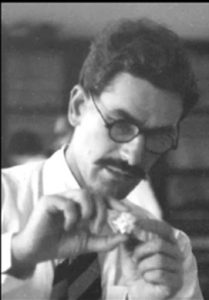
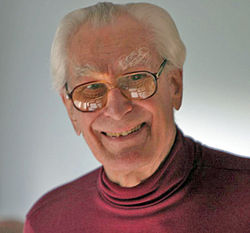
Richard Kenneth Guy
We send best wishes to Richard Kenneth Guy on his 102nd birthday, this day (September 30th) in 1916
From Wikipedia :
Richard Kenneth Guy (born 30 September 1916) is a British mathematician and professor emeritus in the Department of Mathematics at the University of Calgary.[1] He is known for his work in number theory, geometry, recreational mathematics, combinatorics, and graph theory.[2][3] He is best known for co-authorship (with John Conway and Elwyn Berlekamp) of Winning Ways for your Mathematical Plays and authorship of Unsolved Problems in Number Theory.[4] He has also published over 300 papers.[5] Guy proposed the partially tongue-in-cheek “Strong Law of Small Numbers,” which says there are not enough small integers available for the many tasks assigned to them – thus explaining many coincidences and patterns found among numerous cultures.[6] For this paper he received the MAA Lester R. Ford Award.[7]
From 1947 to 1951 Guy was the endings editor for the British Chess Magazine.[40] He is known for almost 200 endgame studies. Along with Hugh Blandford and John Roycroft, he is one of the inventors of the GBR code (Guy–Blandford–Roycroft code), a system of representing the position of chess pieces on a chessboard. Publications such as EG magazine use it to classify endgame types and to index endgame studies.[41]
Thomas Edward Rendle was born on Monday, September 29th 1986. “Stuck with You” by Huey Lewis and the News was the UK’s number one single.
Tom was born in Hastings, East Sussex and his mother’s maiden name is Jefferies. Tom resides in Hastings.
Tom attended Bede’s School, Sussex and then St. Leonard’s College.
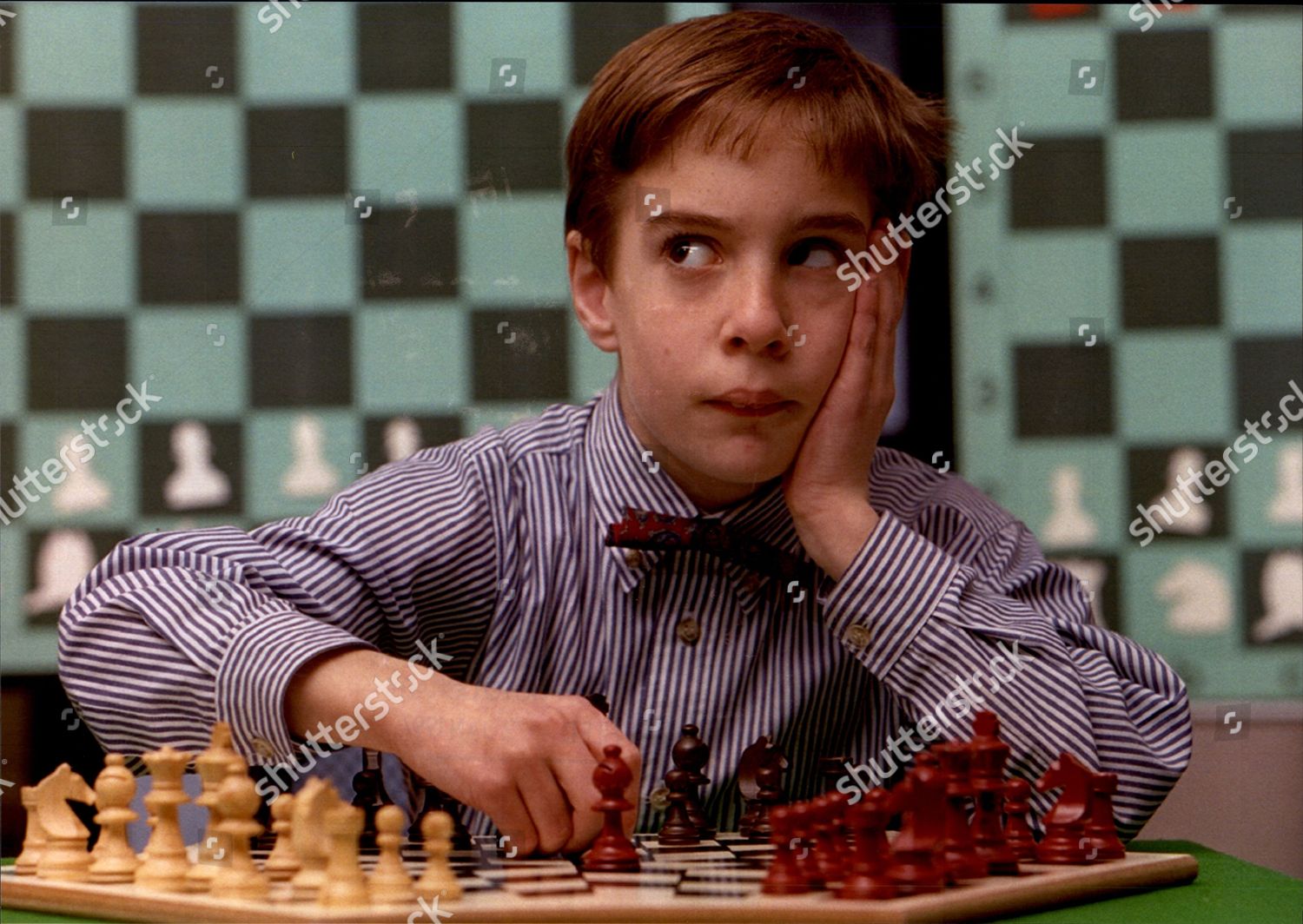
Tom Rendle aged 11 by David Crump
Tom studied physics at The University of Warwick and has two brothers, Tim and James and a sister Theresa.
Tom became a FIDE Master in 2004. In 2006 Tom became an International Master and achieved a peak rating (according to Felice) in July 2007 of 2416 at the age of 21. Tom has one Grandmaster norm.
Tom has played for 4NCL Grantham Sharks, Hammersmith (in the London League), Drunken Knights (in the London League), West London and Sandhurst (in the Surrey Border and Berkshire Leagues).
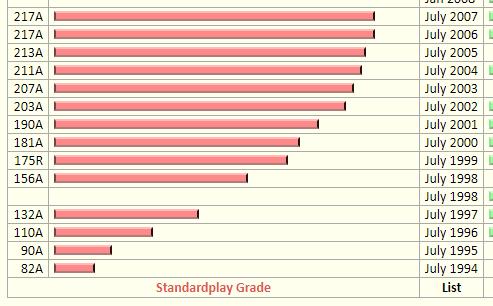
His first ECF grade to appear on the grading web site was 82A in July 1994 at the age of 7 :
ECF Grading Progress of Tom Rendle
Tom played in the World U12 Championship won by Teimour Radjabov and his first major success was scoring 7.5/10 in the 2001 Smith and Williamson Young Masters. He became Hampshire Champion in 2001 with 5/6 and won the 2004 Rosny Sous Bois tournament with 7/9 and a TPR of 2568. He was runner-up in the Paignton Open of 2005 followed by runner-up in the Coulsdon Christmas tournament of 2005.
With the white pieces Tom is almost exclusively an e4 player but he has flirted with Bird’s Opening many times. Having shared accommodation with Gawain Jones there are signs of influence in the choice of the Grand Prix Attack.
As the second player Tom plays both the Winawer and the Classical French and is a noted expert on the Classical Dutch and Dutch in general.
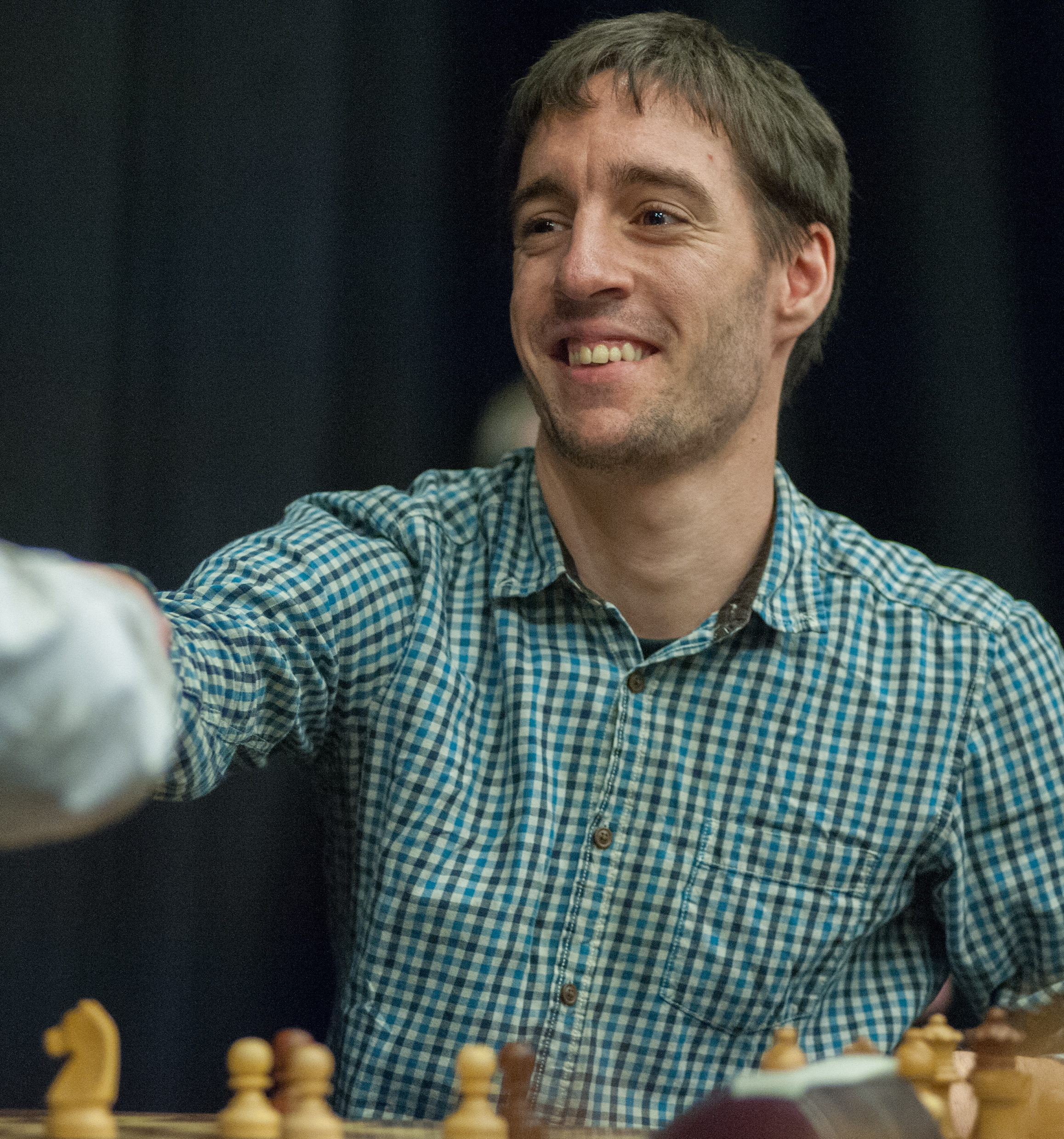
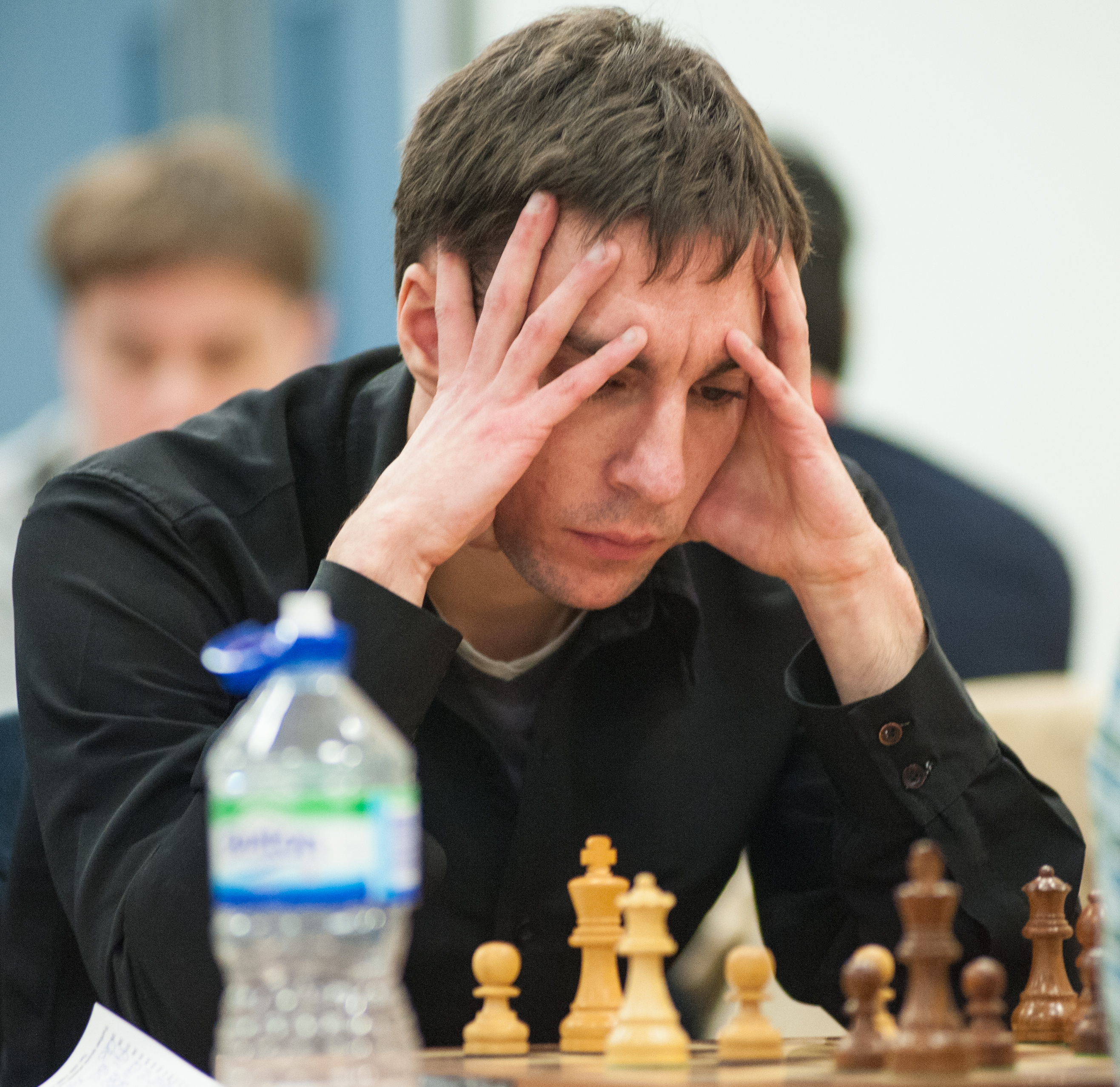
IM Tom Rendle at the King’s Place Rapidplay, 2013, Courtesy of John Upham Photography
From Wikipedia :
“Thomas Edward Rendle (born 29 September 1986) is a British FIDE International Master chess player and coach. Rendle became an International Master in June 2006 and is part way towards becoming a Grandmaster, with one GM Norm.
He gained an interest in chess at an early age, and soon entered chess tournaments, gaining success in his age categories (such as becoming Mini Squad Under 7s Champion, England Under 11 Champion).[citation needed] He was put on top board for the England under 11 team and won the Sussex Under 18 Championships, whilst still under 12.”
In 1998 Rendle played Garry Kasparov in the BT Wireplay Challenge 1998. In 2005 he was a coach for England’s team at the 1st FIDE World Schools Championship in Halkidiki, Greece and in 2006 he coached with the England Team at the European Youth Chess Championships in Montenegro.
Rendle currently works as a chess coach, both online and face-to-face. He is a regular coach of England Juniors.”
Thomas Edward Rendle was born on Monday, September 29th 1986. “Stuck with You” by Huey Lewis and the News was the UK’s number one single.
Tom was born in Hastings, East Sussex and his mother’s maiden name is Jefferies. Tom resides in Hastings.
Tom attended Bede’s School, Sussex and then St. Leonard’s College.
Tom Rendle aged 11 by David Crump
Tom studied physics at The University of Warwick and has two brothers, Tim and James and a sister Theresa.
Tom became a FIDE Master in 2004. In 2006 Tom became an International Master and achieved a peak rating (according to Felice) in July 2007 of 2416 at the age of 21. Tom has one Grandmaster norm.
Tom has played for 4NCL Grantham Sharks, Hammersmith (in the London League), Drunken Knights (in the London League), West London and Sandhurst (in the Surrey Border and Berkshire Leagues).
His first ECF grade to appear on the grading web site was 82A in July 1994 at the age of 7 :
ECF Grading Progress of Tom Rendle
Tom played in the World U12 Championship won by Teimour Radjabov and his first major success was scoring 7.5/10 in the 2001 Smith and Williamson Young Masters. He became Hampshire Champion in 2001 with 5/6 and won the 2004 Rosny Sous Bois tournament with 7/9 and a TPR of 2568. He was runner-up in the Paignton Open of 2005 followed by runner-up in the Coulsdon Christmas tournament of 2005.
With the white pieces Tom is almost exclusively an e4 player but he has flirted with Bird’s Opening many times. Having shared accommodation with Gawain Jones there are signs of influence in the choice of the Grand Prix Attack.
As the second player Tom plays both the Winawer and the Classical French and is a noted expert on the Classical Dutch and Dutch in general.
IM Tom Rendle at the King’s Place Rapidplay, 2013, Courtesy of John Upham Photography
From Wikipedia :
“Thomas Edward Rendle (born 29 September 1986) is a British FIDE International Master chess player and coach. Rendle became an International Master in June 2006 and is part way towards becoming a Grandmaster, with one GM Norm.
He gained an interest in chess at an early age, and soon entered chess tournaments, gaining success in his age categories (such as becoming Mini Squad Under 7s Champion, England Under 11 Champion).[citation needed] He was put on top board for the England under 11 team and won the Sussex Under 18 Championships, whilst still under 12.”
In 1998 Rendle played Garry Kasparov in the BT Wireplay Challenge 1998. In 2005 he was a coach for England’s team at the 1st FIDE World Schools Championship in Halkidiki, Greece and in 2006 he coached with the England Team at the European Youth Chess Championships in Montenegro.
Rendle currently works as a chess coach, both online and face-to-face. He is a regular coach of England Juniors.”
Thomas Edward Rendle was born on Monday, September 29th 1986. “Stuck with You” by Huey Lewis and the News was the UK’s number one single.
Tom was born in Hastings, East Sussex and his mother’s maiden name is Jefferies. Tom resides in Hastings.
Tom attended Bede’s School, Sussex and then St. Leonard’s College.
Tom Rendle aged 11 by David Crump
Tom studied physics at The University of Warwick and has two brothers, Tim and James and a sister Theresa.
Tom became a FIDE Master in 2004. In 2006 Tom became an International Master and achieved a peak rating (according to Felice) in July 2007 of 2416 at the age of 21. Tom has one Grandmaster norm.
Tom has played for 4NCL Grantham Sharks, Hammersmith (in the London League), Drunken Knights (in the London League), West London and Sandhurst (in the Surrey Border and Berkshire Leagues).
His first ECF grade to appear on the grading web site was 82A in July 1994 at the age of 7 :
ECF Grading Progress of Tom Rendle
Tom played in the World U12 Championship won by Teimour Radjabov and his first major success was scoring 7.5/10 in the 2001 Smith and Williamson Young Masters. He became Hampshire Champion in 2001 with 5/6 and won the 2004 Rosny Sous Bois tournament with 7/9 and a TPR of 2568. He was runner-up in the Paignton Open of 2005 followed by runner-up in the Coulsdon Christmas tournament of 2005.
With the white pieces Tom is almost exclusively an e4 player but he has flirted with Bird’s Opening many times. Having shared accommodation with Gawain Jones there are signs of influence in the choice of the Grand Prix Attack.
As the second player Tom plays both the Winawer and the Classical French and is a noted expert on the Classical Dutch and Dutch in general.
IM Tom Rendle at the King’s Place Rapidplay, 2013, Courtesy of John Upham Photography
From Wikipedia :
“Thomas Edward Rendle (born 29 September 1986) is a British FIDE International Master chess player and coach. Rendle became an International Master in June 2006 and is part way towards becoming a Grandmaster, with one GM Norm.
He gained an interest in chess at an early age, and soon entered chess tournaments, gaining success in his age categories (such as becoming Mini Squad Under 7s Champion, England Under 11 Champion).[citation needed] He was put on top board for the England under 11 team and won the Sussex Under 18 Championships, whilst still under 12.”
In 1998 Rendle played Garry Kasparov in the BT Wireplay Challenge 1998. In 2005 he was a coach for England’s team at the 1st FIDE World Schools Championship in Halkidiki, Greece and in 2006 he coached with the England Team at the European Youth Chess Championships in Montenegro.
Rendle currently works as a chess coach, both online and face-to-face. He is a regular coach of England Juniors.”
Thomas Edward Rendle was born on Monday, September 29th 1986. “Stuck with You” by Huey Lewis and the News was the UK’s number one single.
Tom was born in Hastings, East Sussex and his mother’s maiden name is Jefferies. Tom resides in Hastings.
Tom attended Bede’s School, Sussex and then St. Leonard’s College.
Tom Rendle aged 11 by David Crump
Tom studied physics at The University of Warwick and has two brothers, Tim and James and a sister Theresa.
Tom became a FIDE Master in 2004. In 2006 Tom became an International Master and achieved a peak rating (according to Felice) in July 2007 of 2416 at the age of 21. Tom has one Grandmaster norm.
Tom has played for 4NCL Grantham Sharks, Hammersmith (in the London League), Drunken Knights (in the London League), West London and Sandhurst (in the Surrey Border and Berkshire Leagues).
His first ECF grade to appear on the grading web site was 82A in July 1994 at the age of 7 :
ECF Grading Progress of Tom Rendle
Tom played in the World U12 Championship won by Teimour Radjabov and his first major success was scoring 7.5/10 in the 2001 Smith and Williamson Young Masters. He became Hampshire Champion in 2001 with 5/6 and won the 2004 Rosny Sous Bois tournament with 7/9 and a TPR of 2568. He was runner-up in the Paignton Open of 2005 followed by runner-up in the Coulsdon Christmas tournament of 2005.
With the white pieces Tom is almost exclusively an e4 player but he has flirted with Bird’s Opening many times. Having shared accommodation with Gawain Jones there are signs of influence in the choice of the Grand Prix Attack.
As the second player Tom plays both the Winawer and the Classical French and is a noted expert on the Classical Dutch and Dutch in general.
IM Tom Rendle at the King’s Place Rapidplay, 2013, Courtesy of John Upham Photography
From Wikipedia :
“Thomas Edward Rendle (born 29 September 1986) is a British FIDE International Master chess player and coach. Rendle became an International Master in June 2006 and is part way towards becoming a Grandmaster, with one GM Norm.
He gained an interest in chess at an early age, and soon entered chess tournaments, gaining success in his age categories (such as becoming Mini Squad Under 7s Champion, England Under 11 Champion).[citation needed] He was put on top board for the England under 11 team and won the Sussex Under 18 Championships, whilst still under 12.”
In 1998 Rendle played Garry Kasparov in the BT Wireplay Challenge 1998. In 2005 he was a coach for England’s team at the 1st FIDE World Schools Championship in Halkidiki, Greece and in 2006 he coached with the England Team at the European Youth Chess Championships in Montenegro.
Rendle currently works as a chess coach, both online and face-to-face. He is a regular coach of England Juniors.”
We send best wishes to Michael Franklin on his 90th birthday.
Growing Up
Michael John Franklin was born on Monday, February 2nd, 1931 in Battersea, London to Albert George (27 ix 1906, Dover – ? iii 1983, Wandsworth) and Helen Ann Franklin (née Colson, 1908-2003) who married in the third quarter of 1928 in Wandsworth. Albert was a clerk as was his father.
At the commencement of the Second World War, when eight years old, Michael was evacuated to Frome in Somerset. As a consequence Michael would delight in playing in the Frome Congress whenever possible. He played in the first event in 1990 organised by Leon York (whose name is the memorial trophy for the Major section). The story of Michael’s return to Frome made its’ way in to the local newspaper and was reported by Gary Lane as follows :
From British Chess Magazine, Volume CX (110, 1990), Number 7 (July), page 296 :
“A special presentation by the sponsor, Mrs. Jean Mackereth, Managing Director of Keyford Frames, was made to Londoner Michael Franklin, who was returning for the first time in 51 years to the town to which he was evacuated during the war. His final appearance at Frome was in the 2010 event.
The Early Years
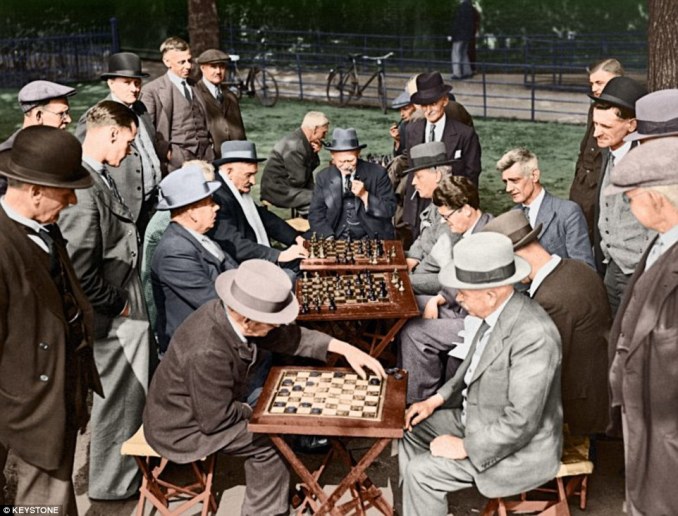
Michaels interest in chess started in 1944 aged 13 when he witnessed games being played on Clapham Common. He was fascinated by the pieces and taught himself to play, never receiving any formal coaching. He joined the Clapham Common Chess Club in 1944. (CCCC became incorporated into Battersea Chess Club some time later).
CHECK MATES: Elderly members of the Clapham Common Open Air Chess and Draughts Club, circa 1920. The club met regularly during the afternoons to play on Clapham Common in south London. Copyright : Keystone
Apart from summer events such as the above the club had a Winter Section that played matches in the London League. The club won the first division (now known as the Brian Smith Trophy) of the London League in the 1946-47 and 1947-48 seasons. Michael played his final game in the London Chess League for Richmond & Twickenham on April 14th 2010 drawing with John Hodgson, brother of Julian giving a sixty year span.
In his formative years he played at the Gambit Chess Café, Budge Row, Cannon Street, London, EC4N. Many strong players regularly visited the Gambit to play skittles, blitz and the frequently held lightning tournaments hosted by the proprietor Mr GH White.
Events such as these enabled Michael to develop his quick sight of the board and his flair for tactical play.
Leonard Barden added :
“Michael made his name as a young player first by his successes in the Saturday evening Gambit Guinea speed events at the Gambit Chess Café in Cannon Street which he often won ahead of master level rivals. He remained a strong speed player all his life.”
In the early 1950s Michael was persuaded by his friends Aird Thomson (who was Scottish Boys’ Champion in 1932, and 1933 ( equal-first). In 1951 he was Scottish Champion. In 1954 he moved to London. He married Susan Mary Hamilton in 1961 who went on to become Scottish Ladies’ Champion in 1965.) and oriental carpet expert Robert Pinner to join the Richmond and Twickenham Chess Club playing for the club in the London League, Surrey Trophy and National Club Championship until he retired from competitive play 2010.
Making Progress
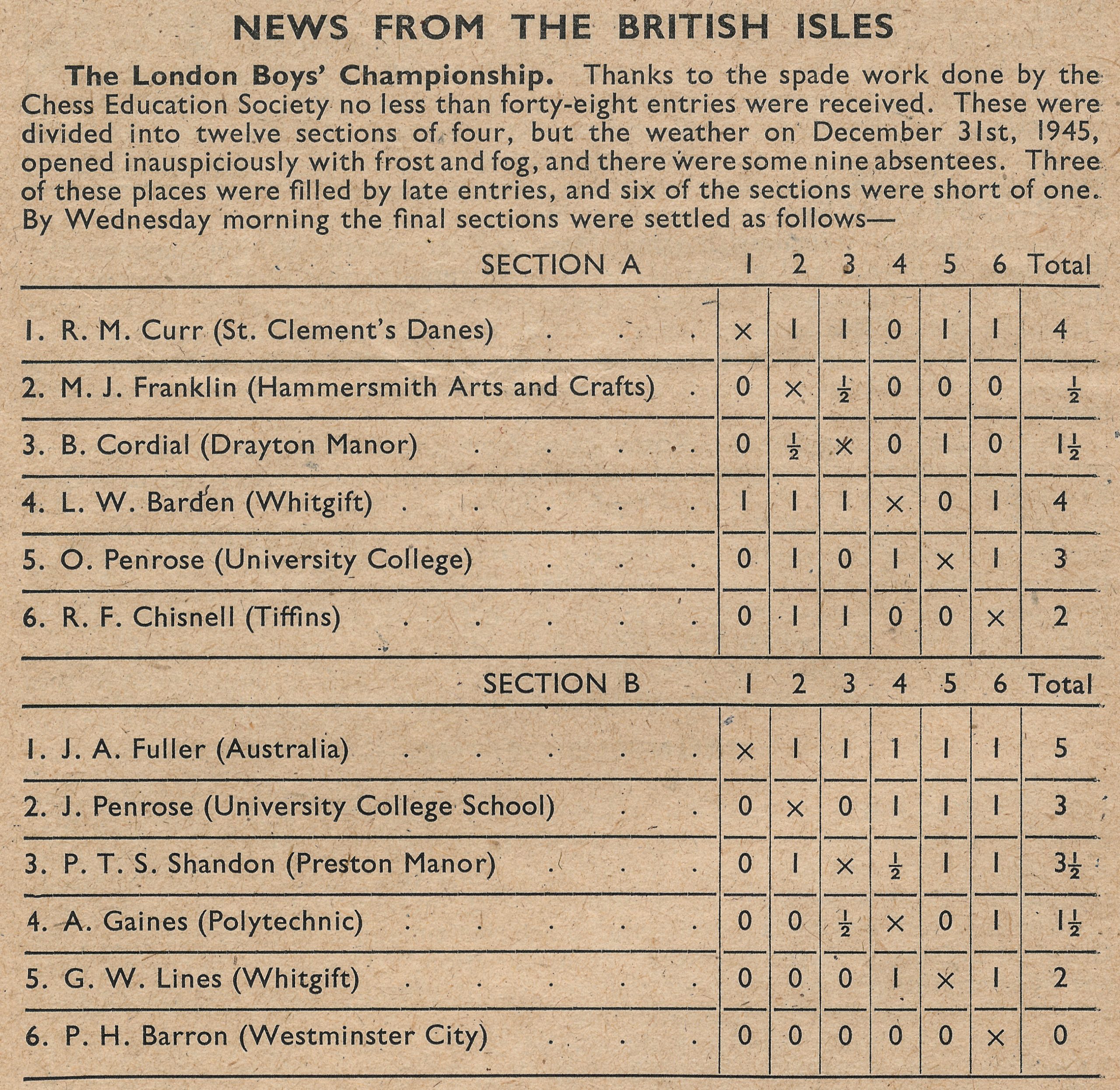
Michael’s first appearance in British Chess Magazine was in Volume LXVI (66, 1946), Number 2 (February). Page 52 contained this report of the 1945 London Boy’s Championship in which Michael reached the final A section :
British Chess Magazine, Volume LXVI (66, 1946), Number 2 (February), page 52
On leaving school Michael joined a firm of Patent Agents remaining in their employ as the accounts department for around forty years before retiring in the late 1980s. His retirement was prompted by the firm’s adoption of electronic computers. When he retired he was Chief Cashier.
On June 18th 1960 Michael’s happiest day was when he married Jean Fey. They celebrated their diamond anniversary in 2020.
To the present day Michael has maintained an aversion toward modern technology. He did, however, concede to the ownership of a mobile telephone. This was for the specific purpose of updating Jean on his days progress in any chess tournaments where he was away from home.
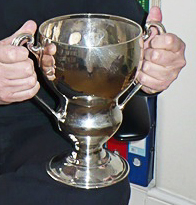
In 1946 (aged 15) Michael won the Felce Cup awarded by the Surrey County Chess Association. A result indicating rapid improvement since Michael had only started playing competitively in 1944.
The Felce Cup held by the hands of Stephen Moss in 2014
In 1951 Michael finished third in the Surrey Championships behind the winner Frank Parr and runner-up David Hooper. In 1961, 1966, 1968, 1969 and 1970 Michael won the Surrey Championship outright and made many appearences in county matches for Surrey from 1950 onwards until 2010.
Unfortunately Michael’s rapid progress was threatened by two bouts of ill health. In 1948 aged 17 Michael was diagnosed with Tuberculosis which lasted for eighteen months including a twelve month stay in the Royal National Hospital for Diseases of the Chest in Ventnor on the Isle of Wight. Aged twenty the TB returned leading to yet another twelve months illness.
Michael has suffered from ill health all of his life interrupting his chess career at various times. Fortunately the TB has not returned.
Michael won the National Chess Centre Championship in 1953 and 1955 being runner-up in 1954. The venue was Hill’s Restaurant, 158 Bishopsgate, London, EC2 opposite Liverpool Street Station since the original John Lewis department store venue was bombed in 1940.
The British Chess Federation first published a National Grading list in 1953 (using the Richard Clarke system). In the 1954 list MF appeared with a grade of 2A (225-232) and from then on with a grade of either 2A or 2B. In 1964 a numeric system had him at 225 ranking Michael 4th in England behind Penrose 244, Kottnauer 238 and Clarke 231.
Michael played many times in the annual Battle of Britain Tournament organised by Squadron Leader David Pritchard and his committee. He won it four times : 1959, 1960, 1961 and 1962.
The Ilford Whitsun Congress
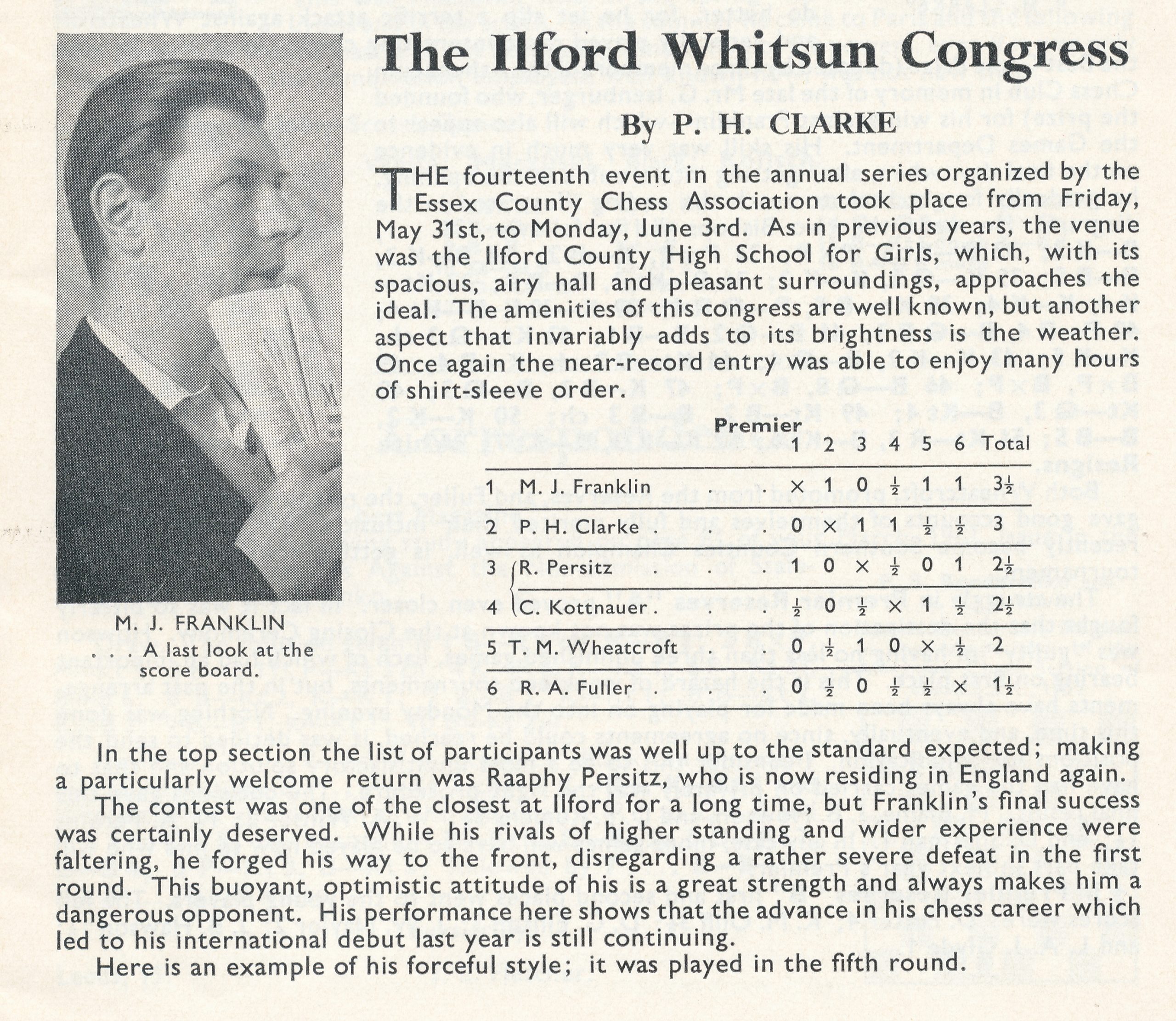
The Ilford Whitsun Congress was a regular part of Michael’s season throughout the sixties. He won the Premier Reserves in 1961 ahead of Hilton, Hindle, Howson, Sales and Blaine and was runner-up to Kottnauer in 1962. In 1963 he went one step better by winning the Premier :
A report of Mike Franklin’s success at the 1963 Ilford Whitsun Congress by Peter Clarke. Source : British Chess Magazine, Volume LXXXIII, Number 7 (July), page 193
and here is the fifth round game :
In his tournament report PH Clarke wrote :
This buoyant, optimistic attitude of his is a great strength and always makes him a dangerous opponent.
Away from Home : International Progress
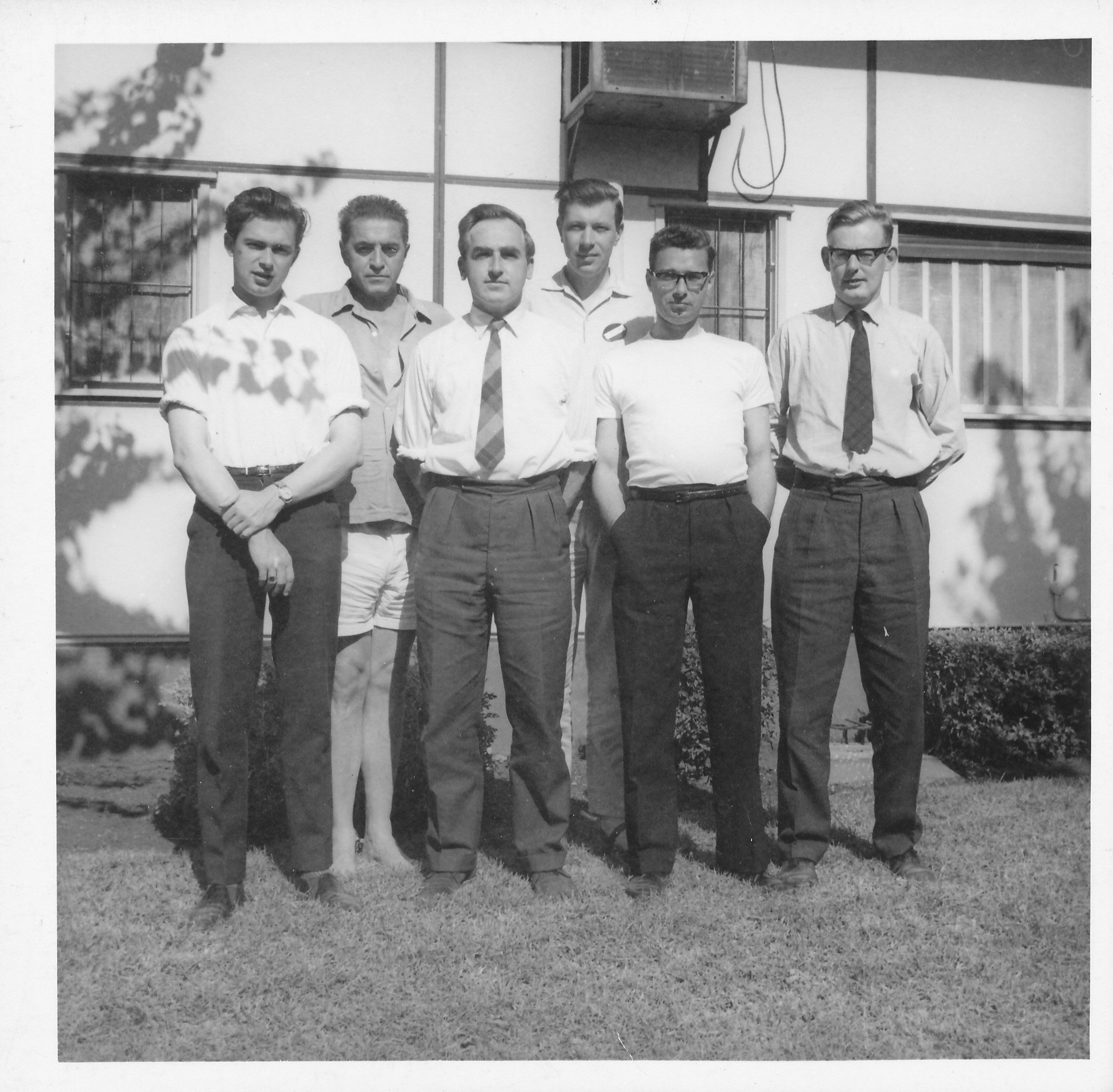
1964 saw selection by the BCF to play in the Tel Aviv Olympiad :
The 1964 England Olympiad (Tel Aviv) Team : Owen Hindle, Čeněk Kottnauer, Peter Clarke, Michael Franklin, Norman Littlewood & Michael Haygarth
and scored a creditable 4/6. This was followed in 1965 with 3/5 in Clare Benedict tournament held in Berlin.
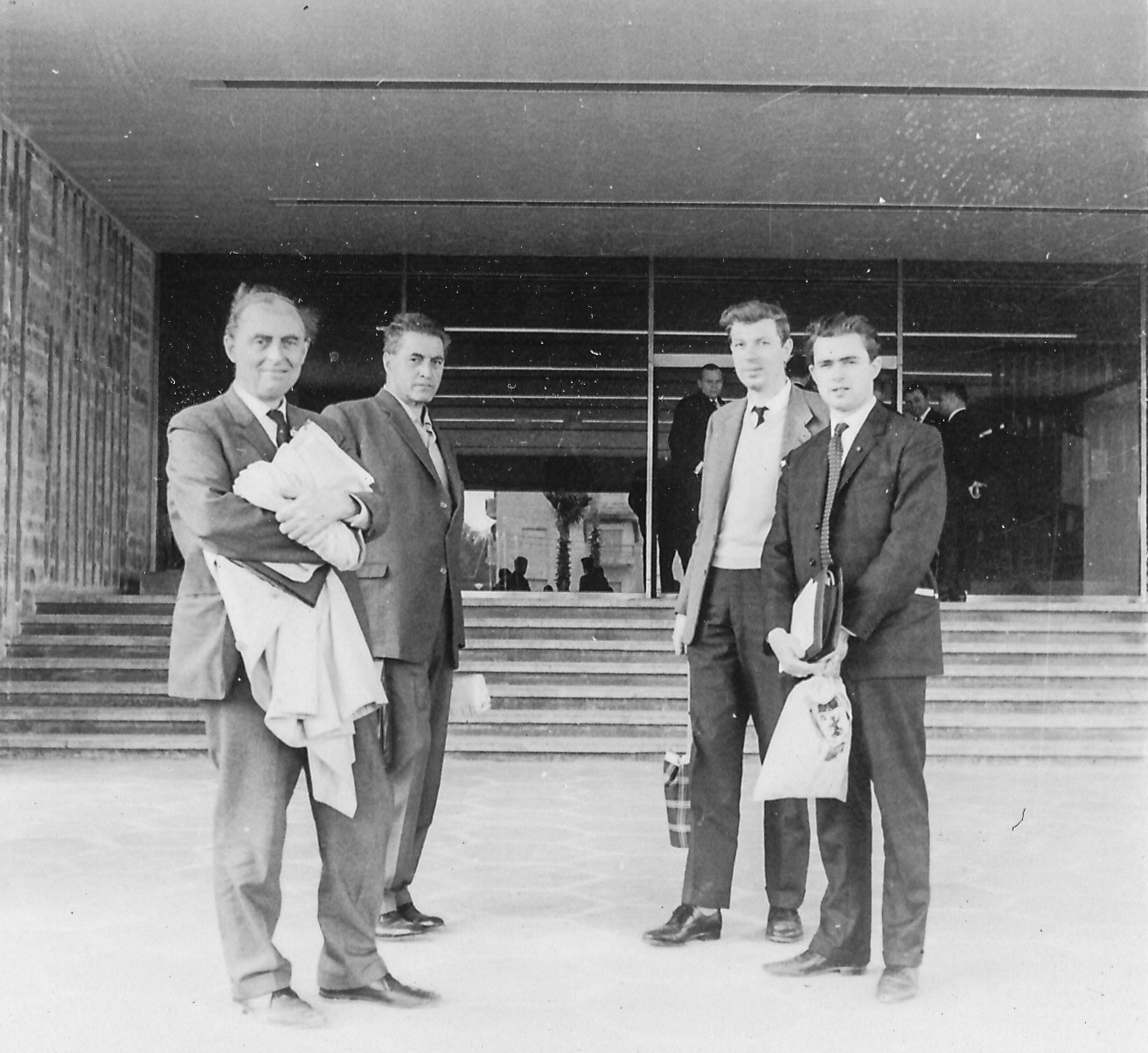
He played in the annual Anglo-Dutch match on no less than six occasions in 1962, 1963, 1964, 1965, 1968 and finally in 1969. His aggregate score was an impressive 8/12.
?, Čeněk Kottnauer, Michael Franklin and Owen Hindle
On the national scene Michael repeated his 1963 victory at the 1969 Ilford Premier with a clear first place : Franklin 4; RG Wade and D Wright 3; JB Howson 2.5; BH Wood 2; PH Clarke 0.5.
In 1970 Michael won the London Championship which was also known as the Budget Cup which had last been held in 1956 . He followed this in 1972 by rightly earning the (now defunct) title of British Master.
Michael’s final appearance for England was in 1971 in the Cheltenham based Anglo-German match with a somewhat disappointing 0.5/2 against Juergen Dueball.
Owen Hindle, Michael Franklin, Harry Golombek and Michael Haygarth
Michael played board two for London in a Telex match versus Belgrade playing Marjanovic. The game was drawn.
Michael Franklin playing board two in the London – Belgrade Telex Match on April 3rd, 1976 from the St. James Hotel, Buckingham Gate. Sourced from BCM, Volume XCVI (96), Number 5, page 192. Photographer probably Freddy Reilly.
The Ultimate Prize : The Aaronson Masters
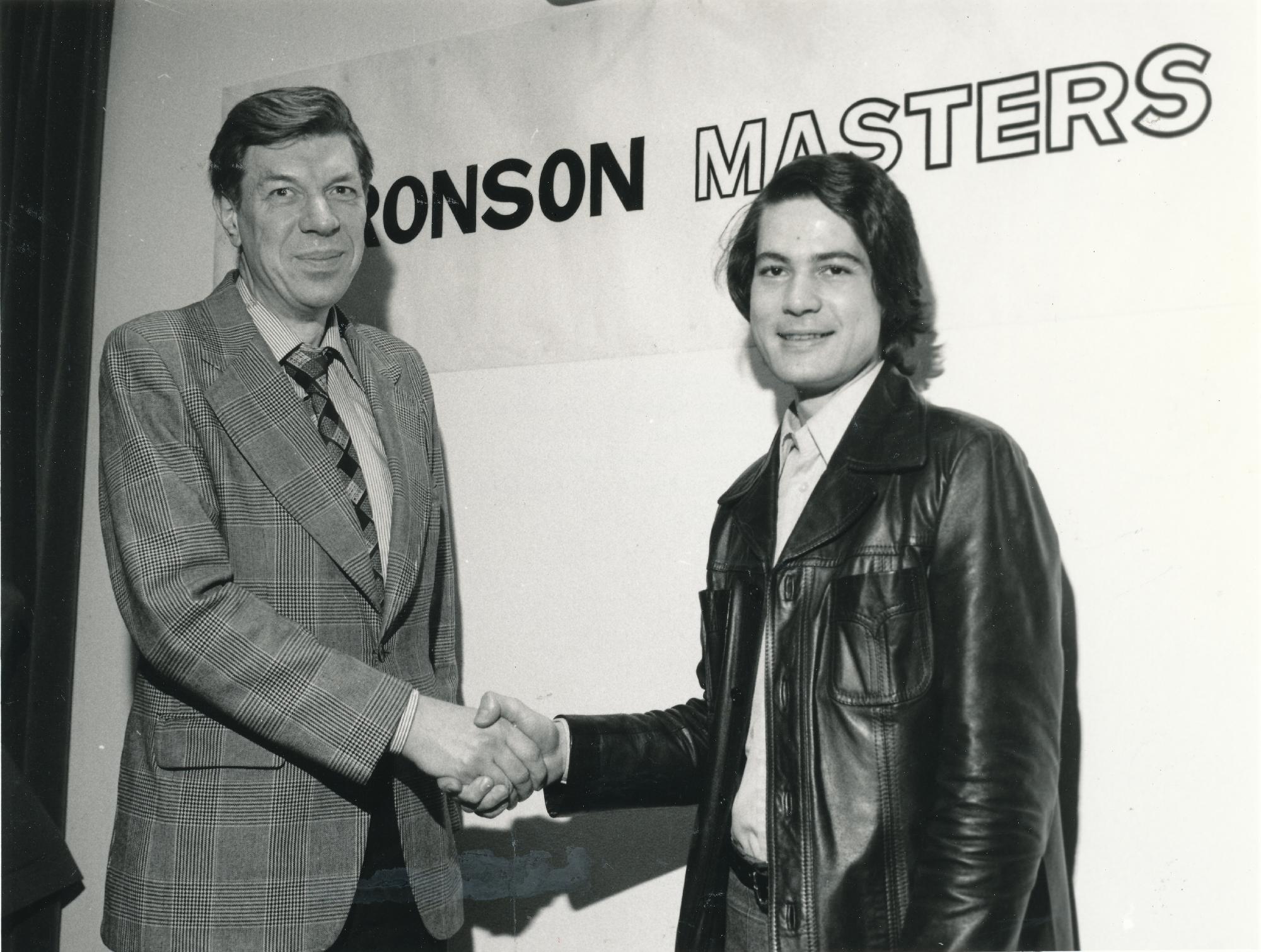
The Aaronson Masters at Harrow 1978 brought his best individual success at the age of 47, sharing first place with IM Aldo Haik of France and to boot, earning an IM norm.
Joint winners of the 1978 Aaronson Masters : Michael Franklin and IM Aldo Haik
Michael scored an undefeated 7.5/10 and finished ahead of Short, Speelman, Nunn, Hartston, Mestel, Webb, Basman, Botterill and numerous other illustrious players. Michael remarked of his lifetime best result that it was
just one of those occasions when everything went right!
But he scored 3.5/5 against the IMs, was alert to every opportunity, and the games show he owed little to luck.
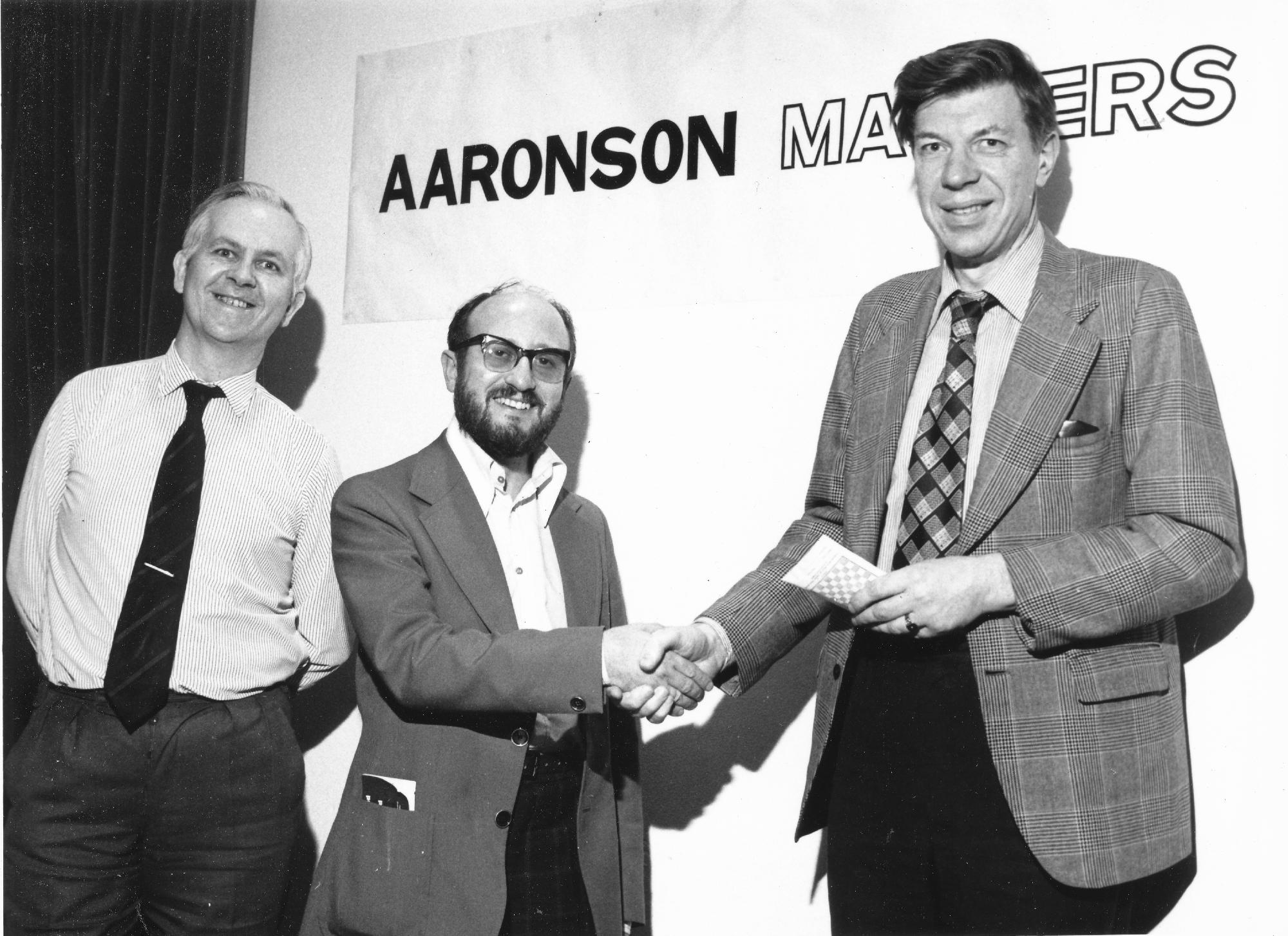
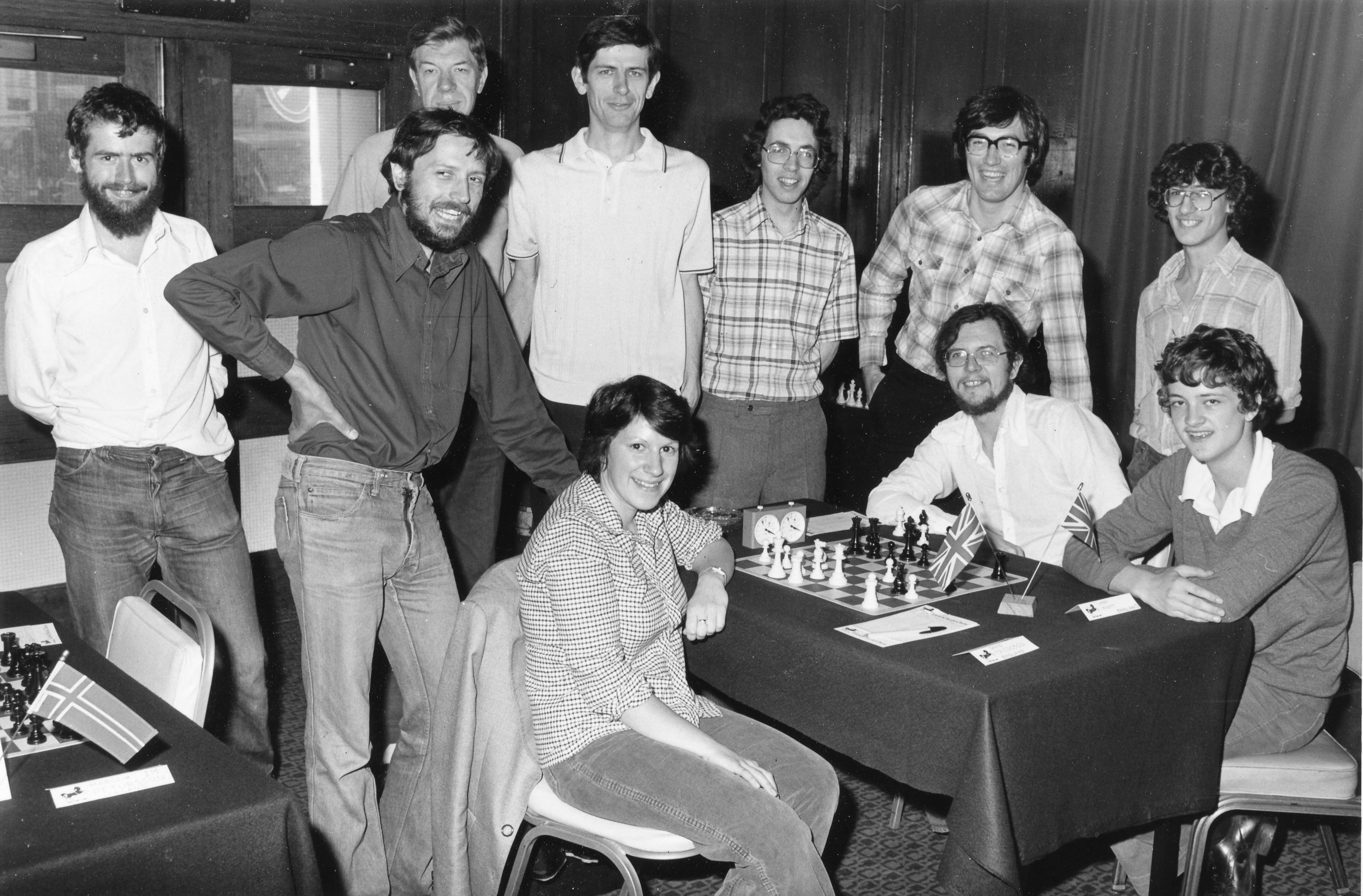
Leonard Barden, Stewart Reuben and Michael Franklin at the 1978 Aaronson Masters
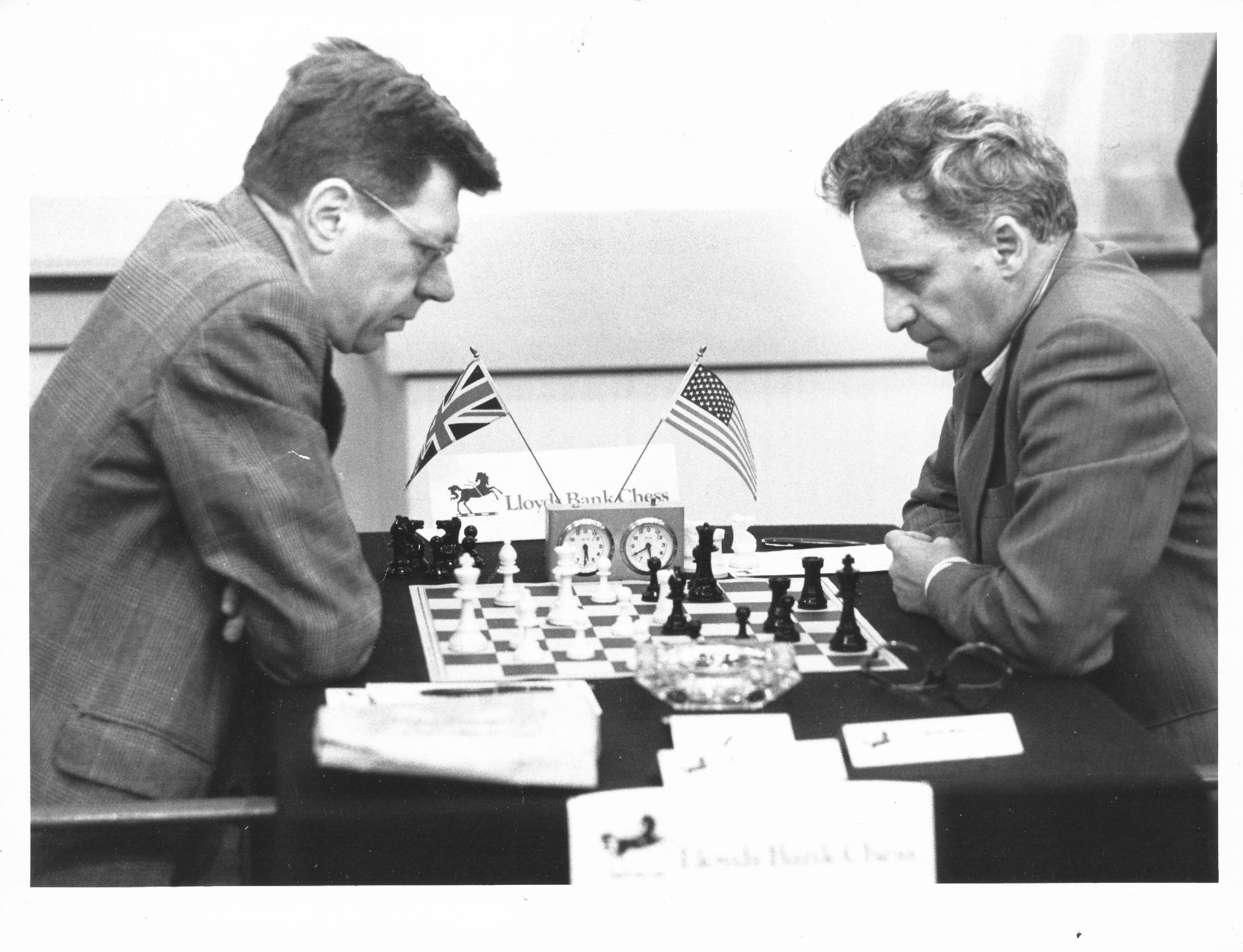
Like many others Michael made appearences in Lloyds Bank events of 1977, 1978, 1984, 1989, 1991, 1993 and 1994.
Michael Franklin (left) at the 1978 Lloyds Bank Masters playing IGM Leonid ShamkovichMichael and friends during the 1978 Lloyds Bank Masters
The Hastings Years
Michael first played at Hastings in 1964 when he was invited to play in the Premier Tournament. The tournament was won by Mikhail Tal and Michael finished in last place.
Undaunted he returned to Hastings in 1968 to play in the Challengers tournament. One of the attractions of playing in the Challengers was that the winner received a place the following years Premier. Frustratingly Michael finished second three years in a row! In 1968 the Challengers was won by Danny Wright, in 1969 by Martyn Corden and in 1970 by Peter Markland. Finally, in 1971 his patience was rewarded and he won the Challengers and qualified to the following years Premier.
The 47th Hastings Premier of 1971-72 had been changed from the traditional 10 player all-play-all to a 16 player tournament. Also, having obtained sponsorship from various organisations the committee were able to invite some of the top names of the day. The sponsors were:
So, the entry included Karpov, Korchnoi, Andersson, Najdorf, Mecking, Gligoric, Unzicker and Robert Byrne to name but a few. This was undoubtedly the strongest Hastings Premier since World War Two and possibly the strongest Hastings Tournament since 1895.
Michael started well with a draw against the Rumanian GM Ciocaltea followed by a draw in with the Brazilian prodigy Mecking. In round three he surprised everyone by beating Ray Keene. With 2/3 things were looking promising. However, after this bright start Michael only managed a draw against Unzicker and a draw with Hartston finishing in a disappointing last place with a score of 3/15.
In the tournament report Peter Clarke opined
Franklin suffered the usual fate of the gifted amateur in a professional field of simply not being accustomed to this kind of chess.
Despite this Michael continued to play in the Hastings Challengers. He played in nineteen out of the next twenty-five years! He came close to winning the tournament in 1982: he was leading the tournament with a score of 7/8 when he was informed that Jean’s Father had passed away. Having drawn his ninth round game and needing only a draw in the last round to ensure at least a tie for first place he withdrew from the tournament and immediately left for home.
The Weekend Scene
Like all players with a full time job Michael had to play most of his chess at the weekend so the explosion of weekends tournaments in the early 1970’s gave him ample opportunities. His habit of playing quickly was ideally suited to the fast time limits of the weekend tournament. During the 1970 and 1980’s he was very successful. He won numerous events and was more often than not in the prize list.
FM Michael Franklin, Photo by Cathy Rogers
In later years he restricted himself to London based tournaments and those in the West Country. His regular tournaments being Exeter, Torquay and old favourite, Frome. Michael at the age of 78 shared first place at Frome 2009. Frome 2010 was his farewell appearance.
FM Michael Franklin
Michael played for a number of clubs viz : Richmond & Twickenham, Coulsdon CF, Surrey CCA, 4NCL Richmond, 4NCL Bristol and Richards Butler to name but a few.
Finally, in 1980, Michael was awarded the FIDE Master title and achieved his highest rating (in the Elo era) of 2345 in January 1979. It is most likely that his highest ever rating would have been more like 2450.
FM Michael Franklin vs Paul Helbig
Appropriately enough Michael was the inaugural winner of the BCF/ECF Senior Prix in 2000 and won it again in 2002 and 2003. The event last ran in 2006.
When Surrey won the counties championship a few years back the team took the trophy around to Michael’s home in Norbury, such was their regard for his contributions.
The London System
Any currently active club player cannot have missed the explosive rise to prominence of the system for White he developed :
The London System and Accelerated London System has acquired a huge cohort of followers in recent times probably not realising the debt they (and many authors, book and DVD publishers!) owe to Michael. If only he could have earnt a royalty every time it was played!
Also Michael had notable success as Black with the O’Kelly Sicilian 1.e4 c5 2.Nf3 a6.
Life Outside of Chess
Michael had many interests apart from Chess. He was for many years a member of the Surrey County Cricket Club. After he retired he would arrange to meet fellow Surrey Member Frank Parr at the Oval and after lunch in the Pavilion they would spend the day enjoying the Cricket. Tennis was another sport that Michael followed. Michael was also interested in horseracing. Several players were surprised when visiting one of the racetracks around London to find Michael also attending the race meeting.
Michael was the typical “natural” player. He never studied the game and his only sources of opening information were the British Chess Magazine and the chess columns in The Times and the Guardian. He never kept the scores of his games. Once the game was finished it was time to move on. One of Michael’s greatest strengths was his optimistic attitude at the chessboard. No matter how bad the position he was confident of ultimate success.
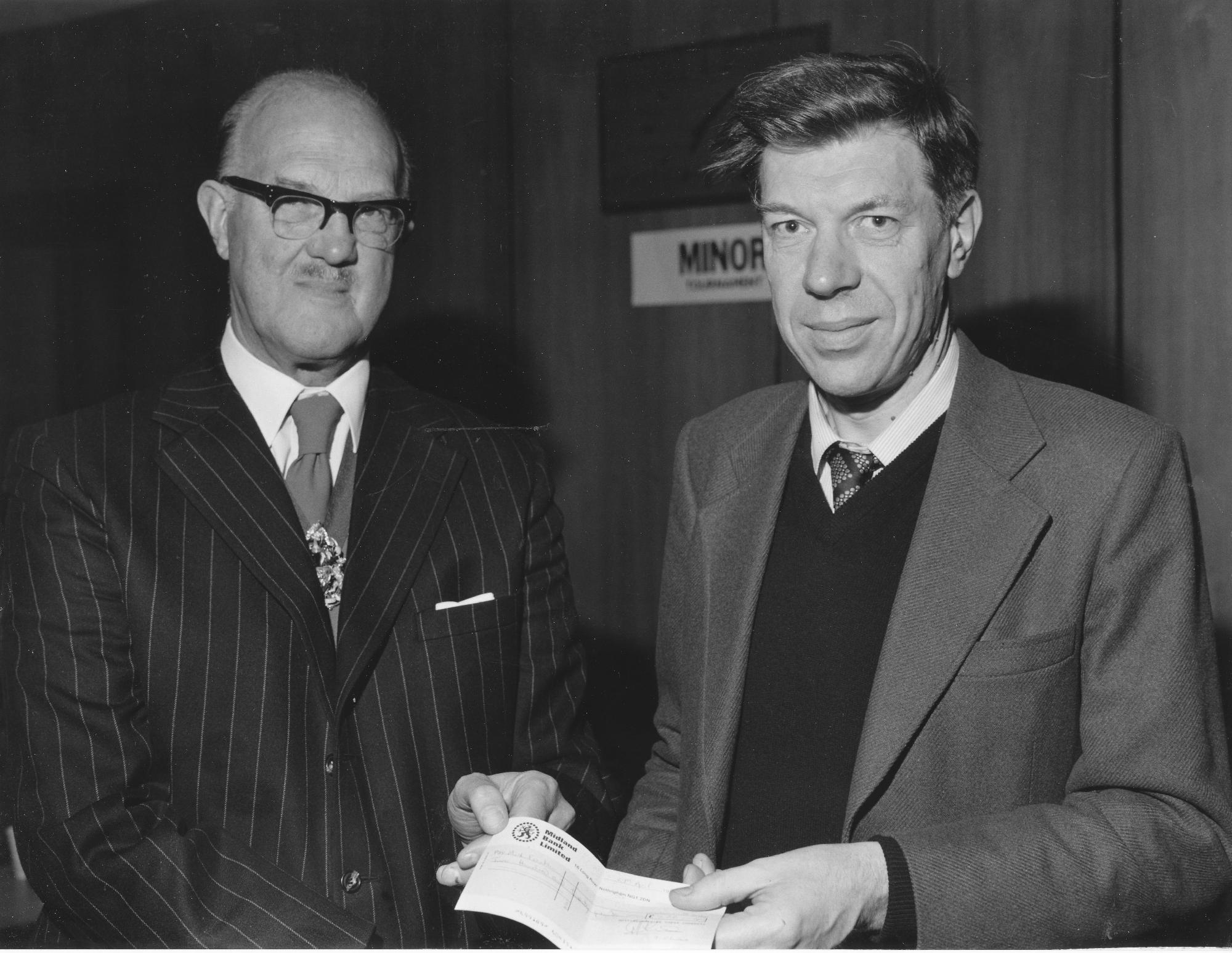
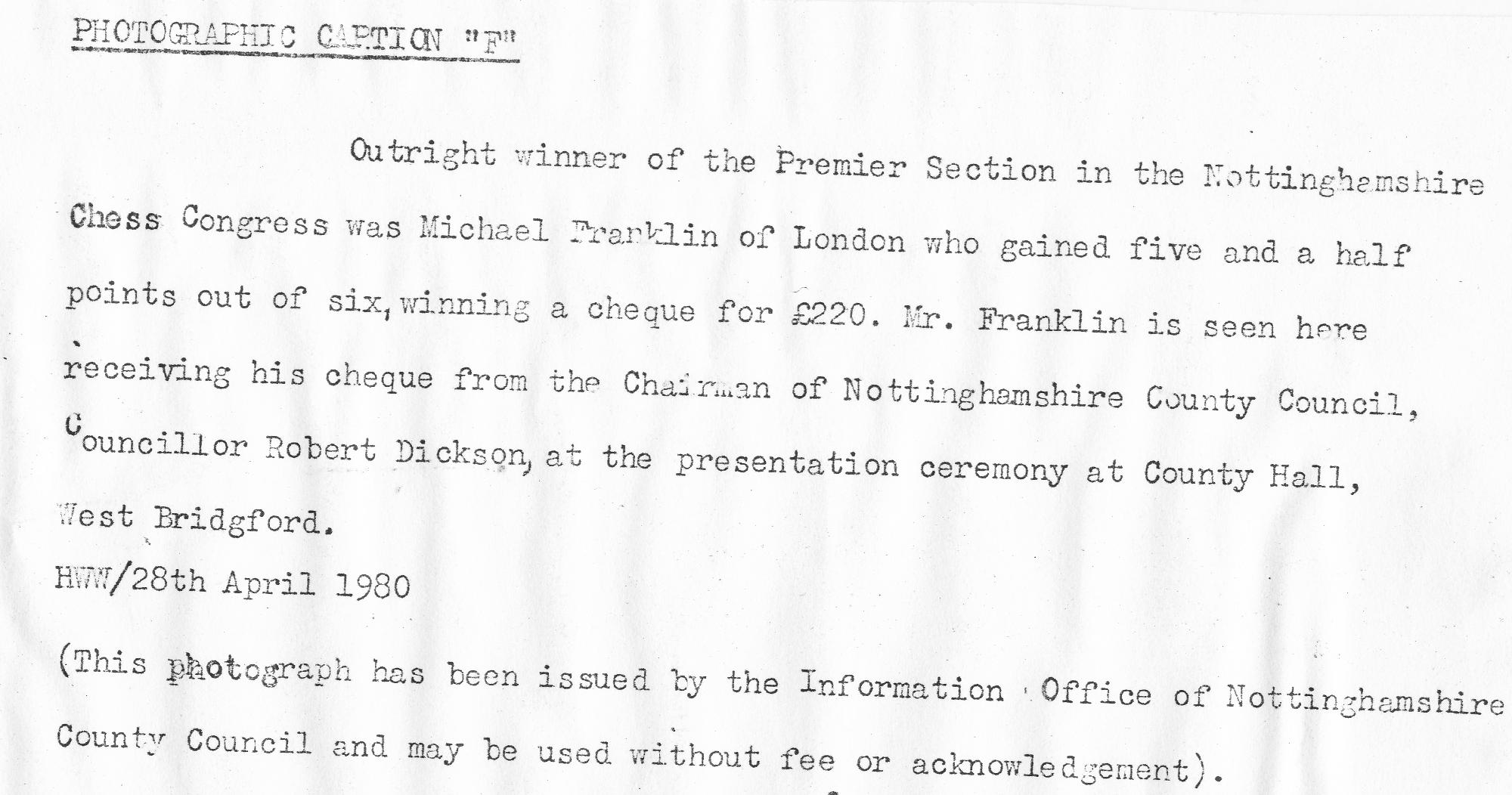
Michael Franklin receives £220 from Councillor Robert Dickson at the 1980 Nottinghamshire CongressCaption for above photograph
We send best wishes to Michael Franklin on his 90th birthday.
Growing Up
Michael John Franklin was born on Monday, February 2nd, 1931 in Battersea, London to Albert George (27 ix 1906, Dover – ? iii 1983, Wandsworth) and Helen Ann Franklin (née Colson, 1908-2003) who married in the third quarter of 1928 in Wandsworth. Albert was a clerk as was his father.
At the commencement of the Second World War, when eight years old, Michael was evacuated to Frome in Somerset. As a consequence Michael would delight in playing in the Frome Congress whenever possible. He played in the first event in 1990 organised by Leon York (whose name is the memorial trophy for the Major section). The story of Michael’s return to Frome made its’ way in to the local newspaper and was reported by Gary Lane as follows :
From British Chess Magazine, Volume CX (110, 1990), Number 7 (July), page 296 :
“A special presentation by the sponsor, Mrs. Jean Mackereth, Managing Director of Keyford Frames, was made to Londoner Michael Franklin, who was returning for the first time in 51 years to the town to which he was evacuated during the war. His final appearance at Frome was in the 2010 event.
The Early Years
Michaels interest in chess started in 1944 aged 13 when he witnessed games being played on Clapham Common. He was fascinated by the pieces and taught himself to play, never receiving any formal coaching. He joined the Clapham Common Chess Club in 1944. (CCCC became incorporated into Battersea Chess Club some time later).
CHECK MATES: Elderly members of the Clapham Common Open Air Chess and Draughts Club, circa 1920. The club met regularly during the afternoons to play on Clapham Common in south London. Copyright : Keystone
Apart from summer events such as the above the club had a Winter Section that played matches in the London League. The club won the first division (now known as the Brian Smith Trophy) of the London League in the 1946-47 and 1947-48 seasons. Michael played his final game in the London Chess League for Richmond & Twickenham on April 14th 2010 drawing with John Hodgson, brother of Julian giving a sixty year span.
In his formative years he played at the Gambit Chess Café, Budge Row, Cannon Street, London, EC4N. Many strong players regularly visited the Gambit to play skittles, blitz and the frequently held lightning tournaments hosted by the proprietor Mr GH White.
Events such as these enabled Michael to develop his quick sight of the board and his flair for tactical play.
Leonard Barden added :
“Michael made his name as a young player first by his successes in the Saturday evening Gambit Guinea speed events at the Gambit Chess Café in Cannon Street which he often won ahead of master level rivals. He remained a strong speed player all his life.”
In the early 1950s Michael was persuaded by his friends Aird Thomson (who was Scottish Boys’ Champion in 1932, and 1933 ( equal-first). In 1951 he was Scottish Champion. In 1954 he moved to London. He married Susan Mary Hamilton in 1961 who went on to become Scottish Ladies’ Champion in 1965.) and oriental carpet expert Robert Pinner to join the Richmond and Twickenham Chess Club playing for the club in the London League, Surrey Trophy and National Club Championship until he retired from competitive play 2010.
Making Progress
Michael’s first appearance in British Chess Magazine was in Volume LXVI (66, 1946), Number 2 (February). Page 52 contained this report of the 1945 London Boy’s Championship in which Michael reached the final A section :
British Chess Magazine, Volume LXVI (66, 1946), Number 2 (February), page 52
On leaving school Michael joined a firm of Patent Agents remaining in their employ as the accounts department for around forty years before retiring in the late 1980s. His retirement was prompted by the firm’s adoption of electronic computers. When he retired he was Chief Cashier.
On June 18th 1960 Michael’s happiest day was when he married Jean Fey. They celebrated their diamond anniversary in 2020.
To the present day Michael has maintained an aversion toward modern technology. He did, however, concede to the ownership of a mobile telephone. This was for the specific purpose of updating Jean on his days progress in any chess tournaments where he was away from home.
In 1946 (aged 15) Michael won the Felce Cup awarded by the Surrey County Chess Association. A result indicating rapid improvement since Michael had only started playing competitively in 1944.
The Felce Cup held by the hands of Stephen Moss in 2014
In 1951 Michael finished third in the Surrey Championships behind the winner Frank Parr and runner-up David Hooper. In 1961, 1966, 1968, 1969 and 1970 Michael won the Surrey Championship outright and made many appearences in county matches for Surrey from 1950 onwards until 2010.
Unfortunately Michael’s rapid progress was threatened by two bouts of ill health. In 1948 aged 17 Michael was diagnosed with Tuberculosis which lasted for eighteen months including a twelve month stay in the Royal National Hospital for Diseases of the Chest in Ventnor on the Isle of Wight. Aged twenty the TB returned leading to yet another twelve months illness.
Michael has suffered from ill health all of his life interrupting his chess career at various times. Fortunately the TB has not returned.
Michael won the National Chess Centre Championship in 1953 and 1955 being runner-up in 1954. The venue was Hill’s Restaurant, 158 Bishopsgate, London, EC2 opposite Liverpool Street Station since the original John Lewis department store venue was bombed in 1940.
The British Chess Federation first published a National Grading list in 1953 (using the Richard Clarke system). In the 1954 list MF appeared with a grade of 2A (225-232) and from then on with a grade of either 2A or 2B. In 1964 a numeric system had him at 225 ranking Michael 4th in England behind Penrose 244, Kottnauer 238 and Clarke 231.
Michael played many times in the annual Battle of Britain Tournament organised by Squadron Leader David Pritchard and his committee. He won it four times : 1959, 1960, 1961 and 1962.
The Ilford Whitsun Congress
The Ilford Whitsun Congress was a regular part of Michael’s season throughout the sixties. He won the Premier Reserves in 1961 ahead of Hilton, Hindle, Howson, Sales and Blaine and was runner-up to Kottnauer in 1962. In 1963 he went one step better by winning the Premier :
A report of Mike Franklin’s success at the 1963 Ilford Whitsun Congress by Peter Clarke. Source : British Chess Magazine, Volume LXXXIII, Number 7 (July), page 193
and here is the fifth round game :
In his tournament report PH Clarke wrote :
This buoyant, optimistic attitude of his is a great strength and always makes him a dangerous opponent.
Away from Home : International Progress
1964 saw selection by the BCF to play in the Tel Aviv Olympiad :
The 1964 England Olympiad (Tel Aviv) Team : Owen Hindle, Čeněk Kottnauer, Peter Clarke, Michael Franklin, Norman Littlewood & Michael Haygarth
and scored a creditable 4/6. This was followed in 1965 with 3/5 in Clare Benedict tournament held in Berlin.
He played in the annual Anglo-Dutch match on no less than six occasions in 1962, 1963, 1964, 1965, 1968 and finally in 1969. His aggregate score was an impressive 8/12.
?, Čeněk Kottnauer, Michael Franklin and Owen Hindle
On the national scene Michael repeated his 1963 victory at the 1969 Ilford Premier with a clear first place : Franklin 4; RG Wade and D Wright 3; JB Howson 2.5; BH Wood 2; PH Clarke 0.5.
In 1970 Michael won the London Championship which was also known as the Budget Cup which had last been held in 1956 . He followed this in 1972 by rightly earning the (now defunct) title of British Master.
Michael’s final appearance for England was in 1971 in the Cheltenham based Anglo-German match with a somewhat disappointing 0.5/2 against Juergen Dueball.
Owen Hindle, Michael Franklin, Harry Golombek and Michael Haygarth
Michael played board two for London in a Telex match versus Belgrade playing Marjanovic. The game was drawn.
Michael Franklin playing board two in the London – Belgrade Telex Match on April 3rd, 1976 from the St. James Hotel, Buckingham Gate. Sourced from BCM, Volume XCVI (96), Number 5, page 192. Photographer probably Freddy Reilly.
The Ultimate Prize : The Aaronson Masters
The Aaronson Masters at Harrow 1978 brought his best individual success at the age of 47, sharing first place with IM Aldo Haik of France and to boot, earning an IM norm.
Joint winners of the 1978 Aaronson Masters : Michael Franklin and IM Aldo Haik
Michael scored an undefeated 7.5/10 and finished ahead of Short, Speelman, Nunn, Hartston, Mestel, Webb, Basman, Botterill and numerous other illustrious players. Michael remarked of his lifetime best result that it was
just one of those occasions when everything went right!
But he scored 3.5/5 against the IMs, was alert to every opportunity, and the games show he owed little to luck.
Leonard Barden, Stewart Reuben and Michael Franklin at the 1978 Aaronson Masters
Like many others Michael made appearences in Lloyds Bank events of 1977, 1978, 1984, 1989, 1991, 1993 and 1994.
Michael Franklin (left) at the 1978 Lloyds Bank Masters playing IGM Leonid ShamkovichMichael and friends during the 1978 Lloyds Bank Masters
The Hastings Years
Michael first played at Hastings in 1964 when he was invited to play in the Premier Tournament. The tournament was won by Mikhail Tal and Michael finished in last place.
Undaunted he returned to Hastings in 1968 to play in the Challengers tournament. One of the attractions of playing in the Challengers was that the winner received a place the following years Premier. Frustratingly Michael finished second three years in a row! In 1968 the Challengers was won by Danny Wright, in 1969 by Martyn Corden and in 1970 by Peter Markland. Finally, in 1971 his patience was rewarded and he won the Challengers and qualified to the following years Premier.
The 47th Hastings Premier of 1971-72 had been changed from the traditional 10 player all-play-all to a 16 player tournament. Also, having obtained sponsorship from various organisations the committee were able to invite some of the top names of the day. The sponsors were:
So, the entry included Karpov, Korchnoi, Andersson, Najdorf, Mecking, Gligoric, Unzicker and Robert Byrne to name but a few. This was undoubtedly the strongest Hastings Premier since World War Two and possibly the strongest Hastings Tournament since 1895.
Michael started well with a draw against the Rumanian GM Ciocaltea followed by a draw in with the Brazilian prodigy Mecking. In round three he surprised everyone by beating Ray Keene. With 2/3 things were looking promising. However, after this bright start Michael only managed a draw against Unzicker and a draw with Hartston finishing in a disappointing last place with a score of 3/15.
In the tournament report Peter Clarke opined
Franklin suffered the usual fate of the gifted amateur in a professional field of simply not being accustomed to this kind of chess.
Despite this Michael continued to play in the Hastings Challengers. He played in nineteen out of the next twenty-five years! He came close to winning the tournament in 1982: he was leading the tournament with a score of 7/8 when he was informed that Jean’s Father had passed away. Having drawn his ninth round game and needing only a draw in the last round to ensure at least a tie for first place he withdrew from the tournament and immediately left for home.
The Weekend Scene
Like all players with a full time job Michael had to play most of his chess at the weekend so the explosion of weekends tournaments in the early 1970’s gave him ample opportunities. His habit of playing quickly was ideally suited to the fast time limits of the weekend tournament. During the 1970 and 1980’s he was very successful. He won numerous events and was more often than not in the prize list.
FM Michael Franklin, Photo by Cathy Rogers
In later years he restricted himself to London based tournaments and those in the West Country. His regular tournaments being Exeter, Torquay and old favourite, Frome. Michael at the age of 78 shared first place at Frome 2009. Frome 2010 was his farewell appearance.
FM Michael Franklin
Michael played for a number of clubs viz : Richmond & Twickenham, Coulsdon CF, Surrey CCA, 4NCL Richmond, 4NCL Bristol and Richards Butler to name but a few.
Finally, in 1980, Michael was awarded the FIDE Master title and achieved his highest rating (in the Elo era) of 2345 in January 1979. It is most likely that his highest ever rating would have been more like 2450.
FM Michael Franklin vs Paul Helbig
Appropriately enough Michael was the inaugural winner of the BCF/ECF Senior Prix in 2000 and won it again in 2002 and 2003. The event last ran in 2006.
When Surrey won the counties championship a few years back the team took the trophy around to Michael’s home in Norbury, such was their regard for his contributions.
The London System
Any currently active club player cannot have missed the explosive rise to prominence of the system for White he developed :
The London System and Accelerated London System has acquired a huge cohort of followers in recent times probably not realising the debt they (and many authors, book and DVD publishers!) owe to Michael. If only he could have earnt a royalty every time it was played!
Also Michael had notable success as Black with the O’Kelly Sicilian 1.e4 c5 2.Nf3 a6.
Life Outside of Chess
Michael had many interests apart from Chess. He was for many years a member of the Surrey County Cricket Club. After he retired he would arrange to meet fellow Surrey Member Frank Parr at the Oval and after lunch in the Pavilion they would spend the day enjoying the Cricket. Tennis was another sport that Michael followed. Michael was also interested in horseracing. Several players were surprised when visiting one of the racetracks around London to find Michael also attending the race meeting.
Michael was the typical “natural” player. He never studied the game and his only sources of opening information were the British Chess Magazine and the chess columns in The Times and the Guardian. He never kept the scores of his games. Once the game was finished it was time to move on. One of Michael’s greatest strengths was his optimistic attitude at the chessboard. No matter how bad the position he was confident of ultimate success.
Michael Franklin receives £220 from Councillor Robert Dickson at the 1980 Nottinghamshire CongressCaption for above photograph
We send best wishes to Michael Franklin on his 90th birthday.
Growing Up
Michael John Franklin was born on Monday, February 2nd, 1931 in Battersea, London to Albert George (27 ix 1906, Dover – ? iii 1983, Wandsworth) and Helen Ann Franklin (née Colson, 1908-2003) who married in the third quarter of 1928 in Wandsworth. Albert was a clerk as was his father.
At the commencement of the Second World War, when eight years old, Michael was evacuated to Frome in Somerset. As a consequence Michael would delight in playing in the Frome Congress whenever possible. He played in the first event in 1990 organised by Leon York (whose name is the memorial trophy for the Major section). The story of Michael’s return to Frome made its’ way in to the local newspaper and was reported by Gary Lane as follows :
From British Chess Magazine, Volume CX (110, 1990), Number 7 (July), page 296 :
“A special presentation by the sponsor, Mrs. Jean Mackereth, Managing Director of Keyford Frames, was made to Londoner Michael Franklin, who was returning for the first time in 51 years to the town to which he was evacuated during the war. His final appearance at Frome was in the 2010 event.
The Early Years
Michaels interest in chess started in 1944 aged 13 when he witnessed games being played on Clapham Common. He was fascinated by the pieces and taught himself to play, never receiving any formal coaching. He joined the Clapham Common Chess Club in 1944. (CCCC became incorporated into Battersea Chess Club some time later).
CHECK MATES: Elderly members of the Clapham Common Open Air Chess and Draughts Club, circa 1920. The club met regularly during the afternoons to play on Clapham Common in south London. Copyright : Keystone
Apart from summer events such as the above the club had a Winter Section that played matches in the London League. The club won the first division (now known as the Brian Smith Trophy) of the London League in the 1946-47 and 1947-48 seasons. Michael played his final game in the London Chess League for Richmond & Twickenham on April 14th 2010 drawing with John Hodgson, brother of Julian giving a sixty year span.
In his formative years he played at the Gambit Chess Café, Budge Row, Cannon Street, London, EC4N. Many strong players regularly visited the Gambit to play skittles, blitz and the frequently held lightning tournaments hosted by the proprietor Mr GH White.
Events such as these enabled Michael to develop his quick sight of the board and his flair for tactical play.
Leonard Barden added :
“Michael made his name as a young player first by his successes in the Saturday evening Gambit Guinea speed events at the Gambit Chess Café in Cannon Street which he often won ahead of master level rivals. He remained a strong speed player all his life.”
In the early 1950s Michael was persuaded by his friends Aird Thomson (who was Scottish Boys’ Champion in 1932, and 1933 ( equal-first). In 1951 he was Scottish Champion. In 1954 he moved to London. He married Susan Mary Hamilton in 1961 who went on to become Scottish Ladies’ Champion in 1965.) and oriental carpet expert Robert Pinner to join the Richmond and Twickenham Chess Club playing for the club in the London League, Surrey Trophy and National Club Championship until he retired from competitive play 2010.
Making Progress
Michael’s first appearance in British Chess Magazine was in Volume LXVI (66, 1946), Number 2 (February). Page 52 contained this report of the 1945 London Boy’s Championship in which Michael reached the final A section :
British Chess Magazine, Volume LXVI (66, 1946), Number 2 (February), page 52
On leaving school Michael joined a firm of Patent Agents remaining in their employ as the accounts department for around forty years before retiring in the late 1980s. His retirement was prompted by the firm’s adoption of electronic computers. When he retired he was Chief Cashier.
On June 18th 1960 Michael’s happiest day was when he married Jean Fey. They celebrated their diamond anniversary in 2020.
To the present day Michael has maintained an aversion toward modern technology. He did, however, concede to the ownership of a mobile telephone. This was for the specific purpose of updating Jean on his days progress in any chess tournaments where he was away from home.
In 1946 (aged 15) Michael won the Felce Cup awarded by the Surrey County Chess Association. A result indicating rapid improvement since Michael had only started playing competitively in 1944.
The Felce Cup held by the hands of Stephen Moss in 2014
In 1951 Michael finished third in the Surrey Championships behind the winner Frank Parr and runner-up David Hooper. In 1961, 1966, 1968, 1969 and 1970 Michael won the Surrey Championship outright and made many appearences in county matches for Surrey from 1950 onwards until 2010.
Unfortunately Michael’s rapid progress was threatened by two bouts of ill health. In 1948 aged 17 Michael was diagnosed with Tuberculosis which lasted for eighteen months including a twelve month stay in the Royal National Hospital for Diseases of the Chest in Ventnor on the Isle of Wight. Aged twenty the TB returned leading to yet another twelve months illness.
Michael has suffered from ill health all of his life interrupting his chess career at various times. Fortunately the TB has not returned.
Michael won the National Chess Centre Championship in 1953 and 1955 being runner-up in 1954. The venue was Hill’s Restaurant, 158 Bishopsgate, London, EC2 opposite Liverpool Street Station since the original John Lewis department store venue was bombed in 1940.
The British Chess Federation first published a National Grading list in 1953 (using the Richard Clarke system). In the 1954 list MF appeared with a grade of 2A (225-232) and from then on with a grade of either 2A or 2B. In 1964 a numeric system had him at 225 ranking Michael 4th in England behind Penrose 244, Kottnauer 238 and Clarke 231.
Michael played many times in the annual Battle of Britain Tournament organised by Squadron Leader David Pritchard and his committee. He won it four times : 1959, 1960, 1961 and 1962.
The Ilford Whitsun Congress
The Ilford Whitsun Congress was a regular part of Michael’s season throughout the sixties. He won the Premier Reserves in 1961 ahead of Hilton, Hindle, Howson, Sales and Blaine and was runner-up to Kottnauer in 1962. In 1963 he went one step better by winning the Premier :
A report of Mike Franklin’s success at the 1963 Ilford Whitsun Congress by Peter Clarke. Source : British Chess Magazine, Volume LXXXIII, Number 7 (July), page 193
and here is the fifth round game :
In his tournament report PH Clarke wrote :
This buoyant, optimistic attitude of his is a great strength and always makes him a dangerous opponent.
Away from Home : International Progress
1964 saw selection by the BCF to play in the Tel Aviv Olympiad :
The 1964 England Olympiad (Tel Aviv) Team : Owen Hindle, Čeněk Kottnauer, Peter Clarke, Michael Franklin, Norman Littlewood & Michael Haygarth
and scored a creditable 4/6. This was followed in 1965 with 3/5 in Clare Benedict tournament held in Berlin.
He played in the annual Anglo-Dutch match on no less than six occasions in 1962, 1963, 1964, 1965, 1968 and finally in 1969. His aggregate score was an impressive 8/12.
?, Čeněk Kottnauer, Michael Franklin and Owen Hindle
On the national scene Michael repeated his 1963 victory at the 1969 Ilford Premier with a clear first place : Franklin 4; RG Wade and D Wright 3; JB Howson 2.5; BH Wood 2; PH Clarke 0.5.
In 1970 Michael won the London Championship which was also known as the Budget Cup which had last been held in 1956 . He followed this in 1972 by rightly earning the (now defunct) title of British Master.
Michael’s final appearance for England was in 1971 in the Cheltenham based Anglo-German match with a somewhat disappointing 0.5/2 against Juergen Dueball.
Owen Hindle, Michael Franklin, Harry Golombek and Michael Haygarth
Michael played board two for London in a Telex match versus Belgrade playing Marjanovic. The game was drawn.
Michael Franklin playing board two in the London – Belgrade Telex Match on April 3rd, 1976 from the St. James Hotel, Buckingham Gate. Sourced from BCM, Volume XCVI (96), Number 5, page 192. Photographer probably Freddy Reilly.
The Ultimate Prize : The Aaronson Masters
The Aaronson Masters at Harrow 1978 brought his best individual success at the age of 47, sharing first place with IM Aldo Haik of France and to boot, earning an IM norm.
Joint winners of the 1978 Aaronson Masters : Michael Franklin and IM Aldo Haik
Michael scored an undefeated 7.5/10 and finished ahead of Short, Speelman, Nunn, Hartston, Mestel, Webb, Basman, Botterill and numerous other illustrious players. Michael remarked of his lifetime best result that it was
just one of those occasions when everything went right!
But he scored 3.5/5 against the IMs, was alert to every opportunity, and the games show he owed little to luck.
Leonard Barden, Stewart Reuben and Michael Franklin at the 1978 Aaronson Masters
Like many others Michael made appearences in Lloyds Bank events of 1977, 1978, 1984, 1989, 1991, 1993 and 1994.
Michael Franklin (left) at the 1978 Lloyds Bank Masters playing IGM Leonid ShamkovichMichael and friends during the 1978 Lloyds Bank Masters
The Hastings Years
Michael first played at Hastings in 1964 when he was invited to play in the Premier Tournament. The tournament was won by Mikhail Tal and Michael finished in last place.
Undaunted he returned to Hastings in 1968 to play in the Challengers tournament. One of the attractions of playing in the Challengers was that the winner received a place the following years Premier. Frustratingly Michael finished second three years in a row! In 1968 the Challengers was won by Danny Wright, in 1969 by Martyn Corden and in 1970 by Peter Markland. Finally, in 1971 his patience was rewarded and he won the Challengers and qualified to the following years Premier.
The 47th Hastings Premier of 1971-72 had been changed from the traditional 10 player all-play-all to a 16 player tournament. Also, having obtained sponsorship from various organisations the committee were able to invite some of the top names of the day. The sponsors were:
So, the entry included Karpov, Korchnoi, Andersson, Najdorf, Mecking, Gligoric, Unzicker and Robert Byrne to name but a few. This was undoubtedly the strongest Hastings Premier since World War Two and possibly the strongest Hastings Tournament since 1895.
Michael started well with a draw against the Rumanian GM Ciocaltea followed by a draw in with the Brazilian prodigy Mecking. In round three he surprised everyone by beating Ray Keene. With 2/3 things were looking promising. However, after this bright start Michael only managed a draw against Unzicker and a draw with Hartston finishing in a disappointing last place with a score of 3/15.
In the tournament report Peter Clarke opined
Franklin suffered the usual fate of the gifted amateur in a professional field of simply not being accustomed to this kind of chess.
Despite this Michael continued to play in the Hastings Challengers. He played in nineteen out of the next twenty-five years! He came close to winning the tournament in 1982: he was leading the tournament with a score of 7/8 when he was informed that Jean’s Father had passed away. Having drawn his ninth round game and needing only a draw in the last round to ensure at least a tie for first place he withdrew from the tournament and immediately left for home.
The Weekend Scene
Like all players with a full time job Michael had to play most of his chess at the weekend so the explosion of weekends tournaments in the early 1970’s gave him ample opportunities. His habit of playing quickly was ideally suited to the fast time limits of the weekend tournament. During the 1970 and 1980’s he was very successful. He won numerous events and was more often than not in the prize list.
FM Michael Franklin, Photo by Cathy Rogers
In later years he restricted himself to London based tournaments and those in the West Country. His regular tournaments being Exeter, Torquay and old favourite, Frome. Michael at the age of 78 shared first place at Frome 2009. Frome 2010 was his farewell appearance.
FM Michael Franklin
Michael played for a number of clubs viz : Richmond & Twickenham, Coulsdon CF, Surrey CCA, 4NCL Richmond, 4NCL Bristol and Richards Butler to name but a few.
Finally, in 1980, Michael was awarded the FIDE Master title and achieved his highest rating (in the Elo era) of 2345 in January 1979. It is most likely that his highest ever rating would have been more like 2450.
FM Michael Franklin vs Paul Helbig
Appropriately enough Michael was the inaugural winner of the BCF/ECF Senior Prix in 2000 and won it again in 2002 and 2003. The event last ran in 2006.
When Surrey won the counties championship a few years back the team took the trophy around to Michael’s home in Norbury, such was their regard for his contributions.
The London System
Any currently active club player cannot have missed the explosive rise to prominence of the system for White he developed :
The London System and Accelerated London System has acquired a huge cohort of followers in recent times probably not realising the debt they (and many authors, book and DVD publishers!) owe to Michael. If only he could have earnt a royalty every time it was played!
Also Michael had notable success as Black with the O’Kelly Sicilian 1.e4 c5 2.Nf3 a6.
Life Outside of Chess
Michael had many interests apart from Chess. He was for many years a member of the Surrey County Cricket Club. After he retired he would arrange to meet fellow Surrey Member Frank Parr at the Oval and after lunch in the Pavilion they would spend the day enjoying the Cricket. Tennis was another sport that Michael followed. Michael was also interested in horseracing. Several players were surprised when visiting one of the racetracks around London to find Michael also attending the race meeting.
Michael was the typical “natural” player. He never studied the game and his only sources of opening information were the British Chess Magazine and the chess columns in The Times and the Guardian. He never kept the scores of his games. Once the game was finished it was time to move on. One of Michael’s greatest strengths was his optimistic attitude at the chessboard. No matter how bad the position he was confident of ultimate success.
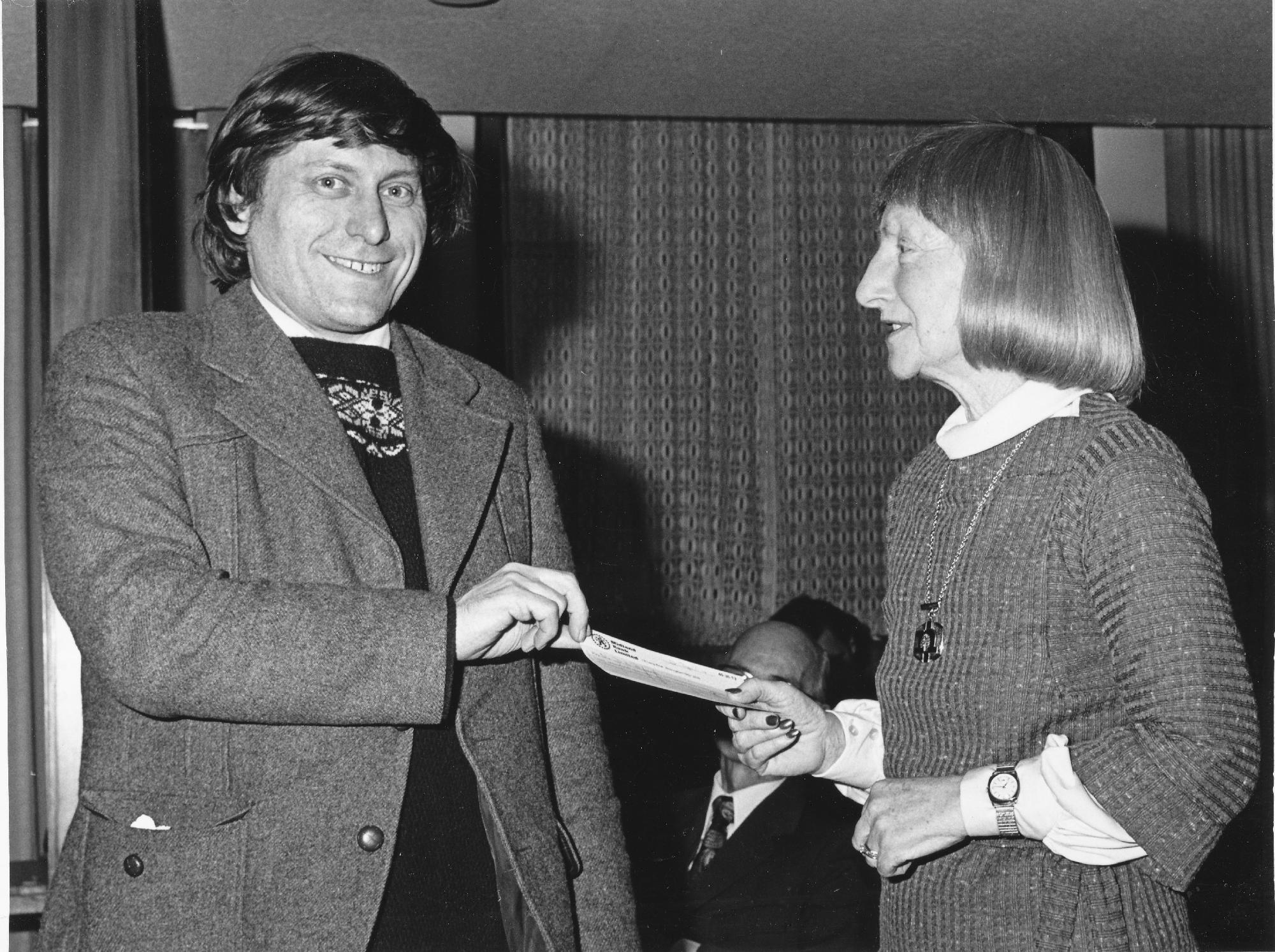
Michael Franklin receives £220 from Councillor Robert Dickson at the 1980 Nottinghamshire CongressCaption for above photograph
We send best wishes to Michael Franklin on his 90th birthday.
Growing Up
Michael John Franklin was born on Monday, February 2nd, 1931 in Battersea, London to Albert George (27 ix 1906, Dover – ? iii 1983, Wandsworth) and Helen Ann Franklin (née Colson, 1908-2003) who married in the third quarter of 1928 in Wandsworth. Albert was a clerk as was his father.
At the commencement of the Second World War, when eight years old, Michael was evacuated to Frome in Somerset. As a consequence Michael would delight in playing in the Frome Congress whenever possible. He played in the first event in 1990 organised by Leon York (whose name is the memorial trophy for the Major section). The story of Michael’s return to Frome made its’ way in to the local newspaper and was reported by Gary Lane as follows :
From British Chess Magazine, Volume CX (110, 1990), Number 7 (July), page 296 :
“A special presentation by the sponsor, Mrs. Jean Mackereth, Managing Director of Keyford Frames, was made to Londoner Michael Franklin, who was returning for the first time in 51 years to the town to which he was evacuated during the war. His final appearance at Frome was in the 2010 event.
The Early Years
Michaels interest in chess started in 1944 aged 13 when he witnessed games being played on Clapham Common. He was fascinated by the pieces and taught himself to play, never receiving any formal coaching. He joined the Clapham Common Chess Club in 1944. (CCCC became incorporated into Battersea Chess Club some time later).
CHECK MATES: Elderly members of the Clapham Common Open Air Chess and Draughts Club, circa 1920. The club met regularly during the afternoons to play on Clapham Common in south London. Copyright : Keystone
Apart from summer events such as the above the club had a Winter Section that played matches in the London League. The club won the first division (now known as the Brian Smith Trophy) of the London League in the 1946-47 and 1947-48 seasons. Michael played his final game in the London Chess League for Richmond & Twickenham on April 14th 2010 drawing with John Hodgson, brother of Julian giving a sixty year span.
In his formative years he played at the Gambit Chess Café, Budge Row, Cannon Street, London, EC4N. Many strong players regularly visited the Gambit to play skittles, blitz and the frequently held lightning tournaments hosted by the proprietor Mr GH White.
Events such as these enabled Michael to develop his quick sight of the board and his flair for tactical play.
Leonard Barden added :
“Michael made his name as a young player first by his successes in the Saturday evening Gambit Guinea speed events at the Gambit Chess Café in Cannon Street which he often won ahead of master level rivals. He remained a strong speed player all his life.”
In the early 1950s Michael was persuaded by his friends Aird Thomson (who was Scottish Boys’ Champion in 1932, and 1933 ( equal-first). In 1951 he was Scottish Champion. In 1954 he moved to London. He married Susan Mary Hamilton in 1961 who went on to become Scottish Ladies’ Champion in 1965.) and oriental carpet expert Robert Pinner to join the Richmond and Twickenham Chess Club playing for the club in the London League, Surrey Trophy and National Club Championship until he retired from competitive play 2010.
Making Progress
Michael’s first appearance in British Chess Magazine was in Volume LXVI (66, 1946), Number 2 (February). Page 52 contained this report of the 1945 London Boy’s Championship in which Michael reached the final A section :
British Chess Magazine, Volume LXVI (66, 1946), Number 2 (February), page 52
On leaving school Michael joined a firm of Patent Agents remaining in their employ as the accounts department for around forty years before retiring in the late 1980s. His retirement was prompted by the firm’s adoption of electronic computers. When he retired he was Chief Cashier.
On June 18th 1960 Michael’s happiest day was when he married Jean Fey. They celebrated their diamond anniversary in 2020.
To the present day Michael has maintained an aversion toward modern technology. He did, however, concede to the ownership of a mobile telephone. This was for the specific purpose of updating Jean on his days progress in any chess tournaments where he was away from home.
In 1946 (aged 15) Michael won the Felce Cup awarded by the Surrey County Chess Association. A result indicating rapid improvement since Michael had only started playing competitively in 1944.
The Felce Cup held by the hands of Stephen Moss in 2014
In 1951 Michael finished third in the Surrey Championships behind the winner Frank Parr and runner-up David Hooper. In 1961, 1966, 1968, 1969 and 1970 Michael won the Surrey Championship outright and made many appearences in county matches for Surrey from 1950 onwards until 2010.
Unfortunately Michael’s rapid progress was threatened by two bouts of ill health. In 1948 aged 17 Michael was diagnosed with Tuberculosis which lasted for eighteen months including a twelve month stay in the Royal National Hospital for Diseases of the Chest in Ventnor on the Isle of Wight. Aged twenty the TB returned leading to yet another twelve months illness.
Michael has suffered from ill health all of his life interrupting his chess career at various times. Fortunately the TB has not returned.
Michael won the National Chess Centre Championship in 1953 and 1955 being runner-up in 1954. The venue was Hill’s Restaurant, 158 Bishopsgate, London, EC2 opposite Liverpool Street Station since the original John Lewis department store venue was bombed in 1940.
The British Chess Federation first published a National Grading list in 1953 (using the Richard Clarke system). In the 1954 list MF appeared with a grade of 2A (225-232) and from then on with a grade of either 2A or 2B. In 1964 a numeric system had him at 225 ranking Michael 4th in England behind Penrose 244, Kottnauer 238 and Clarke 231.
Michael played many times in the annual Battle of Britain Tournament organised by Squadron Leader David Pritchard and his committee. He won it four times : 1959, 1960, 1961 and 1962.
The Ilford Whitsun Congress
The Ilford Whitsun Congress was a regular part of Michael’s season throughout the sixties. He won the Premier Reserves in 1961 ahead of Hilton, Hindle, Howson, Sales and Blaine and was runner-up to Kottnauer in 1962. In 1963 he went one step better by winning the Premier :
A report of Mike Franklin’s success at the 1963 Ilford Whitsun Congress by Peter Clarke. Source : British Chess Magazine, Volume LXXXIII, Number 7 (July), page 193
and here is the fifth round game :
In his tournament report PH Clarke wrote :
This buoyant, optimistic attitude of his is a great strength and always makes him a dangerous opponent.
Away from Home : International Progress
1964 saw selection by the BCF to play in the Tel Aviv Olympiad :
The 1964 England Olympiad (Tel Aviv) Team : Owen Hindle, Čeněk Kottnauer, Peter Clarke, Michael Franklin, Norman Littlewood & Michael Haygarth
and scored a creditable 4/6. This was followed in 1965 with 3/5 in Clare Benedict tournament held in Berlin.
He played in the annual Anglo-Dutch match on no less than six occasions in 1962, 1963, 1964, 1965, 1968 and finally in 1969. His aggregate score was an impressive 8/12.
?, Čeněk Kottnauer, Michael Franklin and Owen Hindle
On the national scene Michael repeated his 1963 victory at the 1969 Ilford Premier with a clear first place : Franklin 4; RG Wade and D Wright 3; JB Howson 2.5; BH Wood 2; PH Clarke 0.5.
In 1970 Michael won the London Championship which was also known as the Budget Cup which had last been held in 1956 . He followed this in 1972 by rightly earning the (now defunct) title of British Master.
Michael’s final appearance for England was in 1971 in the Cheltenham based Anglo-German match with a somewhat disappointing 0.5/2 against Juergen Dueball.
Owen Hindle, Michael Franklin, Harry Golombek and Michael Haygarth
Michael played board two for London in a Telex match versus Belgrade playing Marjanovic. The game was drawn.
Michael Franklin playing board two in the London – Belgrade Telex Match on April 3rd, 1976 from the St. James Hotel, Buckingham Gate. Sourced from BCM, Volume XCVI (96), Number 5, page 192. Photographer probably Freddy Reilly.
The Ultimate Prize : The Aaronson Masters
The Aaronson Masters at Harrow 1978 brought his best individual success at the age of 47, sharing first place with IM Aldo Haik of France and to boot, earning an IM norm.
Joint winners of the 1978 Aaronson Masters : Michael Franklin and IM Aldo Haik
Michael scored an undefeated 7.5/10 and finished ahead of Short, Speelman, Nunn, Hartston, Mestel, Webb, Basman, Botterill and numerous other illustrious players. Michael remarked of his lifetime best result that it was
just one of those occasions when everything went right!
But he scored 3.5/5 against the IMs, was alert to every opportunity, and the games show he owed little to luck.
Leonard Barden, Stewart Reuben and Michael Franklin at the 1978 Aaronson Masters
Like many others Michael made appearences in Lloyds Bank events of 1977, 1978, 1984, 1989, 1991, 1993 and 1994.
Michael Franklin (left) at the 1978 Lloyds Bank Masters playing IGM Leonid ShamkovichMichael and friends during the 1978 Lloyds Bank Masters
The Hastings Years
Michael first played at Hastings in 1964 when he was invited to play in the Premier Tournament. The tournament was won by Mikhail Tal and Michael finished in last place.
Undaunted he returned to Hastings in 1968 to play in the Challengers tournament. One of the attractions of playing in the Challengers was that the winner received a place the following years Premier. Frustratingly Michael finished second three years in a row! In 1968 the Challengers was won by Danny Wright, in 1969 by Martyn Corden and in 1970 by Peter Markland. Finally, in 1971 his patience was rewarded and he won the Challengers and qualified to the following years Premier.
The 47th Hastings Premier of 1971-72 had been changed from the traditional 10 player all-play-all to a 16 player tournament. Also, having obtained sponsorship from various organisations the committee were able to invite some of the top names of the day. The sponsors were:
So, the entry included Karpov, Korchnoi, Andersson, Najdorf, Mecking, Gligoric, Unzicker and Robert Byrne to name but a few. This was undoubtedly the strongest Hastings Premier since World War Two and possibly the strongest Hastings Tournament since 1895.
Michael started well with a draw against the Rumanian GM Ciocaltea followed by a draw in with the Brazilian prodigy Mecking. In round three he surprised everyone by beating Ray Keene. With 2/3 things were looking promising. However, after this bright start Michael only managed a draw against Unzicker and a draw with Hartston finishing in a disappointing last place with a score of 3/15.
In the tournament report Peter Clarke opined
Franklin suffered the usual fate of the gifted amateur in a professional field of simply not being accustomed to this kind of chess.
Despite this Michael continued to play in the Hastings Challengers. He played in nineteen out of the next twenty-five years! He came close to winning the tournament in 1982: he was leading the tournament with a score of 7/8 when he was informed that Jean’s Father had passed away. Having drawn his ninth round game and needing only a draw in the last round to ensure at least a tie for first place he withdrew from the tournament and immediately left for home.
The Weekend Scene
Like all players with a full time job Michael had to play most of his chess at the weekend so the explosion of weekends tournaments in the early 1970’s gave him ample opportunities. His habit of playing quickly was ideally suited to the fast time limits of the weekend tournament. During the 1970 and 1980’s he was very successful. He won numerous events and was more often than not in the prize list.
FM Michael Franklin, Photo by Cathy Rogers
In later years he restricted himself to London based tournaments and those in the West Country. His regular tournaments being Exeter, Torquay and old favourite, Frome. Michael at the age of 78 shared first place at Frome 2009. Frome 2010 was his farewell appearance.
FM Michael Franklin
Michael played for a number of clubs viz : Richmond & Twickenham, Coulsdon CF, Surrey CCA, 4NCL Richmond, 4NCL Bristol and Richards Butler to name but a few.
Finally, in 1980, Michael was awarded the FIDE Master title and achieved his highest rating (in the Elo era) of 2345 in January 1979. It is most likely that his highest ever rating would have been more like 2450.
FM Michael Franklin vs Paul Helbig
Appropriately enough Michael was the inaugural winner of the BCF/ECF Senior Prix in 2000 and won it again in 2002 and 2003. The event last ran in 2006.
When Surrey won the counties championship a few years back the team took the trophy around to Michael’s home in Norbury, such was their regard for his contributions.
The London System
Any currently active club player cannot have missed the explosive rise to prominence of the system for White he developed :
The London System and Accelerated London System has acquired a huge cohort of followers in recent times probably not realising the debt they (and many authors, book and DVD publishers!) owe to Michael. If only he could have earnt a royalty every time it was played!
Also Michael had notable success as Black with the O’Kelly Sicilian 1.e4 c5 2.Nf3 a6.
Life Outside of Chess
Michael had many interests apart from Chess. He was for many years a member of the Surrey County Cricket Club. After he retired he would arrange to meet fellow Surrey Member Frank Parr at the Oval and after lunch in the Pavilion they would spend the day enjoying the Cricket. Tennis was another sport that Michael followed. Michael was also interested in horseracing. Several players were surprised when visiting one of the racetracks around London to find Michael also attending the race meeting.
Michael was the typical “natural” player. He never studied the game and his only sources of opening information were the British Chess Magazine and the chess columns in The Times and the Guardian. He never kept the scores of his games. Once the game was finished it was time to move on. One of Michael’s greatest strengths was his optimistic attitude at the chessboard. No matter how bad the position he was confident of ultimate success.
Michael Franklin receives £220 from Councillor Robert Dickson at the 1980 Nottinghamshire CongressCaption for above photograph
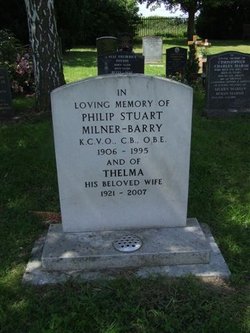
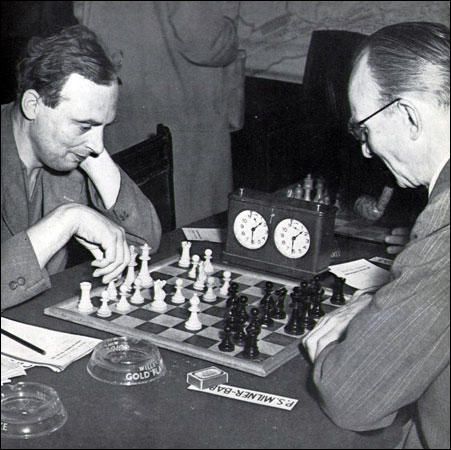
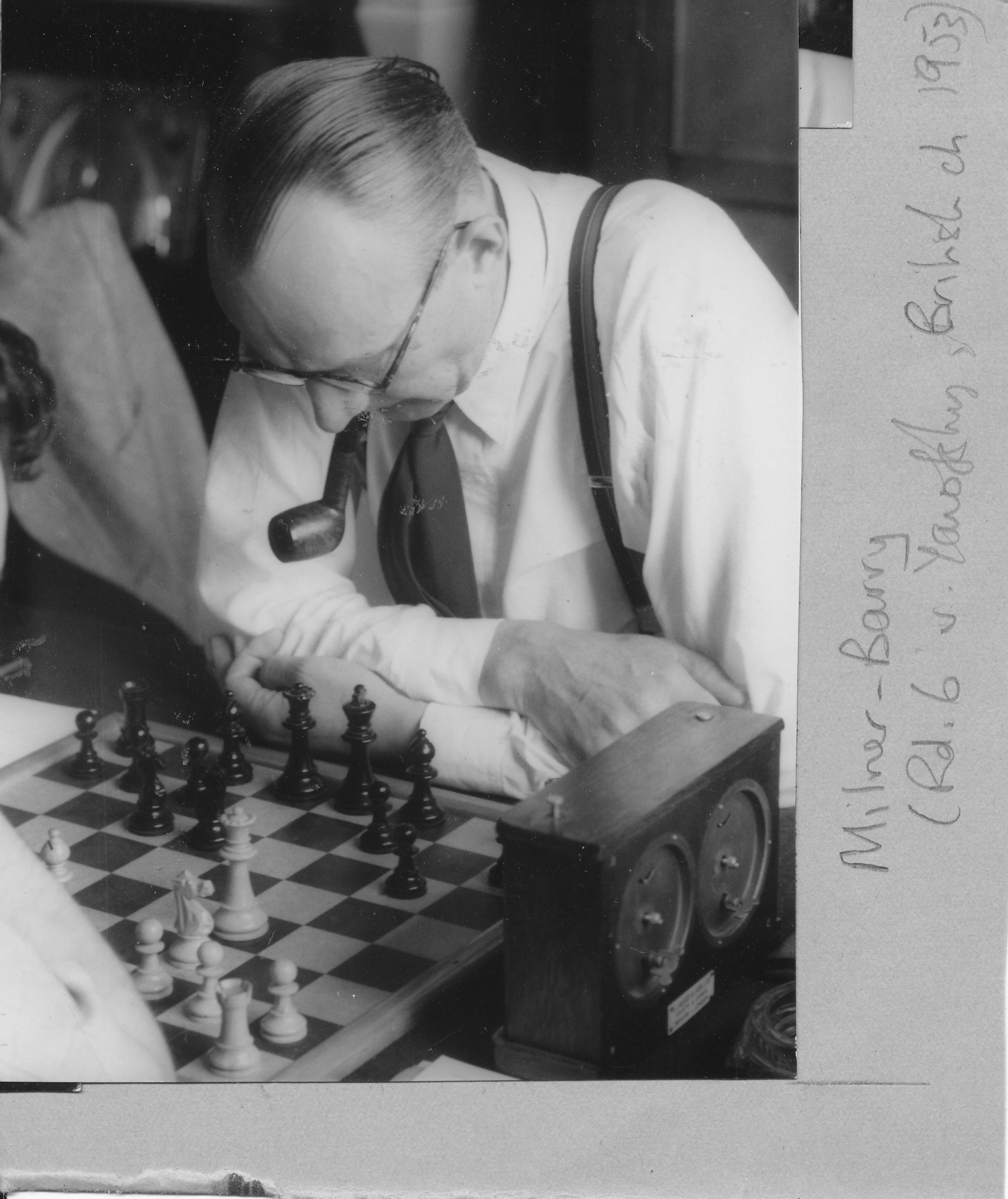
BCN remembers Sir Stuart Milner-Barry KCVO CB OBE who passed away on Saturday, March 25th, 1995 in Lewisham Hospital, London aged 88. He was laid to rest in the Great Shelford Cemetery, Cambridge Road, Great Shelford, Cambridge CB22 5JJ.
A memorial service was held for him at Westminster Abbey on 15 June 1995.
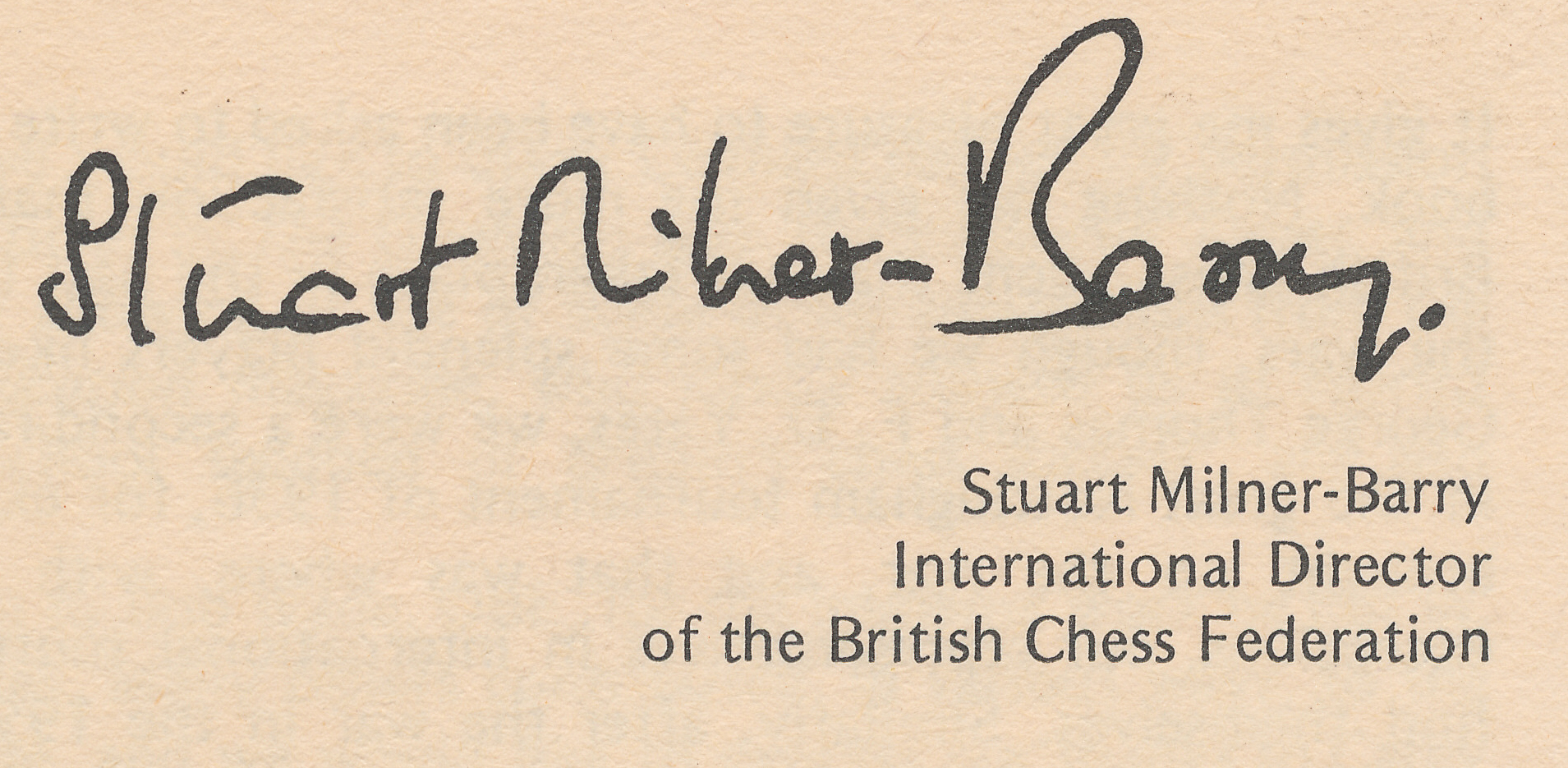
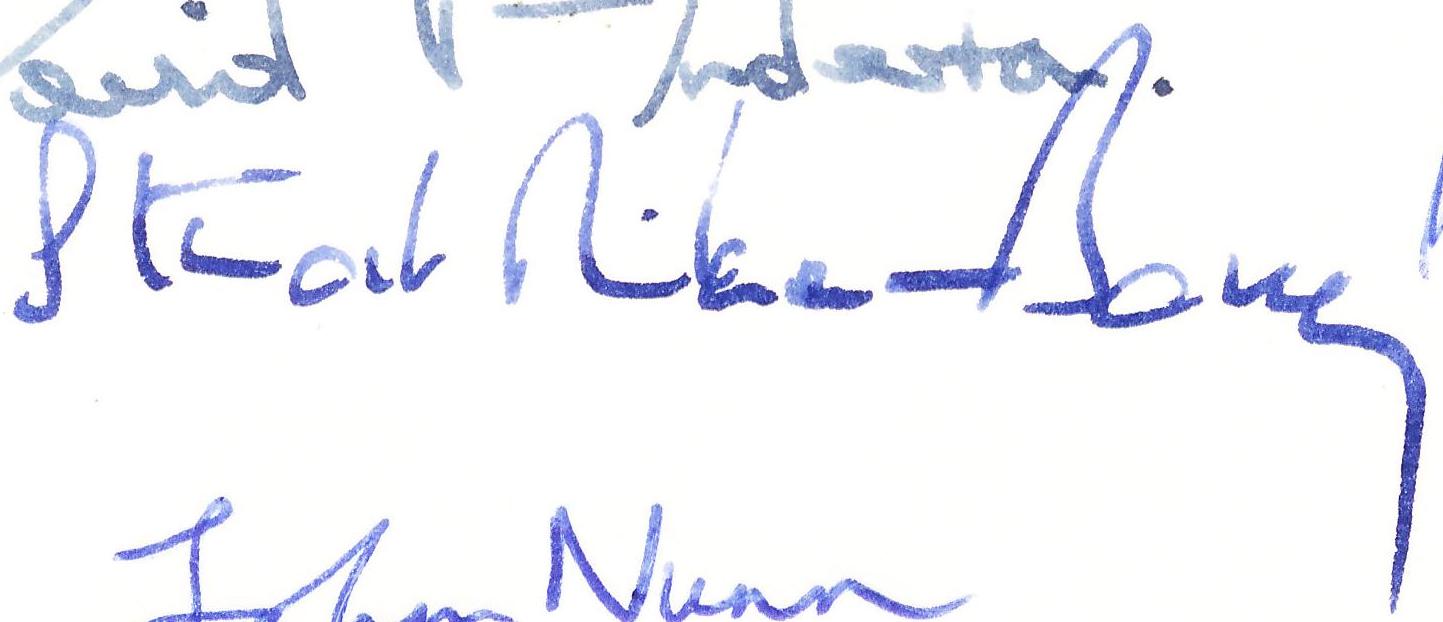
Great Shelford Cemetery Gravestone of Sir Philip Stuart Milner-Barry KCVO CB OBE by Geoffrey GillonSignature of PS Milner-Barry from a Brian Reilly “after dinner” postcard from Margate 1936.
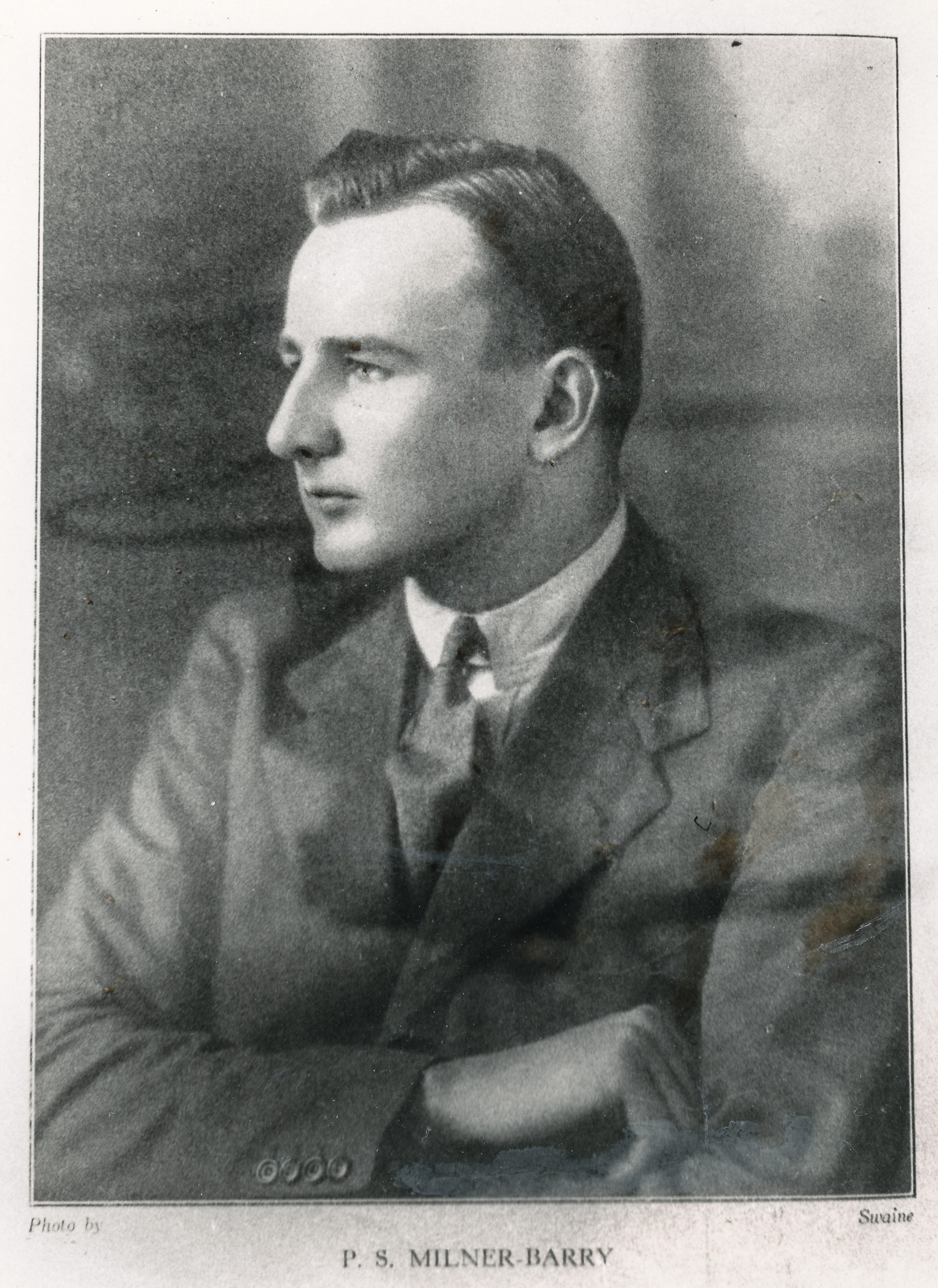
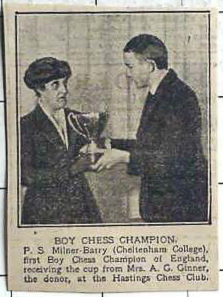
Philip Stuart Milner-Barry was born on Thursday, September 20th 1906 in Mill Hill in the London Borough of Barnet. Mill Hill falls under the Hendon Parliamentary constituency.
Parents
His parents were Lieutenant-Commander Edward Leopold (1867-1917) and Edith Mary Milner-Barry (born 17th May 1866, died 1949, née Besant). Edward was in the Royal Naval Volunteer Reserve, H.M.S. “Wallington.” Prior to his war service his father was a professor of modern languages at the University of Bangor and Edith was the daughter of Dr. William Henry Besant, a renowned mathematical fellow of St John’s College, Cambridge University.
Stuart was the second born of six children, There was an older sister Alda Mary (18th August 1893-1938) and four brothers Edward William Besant (?-1911) , Walter Leopold (1904-1982), John O’Brien (4 December 1898 – 28 February 1954) and Patrick James . Many of the Milner-Barry family were laid to rest in the Great Shelford churchyard.
Stuart learned chess at the age of eight and his autobiographical article below goes into more depth.
He was educated at Cheltenham College, and won a scholarship to Trinity College, Cambridge, where he obtained firsts in classics and moral sciences.
On leaving Cambridge in 1927 he went to work at the London Stock Exchange (LSE).
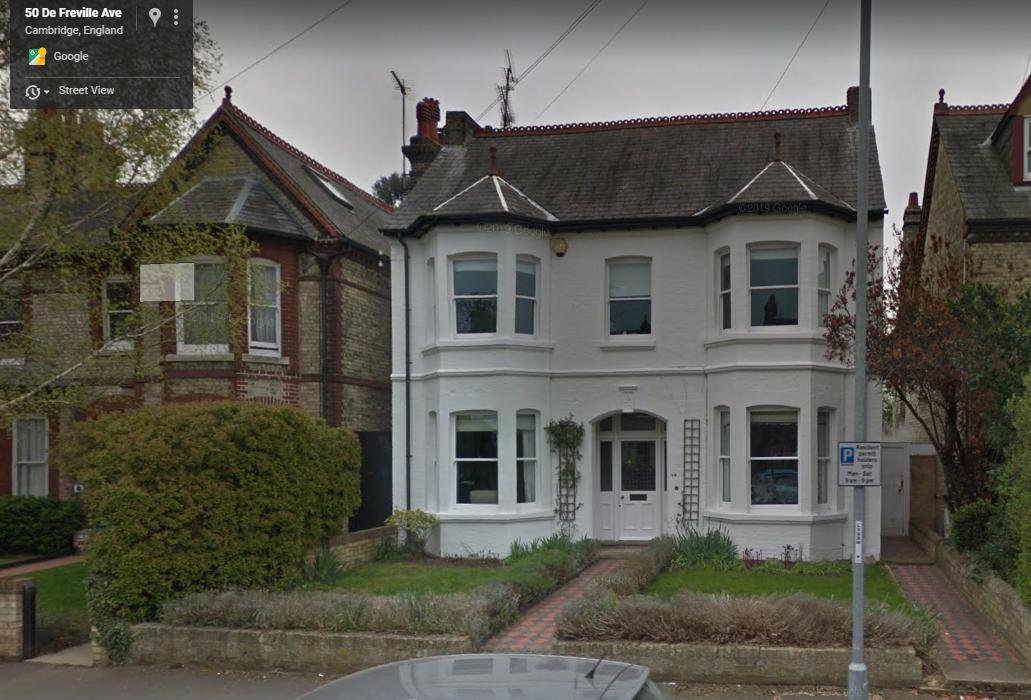
According to the 1928 and 1929 electoral rolls he was living with his mother Edith and his brothers Walter and John O’Brien at 50 De Freville Avenue, Cambridge CB4 1HT:
50 De Freville Avenue, Cambridge CB4 1HT
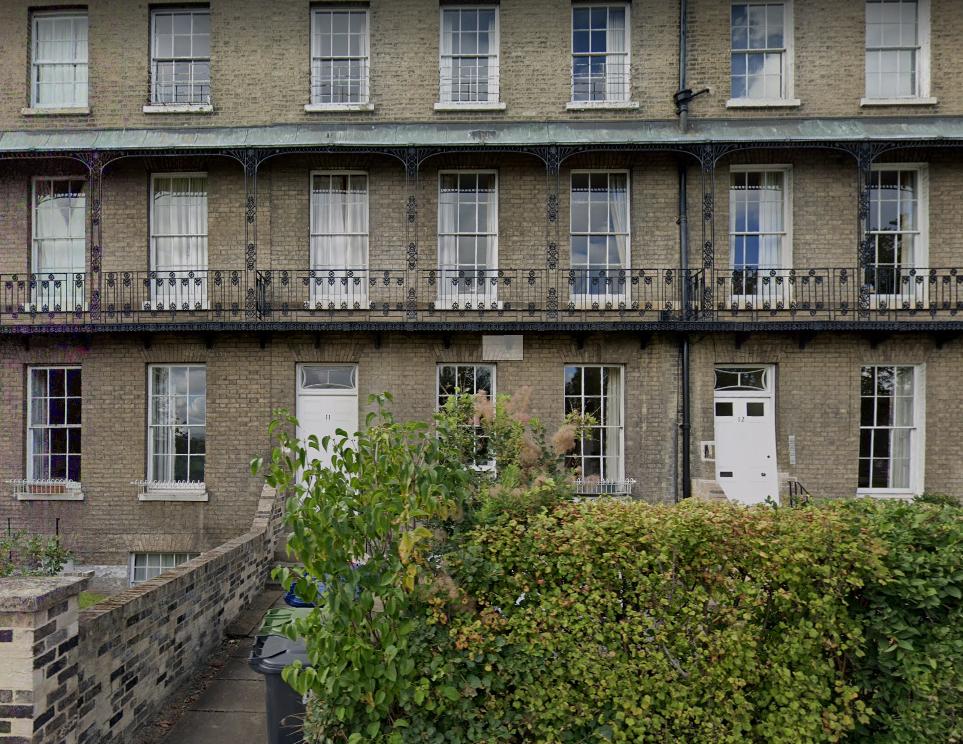
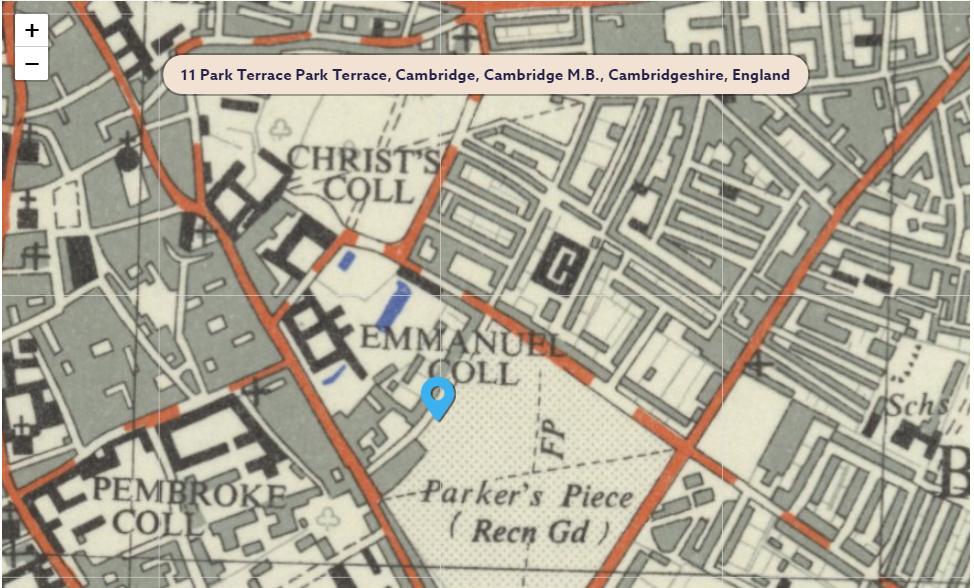
In 1931 the family had relocated to 11, Park Terrace, Cambridge which is nearby to Emmanuel College. Now living with the family was brother Patrick James.
11, Park Terrace, Cambridge, CB1 1JJPeriod map of the area of 11, Park Terrace, Cambridge, CB1 1JJ
He discovered that he did not enjoy his LSE work and switched careers to became chess correspondent of The Times in 1938.
At the time (September 29th) of the 1939 register he (aged 33) was living as a journalist in a household of three with his mother Edith who carried out “unpaid domestic duties” and sister Alda who was of “private means”.
Honours
In 1946 Stuart was awarded the OBE from the Civil Division in the New Years Honours . The citation reads that was “employed in a Department of the Foreign Office”. A modern translation of this was he was engaged in Top Secret work at Bletchley Park alongside Alan Turing, Gordon Welchman and Hugh Alexander and was thus honoured for his war work. More on this later…
After the war he worked in the Treasury, and later in 1966 administered the British honours system where he helped to facilitate the award of honours to other chess players ultimately retiring in 1977.
As well as the OBE he was made Companion of the Order of the Bath (CB) in 1962 and Knight Commander of the Royal Victorian Order (KCV0) in 1975.
A conference room was named after him at the Civil Service Club, 13 – 15 Great Scotland Yard, London SW1A 2HJ.
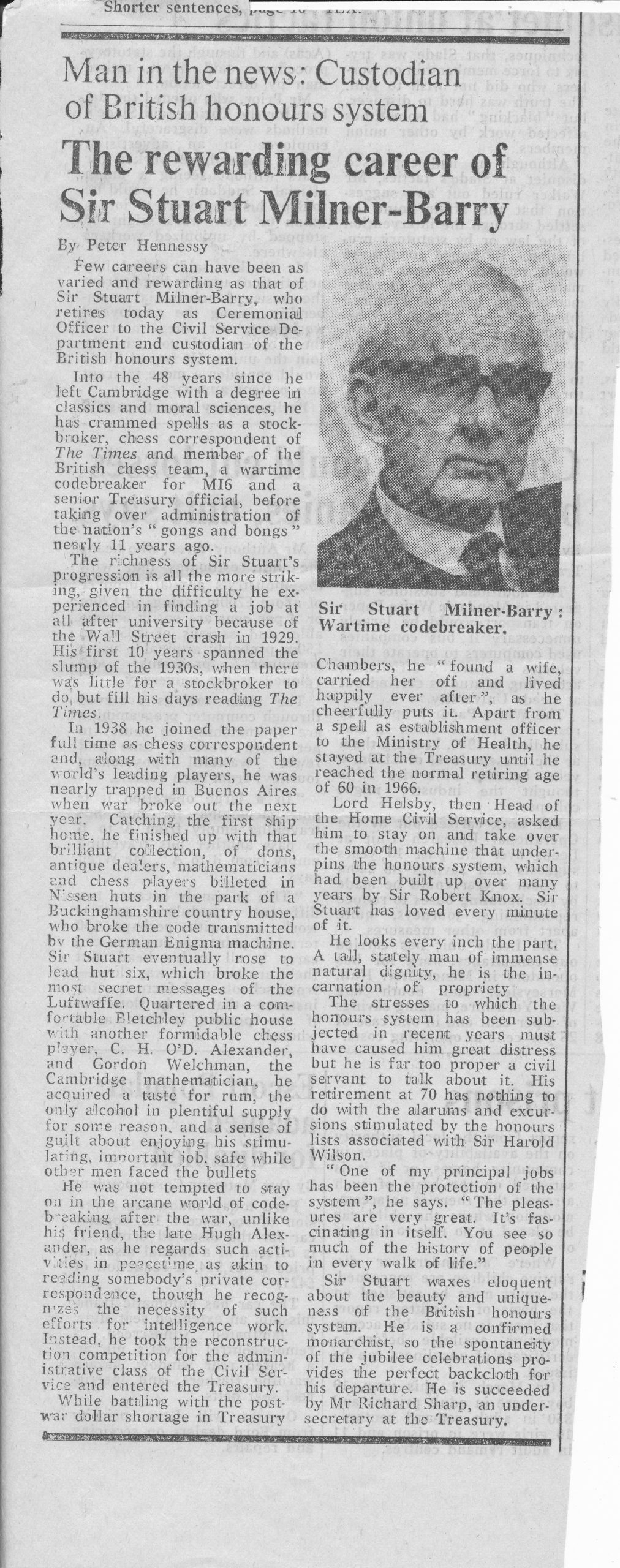
Peter Hennessy* and The Rewarding Career of Sir Stuart Milner-Barry
*Peter Hennessy is a renowned historian and journalist. The following was originally published in The Times in 1977 following PSMBs retirement.
“Few careers can have been as varied and rewarding as that of Sir Stuart Milner-Barry, who retires today as Ceremonial Officer to the Civil Service Department and custodian of the British honours system.
Into the 48 years since he left Cambridge with a degrees in classics and moral sciences, he has crammed spells as a stockbroker, chess correspondent of The Times and member of the British chess team, a wartime codebreaker for MI6 and a senior Treasury official before taking over administration of the nations “gongs and bongs ” nearly 11 years ago.
The richness of Sir Stuart’s progression is all the more striking given the difficulty he experienced in finding a job at all after university because of the Wall Street crash in 1929. His first 10 years spanned the slump of the 1930s, when there was little for a stockbroker to do, but fill his days reading The Times.
In 1938 he joined the paper full time as chess correspondent and, along with many of the world’s leading players, he was nearly trapped in Buenos Aires when war broke out the next year (ed. should be month rather than year). Catching the first ship home, he finished up with that brilliant collection of dons, antique dealers, mathematicians and chess players billeted in Nissen huts in the park of Buckinghamshire country house, who broke the code transmitted by the German Enigma machine.
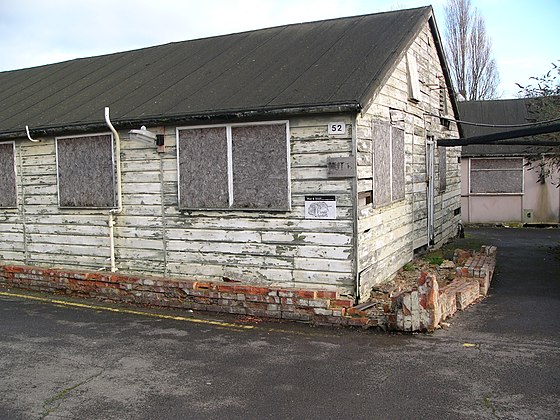
The original Hut 6 building (photographed in 2004). Milner-Barry joined Hut 6 in early 1940, and worked in the section throughout World War II. He became head of Hut 6 in Autumn 1943.
Sir Stuart eventually rose to lead hut six, which broke the most secret messages of the Luftwaffe. Quartered in a comfortable Bletchley public house with another formidable chess player, C. H. O’D. Alexander, and Gordon Welchman, the Cambridge mathematician, he acquired a taste for rum, the only alcohol in plentiful supply for some reason, and a sense of guilt about enjoying, his stimulating, important job, safe while other men faced the bullets.
He was not tempted to stay on in the arcane world of code-breaking after the war, unlike his friend, the late Hugh Alexander, as he regards such activities in peacetime as akin to reading somebody’s private correspondence, though he recognizes the necessity of such efforts for intelligence work. Instead, he took the reconstruction competition for the administrative class of the Civil Service and entered the Treasury.
While battling with the post-war dollar shortage in Treasury Chambers he “found a wife, carried her off and lived happily ever after”, as he cheerfully puts it. Apart from a spell as establishment officer to the Ministry of Health, he stayed at the Treasury until he reached the normal retiring age of 60 in 1966.
Lord Helsby, then Head of the Home Civil Service, asked him to stay on and take over the smooth machine that underpins the honours system, which had been built up over many years by Sir Robert Knox. Sir Stuart has loved every minute of it.
He looks every inch the part, a tall stately man of immense natural dignity, he is the incarnation of propriety. The stresses to which the honours system has been subjected to in recent years must have caused him great distress but he is far too proper a civil servant to talk about it. His retirement at 70 has nothing to do with the alarums and excursions stimulated by the honours lists associated with Harold Wilson.
“One of my principal jobs has been the protection of the system”, he says. “The pleasures are very great. It’s fascinating in itself. You see so much of the history of people in every walk of like”.
Sir Stuart waxes eloquent about the beauty and uniqueness of the British honours system. He is a confirmed monarchist, so the spontaneity of the jubilee celebrations provides the perfect backcloth for his departure. He is succeeded by Mr. Richard Sharp, an under-secretary at the Treasury.”
Below is the original article:
Sir Philip Stuart Milner-Barry OBE
Marriage to Thelma
In the third quarter of 1947 Stuart married Thelma Tennant Wells in Westminster. A consequence of the “rules of the day” of the marriage was that Thelma had to resign her post in the Treasury immediately. (Ed: this somewhat antiquated view of life was finally corrected in 1972 when the Civil Service dispensed with this rule).
Lady Thelma was to support Stuart in his chess activities for their married life. She also served as the first UK Director of Women’s Chess and made many lasting friendships in the chess world. She was buried together with Stuart in 2007. Stuart himself was President of the British Chess Federation between 1970 and 1973 as well as being Director of International Chess following his presidency.
Stuart and Thelma had three children, one son and two daughters: Philip O. (born 1953), Jane E (born 1950) and Alda M (born 1958).
Dave Rumens is pleased to accept a cheque for £200 from Lady Thelma Milner-Barry for winning the 1978 Nottingham Congress with 5.5/6. Photograph provided by Nottinghamshire County Council.
Stuart was knighted on January 1st 1975 for his role as the “Ceremonial Officer of Civil Service Department” between 1966-77. Technically the knighthood is known as a KCVO.
Milner-Barry was Southern Counties (SCCU) champion for the 1960-61 season.
He first competed in the British Championship in 1931 and made regular appearences as late as 1978: a span of 47 years!
In their retirement years Stuart and Thelma lived at the salubrious location of 43 Blackheath Park, Blackheath, London SE3 9RW.
Autobiography
In June of 1933 at the age of 27 Stuart wrote an autobiographical piece for British Chess Magazine to be found in Volume LIII (53, 1933), Number 6 (June), pp. 241-2 as follows:
Stuart Milner-Barry in 1933 taken from BCM, 1933, June
P.S. Milner-Barry
Champion of the City of London Chess Club
I learned chess at the age of eight and played regularly after that with members of my family. My first-class practise (with due respect to my family) began at fourteen, when Mr. Bertram Goulding Brown and started a series of serious friendly games which has continued ever since, almost without interruption. The vast majority of these games were begun with 1 P-K4, P-K4, and as we both eschewed the Lopez and the Four Knights, we have acquired a fairly extensive knowledge of the older forms of the King’s side openings – King’s Gambit (all sorts), Vienna, Guioco Piano, Evans’s Gambit, Danish Gambit, Bishop’s Opening, etc. These games have undoubtedly born the most important influence in my development, apart from which the serious friendly game is to me much the most enjoyable form of chess. We each have runs of success, and there has never been much to choose between us.
(An aside : Stuart wrote a extensive obituary of Bertram Goulding Brown which appeared in British Chess Magazine, Volume LXXXV (85, 1965), Number 12(December) pp.344-45 in which he noted:
B. Goulding Brown was my oldest and closest Cambridge friend, I started playing with him in 1920, and we have played ever since, though, alas, not nearly so often since the War as in the 1920s and 1930. Our last games, when he was eighty three, were played about a year ago in the same book-congested upstairs study at Brookside as all the others had been. Both were cut-and-thrust draws: a Kieseritzky Gambit from myself and Two Knights’ (with 4.P-Q4 for White) were typical of the openings we adopted. We were planning another this Autumn, but he died suddenly and peacefully at the end of August, )
I have also been very fortunate in playing a good deal with C.H.O’D. Alexander. Our games have taken the form of a series of short matches (first player to win three games) played with clocks. Alexander was already stronger than me when he came up to Cambridge, and he won the University Championship from me in his first year and my fourth.
CHO’D Alexander plays his old friend PS Milner-Barry
All three matches have been won by him, the first easily and the last two by the narrowest possible margin; a fourth now in progress looks like coming to an early and ignominious conclusion (Score 0-2-2). These results have neither surprised nor disappointed me : I would not back any player in England to do better.
(ed. For more detail on PSMBs matches with Hugh we refer to you our article on Hugh).
In 1923 I won the first Boy’s Championship at Hastings, but lost badly the following year (ed. Alexander won).
Boy Chess Champion PS Milner-Barry (Cheltenham College), first boy chess champion of England, receiving the cup from Mrs. AG Ginner, the donor , at the Hastings Chess Club
Since then I have competed twice at Hastings, once tieing with Miss Menchik in the Major Reserve for the first place and once for the last, in the Major. In between I played in the Major Open at Tenby, and came out fifth, with my first important win against Znosko-Borovsky.
Meanwhile I played four years against Oxford, with somewhat chequered results. The first year I won against G. Abrahams, the second and third years, I played K.H. Bancroft and scored a (very fortunate) draw and a win, while finally I permitted Abrahams to fork my King and Queen with a Knight, a performance unhappily repeated by R.L. Mitchell in the following year (his Queen was pinned by a Bishop). Since then the spell has been broken. In 1931 I played in the British Championships at Worcester, and was quite satisfied with my form, though my score of 5 out of 11 was nothing to write home about. In February 1932, I have the great good fortune to fill a vacant place in the Sunday Referee* London International Tournament, an extremely exhausting but very valuable experience which I greatly appreciated.
*TheSunday Referee was a newspaper of the time which was adsorbed into The Sunday Chronicle in 1939.
Full Crosstable for the 1932 Sunday Referee or London International Masters Tournament
My score of 3.5 out of 11, equal with Sir George Thomas and above W. Winter and V. Buerger, was quite as good as I expected. After this came the Cambridge Tournament, which, though a very delightful little congress, was a fiasco from my point of view. Three of my opponents were unkind enough to show their best form against me, and two other games I spoilt by clock trouble.
I do not expect to play much serious competitive chess in future. I admire sincerely the business man who is ready, after a hard day at the office, to undergo a further four hours of strenuous mental exertion; and who is also prepared to spend his all too brief holidays in the same exhausting pursuit. Moreover, while many players find the atmosphere of match and tournament play a stimulus or an inspiration, it only renders me nervous, and though this does not affect my play it certainly interferes with my enjoyment. As long as I can play my week-end games with B.G.B., and inveigle Alexander from Winchester to add another to his monotonous series of victories, I shall not much mind if I can only occasionally take part in congresses. ”
PS Milner-Barry Cup
In issue #53 (April 1946) of West London Chess Club’s Gazette we have a news item concerning a newly inaugurated trophy called the PS Milner-Barry Cup:
issue #53 (April 1946) of West London Chess Club’s Gazette
Sergeant on Milner-Barry
Writing in A Century of British Chess (Hutchinson, 1934), PW Sergeant records in Chapter XXI, 1925 to 1934:
The City of London C.C.’s Championship Tournament which ended this (1933) spring deserves special mention; for it introduced an entirely new name on the list of champions, that of P.S. Milner-Barry, formerly of Cheltenham College and of Cambridge University. Ten years previously he had won the first boys’ championship at Hastings.
Now, he won the City of London Championship with a score of 11 out of 14, followed by the bearers of such noted names as R.P. Michell (10 points), Sir George Thomas (9), and E.G. Sergeant (8.5). It caused some surprise, therefore, when it was found that he was not selected as a British representative at Folkestone.
Golombek on Milner-Barry
Surprisingly and disappointingly there is no direct entry in either Hooper & Whyld or Sunnucks for Sir Stuart but (as you might expect) Harry Golombek OBE does not let us down in The Encyclopaedia of Chess (Batsford, 1977):
“British master whose chess career was limited by his amateur status but whose abilities as a player and original theorist rendered him worthy of the title of international master.
Born at Mill Hill in London, he showed early promise and in 1923 won the British Boys Championship, then held at Hastings.
He studied classics at Cambridge and developed into the strongest player there. At the university he was to meet (ed. three years later) C. H. O’D. Alexander with whom he played much chess.
Though nearly three years younger, Alexander exerted a strong influence over him and both players cherished and revelled in the brilliance of play in open positions.
24th April 1935: J Mieses of Germany in play against PS Milner-Barry during the Premier Tournament of the Kent County Chess Association in the Grand Hotel, Margate. (Photo by F. Sayers/Topical Press Agency/Getty Images)
By then along with Alexander and Golombek, he had become recognized as one of the three strongest young players in the country. Whilst not as successful as they were in tournaments as the British championship in which stamina was essential, he was a most formidable club and team match player, as he had already shown in 1933 when he won the championship of the City of London Club ahead of R. P. Mitchell and Sir George Thomas.
Harry Golombek OBE plays Sir Philip Stuart Milner-Barry OBE
He played in his first International Team tournament at Stockholm 1937 and was to play in three more such events : in 1939 at Buenos Aires where, on third board, he made the fine score of 4/5 ; in Helsinki 1952; and in Moscow 1956 where, again on third board, he was largely responsible for the team’s fine showing.
Left to right Baruch H Wood, Stuart Milner-Barry, Vera Menchik (playing in the women’s world championship (held concurrently with the 1939 Buenos Aires Olympiad) which she won with 17 wins and 2 draws), Sir George Thomas, Conel Hugh O’Donel Alexander and Harry Golombek. England withdrew after their preliminary group due to the outbreak of war despite qualifying for the top final. Thanks to Leonard Barden
In 1940 he shared first prize with Dr. List in the strong tournament of semi-international character in London and then, like Alexander and (later) Golombek, helped in the Foreign Office code-breaking activities at Bletchley Park for the duration of the Second World War. Staying in the Civil Service afterwards, he rose to the rank of Under-Secretary in the Treasury and was knighted for his services in 1975.
Sir Stuart Milner-Barry talks about Malik Mir Sultan Khan
Below is footage (start at 1′ 55″) of Sir Stuart discussing the talent of Malik Mir Sultan Khan:
After the war, too, he had some fine results in the British championship, his best being second place at Hastings in 1953.
Hartston on Milner-Barry
The following article is sourced from November 1995 edition* of Dragon, the Cambridge University Chess Club magazine:
A sample cover of Dragon, the Cambridge University Chess Club Magazine
“I first met Sir Stuart Milner-Barry when I was fifteen years old (1962) playing in a tournament in Bognor Regis who played some rustic king’s pawn opening against me, sacrificing a pawn for nothing in particular and then astonished by writing “castles” in full on his scoresheet. I think he used “kt” for a knight too. I thought I had discovered a true relic from a bygone age and the more I got to know him I realised the more correct that judgement was.
Milner-Barry was the last of the true gentlemen amateurs and was one of the few people I have ever met who played chess for the sheer love of the game.
A few typical incidents may give a flavour of his unique personality. First and most typical was the way he would resign: with a firm handshake, a smile and a booming whisper of ‘You are far too good for me I’m afraid!’ When I first heard those words I was totally taken aback : What was this, a chessplayer acknowledging that his opponent was better than him? Impossible!
Once, at close of play in a county match against Milner-Barry I had the extra pawn in a difficult queen and pawn ending. We analysed a little with most variations suggesting I was winning. It was the kind of position you would send for adjudication even if you are convinced it is lost. It avoids having to resign anyway and the adjudicator may always discount the pawns. But, Sir Stuart never thought like that. After ten minutes analysing he extended his hand and congratulated me.
Sir Stuart Milner-Barry in play against Daniel Yanofsky from round 6 of the British Championship in Hastings, 15th August 1953
Finally there was the splendid incident in Moscow during the (Ed. 6th) European Team Championships in the late 1970s (Ed. 1977) Stuart was then the President of the BCF and took up an invitation of his old friend the British Ambassador to the USSR (Ed. Sir Howard Smith) to visit the event. Since he was staying at the Embassy he had a KGB tail assigned to him to follow him everywhere. On one of his morning walks Sir Stuart got lost and was not certain which bridge he should be on to get back to the Embassy. So, he turned around and walked back to the not very secret policeman, followed him and asked for directions! For the rest of his stay they walked practically hand-in-hand.
Whilst most of us knew Stuart as an amiable old gent who played for Kent and in the Lloyds Bank Masters who could still play brilliant attacking games in his eighties most knew little of his distinguished career in real life.
Sir Stuart Milner-Barry
We suspected with some justification that in his civil service career he was responsible for doling out all those OBEs to chess players in the 70s and 80s when he was in charge of the honours list.
It was the wartime work at Bletchley Park that was Milner-Barry’s greatest achievement. As everybody knows the allies won the Second World War mainly because of the brilliant code-breaking work of the Cambridge quartet of Alan Turing, Gordon Welchman, Hugh Alexander and Stuart Milner-Barry. Turing and Welchman were mathematical geniuses, Milner-Barry was the supreme administrator and Alexander straddled the gap with great talents in both areas.
The astonishing achievement at Bletchley was not so much in breaking enemy codes as maintaining complete secrecy of the entire operation for the duration of the war. Only with such people as Milner-Barry and Alexander in charge could such a large operation be run so successfully without anybody knowing about it.
Milner-Barry’s importance in the running at Bletchley may be judged from the fact that he personally delivered the note to Winston Churchill stressing overriding importance of their work asking for more funds.
Compared with that the invention of the Milner-Barry Gambit and the Milner-Barry variation of the Nimzo-Indian are minor achievements.
Sir Stuart was proof that nice guys can be chess players although one cannot help suspecting he would achieved even better results if he had even a slight streak of nastiness about him. He would surely have not let Capablanca off the hook in Margate in 1938 when the attacking player secured a winning position against the ex-champions dragon variation and he would have surely also not let the British Championship slip from his grasp in 1953 when he finished as runner-up after losing his last two games.
He always performed well when playing in Olympiads (or Team Tournaments as they were known then) for England during the 1930s and 50s. He was, after all, one of the most naturally gifted players this county has produced. What other Englishman has two opening (or even just one) named after him?
While at Cambridge while he won the University Championship in 1928, losing to Alexander in the following year, Milner-Barry composed some fine problems, a frivolity he never returned to later in his life.
An excellent though infrequent writer on the game, he wrote a fine memoir of C.H.O’D. Alexander in Golombek’s and Hartston’s The Best Games of C.H.O’D. Alexander, Oxford, 1976.”
The Best Games of C.H.O’D. Alexander, Harry Golombek and William Hartston. With A Memoir by Sir Stuart Milner-Barry, Oxford University Press, 1976, ISBN 10: 0192175351 ISBN 13: 9780192175359
An Obituary from Bernard Cafferty
From British Chess Magazine, Volume CXV (115, 1995), Number 5 (May), pp. 258-59 we have this obituary by Bernard Cafferty:
“Sir Philip Stuart Milner-Barry KCVO CB OBE (20 ix 1906 – 25 iii 1995) was the oldest of the British chess masters who came to prominence in the 1930s, He was always thought of in conjunction with his great friends Hugh Alexander and Harry Golombek who both predeceased him. The length of Stuart’s career is amazing – he was inaugural British Boy Champion in 1923 and was still playing for Kent first team in the Counties Championship of recent years, thus spanning a period of seven decades! Botvinnik spoke of him to me on my 1994 visit to Moscow.
David Anderton OBE (rhs) congratulates Sir Stuart Milner-Barry OBE for winning the “Board of Honour ” game versus Edward Lasker at the 1976 Lloyds Bank Match by Telex, London – New York. From BCM, volume XCVI (96) Number 11 (August), Page 494. The venue was the Bloomsbury Hotel, London. Photo courtesy of Lloyds Bank
Yet Stuart, who never gained the IM title, was always the true amateur and genuine English gentleman, whose sense of duty and tradition was very great. It speaks volumes of him that he agonised over whether he should attend the Times Kasparov-Short match of 1993, in a private capacity. He would have liked to watch the play, but as a former British Chess Federation President, 1970-73, he felt it was his duty not to lend any extra recognition to the contest other than that assigned it by the BCF.
Before the war, after graduating from Cambridge in Classics, he took some fine scalps including those of Tartakower and Mieses and should have beaten Capablanca at Margate 1939.
Capablanca and Stuart Milner-Barry at Margate, England, April 15, 1936. AP Photos
He worked, rather unhappily, in a stockbroking firm up to 1938 and it is in that capacity that his name appears on the official document that set-up the British Chess Magazine as a limited company in 1937.
During the war he played his part in the Bletchley Park code-breaking undertaking along with Alexander and Golombek, and after the war went into the Civil Service where he had a distinguished career at the Treasury. Then his career was extended as he spent his final working years in the patronage department that sifted recommendations for the honours list.
I recall asking him in 1981 if there was any chance that Brian Reilly could qualify for an award. Stuart’s diplomatic answer was to the effect that he was now retired but would drop a word in the right quarter.
Stuart represented England at the Olympiads or 1936, 1939, 1952 and 1956. At the last of these he played particularly well on fourth board. He was conscious that his old friend Hugh Alexander could not take part in Moscow because of the sensitive nature of his work in the Intelligence Service.
In playing style Milner-Barry, a tall gaunt figure, delighted in an open tactical fight.
He was The Times correspondent 1938-45, resigning the post to let Harry Golombek take over. His best result after the war, apart from the 1956 Moscow Olympiad, was probably his second place in the British Championships of 1953 at Hastings. The abiding impression of his opponents over the years must have been that here was a player who greatly enjoyed the game, win, lose or draw.
Certainly, that was my idea of him in the tussles we had from the British Championship of 1957 up to county matches in the 1980s.
We shall not see his like again. The England that formed his character is no longer with us.”
Milner-Barry Variations
Though never at home in close(d) positions, he was an outstanding strategist in the open game and it is significant that his most important contribution to opening theory was the Milner-Barry variation of the Nimzo-Indian Defence which is essentially as attempt to convert a close position into an open one (1.P-Q4, N-KB3; 2.P-QB4, P-K3; 3. N-QB3, B-N5; 4.Q-B2, N-B3).”
Hooper & Whyld (1996) note:
“Sometimes called the Zurich or Swiss variation, this is a line in the Nimzo-Indian Defence introduced by Milner-Barry in the Premier Reserves tournament, Hastings 1928-9. This line became more widely known when it was played at Zurich 1934.”
Two famous opening lines are named after him – 4…Nc6 in the Nimzo-Indian (as above), and the gambit in the French Defence: 1.e4 e6;2.d4 d5;3.e5 c5;4.c3 Nc6;5.Nf3 Qb6;6.Bd3 cxd4;7.cxd4 Bd7;8.0-0 Nxd4;
Stuart played this line both in correspondence and over-the-board play. If Black takes the pawn with 10…Qxe5, White gets a fierce attack by 11,Re1 Qd6 (else 12.Nxd5) 12.Nb5.
There is also a sub-variation of the Caro-Kann which is named after Sir Stuart viz:
which is a Blackmar-Diemer style pawn sacrifice.
There is also a Milner-Barry variation in the Falkbeer Counter Gambit to the King’s Gambit thus:
which is an ancient line that he revived at Margate 1937.
and finally, there is a Milner-Barry Variation in the Petroff Defence:
giving a total of five named variations. How many English players have that many?
Problems and Compositions
Stuart developed an interest in problem composition in the 1920s
Sir Stuart Milner-Barry, Problem, Morning Post, 1923Sir Stuart Milner-Barry, Problem, The Observer, 1925Sir Stuart Milner-Barry, Problem, British Chess Magazine, 1926
Further examples may be found on the excellent Meson Database maintained by Brian Stephenson
Milner-Barry on The English Chess Explosion
Stuart was a great supporter of the development of British chess. Nothing would have given him more pleasure than to witness the meteoric advances of English players in the 1970s. Indeed, he wrote the foreword to the English Chess Explosion (Batsford, 1980) by Murray Chandler and Ray Keene:
The English Chess Explosion (from Miles to Short), Murray Chandler & Ray Keene, Batsford, 1981, ISBN 0 7134 4009 0
“It gives me great pleasure to have been asked to write a foreword for this book. Nothing has given me more satisfaction than the flowering of British chess talent that has taken place in the past few years.
Between the wars, though we had some splendid players like H. E. Atkins, Sir George Thomas and F. D. Yates, we were a second rate power at chess: in the great Nottingham tournament of 1936, for example, our quartet brought up the rear, and that was where, with occasional shining exceptions, our representatives in international tournaments tended to find themselves. Similarly, after the war in the 1950’s and 1960’s, in spite of Alexander and Penrose, we seldom achieved a really creditable place in the Olympiads.
Alexander who retired early from the arena because of the exacting demands of his profession, must have had rather a depressing time as non-playing captain.
Sir Stuart Milner-Barry OBE
I myself date the renaissance from the Spring of 1974 when we won a closely contested match against West Germany at Elvetham Hall.
Thereafter we went from strength to strength, with the appearance year by year of highly talented, original and adventurous young men from the Universities – Keene and Hartston, closely followed by Miles, Stean, Nunn, Mestel, Speelman, and a still younger generation of schoolboy prodigies like Nigel Short.
The peak of our performance so far has been the third place (after the USSR and Hungary) last winter in the finals of the European Team Tournament at Skara (compared with our eighth and last place at Moscow in 1977).
Sir Stuart Milner-Barry OBE presents Dr. Jana Hartston with the ? prize
How did all this come about in the short space of six years? The Spassky-Fischer match of 1972 was a watershed. Since then, and the first time, it has been possible for able young men from universities to consider chess seriously as a full-time profession, or at least as a career to which they devote the major part of their time and interest, Secondly, the fruits were being reaped of the unobtrusive but devoted spadework in junior training pioneered by Barden, Wade and many others. Lastly, no doubt, sheer good fortune smiled upon us in the simultaneous emergence of a group of brilliant enthusiastic and likeable young men, five of them already grandmasters and others likely to become so before long.
It is sad that Alexander, who did so much to uphold the prestige of British chess in the doldrums, did not survive to witness the transformation. I would like to wish the BCF President, David Anderton, and Alexander’s successor as captain, all possible success for the future.”
Footer from the foreword of The English Chess Explosion (from Miles to Short), Murray Chandler & Ray Keene, Batsford, 1981, ISBN 0 7134 4009 0
According to Edward Winter in Chess Notes PSMB lived at these addresses :
11 Park Terrace, Cambridge, England (Ranneforths Schachkalender, 1938, page 78).
43 Blackheath Park, Blackheath, London SE3 9RW, England (letter reproduced in C.N. 3809).
We focus on the British Chess Scene Past & Present!
This website uses cookies to improve your experience. We'll assume you're ok with this, but you can opt-out if you wish. Cookie settingsACCEPT
Privacy & Cookies Policy
Privacy Overview
This website uses cookies to improve your experience while you navigate through the website. Out of these cookies, the cookies that are categorized as necessary are stored on your browser as they are as essential for the working of basic functionalities of the website. We also use third-party cookies that help us analyze and understand how you use this website. These cookies will be stored in your browser only with your consent. You also have the option to opt-out of these cookies. But opting out of some of these cookies may have an effect on your browsing experience.
Necessary cookies are absolutely essential for the website to function properly. This category only includes cookies that ensures basic functionalities and security features of the website. These cookies do not store any personal information.