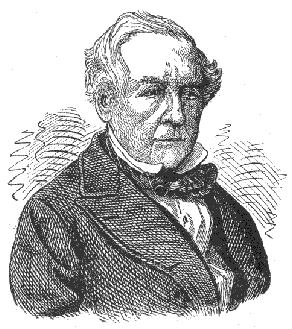
Remembering John Cochrane (04-ii-1798 02-iii-1878)

John Cochrane
John Cochrane

BCN remembers John Cochrane who passed away on March 3rd 1878.

From The Oxford Companion to Chess by Hooper & Whyld :

Scottish player, barrister, called to the bar in 1822. If the so-called romantic style existed then Cochrane has a claim to be regarded as its founder. A dashing player, he attacked at all costs often sacrificing pieces with abandon, a style that was successful in the England of the 1820s; but when in 1821 he went to Paris, then the world’s chess centre, he was beaten by both Deschapelles and Bourdonnais. Subsequently he studied the game but he did not change his style. In 1822 he published A Treatise on the Game of Chess, a popular book largely based on Traite des Amateurs (see Verdoni) and Lolli but with a few contributions of his own.

Although Cochrane came from an old Scottish family he led the London team in the famous correspondence match against Edinburgh, 1824-8. He persuaded his team to play the Scotch Gambit, but when London had obtained a fine position Cochrane left for India. Although the Londoners, led by Lewis, failed to carry the attack, the Scotch Gambit became fashionable for more than 15 years, and other lively attacking openings were developed.

Cochrane stayed in India until his retirement in 1869 except for one visit to England, 1841-3, when he played hundreds of friendly games against Staunton, who began by winning a large majority, Wilhelm Steinitz knew both contestants and states that their last encounter was a match of 12 games. Staunton conceding pawn and move for the first six- and that Cochrane made an even score when receiving odds but won (-1-3—2— !) when playing on even terms, John Cochrane should not be confused with James Cochrane (c, 1770-1830), co-author of a book on the Muzio gambit.

Here is his Wikipedia entry

[embedyt] https://www.youtube.com/watch?v=NHk229rnvY8[/embedyt]

[embedyt] https://www.youtube.com/watch?v=UQX8qsD6iS0[/embedyt]

The Cochrane Gambit is :

[fen]rnbqkb1r/ppp2Npp/3p1n2/8/4P3/8/PPPP1PPP/RNBQKB1R w KQkq – 0 1[/fen]

and the Cochrane Variation in the King’s Gambit is :

[fen]rnb1kbnr/pppp1p1p/8/4N3/2B1P1pq/5p2/PPPP2PP/RNBQ1K1R w KQkq – 0 1[/fen]

The Sicilian Defence, Staunton-Cochrane Variation is :

[fen]rnbqkbnr/pp1ppppp/8/2p5/2P1P3/8/PP1P1PPP/RNBQKBNR w KQkq – 0 1[/fen]

and the Scotch Gambit, Cochrane Variation is :

[fen]r1bqkb1r/pp1p1Npp/2p1nn2/8/2B1P3/8/PPP2PPP/RNBQ1RK1 w KQkq – 0 1[/fen]

The Cochrane Defence is a drawing method for in the rook, bishop & king vs rook & king ending.
Happy Birthday IM Peter Large (02-iii-1956)

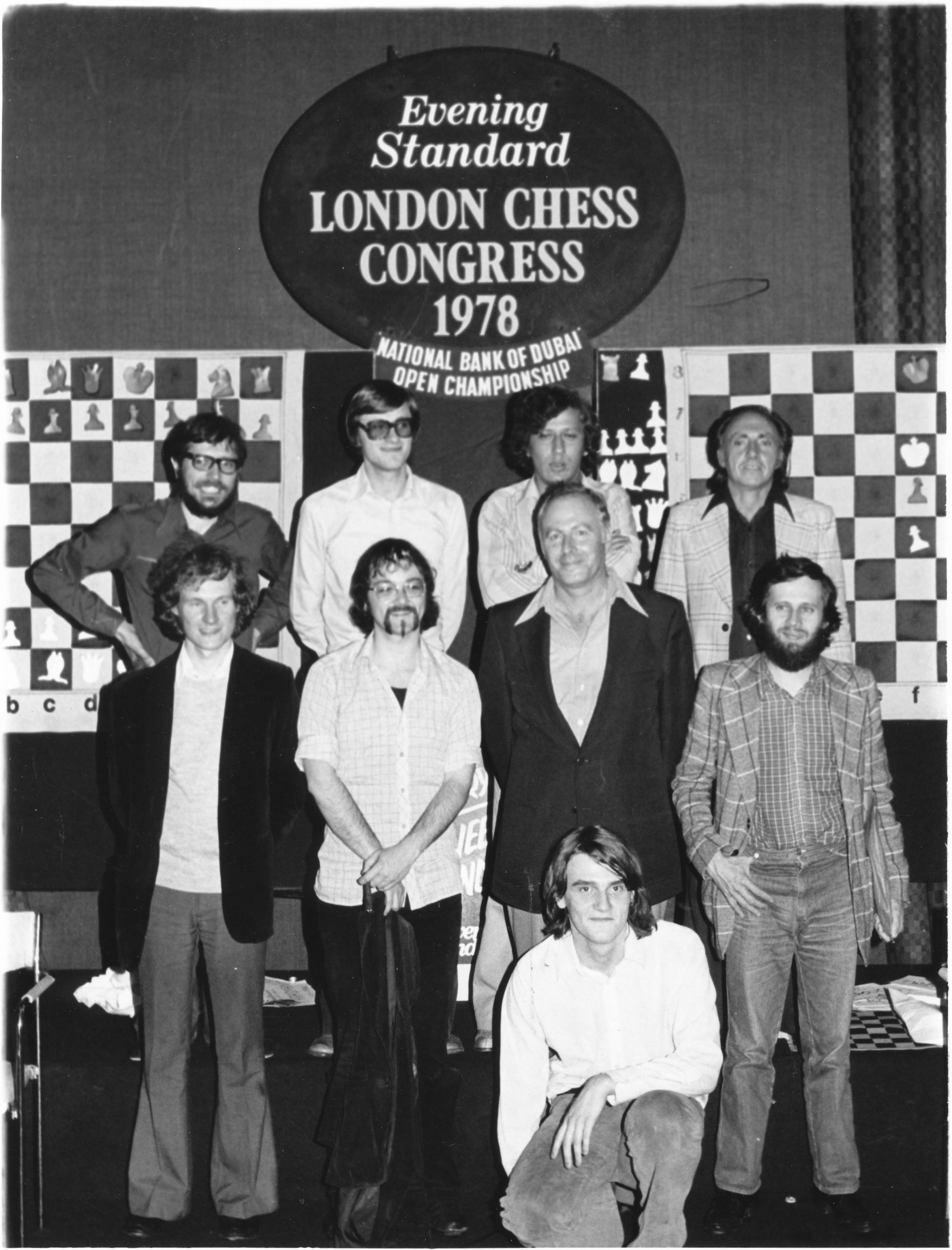
Peter Graham Large (Front row , far left)

BCN wishes Happy Birthday to IM Peter Graham Large (02-iii-1956)

Peter is a solicitor by day and originates from Bromley in Kent and plays for Epsom Chess Club in the Surrey League.

Peter was Southern Counties (SCCU) champion for the 1979-80, 1987-88 and 1990-91 seasons.

He became an International Master in 1987 and his peak rating (according to ChessBase) was 2370 in July 1986.

Peter is known as Plimsol on Chess.com !

IM Peter Graham Large aka Plimsol

A highlight of Peter’s career was coming 1st= with Paul van der Sterren at the 1980 Philips & Drew IM Tournament with a performance of 2723. Peter shared 1st place with Darryl Johansen with 10/14 at the 1984 London Philips & Drew Knights.

At Hastings 1986/1987 he scored this win over Eduard Gufeld :

[pgn]
[Event “Hastings 8687”]
[Site “Hastings”]
[Date “1986.??.??”]
[Round “?”]
[White “Gufeld, Eduard”]
[Black “Large, Peter G”]
[Result “0-1”]
[ECO “C99”]
[WhiteElo “2480”]
[BlackElo “2370”]
[Annotator “British Chess News”]
[PlyCount “118”]
[EventDate “1986.12.??”]
[EventType “tourn”]
[EventRounds “13”]
[EventCountry “ENG”]
[EventCategory “10”]
[SourceTitle “CBM 004”]
[Source “ChessBase”]
[SourceDate “1988.06.01”]
[SourceVersion “1”]
[SourceVersionDate “1988.06.01”]
[SourceQuality “1”]

{[%evp 0,118,19,38,25,7,30,29,28,3,3,3,15,-11,-6,7,13,-13,-11,-12,-9,-2,-9,5,
16,-20,-7,-2,-7,2,0,-2,12,-24,-30,-42,-66,-66,-66,-80,-41,-120,-120,-94,-58,
-60,-30,-41,-37,-13,-13,-85,-61,-59,-37,-46,-43,-47,-49,-58,-53,-65,-42,-78,
-89,-97,-52,-52,-40,-63,-89,-261,-263,-235,-262,-270,-261,-269,-274,-276,-317,
-293,-304,-319,-321,-335,-260,-267,-211,-235,-248,-224,-264,-286,-299,-355,
-386,-401,-377,-358,-336,-357,-340,-362,-377,-390,-390,-382,-468,-583,-742,
-1016,-1091,-1112,-1403,-1444,-1530,-1912,-2127,-2256,-29984]} 1. e4 e5 2. Nf3
Nc6 3. Bb5 a6 4. Ba4 Nf6 5. O-O Be7 6. Re1 b5 7. Bb3 d6 8. c3 O-O 9. h3 Na5 10.
Bc2 c5 11. d4 Qc7 12. Nbd2 cxd4 13. cxd4 Bd7 14. Nf1 Rac8 15. Ne3 Nc6 16. a3
Nxd4 17. Nxd4 exd4 18. Qxd4 d5 19. e5 Bc5 20. Qf4 Rfe8 21. Nf1 Ne4 22. Be3 Bxe3
23. Nxe3 Qxe5 24. Qxe5 Rxe5 25. Red1 Nf6 26. Bb3 Be6 27. Rd3 g5 28. Rad1 Rc5
29. Rd4 Kf8 30. Kf1 Ke7 31. Nc2 a5 32. Ne1 Re4 33. R4d2 Rc7 34. Nc2 Rf4 35. Kg1
a4 36. Ba2 Ne4 37. Re2 Rxf2 38. Rxf2 Nxf2 39. Rd2 Ne4 40. Re2 Ng3 41. Rd2 Ne4
42. Re2 g4 43. Bb1 b4 44. Re1 bxa3 45. Nxa3 g3 46. Bc2 Rb7 47. Bxe4 dxe4 48.
Re2 Rd7 49. Kf1 Rd1+ 50. Re1 Rxe1+ 51. Kxe1 f5 52. Nb5 Kf6 53. Nc3 Ke5 54. Nxa4
f4 55. Nc5 Bc4 56. b3 Bb5 57. Kd2 f3 58. gxf3 exf3 59. Ke3 f2 0-1
[/pgn]

and this nice attack against Andrew Muir :

[pgn]
[Event “Lloyds Bank Open-02”]
[Site “London”]
[Date “1978.??.??”]
[Round “?”]
[White “Large, Peter G”]
[Black “Muir, Andrew Joseph”]
[Result “1-0”]
[ECO “B89”]
[WhiteElo “2275”]
[Annotator “British Chess News”]
[PlyCount “51”]
[EventDate “1978.08.??”]
[EventType “swiss”]
[EventRounds “11”]
[EventCountry “ENG”]
[SourceTitle “MCD”]
[Source “ChessBase”]
[SourceDate “1999.07.01”]
[SourceVersion “1”]
[SourceVersionDate “1999.07.01”]
[SourceQuality “1”]

{[%evp 0,51,19,38,40,41,51,40,40,27,31,30,38,42,57,27,23,21,23,3,19,9,4,-16,
-20,-13,-14,-10,-10,-111,-128,-102,-92,-166,-146,-311,-284,-290,-269,-235,-262,
-218,-179,-451,-405,-472,-440,-488,-162,0,0,-331,-315,29996]} 1. e4 c5 2. Nf3
Nc6 3. d4 cxd4 4. Nxd4 Nf6 5. Nc3 d6 6. Bc4 e6 7. Bb3 Be7 8. Be3 O-O 9. Qe2 a6
10. O-O-O Qc7 11. g4 Nxd4 12. Rxd4 b5 13. g5 Nd7 14. g6 (14. Rg1 {is more
common}) 14… hxg6 15. h4 Nf6 $146 16. h5 Nxh5 17. f4 Ng3 $19 18. Qh2 Nxh1 19.
Rd1 Ng3 20. Qxg3 b4 21. Rh1 bxc3 22. Bd4 cxb2+ 23. Kb1 $19 f6 $4 (23… Qa5
$142) 24. Qxg6 Rb8 $4 (24… Bd8 $142) 25. Rh7 $18 Bd8 26. Qh5 1-0
[/pgn]

and this exciting game from the 1990 Suffolk Open provided by Tony Rubin :

[pgn]
[Event “Suffolk Open”]
[Site “?”]
[Date “1990.??.??”]
[Round “5”]
[White “Large, Peter G”]
[Black “Ledger, David”]
[Result “1-0”]
[ECO “B05”]
[Annotator “British Chess News”]
[PlyCount “51”]
[SourceTitle “BCM, 1990, pge 398, Tony”]

{[%evp 0,24,19,31,57,55,57,40,57,44,89,19,81,58,58,50,49,36,50,47,41,41,49,
-138,-143,-128,-117]} 1. e4 Nf6 2. e5 Nd5 3. d4 d6 4. Nf3 Bg4 5. Be2 c6 6. c4
Nb6 7. Nbd2 N8d7 8. Ng5 Bxe2 9. e6 $5 f6 10. Qxe2 fxg5 11. Nf3 Nf6 12. Nxg5 Qc8
$15 {[#]} (12… Rg8) (12… Qc7) 13. Nf7 Rg8 14. Bg5 d5 15. c5 Nc4 (15… Ne4
$1) 16. Bxf6 gxf6 17. O-O Ne5 $1 18. Qh5 (18. dxe5 $2 Qxe6 $19) 18… Ng6 $2 (
18… Rg6 $17) 19. Rae1 Rg7 20. f4 f5 21. Qxf5 Qc7 22. Qh5 Qa5 23. f5 Qd2 24.
fxg6 Qxb2 25. Nd6+ $1 exd6 26. gxh7+ {and Black resigned} 1-0
[/pgn]