Remembering Captain William Davies Evans (27-i-1790 03-viii-1872)

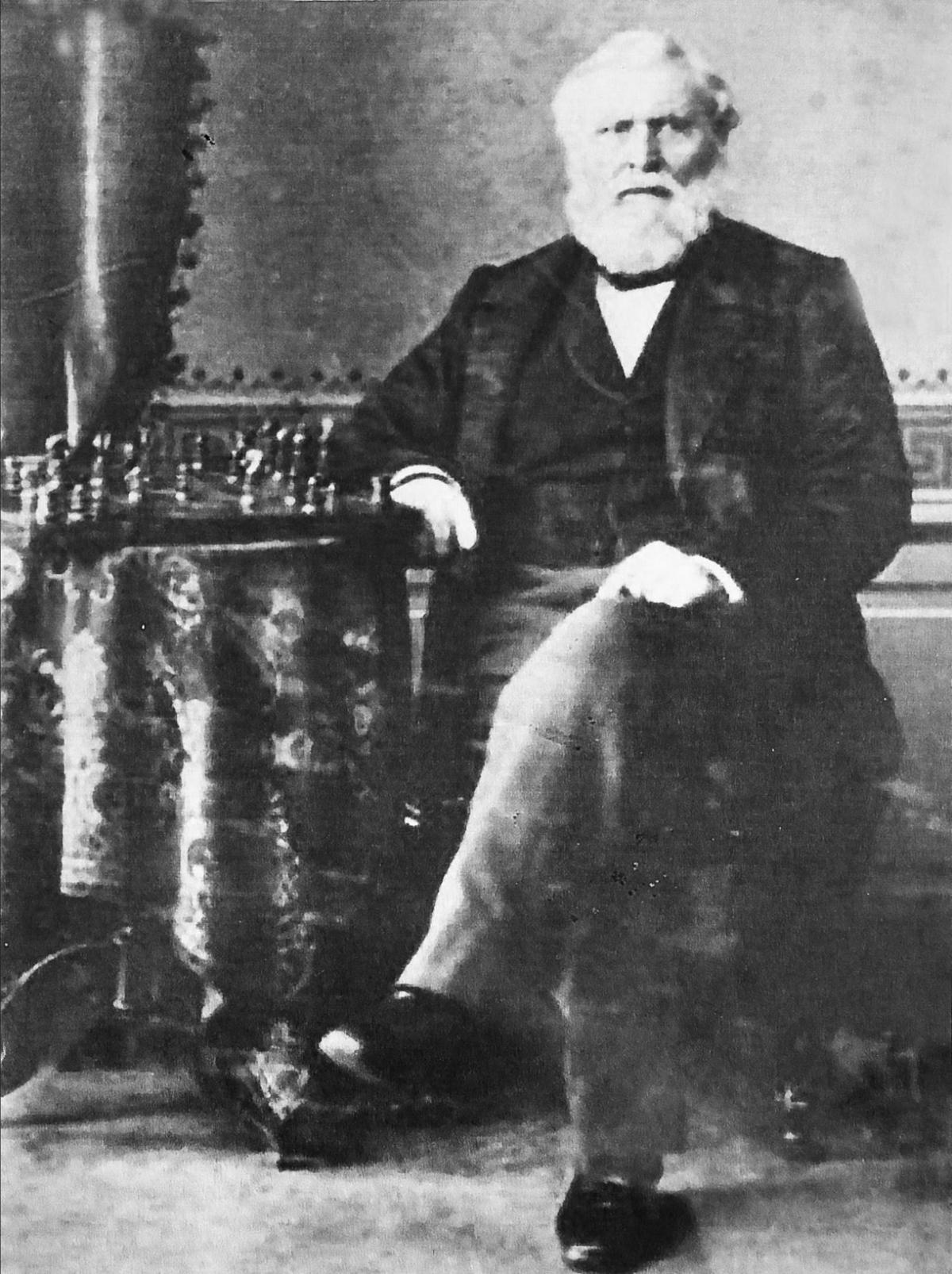
Captain William Davies Evans (27-i-1790 03-viii-1872)

William Davies Evans was born on the 27th of January, 1790 at Musland Farm in the parish of Saint Dogwells, Haverfordwest, Pembrokeshire, SA62 5DT. His parents were John (a farmer by trade) and Mary Davies. William was baptised on September 21st 1814 in Steynton, Pembrokeshire. The service was conducted by WM Lloyd, Curate of Burton, Pembrokeshire.

It would appear from baptism records (Steynton) that WD had a younger brother Robert Joseph, baptised on the same day in September.
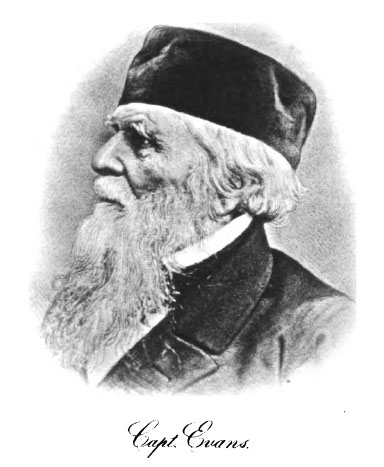
Captain William Davies Evans (27-i-1790 03-viii-1872)

From The Oxford Companion to Chess (OUP, 1984) by Hooper & Whyld :

“Inventor of the Evans gambit, for about half a century one of the most popular attacking weapons. He was born in (Musland Farm in the parish of Saint Dogwells,) Pembroke, Wales, went to sea at the age of 14, was employed by the Postal Department from about 1815, and rose to the rank of captain four years later. In 1824, soon after taking command of the first Royal Mail steam packet to sail from Milford Haven to Waterford, and while aboard, he invented his gambit.

Evans was a keen player. He gathered a small chess circle in Waterford, and when on leave in England played chess in London, notably in 1826 when he showed his gambit to Lewis and McDonnell, and in 1838 when he played a long series of games with Staunton at the Westminster Chess Club.

In Jan. 1840 he was pensioned off on account of ill-health. He went to Greece, became captain of a steamer that sailed the Mediterranean, and returned to London at the end of 1842. During the next 13 years there are several accounts of his presence in London, and then he settled abroad. He died and was buried in Ostend,

Evans claimed to have solved the three pawns problem (See below) , which, however, had already been solved by others.

His claim to the invention of tri-coloured lighting for ships has not been verified independently, although he is known to have investigated the subject. For this invention he states that the Tsar of Russia gave him a gold chronometer, and that he also received money. For a more detailed life of Captain Evans see British Chess Magazine, 1928, pp, 6-18.”

The Evans Gambit is a variation of the Giuoco Piano or Italian Game:

[fen]r1bqk1nr/pppp1ppp/2n5/2b1p3/1PB1P3/5N2/P1PP1PPP/RNBQK2R b KQkq – 0 1[/fen]

When Evans originally devised his gambit the move order was slightly different :

[fen]r1bqk1nr/ppp2ppp/2np4/2b1p3/1PB1P3/5N2/P1PP1PPP/RNBQ2KR b KQkq – 0 1[/fen]

in which White sacrifices the b-pawn for increased central control and development viz :

[pgn]
[Event “London”]
[Site “London”]
[Date “1829.??.??”]
[Round “?”]
[White “Evans, William Davies”]
[Black “McDonnell, Alexander”]
[Result “1-0”]
[ECO “C51”]
[Annotator “British Chess News”]
[PlyCount “39”]
[EventDate “1829.??.??”]
[EventType “game”]
[EventRounds “1”]
[EventCountry “ENG”]
[SourceTitle “EXT 2010”]
[Source “ChessBase”]
[SourceDate “2010.11.25”]
[SourceVersion “1”]
[SourceVersionDate “2010.11.25”]
[SourceQuality “1”]

{[%evp 0,39,19,38,25,7,30,27,27,-50,-30,-36,35,4,-5,122,37,44,129,125,166,166,
200,219,215,212,212,212,266,383,584,706,690,723,746,874,29995,29996,29997,
29998,29999,-30000]} 1. e4 e5 2. Nf3 Nc6 3. Bc4 Bc5 4. b4 $1 Bxb4 5. c3 Bc5 6.
O-O (6. d4 $142 exd4 7. O-O d6 8. cxd4 Bb6 9. d5) 6… Nf6 7. d4 exd4 (7… Bd6
) 8. cxd4 Bb6 9. e5 d5 (9… Ng4 $142) 10. exf6 $18 dxc4 11. Re1+ Kf8 12. Ba3+
Kg8 13. d5 Na5 (13… gxf6 $142 14. dxc6 Qxd1 15. Rxd1 bxc6 $18) 14. Be7 $18 {
[#]} Qd7 15. fxg7 Kxg7 16. Qd2 Qg4 17. Qc3+ Kg8 (17… Bd4 18. Nxd4) 18. Qxh8+
$1 Kxh8 19. Bf6+ Qg7 20. Re8# {[#]} 1-0
[/pgn]

From The Encyclopedia of Chess (Robert Hale, 1970 & 1976) by Anne Sunnucks :

“Inventor of the Evans Gambit, an opening described by a player in the last century as ‘A yellow fever attack : if you live through the initial stages and avoid any carelessness that may bring on a relapse, you will come out alright’.

Captain Evans discovered the gambit in about 1824. It was a favourite opening during the last century and was adopted by a number of leading players including La Bourdonnais and Morphy.

For some years Commander in H.M. Royal Mail Packet Service on the Milford and Waterford station, Captain Evans later became Commander in the P.& O. Company’s service and agent for the Royal Mail Steampacket Company, Port Grande. On retirement he lives for many years in Holland and Belgium.

The story is told of how, in 1870, the Grand Duke Nicholas of Russia, brother of the Tsar, was visiting Bruges when he heard that the inventor of the Evans Gambit was living in Ostend. Being a keen chess player he invited Evans to play a game. When Evans had won, the Grand Duke turned to his adversary and said : ‘I believe you invented the Evans Gambit ?’, ‘Yes’ replied Evans ‘and it’s not the only thing I’ve invented for which you have not paid me.’ ‘What’s the other?’ asked the Grand Duke.

Evans then explained that he was the inventor of the ship’s lights which were being used by the Russian Navy, in which the Grand Duke held the rank of Admiral. Several months later Evans was invited to the Russian Consulate in Ostend, where he was handed a letter from the Grand Duke, a gold chronometer, a gold chain and a draft of money, ostensibly in payment for the Russia’s rights to use the captain’s invention in her ships. ”

Enjoy this interesting article from “Introuble2” on chess.com

Evans analyzed the “Little Game of Chess” (an endgame composition involving only two kings with three pawns each)

[fen]4k3/5ppp/8/8/8/8/PPP5/3K4 w – – 0 1[/fen]

to independently discover that it actually won for the player who moves first, not drawn as had been believed for over a hundred years.

From The Encyclopedia of Chess (Batsford, 1977) by Harry Golombek we have :

“After his retirement Evans went to live abroad and eventually found a haven in Ostend and there, ill, and almost blind and in very straightened circumstances, he dictated a letter on 22 March 1871, which was published in the Gentlemen’s Journal supplement for June 1872, along with an appeal for him organised by George Walker.

The letter gives the authentic facts of his life and is worth quoting in full, if only to refute various unfounded reports about a meeting with the Tsar’s brother, or according to that rich source of misinformation, the Rev GA MacDonnell, that the Evans Gambit was discovered off the coast of Africa by a middle-aged lieutenant in the Royal Navy -perhaps the reverend gentleman was confusing Waterford with the Canary Islands.

The letter runs :

Williams Davies Evans is a native of Pembrokeshire, South Wales, and was born on 27 January 1790. He commenced a naval career at the age of fourteen. He was about twenty-eight years of age when he first learnt the moves of the game of Chess. Having the advantage of frequent practise with Lieutenant H. Wilson, R.N., who was a player of some reputation in his time, beside corresponding on the subject of the game with the late Mr. W. Lewis, and also with George Walker, the able Chess Editor of Bell’s Life , he made a rapid progress in the game. Captain Evans received at first the odds of a Rook from Lieut. Wilson. After a continuance of play for some years, the odds were greatly reduced, until ultimately Captain Evans succeeded in defeating his formidable antagonist playing even.

About the year 1824, being then in command of a Government Mail Steamer, the passages between Milford Haven and Waterford were favourable to the study of the game of Chess and at this time he invented the Gambit, which bears his name. The idea occurred to him while studying a narration of Giuoco Piano in Sarratts’s Treatise on Chess.

[pgn]
[Event “Berlin ‘Evergreen'”]
[Site “Berlin”]
[Date “1852.??.??”]
[Round “?”]
[White “Anderssen, Adolf”]
[Black “Dufresne, Jean”]
[Result “1-0”]
[ECO “C52”]
[Annotator “Kasparov,Garry”]
[PlyCount “47”]
[EventDate “1852.??.??”]
[EventType “game”]
[EventRounds “1”]
[EventCountry “GER”]
[SourceTitle “CBM 059”]
[Source “ChessBase”]
[SourceDate “1997.08.01”]
[SourceVersion “1”]
[SourceVersionDate “1997.08.01”]
[SourceQuality “1”]

{[%evp 0,47,19,38,25,7,30,27,27,-50,-30,-31,-31,-57,-31,-88,0,-21,-3,40,40,-7,
0,-84,-31,34,21,37,40,0,70,65,115,119,122,0,0,0,72,-231,-156,-158,29993,29994,
29995,29996,29997,29998,29999,-30000] Today we will look at a game that
bewitched its contemporaries and became known as the “evergreen”.} {Heute
werden wir eine Partie betrachten, die ihre Zeitgenossen bezaubert hat und als
“Immergrüne” in die Geschichte eingegangen ist. Dufresne war ein deutscher
Jurastudent und Journalist, dessen “Kleines Lehrbuch des Schachspiels” ganze
Generationen von Schachspielern begleitet hat.} 1. e4 e5 2. Nf3 Nc6 3. Bc4 Bc5
4. b4 Bxb4 5. c3 Ba5 6. d4 exd4 7. O-O d3 8. Qb3 Qf6 9. e5 Qg6 10. Re1 Nge7 11.
Ba3 b5 12. Qxb5 Rb8 13. Qa4 Bb6 14. Nbd2 Bb7 15. Ne4 Qf5 16. Bxd3 Qh5 {[#]
White has a huge advantage and it is time for decisive action. In accordance
with his own romantic style and public demand Anderssen played [#] Weiß hat
einen gigantischen Vorteil, die Zeit ist reif für den Sturm. Seinem eigenen
romantischen Stil getreu, und dem Publikumsgeschmack gehorchend, spielte
Anderssen} 17. Nf6+ {?!! The two exclamation marks are for one of the most
beautiful combinations in chess history, which was started with this move. But
objectively the search for beauty created unnecessary complications. The
prosaic ?!! Zwei Ausrufezeichen, weil eine der glanzvollsten Kombinationen der
gesamten Schachgeschichte mit diesem Zug eingeleitet wurde. Aber objektiv
gesehen kann das Streben nach Schönheit unnötige Komplikationen schaffen. Das
prosaische} (17. Ng3 Qh6 18. Bc1 Qe6 19. Bc4 Nd5 (19… Qg6 20. Nh4 Qg4 21.
Bxf7+) 20. Ng5 Qg4 21. Re4 {would finish the game without any troubles, but
then chess would have lost one of the jewels from its crown! hätte die Partie
ohne weitere Schwierigkeiten beendet. Aber damit würde heute dem Schachspiel
ein Juwel in der Krone fehlen.}) 17… gxf6 18. exf6 Rg8 $1 {At first sight an
open g-file gives Black excellent counter-attacking chances, but Anderssen’s
calculations were beyond the fears of an ordinary human being. Auf den ersten
Blick bietet die offene g-Linie Schwarz ausgezeichnete Chancen für einen
Gegenangriff. Aber die Berechnungen von Anderssen waren jenseits der Ängste
von normalen Menschen.} 19. Rad1 $1 {I’ll spare you hundreds of analyses by
following generations of chess players. After endless debate they have agreed
that 19.Rad1 was better than the alternative 19.Be4. Now the best reply was 19.
..Rg4!, which would pose some difficult problems for White, but in the
emerging wild complications White would, in my opinion, retain the upper hand.
Ich werde Ihnen die unzähligen Analysen von Generationen von Schachspielern
ersparen. Nach endlosen Debatten haben sie beschlossen, daß Anderssens Zug
besser als die Alternative 19.Le4 war. Danach wäre 19…Tg4! der beste Zug.
Weiß hätte einige schwierige Probleme zu meistern, aber nach meiner Meinung
behält er in den wilden Komplikationen, die folgen, eindeutig die Oberhand.}
Qxf3 $2 {Now White’s king is suddenly just one step from decapitation. But how
can we reproach Dufresne from not recognising the magic of a genius? [#]
Jetzt steht der weiße König nur einen Schritt vor seiner Hinrichtung. Aber
können wir Dufresne einen Vorwurf machen, weil er die magischen Fähigkeiten
eines Genies nicht erkannt hat? [#]} 20. Rxe7+ $1 Nxe7 $5 {Another proof that
chess masterpieces require the generous cooperation of the loser! Nowadays a
professional player and, of course, a computer, would have without hesitation
resorted to Ein weiterer Beweis dafür, daß die Meisterwerke des Schachs der
großmutigen Kooperation des Opfers benötigen! Heutzutage würde ein Schachprofi
— und natürlich auch ein schachspielender Computer — ohne Zögern den Zug 20..
.Kd8 wählen, um die nahende Vernichtung zu vermeiden.} (20… Kd8 {preventing
the upcoming demolition, but losing anyway later after Aber Schwarz verliert
auch so:} 21. Rxd7+ $1 Kc8 (21… Kxd7 22. Bf5+ Ke8 23. Bd7+ Kd8 24. Bxc6+ {
with mate nebst Matt.}) 22. Rd8+ $1 Kxd8 (22… Rxd8 23. gxf3 {or}) (22… Nxd8
23. Qd7+ $3 {- the same motif mit dem gleichen Motiv}) 23. Be2+ {less clear is}
({weniger klar ist} 23. Bf5+ Qxd1+ 24. Qxd1+ Nd4 25. g3 Rg5 $1 26. Bh3 Bf3 $1)
23… Nd4 24. Bxf3 Bxf3 25. g3 Bxd1 26. Qxd1 {with a boring but winning
endgame. mit einem langweiligen aber gewonnenen Endspiel.}) 21. Qxd7+ $3 Kxd7
22. Bf5+ Ke8 23. Bd7+ Kf8 24. Bxe7# {It was not surprising that chess players
of the time, impressed by this kind of greatness, did not want to listen to
dull positional advice. But the old combinational school, led by its first
knight Anderssen, was doomed in the battle against the modernized warfare
techniques of Paul Morphy, whose tactics had much better positional
foundations. Es ist nicht verwunderlich, daß die Schachspieler jener Zeit
angesichts solcher großartigen Angriffspartien wenig Neigung hatten, stumpfe
strategische Regeln zu lernen. Aber die alte kombinatorische Schule, geführt
von ihrem strahlendsten Ritter Anderssen, war letztendlich zum Untergang
verdammt. Ihre Vertreter konnten den fortschrittlicheren Techniken eines Paul
Morphy, dessen taktische Schläge ein viel solideres positionelles Fundament
besaßen, nicht lange widerstehen.} 1-0
[/pgn]

Captain Evans was the first who gave to the world a true solution of that very difficult end game, the King and three Pawns unmoved against King and three Pawns also unmoved. This position was handed down to us through a period of some centuries as a drawn game, but Captain Evans proved that the first player can always win.

Captain Evans acquired some celebrity as “Inventor of the System of Tri-Coloured Lights for Ships to Prevent Collisions at Night”, which has been adopted by all nations possessing a marine. For this invention the English Government awarded him the sum of £1,500 , and the Czar of Russia a gold pocket chronometer, value £160, together with a donation of £200.

The subscription that amounted to over £200 was too late. He died in 1872 and was buried in Ostend where his grave bears the inscription :

To the sacred memory of William Davies Evans, formerly Commander in the Post Office and Peninsular and Oriental Steam Services, Superintendent In the Royal Mail Shipping Company, and inventor of the system of tri-coloured light for shipping. Also well known in the Chess World as the author of the Evans Gambit

Blue Plaque for Captain WD Evans

Here is his Wikipedia entry.

Read here of the Plaque in Wolfscastle
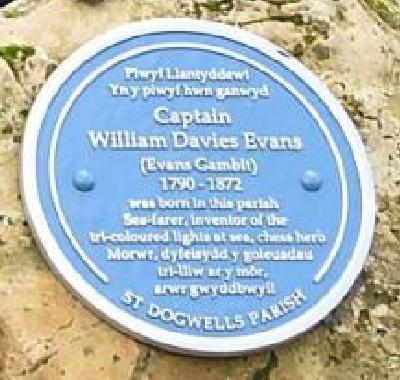
Blue Plaque for Captain William Davies Evans (27-i-1790 03-viii-1872)
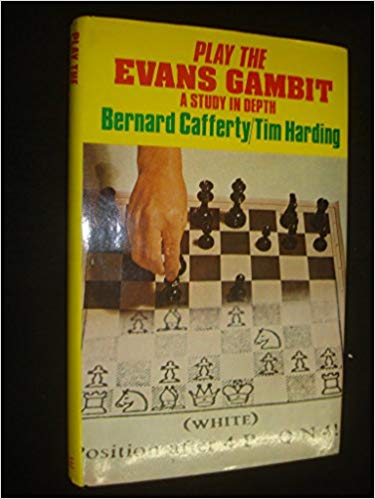
Play The Evans Gambit (co-author Tim Harding). Cadogan. ISBN 1-85744-119-2.