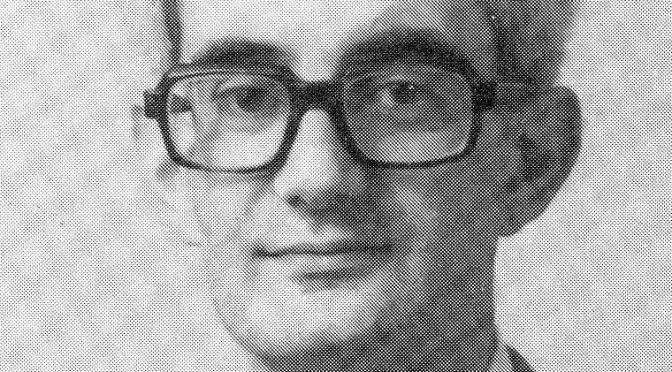
Remembering CGM Adrian Hollis (02-viii-1940 26-ii-2013)

BCN remembers CGM Adrian Hollis who passed away in Wells, Somerset on Tuesday, February 26th 2013  at the age of seventy-two.

Adrian Swayne Hollis was born in Bristol, Avon on Friday, August 2nd 1940. During this critical period the Luftwaffe was wisely extending its Battle of Britain targets to include Britain’s airfields. Furthermore, Bristol was bombed heavily between June 1940 and May 1944. The longest period of regular bombing, known as the ‘Bristol Blitz’ began in autumn 1940 and ended the following spring. The first bombs of the Bristol Blitz fell at around 6 pm on Sunday 24 November 1940.

Adrian was the only child of MI5 director general Roger Henry Hollis KB CBE (later to become Sir Roger Hollis) and Evelyn Esme Hollis (née Swayne) who was Roger’s first wife. Roger was from Wells and Evelyn from Burnham-on-Sea and they were married on July 17th 1937 in Wells Cathedral with Evelyn’s father performing the ceremony.

Adrian won a scholarship in classics to Eton College and then went up to Keble College, Oxford where he took a first in mods and greats. Whilst at Keble Adrian represented Oxford in four varsity matches between 1959 and 1962. Indeed, his support for varsity matches was maintained for many years attending a large number into and beyond the Lloyds Bank era. Stalwart organiser Henry Mutkin would always be sure to extend an invitation.

In 1961 Adrian become the youngest ever West of England Champion at the age of 21.

Adrian met Margaret Mair Cameron Edwards in 1967 at St. Andrew’s University where he taught Classics and she taught German. They married in the parish of St. Leonards in St. Andrews and had two daughters, Jennifer Margaret M (b. 1974) and Veronica Swanye (b. 1977) and a son, Michael David C.

He was the Games Editor for the British Correspondence Chess Association (BCCA) resigning in 1969.

In 1984 Adrian was forced to endure allegations against his father by Chapman Pincher (in CPs book Too Secret too Long) that Sir Roger had been a Soviet spy / mole. These allegations were demonstrated to be false. He may well also have been aware of allegations against his friend and chess mentor Graham Mitchell earlier in 1963. Ironically, it was Adrian’s father who initiated the investigation into Graham. Again, the rumours were shown to be unfounded.

Adrian became a director of the company Centre for Medieval and Renaissance Studies Limited on the September 1st 1996 and resigned on May 12th 2007. He was also a Vice President of the West of England Chess Union (WECU).

Between 2003 and 2007 (according to the Electoral Roll) Adrian lived at 63, Bainton Road, Oxford, OX2 7AG :
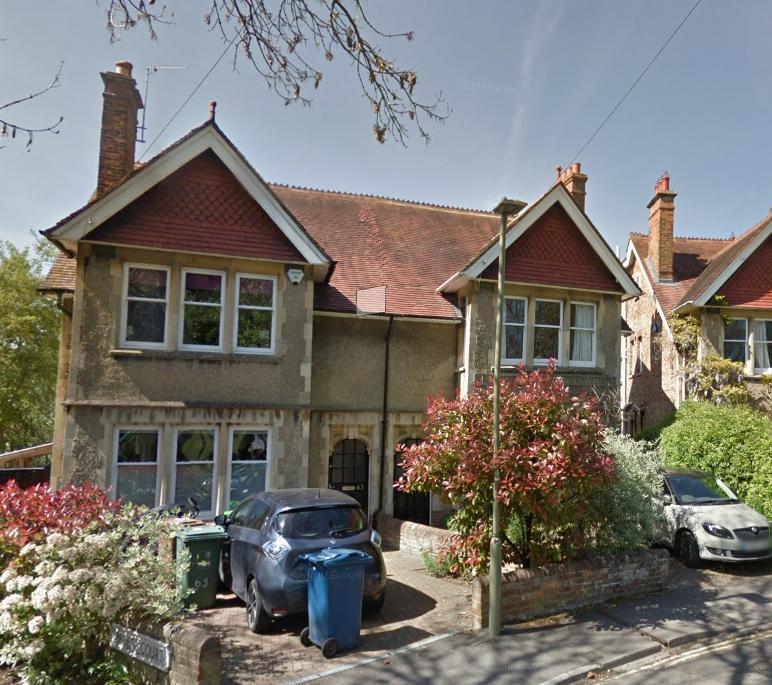
63, Bainton Road, Oxford, OX2 7AG

and following his retirement (and the time of the 2008 electoral roll) Adrian had moved to Pound House, Southover, Wells, BA5 1UH :
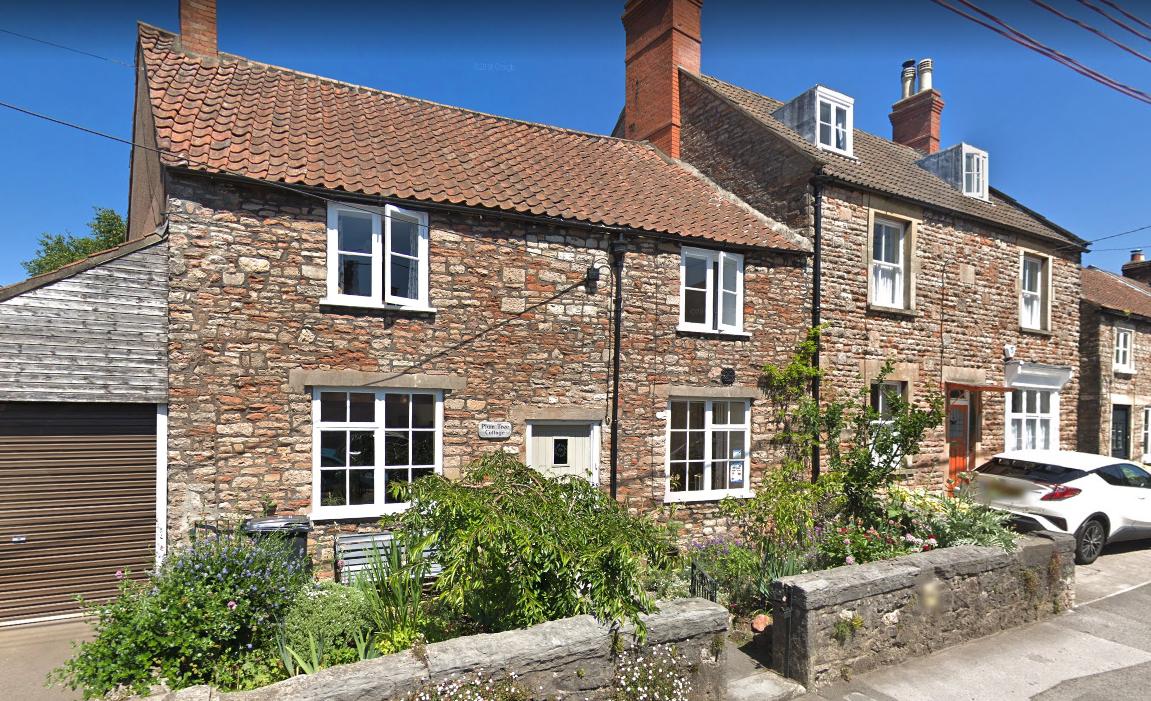
Pound House, Southover, Wells, BA5 1UH

Adrian has written many learned papers and has had two books published :
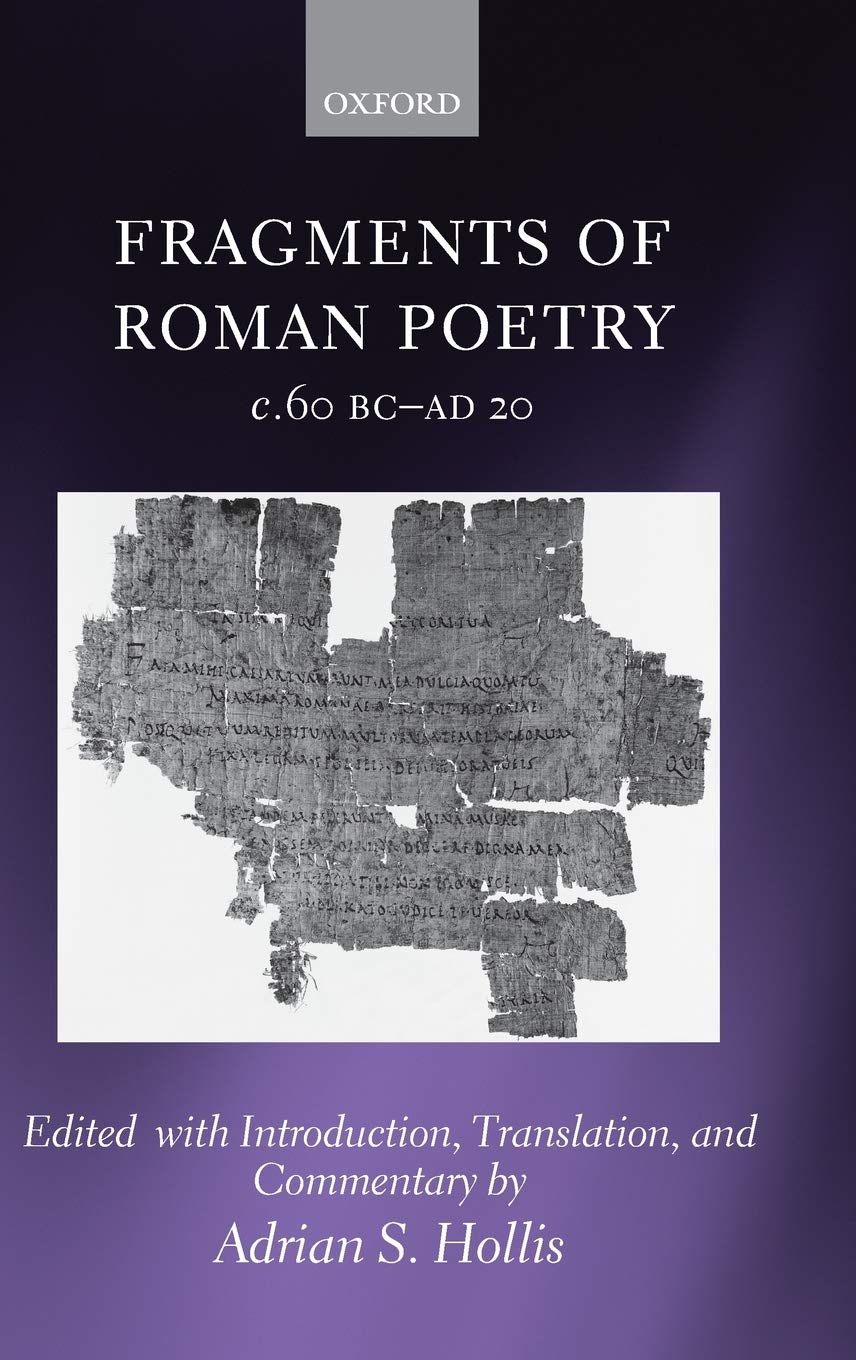
Fragments of Roman Poetry C.60 BC-Ad 20, AS Hollis, Oxford University Press, 2007

and

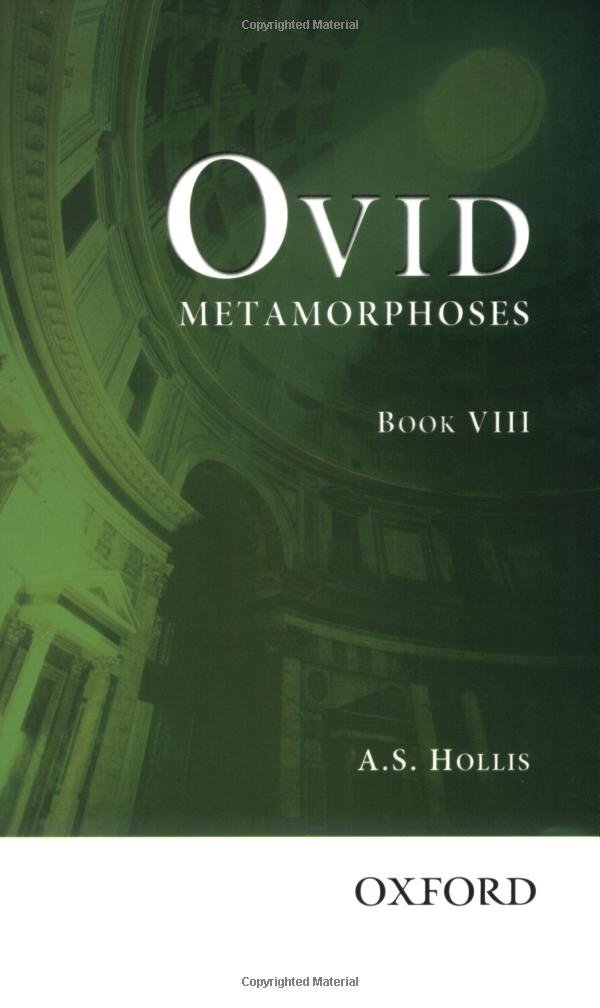
Ovid Metamorphoses VIII (Schools Edition): Bk. 8, AS Hollis. Oxford University Press, 2008

During his time at Keble College, Adrian engaged with and mentored many chess players including Jonathan Rowson (1996), David Norwood (1988), Julian Way, David Goodman (1977) and Dharshan Kumaran (1993).
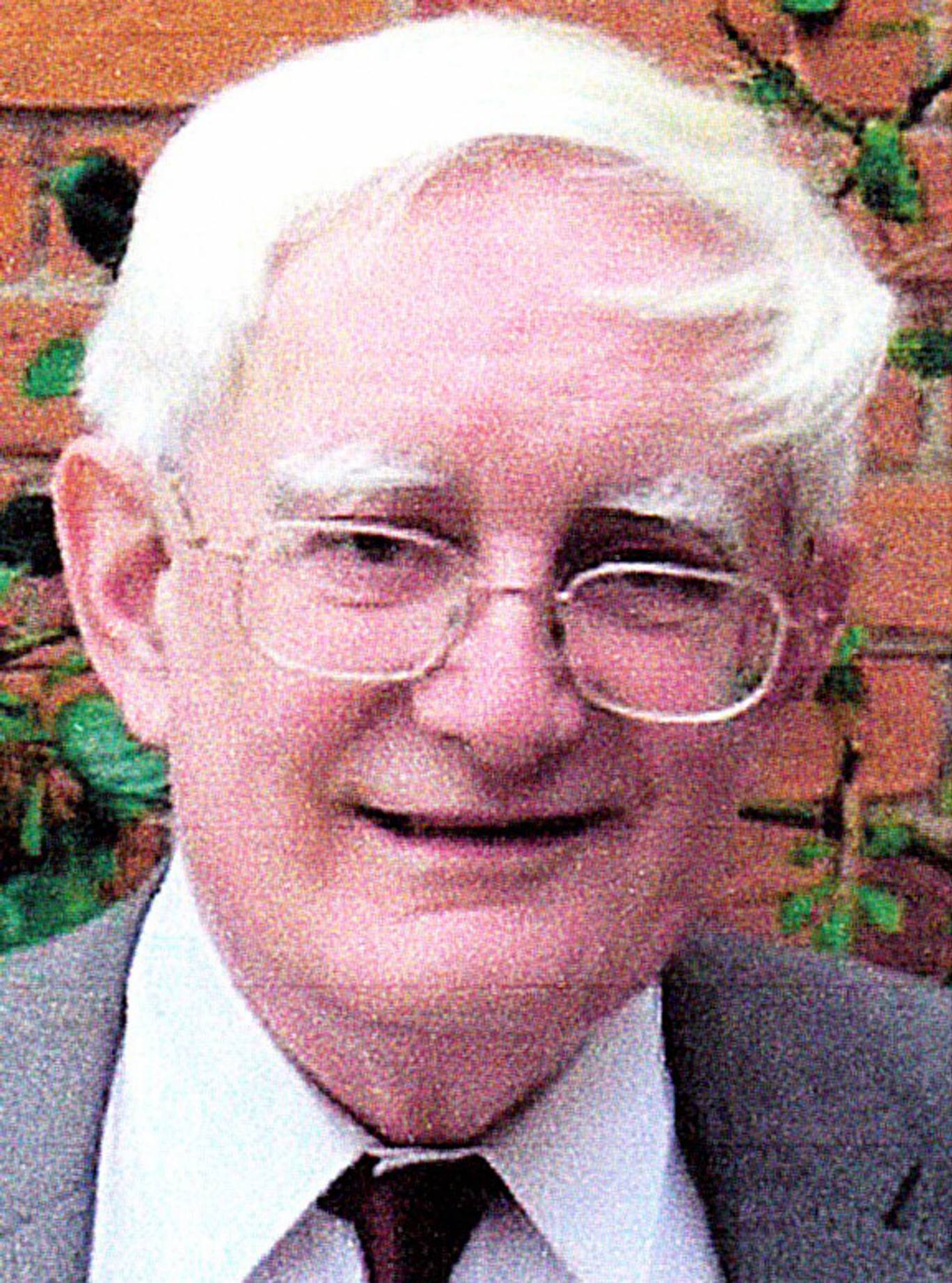
CGM Adrian Hollis
CGM Adrian Hollis

Julian was a personal student of Adrian’s and was kind enough to tell us :

I do remember Adrian well. He could quote Latin verse ad infinitum. He was an expert on Ovid.
In terms of chess he had a huge pile of Informators in his study still in their cardboard packaging. He was very kind to me and insisted I play above him for Keble in the intercollegiate matches.

I gave him a copy of Developments in the Orthodox QGD which I had written in 1987. He was quite taken back when I didn’t want any money for it. He seemed to have quite a lot of respect for me.

I once asked him why he had given me a place at Oxford. He replied that he couldn’t have rejected someone with my passion and enthusiasm.
I kept in touch with Adrian until his passing. He gave me a lovely reference when I resumed my studies in 2007 at Kingston University.
I remember him as a kind and unassuming man. He became a lifelong friend.
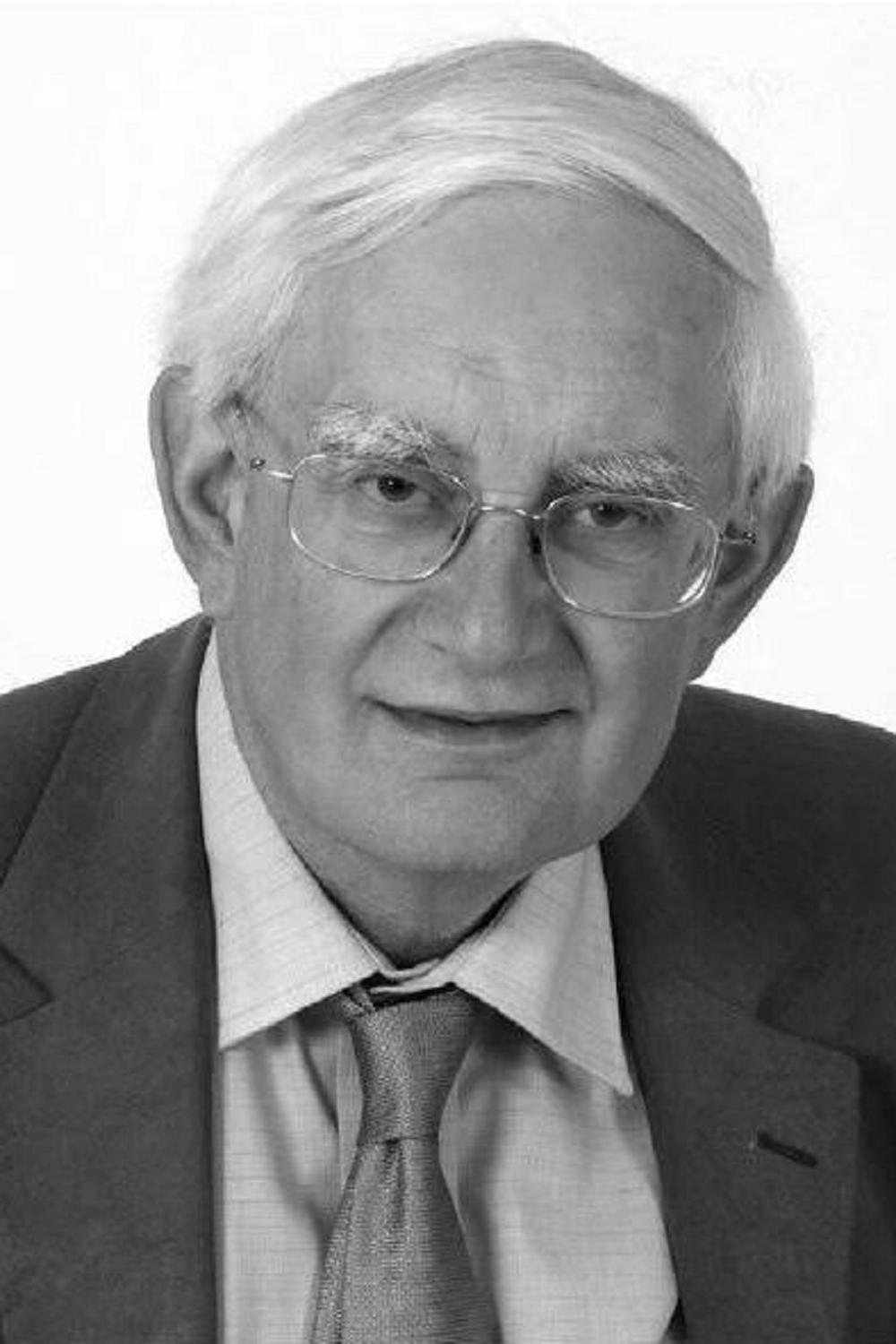
CGM Adrian Hollis
CGM Adrian Hollis

From British Chess (Pergamon Press, 1983) Botterill, Levy, Rice and Richardson :

“I was born on August 2nd, 1940, educated at Eton and Christ Church, Oxford and now teach Classics at Keble College, Oxford. I learned the moves at the advanced age of thirteen from a cousin* who himself could have made a good chess player had he not been seduced by Philosophy and brain-teasers; all that remains in the mind from these encounters is a vision of perpetually losing my rooks to fianchettoed bishops.

*We are grateful to John Clarke who informed us that

“The cousin would have been Martin Hollis, who contributed the “Tantaliser” column to the New Scientist for many years. I always enjoyed his puzzles, which for me at any rate were at just the right level of difficulty – neither trivial nor totally impossible.”
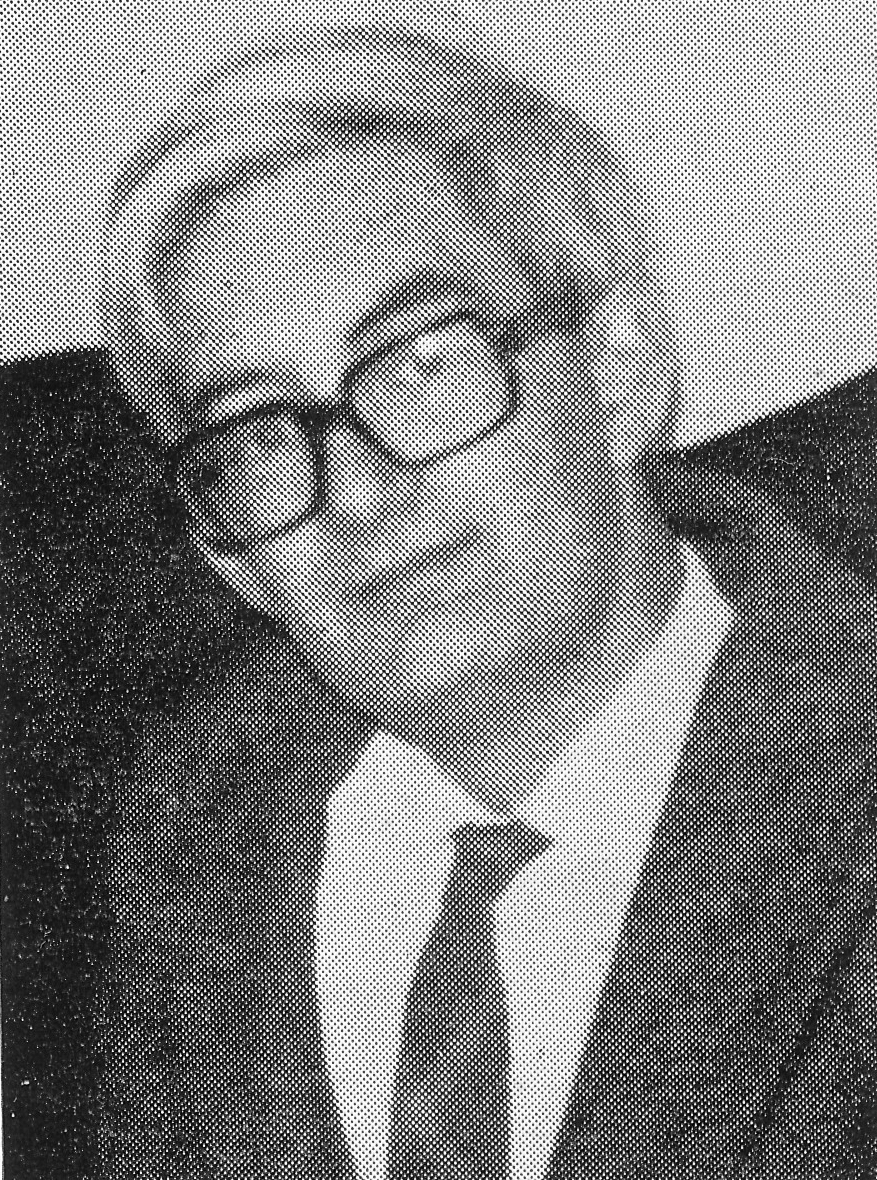
Adrian Hollis. Source : The Potter Memorial

My first ever tournament was the London Boys’ Championship 1956-7. In the opening round fate allotted me Black against David Rumens. As it happened, the brochure included a game of his from the previous year in which he had answered 1.d4 with 1…Nc6, quite enough, in my opinion, to condemn him utterly.

[fen]r1bqkbnr/pppppppp/2n5/8/3P4/8/PPP1PPPP/RNBQKBNR w KQkq – 0 1[/fen]

(Ed: The above position did not impress Adrian hugely.)

This view seemed confirmed when within twelve moves of an advance French I was two pawns up. Then, however, aided by my over confidence he worked up a fierce attack, and I just escaped with a draw. Nevertheless, I won the tournament; an opponent remarked how quickly I played my moves.

Thereafter the game was never so easy, but I did reasonably, well, winning the championships of the British Universities, West of England and East of Scotland, and playing for England quite regularly during the 1960s (including 7.5/12 in six Anglo-Dutch matches).
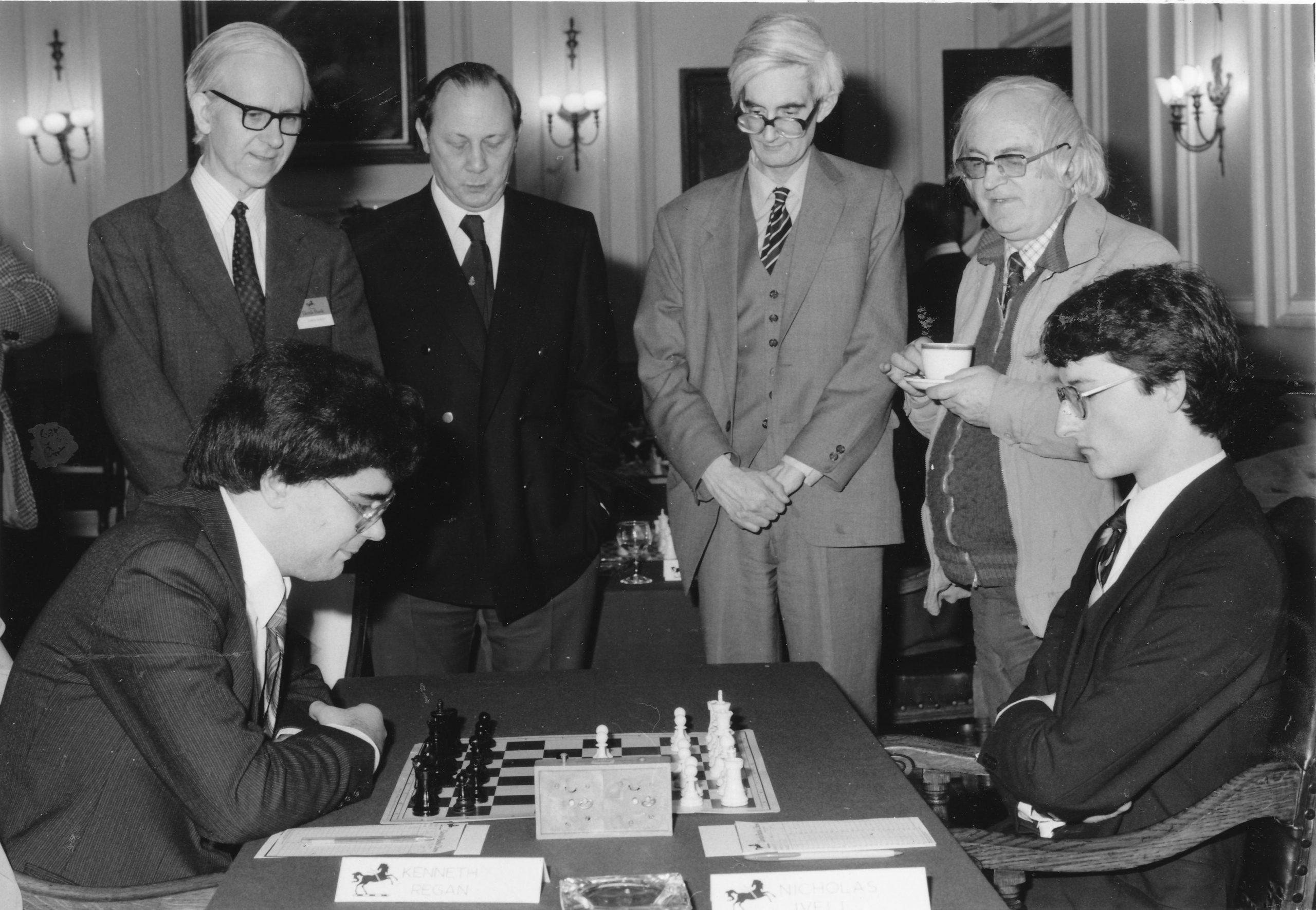
Leonard Barden, Henry Mutkin, Adrian Hollis and Bob Wade observe Nick Ivell vs Ken Regan at the 1983 Varsity match

The high spot of my over-the-board chess was the series of World Student team championships from 1960 to 1964 in glamorous places (Leningrad, Helsinki, Mariánské Lázně, Budva and Cracow); most enjoyable of these being Budva, 1963 where one could bathe every day in the Adriatic and I won the (?) gold medal on Board 1 with 7.5/9., the year after Spassky (this must look good in the records, unless they happen to reveal that for the first time in preliminary and final sections, and that England did not qualify for the top final).

[pgn]
[Event “Paignton”]
[Site “?”]
[Date “1966.09.??”]
[Round “?”]
[White “Hollis, Adrian Swayne”]
[Black “Beach, Richard A”]
[Result “1-0”]
[ECO “E63”]
[Annotator “BCN”]
[PlyCount “35”]
[SourceTitle “BCM, 1966, page 289, game”]

{[%evp 0,25,61,14,28,-9,54,37,37,18,25,20,27,19,18,29,45,2,38,27,5,20,14,3,7,
-4,24,-17]} 1. d4 Nf6 2. c4 g6 3. Nf3 Bg7 4. g3 O-O 5. Bg2 d6 6. O-O Nc6 7. Nc3
a6 8. b3 Rb8 9. Bb2 b5 10. cxb5 axb5 11. d5 Na5 12. Nd4 b4 13. Nb1 $11 {[#]} (
13. Na4 e5 14. Nc2 Bd7 15. Ne3 Bh6 16. Bc1 Bxa4 17. bxa4 b3 18. Bd2) 13… e6 (
13… e5) 14. a3 bxa3 15. Rxa3 c5 $2 ({Correct was} 15… e5 16. Rxa5 exd4 17.
Ra3 $16) 16. dxc6 {[#]} {Black punted} Nc4 $2 {but had missed} 17. Qc1 $1 $18 (
{Black was hoping for} 17. bxc4 Rxb2 18. Nc3 $18) 17… Bh6 18. Qxc4 $1 {
and Black resigned} 1-0
[/pgn]

My best chess was probably played at Mariánské Lázně, 1962, where in successive rounds I had favourable draws with Radulov and Hort, coming close to beating the latter. Ironically, I was awarded the British Master title after I had virtually retired from over-the-board chess.

[pgn]
[Event “Paignton”]
[Site “?”]
[Date “1966.09.??”]
[Round “3”]
[White “Hartston, William Roland”]
[Black “Hollis, Adrian Swayne”]
[Result “0-1”]
[ECO “A05”]
[Annotator “Hollis, Keene & BCN”]
[PlyCount “80”]
[SourceTitle “The Spectator, 20th April”]

{[%evp 0,18,19,-22,0,-31,-9,-5,9,-19,-25,-22,-34,-17,-10,5,21,21,31,5,13]} {
This game appeared in The Spectator, April 20th, 2013 as part of an obituary
from Ray Keene. The original source was British Chess Magazine, 1966, page 302,
game #14,225.} 1. g3 Nf6 2. Bg2 d5 3. Nf3 g6 4. b4 {ASH : This set-up, in fact
a primitive form of the Reti, has been patronised recently by Smyslov, among
others. RDK : This set-up, a form of the Reti, has been championed by,
amongst others, Vassily Smyslov.} Bg7 5. Bb2 O-O 6. O-O a5 ({BCN : Nowadays}
6… c6 7. d3 a5 8. a3 axb4 9. axb4 Rxa1 10. Bxa1 Qb6 11. c3 Nbd7 12. Nbd2 e5
13. e4 Re8 {is the modern (2020) continuation.}) 7. b5 ({ASH :} 7. a3 {, or}) (
{even} 7. c3 {came into consideration here.}) 7… c5 $146 {BCN : This was the
first game to feature this position.} 8. d3 (8. bxc6 {ASH: was quite possible.}
) 8… b6 $146 {BCN : This is the only recorded game with this move.} 9. c4 e6
{ASH : Black decides to maintain a pawn centre, without worrying if the pawns
should hang. RDK : Black decides to create a pawn centre without worrying if
the pawns will end up hanging.} 10. Qc2 Bb7 11. Nbd2 Nbd7 {[#]} 12. e3 {
RDK : White has to prevent … d4 and … e5.} Qc7 13. Rad1 ({ASH : Harston
later preferred RDK: Hartston later preferred} 13. Rac1 Rad8) 13… Rad8 14.
Qb1 e5 {ASH : Somewhat risky, but the only way to progress. RDK : Somewhat
risky, but the only way to make progress.} 15. cxd5 Nxd5 16. Nc4 Rfe8 17. Qa1
f6 18. Rc1 Nf8 19. d4 exd4 20. exd4 Ne6 21. Rfd1 {[#]} Ndf4 $1 $17 {ASH :
Seizing his chance. This sacrifice is necessary because the central position
is beginning to look rickety, and appears to be sound. White has terrible
weaknesses and his queen is marooned far away. RDK : Seizing his chance.
This sacrifice is necessary because the central position is beginning to look
rickety. The sacrifice looks sound as White has terrible weaknesses and his
queen is miles away.} 22. gxf4 Nxf4 23. Ne3 (23. Bh1 Qd7 {ASH : is too slow.})
(23. d5 {ASH : Might be a shade better – see next note.}) 23… Nxg2 $19 24.
Kxg2 Be4 $1 (24… Qf4 {ASH : is also possible but the win would not be so
easy after} 25. d5 Rxd5 26. Rxd5 Bxd5 27. Nxd5 Qg4+ {ASH : etc}) 25. Nf1 Qf4
26. Rc3 cxd4 27. Rcd3 Rd5 28. Qc1 Qg4+ 29. Ng3 Rf5 30. h3 {ASH : There is
nothing better} Bxf3+ 31. Kh2 Rh5 32. Rxf3 Qxf3 33. Nxh5 {ASH : The rest is
straightforward} Qxf2+ {RDK : Now it’s straightforward for Black.} 34. Kh1
Qf3+ 35. Kg1 gxh5 36. Bxd4 Qg3+ 37. Kh1 Qxh3+ 38. Kg1 Qg4+ 39. Kh1 Rc8 40. Qd2
Rd8 {and White resigned.} 0-1
[/pgn]

In 1964 I decided that henceforth for me ‘serious’ chess would mean correspondence, while OTB became a pleasant social activity. My introduction to the postal game had been made about 1955 by a colleague of my father’s, International Master Graham Mitchell, to whom I owe an enormous debt for the patience and kindness with which he played a series of games, bearing with me when I lost interest in worsening positions. The switch to postal play was caused by a number of factors, negative and positive : an impending move to Scotland, where there was less OTB chess, frustration at constantly spoiling good positions through mistakes in time pressure – on the other hand a feeling that correspondence chess should suit an academic temperament, and a particularly fascinating game played in 1963-4 with Michael Haygarth (see below) on which I spent so much time and energy that I almost feared it would ruin my post-graduate exams.

[pgn]
[Event “County Correspondence Championship”]
[Site “?”]
[Date “1963.??.??”]
[Round “?”]
[White “Haygarth, Michael John”]
[Black “Hollis, Adrian Swayne”]
[Result “0-1”]
[ECO “B78”]
[Annotator “ASH & British Chess News”]
[PlyCount “106”]
[SourceTitle “British Chess, page 104”]
[WhiteTeam “Yorkshire”]
[BlackTeam “Somerset”]

{[%evp 0,20,19,38,40,41,66,77,66,55,55,20,70,53,40,34,30,28,47,32,47,-3,30]} 1.
e4 c5 2. Nf3 d6 3. d4 cxd4 4. Nxd4 Nf6 5. Nc3 g6 6. Be3 Bg7 7. f3 O-O 8. Bc4 (
8. Qd2 Nc6 9. O-O-O d5 10. exd5 Nxd5 11. Nxc6 bxc6 12. Bd4 e5 13. Bc5 Be6 14.
Ne4 Re8 15. h4 h6 16. g4 Qc7 17. g5 h5 18. Bc4 Red8 19. Qf2 {is modern
practise.}) 8… Nc6 9. Qd2 Bd7 10. h4 (10. O-O-O Rc8 11. Bb3 Ne5 12. h4 h5 13.
Bg5 Rc5 14. Kb1 b5 15. g4 hxg4 16. h5 Nxh5 17. Nd5 Re8 18. Rxh5 gxh5 19. Qh2
Rxd5 20. Bxd5 Qb6 21. Qxh5 e6 22. Bb3) 10… Rc8 {ASH : At that time people
always played the queen’s rook to c8. Later it became the custom to play …
Qa5 and …Rfc8. Later still fashion swung back.} 11. Bb3 Ne5 (11… h5 12.
O-O-O Ne5) 12. Bh6 {ASH : Of all the attacking possibilities, White chooses a
relatively ineffective one.} ({The modern way is} 12. O-O-O h5 13. Bg5 Rc5 14.
Kb1 b5 15. g4 hxg4 16. h5 Nxh5 17. Nd5 Re8 18. Rxh5 gxh5 19. Qh2 Rxd5 20. Bxd5
Qb6 {transposes to a previous line.}) 12… Nc4 {ASH : A nice little finesse.}
13. Bxc4 Bxh6 ({more usual is} 13… Rxc4 14. Bxg7 Kxg7 15. h5 Qa5 16. hxg6
fxg6 (16… hxg6 $4 17. Qh6+ Kg8 18. Qh8#) 17. O-O-O) 14. Qxh6 ({Believe it or
not,} 14. Bxf7+ $4 Kg7 $1 {ASH : Resigns, has actually occurred in an
international (over-the-board!) tournament. BCN : It was, in fact, Zuidema
– Lee, Zurich Junior, 1964.} (14… Kxf7 $2 15. Qxh6) (14… Rxf7 $2 15. Qxh6
$14)) 14… Rxc4 15. O-O-O Rxc3 16. bxc3 Qa5 {ASH : Black has carried out his
exchange sacrifice under unusually favourable circumstances.} 17. Kb2 Rc8 {[#]}
18. Rd3 ({ASH : In a later game (British Correspondence Championship 1965-6).
S.Milan played against me} 18. Qd2 Rc4 19. Nb3 {, keeping more active chances
(the game was drawnin 50 moves).}) 18… Bb5 19. Nxb5 {The exchange of minor
peices suite Black.} (19. Qg5 Rc5 {would be ingenious but not better.}) 19…
Qxb5+ 20. Ka1 Rc5 21. Rb1 Qa6 22. Qc1 Ra5 23. Rb2 b6 24. Qb1 Nd7 25. Rb4 Ne5
26. Re3 Nc4 {[#] ASH : Black’s knight has reached ideal squares, and for the
next few moves makes the White rooks dance to his tune.} 27. Rd3 Rc5 28. Qe1
Ra5 29. Qb1 Ne5 30. Re3 ({ASH : Not} 30. Rd5 Rxd5 31. exd5 Qe2 {and White’s
position collapses.}) 30… Rc5 31. Rb3 b5 32. Qd1 Qc6 33. Qd4 Nc4 34. Rd3 a5
35. g4 {ASH : Natural, but in the end providing a target.} a4 36. Rb4 Ne5 37.
Re3 Qc8 $1 38. Kb1 {[#] ASH : Something must fall so White decides to return
the exchange.} h5 $1 39. gxh5 Nc6 40. Qd3 Nxb4 41. cxb4 Rxh5 42. e5 {Unable to
protect his weaknesses, White tries to break out.} Rxe5 43. Rxe5 dxe5 44. Qxb5
Qc3 45. Qxa4 Qxf3 46. b5 e4 47. b6 e3 48. Qb3 Qf1+ 49. Kb2 e2 50. b7 e1=Q 51.
b8=Q+ Kh7 52. Q8b6 Qc1+ 53. Kc3 Qcf4 {White resigns. A remarkable position,
with four queens on the board. Material is level, but the exposed White king
is helpless. This game was played just before I left Oxford to teach in
Scotland (where, at that time, over-the-board chess was not so strong as it
has since become), and it was to a great extent responsible for turning my
main interest to postal chess.} 0-1
[/pgn]

In 1964-5 I qualified for the British Championship by winning a candidates’ section with 100%, and then competed three times in the British Championship itself (1965-6, 1966-7, 1970-71), winning on each occasion (the first time jointly with S. Milan) and remaining unbeaten. International play also proved successful, and I soon collected the two norms necessary for the IM title (Ed: awarded in 1970).
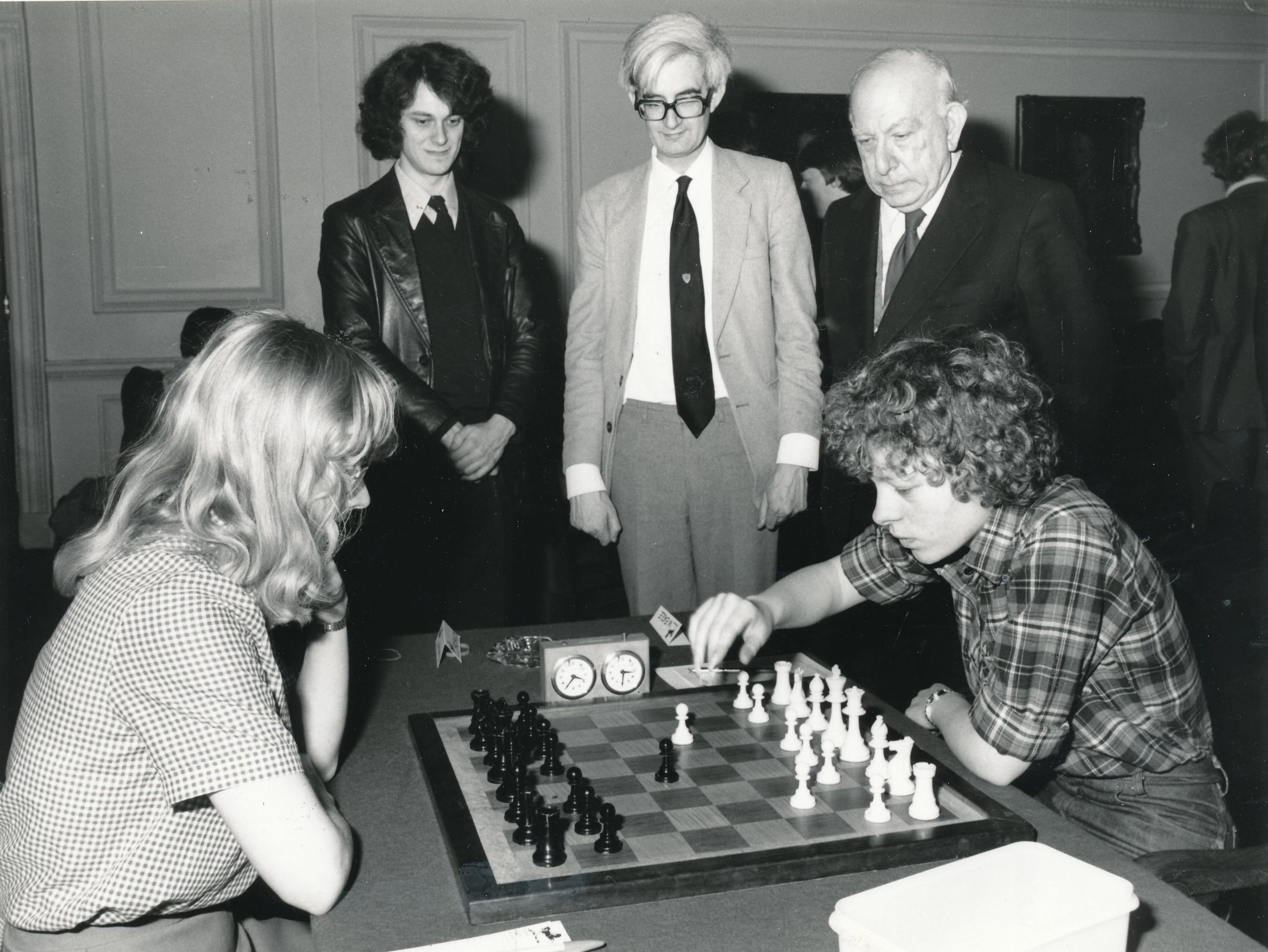
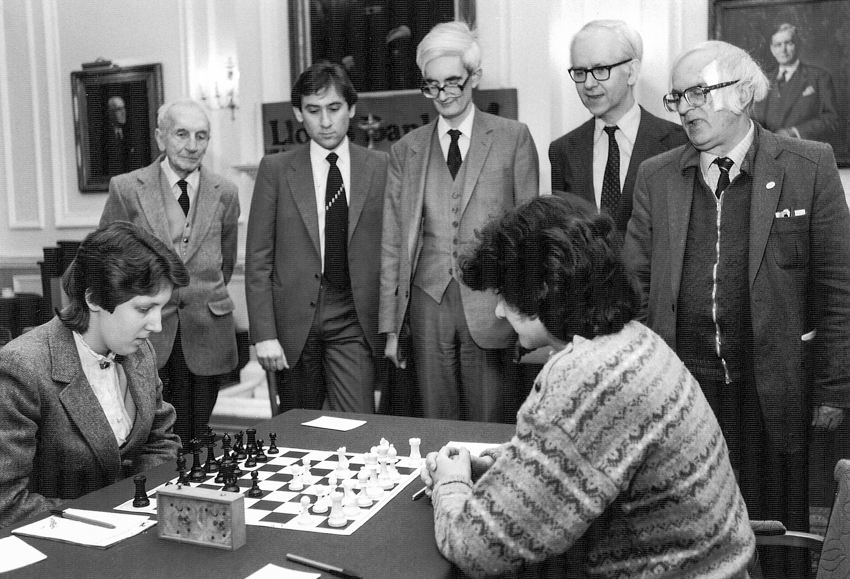
Linda Brownson (Newnham & Basildon), left, playing Maria Eagle (Pembroke & Formby) being observed by John Nunn, Adrian Hollis and Harry Golombek posing for the obligatory "staring at the board" picture for the 1981 Varsity Match sponsored by Lloyds Bank.
Linda Brownson (Newnham & Basildon), left, playing Maria Eagle (Pembroke & Formby) being observed by John Nunn, Adrian Hollis and Harry Golombek posing for the obligatory “staring at the board” picture for the 1981 Varsity Match sponsored by Lloyds Bank.

The first chance for the Grandmaster title came on Board 1 in the Seventh Olympiad final. Despite a rare loss with the White pieces(my only defeat with white for a stretch of 15 years), things went well, including a lucky win against the reigning World Champion, Horst Rittner, and the enticing prospect beckoned if only I could beat the Russian Moiseyev. He held a slight advantage since the opening, but I thought I saw the chance of tempting him to an incorrect sacrifice. Back came his move; he had indeed made the sacrifice and the envelope burnt a hole in my pocket during an important meeting (my mind was elsewhere). After a mere two days’ thought I sent my reply. The post between England and the USSR takes about a month for the return trip. Soon after posting my move, as I was walking from the Ashmolean Museum to Keble, just passing the front gate of St. John’s, the realisation of what I had overlooked hit me, and there followed an inexorable wait for the death blow which I now saw only too clearly.

[pgn]
[Event “olm7 fin B1 corr”]
[Site “ICCF corr”]
[Date “1972.??.??”]
[Round “?”]
[White “Moiseev, Oleg Leonidovich”]
[Black “Hollis, Adrian Swayne”]
[Result “1-0”]
[ECO “E42”]
[Annotator “British Chess News”]
[PlyCount “93”]
[EventDate “1972.??.??”]
[EventType “team (corr)”]
[EventRounds “9”]
[SourceTitle “Corr 2002”]
[Source “ChessBase”]
[SourceDate “2002.05.23”]
[SourceVersion “1”]
[SourceVersionDate “2002.05.23”]
[SourceQuality “1”]

{[%evp 0,93,19,-12,-10,-23,0,4,26,26,26,20,30,41,41,41,32,38,67,43,48,32,19,14,
28,16,17,9,46,57,71,70,67,56,71,42,26,27,26,31,36,23,32,33,40,21,37,38,47,34,
82,-2,4,-15,-7,-14,-5,-5,-10,-5,0,4,7,7,10,15,0,-92,13,19,44,45,144,110,106,91,
182,173,190,190,190,190,203,172,241,248,248,248,422,422,568,710,797,1015,29989,
29990]} 1. c4 Nf6 2. d4 e6 3. Nc3 Bb4 4. e3 c5 5. Nge2 d5 6. a3 Bxc3+ (6…
cxd4 7. axb4 dxc3 8. Nxc3 $11) 7. Nxc3 cxd4 8. exd4 dxc4 9. Bxc4 Nc6 10. Be3
O-O 11. O-O b6 12. Qd3 Bb7 13. Rad1 Qd7 (13… h6 $1) 14. Bg5 Nd5 {FS 239:
Taimanow: Schw. steht aussichtsreich Moissejew: +=} 15. Nxd5 exd5 16. Ba2 Rae8
17. Bb1 f5 {Taimanow: Schw. steht aussichtsreich~Moissejew: += B FS 239:
notwendig, aber schwaecht e5} 18. b4 Nd8 19. Bf4 (19. b5 Ne6 (19… Nf7) (19…
Nf7 {FS 239})) 19… Bc6 20. Rfe1 Bb5 21. Qd2 Bc4 22. Be5 Re6 (22… Nf7 23. f4
) 23. Re3 Rg6 24. Rf3 (24. f4 {notwendig, aber schwaecht e5}) 24… Nf7 25. Bf4
(25. Bxf5 Nxe5 {J 3c7, a6 ‘!’ FS 239.} 26. Bxd7 Nxf3+) (25. Rxf5 Nxe5 26. Rxe5
(26. Rxf8+ Kxf8 27. dxe5 Rxg2+) 26… Rxg2+ 27. Kxg2 Qg4+ $1) 25… Nd6 26.
Bxd6 $2 Rxd6 27. Re1 Re6 28. Rxe6 Qxe6 29. Re3 Qf6 30. f4 $1 {FS 239: gegen
f5-f4} g6 31. Re5 Kf7 32. Qe3 {FS 239: P g4} a5 {[#]} 33. g4 axb4 (33… fxg4 {
remis} 34. f5 $11) 34. gxf5 bxa3 35. Qxa3 Qh4 36. fxg6+ hxg6 37. Bxg6+ Kg7 {
‘?’ FS 239.} (37… Kxg6 {gegen f5-f4} 38. Rg5+ Qxg5+ (38… Kf7 39. Qa7+) 39.
fxg5) (37… Kg8 {J g4} 38. Qg3 Rxf4 (38… Qxf4 $6 39. Bf7+ $1) 39. Bf7+ Kxf7
40. Rf5+ Rxf5 41. Qxh4 Be2 {J 5e6}) 38. Qa7+ Kxg6 (38… Kg8 39. Qd7 $2) 39.
Rg5+ Qxg5+ (39… Kf6 40. Qg7+ Ke6 41. Re5+ Kd6 42. Qxf8+ $2) 40. fxg5 Rf4 41.
Kg2 Rg4+ 42. Kf3 Rxg5 43. Qxb6+ Kh5 44. Qe6 Bd3 45. Kf4 Be4 46. Qe8+ Rg6 (46…
Kh4 47. Qe7) (46… Kh6 47. Qh8+ Bh7 48. Qxh7+) 47. Qe5+ 1-0
[/pgn]

So no Grandmaster title, but Great Britain still took the bronze medals, and I scored 6/9 (+5=1-2).
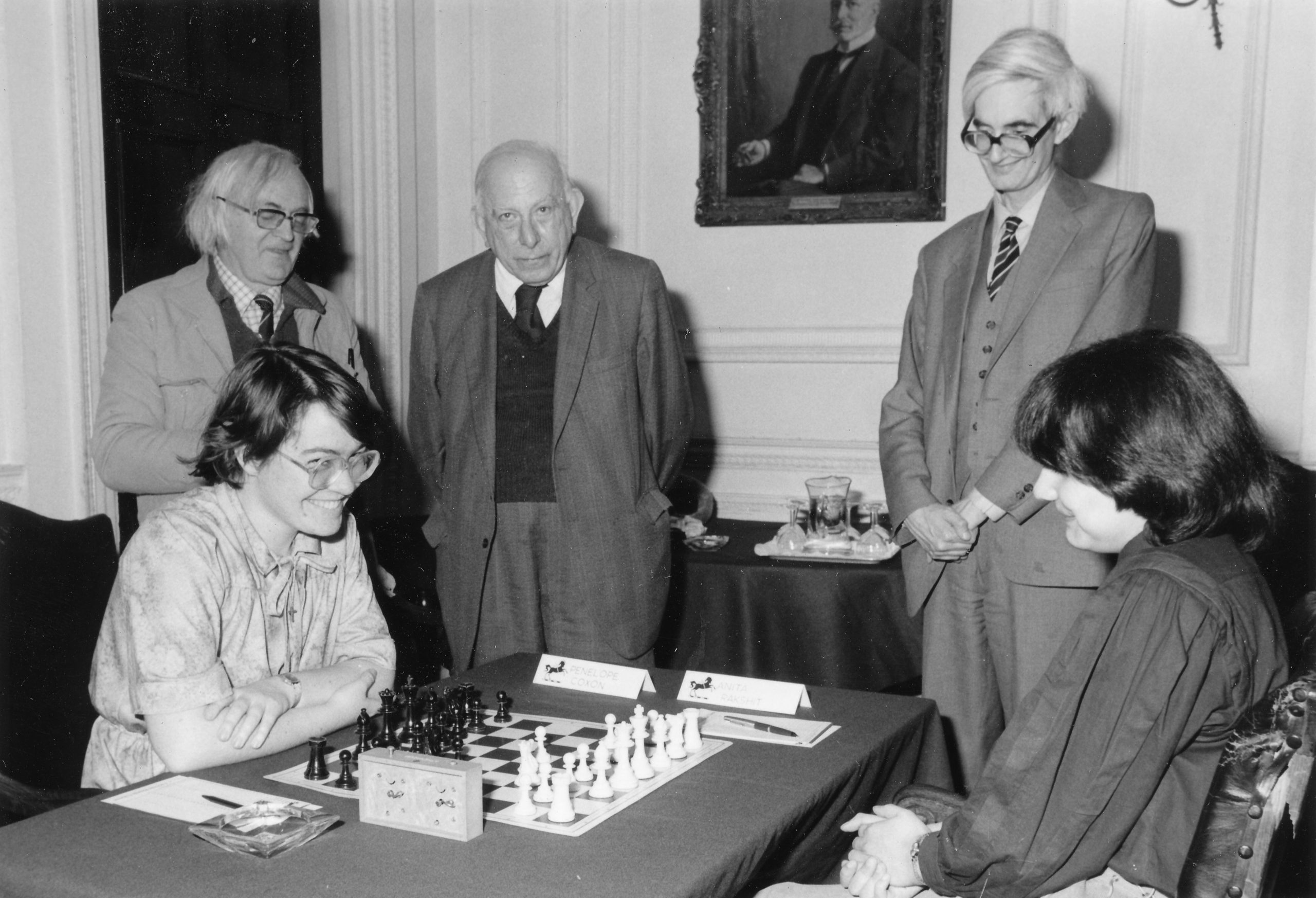
Bob Wade, Harry Golombek and Adrian Hollis observe Penny Coxon (Newnam) and Anita Rakshit (St. Hilda's) during the 1983 Varsity match sponsored by Lloyds Bank
Bob Wade, Harry Golombek and Adrian Hollis observe Penny Coxon (Newnham) and Anita Rakshit (St. Hilda’s) during the 1983 Varsity match sponsored by Lloyds Bank

Another opportunity came when the British Postal Chess Federation organised a tournament (1974-6) in memory of its former secretary RJ Potter.  This started inauspiciously for me with a heavy defeat at the hands of Grandmaster Endzelins of Australia., a country which has so far provided my least favourite opposition (not only is the postage extremely expensive, but my score to date is 0/2).
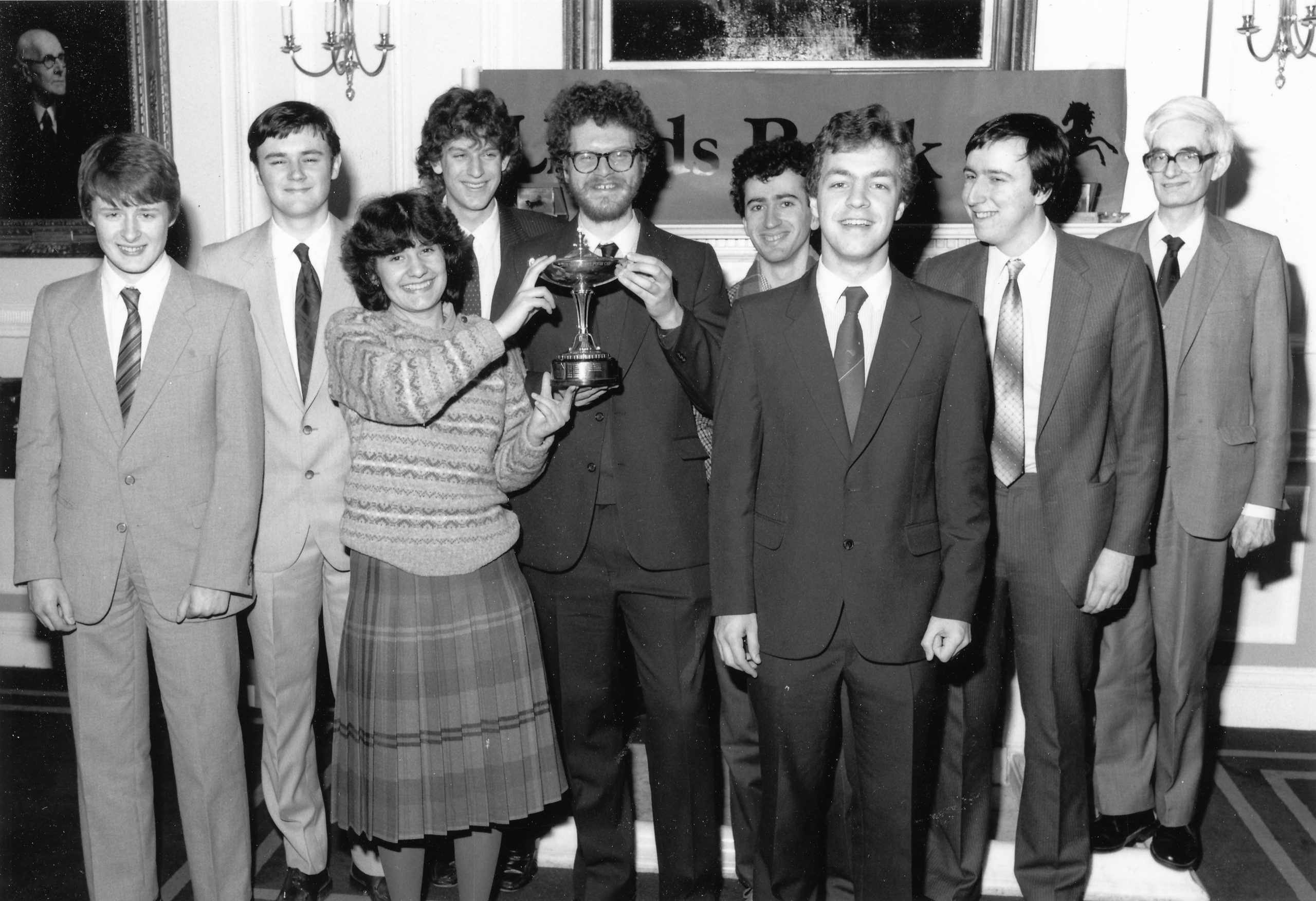
Adrian Hollis (far right) as Club President of the 1985 Oxford team of Peter Wells, Karl Bowden, Anita Rakshit, Kenny Shovel, IM Colin McNab, IM Jon Levitt, FM Neil Dickinson and FM John Hawksworth

From The Potter Memorial, Ken Messere, Chess (Sutton Coldfield), 1979 we have this potted biography from Ken Messere :
The Potter Memorial, Ken Messere, Chess (Sutton Coldfield), 1979

“Adrian Hollis is 36, was educated at Eton and Oxford, has written two books on the poet Ovid and is a Fellow and Tutor in Classics at Keble College, Oxford. He is a British Master at over the board chess and has been Champion of British Universities, West of England and East Scotland.

In 1964, he went to teach at St. Andrews University where his wife, Margaret, taught German. They were married and moved to Keble College in 1967 and now have two daughters. Jennifer is nearly five and Veronica is two.

Adrian began to concentrate on correspondence chess in 1964 and won the British Correspondence Chess Championship jointly in 1966 and outright in 1967 and 1971. He won the I.M. title in 1970 and his fine score of 6/9 on top board for Great Britain in the I.C.C.F. VIIth Correspondence Chess Olympiad Final contributed to the team’s winning the bronze medal in this event.”

and now back to Adrian’s British Chess article…

Thereafter my fortunes improved; one opponent accepted too trustingly some faulty analysis by Szabo in Informator (for a while it seemed that the Hungarian might earn me not one but two points). The East German Dr. Baumbach failed to find an improvement in a line with which I had been successful in the Seventh Olympiad Final.

Also, I had a win with the Black pieces against the Russian Kopylov. The result was a score of 9/12 (+8=2-2), which sufficed for the grandmaster title and first place half a point ahead of the Finn Kauranen.

Since then I have played quite well on second board behind Keith Richardson in the Eighth Olympiad Final (+5=7-0), and very badly indeed (scoring just about 50% in the Heilimo Memorial Tournament organised from Finland (I was much impressed by the strength of the Finnish players, most of whom I had not encountered before). Having twice narrowly failed, I would still like to qualify for the Final of the Individual World Championship. Of course life becomes increasingly busy, but the examples of Hugh Alexander and Graham Mitchell encourage me to believe that one can continue to play well at postal chess longer than over-the-board. So perhaps around the year 2000, when the children are grown up….”
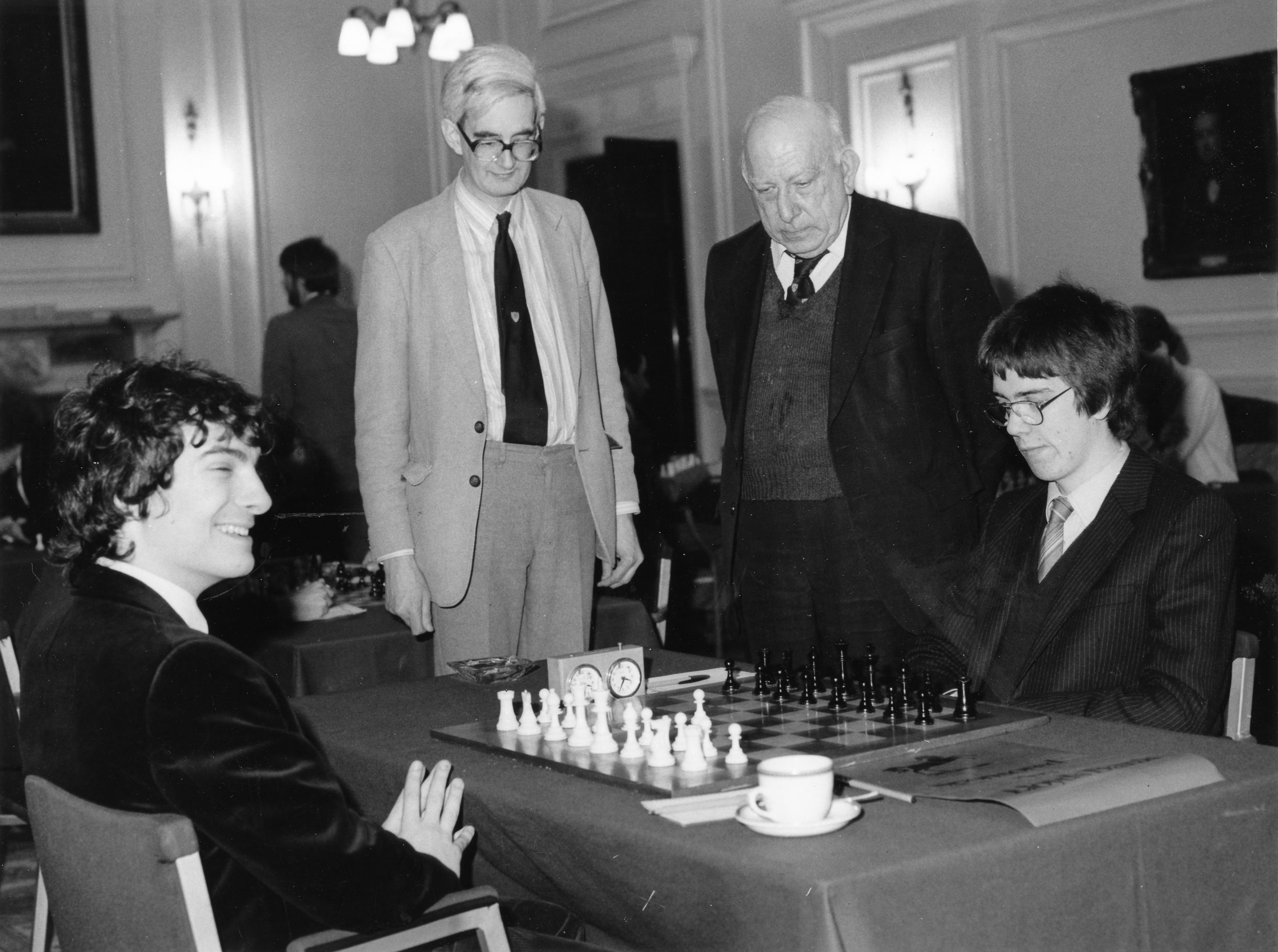
Adrian Hollis and Harry Golombek observer Andrew Dyson (Trinity) having played 1.d4 versus IM William Watson (Merton) during the 1984 Varsity match sponsored by Lloyds Bank

[pgn]
[Event “olm7 fin B1 corr”]
[Site “ICCF corr”]
[Date “1972.??.??”]
[Round “?”]
[White “Hollis, Adrian Swayne”]
[Black “Florian, Tibor”]
[Result “1-0”]
[ECO “D76”]
[Annotator “Averbakh/Hollis/Howell & BCN”]
[PlyCount “121”]
[EventDate “1972.??.??”]
[EventType “team (corr)”]
[EventRounds “9”]
[SourceTitle “Corr 2002”]
[Source “ChessBase”]
[SourceDate “2002.05.23”]
[SourceVersion “1”]
[SourceVersionDate “2002.05.23”]
[SourceQuality “1”]

{[%evp 0,121,18,26,36,-22,54,32,37,19,27,28,30,3,26,19,17,42,20,13,27,31,31,31,
19,24,27,11,47,61,50,85,90,77,66,63,67,54,73,53,40,43,55,36,46,65,45,46,49,49,
48,54,48,69,83,93,102,102,103,112,98,89,114,100,99,91,98,98,94,79,79,82,90,87,
91,85,91,82,78,76,96,101,96,75,100,91,92,103,118,118,118,118,118,118,121,139,
179,182,206,240,191,212,205,205,205,192,192,192,192,183,192,104,155,96,96,96,
100,527,537,28911,29983,29984,29985,29986]} 1. d4 Nf6 2. c4 g6 3. Nf3 Bg7 4. g3
d5 5. cxd5 Nxd5 6. Bg2 O-O ({ASH : It is rather more challenging for Black to
postpone castling, and to organise an immediate attack on White’s d-pawn with}
6… Nb6 7. Nc3 Nc6) 7. O-O Nb6 8. Nc3 Nc6 9. d5 Na5 ({ASH : I have never yet
found an opponent to accept the pawn with} 9… Bxc3 $6 {too risky to accept P}
10. dxc6 Bg7 11. Qc2 bxc6 12. Rd1 Bf5 13. Qb3 Qe8 14. Nd4 Bd7 15. Qc2 {BCN :
is a typical line.}) 10. Bf4 c6 11. dxc6 {ASH : Such are the subtleties of
transposition that, although occasionally played before, this line does not
appear in the Grunfeld books of Hartston or Richardson and Boyd.} Nxc6 ({
ASH : In Olympiad VIII Finals (1977) Dr. S. Aarseth (Norway) played against me
} 11… Qxd1 12. Rfxd1 Nxc6 13. Nd2 $1 Bf5 (13… Be6 {Hollis}) 14. Rac1 Rac8
15. Nde4 Nc4 16. b3 Na3 $6 (16… N4e5 {wastes two tempi}) 17. Nd5 Rfe8 (17…
Kh8 18. Nxe7 $1 Nxe7 19. Bd6) 18. Bg5 Kf8 (18… f6 $5 {although Hollis says
it “hardly appeals”}) 19. Nxe7 Nxe7 20. Nd6 b6 (20… Rxc1 21. Bxc1 {xNa3}) 21.
Nxc8 Bxc8 22. Bxe7+ Kxe7 23. Rc7+ Kf6 24. Bc6 Rf8 25. Rxa7 Nc2 26. Be4 $18 {
Hollis-Aarseth, corr-CCOL8 fin 1975-77}) 12. Qc1 e5 13. Be3 {13 Rd1 was theory
but why drive Black Q where she wants to go?} Nd4 {An outpost which cannot be
maintained.} 14. Rd1 Be6 15. Nxd4 exd4 16. Bxd4 Bxd4 17. e3 Bxe3 18. Qxe3 $14 {
[#] ASH : So White emerges with a small but clear advantage (better placed
pieces, pressure on the b-pawn and on the Black squares).} Qe7 19. Ne4 Bd5 20.
Qc5 Qxc5 21. Nxc5 Bxg2 22. Kxg2 Rac8 $6 {ASH : A difficult decision. Black
surrenders a pawn for some counterplay.} ({ASH : He might have had better
chances of a draw with the passive} 22… Rab8 {better drawing chance despite}
23. Nd7 Nxd7 24. Rxd7 {not sufficient to win}) 23. Nxb7 Rc2 24. b4 Re8 25. Rd8
Rxd8 26. Nxd8 Na4 27. a3 Rc3 28. Re1 Kf8 29. Re5 Rc7 30. h4 h6 31. Ra5 Nc3 32.
Ra6 {threat Nc6 forces play} Rd7 33. Nc6 Rd6 34. a4 Nxa4 35. Rxa4 Rxc6 36. Rxa7
Rc3 37. b5 Rb3 {See page 80 in Essential Chess Endings by Howell.} 38. Rb7 Kg7
39. b6 h5 {This move produces a model endgame as analysed by Hollis etc. [#]
cf ending in Portisch-Petrosian [INF 17-0568] after Portisch’s 47th move.
White plan is to play K to d-file, Black captures f-pawn but then K goes to
c-file and R cannot return behind passed P (only works with b-pawn)} ({Hollis
suspected Black should have played} 39… g5 $5 {not fearing h4-h5}) 40. Kf1 {
The general case of a draw is threatened but not overturned. Averbakh
“Comprehensive Chess Endings” vol 5 (Pergamon ed) analyses both the Hollis and
Portisch endgames (see pp291-292)} Rb2 41. Ke1 Kf6 {As White threatens to
support the advance of his passed P with his K, it is very important for Black
to seek counterplay on the other wing – Averbakh} 42. f3 Rb3 43. Kd2 Rxf3 44.
Kc2 {ASH : The idea is realized.} Rf5 $2 (44… Ke6 $2 45. Rc7 $1 (45. Re7+ $6
Kxe7 46. b7 Rf5 47. b8=Q {hard to see how White can win}) 45… Rf5 {see game})
(44… Rxg3 $6 45. Rc7 $1 {Howell wrongly attributes this move to Hollis but I
don’t find it in Hollis’ notes. Averbakh claims as his?} (45. Rxf7+ Kxf7 46. b7
{Hollis said this may win as Pg6 weak but Averbakh gives:} Rg2+ $1 47. Kc3 Rg3+
48. Kc4 Rg4+ 49. Kc5 Rf4 $1 50. b8=Q Rf5+ 51. Kd6 Kg7 $1 {“Black creates an
impregnable fortress” – Averbakh}) 45… Rg2+ $140 46. Kb3 Rg1 47. Kb2 Rg2+ 48.
Rc2 $1 Rg4 49. Rc3 Rxh4 50. Ka3 Re4 51. b7 Re8 52. Rc8 Re3+ 53. Kb2 Re2+ 54.
Kc3 Re3+ 55. Kc2 Re2+ 56. Kd3 Rb2 57. b8=Q Rxb8 58. Rxb8 Kf5 59. Rf8 f6 60. Ke3
g5 61. Kf3 $18 {Averbakh}) (44… Re3 $3 {is the right plan:} 45. Rc7 Re8 46.
b7 Rb8 {Hollis thought White could now win:} 47. Kd3 Kf5 $1 48. Rxf7+ Kg4 49.
Rf4+ $1 Kxg3 50. Rb4 {[#]} g5 $1 {The saving move not considered in Hollis
article, but later discovered by Russian analysts. Black creates a
countervailing passed pawn.} (50… Kh3 $2 51. Ke2 $1 Kg3 (51… Kg2 52. Rb3) (
51… Re8+ 52. Kf2 Rf8+ 53. Ke3 Rb8 54. Kf3 {as in main line}) 52. Ke3 Kh3 53.
Kf3 Rf8+ 54. Ke4 Rb8 55. Ke5 $18) 51. hxg5 h4 52. g6 (52. Ke2 h3 53. Kf1 h2 54.
Rb3+ Kf4 55. Kg2 Kxg5 $11) 52… h3 53. g7 h2 54. Rb1 Kg2 $11 {Averbakh}) 45.
Rc7 Rb5 46. b7 {“The outwardly active position of Black R prevents his K from
approaching the pawns” – Averbakh} Ke6 (46… Kf5 {according to Fine’s recipe
(idea 47 Rxf7+? Kg4) but..} 47. Kc3 $1 {threat 48 Rxf7+ Kg4 49 Rf4+ and 50 Rb4;
prevents …Kg4 by same idea} f6 $140 (47… Kg4 48. Rc4+ $1 Kxg3 49. Rb4 Rxb7
50. Rxb7 Kxh4 (50… f5 51. Rg7) 51. Rxf7 Kg3 52. Kd2 g5 53. Ke1 $18) 48. Kc4
Rb1 49. Rc5+ Kg4 50. Rb5) 47. Kc3 f6 48. Kc4 Rb1 49. Kc5 Kf5 50. Rd7 $1 $18 {
prevents Kg4 and threatens Rd5+ followed by either Rd6+ or Rd4+ and then
inserting R on b-file} Rc1+ 51. Kd6 Rb1 52. Kc7 Rc1+ 53. Kd8 Rb1 54. Kc8 Kg4
55. Rd6 g5 56. Rxf6 gxh4 57. gxh4 Kxh4 58. Rg6 $1 Kh3 59. Kc7 {According to
Howell, Black resigned here but Hollis gives further moves, see e.g. ‘British
Chess’ pp105-107} Rxb7+ 60. Kxb7 h4 61. Kc6 {ASH : It would be extremely rash
to claim this ending as a theoretical win. The outcome nearly always depends
on a single tempo, and may be swayed by secondary factors (e.g. it proved
vital in the above for White’s rook to be on the seventh rather than the
eighth). But at least this game can be added to the example for future
research. Perhaps this is the kind of problem that one day computers might be
able to solve.} 1-0
[/pgn]

From British Chess Magazine, Volume CXXXIII (133, 2013), Number 4 (April), pp.194-5 we have this obituary written by James Pratt :

Adrian Swayne Hollis (2 viii 1940 Bristol – 26 ii 2013 Wells), British Master and Correspondence Grandmaster (1976), three times British Correspondence Champion, has died. He played most of his OTB chess as a young man, finishing seventh equal at the British Aberystwyth, 1961, when he beat, amongst others, A.R.B. Thomas and former champion, Alan Phillips. He gave future champion, Jonathan Penrose, a tough fight in the last round before conceding the half-point. He played in the Hastings Premier, 1962/3 and emerged with a plus score in the Anglo-Dutch matches. He was an occasional reviewer for BCM.
From the 1985 Varsity Match : Laura Cohen (Newnham), Brian Reilly (BCM), Bill Hartston (Cambridge), Adrian Hollis (Oxford), Anita Rakshit (St. Hilda's), Leonard Barden (The Guardian etc) and Bob Wade (BCF)
From the 1985 Varsity Match : Laura Cohen (Newnham), Brian Reilly (BCM), Bill Hartston (Cambridge), Adrian Hollis (Oxford), Anita Rakshit (St. Hilda’s), Leonard Barden (The Guardian etc) and Bob Wade (BCF)

It was, of course, in the realm of postal player that he shone most brightly!

In 1966 we see him playing board two for England, below Slade Milan, and, two years later, Adrian scored 9/12 in a World Postal Qualifier, narrowly missing a place in the final. In 1971 he won the British Correspondence Championship, easily outdistancing a tough field. He played top board for England in the 1972-7 Olympiad. In 1974-6 he won the Reg Potter Memorial. In the ninth Olympiad – 1982-5 – Adrian Hollis was undefeated on board two. And England took the Gold Medal!

[pgn]
[Event “Alekhine mem-A corr9196”]
[Site “corr”]
[Date “1991.??.??”]
[Round “?”]
[White “Gipslis, Aivars P”]
[Black “Hollis, Adrian Swayne”]
[Result “0-1”]
[ECO “B81”]
[Annotator “Hawkes”]
[PlyCount “64”]
[EventDate “1991.??.??”]
[EventType “tourn (corr)”]
[EventRounds “12”]
[SourceTitle “Corr Nr. 1”]
[Source “ChessBase”]
[SourceDate “1997.09.01”]
[SourceVersion “2”]
[SourceVersionDate “2000.04.19”]
[SourceQuality “1”]

{[%evp 0,64,32,37,46,50,80,80,71,47,43,38,82,21,81,78,77,54,60,63,69,68,77,41,
27,22,70,6,6,3,12,33,18,-2,3,-47,-62,-45,-59,-59,-70,-53,-53,-108,-27,-27,-1,
-116,-143,-148,-88,-204,-180,-252,-271,-247,-199,-231,-468,-531,-562,-531,-638,
-660,-627,-704,-510]} 1. e4 c5 2. Nf3 d6 3. d4 cxd4 4. Nxd4 Nf6 5. Nc3 e6 6. g4
a6 (6… Nc6 7. g5 Nd7 8. Be3 Nde5 9. Be2 a6 10. f4 Nxd4 11. Qxd4 Nc6 12. Qd2
b5 13. Bf3 Qa5 14. O-O Be7 15. Qf2 Rb8 16. Ne2 O-O 17. Bg2 Re8 18. c3 Bd7 19.
Rfd1 Qd8 20. Rd2 Bf8 21. Rad1 $14 {Haag-Penrose, 9 Olympiad}) (6… Be7 7. g5
Nfd7 8. Be3 Nc6 9. Rg1 Nb6 10. Qd2 O-O 11. f4 Nxd4 12. Bxd4 e5 13. Be3 d5 14.
fxe5 Bb4 15. O-O-O Be6 16. Rg3 Na4 17. Bd4 Bxc3 18. Bxc3 Nxc3 19. Rxc3 dxe4 20.
Qf4 Qb6 21. Qxe4 Rac8 22. Rxc8 Rxc8 23. Kb1 g6 24. Bd3 $6 Rd8 $1 {0-1 (43)
Palciauskas-Bang, Axelson mem.}) 7. g5 Nfd7 8. Bg2 (8. Be3 b5 9. a3 Bb7 10. h4
Be7 11. Qd2 Nc6 12. f4 h6 13. Bg2 hxg5 14. hxg5 Rxh1+ 15. Bxh1 Nxd4 16. Qxd4 e5
17. Qd2 exf4 18. Bxf4 Ne5 19. O-O-O Nc4 20. Qg2 Qa5 21. Nd5 b4 $1 {1/2-1/2 (44)
Franzen-Hollis, 10 Olympiad bd.2}) (8. h4 b5 9. a3 Nb6 10. Be3 N8d7 11. h5 Bb7
12. Rh3 $1 Ne5 13. g6 Nbc4 $2 14. Bxc4 Nxc4 15. gxf7+ Kxf7 16. Qg4 Qe7 $2 (
16… Qd7) 17. Bg5 Qd7 18. Nd5 $1 Ra7 19. Rf3+ Ke8 20. Nc7+ $1 {1-0
Kauranen-Estrin, 10 world ch. final}) 8… b5 (8… Nc6 9. f4 h6 10. h4 hxg5
11. hxg5 Rxh1+ 12. Bxh1 Qb6 13. Nf3 g6 14. Qd2 Qc7 15. b3 b5 16. Bb2 Bb7 17.
O-O-O O-O-O 18. Nh2 Nb6 19. Ng4 d5 20. e5 d4 21. Ne4 Nd5 22. Qf2 Qa5 23. Nd6+
Bxd6 24. Bxd5 Bc5 $1 {1/2-1/2 Khasin-Walter, 8 world ch. final}) 9. f4 b4 10.
Nce2 Bb7 11. h4 Nc5 12. Ng3 g6 13. b3 Bg7 14. Bb2 O-O 15. Qd2 Qb6 16. O-O-O a5
17. Nde2 Bxb2+ 18. Kxb2 a4 19. Nc1 axb3 20. cxb3 Nc6 21. h5 Qa5 22. Kb1 {[#]}
Na7 $1 23. Qb2 Nb5 24. Ka1 Nc3 25. Rd2 Ra7 26. Rh2 Rfa8 27. Bf3 Qc7 28. Rc2
Nxa2 29. Nxa2 Rxa2+ 30. Qxa2 Rxa2+ 31. Kxa2 Qa5+ 32. Kb1 Qa3 {Hawkes} (32…
Nxb3 $4 33. Ra2 Qc5 34. Rhc2 Qg1+ 35. Kb2 Qxg3 $4 36. Ra8+ $1 Bxa8 37. Rc8+ Kg7
38. h6# {(Hollis)}) 0-1
[/pgn]

Obituary from Raymond Keene in The Specatator

Obituary from Kenneth Shelton in The Independent

Obituary from ? in The Times

Obituary from John Rhodes in The Chess Improver

Obituary from Bob Jones of Keverel Chess.

Wikipedia article.