Minor Pieces 2: Alexander Sich

It’s Monday 28 August 1871. Join me at Simpson’s Divan in the Strand, where, after a satisfying lunch of roast beef, accompanied by a bottle of their finest claret, followed by a glass of brandy and a Havana cigar, we adjourn to the chess room to watch the great Wilhelm Steinitz in action.

He introduces us to his friend Mr Sich, who is, he informs us, a wine merchant. The two gentlemen are engaged in an exciting battle. At one point Herr Steinitz is a rook ahead but his king seems to be in trouble. He manages to survive and win the game, but could Mr Sich have done better?

[pgn]

[Event “Casual game”]
[Site “London ENG”]
[Date “1871.08.28”]
[Round “?”]
[White “Steinitz, Wilhelm”]
[Black “Sich, Alexander”]
[Result “1-0”]
[ECO “C30”]
[Annotator “Richard James”]
[PlyCount “79”]
[EventDate “1871.??.??”]
[SourceVersionDate “2020.10.20”]

1. e4 e5 2. Nc3 Bc5 3. f4 d6 4. Nf3 Nf6 5. Bc4 c6 6. d3 Nbd7 7. Qe2 b5 8. Bb3
a5 9. a4 b4 10. Nd1 Qb6 11. Ne3 exf4 12. Nc4 Qc7 13. d4 O-O 14. dxc5 $5 (14.
Bxf4 $1) 14… d5 15. Nb6 $6 (15. Nd6) 15… Ba6 16. Nxa8 Rxa8 17. Qd2 $2 (17.
Qf2) 17… Re8 18. Kd1 Nxe4 19. Qd4 Ndxc5 20. Re1 Nxb3 21. cxb3 c5 22. Qd2 c4
23. Qc2 g5 24. Nxg5 Qd7 25. Nxe4 dxe4+ 26. Qd2 Qg4+ 27. Qe2 f3 (27… Rd8+ $1
28. Bd2 Rxd2+ $1 29. Kxd2 c3+ $1 30. bxc3 e3+ 31. Kd1 Qd7+ 32. Kc2 Bxe2 33.
Rxe2 Qf5+ 34. Kb2 bxc3+ 35. Ka3 Qd3) 28. gxf3 Rd8+ 29. Bd2 exf3 30. Qf2 c3 31.
bxc3 bxc3 32. Ra2 Be2+ $2 (32… Qb4 33. Kc1 cxd2+ 34. Rxd2 Qxd2+ 35. Qxd2 Rxd2
36. Kxd2 f2) 33. Kc1 cxd2+ 34. Rxd2 Rc8+ $2 (34… Rxd2 35. Kxd2 Qf4+ 36. Kc2
Qe4+ 37. Kb2 Qf4 38. Rxe2 Qf6+ 39. Ka2 fxe2 40. Qxf6 e1=Q) 35. Kb2 Qb4 $2 (
35… Kf8) 36. Rg1+ Kf8 37. Qe3 Qh4 38. Qe5 Qh3 39. Qd6+ Ke8 40. Rg8# 1-0

[/pgn]

I reach into my pocket. “Look, Herr Steinitz! I’m a time traveller from 150 years into the future. I can press a few buttons on this small machine and talk to anyone in the world. I can press a few more buttons, enter the moves of the game you just played and show you both where you went wrong.”

“You might have been impressed by Ajeeb, but my machine is a million times better. You see, Mr Sich, you might have played your rook to queen one on move 28, announcing check to Herr Steinitz’s king. You were still winning, though, but on move 32, if you’d played your queen to queen’s knight five you could then have exchanged everything off on queen seven and advanced your king’s bishop’s pawn to the end of the board. Two moves later, you could still have drawn by exchanging rooks, but instead you left your own king defenceless.”

But now it’s time to bid our farewells and leave: we have a journey to make. Our destination is Hammersmith. We’re excited by the prospect of travelling on the Underground Railway, so head for Charing Cross Station. Just eight weeks earlier, following a banquet attended by Mr Gladstone two days previously, the District Railway started running trains round part of what would become the Inner Circle. In a few years time we’ll be able to take the train directly to Hammersmith, and the line will later be extended to exotic destinations such as Richmond and Ealing. 90 years later a schoolboy playing his friends on the train between Ravenscourt Park and Richmond will develop a lifelong chess obsession, but that’s another story for another time.

For now, we must take the underground train as far as Paddington, and change onto the Hammersmith and City Railway. When we reach our destination we spot a pub called the George just round the corner: it was rebuilt in 1911 and is now part of the Belushi’s chain. We could stop for a drink there, or in several other pubs nearby, but instead we’ll take a stroll down King Street.

After half a mile or so we’ll pass what is now Hammersmith Town Hall, which we visited in our last journey, and notice, in 2021, that it’s being redeveloped. If we look across the street we’ll see Dalling Road, and the building which, we hope, will soon be the site of a new Mind Sports Centre.

Then we pass another pub. This was the Hampshire Hog, but is now just the Hampshire, serving Indian cuisine as well as beers, wines and spirits. Mine’s a pint of London Pride: what are you having?

Why have I brought you here? Because this pub, like the George and many others in the area, was owned by the Sich family. The brewery was purchased by one John Sich in 1790 and later run by his sons, John junior and Henry.  The two brothers both had numerous children, many of whom were involved in the family business.

But let’s stop there. News has just come in that Herr Steinitz and Mr A Sich played again two days after the game we witnessed. Again, Herr Steinitz survived a totally lost position to win, in an encounter which was even more exciting that their previous game, with a lot of bamboozling tactics. Probably worth a separate article, I think.

[pgn]

[Event “Casual game”]
[Site “London ENG”]
[Date “1871.08.30”]
[Round “?”]
[White “Steinitz, Wilhelm”]
[Black “Sich, Alexander”]
[Result “1-0”]
[ECO “C30”]
[Annotator “Richard James”]
[PlyCount “121”]
[EventDate “1871.??.??”]
[SourceVersionDate “2020.10.20”]

1. e4 e5 2. Nc3 Bc5 3. f4 d6 4. Nf3 Nf6 5. Bc4 c6 6. d3 Nbd7 7. Ng5 O-O 8. f5
b5 9. Bb3 a5 10. a3 Qb6 11. h4 Ba6 12. Qf3 a4 13. Ba2 b4 14. Nxa4 Qb5 15. axb4
Bxb4+ 16. c3 d5 17. Bb1 Nc5 18. Nxc5 Bxc5 19. Bc2 Bb7 20. Rb1 Ra2 21. Nh3 h5
22. Nf2 Rd8 23. Bg5 Bxf2+ 24. Kxf2 dxe4 (24… Ng4+ $1 25. Kg3 f6) 25. dxe4
Rxb2 26. Kg3 Rd6 27. Rhd1 (27. Bxf6 $1 gxf6 28. Qxh5) 27… Rxd1 28. Rxd1 (28.
Rxb2 Qxb2 29. Bxd1) 28… Ng4 29. Rd2 Qb6 (29… Qc5 $1) 30. Qd1 (30. Qd3 $1)
30… f6 $2 (30… Ba6) 31. Rd8+ Kh7 32. Qd7 Qc5 33. Qe8 (33. Qf7 $1 Qxc3+ 34.
Rd3 Qe1+ 35. Kh3 Nf2+ (35… Qh1+ 36. Kg3 Qe1+) 36. Kg3 Nxd3+ 37. Kh2 Rxc2 (
37… Nf4 38. Bxf6) 38. Qxh5+ Kg8 39. Qe8+ Kh7) 33… Qxc3+ 34. Rd3 (34. Bd3
Qe1+ 35. Kh3 Qh1+ 36. Kg3 Qxg2#) 34… Qe1+ 35. Kh3 Nf2+ 36. Kg3 Nxd3+ 37. Kh3
(37. Kh2 Nf4 38. Bxf4 (38. Bxf6 Qf2) 38… Qxh4+ 39. Kg1 Qg4) 37… Nf2+ (37…
Qh1+ 38. Kg3 Nf4 39. Bxf4 exf4+ 40. Kxf4 Qxh4+ 41. Kf3 Qg4+ 42. Ke3 Qg3+ 43.
Kd2 Qf2+ 44. Kc3 Qxc2+ 45. Kd4 c5+ 46. Ke3 Rb3+ 47. Kf4 Qf2#) 38. Kg3 (38. Kh2
Qb4) 38… Ng4+ (38… Qc3+ 39. Bd3 Qxd3+ 40. Be3 Qxe3+ 41. Kh2 Ng4+ 42. Kh1
Rb1#) 39. Kh3 Qc3+ 40. g3 Nf2+ $2 (40… Qc5 41. Qxh5+ Kg8 42. Qe8+ Qf8) 41.
Kg2 Qc5 42. Bxf6 gxf6 43. Qg6+ Kh8 44. Qxf6+ Kg8 45. Qg6+ Kf8 46. f6 Ng4 47.
Qg7+ Ke8 48. f7+ Kd8 49. f8=Q+ Qxf8 50. Qxf8+ Kc7 51. Qf7+ Kb6 $2 (51… Kb8)
52. Kg1 $1 Ba6 53. Qxh5 Be2 54. Qf7 Kc5 55. Qa7+ Kc4 56. Qa4+ Kc3 57. Bd1 Bxd1
58. Qxd1 Rg2+ 59. Kxg2 Ne3+ 60. Kf3 Nxd1 61. h5 1-0

[/pgn]

You’ll notice that Mr S missed a simple mate in 5 on move 38 before blundering away first the win and then the draw. Still impressive, though, that he could achieve winning positions in level play against the world’s strongest active player.

What else do we know about him? He was very active in the St James’s Club from 1860 onwards, where he was a second category player, receiving odds from Loewenthal and Valentine Green, but conceding odds to weaker players. We’ll meet at least one of his opponents, EE Humphreys, in a later article. He played published games on level terms against Steinitz in 1871, as we’ve seen, and against Loewenthal in 1873 and 1874, before disappearing from the chess scene. Tim Harding comments that his forename is unknown, but perhaps we can find out. Let’s continue our walk.

Back in the 1960s, when such things were allowed, the Hampshire Hog was the place where teachers from nearby Latymer Upper School would take their pupils for a drink. We’re now going to head away from King Street towards the river. Not so easy to cross the Great West Road, but we could perhaps cheat (as I’m an alumnus they might let me in) by following in the distinguished footsteps of the likes of GM Michael Stean and IM David Goodman, taking the school’s Secret Subway to the dining hall and the Prep department, and then out onto Upper Mall.

We’re now at the start of the notorious Round the River Run (or, in my case, walk) which takes you along the river, over Barnes Railway Bridge, along the towpath on the other side, across Hammersmith Bridge and back to where you started. We won’t do that now, not least because Hammersmith Bridge is currently closed for repairs, but will take a gentle walk by the river in the direction of Chiswick.

Passing the Old Ship, we’ll stop off at the Black Lion. Thanks for offering: I’ll have another pint of Pride. It would be rude not to, given how close we are to where it’s brewed. Above one of the corner tables is a portrait of local resident AP Herbert, whose wife was regularly seen at the Hammersmith Town Hall chess tournaments.

While we’re here, news comes in that Herr Steinitz and Mr A Sich have played another game.

[pgn]

[Event “Casual game”]
[Site “London ENG”]
[Date “1871.09.07”]
[Round “?”]
[White “Sich, Alexander”]
[Black “Steinitz, Wilhelm”]
[Result “0-1”]
[ECO “C60”]
[Annotator “Richard James”]
[PlyCount “72”]
[EventDate “1871.??.??”]
[SourceVersionDate “2020.10.20”]

1. e4 e5 2. Nf3 Nc6 3. Bb5 Nge7 4. Nc3 g6 5. d3 Bg7 6. O-O O-O 7. Ng5 $6 h6 8.
Nf3 d6 9. h3 f5 10. exf5 Nxf5 11. Nd5 Ncd4 12. Nxd4 Nxd4 13. Bc4 Kh7 14. c3 Ne6
15. Ne3 Nf4 16. Ng4 h5 17. Nh2 d5 18. Bb3 c6 19. Bxf4 Rxf4 20. Qe2 Qd6 21. Nf3
Bd7 22. Rae1 Re8 23. g3 Rxf3 24. Qxf3 Bxh3 25. Kh2 Rf8 26. Qe2 Qd7 $5 27. Rg1
Bg4 28. Qe3 (28. Qf1 $1) 28… Rf3 29. Qxa7 Rxd3 30. a4 Rd2 31. Bd1 d4 (31…
e4 $1) 32. Bxg4 Qxg4 33. Rg2 e4 34. cxd4 $2 (34. Qxb7 Qf3 35. cxd4 h4 36. gxh4
Rxf2 37. Reg1 Rxg2+ 38. Rxg2 Qf4+ 39. Kg1 Qe3+ 40. Kh2 Qf4+) 34… h4 35. gxh4
Qxh4+ 36. Kg1 e3 0-1

[/pgn]

I’m not sure what 7. Ng5 was all about: my pupils get their knuckles rapped if they play moves like that. Steinitz chose to go for the attack rather than regain the exchange on move 26, but Sich missed a draw on move 34.

It’s time to continue our walk, passing Fuller’s (London Pride) Brewery and soon reaching St Nicholas’s Church. Turning up Church Street towards the busy Hogarth Roundabout, a stark contrast to the bucolic views of the Thames, you’ll see a tower on your right with the words LAMB BREWERY. This was the name of the Sich family concern: little other than the tower remains.

But we still haven’t identified A Sich. Let’s return to John and Henry. John had a son named Alexander who was born in 1837, while, two years later, Henry’s son Arthur John was born. So we have two gentlemen named A Sich who were of the right age. As he was active from 1860 onwards, the older cousin seems more likely. A better reason is that, in the days when people were referred to by their full initials and surnames, the chess player was always ‘A. Sich’, never ‘A.J. Sich’. We also know from Steinitz  that he was a wine merchant. As it happens, 1871 was a census year, so let’s travel back 150 years again and join the enumerator.

Here, in Church Street, where we’re standing now, is Arthur John, a brewer, with his wife and children. And just round the corner, in Sunbury House, The Mall, Chiswick, is Alexander, a wine merchant, with his wife (who just happened to be Arthur’s sister Helen: nothing like keeping it in the family) and children. This seems confirmation that it was Alex, not Artie, who played chess against Steinitz. We know quite a lot more about them as well. Al was very much concerned with municipal affairs throughout his life, while Art was involved with the army volunteers. Unlike his cousin, he seemed to prefer real soldiers to wooden soldiers.

Time for a final drink, I think. While we’re at the Hogarth Roundabout we could choose the George & Devonshire, which has probably always been a Fuller’s pub, but, to continue the theme of our pub crawl, we might prefer to walk up towards Turnham Green to visit another former Sich pub, the Lamb (formerly the Barley Mow, but its name was changed to that of the original brewery).

While we’re there, there’s another game to look at. Steinitz is White again and plays the King’s Gambit. Again, Sich is doing well at one point, but misdefends, allowing a neat sacrificial finish.

[pgn]

[Event “Casual game”]
[Site “London ENG”]
[Date “1871.09.19”]
[Round “?”]
[White “Steinitz, Wilhelm”]
[Black “Sich, Alexander”]
[Result “1-0”]
[ECO “C39”]
[Annotator “Richard James”]
[PlyCount “51”]
[EventDate “1871.??.??”]
[SourceVersionDate “2020.10.20”]

1. e4 e5 2. f4 exf4 3. Nf3 g5 4. h4 g4 5. Ne5 Bg7 6. d4 Nf6 7. Bc4 O-O 8. Nc3
d6 9. Nxf7 Rxf7 10. Bxf7+ Kxf7 11. Bxf4 Nh5 $6 12. Bg5 Qe8 13. O-O+ Kg8 14. Nd5
Na6 15. a3 $6 (15. Qd2) 15… c6 $6 16. Ne7+ Kh8 17. Nxc8 Rxc8 18. Qxg4 $6 c5
$2 (18… Bxd4+ 19. Kh2 Nc5) 19. d5 Rc7 20. e5 Bxe5 21. Rae1 Rg7 22. Rxe5 $1
dxe5 23. Qxh5 $1 Nc7 24. d6 Rxg5 25. Qxe8+ Nxe8 26. d7 1-0

[/pgn]

We could, I suppose, visit the Watermans Arms in Brentford, which comes with a recommendation from food critic and West London Chess Club secretary Andy Hayler. Close by is the Watermans Arts Centre, which in turn is across the road from the rather wonderful Musical Museum and a short walk from the London Museum of Water and Steam, which itself is just across the railway line from the new Brentford Stadium. Will they be seeing Premiership football there next season, I wonder?

We could also travel further west to the Bell in Hounslow. Back in the 1980s or thereabouts Hounslow Chess Club met nearby, and the Bell was often the venue for our post mortems after we played them in the Thames Valley League. There are plenty of other former Sich pubs still around as well: see the link below.

Before I leave you, there’s one further reference connecting Alexander Sich to the game of chess.

In 1903 the Chiswick Library Committee, of which Alex was a member, decided to allow their committee room to be used as a games room. Chess, draughts and dominoes were provided so that the local louts could avoid trouble by playing some nice quiet games.

Unfortunately, it didn’t work out as planned. The boys resorted to games of their own: ‘coddam’, noisy larking, horse-play and pitching cinders. The good citizens of Chiswick were not at all happy, and, after a few weeks, the club was closed down. Alexander Sich said that he did not regret that they had made the experiment. It could hardly have been more different from the pre-lockdown chess group at Whitton Library. There’s a moral there somewhere,  but I’m not sure what it is. (Coddam, since you asked, is ‘an old game, usually with three players on each side, based around guessing which of the players’ hands is hiding a coin or button.’)

Meanwhile, the Sich Brewery hit problems during the First World War and was sold off in 1920. Their neighbour, Fuller’s, however, survives and thrives to this day.

This is the second of a series of articles about Steinitz’s English amateur opponents. The next instalment will be coming shortly.

Sources:

The chess games of A Sich

The Lamb Brewery | Brentford & Chiswick Local History Society (brentfordandchiswicklhs.org.uk)

Metropolitan Railway – Wikipedia

Genealogy, Family Trees and Family History Records online – Ancestry®
Dashboard | findmypast.co.uk


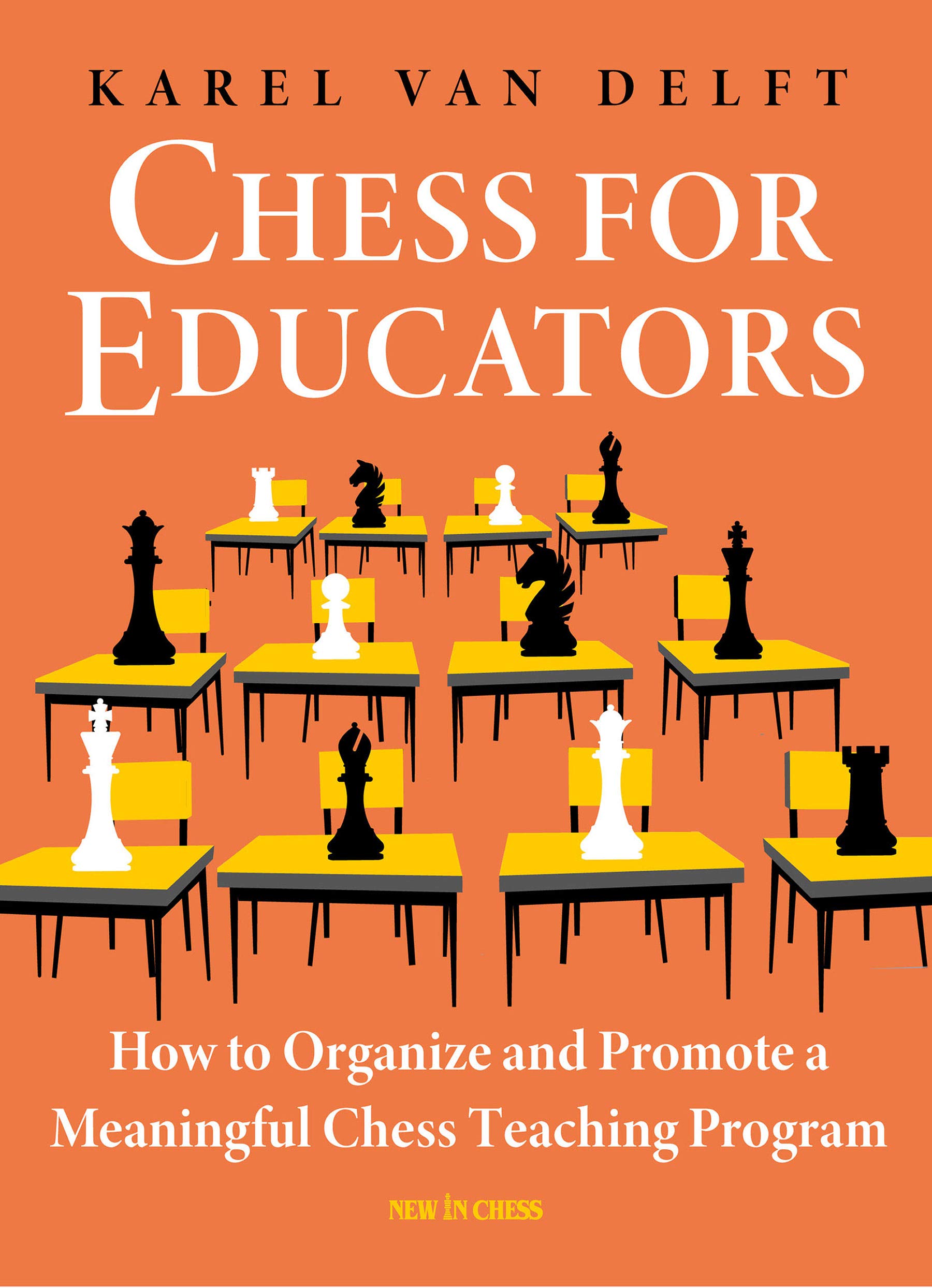
Chess for Educators : How to Organize and Promote a Meaningful Chess Teaching Program

Chess for Educators : Karel van Delft

Chess for Educators, Karel van Delft, New in Chess, March 2021, ISBN: 9789056919429

From the book’s rear cover :

“Chess has the rare quality that children love it despite the fact that it is good for them. Playing chess is just like life: you have to make plans, take decisions, be creative, deal with challenges, handle disappointments, interact with others and evaluate your actions.

Psychologist and chess teacher Karel van Delft has spent a large part of his life studying the benefits of chess in education. In this guide he provides access to the underlying scientific research and presents the didactical methods of how to effectively apply these findings in practice.

Van Delft has created a dependable toolkit for teachers and scholastic chess organizers. What can teachers do to improve their instruction? How (un)important is talent? How do you support a special needs group? How do you deal with parents? And with school authorities? What are the best selling points of a chess program? Boys and girls, does it make a difference? How do ‘chess in schools’ programs fare in different countries?

This is not a book on chess rules, with lots of moves and diagrams, but it points the way to where good technical chess improvement content can be found. Van Delft offers a wealth of practical advice on how to launch and present a chess program and how to apply the most effective didactics in order for kids to build critical life skills through learning chess.”

Karel van Delft
Karel van Delft

“Karel van Delft is a Dutch chess teacher and chess organizer. He holds a Master’s degree in Psychology of the University of Amsterdam and has lectured and published widely on the subject of the benefits of chess in education.”


Chess education is an important subject which has been much discussed over the past decade or more, but, up to now, it hasn’t been the topic of many books, at least in the English language.

Karel van Delft is ideally qualified to write this book. He’s been teaching chess very successfully at all levels for many years and will be known to many of us who have attended the London Chess Conference. His son, Merijn, is an IM whose recent book was favourably reviewed on this site. He generously mentions me twice within these pages.

For whom is the book written? Although there’s very little chess and very few diagrams, there’s an assumption that readers know something about the game and are either already chess teachers, or are interested in teaching chess to young children. For the most part, we’re looking, then, at chess in primary schools, or for children of primary school age.

A couple of quotes from the Introduction:

Chess is a playground for the brain. Children enjoy playing it, and it poses fascinating challenges to their brain. But the game also widens their horizon.

And:

Chess can contribute to the cognitive, social, emotional and meta-cognitive development of children. For children with special needs and other groups, chess can also be a means for empowerment. It helps them to develop self-respect, and to get a grip on themselves and their environment. 

In other words, especially for children, chess has many benefits. What are these exactly, and how can chess have a positive effect on the education of children? That is what we examine in this book. We will discuss didactics and teaching methods, the organization of school clubs, scientific research on the benefits of chess education, and chess as a means of emancipation within the scope of school chess and special needs groups. 

Chapter 1 is a very brief tour round School Chess Worldwide, with, as you’d expect, a mention for Chess in Schools and Communities.

Chapter 2 is an important look at Didactics in School Chess. Van Delft recommends that lessons should combine instruction and playing, and take place within groups of children at the same level, with, ideally, a maximum of 12 children in each group. If, however, chess is on the curriculum, the classes will be larger and not all children will be motivated.

Chapter 3 is perhaps more controversial: Pre-School Chess, which, by its definition, applies to chess at home rather than at school. We hear about grandmasters – the Polgar sisters and others – who started chess very young. Various ways of encouraging children from the age of 2 upwards to take an interest in chess are suggested, for instance getting them to watch chess videos or a chess engine playing itself. You may well have reservations about whether 2-year-olds should be encouraged to use screens in this way, or, indeed, to use screens at all.

The next few chapters provide checklists for organising school chess clubs and youth tournaments, and, critically, the role of parents is also discussed. The School Chess Club chapter is very revealing: it’s certainly completely different from most school chess clubs I’ve seen, which involve a visiting tutor coming in to teach 20-30 children of different ages and playing strengths, with minimal support from the school. If you showed this to most primary schools here in the UK they’d be horrified: the teachers are under far too much pressure elsewhere to deal with anything like this. On the other hand it’s perfect for anyone wanting to start a professionally run junior chess club within their community.

Chapter 7 is worthwhile for all readers, looking at Fernando Moreno’s work in teaching life skills through chess.

Chapter 8, again, is invaluable, talking about chess, intelligence and teaching highly gifted children. Here, van Delft differentiates between ‘top down teaching’, which is favoured by schools in the Netherlands, and ‘bottom up teaching’, of which the Steps Method is, at least in part, an example. There’s a lot of food for thought for all chess teachers here.

The following chapters look at how to encourage specific categories of chess player: those with visual or hearing impairments, with autism or dyslexia, girls and women, and then, in a catch-all chapter, those with ADHD, Down Syndrome, long-term illnesses or handicaps, and depression. All of this is of vital importance, and should be considered by anyone involved in chess education or administration.

We’re now onto Chapter 15, Class Management, especially useful for those, like me, who struggle in this area. The author provides several pages of helpful advice for chess tutors who may not be trained teachers.

Chapters 16 to 20 cover various aspects of chess instruction, most notably a description of research into the possible academic benefits, with descriptions of the methodology and results of various studies around the world along with constructive criticisms of current research and suggestions for future studies. As you would expect, he uses the work of Fernand Gobet and his colleagues here, but reaches a rather different conclusion.

Gobet is, broadly speaking, critical of the movement to promote chess on the curriculum for it’s perceived academic benefits: “In my view, chess is a great game providing much excitement, enjoyment and beauty on its own. There is no need to justify its practice by alluding to external benefits.”. (The Psychology of Chess Routledge 2019) I agree with Gobet here, but I’m not sure that van Delft would share my views. If you want to make chess more popular by promoting it in schools, though, you’ll probably need to convince them of the potential academic advantages.

Finally, we have Chapter 21, the best part of 120 pages, devoted to an Alphabet of Methods and Teaching Tips for Chess Education. There are dozens of ideas here, some just of one sentence, others taking several pages. No one will want to use all these ideas, but all readers will find something to enhance and enliven their chess tuition.

You may have gathered that this book doesn’t really provide a coherent narrative, but that is of little importance, and I know from personal experience how difficult it is to write on this subject in a logical and structured way.

You should be aware that this book is written from a Dutch perspective. Although you might think our two countries are culturally similar, in fact there are many differences. If you’re interested in this sort of thing you might start by reading this book. Dutch schools are very different from British schools. The Dutch, in general have (and have had since Euwe became World Champion in 1935) a rather more positive view of chess than we do. Dutch chess clubs are also much more suitable for children than our clubs with their evening meetings in less than adequate venues. So things that work in the Netherlands might not work in the UK or elsewhere. If you’re writing for a UK audience you might also want to provide links to, for example, the Delancey UK Chess Challenge and the English Primary Schools Chess Association as well as the ECF.

There are also a few translation problems, although the meaning is usually clear. Page 75, for example, uses the word ‘retardedness’, in relation to autism, which many teachers, parents and advocates here in the UK would consider both inappropriate and offensive. I appreciate that the economics of chess publishing make it impractical, but in an ideal world the book would have been checked through by a native English speaker with appropriate subject knowledge.

There are also many involved in various aspects of childhood who are concerned about the increasing professionalisation of children’s leisure activities and the ‘schoolification’ of childhood, as well as about young children’s screen time. Of course it’s all about striking the right balance, and that balance will vary a lot from one child to another. I’d have liked to see these issues and others discussed. Is it, in general, a good idea to encourage schools to put chess on the curriculum instead of, say, music or PE? Accentuating the positive is all very well, but you can’t always eliminate the negative.

Nevertheless, this book is essential reading for everyone interested in chess education, whether in practice or only in theory.  Both established chess teachers and those just setting out will find great ideas to inspire them on every page. Karel van Delft is one of the world’s leading experts on the subject, so the book is an ocean of wisdom. You won’t find everything equally useful, and you might not agree with everything, but then no critical reader will agree with everything in any book on education, no matter what the subject. I wouldn’t say that I disagree with him at all, but that I bring a very different perspective, in part from living in a different country and in part from being a very different person.

The most important aspect of the book for me, on a very personal level, is the understanding that chess has potential social as well as cognitive benefits for a very wide range of young- and not so young – people. We hear a lot about chess ‘making kids smarter’ but not so much about chess ‘making kids happier’, by which I mean genuine long-term benefits rather than short-term fun playing with your friends.

There is certainly a need for more books on the subject of why, how, when, where and by whom chess should be taught, offering a multiplicity of views and perspectives. I hope Karel’s book meets with the success it deserves: you could start by buying a copy yourself.

Richard James, Twickenham 21st May 2021

Richard James
. Richard James

Book Details :

  • Paperback : 272 pages
  • Publisher: New in Chess (1 Mar 2021)
  • Language: English
  • ISBN-10:9056919423
  • ISBN-13:978-9056919429
  • Product Dimensions: 7.25 x 1.88 x 23.57 cm

Official web site of New in Chess

Chess for Educators, Karel van Delft, New in Chess, March 2021, ISBN: 9789056919429