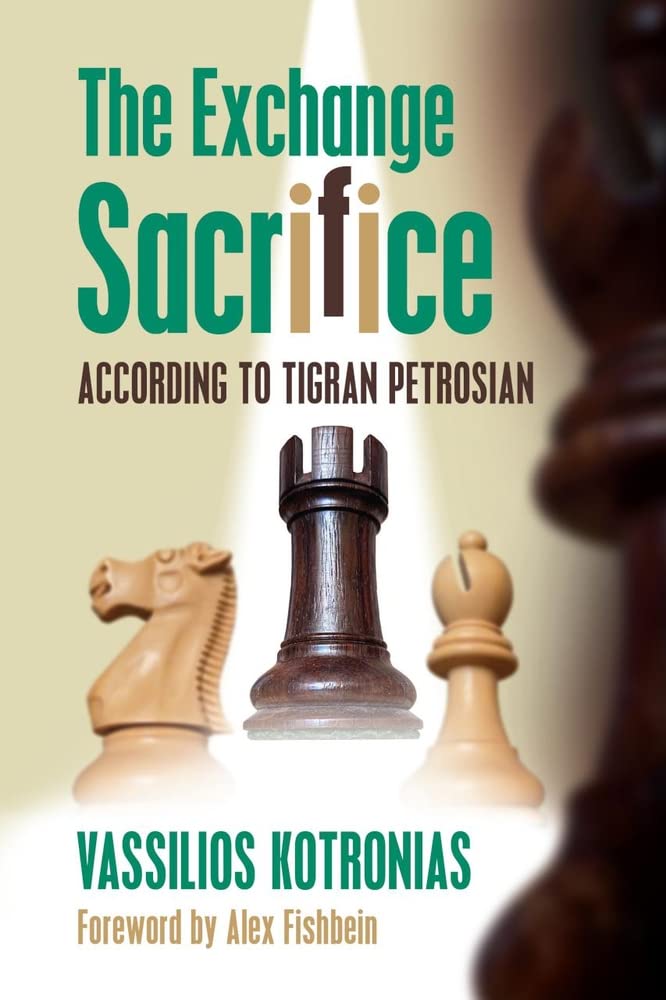
From the rear cover :
“Tigran Petrosian, the ninth world chess champion, was one of the deepest thinkers the chess world has ever seen. His handling of complex positions was legendary.
With his rare strategic feeling and exceptional vision, Petrosian gradually became one of the top exponents of the art of the exchange sacrifice, and perhaps the leading protagonist for the positional exchange sacrifice.
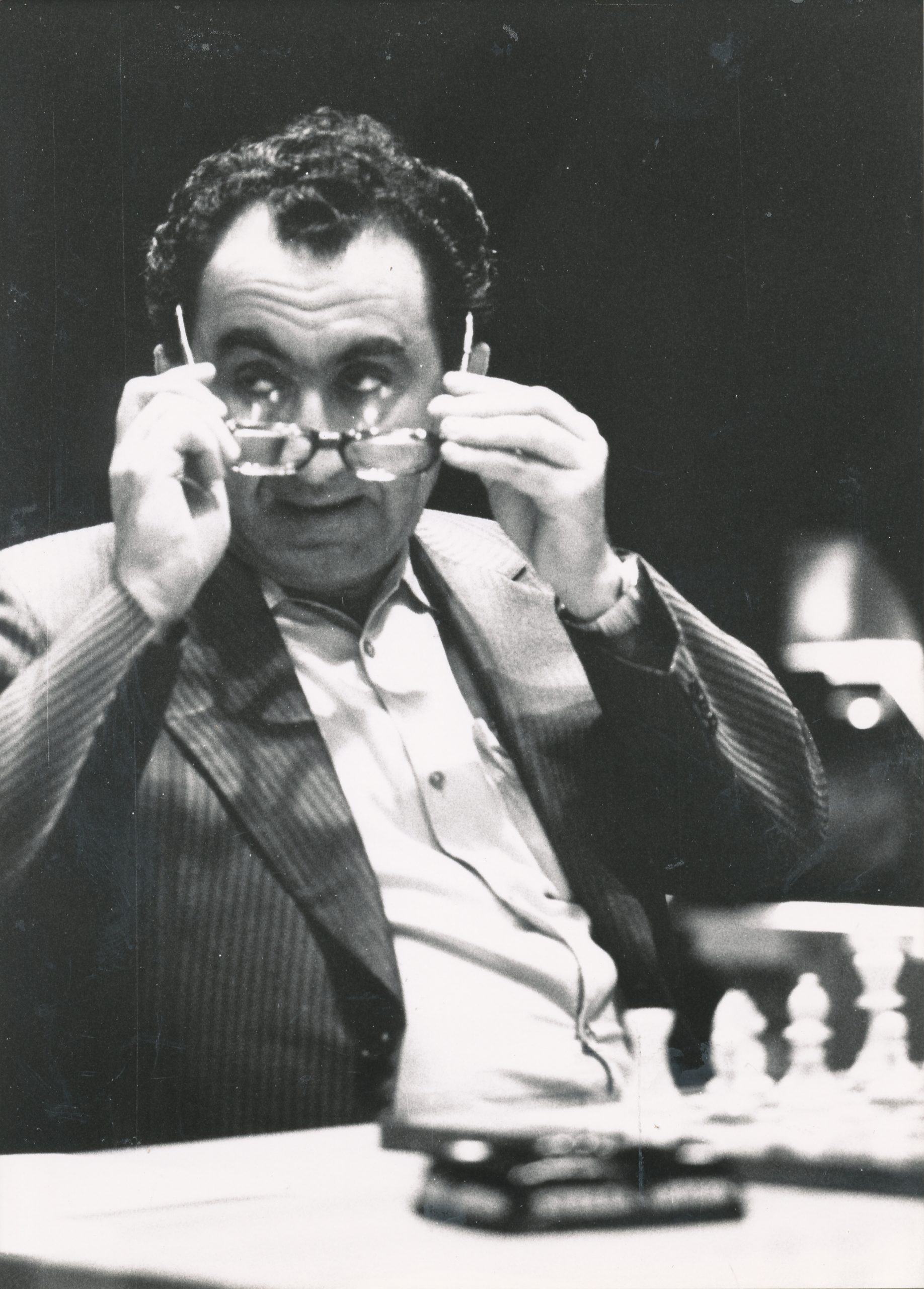
Acclaimed author Vassilios Kotronias has assembled a splendid collection of Petrosian’s games, exemplifying the artist at work. The Greek grandmaster presents 36 games – all deeply annotated – in which he puts the Tiger’s signature sacrifice under the analytical microscope. And each game has an exceptional introduction putting it into historical perspective.
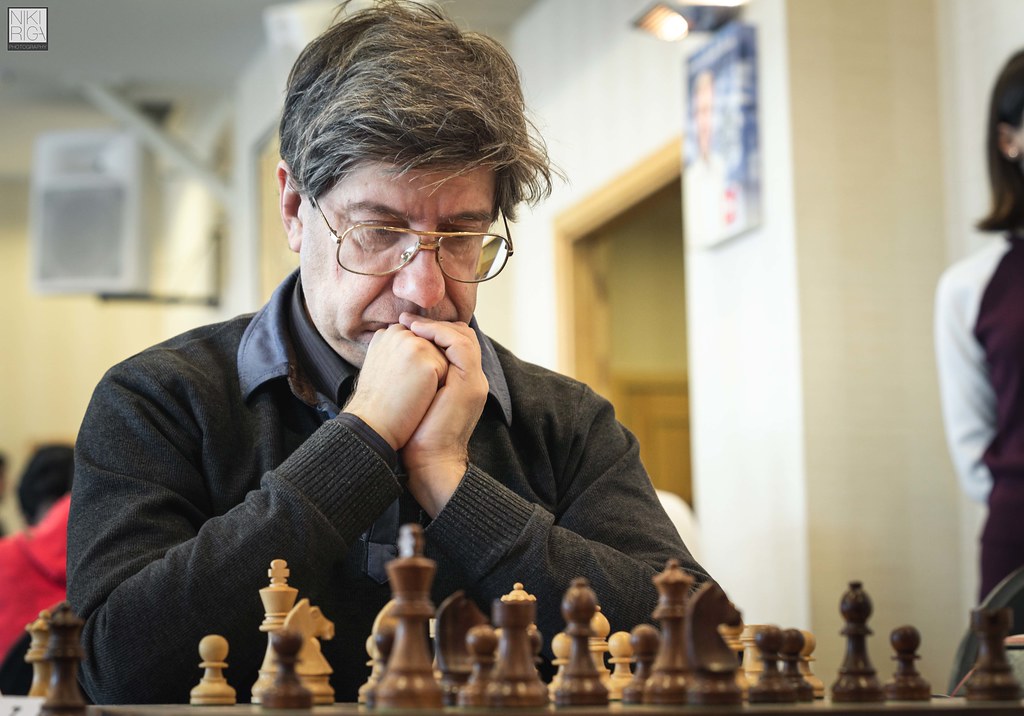
Flickr
Vasilios Kotronias | Photo by Niki Riga | Gibraltar International Chess Festival | Flickr
As noted by American grandmaster Alex Fishbein in the Foreword:
You will find your share of positional exchange sacrifices here. But you will also see exchanges sacrificed in the midst of a crushing attack. You will see sacrifices born of desperation, to save a bad ending. You will see correct and incorrect sacrifices. In fact, Tigran Petrosian will lose some games here. This is real life; there are mistakes, and the author explains it all to you.
Vassilios Kotronias has brought you the material in a way that will enhance your appreciation of chess as an art form. He has also offered you practical lessons you can use in your own chess endeavours.
You are already familiar with the exchange sacrifice as an art form. Now enjoy the brilliant games of its greatest artist, Tigran Petrosian.”
About the Book
This is a very interesting and enjoyable book.
It is also a very unusual, or rather original, book in that it focuses on a specific facet of one great player’s handling of chess positions. Certainly there are books dedicated, say, to Tal’s attacks or Karpov’s endgame play, but it is difficult to think of other books with such a specific subject based on a single player. All of which makes Kotronias’ book all the more enticing to look at. Plus, of course, it is a facet of the game for which Petrosian was justly famous.
As stated in the blurb above, the bulk of the book (257 of the 304 pages) is devoted to 36 annotated games, presented in chronological order spanning the years 1947-1980. Many of the games feature the strongest possible opponents from those times, eg Spassky, Botvinnik, Smyslov, Tal, Gligoric, Fischer, Hubner, Korchnoi amongst others. The book also gives the unannotated scores of a further 88 games. Kotronias does this for three reasons:
1 completeness ;
2 to give the reader food for thought (he invites readers to analyse the games without initially using computer assistance) ;
3 aesthetics! As Kotronias puts it: “Many of the examples which follow are true gems of sacrificial play and a treat for the eye”.
A nice touch is that these games, although unannotated, have a diagram near the point where the exchange sac occurs, so that readers who are too lazy for reason 2 can at least appreciate reason 3!
The book also includes:
– an Introduction by the author, which adds another annotated game (less deeply than the others) – the famous Reshevsky-Petrosian exchange sac (…Re6!)
– a nice foreword by GM Alex Fishbein ;
– an index of players ;
– an index of openings (ECO codes, not names).
Kotronias’ Style of Annotation
The annotated games, to a greater or lesser extent, follow a pattern:
– an introduction, of varying length, which puts the game into its sporting and historical context and provides an overview of the game;
– the whole game itself is analysed, especially the middlegames and most deeply around and after the exchange sac;
– a short epilogue where the author sums up the game, and often draws conclusions that can be applied more widely.
Despite his evident admiration for Petrosian, Kotronias’ annotations are objective. Indeed, some of the annotated games are losses for Petrosian, and in other games the author points out when the exchange sac was unsound (or a second-rate choice) even when Tigran prevailed.
As befits a player of Kotronias’ strength (he was regularly in the world’s top 100 players in the 2000’s, with a 2600+ rating) his analysis is sometimes very deep, but he favours explanations over lengthy variations, reserving the heavy analysis for the most complex positions. Indeed, he is a very readable annotator.
Example Game Annotation
Anyway, here is an excerpt, taken from the famous Petrosian-Spassky 1966 match, game 10:
Other quotes from the book
In the intros and epilogues to the games, Kotronias makes a number of observations, some of them quite repeatable, for example:
“Choosing the right way to attack requires perhaps a greater sense of danger than the one required to choose the best way of defence.”
“We should never forget that we are only human beings and not machines, and thus, as long as players of approximately the same level compete, psychology and energy will always play a small or bigger role for the final outcome. A trivial thought, but the exceptional depends on a number of trivial factors, do you not think?”
Conclusion
“I sincerely hope that you will find the games presented in this book not only enjoyable, but instructive.” writes the author in his introduction.
Well, this reviewer always enjoys well-annotated game collections of great players which are written by an engaging writer, and this book hits the mark in all these respects.
The theme is an interesting one (in both parts, Petrosian and the exchange sac) and the selected games are fascinating. The book isn’t a formal study of when/why exchange sacrifices work and when they don’t (perhaps the point is that knowing this comes from accumulated experience, calculation and judgement) but it is easy to believe that study of these games will help players improve their judgement in this area.
There is something in this book for a wide range of playing strengths and is highly recommended.
Colin Purdon, December 23rd 2022

Book Details :
- Flexicover : 304 pages
- Publisher:Russell Enterprises (15 Sept. 2022)
- Language: English
- ISBN-10: 1949859487
- ISBN-13: 978-1949859485
- Product Dimensions: 15.24 x 1.91 x 22.86 cm
Official web site of Quality Chess