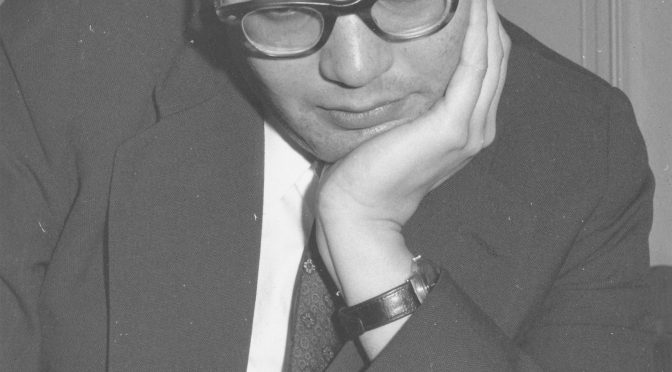
We remember Raaphy(i) Persitz who passed away on Wednesday, February 4th, 2009.
From British Chess Magazine, Volume CXXIX (129, 2009), Number 3 (March), pp. 130-134 by John Saunders we have this detailed obituary:
Raaphy Persitz
A tribute to a great friend of British chess, by John Saunders
Raphael Joseph Arie (Raaphy) Persitz (26 vii 1934, Tel Aviv – 4 ii 2009, Tel Aviv)
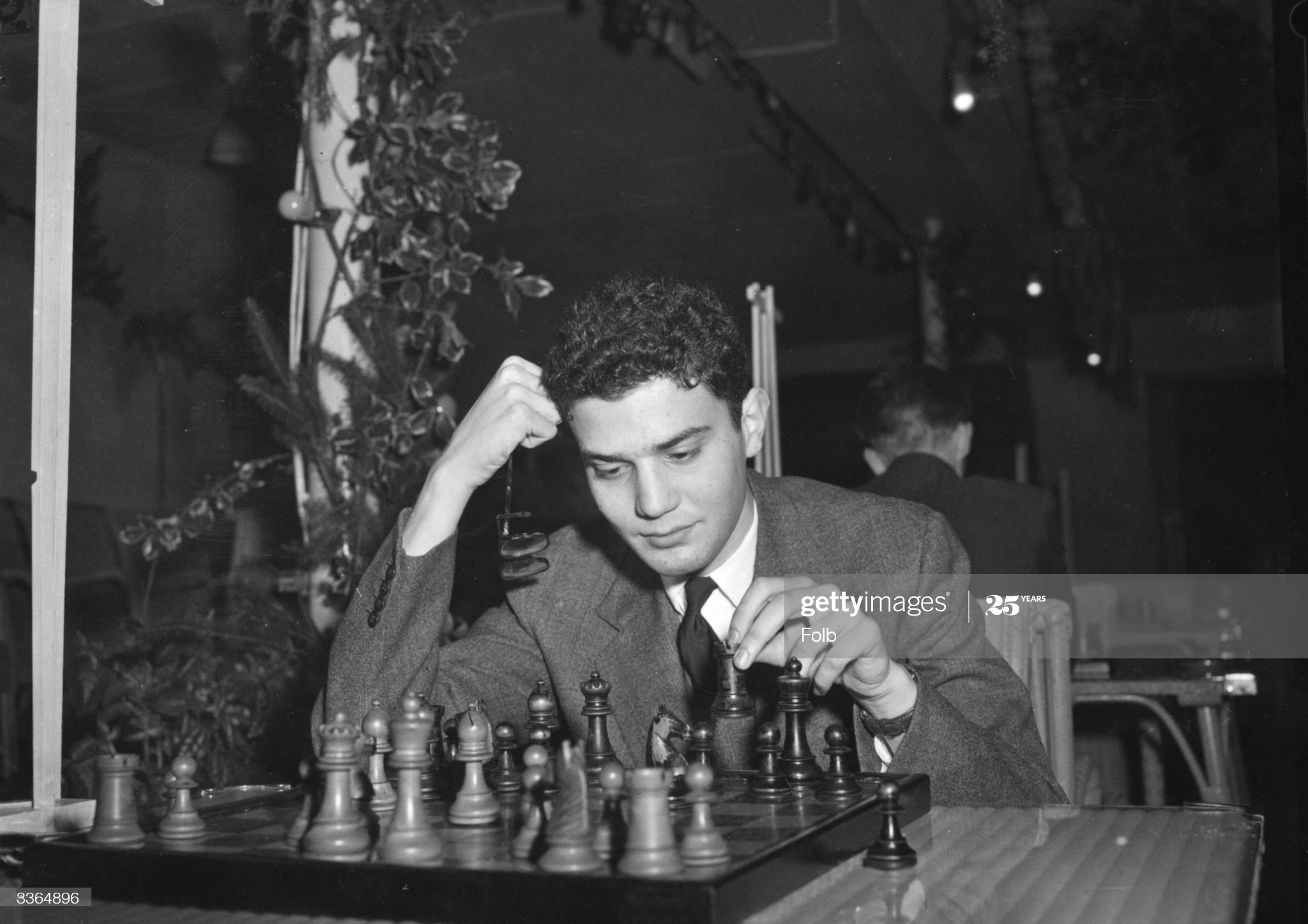
Raaphy Persitz, one of the strongest players resident in Britain in the 1950s and 1960s and also one of BCM‘s most popular contributors, has died aged 74. Raaphy was born in Tel Aviv, the grandson of Shoshana Persitz (1893-1969), a publisher who became an early member of the Knesset, the Israeli parliament. Raaphy became Israel’s first junior champion in 1951 and shortly afterwards came to study PPE (Philosophy, Politics and Economics) at Oxford University where he was a member of their very strong chess team and a close friend of Leonard Barden and others.
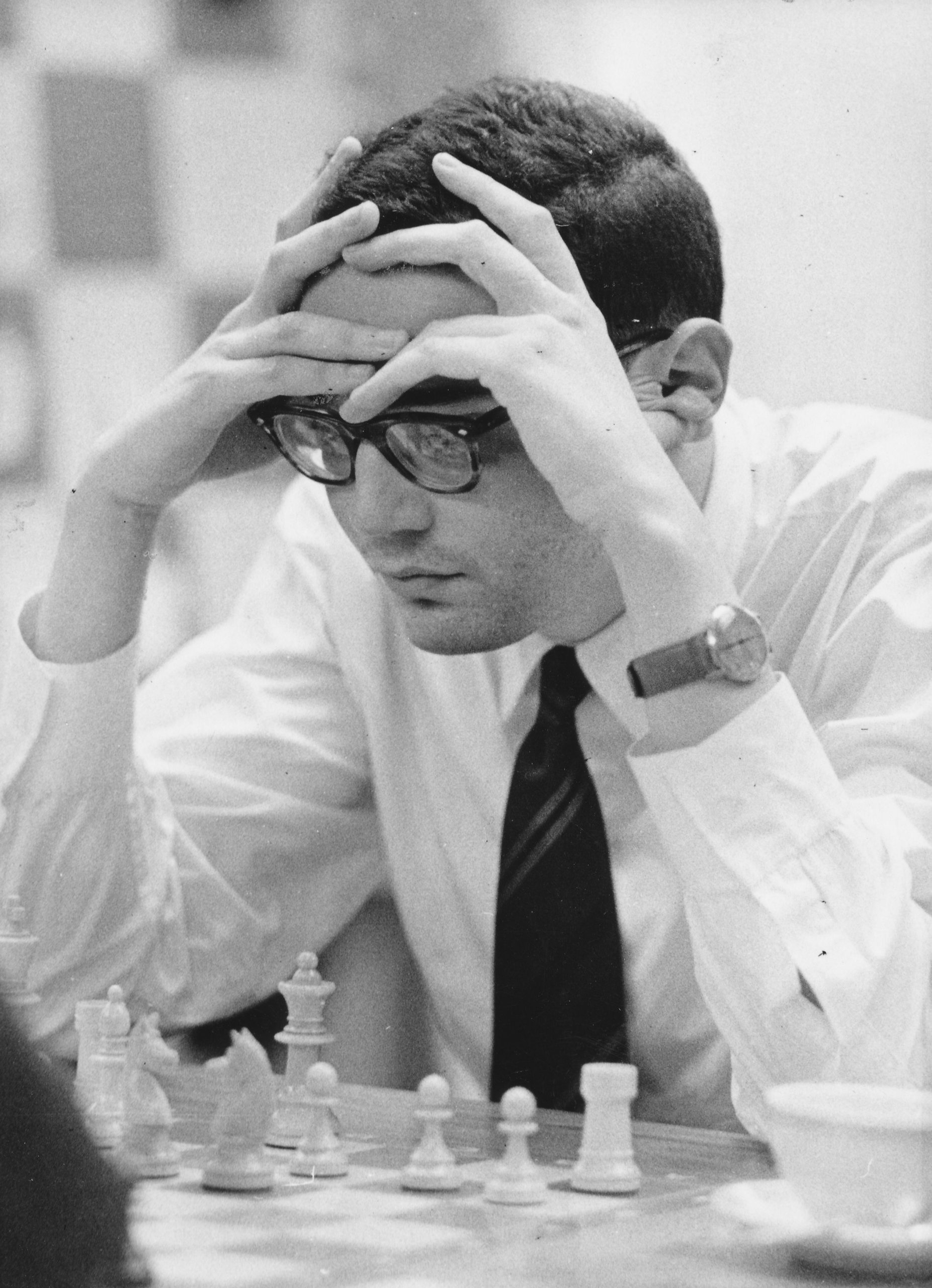
One of his most publicised feats was to win his Varsity match game and also a county match against Hugh Alexander on the same day (see the May 1954 or March 2004 issues of the magazine for further details). Raaphy played three times in the Varsity match and also represented England in three Students Olympiads in the mid-1950s. He represented Israel in the 1960 Leipzig Olympiad on board four, and also played twice in the Hastings Premier, in 1955-56 and 1968-69, the latter being his swansong in competitive chess as he turned his attention to a career in banking which took him first to Switzerland and eventually to his home town of Tel Aviv. As a player his best result was probably finishing third behind Reshevsky and Szabo at the first major international tournament held in Israel, Haifa/Tel Aviv 1958.
[pgn]
[Event “Christmas Congress 1955/56-31 Premier”]
[Site “Hastings”]
[Date “1956.01.04”]
[Round “7”]
[White “Persitz, Raaphi”]
[Black “Penrose, Jonathan”]
[Result “1-0”]
[ECO “C41”]
[Annotator “British Chess News”]
[PlyCount “65”]
[EventDate “1955.12.28”]
[EventType “tourn”]
[EventRounds “9”]
[EventCountry “ENG”]
[SourceTitle “MCD”]
[Source “ChessBase”]
[SourceDate “1999.07.01”]
[SourceVersion “1”]
[SourceVersionDate “1999.07.01”]
[SourceQuality “1”]
{[%evp 0,65,19,38,25,7,75,61,61,49,73,66,59,38,43,42,60,58,63,50,75,46,71,47,
29,36,48,-15,-26,-13,-26,-42,-32,-31,-22,-26,-3,-28,-48,-35,-20,-32,40,61,80,
-20,18,-1,9,-73,-46,-131,-142,-109,-36,-74,-62,-93,-30,9,51,8,67,67,67,20,120,
63]} 1. e4 e5 2. Nf3 d6 3. d4 Nf6 4. Nc3 Nbd7 5. Bc4 Be7 6. O-O O-O 7. h3 c6 8.
a4 Qc7 {[#]} ({Relevant:} 8… b6 9. Qe2 a6 10. d5 c5 11. Bd3 Ne8 12. Nd1 Nc7
13. Ne3 Re8 14. Nf5 Nf8 15. c4 Rb8 16. Bd2 a5 17. Rae1 Ng6 18. g3 Bf6 19. Qd1
Ne7 20. b3 Rb7 21. Kg2 Na6 22. Qc1 Nb4 23. Bb1 Kh8 24. Ne3 g6 25. Ng4 Ng8 26.
Nxf6 Qxf6 27. Ng1 Qg7 28. f4 f6 29. Nf3 Rbe7 30. fxe5 dxe5 31. Nh4 Rd8 32. Kh2
h6 33. g4 Kh7 34. Re3 Na6 35. Rg3 Nc7 36. Kg2 Ne8 37. Nf3 Nd6 38. h4 {Roehrich,
E-Rellstab,L Hamburg 1952 1-0 (69)}) 9. Bg5 $146 ({Predecessor:} 9. Re1 h6 10.
dxe5 dxe5 11. Nh4 Re8 12. Qf3 Nf8 13. Nf5 Be6 14. Nxe7+ Qxe7 15. Bf1 Ng6 16.
Be3 Kh7 17. a5 Nh4 18. Qg3 Ng6 19. f3 Nh5 20. Qf2 Ngf4 21. Kh2 g5 22. g3 Ng6
23. Bxa7 Rg8 24. Bc5 Qf6 25. Be3 Qg7 26. Red1 Nf6 27. Rd6 Ne8 28. Rd2 Nf6 29.
Be2 Nf8 30. b4 h5 31. Rad1 g4 32. fxg4 hxg4 33. h4 Ng6 34. Kg1 Nh5 35. Na4 Raf8
36. Nc5 Bc8 37. Nd7 Bxd7 38. Rxd7 Nf6 {Matanovic,A-Porreca,G Belgrade 1952 1-0}
) 9… Re8 10. Re1 Nf8 11. Bh4 Be6 12. Qe2 Nh5 13. Bxe6 Nxe6 14. d5 Nef4 15.
Qe3 cxd5 16. exd5 Bxh4 17. Nxh4 Qe7 18. Nf3 f5 19. Kh2 Qd7 20. Rad1 e4 21. Nd4
Re5 22. Nde2 g5 23. Rg1 Kh8 24. f3 exf3 25. Qxf3 g4 26. Qf1 Ng6 27. Rd3 f4 28.
Nd4 Ng3 29. Qd1 Rh5 30. Ne6 gxh3 31. gxh3 Rh4 32. Ne2 Ne5 33. Nxg3 1-0
[/pgn]
Despite giving up competitive play, Raaphy never lost his love of the game and remained an avid reader of magazines and follower of the game until the end of his life. And, of course, he remained a perceptive and humorous writer on the game though his output was much lower than in the 1950s. The news of his death came as a particular shock to me as, only a couple of weeks previously, he had sent me a fax saying how moved he had been by the tribute I had writ- ten to Bob Wade in the January 2009 issue of BCM. That was typical of his kindness to wards me which dated back to when I took my first tottering steps as BCM editor in 1999. We never actually met in person but spoke occasionally on the telephone and exchanged faxes (Raaphy didn’t seem to communicate by email).
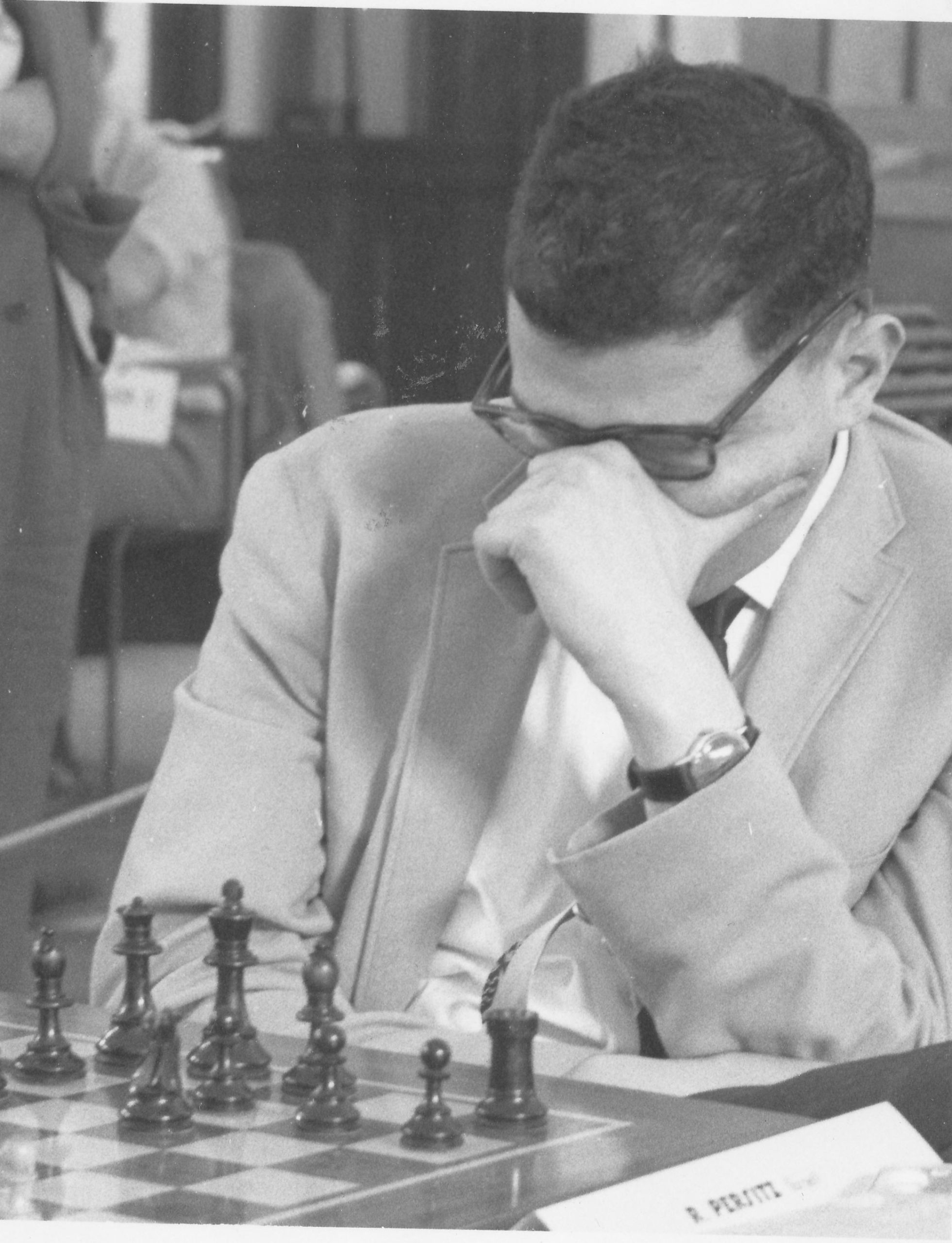
As a long-time reader of the magazine I had enjoyed his Student’s Corner column contributions. The column had been initiated by Abe Yanofsky in the early 1950s and Raaphy had inherited it in 1958. I was particularly delighted when, in 2004, after I had written about his 1954 feat in winning his Varsity match game and a county match against English number one CHO’D(Hugh) Alexander on the same day, Raaphy consented to write another column (which appeared in the May 2004 issue of BCM). I never succeeded in getting him to write another one but it was such a pleasure to have him write for the magazine during my spell as editor.
[pgn]
[Event “County Match, Oxon v Gloucester”]
[Site “Swindon ENG”]
[Date “1954.03.27”]
[Round “?”]
[White “Persitz, Raaphy”]
[Black “Alexander, Conel Hugh”]
[Result “1-0”]
[ECO “C47”]
[Annotator “British Chess News”]
[PlyCount “79”]
[EventDate “1954.??.??”]
[SourceTitle “BCM, May 1954, -age 151”]
[Source “‘Cabbage Heads a”]
[WhiteTeam “Oxfordshire”]
[BlackTeam “Gloucestershire”]
{[%evp 0,79,28,28,28,13,25,5,8,-17,37,33,22,2,75,57,57,57,47,36,91,58,60,29,39,
22,40,83,83,24,51,41,74,79,76,76,74,74,74,69,69,37,37,30,38,0,7,10,52,-46,52,
33,-10,-21,27,15,34,19,14,116,117,80,95,-102,56,56,60,194,200,196,204,0,7,0,
259,268,287,290,288,288,504,523]} 1. e4 e5 2. Nf3 Nc6 3. Nc3 Nf6 4. d4 Bb4 5.
d5 Ne7 6. Nxe5 O-O 7. Qd4 Bxc3+ 8. bxc3 {[#]} Re8 $146 ({Relevant:} 8… d6 9.
Nf3 Re8 10. Be2 c5 11. Qd3 Ng6 12. Bg5 h6 13. Bxf6 Qxf6 14. g3 Bh3 15. Nd2 b5
16. Rb1 a6 17. f4 Qe7 18. Kf2 f5 19. Bf3 Qf6 20. Rhe1 Ra7 21. exf5 Rxe1 22.
Rxe1 Bxf5 23. Be4 Bxe4 24. Nxe4 Qf8 25. Ng5 hxg5 26. Qxg6 Rf7 27. Qxg5 Rf5 28.
Qg6 Rf6 29. Qe8 Qxe8 30. Rxe8+ Kf7 31. Ra8 Rf5 32. Rxa6 Rxd5 33. Ke2 Ke6 34.
Ra5 Rh5 35. h4 Kd5 36. Rxb5 Kc4 37. Rb3 Rh8 38. a4 {Cortlever,N-Milner Barry,P
London 1952 1-0}) 9. Bg5 Nf5 10. exf5 d6 11. f4 dxe5 12. fxe5 Qxd5 13. O-O-O
Qxd4 14. cxd4 Ne4 15. Bh4 Nc3 16. Rd3 Nxa2+ 17. Kb2 Nb4 18. Rf3 a5 19. c3 Nd5
20. Bc4 c6 21. g4 b5 22. Bd3 Bd7 23. g5 c5 24. Rhf1 a4 25. Be4 Bc6 26. g6 a3+
27. Ka1 cxd4 28. gxf7+ Kxf7 29. e6+ Kg8 30. cxd4 Ra4 31. Rg1 Rxd4 32. f6 Rxe4
33. f7+ Kf8 34. fxe8=Q+ Kxe8 35. Bf2 b4 36. Bc5 Rxe6 37. Rf8+ Kd7 38. Rxg7+ Ne7
39. Bxb4 Bd5 40. Rff7 1-0
[/pgn]
(Regarding the above game there is a note from Sally Simpson on chessgames.com as follows:
Raaphi Persitz agreed to play for Oxford v Cambridge in London and also on the same day for Oxon v Gloucester in a county match in Swindon.
This is the second game, he won both games.
Be aware that Bruce Hayden in ‘Cabbage Heads and Kings’, which is where I got this game from, mentions this but also added that these games took place on the same day as the 1954 Grand National (won by Royal Tan). This is wrong as the Grand National that year was run on the 10 April.
I think that maybe Bruce saw the score of the games with the two games a day story in a Sunday newspaper covering Saturdays Grand National and perhaps got the dates mixed up.
)
The fax he sent me on 7 January 2009 seems particularly poignant now but it is a good example of Raaphy’s kindness and self-deprecating humour. Here is the full text:
“Dear John, I was moved by your wide-ranging obituary of Bob Wade in the BCM[January 2009, p34l. I dare say you did justice to his contributions and devotion to chess, spanning well over half a century. I have several pleasant recollections of conversations and over-the-board encounters with Bob. One such tussle, a hard-fought draw, was reproduced by Bob, with comments (in the Student’s Corner) in a book containing his eventful games.
[pgn]
[Event “Christmas Congress 1968/69-44 Premier”]
[Site “Hastings”]
[Date “1969.01.02”]
[Round “6”]
[White “Persitz, Raaphi”]
[Black “Huebner, Robert”]
[Result “1-0”]
[ECO “E82”]
[Annotator “British Chess News”]
[PlyCount “55”]
[EventDate “1968.12.28”]
[EventType “tourn”]
[EventRounds “11”]
[EventCountry “ENG”]
[SourceTitle “EXT 1999”]
[Source “ChessBase”]
[SourceDate “1998.11.16”]
[SourceVersion “1”]
[SourceVersionDate “1998.11.16”]
[SourceQuality “1”]
{[%evp 0,55,19,31,14,-14,43,38,37,33,33,10,9,21,31,23,50,27,18,21,51,55,45,38,
34,27,7,-2,-2,13,-9,-14,59,21,11,14,31,24,17,-8,-7,-16,-48,-48,-42,-48,0,-1,7,
5,10,28,41,-20,183,202,29993,29994]} 1. d4 Nf6 2. c4 g6 3. Nc3 Bg7 4. e4 d6 5.
f3 O-O 6. Be3 b6 7. Bd3 a6 8. Qd2 c5 9. d5 e6 10. Nge2 ({Relevant:} 10. dxe6
Bxe6 11. Bh6 Bxh6 12. Qxh6 Nbd7 13. Nh3 Ne5 14. O-O-O b5 15. Ng5 Qe7 16. Be2 b4
17. Nd5 Bxd5 18. Rxd5 Rfd8 19. Rhd1 Nc6 20. f4 Nd4 21. Bf3 Qf8 22. Qxf8+ Kxf8
23. R5xd4 cxd4 24. e5 dxe5 25. fxe5 Rdc8 26. exf6 Rxc4+ 27. Kd2 Rc5 28. Ne4 Ra5
29. Kd3 Rxa2 30. Rb1 a5 31. Rc1 Rxb2 32. Rc7 Rb3+ 33. Kd2 Rb2+ 34. Kd1 d3 35.
Ng5 Kg8 36. Rxf7 Ra6 37. Rg7+ Kf8 38. Nxh7+ {1-0 (38) Szabo,L-Najdorf,M Mar
del Plata 1962}) 10… exd5 11. exd5 Nbd7 {[#]} 12. O-O $146 ({Predecessor:}
12. Ng3 Re8 13. O-O Ng4 14. Bg5 f6 15. Bf4 Nge5 16. Be2 f5 17. Bg5 Nf6 18. Bh6
Bh8 19. Rfd1 Ra7 20. Rab1 Nf7 21. Be3 h5 22. Bf1 h4 23. Nge2 Nh5 24. Nf4 Nxf4
25. Bxf4 Bd4+ {0-1 (25) Tamburini,M-Botvinnik,M Leipzig 1960}) 12… Ne5 13. b3
Nxd3 14. Qxd3 b5 15. Rae1 Qa5 16. Ng3 Rb8 17. Bd2 Qb6 18. Nce4 Nxe4 19. fxe4 a5
20. Bc3 bxc4 21. bxc4 Bxc3 22. Qxc3 Qb2 23. Qxa5 Qd4+ 24. Kh1 Rb2 25. e5 Qxc4
26. e6 Qb4 27. Qc7 Ba6 28. Qxf7+ 1-0
[/pgn]
Another, somewhat less felicitous, recollection harks back to a game we contested at Ilford, where, in extreme time trouble, I blithely played Rxh7+, expecting …Qxh7, but overlooking the simple …Kxh7, leaving me a whole rook down with no compensation, whereupon I duly resigned. What impressed me at the time was the lightning speed with which Bob reacted to my ill-fated blunder – as if it were nothing but inevitable…
With warmest wishes for a healthy,
happy, fruitful 2009. Raaphy.”
I had hoped to publish the above as a Letter to the Editor but, sadly, it must now appear as part of Raaphy’s obituary. The draw with Bob Wade referred to in the fax was played in Dublin in 1962 and featured in Student’s Corner in BCM in the December 1966 issue on page 356. It seems appropriate to reproduce the game here in tribute to these two recently departed and much-loved chessplayers.
Notes by Persitz
Unlike the majority of games that have, over the years, appeared in the Student’s Corner, the following dour struggle between Bob Wade (White) and myself (Black), from Dublin, 1962, is in no way outstanding: it does not contain any brilliant combinations; it is not a positional masterpiece; it is certainly not devoid of mistakes. Nor is it amusing, or original, or of theoretical interest or particularly instructive. Yet (with the aid of the interspersed comments) it ought to give the student a pretty shrewd and realistic idea of the stuff competitive chess is made of: the endless number of laborious variations that have to be examined; the annoying little threats that must be attended to; the treacherous pitfalls to be sidestepped; the technical hurdles to be surmounted; the frustrating little details, indifference to which may be fatal; in brief, the drudgery that has become part and parcel of contemporary tournament practice, without which success is unimaginable.
[pgn]
[Event “Dublin”]
[Site “?”]
[Date “1962.??.??”]
[Round “?”]
[White “Wade, Robert Graham”]
[Black “Persitz, Raaphy”]
[Result “1/2-1/2”]
[Annotator “Raaphy Persitz”]
[SetUp “1”]
[FEN “5rk1/1p4bp/1pn1p1p1/3pPp2/r2P4/7P/PP2BPP1/R1BR2K1 w – – 0 19”]
[PlyCount “54”]
[EventDate “1962.??.??”]
[SourceTitle “BCM, 2009, p.131”]
{[%evp 0,1,-80,-94] [#] White’s position does not inspire much confidence:} {
After 40 minutes reflection, White hits upon a drastic solution which displays
a profound understanding of the position.} 19. b4 $1 {The idea behind this
remarkable move is a simple as the move itself is startling: since White’s
central pawns exercise a cramping influence on Black’s king’s flank, he will
go out of his way to hold on to them, even if this involves jettisoning both
his queenside pawns. Black’s b-pawn will be subjected to a frontal attack
along the b-file.} ({the straightforward} 19. Be3 {, to protect the hanging
d-pawn, will not do because of} f4 20. b3 Rb4 {etc}) ({whilst if} 19. Bb5 {
simply} Rxd4) 19… Nxb4 $2 {Frittering away most of his advantage.} ({
Admittedly neither} 19… Rxb4 20. Ba3 Rxd4 21. Bxf8) ({nor} 19… Nxd4 20.
Rxd4 Bxe5 21. Bb2 Bxd4 22. Bxd4 Rxb4 23. Rd1 {yields Black any superiority.}) (
{But the tranquil} 19… Rfa8 {does} {For example} 20. a3 Rxb4 21. Be3 (21.
axb4 Rxa1) 21… Rb2) 20. Bb5 $1 (20. a3 $2 Nc2) 20… Rxa2 $2 {Unnecessarily
jeopardising the black kinght., thus handing over the initiative to White.} ({
The safe course is} 20… Raa8 21. a4 Nc6 (21… Rfc8 $2 22. Bd7) ({or} 21…
Kf7 22. Ba3)) ({Less good is} 20… Nc2 $2 21. Bxa4 Nxa1 22. Bb2 Ra8 23. Bd7
Nc2 24. Bxe6+ Kf8 25. Bxd5 {when White’s connected passed pawns carry the day.}
) 21. Rxa2 ({After} 21. Rb1 Nc6 (21… Na6 $2 22. Bd7) 22. Bxc6 bxc6 23. Rxb6
Rc2 {White does not appear to have enough for his minus pawn.}) 21… Nxa2 22.
Bd2 Ra8 {[#] The text move is aimed at rescuing the knight} ({Black had
originally intended to follow up 20…Rxa2? with} 22… Kf7 $2 {preparing for
23…Rc8-c2 (which is not feasible right away on account 23.Bd7).} {but he had
not noticed that White would trap the displaced knight by means of} 23. Ra1 Ra8
24. Bd3 {etc.}) 23. Rb1 ({If} 23. Ra1 Bf8 24. Bd3 Ra3 25. Bb1 {and the rescue
completes} {by way of} Nc1 $1) 23… Kf7 24. Bd7 $2 ({If} 24. Be2 {then either}
Rc8 ({or} 24… Ra4 {suffices} 25. Bd1 ({or} 25. Rxb6 Rxd4 26. Rxb7+ Kg8 27.
Rb8+ (27. Rb2 Ra4) (27. Be3 Rb4 28. Ra7 Nc3) 27… Kf7 28. Rb7+ Kg8 29. Rb8+ {
with a draw by repetition of moves.}) 25… Rxd4 26. Rb2 Nc3 $1) 25. Rxb6 Rc2 {
etc}) ({More promising is} 24. Rb2 $1 {with Rc2 and Rc7 to follow whereupon
Black would find it extremely difficult to avoid the loss of his weak e-pawn.})
24… Ke7 (24… Ra6 25. Bc8) 25. Rxb6 (25. Bb5 Rc8 $1 26. Bg5+ Kf7 27. Bd7 (
27. Rb2 Nc3 $1) 27… Rc7) 25… Kxd7 (25… Bxe5 26. Bxe6 Bxd4 27. Bg5+ Bf6
28. Bxf6+ Kxf6 29. Bxd5+ {which peters out into a draw.}) 26. Rxb7+ Kc6 {
The king is destined to play a leading part in the ending.} 27. Rxg7 {The game
now enters a new and tricky phase. White’s king is out of play, but so is
Black’s knight.} Ra4 (27… Kb5 {, in order to answer} 28. Re7 (28. Rxh7 Kc4
29. Be3 {and White’s h-pawn becomes dangerous.} (29. Rg7)) 28… Ra6 {, is too
slow.}) 28. Re7 (28. Rxh7 {tends to favour Black} {i.e.} Rxd4 29. Bg5 Rd1+ 30.
Kh2 d4) ({Worse is} 28. Be3 Nc3 29. Rxh7 (29. Re7 $142) 29… f4 $1 30. Bd2
Ne2+ 31. Kf1 Nxd4 $17) 28… Rxd4 29. Rxe6+ Kb5 {[#]} 30. Be3 {Setting Black a
discreet pitfall:} Re4 (30… Rd1+ 31. Kh2 d4 32. Rd6 d3 (32… dxe3 33. Rxd1)
(32… Kc5 33. Bxd4+ $1) 33. e6 {and White wins.}) 31. Rb6+ Kc4 32. Rc6+ Kd3 (
32… Kb5 $2 33. Rc5+) 33. e6 Nc3 {The knight returns from the cold.} ({instead
} 33… d4 {loses outright to} 34. Rd6) 34. Rd6 ({If} 34. Bc5 Ne2+ (34… d4
35. Rd6 Nb5 36. Rb6 Kc4 37. Bf8 d3) (34… Re1+ 35. Kh2 Ne4 36. Be3 f4 37. e7
fxe3)) 34… f4 {warding off 35.Bg5 and denying the white king of access to
the flight square g3.} 35. Bc5 ({The alternative is} 35. Bb6 {(threatening 36
Bd8, 37 e7, 38 Rf6 and 39 Rf8 etc.)} Re1+ 36. Kh2 Re5 37. Bd8 Ne4 38. Rd7 {
with a draw after} Rxe6 (38… Nxf2 39. Bh4 Ne4 40. e7 g5 41. Rxd5+ Rxd5 42.
e8=Q gxh4 43. Qf7 {being advantageous to White.}) 39. Rxd5+) 35… Re1+ 36. Kh2
Kc4 ({abstaining from} 36… Ne4 $2 37. Rxd5+ Kc4 {which goes down to} 38. Re5
$1) 37. Bb6 {angling for Bd8 followed by e7, Rf6-f8 and e8=Q.} Ne4 38. Rd7 (38.
Rc6+ Kb5 39. e7 {would lead to disaster after} Nd2) ({Likewise, if} 38. Ba5 $2
Ra1 {menacing three white pieces}) ({if} 38. Rd8 Ng5) 38… Nd2 {attacking the
e-pawn and threatening mate in three moves.} ({To} 38… Nf6 {White retorts not
} 39. Rd6 ({nor} 39. Rc7+ Kb5 40. Bd4 Rxe6) ({but} 39. Re7 {with a level
position.}) 39… Ne8 40. Rc6+ Kb5) 39. Ba5 {Making the draw inescapeable.}
Nf1+ 40. Kg1 ({Of course, if} 40. Kh1 $4 Ng3+ {and mates next move; which goes
to show that other things being equal, double check causes more damage than
discovered ones.} 41. Kh2 Rh1#) 40… Nd2+ 41. Kh2 Nf1+ ({On} 41… Rd1 {
White’s safest course is} 42. g4 {, when Black does not appear to have
anything more promising than} (42. Bxd2 Rxd2 {favours Black}) ({whilst the
consequences of} 42. h4 h5 {are obscure.}) 42… Nf3+ 43. Kg2 Nh4+ 44. Kh2 Nf3+
{drawing by perpetual check.}) (41… Re2 42. e7) 42. Kg1 Ra1 {A last, albeit
harmless, gesture.} 43. g4 Nd2+ {and a draw was agreed in anticipation of} ({
The careless} 43… fxg3 $2 44. Kg2 Rxa5 {would invite White to queen his
passed pawn after} 45. e7 Ra8 46. Rd8 Ra7 47. e8=Q) 44. Kg2 (44. Kh2 Nf3+ 45.
Kg2 Nh4+ {and so on.}) 44… f3+ 45. Kh2 ({if} 45. Kg3 {he gets the worst of
the ending after} Ne4+) 45… Nf1+ {and so on and so forth.} 1/2-1/2
[/pgn]
Raaphy Persitz Tributes
Leonard Barden: Raaphy was probably my best friend at Oxford – certainly so among chessplayers. We played hundreds of blitz games in the junior common room at Balliol and later for some months in 1957 we shared a London flat, analysing Russian championship games over breakfast. He was a wonderful man to know, bright, witty, gentle, sympathetic and knowledgeable.
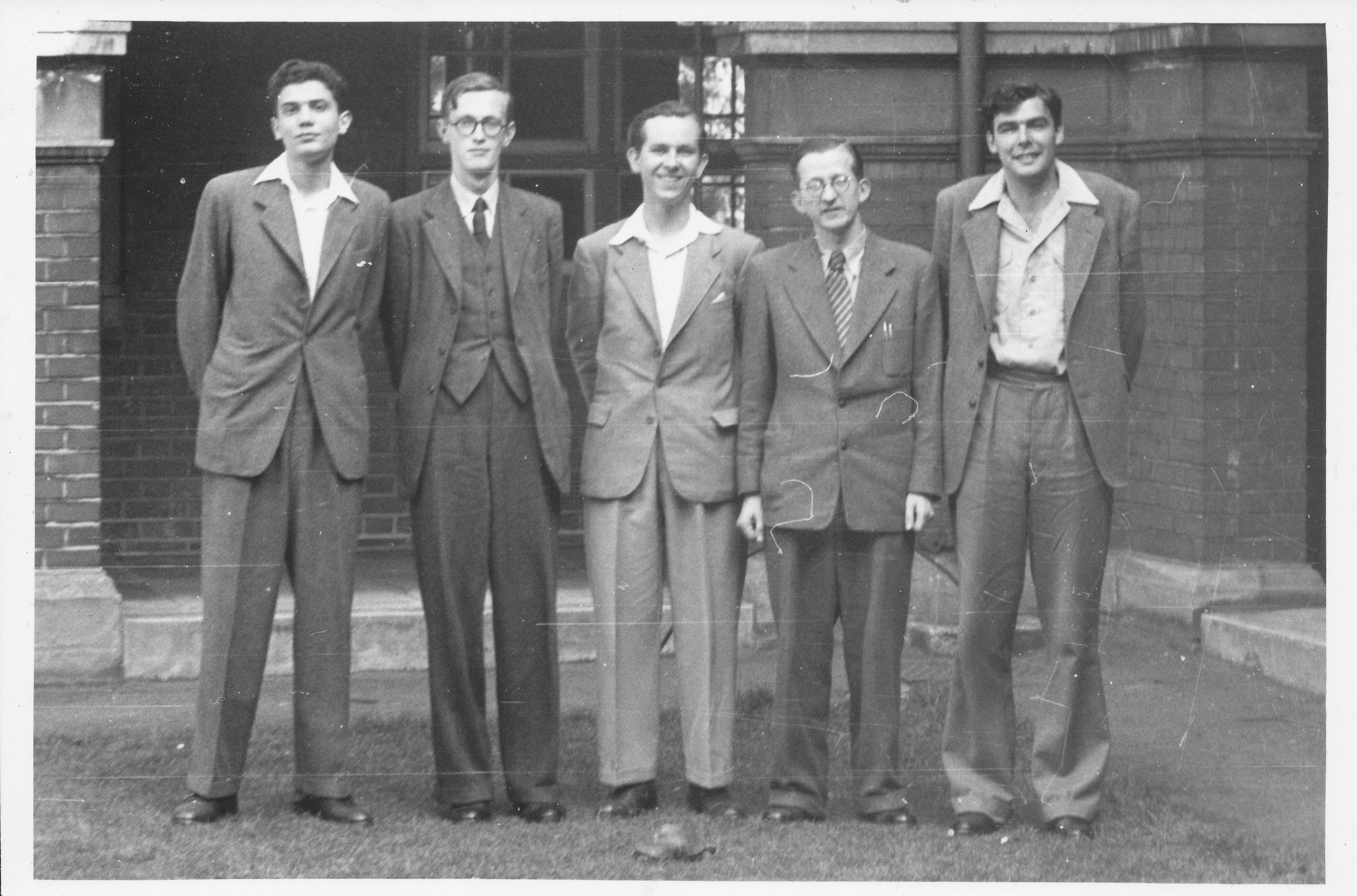
A tribute by Amatzia Avni: Ordinary people have a mixture of good qualities and bad ones. After 20 years of friendship with the late Raaphy Persitz I can attest that he was a distinct type: one sided, positive-only; pure gold.
I first met him in 1989. I had just written my first chess book (in Hebrew) and was searching for someone to write me an introduction. The word was that Persitz was back in town, after long years abroad. Having seen glimpses of his amazing linguistic skills, I contacted him and he agreed immediately. He didn’t know me, hadn’t read a single sentence of the book, yet he didn’t hesitate: “yes, sure, I’ll be glad to”.
That was typical Persitz: always ready to help, unconditionally. The introduction, needless to say, was a sheer delight, a class or two above the rest of the book. In later years he gave me a hand several times polishing my texts and making them more reader-friendly to English-speaking readers. Somehow he seemed to know what I wished to express better than I did. His suggestions enabled me to convey my meaning in a clear and precise manner.
Raaphy was modest and reserved. Once I called him and realized he was upset. “My mother had passed away some weeks ago,” he said. I was puzzled why he didn’t tell me the sad news at the time. “I didn’t want to bother you” was his reply.
A couple of years ago I stumbled upon Bruce Hayden’s old book Cabbage Heads and Chess Kings. One of the book’s chapters was headed “Raaphy Persitz star or comet?”. I learned that, in the 1950s, Persitz gained bright victories in England, against Penrose, Alexander, Milner-Barry and others. Searching a Chessbase database I found out that he also done battle with some out- standing international players. Yet, in all our meetings and hundreds of hours of conversation, he never said a thing about that!
Persitz was a master of understatement. I learned that if I wrote “very fine” or “extremely strong”, the ‘very’ and ‘extremely’ would fly out of the window. If I made a firm stand on a certain issue, he would add “probably”, “apparently’ or “it may be argued that”, because it was indeed only an opinion, not a fact. Over time, following his line of thought made me improve the way I expressed myself and thought about chess.
Persitz’s distinctions in chess, in linguistics and in journalism are evident to anyone who ever read his chess books and articles. He also excelled at economics, but I am unqualified to comment on this.
God bless you, Raaphy. I feel privileged to have known you. Amatzia Avni.
Here is his Wikipedia entry