Opening Repertoire: Queen’s Gambit Declined: Tarrasch

Here is the publishers blurb from the rear cover:

“The Tarrasch Variation of the Queen’s Gambit Declined is a fierce counter-attacking line arising after 1 d4 d5 2 c4 e6 3 Nc3 c5. In this variation Black gains free and easy piece play but in return usually has to accept the structural weakness of an Isolated Queen’s Pawn (IQP).

In the early development of chess theory this line was somewhat frowned upon due to the vulnerability of the IQP. However, Siegbert Tarrasch, after whom the opening is named, famously declared that, “he who fears an Isolated Queen’s Pawn should give up chess”. The Tarrasch has had many powerful adherents over the years including the legendary Garry Kasparov who made much use of it in the early part of his career.

In this book Cyrus Lakdawala guides the reader through the complexities of the Tarrasch and carves out a repertoire for Black, based on a modern treatment popularised by the Russian grandmaster Daniil Dubov. He examines all aspects of this highly complex opening and provides the reader with well-researched, fresh, and innovative analysis.

Each annotated game has valuable lessons on how to play the opening and contains instructive commentary on typical middlegame plans. * A complete repertoire for Black to counter 1 d4. * The question and answer approach provides an excellent study method.”

About the author:
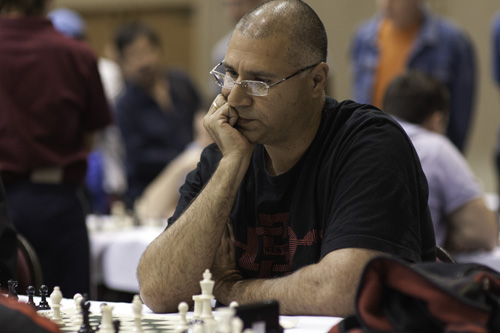
IM Cyrus Lakdawala
IM Cyrus Lakdawala

“Cyrus Lakdawala is an International Master, a former National Open and American Open Champion, and a six-time State Champion. He has been teaching chess for over 40 years, and coaches some of the top junior players in the U.S.”

As with every recent Everyman Chess publication high quality paper is used and the printing is clear. Each diagram is clear as is the instructional text. Figurine algebraic notation is used throughout. The usual and reliable formatting from Brighton-based typesetter IM Byron Jacobs is employed.

The diagrams do not have a “to move” indicator or any kind of caption so you will need to work out for yourself how they relate to the text that they are embedded in. However, this is fairly obvious.

There is a helpful Index of Variations and an Index of completed games.

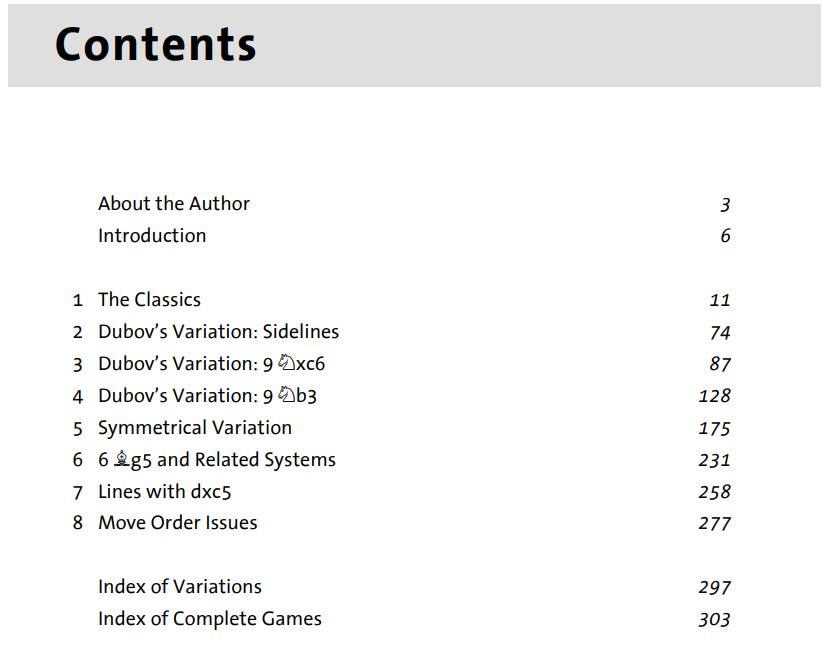
The table of contents is:
Opening Repertoire: Queen's Gambit Declined: Tarrasch, Cyrus Lakdawala, Everyman Chess (16 Jan. 2023), ISBN-13 ‏ : ‎ 978-1781946961
Opening Repertoire: Queen’s Gambit Declined: Tarrasch, Cyrus Lakdawala, Everyman Chess (16 Jan. 2023), ISBN-13 ‏ : ‎ 978-1781946961

Before we continue it is worth taking a look at the pdf extract which includes the Contents, Preface and pages 87 – 108.

Everyman (and Cyrus) kicks-off in Chapter 1, The Classics  with its most welcome trait of laying out the historical development of an opening by detailing twelve significant games including this old favourite from 1969:

[pgn]
[Event “World-ch26 Spassky-Petrosian +6-4=13”]
[Site “Moscow”]
[Date “1969.04.21”]
[Round “4”]
[White “Petrosian, Tigran V”]
[Black “Spassky, Boris Vasilievich”]
[Result “0-1”]
[ECO “D34”]
[Annotator “Bulletin”]
[PlyCount “82”]
[EventDate “1969.04.14”]
[EventType “match”]
[EventRounds “23”]
[EventCountry “URS”]
[SourceTitle “MainBase”]
[Source “ChessBase”]
[SourceDate “1999.07.01”]
[SourceVersion “2”]
[SourceVersionDate “1999.07.01”]
[SourceQuality “1”]

{[%evp 0,82,5,-41,-19,-29,-16,-16,68,32,41,30,30,11,14,28,27,5,35,5,27,24,24,26,32,14,19,35,22,14,18,12,11,9,3,8,17,10,11,1,4,4,23,0,3,22,28,43,48,0,19,18,32,32,21,33,28,-7,-26,-16,-6,0,0,0,0,7,0,7,-28,-32,9,-30,-21,-21,0,-68,-44,-260,-332,-328,-350,-691,-716,-723,-773]} 1. c4 e6 2. d4 d5 3. Nc3 c5 4. cxd5 exd5 5. Nf3 Nc6 6. g3 Nf6 7. Bg2 Be7 8. O-O O-O 9. Bg5 cxd4 10. Nxd4 h6 11. Be3 Bg4 {[#]} 12. Nb3 $146 ({Relevant:} 12. Rc1 Ne5 13. b3 Qd7 14. f3 Bh3 15. Qd2 Bxg2 16. Kxg2 a6 17. Na4 Ba3 18. Nb6 Bxc1 19. Rxc1 Qd6 20. Nxa8 Rxa8 21. Qc2 Re8 22. Bf2 Rd8 23. Qc7 Qxc7 24. Rxc7 Rd7 25. Rc8+ Kh7 26. Be1 Ng8 27. Bb4 Ne7 28. Bxe7 Rxe7 29. Kf2 Kg6 30. h3 Nd7 31. Rc7 b6 32. Nc6 Re6 33. Rxd7 Rxc6 34. Rxd5 Kf6 35. Ke3 Ke6 36. Rd4 Rc2 37. a4 Rc3+ 38. Rd3 Rc1 39. h4 g5 40. hxg5 hxg5 41. Kd4 Kd6 {1-0 Bielicki,C-Kuettner,U World U20-ch05 Final A Muenchenstein/Basel 1959 (2)}) 12… Be6 13. Rc1 Re8 14. Re1 Qd7 15. Bc5 $1 Rac8 16. Bxe7 Qxe7 17. e3 Red8 18. Qe2 Bg4 $1 (18… d4 19. Nxd4 Nxd4 20. exd4 Rxd4 21. Nb5 Rxc1 22. Nxd4 $1) 19. f3 (19. Qf1 Ne4 20. Ne2) 19… Bf5 20. Rcd1 Ne5 21. Nd4 (21. Nxd5 Rxd5 22. Rxd5 Nxd5 23. e4 Nd3 $1) 21… Bg6 (21… Bd7 22. f4 Bg4 23. fxe5 $1) 22. Bh3 Rc4 $5 23. g4 (23. f4 h5 24. Qf1 Nc6 25. g4 Nxg4 26. Nxd5 Rxd5 27. Qxc4 Qh4 $1) (23. Qf1 Qb4) 23… Rb4 24. b3 (24. f4 Nc4 { d6}) 24… Nc6 25. Qd2 Rb6 26. Nce2 $2 (26. Na4) 26… Bh7 27. Bg2 Re8 28. Ng3 Nxd4 29. exd4 Re6 30. Rxe6 Qxe6 31. Rc1 Bg6 32. Bf1 $2 (32. Kf2 $1) 32… Nh7 33. Qf4 Nf8 34. Rc5 (34. Qe5 $1) 34… Bb1 $1 35. a4 Ng6 36. Qd2 Qf6 37. Kf2 (37. Rc1 Nh4) 37… Nf4 38. a5 (38. Rc3 Ne6) 38… Bd3 $1 39. Nf5 (39. Qc3 Qh4 40. Kg1 Bxf1 41. Rc8 Bb5 $1) 39… Qg5 $1 {[ 40…h3+]} 40. Ne3 Qh4+ 41. Kg1 Bxf1 (41… Bxf1 42. Nxf1 (42. Kxf1 Qh3+ 43. Kf2 Qxh2+ 44. Ke1 Rxe3+) 42… Re2) 0-1
[/pgn]

We very much like this feature of Everyman books and long may it continue!

In reviewing books from this author it is traditional to discuss his “Marmite” annotation style. In general, we are presented with a grammar and vocabulary rich narrative that gives you the impression that the author is coaching you one-to-one with a mixture of humour and superlatives. There is never a dull moment with his chatty style, of that we can be sure!

For example in discussing Larsen-Kasparov, Brussels, 1987

[pgn]
[Event “Brussels”]
[Site “Brussels”]
[Date “1987.04.20”]
[Round “8”]
[White “Larsen, Bent”]
[Black “Kasparov, Garry”]
[Result “0-1”]
[ECO “D34”]
[WhiteElo “2565”]
[BlackElo “2735”]
[Annotator “Kasparov,Garry”]
[PlyCount “86”]
[EventDate “1987.04.10”]
[EventType “tourn”]
[EventRounds “11”]
[EventCountry “BEL”]
[EventCategory “14”]
[SourceTitle “CBM 002”]
[Source “ChessBase”]
[SourceDate “1988.02.01”]
[SourceVersion “1”]
[SourceVersionDate “1988.02.01”]
[SourceQuality “1”]

{[%evp 0,86,25,23,29,-11,21,19,22,31,23,10,30,7,7,10,22,24,35,17,11,15,41,0,0,0,1,8,63,-34,-41,-41,-56,-52,-8,11,0,-16,-16,-37,-6,-6,-33,-10,-10,-12,-7,-14,0,0,13,0,0,-25,-34,-54,-55,0,40,35,40,0,0,-63,0,-85,-82,-186,-214,-290,-283,-311,-289,-277,-284,-288,-266,-261,-270,-270,-271,-271,-279,-275,-292,-290,-286,-298,-364]} 1. Nf3 Nf6 2. c4 c5 3. Nc3 e6 4. g3 d5 5. cxd5 exd5 6. d4 Nc6 7. Bg2 Be7 8. O-O O-O 9. Be3 c4 (9… Ng4 10. Bf4 Be6) 10. Ne5 h6 $1 {[#]} 11. Qa4 $146 (11. Qc2 Bd6 12. f4 Ne7 13. f5 Nc6 $1 14. Nxc6 bxc6) (11. b3 cxb3 12. Nxc6 bxc6 13. axb3 a5 $1 14. Qc2 Ba6 15. Na4 Bb5) (11. h3 Be6 12. Nxc4 dxc4 13. d5 Nxd5 14. Nxd5 Bf6 $1) ({Relevant:} 11. b3 Qa5 12. Na4 cxb3 13. Qxb3 Nxe5 14. dxe5 Ne4 15. Rfd1 Rd8 16. Nb6 axb6 17. Bxb6 Qa4 18. Bxd8 Bxd8 19. Qxd5 Bf5 20. Rd4 Qa7 21. Bxe4 Bb6 22. Rd3 Bxf2+ 23. Kg2 Bxe4+ 24. Qxe4 Re8 25. Rf1 Bc5 26. Rd7 Qxa2 27. Rfxf7 Bf8 28. Qf5 b5 29. e6 {1-0 Hjartarson,J (2505)-Westerinen,H (2390) Nordic-ch Gjovik 1985}) 11… a6 $1 $11 12. Nxc6 bxc6 13. b3 (13. Qxc6 Bd7 14. Qb7 Rb8 15. Qxa6 Ra8 16. Qb7 Rb8) 13… Rb8 $1 14. bxc4 (14. Qxc6 Bd7 15. Qxa6 Ra8 16. Qb7 Rb8) 14… Rb4 15. Qd1 (15. Qxc6 $4 Bb7 $19) 15… Rxc4 16. Na4 (16. Qd3 a5 $1 {[%cal Yc8a6]} 17. Nd1 Qb6 $1 18. Rb1 Rb4) 16… Bf5 $1 (16… Qa5 17. Nb2 $1 {[%csl Ra5,Rb4,Rc3][%cal Ye3d2]}) 17. Nb2 (17. Rc1 $143 Rxc1 18. Qxc1 (18. Bxc1 Qa5 19. Bd2 Qb5 20. Nc3 Qc4 $36) 18… Qa5 $1 $15) 17… Rc3 18. Rc1 $6 (18. Bd2 $1 Rc2 (18… Ra3 $2 19. Na4 $1 Ne4 20. Bxe4 Bxe4 21. Bc1 $16) 19. Nd3 Bxd3 (19… Rc4 20. Ne5 $1 $18 {[%csl Rc4]}) 20. exd3 Rb2 21. Bc3 Rb5 (21… Rb7 22. Qa4 $1 $14) 22. a4 Rb7 $11) (18. Nd3 $5 $11) 18… Rxc1 19. Qxc1 Qa5 (19… Qb6 20. Qc3 Qb5 21. Nd3 Ne4 22. Qc2) 20. Qxc6 Qxa2 (20… Rc8 21. Qb7 Rc7 22. Qb8+ Rc8 23. Qb7 $11) 21. Nd3 Be4 $1 (21… Qxe2 $2 22. Nf4 Qc4 23. Nxd5 $1) (21… Bxd3 22. exd3) 22. Bf3 a5 23. Nc5 Bxf3 24. exf3 Re8 25. Nd7 $6 Rd8 26. Nxf6+ (26. Ne5 a4 27. Qb7 Re8 28. Rc1 a3 29. Rc8 Rxc8 30. Qxc8+ Bf8 31. Qb7 Qc2 $1 32. Qxf7+ Kh7 33. Qxf8 a2 34. Nf7 a1=Q+ 35. Kg2 Ng8 $19) 26… Bxf6 27. Qb6 $2 (27. Rc1 a4 28. Rc5 a3 29. Ra5 $1 Qb1+ 30. Kg2 Be7 $1 (30… a2 $2 31. Qa6 $1) 31. Ra7) 27… a4 28. Bxh6 (28. Rc1 $142) 28… a3 29. Bc1 (29. Be3 Qb2 $1 30. Qxb2 axb2 31. Rb1 Rb8 32. Kf1 Be7 33. Ke2 Ba3 34. Bd2 Rc8 35. Kd1 f5 $1 36. g4 g6) 29… Rc8 30. h4 (30. Qa5 Be7 $1 $19) 30… Rc3 31. Be3 (31. Bg5 Qb2) (31. Kg2 Qe2) 31… Qc2 $1 $19 32. Qa5 (32. Rc1 Qxc1+ $1 33. Bxc1 Rxc1+ 34. Kg2 a2) 32… a2 33. h5 Be7 34. Qa8+ Bf8 35. h6 Ra3 36. Qxd5 a1=Q 37. hxg7 Bxg7 38. Qd8+ Bf8 39. Rxa1 Rxa1+ 40. Kg2 Qh7 41. Qg5+ Qg6 42. Qh4 Rd1 43. g4 f6 0-1
[/pgn]

after Larsen’s 37 hxg7! Cyrus writes:

Exercise (critical decision): Even the serpent from the Garden of Eden would be impressed by Larsen’s talent for manipulative deception. His last move a good practical try in an objectively lost position. Should Black play 37…Bxg7, 37…Be7. or 37…Qaa2?”

Indeed, some reviewers become so distracted by the authors idiosyncratic style that they forget to review the content of the book!

The USP (“Unique Selling Point” for our younger readers) of this foray into Tarrasch land is to promote an alternative and albeit more active deployment of Black’s King’s bishop to c5 instead of the traditional e7. This nuance was first campaigned with success by Carl Schlecter versus Milan Vidmar at Budapest 1912 a year after becoming a novelty / TN from Georg Salwe who first punted it at Karlovy Vary in 1911. Since Netanya 2019 Daniil Dubov has played this line with success along with other notables such as Nodirbek Abdusattorov, Dommaraju Gukesh and Dennis Wagner to name but a few.

We must be grateful to the author for choosing to name this variation after Dubov rather than say Abdusattorov (!) but we think we could all appreciate a Wagner Variation / Cycle or two!

So, the Dubov Variation is:

[fen cal=Gf8c5] r1bqk2r/pp3ppp/2n2n2/2bp4/3N4/2N3P1/PP2PPBP/R1BQK2R w KQkq – 0 1 [/fen]

which is, in turn an offshoot of the highly popular and reliable anti-IQP Rubinstein Variation (6.g3).

Chapter Two dispenses (via Games 13 – 15) with Whites various ninth move alternatives before focussing in Chapter Three on 9 Nxc6 (seven games) followed by the more critical 9 Nb3 (nine games) in Chapter Four.

To complete Black’s Dubov-based Tarrasch repertoire there is a nine game treatment via Chapter Five of the so-called Symmetrical Variation:

[fen cal=Gb8c6] r1bqkb1r/pp3ppp/2n1pn2/2pp4/2PP4/2N1PN2/PP3PPP/R1BQKB1R w KQkq – 0 1 [/fen]

followed by an examination of the popular 6 Bg5 line:

[fen cal=Gc1g5] r1bqkbnr/pp3ppp/2n5/2pp2B1/3P4/2N2N2/PP2PPPP/R2QKB1R b KQkq – 0 1 [/fen]

and then positions resulting from White capturing on c5. Lastly the author tidies up by discussing the usual move order issues caused by White delaying development of the Queen’s knight.

Looking at the increasing popularity of the Dubov Variation this book is about as topical as one can get and its likely there will a gradual shift from …Be7 to …Bc5 and eventually this will filter down from the top to less giddy heights.

A constant theme of the book is learning through reinforcement of ideas and the solving of multiple combinational, tactical and positional understanding exercises.

Is there a final verdict on this line? No, and even if there was I would encourage you to obtain this book to find out!

As a taster here is a very recent smooth performance from Dubov himself:

[pgn]
[Event “Chess.com Rapid Wk11 Swiss”]
[Site “Chess.com INT”]
[Date “2022.04.23”]
[Round “8”]
[White “Kovalenko, Igor”]
[Black “Dubov, Daniil”]
[Result “0-1”]
[ECO “D33”]
[WhiteElo “2674”]
[BlackElo “2711”]
[Annotator “British Chess News”]
[PlyCount “64”]
[EventDate “2022.04.23”]
[EventType “swiss (rapid)”]
[EventRounds “9”]
[EventCountry “USA”]
[SourceTitle “CBM 207 Extra”]
[Source “ChessBase”]
[SourceDate “2022.05.31”]
[SourceVersion “1”]
[SourceVersionDate “2022.05.31”]
[SourceQuality “1”]

{[%evp 0,64,19,-12,-9,-12,28,28,14,8,16,14,18,18,14,14,26,25,24,31,31,37,34,35,10,1,-2,-2,4,-8,20,22,19,-8,5,-13,26,0,0,0,0,-50,-38,-50,-7,-67,-65,-81,-77,-120,-102,-107,-134,-102,-115,-137,-141,-137,-85,-219,-281,-269,-275,-643,-664,-29999,-30000]} 1. c4 Nf6 2. Nc3 c5 3. Nf3 e6 4. g3 d5 5. cxd5 exd5 6. d4 Nc6 7. Bg2 cxd4 8. Nxd4 Bc5 9. Nb3 Bb6 10. O-O ({Relevant:} 10. Na4 O-O 11. Nxb6 axb6 12. Nd4 Re8 13. O-O Nxd4 14. Qxd4 Rxe2 15. Be3 Rc2 16. Rfc1 Rxc1+ 17. Rxc1 Bd7 18. Qxb6 Qxb6 19. Bxb6 Rxa2 20. Bd4 Bc6 21. b4 Ra4 22. Bxf6 gxf6 23. b5 Bxb5 24. Bxd5 Bc6 25. Bxc6 bxc6 26. Rxc6 Kg7 27. Kg2 Ra2 28. Kg1 Ra1+ 29. Kg2 Ra2 30. Kg1 Ra1+ 31. Kg2 Ra2 {½-½ Giri,A (2777)-Carlsen,M (2855) Meltwater Tour Final chess24.com INT rapid 2021 (6.3)}) 10… d4 11. Na4 O-O 12. Bg5 Re8 13. Nxb6 axb6 14. Re1 {[#]} Ra4 $146 ({Predecessor:} 14… Be6 15. Bxc6 Bxb3 16. Qxb3 {½-½ Flom,G (2477)-Greenfeld,A (2507) ISR-chT Israel 2021 (3.2)}) 15. a3 h6 16. Bd2 Ra8 17. e4 Nd7 18. Bf4 Nf8 19. Rc1 Be6 20. h3 Qd7 21. Kh2 Rad8 22. Na1 Ng6 23. Bd2 Nge5 24. Rf1 Nc4 25. f4 f6 26. Rb1 d3 27. Rf2 Nd4 28. Bc3 Ne2 29. Bd2 Qd4 30. Rf1 Ne3 31. Nb3 Nxf1+ 32. Bxf1 Qg1# 0-1

[/pgn]

Enjoy!

John Upham, Cove, Hampshire, 26th February, 2023

John Upham
John Upham

Book Details :

  • Paperback : 304 pages
  • Publisher:  Everyman Chess (16 Jan. 2023)
  • Language: English
  • ISBN-10:1781946965
  • ISBN-13:978-1781946961
  • Product Dimensions: 17.3 x 1.7 x 23.8 cm

Official web site of Everyman Chess
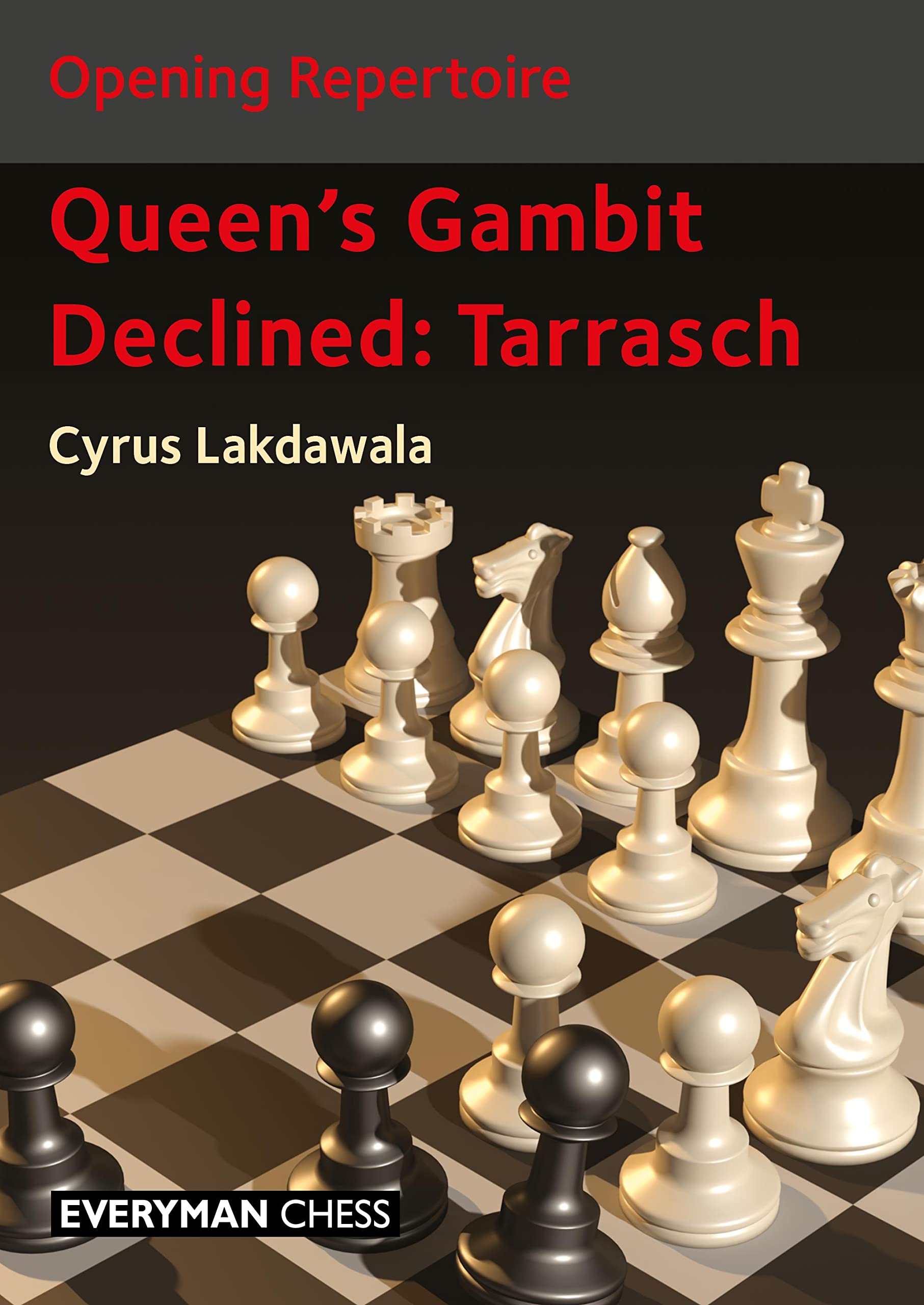
Opening Repertoire: Queen's Gambit Declined: Tarrasch, Cyrus Lakdawala, Everyman Chess (16 Jan. 2023), ISBN-13 ‏ : ‎ 978-1781946961
Opening Repertoire: Queen’s Gambit Declined: Tarrasch, Cyrus Lakdawala, Everyman Chess (16 Jan. 2023), ISBN-13 ‏ : ‎ 978-1781946961