All posts by Andrew Martin

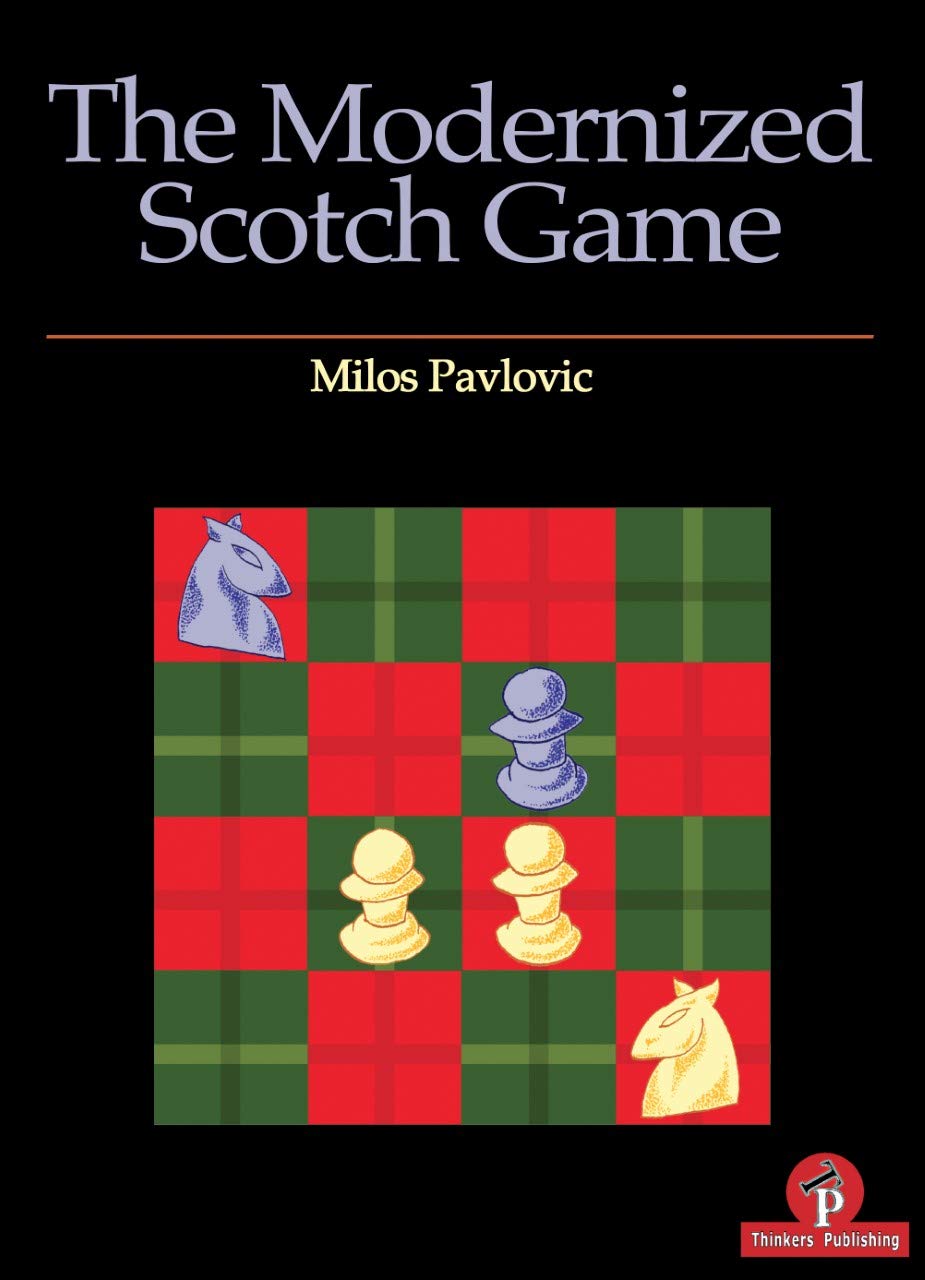
The Modernized Scotch Game : A Complete Repertoire for White and Black

The Modernized Scotch Game : A Complete Repertoire for White and Black, Thinkers Publishing, December 2019,  Milos Pavlovic
The Modernized Scotch Game : A Complete Repertoire for White and Black, Thinkers Publishing, December 2019, Milos Pavlovic

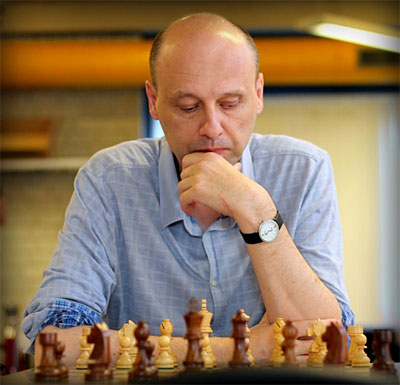
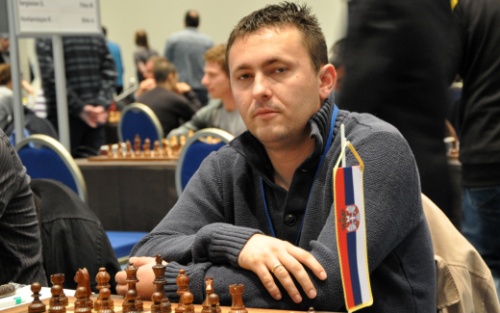
Grandmaster Milos Pavlovic was born in Belgrade in 1964 and was Yugoslav Champion in 2002. He is a well known theoretician specialising in opening theory and has written many chess books and magazine articles. Previously we have reviewed The Modernized Stonewall Defence and The Modernized Colle-Zukertort Attack by this author.

GM Milos Pavlovic
GM Milos Pavlovic

This is another title in the “Modernized” series from Thinkers Publishing with this Scotch Game book being published on December 17th 2019. We first reviewed a title in this series with The Modernized Caro-Kann from GM Daniel Fernandez and then followed by The Modernised Colle-Zukertort from Pavlovic.

As with every recent Thinkers Publishing publication high quality paper is used and the printing is clear. The book can easily be laid flat next to the board and does not require weights to prevent it from “self-closing” (a particular bugbear of ours !). Each diagram is clear and the instructional text is typeset in two column format, which, we find, enables the reader to maintain their place easily. Figurine algebraic notation is used throughout and the diagrams are placed adjacent to the relevant text and each diagram has a “to move” indicator.

[pgn]
[Event “?”]
[Site “?”]
[Date “2020.11.05”]
[Round “?”]
[White “INTRO”]
[Black “?”]
[Result “*”]
[ECO “C44”]
[Annotator “IM Andrew Martin”]
[PlyCount “6”]
[EventDate “2020.11.05”]

{[%evp 0,6,30,30,30,30,16,16,16]} 1. e4 e5 2. Nf3 Nc6 3. d4 exd4 {[#] The
Modernized Scotch Game, by GM MIlos Pavlovic is a detailed book written
primarily for stronger players. It is a dense and complex work, full of
analysis and interesting suggestions. As such, it can be strongly recommended,
with the caveat that it will be tough going for some. As usual, with books
from Thinkers Publishing, the presentation is excellent. I would personally
use this book as a reference work, to assist in pre-game preparation and to
dip into from time to time for some detailed study. This is not a book to read
as such, but to refer to. It was Gary Kasparov who was responsible for the
tremendous popularity of the Scotch in modern chess. He aimed for complex,
unbalanced positions and introduced a number of completely new ideas into this
venerable system. Thanks to his inspiration. the search for ideas continues
today.} *
[/pgn]

[pgn]
[Event “Norway Chess Armageddon 8th”]
[Site “Stavanger”]
[Date “2020.10.15”]
[Round “9”]
[White “Tari, Aryan”]
[Black “Aronian, Levon”]
[Result “0-1”]
[ECO “C45”]
[WhiteElo “2633”]
[BlackElo “2767”]
[Annotator “IM Andrew Martin”]
[PlyCount “68”]
[EventDate “2020.10.05”]
[EventType “tourn (blitz)”]
[EventRounds “10”]
[EventCountry “NOR”]
[SourceTitle “CB43_2020”]
[SourceDate “2020.10.21”]
[SourceVersion “1”]
[SourceVersionDate “2020.10.21”]
[SourceQuality “1”]

{[%evp 0,68,30,30,16,16,8,-3,4,12,10,2,8,-3,0,0,0,-3,-4,-24,3,-27,-29,-25,-23,
-26,-26,-25,9,-49,-39,-81,-50,29,25,33,13,34,28,28,13,-42,-37,-111,-110,-145,
-132,-132,-154,-148,-148,-212,-159,-187,-187,-381,-381,-367,-328,-320,-342,
-334,-371,-479,-417,-497,-441,-442,-443,-737,-742]} {Let’s see a few
interesting recent games. In the first, Norwegian GM Tari tries an old idea
from Holland, first played by John van der Wiel in high-level chess..} 1. e4 e5
2. Nf3 Nc6 3. d4 exd4 4. Nxd4 Nf6 5. Nxc6 bxc6 6. e5 Qe7 7. Qe2 Nd5 8. h4 $5 {
[#]} Qe6 ({Pavlovic likes} 8… d6 {but reckons that 8…Qe6 or 8…f6 are
also OK}) 9. g3 Bc5 10. c4 Nb6 11. Nd2 O-O 12. Bh3 Qe7 13. O-O Ba6 14. Re1 Rae8
15. Ne4 (15. b3 {was more stable.}) 15… Bd4 16. Nf6+ gxf6 17. Qg4+ Kh8 18.
Qxd4 fxe5 19. Qc3 Bxc4 20. b3 Bd5 21. a4 f6 22. a5 Nc8 23. Be3 Nd6 24. Bc5 Qf7
25. b4 Rg8 26. a6 Nb5 27. Qd2 d6 28. Be3 f5 29. Bg5 f4 30. Kh2 Qg7 31. gxf4 h6
32. Rg1 hxg5 33. Rxg5 Qh7 34. Rag1 Nd4 0-1
[/pgn]

[pgn]
[Event “AUT-chT2M 1920”]
[Site “Austria”]
[Date “2020.01.10”]
[Round “7.5”]
[White “Wiesinger, Robert”]
[Black “Hatzl, Johannes”]
[Result “1-0”]
[ECO “C45”]
[WhiteElo “2230”]
[BlackElo “2130”]
[Annotator “IM Andrew Martin”]
[PlyCount “81”]
[EventDate “2019.10.11”]
[EventType “team-tourn”]
[EventRounds “11”]
[EventCountry “AUT”]
[SourceTitle “CB05_2020”]
[SourceDate “2020.01.29”]
[SourceVersion “1”]
[SourceVersionDate “2020.01.29”]
[SourceQuality “1”]
[WhiteTeam “Steyregg”]
[BlackTeam “Fuerstenfeld/Hartberg II”]
[WhiteTeamCountry “AUT”]
[BlackTeamCountry “AUT”]

{[%evp 0,81,30,36,28,30,25,11,11,16,27,-5,20,20,20,20,23,16,30,19,19,13,26,17,
28,27,32,25,21,-10,17,-3,-7,-29,18,-26,-17,-5,-9,-11,-21,2,-10,-5,153,160,160,
145,285,328,332,377,376,368,368,338,341,367,386,386,511,528,529,539,740,771,
791,637,641,501,539,557,559,554,568,517,550,559,562,583,579,579,658,898]} 1. e4
e5 2. Nf3 Nc6 3. d4 exd4 4. Nxd4 Bc5 5. Nxc6 Qf6 6. Qf3 $5 {[#] Fans include
Radjabov, Nepomniatchi and Rublevsky. Both sides can end up with doubled pawns,
but it will be White who has slightly the better of things in the resulting
position.} Qxf3 {This move is surprisingly omitted by Pavlovic in the book,
yet it is a main line!} 7. gxf3 bxc6 8. Nd2 Ne7 9. Nb3 Bb6 10. a4 a5 11. Be3
Bxe3 12. fxe3 d6 13. Bd3 O-O 14. Kd2 Bd7 15. Rhg1 c5 16. Kc3 f5 17. Rg5 Be6 18.
Rag1 g6 19. f4 Kh8 ({Black should prefer} 19… fxe4 20. Bxe4 Rab8 21. Nd2 d5 {
[#] when his position may even be slightly preferable!}) 20. h4 Rab8 21. h5 c4
$2 ({Black must show some imagination to defend this position and the active}
21… h6 $1 22. R5g2 g5 {was required.} 23. fxg5 fxe4 24. Bxe4 Rb4 25. Nd2 d5
26. Bf3 Nf5 $13) 22. hxg6 $16 hxg6 23. exf5 Nxf5 (23… cxd3 24. fxe6 dxc2 25.
Nxa5 Rf6 26. Kxc2 Rxe6 27. Nc4 $16) 24. Rxg6 Bg8 25. Bxf5 Rxf5 26. Rh6+ Bh7 27.
Nd4 $18 Rf7 28. Ne6 Re8 29. Rgh1 Rfe7 30. Ng5 Rxe3+ 31. Kxc4 c6 32. Rxh7+ Kg8
33. Rh8+ Kg7 34. Rxe8 Rxe8 35. Rd1 d5+ 36. Kc5 Re2 37. Rc1 Rf2 38. Kxc6 Kf6 39.
Kxd5 Rxf4 40. Ne4+ Kf5 41. Rf1 1-0
[/pgn]

[pgn]
[Event “New Delhi Parsvnath op-A 18th”]
[Site “New Delhi”]
[Date “2020.01.15”]
[Round “9”]
[White “Ponkratov, Pavel”]
[Black “Audi, Ameya”]
[Result “1-0”]
[ECO “C45”]
[WhiteElo “2622”]
[BlackElo “2359”]
[Annotator “IM Andrew Martin”]
[PlyCount “125”]
[EventDate “2020.01.09”]
[EventType “swiss”]
[EventRounds “10”]
[EventCountry “IND”]
[SourceTitle “CB04_2020”]
[SourceDate “2020.01.22”]
[SourceVersion “1”]
[SourceVersionDate “2020.01.22”]
[SourceQuality “1”]

{[%evp 0,125,34,13,13,15,15,5,5,5,37,20,38,38,47,43,43,39,40,33,43,19,69,55,50,
36,49,35,37,32,29,31,36,-44,-25,-22,15,-9,5,4,29,0,0,18,54,35,58,37,55,0,0,0,0,
0,9,3,23,14,16,9,9,23,22,28,41,28,28,0,0,18,13,12,16,24,23,-41,48,34,48,52,49,
49,23,44,36,51,54,58,58,61,66,62,80,82,97,89,79,82,82,82,87,82,80,108,134,133,
252,133,444,347,360,299,284,278,286,286,276,283,339,339,339,272,577,587,598,
587,823,781]} 1. e4 e5 2. Nf3 Nc6 3. d4 exd4 4. Nxd4 Qf6 $5 {Pavlovic deals
well with all the unusual fourth Black moves aside from 4…Bc5 and 4…Nf6 .
He even manages to squeeze a recommendation for Black against the Goring
Gambit at the very end of the book.} 5. Nb5 Bc5 6. Qf3 Nd4 7. Nxd4 Bxd4 8. c3
Bc5 9. Nd2 d6 10. b4 Bb6 11. Nc4 Be6 12. a4 Bxc4 13. Bxc4 a5 14. Rb1 Qxf3 15.
gxf3 Ne7 16. f4 O-O 17. b5 {[#] Here we have a typical position that can
arise from the queen exchange variations. Black is fine, unless he plays
passively and allows White to gradually take over.} Rae8 (17… d5 $1 {was
indicated and Black is equal:} 18. exd5 (18. Bd3 Rad8 19. e5 f6) 18… Rfd8 19.
Be3 Bxe3 20. fxe3 Nxd5) 18. Kf1 Kh8 19. f5 Ng8 20. f3 Nf6 21. Bg5 Bc5 22. Rd1
b6 23. Bb3 h6 24. Bc1 Kh7 25. Kg2 g6 26. Rhe1 Kg7 27. Bd5 Re7 28. Bc6 Rg8 29.
Kh3 Kh7 30. Bf4 Bf2 31. Re2 Nh5 32. Bc1 Bc5 33. fxg6+ fxg6 34. f4 Rf8 35. Rf1
g5 36. f5 Nf6 37. Kg3 Re5 38. c4 Re7 39. Bb2 {[#] White has been grinding
away and it is starting to pay off.} Nh5+ 40. Kf3 Nf4 41. Rd2 Ng6 42. Bd5 Ne5+
43. Ke2 Kg7 44. Rd3 Kf6 45. Rh3 Rh8 46. Rh5 Rg7 47. Bc3 Rhh7 48. Bd2 Bd4 49.
Rd1 Bb2 50. Rb1 Bd4 51. Rb3 Rh8 52. Rbh3 Ng4 53. Rd3 Nxh2 54. Rxh2 Be5 55. Rdh3
Bxh2 56. Rxh2 Re7 57. Bc3+ Re5 58. Rh5 Rh7 59. Kf3 Rh8 60. c5 dxc5 61. Bc4 Rh7
62. Rh1 h5 63. Rd1 1-0
[/pgn]

[pgn]
[Event “?”]
[Site “?”]
[Date “2020.11.05”]
[Round “?”]
[White “SUMMARY”]
[Black “?”]
[Result “*”]
[ECO “C44”]
[Annotator “IM Andrew Martin”]
[PlyCount “6”]
[EventDate “2020.11.05”]

{[%evp 0,6,19,31,34,19,13,14,26]} 1. e4 e5 2. Nf3 Nc6 3. d4 exd4 {Summarizing,
this book will be very useful to all those thinking of playing the Scotch or
fighting against it. I give it 4.5/5 stars. Congratulations to GM Pavlovic
on producing this fine book.} *
[/pgn]

Four and Half out of Five Stars

Andrew Martin, Bramley, Surrey, 5th November, 2020

IM Andrew Martin
IM Andrew Martin

Book Details :

  • Hardcover : 280 pages
  • Publisher:  Thinkers Publishing (17 Dec. 2019)
  • Language: English
  • ISBN-10: 9492510731
  • ISBN-13: 978-9492510648
  • Product Dimensions: 17.02 x 1.52 x 23.37 cm

Official web site of Thinkers Publishing

The Modernized Scotch Game : A Complete Repertoire for White and Black, Thinkers Publishing, December 2019,  Milos Pavlovic
The Modernized Scotch Game : A Complete Repertoire for White and Black, Thinkers Publishing, December 2019, Milos Pavlovic

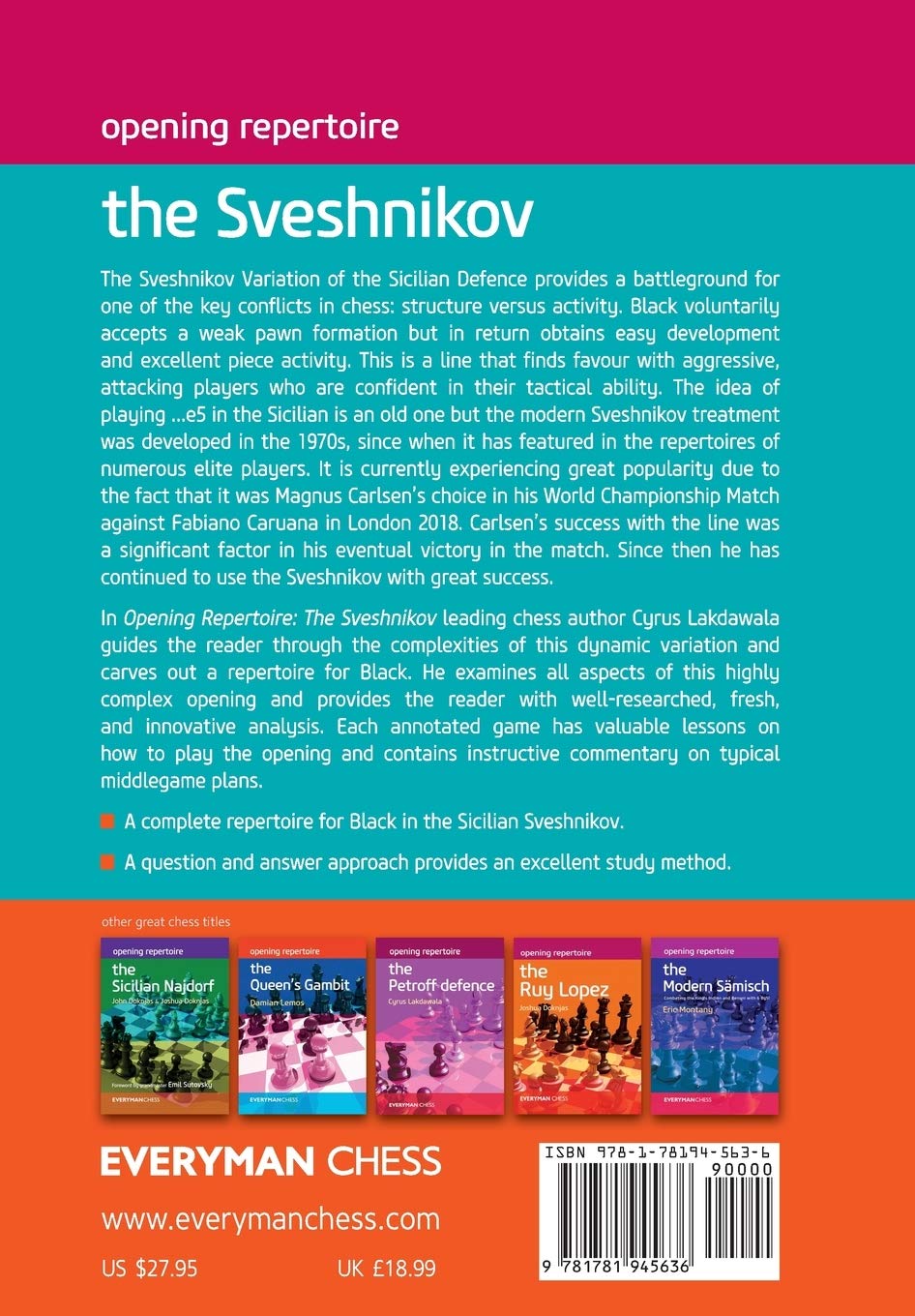
Opening Repertoire : The Sveshnikov

Opening Repertoire : The Sveshnikov

Cyrus Lakdawala is an IM and former US Open Champion who teaches chess and has written over 25 books on chess openings.

IM Cyrus Lakdawala
IM Cyrus Lakdawala

Writing a modern repertoire book on the Sveshnikov and keeping it below 500 pages is an achievement, but Cyrus Lakdawala has managed it.

One of his latest books, Opening Repertoire – the Sveshnikov, is only 320 pages long, retailing at £18.99 in the UK and published by Everyman Chess (2020).

I say one of his latest books, as Cyrus regularly manages to write 3/4 books a year, all of good quality and they come thick and fast off the press. I can honestly say that I don’t know how he does it. His output is staggering and clearly the product of incredible self-discipline. As a fellow author, nowhere near his league, I salute him.

The Sveshnikov is a current Magnus Carlsen favourite and so if the book is any good at all, it should sell well.

[pgn]
[Event “Chessable Masters GpA”]
[Site “chess24.com INT”]
[Date “2020.06.20”]
[Round “2”]
[White “Harikrishna, Pentala”]
[Black “Carlsen, Magnus”]
[Result “0-1”]
[ECO “B33”]
[WhiteElo “2719”]
[BlackElo “2863”]
[Annotator “IM Andrew Martin”]
[PlyCount “170”]
[EventDate “2020.06.20”]
[EventType “tourn (rapid)”]
[EventRounds “10”]
[EventCountry “GER”]
[EventCategory “21”]
[SourceTitle “CB26_2020”]
[SourceDate “2020.05.05”]
[SourceVersion “1”]
[SourceVersionDate “2020.05.05”]
[SourceQuality “1”]

{[%evp 0,170,23,11,50,43,43,34,26,25,53,43,43,43,43,5,5,-22,25,13,-21,-10,2,
-27,4,4,16,23,30,4,4,8,12,0,15,16,37,32,26,22,21,26,51,51,52,27,42,10,4,12,0,0,
0,-4,0,25,6,9,12,12,12,6,31,13,30,25,22,19,1,0,43,-20,3,1,0,-62,-45,-39,-50,
-47,-26,-88,-107,-105,-103,-119,-115,-141,-120,-122,-72,-92,-82,-95,-85,-101,
-95,-95,-80,-86,-80,-80,-80,-80,-90,-100,-80,-90,-87,-100,-85,-95,-102,-102,
-80,-84,-80,-90,-64,-113,-103,-103,-101,-101,-101,-101,-83,-102,-101,-149,-105,
-120,-92,-93,-99,-101,-101,-101,-101,-101,-101,-101,-101,-101,-111,-129,-135,
-136,-125,-125,-125,-126,-133,-133,-133,-139,-133,-178,-162,-162,-168,-170,
-166,-172,-158,-170,-167,-173,-215,-212,-212,-929,-972]} 1. e4 c5 2. Nf3
Nc6 3. d4 cxd4 4. Nxd4 Nf6 5. Nc3 e5 6. Ndb5 d6 7. Bg5 a6 8. Na3 b5 9. Nd5 Be7
10. Bxf6 Bxf6 11. c4 b4 12. Nc2 a5 13. g3 g6 14. Nxf6+ Qxf6 15. Bg2 O-O 16. O-O
Bb7 17. Qd2 Nb8 18. Rfd1 Ra6 19. Qe3 Nd7 20. a3 Rb6 21. axb4 axb4 22. Ra4 b3
23. Ne1 Nc5 24. Ra3 Ra6 25. Rxa6 Bxa6 26. Bf1 Rc8 {[#] The position is
objectively equal. Carlsen typically settles in for a long grind.} 27. Nf3 Bb7
28. Nd2 Bc6 29. Ra1 Rb8 30. Ra3 Ba4 31. h4 h5 $2 (31… Qe7 $11) 32. Be2 $2 (
32. Rxa4 Nxa4 33. Qa7 {would have given White a substantial advantage.}) 32…
Kg7 33. Nb1 Qd8 34. Nd2 Ra8 35. Kh2 Ne6 36. Nf3 Bc6 37. Rxa8 Qxa8 38. Qxb3 Bxe4
{Black is getting on top.} 39. Qe3 Bb7 40. c5 Nxc5 41. Nxe5 Qa1 42. Nf3 Qxb2
43. Ng5 Bd5 44. Bf3 Bxf3 45. Qxf3 Qf6 46. Qe3 Ne6 47. Nf3 Qf5 48. Kg2 Qd5 49.
Kg1 Kf6 50. Qc3+ Ke7 51. Qe3 Qc5 52. Qd3 Qc1+ 53. Kg2 Qc6 54. Kg1 Nc5 55. Qe3+
Qe4 56. Qc3 Ne6 57. Qa3 Ke8 58. Kg2 g5 59. Kg1 g4 60. Ng5 Nxg5 61. hxg5 Qe1+
62. Kg2 Qe5 63. Qa8+ Ke7 64. Qg8 Qe4+ 65. Kg1 Qg6 66. Qc8 Qb1+ 67. Kh2 Qb6 68.
Kg2 Qc5 69. Qg8 Qf5 70. Qb8 Qe4+ 71. Kg1 d5 72. Qc7+ Kf8 73. Qd8+ Kg7 74. Qf6+
Kg8 75. Qd8+ Kh7 76. Qf6 Qg6 77. Qf4 Qe6 78. Qd4 Kg6 79. Kf1 Kxg5 80. Qg7+ Kf5
81. Qh8 Ke4 82. Qxh5 Kd3 83. Qh7+ Qe4 84. Qh6 Kc2 85. Qc6+ Qc4+ 0-1
[/pgn]

One of my first ports of call was to check out what Cyrus recommended against 7 Nd5, which featured in the Carlsen-Caruana World Championship match.

[pgn]
[Event “Moscow op-A 16th”]
[Site “Moscow”]
[Date “2020.01.30”]
[Round “6”]
[White “Pridorozhni, Aleksei”]
[Black “Tekeyev, Zaur”]
[Result “1-0”]
[ECO “B33”]
[WhiteElo “2601”]
[BlackElo “2384”]
[Annotator “IM Andrew Martin”]
[PlyCount “55”]
[EventDate “2020.01.25”]
[EventType “swiss”]
[EventRounds “9”]
[EventCountry “RUS”]
[SourceTitle “CB07_2020”]
[SourceDate “2020.02.12”]
[SourceVersion “1”]
[SourceVersionDate “2020.02.12”]
[SourceQuality “1”]

{[%evp 0,55,19,21,72,49,51,34,13,24,24,14,24,24,24,24,24,24,24,24,56,33,33,33,
43,32,24,24,24,24,105,95,128,143,137,80,81,80,108,74,111,89,96,101,111,102,243,
243,249,142,652,675,740,501,501,501,501,501]} 1. e4 c5 2. Nc3 Nc6 3. Nge2 Nf6 4.
d4 cxd4 5. Nxd4 e5 6. Ndb5 d6 7. Nd5 Nxd5 8. exd5 Ne7 {[#] Carlsen has
recently preferred this to 8…Nb8, but there are some critical lines, one of
which we see in this game.} (8… Nb8) 9. c4 Ng6 10. Qa4 Bd7 11. Qb4 Bf5 12.
Be3 Be7 13. Nxa7 O-O 14. Nb5 $1 {Tweaking the move order.} (14. Be2 Nf4 15.
Bxf4 exf4 16. Nb5 Bf6 17. O-O Be5 {is given in the book , after which Black
has compensation thanks to his dark-squared control.}) 14… e4 ({After} 14…
Nf4 15. Qd2 {I am not sure Black has full value for a pawn.}) 15. Be2 Nh4 16.
O-O Qd7 17. f4 exf3 18. Bxf3 Rfe8 19. Qd2 Bg6 20. b3 Bf6 21. Bd4 Nxf3+ 22. Rxf3
Bh4 23. Bxg7 Be4 24. Bc3 Qg4 25. Rf4 Qg5 26. Bf6 Qxf6 27. Rxf6 Bxf6 28. Rf1 1-0
[/pgn]

The problem with repertoire books is that they can become outdated very quickly under the gaze of the silicon genius. Having said that, the chapter on
7 Nd5 is very well written ,with a wealth of interesting suggestions.

I guess the biggest challenge that the Sveshnikov presents is the vast amount of theory that has accumulated. You have to know a lot to begin with and work very hard to keep up to date. This is not everyone’s cup of tea. For me, the Sveshnikov is great for strong players, but I am not so sure about club players. Some of the main line positions are very complex and tactical, where Black is relying on accurate move sequences to see him through. Having said that, when you do get this
opening right as Black, I imagine it can be very satisfying.

[pgn]
[Event “PNWCC Online blitz JP 10th”]
[Site “chess.com INT”]
[Date “2020.05.16”]
[Round “3”]
[White “Pichot, Alan”]
[Black “Gelfand, Boris”]
[Result “0-1”]
[ECO “B33”]
[WhiteElo “2630”]
[BlackElo “2676”]
[Annotator “IM Andrew Martin”]
[PlyCount “74”]
[EventDate “2020.05.16”]
[EventType “swiss (blitz)”]
[EventRounds “11”]
[EventCountry “USA”]
[SourceTitle “CB21_2020”]
[SourceDate “2020.05.20”]
[SourceVersion “1”]
[SourceVersionDate “2020.05.20”]
[SourceQuality “1”]

{[%evp 0,74,19,31,72,53,33,26,28,24,24,24,24,24,24,-5,-5,-5,-5,-5,-5,-5,9,-24,
-23,-23,-2,10,-9,-40,-43,-10,-12,-14,2,-6,37,37,42,33,37,17,13,5,22,9,-8,-47,
-40,-59,-35,-131,-27,-114,-50,-42,10,-39,-26,-81,-92,-71,-91,-83,-89,-89,-89,
-88,-109,-93,-83,-88,-83,-88,-94,-104,-106]} 1. e4 c5 2. Nf3
Nc6 3. d4 cxd4 4. Nxd4 Nf6 5. Nc3 e5 6. Ndb5 d6 7. Bg5 a6 8. Na3 b5 9. Bxf6
gxf6 10. Nd5 f5 11. g3 $5 {[#] Another pesky sideline to learn.} fxe4 12. Bg2
Bg7 13. Bxe4 Be6 14. O-O Rc8 15. c3 O-O 16. Nc2 f5 17. Bg2 Kh8 18. a4 bxa4 19.
Rxa4 a5 20. Rh4 Ne7 21. Nxe7 Qxe7 22. Ne3 Rb8 23. b4 axb4 24. cxb4 e4 25. Bh3
Be5 26. Qh5 Qf7 27. Qxf7 Rxf7 28. Rh6 Bd7 29. Nc4 Kg7 30. Nxe5 dxe5 31. Rd6
Rxb4 32. Rfd1 Bb5 33. Rb6 Be2 34. Rxb4 Bxd1 35. Rb5 Kf6 36. Rb6+ Kg7 37. Re6
Bf3 0-1[/pgn]

I enjoyed Lakdawala’s book and I think you will too. You will need time and energy to absorb it properly. There are extra chapters on the Anti-Sveshnikov, 3 Nc3 and an opening line Lakdawala calls ‘ the Mamba’, where Black substitutes 6…Bc5!? for 6 …d6.

[pgn]
[Event “Wch Seniors 65 27th”]
[Site “Acqui Terme”]
[Date “2017.11.14”]
[Round “7”]
[White “Gruzmann, Boris”]
[Black “Sveshnikov, Evgeny”]
[Result “0-1”]
[ECO “B33”]
[WhiteElo “2218”]
[BlackElo “2480”]
[Annotator “IM Andrew Martin”]
[PlyCount “98”]
[EventDate “2017.11.07”]
[EventType “swiss”]
[EventRounds “11”]
[EventCountry “ITA”]
[SourceTitle “CBM 181 Extra”]
[Source “ChessBase”]
[SourceDate “2017.12.12”]
[SourceVersion “1”]
[SourceVersionDate “2017.12.12”]
[SourceQuality “1”]

{[%evp 0,98,23,33,48,45,52,19,20,19,21,21,24,24,24,-7,-7,3,-4,-6,-5,-5,-6,-2,
13,9,13,10,15,10,18,25,34,18,23,22,16,19,13,3,12,7,16,17,16,2,12,7,-6,4,5,14,
-8,-10,0,0,0,0,0,0,0,-10,0,0,0,0,0,0,0,0,0,0,0,0,0,0,0,0,0,-30,-30,-37,-41,-41,
-41,-41,-41,-112,-68,-72,-79,-74,-75,-102,-88,-75,-97,-97,-79,-239,-239]} {
For the time being, let’s leave the last word to the Grandmaster from
a different era, whose phenomenal contribution to this opening came from blood,
toil,tears and sweat and not from the pressing of buttons.} 1. e4 c5 2. Nf3 Nc6
3. d4 cxd4 4. Nxd4 Nf6 5. Nc3 e5 6. Ndb5 d6 7. Bg5 a6 8. Na3 b5 9. Nd5 Be7 10.
Bxf6 Bxf6 11. c4 b4 12. Nc2 a5 13. g3 O-O 14. Bg2 Be6 15. O-O Rc8 16. b3 Bxd5
17. Qxd5 Nd4 18. Nxd4 exd4 19. Qh5 Qb6 20. Rad1 g6 21. Qe2 Bg7 22. Rd3 Rce8 23.
g4 f5 24. gxf5 Rxf5 25. Qg4 Rh5 26. f4 Qd8 27. Rh3 Rxh3 28. Qxh3 Kh8 29. Qg3
Qf6 30. Qg5 Qxg5 31. fxg5 Re5 32. h4 Re7 33. Kf2 Be5 34. Ke2 Bg3 35. Kf3 Be5
36. Ke2 Kg7 37. Rf3 h5 38. gxh6+ Kxh6 39. Rh3 Ra7 40. Bf3 a4 {[#] Deep in the
endgame, the veteran GM starts to show his class.} 41. Bg4 axb3 42. axb3 Ra1
43. h5 g5 44. Bf5 Rg1 45. Kf2 Rc1 46. Rf3 Rh1 47. Rh3 Rxh3 48. Bxh3 Kxh5 49.
Bf1 (49. Kf3 Kh4 50. Be6 d3 51. Ke3 Kg3 52. Kxd3 Kf3 {should win:} 53. c5 dxc5
54. Kc4 Bg7 $1 55. Kxc5 Bf8+ 56. Kd5 g4 57. e5 g3) 49… Kg4 0-1
[/pgn]

I rate this book excellent, 4.5/5 stars.

Four and Half out of Five Stars

Andrew Martin, Bramley, Surrey, 5th August, 2020

IM Andrew Martin
IM Andrew Martin

Book Details :

  • Paperback : 322 pages
  • Publisher:Everyman Chess (1 Mar. 2020)
  • Language:English
  • ISBN-10:1781945632
  • ISBN-13:978-1781945636
  • Product Dimensions: 17.3 x 1.8 x 24.2 cm

The book is available as a physical book and as a Kindle version.

Official web site of Everyman Chess

Opening Repertoire : The Sveshnikov

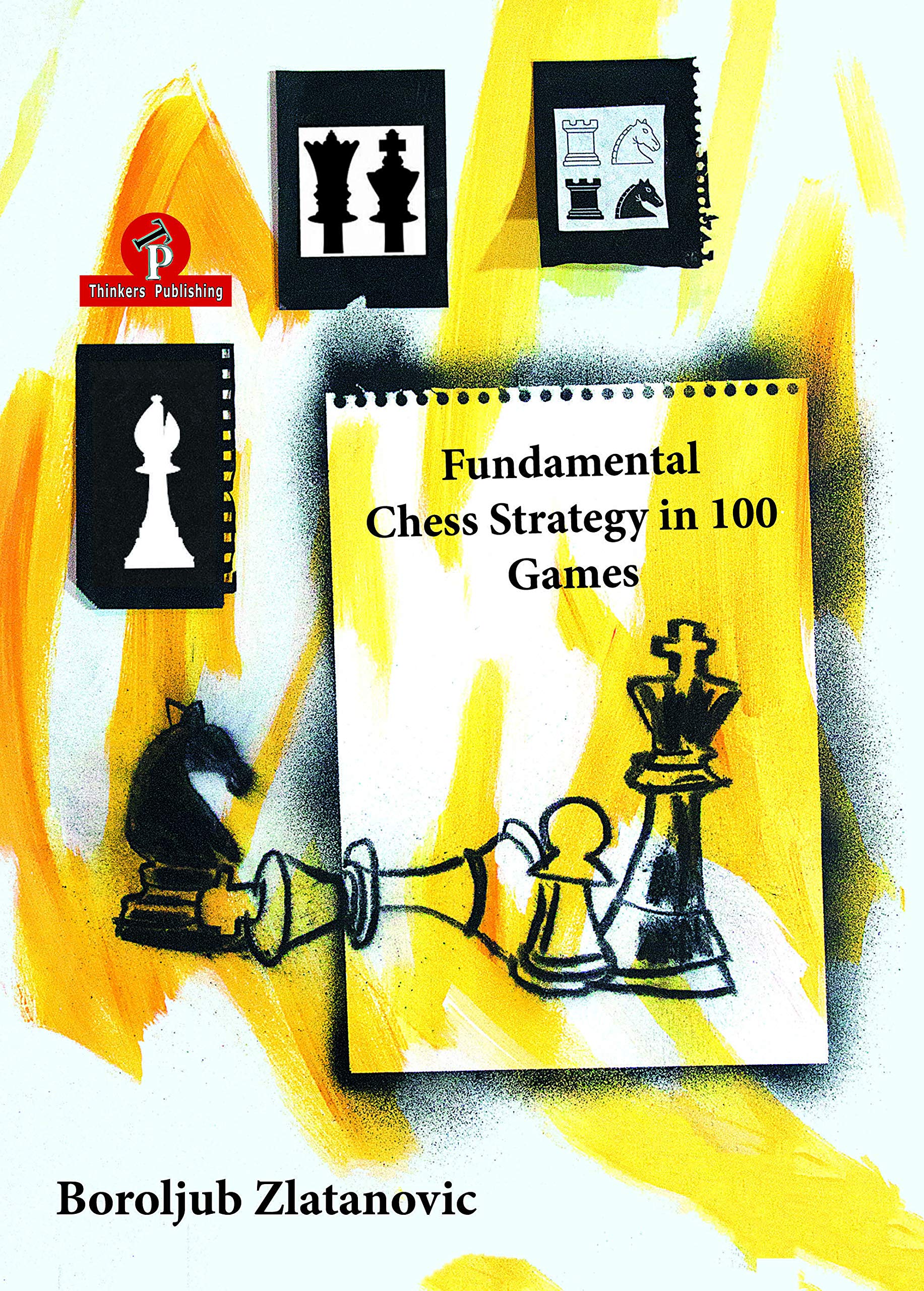
Fundamental Chess Strategy in 100 Games

Fundamental Chess Strategy in 100 Games

Boroljub Zlatanovic was born in Cuprija, Serbia, 05 August 1977 • Meet chess in 4 years old watching father and his brother playing • Entered first club “Radnicki” Cuprija in 7 years • FM since 1994 ( however, it was recognized in 1998) • Serbian youth champion in 1995 • Champion of Belgrade University in 2001 and 2002 • Many times won Serbian team championship (in youth competition also) • IM since 2014 • FT since 2015 • Winner of many open, blitz and rapid and internet events • Professional coach for more than 15 years • Author and contributor in American chess magazine since 2019

FM Boroljub Zlatanovic

From the rear cover :

“This book would bring something new into your chess library. In computer era focus is usually on openings. Watching broadcasts new generations rather choose games with favorite opening played seeking for some interesting idea or even brilliant novelty. I offer and recommend different concept, based on famous Soviet chess school. Focus should be on understanding strategy concepts, principles and inner logic. Fashionable opening lines will be forgotten (or re-evaluated) sooner or later, but understanding cannot be lost and can be only upgraded. It is sad to see some player well equipped with opening lines, unable to realize big positional advantage in deep endgame. So, our advice is to learn about Strategy and Logic. The book is highly recommended for club players, advanced players and masters, although even higher rated players can find a lot of useful things for themselves. There is no doubt lower rated players will learn a lot about thinking process and making decisions, while some logical principles can be good advice for strong players also.”

Another review :

“Zlatanovic uses a light touch of his notes, limiting the complexity of his analysis and working to clearly explain the logic of positional decisions and ideas. Using examples both well-known and less studied, class and club players are taught quite a bit about basic positional play. I certainly leaned a thing of two. Johh Hartmann – Chess Life – April 2020.”

As with every recent Thinkers Publishing publication high quality paper is used and the printing is clear. The book can easily be laid flat next to the board and does not require weights to prevent it from “self-closing” (a particular bugbear of ours !). Each diagram is clear and the instructional text is typeset in two column format, which, we find, enables the reader to maintain their place easily. Figurine algebraic notation is used throughout and the diagrams are placed adjacent to the relevant text and each diagram has a “to move” indicator.

There is no index which, unfortunately, is a standard omission of Thinkers Publishing books. Also missing is a bibliography.

This is a massive book, over 500 pages and is a collection of classic games, with instructive notes. It is more or less designed for the club player. There is a bit of blurb on the back cover stating that the book will be useful to advanced players and masters, but I am not at all sure about that.

I cannot see advanced players buying this book.

Apparently, the book is based on the same principles as the famous Soviet school of chess. Strategy, logic and understanding should take pride of place, even in our computer era. I agree, but I don’t need the Soviet school of chess to tell me that. I can work that out for myself.

The book is beautifully produced and is very easy to read. It retails at a whopping £29.95 in the UK.

As there are so many books of the same type around, what I was looking for was a bit of originality. At the very least , all of the games should have been from the last 20 years, trying to unravel the complexity of the modern game.

What I found were games that I almost all seen before. There are only 15 games in the entire book that come from the period 2000-2020. None from Magnus Carlsen, for instance. This was disappointing.

Players under 1800 will get the most out of this book and trainers will have a ready source of lesson plans, if they are willing to make what is a hefty investment.

I give this book 3 out of 5 stars.

Three out of Five Stars

IM Andrew Martin, Bramley, Surrey 4th August 2020

IM Andrew Martin
IM Andrew Martin

Book Details :

  • Hardcover : 512 pages
  • Publisher:Thinkers Publishing; 1 edition (19 Mar. 2020)
  • Language: English
  • ISBN-10:9492510685
  • ISBN-13:978-9492510686
  • Product Dimensions: 7 x 3.6 x 23.4 cm

Official web site of Thinkers Publishing

Fundamental Chess Strategy in 100 Games

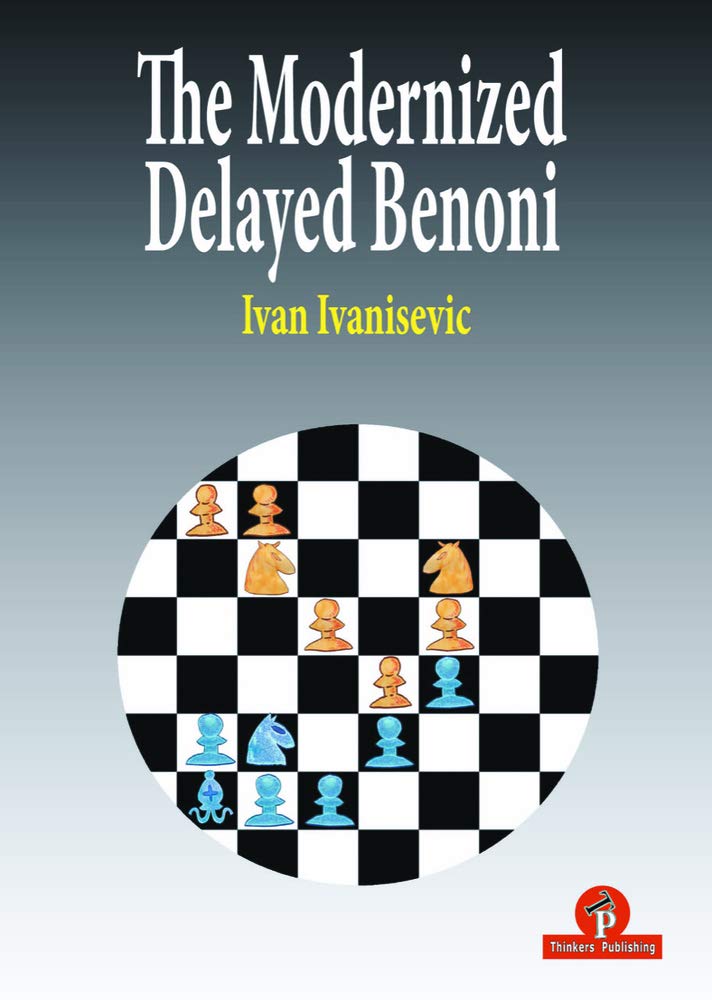
The Modernized Delayed Benoni

The Modernized Delayed Benoni

Ivan Ivanisevic, born in 1977, started playing chess when he was 5 years old, while watching his grandfather and father play. At the age of 10 he started working with IM Petar Smederevac, the coach of the national team of former Yugoslavia, who is probably the real reason why he started playing professionally. Before he reached the age of 20 years old, he shared 1st place in the Championship of the former Yugoslavia. In 1999 he won the title of Grandmaster. Since 1998 he is a member of the national team, and since 2007 continually playing on the first board. Four times he was the Champion of Serbia. He won many tournaments, from which we remember mostly following: Saint Petersburg 2014, Skopje 2015, sharing 1-5 place in Dubai 2015, Vršac, the Bora Kostić Memorial, 2006, Nova Gorica 2007, Bergamo 2014, Kavala 2007, Podgorica, 2011 becoming the Balkan champion and Kozloduy, the rapid championship of Danube 2012. He was also participant of the World Cup in 2011. This this second book for Thinkers Published, after he co-authored the most acclaimed ‘Taimanov Bible’ from 2017.

GM Ivan Ivanisevic
GM Ivan Ivanisevic

From the rear cover :

“The Modernized Delayed Benoni is much more than the title makes you think! I like the author’s approach very much: it is a mixture of a personal journey and a theoretical manual. The author has been probably the main exponent of this line for the past ten years and he uses many of his games to illustrate the variations he has recommended. Although the book is again extremely detailed, there is careful attention to move orders and enough passages of explanations to make much of it understandable for non-experts. An excellent effort. GM Matthew Sadler, NIC Magazine 2020/4.

My aim in this book is to show that the Delayed Benoni is equally as attractive as its cousin, the Modern Benoni. For some reason – perhaps because “Modern” sounds more exciting than “Delayed”? – my favorite Benoni has been neglected for years, receiving scant coverage in chess publications.”

As with every recent Thinkers Publishing publication high quality paper is used and the printing is clear. The book can easily be laid flat next to the board and does not require weights to prevent it from “self-closing” (a particular bugbear of ours !). Each diagram is clear and the instructional text is typeset in two column format, which, we find, enables the reader to maintain their place easily. Figurine algebraic notation is used throughout and the diagrams are placed adjacent to the relevant text and each diagram has a “to move” indicator.

There is no index which, unfortunately, is a standard omission of Thinkers Publishing books. Also missing is a bibliography.

The Modernized Delayed Benoni is written by Grandmaster Ivan Ivanisevic, with an important contribution by GM Ivan Sokolov. It is an excellent 240 page book, produced by Thinkers Publishing.

There is a lot of detailed analysis here, complimented by plenty of relevant text. The book revives a system in the Benoni which has not been given the respect it deserves over the years.

This is not a beginner’s manual and strong players will get the most out of it.

The book focuses on the move order 1 d4 Nf6 2 c4 c5 3 d5 g6!

[fen]rnbqkb1r/pp1ppp1p/5np1/2pP4/2P5/8/PP2PPPP/RNBQKBNR w KQkq – 0 1[/fen]

as a way of getting to positions which are dynamic, relatively unexplored and suitable for playing for the win as Black.

Let’s take a look at some of these ideas…

Having digested a lot of this book, I’ve been trying the Black system online. Virtually all strong players meet it in the same way :

[pgn]
[Event “Gibraltar Masters 18th”]
[Site “Caleta”]
[Date “2020.01.25”]
[Round “5”]
[White “Quintiliano Pinto, Renato Rodrigues”]
[Black “Lagarde, Maxime”]
[Result “0-1”]
[ECO “E90”]
[WhiteElo “2471”]
[BlackElo “2651”]
[Annotator “Andrew”]
[PlyCount “66”]
[EventDate “2020.01.21”]
[EventType “swiss”]
[EventRounds “10”]
[EventCountry “GGB”]
[SourceTitle “CB06_2020”]
[SourceDate “2020.02.05”]
[SourceVersion “1”]
[SourceVersionDate “2020.02.05”]
[SourceQuality “1”]

{[%evp 0,66,32,32,23,-3,14,32,44,31,46,54,54,31,50,52,80,79,59,54,78,71,67,67,
105,87,101,53,81,91,91,96,104,109,103,102,145,119,103,105,101,113,126,17,19,22,
24,27,27,-33,5,-1,82,79,83,36,64,-87,-5,1,81,-173,-181,-249,-111,-390,-367,
-578,-287]} {Having digested a lot of this book, I’ve been trying the Black
system online. Virtually all strong players meet it in the same way.} 1. d4 Nf6
2. c4 c5 3. d5 g6 4. Nc3 Bg7 5. Nf3 O-O 6. e4 d6 7. h3 e6 8. Bd3 Nbd7 $5 9. O-O
{[#] This is the way they all go with White, who attempts to build his
position methodically, while Black struggles to get organised and has a
problem with the bishop on c8. Nevertheless, 8…Nbd7 looks like an
interesting waiting move. Black reserves the option of blocking the position
in the center. This line is well covered in the book.} e5 $5 10. Bg5 h6 11.
Bd2 Nh7 12. Qc2 Ng5 13. Nh2 Nf6 14. Qc1 Nh5 15. h4 Nh7 16. g3 Bh3 17. Re1 f5
18. exf5 gxf5 19. Bxh6 Qf6 20. Bg5 Qg6 21. g4 Nxg5 22. Qxg5 Qxg5 23. hxg5 fxg4
24. Re4 Rf5 25. Re3 e4 26. Nxe4 Rf4 27. Nxd6 Raf8 28. Bg6 g3 29. Bxh5 Bd4 30.
Bf7+ R8xf7 31. Nxf7 Rxf7 32. g6 Rxf2 33. Ng4 Rf3 0-1
[/pgn]

[pgn]
[Event “Gibraltar Masters 18th”]
[Site “Caleta”]
[Date “2020.01.29”]
[Round “9”]
[White “Pigott, John C”]
[Black “Real de Azua, Ernesto”]
[Result “0-1”]
[ECO “E90”]
[WhiteElo “2370”]
[BlackElo “2456”]
[Annotator “Andrew”]
[PlyCount “84”]
[EventDate “2020.01.21”]
[EventType “swiss”]
[EventRounds “10”]
[EventCountry “GGB”]
[SourceTitle “CB06_2020”]
[SourceDate “2020.02.05”]
[SourceVersion “1”]
[SourceVersionDate “2020.02.05”]
[SourceQuality “1”]

{[%evp 0,84,32,32,23,-3,32,31,31,50,50,50,50,36,40,49,79,64,94,88,82,60,86,53,
70,38,37,5,8,19,13,32,16,17,42,11,15,11,12,5,11,-13,-8,-16,26,-10,-6,0,0,-28,
-27,-28,-24,-36,-25,-36,-42,-33,-54,-55,-55,-89,-96,-96,-37,-102,-26,-80,-80,
-80,-34,-173,-192,-179,-211,-231,-223,-310,-154,-104,-147,-201,-163,-195,-181,
-426,-483]} {There are other ways to face the main line, one of which is shown
in this game. Black plays more in Benoni-style with …Na6-c7, delaying the
capture on d5 for as long as possible.} 1. d4 Nf6 2. c4 c5 3. d5 g6 4. Nc3 Bg7
5. e4 d6 6. Nf3 O-O 7. h3 e6 8. Bd3 Na6 9. O-O Nc7 $5 10. Re1 Re8 11. dxe6 {
White snaps first.} (11. Bg5 h6 12. Bh4 g5 13. Bg3 Nh5 14. Bh2 Nf4 15. Bxf4 (
15. Bf1 Bxc3 16. bxc3 e5) (15. Bc2 Bxc3 16. bxc3 e5) 15… gxf4 {is all
analysis given in the book.}) 11… Nxe6 12. Be3 Nd7 13. Bf1 Ne5 14. Nxe5 dxe5
{Black is fine here.} 15. Nd5 Nd4 16. Bd3 Be6 17. Qd2 Qd6 18. Rab1 b6 19. b3
Rac8 20. Rf1 f5 21. f3 Rf8 22. Kh1 Rf7 23. Rbc1 f4 24. Bxd4 exd4 25. Rb1 Be5
26. b4 g5 27. a4 h5 28. a5 bxa5 29. bxc5 Rxc5 30. Rb5 Rxb5 31. cxb5 g4 32. Rc1
Bd7 33. Qf2 gxh3 34. gxh3 Rg7 35. Bc4 Kh7 36. Rg1 Rg3 37. Rxg3 fxg3 38. Qc2 Kg7
39. Qd2 Qg6 40. Bf1 a4 41. Qb4 Qg5 42. Kg1 g2 {Through his diligent analysis,
Ivanisevic demonstrates at least two good ways to meet what is supposed to be
a challenging main line.} 0-1
[/pgn]

[pgn]
[Event “Bundesliga 1920”]
[Site “Germany”]
[Date “2020.02.23”]
[Round “8.14”]
[White “Junge, Ralph”]
[Black “Warmerdam, Max”]
[Result “0-1”]
[ECO “A65”]
[WhiteElo “2259”]
[BlackElo “2501”]
[Annotator “Andrew”]
[PlyCount “60”]
[EventDate “2019.11.23”]
[EventType “team-tourn”]
[EventRounds “15”]
[EventCountry “GER”]
[SourceTitle “CB09_2020”]
[SourceDate “2020.02.26”]
[SourceVersion “1”]
[SourceVersionDate “2020.02.26”]
[SourceQuality “1”]
[WhiteTeam “Kiel Turm”]
[BlackTeam “Muelheim Nord”]
[WhiteTeamCountry “GER”]
[BlackTeamCountry “GER”]

{[%evp 0,60,32,23,23,-3,31,30,64,48,32,19,1,0,6,-16,9,24,65,69,51,41,68,50,48,
45,29,29,35,39,138,70,70,24,45,-100,-84,-51,-51,-51,-96,-84,-85,-105,-119,-251,
-235,-223,-226,-386,-386,-386,-253,-213,-223,-216,-210,-217,-216,-387,-407,
-458,-484]} {If you play this system as Black, you will have to be prepared to
transpose back into a King’s Indian or Modern Benoni at a moment’s notice.
Thus, coverage of counterattacking ideas against the Four Pawns Attack, the
Samisch, the Classical and the Fianchetto Variation are all in order.
Ivanisevic does not disappoint, giving interesting suggestions against each.
I was intrigued to see what he had in mind against an old favourite of mine, 6
Bg5 in the Samisch.} 1. d4 Nf6 2. c4 g6 3. Nc3 Bg7 4. e4 d6 5. f3 O-O 6. Bg5 c5
7. d5 h6 8. Be3 e6 {We come via transposition, to the recommendation of the
book.} 9. Qd2 exd5 10. cxd5 Re8 11. Nge2 (11. Bxh6 {is met by} Nxe4 $1 12. Nxe4
Qh4+ 13. g3 Qxh6 14. Qxh6 Bxh6 15. Ne2 Rd8 $1 {with an edge to Black thanks to
his powerful dark-squared bishop.}) 11… Nbd7 12. Ng3 h5 13. Be2 h4 14. Nf1 b5
15. Nxb5 Ne5 16. Rc1 h3 17. Kf2 Neg4+ 18. Kg1 hxg2 19. Kxg2 Nxe3+ 20. Nxe3 Bh6
21. Rc3 a6 22. Na3 Rxe4 {[#]} 23. fxe4 Nxe4 24. Qc1 Qh4 25. Rf1 Qh3+ 26. Kg1
Nxc3 27. Qxc3 Bxe3+ 28. Kh1 Bg4 29. Qe1 Bf5 30. Qg3 Be4+ {What a game!} 0-1
[/pgn]

[pgn]
[Event “St Petersburg rapid”]
[Site “St Petersburg”]
[Date “2019.08.25”]
[Round “6”]
[White “Ovchinnikov, Vsevolod”]
[Black “Morozevich, Alexander”]
[Result “0-1”]
[ECO “E91”]
[WhiteElo “2316”]
[BlackElo “2659”]
[Annotator “Andrew”]
[PlyCount “98”]
[EventDate “2019.08.24”]
[EventType “swiss (rapid)”]
[EventRounds “11”]
[EventCountry “RUS”]
[SourceTitle “EXT 2020”]
[Source “ChessBase”]
[SourceDate “2019.10.17”]
[SourceVersion “1”]
[SourceVersionDate “2019.10.17”]
[SourceQuality “1”]

{[%evp 0,98,19,31,14,-11,-3,41,37,31,31,43,43,52,53,34,87,87,63,24,54,3,37,-20,
43,14,-1,-18,12,-33,-45,-18,16,-17,2,-29,-27,-19,-27,-10,-21,-55,-32,-31,-16,
-64,-52,-75,-31,-59,-47,-30,-34,-35,-29,-25,-34,-26,-33,-19,-22,-21,44,58,52,
45,49,55,48,-80,-80,-84,-68,-68,-76,-84,-64,-64,-64,-64,-33,-64,-66,-64,-64,
-64,-64,-67,-70,-65,-65,-65,-64,-64,-64,-179,-166,-209,-225,-219,-277]} {
Black sets up a Benoni position and then delays the capture on d5, trying to
run White out of useful moves. This idea is seen to best effect against the
Classical Main Line. In our final game of this review, Morozevich avoids
clarifying the central pawn position until White can take ti no longer. I
must say that this is a fascinating idea and very difficult to play against.}
1. d4 Nf6 2. c4 c5 3. d5 g6 4. Nc3 Bg7 5. Nf3 O-O 6. e4 d6 7. Be2 e6 8. O-O Re8
9. Nd2 Na6 10. Qc2 Nc7 11. Re1 Rb8 12. a4 Na6 13. Qd1 Nb4 14. h3 b6 15. Bf1 Rb7
16. dxe6 $5 Rxe6 17. Nf3 Rd7 18. Bg5 h6 19. Bxf6 Qxf6 20. a5 bxa5 21. Rxa5 Qd8
22. Ra3 Rde7 23. Qd2 a6 24. Raa1 Bb7 25. Nd5 Bxd5 26. exd5 Re4 27. Rxe4 Rxe4
28. Re1 f5 29. b3 Qf6 30. g3 Qc3 31. Qxc3 Bxc3 32. Rxe4 fxe4 33. Nh4 Nc2 34.
Be2 Kf7 35. Ng2 Kf6 36. Bd1 Nd4 37. Ne3 h5 38. Kf1 Bd2 39. Ng2 g5 40. Ne3 a5
41. Kg2 Ke5 42. Nf1 Bc1 43. Ne3 h4 44. Ng4+ Kf5 45. Ne3+ Kf6 46. Ng4+ Kg6 47.
Ne3 Bxe3 48. fxe3 Nf5 49. Be2 hxg3 0-1
[/pgn]

[pgn]
[Event “?”]
[Site “?”]
[Date “2020.07.20”]
[Round “?”]
[White “FINAL WORDS”]
[Black “?”]
[Result “*”]
[ECO “A56”]
[Annotator “Andrew”]
[PlyCount “6”]
[EventDate “2020.07.20”]

{[%evp 0,6,16,13,30,-10,16,23,42]} 1. d4 Nf6 2. c4 c5 3. d5 g6 {[#] I can
strongly recommend the Modernized Delayed Benoni. Players from 1800 upwards
will get a lot out of it and master-level players perhaps most of all. The
quality of the ideas suggested and the original thinking make this a 5 star
book.} *
[/pgn]

IM Andrew Martin, Bramley, Surrey 21st July 2020

IM Andrew Martin
IM Andrew Martin

Book Details :

  • Hardcover : 236 pages
  • Publisher:  Thinkers Publishing; 01 edition (30 Jan. 2020)
  • Language: English
  • ISBN-10: 9492510650
  • ISBN-13: 978-9492510655
  • Product Dimensions: 17 x 23.5 cm

Official web site of Thinkers Publishing

The Modernized Delayed Benoni

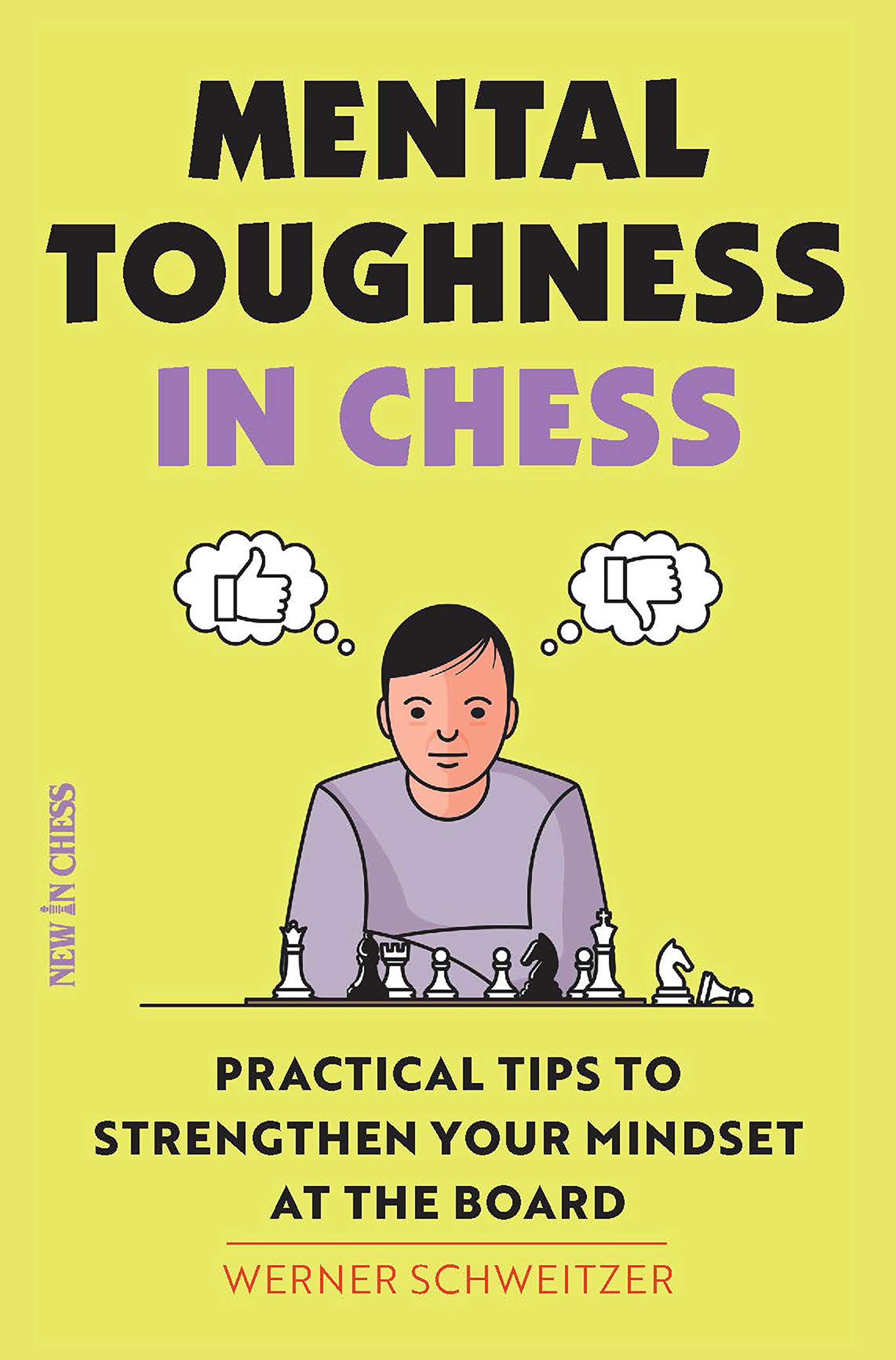
Mental Toughness in Chess : Practical Tips to Strengthen Your Mindset at the Board

Mental Toughness in Chess

Mental Toughness in Chess : Practical Tips to Strengthen Your Mindset at the Board : Werner Schweitzer

“Werner Schweitzer graduated as a mental coach at the University of Salzburg, Austria. He knows from experience which mental factors have impact on a chess players performance. Schweitzer has been coaching players and teams for many years.”

From the rear cover :

“Your performance at the board does not only depend on your pure chess skills. Being a winner also requires a mindset that is able to cope with lots of stress and setbacks during hours of uninterrupted concentration. Just like technical chess skills, mental toughness can be trained. There are simple steps you can take that will help you to better realize your potential. Professional mental coach and chess player Werner Schweitzer has been working with chess teams and individual players for many years.

In this book Schweitzer presents practical tips and tools that will help you to improve your mental power during a game. You will learn how to: increase your concentration and stamina; recognize your own strengths and weaknesses; cope with losses as well as victories; increase your self-discipline when studying; handle disturbing thoughts and feelings during a game; boost your self-confidence; avoid underestimating (and overestimating!) your opponent; make better decisions while under pressure and other mental skills. These lessons and simple mental workouts will help players of all levels to unlock the full power of their brain and win more games.”

I enjoyed this book, but to be honest, it looks and reads like something you would pick up in a station or airport, when you have nothing to read on the journey.

There is a lot of white paper, only 144 pages , which could have been condensed to 120 or so with a more economical use of space and thus at £17.99 it is overpriced.

The book reads as though it has been hastily adapted to chess. The book could easily be rebranded as “Mental Toughness and the art of Man Management” or “Mental Toughness in the Boardroom” ; you get the idea.

This is a self-help manual , which assists you to get your brain and character into better order. The author admits in the very first chapter , that as his rating is just short of 2100, mental toughness is but only one of the factors that make a good chess player. His tips can only take you so far. With this admission, the limitations of the book are shown.

As stated , I got something out of the book and you will too. You will learn how to become a more disciplined thinker. If that’s what you feel you need, then this could be a good buy.

IM Andrew Martin, Bramley, Surrey 8th July 2020

IM Andrew Martin
IM Andrew Martin

Book Details :

  • Paperback : 144 pages
  • Publisher: New in Chess (1 January 2020)
  • Language: English
  • ISBN-10: 9056918583
  • ISBN-13: 978-9056918583
  • Product Dimensions: 14.9 x 0.9 x 22.2 cm

Official web site of New in Chess

Mental Toughness in Chess

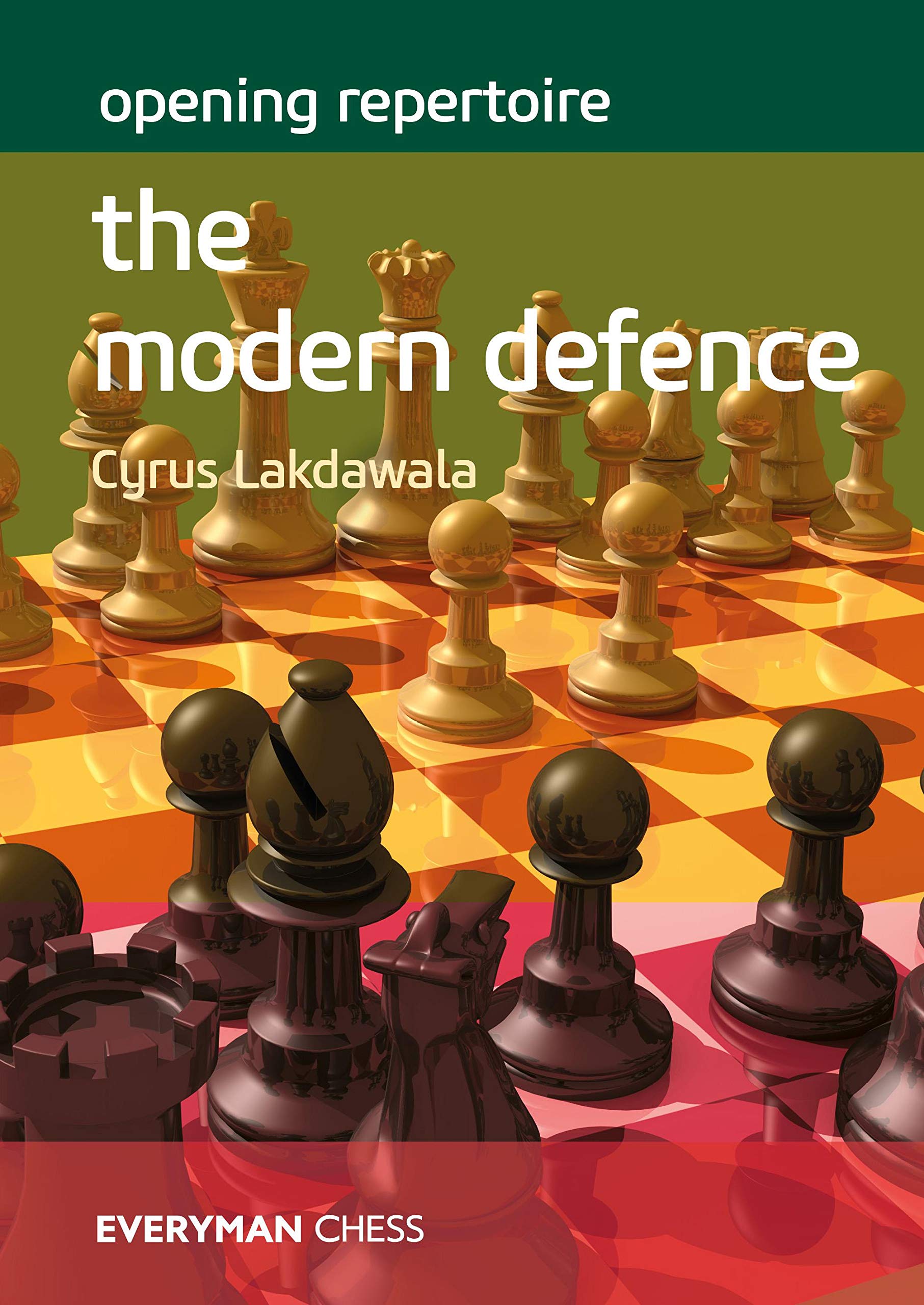
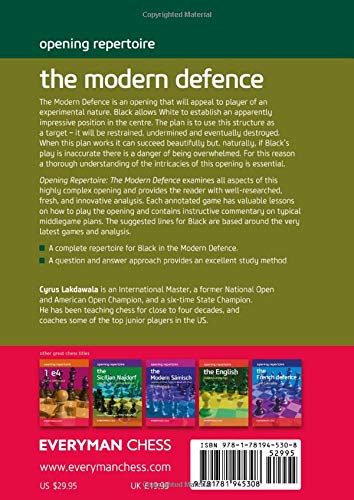
Opening Repertoire : The Modern Defence

Opening Repertoire : The Modern Defence

Cyrus Lakdawala is an IM and former US Open Champion who teaches chess and has written over 25 books on chess openings.

IM Cyrus Lakdawala
IM Cyrus Lakdawala

As a treat for our readers we allow you to download this review in Portable Game Notation (pgn) format. We suggest ChessBase Reader as a means of opening the file.

You may also download this review in ChessBase (.cbv) format.

[fen]rnbqkbnr/pppppp1p/6p1/8/4P3/8/PPPP1PPP/RNBQKBNR w KQkq – 0 1[/fen]

This is the Modern Defence, which has been described both as a fighting opening, based on counterattack and a masochistic paradise, where Black has to sit with less space for the whole game and then loses.

Having played the Modern for some 40 years now, I can testify that the truth is somewhere between the two views.

You either like the Modern or you don’t and you have to get into the right frame of mind in order to play it properly. Black has to suck up early pressure and time his counterattack to perfection to break up the enemy position. If this is your thing and you have an independent character, you will find what you want after 1…g6.

I think I have most of the Modern Defence books in my library, stretching back to Keene and Botterill, through Norwood and Tiger Hillarp Persson and now complimented by the latest work from Cyrus Lakdawala : ‘ Opening Repertoire’ The Modern Defence.

Lakdawala’s book is comprehensive, brimming with ideas and gives lines for Black after all sensible opening first moves, based on complete games.

His suggestions differ from Hillarp Persson, in that whereas the Swedish GM recommends that Black plays an early …-a7-a6 in most lines, Lakdawala goes back to the Norwood repertoire of old, where 1 e4 g6 2 d4 d6 3 Nc3 c6!? was one of the key pillars of the Black counterattacking reply.

It’s an approach which seems to stand up in the present day.

Let’s dive in and take a look at a few recent games that are not in the book, but which align with the recommendations therein.

[pgn]
[Event “Gujarat op 2nd”]
[Site “Ahmedabad”]
[Date “2019.09.25”]
[Round “6”]
[White “Srija, Seshadri”]
[Black “Thanki, Hemal Karsanji”]
[Result “0-1”]
[ECO “B06”]
[WhiteElo “2270”]
[BlackElo “2098”]
[Annotator “IM Andrew Martin”]
[PlyCount “120”]
[EventDate “2019.09.22”]
[EventType “swiss”]
[EventRounds “10”]
[EventCountry “IND”]
[SourceTitle “EXT 2020”]
[Source “ChessBase”]
[SourceDate “2019.10.17”]
[SourceVersion “1”]
[SourceVersionDate “2019.10.17”]
[SourceQuality “1”]

{[%evp 0,120,24,23,78,60,79,61,82,45,60,46,47,52,42,35,35,39,35,30,41,29,31,8,
27,10,47,10,16,18,9,3,11,-1,2,-37,-37,-44,-46,-46,-42,-43,-41,-47,-46,-34,-13,
-70,-52,-46,-56,-56,-64,-74,-74,-73,-76,-97,-99,-124,-108,-108,-101,-112,-120,
-105,-104,-191,-168,-190,-182,-202,-186,-371,-359,-370,-370,-378,-362,-375,
-392,-411,-308,-319,-340,-327,-370,-358,-361,-378,-341,-349,-349,-341,-338,
-392,-333,-344,-307,-345,-338,-335,-303,-313,-292,-344,-296,-330,-329,-333,
-340,-385,-396,-389,-401,-409,-416,-414,-395,-403,-403,-413,-419]} {The first
key point to make is that the Black opening move-order is good against the
Austrian Attack. By delaying or even omitting …Bf8-g7, Black sets up an
improved Gurganidze System, where the Bishop on f8 is usefully placed, maybe
to support …c6-c5 later on.. Here is a recent game in the line, which bears
out Lakdawala’s opinion that Black is OK in this variation.} 1. e4 c6 2. d4 g6
3. Nc3 d6 4. f4 d5 {Black loses an opening tempo, but the blocked center means
that this does not matter at all.} 5. e5 h5 6. Nf3 Nh6 7. Be3 Qb6 8. Na4 Qa5+
9. c3 Bg4 10. Be2 e6 11. Nc5 Nf5 12. Bf2 Nd7 13. b4 Qc7 14. h3 Bxf3 15. Bxf3 h4
16. O-O Nxc5 17. dxc5 Bh6 18. Qc1 f6 $1 {[#] This may not be the greatest game
ever seen, but the way Black obtains counterplay is very thematic and
interesting.} 19. Bd4 fxe5 20. Bxe5 Qxe5 21. fxe5 Bxc1 22. Raxc1 a5 23. a3 Kd7
24. Bg4 axb4 25. axb4 Rhf8 26. Rfe1 Ra2 27. c4 Rb2 28. b5 Ra8 29. cxd5 exd5 30.
bxc6+ bxc6 31. Ra1 Rxa1 32. Rxa1 Rc2 33. Ra7+ Ke6 34. Rg7 Kxe5 35. Rxg6 Ng3 36.
Rxc6 Kd4 37. Bd1 Rc1 38. Kf2 Rxd1 39. Kf3 Ne4 40. Rh6 Rd3+ 41. Kf4 Rg3 42. Rxh4
Rxg2 43. c6 Rf2+ 44. Kg4 Rc2 45. Rh6 Ke5 46. Rh5+ Ke6 47. Rh6+ Ke5 48. Rh5+ Kd6
49. Rh6+ Kc7 50. Kf4 Rxc6 51. Rh8 Re6 52. h4 Nd6 53. h5 Re4+ 54. Kf3 Kd7 55. h6
Nf7 56. Ra8 Rh4 57. Kg3 Rxh6 58. Kf4 Rf6+ 59. Ke3 Kd6 60. Ra7 Ne5 0-1
[/pgn]

[pgn]
[Event “Katowice POL-HUN 7th”]
[Site “Katowice”]
[Date “2019.04.14”]
[Round “6”]
[White “Przybylski, Wojciech”]
[Black “Krasenkow, Michal”]
[Result “0-1”]
[ECO “B08”]
[WhiteElo “2320”]
[BlackElo “2623”]
[Annotator “IM Andrew Martin”]
[PlyCount “104”]
[EventDate “2019.04.13”]
[EventType “swiss (rapid)”]
[EventRounds “9”]
[EventCountry “POL”]
[SourceTitle “CBM 189 Extra”]
[Source “ChessBase”]
[SourceDate “2019.06.03”]
[SourceVersion “1”]
[SourceVersionDate “2019.06.03”]
[SourceQuality “1”]

{[%evp 0,104,25,20,85,78,78,72,78,99,99,69,103,85,79,66,61,58,58,58,43,36,66,
67,65,62,67,56,56,56,79,70,89,72,107,71,91,74,105,100,70,83,83,62,62,85,85,89,
67,64,67,67,72,68,57,37,59,66,66,22,48,48,48,41,41,4,4,18,37,-4,55,60,60,61,82,
-25,82,38,62,60,60,38,33,-295,-304,-307,-298,-538,-533,-546,-546,-552,-560,
-564,-547,-633,-633,-761,-795,-795,-713,-713,-685,-685,-713,-806,-806]} {
The Classical Variation never felt threatening to me when I played the Modern,
but I get the impression that if you are facing someone really good, you can
get squeezed in this line if you get it even slightly wrong. Lakdawala sticks
to his idea of an early…c7-c6, usually going back into a Classical Pirc and
this is a solid enough response. Here are two games from 2019.} 1. e4 g6 2.
d4 Bg7 3. Nc3 c6 4. Nf3 d6 5. a4 a5 6. Be2 Nf6 7. h3 O-O 8. O-O Na6 9. Be3 (9.
Re1 Nb4 10. Bc4 d5 11. Bb3 Nxe4 12. Nxe4 dxe4 13. Rxe4 Bf5 14. Re2 Qd6 15. Bg5
Bf6 16. Bh6 Rfd8 17. Ng5 Nd5 18. Rd2 Bg7 19. Bxg7 Kxg7 20. c4 f6 {[#]} 21. cxd5
fxg5 22. dxc6 bxc6 23. Qe2 Qf6 24. Rc1 Rab8 25. Bc4 h5 26. Re1 Rb7 27. Qe5 g4
28. hxg4 hxg4 29. Qxa5 Rxd4 30. Rxd4 Qxd4 31. Qe5+ Qxe5 32. Rxe5 Rxb2 33. Rxe7+
Kf6 34. Rc7 Be4 35. f3 gxf3 36. gxf3 Bd5 37. Bxd5 cxd5 38. Rc6+ Kf5 39. Rd6 Ke5
40. Rxg6 Kf4 41. Rg2 Rb3 42. Rd2 Kg3 43. Rd1 d4 44. f4 d3 45. f5 Kf3 46. Rf1+
Ke2 47. Rf2+ Ke3 48. Kg2 d2 49. Rf3+ Ke2 50. Rf2+ Kd3 51. Rf1 Kc2 52. f6 d1=Q
53. Rxd1 Kxd1 54. a5 Ke2 55. a6 Rb8 56. Kg3 Ke3 57. Kg4 Ke4 58. Kg5 Ke5 59. Kg6
Rb6 {0-1 Ni,S (2409)-Akopian,V (2650) Abu Dhabi 2019}) 9… Nb4 10. Re1 Qc7 11.
Qd2 e5 12. dxe5 dxe5 13. Bc4 Rd8 14. Qe2 Bd7 15. Rad1 Be8 16. Bb3 Bf8 17. Qc4
Rxd1 18. Rxd1 Qe7 19. Bb6 Nd7 20. Bc7 Qf6 21. Ne2 Na6 22. Bxa5 Nac5 23. Bc3 Nb6
24. Bxe5 Qxe5 25. Nxe5 Nxc4 26. Bxc4 Nxe4 27. b3 Bg7 28. Nf3 Kf8 29. Nf4 Nc3
30. Re1 b5 31. axb5 cxb5 32. Bd3 Bc6 33. Ne2 b4 34. Nfd4 Bd5 35. Nxc3 bxc3 36.
Ne2 Rd8 37. Nf4 Bc6 38. h4 Bh6 39. Ne2 Bd2 40. Rd1 Ke7 41. Ng3 Rxd3 42. cxd3 c2
43. Rxd2 c1=Q+ 44. Nf1 Qb1 45. f3 Bb5 46. Kf2 Bxd3 47. Ng3 Qxb3 48. Ne4 Qb6+
49. Kg3 Bxe4 50. Re2 Qd6+ 51. Kf2 Qd4+ 52. Kg3 f5 0-1
[/pgn]

[pgn]
[Event “La Palma Island op”]
[Site “Santa Cruz de La Palma”]
[Date “2019.08.14”]
[Round “7”]
[White “Bressac, Stephane”]
[Black “Alonso Bouza, Julio Javier”]
[Result “0-1”]
[ECO “B07”]
[WhiteElo “2348”]
[BlackElo “2395”]
[Annotator “IM Andrew Martin”]
[PlyCount “68”]
[EventDate “2019.08.09”]
[EventType “swiss”]
[EventRounds “10”]
[EventCountry “ESP”]
[SourceTitle “CBM 191 Extra”]
[Source “ChessBase”]
[SourceDate “2019.09.30”]
[SourceVersion “1”]
[SourceVersionDate “2019.09.30”]
[SourceQuality “1”]

{[%evp 0,68,18,15,77,73,73,73,77,42,36,40,20,14,21,-7,33,19,40,40,55,38,38,31,
62,1,17,-28,-27,-27,-21,-82,-57,-55,-65,-110,-15,-39,-54,-54,-54,-57,-100,-95,
-43,-58,-74,-296,-80,-116,-101,-440,-444,-452,-452,-450,-452,-429,-449,-457,
-453,-472,-437,-458,-494,-503,-449,-519,-503,-503,-437]} {The Fianchetto
Variation is a line I have always recommended to my students when they have
asked me what to play against the Pirc/Modern. White sets up a logical
formation, concentrating first on development and the prevention of black pawn
breaks and then goes for a kingside pawn storm once preparations are complete.
Yet the approach with …c7-c6 seems very valid as a reply. As shown in the
coming game, Black can obtain serious counterplay.} 1. e4 d6 2. d4 Nf6 3. Nc3
g6 4. g3 Bg7 5. Bg2 O-O 6. Nge2 e5 7. h3 c6 8. a4 a5 {Cyrus mentions both 8…
Na6 and 8..a5 in the book.} 9. Be3 Na6 10. O-O Nb4 11. f4 Be6 12. f5 Bc4 {[#]}
13. g4 exd4 14. Bxd4 Re8 15. g5 Bxe2 16. Nxe2 (16. Qxe2 Nxe4 $1 17. Bxg7 Nxc3)
16… Nxe4 17. fxg6 hxg6 18. Bxg7 Kxg7 19. Qd4+ Kg8 20. Bxe4 Qxg5+ 21. Kh1 Nxc2
22. Bxc2 Rxe2 23. Rf2 Rae8 24. Raf1 Qg3 25. Bd3 Qxh3+ 26. Kg1 Qg3+ 27. Kh1 Qh3+
28. Kg1 R2e3 29. Rh2 Rxd3 30. Qf6 Qg4+ 31. Kh1 Qe4+ 32. Rg2 Qe6 33. Qg5 Qh3+
34. Kg1 Qe3+ 0-1
[/pgn]

[pgn]
[Event “Tbilisi Maia Cup rapid”]
[Site “Tbilisi”]
[Date “2019.09.05”]
[Round “4”]
[White “Arabidze, Meri”]
[Black “Jojua, Davit”]
[Result “0-1”]
[ECO “A43”]
[WhiteElo “2398”]
[BlackElo “2563”]
[Annotator “IM Andrew Martin”]
[PlyCount “94”]
[EventDate “2019.09.05”]
[EventType “swiss (rapid)”]
[EventRounds “9”]
[EventCountry “GEO”]
[SourceTitle “EXT 2020”]
[Source “ChessBase”]
[SourceDate “2019.10.17”]
[SourceVersion “1”]
[SourceVersionDate “2019.10.17”]
[SourceQuality “1”]

{[%evp 0,94,19,21,56,51,51,33,21,37,34,36,105,56,67,54,51,49,43,3,14,18,-24,
-17,0,-70,-87,-91,-85,-66,-66,-65,-75,-79,-71,-75,-75,-75,-70,-70,-57,-34,-44,
-70,-63,-57,-84,-74,-78,-93,-80,-91,-13,-8,-37,-37,-47,-47,-48,-60,-50,-47,-28,
-32,29,29,7,0,0,0,0,-92,-112,-301,-205,-940,-28,-276,-654,-871,-84,-101,0,-320,
-327,-326,-427,-434,-464,-992,-1012,-1017,-1060,-1062,-1072,-1084,-1088]} {
There is some experimental stuff called the ‘Maybe Benoni’, which we can
unleash should White try to turn the game into an Averbakh System or a King’s
Indian. I like the look of this idea.} 1. d4 g6 2. c4 Bg7 3. Nc3 c5 4. d5 d6 5.
e4 e6 6. dxe6 ({Clearly, White does not need to take on e6 and most will
prefer a solid move such as 6 Nf3 or 6 Bd3.. After that, 6…Ne7!? is
recommended.} 6. Nf3 Ne7 7. Be2 a6 8. a4 h6 9. O-O O-O 10. Be3 exd5 11. cxd5 g5
12. Nd2 Nd7 13. Nc4 Nb6 14. f4 Nxc4 15. Bxc4 gxf4 16. Bxf4 Ng6 17. Be3 Qh4 18.
Qe1 Qxe1 19. Raxe1 Bd7 20. a5 Rfe8 21. Bd2 Rab8 22. Nd1 Re7 23. b4 Bd4+ 24. Kh1
Bb5 25. Bxb5 axb5 26. Ne3 Bxe3 27. Bxe3 c4 28. Bxh6 Rbe8 29. Bf4 Rxe4 30. Rxe4
Rxe4 31. Bxd6 Rd4 32. Bc5 Rxd5 33. h3 Ne5 34. Rf5 Rxc5 35. bxc5 Nc6 36. Kg1 c3
37. Rf1 Nxa5 {0-1 Vasiliev,G (2172)-Khegay,D (2509) St Petersburg 2019}) 6…
Bxc3+ $1 7. bxc3 Bxe6 8. Bd3 Nc6 9. f4 Qa5 {[#]} 10. Ne2 Qa6 11. Rb1 O-O-O 12.
Qb3 Na5 13. Qa4 Bxc4 14. Bxc4 Nxc4 15. Qxa6 bxa6 16. f5 Nf6 17. Bg5 Nxe4 18.
Bxd8 Rxd8 19. fxg6 fxg6 20. Ng3 Nxc3 21. Rc1 Re8+ 22. Kf2 Ne4+ 23. Nxe4 Rxe4
24. Rhe1 Rxe1 25. Rxe1 Kd7 26. Re4 d5 27. Rh4 h5 28. g4 hxg4 29. Rxg4 Ne5 30.
Ra4 c4 31. Rxa6 c3 32. Rxa7+ Kd6 33. Ke2 d4 34. Ra8 Kd5 35. a4 d3+ 36. Ke3 c2
37. Kd2 Nf3+ 38. Kc1 Nd4 39. Rd8+ Kc4 40. Rc8+ Kd5 41. a5 Nb3+ 42. Kb2 Nxa5 43.
Rd8+ Ke4 44. Re8+ Kd4 45. Rd8+ Ke3 46. Rc8 Kd2 47. Rc7 Nb3 {The possibility of
examining this line and using it, justifies buying the book on its own.} 0-1
[/pgn]

[pgn]
[Event “Wch Blitz”]
[Site “Riadh”]
[Date “2017.12.29”]
[Round “7”]
[White “Short, Nigel D”]
[Black “McShane, Luke J”]
[Result “0-1”]
[ECO “A21”]
[WhiteElo “2678”]
[BlackElo “2640”]
[Annotator “IM Andrew Martin”]
[PlyCount “74”]
[EventDate “2017.12.29”]
[EventType “swiss (blitz)”]
[EventRounds “21”]
[EventCountry “SAU”]
[SourceTitle “CBM 182 Extra”]
[Source “ChessBase”]
[SourceDate “2018.02.23”]
[SourceVersion “1”]
[SourceVersionDate “2018.02.23”]
[SourceQuality “1”]

{[%evp 0,74,31,-10,44,21,25,14,65,51,53,12,23,21,16,8,9,19,33,3,14,-11,3,-36,
-27,-44,-51,-43,3,-23,0,3,10,-1,4,-72,-53,-76,-83,-67,-64,-57,-53,-52,-46,-57,
-25,-46,-11,-92,-41,-92,-97,-88,-88,-90,-87,-87,-87,-112,-75,-141,-123,-146,
-146,-207,-202,-334,-331,-312,-291,-470,-482,-595,-595,-595,-626]} {Finally,
to the English and play becomes more mainstream, with a reversed Closed
Sicilian on the board and Black still managing to play his favourite …c7-c6
in most of the lines.} 1. c4 g6 2. g3 Bg7 3. Bg2 f5 4. Nc3 Nf6 5. e3 O-O 6.
Nge2 e5 7. d3 d6 8. O-O c6 9. f4 a5 10. Rb1 Be6 11. a3 Nbd7 12. b4 axb4 13.
axb4 d5 14. cxd5 cxd5 15. Qd2 Bf7 16. Bb2 Re8 17. Rfe1 Qb6 18. d4 e4 19. b5 Bf8
20. Ra1 Qe6 21. Na4 Rec8 22. Bf1 Ne8 23. Nc5 Qe7 24. Rec1 Nd6 25. Nc3 Nb6 26.
Rxa8 Rxa8 27. Ra1 Nbc4 {[#]} 28. Qc1 Rxa1 29. Bxa1 b6 30. N5a4 Qa7 31. Bb2 Nxb5
32. Bxc4 dxc4 33. d5 Nd6 34. Ba3 Be8 35. Qa1 b5 36. Nc5 b4 37. Ne6 Qxa3 {
As this Black system has been used by Kasparov and many other top GM’s, we can
guarantee that it is reliable.} 0-1
[/pgn]

I enjoyed the book and I think you will too. Focus on the ideas and the originality of Lakdawala’s thought and you will get a lot from it. I guess the book could have been shortened by 20/30 pages with a more economical writing style, but that is the way he does things and you like it or lump it.

Lakdawala’s book is an important addition to the available chess literature on the Modern. As such, it comes with my strong recommendation.

Andrew Martin, Bramley, Surrey, 6th February, 2020

IM Andrew Martin
IM Andrew Martin

Book Details :

  • Paperback : 416 pages
  • Publisher: Everyman Chess (22 Oct. 2019)
  • Language: English
  • ISBN-10: 1781945306
  • ISBN-13: 978-1781945308
  • Product Dimensions: 17 x 7.5 x 24 cm

The book is available as a physical book and as a Kindle version.

Official web site of Everyman Chess

Opening Repertoire : The Modern Defence