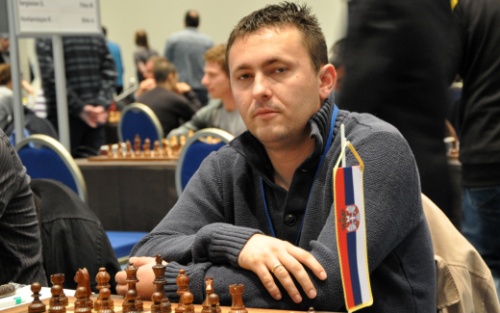
Ivan Ivanisevic, born in 1977, started playing chess when he was 5 years old, while watching his grandfather and father play. At the age of 10 he started working with IM Petar Smederevac, the coach of the national team of former Yugoslavia, who is probably the real reason why he started playing professionally. Before he reached the age of 20 years old, he shared 1st place in the Championship of the former Yugoslavia. In 1999 he won the title of Grandmaster. Since 1998 he is a member of the national team, and since 2007 continually playing on the first board. Four times he was the Champion of Serbia. He won many tournaments, from which we remember mostly following: Saint Petersburg 2014, Skopje 2015, sharing 1-5 place in Dubai 2015, Vršac, the Bora Kostić Memorial, 2006, Nova Gorica 2007, Bergamo 2014, Kavala 2007, Podgorica, 2011 becoming the Balkan champion and Kozloduy, the rapid championship of Danube 2012. He was also participant of the World Cup in 2011. This this second book for Thinkers Published, after he co-authored the most acclaimed ‘Taimanov Bible’ from 2017.
From the rear cover :
“The Modernized Delayed Benoni is much more than the title makes you think! I like the author’s approach very much: it is a mixture of a personal journey and a theoretical manual. The author has been probably the main exponent of this line for the past ten years and he uses many of his games to illustrate the variations he has recommended. Although the book is again extremely detailed, there is careful attention to move orders and enough passages of explanations to make much of it understandable for non-experts. An excellent effort. GM Matthew Sadler, NIC Magazine 2020/4.
My aim in this book is to show that the Delayed Benoni is equally as attractive as its cousin, the Modern Benoni. For some reason – perhaps because “Modern” sounds more exciting than “Delayed”? – my favorite Benoni has been neglected for years, receiving scant coverage in chess publications.”
As with every recent Thinkers Publishing publication high quality paper is used and the printing is clear. The book can easily be laid flat next to the board and does not require weights to prevent it from “self-closing” (a particular bugbear of ours !). Each diagram is clear and the instructional text is typeset in two column format, which, we find, enables the reader to maintain their place easily. Figurine algebraic notation is used throughout and the diagrams are placed adjacent to the relevant text and each diagram has a “to move” indicator.
There is no index which, unfortunately, is a standard omission of Thinkers Publishing books. Also missing is a bibliography.
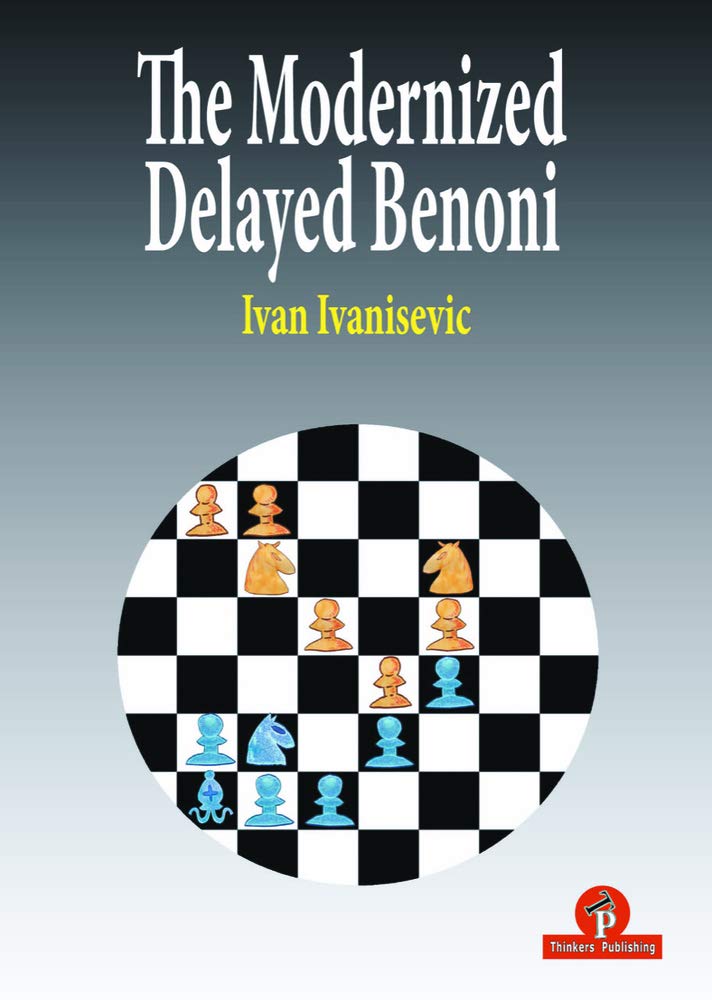
The Modernized Delayed Benoni is written by Grandmaster Ivan Ivanisevic, with an important contribution by GM Ivan Sokolov. It is an excellent 240 page book, produced by Thinkers Publishing.
There is a lot of detailed analysis here, complimented by plenty of relevant text. The book revives a system in the Benoni which has not been given the respect it deserves over the years.
This is not a beginner’s manual and strong players will get the most out of it.
The book focuses on the move order 1 d4 Nf6 2 c4 c5 3 d5 g6!
[fen]rnbqkb1r/pp1ppp1p/5np1/2pP4/2P5/8/PP2PPPP/RNBQKBNR w KQkq – 0 1[/fen]
as a way of getting to positions which are dynamic, relatively unexplored and suitable for playing for the win as Black.
Let’s take a look at some of these ideas…
Having digested a lot of this book, I’ve been trying the Black system online. Virtually all strong players meet it in the same way :
[pgn]
[Event “Gibraltar Masters 18th”]
[Site “Caleta”]
[Date “2020.01.25”]
[Round “5”]
[White “Quintiliano Pinto, Renato Rodrigues”]
[Black “Lagarde, Maxime”]
[Result “0-1”]
[ECO “E90”]
[WhiteElo “2471”]
[BlackElo “2651”]
[Annotator “Andrew”]
[PlyCount “66”]
[EventDate “2020.01.21”]
[EventType “swiss”]
[EventRounds “10”]
[EventCountry “GGB”]
[SourceTitle “CB06_2020”]
[SourceDate “2020.02.05”]
[SourceVersion “1”]
[SourceVersionDate “2020.02.05”]
[SourceQuality “1”]
{[%evp 0,66,32,32,23,-3,14,32,44,31,46,54,54,31,50,52,80,79,59,54,78,71,67,67,
105,87,101,53,81,91,91,96,104,109,103,102,145,119,103,105,101,113,126,17,19,22,
24,27,27,-33,5,-1,82,79,83,36,64,-87,-5,1,81,-173,-181,-249,-111,-390,-367,
-578,-287]} {Having digested a lot of this book, I’ve been trying the Black
system online. Virtually all strong players meet it in the same way.} 1. d4 Nf6
2. c4 c5 3. d5 g6 4. Nc3 Bg7 5. Nf3 O-O 6. e4 d6 7. h3 e6 8. Bd3 Nbd7 $5 9. O-O
{[#] This is the way they all go with White, who attempts to build his
position methodically, while Black struggles to get organised and has a
problem with the bishop on c8. Nevertheless, 8…Nbd7 looks like an
interesting waiting move. Black reserves the option of blocking the position
in the center. This line is well covered in the book.} e5 $5 10. Bg5 h6 11.
Bd2 Nh7 12. Qc2 Ng5 13. Nh2 Nf6 14. Qc1 Nh5 15. h4 Nh7 16. g3 Bh3 17. Re1 f5
18. exf5 gxf5 19. Bxh6 Qf6 20. Bg5 Qg6 21. g4 Nxg5 22. Qxg5 Qxg5 23. hxg5 fxg4
24. Re4 Rf5 25. Re3 e4 26. Nxe4 Rf4 27. Nxd6 Raf8 28. Bg6 g3 29. Bxh5 Bd4 30.
Bf7+ R8xf7 31. Nxf7 Rxf7 32. g6 Rxf2 33. Ng4 Rf3 0-1
[/pgn]
[pgn]
[Event “Gibraltar Masters 18th”]
[Site “Caleta”]
[Date “2020.01.29”]
[Round “9”]
[White “Pigott, John C”]
[Black “Real de Azua, Ernesto”]
[Result “0-1”]
[ECO “E90”]
[WhiteElo “2370”]
[BlackElo “2456”]
[Annotator “Andrew”]
[PlyCount “84”]
[EventDate “2020.01.21”]
[EventType “swiss”]
[EventRounds “10”]
[EventCountry “GGB”]
[SourceTitle “CB06_2020”]
[SourceDate “2020.02.05”]
[SourceVersion “1”]
[SourceVersionDate “2020.02.05”]
[SourceQuality “1”]
{[%evp 0,84,32,32,23,-3,32,31,31,50,50,50,50,36,40,49,79,64,94,88,82,60,86,53,
70,38,37,5,8,19,13,32,16,17,42,11,15,11,12,5,11,-13,-8,-16,26,-10,-6,0,0,-28,
-27,-28,-24,-36,-25,-36,-42,-33,-54,-55,-55,-89,-96,-96,-37,-102,-26,-80,-80,
-80,-34,-173,-192,-179,-211,-231,-223,-310,-154,-104,-147,-201,-163,-195,-181,
-426,-483]} {There are other ways to face the main line, one of which is shown
in this game. Black plays more in Benoni-style with …Na6-c7, delaying the
capture on d5 for as long as possible.} 1. d4 Nf6 2. c4 c5 3. d5 g6 4. Nc3 Bg7
5. e4 d6 6. Nf3 O-O 7. h3 e6 8. Bd3 Na6 9. O-O Nc7 $5 10. Re1 Re8 11. dxe6 {
White snaps first.} (11. Bg5 h6 12. Bh4 g5 13. Bg3 Nh5 14. Bh2 Nf4 15. Bxf4 (
15. Bf1 Bxc3 16. bxc3 e5) (15. Bc2 Bxc3 16. bxc3 e5) 15… gxf4 {is all
analysis given in the book.}) 11… Nxe6 12. Be3 Nd7 13. Bf1 Ne5 14. Nxe5 dxe5
{Black is fine here.} 15. Nd5 Nd4 16. Bd3 Be6 17. Qd2 Qd6 18. Rab1 b6 19. b3
Rac8 20. Rf1 f5 21. f3 Rf8 22. Kh1 Rf7 23. Rbc1 f4 24. Bxd4 exd4 25. Rb1 Be5
26. b4 g5 27. a4 h5 28. a5 bxa5 29. bxc5 Rxc5 30. Rb5 Rxb5 31. cxb5 g4 32. Rc1
Bd7 33. Qf2 gxh3 34. gxh3 Rg7 35. Bc4 Kh7 36. Rg1 Rg3 37. Rxg3 fxg3 38. Qc2 Kg7
39. Qd2 Qg6 40. Bf1 a4 41. Qb4 Qg5 42. Kg1 g2 {Through his diligent analysis,
Ivanisevic demonstrates at least two good ways to meet what is supposed to be
a challenging main line.} 0-1
[/pgn]
[pgn]
[Event “Bundesliga 1920”]
[Site “Germany”]
[Date “2020.02.23”]
[Round “8.14”]
[White “Junge, Ralph”]
[Black “Warmerdam, Max”]
[Result “0-1”]
[ECO “A65”]
[WhiteElo “2259”]
[BlackElo “2501”]
[Annotator “Andrew”]
[PlyCount “60”]
[EventDate “2019.11.23”]
[EventType “team-tourn”]
[EventRounds “15”]
[EventCountry “GER”]
[SourceTitle “CB09_2020”]
[SourceDate “2020.02.26”]
[SourceVersion “1”]
[SourceVersionDate “2020.02.26”]
[SourceQuality “1”]
[WhiteTeam “Kiel Turm”]
[BlackTeam “Muelheim Nord”]
[WhiteTeamCountry “GER”]
[BlackTeamCountry “GER”]
{[%evp 0,60,32,23,23,-3,31,30,64,48,32,19,1,0,6,-16,9,24,65,69,51,41,68,50,48,
45,29,29,35,39,138,70,70,24,45,-100,-84,-51,-51,-51,-96,-84,-85,-105,-119,-251,
-235,-223,-226,-386,-386,-386,-253,-213,-223,-216,-210,-217,-216,-387,-407,
-458,-484]} {If you play this system as Black, you will have to be prepared to
transpose back into a King’s Indian or Modern Benoni at a moment’s notice.
Thus, coverage of counterattacking ideas against the Four Pawns Attack, the
Samisch, the Classical and the Fianchetto Variation are all in order.
Ivanisevic does not disappoint, giving interesting suggestions against each.
I was intrigued to see what he had in mind against an old favourite of mine, 6
Bg5 in the Samisch.} 1. d4 Nf6 2. c4 g6 3. Nc3 Bg7 4. e4 d6 5. f3 O-O 6. Bg5 c5
7. d5 h6 8. Be3 e6 {We come via transposition, to the recommendation of the
book.} 9. Qd2 exd5 10. cxd5 Re8 11. Nge2 (11. Bxh6 {is met by} Nxe4 $1 12. Nxe4
Qh4+ 13. g3 Qxh6 14. Qxh6 Bxh6 15. Ne2 Rd8 $1 {with an edge to Black thanks to
his powerful dark-squared bishop.}) 11… Nbd7 12. Ng3 h5 13. Be2 h4 14. Nf1 b5
15. Nxb5 Ne5 16. Rc1 h3 17. Kf2 Neg4+ 18. Kg1 hxg2 19. Kxg2 Nxe3+ 20. Nxe3 Bh6
21. Rc3 a6 22. Na3 Rxe4 {[#]} 23. fxe4 Nxe4 24. Qc1 Qh4 25. Rf1 Qh3+ 26. Kg1
Nxc3 27. Qxc3 Bxe3+ 28. Kh1 Bg4 29. Qe1 Bf5 30. Qg3 Be4+ {What a game!} 0-1
[/pgn]
[pgn]
[Event “St Petersburg rapid”]
[Site “St Petersburg”]
[Date “2019.08.25”]
[Round “6”]
[White “Ovchinnikov, Vsevolod”]
[Black “Morozevich, Alexander”]
[Result “0-1”]
[ECO “E91”]
[WhiteElo “2316”]
[BlackElo “2659”]
[Annotator “Andrew”]
[PlyCount “98”]
[EventDate “2019.08.24”]
[EventType “swiss (rapid)”]
[EventRounds “11”]
[EventCountry “RUS”]
[SourceTitle “EXT 2020”]
[Source “ChessBase”]
[SourceDate “2019.10.17”]
[SourceVersion “1”]
[SourceVersionDate “2019.10.17”]
[SourceQuality “1”]
{[%evp 0,98,19,31,14,-11,-3,41,37,31,31,43,43,52,53,34,87,87,63,24,54,3,37,-20,
43,14,-1,-18,12,-33,-45,-18,16,-17,2,-29,-27,-19,-27,-10,-21,-55,-32,-31,-16,
-64,-52,-75,-31,-59,-47,-30,-34,-35,-29,-25,-34,-26,-33,-19,-22,-21,44,58,52,
45,49,55,48,-80,-80,-84,-68,-68,-76,-84,-64,-64,-64,-64,-33,-64,-66,-64,-64,
-64,-64,-67,-70,-65,-65,-65,-64,-64,-64,-179,-166,-209,-225,-219,-277]} {
Black sets up a Benoni position and then delays the capture on d5, trying to
run White out of useful moves. This idea is seen to best effect against the
Classical Main Line. In our final game of this review, Morozevich avoids
clarifying the central pawn position until White can take ti no longer. I
must say that this is a fascinating idea and very difficult to play against.}
1. d4 Nf6 2. c4 c5 3. d5 g6 4. Nc3 Bg7 5. Nf3 O-O 6. e4 d6 7. Be2 e6 8. O-O Re8
9. Nd2 Na6 10. Qc2 Nc7 11. Re1 Rb8 12. a4 Na6 13. Qd1 Nb4 14. h3 b6 15. Bf1 Rb7
16. dxe6 $5 Rxe6 17. Nf3 Rd7 18. Bg5 h6 19. Bxf6 Qxf6 20. a5 bxa5 21. Rxa5 Qd8
22. Ra3 Rde7 23. Qd2 a6 24. Raa1 Bb7 25. Nd5 Bxd5 26. exd5 Re4 27. Rxe4 Rxe4
28. Re1 f5 29. b3 Qf6 30. g3 Qc3 31. Qxc3 Bxc3 32. Rxe4 fxe4 33. Nh4 Nc2 34.
Be2 Kf7 35. Ng2 Kf6 36. Bd1 Nd4 37. Ne3 h5 38. Kf1 Bd2 39. Ng2 g5 40. Ne3 a5
41. Kg2 Ke5 42. Nf1 Bc1 43. Ne3 h4 44. Ng4+ Kf5 45. Ne3+ Kf6 46. Ng4+ Kg6 47.
Ne3 Bxe3 48. fxe3 Nf5 49. Be2 hxg3 0-1
[/pgn]
[pgn]
[Event “?”]
[Site “?”]
[Date “2020.07.20”]
[Round “?”]
[White “FINAL WORDS”]
[Black “?”]
[Result “*”]
[ECO “A56”]
[Annotator “Andrew”]
[PlyCount “6”]
[EventDate “2020.07.20”]
{[%evp 0,6,16,13,30,-10,16,23,42]} 1. d4 Nf6 2. c4 c5 3. d5 g6 {[#] I can
strongly recommend the Modernized Delayed Benoni. Players from 1800 upwards
will get a lot out of it and master-level players perhaps most of all. The
quality of the ideas suggested and the original thinking make this a 5 star
book.} *
[/pgn]
IM Andrew Martin, Bramley, Surrey 21st July 2020

Book Details :
- Hardcover : 236 pages
- Publisher: Thinkers Publishing; 01 edition (30 Jan. 2020)
- Language: English
- ISBN-10: 9492510650
- ISBN-13: 978-9492510655
- Product Dimensions: 17 x 23.5 cm
Official web site of Thinkers Publishing
