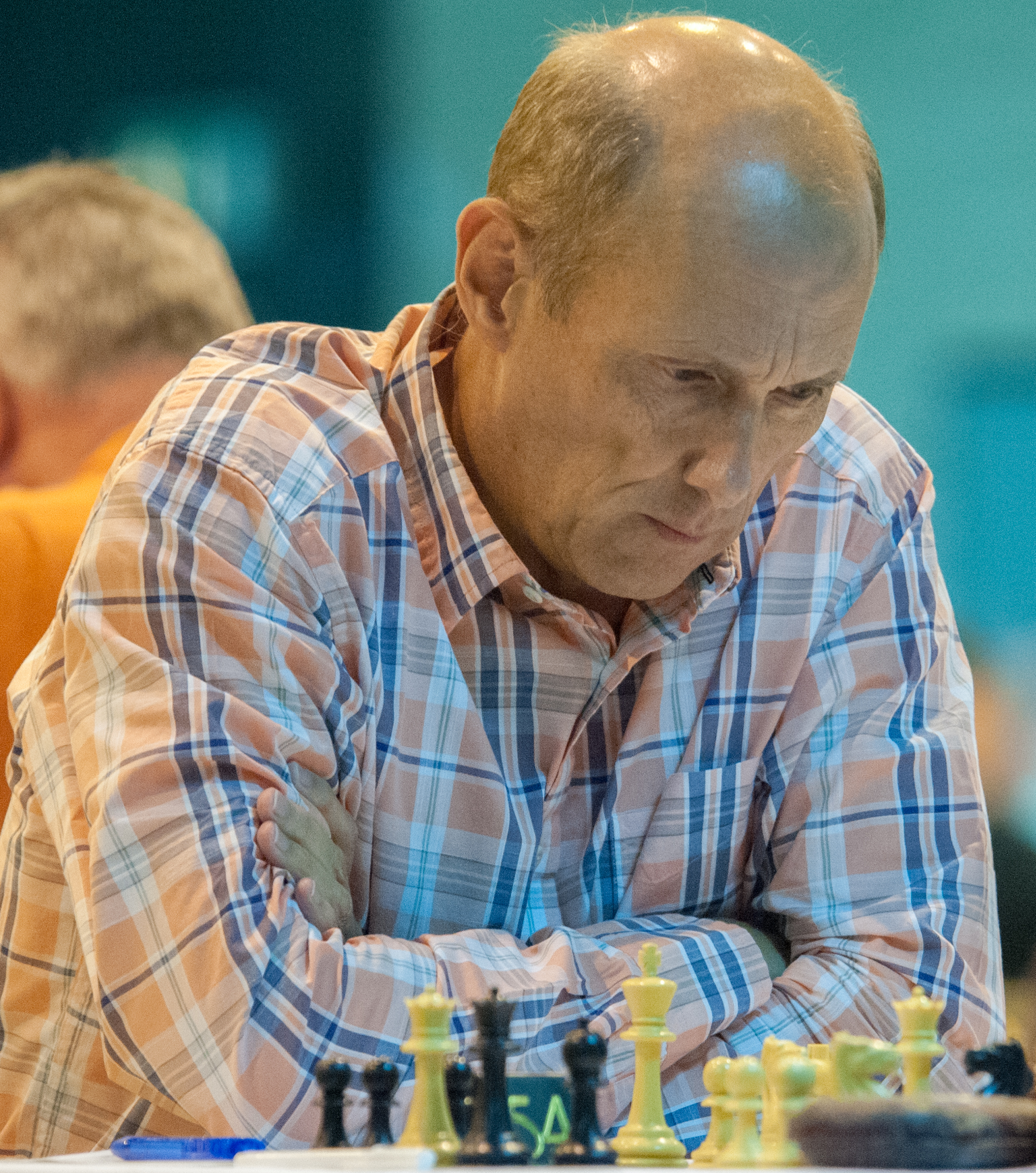
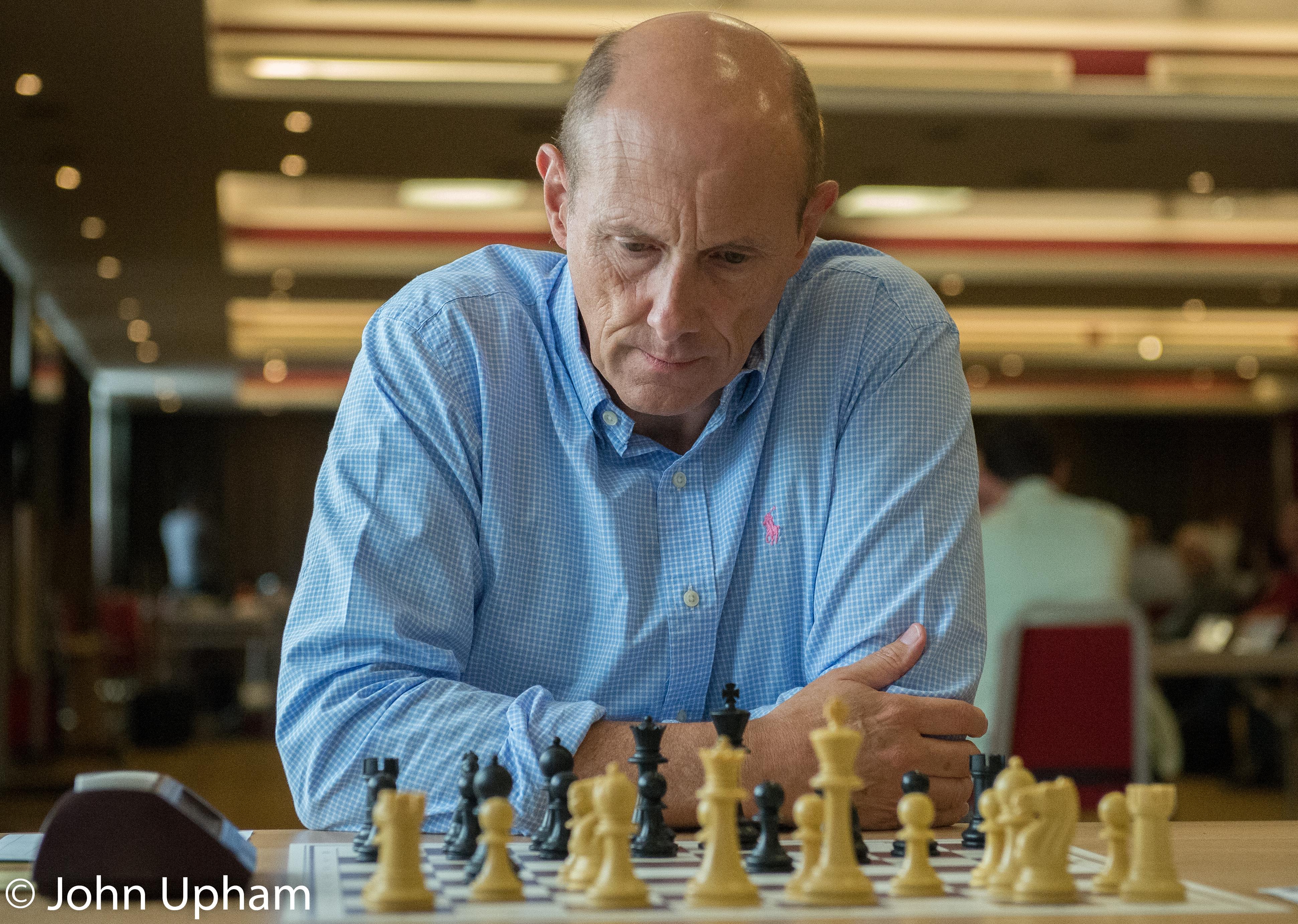
BCN wishes IM Nigel Edward Povah all the best on his birthday, July 17th in 1952.
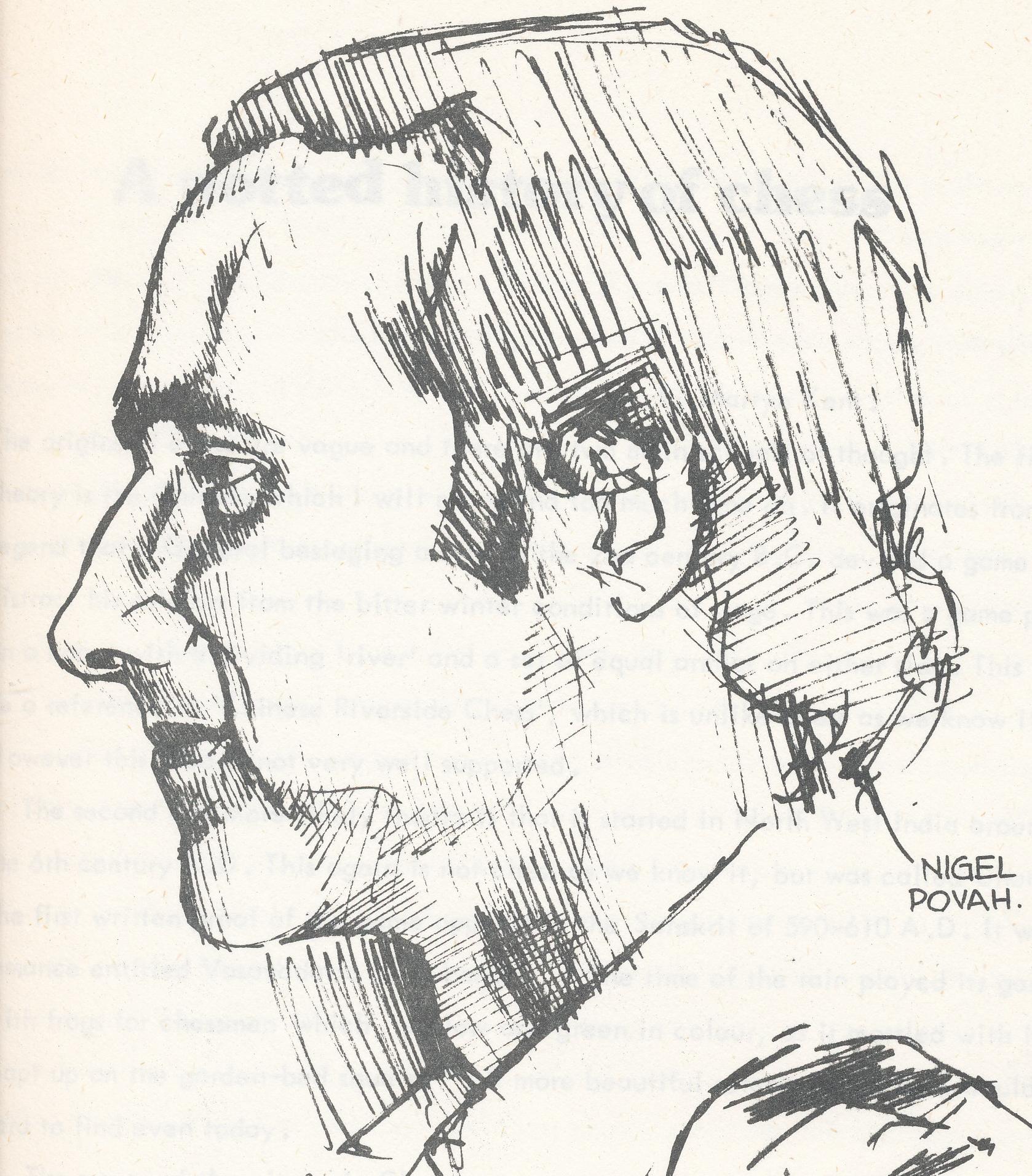
Nigel was born in Wandsworth, London.
He became a FIDE Master in 1980, an International Master in 1983 and an International Correspondence Master in 1983. He became England’s 7th ICCF GM in 1989. His predecessors were :
210048 Markland, Peter Richard ENG GM 1984
210060 Penrose, Dr. Jonathan ENG GM 1983
210178 Webb, Simon ENG GM 1983
210011 Clarke, Peter Hugh ENG GM 1980
210029 Hollis, Adrian Swayne ENG GM 1976
210062 Richardson, Keith Bevin ENG GM 1975
Nigel has been Southern Counties (SCCU) champion for the 1974-75 and 1975-76 seasons.
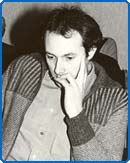
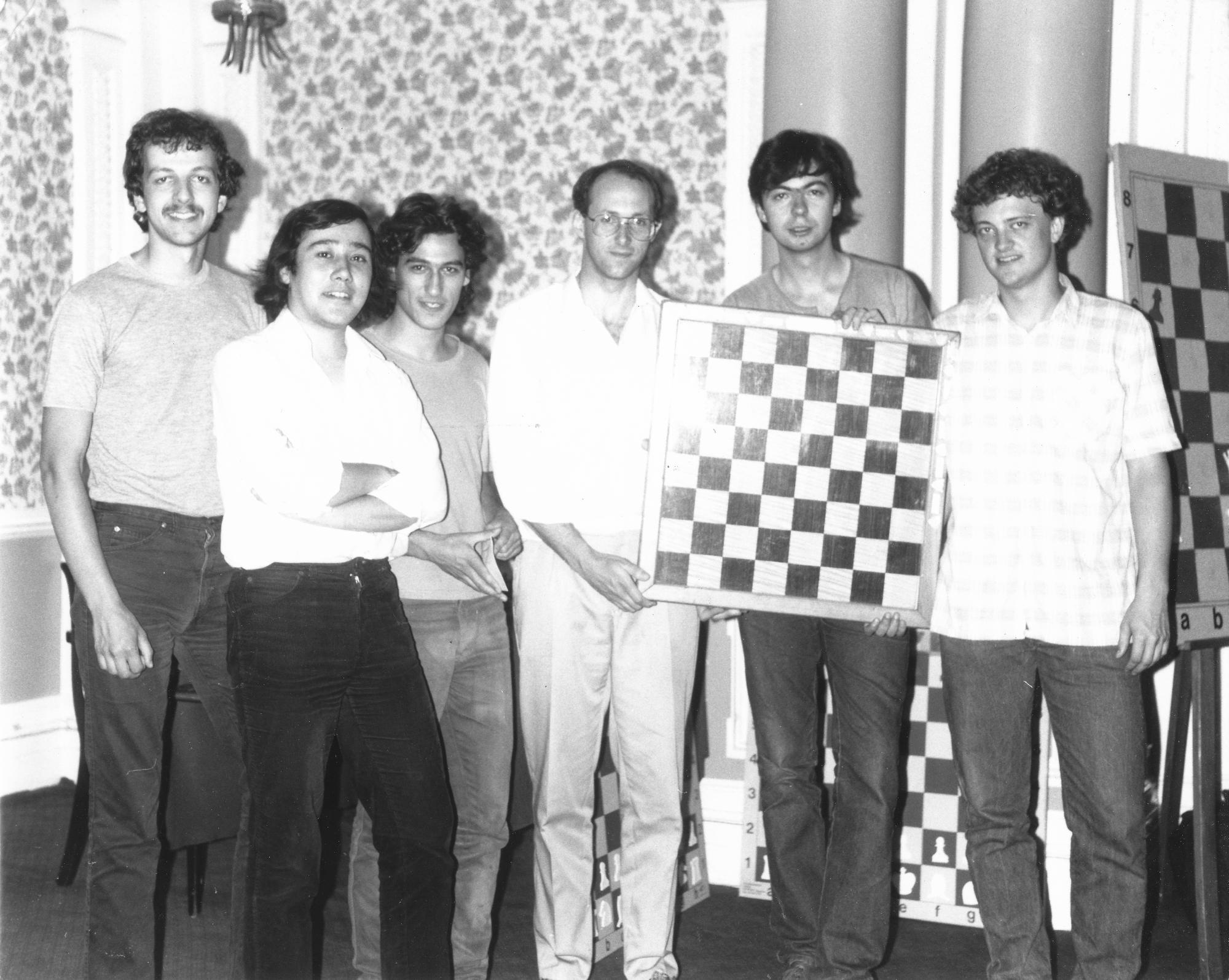
Nigel has played for Streatham & Brixton Club (see the Andrew Martin video below) and was part of this very strong London club which developed many original opening ideas.
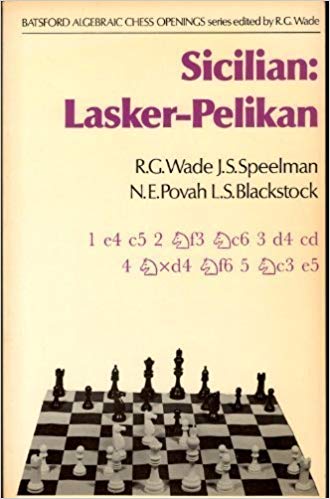
Nigel was a strong opening theoretician and developed ideas in the Sicilian Lasker-Pelikan, Sveshnikov and English Openings amongst others.
Knightmare magazines are a valuable source of information about the club and it’s members.
Below we have the game Berg-Povah, Wijk aan Zee, 1979 annotated by Streatham & Brixton team mate, IM Andrew Martin :
[embedyt] https://www.youtube.com/watch?v=BInpPM5r_qE[/embedyt]
and here is the game in full:
[pgn]
[Event “Wijk aan Zee”]
[Site “Wijk aan Zee”]
[Date “1979.??.??”]
[Round “?”]
[White “Berg, Klaus”]
[Black “Povah, Nigel Edward”]
[Result “0-1”]
[ECO “B33”]
[BlackElo “2325”]
[Annotator “British Chess News”]
[PlyCount “80”]
[EventDate “1979.??.??”]
[EventType “game”]
[EventRounds “1”]
[EventCountry “NED”]
[SourceTitle “EXT 2010”]
[Source “ChessBase”]
[SourceDate “2010.11.25”]
[SourceVersion “1”]
[SourceVersionDate “2010.11.25”]
[SourceQuality “1”]
{[%evp 0,80,19,38,72,45,56,-6,11,19,27,51,51,46,29,9,-7,2,2,-1,-1,5,7,13,6,-85,
-6,-45,91,51,79,-60,43,-29,13,-95,-107,-106,-158,-151,-150,-276,-302,-756,-877,
-877,-121,-117,-136,-122,-91,-105,-80,-141,-81,-199,-198,-161,0,-32,-68,-61,
-44,-22,-72,-80,-80,-76,-84,-86,-79,-44,-73,-97,-81,-145,-129,-135,-146,-29991,
-29992,-29993,-29994]} 1. e4 c5 2. Nf3 Nc6 3. d4 cxd4 4. Nxd4 Nf6 5. Nc3 e6 6.
Ndb5 d6 7. Bf4 e5 8. Bg5 a6 9. Na3 b5 10. Bxf6 gxf6 11. Nd5 f5 12. Bxb5 axb5
13. Nxb5 Qa5+ 14. c3 Qa4 {[#]} 15. Ndc7+ $146 ({Relevant:} 15. Nf6+ Kd8 16.
Nxd6 Qxd1+ 17. Rxd1 Bxd6 18. Rxd6+ Kc7 19. Rd2 Rxa2 20. O-O fxe4 21. Nxe4 Rd8 {
0-1 (20) Luchtmeijer,A-Povah,N (2320) Hastings 1977}) 15… Kd8 16. Qd5 Rb8 $11
17. Qxc6 $2 (17. O-O $11 Na7 18. Nxd6 Kxc7 19. Nxf7 $11) 17… Bd7 18. Ne6+
fxe6 19. Qc7+ Ke7 20. Qxd6+ (20. Nxd6 Bh6 21. Qc5 Kf6 $19) 20… Kf6 21. Qxb8
Qxe4+ 22. Kf1 Qd3+ (22… Bc6 $1 {[#]}) 23. Kg1 Bxb5 24. h3 Rg8 25. Kh2 Kf7 26.
Qb7+ Be7 27. Rhd1 Qc4 28. b3 Bc6 29. Qxe7+ Kxe7 30. bxc4 Rxg2+ 31. Kh1 Rxf2+
32. Kg1 Rg2+ 33. Kf1 Rh2 34. a4 e4 35. Kg1 Rxh3 36. Kg2 Rxc3 37. a5 e3+ 38. Kg1
Rxc4 39. a6 Rh4 40. Kf1 Bf3 0-1
[/pgn]
Nigel continues to play for Guildford in the Surrey League and in the Surrey Border League as well as Guildford in the Four Nations Chess League (4NCL).
Nigel started the highly successful 4NCL teams sponsored by his company Guildford A&DC (Assessment & Development Consultants) and the 4NCL team(s) are now run by Roger Emerson and Julien Shepley having taken a back seat since June 2017.
His peak rating was 2385 in January 1980 aged 28.
Nigel is married to Gill and has a daughter Lucy and a son, Jonathan.
In recent times Nigel has been playing more nationally and internationally and and has become a specialist in the Accelerated London System (with 2.Lf4) and is a regular on the International veterans circuit.
In 2021 Nigel is a leading light in the preparations for Guildford Chess Club’s 125th Anniversary celebrations.
[pgn]
[Event “British CF-66 Championship”]
[Site “Chester/ Cheshire”]
[Date “1979.08.09”]
[Round “4”]
[White “Povah, Nigel Edward”]
[Black “Horner, Jeff”]
[Result “1-0”]
[ECO “C61”]
[WhiteElo “2325”]
[BlackElo “2390”]
[Annotator “British Chess News”]
[PlyCount “67”]
[EventDate “1979.08.06”]
[EventType “swiss”]
[EventRounds “11”]
[EventCountry “GBR”]
[SourceTitle “MCD”]
[Source “ChessBase”]
[SourceDate “1999.07.01”]
[SourceVersion “1”]
[SourceVersionDate “1999.07.01”]
[SourceQuality “1”]
{[%evp 0,67,16,28,25,18,24,15,20,-15,10,34,21,37,22,6,60,55,77,50,53,38,67,64,
68,73,68,68,67,43,37,32,25,43,41,41,33,36,40,36,38,30,42,48,48,68,78,55,77,-61,
71,58,188,195,216,429,429,471,471,531,528,537,537,398,397,397,510,522,556,559]
} 1. e4 e5 2. Nf3 Nc6 3. Bb5 Nd4 4. Ba4 Nxf3+ 5. Qxf3 Qf6 6. Qg3 Bc5 7. O-O Ne7
8. d3 h6 9. Be3 (9. Nc3) 9… Bb6 10. c4 $146 Bxe3 $6 (10… c6 11. Nc3) 11.
fxe3 Qg5 12. Qxg5 hxg5 13. Nc3 c6 14. c5 b6 15. b4 bxc5 16. bxc5 Ba6 17. Bb3 f6
18. Rfd1 Ng6 19. d4 exd4 20. exd4 Nf4 21. Rd2 {[#]} O-O-O 22. g3 Ne6 23. Rb1
Rhe8 24. Rdb2 $16 d5 (24… Nxd4 25. Bc4 Bb5 26. a4 a6 27. axb5 axb5 28. Rd1
bxc4 29. Rxd4) 25. exd5 $18 cxd5 26. Ba4 Rf8 27. Nb5 Kd7 28. Nd6+ Ke7 29. Rb7+
Bxb7 30. Rxb7+ Nc7 31. Rxc7+ Ke6 32. Rxg7 a5 33. g4 Rg8 34. Bd7+ 1-0
[/pgn]
Here is an article written by Richard W. O’Brien from British Chess, Pergamon Press, 1983 :
“Nigel Povah was for the majority of the seventies a chess professional. He mixed playing with teaching in various schools and also coached individuals. He is a BCF qualified coach. Danny King (our second youngest international master) and the late Ian Wells were two who clearly benefited from his teachings.
On the playing front he won numerous congresses including Hammersmith 1970, Paignton 1974, LARA 1974, Evening Standard 1974, LARA(again) 1978 and Charlton 1979. In 1975 he won the SCCU Championship and again in 1976. He first played in international tournaments in 1973 when as one of the weaker players in the tournament he produced excellent annotations for the bulletin, even for the games he lost. These were the first signs of becoming a chess writer. To date he has shared first place in four international tournaments Robert Silk 1976, Malta 1976, Malta(again) 1979 and Wijk aan Zee Master Reserves 1979. It can be seen that 1979 was a good year. He also shared 4th place in the British Championship and represented
England at senior level against Denmark in the same year.
[pgn]
[Event “Islington Open”]
[Site “?”]
[Date “1974.??.??”]
[Round “?”]
[White “Povah, Nigel Edward”]
[Black “Hindle, Owen Mark”]
[Result “1-0”]
[ECO “B78”]
[Annotator “Nigel Povah”]
[PlyCount “53”]
[SourceTitle “British Chess, page 223”]
{[%evp 0,19,20,27,51,51,99,86,88,36,33,31,97,58,58,42,44,31,38,13,47,-1]} 1. e4
c5 2. Nf3 d6 3. d4 cxd4 4. Nxd4 Nf6 5. Nc3 g6 6. Be3 Bg7 7. f3 Nc6 8. Qd2 O-O
9. Bc4 Bd7 10. O-O-O Rc8 11. Bb3 Ne5 12. h4 h5 13. Nd5 $5 $146 {My own idea
against the then new 12…h5!? (Nigel’s idea does not appear in MegaBase 2020
until 1983 so he was way ahead of his time.)} ({The 2020 main line is} 13. Bg5
Rc5 14. Kb1 b5 15. g4 hxg4 16. h5 Nxh5 17. Nd5 Re8 18. Rxh5 gxh5 19. Qh2 Rxd5
20. Bxd5 Qb6 21. Nf5) 13… Nxd5 14. Bxd5 Nc4 $2 (14… e6 {is better}) 15.
Bxc4 Rxc4 16. g4 hxg4 17. h5 g5 $6 ({An alternatve is} 17… e5 $5) 18. h6 Be5
19. b3 Rc8 20. h7+ Kh8 21. Bxg5 gxf3 $2 (21… Qb6 $1 {was a better try.}) 22.
Bh6 f2 23. Qxf2 Qb6 {[#]} 24. Qg1 $1 f5 $1 {forced} ({(a passing move such as)
} 24… a6 {as White was threatening} 25. Qg8+ $3 Rxg8 26. hxg8=Q+ Kxg8 27.
Rdg1+) 25. Rd2 $1 Bxd4 26. Rg2 $3 Bb2+ 27. Kxb2 {and Black resigned and there
is no answer to 28. Rg8+ Rxg8 29. hxg8=Q+ Rxg8 30. Bg7#. Not surprisingly this
game collected a brilliancy prize.} 1-0
[/pgn]
His road to the lM title has been long and hard. On several occasions he got close to the norm requirement just to fail. At Lloyds Bank in 1978 and 1980 and Lewisham 1981 he got the necessary three norms. Had he then ceased playing (with an Elo of 23751 he would automatically have had the lM title confirmed at Lucerne in 1982. He however continued playing and became the victim of some complicated and, with respect, unfair FIDE regulations, and his title was delayed until 1983. Clearly had the General Assembly met between January 1982 and June 1982 he would have been awarded the title at least a year earlier!
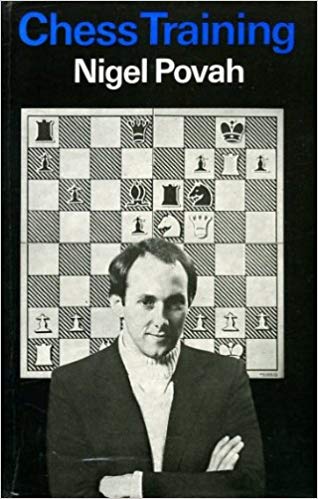
He has written several books-Chess Training published by Faber, English:Four Knights Batsford, How to Play the English Batsford and was co-author of Sicilian: Lasker-Pelikan Batsford. These last three Batsford publications indicate his interest in current theory. Two of the games which follow- v Berg (see 16…Rb8) and v Speelman (see 12 NgS)certainly confirm this. The Streatham and Brixton club owe much to Nigel Povah in becoming one of the strongest clubs in the country. At one time an average second division side (London league) they have since won the league and been in contention more than once. For several years he was one of the main three organisers at the club and even today still continues to play for them and is currently their National Club match-captain although he now lives some twenty miles away in Guildford.
In 1979 he organised the First Regency International at Ramsgate. In conjunction with Ian Josephs (sponsor) and Bob Wade (controller) this has become a highly successful annual event.
Now married, his wife Gill presented him with a daughter Lucy shortly after the completion of the Regency International in 1982.
He now works for ICL as training consultant and limits his over the board chess to club chess for Streatham.
He has recently taken up postal chess and in 1983 after competing in the BPCF Jubilee he became a correspondence International Master.
He has a BSc in Psychology and an MSc in Occupational Psychology.”
[pgn]
[Event “Westergate”]
[Site “?”]
[Date “1983.??.??”]
[Round “?”]
[White “Povah, Nigel Edward”]
[Black “Speelman, Jonathan Simon”]
[Result “1-0”]
[ECO “D37”]
[Annotator “Nigel Povah”]
[PlyCount “49”]
[SourceTitle “British Chess, page 221”]
[SourceDate “2020.07.16”]
[SourceVersionDate “2020.07.16”]
{[%evp 0,22,19,31,14,-14,-11,0,0,6,24,26,18,8,46,51,56,35,70,53,53,39,42,32,36]
} 1. d4 Nf6 2. c4 e6 3. Nf3 d5 4. Nc3 Be7 5. Bf4 O-O 6. e3 c5 7. dxc5 Bxc5 8.
cxd5 Nxd5 9. Nxd5 exd5 10. a3 Nc6 11. Bd3 Bb6 ({As Black plays Bc7 later maybe
} 11… Bd6 {is a better choice now.}) (11… h6 12. Bc2 {with Qd3 to follow
and White stands better.}) 12. Ng5 $1 ({White had threatened} 12. Bxh7+ Kxh7
13. Qc2+ {(with the bishop on c5)}) (12. O-O Bg4 13. h3 Bh5 14. b4 Re8 15. Rc1
a6 16. g4 Bg6 17. Bxg6 hxg6 18. Qd3 d4 19. e4 {Speelman – Geller, Philips &
Drew, London, 1982, 1/2-1/2.}) 12… h6 13. Qh5 Bc7 $6 {It looks obvious that
Black should seek to exchange bishops in order to rule out ideas such as Nh7
and Bxh6 etc.} ({He should try} 13… Qf6 $1 {with the idea of …Bf5 to
follow.} 14. Nh7 Ba5+ (14… Qxb2 15. O-O $16) 15. Kf1 Qxb2 16. Rd1 Re8 17.
Bxh6 gxh6 18. Qxh6 Bd8 19. Nf6+ Bxf6 20. Bh7+ Kh8 21. Bg6+) 14. g3 $1 Bxf4 $2 {
Opening the g-file} ({but if} 14… d4 15. Nxf7 Rxf7 16. Bc4 $16) ({or} 14…
Ne5 15. Bxe5 Bxe5 16. Nxf7 Qf6 17. Nxe5 Qxf2+ 18. Kd1 $16) 15. gxf4 d4 16.
O-O-O Qd5 17. Rhg1 Bd7 ({Not} 17… f6 $4 18. Ne6 $3 Qxh5 (18… Qxe6 19. Rxg7+
Kxg7 20. Qg6+ $16 Kh8 21. Qh7#) 19. Rxg7+ Kh8 20. Rh7+ Kg8 21. Rg1+ $16) 18.
Kb1 Rac8 19. e4 Qb3 20. e5 Nb4 $2 {Short of time and with Whte preparing to
sacrifice on g7, Black gets desperate.} (20… Ne7 {was better} {when} 21. Nf3
$1 {threatens Nxd4 and 22.Rxg7+ Kxg7 23.Rg1+ Ng6 24.Rxg6+}) 21. axb4 Bb5 22.
Qe2 $1 Bc6 23. Ne4 {Black lost on time but as his solitary threat of} Bd5 {
is answered by} 24. Nf6+ Kh8 {and} 25. Nxd5 {he is quite lost.} 1-0
[/pgn]

According to Chess Training : “Two of his pupils were members of England’s victorious 4-man team in the World Under-16 team event.”
Here is his Wikipedia entry :
[pgn]
[Event “Malta International Tournament”]
[Site “Malta”]
[Date “1976.??.??”]
[Round “?”]
[White “Kotov, Alexander Alexandrov”]
[Black “Povah, Nigel Edward”]
[Result “0-1”]
[ECO “A46”]
[Annotator “Nigel Povah”]
[PlyCount “54”]
[EventDate “1976.??.??”]
[SourceTitle “British Chess, page 223”]
{[%evp 0,54,19,31,25,27,56,5,64,34,58,56,58,59,57,50,42,23,22,30,30,38,25,27,
39,-26,-38,-66,-83,-45,-39,-71,-18,-7,-9,4,24,26,46,48,30,59,101,85,68,-127,
-34,-204,-219,-380,-414,-414,-443,-443,-426,-672,-708]} 1. d4 Nf6 2. Nf3 c5 3.
c3 b6 $5 {It is customary to play 3…e6 before playig b6 in order to
recapture on c5 with the bishop.} ({i.e.} 3… e6 4. dxc5 Bxc5) 4. dxc5 bxc5 5.
e4 Bb7 ({Naturally not} 5… Nxe4 $2 6. Qd5 $18) 6. e5 Nd5 7. Bb5 {This
position resembles the c3 variation of the Sicilian Defence, where White’s
pawn on c3 would normally be on d4, and Black’s pawn c5 would be on b6; in
such circumstances the move Bb5 is not normally played since Black intends to
continue with e6 and not d6.} e6 8. O-O Be7 9. Nbd2 O-O 10. Ne4 f5 11. exf6
Nxf6 12. Neg5 ({If} 12. Nd6 $6 Bxf3 13. Qxf3 Bxd6 14. Qxa8 Qb6 {followed by
Nc6 wins}) 12… Qc7 $1 13. g3 (13. a3 $2 {Black threatened} h6 14. Nh3 Ng4 {
winning}) ({If} 13. Qe2 h6 14. Nxe6 dxe6 15. Qxe6+ Kh8 16. Nh4 Be4 $17) 13…
h6 14. Nh3 Nd5 {threatening 15…Nxc3 16.bxc3 Bxf3} ({If instead} 14… Ng4 15.
Nf4 g5 16. Nxg5 hxg5 ({or here} 16… Nxh2 17. Nfxe6 Nf3+ 18. Qxf3 $18) 17.
Qxg4 $16) (14… Nh5 15. Nh4 $1 $16) 15. Ne1 {[#]} c4 $5 {to prevent the
bishop retreating and to vacate the c5 square for Black’s pieces. however,
overlooking White’s reply.} 16. Qg4 Nb6 $1 {The c-pawn is more important than
the h-pawn.} 17. Bxh6 Rf7 18. Be3 ({If} 18. Ng5 Bxg5 19. Bxg5 a6 $19) 18… Qe5
({If} 18… a6 19. Bxb6 Qxb6 20. Bxc4) 19. a4 $2 (19. Bxb6 $142 Qxb5 20. Bd4
Qxb2 $13) 19… Qd5 20. f3 Bc5 21. Ng2 a6 22. a5 $5 (22. Ng5 axb5 (22… Rf5
23. Ne4 $1 $16) 23. Nxf7 Kxf7 {with obscure complications}) 22… axb5 23. axb6
{[#]} Rxf3 $1 (23… Rxa1 $143 24. Rxa1 Rxf3 25. Bxc5 Qxc5+ 26. Qd4 (26. Kh1))
24. Rxa8 (24. Rxf3 Rxa1+ 25. Kf2 Bxe3+ {wins the exchange}) 24… Rxf1+ 25.
Kxf1 Qxg2+ 26. Ke1 Bxa8 27. Bxc5 $2 ({White’s last hope was} 27. Qh5 Bf3 28.
Qe8+ Bf8 29. Nf4 Qh1+ {and Black just wins.}) 27… Bf3 0-1
[/pgn]