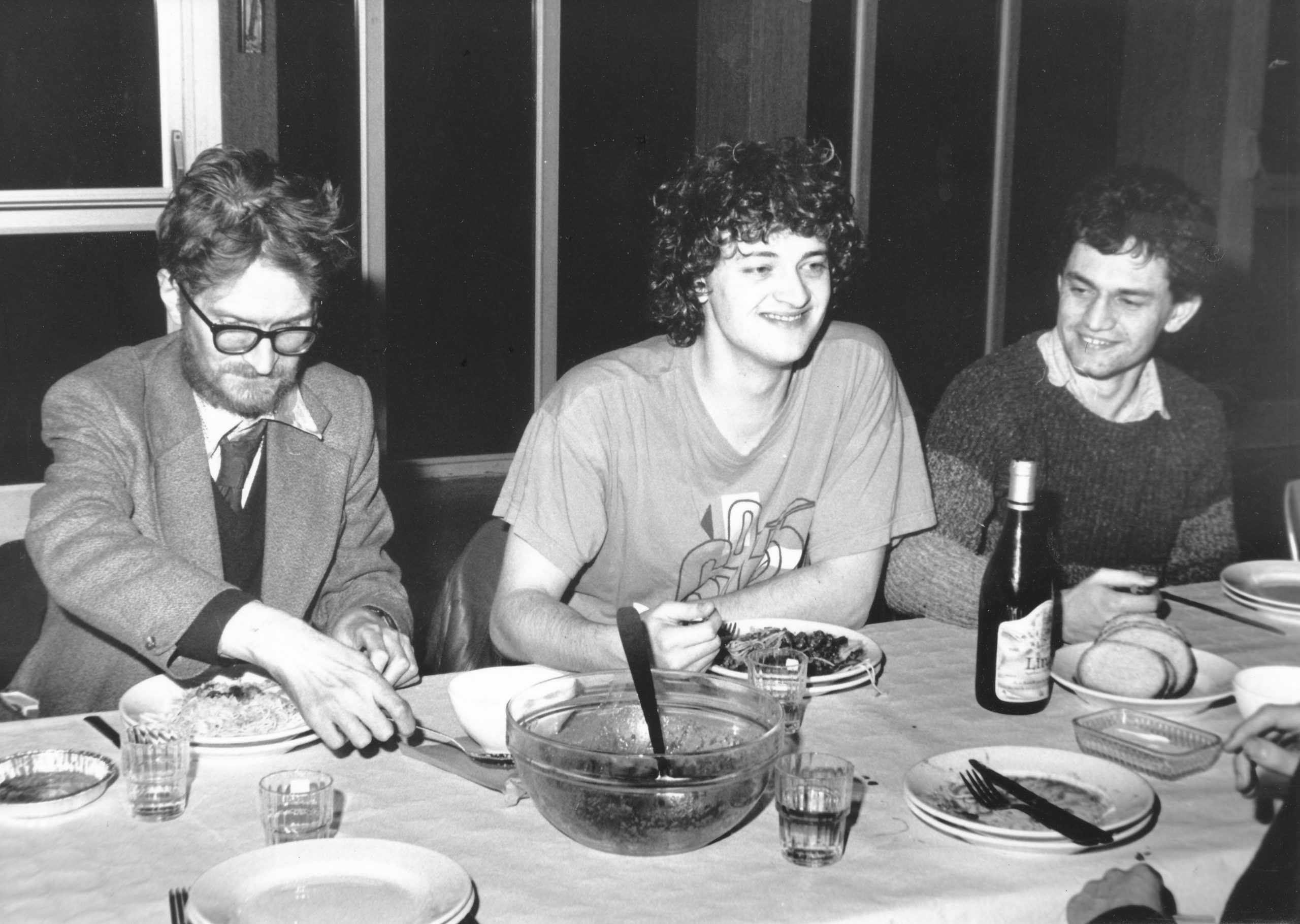
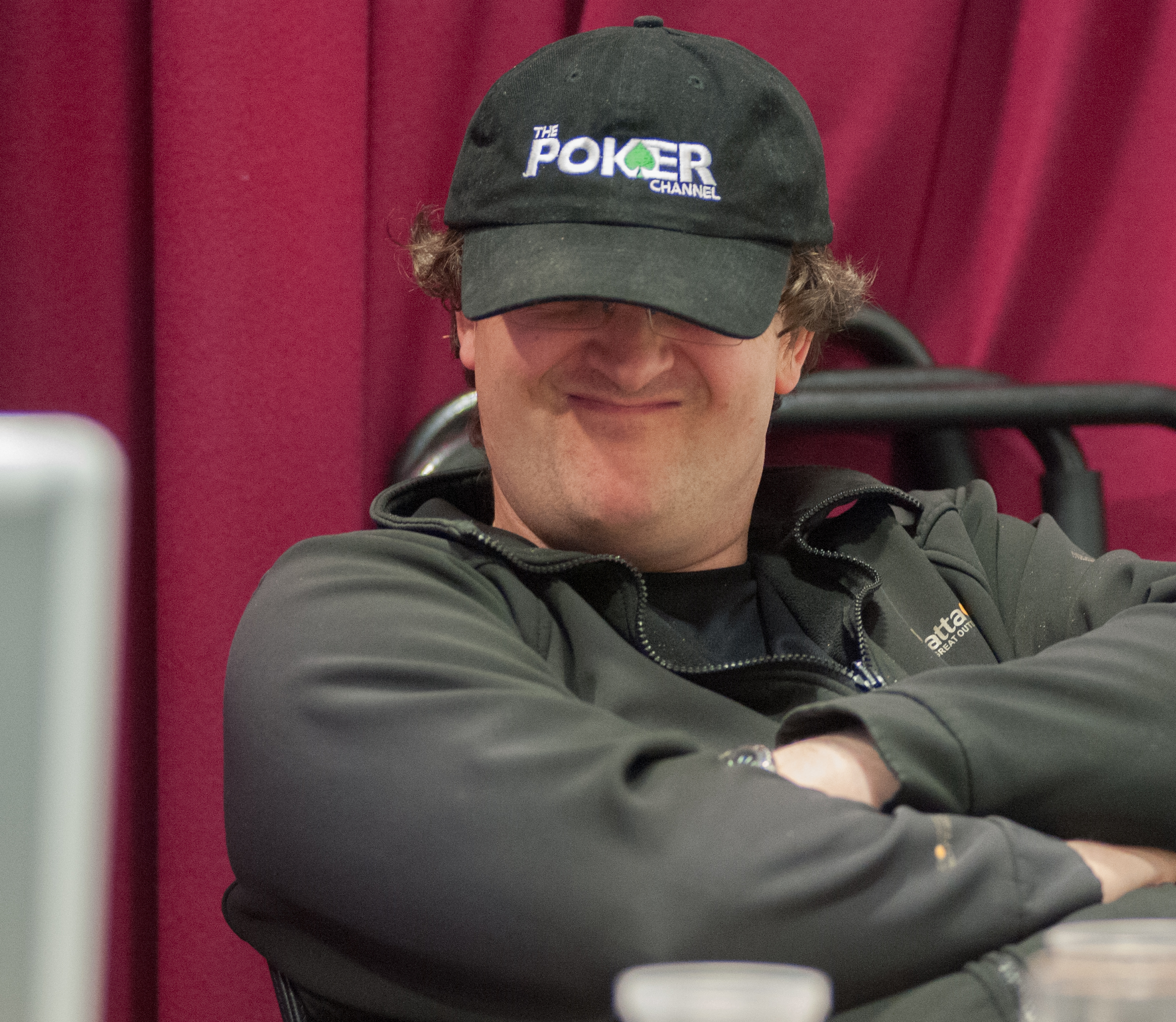
We send best wishes to GM Julian Hodgson on his birthday, this day July 25th) in 1963.
Julian Michael Hodgson was born at St. Mary Abbott’s Hospital, Marloes Road, Kensington, West London son of (Ronald) George Hodgson and Johanna Hodgson (née Birch) and the birth was registered in the district of Hammersmith.
Julian’s father has asserted to be a descendent of George Jeffreys, 1st Baron Jeffreys and we are looking to establish this claim following further research.
Julian attended St. Paul’s School (See below) and then attended The University of Leicester for one year.
Julian married Lizette and David Norwood was his Best Man.
Julian and Lizette Hodgson
(Curiously both Felice and Gaige state Julian was born in Saint Asaph in Wales. This is incorrect.)
Julian Hodgson
Harry Golombek wrote this about Julian in a 1980 Dataday chess diary :
“I think that the first time I saw Julian Hodgson in play was some four years ago in a London tournament. Upon my arrival Leonard Barden told him that he must now be careful how he played as Golombek was watching.
Julian and Nigel Short play Korchnoi in a simul. Leonard Barden observes.
“Who”, enquired the twelve-year old Julian, “is Golombek?”
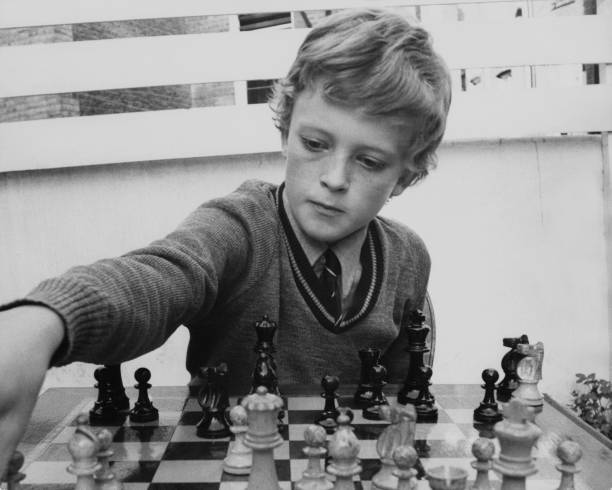
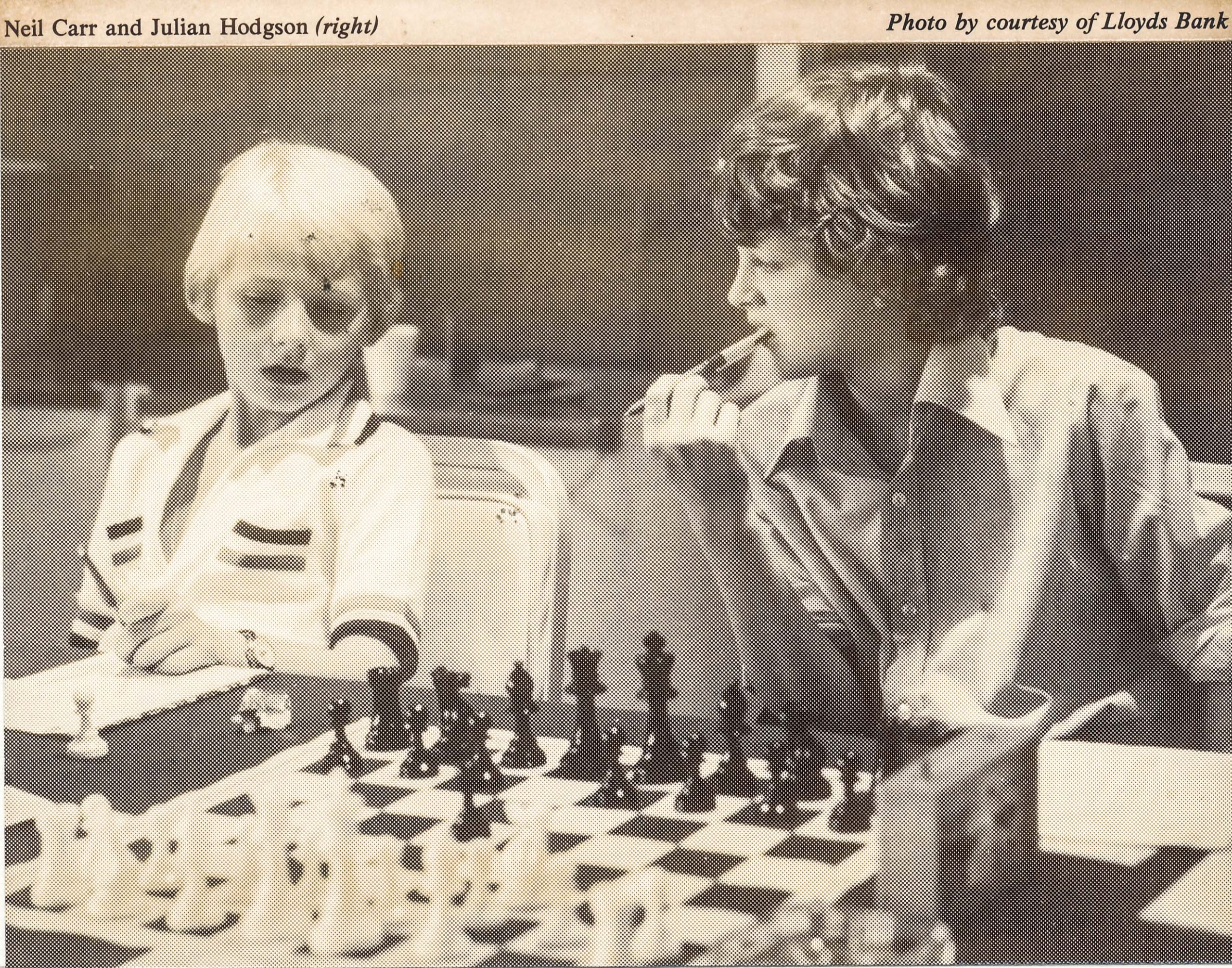
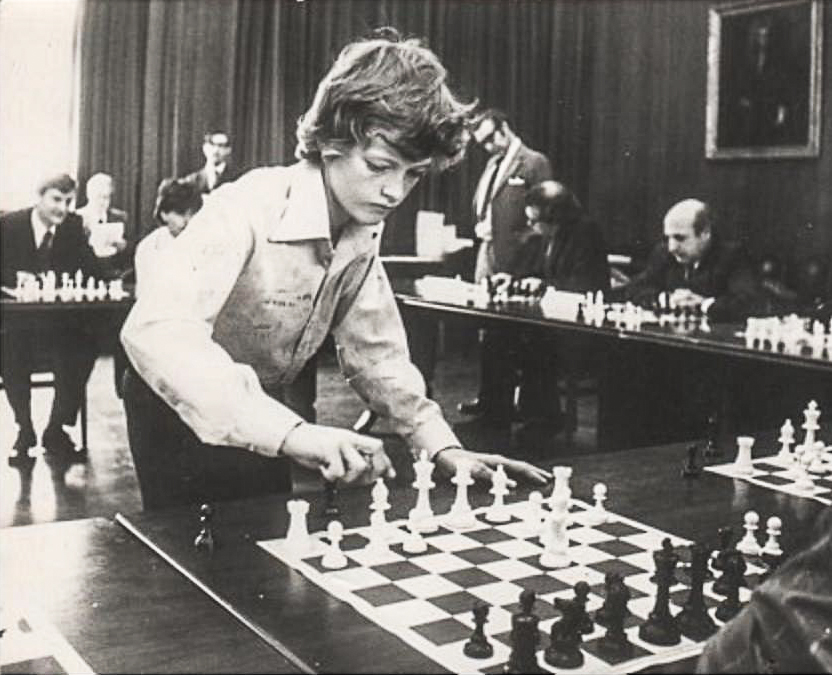
Neil Carr and Julian Hodgson at the 1976 Lloyds Bank Match by Telex, London – New York. From BCM, volume XCVI (96) Number 11 (August), Page 494. The venue was the Bloomsbury Hotel, London. Photo courtesy of Lloyds Bank.Julian Hodgson aged 13 in 1976 giving a simultaneous display at the Guildhall in London scoring +14=2-4. Photograph courtesy of the Keystone agency.
I felt grateful at the time that he did not say who or what is Golombek but I tell this story chiefly to show the cheerful insouciance with which Master Hodgson treated all comers whether chess masters or chess rabbits.
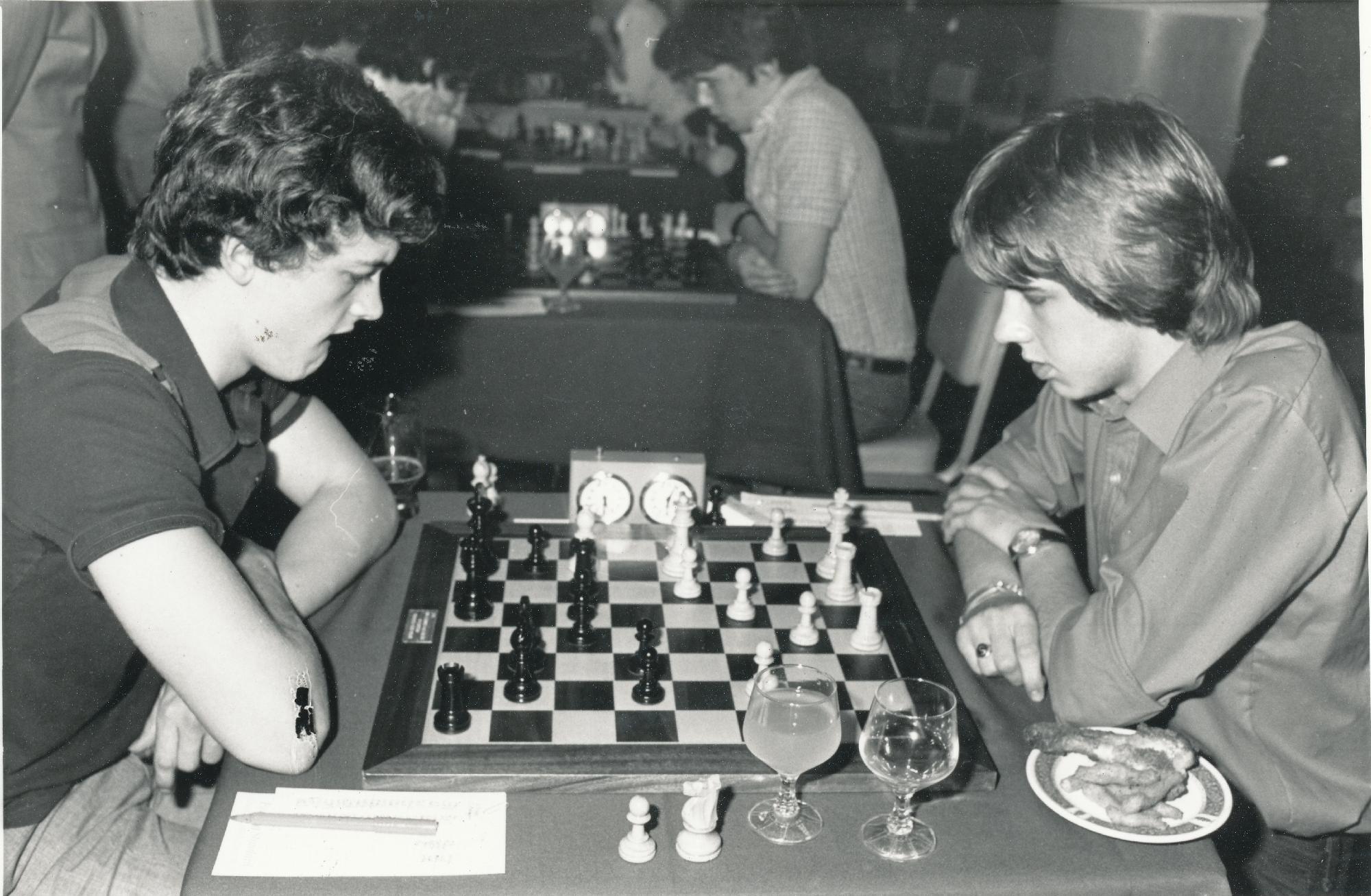
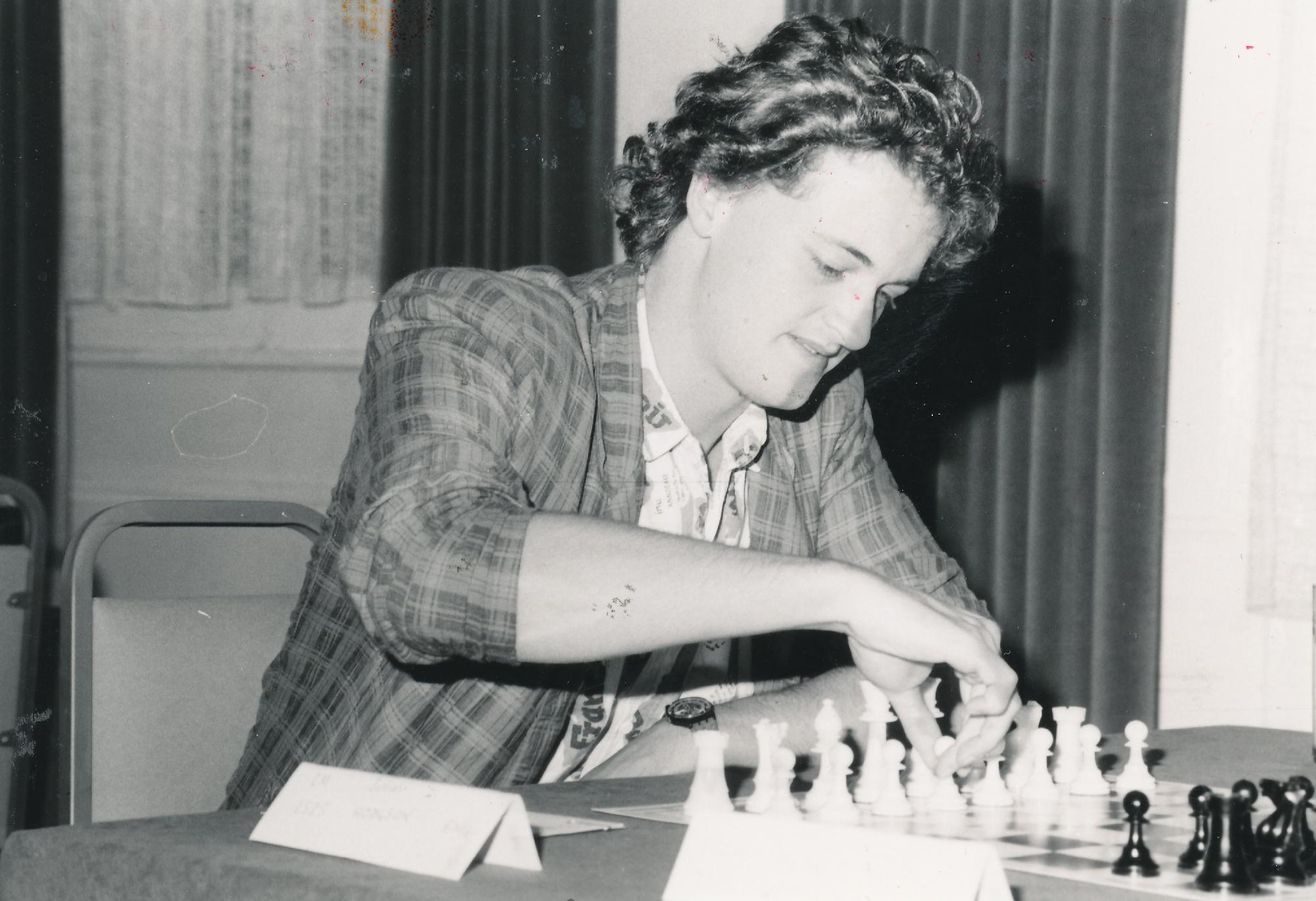
Julian playing Simon L Triggs. Event and photographer unknown
Julian astonishing maturity as a player has been impressive ever since at the age of ten, he won the Southern Counties Under 14 Championships in 1973. Since then he has acquired a host of such championships culminating in the British Under-21 Championship in 1977.
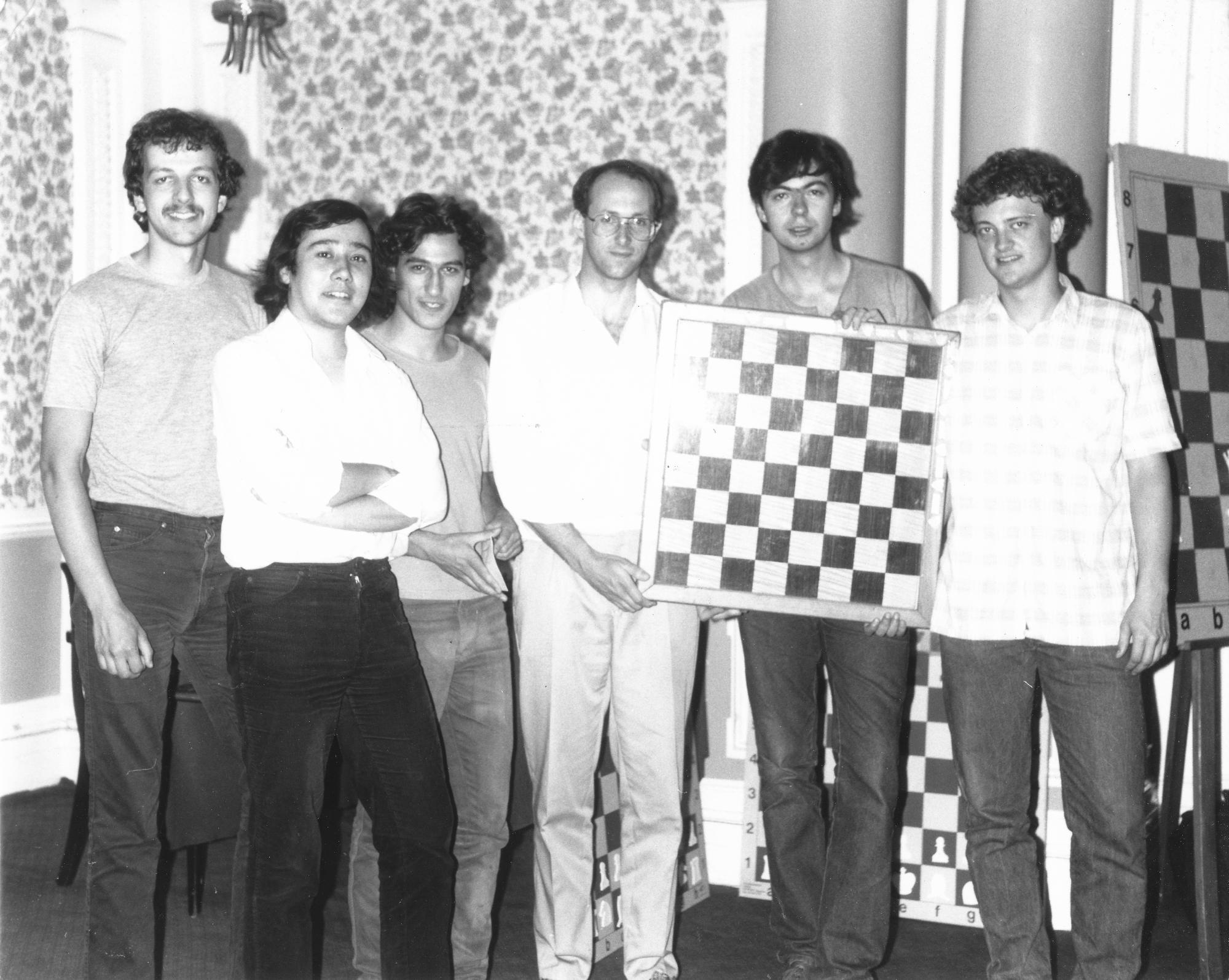
Streatham & Brixton becoming BCF National Club Champions in 1989. The team was Tony Kosten, Mark Hedben, Daniel King, Nigel Povah (Captain), Joe Gallagher and Julian Hodgson : quite a strong team
Perhaps his most remarkable performance so far has been his equal 3rd in a strong challengers section at Hastings where he scored 7.5 out of 10. 1977 was a good year for him and here, from the Lloyds Bank Silver Jubilee Tournament of that year is his fine win over a strong opponent :
Here is his entry (written by Richard W O’Brien) in British Chess (Pergamon Press, 1983, Botterill, Levy, Rice and Richardson) :
“Following a series of excellent results Julian, at the tender age of 11, became the second youngest ever to play in an international tournament when he took part in the London Chess Club International Invitation tournament in September 1974. Only Reshevsky had been younger. Julian’s first opponent was Michael Woodhams, an Australian international who had just scored 15.5/18 in the recent Olympiad (Nice)
The following year he became the youngest player ever to win the London Amateur Championship. A year later he reached a grading of 200 (BCF), only Reshevsky, Pomar, Karpov and Kasparov had done so at an earlier age.
By now he was at St. Paul’s School, which was in the process of becoming one of the strongest chess playing schools in the country. In 1977 he shared first place with WN Watson (also St. Paul’s) in the British U21 Championship. Progress was however not as fast as had at one time been anticipated
It was at Ramsgate, late in 1980 before his first IM norm. A month later he finished second in the Hastings Challenger. Other good results followed in 1981. First he was selected for the Glorney Cup and shortly afterwards did well to come fourteenth in the British Championship (Morecambe). He represented England in the World Youth Team championships scoring 4/6. His second IM norm followed when he shared fifth place at Manchester in the same year. Good results in weekend congresses meant that he finished fourth in the Leigh Grand Prix. The year had finished with Julian needing a draw in the last round at Ramsgate to get his title. He lost and was to wait another 12 months to achieve his final norm.
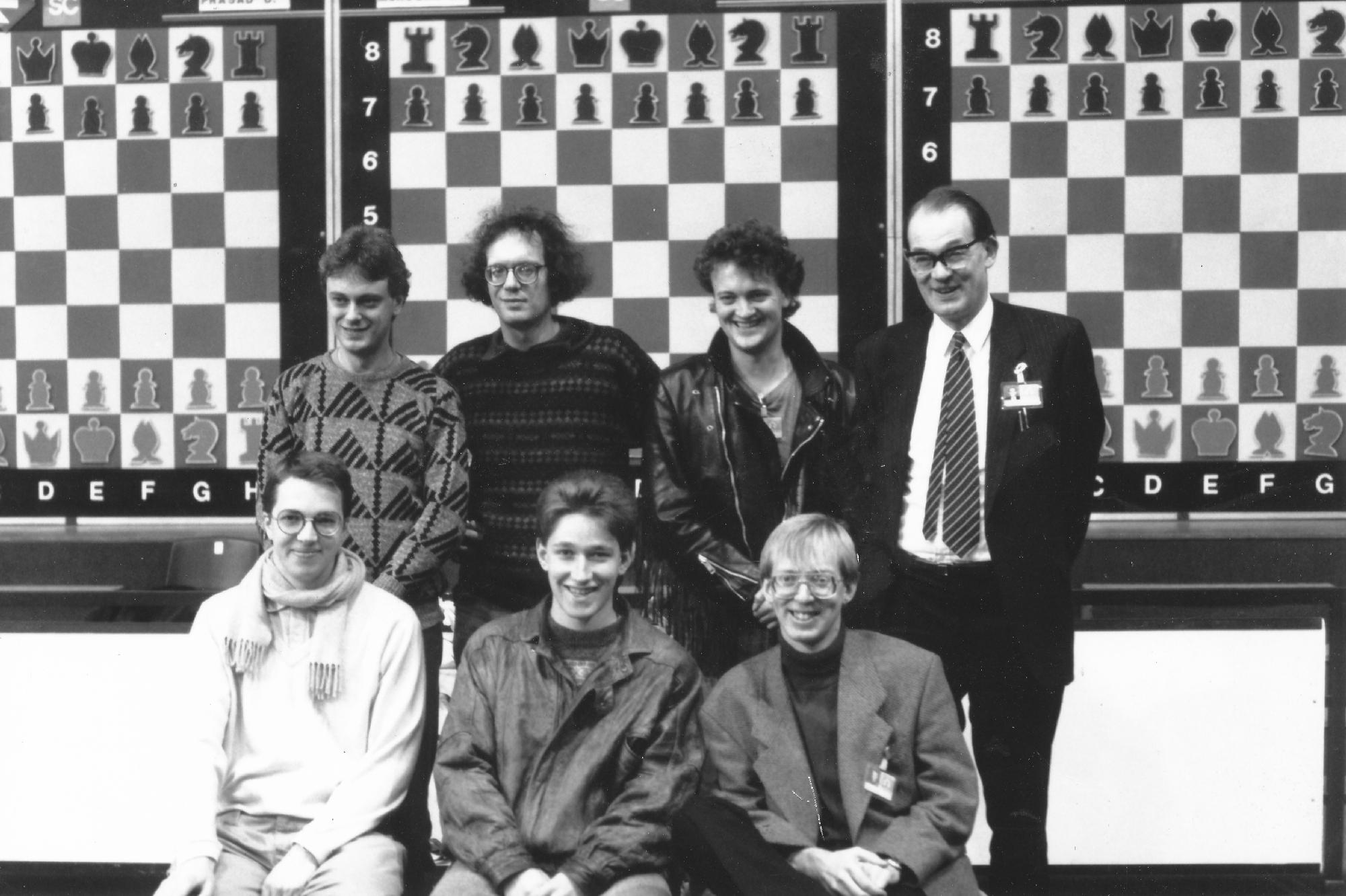
The England Team from the 1990 Novi Sad Olympiad : John Nunn, Jon Speelman, Julian Hodgson, David Anderton OBE (Captain), Nigel Short, Michael Adams and Murray Chandler
When the final norm came it arrived out of the blue. With a score of 2.5/5 at Lewisham in November 1982 the chances seemed remote, 3.5/4 was required against a strong field and it even seemed doubtful whether he could actually play those he needed to play. He scored 2.5/3 and now had to play Jon Tisdall, who still had a chance of winning the tournament.
Julian finished second equal in the tournament behind Jim Plaskett who had beaten him earlier.
Julian Hodgson
The next six weeks saw Julian come equal first in the Pergamon sponsored British Lightning championship, a highly creditable sixth in the Nightflight International at Brighton (equivalent to an IM rating) and second place yet again in the Hastings Challengers.
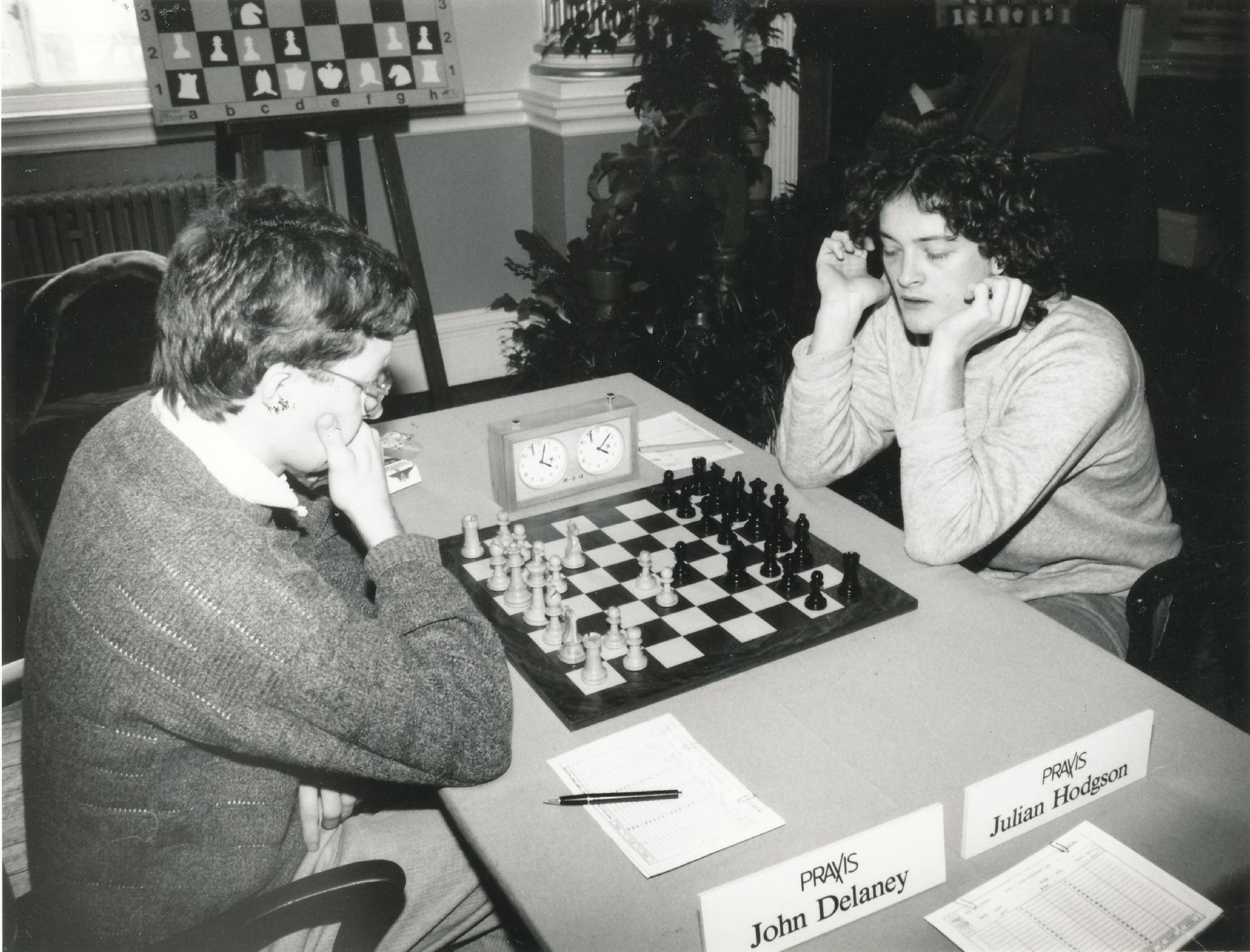
John Delaney plays Julian Hodgson at the Bath Zonal Tournament in 1987
Earlier in 1983 he scored 6.5/9 at Lugano, probably Europe’s strongest ever Swiss (Swiss !) tournament, losing narrowly to Jan Timman.
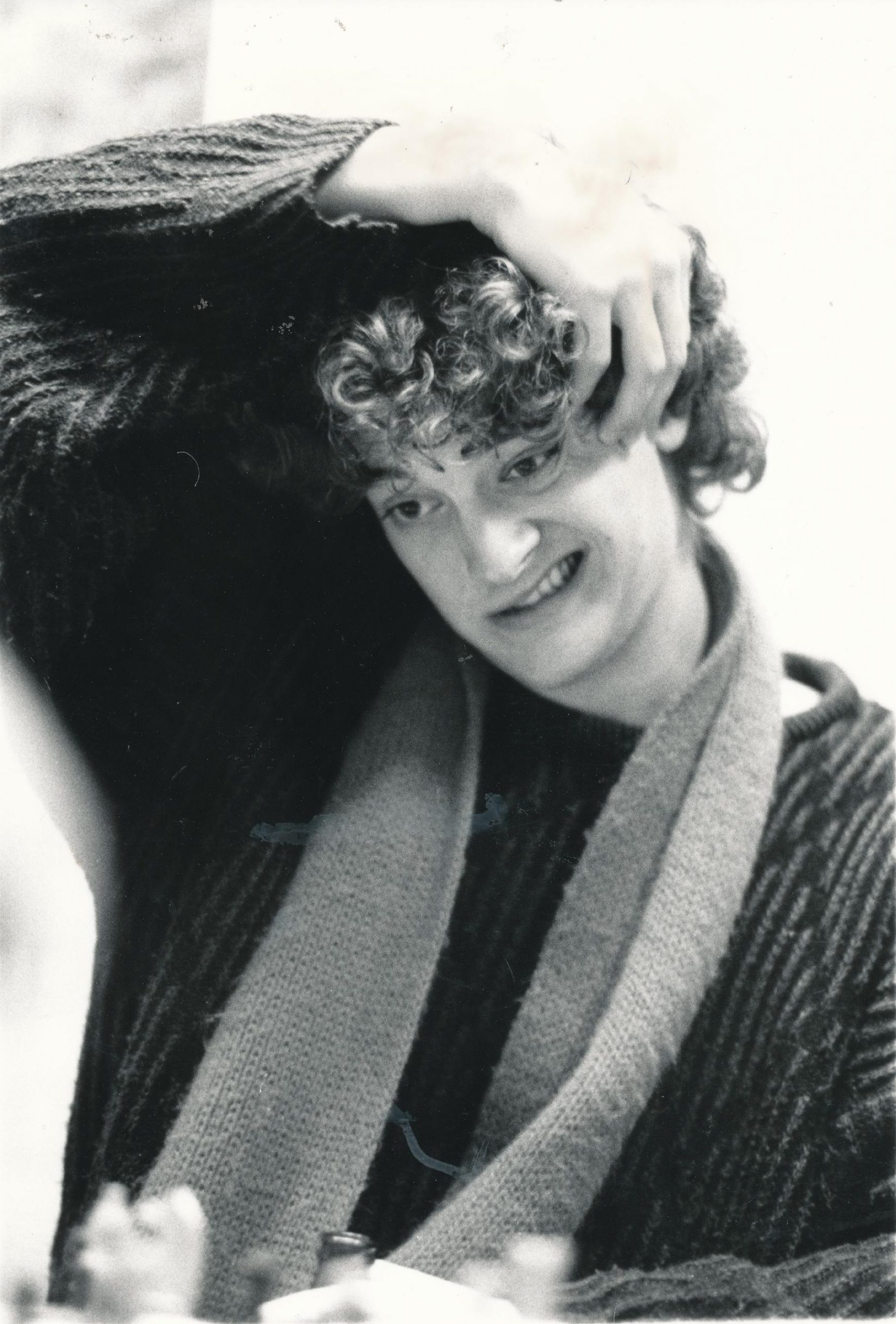
Julian Hodgson. Event and photographer unknown.
He left Leicester University after just one year preferring to concentrate on chess.
FM Andrew Whiteley, IM Julian Hodgson and FM Byron Jacobs at Cappelle Le Grand, 1988. Photograph by Caroline Winkler
He plays fairly regularly for Streatham & Brixton Chess Club which encouraged juniors for several years. Daniel King is another junior who also played frequently for Streatham. ”
This is what was written about Julian prior to the 1979 Spassky vs the BCF Junior Squad simultaneous display : “St Paul’s and Shepherds Bush. Rating 210. Standard London Amateur Champion at age 12, 1975.
Standard London under-18 champion, 1976. British under-21 co-champion, 1977. Youngest ever to beat two grandmasters in successive games, 1978.”
Aside from more formal achievements, he developed a sharp, relentless, attacking style of play and against lesser opponents this frequently resulted in devastating quick wins, earning him the epithet “Grandmaster of Disaster”.
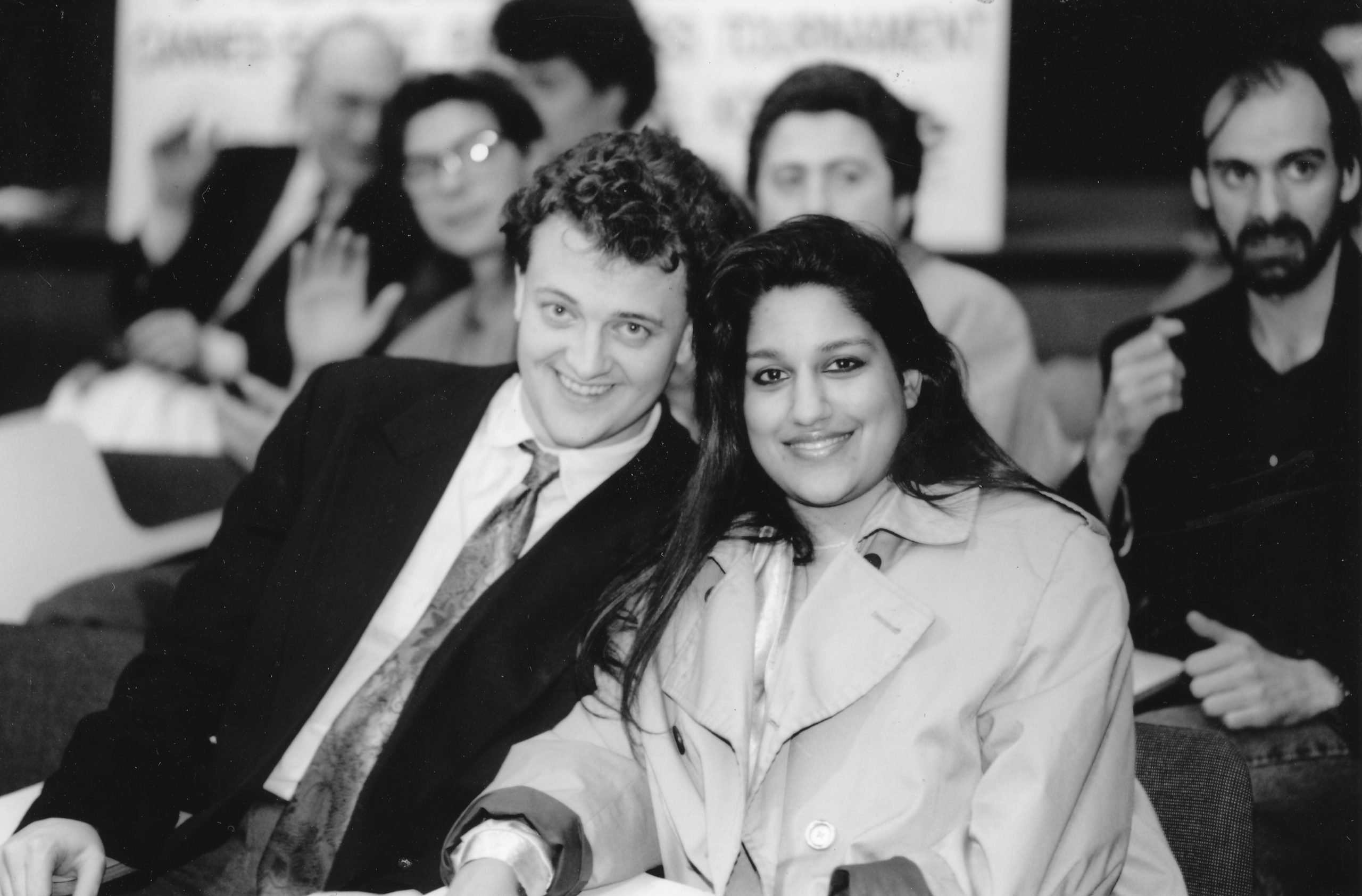
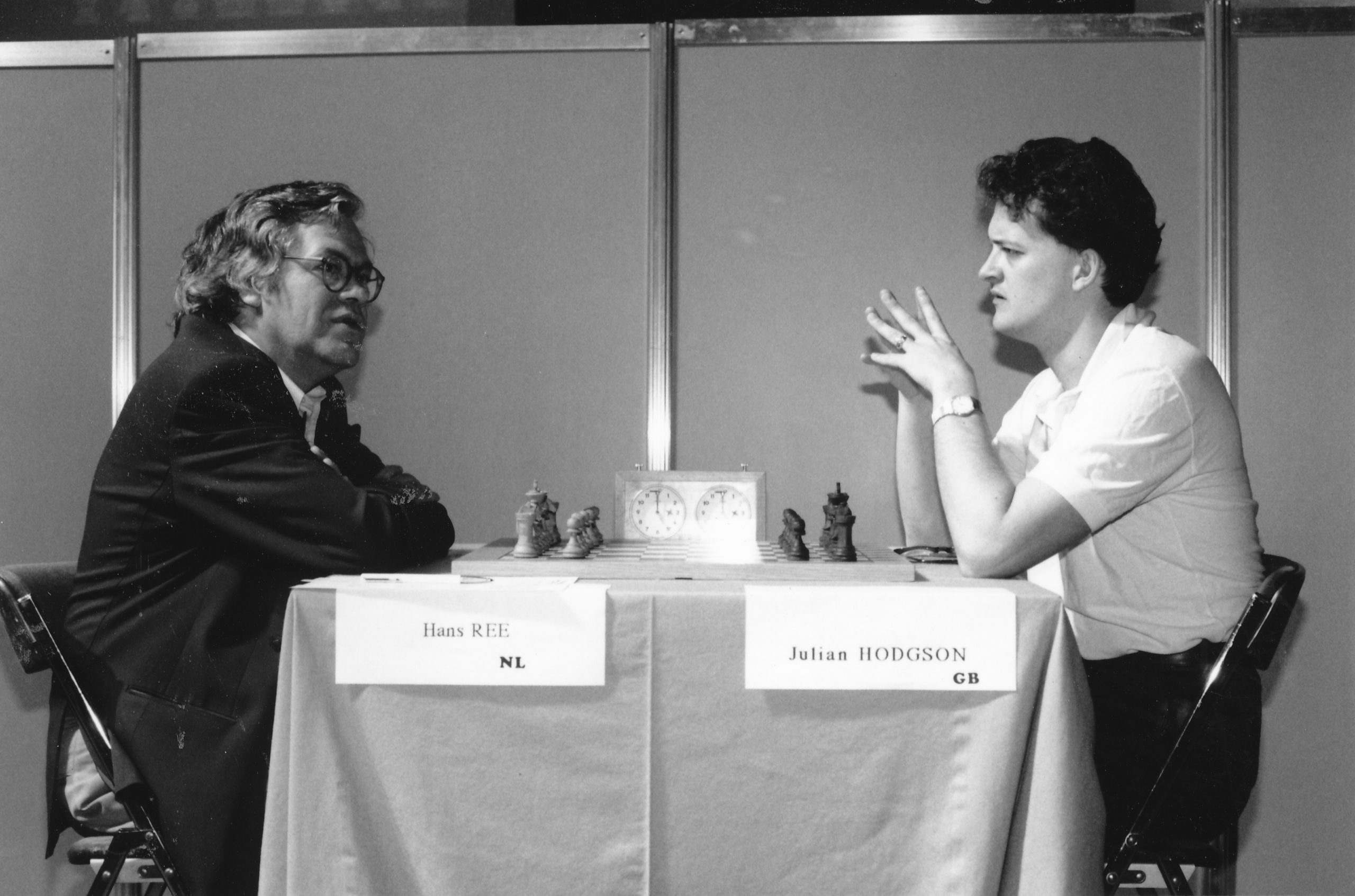
Hans Ree plays Julian Hodgson at the Cannes Team Tournament, 1992
Hodgson’s greatest legacy as a chess player may however lie in his resurrection of an almost forgotten opening system. The Trompowsky Attack (1.d4 Nf6 2.Bg5) had floundered in the doldrums for many years, prior to his adoption and development of the opening. In interviews, he reveals that this was born out of laziness and a reluctance to learn established chess opening theory. It soon became his weapon of choice with the white pieces, leading to a surprising popularisation of the system, the spawning of a whole generation of devotees and ironically, a number of theoretical guides, containing a high quota of Hodgson’s own games and analysis. Indeed, his expert treatment of the system once prompted fellow grandmaster Joe Gallagher to write that it should be renamed the Hodgson–Trompowsky Attack, a view shared by many other masters. A chess journalist once wrote that Hodgson put the ‘romp’ into Trompowsky.
A related, but more obscure version of the system (1.d4 d5 2.Bg5), has been dubbed by some the Hodgson Attack and by others the Pseudo-Trompowsky or Queen’s Bishop Attack.
and
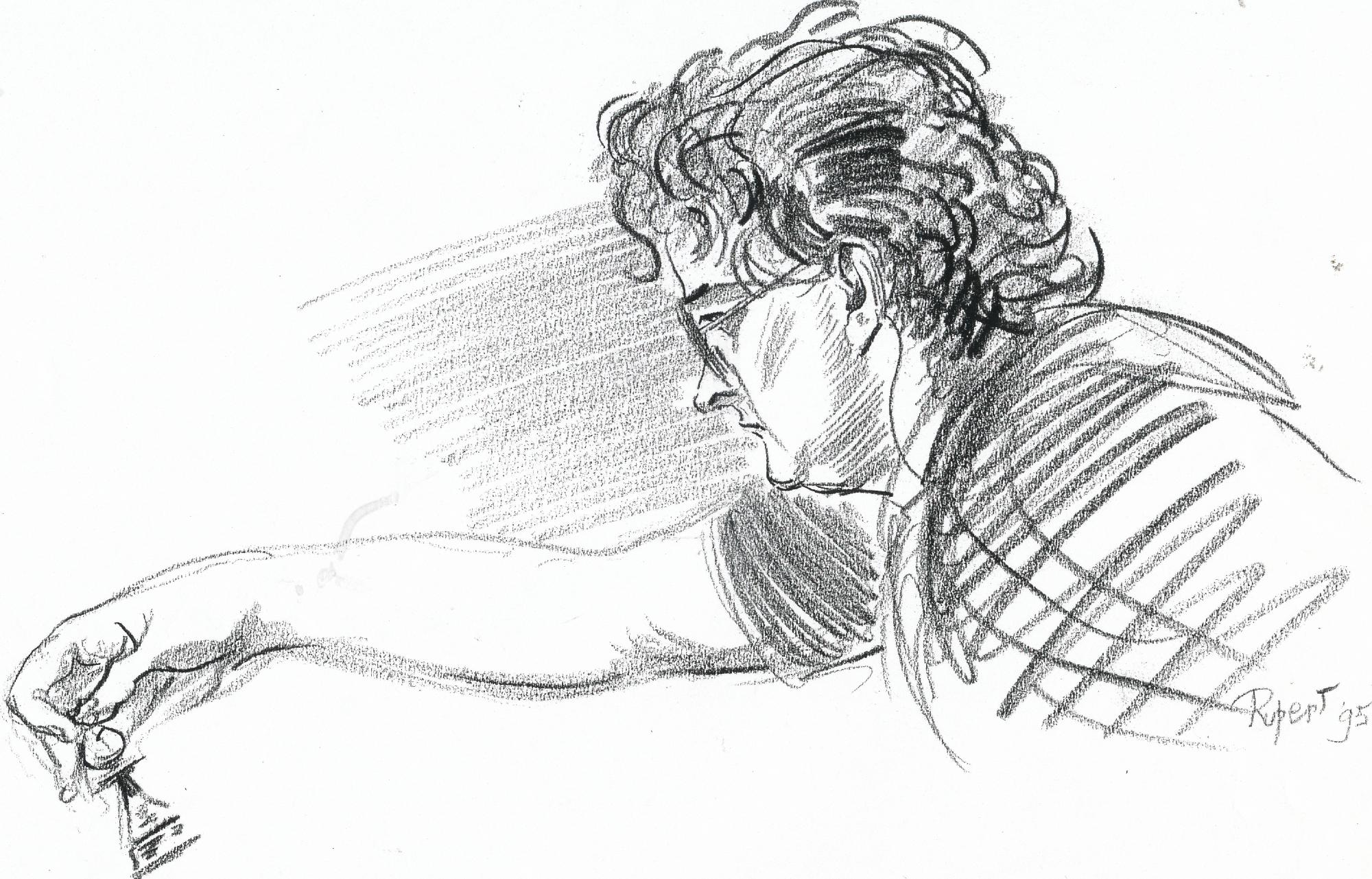
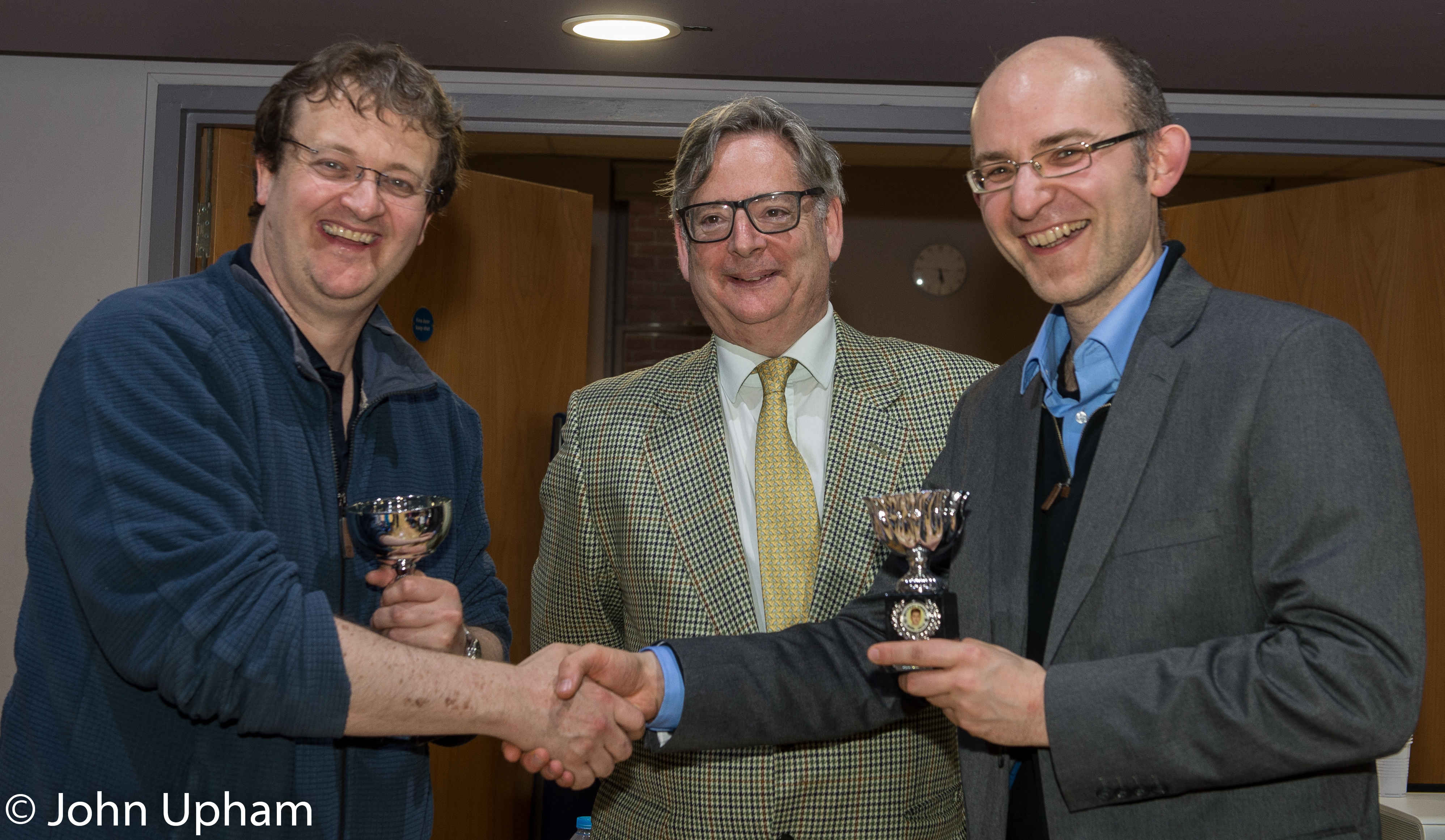
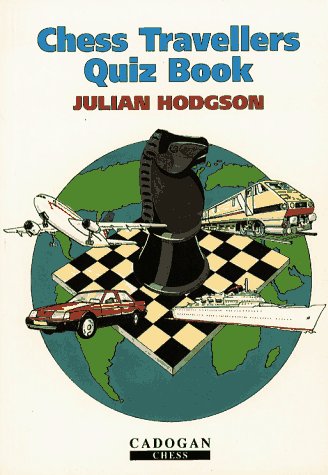
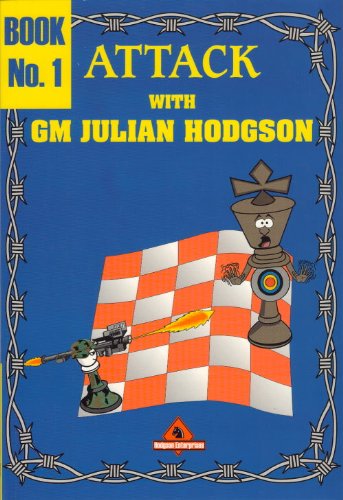
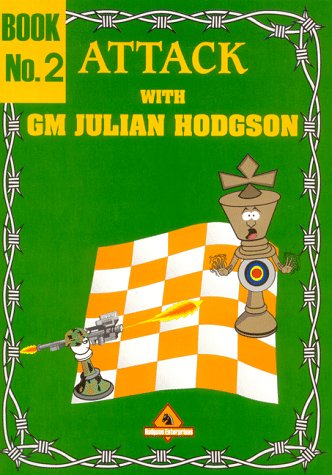
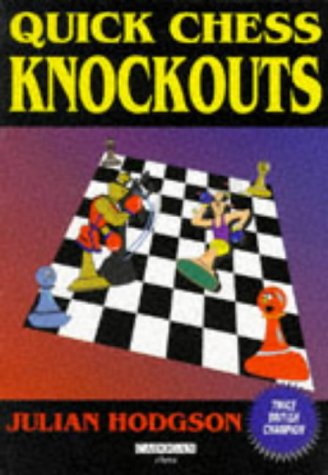
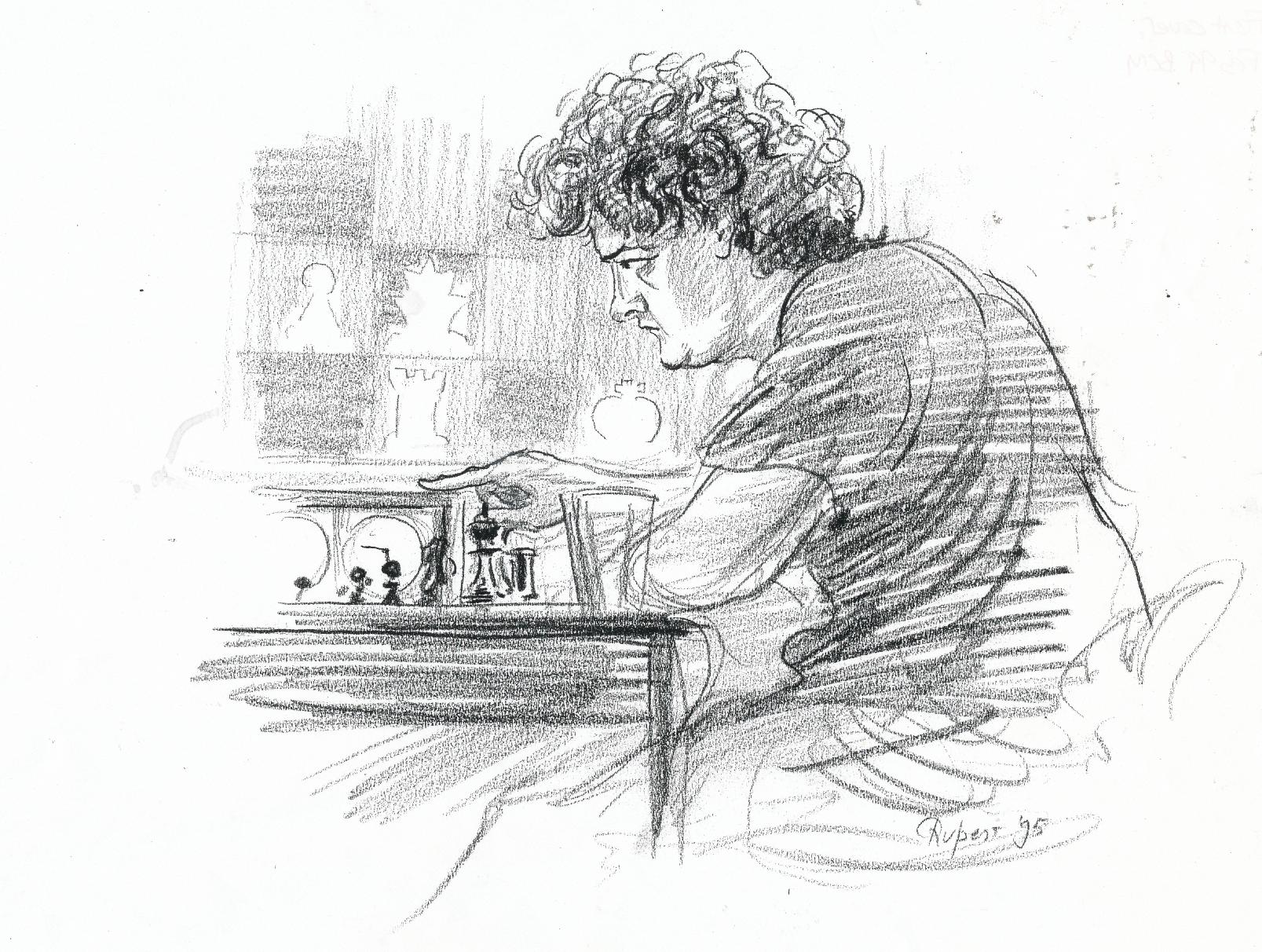
Julian, Dominic Lawson and Matthew SadlerChess Traveller’s Quiz Book, Julian Hodgson, Cadogan Press, 1996, ISBN-13 : 978-1857440300Attack with Julian Hodgson, Book No.1Attack with Julian Hodgson, Book No.2Quick Chess KnockoutsJulian Hodgson drawn by Rupert van der Linden
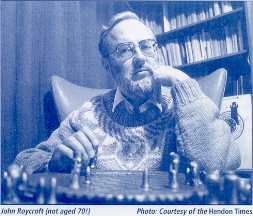
We are delighted to offer (Arthur) John Roycroft best wishes on his birthday, this day (July 25th) in 1929.
John was born in Hendon, London and his mother’s maiden name was Banks.
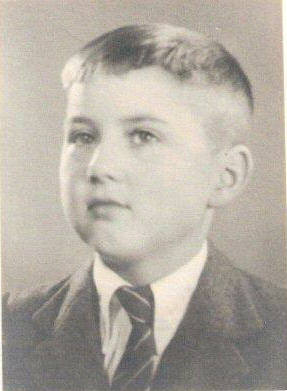
AJR aged 9, courtesy of the BCPS web site.
John moved to Brighton and then evacuated to Calcot, North Wales and returned to Brighton when the threat of war had subsided.
He married Betty in 1961 and they had a son and a daughter and now have several grand children.
He claimed that he had never suffered a common cold.
John is Platinum Life Member of the English Chess Federation and an “ECF Supporter”.
The Chess Endgame Study
“From The Oxford Companion to Chess (Oxford University Press, 1984) by David Hooper and Ken Whyld :
English study composer and author, International Judge of Chess Compositions (1959), Computer systems analyst.
In 1965 he founded EG, a quarterly publication which became the world’s first and only long-running magazine devoted wholly to studies.
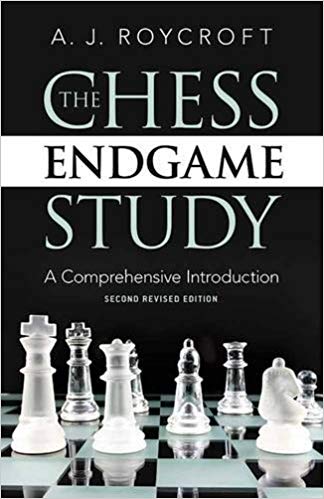
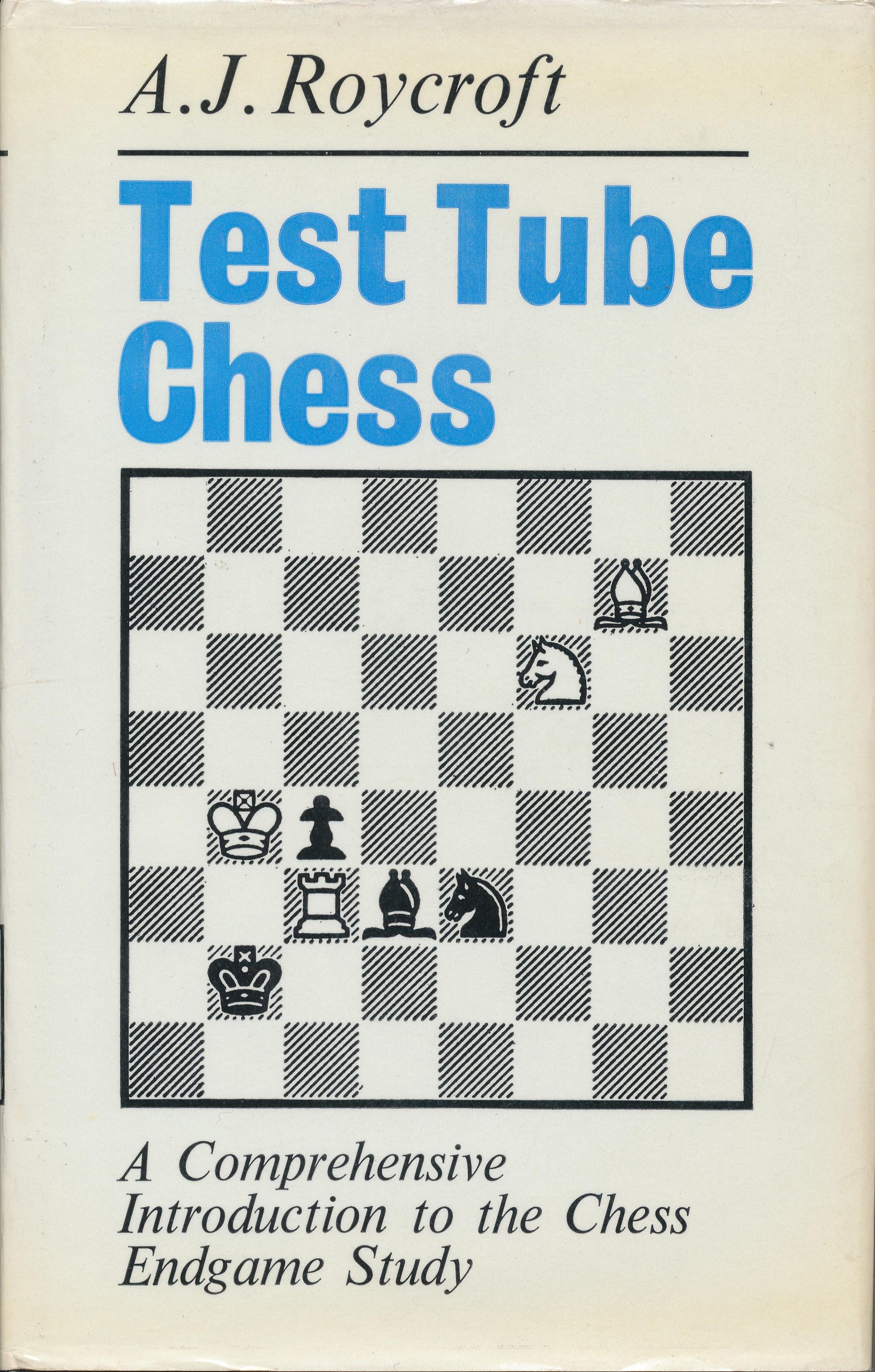
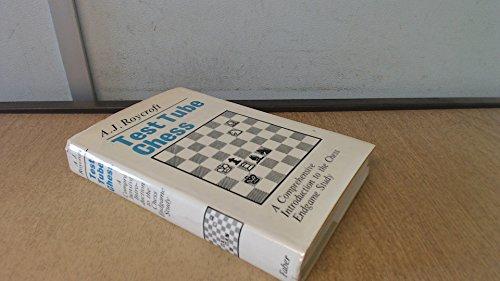
His Test Tube Chess (1972), the best English language guide to the art of studies., was revised and republished as The Chess Endgame Study (1981).
Test Tube Chess, AJ Roycroft, Faber and Faber Limited, 1972, ISBN 0 571 09573 9
Studies are commonly classified by means of the GBR code of which he was co-inventor.”
From The Encyclopedia of Chess (Robert Hale, 1970 & 1976) by Anne Sunnucks :
“FIDE Judge of Endgame Studies. Born on 25th July 1929. Founder of the Chess Endgame Study Circle in London in March 1965.and its quarterly magazine EG, the first and only publication exclusively devoted to the composed chess ending. Roycroft who is a computer systems analyst and lives in London, has composed about 20 endgame studies.”
We focus on the British Chess Scene Past & Present!
This website uses cookies to improve your experience. We'll assume you're ok with this, but you can opt-out if you wish. Cookie settingsACCEPT
Privacy & Cookies Policy
Privacy Overview
This website uses cookies to improve your experience while you navigate through the website. Out of these cookies, the cookies that are categorized as necessary are stored on your browser as they are as essential for the working of basic functionalities of the website. We also use third-party cookies that help us analyze and understand how you use this website. These cookies will be stored in your browser only with your consent. You also have the option to opt-out of these cookies. But opting out of some of these cookies may have an effect on your browsing experience.
Necessary cookies are absolutely essential for the website to function properly. This category only includes cookies that ensures basic functionalities and security features of the website. These cookies do not store any personal information.