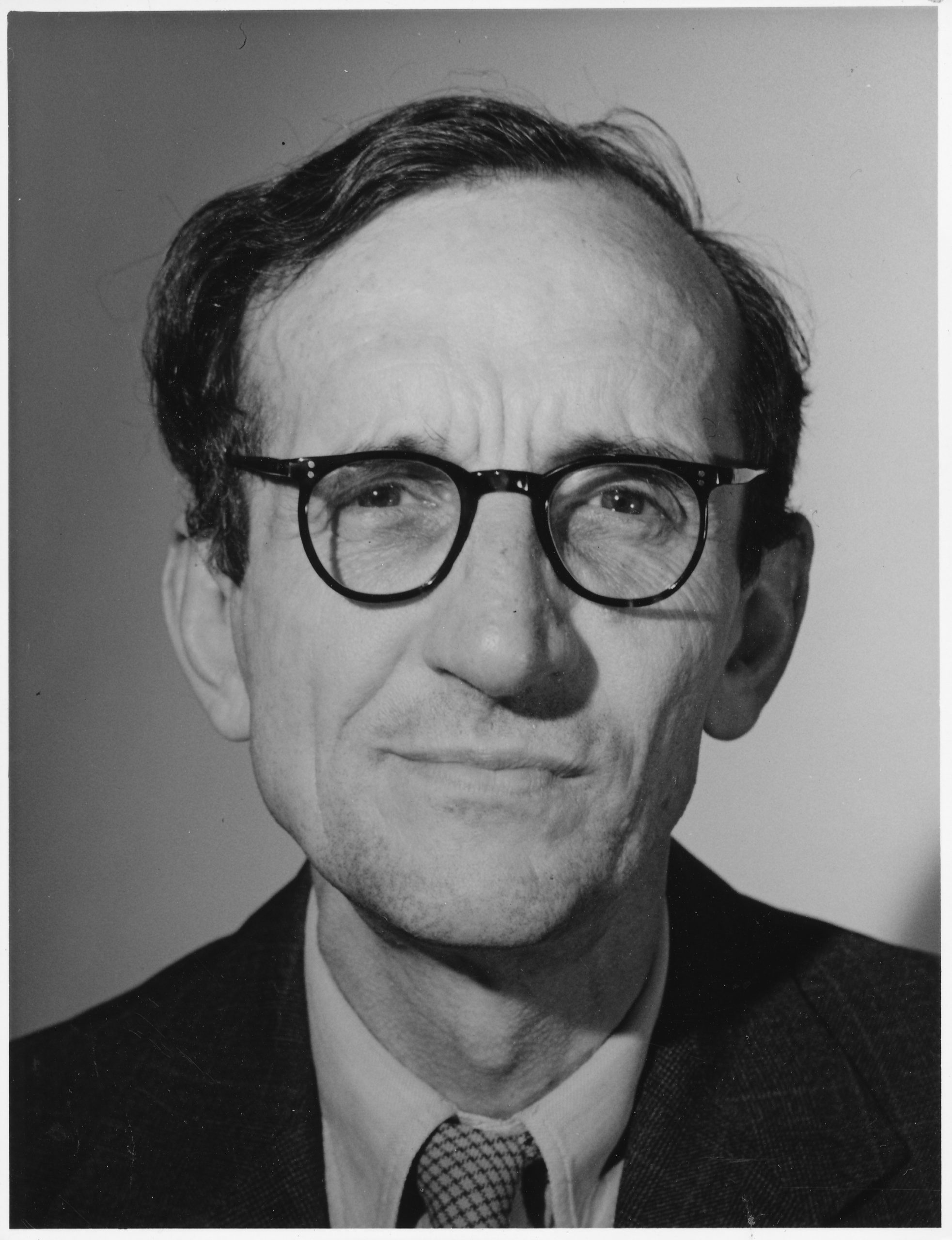
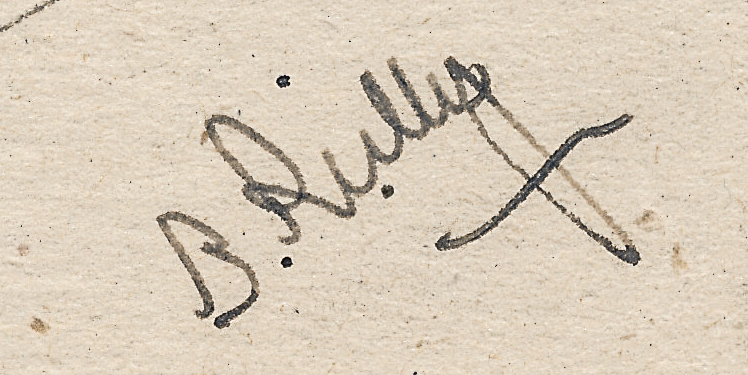
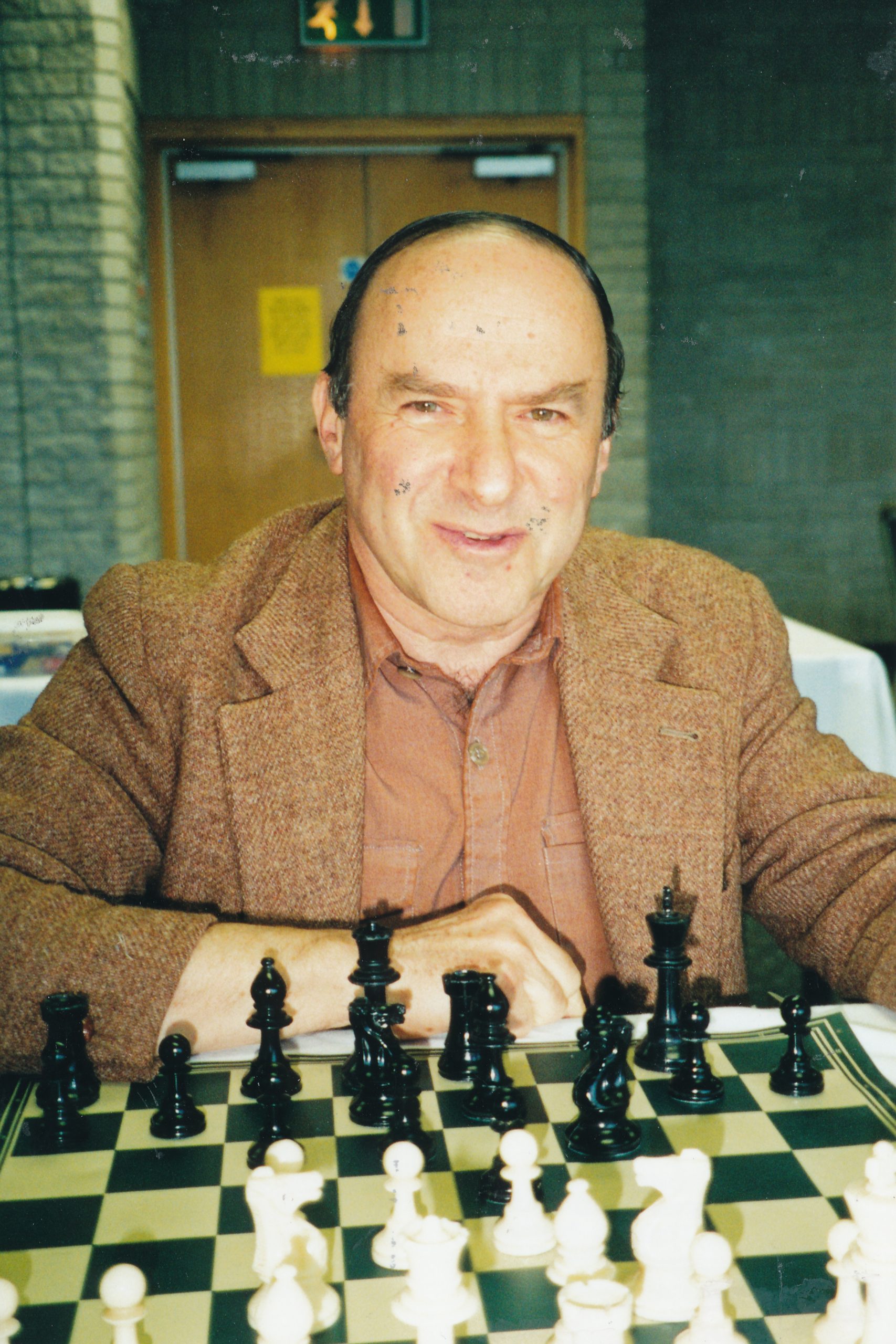
Brian Patrick Reilly (12-xii-1901, 29-xii-1991)Signature of Brian Reilly from an after dinner post card from Hastings 1945-46
We remember Brian Patrick Reilly who passed away on December 29th, 1991, thirty years ago today.
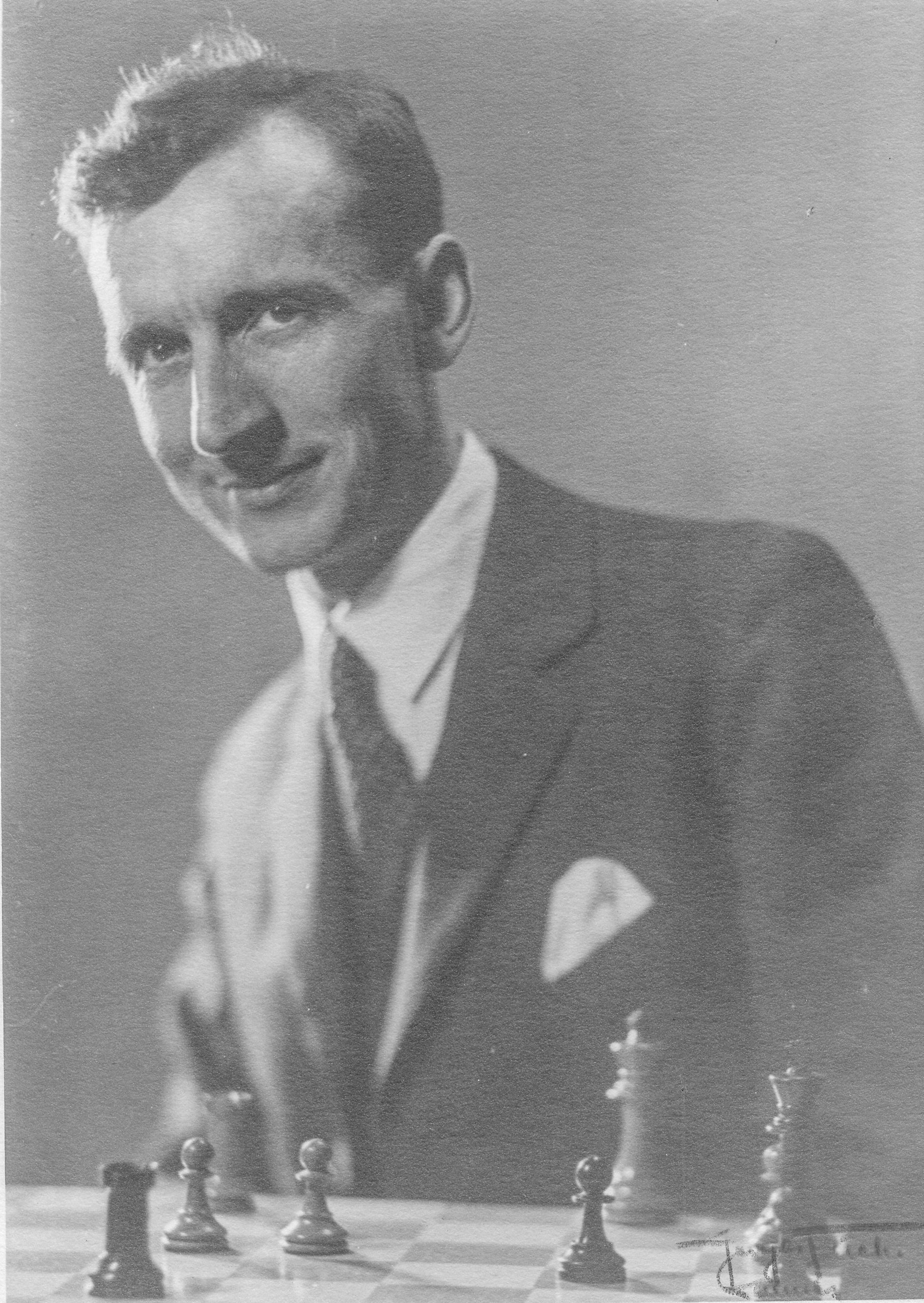
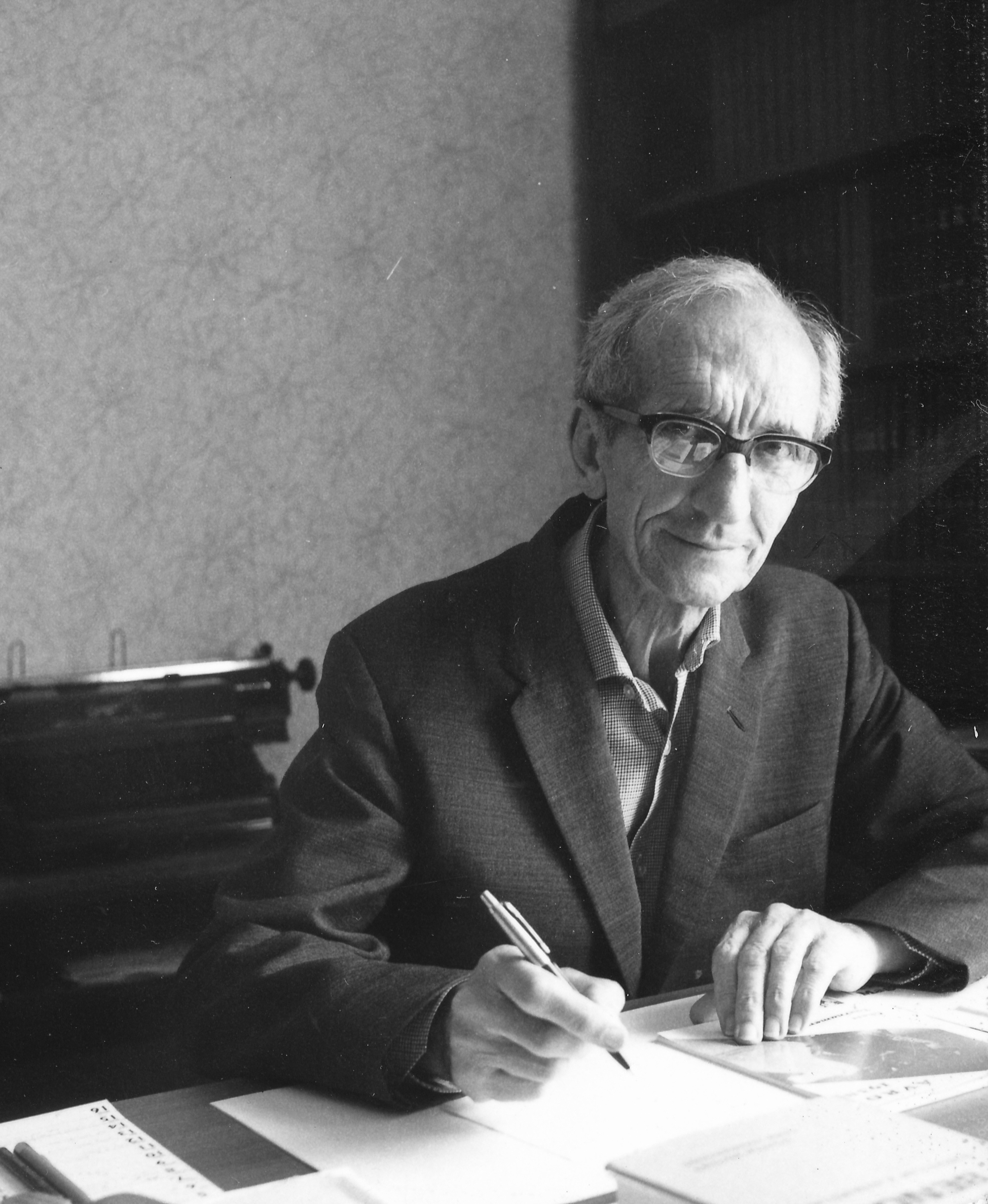
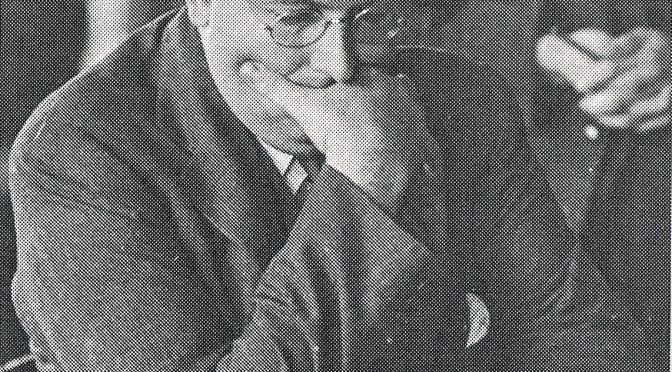
Brian Reilly probably sometime in the 1920s.
From The Encyclopaedia of Chess (Batsford, 1977), Harry Golombek OBE (written by Wolfgang Heidenfeld) :”Irish master born at Menton, of Irish descent, who has represented Ireland in nine Olympic team tournaments between 1935 and 1968; three times on top board.
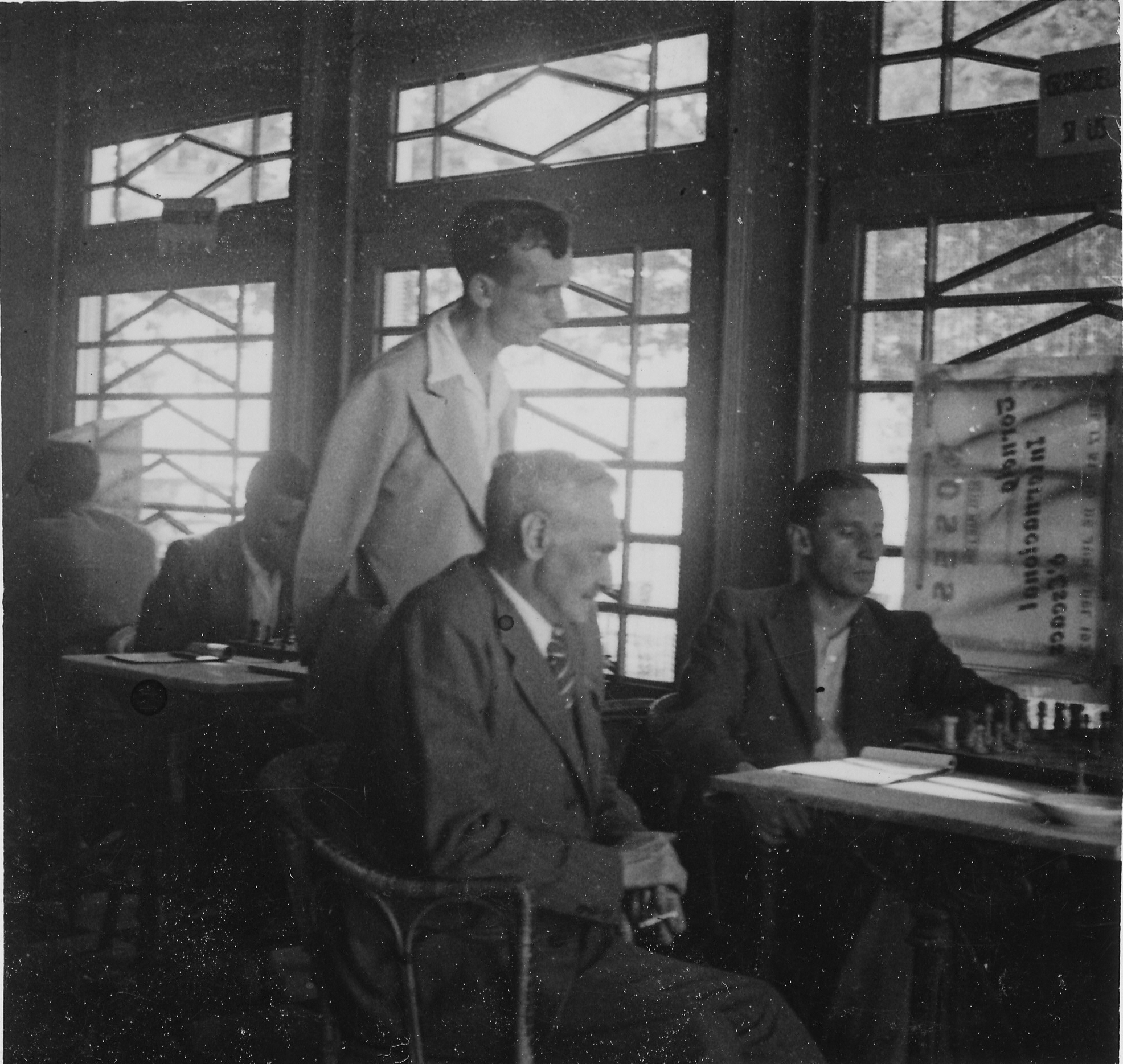
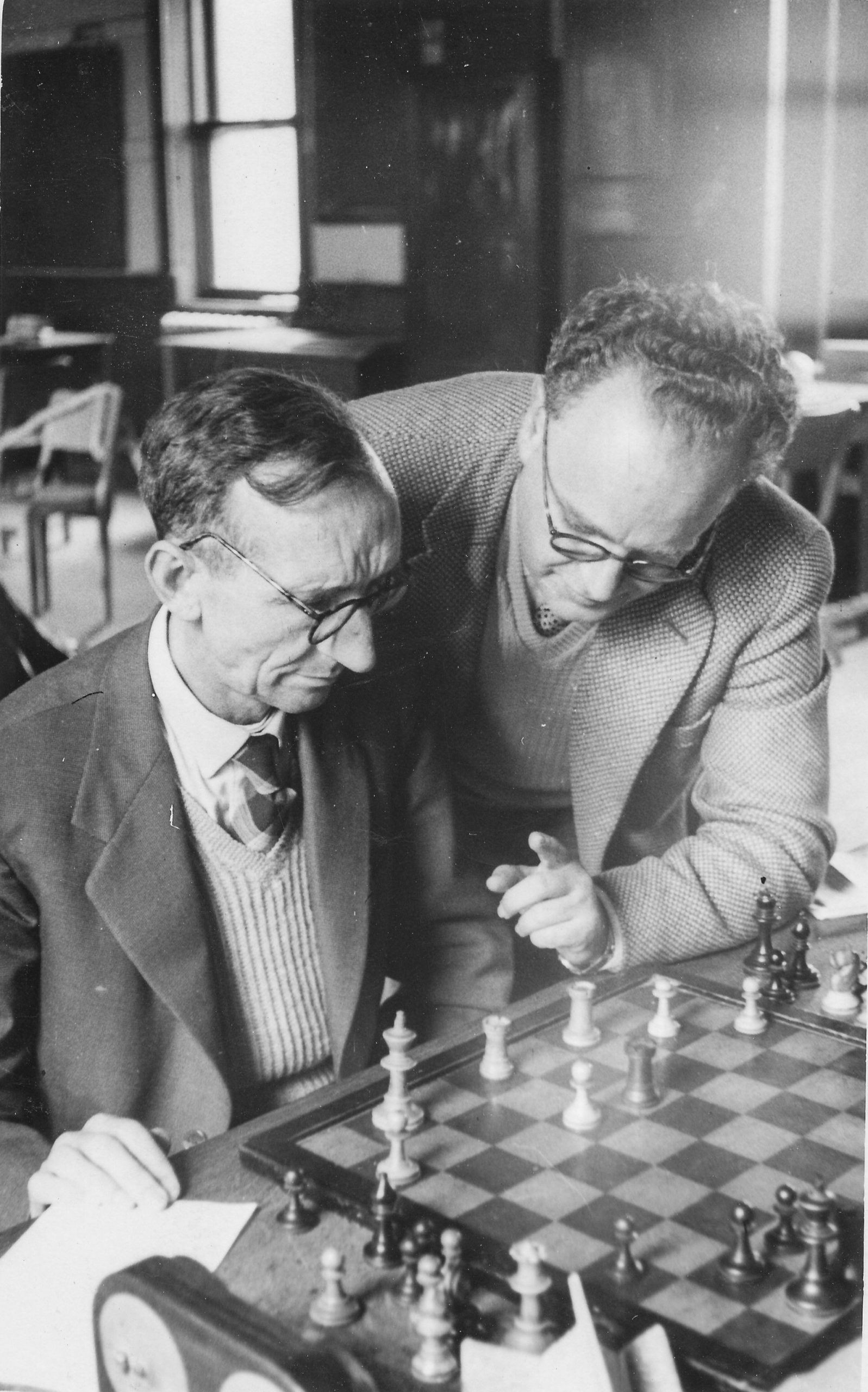
Brian observes a game during one of the early 1930s tournaments in Nice
He was also Irish representative at seven FIDE congresses. Reilly played in a number of small international tournaments, wining first prize at Nice 1931 and sharing fourth prize with Klein and EG Sergeant behind Reshevsky, Capablanca and Sir G. Thomas at Margate 1935.
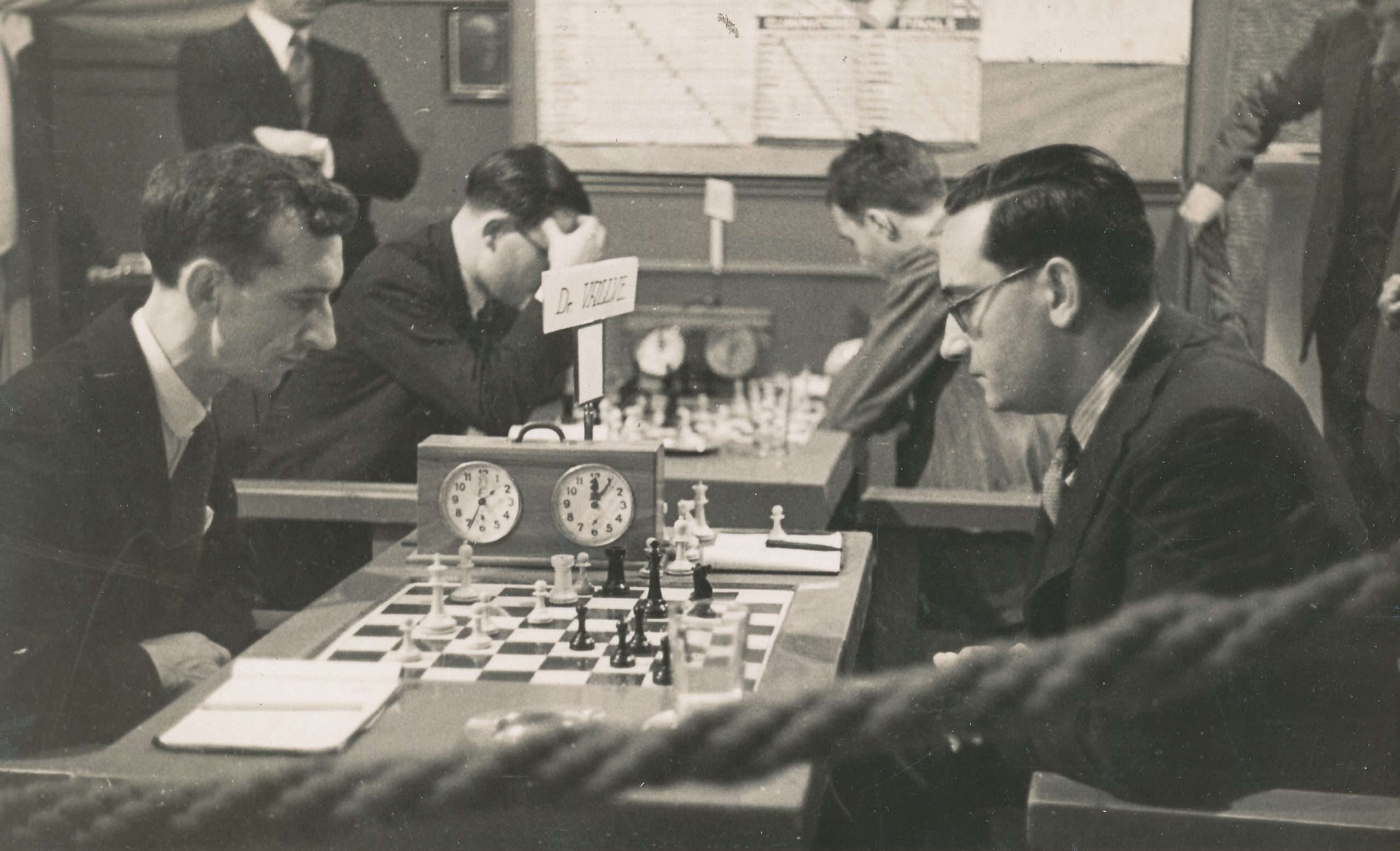
Brian Reilly playing Dr. Josep Vallve probably at Barcelona Chess Club in June 1935. Brian won in 61 moves.
Winner of Irish championship in 1959 and 1960. General Editor of British Chess Magazine since 1949.”
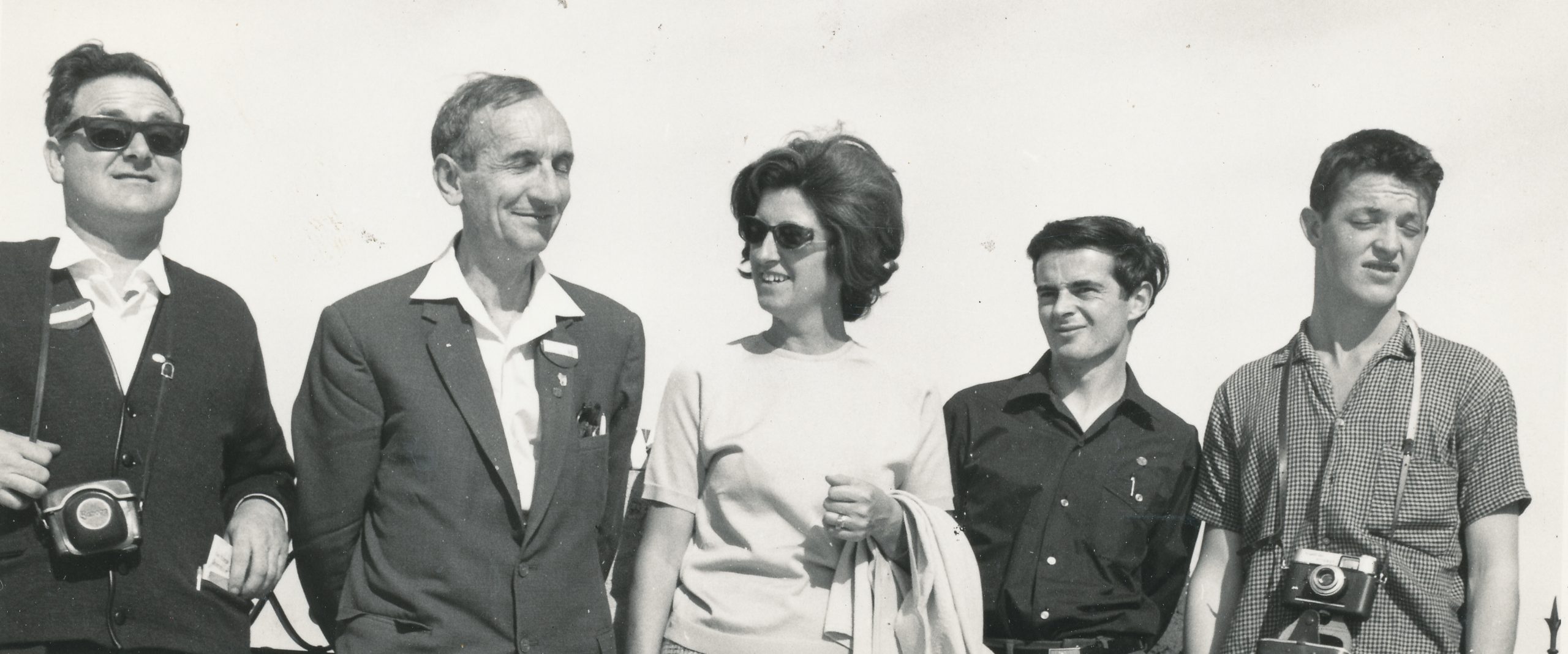
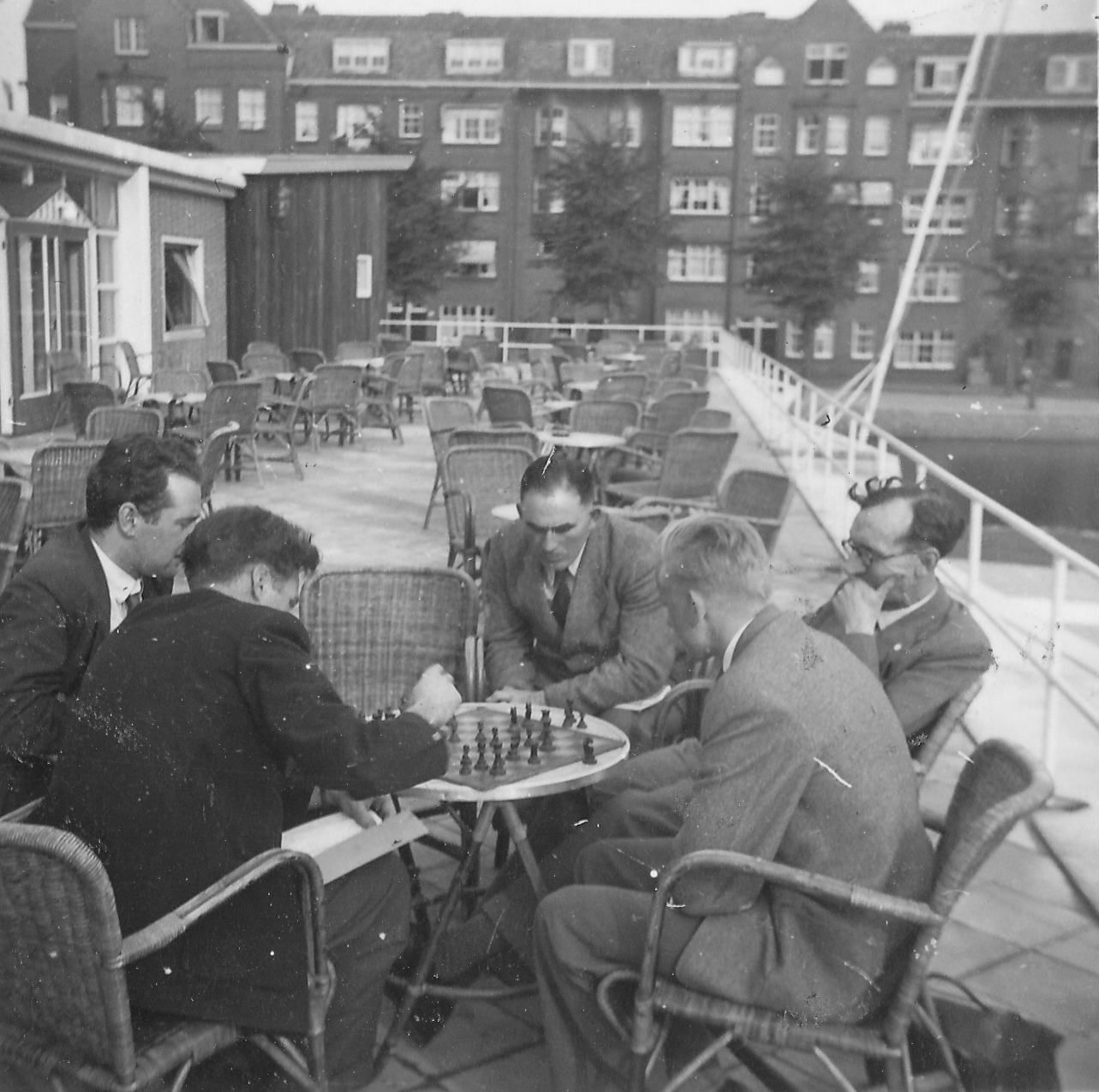
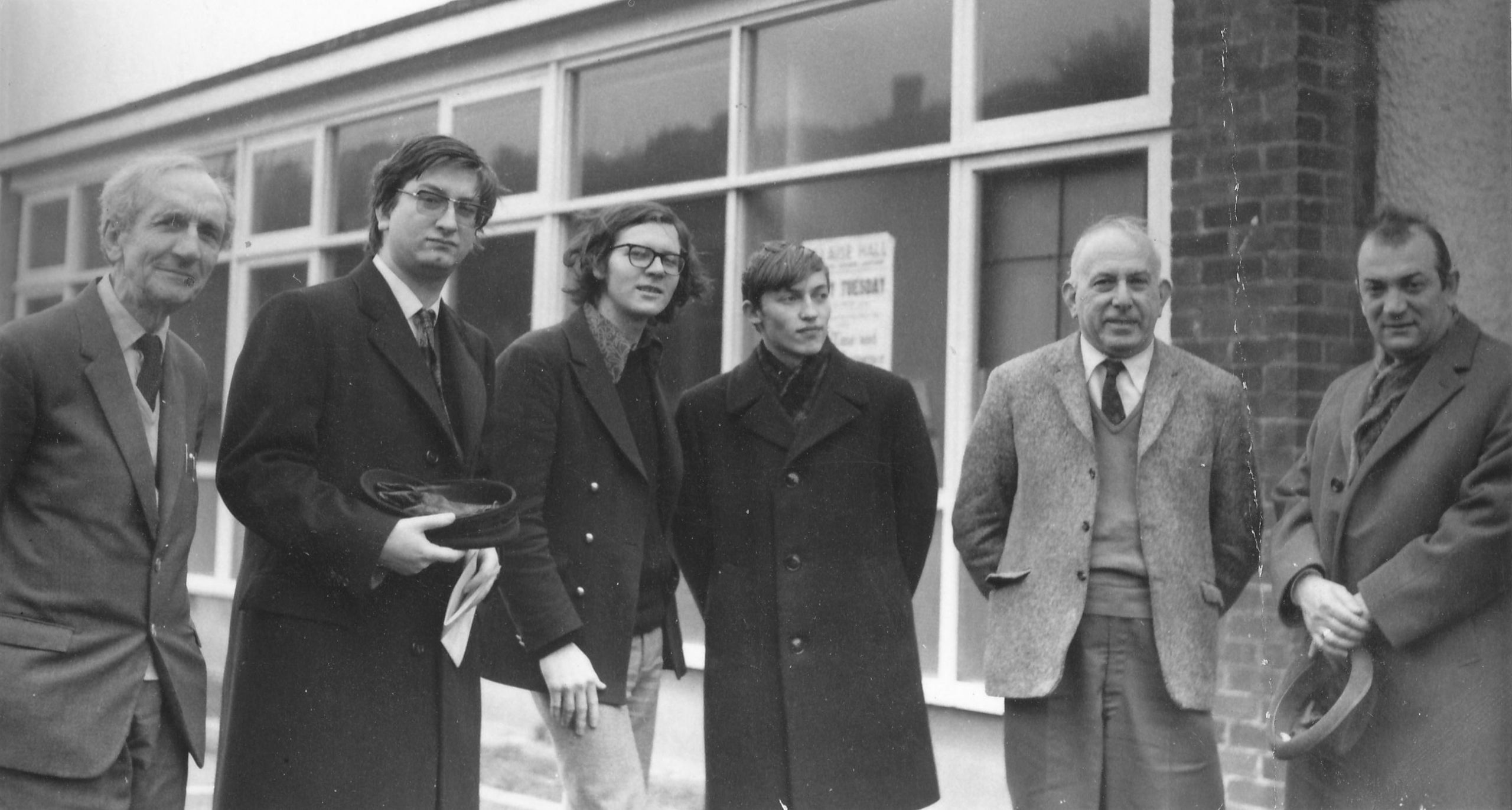
Brian Reilly and friends
His obituary in British Chess Magazine was written by Bernard Cafferty and appeared in Volume CXII (112, 1992), Number 2 (February), page 70:
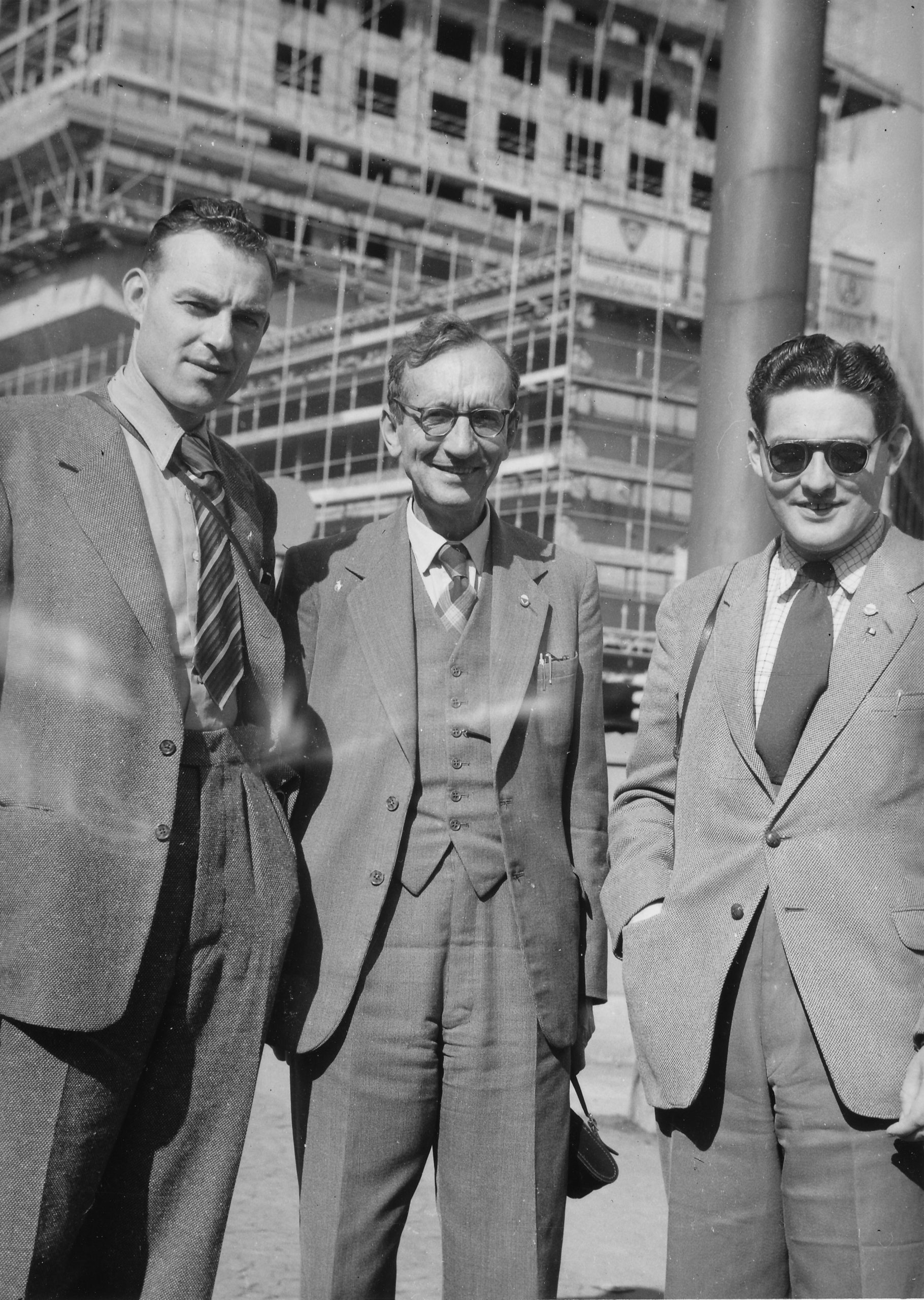
Brian with journalist colleagues.
“With great regret we have to report that Brian Patrick Reilly has, to use the older term, ‘joined the great majority’.
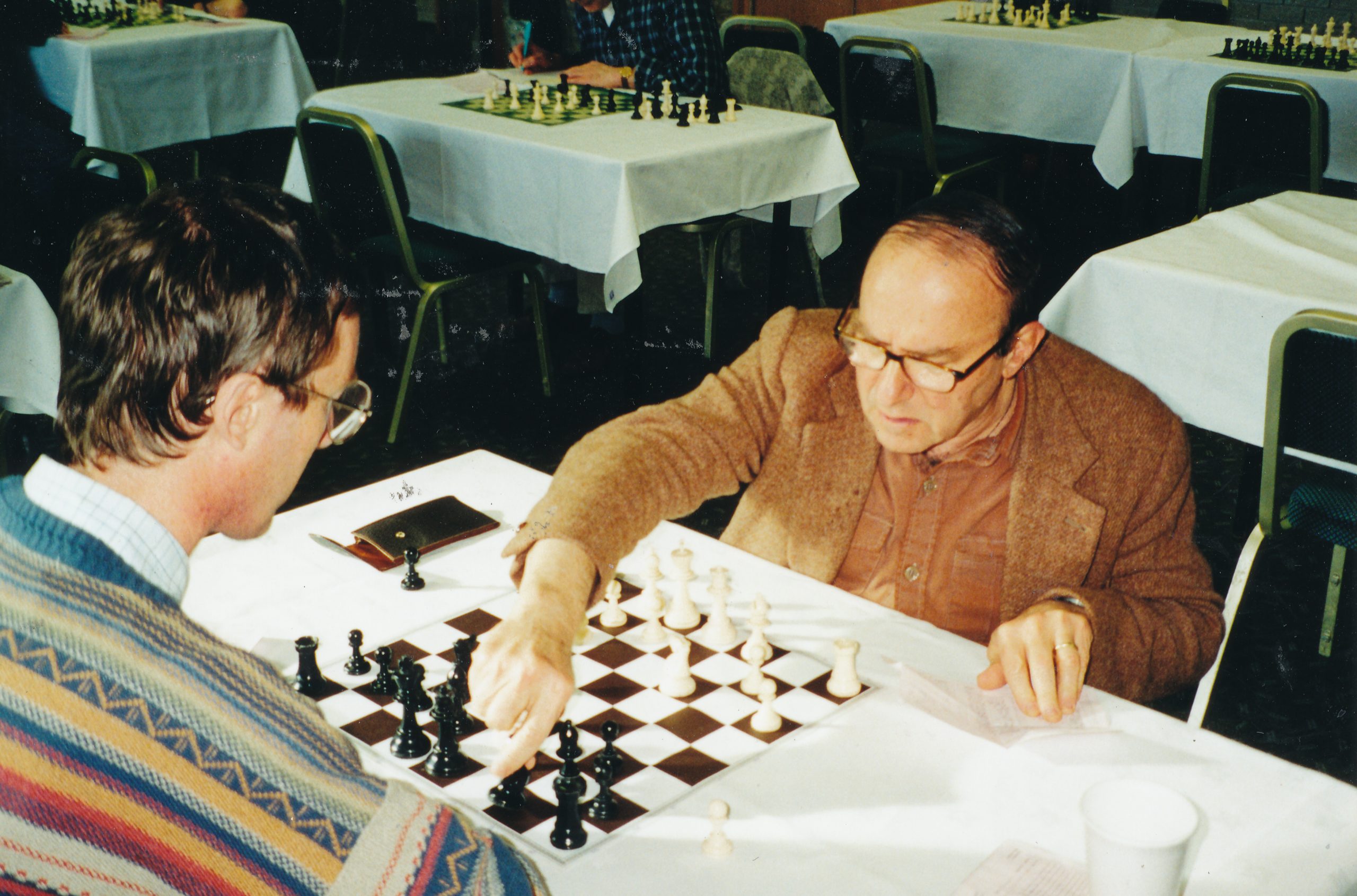
Brian analysing with Irish team mate, Wolfgang Heidenfeld
B. P. Reilly (Menton, 12 xii 1901-Hastings, 29 xii l99l) was born into an expatriate family on the French Riviera, and so was bilingual. He learned his chess in France where he had many friends and acquaintances. He knew Alekhine in the 1920s and 1930s and was a witness at Alekhine’s wedding.
Many years later he was to do extensive research on Alekhine’s life, and was the first to establish (though he did not publish the fact) that the Russian did not complete his doctorate studies at the Sorbonne, so that “Dr” Alekhine must be considered a purely honorary title.
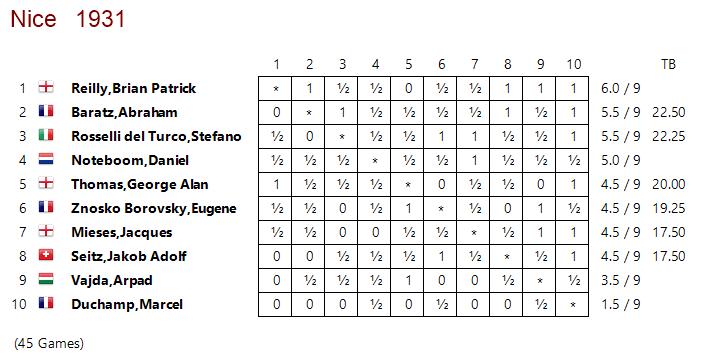
Brian won the Nice tournament of 1931, ahead of Noteboom, Mieses, . . . Sir George Thomas . . . Znosko-Borovsky. . . and played for Ireland at the 1935 Olympiad beating Fine.
Crosstable for Nice 1931 from Megabase 2020
These results, taken with his fourth place at Margate 1935, behind Reshevsky, Capablanca and Sir George Thomas, made it clear that he was of IM strength.
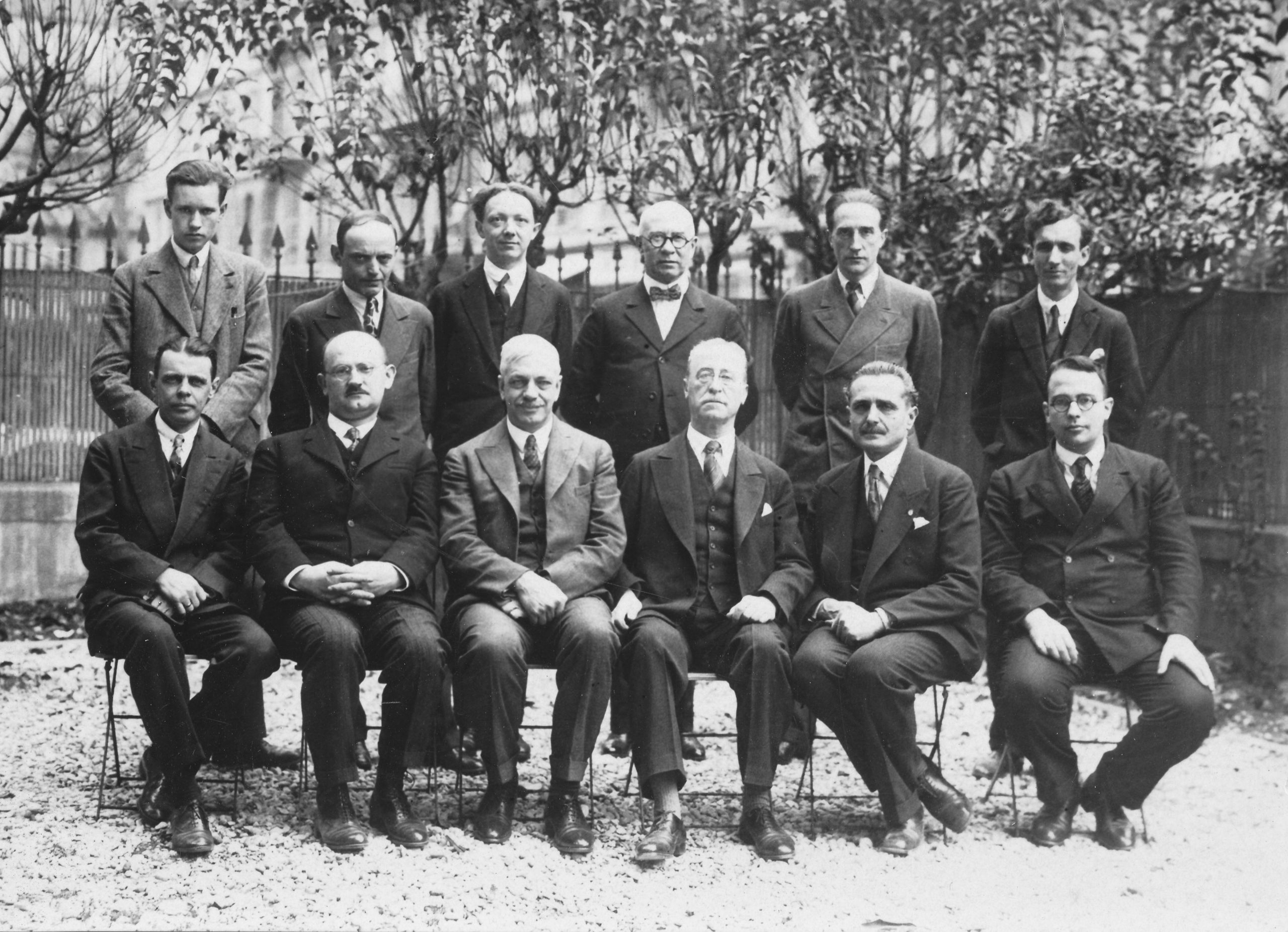
Nice Masters, 1931. Standing : Daniel Noteboom, Abraham Baratz, George Renaud (Organiser), Telling (Tournament Director), Marcel Duchamp, Brian Reilly (winner), Seated : Eugene Znokso-Borovsky,, Arpad Vajda, Sir George Thomas, Jacques Mieses, Stefano Roselli del Turco, Jacob Adolf Seitz. British Chess Magazine, 1931, page 201
We are grateful to Tony Gillam for providing the following score which has only recently come to light. See Warsaw Olympiad 1935, The Chess Player, Nottingham, 2020.
During the war Brian was interned in France as a British citizen, coming close to starvation for a time. He described all this in the very detailed account of his life in the September 1980 BCM, on which we have drawn, along with the many reminiscences Brian passed on to the present writer.
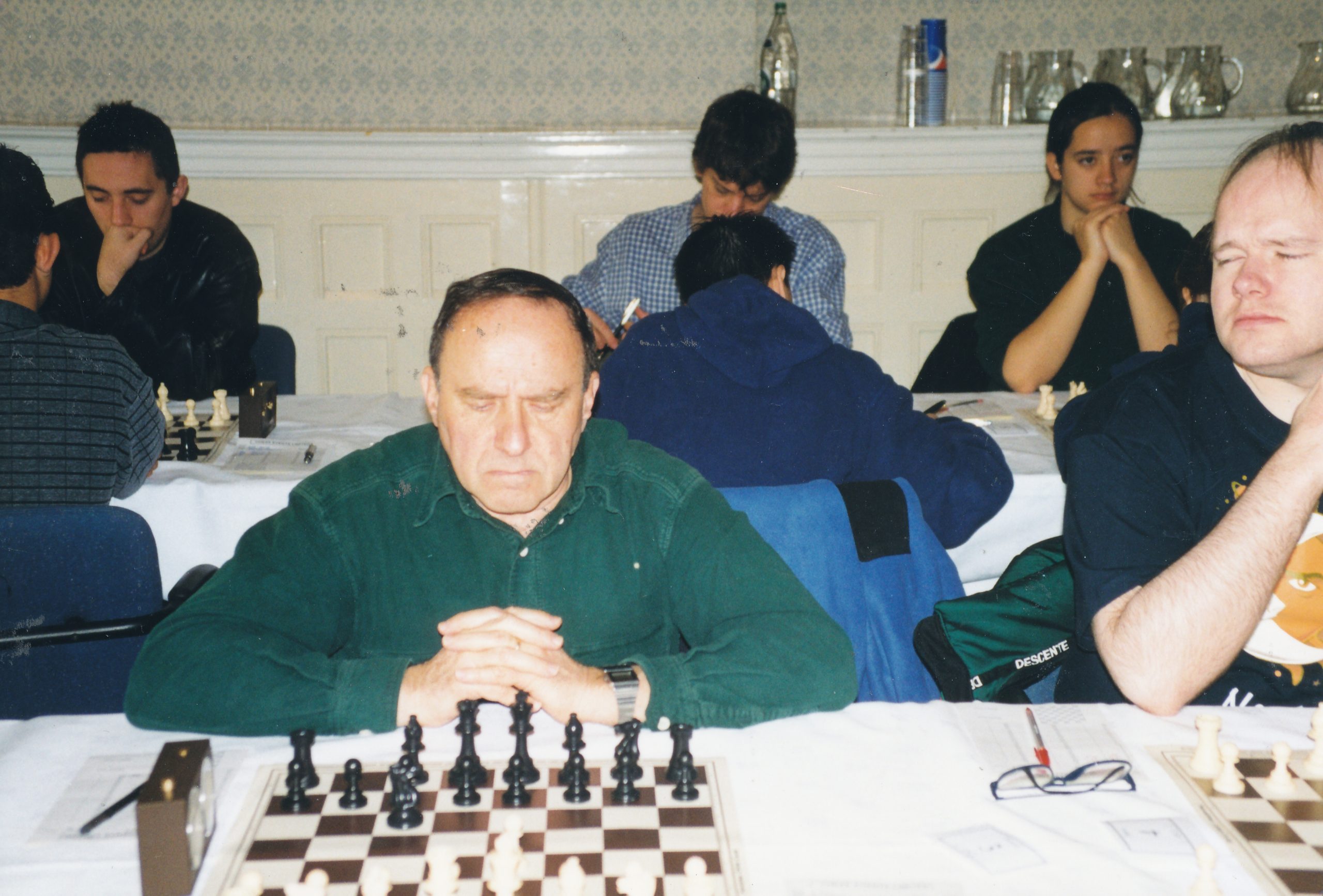
Brian analysing with the Irish team at an Olympiad
After working for the Sutton Coldfield magazine just after the war (he did not get on well with B. H. Wood, thinking him not very business-like – do we put this too diplomatically?) Brian was a freelance translator in the pharmaceutical industry before taking over BCM in 1949. At the time the magazine was technically bankrupt.
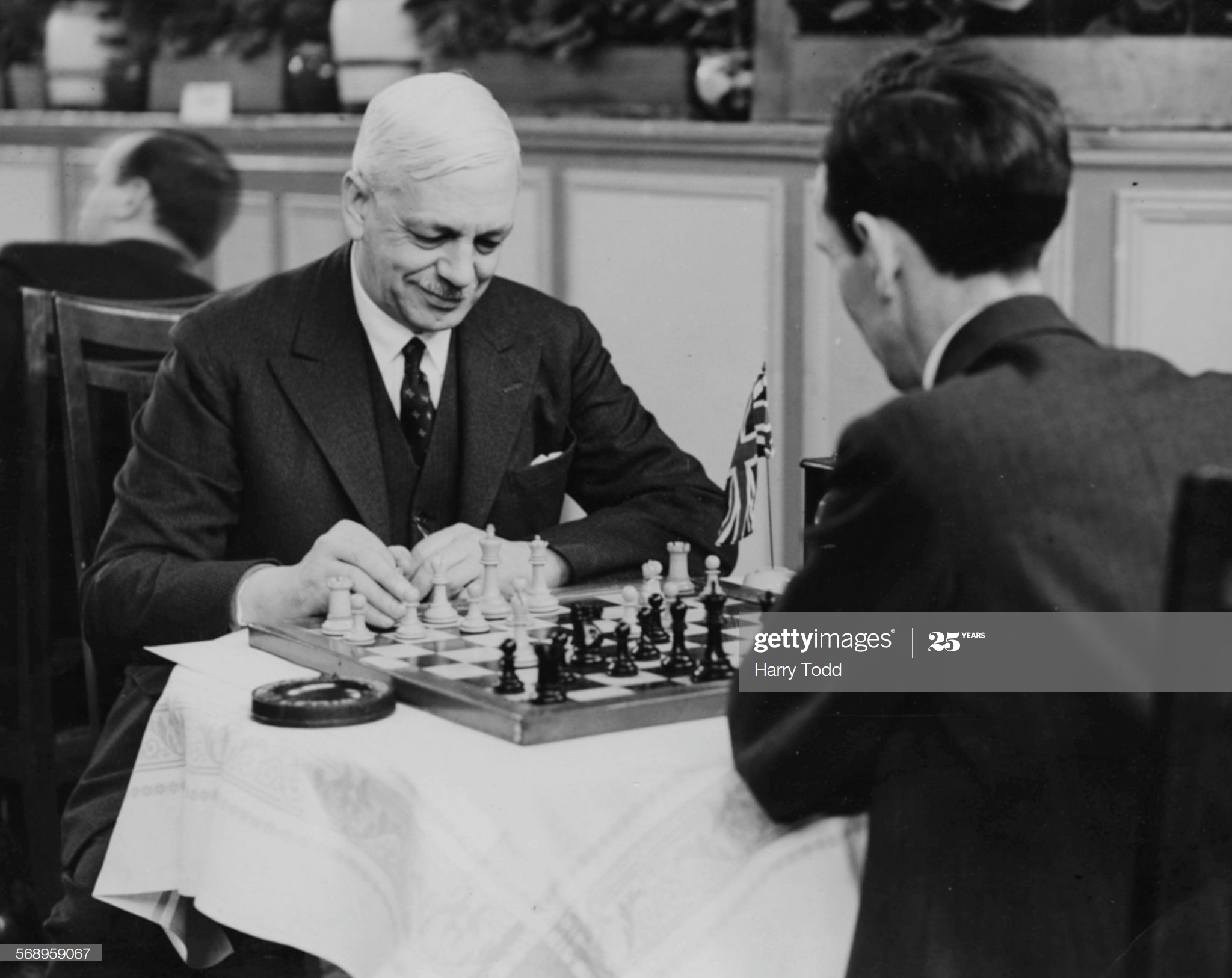
Sir George Thomas And Brian Reilly Sir George Thomas (left), leader of the British chess team, playing Irishman Brian Reilly at the Easter Chess Congress, Margate, April 24th 1935. (Photo by Harry Todd/Fox Photos/Getty Images)
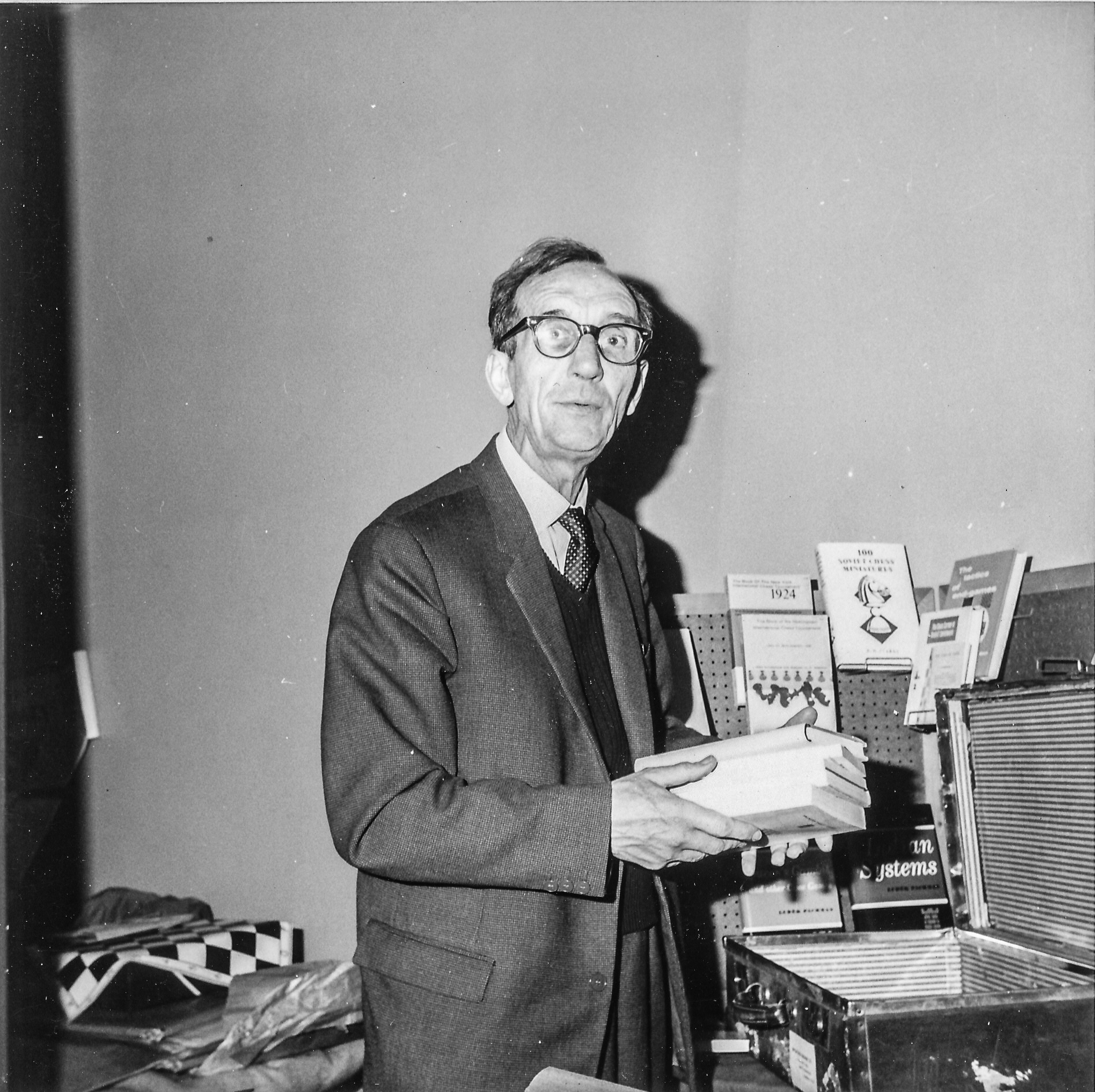
In 1964 he moved the office from London to St Leonards, showing his business acumen yet again. He ran the bookstall for many years at the Hastings Congress at the Sun Lounge and the Falaise Hall.
After the union troubles of 1970-71 and the Fischer boom he arranged for the magazine to be typeset by his son Freddy at the family home in West Norwood. This led to an expansion in the pagination after some teething troubles.
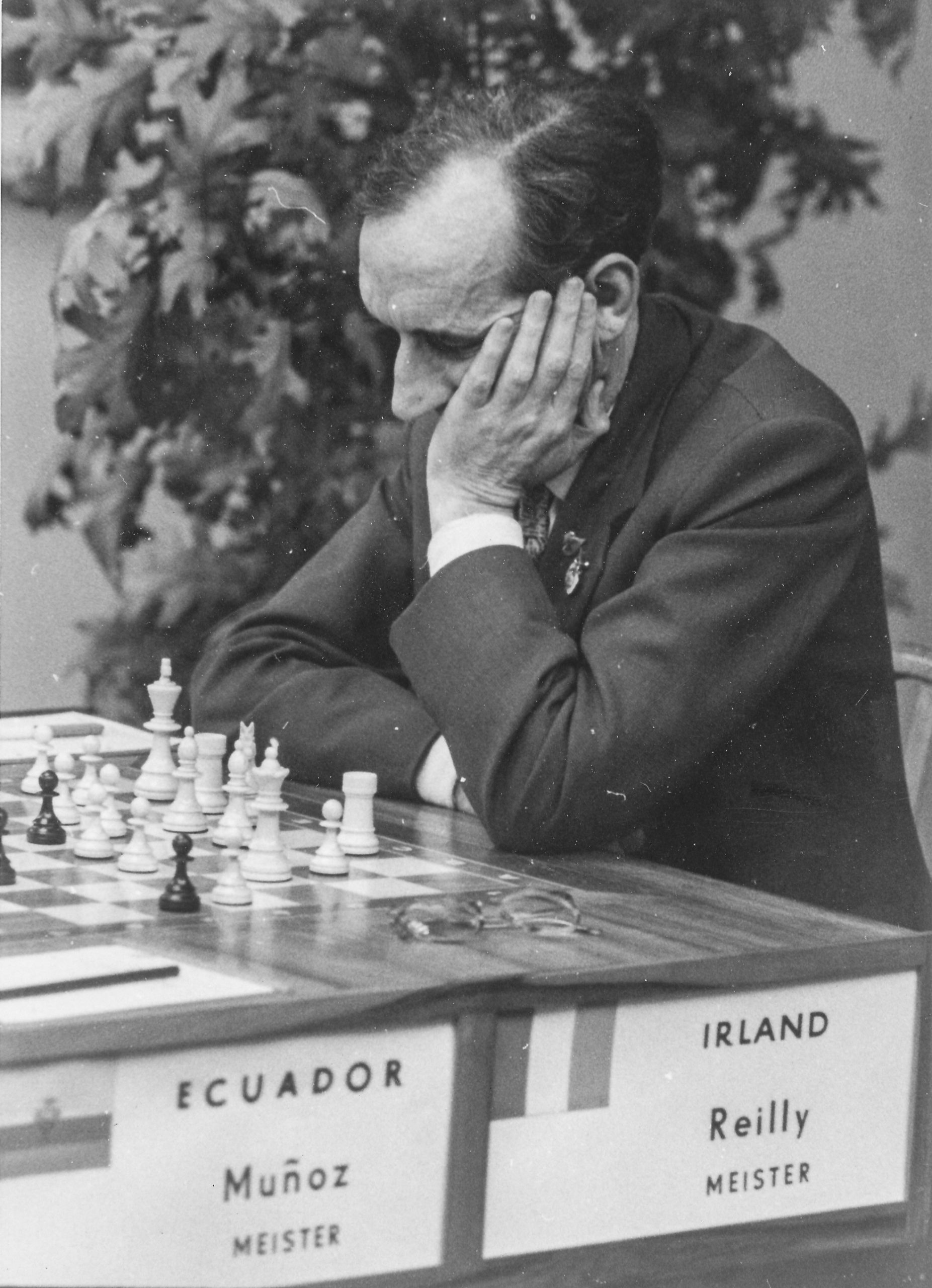
Brian Reilly playing Cesar Munoz (Ecuador) in round 8 of the Leipzig Olympiad played on 23rd October 1960. The game was drawn in 48 moves.
All this while, Brian was playing for Ireland in Olympiads, and attending to FIDE affairs as a FIDE delegate.
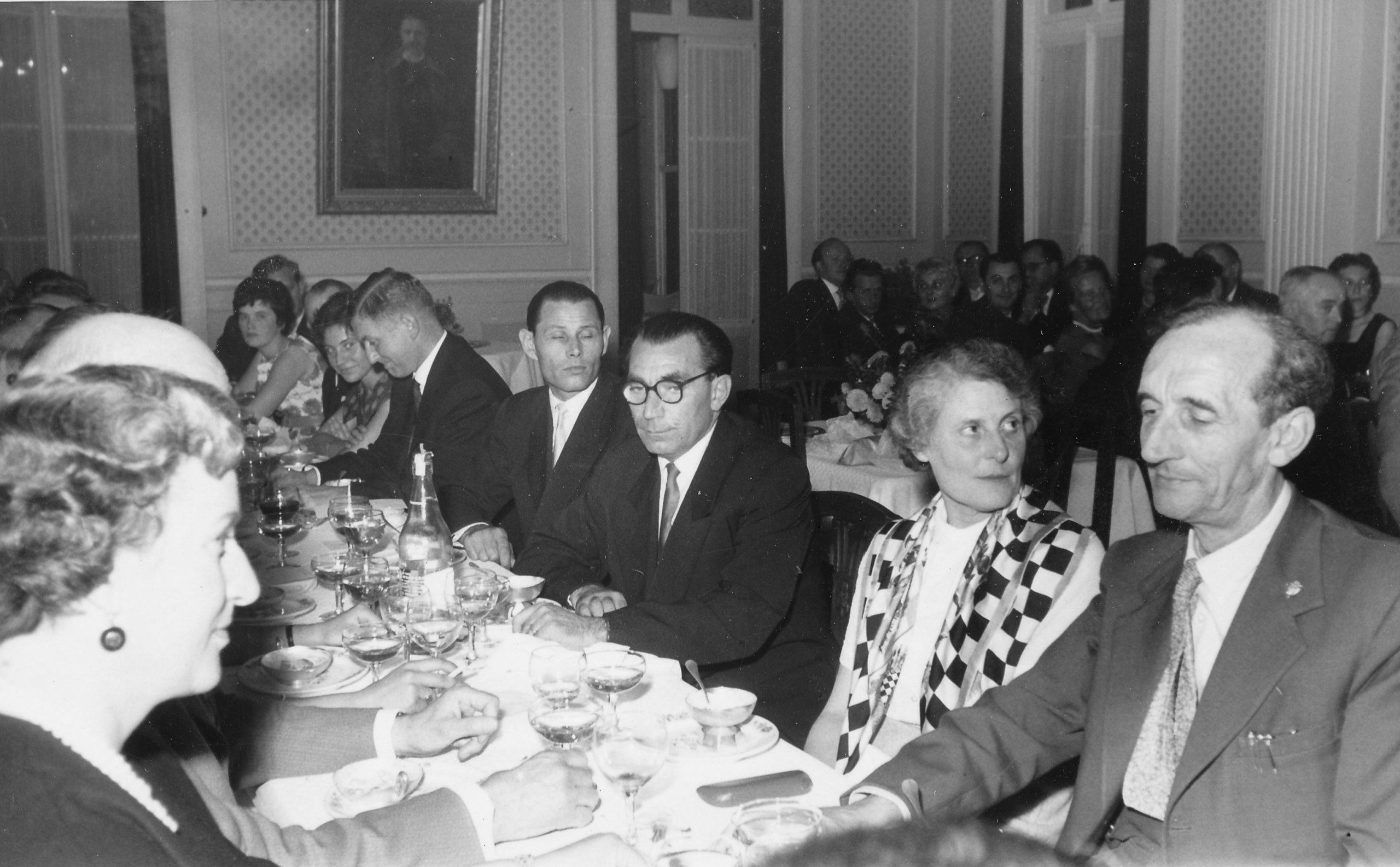
Brian relaxing during a FIDE Congress dinner
After the death of his son Freddy in 1980, the magazine was sold to the BCF and Brian retired as editor in September 1981, remaining as a consultant for nearly a decade.
Brian Reilly, Ray Keene, George Botterill, Anatoly Karpov, Harry Golombek and Viktor Korchnoi
His last years were spent in Hastings, where it was his wont to carry on with the long sea-front walks that he had practised since a breakdown in health due to overwork. He had strong views on correct diet and exercise which he could expound to anyone willing to listen. The fact that he could walk up to six miles a day in his late eighties and that his faculties, including his memory, only seemed to be weakening in his last two years, is proof enough of the validity of his theories.
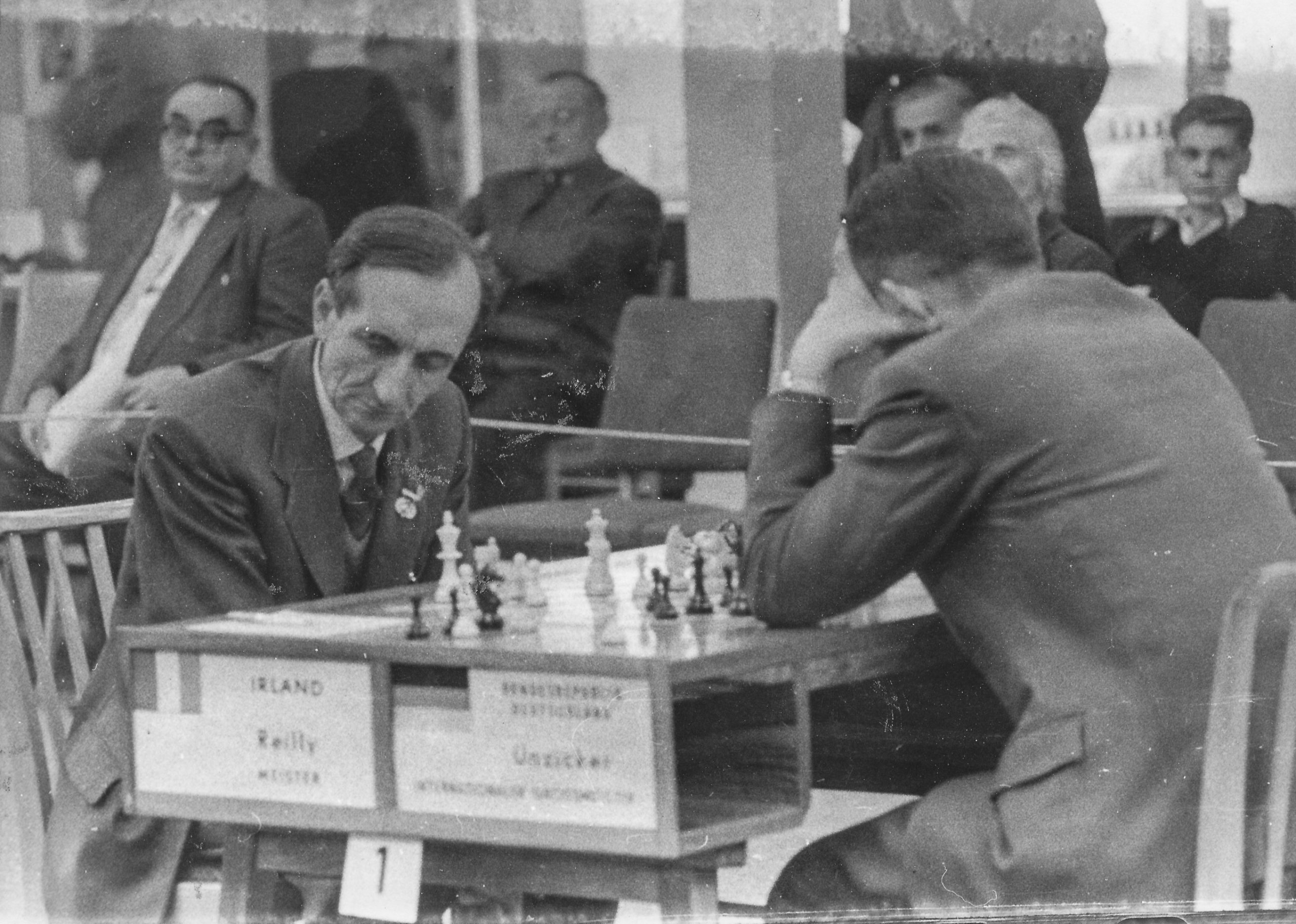
Brian Reilly playing Wolfgang Unzicker on board 1 during the preliminaries of the 1960 Leipzig Olympiad.
On his 90th birthday he attended the office and drank a glass of champagne to celebrate the occasion. We have the testimony of Mrs Arnold, who worked with him so long, that he was still talking of visiting the Hastings Congress. This was on Boxing Day, the day after he had been admitted to St Helen’s Hospital with a chest infection. He assured her he would be up and about again, but old friends such as Harry Golombek and Ritson Morry waited for him in vain as Hastings got under way. . .
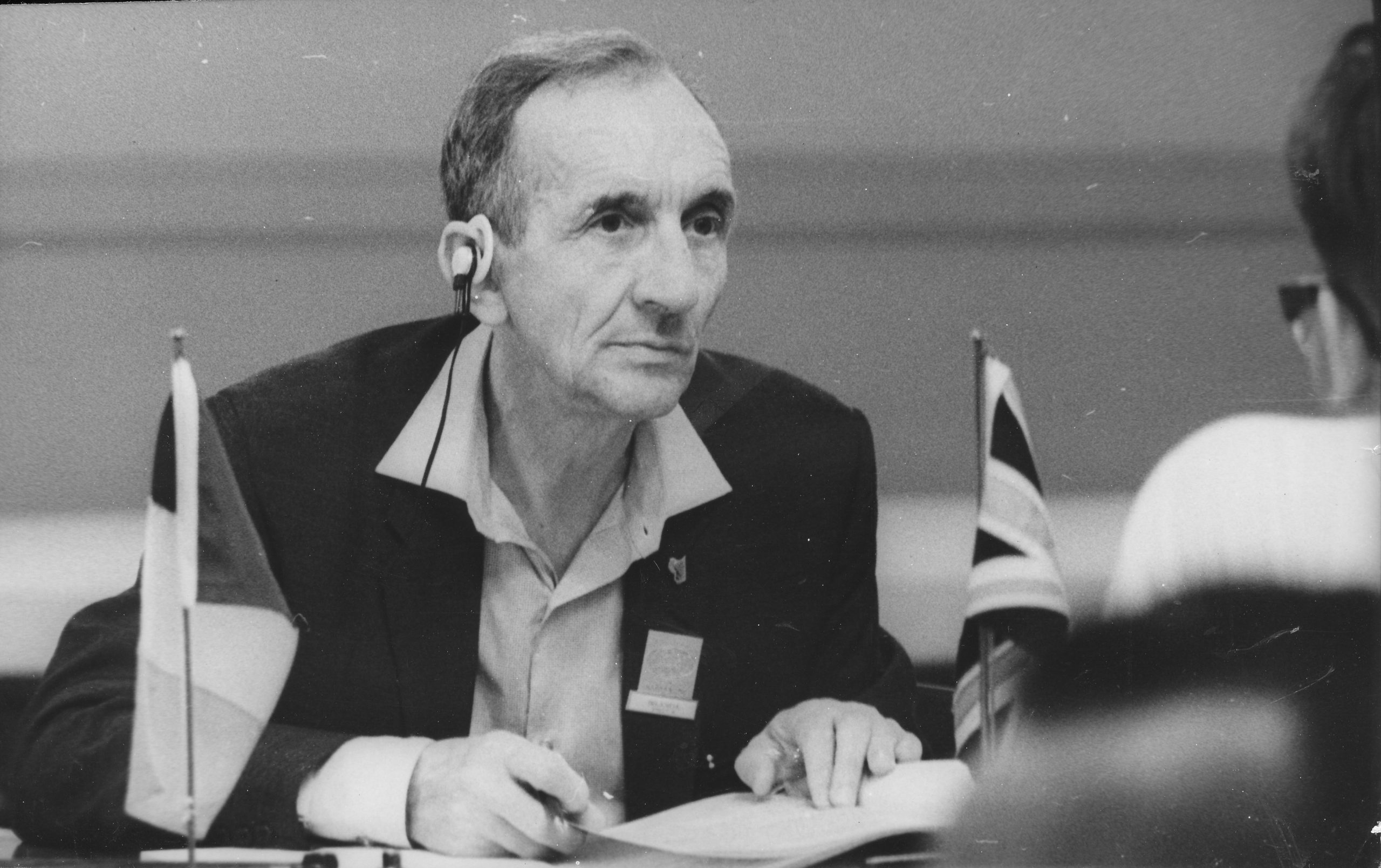
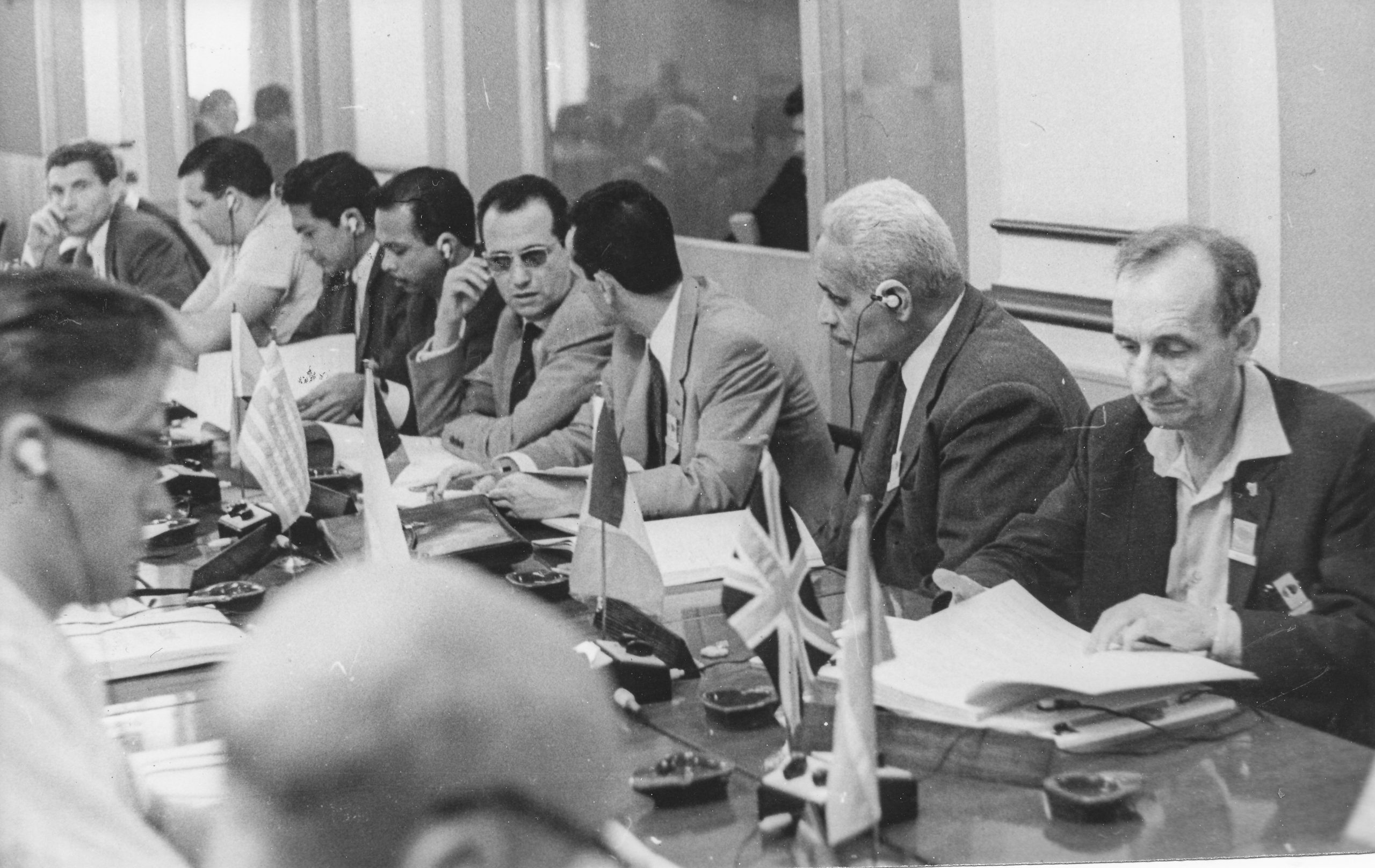
Brian Reilly at a FIDE Congress (possibly Nice 1974?)Brian Reilly at a FIDE Congress (possibly Nice 1974?)
BCM readers, too, must be counted amongst his old friends who will miss him. They should be aware that, but for Brian, and his decades of hard work. there would now be no BCM.”
Brian Reilly in the BCM office. Photographed most likely by Freddy Reilly.
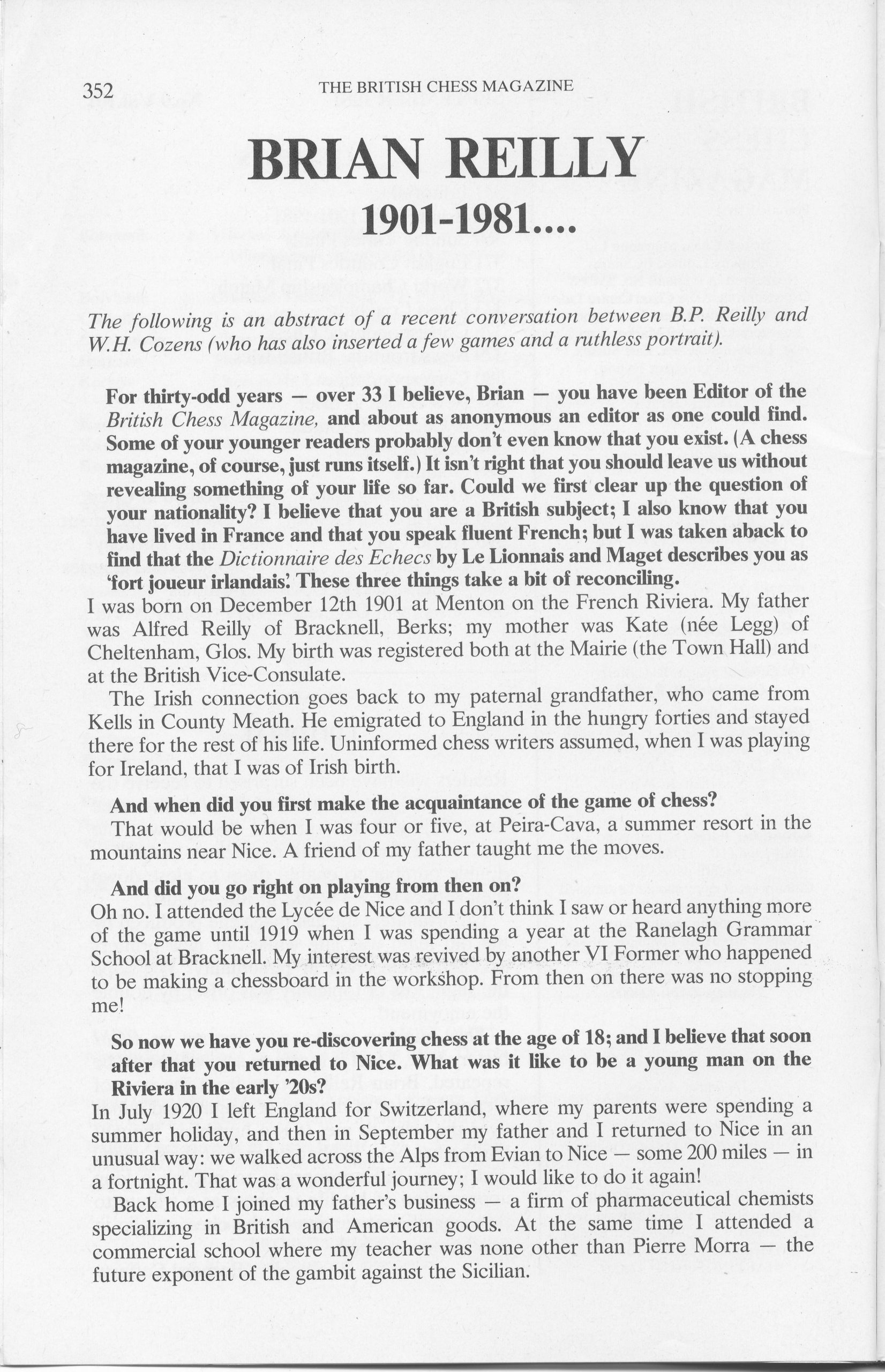
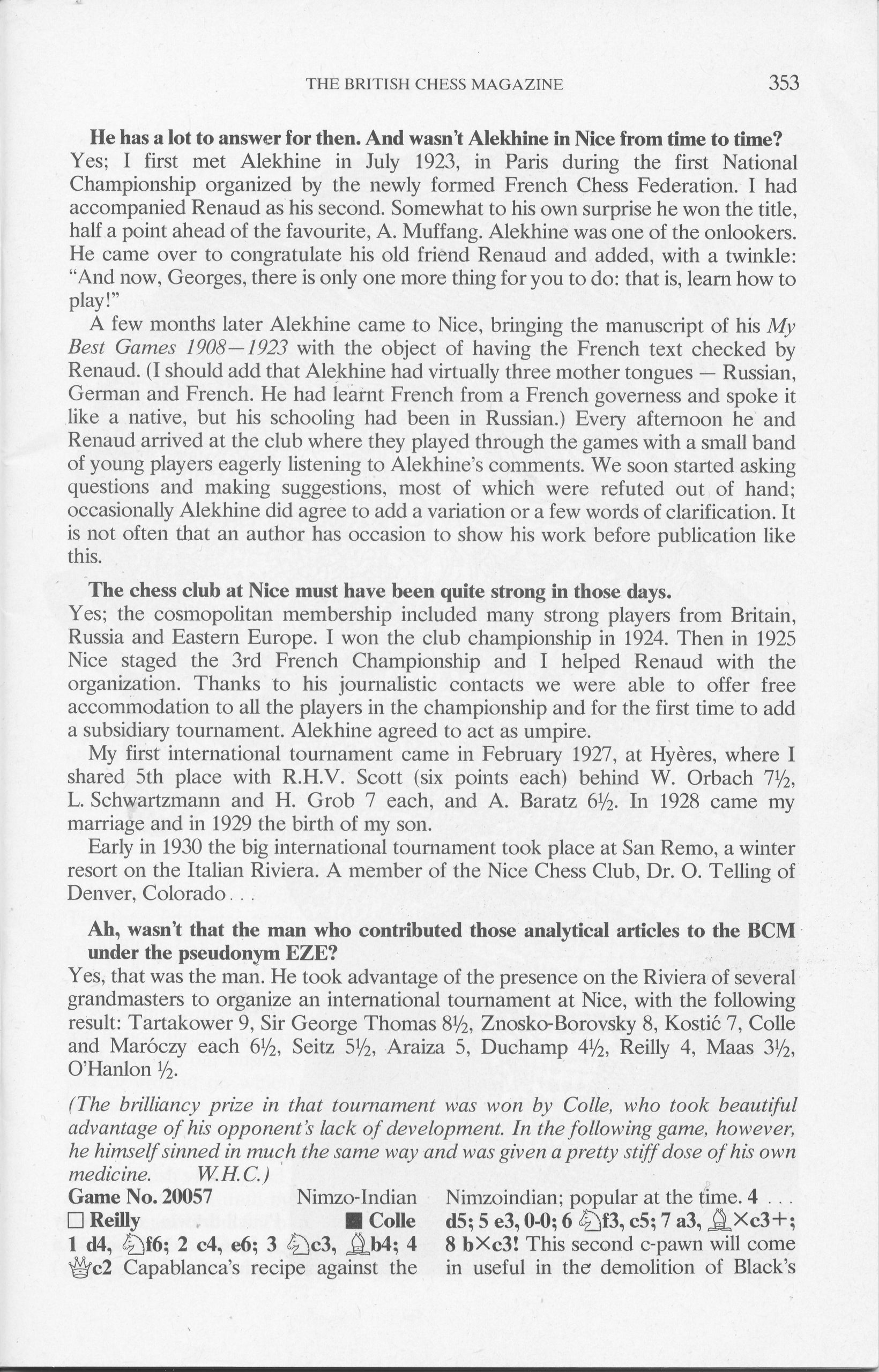
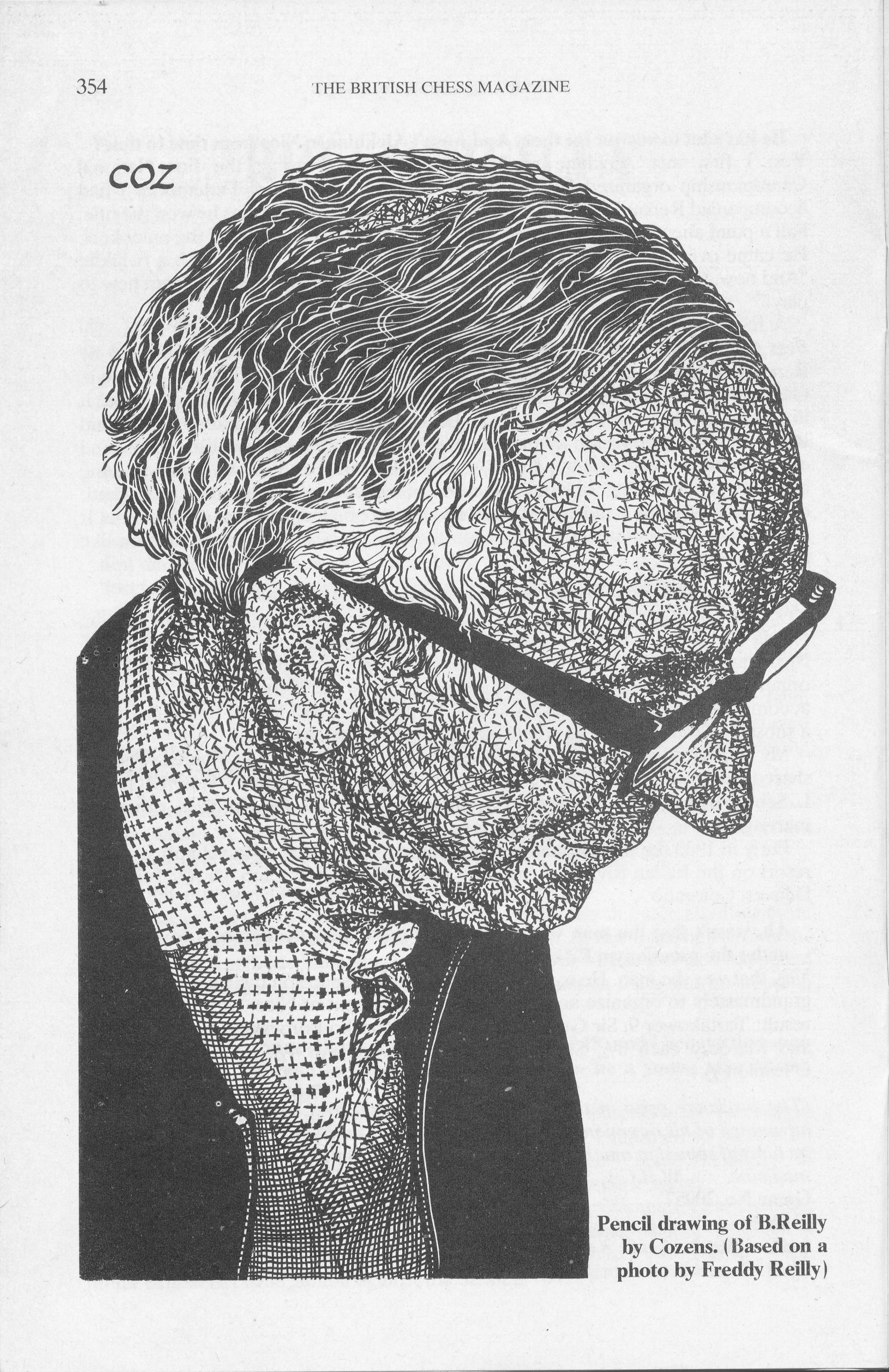
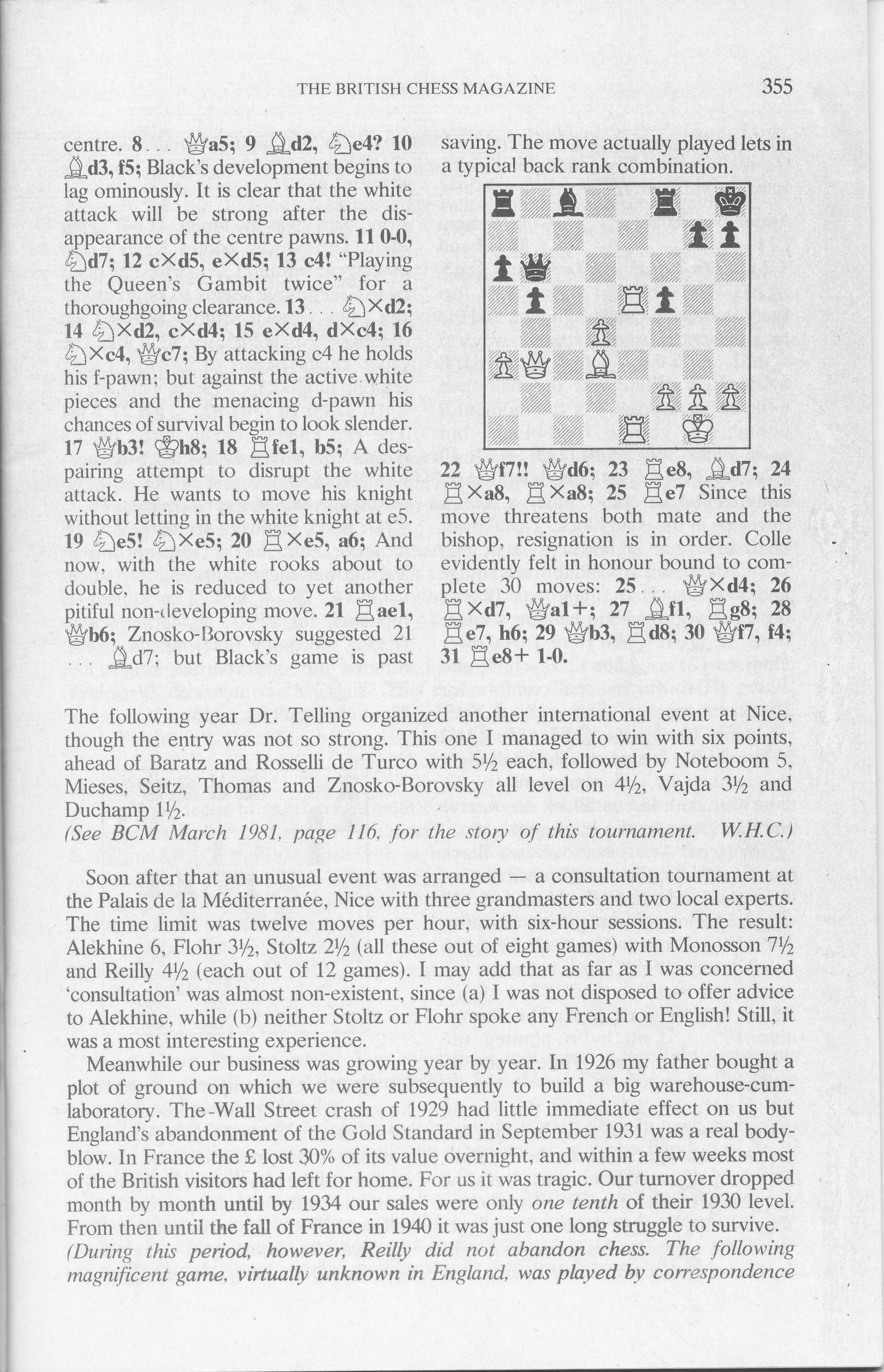
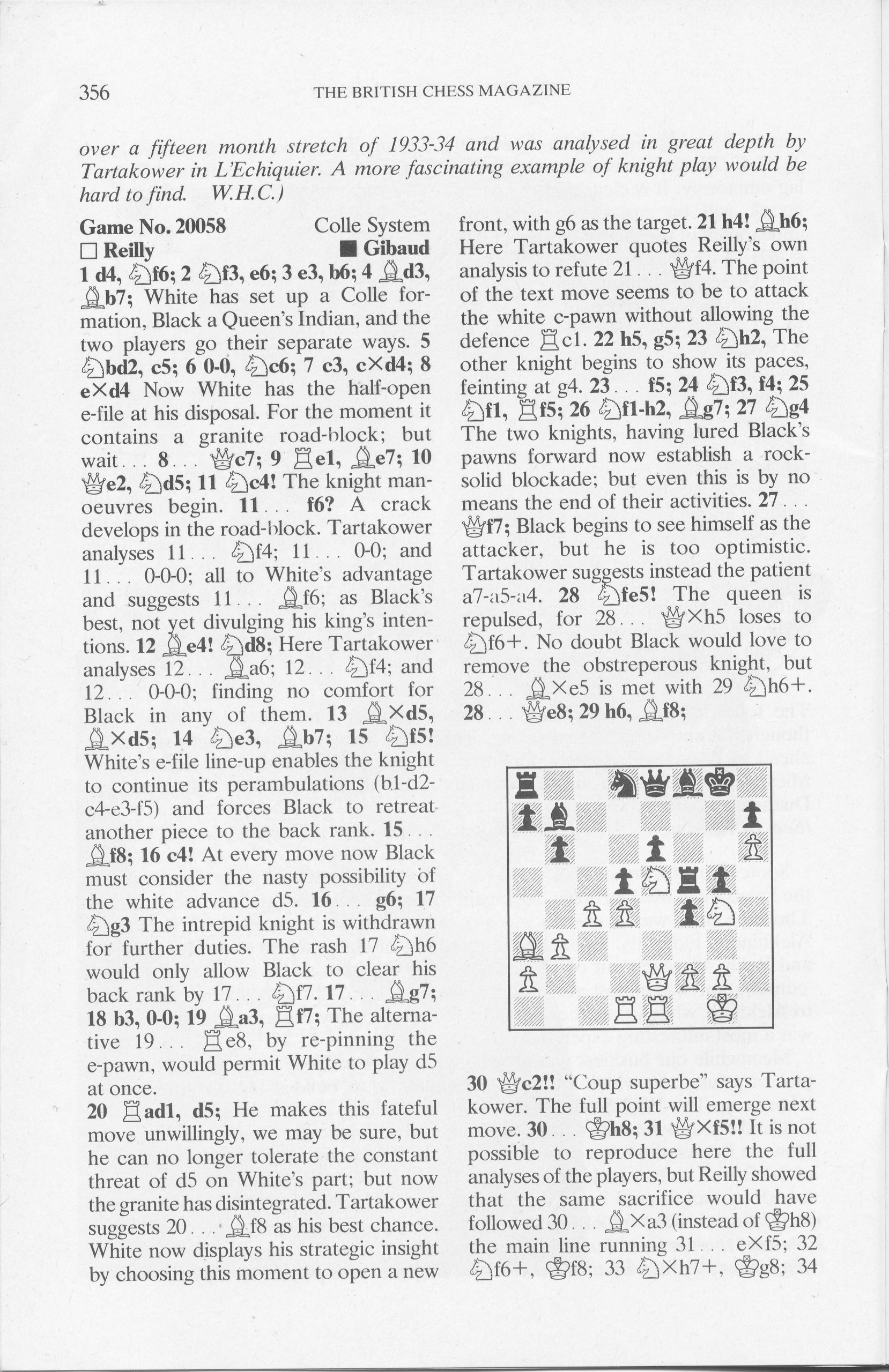
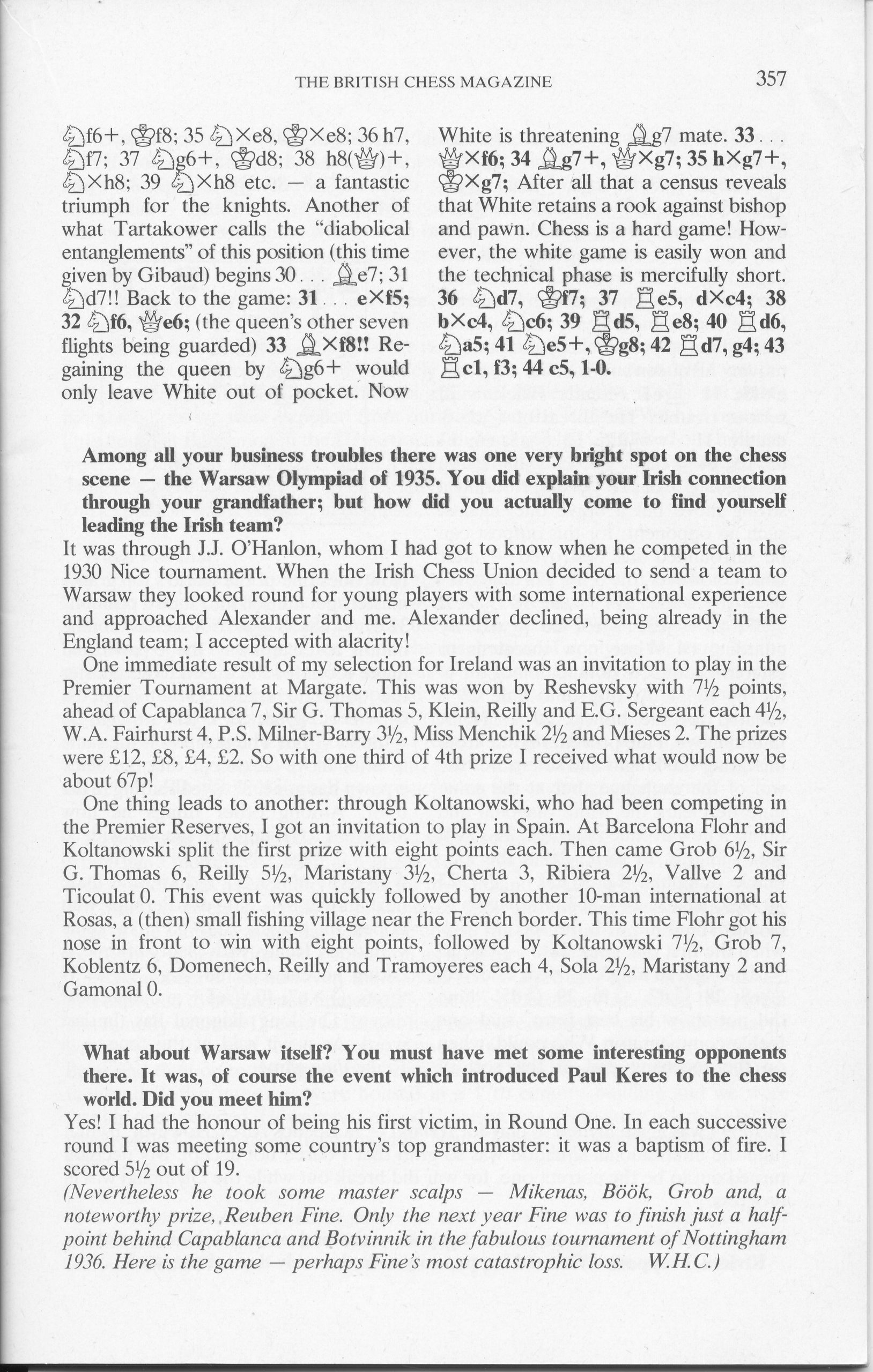
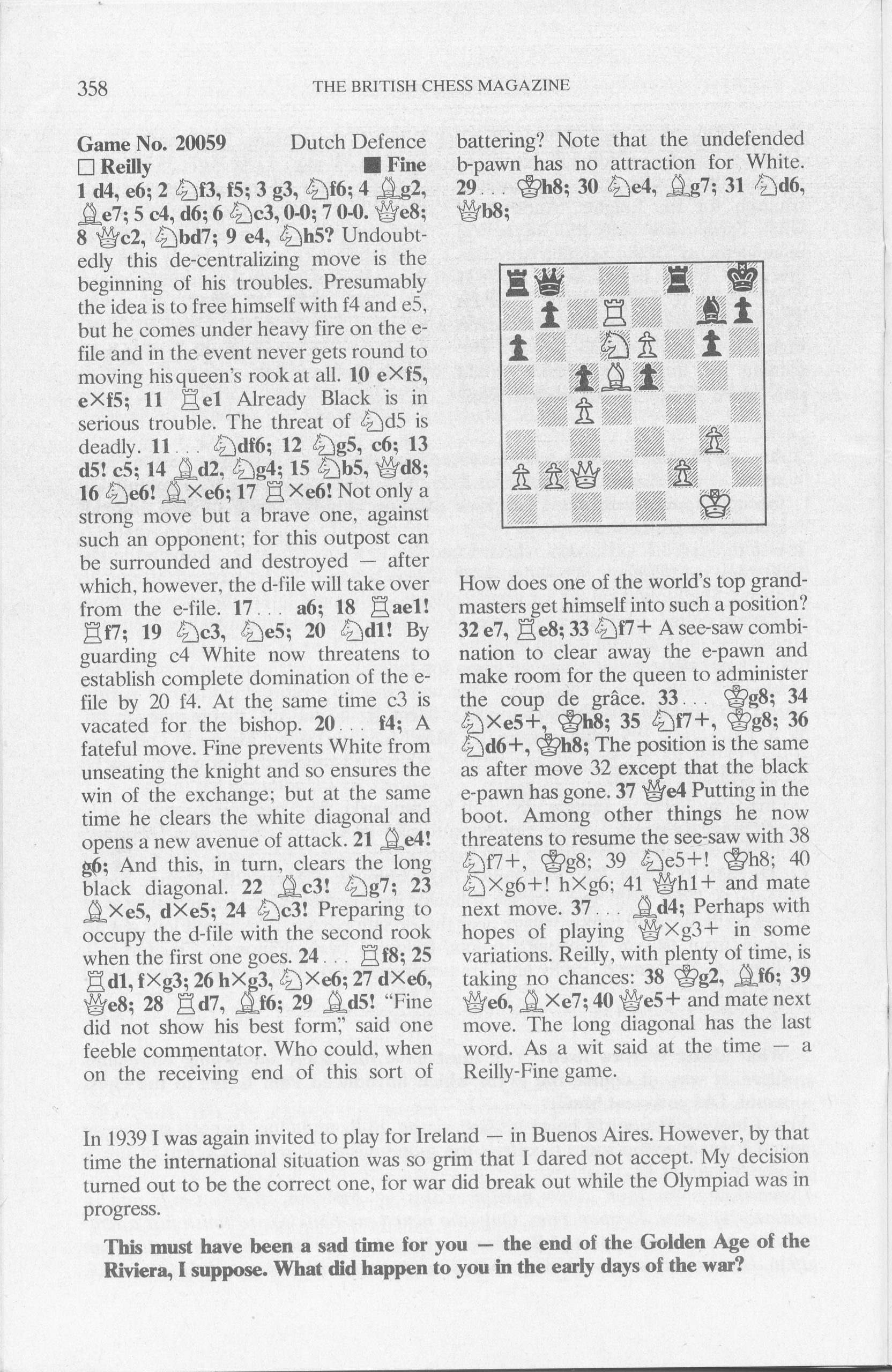
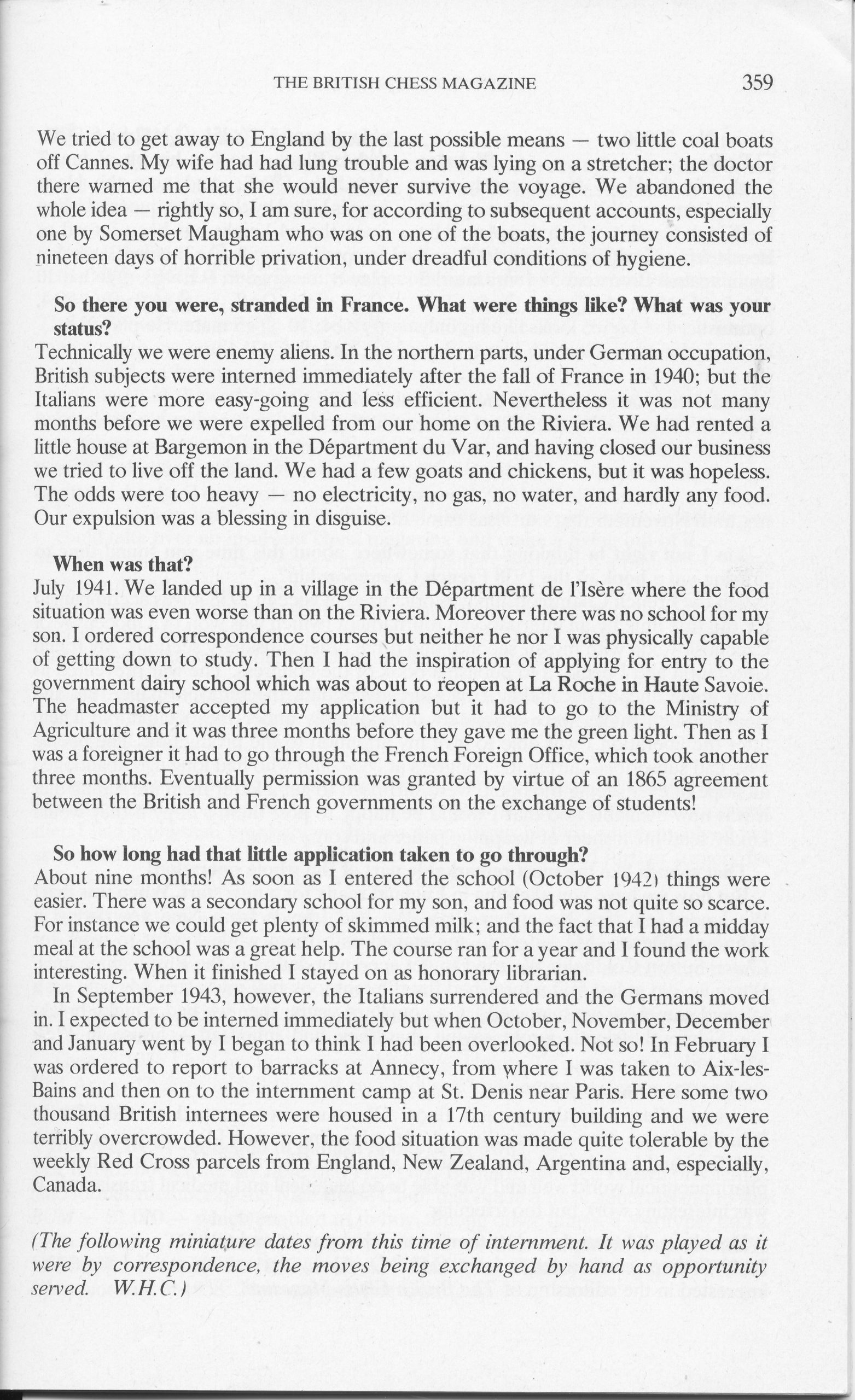
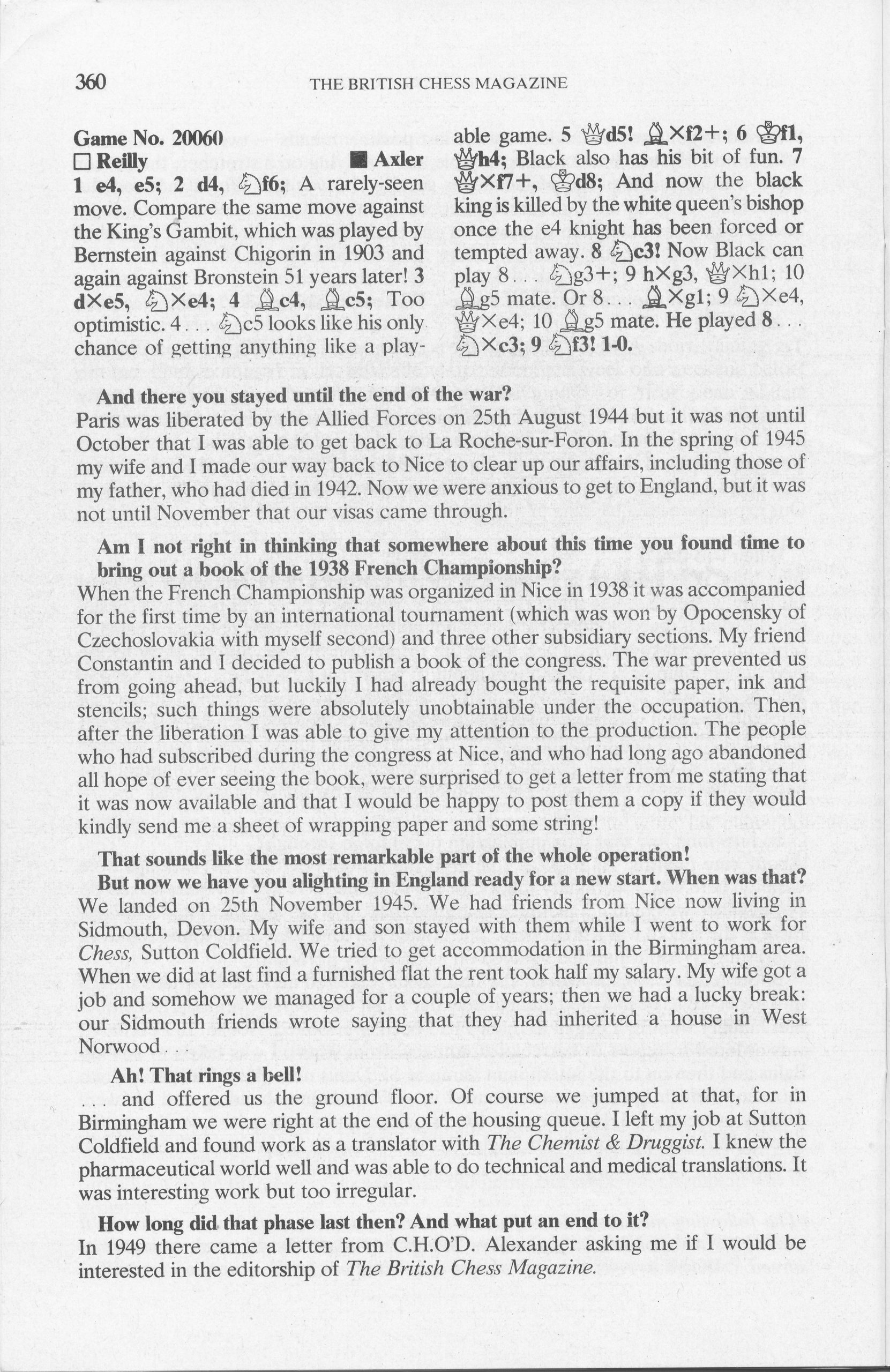
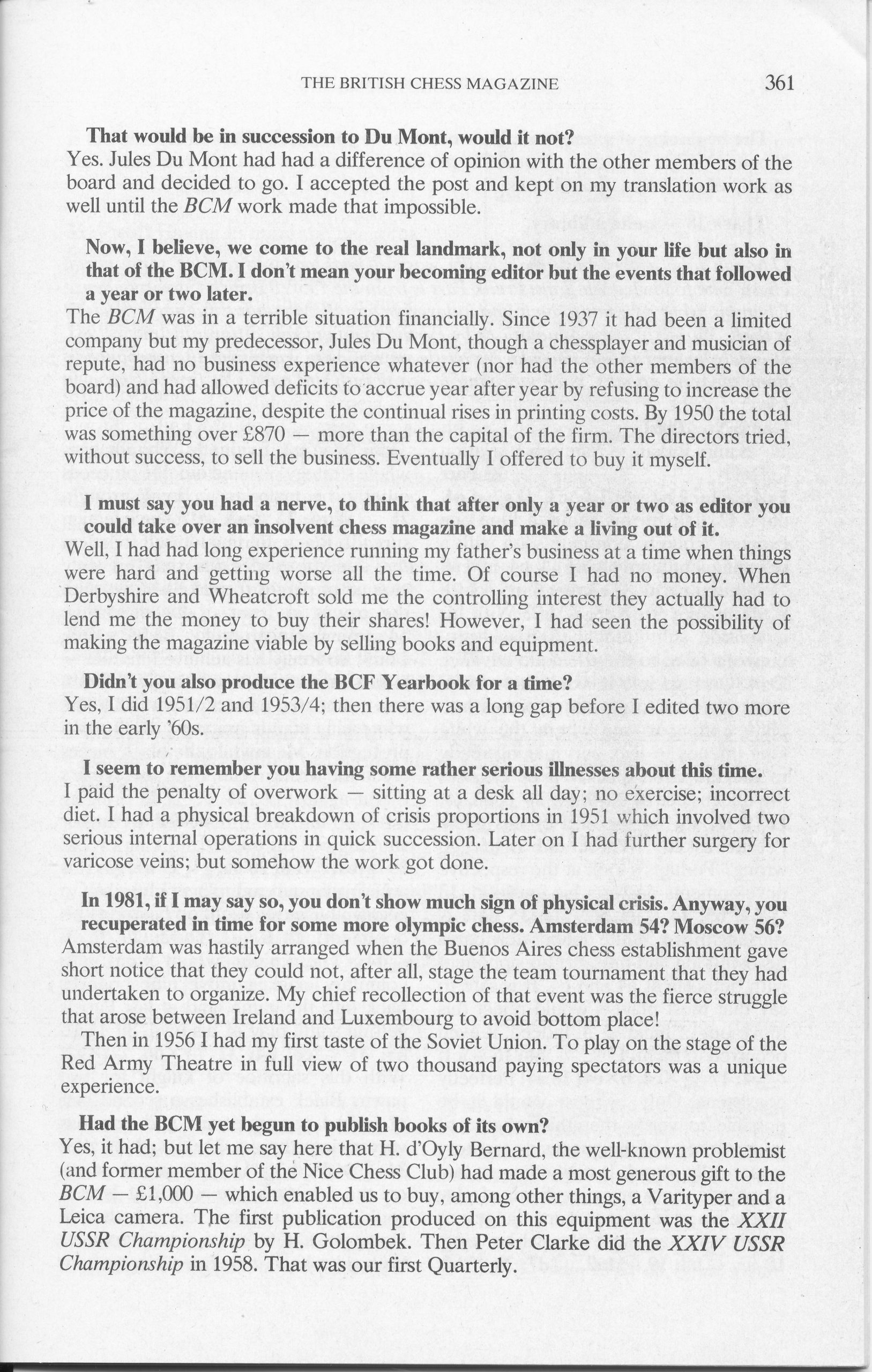
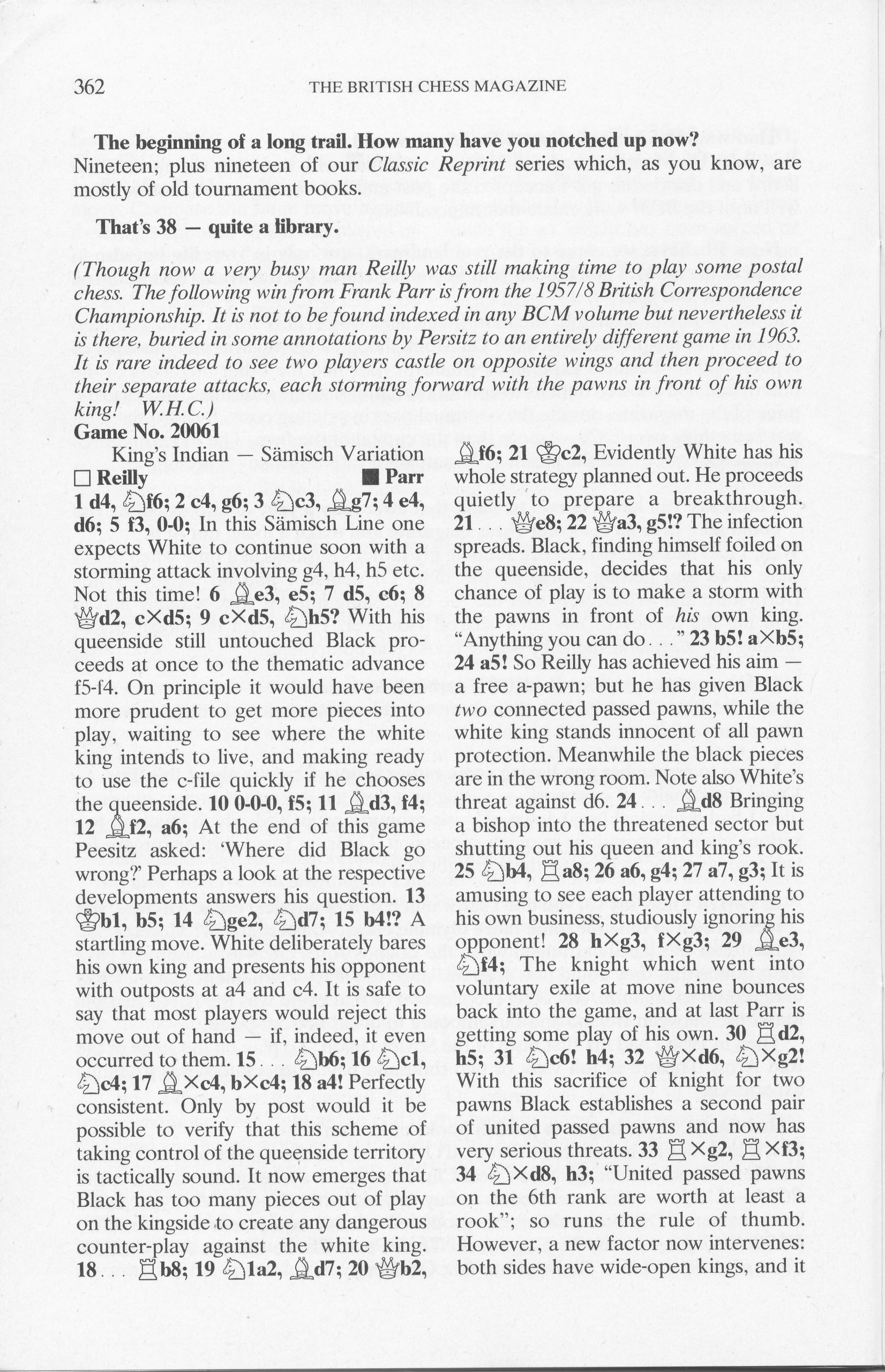
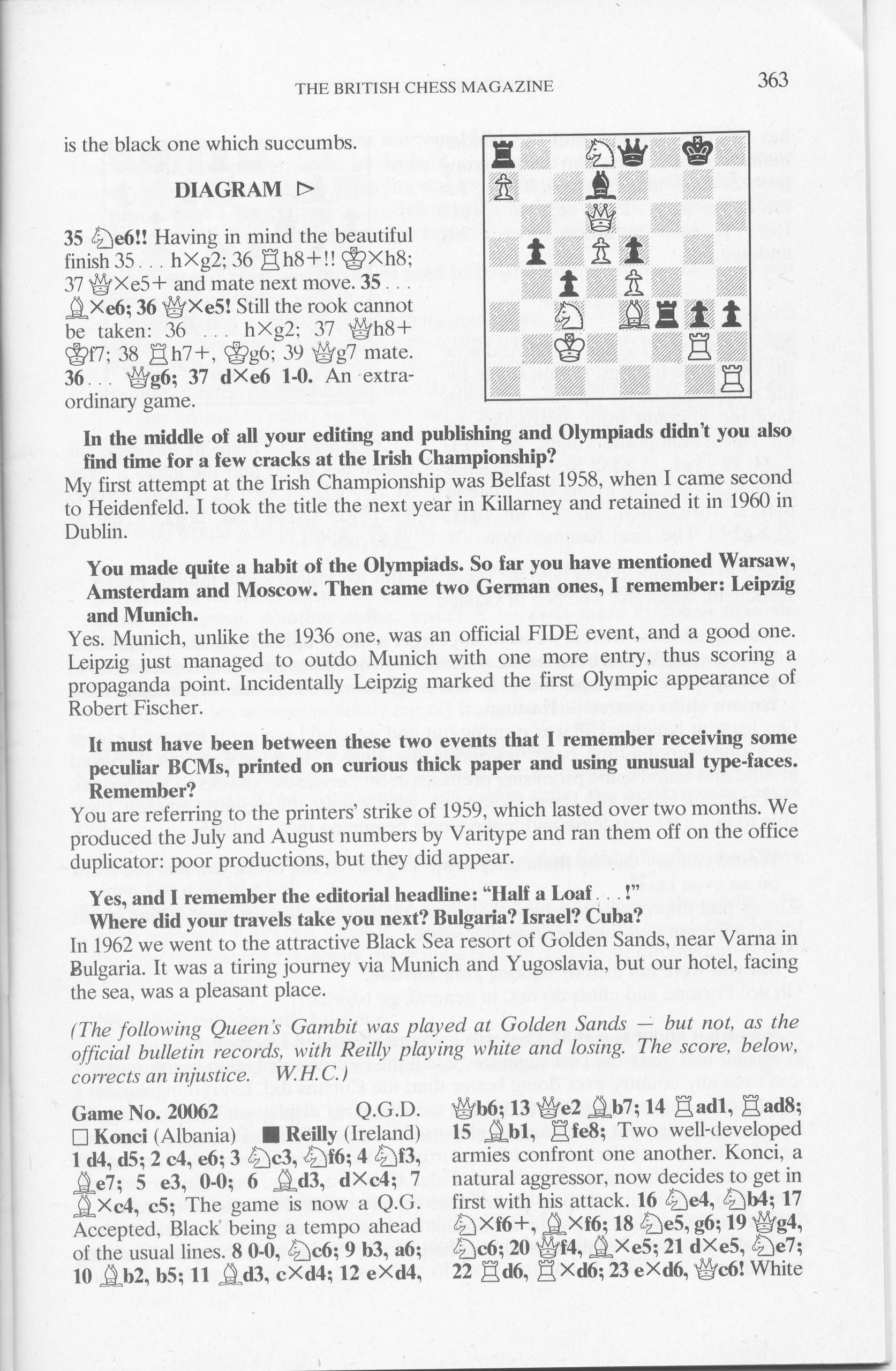
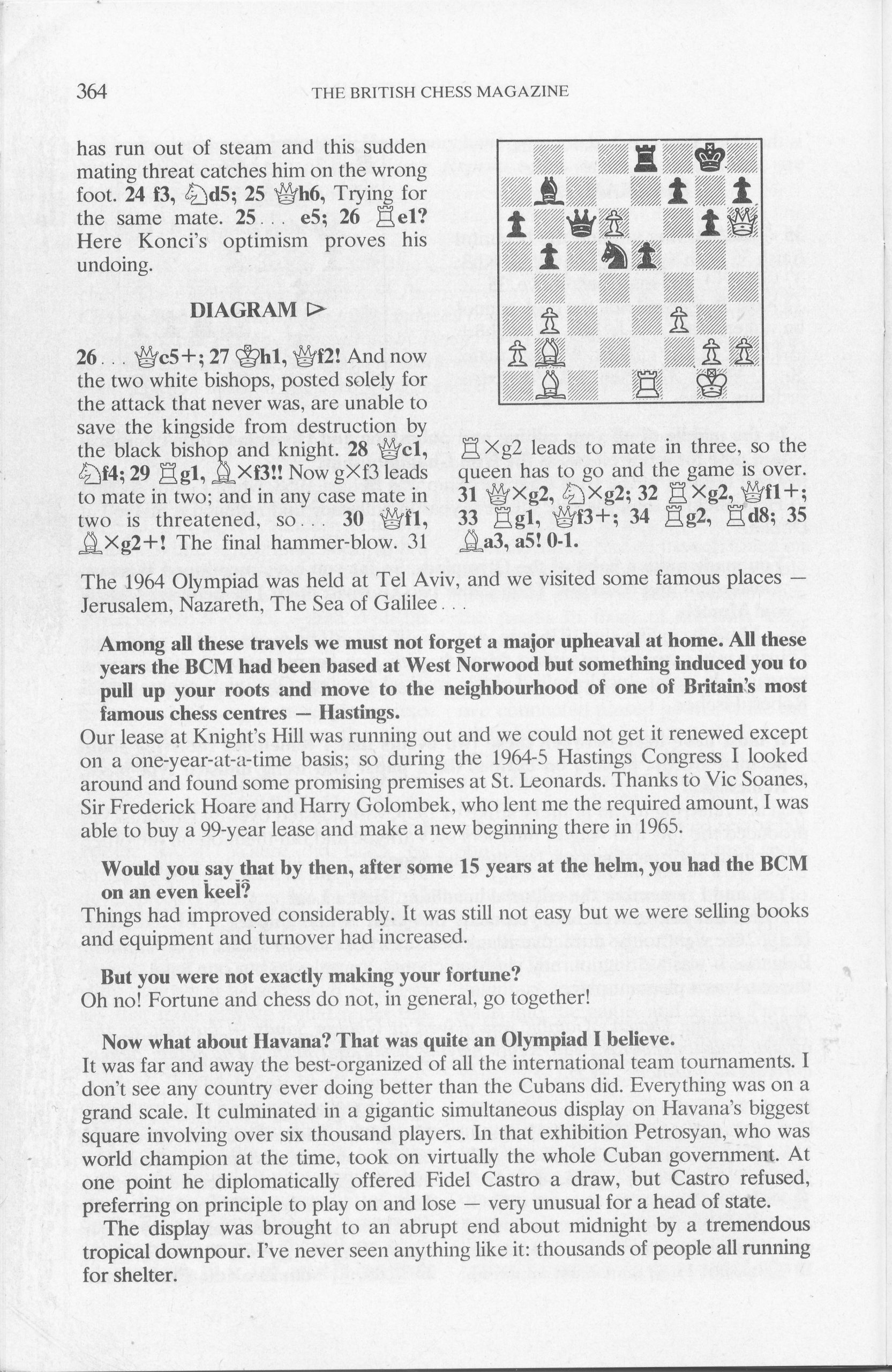
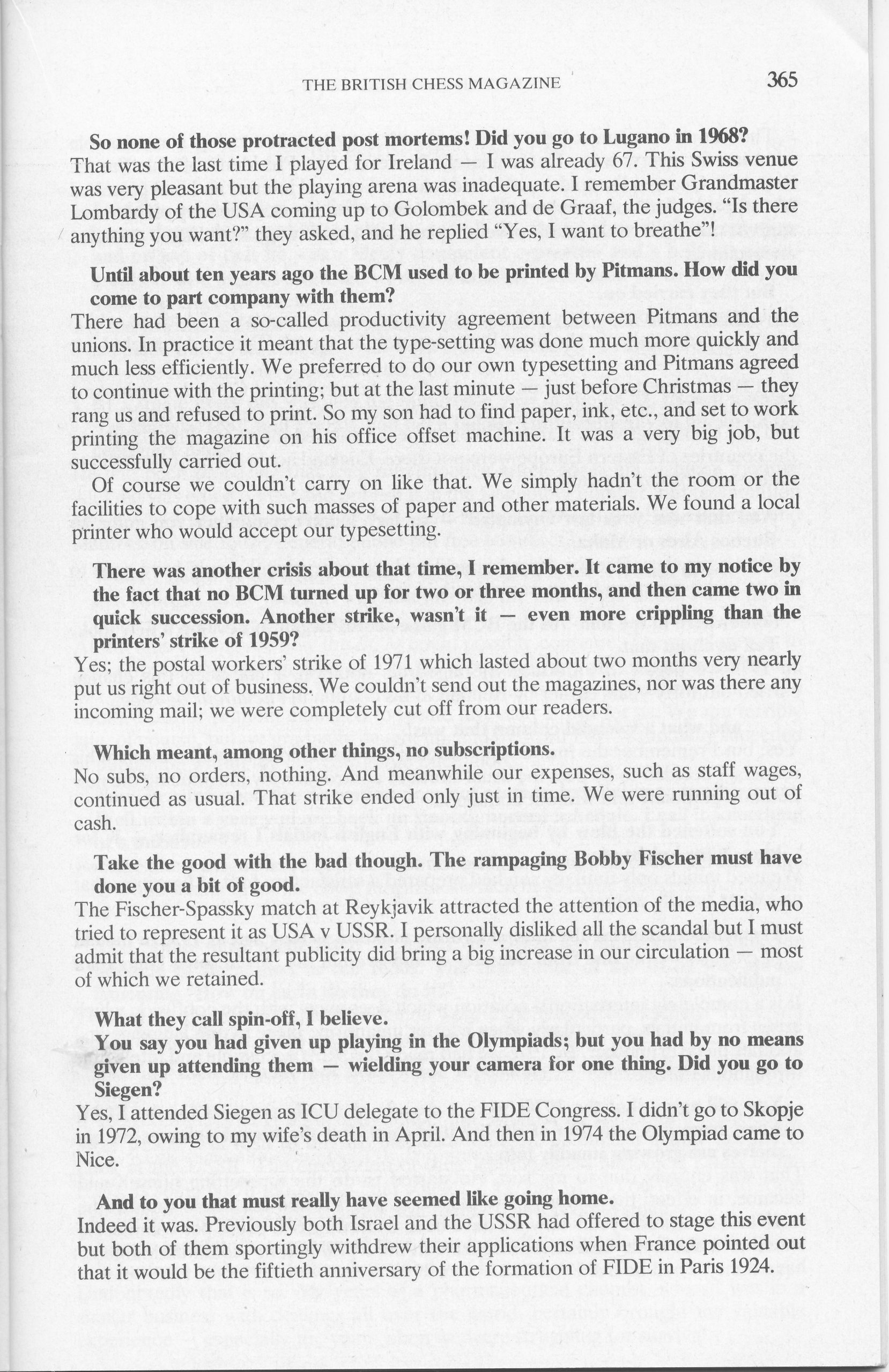
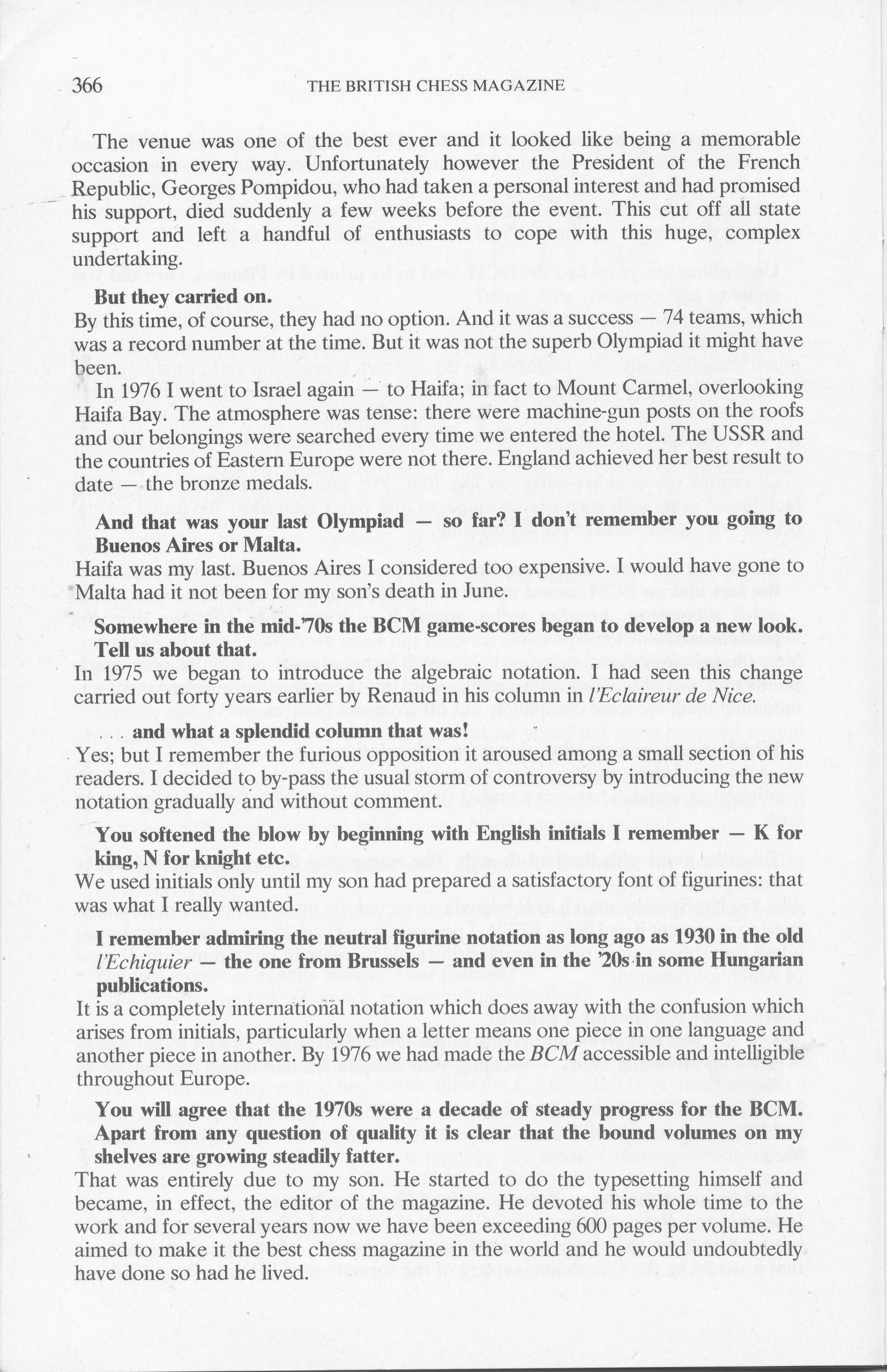
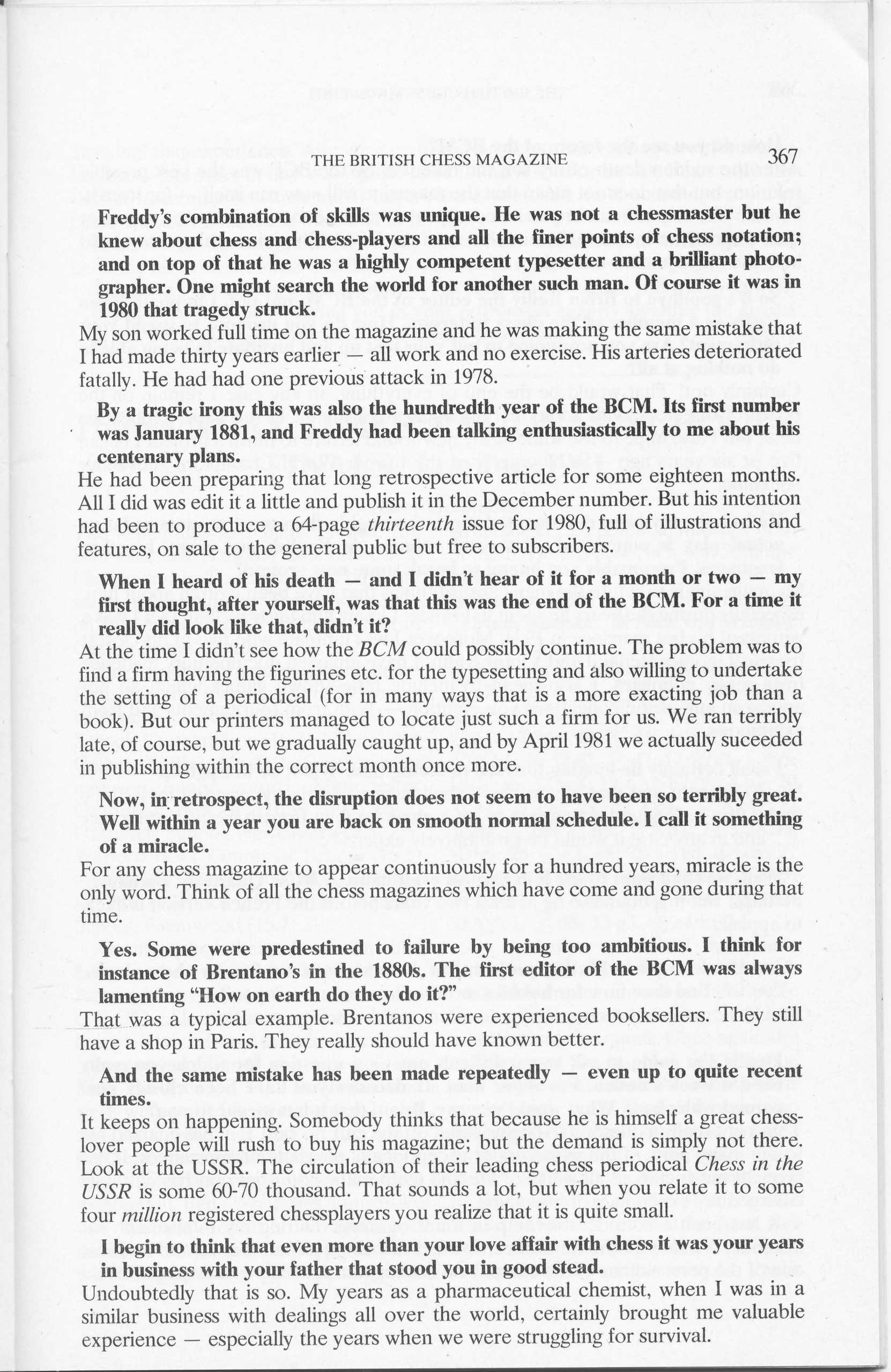
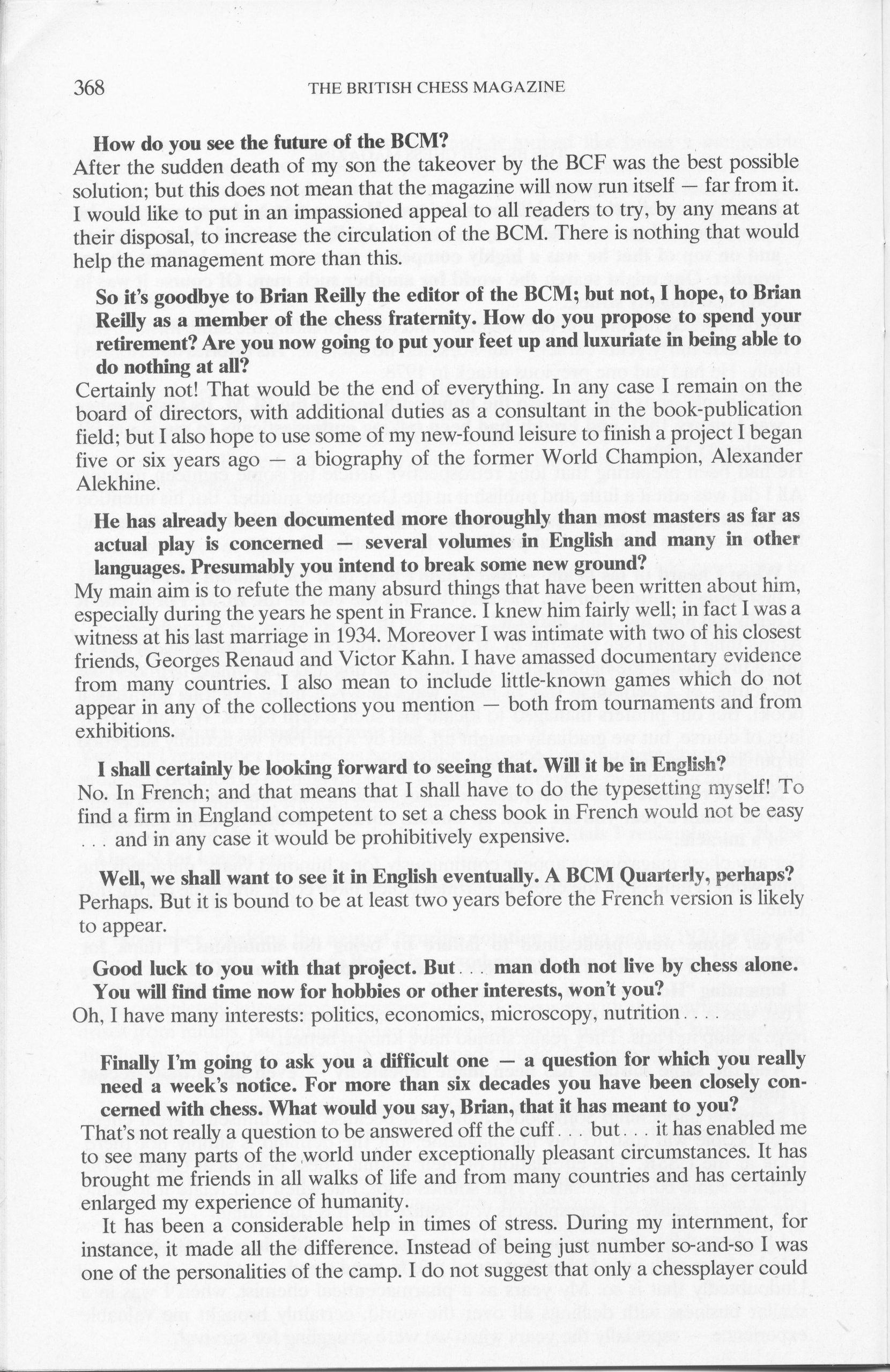
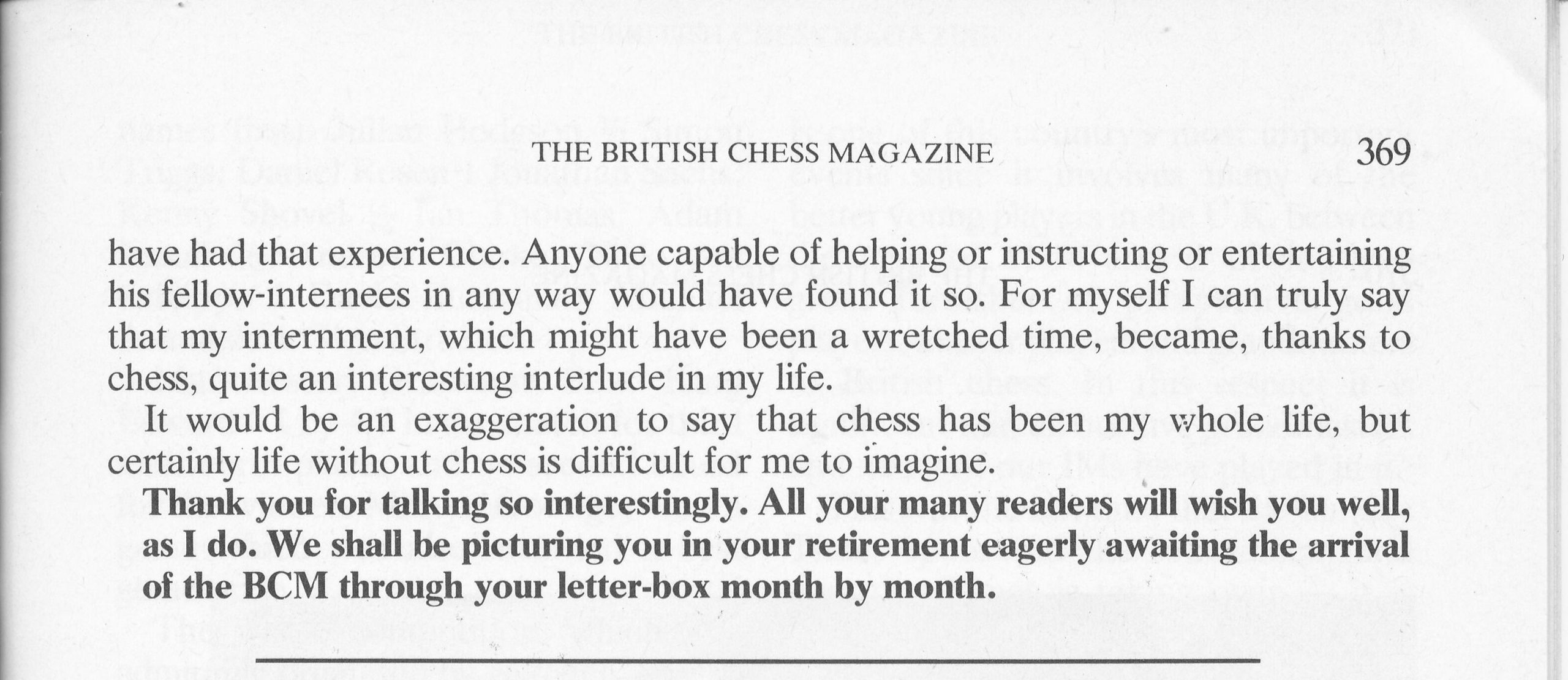
From British Chess Magazine, Volume CI (101), Number 8 (August), pp 352 – 369 a conversation between B.P. Reilly and W.H. Cozens :
Brian Reilly conversation with William Harold Cozens, part 1Brian Reilly conversation with William Harold Cozens, part 2Brian Reilly conversation with William Harold Cozens, part 3Brian Reilly conversation with William Harold Cozens, part 4Brian Reilly conversation with William Harold Cozens, part 5Brian Reilly conversation with William Harold Cozens, part 6Brian Reilly conversation with William Harold Cozens, part 7
Brian Reilly conversation with William Harold Cozens, part 8Brian Reilly conversation with William Harold Cozens, part 9Brian Reilly conversation with William Harold Cozens, part 10Brian Reilly conversation with William Harold Cozens, part 11Brian Reilly conversation with William Harold Cozens, part 12Brian Reilly conversation with William Harold Cozens, part 13Brian Reilly conversation with William Harold Cozens, part 14Brian Reilly conversation with William Harold Cozens, part 15Brian Reilly conversation with William Harold Cozens, part 16Brian Reilly conversation with William Harold Cozens, part 16Brian Reilly conversation with William Harold Cozens, part 1
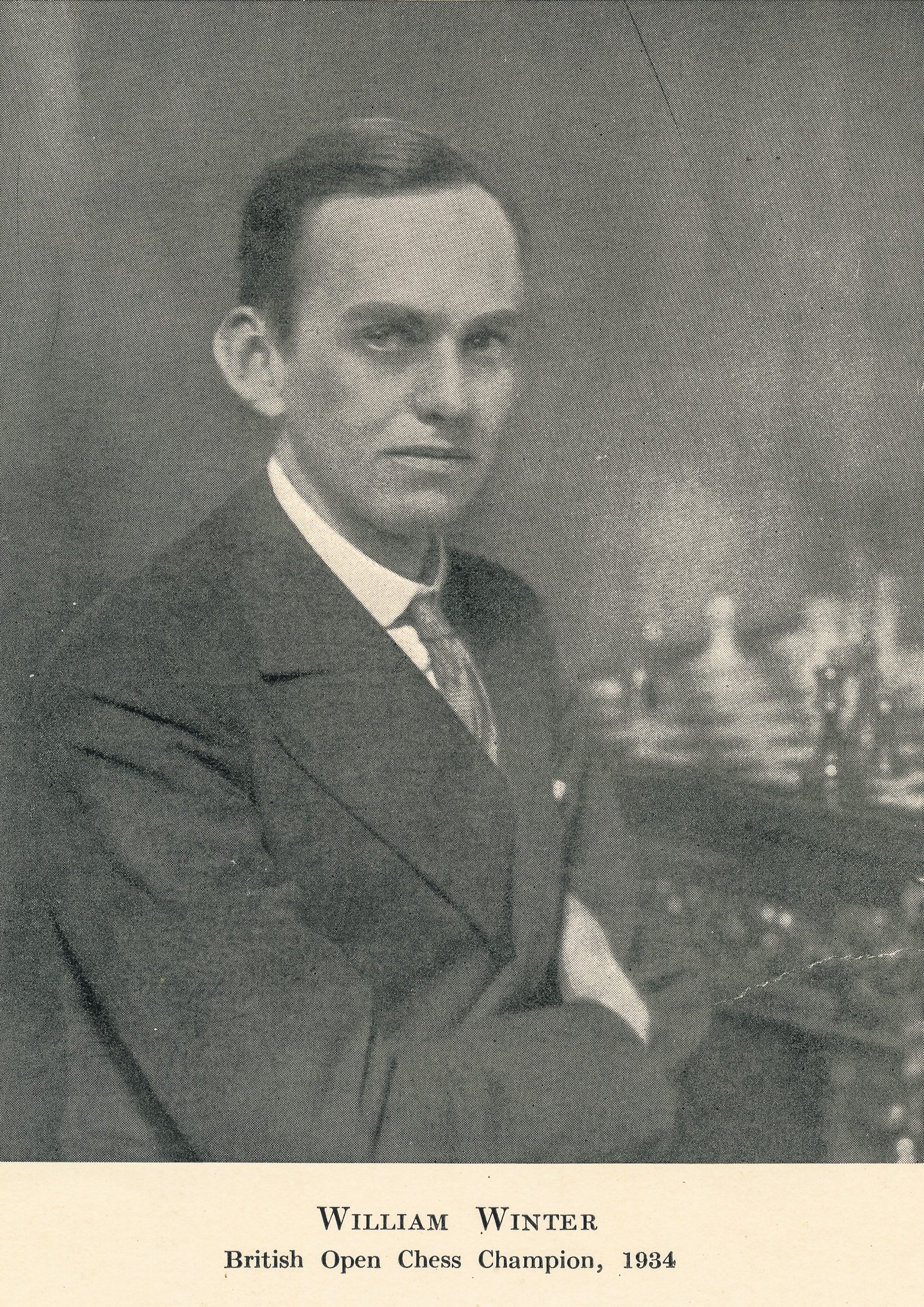
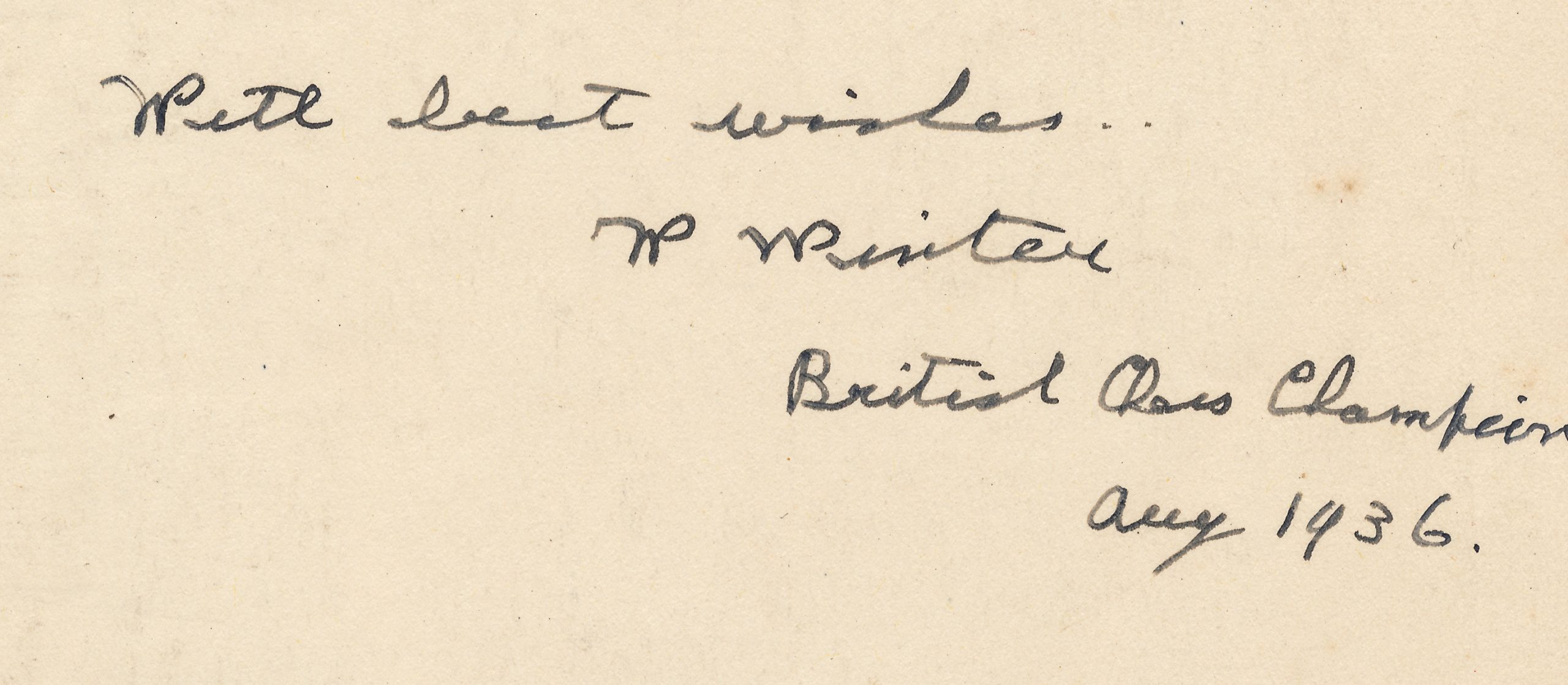
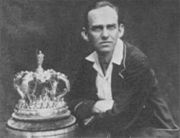
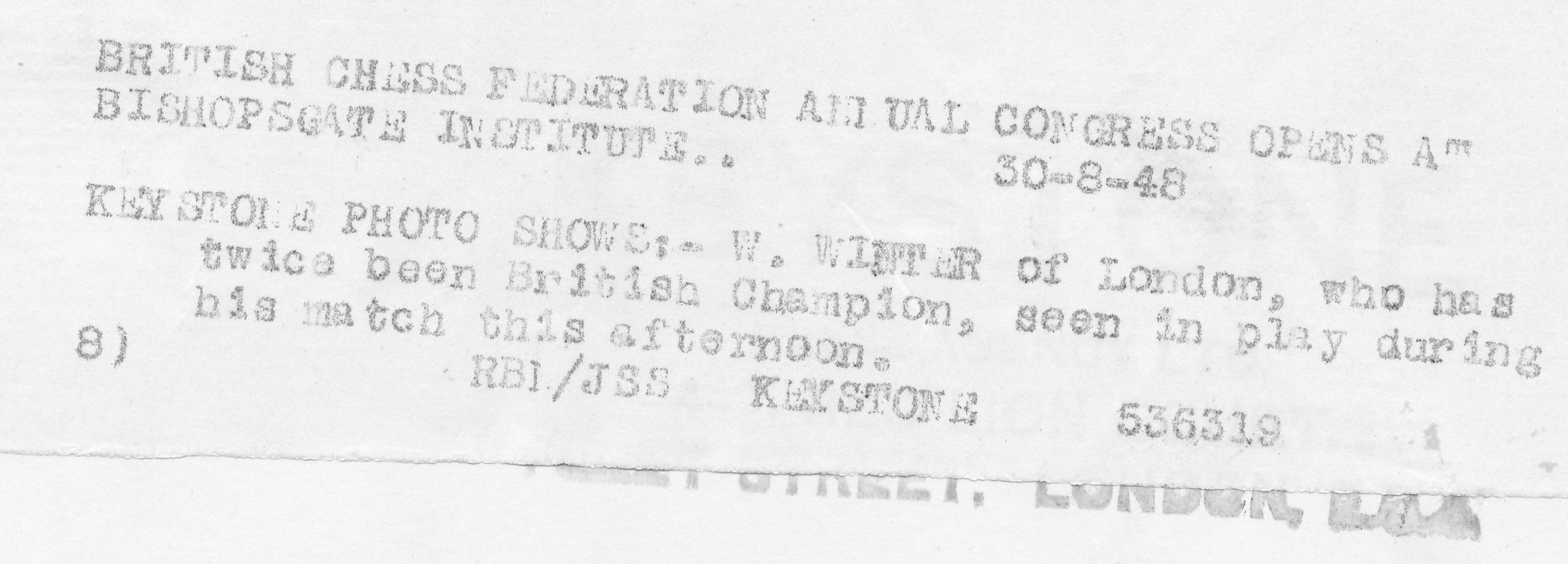
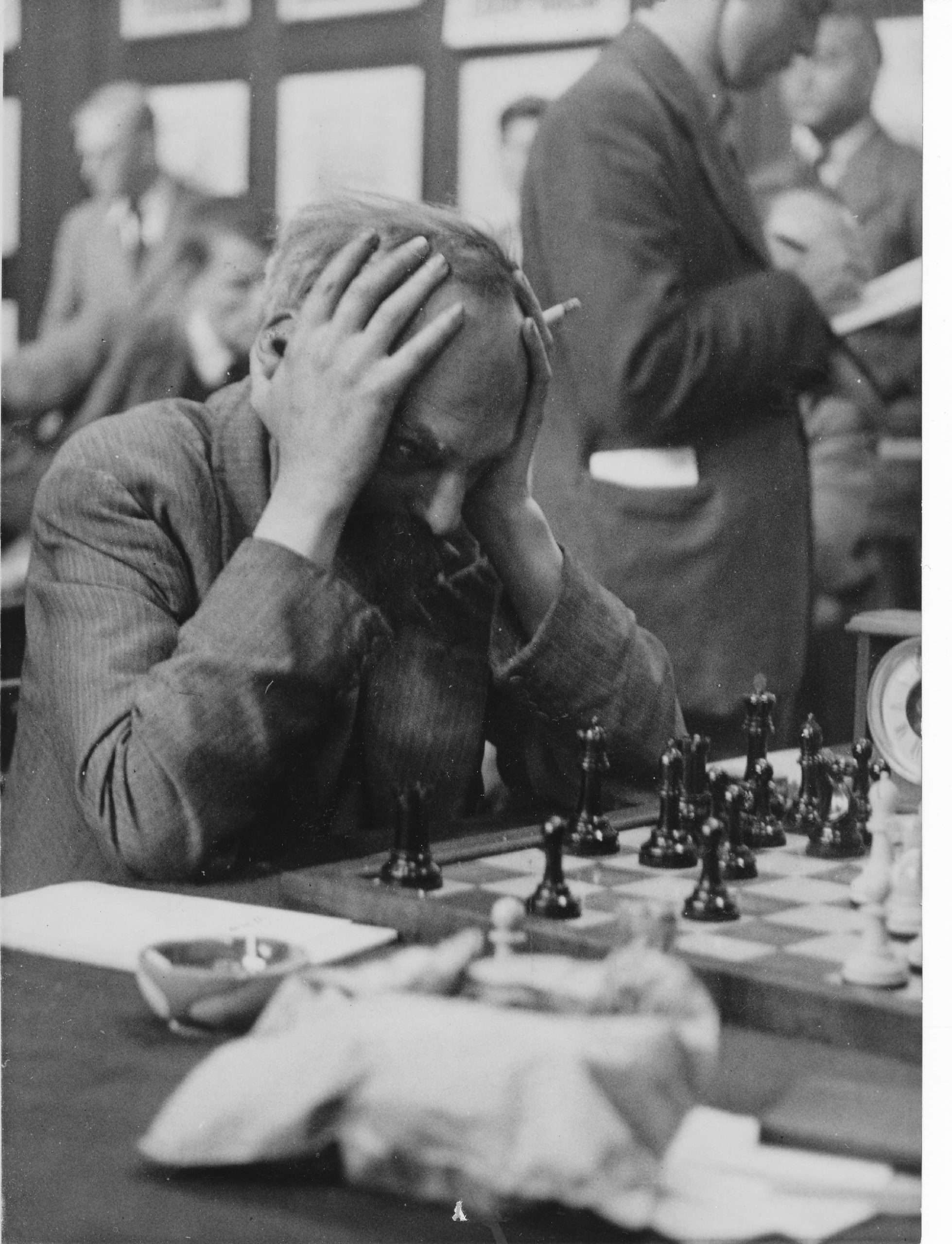
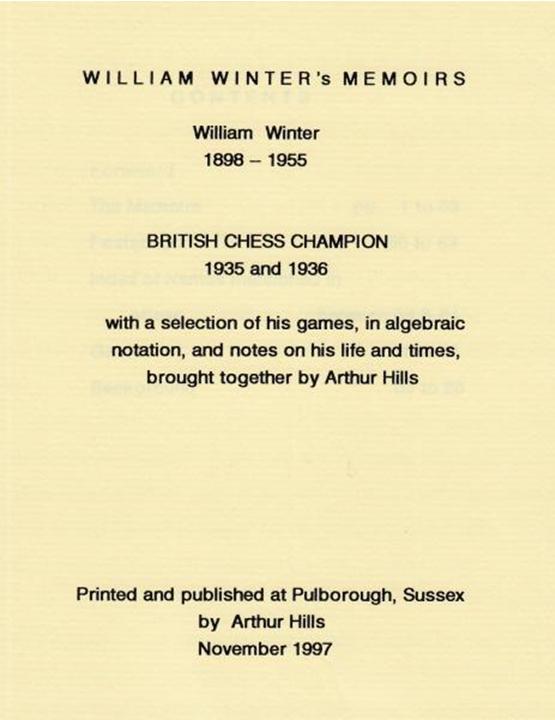
William Winter, British Open Chess Champion, 1934. The verso frontispiece of Chess for Match Players, William Winter, London, Lawrence & Wishart, 1st edition. 1936Author’s inscription from Chess for Match Players, William Winter, London, Lawrence & Wishart, 1st edition. 1936
BCN remembers William (Willy) Winter who passed away on Sunday, December 18th, 1955 from tuberculosis (at the time known as “the white plague”). He refused to enter a sanatorium.
There is some variation from sources who quote his Date of Birth. All have 11th of September as the date but vary by the year giving either 1898 or 1899. However careful research by John Townsend (Wokingham) gives 1897 and this work is cited by Edward Winter.
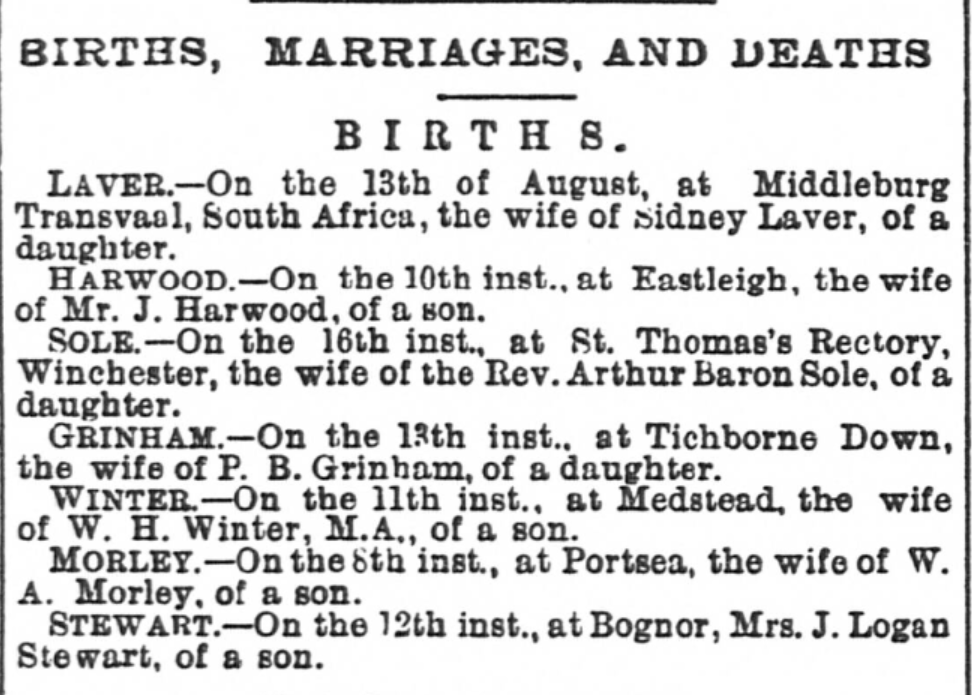
Late in 2021 historian Gerard Killoran (Ilkley) discovered this clipping from the Hampshire Advertiser – Wednesday 22 September 1897 p.2:
Hampshire Advertiser – Wednesday 22 September 1897 p.2
which confirms JTs evidence from the 1939 register.
His father was William Henderson Winter and his mother Margaret Winter. He was born in Medstead, Hampshire. In the 1911 census their address was recorded as “The Boynes”, Four Marks, Alton, Hampshire and the family had two servants : a cook and a housemaid. In 1936 Winter lived at The Old Cottage, North Road, Three Bridges, Sussex.
In the second quarter of 1933 William married Amelia Jennett (née Potter) in the district of Pancras. William knew Amelia as Molly and wrote about her extensively in his memoirs. Amelia was married to Dennis Jennett but Dennis had an affair with another woman and a convenient to all parties “arrangement” was entered into. However, Willy’s father was less than impressed.
From The Encyclopedia of Chess (Robert Hale 1970&1976), Anne Sunnucks :
“International Master, chess. professional and British Champion in 1935 and 1936, William Winter is one of the most colourful figures that British chess has produced. A born bohemian, Winter could on many occasions have been mistaken for a tramp, yet he was equally capable of turning up at a dinner or some other official occasion, well-groomed and looking the split image of his famous uncle, Sir James Barrie, and making a speech of such wit and culture that every other speech would seem flat.
Born in Medstead in Hampshire on 11th September 1898, of Scottish parentage. Winter’s mother was the youngest sister of Sir James Barrie, and his father a brilliant scholar who had entered St. Andrew’s University at the age of 16, taken honours in classics and then won a scholarship to Cambridge to read mathematics.
Winter was taught to play chess by his father, who was a strong player, when he was 12. From the time he was introduced to the game his main aim in life was to become a first-class player, and his previous interest, cricket, had to take a back seat.
When he was 15, he joined the city of London Chess club, one of the leading clubs in the country, and his game-rapidly improved. He went up to Cambridge to read law for a year during-the l9l4-l9l8 war, before he became of age for military service and joined the Honourable Artillery Company. While he was stationed at Leeds he learned that the British champion, F. D. Yates, and the Mexican master, A. G. Conde, were in the habit of playing chess on a Saturday afternoon in a café in Bradford.
Winter started going to this café and made the acquaintance of the two masters, who would occasionally give him a game.
On returning to Cambridge when the war was over, Winter became President of the University Chess Club and also started to take an active interest in politics. He joined the University Socialist Society and the local branch of the Independent Labour Party, and when the Communist Party was formed he became a Communist.
In 1919 Winter became Cambridge University Champion and won a match against R. H. V. Scott, a leading British player, by a score of 4-2, thereby securing for himself an invitation to play in the Victory Congress at Hastings. His lack of experience of master play proved too great a handicap, and he came 11th out of 12.
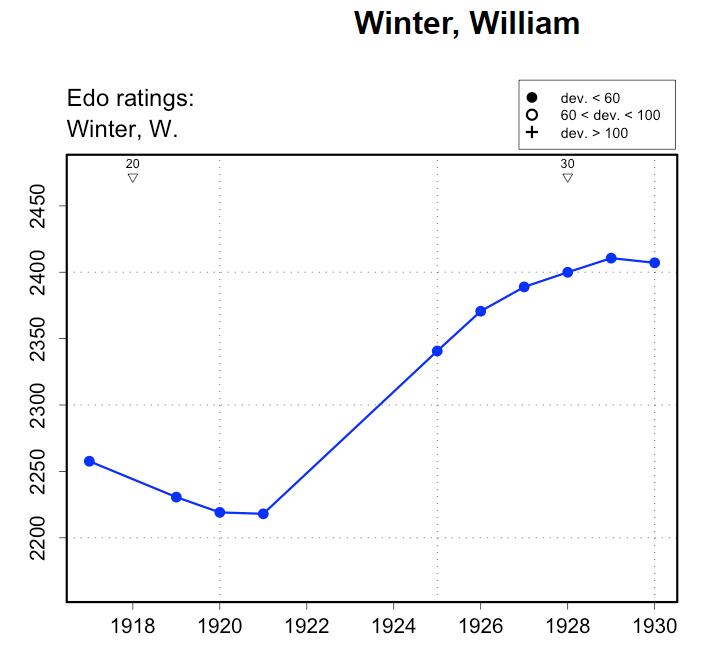
Edo rating profile for William Winter from http://www.edochess.ca/players/p7187.html
On leaving Cambridge after taking his degree in 1919, Winter persuaded his parents to allow him a year in which to play chess before settling down to a career. He hoped that during that year he might be able to prove that he had sufficient talent to become a professional player. This did not prove the case, and Winter had to resign himself to becoming a solicitor.
In 1921 he became articled to a London firm, but after a dispute with his father, which resulted in his allowance being stopped, Winter had to give up his articles and decided to concentrate his energies on politics. He went to live in Bristol and addressed open-air meetings all over the city on behalf of the Communist party, until he was arrested for sedition and sentenced to six months imprisonment. After his release Winter continued his political activities until he was forced to abandon them on medical advice.
Having given up politics, Winter decided to try his luck as a chess professional. This proved to be a success, and within two years he was making a reasonable living teaching the game, playing games for fees at St. George’s Cafe in St. Martin’s Lane in London and writing for The Manchester Guardian and The Daily Worker.
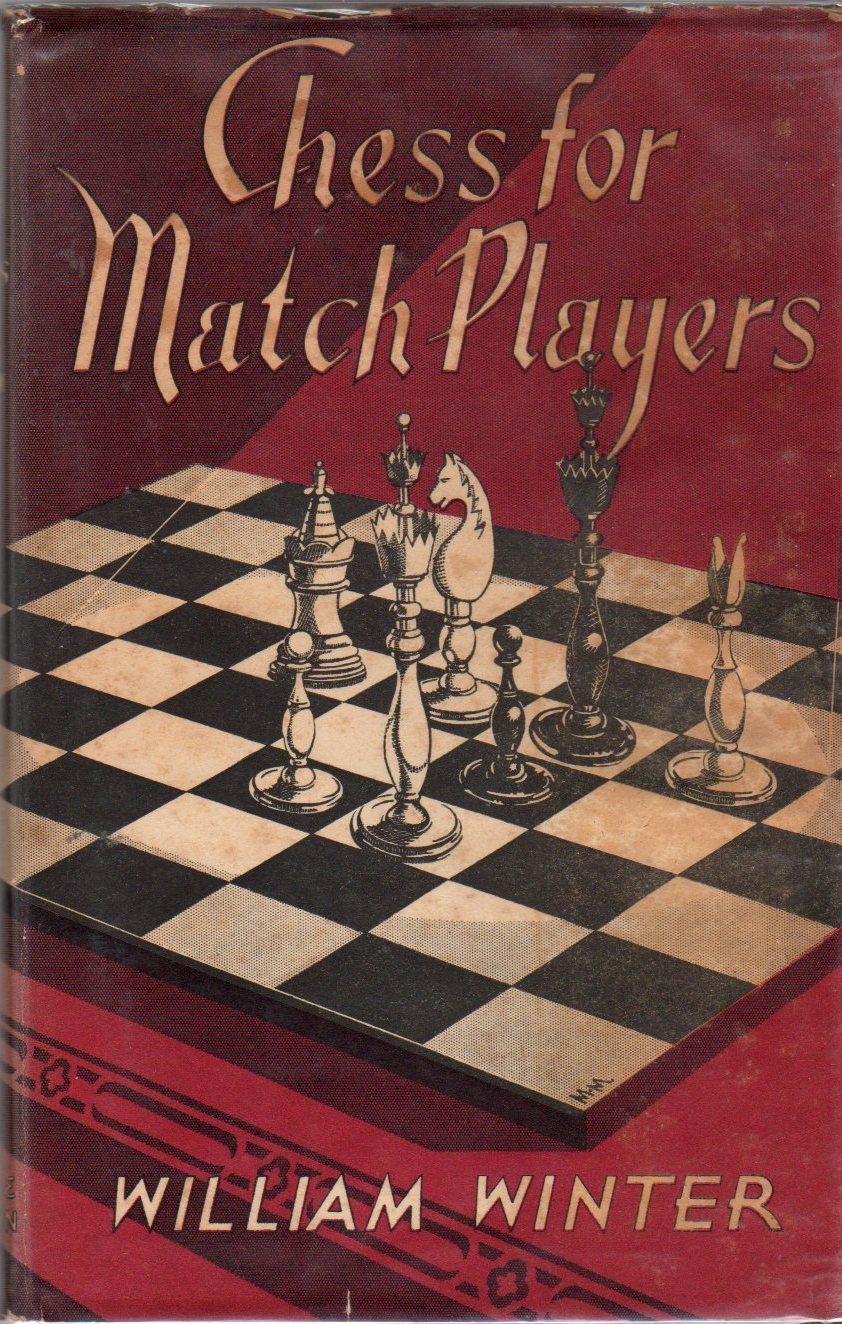
Winter remained a chess professional for the rest of his life, apart from the war years. He wrote two chess best sellers: Chess for Match Players, published in 1936
Chess for Match Players, William Winter, Carroll & Nicholson, 1936
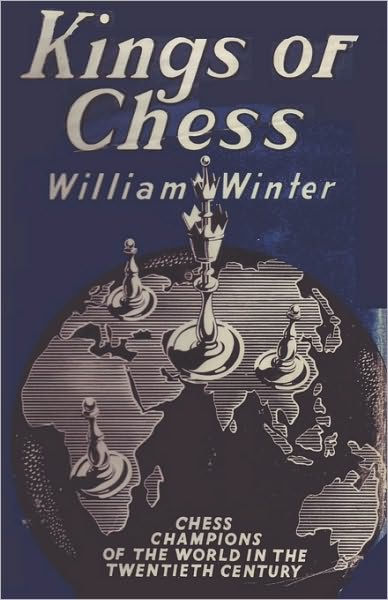
and reprinted in 1951, and Kings of Chess;
Kings of Chess, William Winter, Carroll and Nicholson Ltd, 1954
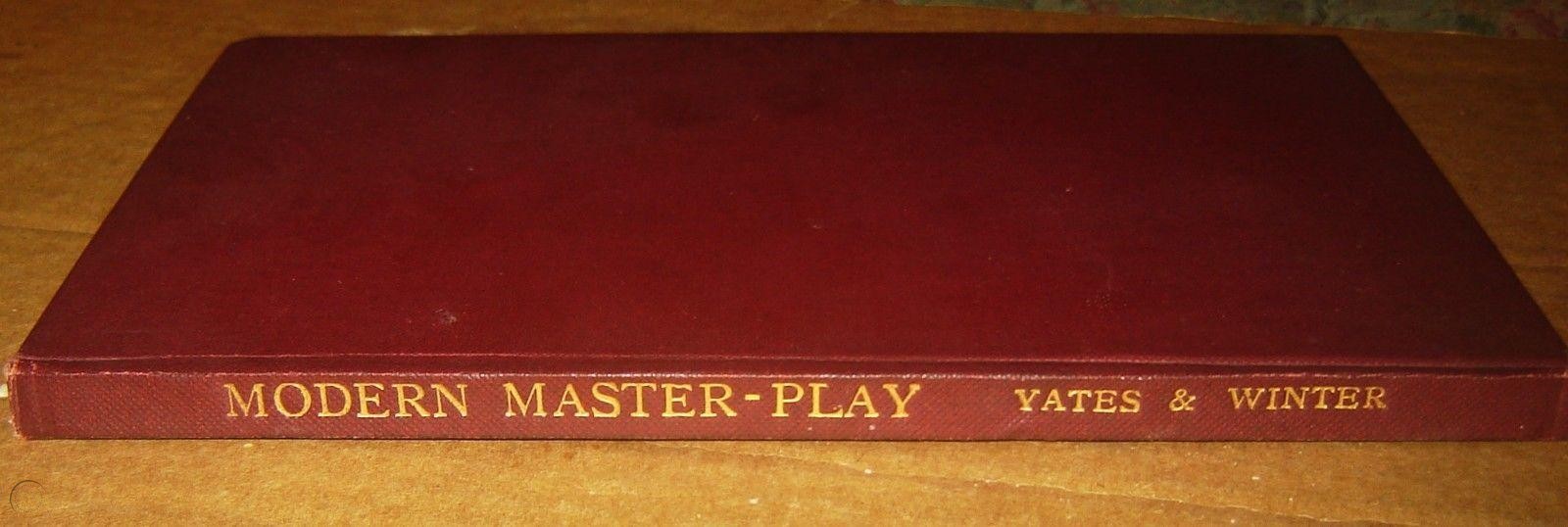
and was co-author with F. D. Yates of Modern Master Play,
Modern Master Play, FD Yates and W. Winter, 1930
and with FD Yates of World Championship Candidates Tournament, 1953.
Winter never reached the very highest ranks as a player, although he won the British Championship twice and represented his country in four Chess Olympiads: Hamburg in 1930, Prague in 1931, Folkestone in 1933 and Warsaw in 1935. In the Great Britain v. U.S.S.R. radio match in 1946 he defeated Bronstein in the first round and then characteristically went out and celebrated his victory in such a way that his defeat in the return round was inevitable.
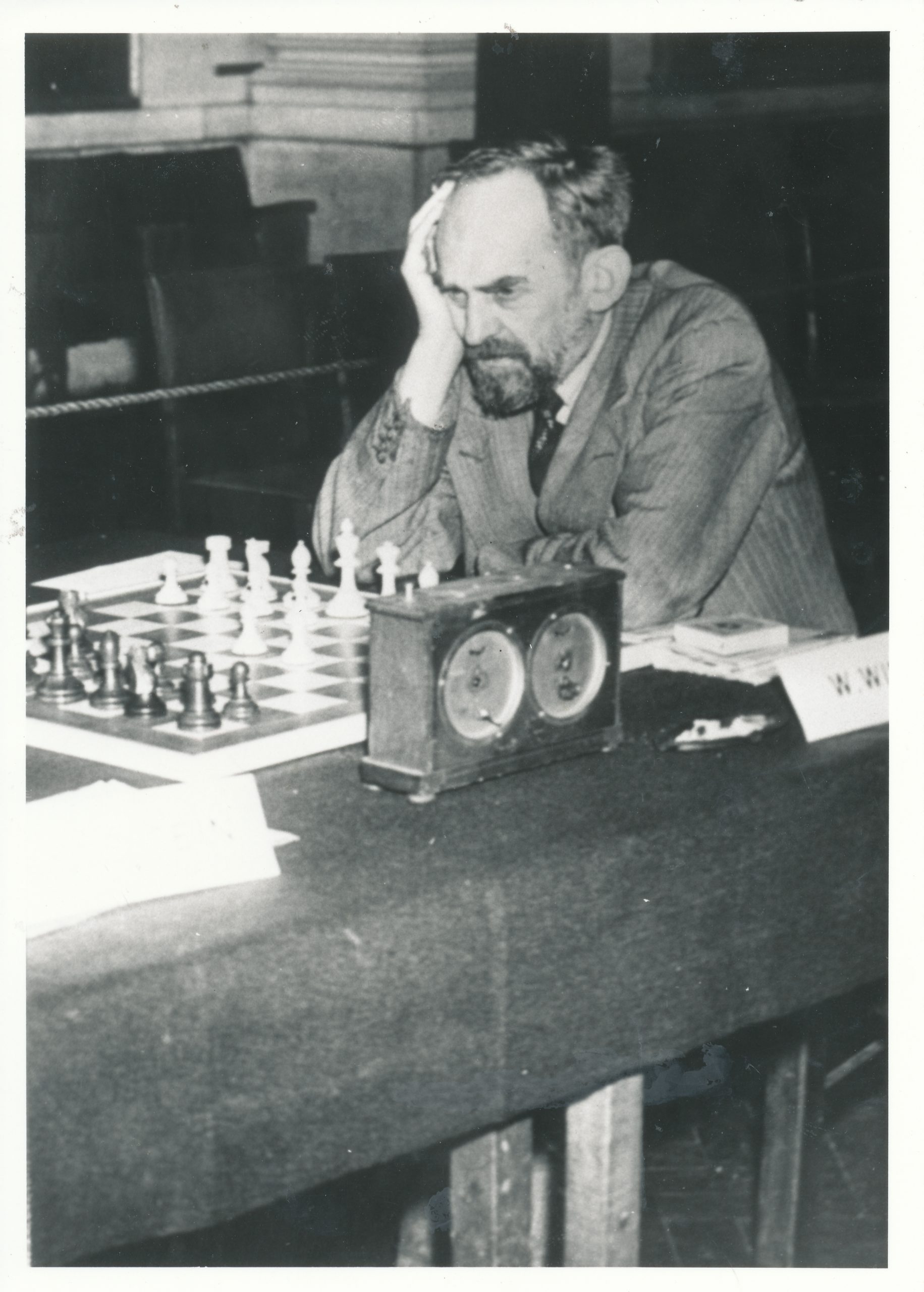
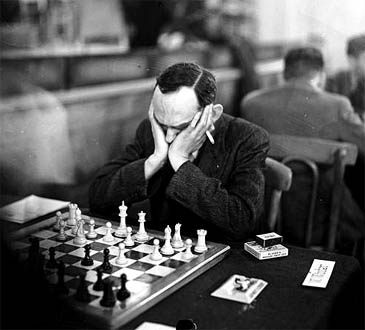
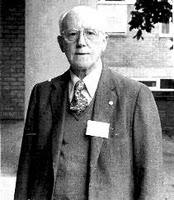
William Winter (11-IX-1897, 18-XII-1955)
Although he achieved no great successes in international tournaments, in individual games he beat many of the world’s leading players, including Nimzowitsch and Vidmar, and had draws against Capablanca and Botvinnik among others.
William Winter (11-IX-1897, 18-XII-1955)William Winter (11-IX-1897, 18-XII-1955)
He died of tuberculosis in London in December 1955, after refusing to go into a sanatorium.”
In Kings, Commoners and Knaves, (Russell Enterprises, 1999), page 393 Winter quotes Winter (!) from Chess Masterpieces (Marshall) as follows:
I consider [Winter v Vidmar, London, 1927] to be my best game partly on account of the eminence of my opponent and partly because of the importance of the occasion on which it was played, and also because on three occasions in which the situation was extremely complicated. I was fortunate enough to discover the only continuation which not only was necessary to secure victory, but to actually save the game
Here is that game:
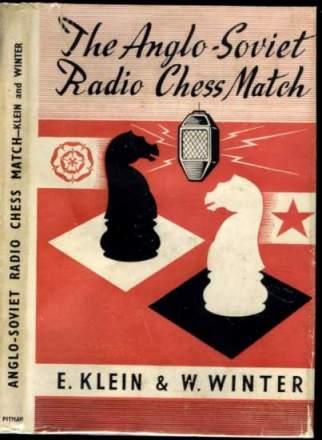
From The Anglo-Soviet Radio Chess Match by Klein and Winter :
The Anglo-Soviet Radio Chess Match, E. Klein and W. Winter (1947, Pitman)
“W. Winter was born in 1899 in Hampshire. A Cambridge graduate in Law, he devoted himself eventually entirely to chess and is the only Englishman who, despite all vicissitudes, has faithfully remained a professional. After winning the Cambridge University Championship in 1921 he competed in a number of international tournaments. His outstanding performance was in the tournament in Scarborough 1928, which he won. He won the British Championship in 1935 and 1936, and has represented his country on four occasions in international team tournaments. In Hamburg, 1930, he was undefeated.
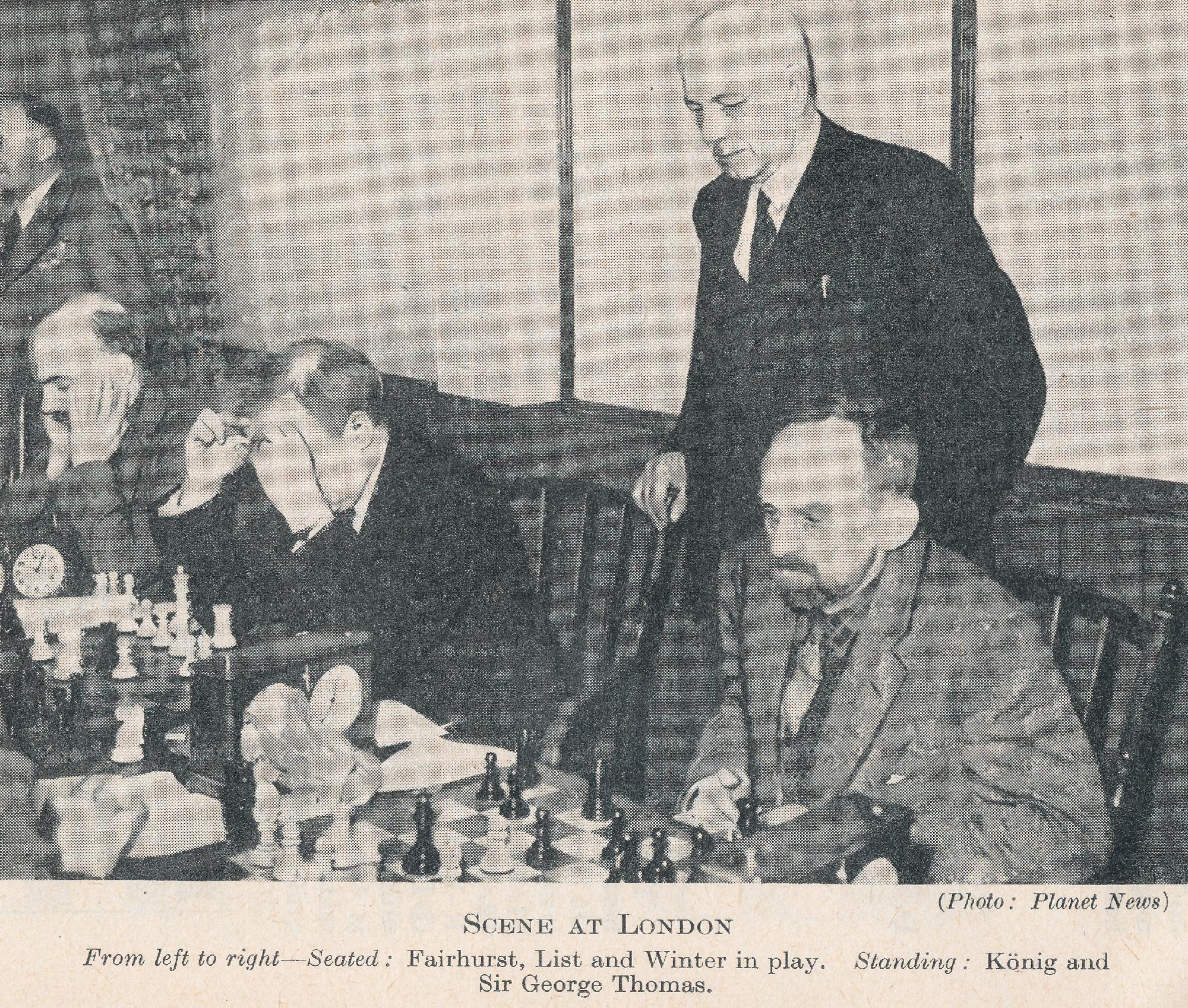
Scene at London. From left to right – Seated : Fairhurst, List and Winter in play. Standing König and Sir George Thomas
His literary activities include Chess for Match Players and The Alekhine-Capablanca World Title Match, 1927. He edits the chess column in the Soviet Weekly.
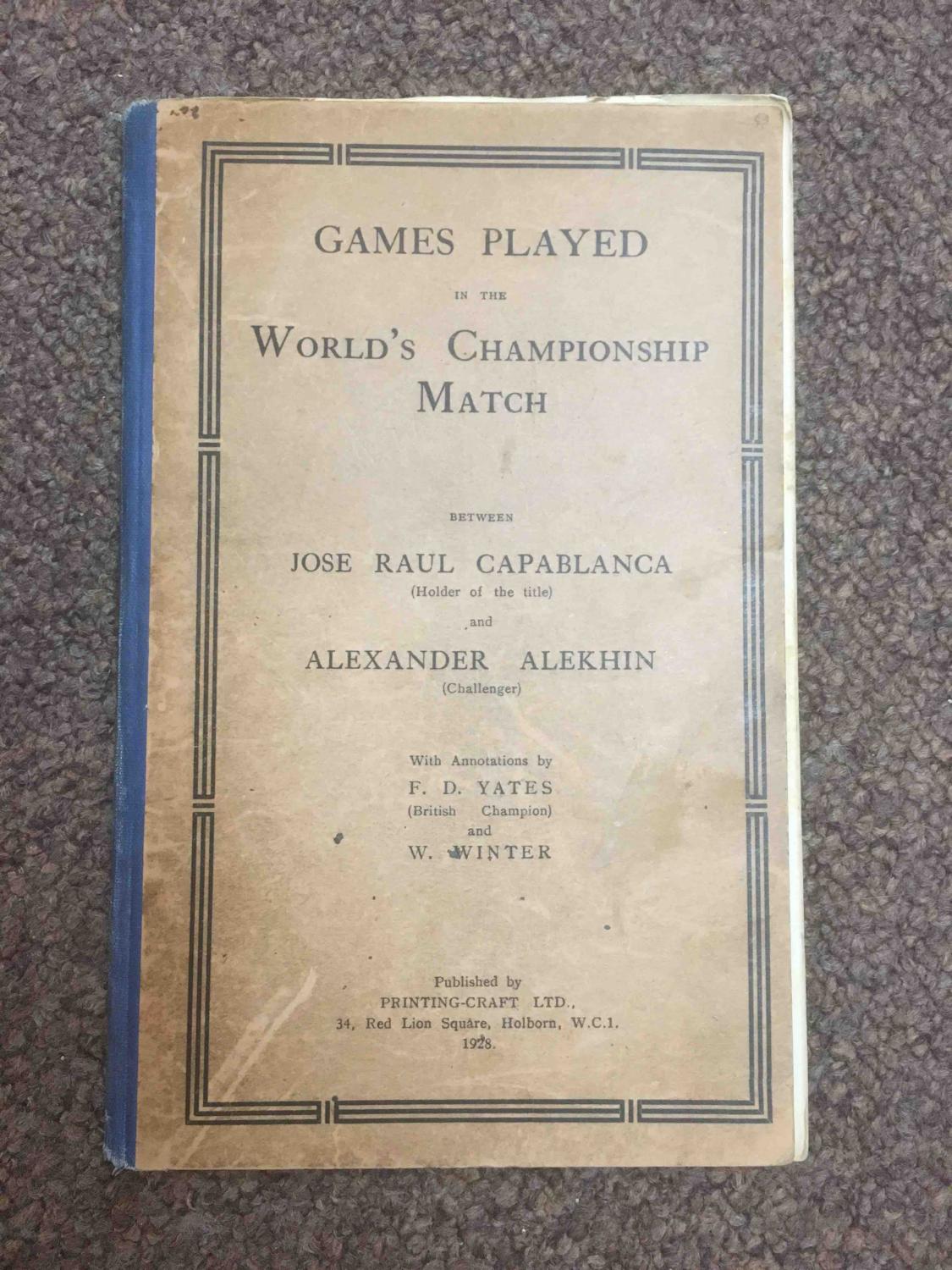
Games Played In the World’s Championship Match between Jose Paul Capablanca and Alexander Alekhine, FD Yates and W, Winter, 1928, Printing Craft Limited
His chess record is erratic and does not reflect his true ability. He is capable of some of the finest chess, but often plays too impulsively. His greatest strength lies in King’s side attacks. which he handles with skill and accomplishment.”
William Winter (11-IX-1897, 18-XII-1955)
From the Preface of The World Chess Championship : 1951 by Lionel Sharples Penrose we have :
“Mr. Winter’s chess career has been a long one and he occupies an extremely high position among British players. He has been British Champion twice, in 1935 and 1936. Among other notable successes was his first place in the Scarborough International Tournament in 1928. He defeated Nimzovich in the London Tournament in 1927. Against the present world championship contenders he has a very fine score, a draw against Botvinnik at Nottingham in 1936 and a win and a loss against Bronstein in the Radio Match, Great Britain v U.S.S.R. in 1946. Mr. Winter is a specialist in writing about the art of chess, and players throughout the country owe a great deal to his deep and logical expositions.”
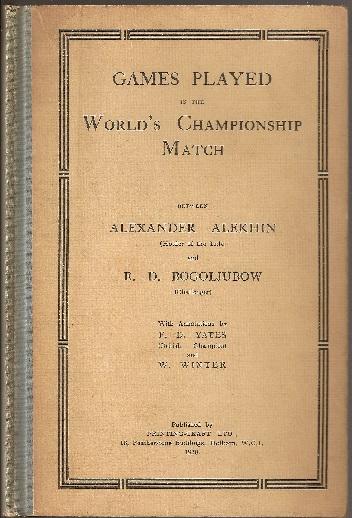
Games Played in the World’s Championship Match between Alexander Alekhin (Holder of the Title) and E D Bogoljubow (Challenger), Printing Craft Limited, 1930, FD Yates and W. Winter
From The Encyclopedia of Chess (BT Batsford, 1977) Edited by Harry Golombek :
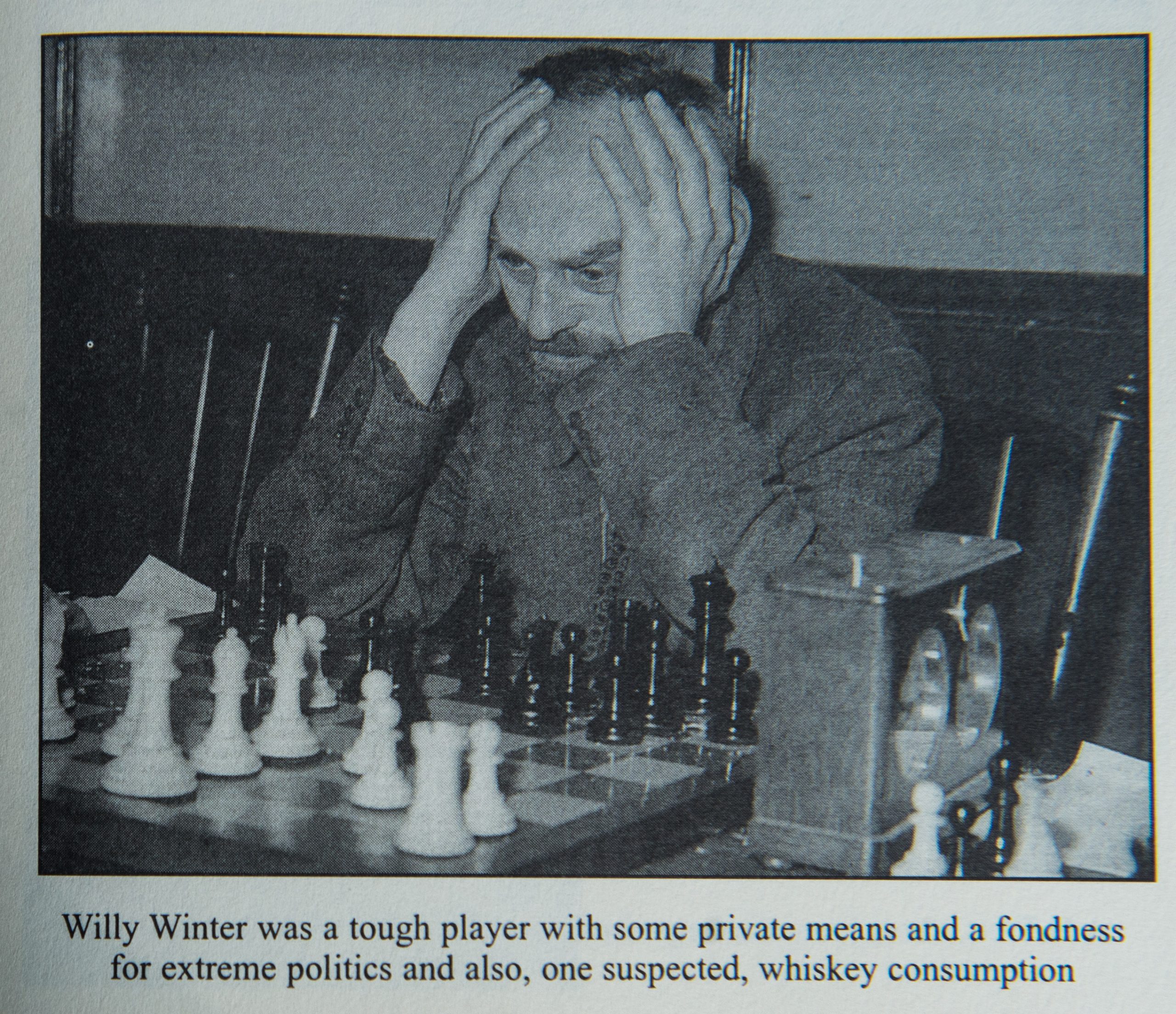
International Master and twice British Champion (1935 and 1936), Winter was an excellent illustration of Réti’s thesis that players tend to be opposite over the board to their character in real life. Over the board he was classical, scientific and sober; away from the board he was revolutionary, moved by his emotions (he contrived to be both a fervent Communist and a staunch patriot), and more often than not, drunk.
His university career, where he read law, coincided with the First World War and, after a brief interruption for military service he returned to Cambridge where in 1919 he became university champion and defeated R. H. V. Scott (a strong player who won the British Championship in 1920) in a match by 4-2. On the strength of this he was invited to play in the Hastings Victory tournament of 1919 where, however, he did badly, coming 11th out of 12.
William Winter (11-ix-1897, 18-xii-1955)
After an interval during which he fervently pursued a political career to such an extent as to incur a six-months prison sentence for sedition (Winter always denied the sedition and said that the charge was trumped-up one), he took up the career of chess professional. The life suited him since it enabled him to lead the kind of Bohemian existence that pleased his artistic temperament. It should be mentioned that he was a nephew of Sir James Barrie and would have fitted in well on one of his uncle’s plays.
As a player he was eminently sound and, being an apostle of Tarrasch, a fine clear strategist. But he was lacking in tactical ability and his poor health and his way of life interfered with his consistency and impaired his stamina. But he had a number of fine victories over great players (Bronstein, Nimzowitsch and Vidmar for example).
IM William Winter (11-ix-1897, 18-xii-1955)
He played in four Olympiads: Hamburg 1930 (scoring 76.7% on 4th board), Prague 1931 (58.8% on 4th board), Folkestone 1933 (59.1% on 3rd board) and Warsaw 1935 (41.7% on 1st board). He was selected to play at Stockholm in 1937 but, having “lost” his passport three times. he was refused a fresh one by the authorities.
His best international individual results were =6th at London 1927, and =5th at Lodz 1935.
His career as a chess journalist (he wrote for the Manchester Guardian following FD Yates and the Daily Worker) was somewhat impeded and spoilt by his Bohemian ways, be he wrote some excellent works on chess : Chess for Match Players, London, 1936″
Winter was a popular subject for his Swiss namesake, Edward Winter and there are several mentions in his excellent books.
In Chess Facts and Fables (McFarland, 2006) we have Chess Note 2819, page 71 which shows a photograph (from CHESS, November 1935) taken in Poland of Winter and Max Krauser, Heavyweight wrestling Champion of Europe. Quite what the occasion we are not told.
Apart from all of the contributions above possibly the most comprehensive comes from FM Steve Giddins writing in three parts in British Chess Magazine, during 2006 and 2007 :
Postscript: Since our article was published we were contacted by Steve Giddins who informed us that he owned the copyright to the articles (rather than the publisher BCM) and that he did not wish us to make them available via this article.
In the “Mid-October” issue of CHESS for 1962, (Volume 27, Number 418) we had the following announcement:
WILLIAM WINTER’S AUTOBIOGRAPHY
Edited by David Hooper, will be serialised in CHESS commencing with our next number. Nephew of Sir James Barrie, twice British Chess Champion, a lifelong Communist and freethinker, imprisoned for his political views, “Willie Winter”, with his Bohemian way of life, was undoubtedly the most colourful figure in British Chess for many decades irrespective of whether you agree with his views (most readers may not!), you will find him a delightful writer whose gifted pen draws you engrossed from page to Page.
We remember Harold Lommer who passed away on December 17th, 1980.
Harold Maurice Lommer was born on Friday, November 18th 1904 in Islington, London to German parents. Curiously his birth entry was missing from the original record and has been inserted manually as an after-thought. Anyone know the reason for this?
He left England aged 4 in 1908 to live in Switzerland and returned to England in 1926.
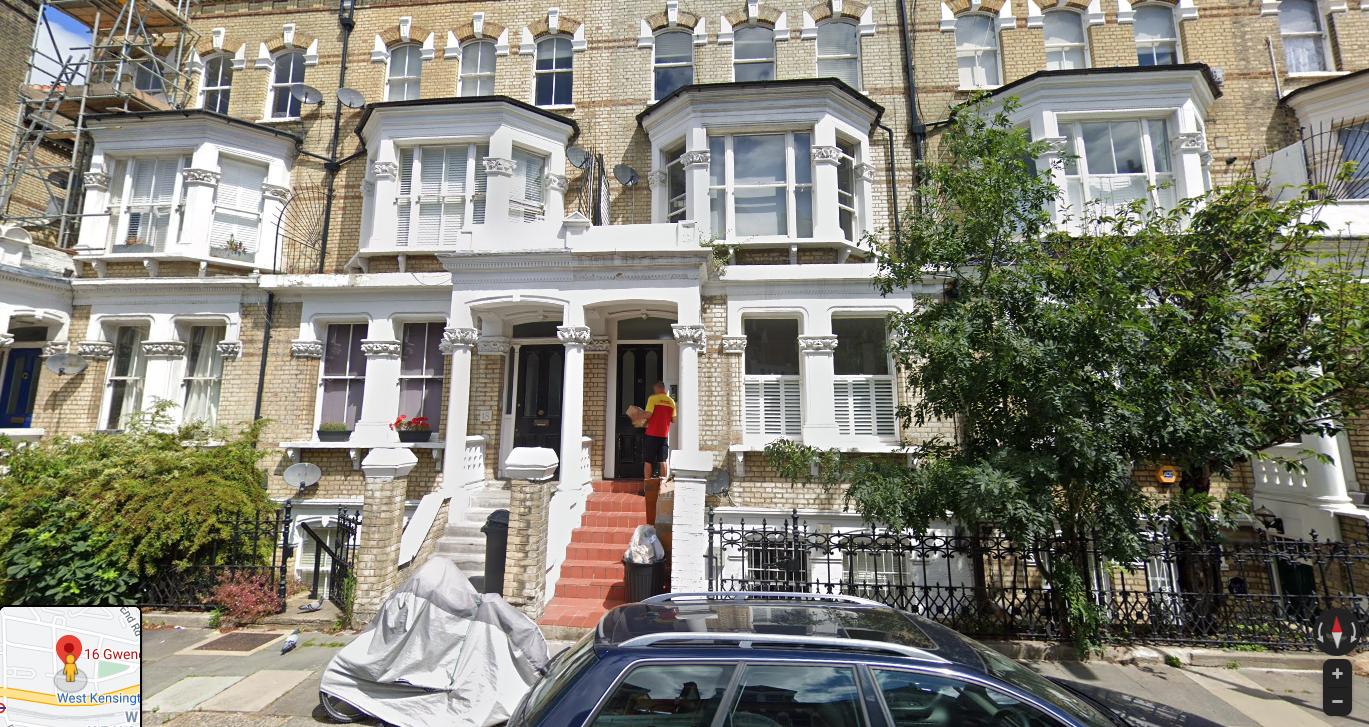
In the 1939 Census Harold was a resident at 16a Gwendwr Road, Barons Court, Hammersmith, London.
16a Gwendwr Road, Barons Court, Hammersmith, London
According to the census record HML was living in a household of three persons and his occupation was that of Foreign Correspondent.
In 1949 Harold married Valija S Linkuns in Fulham.
He died in Valencia, Provincia de València, Valenciana, Spain.
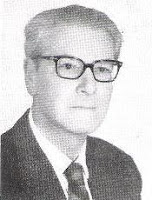
Harold Maurice Lommer (18-XI-1904, 17-XII-1980)
From The Oxford Companion to Chess by Hooper & Whyld :
“International Judge of Chess Compositions (1958), International Arbiter (1962), International Master for Chess Compositions (1974), the greatest British study composer. Born in Islington of German parentage, he moved to Switzerland when he was four and returned to England 18 years later.
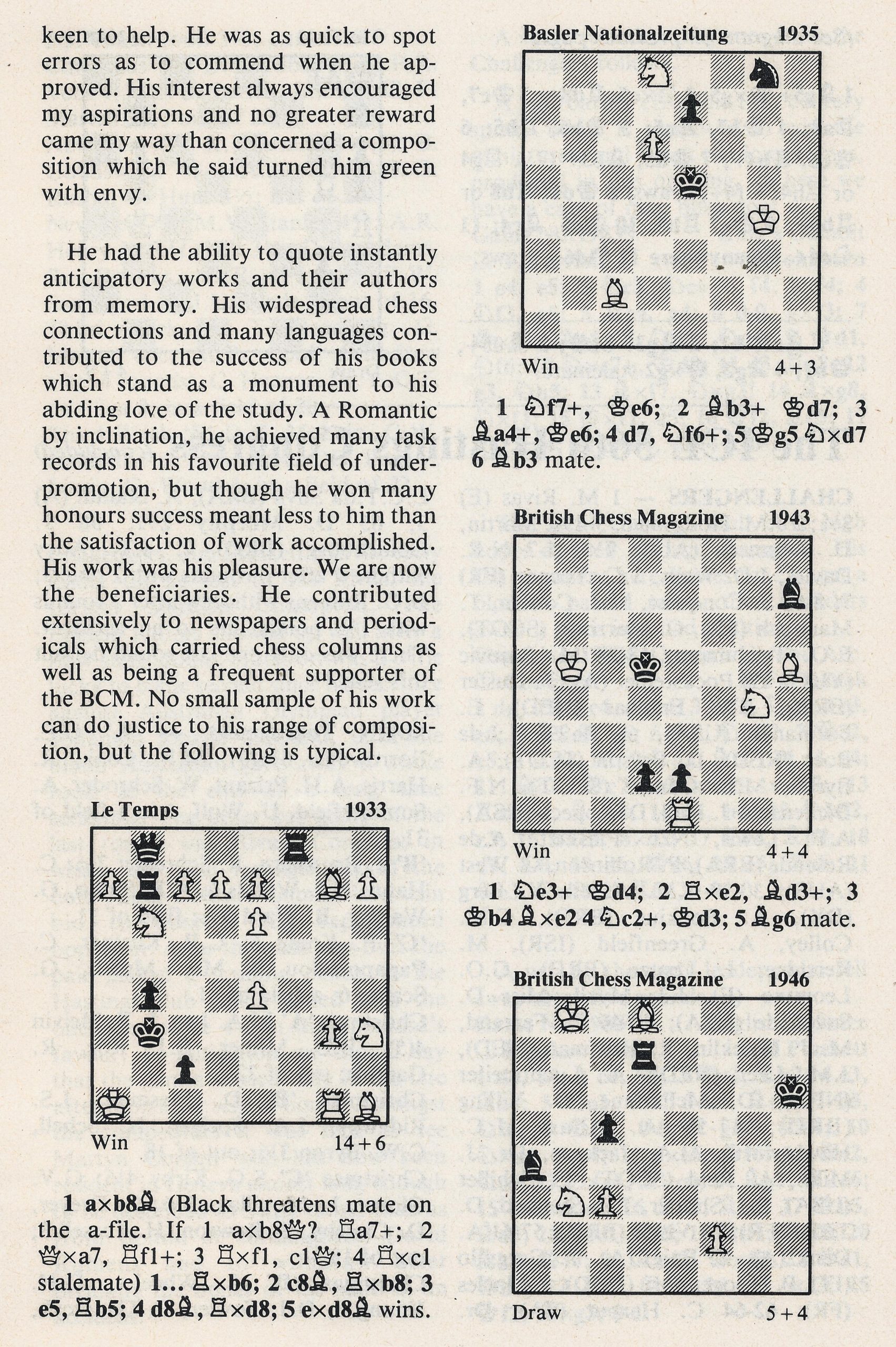
Inspired in his youth by the Saavedra study, he became the leading specialist on promotion tasks, and in 1933 was the first to show allumwandlung in a study, which Rinck had declared was impossible. Lommer also showed in studies six consecutive promotions to rooks (1935) and a minimal with concurrent promotions to queen, bishop, and knight.
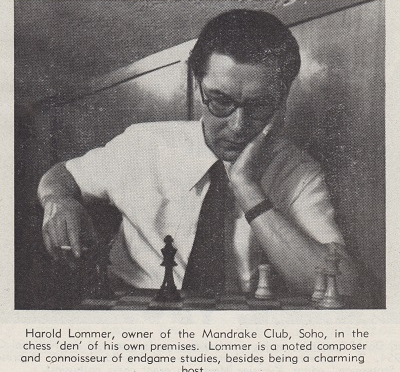
After the Second World War he became proprietor of a Soho club, where players and composers often met; in 1949 the club organized a small international tournament, won by Bernstein, Lommer retired in 1961 and went to live in Valencia, where he died.
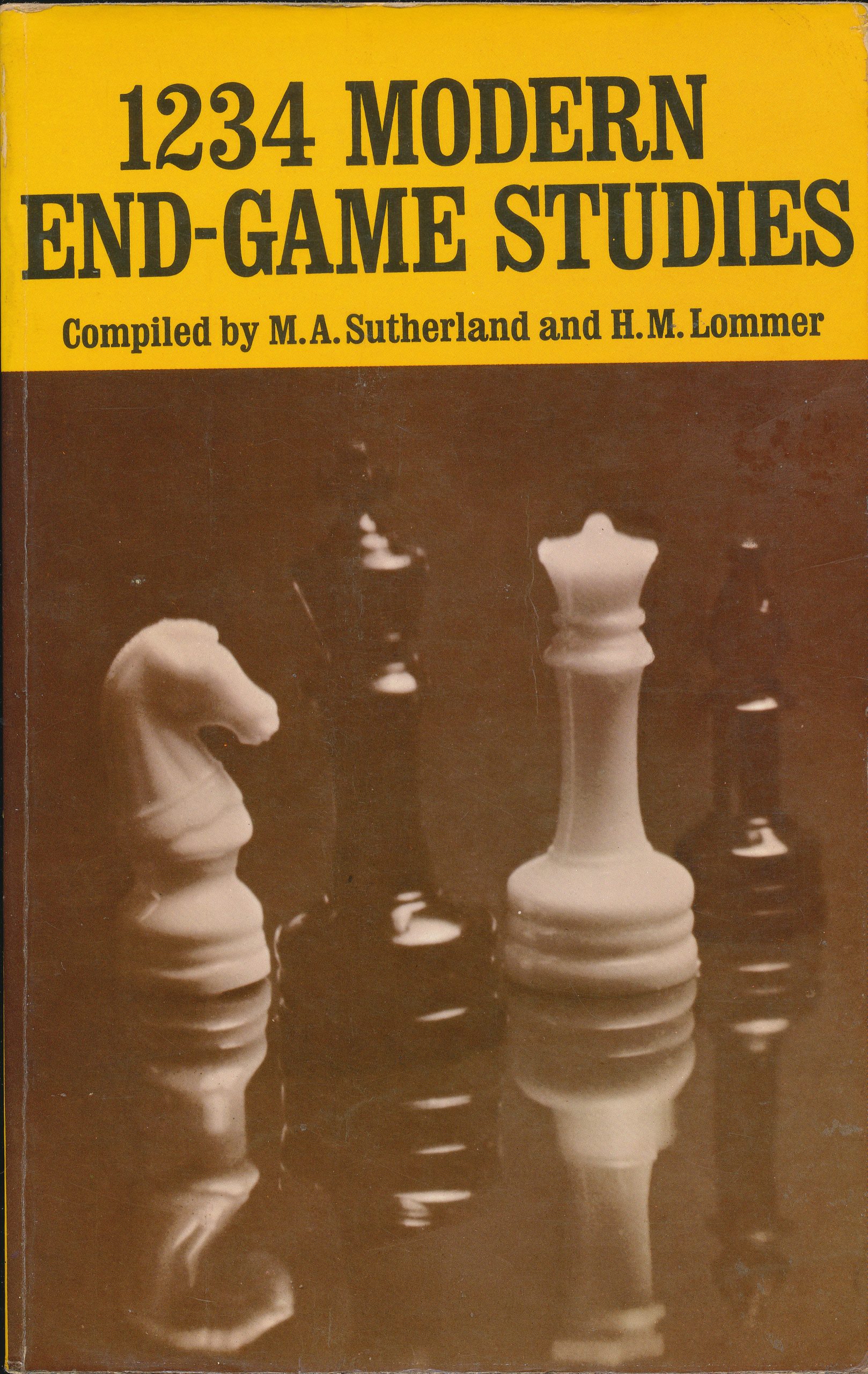
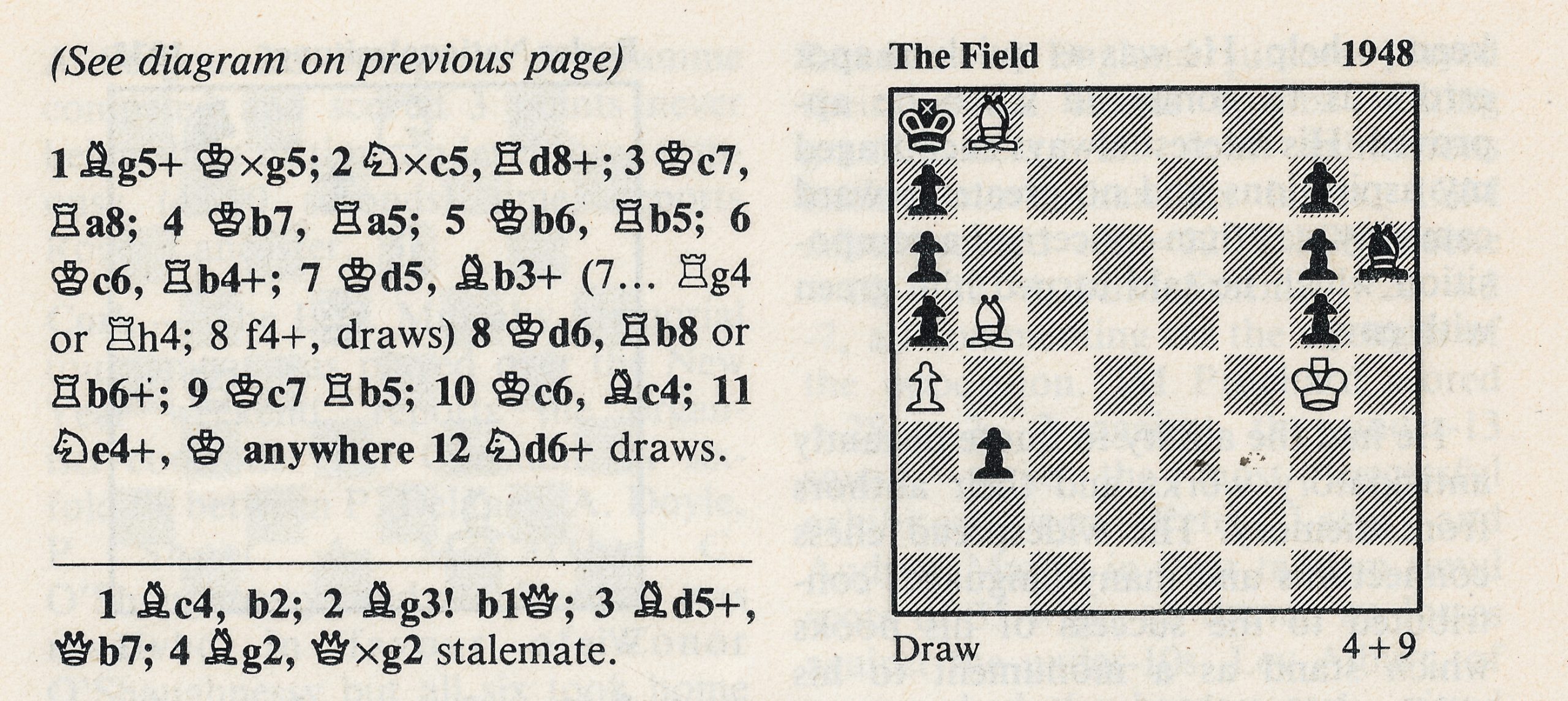
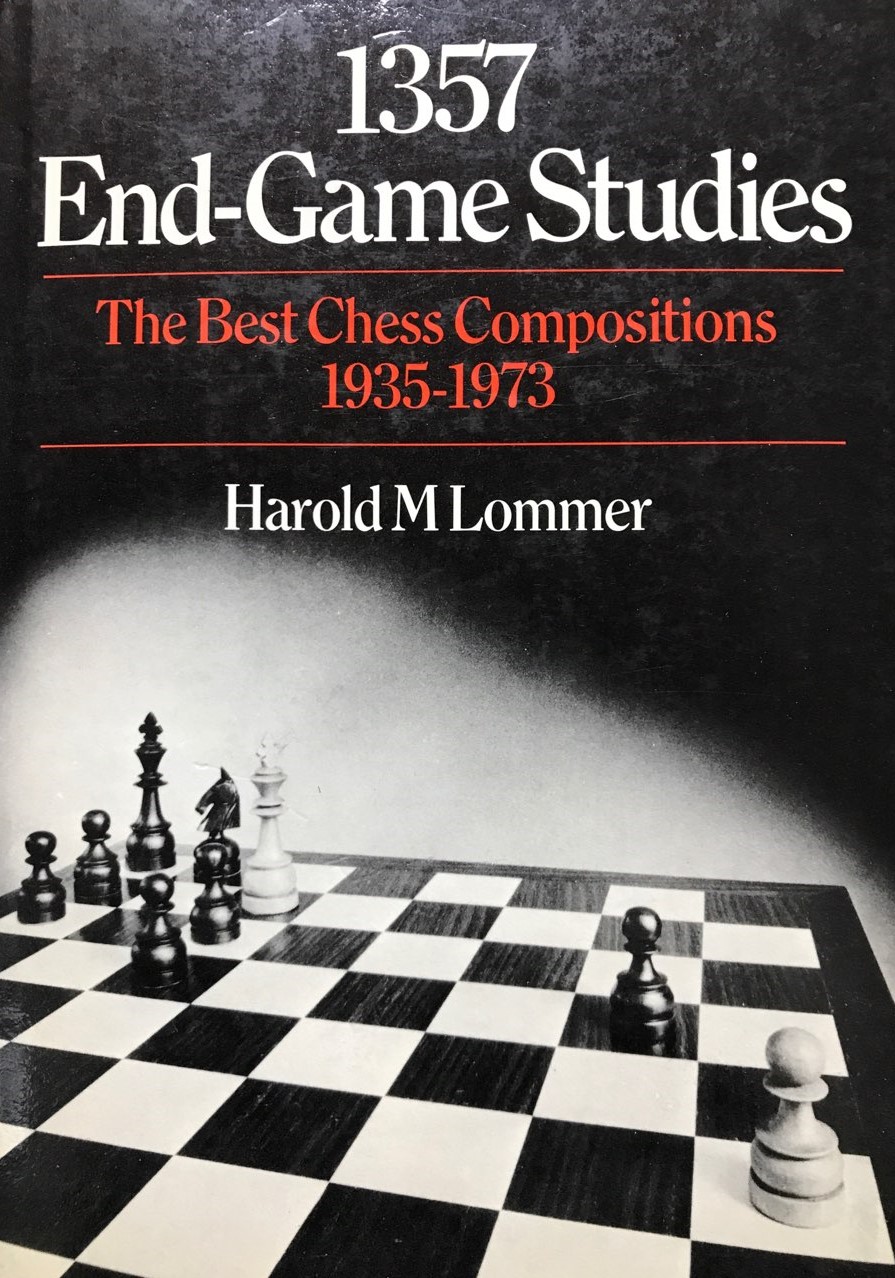
In 1939 Lommer and the English player Maurice A. Sutherland (d.1954), who backed the project, published 1,234 Modern End-game Studies. In 1975 Lommer compiled a sequel, 1,357 End-game Studies. These two collections, catholic in taste, made by a composer who was above all an artist, have become standard works. Besides his studies, the best of which are in these books, he composed fairy problems.”
1234 Modern End-Game Studies, Lommer & Sutherland. Dover, 1938 (originally, this one 1967)1234 Modern End-Game Studies, Lommer & Sutherland. Dover, 1938 (originally, this one 1967)
From The Encyclopedia of Chess (Robert Hale 1970&1976), Anne Sunnucks :
“FIDE Judge of Endgame Studies since 1958. Born on 18th November 1904 in London, Harold Lommer’s parents were German and he was educated mainly in Switzerland. Since the late 1950s he has lived in Spain. He has composed about 1000 endgame studies and is joint author with MA Sutherland, of the anthology 1234 Modern End-Game Studies, published in 1938. He is particularly well-known for his under-promotion tasks, but would prefer to be known for his other work as well.
For some 10 years up to 1957, he was joint owner and manager of the Mandrake Club in Soho, London, used by many well-known chess players, journalists and theatre personalities.”
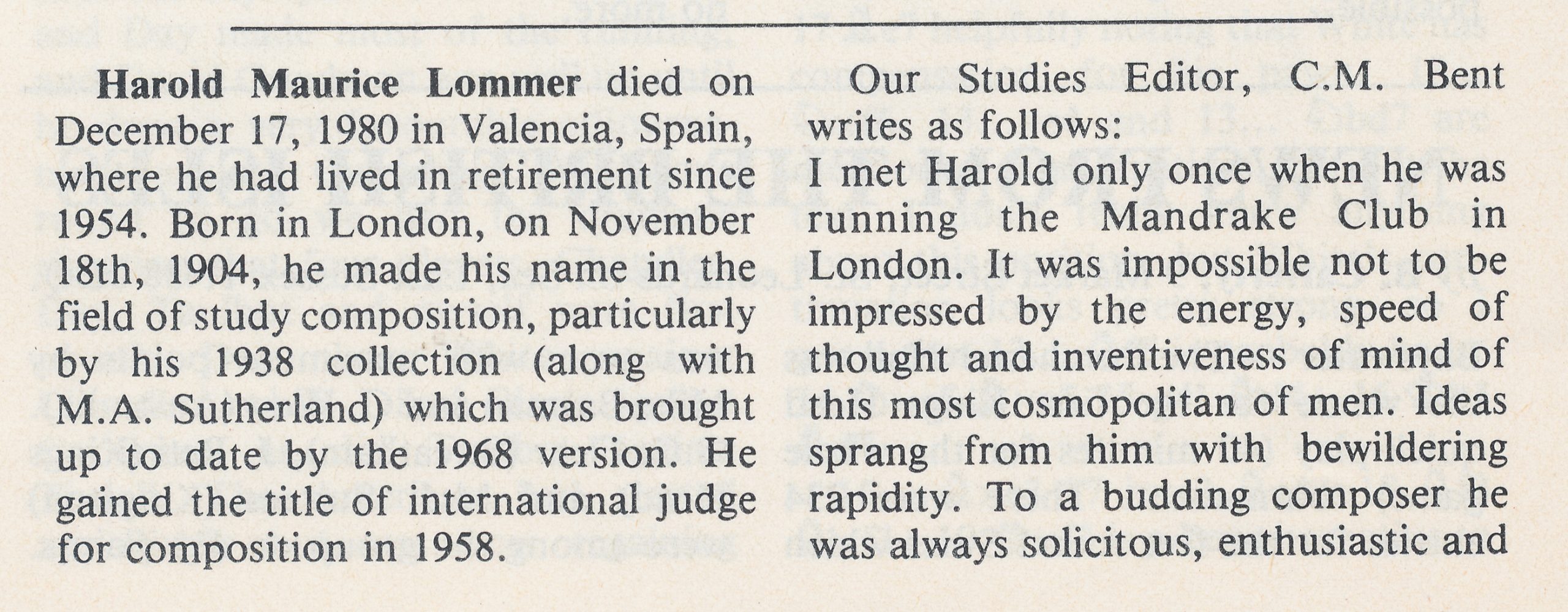
From British Chess Magazine, Volume CI (101, 1981), Number 3 (March), pp. 86-88 we have this obituary from CM Bent :
British Chess Magazine, Volume CI (101, 1981), Number 3 (March), pp. 86-88British Chess Magazine, Volume CI (101, 1981), Number 3 (March), pp. 86-88British Chess Magazine, Volume CI (101, 1981), Number 3 (March), pp. 86-88
We remember Harold Lommer who passed away on December 17th, 1980.
Harold Maurice Lommer was born on Friday, November 18th 1904 in Islington, London to German parents. Curiously his birth entry was missing from the original record and has been inserted manually as an after-thought. Anyone know the reason for this?
He left England aged 4 in 1908 to live in Switzerland and returned to England in 1926.
In the 1939 Census Harold was a resident at 16a Gwendwr Road, Barons Court, Hammersmith, London.
16a Gwendwr Road, Barons Court, Hammersmith, London
According to the census record HML was living in a household of three persons and his occupation was that of Foreign Correspondent.
In 1949 Harold married Valija S Linkuns in Fulham.
He died in Valencia, Provincia de València, Valenciana, Spain.
Harold Maurice Lommer (18-XI-1904, 17-XII-1980)
From The Oxford Companion to Chess by Hooper & Whyld :
“International Judge of Chess Compositions (1958), International Arbiter (1962), International Master for Chess Compositions (1974), the greatest British study composer. Born in Islington of German parentage, he moved to Switzerland when he was four and returned to England 18 years later.
Inspired in his youth by the Saavedra study, he
became the leading specialist on promotion tasks, and in 1933 was the first to show allumwandlung in a study, which Rinck had declared was impossible. Lommer also showed in studies six consecutive promotions to rooks (1935) and a minimal with concurrent promotions to queen, bishop, and knight. (For another task record see star-flights.) After the Second World War he became proprietor of a Soho club, where players and composers often met; in 1949 the club organized a small international tournament, won by Bernstein, Lommer retired in 1961 and went to live in Valencia, where he died.
In 1939 Lommer and the English player Maurice A. Sutherland (d.1954), who backed the project, published 1,234 Modern End-game Studies. In 1975 Lommer compiled a sequel, 1,357 End-game Studies. These two collections, catholic in taste, made by a composer who was above all an artist, have become standard works. Besides his studies, the best of which are in these books, he composed fairy problems.”
1234 Modern End-Game Studies, Lommer & Sutherland. Dover, 1938 (originally, this one 1967)1234 Modern End-Game Studies, Lommer & Sutherland. Dover, 1938 (originally, this one 1967)
From The Encyclopedia of Chess (Robert Hale 1970&1976), Anne Sunnucks :
“FIDE Judge of Endgame Studies since 1958. Born on 18th November 1904 in London, Harold Lommer’s parents were German and he was educated mainly in Switzerland. Since the late 1950s he has lived in Spain. He has composed about 1000 endgame studies and is joint author with MA Sutherland, of the anthology 1234 Modern End-Game Studies, published in 1938. He is particularly well-known for his under-promotion tasks, but would prefer to be known for his other work as well.
For some 100 years up to 1957, he was joint owner and manager of the Mandrake Club in Soho, London, used by many well-known chess players, journalists and theatre personalities.”
From British Chess Magazine, Volume CI (101, 1981), Number 3 (March), pp. 86-88 we have this obituary from CM Bent :
British Chess Magazine, Volume CI (101, 1981), Number 3 (March), pp. 86-88British Chess Magazine, Volume CI (101, 1981), Number 3 (March), pp. 86-88British Chess Magazine, Volume CI (101, 1981), Number 3 (March), pp. 86-88
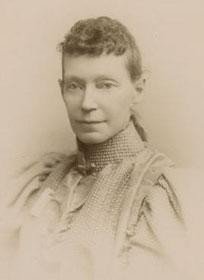
We remember Mary Rudge who passed away one hundred and two years this day on Saturday, 22-xi-1919.
She was born in Leominster, Herefordshire on February 6th, 1842. Her father was Henry Rudge (born 1794 in Gloucestershire) who was a surgeon and General Practitioner. Her mother was Eliza Rudge (née Barrett) who was born in Ledbury, Herefordshire in 1802.
Mary was part of a typically large household and according to the 1851 census she had sisters Sarah (23), Caroline (18), Emily H (12), brothers Henry (14) and Alfred (10). Assisting Henry with medical matters was William S Boyce and acting as a “General Servant” was Thomas Rotheroe (18). Their address is given as “21, Middle Marsh, Leominster, Herefordshire, England” (HR6 8UP). According to HM Land Registry : “Middlemarsh is in the Leominster North & Rural ward of Herefordshire, County of, Herefordshire, Worcestershire and Warwickshire.”
By 1861 the household had relocated to 62, Broad Street, Leominster and the servants were James Price (18) whose occupation is given as a Groom and Sarah Gardener (21) who was the House Servant.
Mary moved, “helpless from rheumatism”, at some point, to Truro and then to the British Home for Incurables, Streatham. She died in Guys Hospital, London, on 22 November 1919.
Editor of British Chess Magazine at the time of her obituary was Isaac McIntyre Brown who afforded Mary a pathetic three lines.
“As we go to press we learn with great sorrow of the death, at Streatham last month, of Miss Mary Rudge, winner of the International Ladies’ tournament in 1897.”
Golombek, Hooper&Whyld and Sunnucks are all silent on Rudge.
From Wikipedia :
“Mary Rudge (6 February 1842 in Leominster – 22 November 1919 in London) was an English chess master.
Rudge was born in Leominster, a small town in Herefordshire, England. She began playing chess in a correspondence tournament in 1872. The first mention of over the board competition is in August 1874 when she played in the second class at the Meeting of the Counties’ Chess Association at Birmingham. After the death of her father, Henry Rudge, she moved to Bristol where she started playing chess seriously.
Rudge was the first woman member of the Bristol Chess Club, which did not allow women to be members of the club until she joined in 1872. She played against Joseph Henry Blackburne, who gave a blindfold simultaneous display against ten opponents. The following year she played in another blindfold simultaneous display given by Johannes Hermann Zukertort. In March 1887 she played and drew on board six for Bristol against Bath at the Imperial Hotel in Bristol. At the beginning of 1888, Rudge played and won on board six for Bristol & Clifton against City Chess & Draughts Club. The following year, she won the Challenge Cup of Bristol & Clifton Chess Club. In 1889, she became the first woman in the world to give simultaneous chess exhibitions. She won the Ladies’ Challenge Cup at Cambridge 1890, and won the second class at the Southern Counties’ tournament at Clifton 1896.[1]”
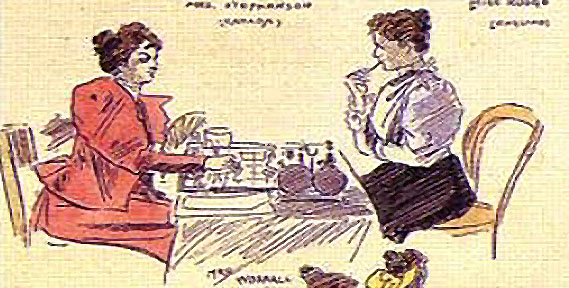
Miss Stevenson & Mary Rudge
“First Women’s International Chess Congress
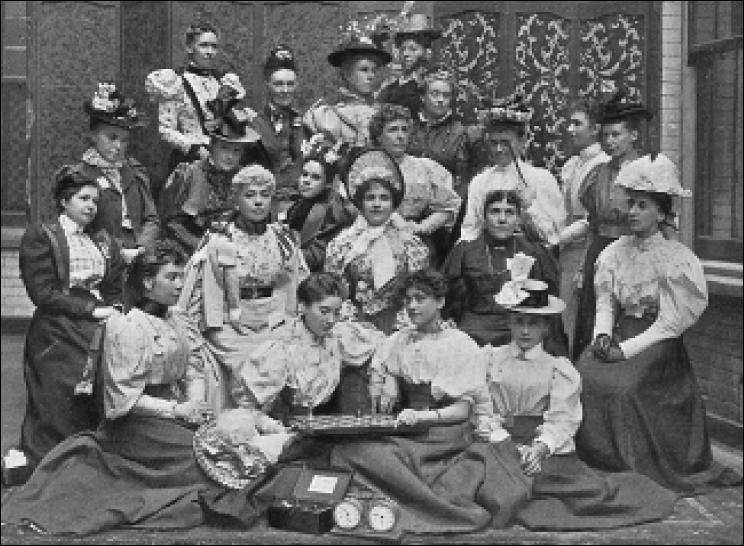
She was a winner of the first Women’s International Chess Congress under the management of the Ladies’ Chess Club of London in conjunction with the Women’s Chess Club of New York. Lady Newnes was president of the Tournament Committee, and Sir George Newnes, Baron Albert Salomon von Rothschild, Mr. Harry Nelson Pillsbury and some others offered prizes. The tournament was played at the Hotel Cecil in the Masonic Hall for six days, but the final rounds were decided at the Ideal Café, the headquarters of the Ladies’ Chess Club, from 22 June to 3 July 1897.[2] Miss Rudge was 55 years old and the oldest of the 20 players,[3] and had substantial experience playing chess at the time. She was a well-known English player, ranking in chess strength with the first class of the leading men’s clubs. She won the event with 18 wins and 1 draw, followed by Signorina Louisa Matilda Fagan (Italy), Miss Eliza Mary Thorold (England), Mrs. Harriet Worrall (USA), Madame Marie Bonnefin (Belgium), Mrs. F.S. Barry (Ireland), Lady Edith Margaret Thomas (England), among others.”
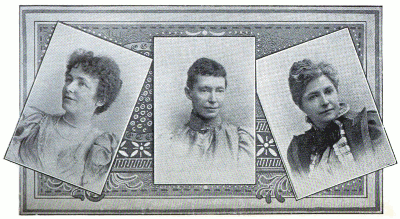
Mrs. Bowles (Hon. Sec.); Miss Rudge; and Mrs. Fagan from chesscafe.com
“Over the next years, she took part in various competitions, playing in Bristol and Dublin. In 1898, she played against world champion Emanuel Lasker in a simultaneous display at the Imperial Hotel. Lasker was unable to finish all the games in the time available, and Rudge’s was one of those unfinished. He conceded defeat because he would be lost with best play.”
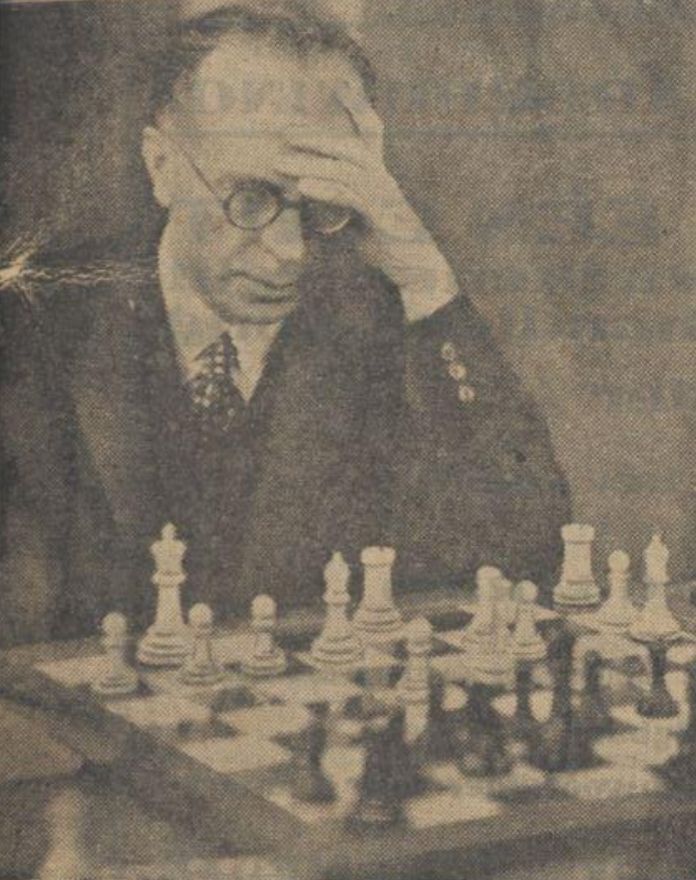
Edward G Sergeant in Hastings 1929/30, found in De Sumatra 02.01.1930. Retrieved by Richard James from https://www.chess.com/blog/introuble2/100-years-ago-chess-in-london-during-world-war-i
We remember Edward Sergeant OBE (3-xii-1881 16-xi-1961)
Edward Guthlac Sergeant was born on Saturday, December 3rd 1881 : in the same year British Chess Magazine was founded by John Watkinson.
He was born in Crowland, South Holland, Lincolnshire. The registration district was Peterborough and the inferred county was Northamptonshire. His father was William R Sergeant (aged 27) and his mother was Frances E Sergeant (aged 25). He had a sister, Hilda who was one year older. William was a registered general medical practitioner.
He was named Guthlac after a monk who “came to what was then an island in the Fens to live the life of a hermit.”
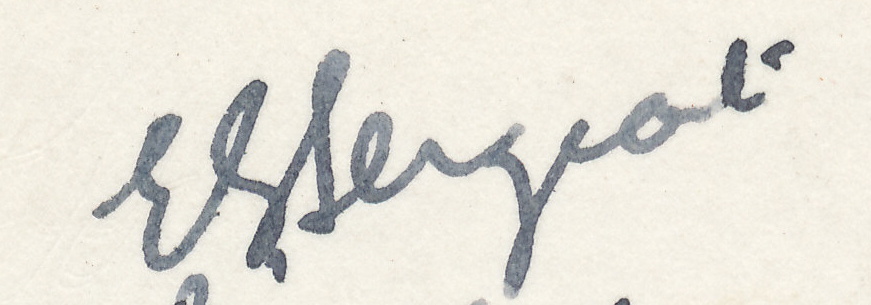
Signature of EG Sergeant from a Brian Reilly “after dinner” postcard from Margate 1936.
According to the 1891 census EGS was aged 9 and living with his father, mother, sister and their domestic servant Margaret A George who was their general domestic servant who hailed from Scotland. They lived at 2, Gladstone Terrace, Gateshead, NE8 4DY. This was in the Ecclesiastical parish of Christchurch.
2, Gladstone Terrace, Gateshead, NE8 4DY
In the 1911 census aged 29 as nephew to the head of the household (5 St Peters Terrace, Cambridge) EGS is listed as a solicitor who is single. The size of the household in 1911 was relatively modest at 12. He was living with George Edward Wherry (59, surgeon university professor) and his wife Albinia Lucy Wherry (53). Albinia Lucy Wherry was a nurse and also writer. During WWI she was stationed in Paris at the Gare du Nord where she supported British forces from 1915-18. the sub-registration district was St Andrew the Great.
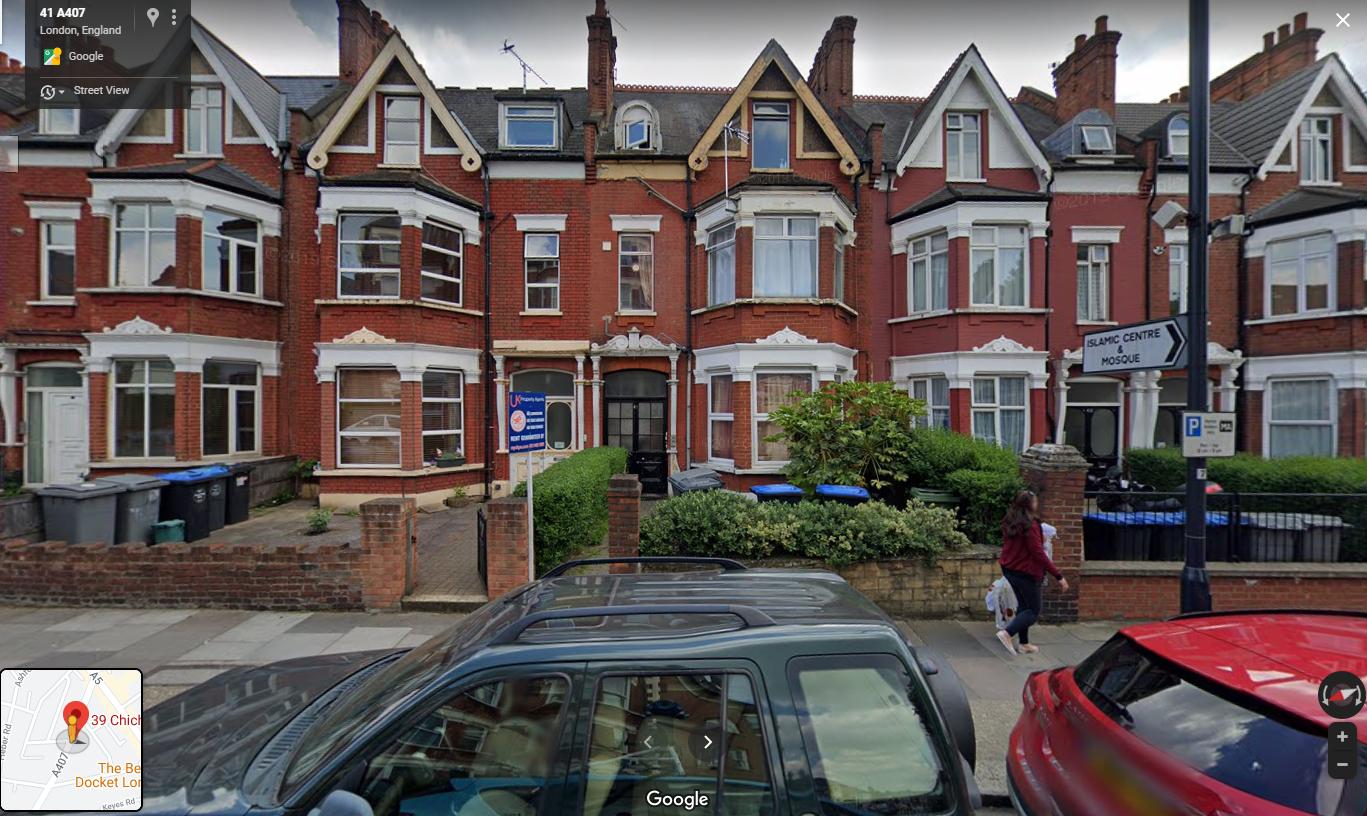
According to Edward Winter in Where did they live? in April 1916 EGS was living at 39 Chichele Road, Cricklewood, London NW2 3AN, England. EGWs source for this is : Chess Amateur, April 1916, page 202.
39 Chichele Road, Cricklewood, London NW2 3AN
1918 was an important year for Edward when he married Dorothy Frances Carter (born 1887) in Gravesend. In the same year Dorothy and Edward had a son Richard who passed away in 2014
Two years later Dorothy and Edward had a son Lewis Carter Sergeant born on January 30th 1920. The birth was registered in Paddington. Lewis lived at 3 Woodhill Court, 175 Woodhill, London, SE18 5HSL and passed away in 2004 the death being registered in Greenwich.
On the 1920 Electoral Roll, EGS was now living with Dorothy Frances Sergeant at St. Stephen’s Mansions, 5, Monmouth Road, Edmonton.
In 1923 they upped sticks and moved to 27. King Edward’s Grove, Teddington.
Sadly Dorothy passed away in 1926 at the modest age of 39.
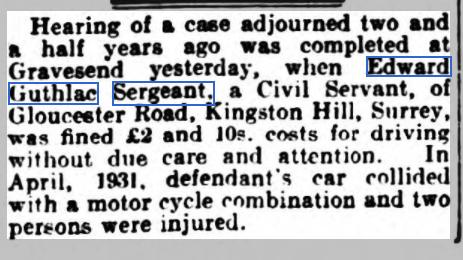
Coventry Evening Telegraph 10 October 1933
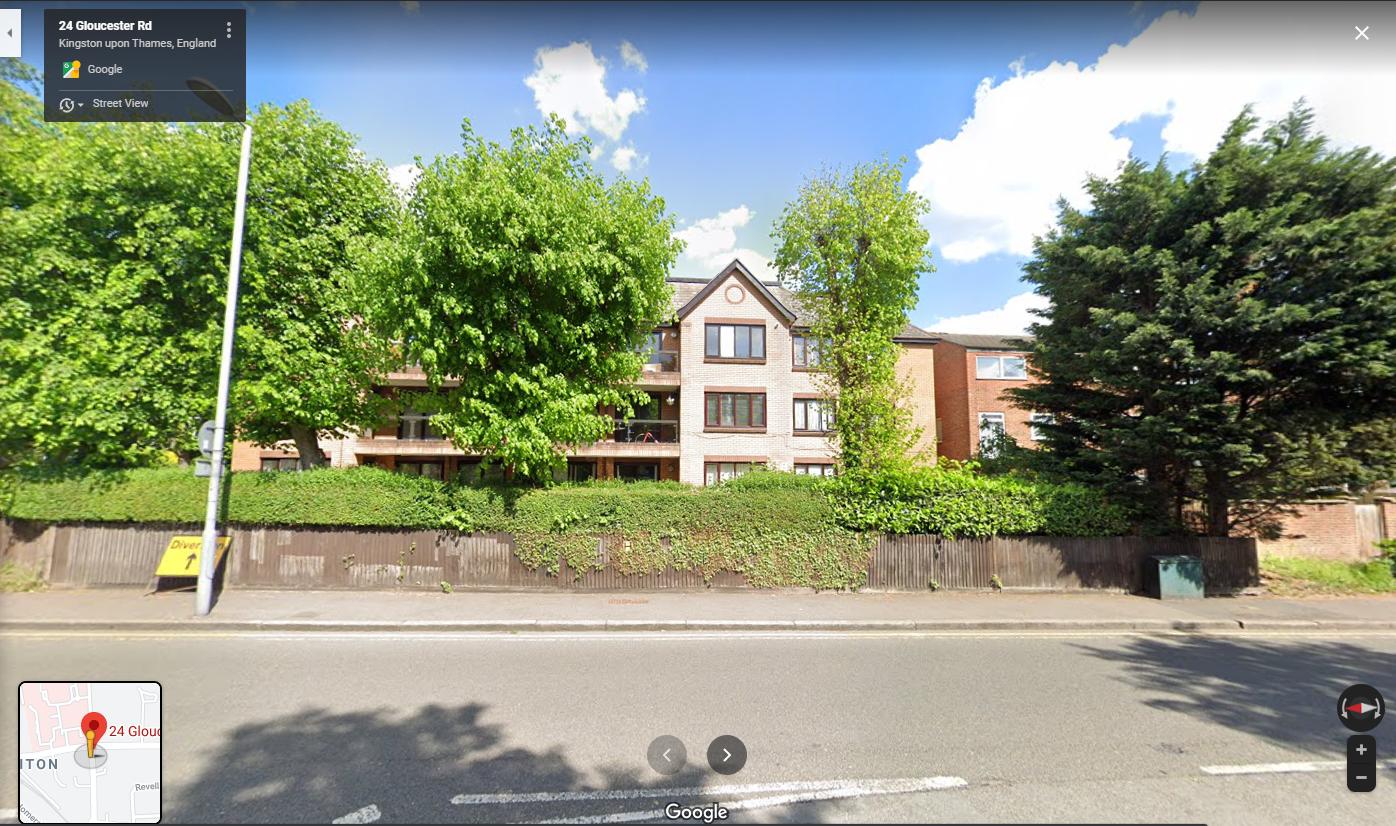
According to the 1939 census EGS was listed as a widowed, civil servant living at 24, Gloucester Road, Kingston Upon Thames, KT2 7DX. This would be the address that Edward saw out the rest of his life.
24, Gloucester Road, Kingston Upon Thames, KT2 7DX
He shared this address with Edith Carter (born 4th May 1878) who is described as being of “Private Means” and Ada M Wenman (6th August 1881) who is described as being a “domestic”.
In 1949 he was awarded the OBE in the Birthday Honours in recognition of his 39 years’ service in the office of the Solicitor to the Board of Inland Revenue.
According to John Saunders : EGS died in the New Victoria Hospital, New Malden, Surrey, on 16 November 1961. His residence at death had been 24 Gloucester Road, Kingston Hill. Probate (26 Jan 1962) granted to Lewis Carter Sergeant, a Lieutenant-Colonel in HM Army. Effects £6,586.
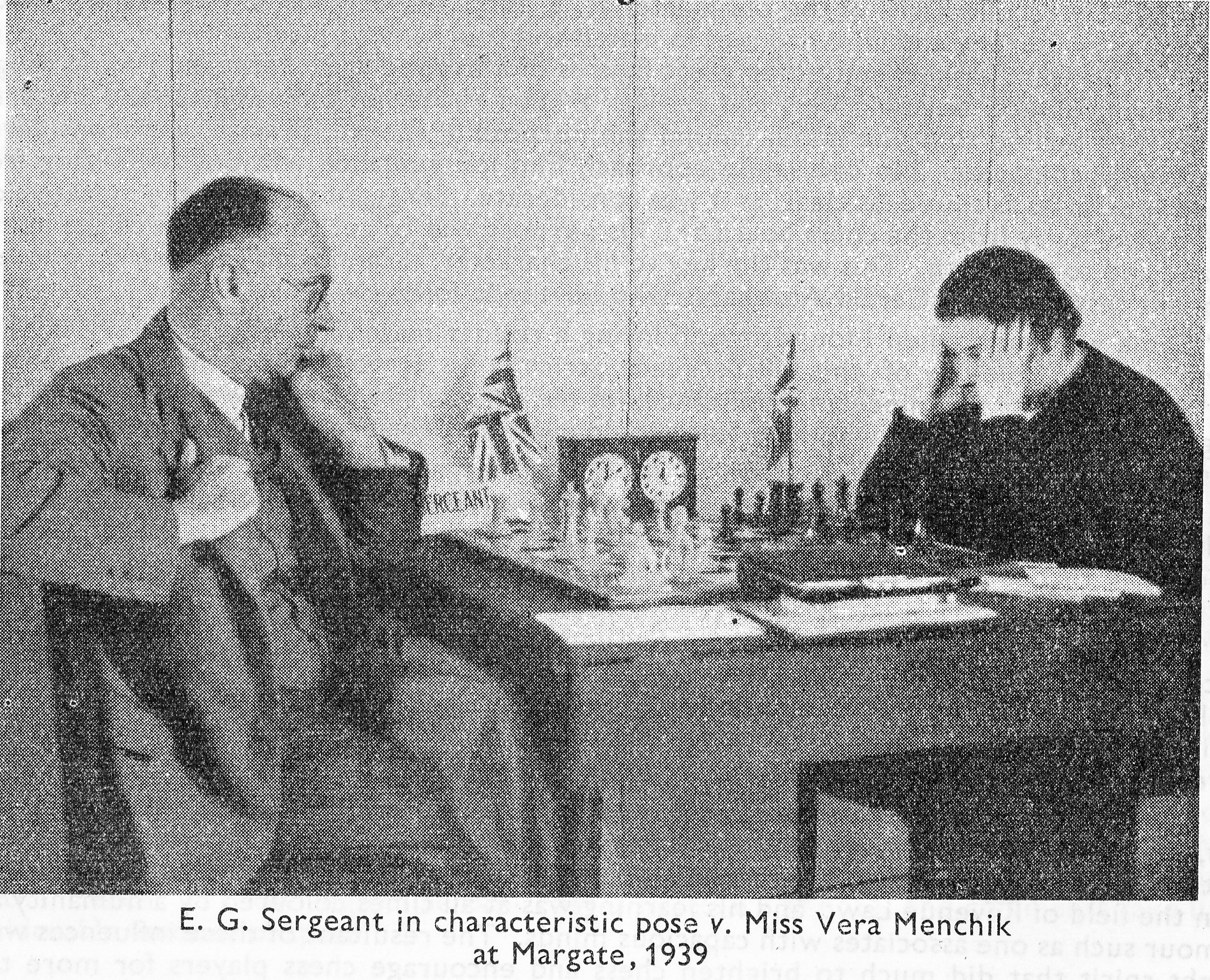
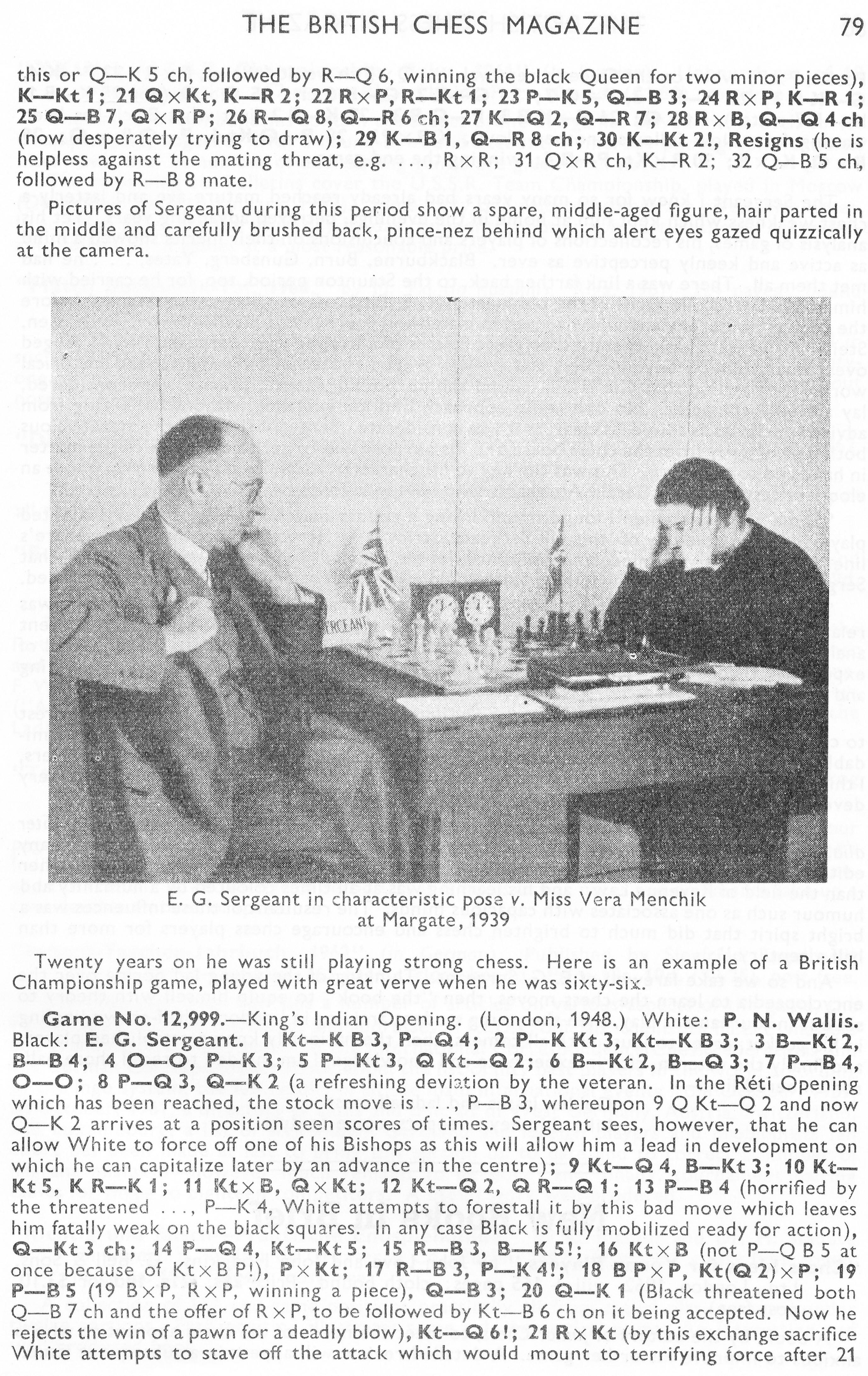
E.G. Sergeant in characteristic pose v. Miss Vera Menchik at Margate, 1939
From The Encyclopedia of Chess (Batsford, 1977), Harry Golombek OBE :
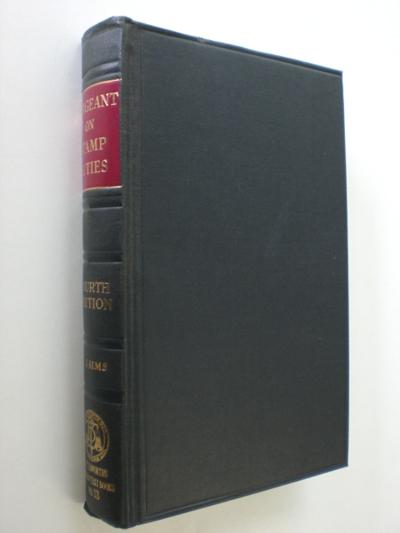
A British master who had a long and solidly distinguished career in British chess but never quite succeeded in breaking through the barrier to international success. A civil servant by profession, he was awarded the OBE for his services in the Inland Revenue and Sergeant on Stamp Duties was regarded as an authoritative work.
Sergeant’s earliest performance in the British Championship, at the Crystal Palace in London 1907, was one of his best. He came =2nd with JH Blackburne. RP Michell and GE Wainwright with 6.5 points, a point below the winner of the title, HE Atkins.
He was 3rd at Edinburgh in 1920 and his best result in the competition came in Brighton 1938, where he came equal second with H. Golombek, a 1/2 point below the winner, CHO’D Alexander.
A stalwart supporter of the City of London Chess Club, he won its championship in two successive years, 1916 and 1917. He played for Britain against the USA in the 1908 and 1909 cable matches and also played on a high board for London against various American cities in the Insull Trophy matches in the years 1926-31.
As a player he was strongly influenced by the scientific principles of Siegbert Tarrasch and did well during the period when the Tarrasch school enjoyed its heyday. But he was at a loss when confronted with more modern methods.”
Both Sunnucks and Hooper & Whyld are silent on EGS : surprising!
We asked Leonard Barden of his memories of EGS and he was kind enough to reply :
“People have different ways of expressing satisfaction with their position. Botvinnik adjusted his tie, Kasparov put his watch back on, Sergeant rubbed his hands together….He liked to counter the Queen’s Gambit Declined in the classical way with a kind of Lasker Defence.”
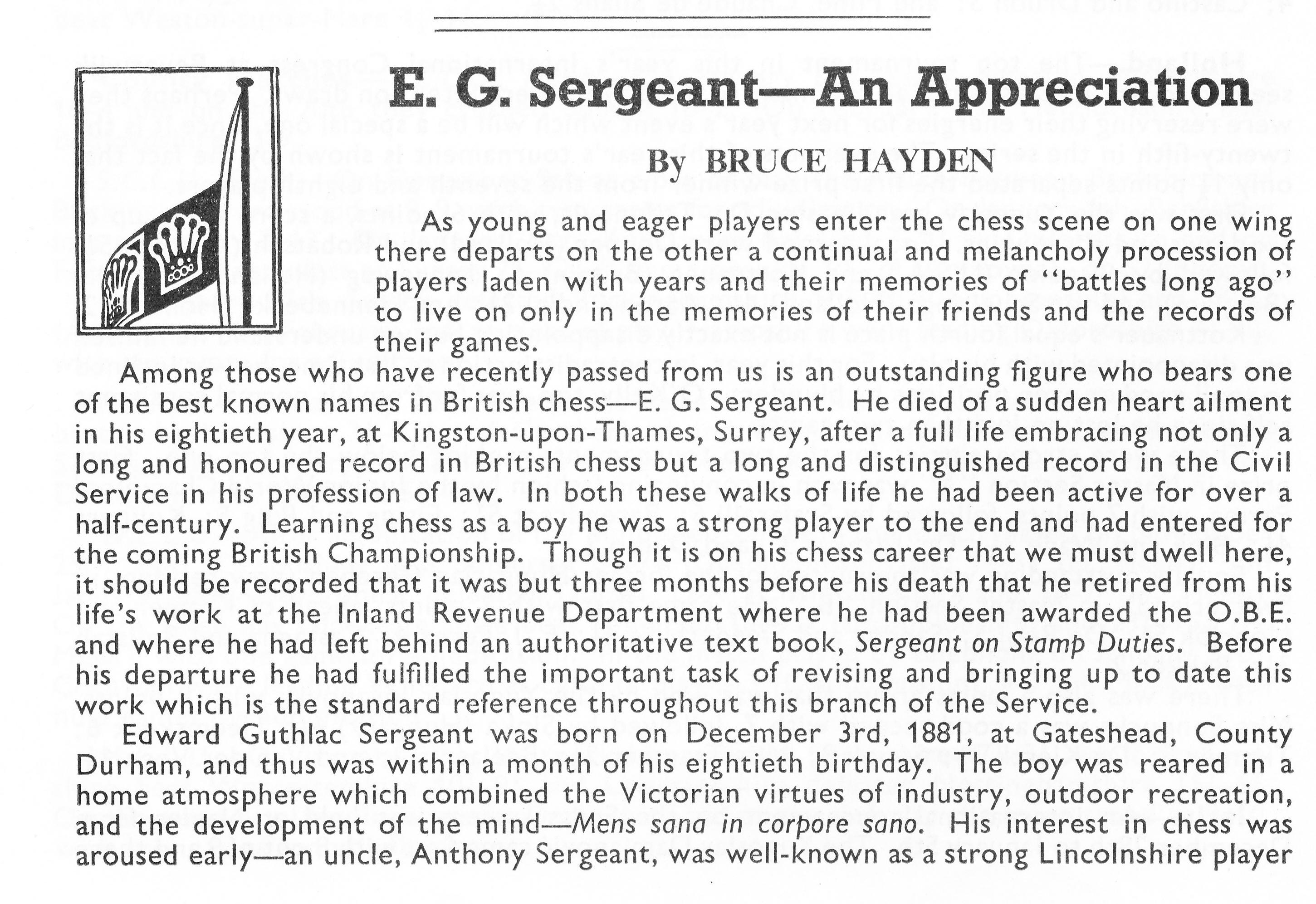
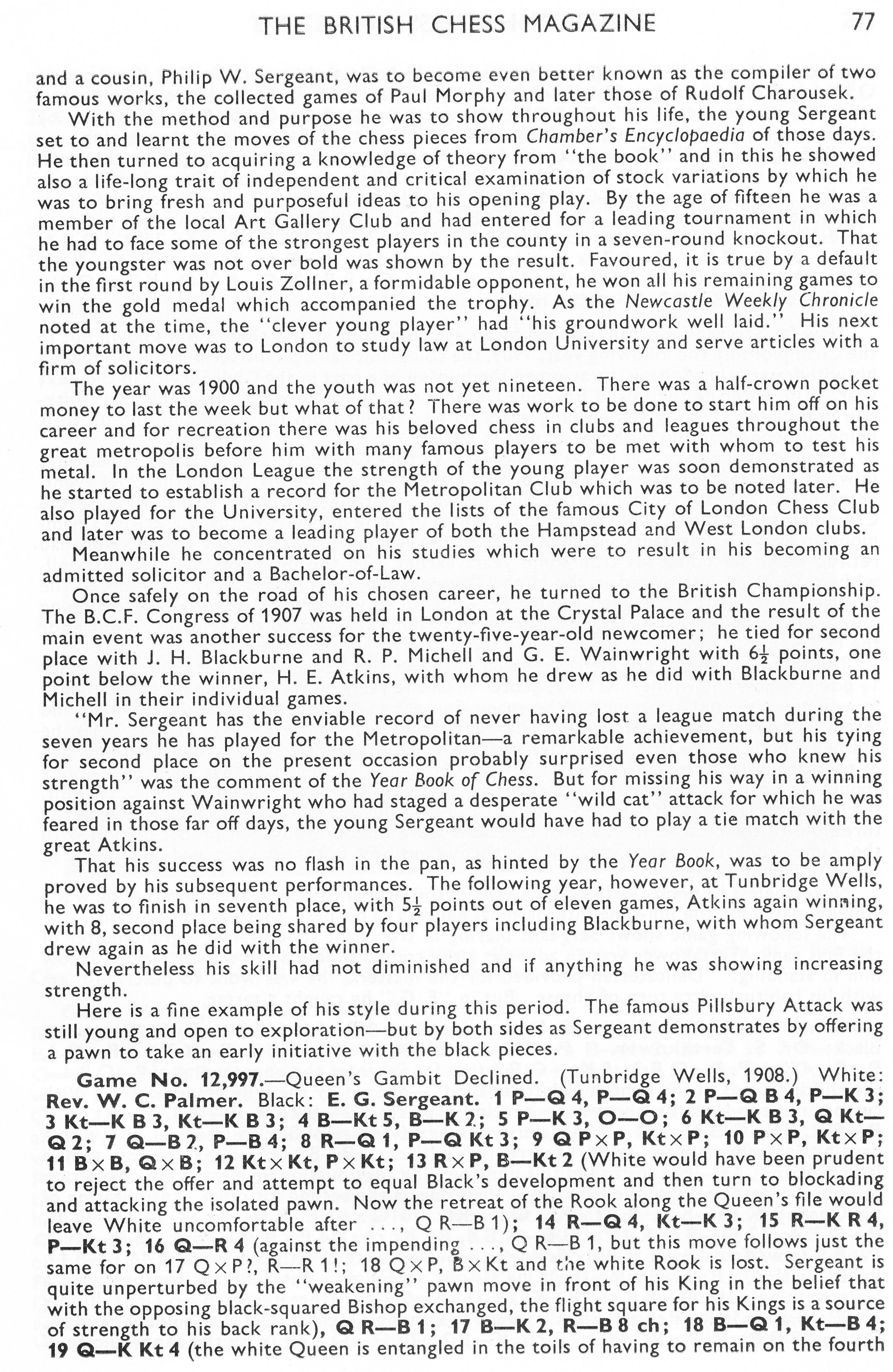
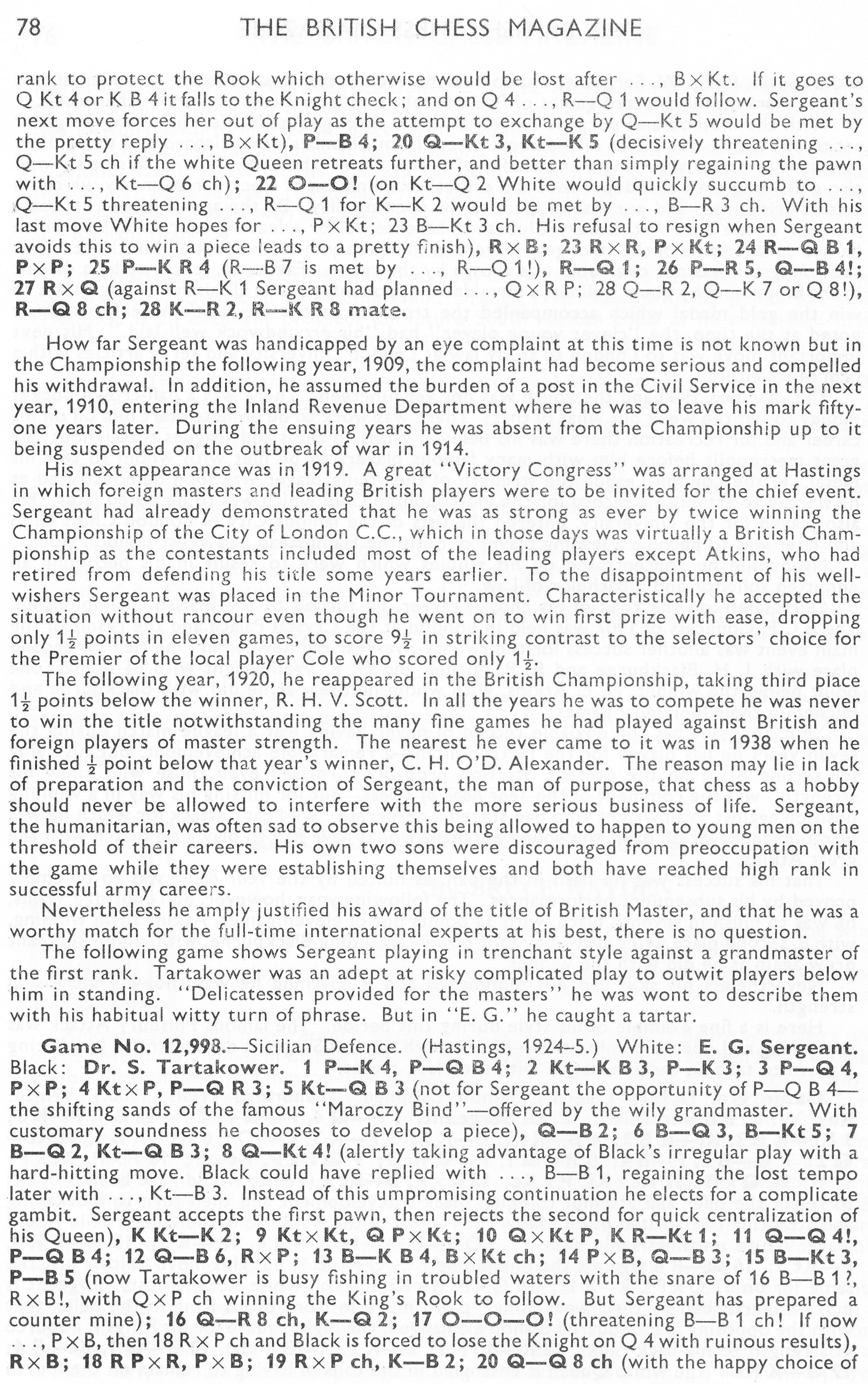
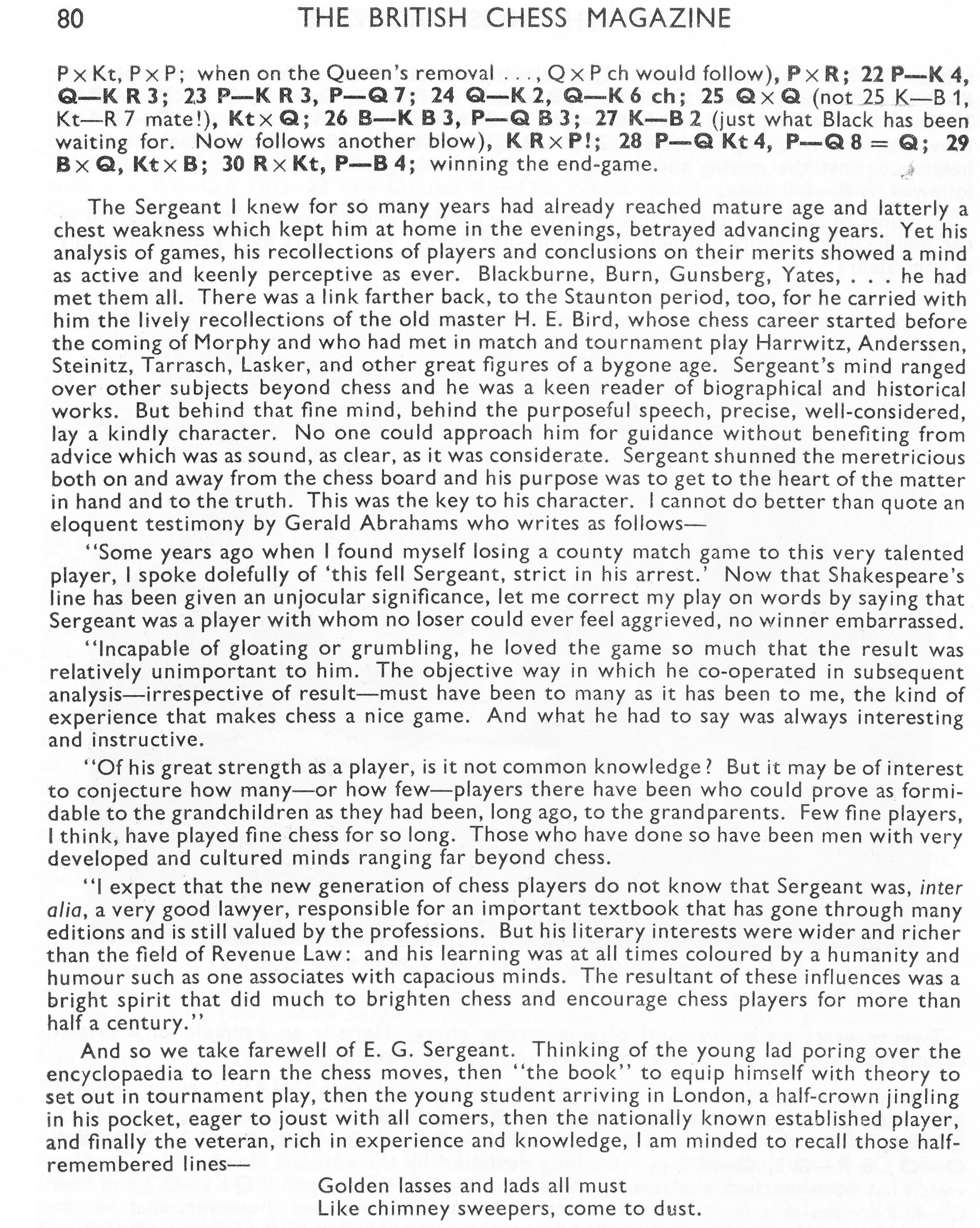
From British Chess Magazine, Volume LXXXII, March, 1962, Number 3, pages 76 -80 we reproduce an obituary from Bruce Hayden entitled “E.G. Sergeant – An Appreciation” as follows :
(note the incorrect birth location presumably based on the 1891 census information)
Edward Guthlac Sergeant, part oneEdward Guthlac Sergeant, part two
Leonard Barden has asked us to point out :
“The 1948 game against Wallis was not in the British championship but in the Premier, a one-off 12-player selected group used to address the problem of too many good players for an all-play-all championship. In 1949 the two all-play-alls were replaced by a 32-player Swiss.
We remember Jacob Henry Sarratt who died 202 years ago today (November 6th) in 1819.
Chess historians will, of course, be familiar with JHS but the name is (probably) not well known outside these exalted circles.
Possibly his most obvious contribution to chess in England was in 1807 when he influenced the result of games that ended in stalemate. You may not know that in England prior to 1807 a game that ended in stalemate was recorded as a win for the party who was stalemated. JHS was able to encourage various major chess clubs so that the result be recorded as a draw. Much endgame theory would be different if it wasn’t for JHS !
“Jacob Henry Sarratt, born in 1772, worked primarily as schoolmaster but was much better known for his advocations which, of course, included chess.
After Philidor’s death, Verdoni (along with Leger, Carlier and Bernard – all four who co-authored Traité Théorique et Pratique du jeu des Echecs par une Societé d’ Amateurs) was considered one of the strongest players in the world, especially in England. Verdoni had taken Philidor’s place as house professional at Parsloe’s. He mentored Jacob Sarratt until he died in 1804. That year Sarratt became the house professional at the Salopian at Charing Cross in London and most of his contemporaries considered him London’s strongest player.
There he claimed the title of Professor of Chess while teaching chess at the price of a guinea per game.
By any measure Surratt was not a particularly strong player, but he was able to maintain the illusion that he was by avoiding the stronger players as he lorded over his students who didn’t know better.
Sarratt’s most important contribution to chess was that he mentored William Lewis who in turn mentored Alexander McDonnell.
Surratt had a strange notion that chess culminated in the 16th century and that everything since then had been a step backwards. This odd notion had a positive side. Philidor was the darling of the English chess scene. Almost all books at that time were versions of, or at least based on, Philidor’s book. Surratt at least kept open the possibility that there were ideas beyond those of Philidor.
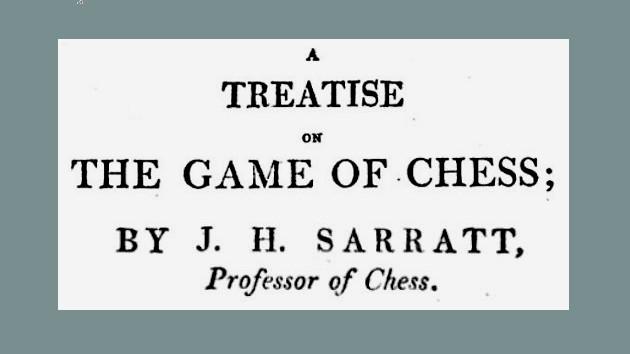
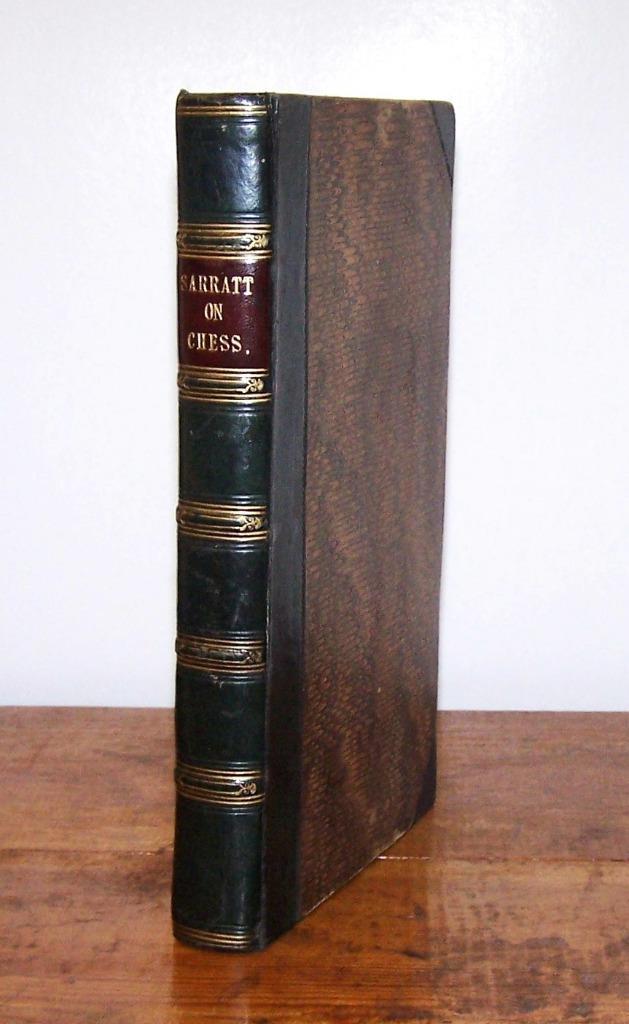
In 1808, true to his role as a teacher, Surratt published his Treatise on the Game of Chess, a book that mainly concentrated on direct attacks on the king which he lifted from the Modense writers.
He translated several older writers whom he admired (though his translations are not considered particularly good): The Works of Damiano, Ruy Lopez and Salvio in 1813. The Works of Gianutio and Gustavus Selenus in 1817.
In 1921 a posthumous edition of his Treatise, A New Treatise on the Game of Chess, was published. This copy covered the game of chess as a whole and was designed for the novice player. It also contained a 98 page analysis of the Muzio Gambit
In addition to his chess books, Surratt also published History of Man in 1802, A New Picture of London in 1803
He translated Three Monks!!! from French in 1803 and Koenigsmark the Robber from German in 1803.
His second wife, Elizabeth Camillia Dufour, was also a writer. In 1803 (before they were married, which was 1804), she published a novel called Aurora or the Mysterious Beauty.
They were married the following year. His first wife had died in 1802 at the age of 18. Both his wives were from Jersey.
Contrary to what one might expect, Sarratt has been described tall, lean and muscular and had even been a prize-fighter at one point. He had also bred dogs for fighting. He was regarded as a very affable fellow and very well-read but with limited taste (Ed : surely this applies to everyone ?)
William Hazlitt, in his essay On Coffee-House Politicians wrote:
[Dr. Whittle] was once sitting where Sarratt was playing a game at chess without seeing the board… Sarratt, who was a man of various accomplishments, afterwards bared his arm to convince us of his muscular strength…
Sarratt, the chess-player, was an extraordinary man. He had the same tenacious, epileptic faculty in other things that he had at chess, and could no more get any other ideas out of his mind than he could those of the figures on the board. He was a great reader, but had not the least taste. Indeed the violence of his memory tyrannised over and destroyed all power of selection. He could repeat [all] Ossian by heart, without knowing the best passage from the worst; and did not perceive he was tiring you to death by giving an account of the breed, education, and manners of fighting-dogs for hours together. The sense of reality quite superseded the distinction between the pleasurable and the painful. He was altogether a mechanical philosopher.”
Somewhere along the way there must have come about a complete reversal of his fortunes because Surratt died impoverished in 1819, leaving his wife destitute. But the resilient Elizabeth Sarratt was able to support herself by giving chess lessons to the aristocracy of Paris.
She must have been very well liked. In 1843 when she herself became old and unable to provide for herself, players from both England and France took up a fund to help her out. She lived until 1846.
From The Oxford Companion to Chess (OUP, 1984 & 1992) by Hooper & Whyld :
Reputedly the best player in England from around 1805 until his death. As a young man he met Philidor. Subsequently he developed his game by practice with a strong French player Hippolyte du Rourblanc (d. 1813), with whom he had a long friendship dating from 1798, and with Verdoni, Sarratt’s first important contribution to the game was in connection with the laws of chess: he persuaded the London club, founded in 1807, to accept that a game ending in stalemate should be regarded as a draw and not as a win for the player who is stalemated. He became a professional at the Salopian coffee house at Charing Cross, London,
Nos. 39-41, Charing Cross and the Timber Yard
and in 1808 wrote his Treatise on the Game of Chess.
Treatise on the Game of Chess by JH Sarratt, 1808
This, largely a compilation from the work of the Modenese masters, advocated that players should seek direct attack upon the enemy king, a style that dominated the game until the 1870s. An Oxford surgeon, W. Tuckwell, wrote that he learned chess ‘from the famous Sarratt, the great chess teacher, whose fee was as a guinea a lesson’. Lewis, who played many games with Sarratt from 1816, wrote in 1822 (after he had met both Deschapelles and Bourdonnais) that Sarratt was the most finished player he had ever met, Sarratt translated the works of several early writers on the game, making them known for the first time to English readers: The Works of Damiano, Ruy Lopez and Selenus (1813) and The Works of Gianutio and Gustavus Selenus (1817).
He died impoverished on 6 Nov. 1819 after a long illness during which he was unable lo earn a livelihood by teaching. Instead he wrote his New Treatise on the Game of Chess published posthumously in 1821, This is the first book to include a comprehensive beginner’s section: in more than 200 pages Sarratt teaches by means of question and answer. Another feature is a 98-page analysis of the Muzio gambit :
Had it been Sarratt’s ambition to become a chess professional there would have been scant opportunity during the lifetime of Philidor and Verdoni. A tall, lean, yet muscular man, sociable and talkative, he seems in his younger days to have had interests of a different kind, among them prize fighting and the breeding of fighting dogs. Hazlitt, who met Sarratt around 1812 wrote ‘He was a great reader, but had not the least taste. Indeed the violence of his memory tyrannised over and destroyed all power of selection. He could repeat Ossian by heart, without knowing the best passage from the worst.’
Sarratt’s early publications were History of Man (1802): translations of two Gothic novels, The Three Monks!!! (1803), from the French of Elisabeth Guénard (Baronne de Méré) , and Koenigsmark the Robber (1803), from the German of R. E. Raspe; A New Future of London (1803), an excellent guide that ran to several editions, the last in 1814, When war broke out with France in 1803 Sarratt became, for a short period, a lieutenant in the Royal York Mary-le-Bone Volunteers and published Life of Bonaparte * a propaganda booklet detailing Napoleon’s alleged war crimes, and warning of the desolation that would follow if he were to invade.
Not long after the birth of his second child in 1802 Sarratt’s wife died and in 1804 he married a Drury Lane singer, Elisabeth Camilla Du four. Tt would be difficult to find a more accomplished, a more amiable, or a happier couple than Mr and Mrs Sarratt’ – Mary Julia Young, Memoirs of Mrs Crouch (1806), Mrs Sarratt too was a writer contributing tales to various journals and publishing Aurora or the Mysterious Beauty (1803), a translation of a French novel. She survived her husband until 1846, ending her days giving chess lessons to the aristocracy in Paris. In 1843 Louis-Philippe and many players from England and France subscribed to a fund on her behalf. ”
From The Encyclopedia of Chess (Robert Hale, 1970 & 1976), Anne Sunnucks :
“Self-styled ‘Professor of Chess’, Sarratt was the first professional player to teach the game in England. He was the author of a A Treatise on the Game of Chess, The (1808), The Works of Damiano, Ruy Lopez and Salvio (1813), The Works of Gianutio and Gustavas Selenus (1817) and a New Treatise on the Game of Chess (1821).
There is no record of Sarratt’s date or place of birth, He began his career as a schoolmaster and later taught chess at Tom’s Coffee House, Cornhill, London, and at the London Chess Club, and was in his day considered to be the strongest player in London.”
From The Encyclopedia of Chess (Batsford, 1983), Harry Golombek OBE :
“Leading English player of the late eighteenth and early nineteenth century. Famed in his day as a teacher and author. Sarratt adopted the title of ‘Professor of Chess’, His writings include A Treatise on the Game of Chess, London 1808, The Works of Damiano, Ruy Lopez and Salvio (1813).
Sarratt is usually credited with introducing into England the Continental practise of counting a game ending in stalemate as a draw. (RDK)”
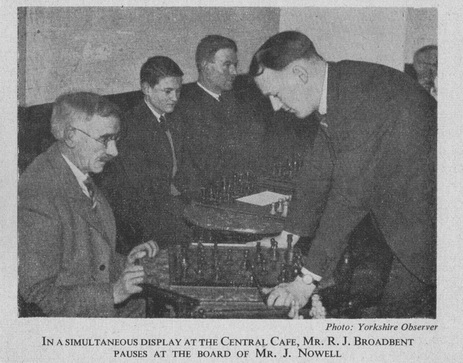
In simultaneous play at the central cafe, Mr. RJ Broadbent pauses at the board of Mr. J. Nowell, original source : The Yorkshire Observer
We remember Reginald Broadbent who passed away on October 29th 1988.
Reginald Joseph Broadbent was born on Friday, August 3rd 1906 (the year of the San Francisco earthquake) in Durban, South Africa. His father was Joseph Edward Broadbent (born 1879) who married Alice Cook on January 4th, 1903 in Durban.
According to the 1911 Isle of Man Census (FindMyPast, Richard James; thanks!) the Broadbent family (sans father) stayed at a guest house in Onchan on the night of February 2nd 1911. Reg (aged 4) was a boarder together with mother Alice (33), brother Roland (1) and sister Laura (4). Since Reg and Laura are both recorded as 4 years old it is reasonable to suppose that they were born as twins. We think that Reg had an additional sibling who had passed away and that the name is not recorded. Reassuringly Steve Mann agrees with this conclusion.
He married Catherine H Broadbent (née Crawford, born 19th September 1895) and were recorded as living (in 1939) in “Cheadle and Gately”, Cheshire. His profession was as a “Telephone Traffic Superintendent, Class II, Post Office Telephones” which was a a civil service occupation. Catherine carried out “unpaid domestic duties”.
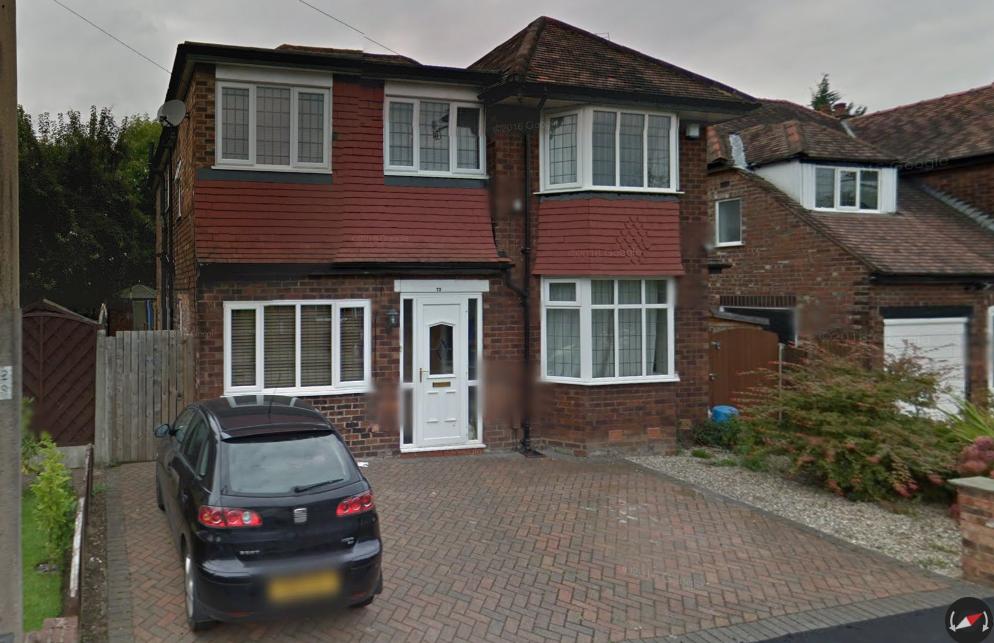
They resided at 72, South Park Road, Gatley, Cheshire :
“At some time in 1946 or 1947, Broadbent moved down south to live in the general vicinity of East Grinstead, at Far End, Limes Estate, Felbridge, 2 miles NW of East Grinstead, and later at Southway, Priory Road, Forest Row, 3 miles SE of East Grinstead”
Reg was eight times Northern Counties Chess Union (NCCU) Champion in 1933, 1934, 1935, 1936. 1937, 1938, 1945 and 1946.
The British Chess Magazine, Volume CVIII (108, 1988), #12 (December), p. 553 records this brief death announcement :
“Reginald J. Broadbent, British Champion 1948 and 1950 died on October 29 at the age of 82. He was a member of Manchester and Bradford Chess Clubs in his day, and was famous for his remarkable record in Anglo-Dutch matches.
After he moved to London around 1950 he was less free to play due to his senior post with the Post Office. A fuller notice will appear next month.”
As advertised in the British Chess Magazine, Volume CIX (109, 1989), #1 (January), p. 27 we have :
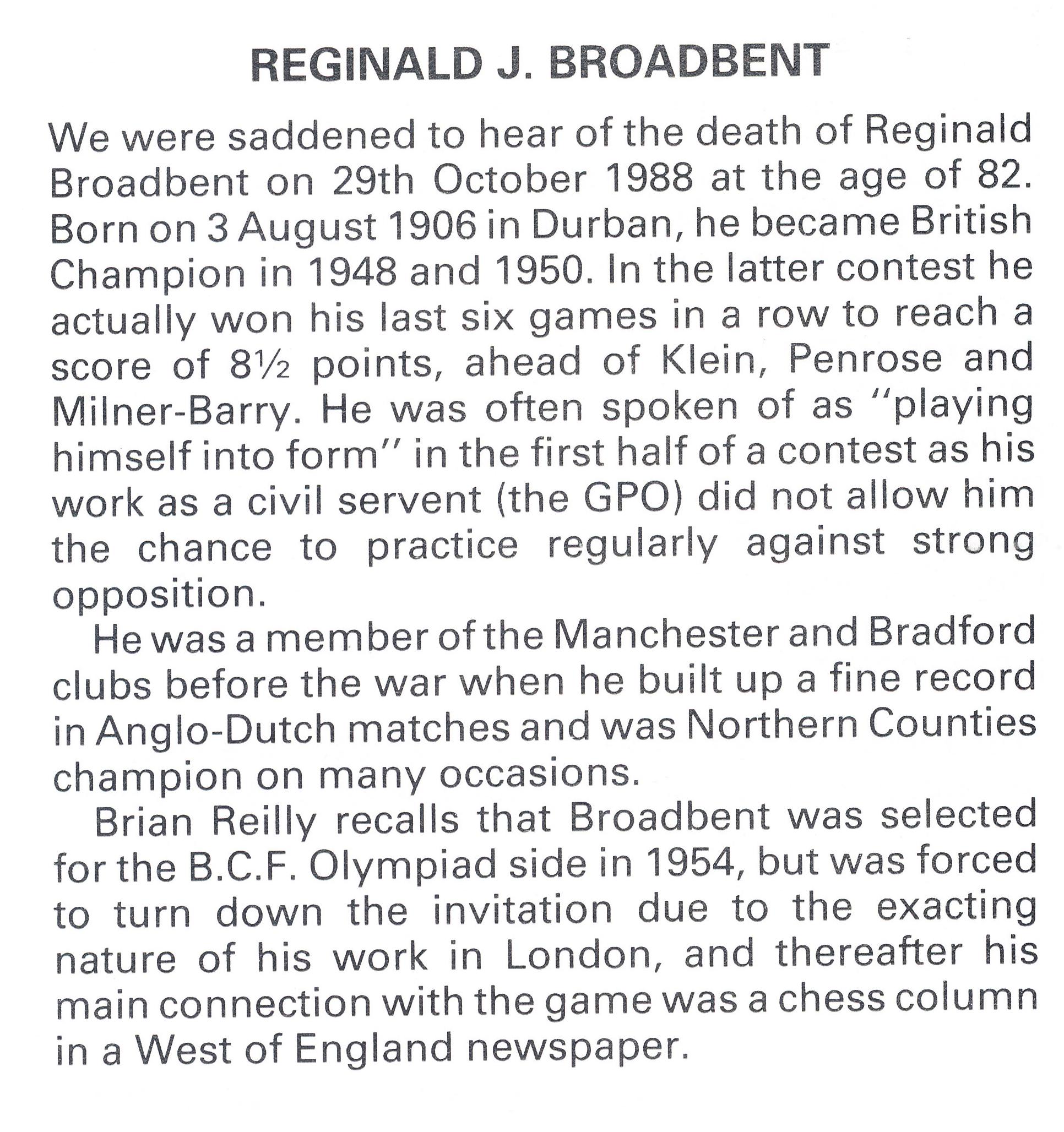
“Reginald Broadbent (3 viii 1906-29x 1988) was born at Durban and was British Champion in 1948 and 1950. In the latter content he actually won his last six games in a row to reach a score of 8.5 points, ahead of Klein, Penrose and Milner-Barry. He was often spoken of as “playing himself into form” in the first half of a contest as his work as a civil servant (the GPO) did not allow him the chance to practise regularly against strong opposition.
He was a member of the Manchester and Bradford clubs before the war when he built up a fine record in Anglo-Dutch matches and Northern Counties champion on many occasions.
Brian Reilly recalls that Broadbent was selected for the BCF Olympiad side in 1954, but was forced to turn down the invitation due to the exacting nature of his work in London, and thereafter his main connection with the game was a chess column in a West of England newspaper (The Western Morning News*) . He was a subscriber to BCM right up to his death.”
With the white pieces Broadbent was a die-hard 1.e4 player who allowed the Marshall Attack against the Ruy Lopez.
As the second player RJB defended the Nimzo-Indian Defence and played Open games.
In the March issue of CHESS for 1963, (Volume 28, Number 427, pp.147-155) William Winter wrote this:
R. J. Broadbent’s one weakness
R. J. Broadbent I consider to be typical of the best type of English amateur the Atkins type. A civil servant by profession he wins the Championship title, then retires to his country home in Surrey where he happily spends his time in gardening till the next championship comes along. Occasionally he is dragged out to play in a County match but he takes a lot of dragging. As a player he has great natural attainments and a temperament for the game, but he handicaps himself by the paucity of his opening knowledge. This compels him to start thinking almost from the word ‘go’ and the result is that he invariably gets on bad terms with his clock.
One of his great assets is his endgame in which he is perhaps superior to any practising British player. His skill in this department has rescued him from many a grim position. If he had studied the openings, and played in more tournaments, he might have gone far. As it is he is, and I fear will remain, just a first class British amateur. Probably he prefers it that way.
Here is one of his best games :
For an element of déjà vu here is RJBs obituary from the 1989 – 1990 BCF Yearbook, page 14 :
(The Yearbook editor was Brian Concannon and it would appear standard practise, at the time, not to credit or attribute sources for obituaries.)
IM James Terry Sherwin, image by John Upham Photography
We send best wishes to IM James Sherwin, a welcome long term visitor from “over the pond”
James Terry Sherwin was born on Wednesday, October 25th 1933 in New York. and attended The University of Columbia.
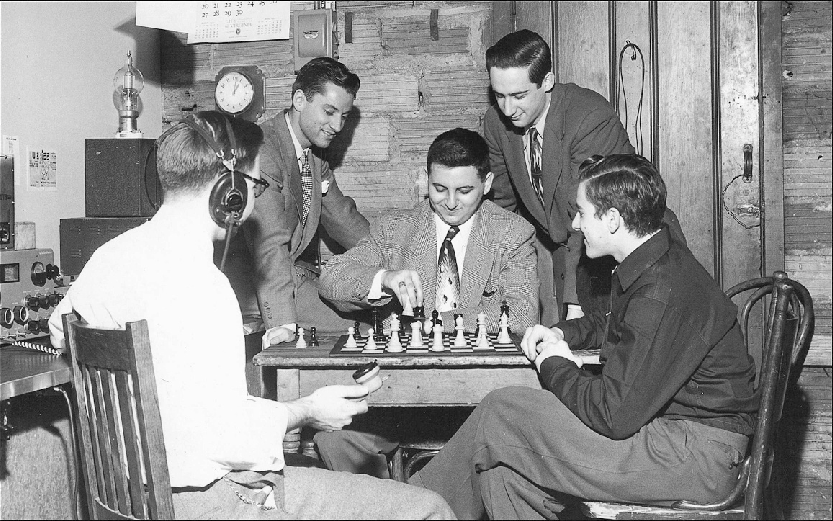
The Columbia College chess team of 1949–1952 after a radio match with Yale. Right to left: James Sherwin, Eliot Hearst, Carl Burger, Francis Mechner (Courtesy of the Columbia University Archives).
He became an International Master in 1958 at the age of 25 and, according to Felice, his peak FIDE rating was 2400 in 1969.
Much to his chagrin (we recommend you do not ask him about this!) James is famous for the “Sherwin slid the rook here with his pinky, as if to emphasize the cunning of this mysterious move” annotation in Game 1, “Too Little, Too Late” of My Sixty Memorable Games by Robert James Fischer (and game introductions by Larry Evans).
Since 1999 James has been a frequent entrant to English Rapidplay tournaments at Richmond and Golders Green and, in August 2019 in Torquay, aged 86, tied for first place in the Rapidplay event at the British Championships.
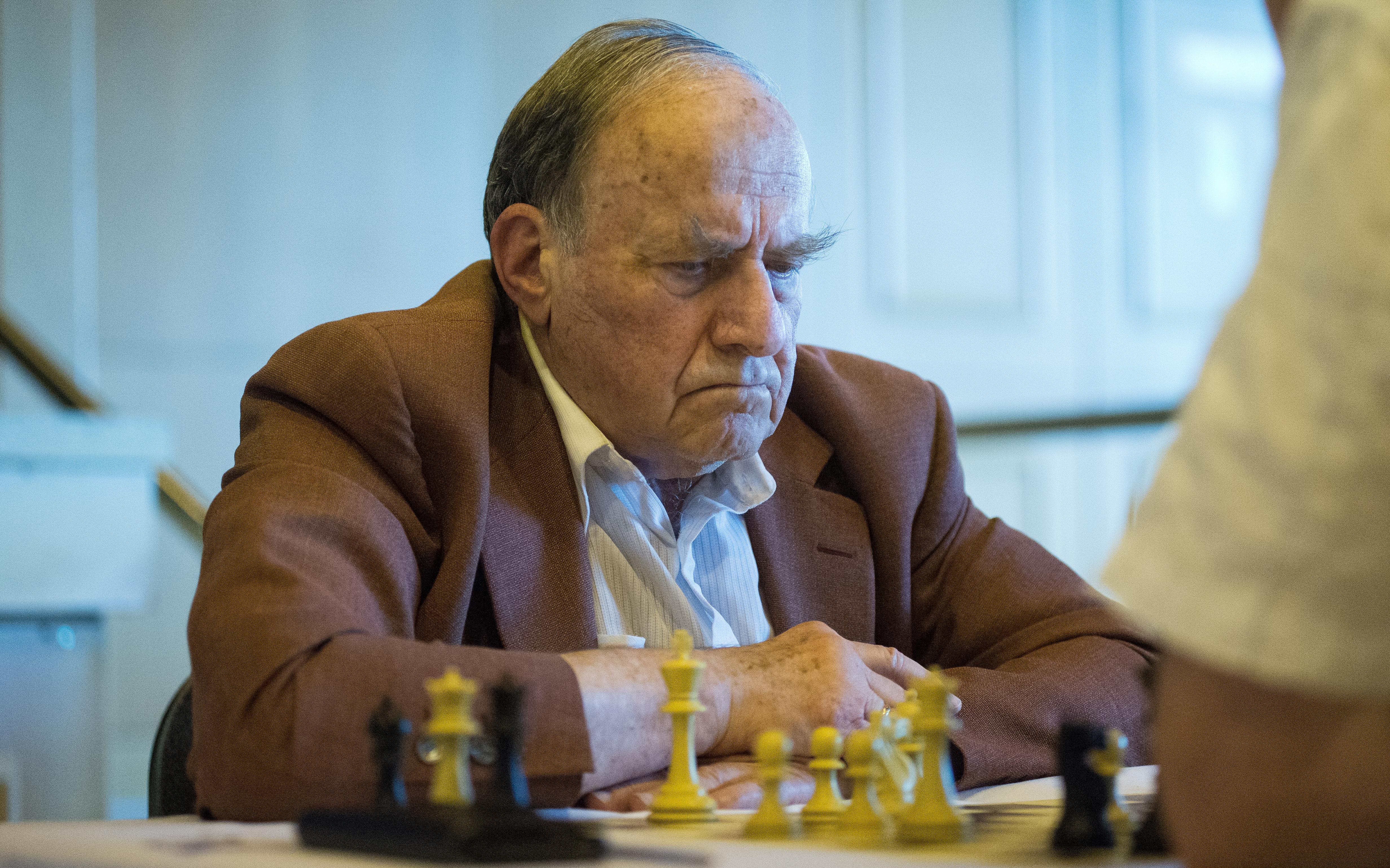
IM James Sherwin
James is registered with the Wiltshire County Chess Association and since 2015 has played only rapidplay games rated by the ECF. He currently has a rating of 204D.
With the white pieces James plays 1.d4, 1.Nf3 and 1.e4 in that order of preference.
As the second player he essays the Sicilian Najdorf and the Grünfeld Defence.
He has plus scores against Donald Byrne, Robert Byrne, Herbert Seidman, Sidney Bernstein, George Kramer and Raymond Weinstein (amongst others). His score with Fischer was 1.5/8 (but don’t mention it!).
“James Terry Sherwin, born in New York, became an International Master in 1958. In 1961, he was Chairman of the USCF Rules Committee. He was the Executive Vice President of GAF Corporation who was the American Chess Foundation (ACF) President from 1979 to 1990. He took 5th place in the 1953 World Junior Championship. He tied for 1st place with Alexander Kevitz in the 1954-55 Manhattan Chess club championship. He took 17th place in the Portoroz Interzonal (1958). Sherwin finished in 3rd place twice in US chess championships (1957-58 and 1958-59). He won the first Eastern Open Chess Championship, held in Washington DC, in 1960.”
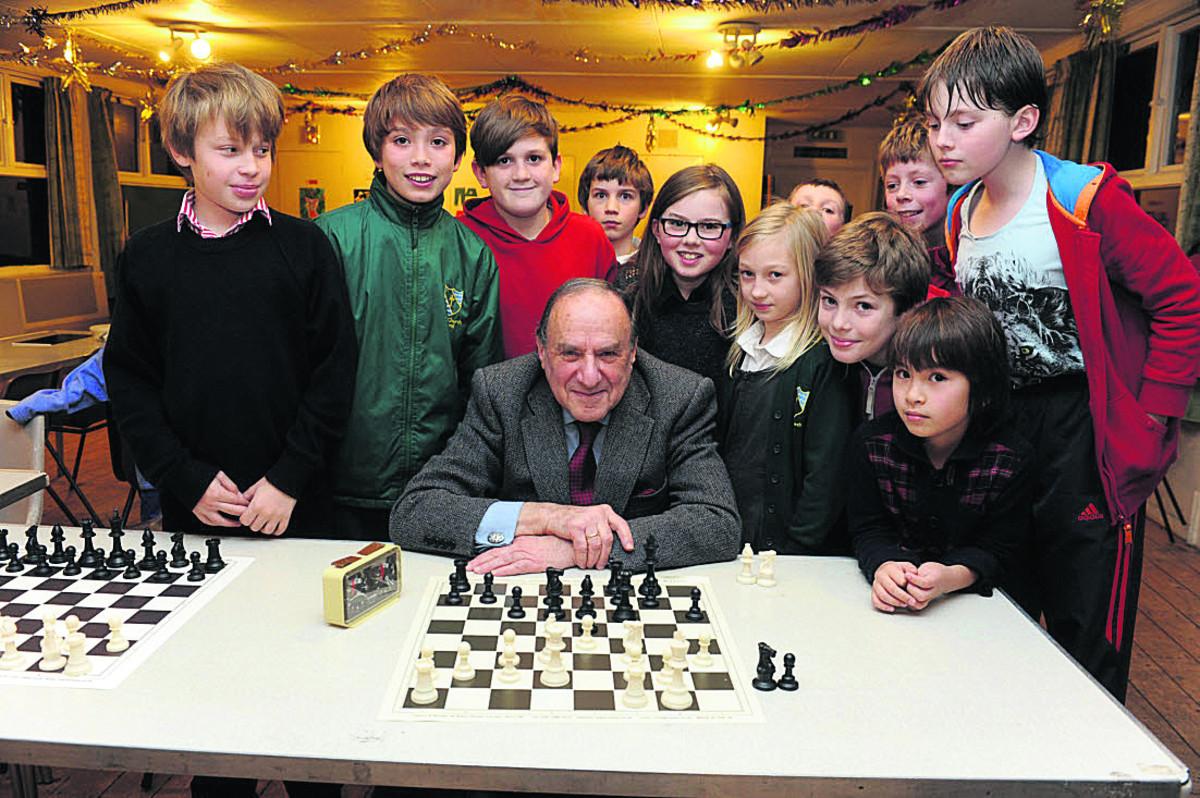
Mr Sherwin, 80, met and played against the new members of Bradford & Avon Valley Youth Chess Club on their opening night at St Nicholas Hall on Tuesday. Photo courtesy of The Wiltshire Times
From Wikipedia :
“James Terry Sherwin (born October 25, 1933)[1] is an American corporate executive and International Master in chess.
Born in New York City[1] in 1933, Sherwin attended Stuyvesant High School, Columbia College (Phi Beta Kappa) and Columbia Law School. He graduated from the U.S. Coast Guard Academy Officer Candidate School in 1956 and later became a Lieutenant Commander. He is an attorney admitted to the New York and Supreme Court Bars. He joined GAF Corporation in 1960 serving in various legal and operational roles and eventually becoming its Chief Financial Officer. He was CFO at Triangle Industries from 1983 to 1984, rejoining GAF Corporation as Vice Chairman from 1985 to 1990.
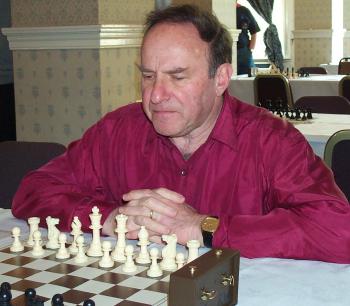
IM James T Sherwin
While at GAF, in 1988, he was indicted by the US Attorney for the Southern District of New York, Rudolph Giuliani, for stock manipulation in connection with the 1986 sale of stock owned by GAF.[2] He was convicted after three trials, but the conviction was reversed on appeal[3] and dismissed with prejudice.[4] In 1991 he was appointed Executive Vice President and Chief Financial Officer of Hunter Douglas N.V., a Dutch multinational company, in which capacity he served until 1999. Since then he has been a Director and an adviser to Hunter Douglas.
IM James T Sherwin
He is an Overseer of the International Rescue Committee and member of the Association of the Bar of the City of New York. He received an Honorary Doctor of Laws Degree from the University of Bath in December, 2007.”
“In chess, Sherwin finished third and tied for third in the US Chess Championship four times and tied for fourth three times.[5] He was Intercollegiate Champion and New York State Champion in 1951 and US Speed Champion in 1956–57 and 1959–60. He earned the International Master title in 1958.[1] He played in the Portorož Interzonal in 1958, which was part of the 1960 World Championship cycle. While he finished only 17th out of 21 players, he scored (+2–2=2) against the six players who qualified from the tournament to the Candidates tournament at Bled 1959. He is a previous President of the American Chess Foundation.
Sherwin resides with his wife, Hiroko, near Bath, United Kingdom.”
BCN remembers Sir Theodore Tylor who passed away on Wednesday, October 23rd, 1968.
Theodore Henry Tylor was born on Sunday, May 13th, 1900 in Bournville, (at the time) in northern Worcestershire. Now Bournville is in the metropolitan borough of Birmingham.
His father was Henry Bedford Tylor and his mother Minnie Belle Cater were both 29 when Theo was born. He had one sister Rachel Hope who was born on 1 November 1909 in Kings Norton, Worcestershire, when Theodore Henry was 9 years old.
In the 1911 census Theo is shown as living in Worcester as a student. His father passed away on 26 February 1915 in Birmingham, Warwickshire, at the age of 44.
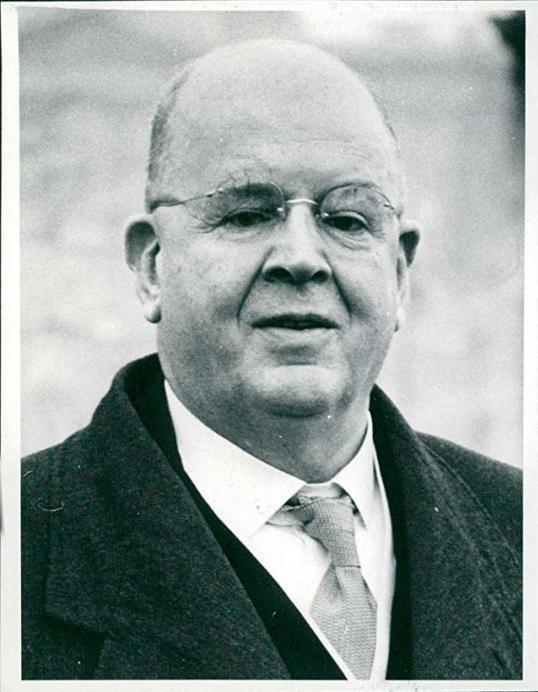
Theodore Henry Tylor, Courtesy of John Saunders and Britbase
In 1939 Theo was living at 2, Rawlinson Road, Oxford where he continued to live until his death.
We are grateful to John Foley writing in Floreat Domus (the Balliol College magazine) who wrote this about Tylor :
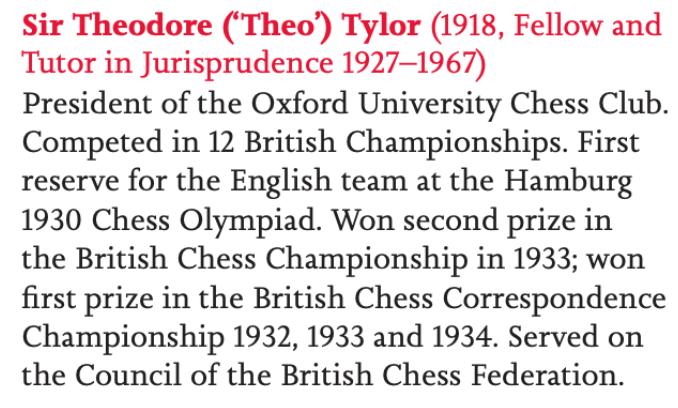
Article about TH Tylor by John Foley
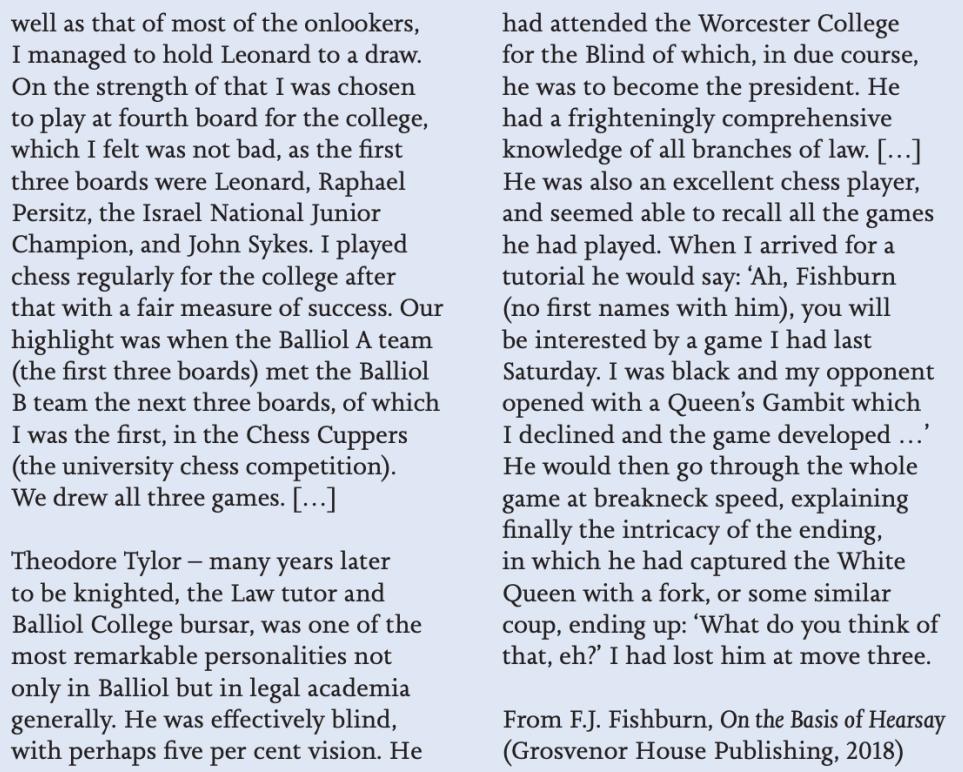
and, following this, John reproduced an item from On the Basis of of Hearsay, Grosvenor House Publishing, 2018 :
Chess in the 1950s : Fred Fishburn Remembers
From British Chess Magazine, Volume LXXXIX (1969), Number 1 (January), pp 6-7 we have the following article :
“The death of Sir Theodore H. Tylor at the age of sixty-eight was reported in The Times of October 24th. The announcement will be received with deep regret by the many chess enthusiasts who will remember him as a cheerful and extremely resourceful opponent who triumphed over the handicap of near-blindness and lived such a full and distinguished life that it earned him the admiration and respect of the world.
The Times has already done full justice to his work as Fellow and Tutor in Jurisprudence at Balliol for nearly forty years and to his service to organizations for the blind for which he was most justly knighted in 1965, but it barely mentioned that side of his life with which we chess-players were more intimately acquainted.
His education at Worcester College for the Blind naturally brought him into contact with chess and he became a very strong player. ln 1925, at the age of twenty-five, he was among the twelve players selected for the British Championship at Stratford-on-Avon and fully justified the selectors’confidence by taking fourth prize, behind Atkins, Yates, and Edmund Spencer, and ahead of Winter.
It was another four years before he became really active, but in 1929 he again played in the Championship and shared fourth prize with J. H. Morrison and W. Winter behind, Sultan Khan, H. E. Price, and R. P. Michell. He followed this with his first visit to Hastings and in the 1929-30 congress put up the best performance of his career, sharing first prize with Koltanowski, in front of Flohr, Reijifir, Rellstab, Alexander, Jackson, Noteboom, Vidmar Jnr., and Winser. This, by the way, was only a Premier Reserves!
This performance evidently impressed the selectors, for the following summer brought an invitation to play for the B.C.F. team in the Hamburg Olympiad, where he won one, drew four, and lost two games. ln the 1930-31 Hastings Congress he made the first of nine appearances in the Premier Tourney, but he never managed to maintain sufficient consistency to win honours in this exalted company and was never able to finish higher than equal sixth (in
1936-7). ln the nine tournaments he won ten tames (of which only two were against non-British opposition-Feigin and Medina) and drew thirty-three (including World Champions Alekhine and Euwe and grandmasters Fine, Flohr (three times), Keres, Sultan Khan, Tartakower, and Vidmar). ln 1934-5 he again tied with Koltanowski for first place in the Premier Reserves.
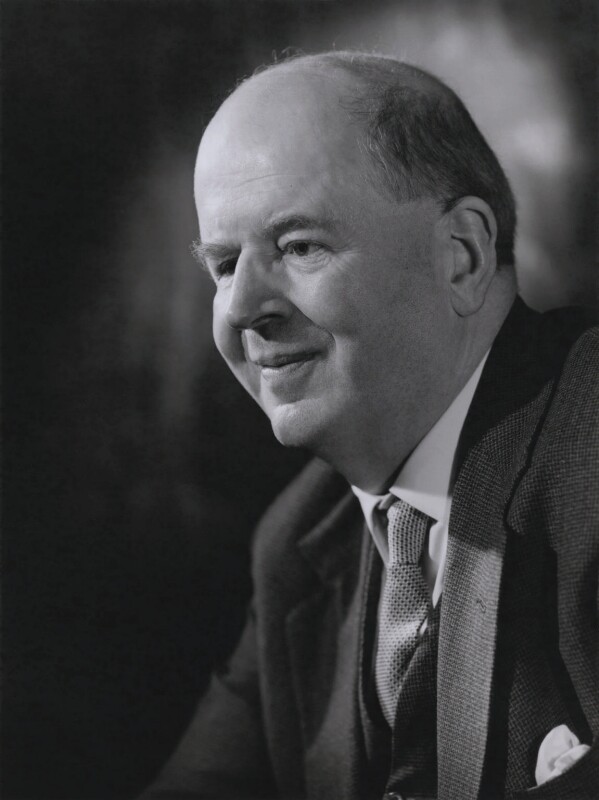
Sir Theodore Henry Tylor
ln twelve British Championships his best performance was at Hastings in 1933 where he finished second, 1/2 point behind Sultan Khan and lost only to C. H. O’D. Alexander. In nine of the twelve he was in the first six, and was four times a prize-winner. He was chosen to play for England against Holland in 1938, 1948, and 1952, and against Yugoslavia in 1951. ln these games he won four and lost four. He was selected to play against
the U.S.S.R. in 1946, but had to withdraw at the last minute.
In 1936 he was chosen as one of the four British players in the Nottingham lnternational Tournament. This caused some dissatisfaction among other disappointed aspirants, but he came ahead of Alexander, Thomas, and Winter and captured the scalps of Flohr and Tartakower. ln the same year he was fifth at Margate, where he drew with Capablanca, Lundin, and Stahlberg.
Finally, a word should be said about his work away from the board. For six years he was President of the Chess Education Society, in whose work he took a lively interest from its foundation in 1943. He was President of the Midland Counties Union from 1946-9. He played top board for Oxfordshire for many years and captained the team for a period. We mourn a great friend of chess and a fine player who was a true amateur and obviously enjoyed every minute he spent among us.”
“In spite of the handicap of partial blindness, Tylor enjoyed a successful academic career and was for nearly forty years a Fellow and tutor in jurisprudence at Balliol College, Oxford. He took up chess seriously while a schoolboy at Worcester College for the Blind and later as an undergraduate captained the Oxford University chess team.
At Hastings 1929/30, Tylor shared first prize with Koltanowski in the Premier Reserves ahead of Flohr, Reijfir, Rellstab, Alexander, Jackson, Noteboom, Vidmar Jr. and Winser. He played in the Hastings Premier event on nine occasions, but never finished in the top half. He competed in the British Championship twelve times, his best result being 2nd to Sultan Khan in 1933. He was selected for the BCF team in the Hamburg 1930 Olympiad and was British Correspondence Champion in 1933, 1934 and 1935.”
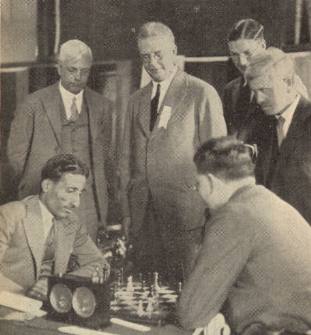
Worcester, circa 1931: Mir Sultan Khan (left) plays Theodore Tylor, while Sir George Thomas (far left) and Arthur Mackenzie (far right) spectate. Photo courtesy of Britbase.
“Sir Theodore Henry Tylor (13 May 1900 – 23 October 1968)[1] was a lawyer and international level chess player, despite being nearly blind. In 1965, he was knighted for his service to organisations for the blind. He was Fellow and Tutor in Jurisprudence at Balliol College, Oxford for almost forty years.[2]
Born in Bournville, Tylor learned to play chess at age seven. His chess skill increased while he attended Worcester College for the Blind from 1909 to 1918. He studied at Oxford University beginning in 1918, and captained the Oxford University Chess Club. Tylor received First-class Honours in Jurisprudence in 1922 and was made an honorary scholar of Balliol College. The next year, he became a Bachelor of Civil Law and a lecturer at Balliol College. Called to the Bar by the Inner Temple with a certificate of honour, he was made a Fellow at Balliol College in 1928.”
“Tylor competed in twelve British Championships, finishing fourth in his first appearance in 1925. His best result was in 1933, finishing second to Mir Sultan Khan.[2][3] He tied for first at the 1929/30 Hastings Premier Reserves alongside George Koltanowski ahead of Salo Flohr, Josef Rejfiř, Ludwig Rellstab, C.H.O’D. Alexander, Daniël Noteboom, and Milan Vidmar.[2] Tylor played in the top section, the Hastings Premier, nine times beginning in 1930/1. His best finish was 6th= in 1936/7.[3] He was first reserve for the English team at the Hamburg 1930 Chess Olympiad.
Tylor won the British Correspondence Chess Championship in 1932, 1933, and 1934.[1][2] He shared 5–6th at Margate 1936 with P. S. Milner-Barry, but he won their individual game and drew with 2nd- to 4th-place finishers José Raúl Capablanca, Gideon Ståhlberg, and Erik Lundin (Salo Flohr won). Although he finished 12th at Nottingham 1936, he had the best score of the British participants, ahead of C. H. O’D. Alexander, G. A. Thomas, and William Winter.[5] Mikhail Botvinnik noted that Tylor was using a tactile chess board that he incessantly fingered, as well as a device for counting the number of moves made.”
“Tylor was President of the Midland Counties’ Chess Union from 1947 to 1950, but his work for the university and for the welfare of the blind limited the time he had to devote to chess. Tylor also enjoyed bridge.[3] He died in Oxford on 23 October 1968.”
Sir Theodore Henry Tylor
We focus on the British Chess Scene Past & Present!
This website uses cookies to improve your experience. We'll assume you're ok with this, but you can opt-out if you wish. Cookie settingsACCEPT
Privacy & Cookies Policy
Privacy Overview
This website uses cookies to improve your experience while you navigate through the website. Out of these cookies, the cookies that are categorized as necessary are stored on your browser as they are as essential for the working of basic functionalities of the website. We also use third-party cookies that help us analyze and understand how you use this website. These cookies will be stored in your browser only with your consent. You also have the option to opt-out of these cookies. But opting out of some of these cookies may have an effect on your browsing experience.
Necessary cookies are absolutely essential for the website to function properly. This category only includes cookies that ensures basic functionalities and security features of the website. These cookies do not store any personal information.