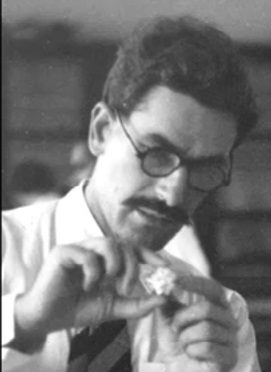
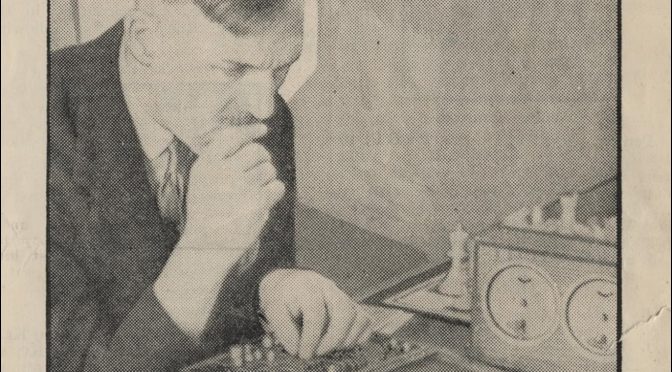
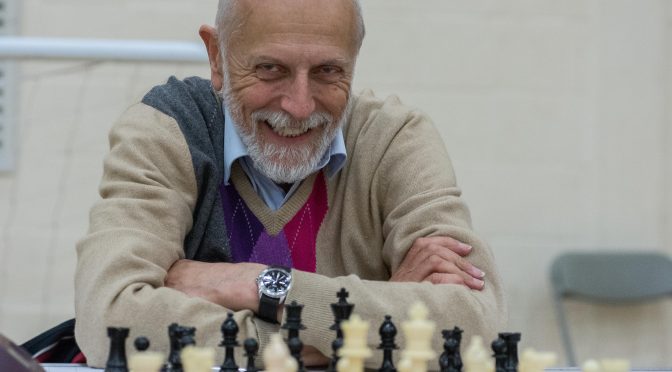
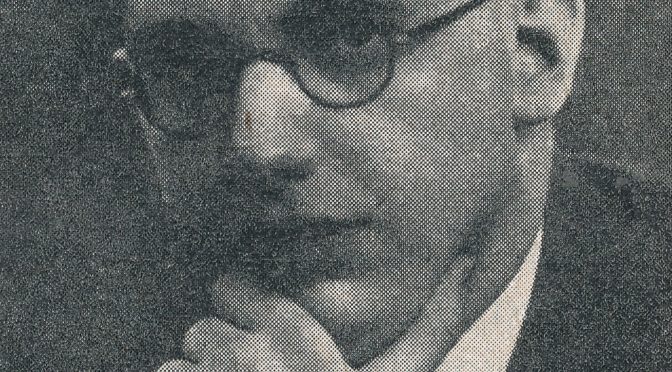
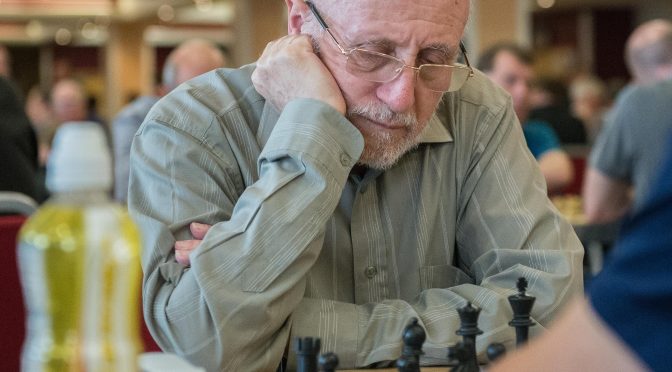
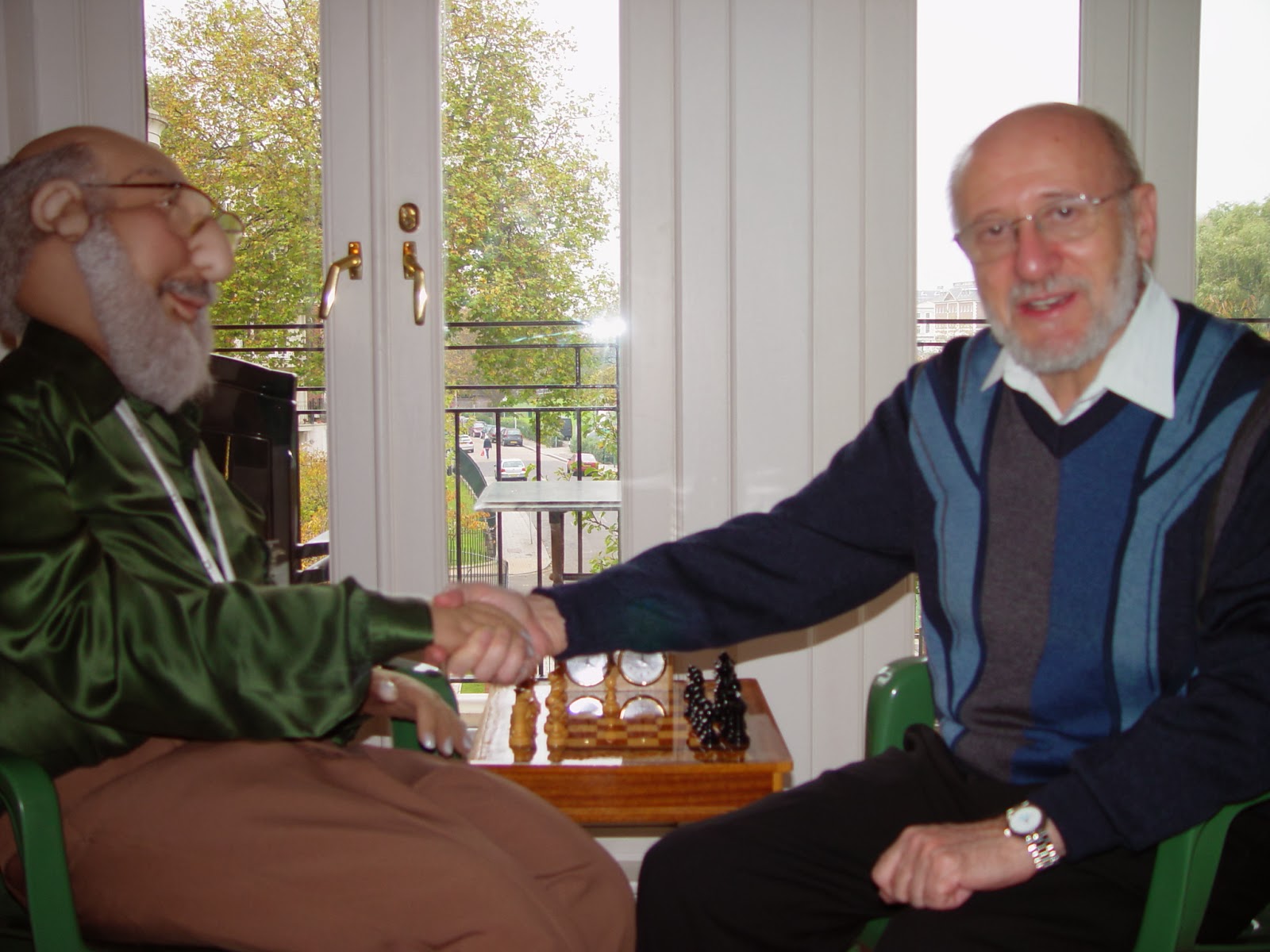
BCN remembers Richard Guy who passed away in Calgary, Alberta, Canada on Monday, March 9th, 2020 at the splendid age of 103.
Early Life
Richard Kenneth Guy was born on Saturday, 30th September 1916. On this day construction on the Hell Gate Bridge in New York City was completed.
He was born in Nuneaton, Warwickshire to William Alexander Charles Guy and Augusta Adeline Guy (née Tanner). RKGs parents had married in the final quarter of 1915 in Solihull. William was headmaster of Atherstone Elementary School.
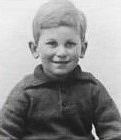
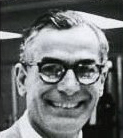
Richard Guy
Growing Up
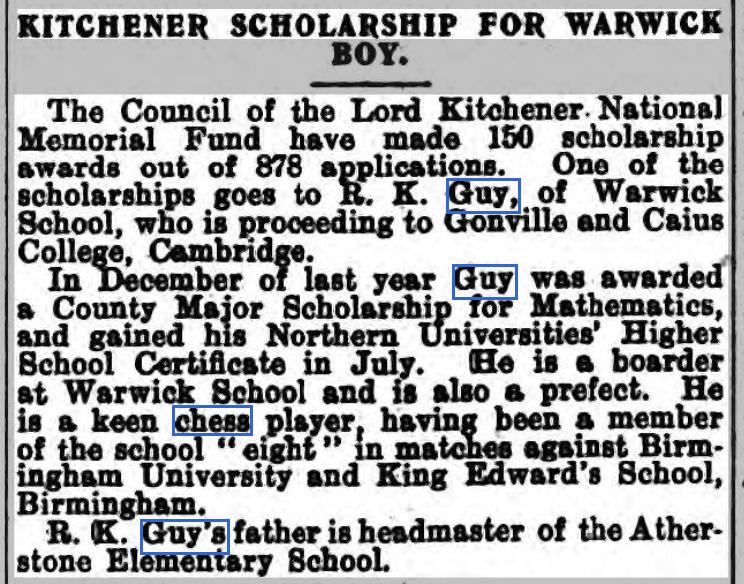
Richard attended Warwick School excelling in mathematics where he was a boarder and prefect. In December 1934 He obtained a County Major Scholarship for Mathematics provided by the Lord Kitchener Memorial Fund gaining his Northern Universities Higher School Certificate in July 1935.
Warwick and Warwickshire Advertiser 25 May 1935
He went up to Gonville and Caius College, Cambridge University in October 1935 graduating in 1938. Stephen Hawking was also an alumni of Caius College.
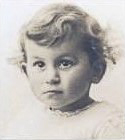
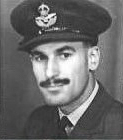
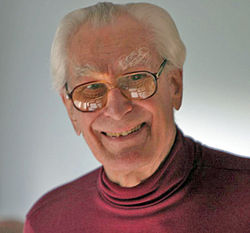
Richard Guy
The 1939 register records Richard aged 23 living as a lodger in the Blower household of six at 436 Buxton Road, Stockport, Cheshire, England. This address has since been converted to residential flats. He was a teacher of mathematics in a local secondary school.
RAF and the Weather Years
During the second world war Richard saw non-combative service in the Royal Air Force working on forecasting the weather and improving the methodologies. This work was a critical component of the British war effort.
In the final quarter of 1940 Richard married Nancy Louise Thirian in Bingham, Nottingham. Nancy (in fact, she was known as Louise) was born in Islington in the third quarter of 1918 and passed away in 2010. They had three children and Michael JT Guy was also a significant mathematician.
According to Wikipedia : “In November 1942, Guy received an emergency commission in the Meteorological Branch of the Royal Air Force, with the rank of flight lieutenant. He was posted to Reykjavik, and later to Bermuda, as a meteorologist. He tried to get permission for Louise to join him but was refused. While in Iceland, he did some glacier travel, skiing, and mountain climbing, marking the beginning of another long love affair, this one with snow and ice.”
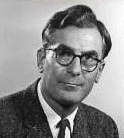
Richard Guy
Teaching and Research
In August 1951 Richard relocated to Singapore and taught for ten years at The University of Malaya and following that he worked at the Indian Institute of Technology in Delhi. Finally, in 1965, he moved to Calgary and taught in the Mathematics Department at The University of Calgary. For fuller details of his extensive mathematical career see the many links at the foot of this article.
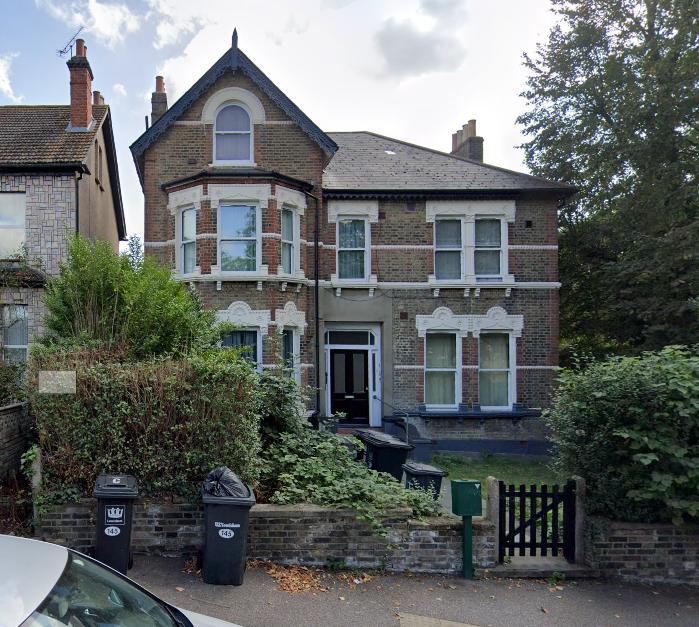
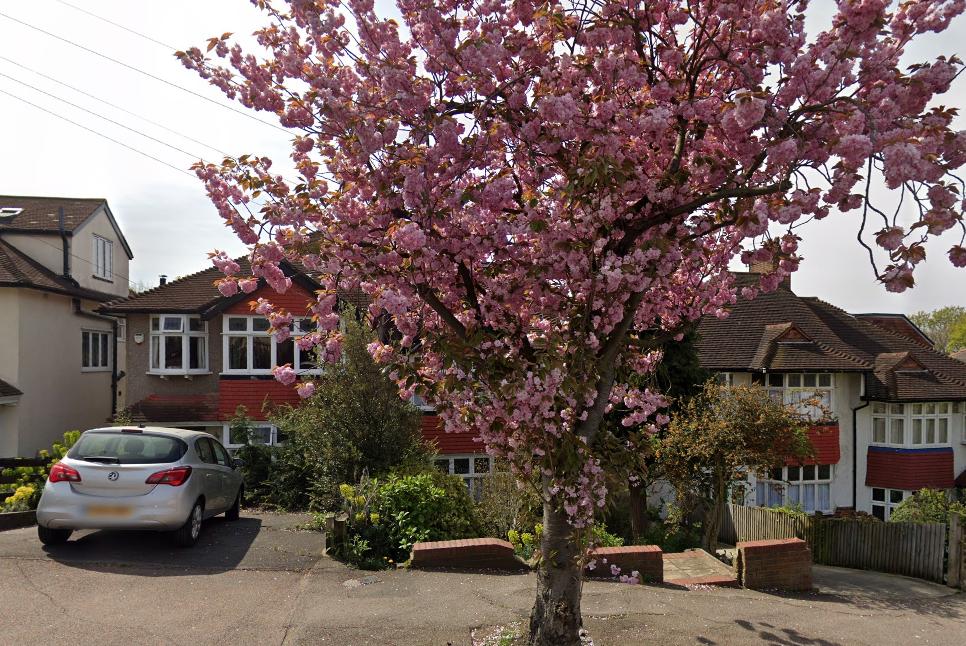
RKGs final address in England was 145 Sunderland Road, Forest Hill, London SE23 2PX:
145 Sunderland Road, Forest Hill, London SE23 2PX
Chess Playing
Richard’s chess career was active whilst at Warwick School. He played for the school “eight” in matches against teams such as Birmingham University and King Edward’s School, Birmingham.
Richard Guy
Richard’s interest turned away from over-the-board play but he did find time to compete in the Major Open of the August 1946 British Championships in Nottingham. Only two game scores are known where he lost to Dr. Fazekas and Gordon Crown: both very strong opponents.
Richard Guy
Chess Writing and Composing
The December 1947 edition of British Chess Magazine contains RKGs very first Endings column taking over from TR Dawson. The column was introduced thus:
“Mr RK Guy has kindly consented to take over the Endings Section. All communications should now be sent to him at 33 Westwood Park Forest Hill London SE23.” TRD went on to write:
“With this page I reluctantly terminate on health grounds some forty years of work in the Endings field, and my contributions to this corner of the British Chess Magazine. To the many readers of these pages, a Merry Christmas and steadily improving years.”
33 Westwood Park, Forest Hill, London SE23 3QG
RKG was to edit this column until his final piece in June 1951. RKG wrote in the July 1951 column (now edited by HF Blandford): “My address after August will be University of Malaya, Singapore. I have enjoyed these few years, and am sorry to leave you, although you will be in capable hands. HFB is player and problemist, but his greatest love is for endings, and he has won many international prizes.”
RKG is known for almost 200 endgame studies.
This is study #53, page 57 from Test Tube Chess by AJ Roycroft:
RK Guy The Field, 28 xii 1940
win, 3+2
The win is by a white king march from the h-file onto the same file as the pawn, instead of the reverse!
1.Bb4!/i Rh2+;
2.Kg7 Rg2+;
3.Kf7 Rf2+;
4.Ke6 Re2+/ii;
5.Kd5 Re3;
6.Kd4 wins
(i) Why not 1.d8=Q. Because of 1…Rb8; 2.Qxb8 stalemate!
(ii) 4…Rf8 not on because of 5.Bxf8
and this one is study #148, page 106 of the same publication:
(i) 3…Kd3;4.Rd5+ Qd5;5.Sf4+ Ke4;6.Sxd5 Kxd5;7.h4 wins.
(ii) 4…Kd3;5.Rf3+ Kxd2;6.Se4+, or 5…Kd4;6.Sf5+.
(iii) 5…Kd5;6.Rd4+ Kxd4;7.Sf5+.
A lot of checks, but also a lot of play.
In 2020 John Beasley wrote: “Richard did not achieve the same renown in our field as he has in the field of recreational mathematics, but his studies are neat and many are also instructive, a point which he considered important. We have been the richer for his presence.”
Along with Hugh Blandford and John Roycroft, RKG was one of the inventors of the GBR code (Guy–Blandford–Roycroft code), a system of representing the position of chess pieces on a chessboard. Publications such as EG magazine use it to classify endgame types and to index endgame studies.
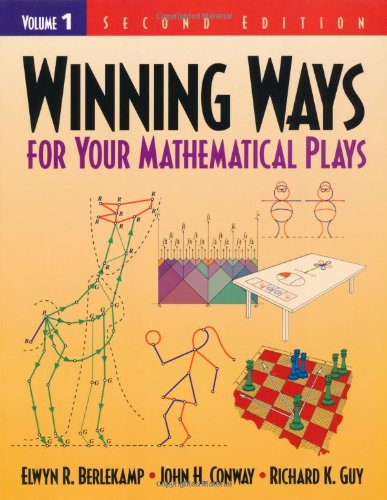
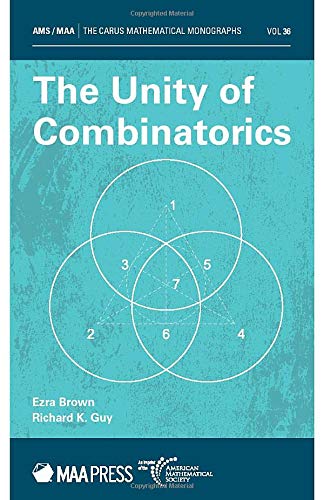
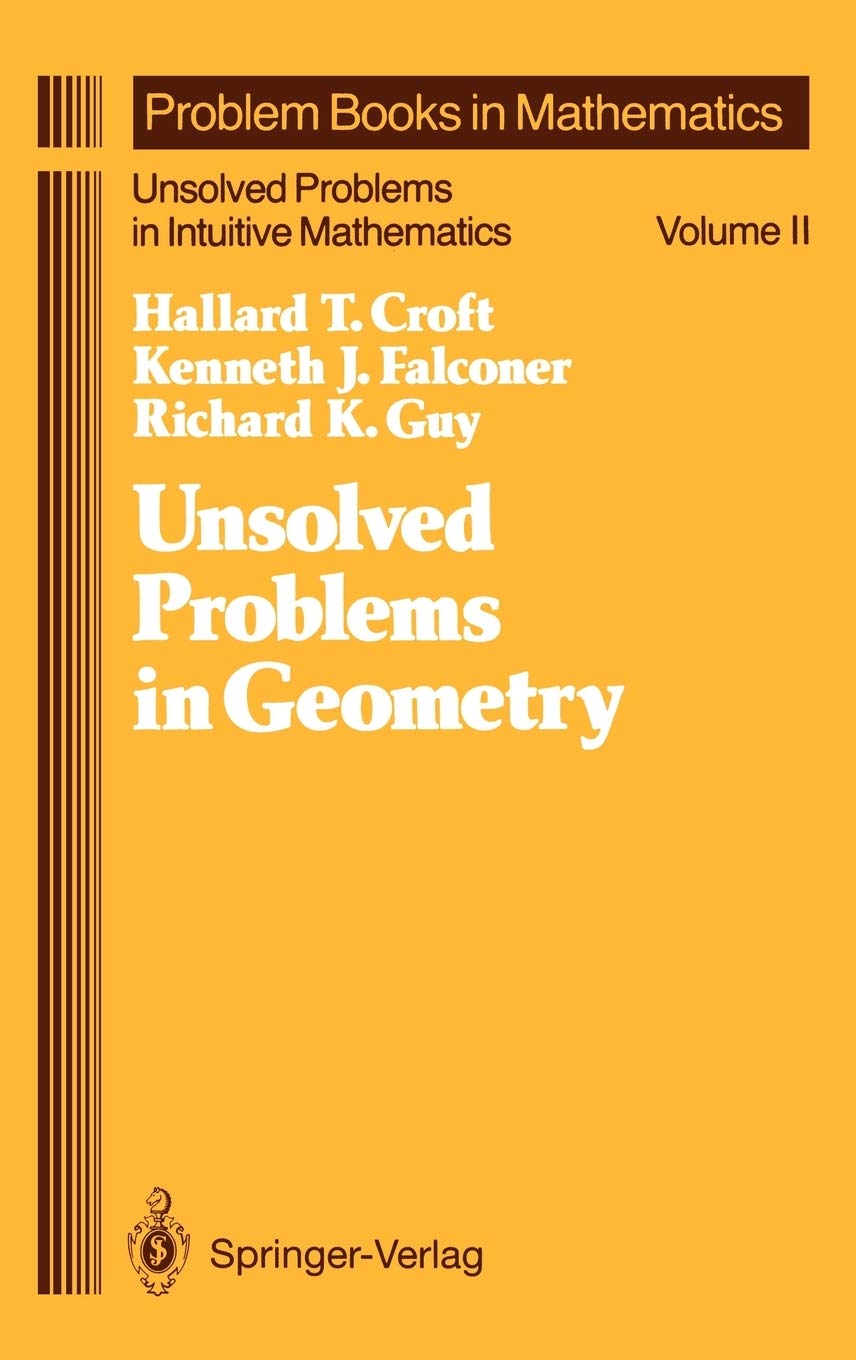
Richard Kenneth GuyWinning WaysThe Unity of Combinatorics, Ezra Brown and RK Guy, American Mathematical Society (30 May 2020)Unsolved Problems in Geometry, RK Guy, Springer Verlag, 1994
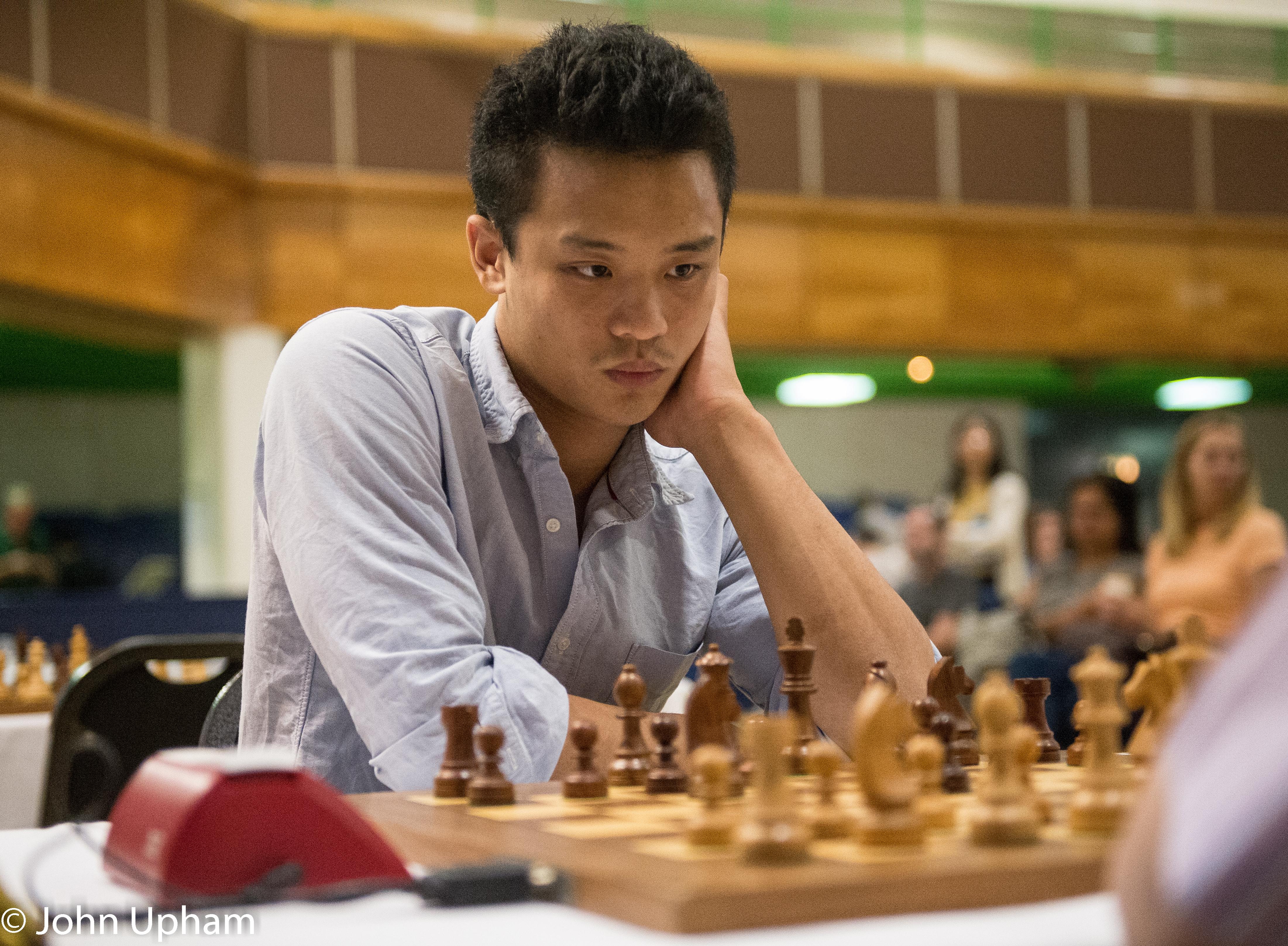
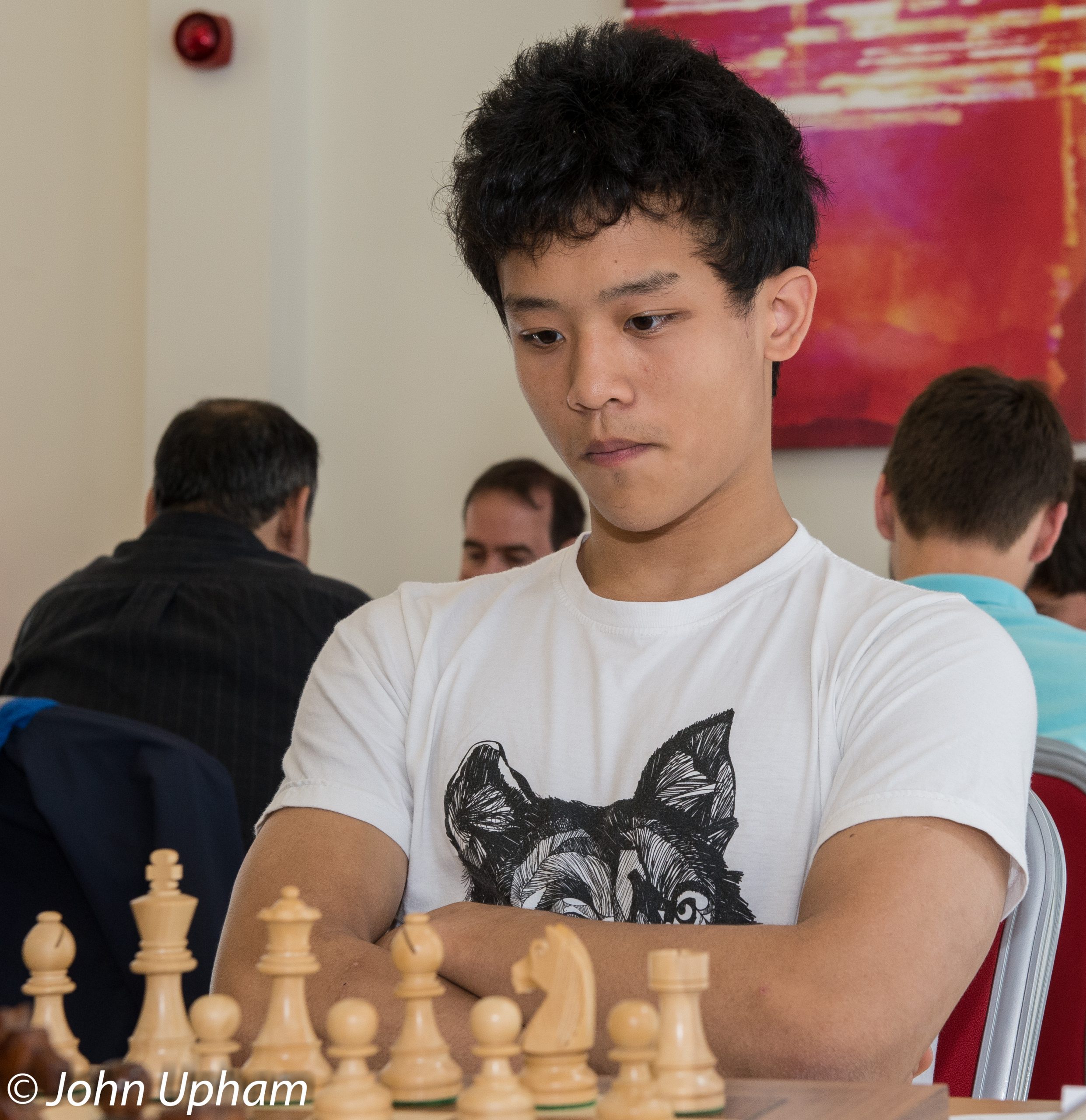
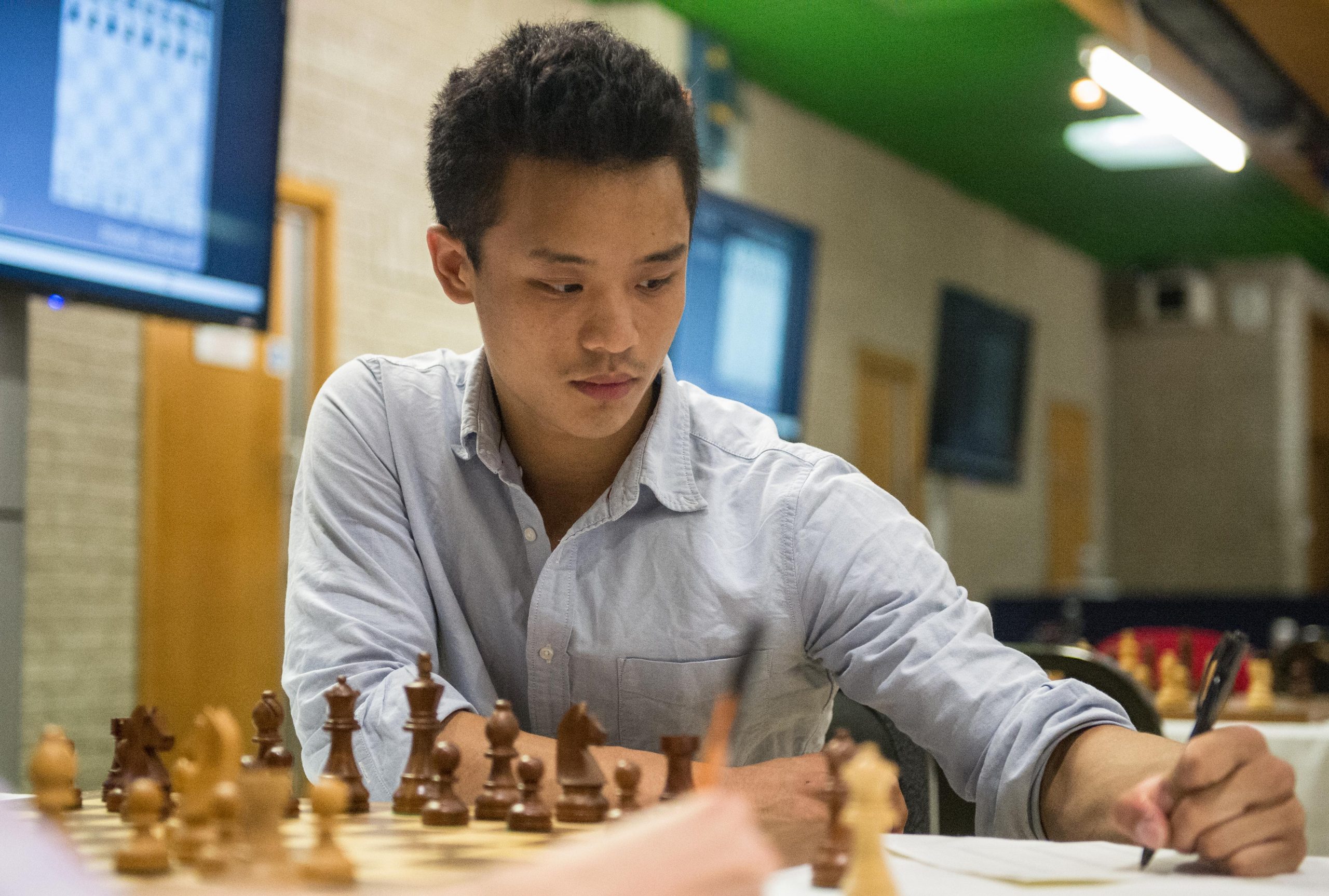
Justin Tan is one of Australia’s promising juniors, and is one of two juniors amongst Australia’s top ten players.
International Master Norms
Tan won his first IM norm during the 2013-14 NCL. His 2nd IM norm came at the Caissa GM tournament held in Kecskemet in Hungary in February 2014, and he secured his 3rd IM norm , and the IM title, at the Bunratty Classic 2015 in Ireland on 22 February 2015.
Championships
Tan scored his first positive result against an accredited Master when he drew with WIM Narelle Szuveges in the Noble Park Club Championship in February 2008. Six months later he scored his first win against a master at the Noble Park Grade A Championship when he defeated FM Al-Rashid Abdul Wahab of Iraq. At the age of 12, he competed in the World U16 Championship 2009 that was held in Antalya in Turkey, scoring a solid rating-enhancing 5.5/11. He scored 5.5/9 in the 2011 U14 World Championship, beating the eventual winner FM (and now GM) Kirill Alekseenko in their individual encounter. He first played in the Oceania Zonal 3.6 in 2011 and scored 6.5/9 in the Zonal 3.6 tournament in 2013, earning his FM title under the 50% rule. He placed second to Alastair Cameron in the 2012 Australian U18 Open with 7.5/9 and did well in scoring 6/11 in the 2012 Australian Championship. He was equal second at the Victorian Championship in 2013. In September 2015, he was equal first at the Illinois Open State Chess Championship.
In October and November 2015, Tan contested the World U18 Championship staged in Greece, and placed =4th with 8/11.
Tournaments
<2007-2009> Tan’s first FIDE-rated event was the Arthur Tan Malaysian Open Championship in 2007. His first significant result at the sharp end of the leader board was equal first at the Noble Park Chess Club Open in Melbourne in May 2009.
<2010-2012> In May 2010, he scored his first win against an International Master when he defeated Mirko Rujevic at the City of Melbourne Open. He was equal first at the MCC ANZAC Day Weekender in 2010 alongside Erik O M C Teichmann and Mirko Rujevic, and won the same event in 2012 in Melbourne with 6.5/7. He won the Noble Park Grade A event in 2011, was equal first (second on tiebreak) at the 2011 Noble Park Club Championship, placed fourth in the Noble Park Club Championship 2012, and was equal first at the Noble Park Masters 2012. He finished 2012 by winning the Bob Brooking Round Robin ahead of IMs James Morris and Rujevic.
<2013-2015> 2013 started with equal first at the Noble Park Club Championship. He was equal first at the Canterbury Summer Swiss 2013 held in December 2013 in Melbourne. He chanced his arm at the powerful Isle of Man Masters (2015) held in October 2015, and scored a rating-neutral 4.5/9.
Team Events
6/10 on board 2 at the 2012 World Youth U16 Chess Olympiad, helping the Australia “A” team to 8th place. Tan played board 2 for Oxford 1 in the 2013-14 4NCL, winning his first IM norm during that event.
Rating and Ranking
Tan’s initial rating was 1802 in April 2008. His highest rating and ranking to date is 2446 and Australian #6 in November 2015.”
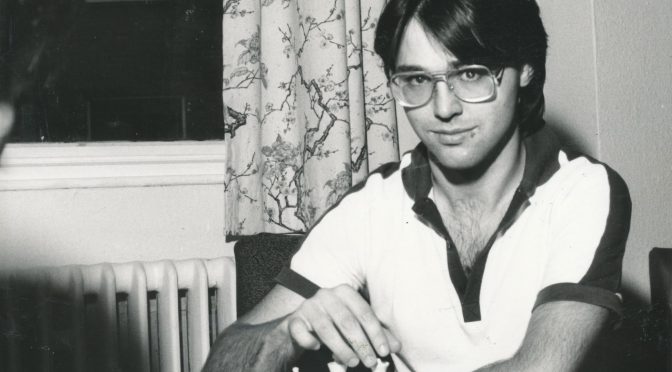
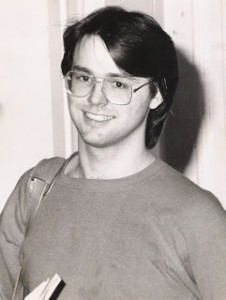
Jim obtained his FM norm in 1980 according to Gino de Felice.
From Chessgames.com :
“Harold James (Jim) Plaskett was born in Dkeliha, Cyprus. He was awarded the IM title in 1981 and became a GM in 1985. Plaskett’s tournament results include first place at Plovdiv 1984 and a tie for second at Hastings 1984-85. He was British champion in 1990.”
In December of 2021 Camberley Chess Club (ECF Club of the Year for 2021) had Jim as an invited guest to one of their Tuesday evening Zoom calls. Here is a taster of the full video:
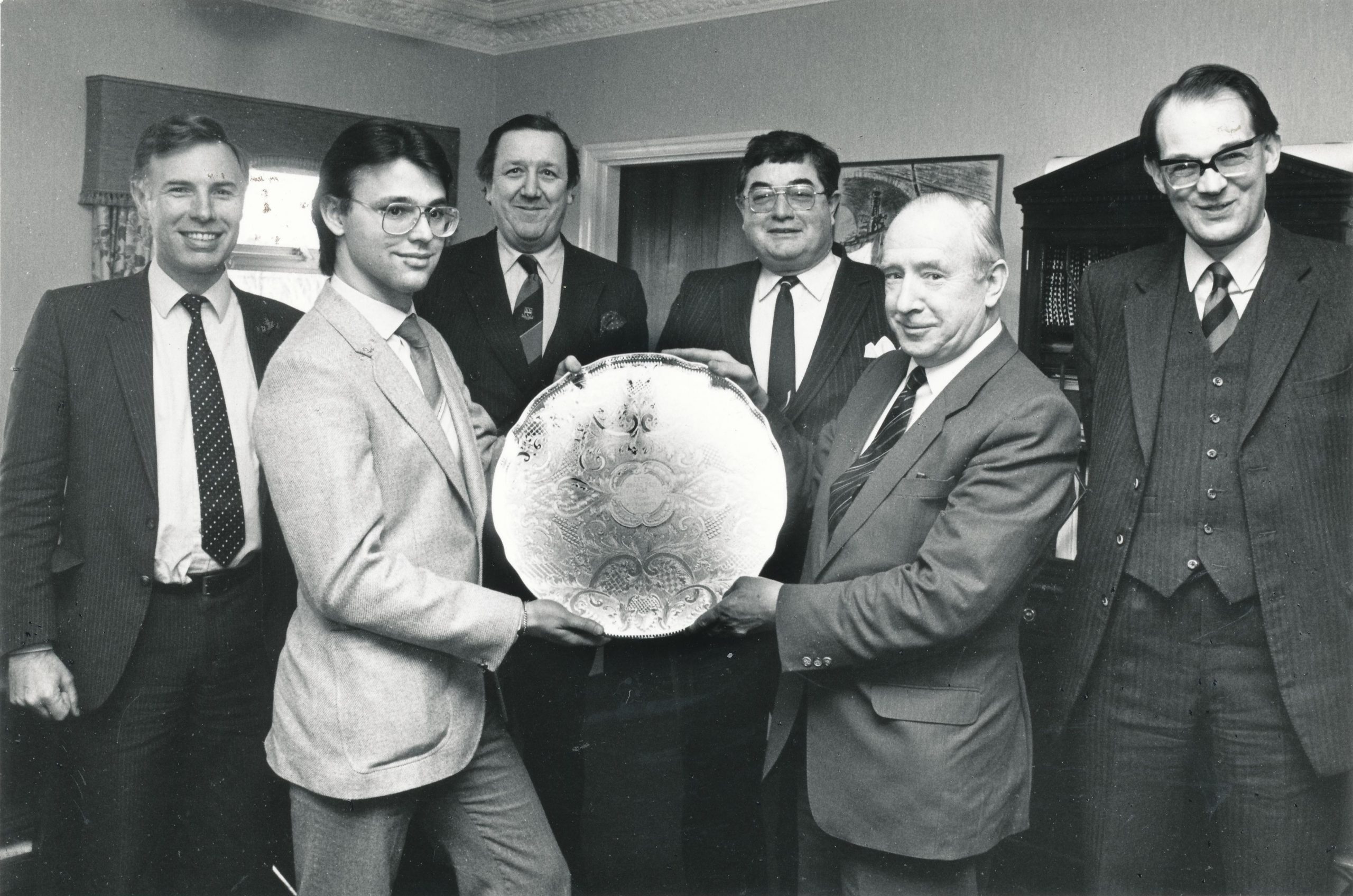
Jim with David Anderton OBE at the 1983 Benedictine International (Manchester)
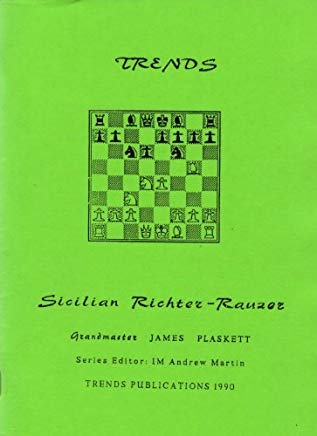
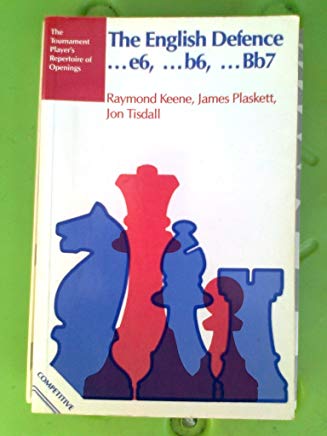
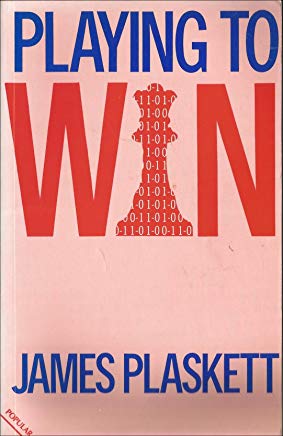
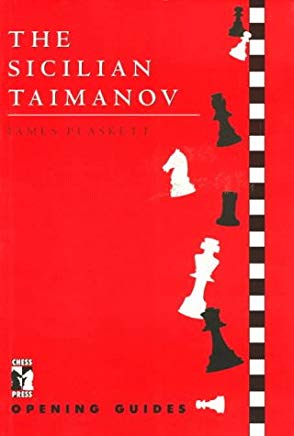
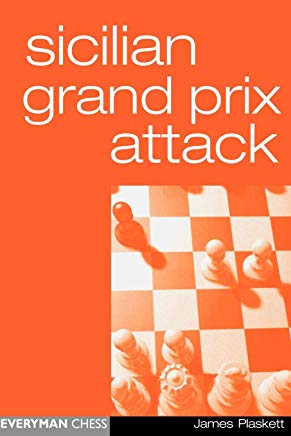
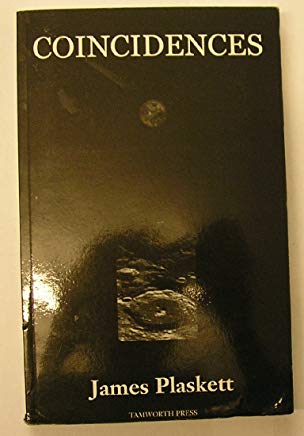
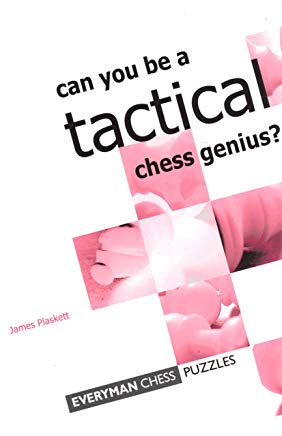
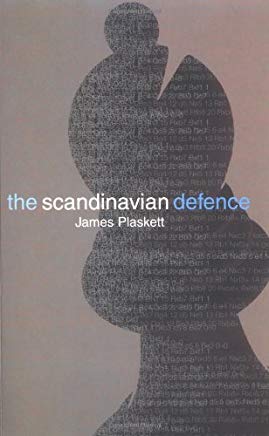
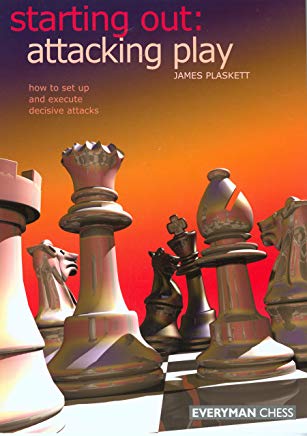
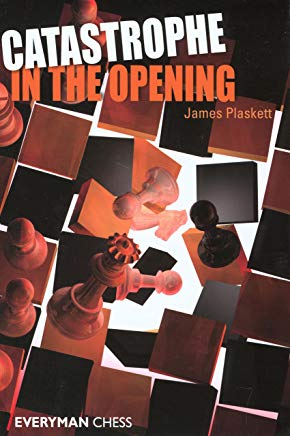
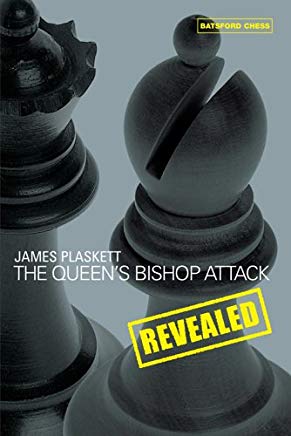
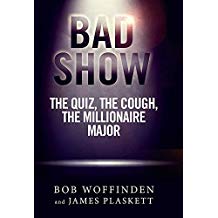
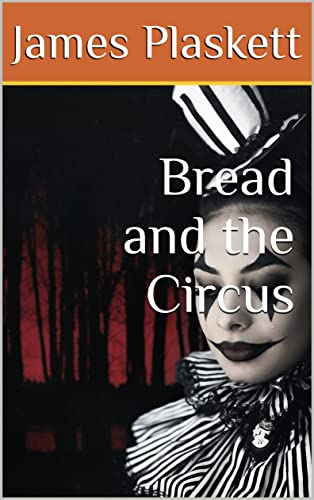
Trends in the Sicilian Richter RauzerTrends in the Sicilian SozinTrends in the Gruenfeld without cd5The English DefencePlaying to WinThe Sicilian TaimanovThe Sicilian Grand PrixCoincidencesCan You Be a Tactical Chess Genius?The Scandinavian DefenceStarting Out: Attacking PlayCatastrophe In The OpeningThe Queen’s Bishop Attack Revealed.Bad ShowBread and the Circus, James Plaskett, Amazon Kindle, ASIN : B09N9SJLWG
BCN remembers Reginald Bonham (known as “Bon”) who passed away, this day, March 16th in 1984 in Worcester, Worcestershire.
In the 1970 New Years Honours, Civil Division he was awarded the MBE for “Services to the blind”. Interestingly, in 1992 his sister Mary also received an MBE for “Services to the blind” This is surely an unusual happening.
Reginald Walter Bonham was born on Wednesday, January 31st 1906 : the same day as the Ecuador–Colombia earthquake which measured 8.8 on the Richter Scale.
He was born in St. Neots, Huntingdonshire, Cambridgeshire.
In the 1911 census aged 5 he lived in the High Street, St. Neots with William R Bonham (father, master butcher, aged 45), Edith Mary Ann Bonham (mother, 38), Howard William Bonham (6), Maurice George Bonham (3) and Ernest Charles Bonham (1). The family had a servant / domestic duties assistant called Elise Annie Goss aged 18. The census did not record any disability for Reginald.
Reg, like others in his family, suffered from deficient eyesight and was therefore unable to attend a “mainstream” school.
From 1922 – 1925 he attended the Royal Worcester College for the Blind (originally Worcester College for the Blind Sons of Gentlemen) in Whittington Road, Worcester, WR5 2JX. The Headmaster (GC Brown) encouraged his chess and rowing talents and in 1926 he was sent up to St. Catherine’s College, Oxford to read mathematics.
Reginald was a highly competant rower, competing for his college and reaching the trial stage for the Oxford Varsity crew.
In 1934 Reg founded the Braille Chess Magazine.
In the 1939 census he was recorded as living at 4, St. Catherine’s Hill, Worcester, WR5 with his wife, Josephine Bonham (born 24th September 1904). Reginald was listed as being a Mathematics tutor at the Royal Worcester College for the Blind (originally Worcester College for the Blind Sons of Gentlemen) in Whittington Road, Worcester, WR5 2JX. The college is now named New College Worcester. Their home was around a mile from the College. Josephine was listed as carrying out “unpaid domestic duties”.
He taught a combination of Braille and mathematics and was an amateur thespian and keen bridge player.
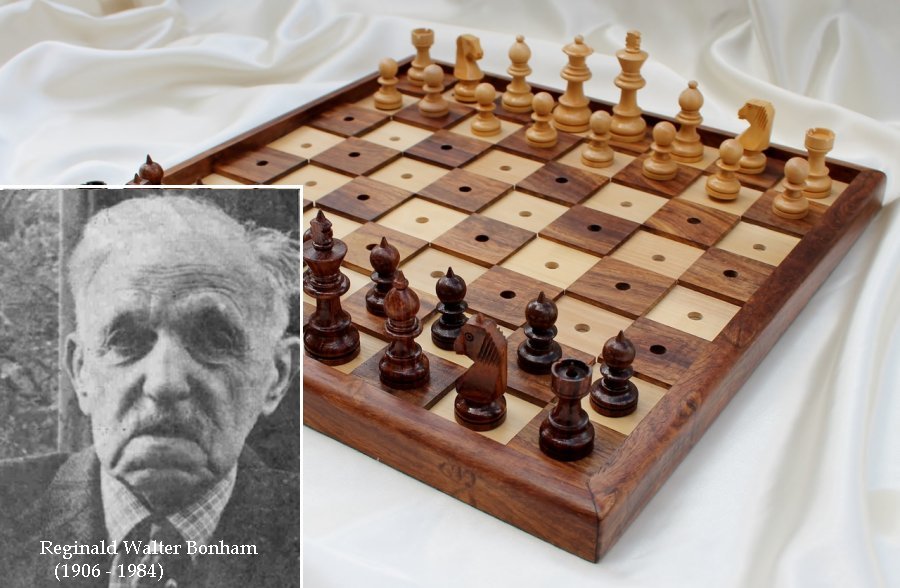
RW Bonham and a Braille chess set set-up incorrectly
Interestingly RWB in 1939 was an ARP (Air Raid Precautions) Warden and a St. John Ambulance volunteer for the College.
He was Worcester champion twenty times and four times Midlands champion winning the Birmingham Post Cup twice.
On June 6th 1947 Bonham played in Birmingham in a match between Great Britain and Czechoslovakia playing Ladislav Alster and won this attractive game :
He was Blind World Champion in 1958 and Correspondence Blind World Champion in 1957, 1959, 1961, 1964 (jointly) and 1966.
He was active in postal play, taking part in international events in the decade after the war when few British players ventured “into Europe”. A note in the 1972 BCM (page 216) records the award of the title Correspondence GM of the Blind by the International Braille Chess Association, so his omission from the recent book British Chess seems rather unfortunate.
Among the titles won by Reginald Bonham were British Correspondence Championship, shared in 1947 with J. Cairncross and shared in 1951 with E. Brown) and Midland Champion (1947 and 1950).
Tim Harding kindly adds :
“He had earlier been runner-up in the BCF’s 1938 CC Championship and, most importantly, he won the 1942/43 Championship outright with 9/10, a point and a half ahead of David Hooper. (By then the BCF and BCCA championships had been merged into one event.)
The crosstable is on page 254 of my book Correspondence Chess in Britain and Ireland 1824-1987.”
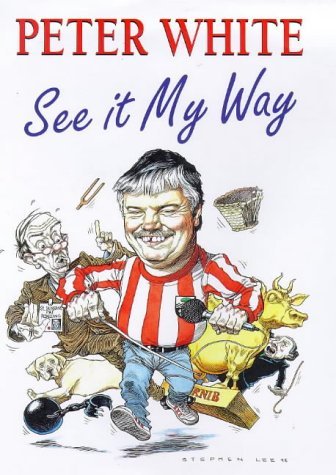
One of his students was broadcaster Peter White MBE who described Bon in his autobiography See it My Way
See it My Way, Peter White, 1994
From British Chess Magazine, Volume XCII (92, 1972) Number 6 (June), page 216 we have this item in News in Brief :
“At the closing ceremony of the 4th Chess Olympiad for the Blind at Pula, Yugoslavia (April 6-18) the International Braille Chess Association awarded the title of Correspondence Grandmaster of the Blind to R.W. Bonham of Worcester, for having won the Postal Championship more than three times.”
From British Chess Magazine, Volume CIV (104, 1984) Number 5 (May), page 194 we have this obituary :
“We regret to announce the death in March of two early winners of the grandmaster title (the other was Comins Mansfield MBE).
R.W.Bonham (31 i 1906 – 16 iii 1984) died at Worcester, where he had long served as a Master at the Royal Worcester College for the Blind. In the 1950s he took part in the British Championship with success. Many older players will remember him fingering his special board before announcing his move and checking his clock with its markers outside the glass face.
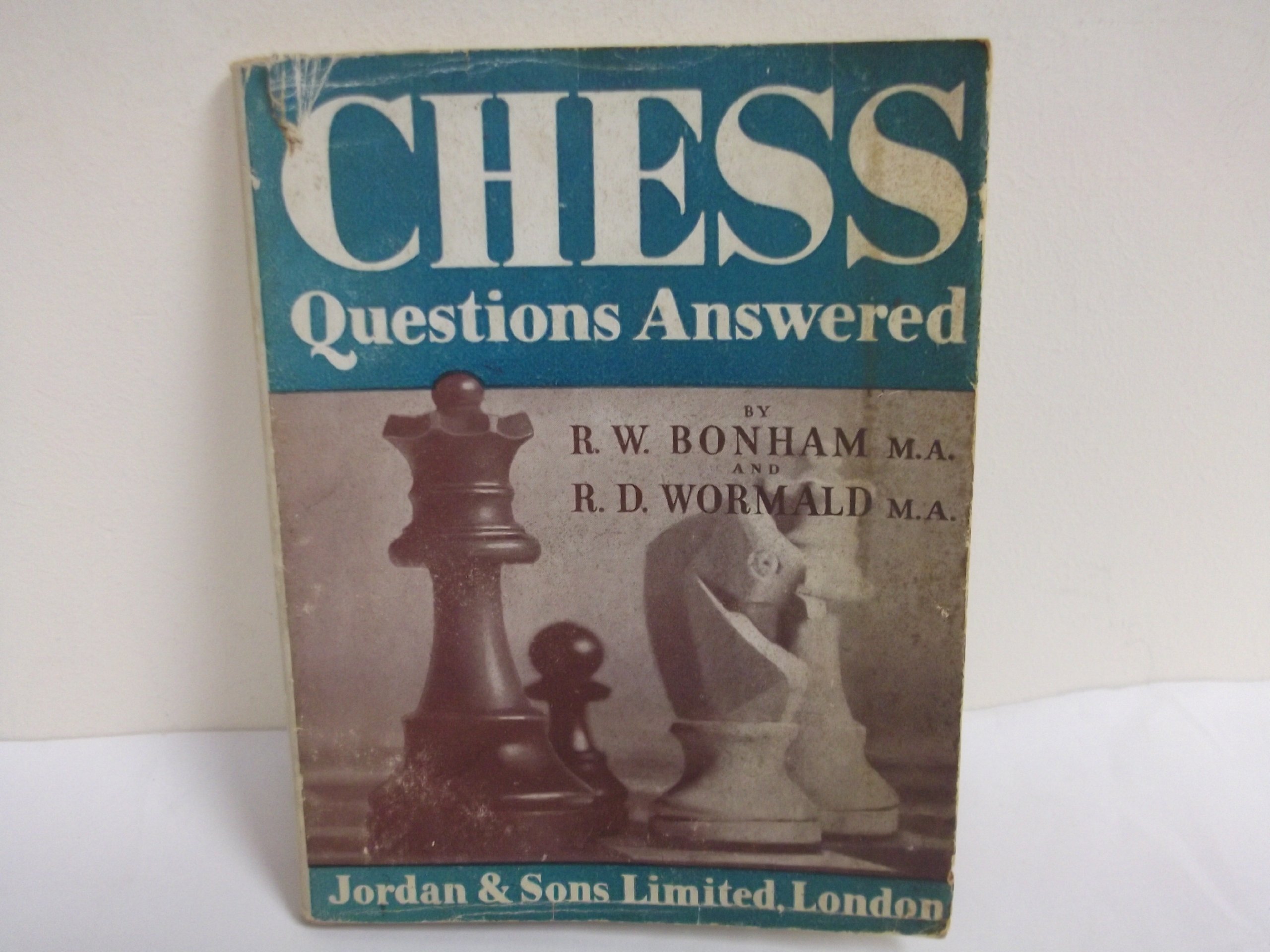
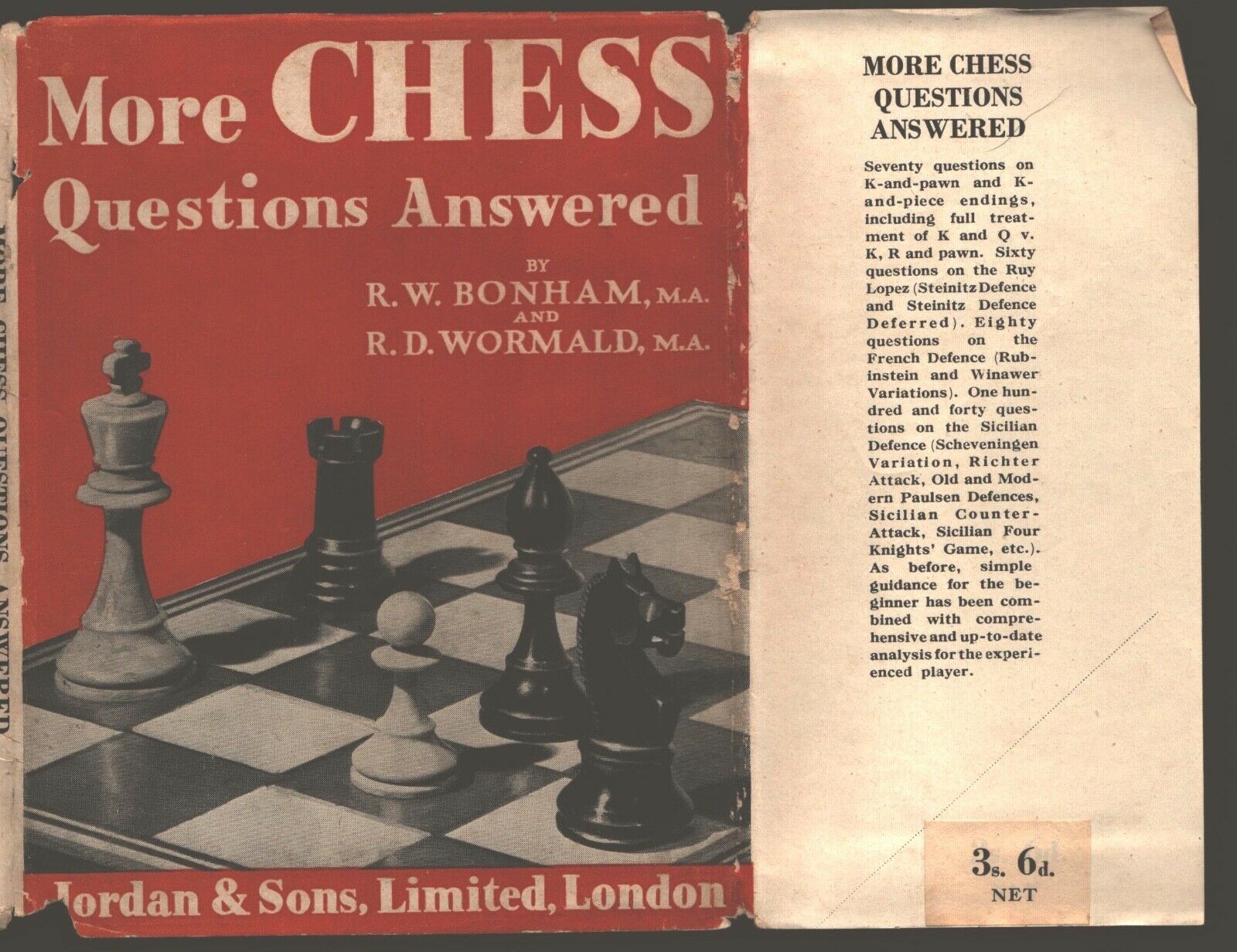
He was also (with Wormald) joint author of those fine little books Chess Questions Answered and More Chess Questions Answered.”
Sadly, RWB did not merit articles in Sunnucks or Golombek’s Encyclopedias or Hooper’s and Whyld’s Oxford Companion or, as mentioned previously, British Chess.
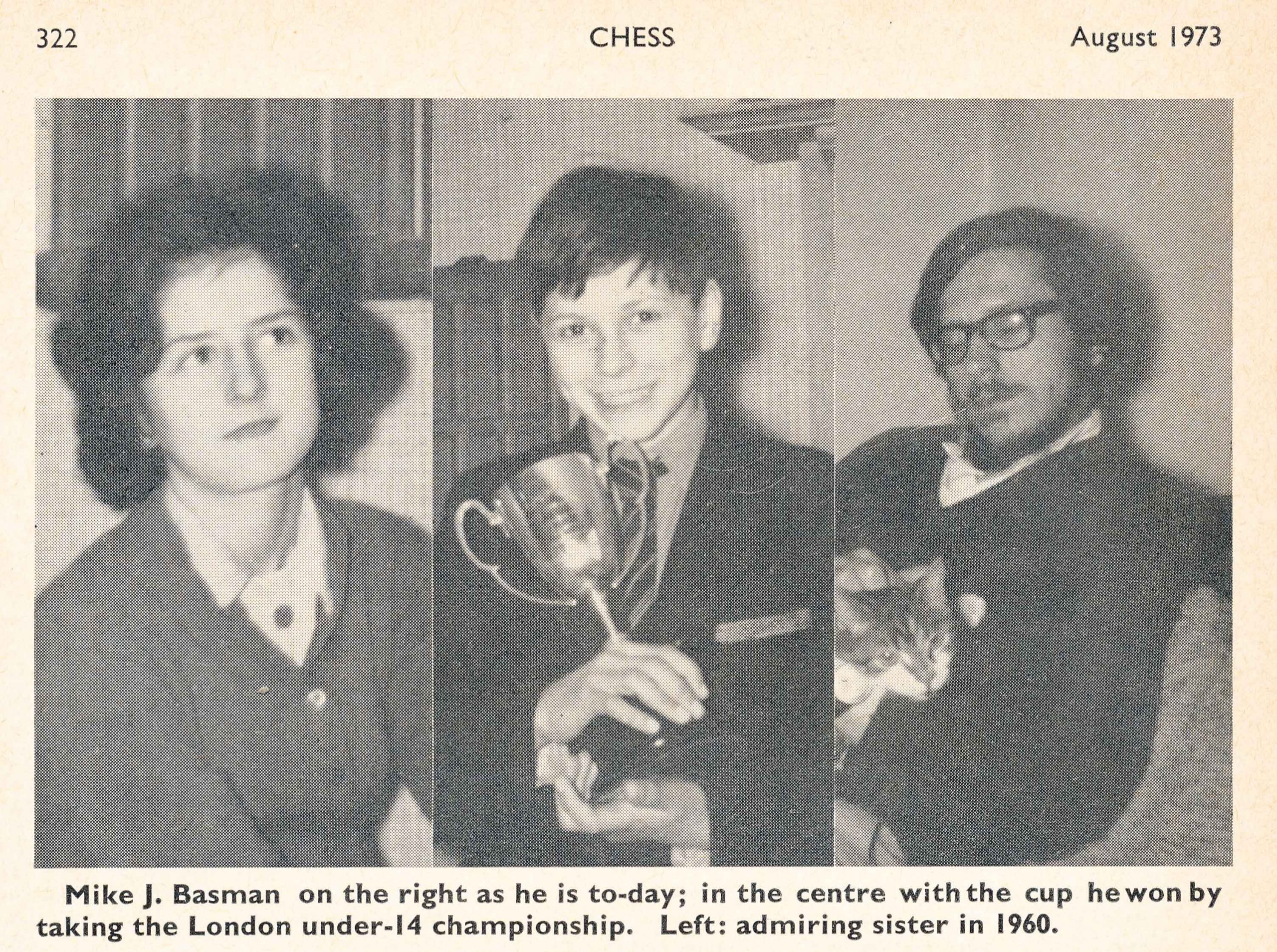
We remember IM Michael Basman who passed away on October 26th, 2022
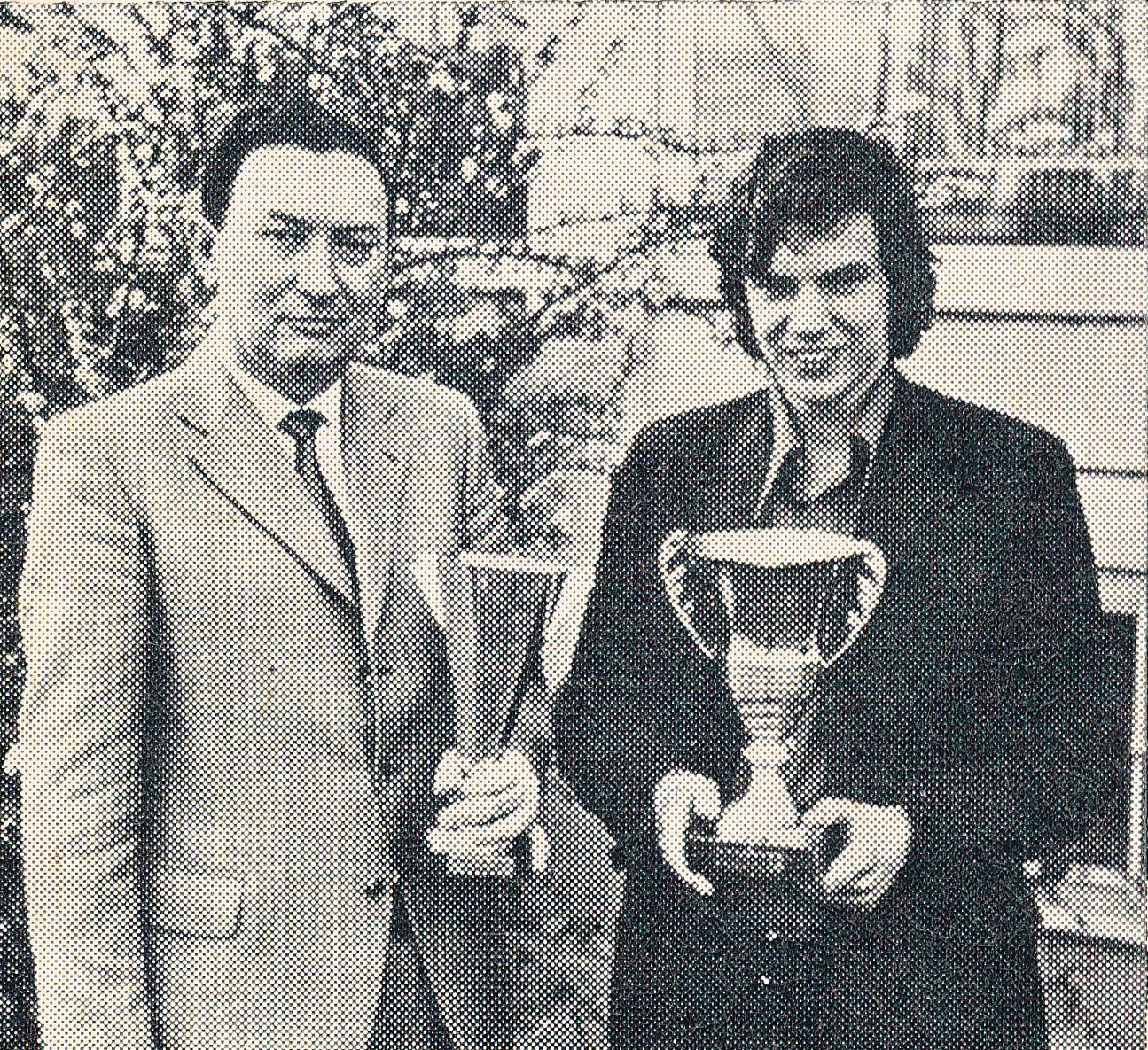
Mike J. Basman on the right as he is to-day; in the centre with the cup he won by taking the London under-14 championship. Left : admiring sister in 1960. From CHESS, August 1973, page 322.
Mike attended The University of Leeds as an undergraduate reading history.
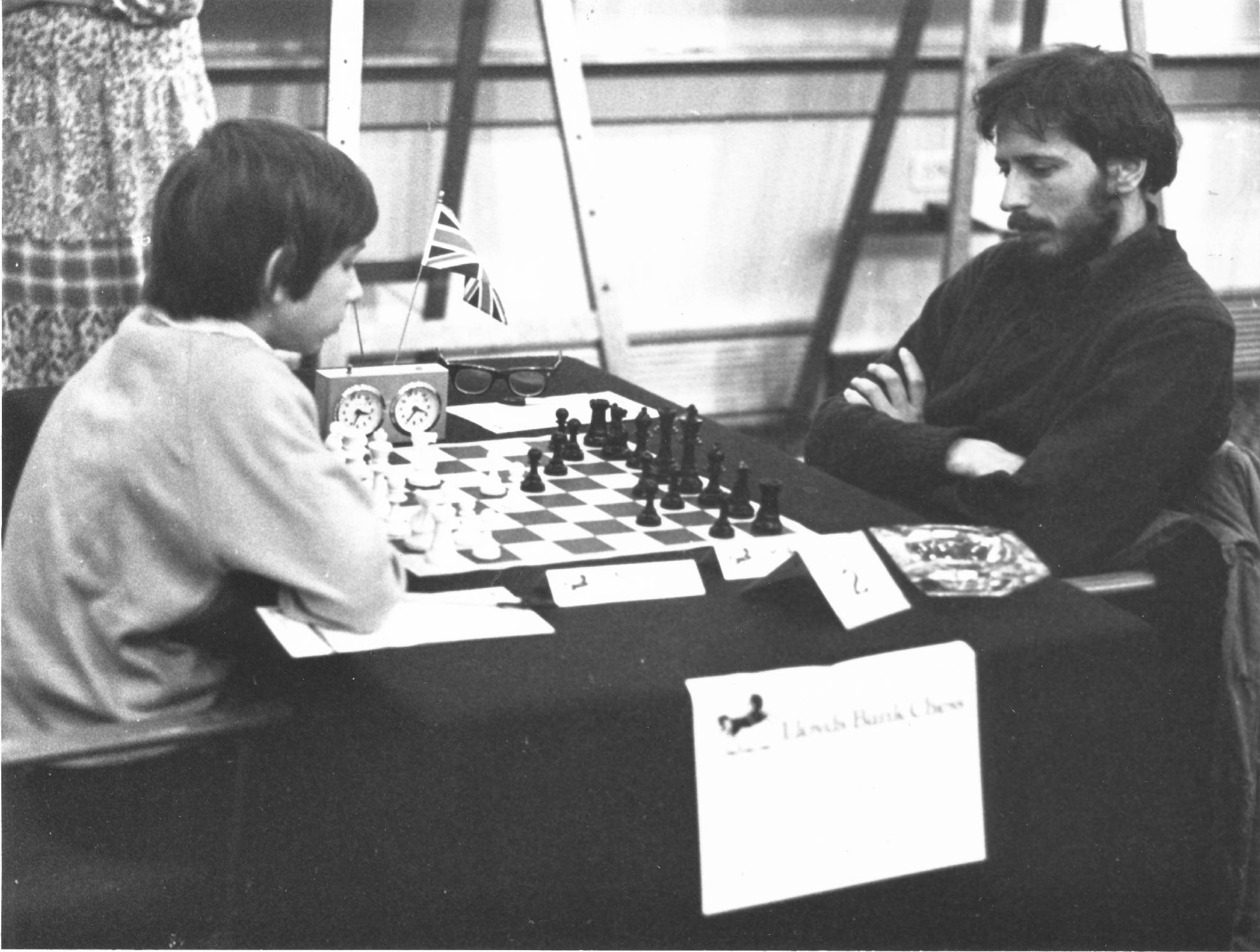
Joel Benjamin plays Mike Basman in round 2 of the 1978 Lloyds Bank Open
“Michael John Basman was born in St Pancras, London, England. He was awarded the IM title in 1980 and having dual nationality won the Erevan Championship whilst living there in the early 1970s. He was also a pioneer in the production of audio tapes for chess.
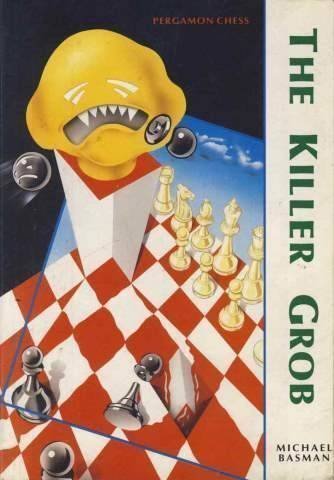
He is noted for his use of unorthodox flank openings, such as 1.g4, 1.h3, 1.e4 g5, etc. He expanded on the work of Henri Grob with his book on the topic of 1.g4, The Killer Grob.
He created the UK Chess Challenge, a tournament for juniors of all standards and ages progressing over four stages.(1)”
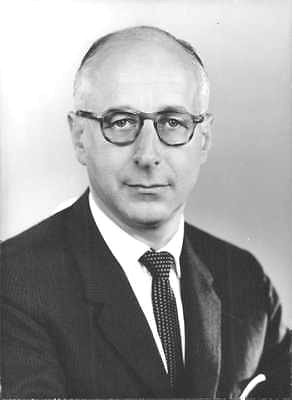
BCN remembers Gerald Abrahams who passed away in Liverpool on Saturday, March 15th 1980. He was buried in the Allerton Cemetery in the Jewish Springwood plot.
Gerald Abrahams was born in Liverpool on Monday, April 15th 1907. On this day the Triangle Fraternity was formed at the University of Illinois at Urbana–Champaign.
His parents were Harry (b. 10th September 1880) and Leah (b. 12th March 1884) Abrahams (née Rabinowitz) who married in West Derby in the third quarter of 1903.
Gerald learnt chess at the age of ten during the first world war. He obtained an Open Scholarship to Wadham College, Oxford in 1925 reading PPE and earning himself an MA in Law in 1928. He became a practising barrister at Law.
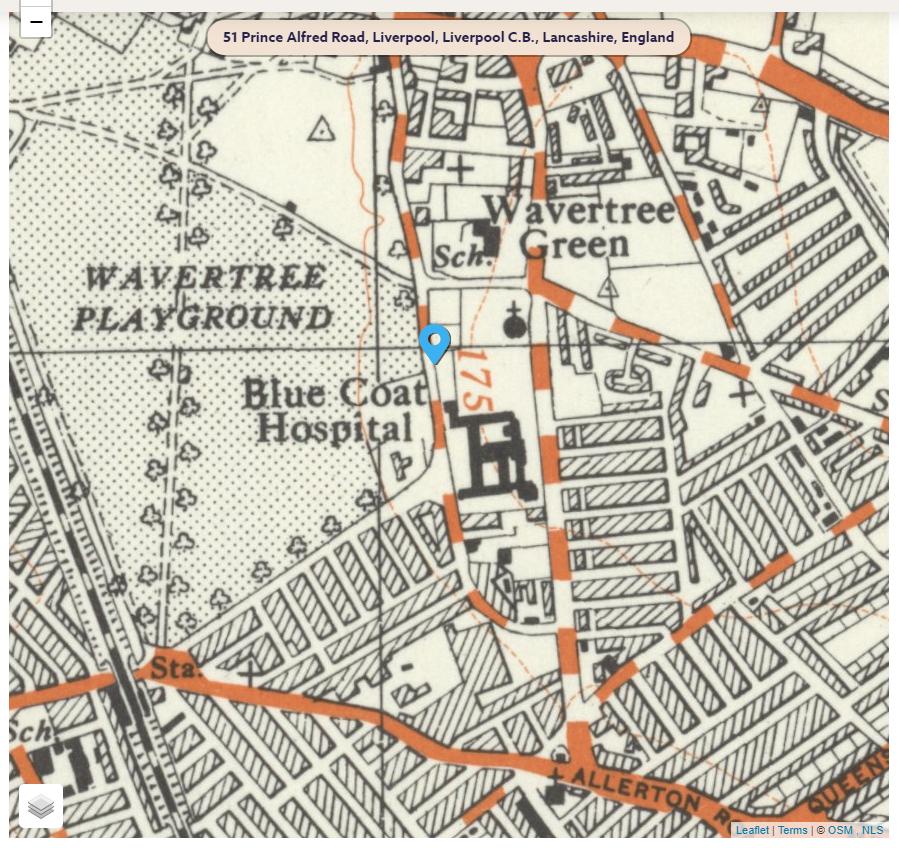
From the 1939 register we learnt that Harry was a Drapery manufacturer and Leah carried out “unpaid domestic duties”. Gerald was not an only child: the first born was Winnie (b. 22nd November 1903) who was a Secretary and Clerk Typist and factory assistant. Elsie Abrahams (b. 14th April 1905) helped her mother with “unpaid domestic duties”. Blanche was Gerald’s older sister and she was “General Assistant In Fathers Business Drapery Manufacturer”. Gerald is listed (aged 32) as a Barrister at Law and author. The family resided at 51 Prince Alfred Road, Liverpool, Lancashire (now L15 6TQ) and their original property has been since replaced.
Historical map showing the 1939 residence of Gerald Abrahams
The full list of people present seems to have been largely or entirely Jewish in religion or ethnicity: it included a famous chess-playing barrister from Liverpool, Gerald Abrahams, representing himself, who had taken a First in P.P.E. at Oxford, and later married Elsie Krengel, who had also been present, and with Leslie Black representing the rest of the defendants, apart from the hosts and Captain Lionel Husdan, who sent a letter to the court.
The full list of those present, charged with “resorting and playing in a common gaming house,” and bound over was as follows:- Mott Alexander, Fannie Finn, Maxwell Glassman, Kate Lippa, Myer Lister, Gertrude Mannheim, Joseph Mannheim, Rita Mannheim, Simon Mannheim, Harry Peters, Sadie Peters, Lily Leah Ross, Harry Sapiro, Benjamin Stone. Those charged with “resorting in a common gaming house” and bound over, were:- Gerald Abrahams, Joseph Appleton Bach, Samuel Myer Barnett, Herbert Solomon Isaacson, Elsie Krengel, Manuel Mannheim, Louis Michaelson, Abraham Ross, Bernard and Elsie Ross.
“Gerald Abrahams, the barrister charged, said he was interested to protect his reputation from being stigmatised by a conviction, and asked Sergeant Laycock about alcohol: the latter replied that none was being consumed. He submitted that the club was not a gaming house, and that draw poker had not been proved other than as a game of skill. Charges were dismissed against Henry, Eva and Marjorie Black, Myer Waldman, and Captain Lionel Husdan, of Ryde, Isle of Wight, all of whom had said that they were merely taking refreshments in the club, and had not played. David Platt said that he had not the slightest idea that they were breaking the law, and Mrs Platt said that it had not been a paying venture.”
The Complete Chess Addict (Faber& Faber, 1987), Fox & James notes: that Gerald Abrahams as authority on bridge cast doubt on assertions that Emanuel Lasker “was good enough to represent Germany”
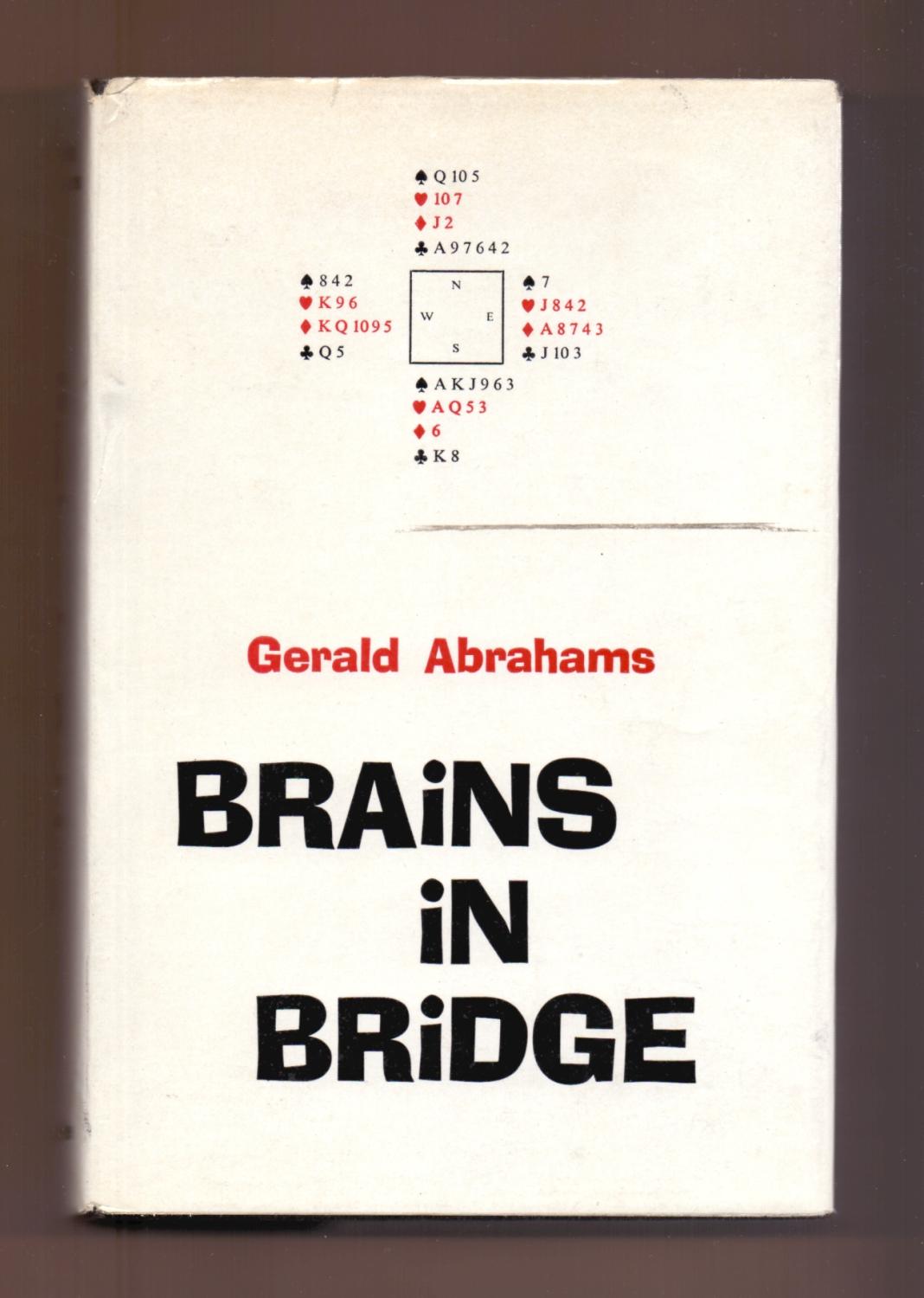
Gerald’s comparisons of chess and bridge are discussed by Edward Winter in Chess Facts and Fables (McFarland, 2005) page 130 in GAs 1962 book Brains in Bridge:
Brains in Bridge, Gerald Abrahams, Constable and Company, 1962, ISBN ?
Gerald eventually married Elsie Krengel (born 15th January 1909) in the fourth quarter of 1971 in Liverpool at the age of 64. Elsie had lived in the Southport area for most of her life and her family was associated with the manufacture of handbags. They had known each other for many years (at least since 1942 as mentioned previously).
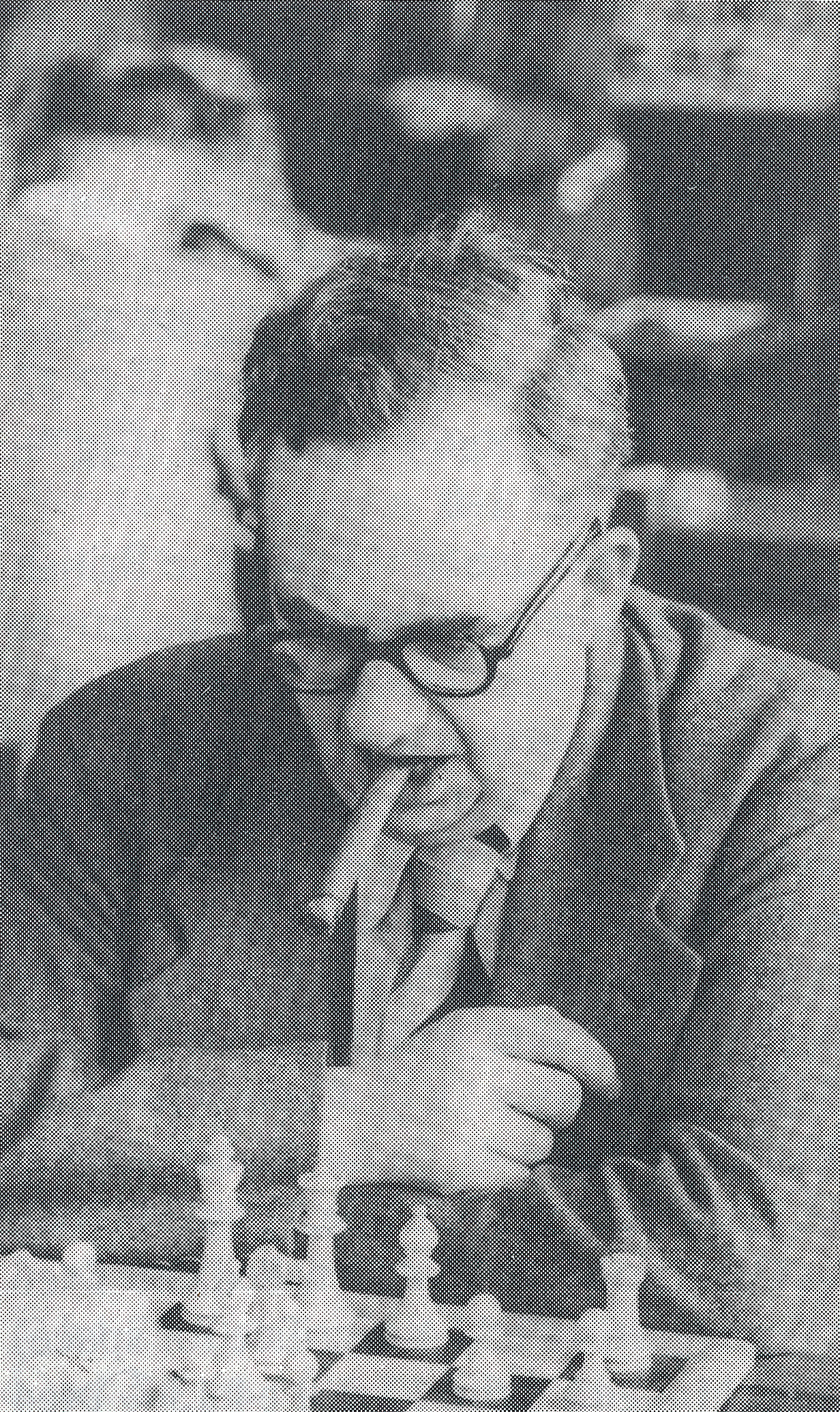
Gerald Abrahams
Leonard Barden modestly recounts :
“At the end of Nottingham 1954 Gerald claimed that Alan Phillips had accepted his draw offer so tieing Gerald for the British championship with some rabbit whose name escapes me. When Phillips strongly denied having accepted the draw, Gerald collapsed on the floor and had to be aided by his old enemy Dr. Fazekas.”
From The Anglo-Soviet Radio Chess Match (1946) by Klein and Winter:
“G. Abrahams was born in Liverpool in 1907. He learned chess at the age of ten, and showed an early aptitude for tactical complications. He has played with varying success, his best performances being third and fourth with Rossolimo, behind Klein and Najdorf, but head of List at Margate, 1938, and fourth, fifth and sixth with Sir George A. Thomas and König in London, 1946. He has made two valiant bids for the British Championship.
A graduate of Oxford, he is a barrister by profession and has written several books, including some fiction. He has solidified his chess without allowing it to become dry. Indeed, most of his games sparkle with interesting complications.”
Harry Golombek OBE wrote (in The Encyclopaedia of Chess (Batsford, 1977)):
“Brilliant British amateur who in the 1930s was playing master-chess. In that period he was the most dangerous attacking player in England.
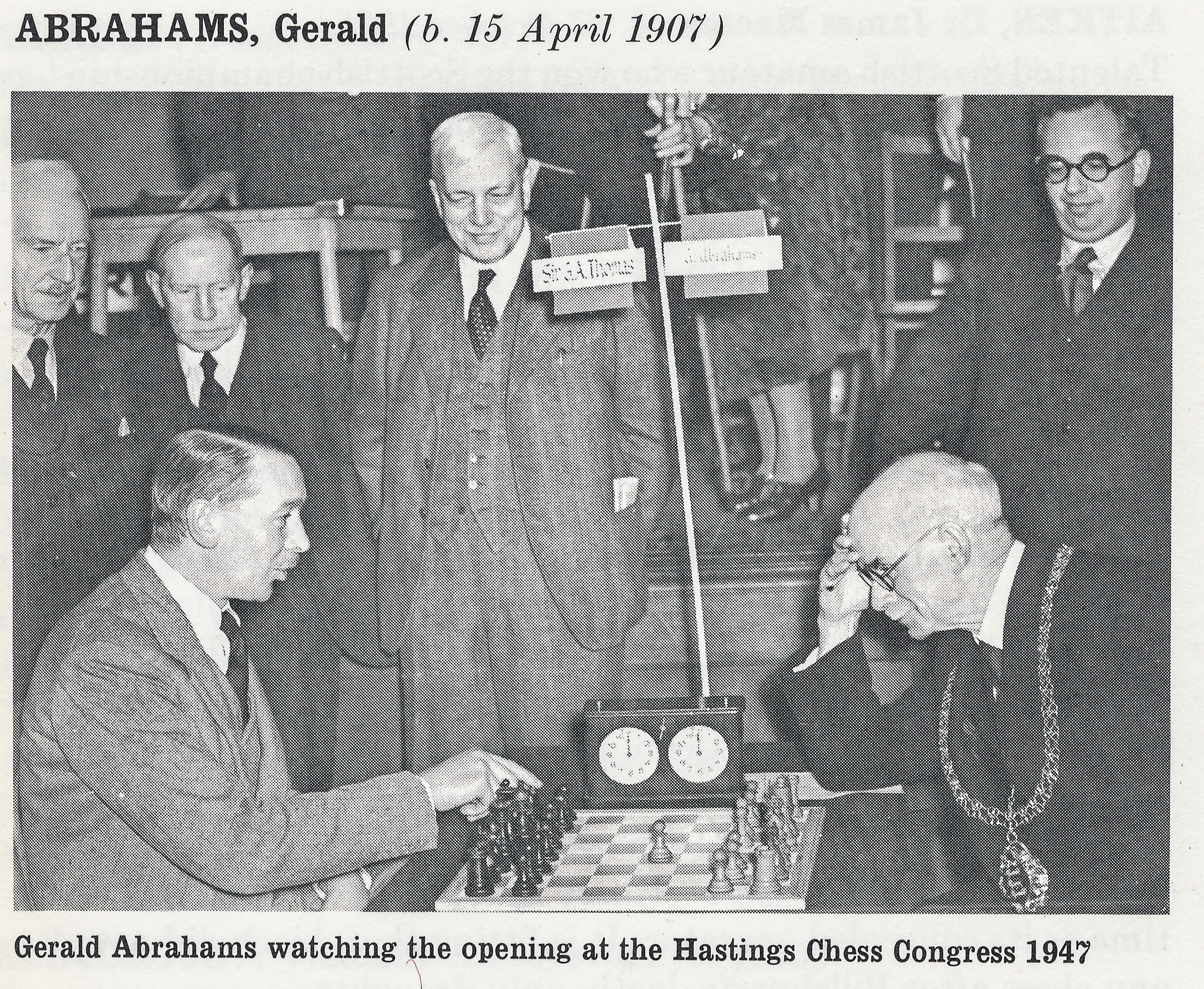
Gerald Abrahams watching the opening at the Hastings Chess Congress 1947. Also watching is Sir George Thomas who was GAs round one opponent. The Mayor was Alderman W. J. Fellows and he is opposite Sir Edmund McNeill Cooper-Key. Second from left is Percy J. Morren who was the Hastings Club President
He was in the prize-list (i.e. in the first four) in the British championship on three occasions 1933, 1946 and 1954. His best international performance was in the Major Open at Nottingham in 1936 where he came =3rd with Opocensky. Another fine result was his score of 1.5-0.5 against the Soviet Grandmaster Ragozin, in the 1946 Anglo-Soviet radio match.
He is the inventor of the Abrahams variation in the Semi-Slav Defence to the Queen’s Gambit: 1.P-Q4, P-Q4;2.P-QB4, P-QB3;3.N-QB3, P-K3;4.N-B3, PXP;5.P-QR4, B-N4;6.P-K3,P-QN4;7.B-Q2, P-QR4; 8.PxP, BxN;9.BxB,PxP;10.P-QN3,B-N2;
This is sometimes known as the Noteboom variation after the Dutch master who played it in the 1930s, but Abrahams was playing it in 1925 long before Noteboom.
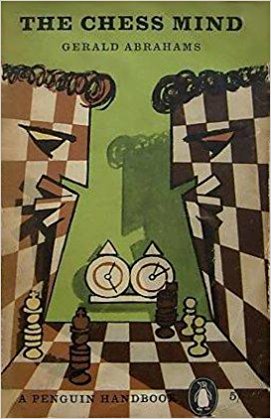
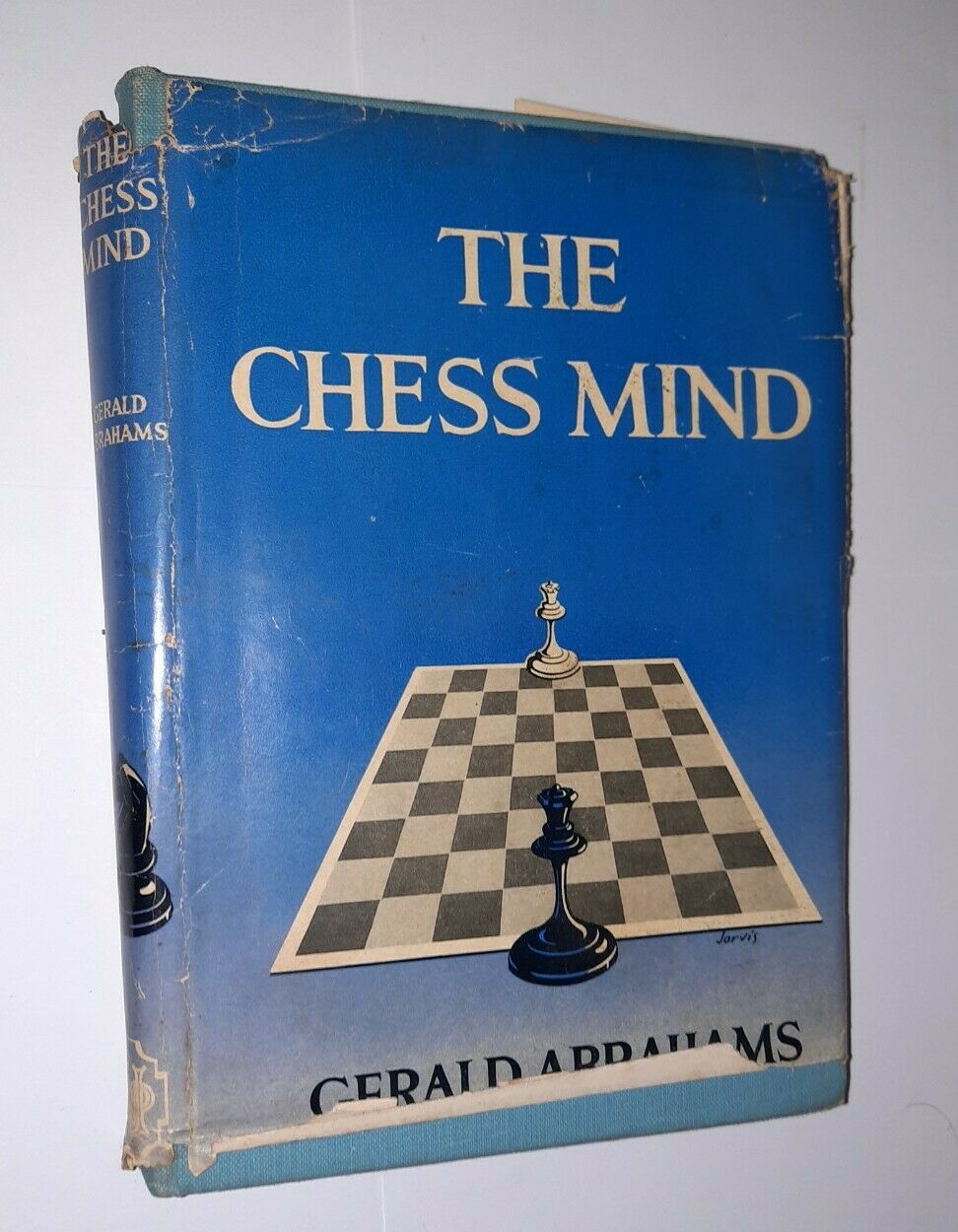
He is a witty and prolific writer on many subjects: on law (he is a barrister by profession), philosophy, and chess; he also writes fiction. His main chess works are: The Chess Mind, London 1951 and 1960
The Chess Mind, Gerald Abrahams, The English Universities Press, 1951, ISBN 0 340 19492 8
and here is a later cover:
The Chess Mind, Gerald Abrahams, The English Universities Press, 1951, ISBN 0 340 19492 8
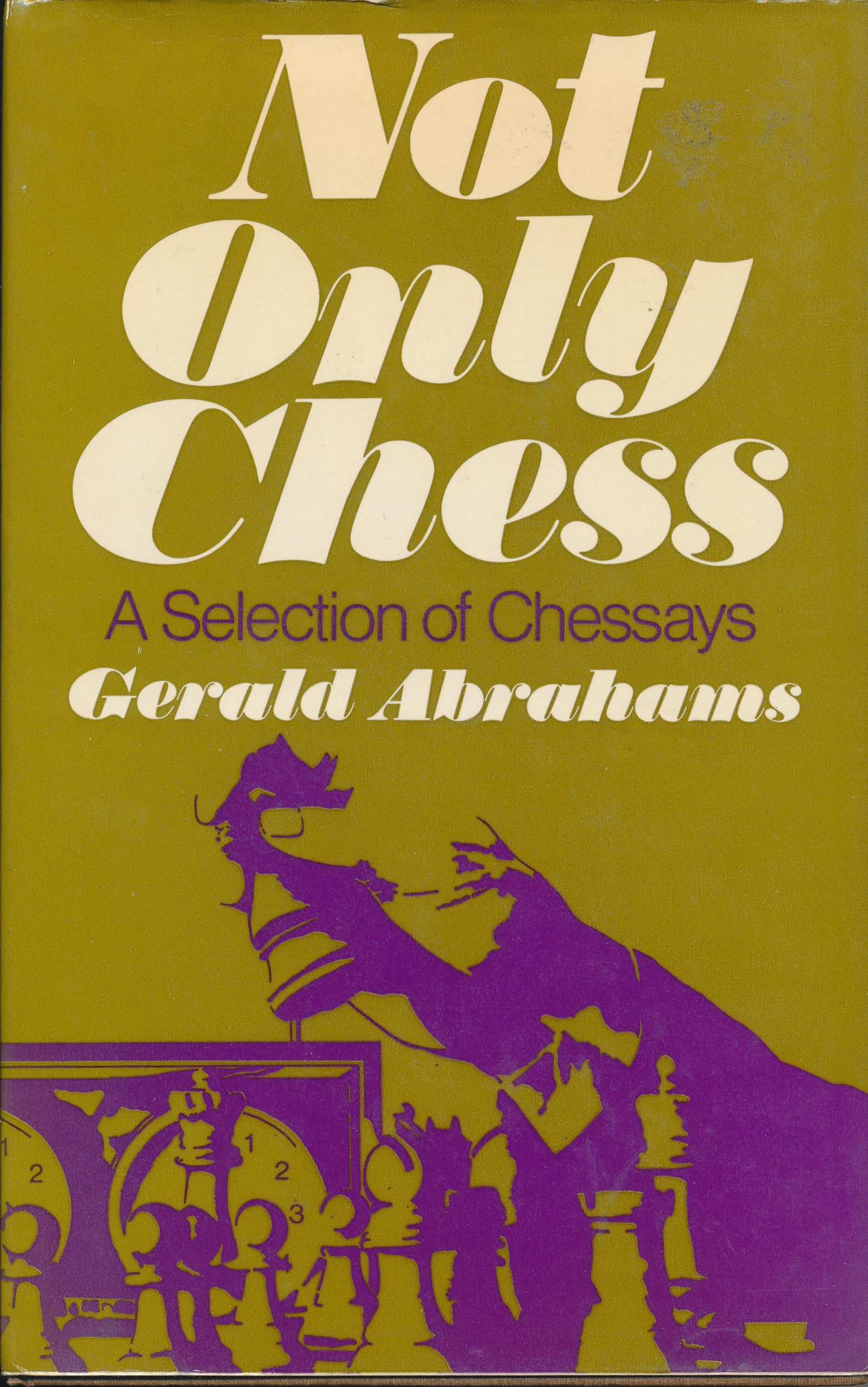
and Not Only Chess, London 1974.
Not Only Chess, Gerald Abrahams, George Allen & Unwin Ltd., 1974, ISBN 0 04 794005 0
Edward Winter in Kings, Commoners and Knaves, cites the subtitle of the above book in his page 235 list of chessy words: “A selection of Chessays”.
From Not Only Chess we learn that GAs favourite game was played in 1930 against Edmund Spencer of Liverpool. “Edmund Spencer was a man who is remembered with affection by all players who ever met him, and who is remarkable in that his strength developed in what should have been hid middle life. When he died, lamentably early, in the 1930s, at about 53 he was at his best, and of recognised master status.
This game was played in 1930.”
and for an alternative view of the same game:
GA is amongst a rare breed of game annotators claiming the title of An Immortal for one of his own games. Edward Winter devotes a couple of column inches discussing exactly which year the game was played between 1929 and 1936. Here is the game:
For more of GAs excellent games see the superb article further on by Steve Cunliffe. Also, Not Only Chess in Chapter 28 (“A Score of my Scores”) contains a veritable feast of entertaining games of GAs).
Gerald famously fell out with Anne Sunnucks when he discovered she had omitted him from her 1970 Encyclopaedia of Chess. Despite this the 1976 edition was also devoid of a mention.
From The Oxford Companion to Chess (OUP, 1984 & 1996), Hooper & Whyld:
“The English player Gerald Abrahams (1907-80) introduced the move when playing against Dr. Holmes in the Lancastrian County Championship in 1925 (ed: January 31st in fact) . Abrahams played the variation against his countryman William Winter (1898-1955) in 1929 and in the same year Winter played it against Noteboom, after whom it is sometimes named. (Dr, Holmes was the favourite pupil of Amos Burn and a leading ophthalmologist).
Gerald Abrahams
The precursor, known from a 16th-century manuscript, was published by Salvio in 1604:
Writing in 1617, Carrera made his only criticism of Salvio’s analysis in this variation. He suggested 8…Bd7 instead of 8…Nd7, or 9.Qa4 instead of 9.Nf3. Salvio nursed his injured pride for seventeen years and then devoted a chapter of his book to a bitter attack on Carrera. The argument was pointless: all these variations give White a won game.”
GA famously wrote :
Chess is a good mistress, but a bad master
and also
The tactician knows what to do when there is something to do; whereas the strategian knows what to do when there is nothing to do.
and
In chess there is a world of intellectual values
and
Good positions don’t win games, good moves do
and
Why some persons are good at chess, and others bad at it, is more mysterious than anything on chess board.
In the recently (February 25th, 2020) published “Attacking with g2 – g4” by GM Dmitry Kryakvin writes about Abrahams as follows :
“It is believed that the extravagant 5.g2-g4 was first applied at a high level, namely in the British Championship by Gerald Abrahams. Abrahams was a truly versatile person – a composer, lawyer, historian, philosopher, politician (for 40 years a member of the Liberal Party) and the author of several books. Of his legal work, the most famous is the investigation into the murder of Julia Wallace in 1931 in Liverpool, where her husband was the main suspect. As an alibi, William Herbert Wallace claimed he was at a chess club. Dozens of books and films have been devote to the murder of Mrs. Wallace – indeed, this is a script worthy of Arthur Conan Doyle or Agatha Christie!
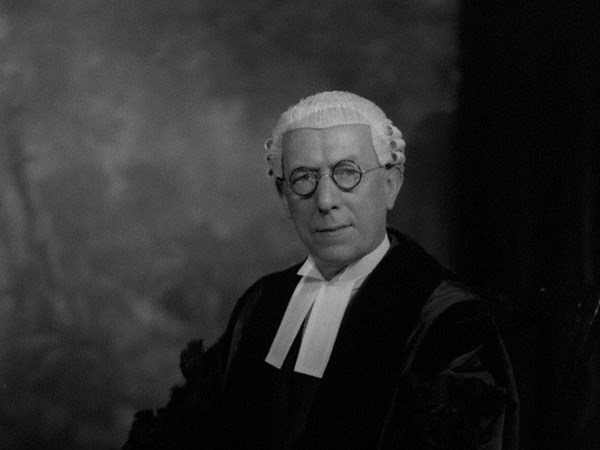
by Lafayette (Lafayette Ltd), whole-plate film negative, 21 August 1933
Abrahams played various card games with great pleasure and success, but the main passion of the Liverpool resident was chess. Abrahams achieved his greatest success in the championships of Great Britain in 1933 and 1946, when he won bronze medals. The peak of his career was undoubtedly his participation in the USSR-Great Britain radio match (1946) where on the 10th board Abrahams beat Botvinnik’s second and assistant grandmaster Viacheslav Ragozin with a score of 1.5-0.5
Gerald Abrahams had a taste of studying opening theory, and made a distinct contribution to the development of the Noteboom Variation, which is often known as the Abrahams-Noteboom.
Ten years after he introduced the move 5.g2-g4 to the English public (1953), the famous grandmaster Lajos Portisch brought it into the international arena.”
Gerald Abrahams
Gerald was also a keen studies composer. Here are some examples of his work:
Gerald Abrahams contributed to opening theory in the Queen’s Gambit Declined / Semi-Slav Defence with his creation of the Abrahams-Noteboom Defence as discussed in the following video :
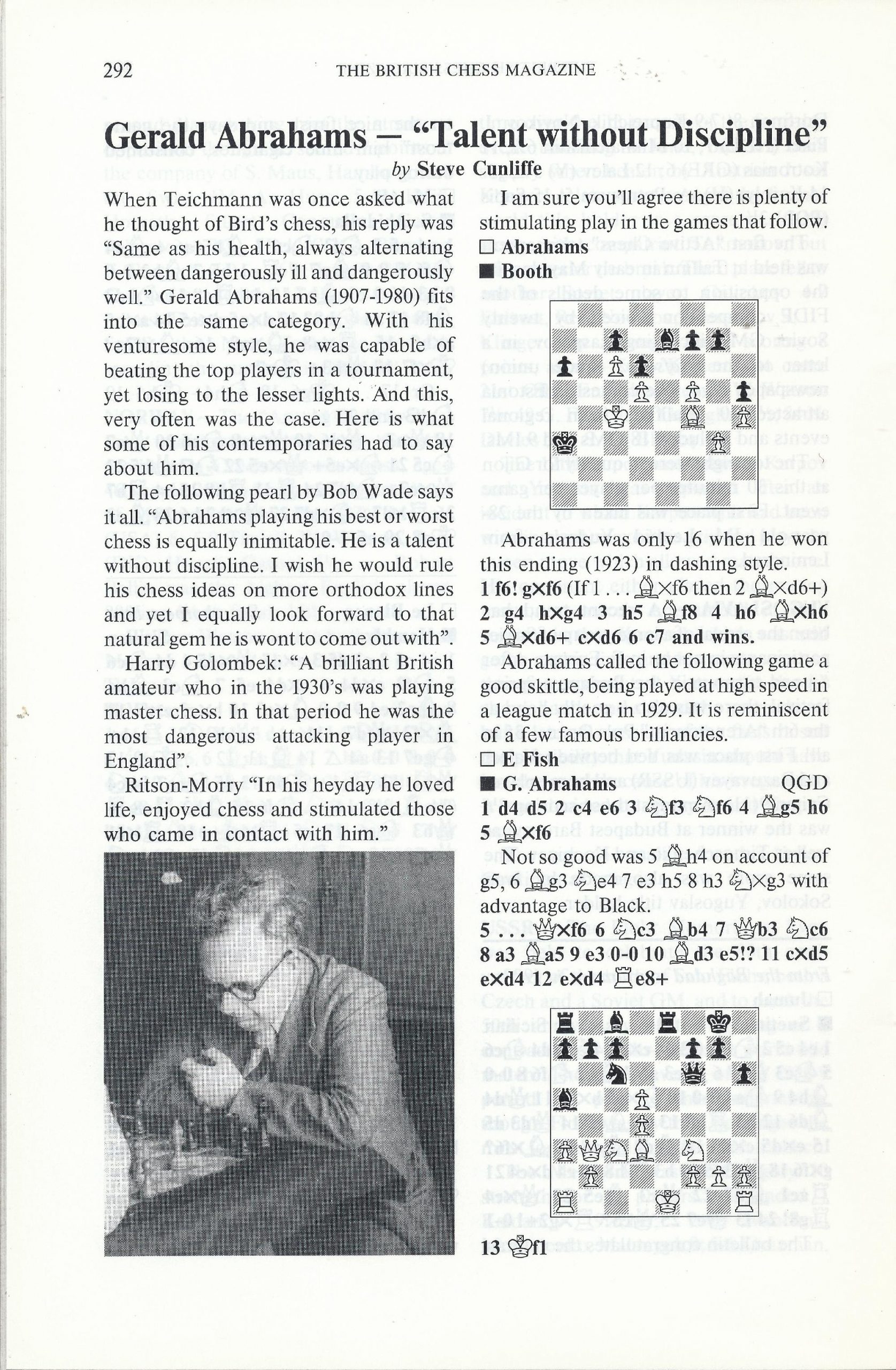
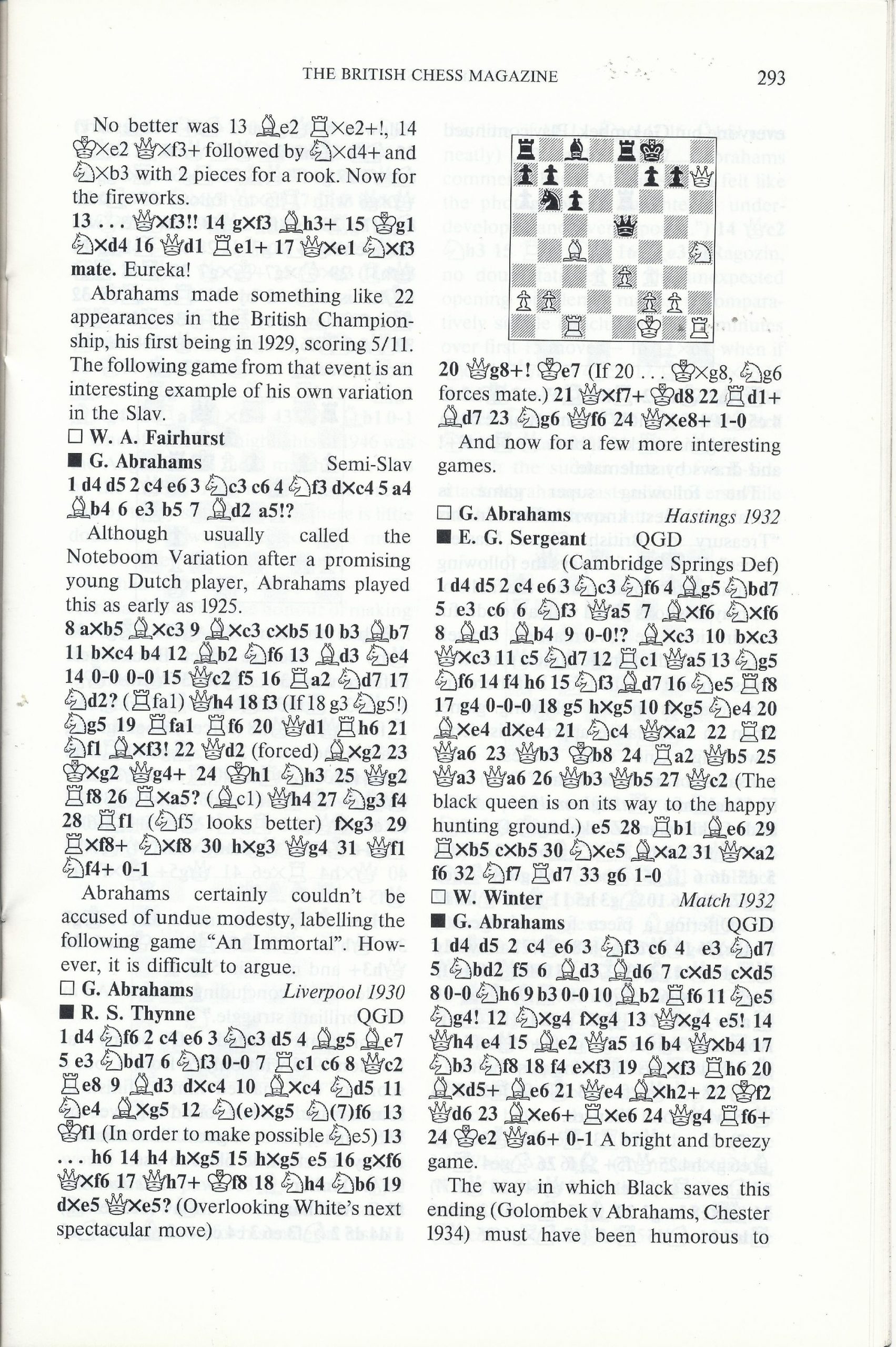
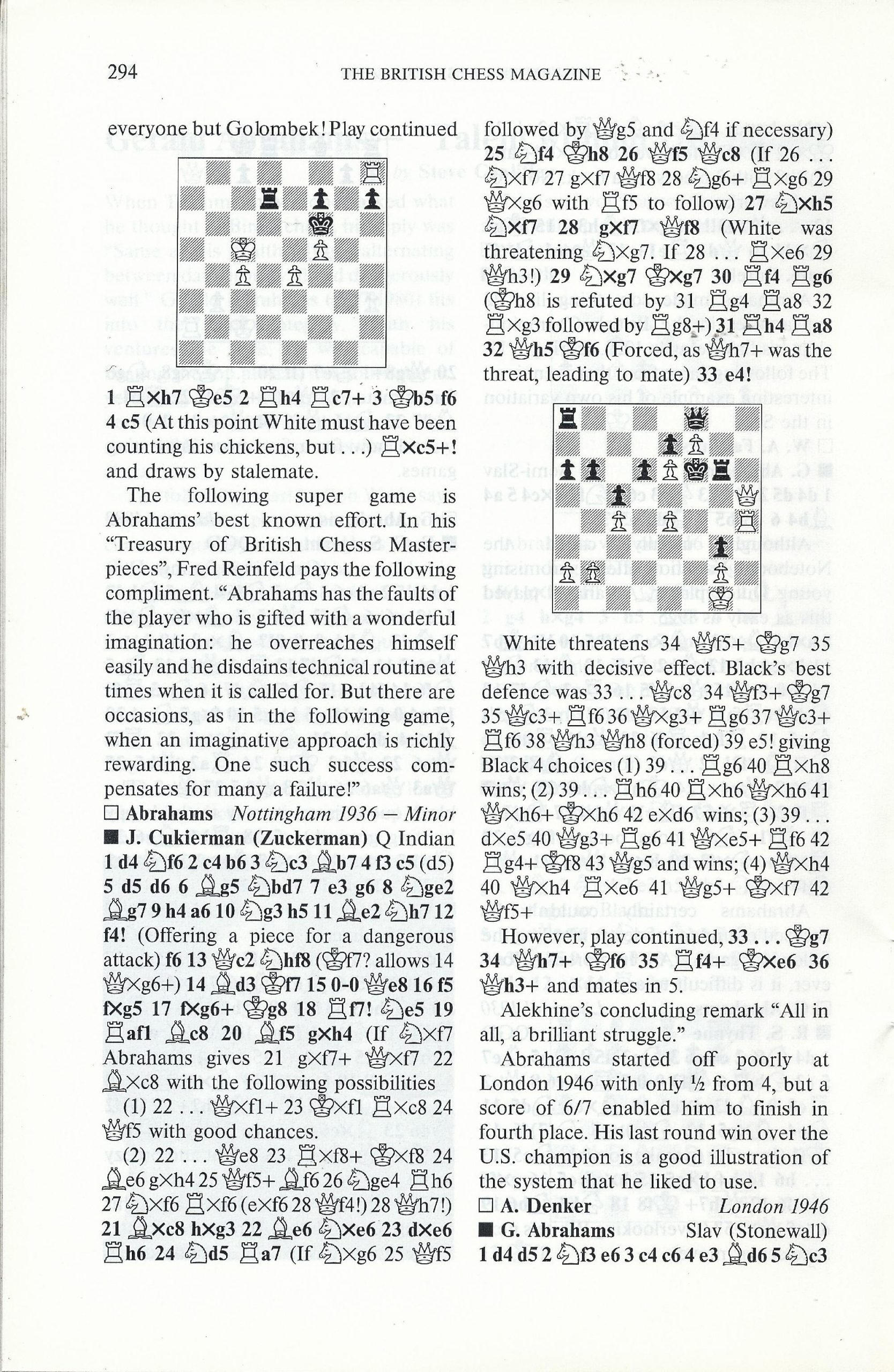
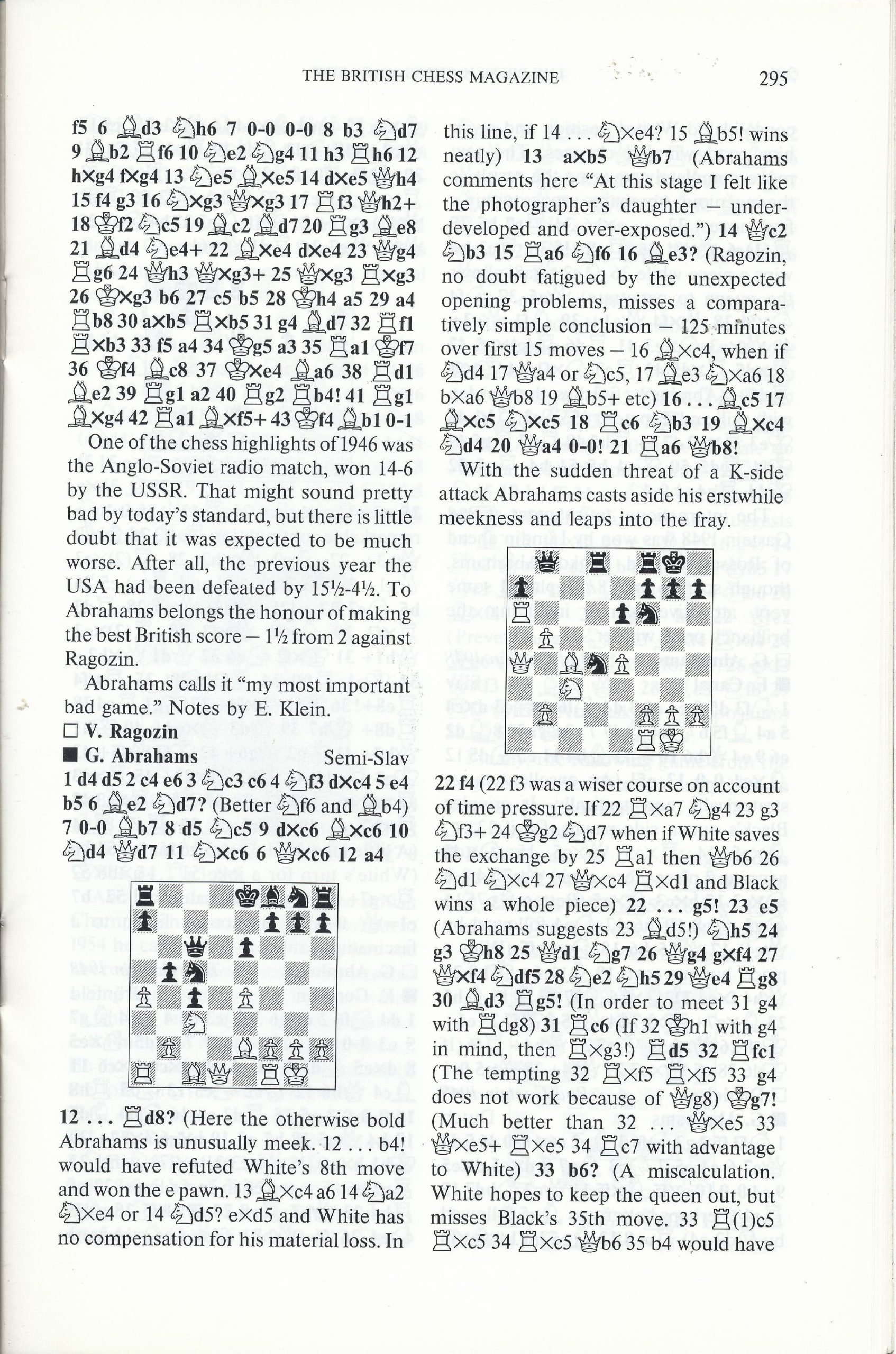
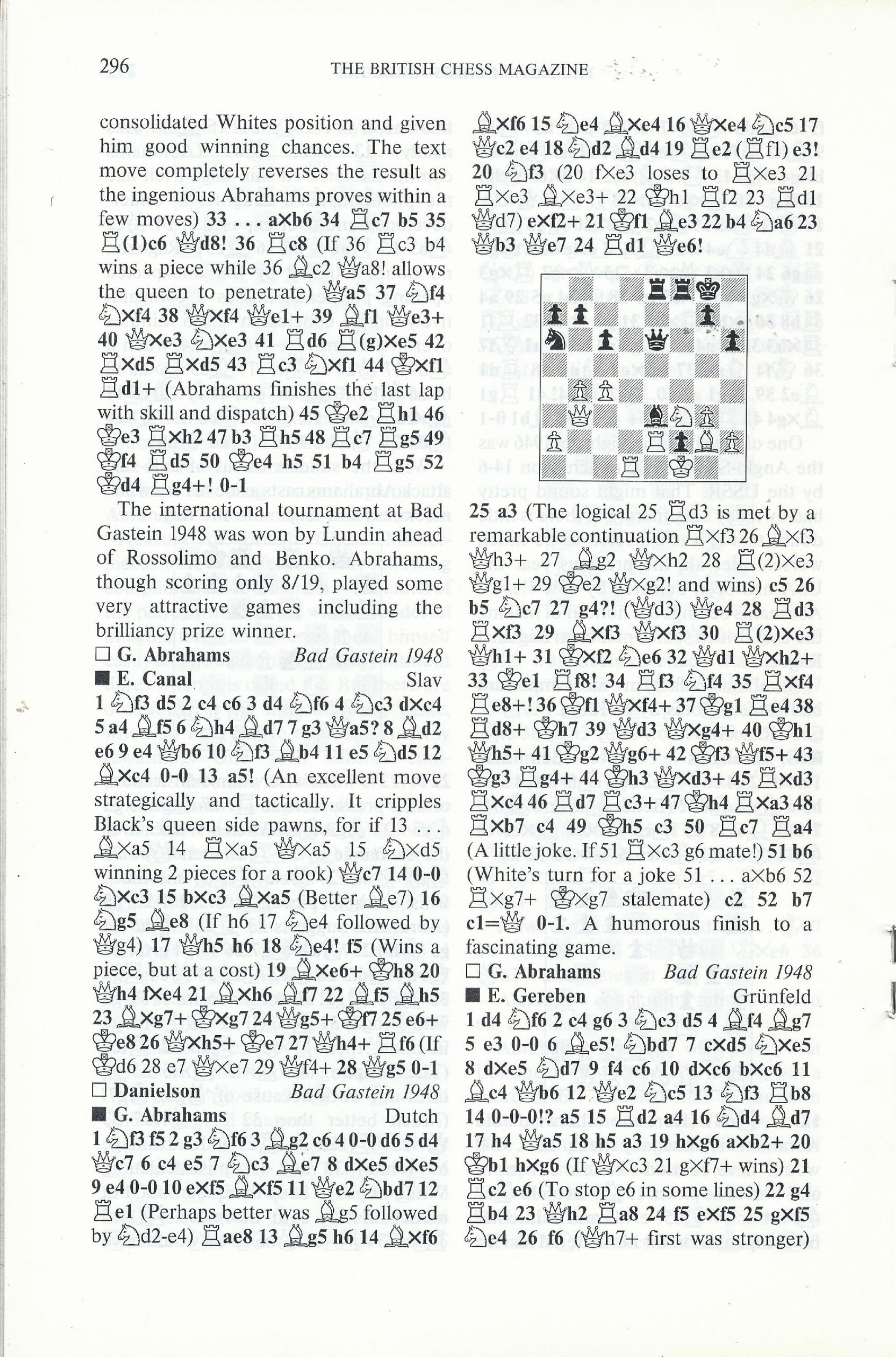
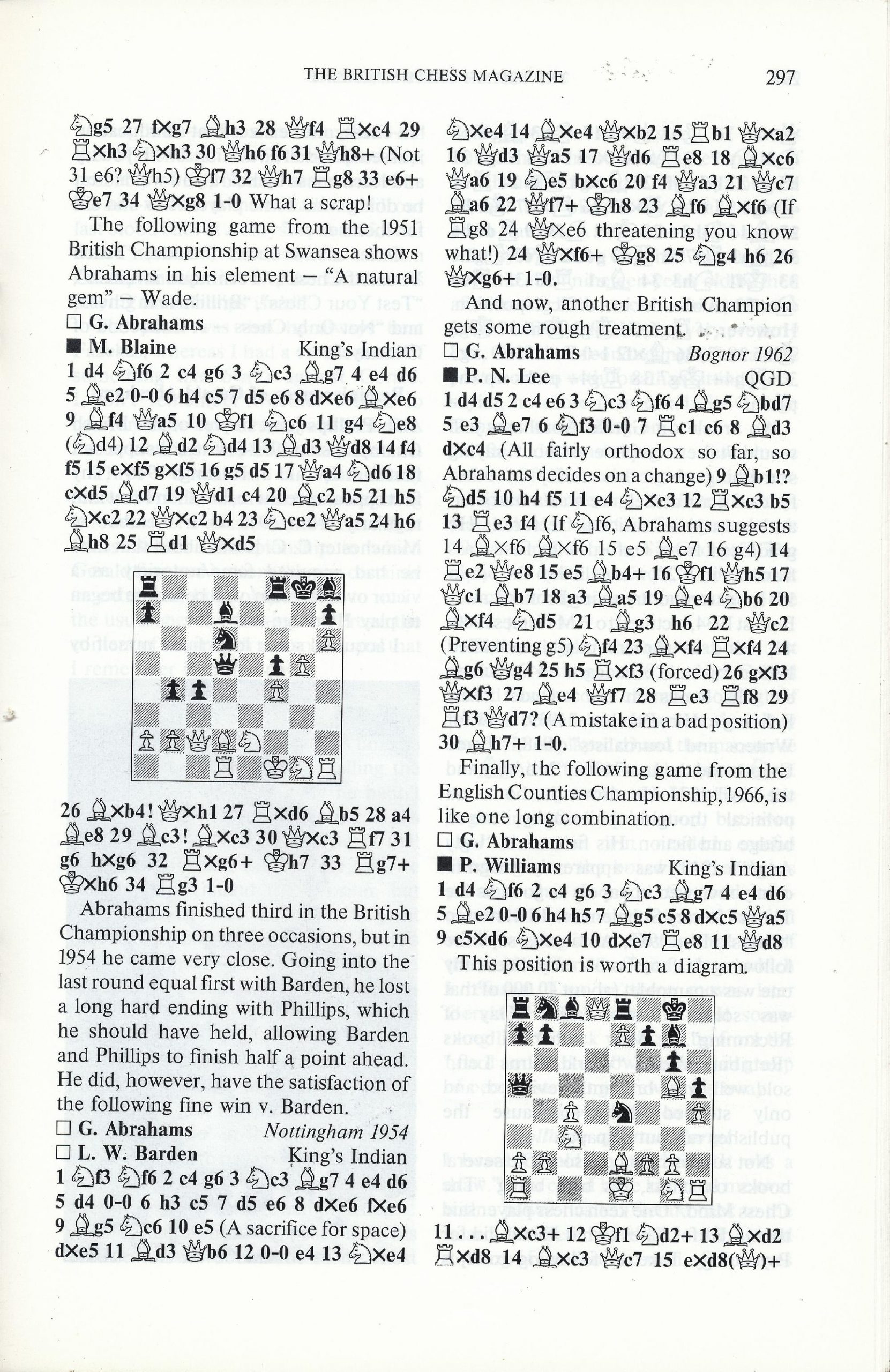
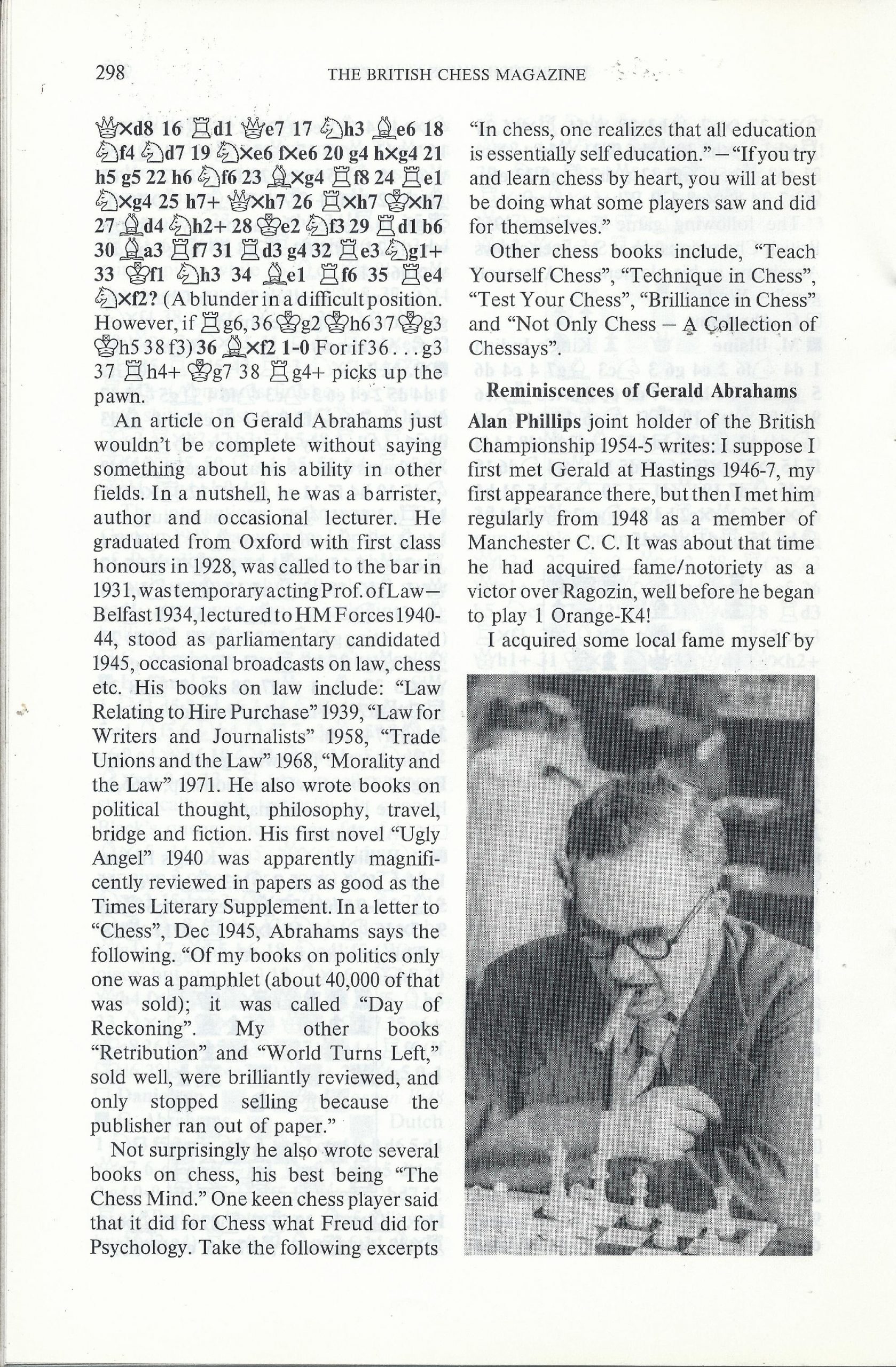
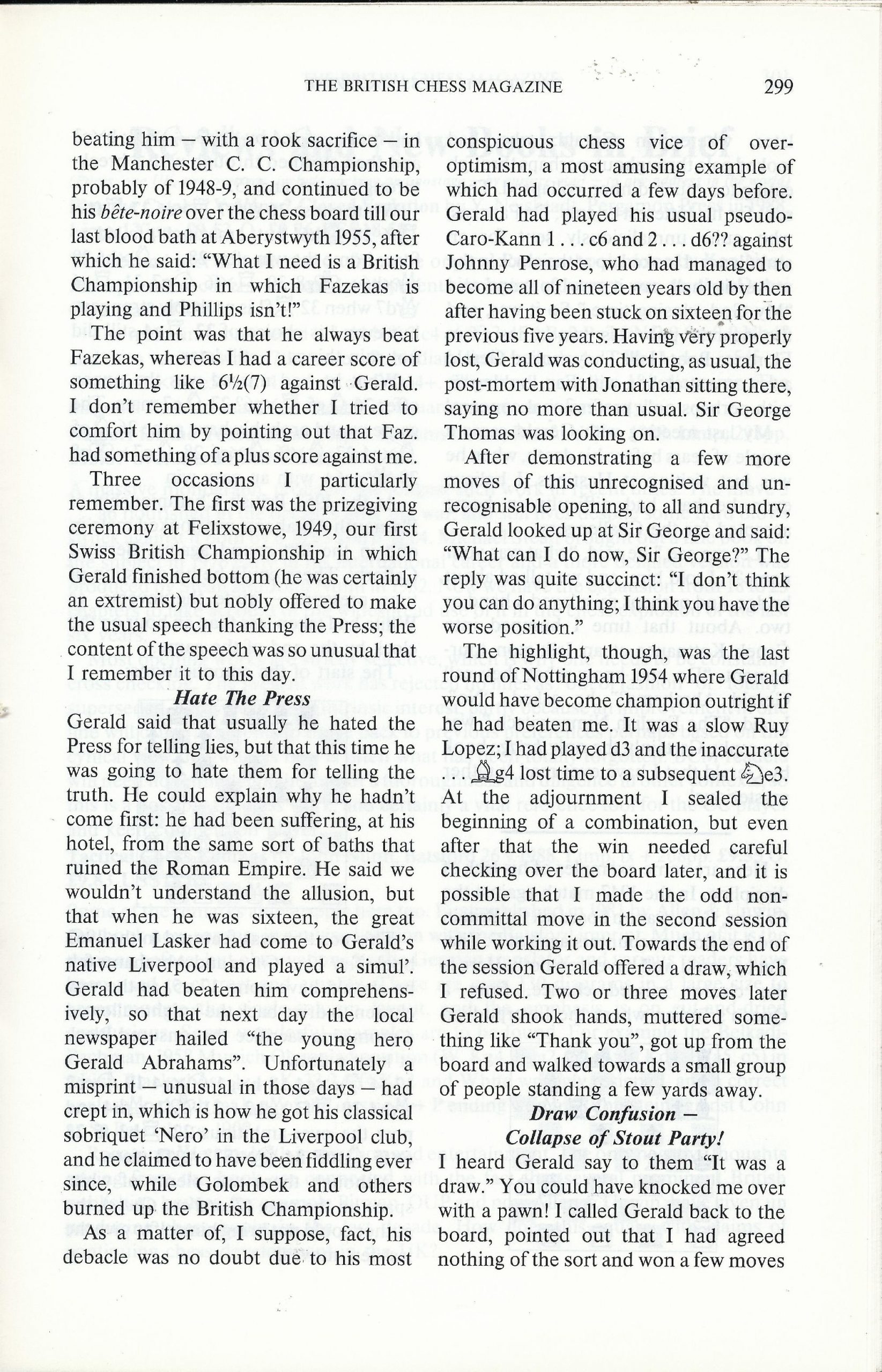
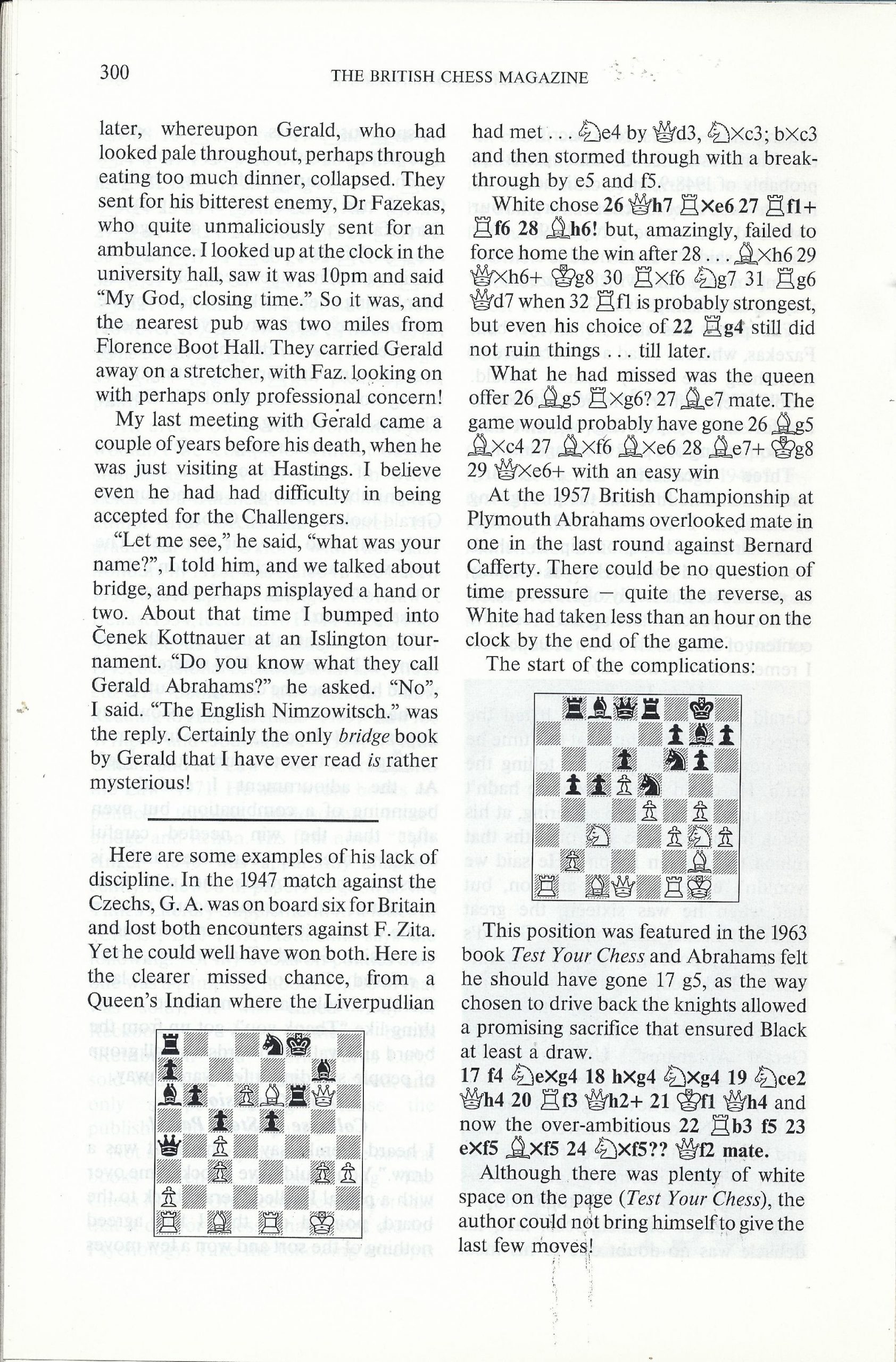
Here is a nine page article (Gerald Abrahams – Talent without Discipline) written by Steve Cunliffe that appeared in British Chess Magazine, Volume CVIII (1988), Number 7 (July), pp. 292-300:
British Chess Magazine, Volume CVIII (1988), Number 7 (July), pp. 292British Chess Magazine, Volume CVIII (1988), Number 7 (July), pp. 293British Chess Magazine, Volume CVIII (1988), Number 7 (July), pp. 294British Chess Magazine, Volume CVIII (1988), Number 7 (July), pp. 295British Chess Magazine, Volume CVIII (1988), Number 7 (July), pp. 296British Chess Magazine, Volume CVIII (1988), Number 7 (July), pp. 297British Chess Magazine, Volume CVIII (1988), Number 7 (July), pp. 298British Chess Magazine, Volume CVIII (1988), Number 7 (July), pp. 299British Chess Magazine, Volume CVIII (1988), Number 7 (July), pp. 300
In the March issue of CHESS for 1963, (Volume 28, Number 427, pp.147-155) William Winter wrote this:
Colourful Gerald Abrahams
I cannot leave this group of players without reference to G. Abrahams, who, though less successful than the others, is much the most colourful of all both in play and personality. He is a player whom I would
always like to have on my side against the very best opposition, e.g. the Russians’ His unbounded optimism preclude any possibility of that consciousness of inferiority which infects nearly all our players when they come up against the very great and at his best he is capable of beating anyone.
It is true that his worst games are very bad indeed, but that does not matter. A loss is equally a loss after seventeen moves or seventy. I had a good deal to do with his selection for the Anglo-Soviet Radio match of 1946, and he thoroughly justified my confidence with a win and a draw against Ragosin, being the only English player to score
a majority. In the match over the board he failed, and was promptly dropped, a great mistake in my opinion. Abrahams is always capable of beating a grand master, the majority of English players are not.
A man of versatile talent, he is a successful barrister shining particularly on advocacy, an author of novels and essays as well as chess books, and he gave a striking example of his optimism standing as Liberal candidate for Parliament. I wish he had been elected. He would certainly have enlivened the house.
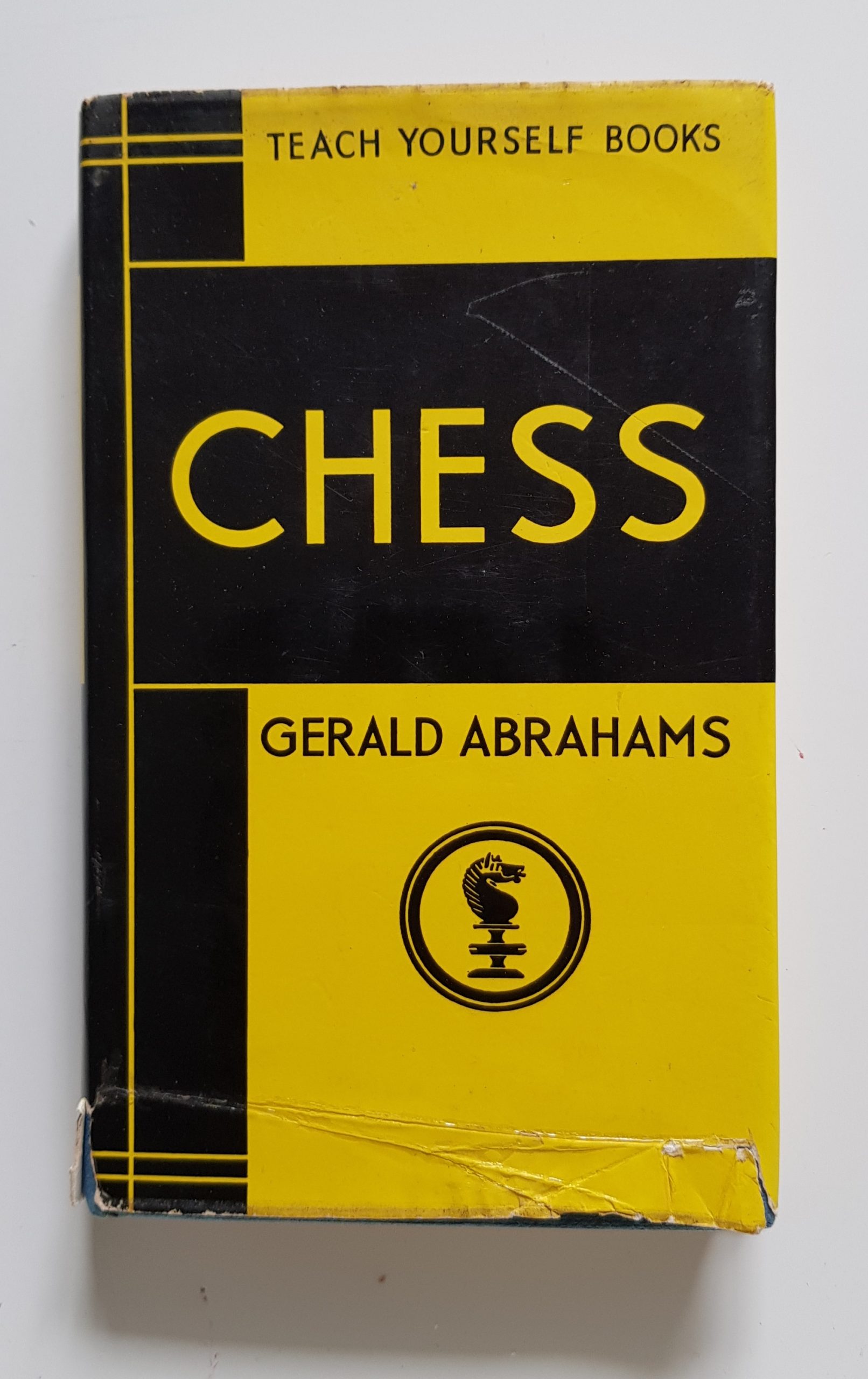
Of his chess books I must say a good word for Teach Yourself Chess. The title of course suggests an impossibility one cannot teach oneself chess, but none the less it is an excellent work of instruction which players of all grades including its author, might study with advantage.
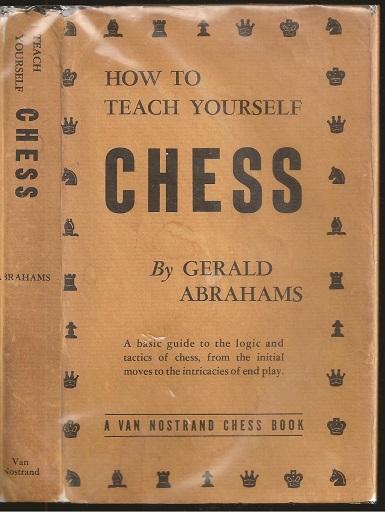
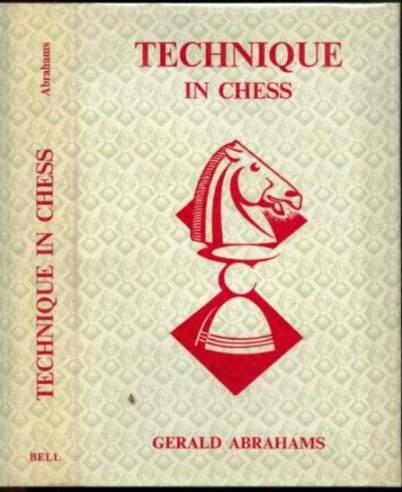
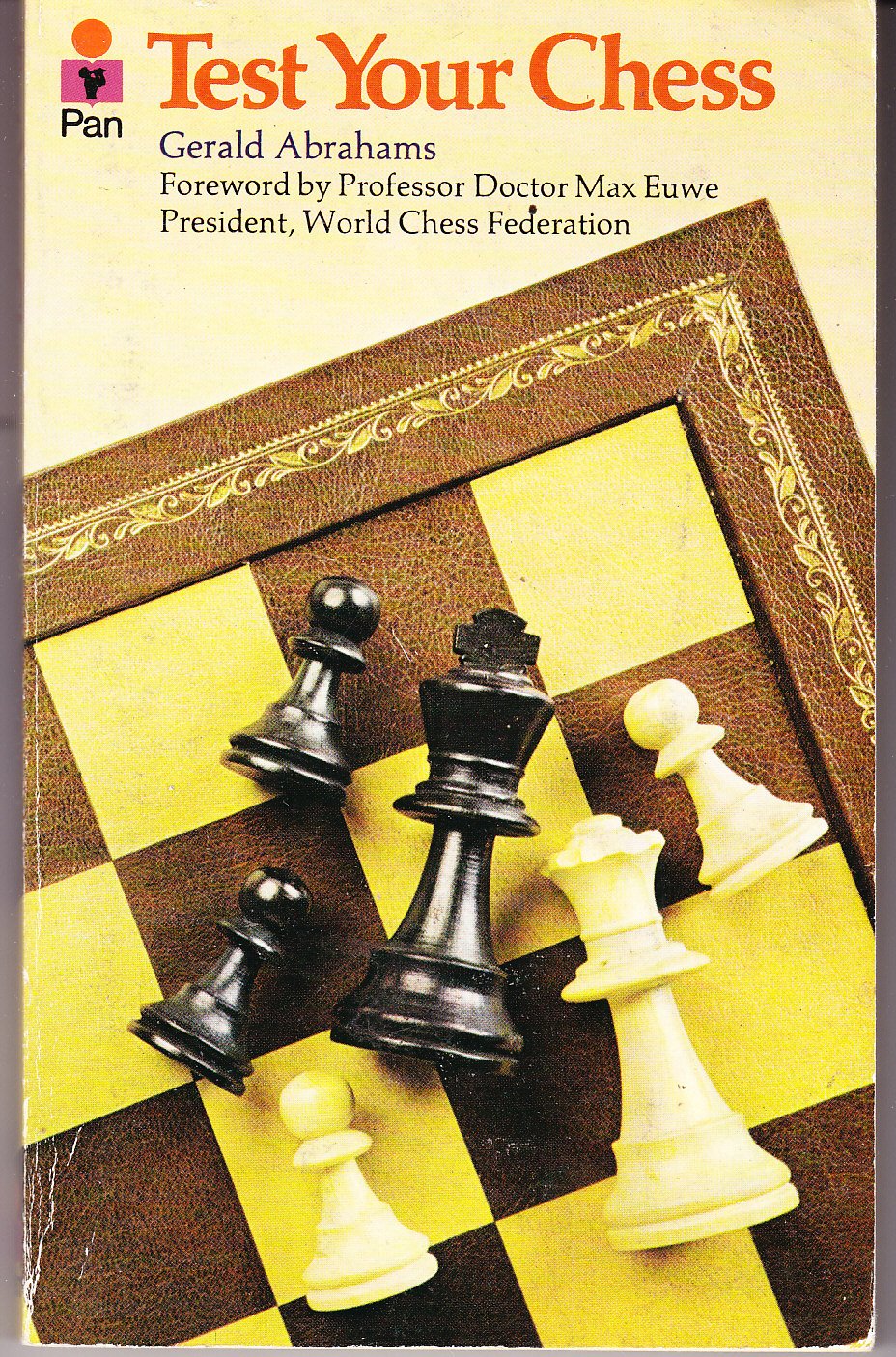
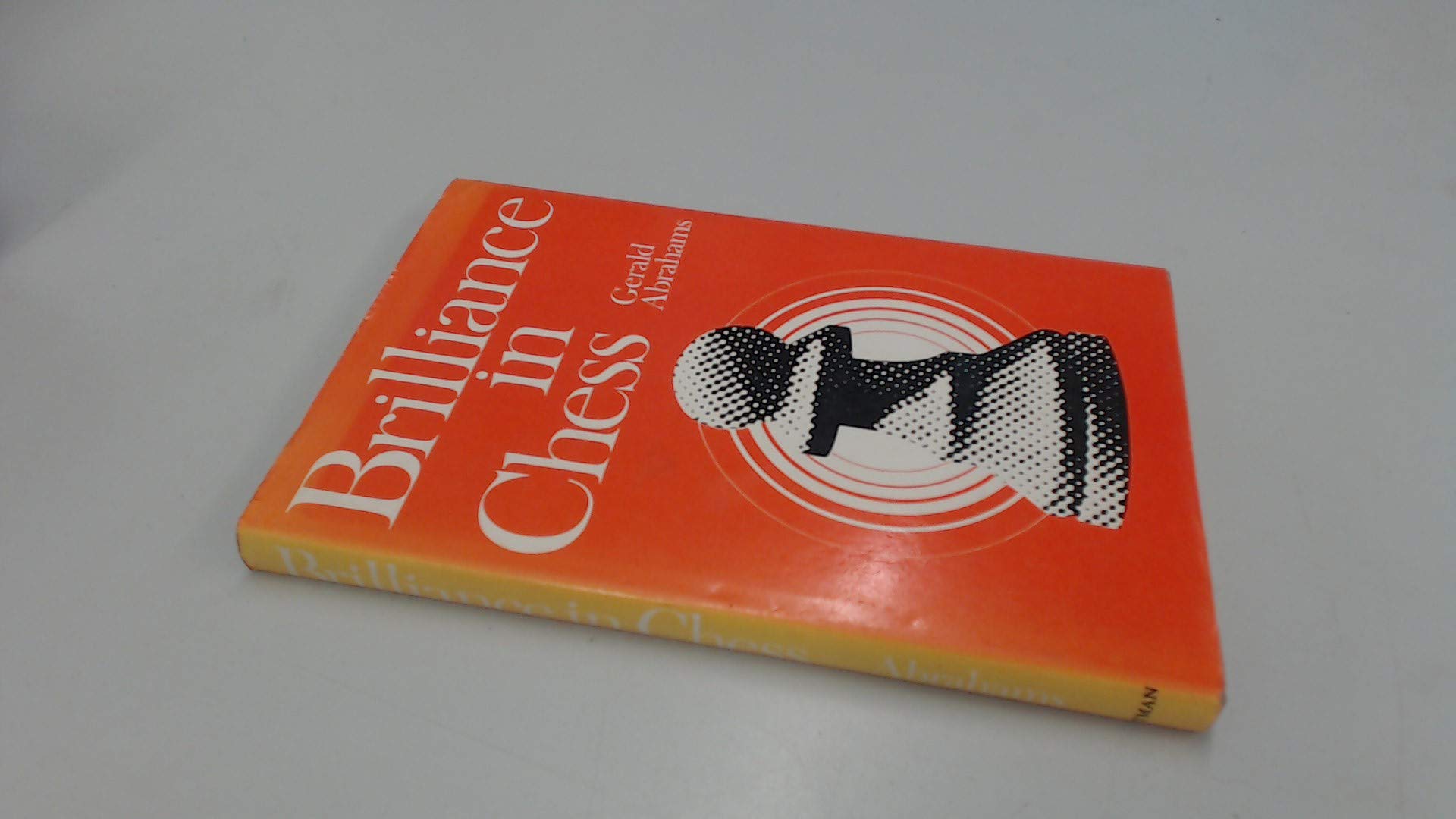
How to Teach Yourself Chess, Gerald Abrahams, D Van Nostrand Company, Inc, New York, 1950Technique in Chess, Gerald Abrahams, George Bell & Sons Ltd., 1961,Test Your Chess, Gerald Abrahams, Constable and co, 1963, ISBN 0 330 24336 5The Pan Book of Chess, Gerald Abrahams, Pan, 1965, 10: ISBN 0330230735Teach Yourself Chess, Gerald Abrahams, The English Universities Press Ltd, 1965,Technique in Chess, Gerald Abrahams, Dover, 1973, ISBN ISBN 13: 9780486229539Brilliance in Chess, Gerald Abrahams, Pitman Publishing, 1977, ISBN 10: 0273000349
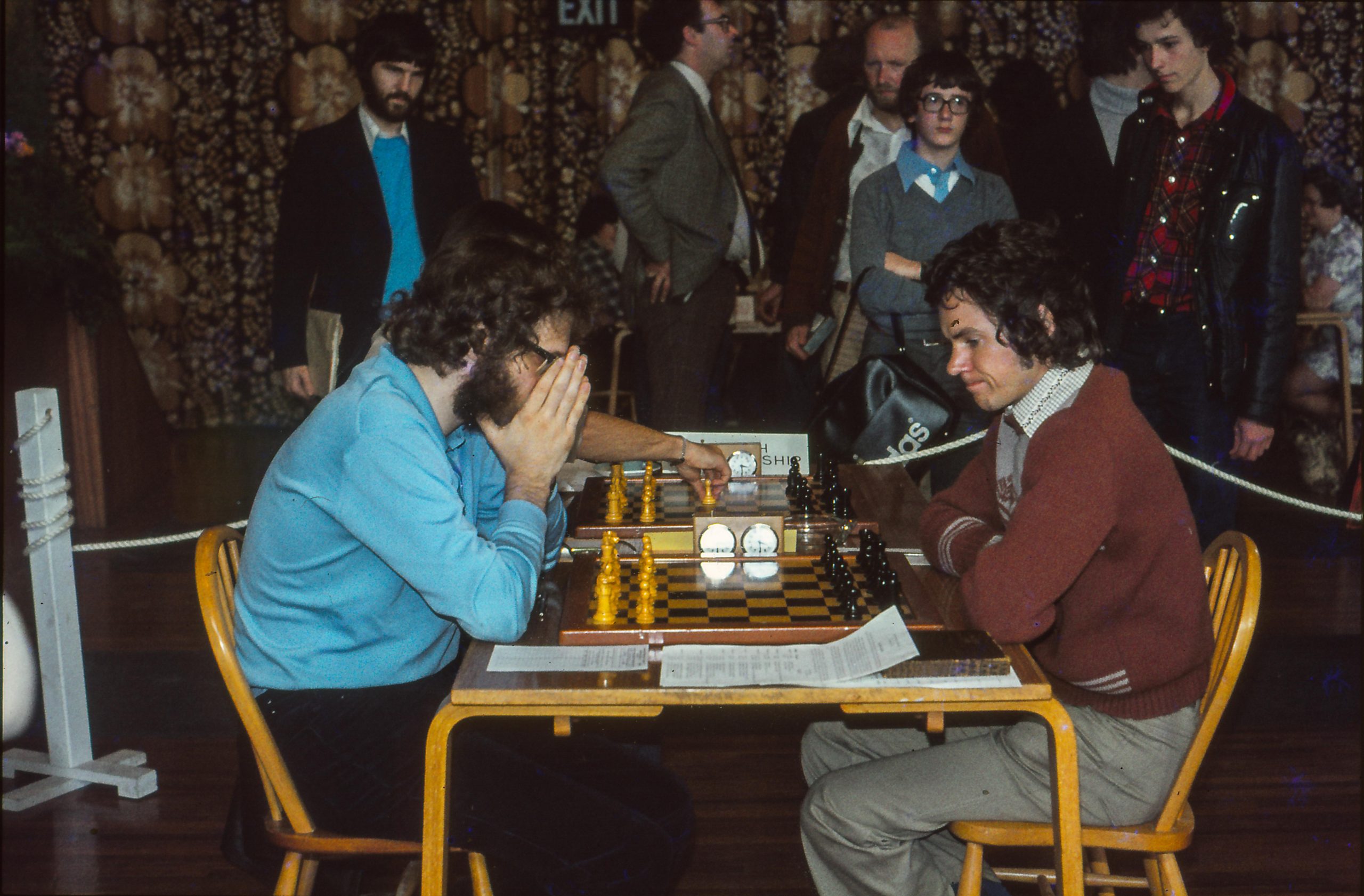
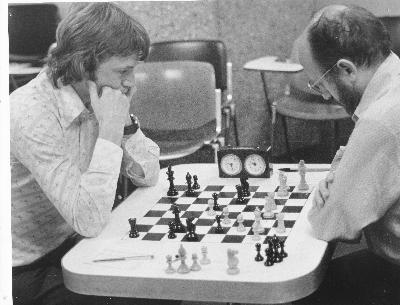
IM Jonathan Speelman vs IM Simon Webb at the 1978 British Championships in Ayr, Courtesy of John Upham
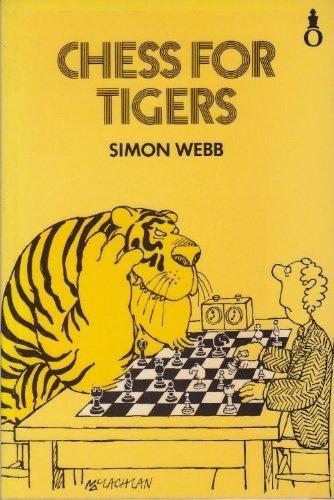
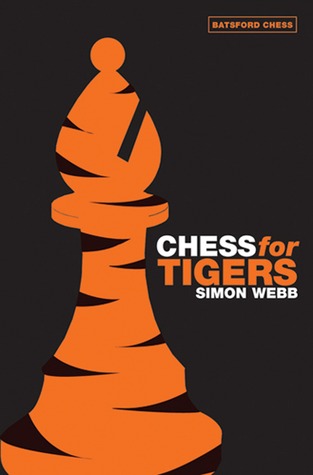
Simon Webb (above Stewart Reuben at the Lloyds Bank MastersJoint winners of the 1973 Strasbourg Open : N. Karaklaic and Simon Webb. Photography by Mike Rose. CHESS, Volume 88, June, page 283Chess for TigersChess for Tigers
Happy Birthday to Stewart Reuben born this day, March 14th in 1939.
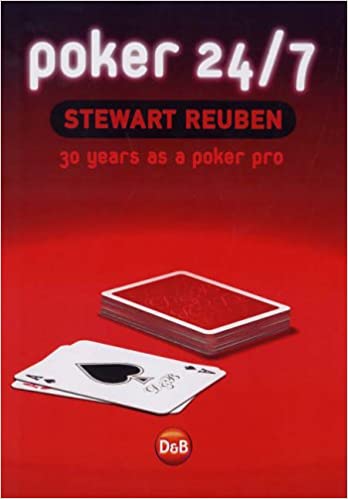
Stewart was born in Stepney, London. His father (SR referred to him as “daddy” in Poker 24/7) was Israel Reuben and his mother was Ann Epstein. Both of his parents was born in England from parents from Minsk, the capital of Belarus.
Stewart resided in Twickenham, Middlesex in recent times and more recently has moved to sheltered housing.
Stewart Reuben interviews Stewart Reuben at the home of Stewart Reuben
Stewart first joined Islington Chess Club in 1951 at the age of 12.
Stewart’s first holiday by himself aged 17 was in 1956 to play in the British Boy’s Championship in Blackpool when he took up Poker.
Stewart studied chemistry at King’s College, London which he did not enjoy likening it to cooking. (It is usual to refer to refer to organic chemistry as “wet” chemistry).
After graduating Stewart worked for British Oxygen as an industrial chemist and rejoined Islington Chess Club in 1961. At that time Islington was the liveliest club in London. There he knew brothers Ron & Ken Harman and Danny wright. He was also to become great friends with Ron Banwell who left a considerable legacy to English chess.
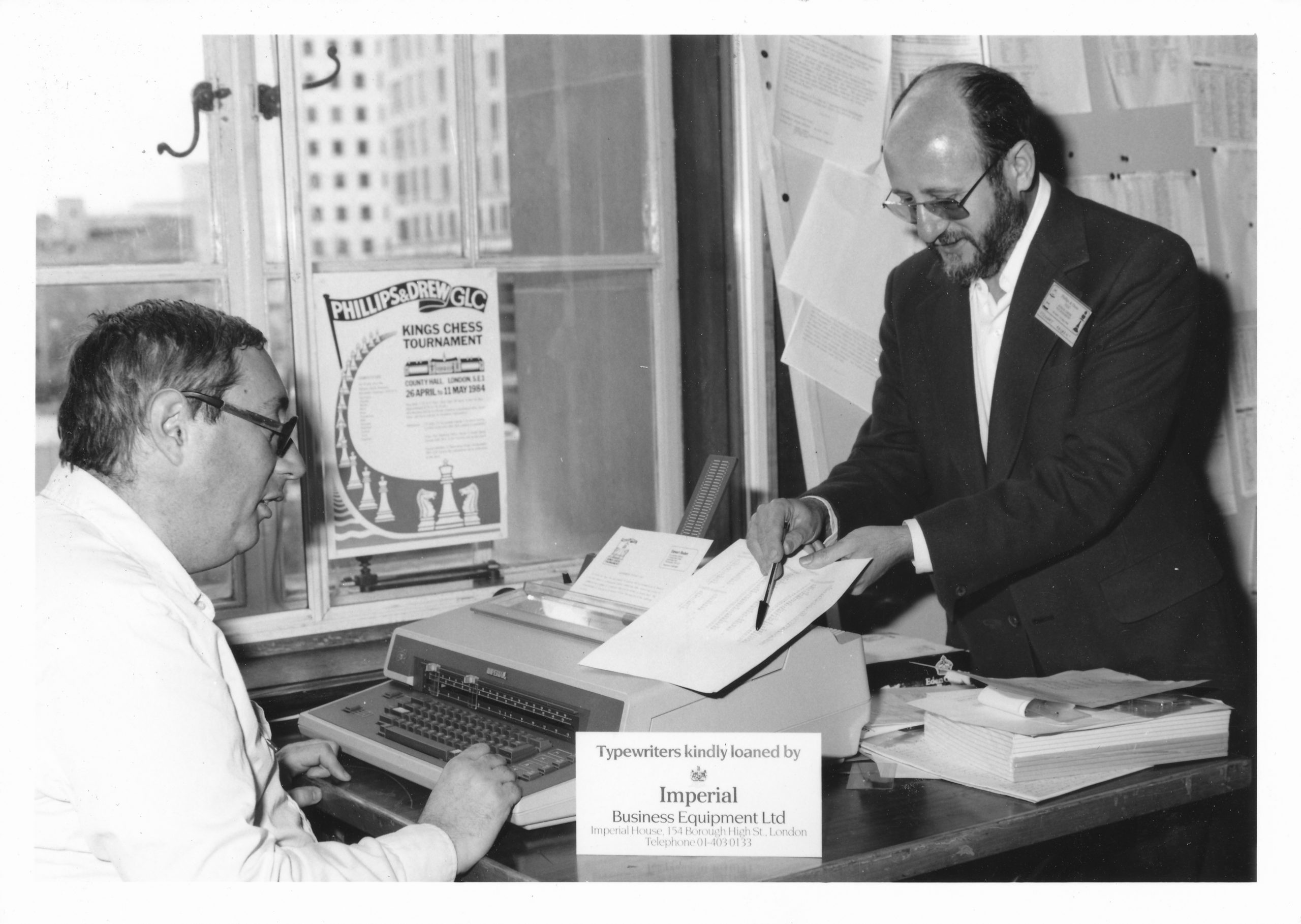
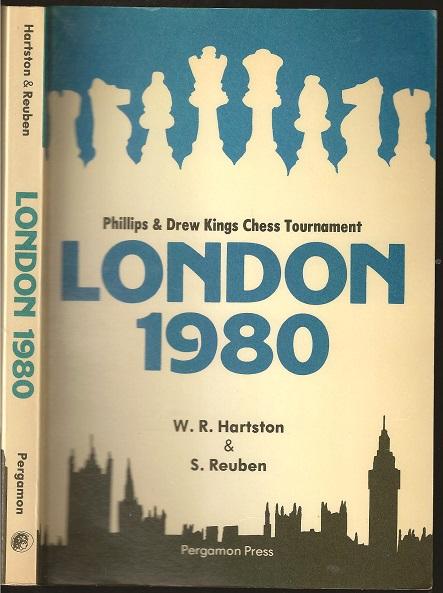
According to the 1982 tournament book of the Phillips & Drew Kings:
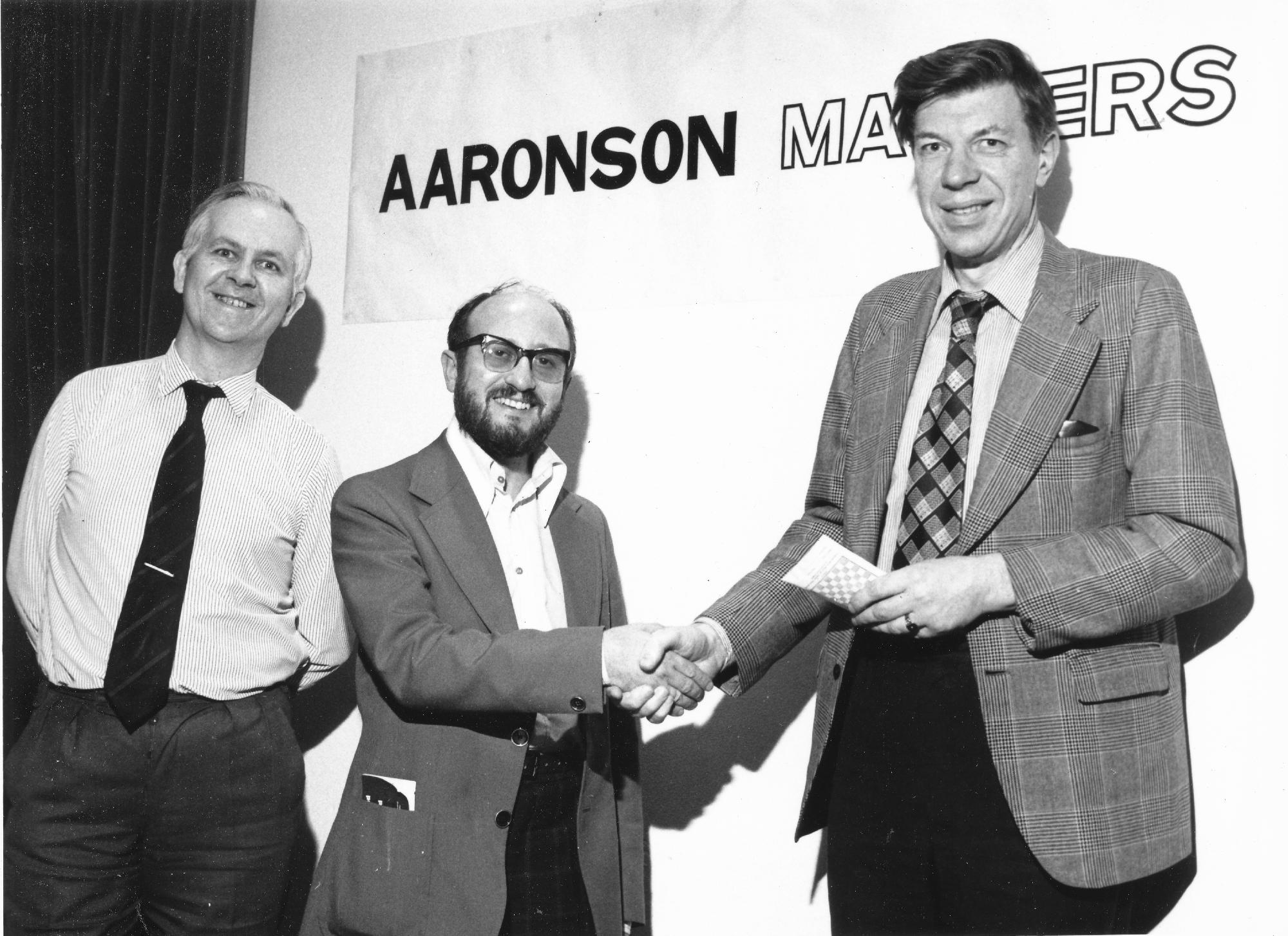
“Stewart was a prime mover in the setting up of the organisation in 1972 which was to grow into the London Chess Association. This was formed in order to reintroduce international chess to London, where there has been no tournament of note since 1948. Since then we have had the Guardian Royal Exchange Masters in the Evening Standard Congress on 1973. Evening Standard Chess Fortnight in 1975, Lloyds Bank Masters since 1977, Lord John Cup 1977, Aaronson Masters 1978 and 1979, the bi-annual Robert Silk, Phillips & Drew 1980, Lewisham since 1981 and the King’s Head International in 1982. ”
His personal catchphrase is “If only I had been consulted earlier”
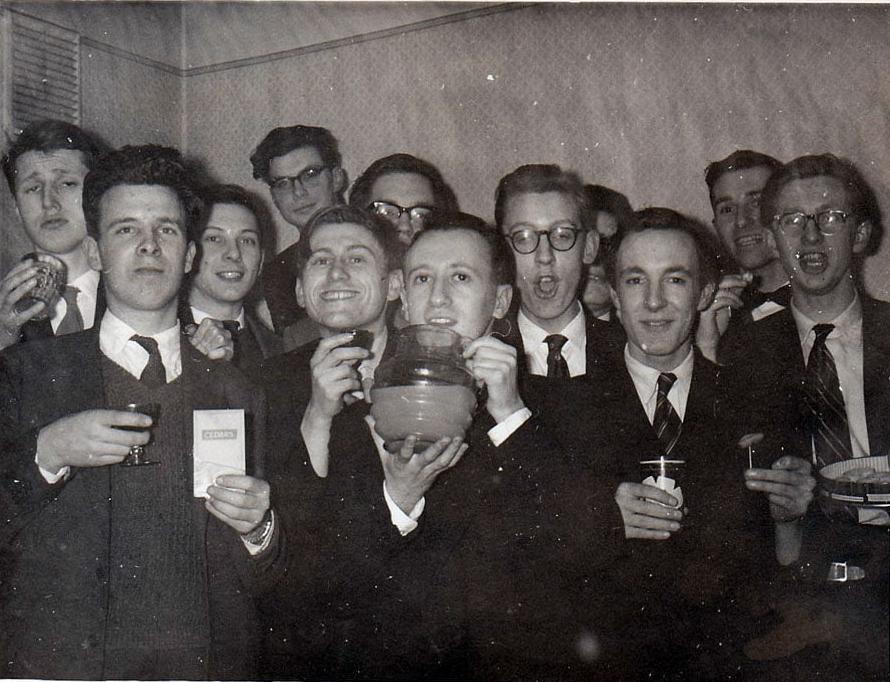
David at Stewart Reuben’s 21st, on Stewart’s right (Stewart has the jug) – March 1960. Photograph sourced from ECF Obituary
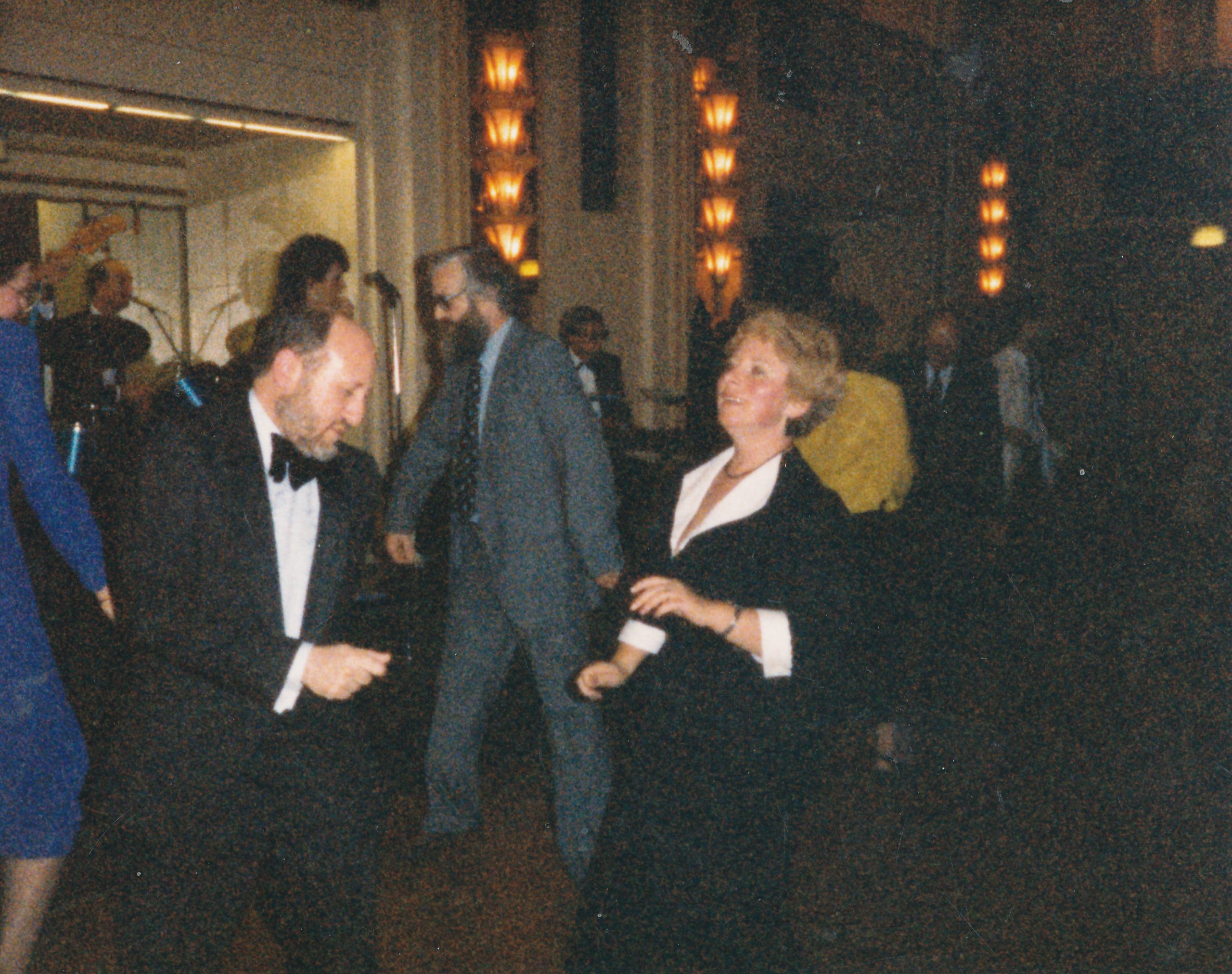
Jimmy Adams and Stewart ReubenRichard W. O’Brien and Stewart Reuben working on a bulletinSR attempting to danceStewart looks for material for the arbiters handbook
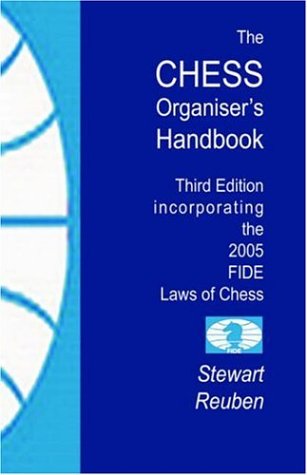
Here are words written about himself from the rear cover of The Chess Organiser’s Handbook :
“Stewart Reuben is internationally recognised as one of the world’s foremost chess organisers and arbiters. He is currently (1997) Chairman of the FIDE Organisers Committee, Secretary of the Rules and Tournament Regulations Committee, member of the Title and Ratings Committee and the Qualification Commission. He is also past Chairman (1996-1999) of the British Chess Federation. He has officiated at and/or organised numerous top-level events, including the World Championship. He holds three FIDE titles : Arbiter, Organiser and Candidate Master”
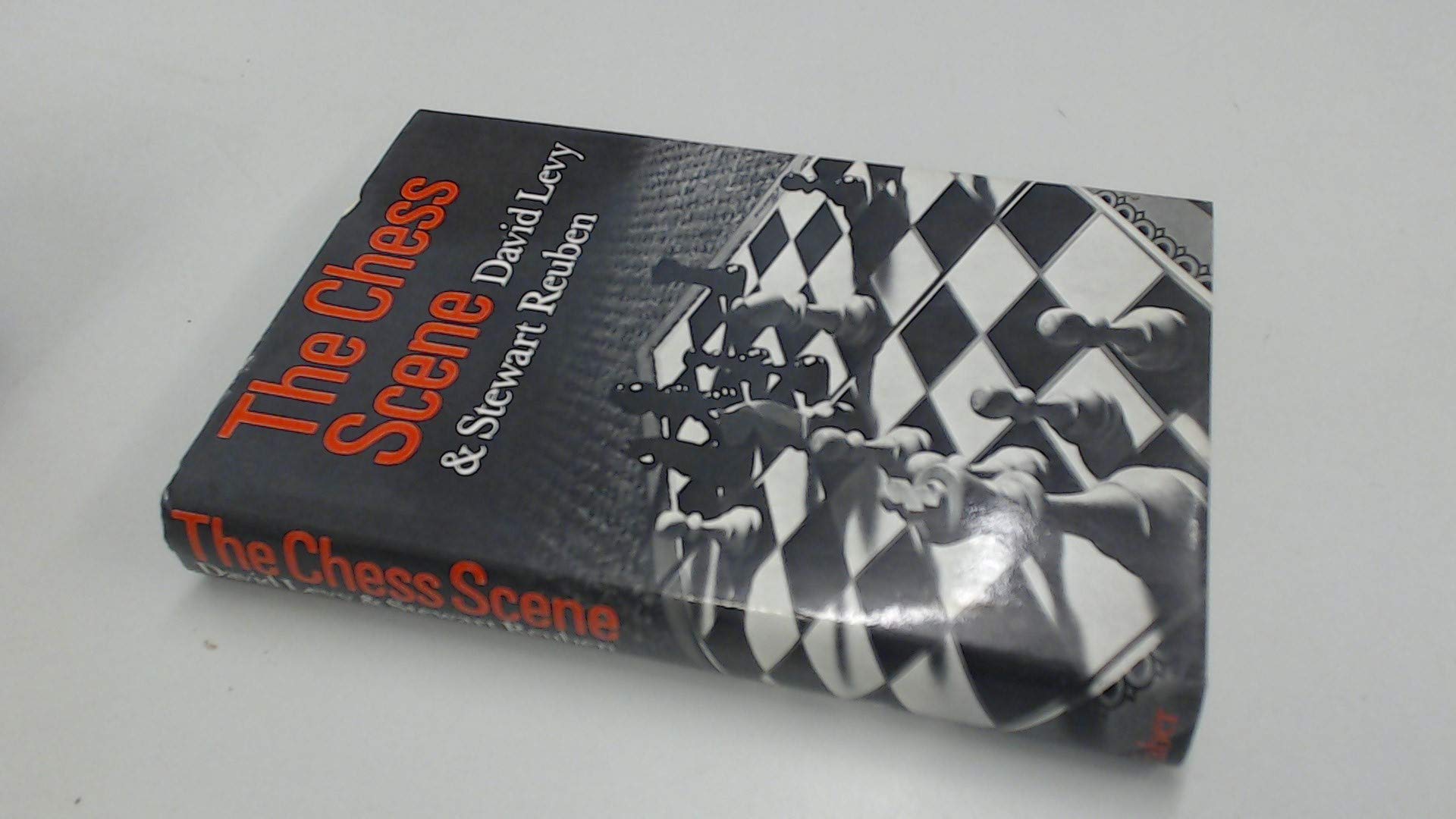
The Chess SceneLeonard Barden, Stewart Reuben and Michael Franklin at the 1978 Aaronson MastersThe Chess Organiser’s HandbookLondon 1980: Phillips and Drew Kings Chess TournamentPoker 24/7
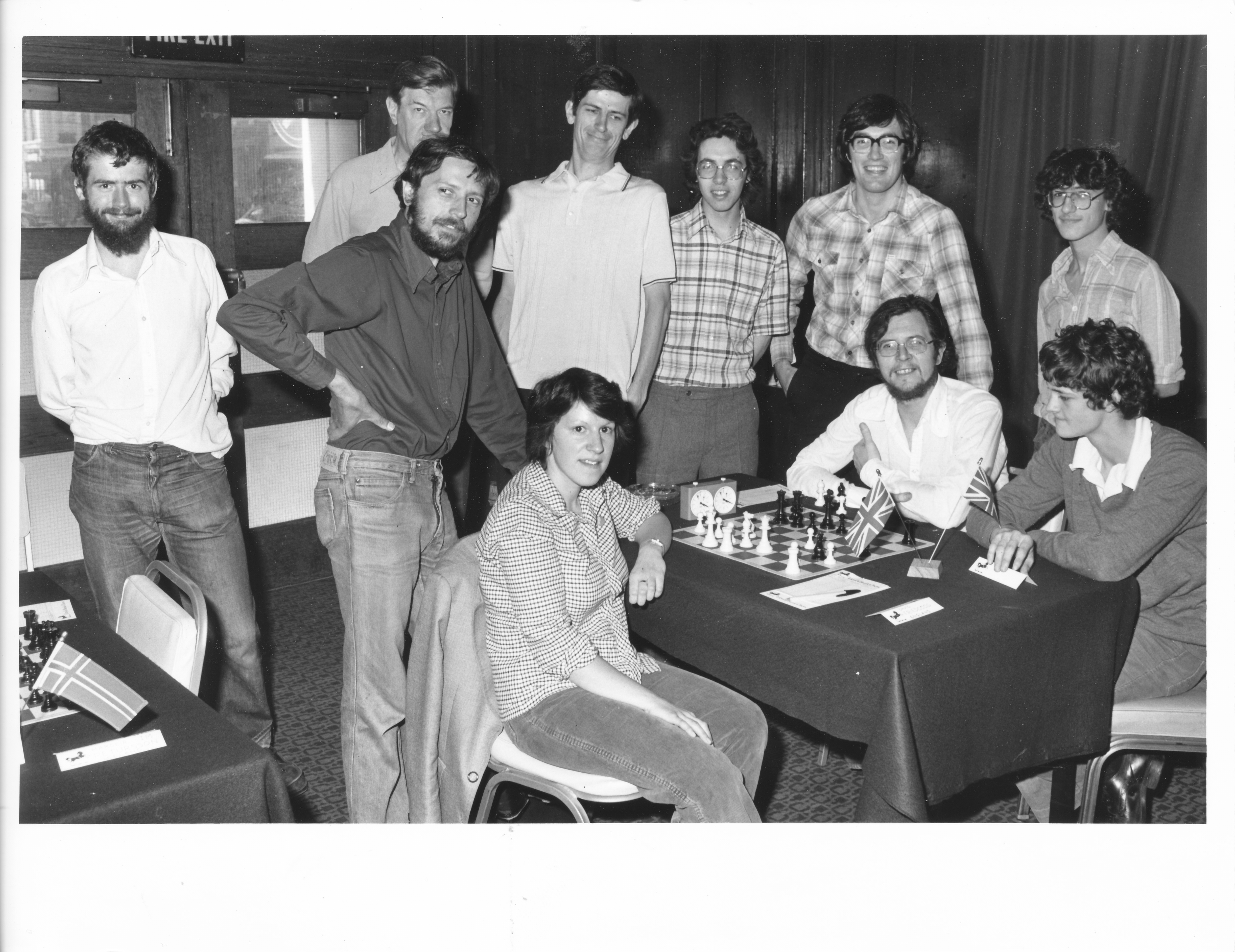
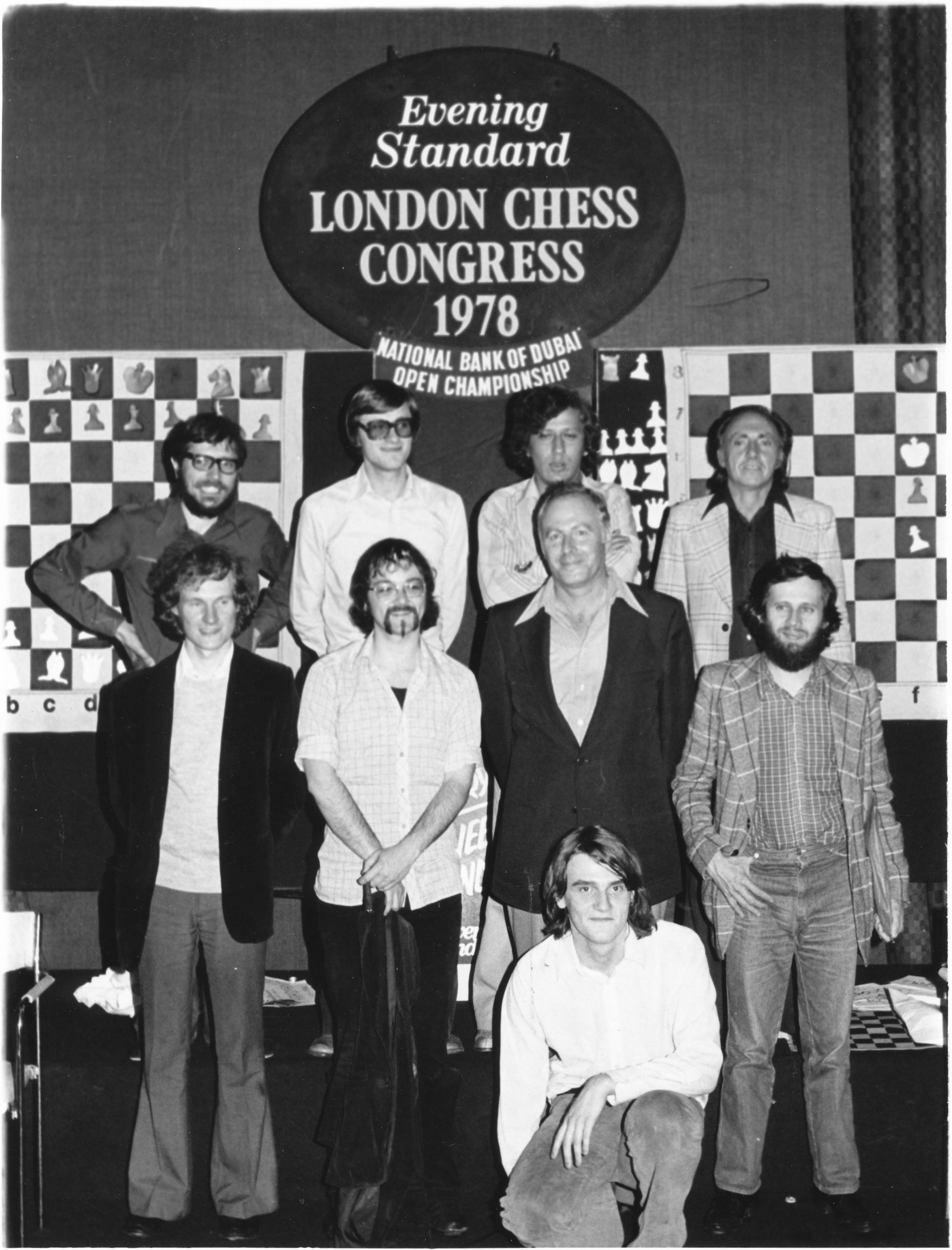
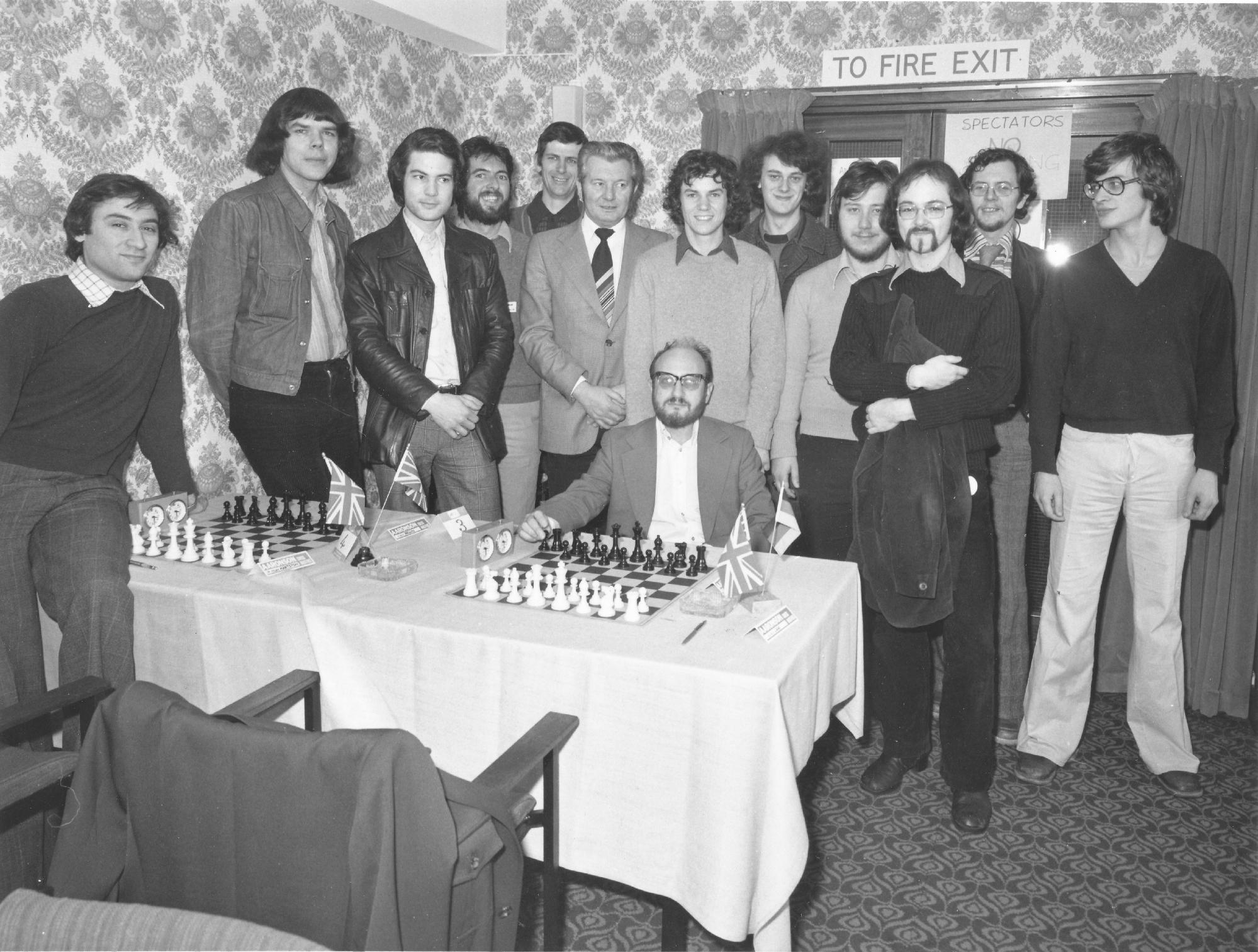
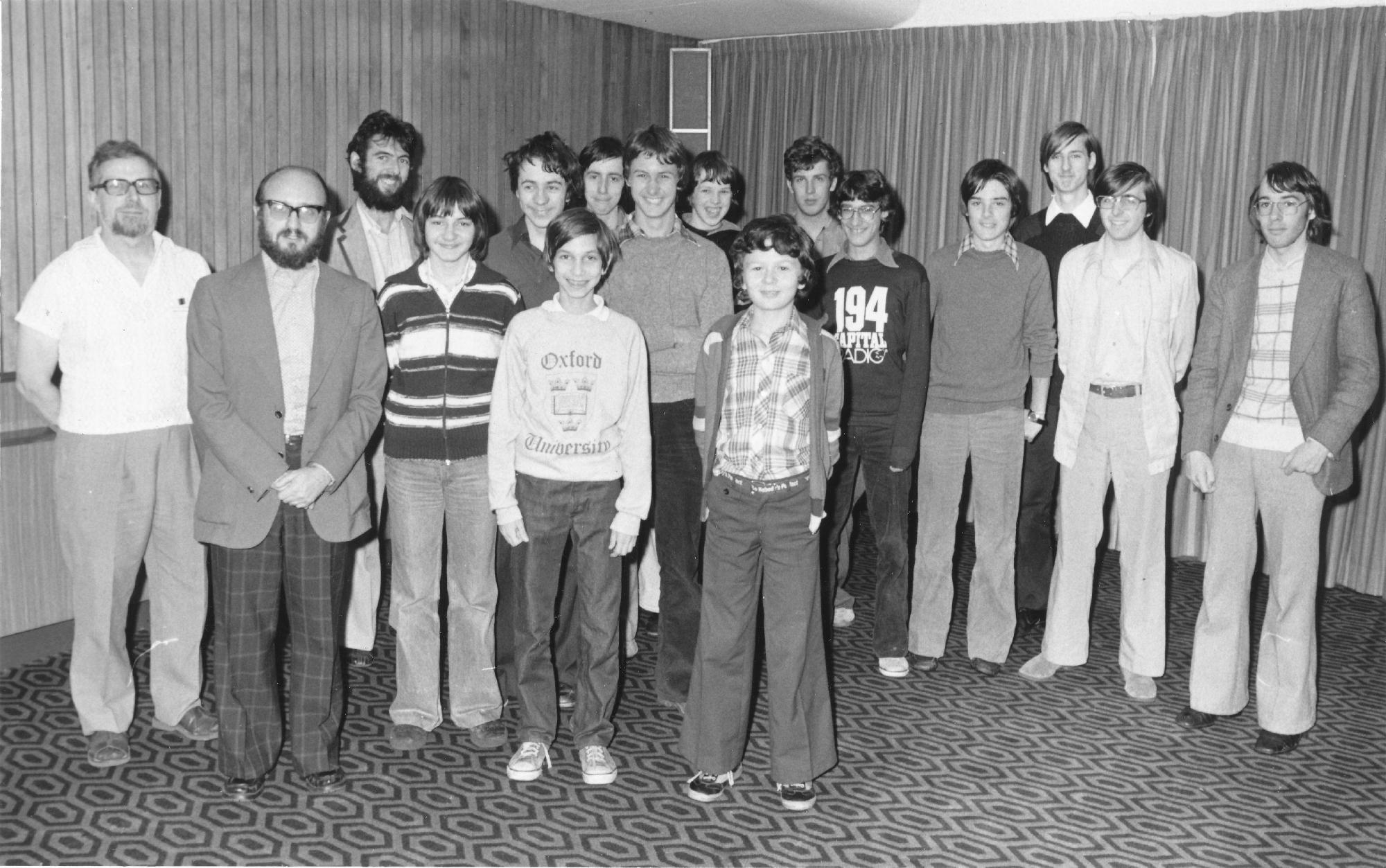
At the Lloyds Bank Masters : Front (l-r) : Joel Benjamin, Ian Wells, Rear : Peter Morrish, Stewart Reuben, Richard Beville, Gary Senior, Richard Webb, John Hawksworth, Andrew King, Nigel Short, Mark Ginsburg, Daniel King, David Cummings, Erik Teichmann, John Brandford and Micheal Pagden
BCN wishes IM David Neil Laurence Levy happy birthday (14-iii-1945)
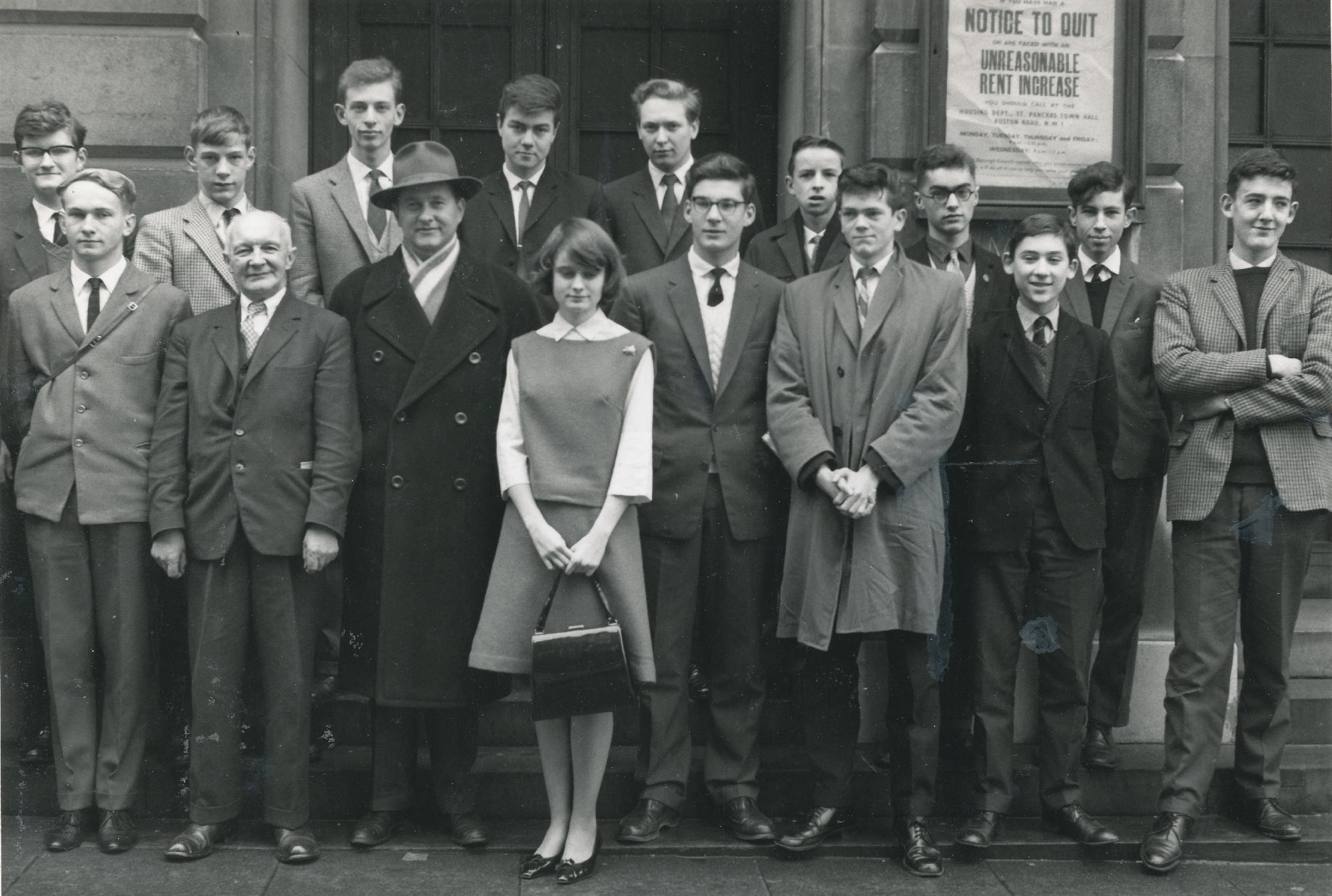
Some of the participants in the Paul Keres display on November 25th, 1962, at St Pancras Town Hall, London WC1. Back row : AJ. Whiteley, D Floyer, PJ Collins, PJ Adams, RC Vaughan, KB Harman, D. Parr, DNL Levy, Front row : MV Lambshire, AE Hopkins (selector) Paul Keres, Miss D. Dobson, RE Hartley, BC Gillman, WR Hartston and PN Lee. Photograph by AM Reilly. Source : BCM, 1963, page 13
“International Master and International Arbiter David Neil Lawrence Levy was born in London, England. Awarded the IM title in 1969, he won the Scottish Championship in 1968 and 1975 (=Stephen Swanson). He scored +6=5-7 at the top Olympiad board for Scotland in 1972. He is also a noted chess author and computer expert.
In 1968 he started a landmark wager of (initially) £500 with two Artificial Intelligence luminaries that no computer program would win a chess match against him within 10 years.
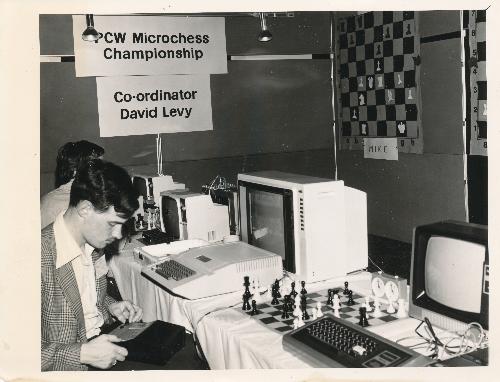
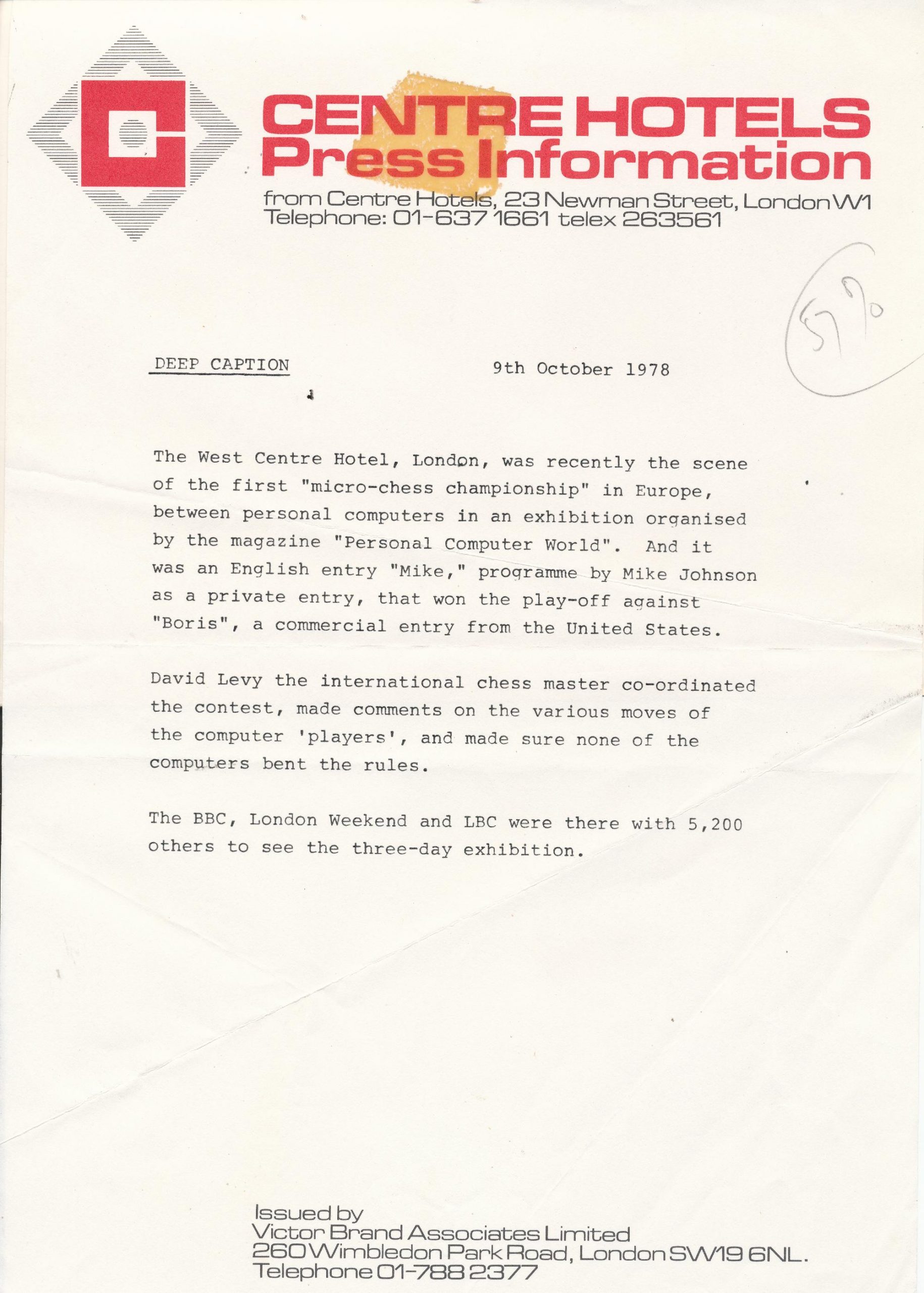
He won his bet in 1978 at the Canadian National Exhibition in Toronto by beating computer chess program CHESS 4.7 (Computer), which ran on a CDC Cyber 176 mainframe computer. These events led to a prize of $5,000 offered by Omni magazine to the authors of the first chess program to defeat Levy. The prize was not won until 1989, when IBM accepted the challenge with their chess computer Deep Thought (Computer).
History of Computer Chess: An AI perspective. http://video.google.com/videoplay?d… Wikipedia article: David Levy (chess player)”
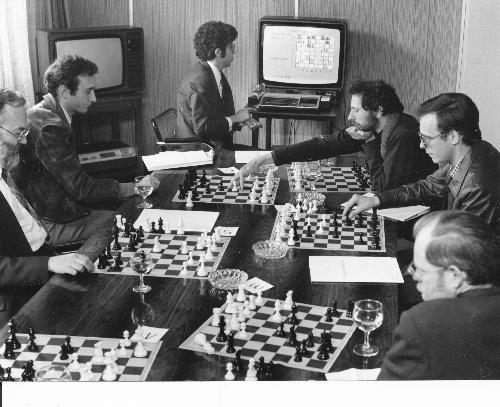
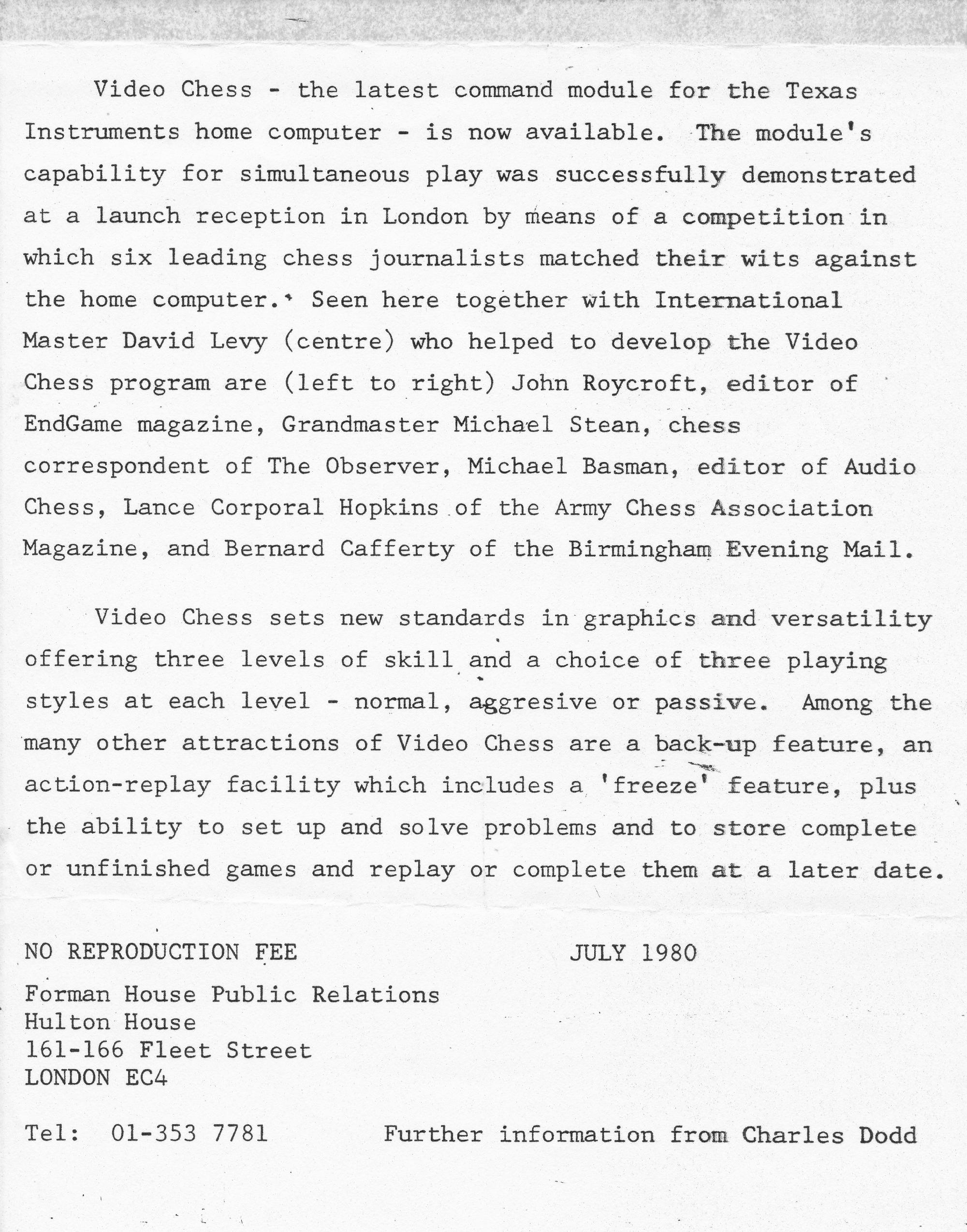
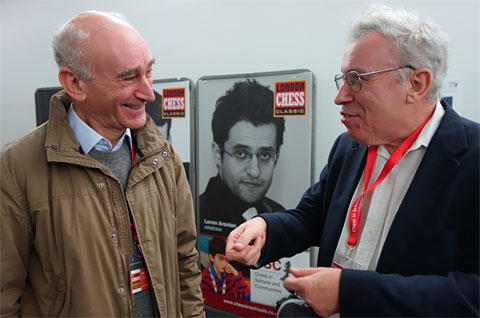
Video Chess CaptionMichael Stean chats with David Levy at the London Chess Classic
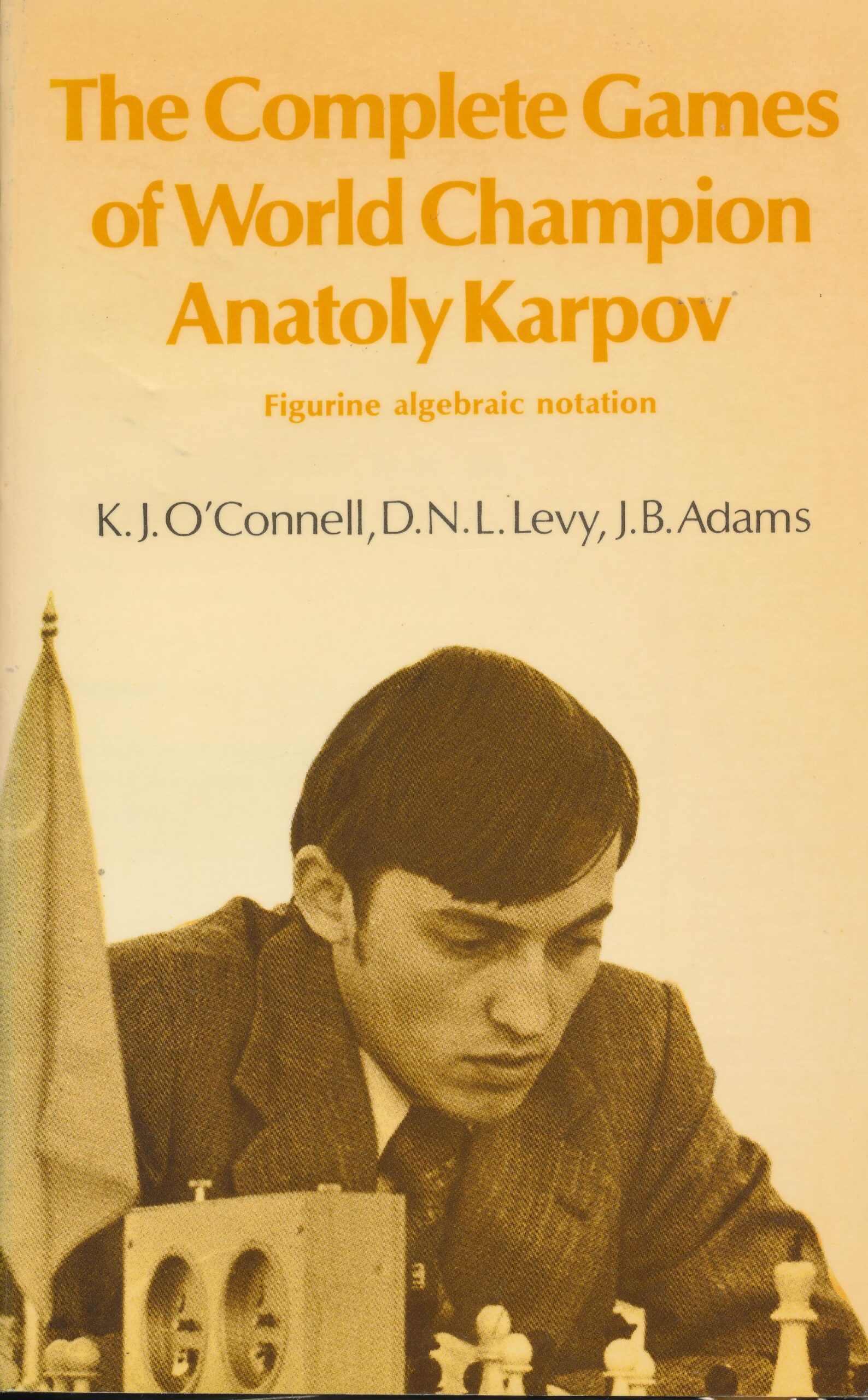
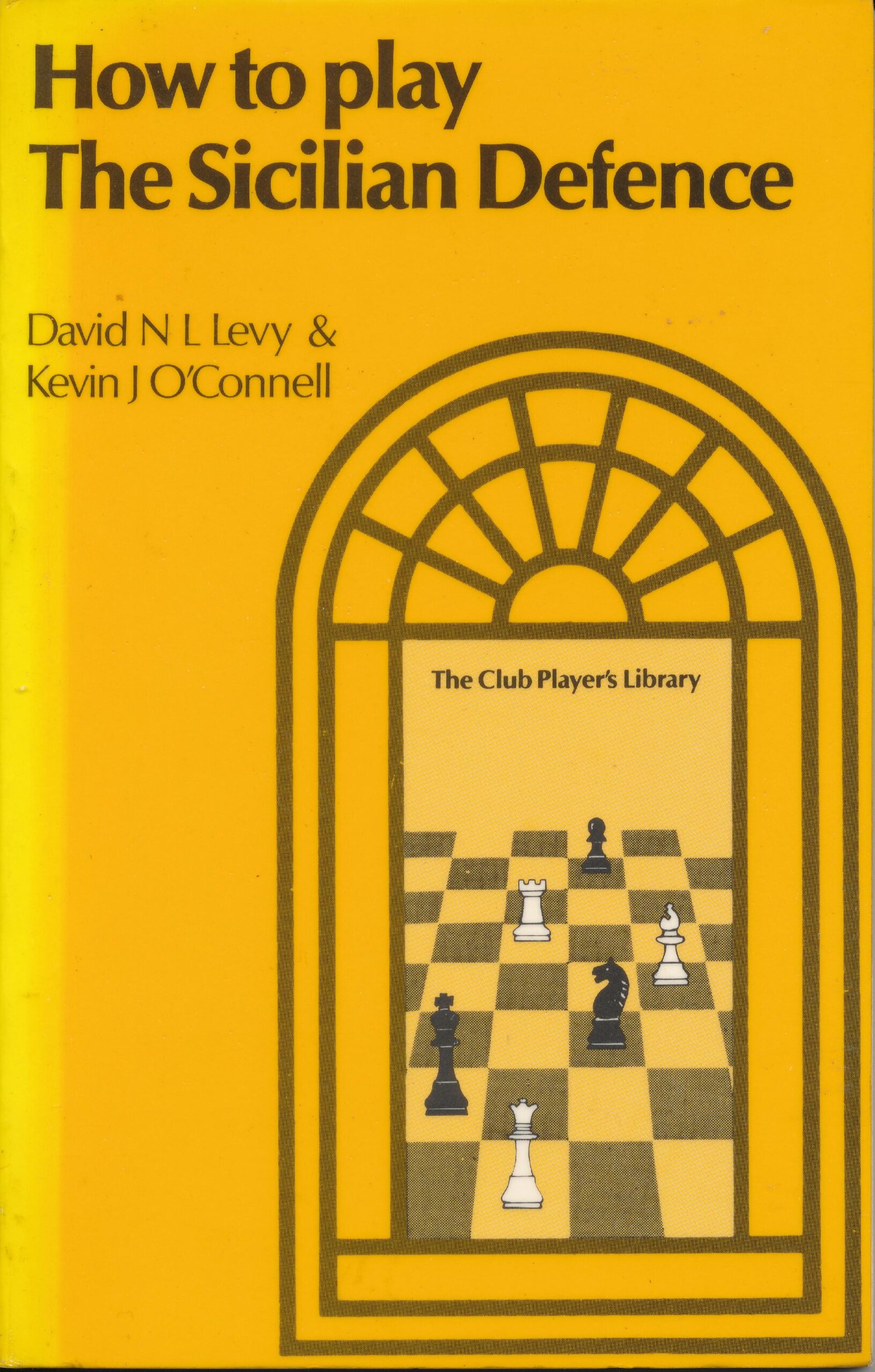
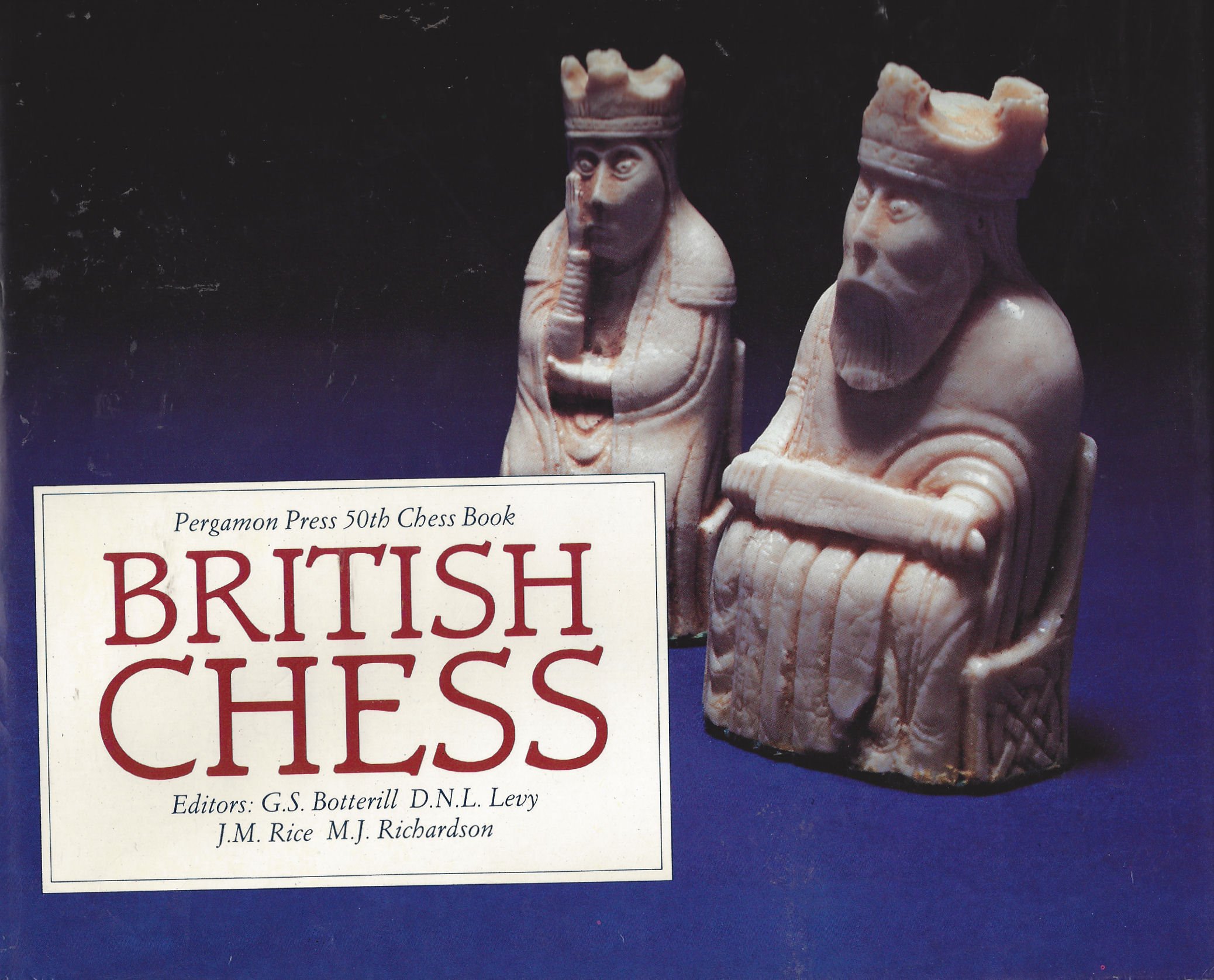
The Chess SceneThe Complete Games of World Champion Anatoly KarpovThe Complete Games of World Champion Anatoly KarpovHow to Play the Sicilian Defence, Batsford, 1978British Chess, Pergamon Press, 1983. Editors : GS Botterill, DNL Levy, JM Rice and MJ Richardson
We focus on the British Chess Scene Past & Present!
This website uses cookies to improve your experience. We'll assume you're ok with this, but you can opt-out if you wish. Cookie settingsACCEPT
Privacy & Cookies Policy
Privacy Overview
This website uses cookies to improve your experience while you navigate through the website. Out of these cookies, the cookies that are categorized as necessary are stored on your browser as they are as essential for the working of basic functionalities of the website. We also use third-party cookies that help us analyze and understand how you use this website. These cookies will be stored in your browser only with your consent. You also have the option to opt-out of these cookies. But opting out of some of these cookies may have an effect on your browsing experience.
Necessary cookies are absolutely essential for the website to function properly. This category only includes cookies that ensures basic functionalities and security features of the website. These cookies do not store any personal information.