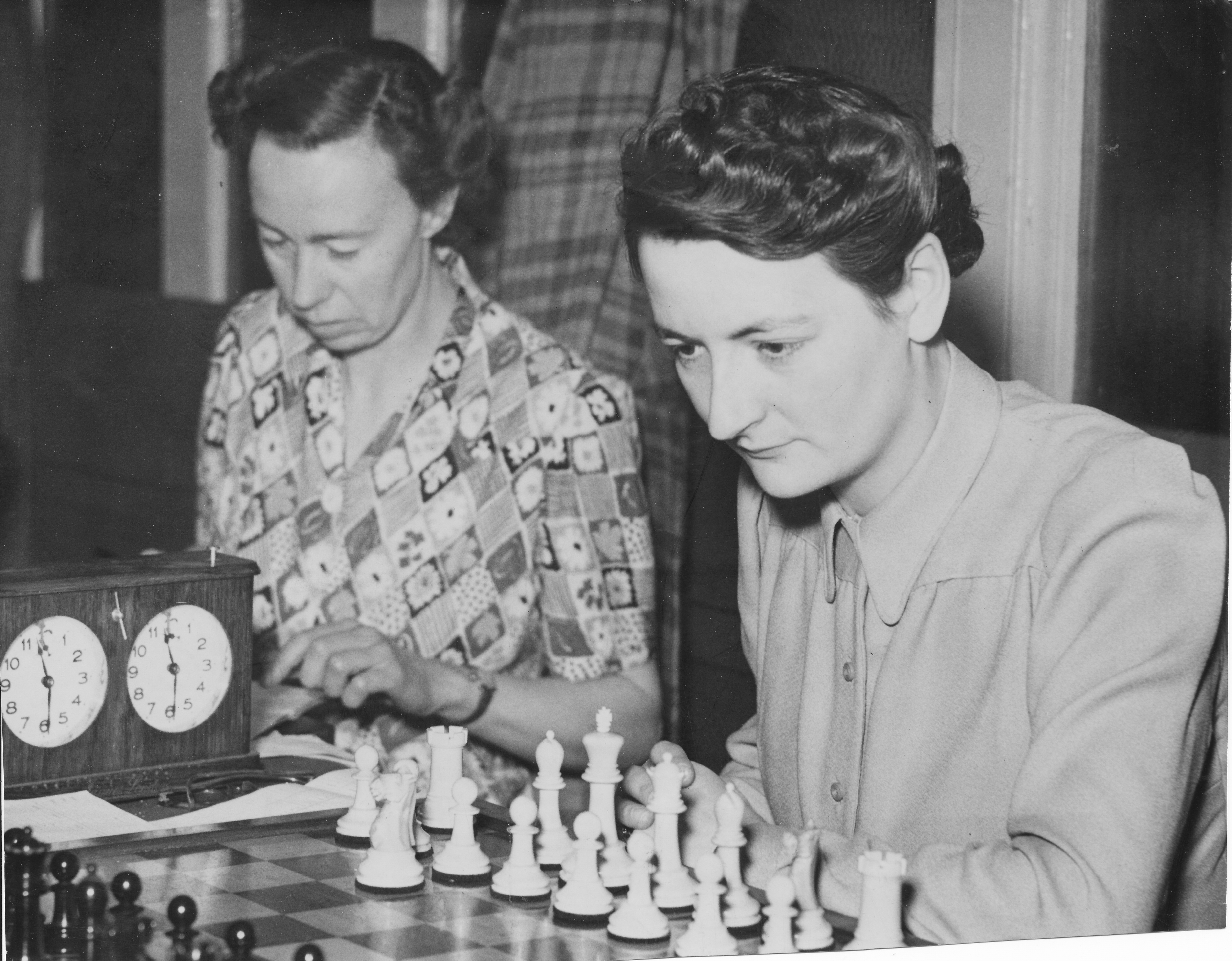
We remember WIM Rowena Bruce who died this day (September 24th) in 1999.
Rowena Mary Dew was born on Thursday, May 15th, 1919 in Plymouth, Devon. Her father was Clement Warner Harvey Dew and her mother was Mary Jane Rowe.
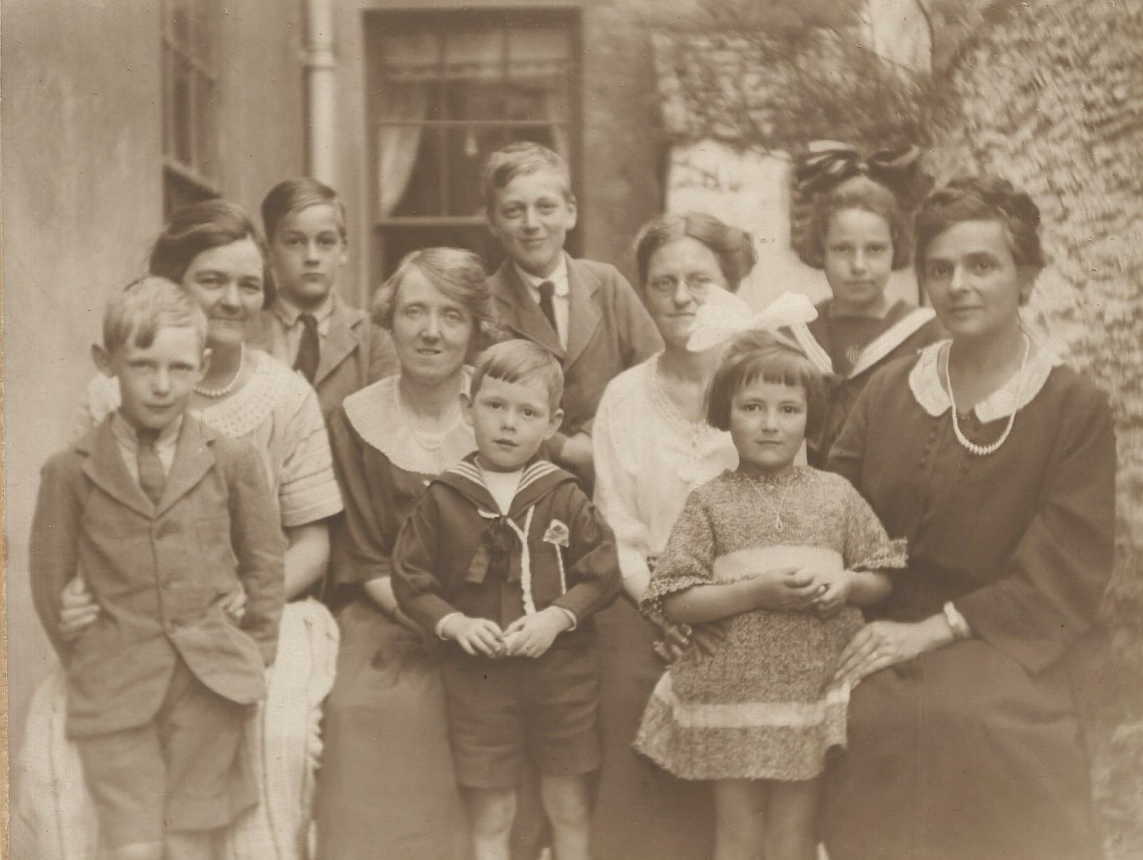
She married Ronald Mackay Bruce in July 1940 when she was 21 years old.
Her father Clement Warner Harvey passed away on 7 October 1957 in Plymouth, Devon, at the age of 79. Her mother Mary Jane passed away on 3 August 1958 in Cornwall at the age of 73. Her husband Ronald Mackay passed away in April 1991 in Plymouth, Devon, at the age of 87. They had been married 50 years.
From The Anglo-Soviet Radio Chess Match by Klein and Winter :
“Mrs RM Bruce was born in Plymouth in 1919, and learned chess at the age of twelve. She won the Girls’s World Championship in 1935 and the British Ladies Championship in 1937. During the war she served with the WVS in Plymouth. Apart from chess, she is interested in music and plays the cello.
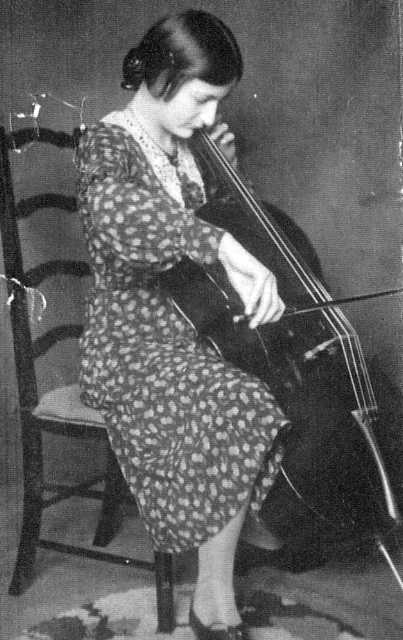
She is married to RM Bruce, who is a well-known Plymouth player.”
In 1984 both Rowena and Ron received the BCF President’s Award for Services to Chess.
From British Chess (Pergamon Press, 1983) by Botterill, Levy, Rice and Richardson :
“I was taught by my Mother Mrs. May Dew, when recovering from a mastoid operation in 1930, and I joined Plymouth Chess Club on 5th November 1931, aged 12.5.
I started receiving chess tuition from the Plymouth Match Captain, Ronald Bruce in 1934. (Married him in 1940!).
I won the Girls’ World Championship in 1935. I won the British Ladies’ Championship for the first time in 1937, and again in 1950, 1951, 1954, 1959, 1960, 1962 and 1963. I tied for first place in 1955, 1967 and 1969.
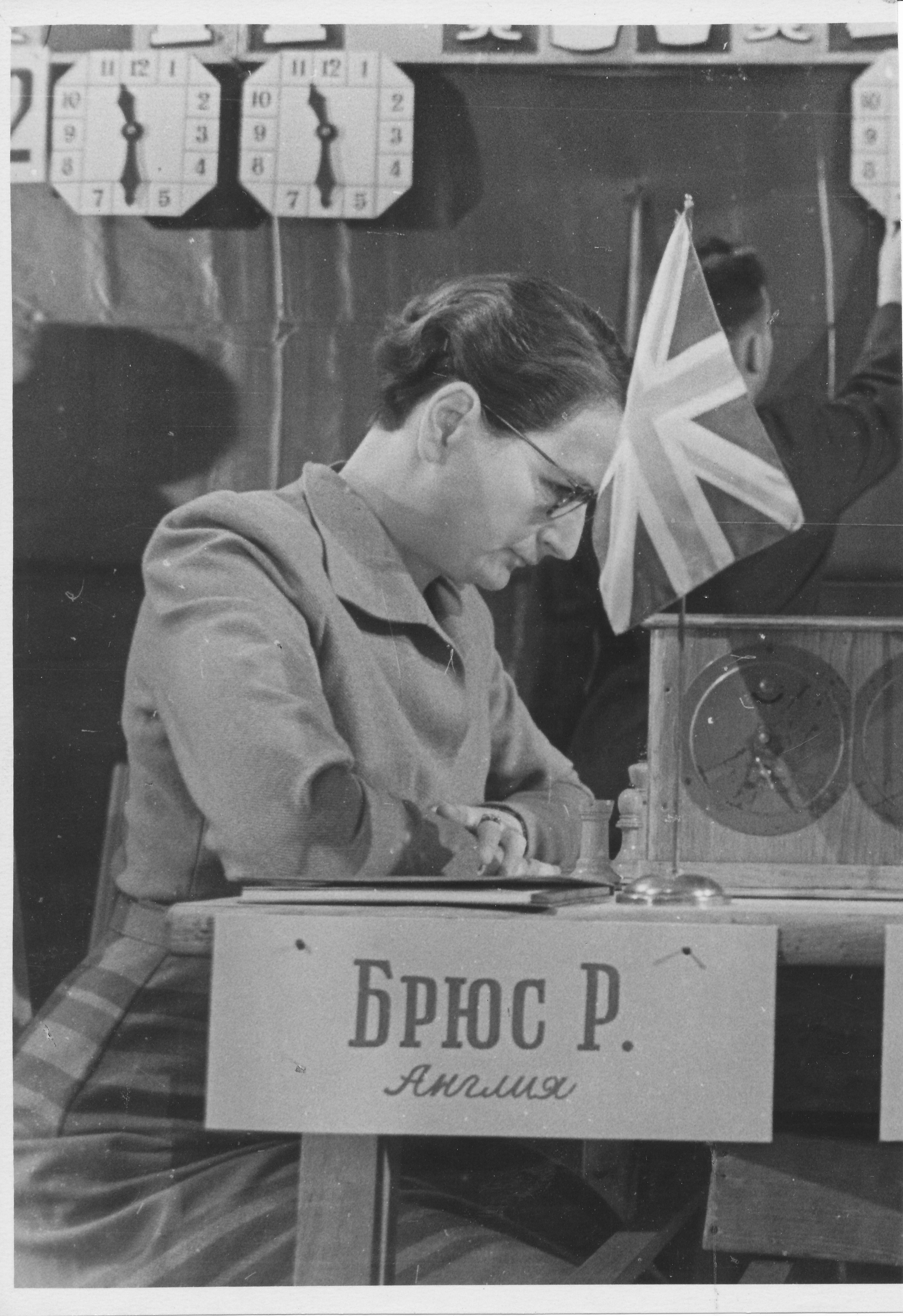
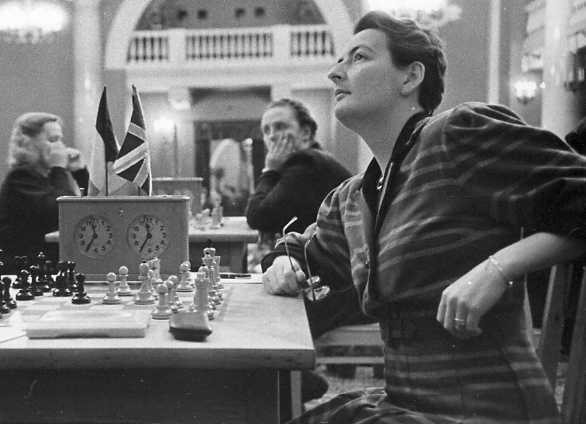
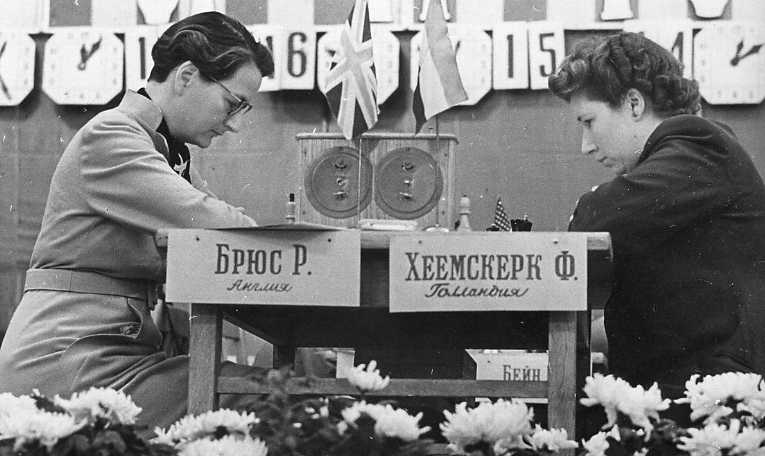
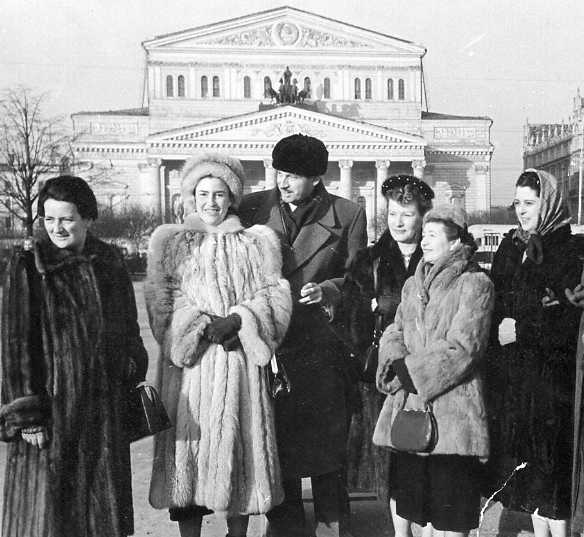
I represented Great Britain in the West European Zonal tournament held in Venice 1951, where I finished 2nd. This qualified me to represent Great Britain in the Candidates tournament held in Moscow in 1952. I finished 12th out of 16.
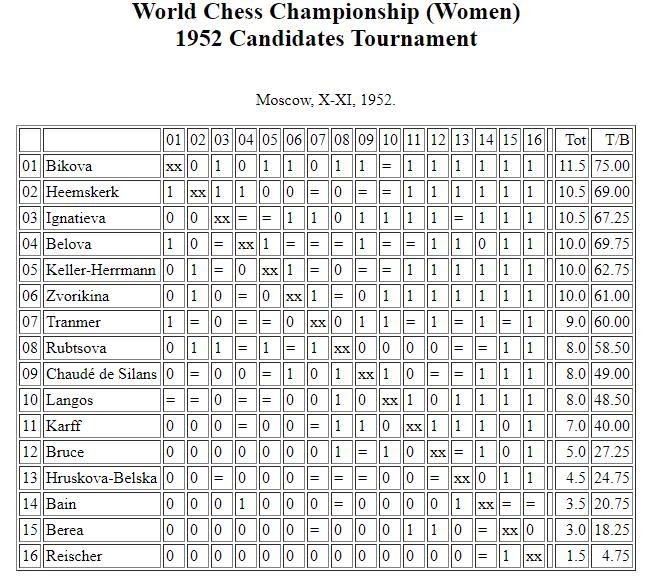
1952 Candidates Tournament
In 1952 we adopted a little girl – Rona Mary.
Other tournaments abroad included zonals in Italy, Yugoslavia and Germany, and Olympiads in Germany, Poland and Bulgaria.
This last-named ended in disaster because I collapsed with a stroke during my second game. Obviously my chess playing was affected, but I was indeed fortunate to make a fairly good recovery.
I returned to competitive chess playing a year later but, in the meantime, several young players have surged forwards, and that British Ladies’ Championship seems to have become much more difficult to win !
But I now have three grandchildren!
BCN is grateful to WCM Dinah Norman for sending us these memories :
“Rowena Mary Bruce (need Dew) was born on 15 May 1919 and died in Plymouth in 1999. Rowena was the youngest of 3 children born to Harvey and Mary Dew. Mary Dew was a member of the Plymouth Chess Club and tried unsuccessfully to get her 2 sons interested in the game but Rowena was the only child who was interested.
When Rowena was 10 her mother organised private lessons for her with the Plymouth Champion, Ron Bruce. At the age of 21 Rowena married Ron Bruce and it was a very successful and happy marriage. They had an adopted daughter Rona who had no interest in Chess. Rowena had to wait until she was 21 before she could marry Ron. Rowena lived in Plymouth all her life.
Rowena and Ron married in July 1940. Ron and Rowena cemented a formidable playing and organising partnership which benefited chess in Devon for almost half a century.
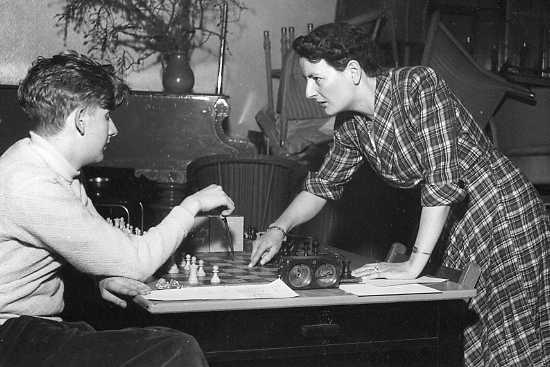
After the War Rowena was one of the leading quartet of British Lady players which included Elaine Pritchard (née Saunders), Anne Sunnucks and Eileen Tranmer. In 1951 Rowena played in the Ladies Zonal in Venice and qualified for the Candidates in Moscow to be played the following year.
AT the age of 53 she qualified for the East European Zonal in Sofia, Bulgaria in 1972. Sadly in Round 2 of that event she collapsed at the board with a major cerebral haemorrhage which left her right side paralysed. By sheer force of will after many months of convalescence she taught herself to speak and walk again. She had to give up playing her cello which was awful for her.
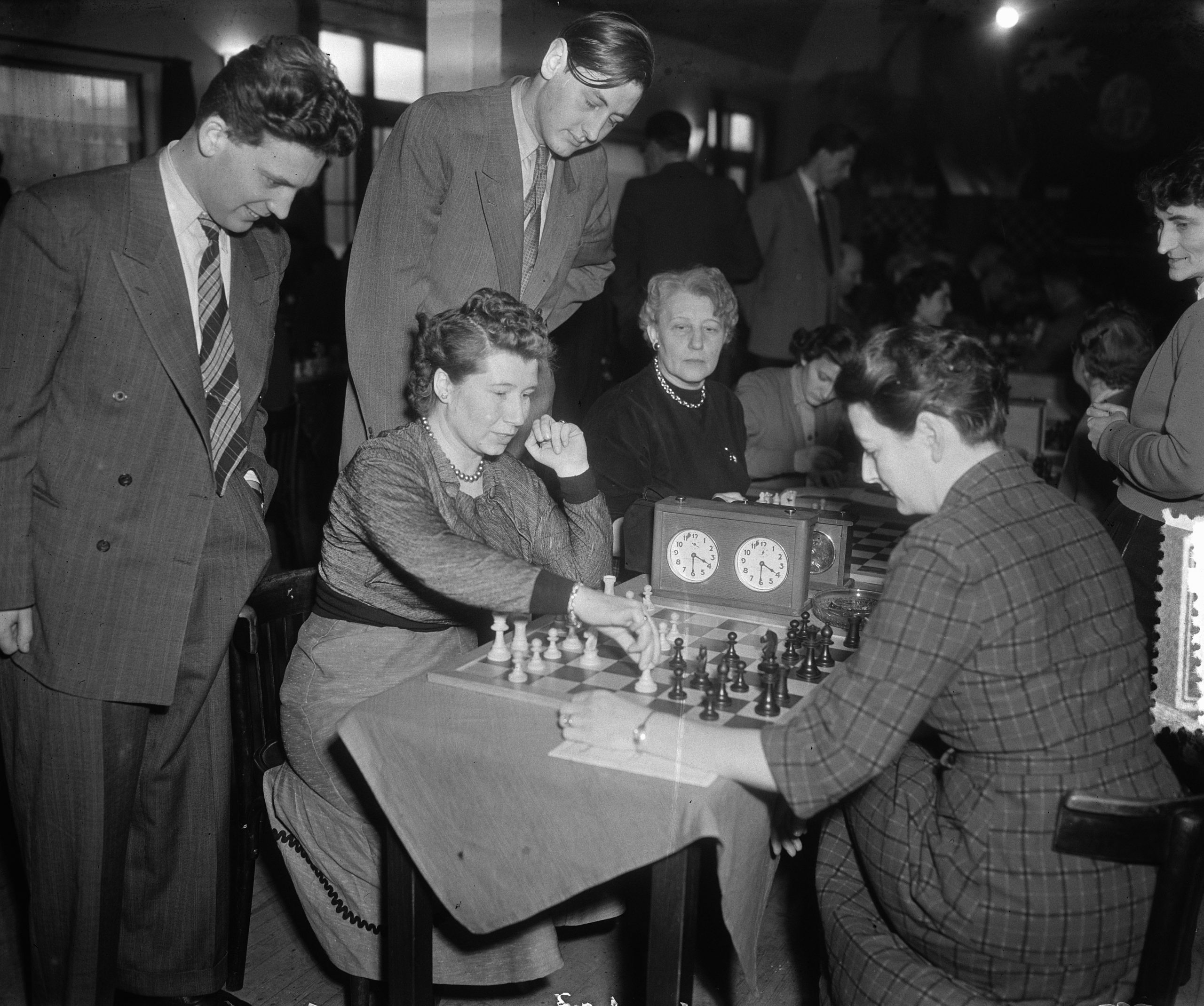
The steely determination with which she followed her 75 year chess career and her recovery from serious illness belied her gentle nature. She was a modest, kind and gracious person who always thought the best of others.
She won the British Ladies title 11 times.
I shared the title with her in 1967 and 1969 after 2 play offs. She was a very pleasant and sporting opponent.”
From The Encyclopedia of Chess (Robert Hale, 1970 & 1976) by Anne Sunnucks :
“International Woman Chess Master and winner of the British Ladies Championship on 10 occasions.
She was taught to pay chess by her mother, who was the Devon Lady Champion, after a mastoid operation when she was 10. In 1931 she joined Plymouth Chess Club, where she met R. M. Bruce, the Devonshire Chess Captain, who coached her and was largely responsible for later success. She married him in 1940.
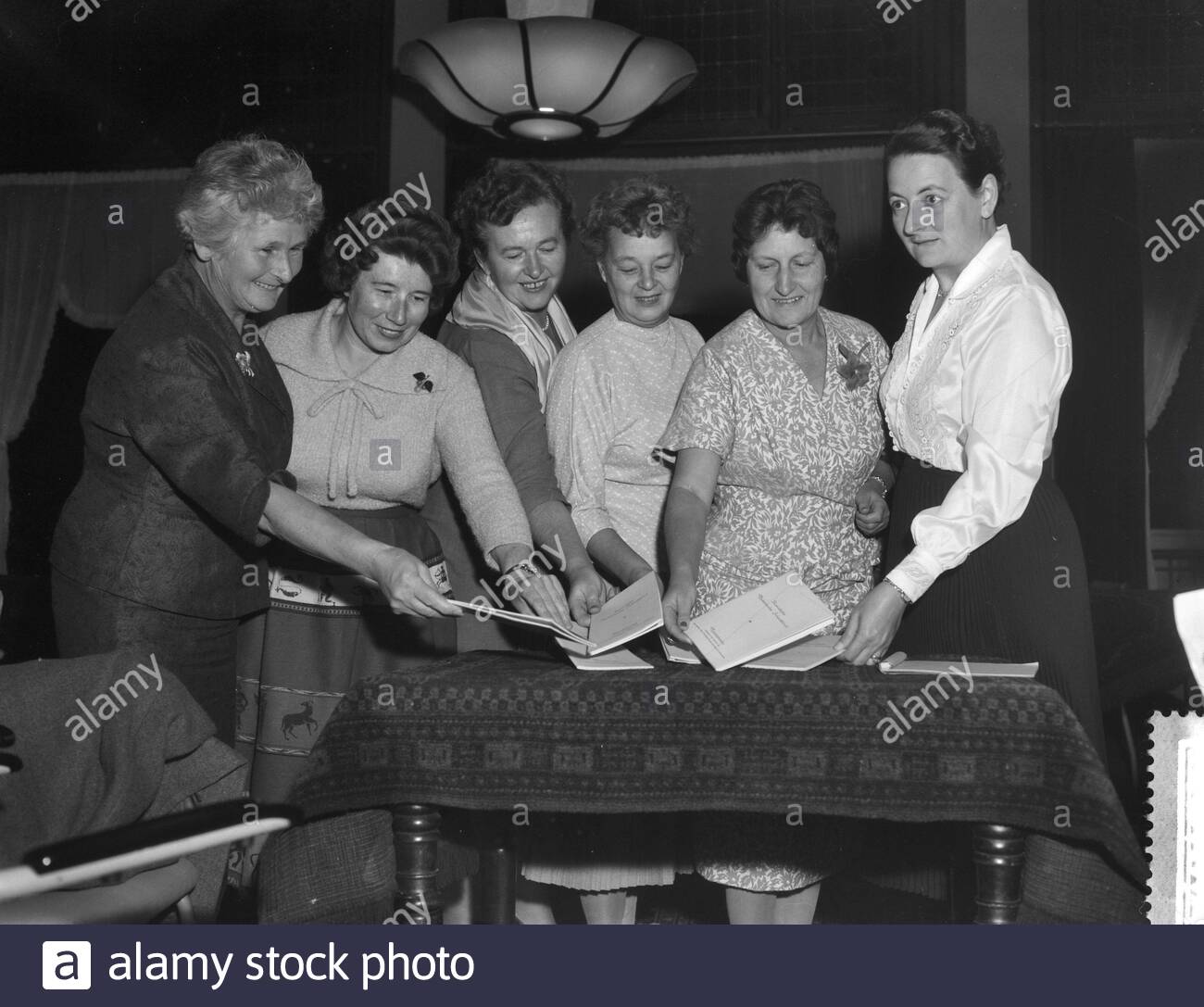
In 1935 she won the Girls’ World Championship and two years later the British Ladies’ Championship for the first time. She has won the title outright or been joint holder on 10 occasions in 1937, 1950, 1951, 1954, 1955, 1959, 1960, 1962, 1963 and 1967.
Mrs Bruce has represented Great Britain in matches against the USSR and the Netherlands and the British Chess Federation in qualifying tournaments for the Women’s World Championship. In Venice in 1951 she came 2nd in the Western European Qualifying Tournament for the Women’s World Championship and thereby qualified for the Candidates tournament in 1952, when she came 12th out of 16.
Apart from chess, her hobbies are music, gardening and bridge.
She is principal ‘cellist in the Plymouth Orchestral Society.”
An obituary (presumably written by John Saunders) appeared in the British Chess Magazine, Volume CXIX (119, 1999), Number 11 (November), page 584 :
“Rowena Bruce died peacefully at home on 23 September following a long illness. Rowena Mary Dew was born in Plymouth on 15 May 1919, and she was taught the game at the age of 10, while she was convalescing from surgery, by here mother Mary Dew, herself a very able player who had been Devon Ladies’ Champion.
Rowena joined the Plymouth Chess Club, where she met her future husband, Ron Bruce, himself a strong player. She won the World Girls’ Championship in 1935 and the British Women’s title two years later. Rowena married Ron in 1940 and won the British title under her married name ten more times (seven outright and three jointly) between 1950 and 1969.
She represented Great Britain in matches against the USSR and the Netherlands. She qualified for the Women’s World Championship by coming 2nd in the Western European Zonal in Venice, and in the subsequent Candidates tournament in Moscow in 1952 she came 12th out of 16. She was awarded the women’s international master title in 1951.
The contribution to chess that Rowena and Ron Bruce made to national, west country and Devon chess was well recognised at the highest level, and when the British Chess Federation instituted a new award in 1983, the President’s Award for Services to Chess, they won it jointly in only its second year. Ron died in 1991.
Rowena was a past president of the Devon County Chess Association and the West of England Chess Union and continued playing for Devon until about four years ago when her increasing frailty made it impossible for her to travel to away matches.
Her other accomplishments included music : she was a principal cellist in the Plymouth Orchestral Society. She also partnered husband Ron in strictly non-competitive bridge for many years. She leaves a daughter Rona and three grand-children.”
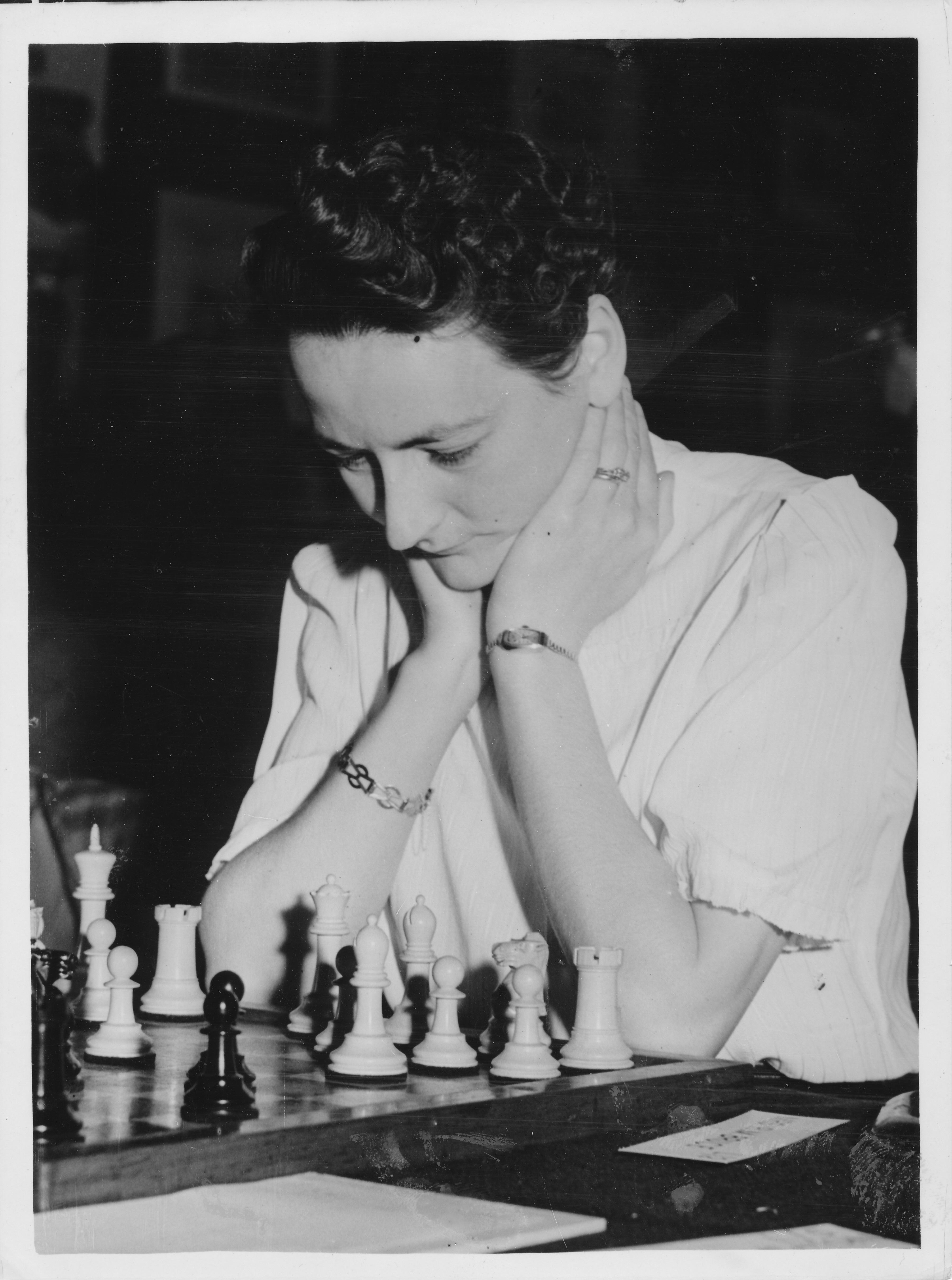
From The Encyclopedia of Chess (Batsfords, 1977) by Harry Golombek :
“International Woman master and eleven times British Ladies champion or co-champion.
At the age of fifteen in 1935, Miss Dew won the girls World championship and two years later, still under he maiden name, se won the British Ladies championship at Blackpool. Thereafter she won the championship under her married name in 1950, 1951, 1954, 1955, 1959, 1960, 1962, 1963, 1967 and 1969.
Her best international result was a 2nd in the 1951 Western European Zonal tournament, qualifying for the Women’s Candidates tournament in Moscow 1952, where she came 12th/16. She has represented England in a number of team events, has excellent combinative powers, but lacks steadiness in strategy.”
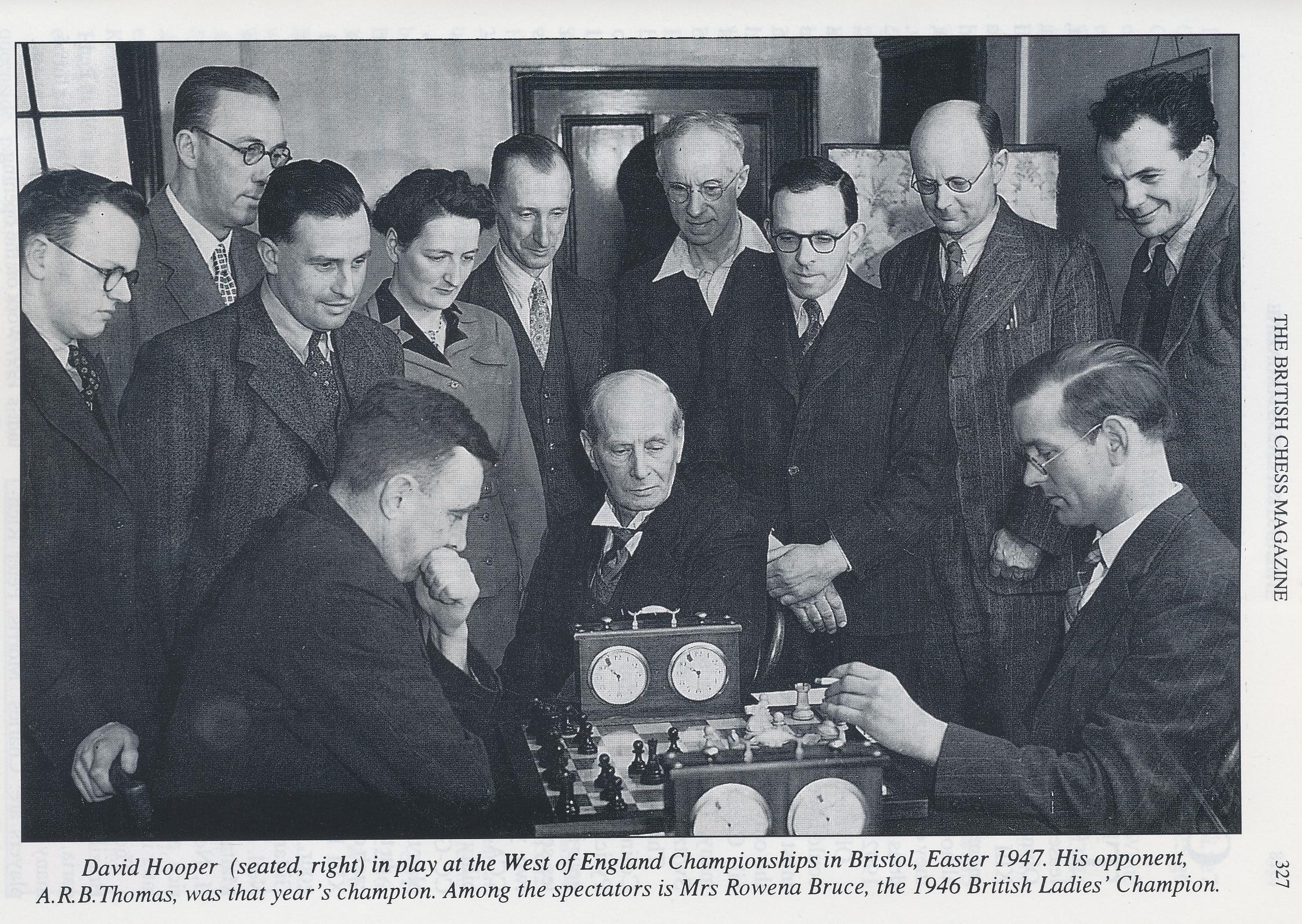
Here is an interesting article from Tartajubow on Chess
From Wikipedia :
“Rowena Mary Bruce (15 May 1919 – 24 September 1999), née Dew, was an English chess player who held the title of Woman International Master (WIM, 1951). She was an eleven-time winner of the British Women’s Chess Championship (1937, 1950, 1951, 1954, 1955, 1959, 1960, 1962, 1963, 1967 and 1969).
Biography
From the end of the 1930s to the end of the 1960s, she was one of England’s strongest women chess players. In 1935, she won the FIDE World Girls Championship. Rowena Mary Bruce won the British Women’s Chess Championship eleven times: 1937, 1950, 1951, 1954, 1955, 1959, 1960, 1962, 1963, 1967 and 1969[1]. In 1952, in Moscow, she participated in the Women’s Candidates Tournament where she took 12th place[2]. In 1951, she was awarded the FIDE Woman International Master (WIM) title.
On 21 June 1946, Bruce played (and lost) a “radio chess” match against Lydmilla Rudenko. Bruce was one of two women who were part of a twelve member British team who played in a four day tournament. The British team played their moves in London while the Russian team played their moves in Moscow.”
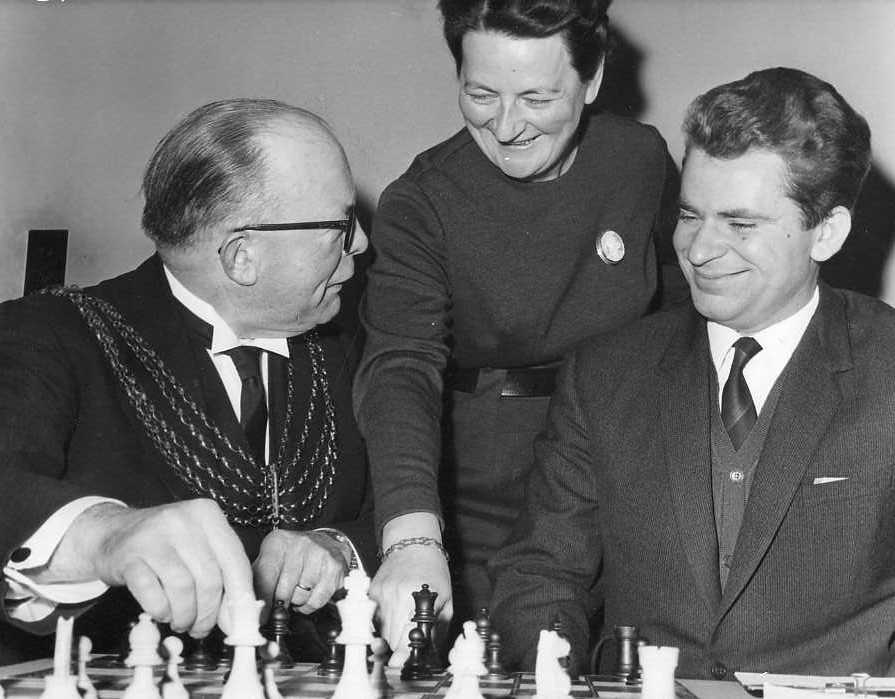
“Rowena Mary Bruce played for England in the Women’s Chess Olympiads:
In 1966, at second board in the 3rd Chess Olympiad (women) in Oberhausen (+5, =5, -2) where she won an individual silver medal, and
In 1969, at second board in the 4th Chess Olympiad (women) in Lublin (+5, =3, -6).
From 1940 to 1991 she was married to Ronald Bruce (1903–1991)”