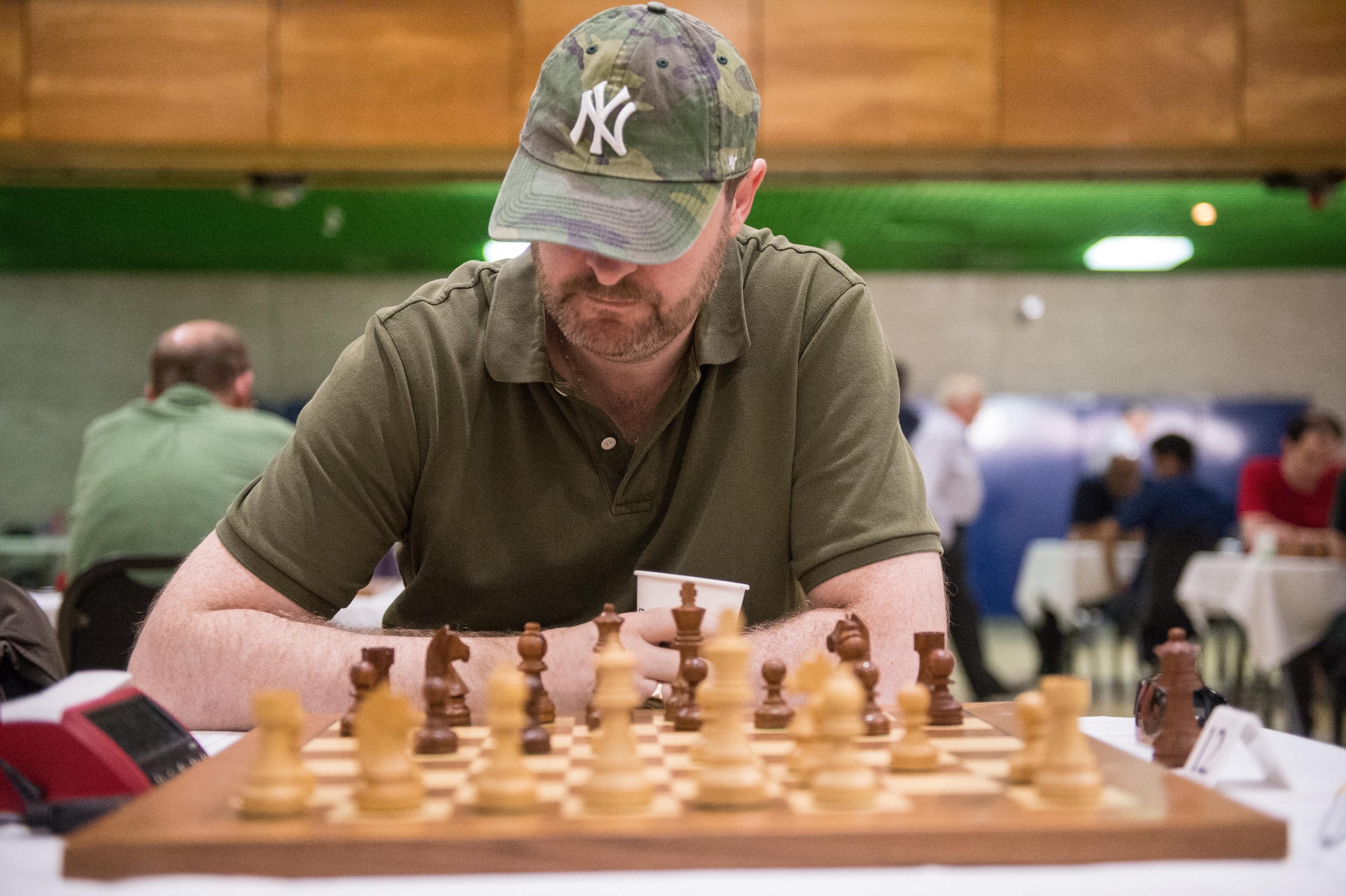
BCN wishes Happy Birthday to GM Daniel Fernandez who at 26 is currently England’s youngest Grandmaster. The previous GM title holder was Jonathan Hawkins in 2014 making two in seven years.
Daniel Howard Fernandez was born in Stockport, Manchester on Sunday, March 5th 1995. “Think Twice” by Celine Dion was top of the UK hit parade.
Daniel started playing chess at the age of seven (after his father taught him the rules) and at this time attended King’s School, Harpenden. His first chess club was Little Heath which became the ECF Small Club of the Year in 2015. They play in the Potter’s Bar area and include IM John Pigott in their membership.
At Little Heath Chess Club Daniel was coached by Mark Uniacke (who worked extensively on the early chess engine HIARCS).
Daniel went up to Queen’s College, Cambridge to read mathematics and left to become a Data Analyst at Mu Sigma Inc. He can speak several languages (including Serbian!) and works as a translator when opportunities arise.
He currently lives in Australia offering coaching and writing chess books (for Thinkers Publishing) and columns for Chessbase. In his spare time (!) Daniel is studying for The Master of Complex Systems degree at The University of Sydney.
Daniel’s first ECF graded game was rapidplay on July 5th 2003 in the SCCU Junior Under-14 Final.
His first standard play game was in August 2003 at the Edinburgh based British Under-8 Championship.
On August 13th 2004 in Scarborough Daniel became British Under-9 Champion sharing the title with Daniel Hunt & Saravanan Sathyanandha.
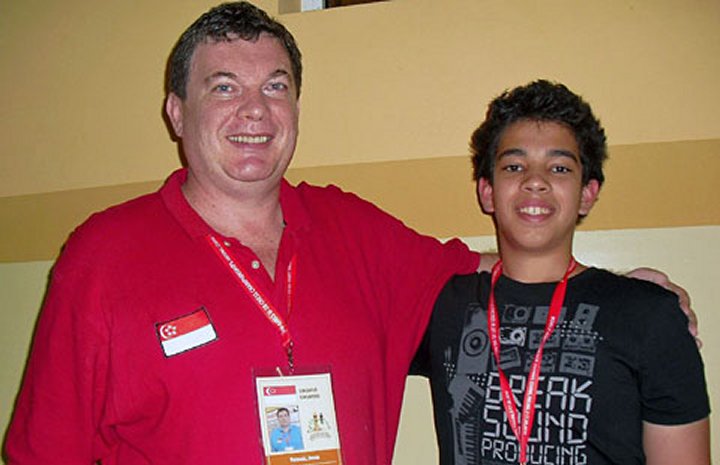
The Fernandez family relocated to Singapore in August, Daniel attending the Anglo-Chinese School in Singapore. He was swiftly recruited into the Singapore Chess Federation’s (SCF) National Junior Squad. Also in that squad were Danielle Ho and Howard Chiu (remember this for later!).
Barely three weeks after his Scarborough triumph on September 4th 2004 Daniel played his first FIDE rated game in the 5th Asian Under-10 Championship organised by the ASEAN Chess Confederation. His performance in this event was rewarded with a FIDE Master title in 2005. Because he was no longer active in English events the ECF had the unusual scenario of having a ten year old FIDE Master with a published grade of ~120!
In typically modest fashion Daniel confesses that he did not “deserve” the FM title at this time and that it was the consequence of the strong position of the ASEAN and SCF organisations within world chess. At the same event Wesley So gained his FM title in the Under-12 section.
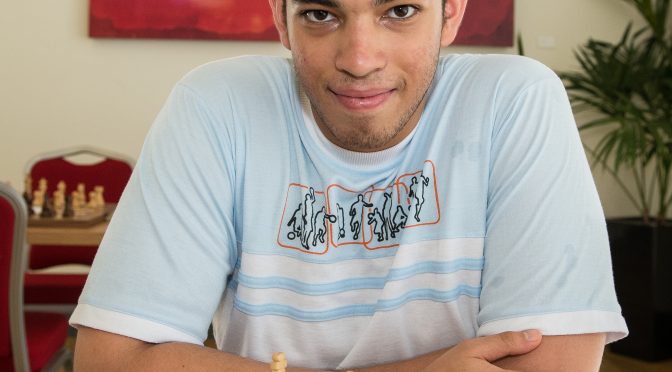
FM Daniel Fernandez
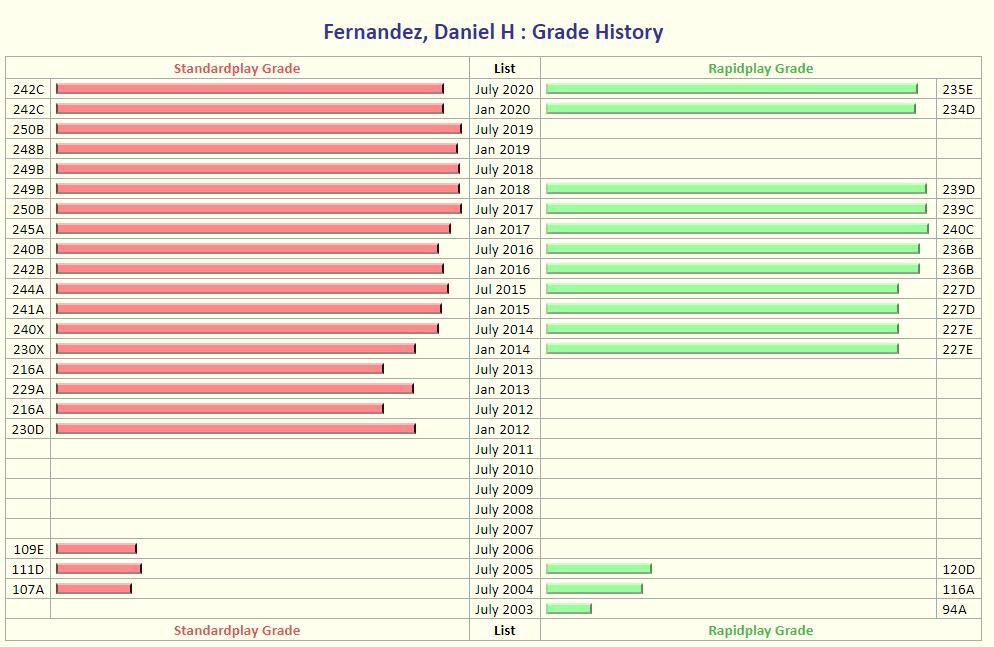
Another interesting consequence of the relocation was that when Daniel returned to England in 2012 his last published grading went from ~ 120 to ~230!
One of the motivations of returning to England was to obtain the necessary entrance requirement to study mathematics at Cambridge. This he did by studying for A-levels at Manchester Grammar School.
Daniel with IM Jovan Petronic during the 2010 world juniors in Chotowa, Poland | Photo: Diana Mihajlova
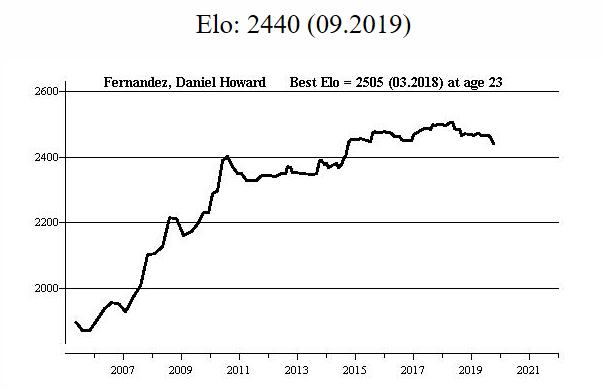
Consequently Daniel’s FIDE rating profile also showed a fast pace of development:
FIDE rating profile for Daniel Fernandez
Sydney 2009 and Sydney 2010 both provided IM norms with the third one coming from Kuala Lumpar 2010 and with these Daniel became an International Master in 2010 the title being confirmed at the 3rd quarter Presidential Board Meeting 2010, 24-25 July 2010, Tromso in Norway.
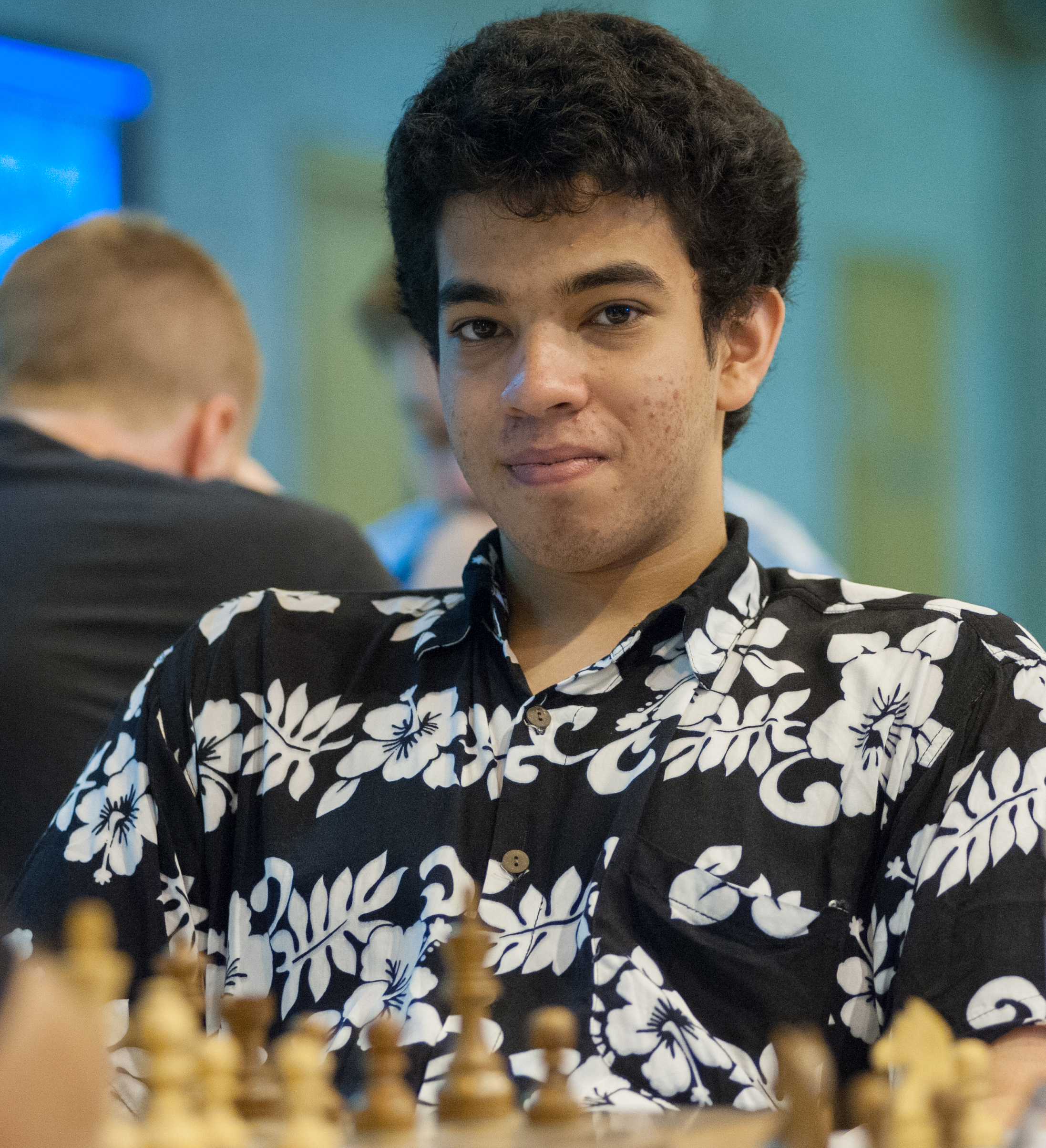
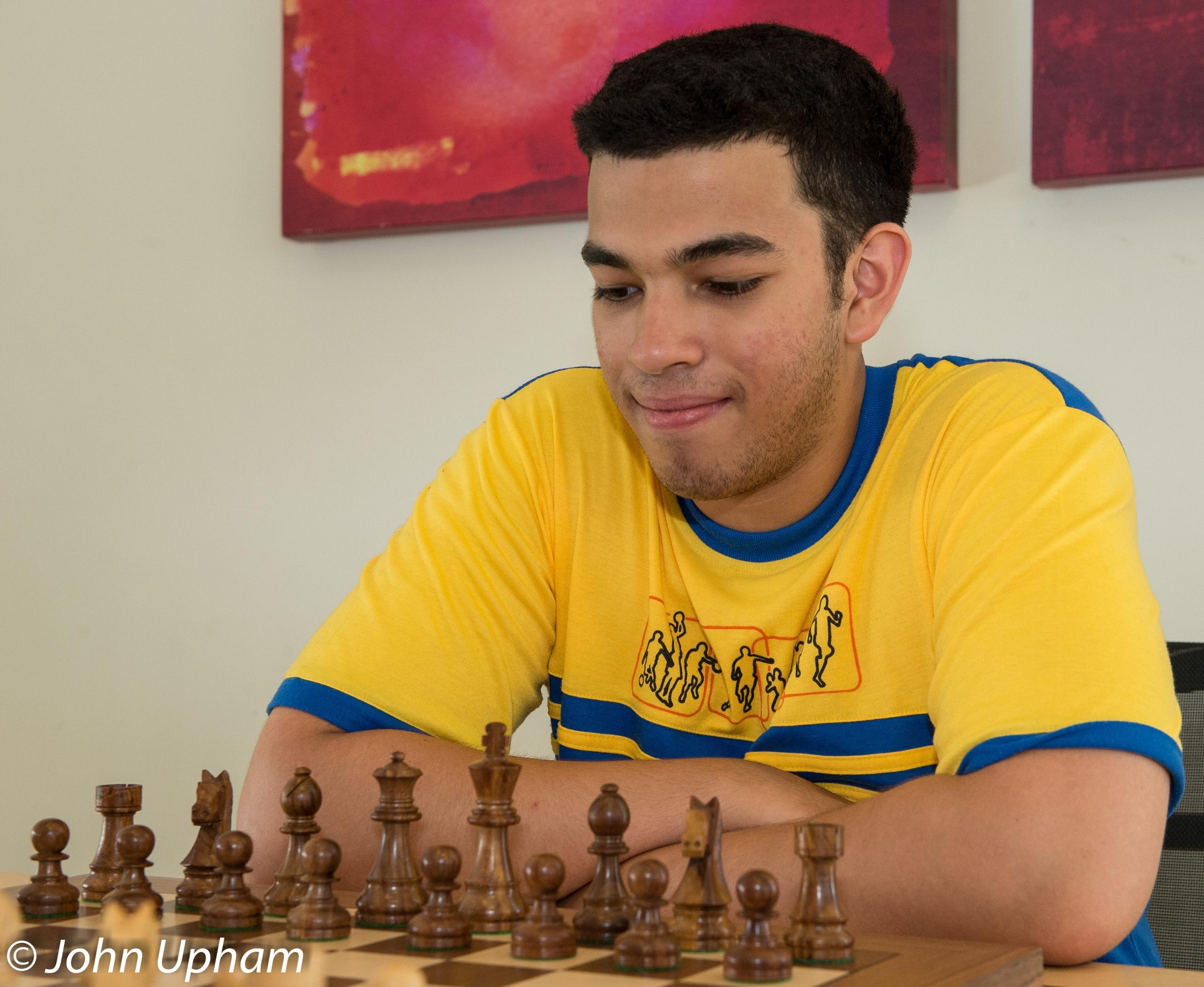
IM Daniel Fernandez, 100th British Championships, Round 5, Torquay. Courtesy of John Upham Photography
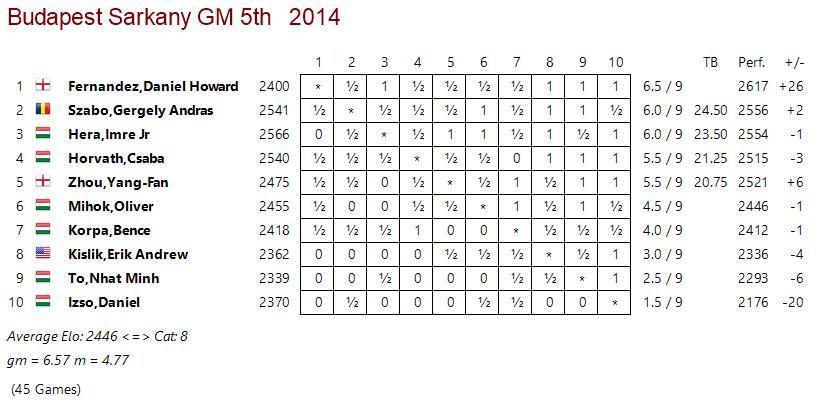
He won the Budapest Sarkany Tournament in 2014 as follows:
Full Crosstable from Budapest Sarkany Tournament, 2014.
earning his first GM norm in the process.
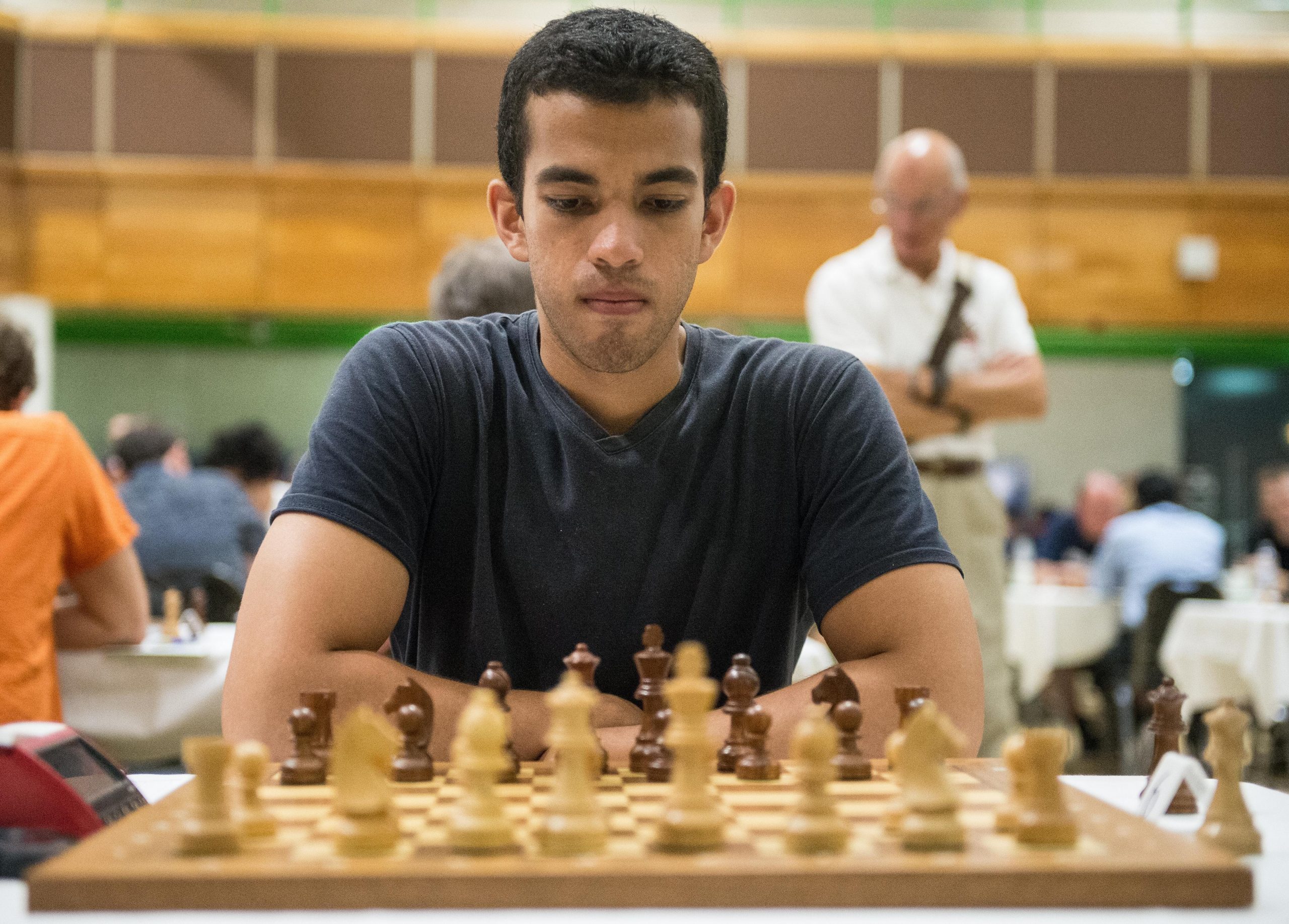
IM Daniel Fernandez, 101st British Championships, Aberystwyth. Courtesy of John Upham Photography
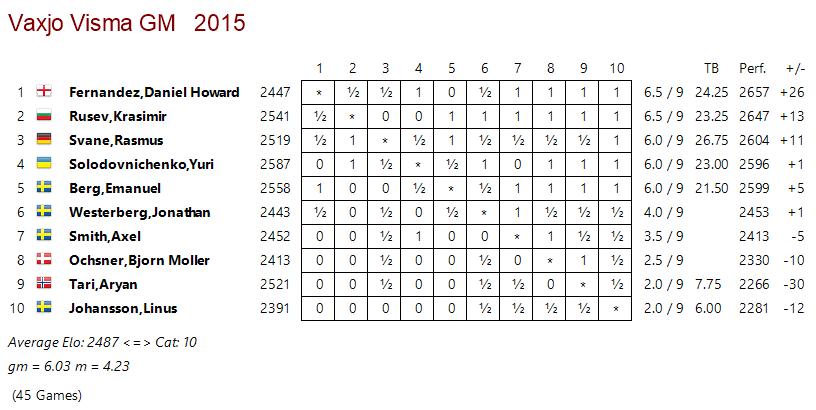
BCN asked Daniel for three of his favourite games. The first one is this Polish Defence game from 2015 played at the Visma Arena in Vaxjo, Sweden. First we have the crosstable showing that Daniel earnt his second GM norm from this event.
Full Crosstable for Vaxjo, Visma tournament in Sweden, 2015.
and here is the game:
and during the 2015/15 4NCL season Daniel obtained his final GM norm playing for Wood Green.
In March 2015 he made his first of three Varsity match appearences for Cambridge re-uniting with Danielle Ho and Howard Chiu (remember those names from earlier?).
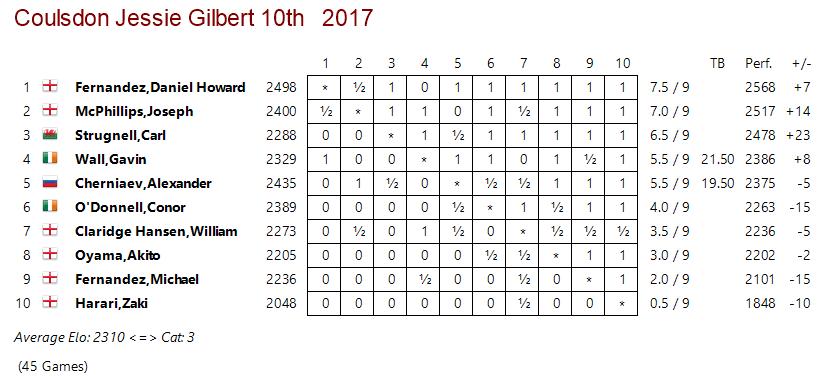
Daniel won the 10th Jessie Gilbert Memorial in 2017:
Full Crosstable from the 2017 10th Jessie Gilbert Memorial
and also in 2017 Daniel was awarded the Grandmaster title at the 88th FIDE Congress 2017, 7-15 October, Goynuk, Antalya, Turkey.
On March 11th Daniel represented Cambridge in the 135th Varsity Match at the RAC Club in Pall Mall. According to chess24.com ‘IM Daniel Fernandez, playing board 2 for Cambridge, was awarded the Brilliancy Prize by GM Ray Keene in consultation with McShane and Speelman, for his “high-class swindle” after recovering from a bad blunder.’ See here for details.
GM Daniel Fernandez, 2019 British Championships, Torquay. Courtesy of John Upham Photography
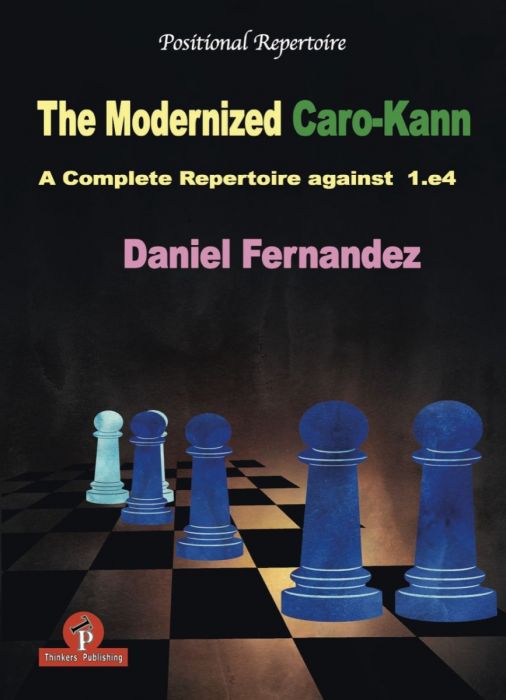
In 2018 Daniel ventured into the world of book writing when Thinker’s Publishing released The Modernized Caro-Kann on September 8th 2018. This was a repertoire book for Black based around the Smyslov Variation :
The Modernized Caro-Kann, Daniel Fernandez, Thinkers Publishing, 2018
From the rear cover we have:
“GM Daniel Fernandez (born 1995) has been an active and accomplished player for several years. He represented his native Singapore twice at Olympiads (2010 and 2012) before transferring to the English chess federation. There, he won the national classical titles at U-18 and U-21 levels and worked to become a Grandmaster while simultaneously studying at Cambridge. The Caro-Kann was instrumental in his quest for that title. Currently, Daniel is known in the chess scene not only as a solid player, but also as a mentor figure to younger English players, as a producer of well-received commentary and analysis, and as a multilingual chess coach. This is his first book.”
From January 2019 we have this interesting encounter between Gawain Jones and Daniel from the annual 4NCL meeting of Guildford and Wood Green:
With the White pieces Daniel has played a wide range of first moves but the majority move by far is 1.e4. His choice versus the Najdorf is some eclectic : sometime ago 6. Rg1 was the favourite and now 6.a4 is preferred.
Against 1…e5 Daniel offers a main line Ruy Lopez.
What does a Caro-Kann expert play against the Caro-Kann? Nowadays the Two Knights Variation is employed!
As the second player he plays the Sicilian Najdorf as well as the Caro-Kann plus an equal mixture of the Grünfeld and King’s Indian Defences.
In 2019 Daniel was interviewed by Edwin Lam on behalf of ChessBase : fascinating reading!
In the same year Daniel joined IM Adam Taylor’s venture Making Grandmasters.
Our final games is from July 2019 :
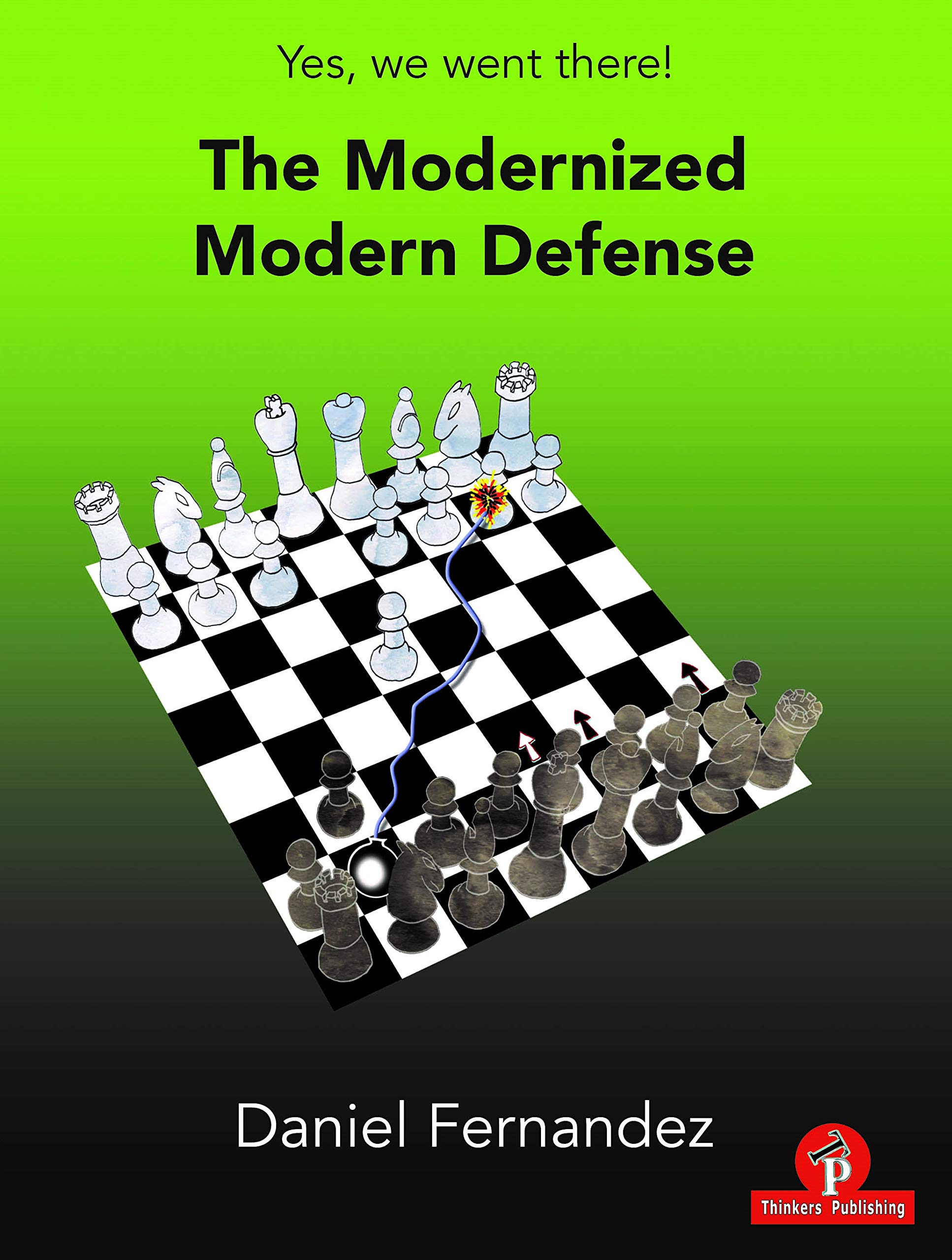
Daniel’s most recent publication is The Modernized Modern Defence from Thinker’s Publishing:
The Modernized Modern Defence, Daniel Fernandez, Thinker’s Publishing, 2021
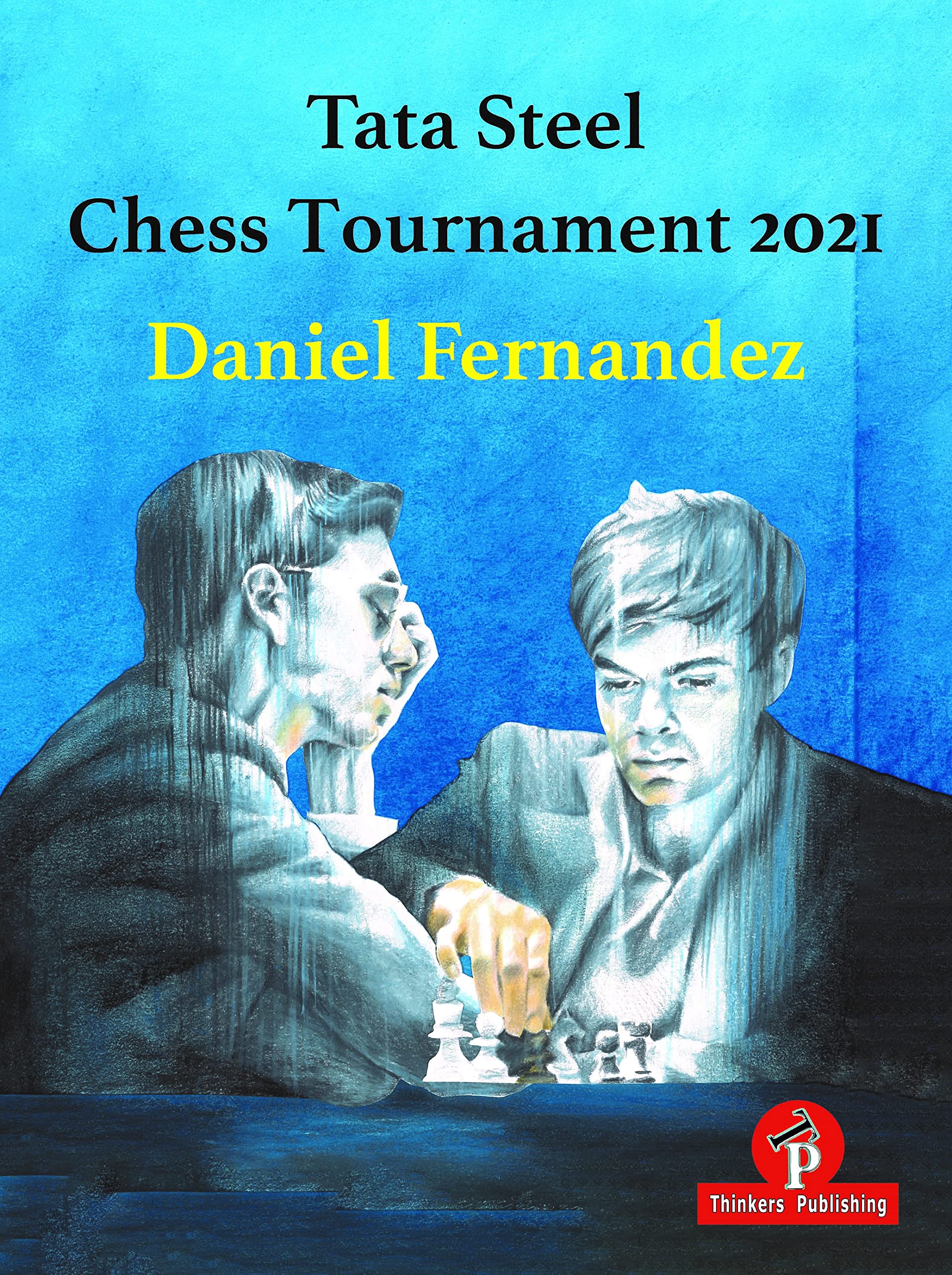
and BCN has been told that Daniel has a book in the pipeline about the Tata Steel 2021 tournament at Wijk aan Zee.
BCN remembers Stanley Kipping who passed away in Walsall on February 17th 1964 at the age of 72 who was always known by friends and family as Stanley.
BCN was fortunate to receive the following part email from John Kipping, a resident of Christchurch, New Zealand.
None of the Kipping family from around that time were referred to by their first name. His brother was Barry (my grandfather), and two sisters, Esme who made jigsaw puzzles and Frieda, named after Frieda Weekly (nee von Richtofen).
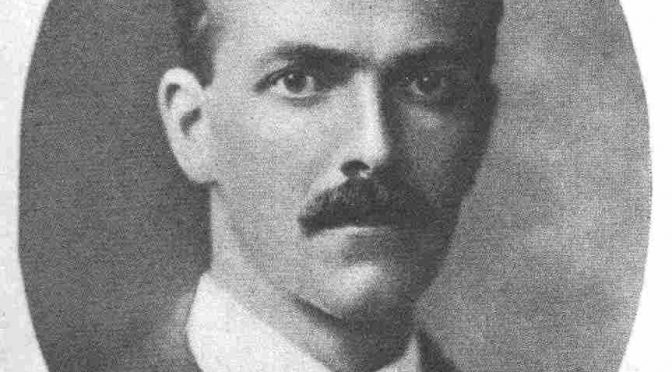
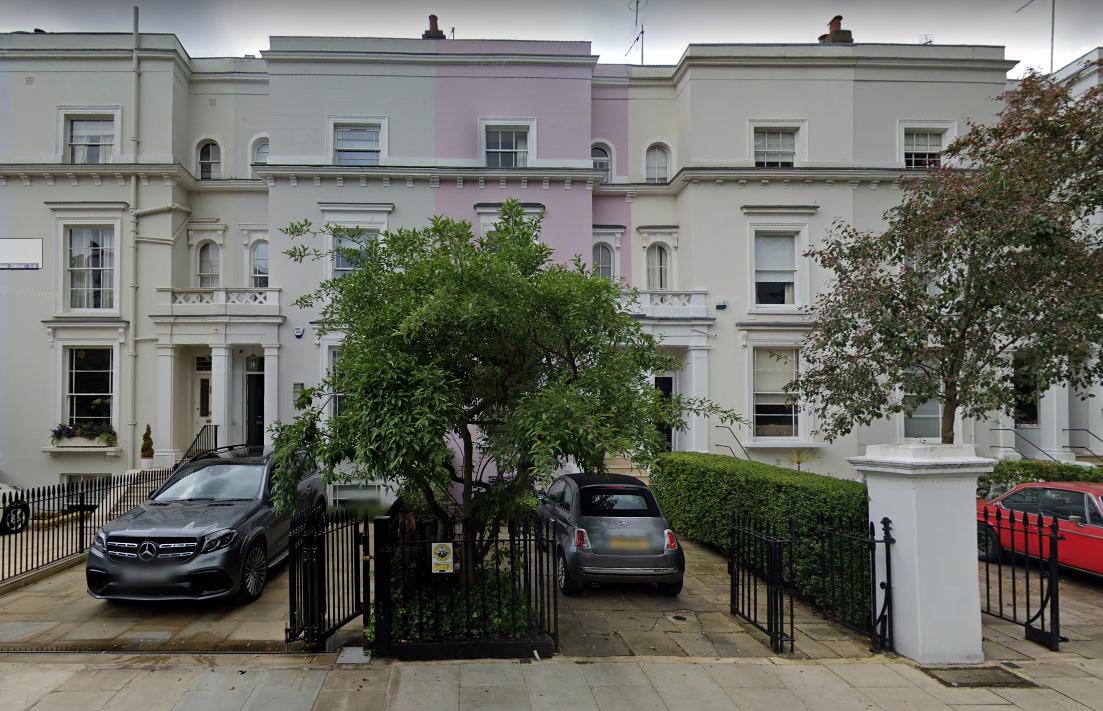
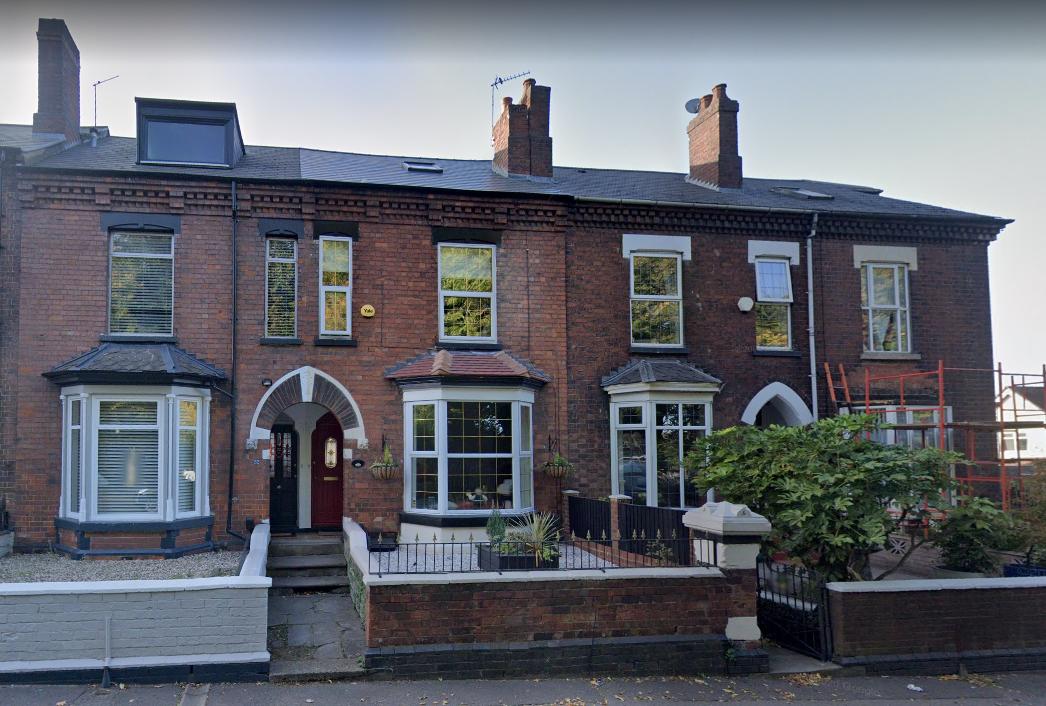
(Cyril Henry) Stanley Kipping was born on Saturday, October 10th, 1891 in 7 Milborne Grove, South Kensington, London, SW10 9SN.
7 Milborne Grove, South Kensington, London, SW10 9SN.
His parents were Frederic Stanley Kipping (28) and Lillian Kipping (24, née Holland) : they married in 1888. Stanley was baptised on May 8th, 1892 in West Brompton, London. Frederic died on 30 April 1949 in Pwllheli, Caernarvonshire, at the age of 85 and Lilian passed away on 4 September 1949 in Pwllheli, Caernarvonshire, at the age of 82.
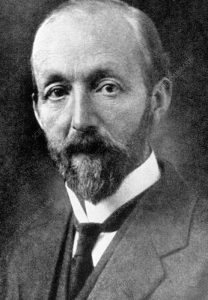
Frederic was Professor of Chemistry at The University of Nottingham. He undertook much of the pioneering work on silicon polymers and coined the term silicone. He was elected a Fellow of the Royal Society in 1897.
Frederic Stanley Kipping, FRS
In the 1901 census the family lived at Clumber Road West, Nottingham and brother Frederic Barry Kipping was born on April 14th 1901 and his sister Kathleen Esme was born on 3rd May 1904 also in Nottingham. Kathleen died on 30 August 1951 in Pwllheli, Caernarvonshire.
In 1902 Stanley started at Nottingham High School excelling in mathematics and science and in 1906 he obtained the Oxford and Cambridge Board’s Lower Certificate.
On March 2nd 1908 the Sheffield Daily Telegraph published a matriculation list for London University and CHSK was listed as being in the second division. Following that in 1909 Stanley obtained a Oxford and Cambridge Higher Certificate.
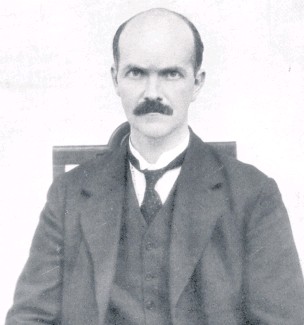
CHS Kipping
As of the 1911 census the household now included Stanley’s maternal Grandmother, Florence Holland (59) plus a parlourmaid, a housemaid, a cook and a nurse. Stanley was recorded as being a 19 year old science student and they lived at 40, Magadala Road, Nottingham which appears to have been replaced by residential flats. Curiously the address on the Census record was obscured by green insulation tape but insufficiently for it to readable.
“He left school in July 1910 and went to Trinity Hall in Cambridge where he read for the National Sciences Tripos. He played tennis for his college and launched into the composition of chess problems.
He obtained a First in Part I of the Tripos in 1912, a First in Part II in 1913, and was awarded the degree of Bachelor of Arts on 7 June 1913. He began researching in organic chemistry at Cambridge, but in September 1914 decided instead to take a teaching appointment at Weymouth College.”
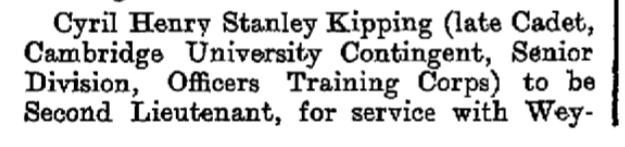
In 1914 The London Gazette announced that Stanley was promoted within the Chaplain Department of the British Army to Second Lieutenant with a service number of 10940.
On December 23rd 1914 The London Gazette announced the following :
The London Gazette, December 22nd 1914, part one
and
The London Gazette, December 22nd 1914, part two
On the 9th October 1918 The London Gazette announced :
The London Gazette, 8th October 1918
Again, according to Stephen C. Askey :
“In January 1919 he took his Master of Arts degree at Cambridge, and joined the teaching staff of Bradfield College in Berkshire. But by the summer of that year he became an assistant master at Pocklington School in Yorkshire, where he spent five happy years.
There he used his talent for juggling in 1920 to train a troupe of jugglers who gave a display at a school concert. This popular performance was repeated annually at Pocklington. Meanwhile be continued to compose chess problems and in 1923 published a book for beginners called The Chess Problem Hobby.”
In the 1939 register Stanley was recorded as residing at 67 Wood Green Road, Wednesbury, Staffordshire, England with Martha Partridge (born 29th June 1886) who was his Housekeeper.
Wood Green Road, Wednesbury, Staffordshire
His probate record appears in the England & Wales Government Probate Death Index 1858-2019 as :
1964 Probate record for Cyril Henry Stanley Kipping
From The Encyclopaedia of Chess (Robert Hale 1970 & 1976), Anne Sunnucks :
“International Master of the FIDE for Chess Compositions (1959) and International Judge of the FIDE for Chess Compositions (1957). Born on 10th October 1891. Died on 17th February 1964. Kipping was famous as a composer and an editor which he combined with is duties as Headmaster of Wednesbury High School from 1925 to 1956.
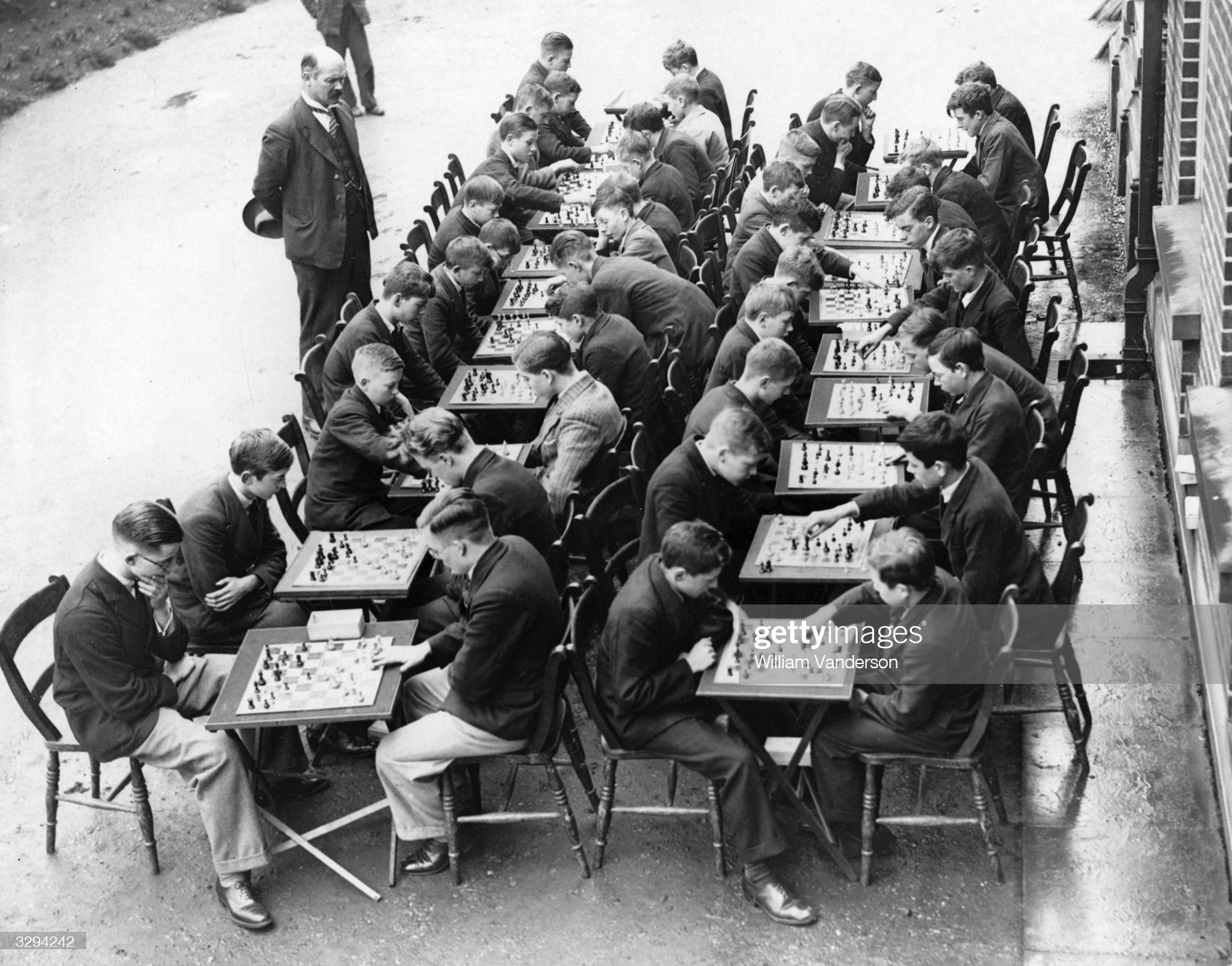
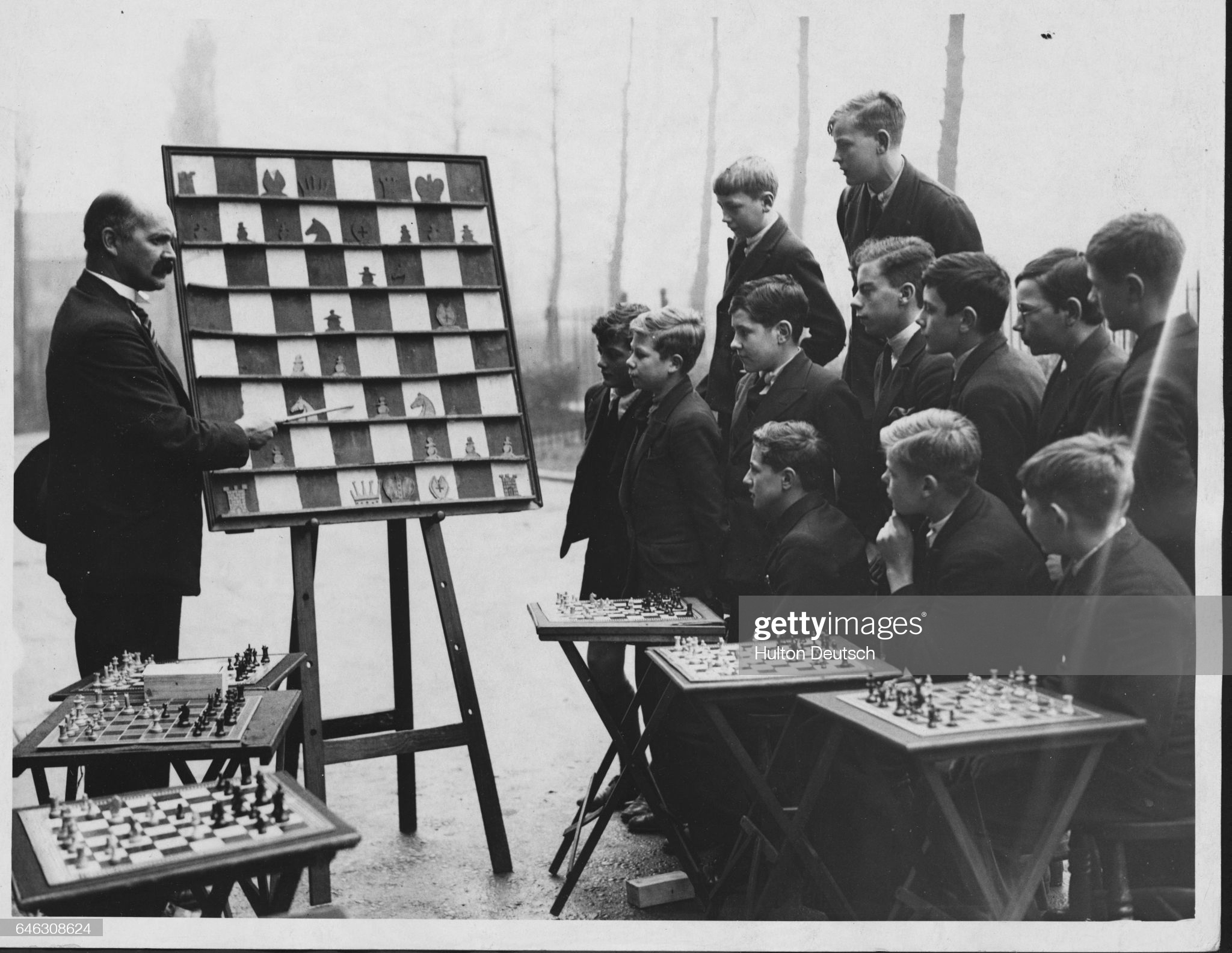
19th November 1934: An inter-form chess match for the pupils is in progress at Wednesbury High School for Boys, supervised by Mr C S Kipping, their headmaster. (Photo by William Vanderson/Fox Photos/Getty Images)
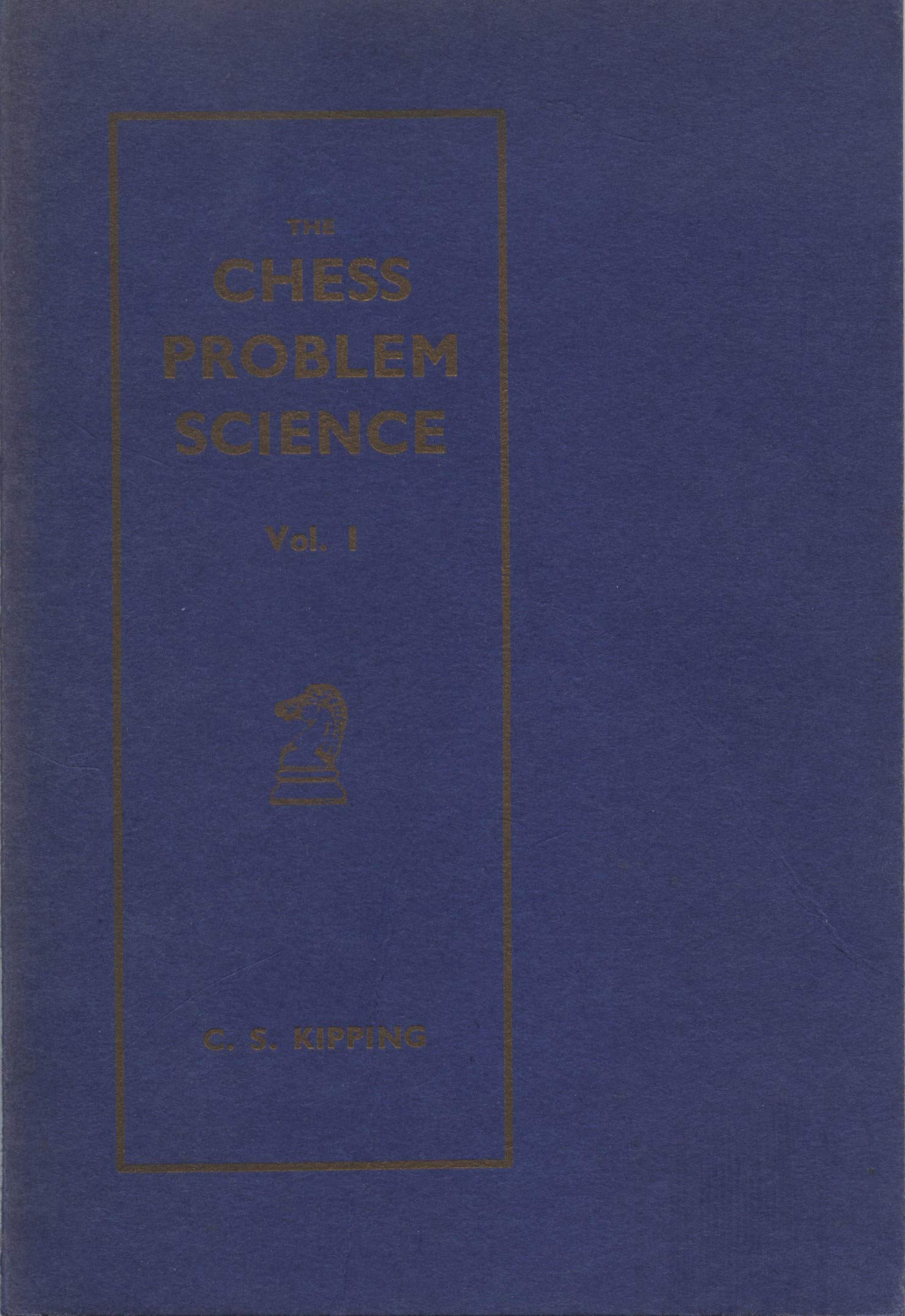
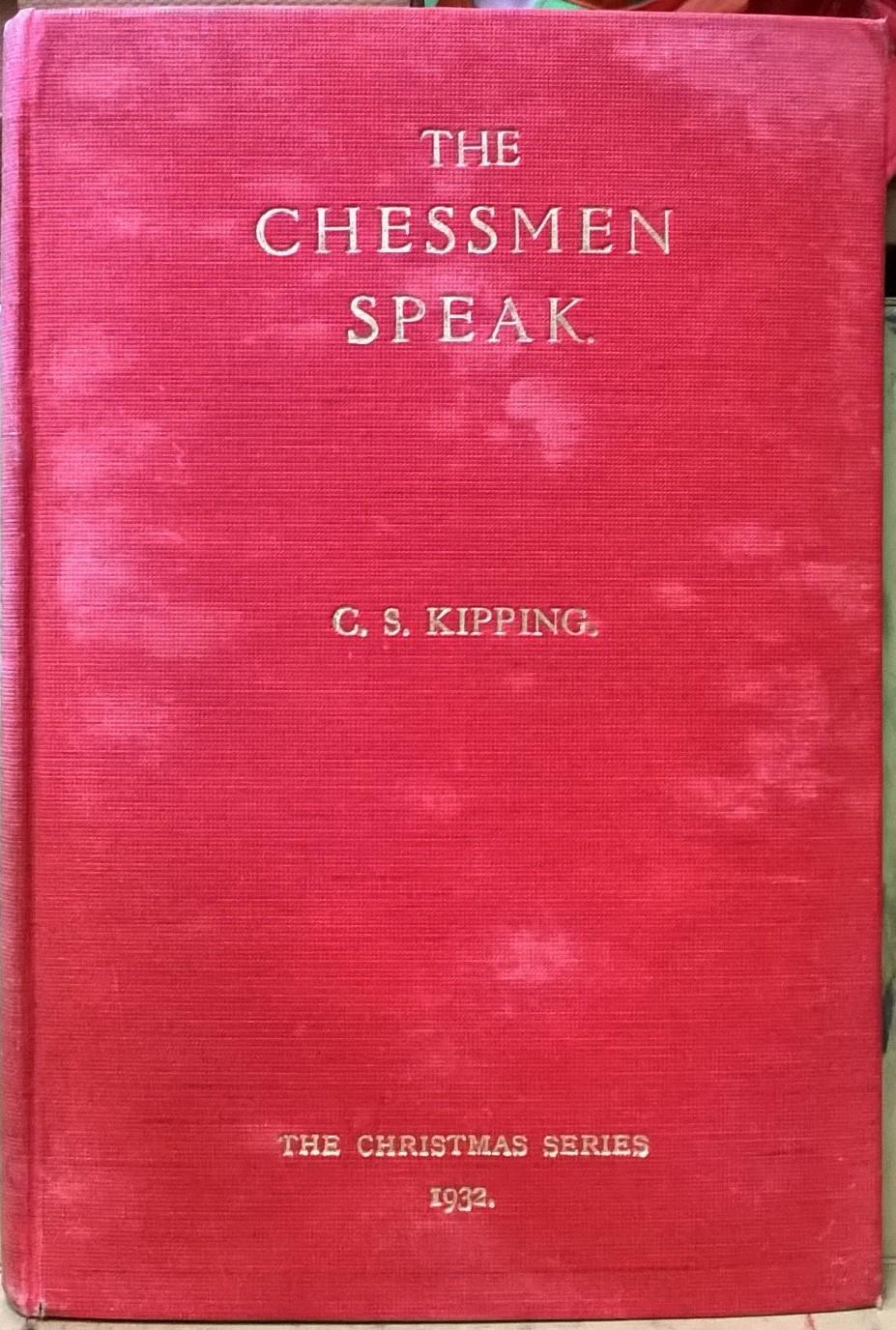
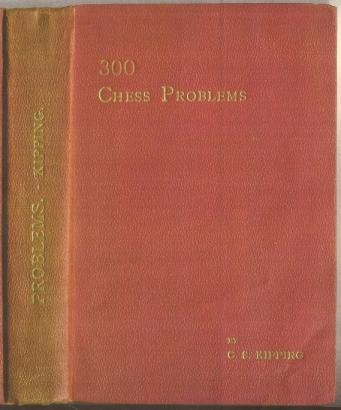
His editorial duties extended over more than forty years, and included the problem sections of Chess, Chess Amateur, and, for 32 years, the specialist magazine The Problemist from 1931. He was noted for his encouragement of beginners. His pamphlet ‘The Chess Problem Hobby‘ is an excellent beginner’s introduction. His other books included Chess Problem Science, The Chessmen Speak and 300 Chess Problems.
Chess Problem Science, CS Kipping, Whitehead & Miller, 1938
Kipping was one of the most prolific composers of all time, with over 7,000 problems to his credit. Many of his strategic three-movers have become classic. He was leading authority on halfpin two-movers. In his latter years, Kipping affectionately known as CSK – was Chairman of the International Problem Board which is now the FIDE Problem Commission.”
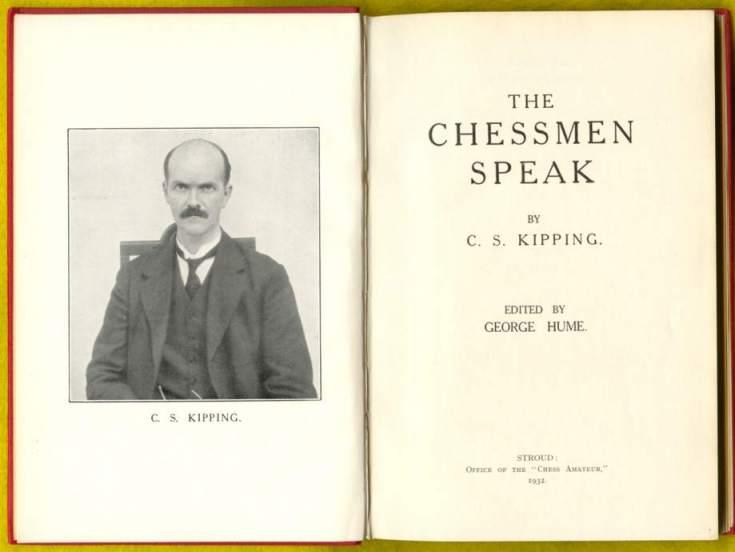
The Chessmen Speak, CS Kipping, The Chess Amateur, Stroud, 1932The Chessmen Speak, CS Kipping, The Chess Amateur, Stroud, 1932
From British Chess Magazine, Volume LXXXIV (84, 1964), Number 4 (April), pp. 122-123 by John Rice:
“CS Kipping, one of the most famous of all British problemists, died during February at the age of seventy-two. As a composer, editor, writer and critic Kipping was without equal. It is impossible to do justice in only a few lines to his vast and unique contribution to chess problems: a few factual notes. most of them kindly supplied by RCO Matthews, must suffice.
Kipping was born in London on October 10th, 1891, After completing his studies, he took up teaching as a career, and in 1924 he was appointed the first headmaster of the newly-opened Wednesbury High School, which post he held until his retirement in 1956. He was a bachelor, and, especially during the later years of his life, his interests were centered mainly on the school and on chess problems.
Most readers will know of Kipping as the editor of The Problemist, the bi-monthly journal of the British Chess Problem Society. Before he took over The Problemist in 1931, he had been in charge of the problem section of the Chess Amateur, which he edited with great energy and enthusiasm. As well as The Problemist, he edited the problem pages of Chess from its first appearance. in 1936 until the section was suddenly discontinued without warning or explanation a few years ago. He also edited other columns at various times. He always took great care to help and encourage beginners, and it is probably true that every composer in this country below the age of about fifty came under his influence at one time or another.
CHS Kipping
As a young man, Kipping was a fierce avant-garde controversialist, championing the the cause of strategy in the three-mover in opposition to the then dominant model-mate school in this country. His attitude to the two-mover, as readers of The Problemist will know, was always a good deal more conservative; he would not tolerate at any price what he called ‘camouflage force,’ even in the modern problem. Yes, he appreciated the aims of the modern two-move composer much more than his writings on the subject suggest, being always ready to applaud excellence in any type of problem.
CHS Kipping
Kipping’s output numbered over 7,000 problems, probably a record. Many of his two-moves especially his ‘aspect’ tasks, were published under pseudonyms, of which the best was known was C.Stanley. He concerned himself little with artistic finish : once he had found a workable setting of a them he was engaged on, he would take little trouble over economy and presentation. Themes in which he interested himself include half-pin (in the two-mover), white King themes, interferences, and the grab theme (in the three-mover), and maximum tasks of all kinds, the subject of one of his books, Chess Problem Science. His other books include 300 Chess Problems (1916), and The Chessmen Speak (1932), in the AC White Christmas series.
300 Chess Problems, CS Kipping, The Chess Amateur, Stroud, 1916
In addition to all his other problem activities, Kipping was chairman of the International Problem Board, and curator of the half-pin section of the White-Hume Collection, which he took over on Hume’s death in 1936.
The majority of Kipping’s best problems were three-movers, three of the most famous of which are quoted here.”
Manchester City News, 1911
Mate in three
1 Ka5
First Prize
Dutch East Indies Chess Association Tourney, 1928
Mate in three
1 Ra3
First Prize
BCM, 1939 (II)
Mate in three
1 Be6
The first problem above was given in The Complete Chess Addict by Mike Fox and Richard James in the Desert Island Chess chapter. It is also given in a discussion of the Steinitz Gambit by ASM Dickins and H Ebert in 100 Classics of the Chessboard. Colin Russ on page 138 of Miniature Chess Problems from Many Countries gives the first problem as does John Rice on page 44 of Chess Wizardry : The New ABC of Chess Problems.
Stanley was the first President of Walsall Kipping Chess Club which includes amongst its members and former members David Anderton OBE and Jana Bellin. We have been provided with the following information by Mike Groombridge:
CS Kipping, strictly speaking, was not the founder of the club, but was involved immediately at the formation of the club, which was originally called The Kipping Chess Club*. [*By March 1945, the club had 3 branches and only then did it formally split into 3 -Walsall, Wolverhampton, and a school (Municipal Secondary School Wolverhampton?) for the purpose of playing in the newly formed Wolverhampton League. Walsall Kipping Chess Club only formally took its name in May 1948, and was separated by then from The Wolverhampton Kipping Chess Club!] The Walsall Club’s minute book contains clippings from a local newspaper of 1942 reporting on the formation of the club. Here are copies:-
‘Walsall’s New Chess Club.-The new chess club, members of which will meet in the evenings for play and social intercourse, already promises to be very successful. The organiser, Mr.A.E.Parsons, of England & Sons, The Bridge (where meetings will be held for the time being) is acting as secretary pro tem, and he has secured as the first president Mr.C.S.Kipping, Headmaster of the Wednesbury High School for Boys, well known as an expert and for the innovation of chess in the curriculum of his school. Mr.Kipping has given valued assistance by the initial provision of boards and pieces. Members will meet on Monday evenings at 6.30 and the club will rely, in the first place, on voluntary subscriptions’. [5.9.42]
and
‘Walsall Chess Club.-Members of the recently formed Chess Club in Walsall had their first meeting on Monday [7th Sept 1942]. They decided to call the club “The Kipping [Chess] Club,” after their president, Mr.C.S.Kipping. Mr. F.D.Fox was appointed chairman, Mr.Gordon Farrell treasurer, and Mr.A.E.Parsons honorary secretary. Mrs.Wright and Miss Powell provided refreshments and were warmly thanked for their contribution to the success of the launching of the club. Mr.H.Lee was subsequently appointed vice-president after occupying the chair for the evening.’ [12.9.42]
Also, here is a copy of a brief sketch of CSK’s chess involvement, penned by David Anderton, for the Club’s Jubilee Chess Tournament:-
C S KIPPING, PRESIDENT 1942-1964
C S Kipping was the editor of the Problemist between 1931 and his death on 17th February 1964 at the age of 72 years. He also edited a problem column in Chess between 1935 and 1960. He [was] one of the most prolific of composers with some 7,000 problems to his name. He pioneered the introduction of strategic three movers in Great Britain and was the leading authority on half pin two movers. He was the Headmaster of Wednesbury Boys High School and introduced chess into the curriculum there in 1927. He gave evidence in the Chancery Division in the case of Re: Dupree’s Trusts in 1944 to the effect that chess teaches concentration, self reliance and reasoning and is a most useful training for the mind. Relying on this evidence, the Court upheld a bequest to establish a junior tournament as charitable and the case still forms the basis of English law on this point.
On a web site now only accessible via the WayBack Machine there is a treasure trove of reminisces and memories of CHSK from himself, friends and pupils.
From The Encyclopaedia of Chess (Batsford, 1977), Harry Golombek OBE, John Rice writes:
“British problemist, enormous output of over 6,000, mainly three-movers but also many two-movers, some published under pseudonyms (e.g. C. Stanley, of Nottingham). Editor of The Problemist, 1931-64. Elected international master honoris causa (1959).”
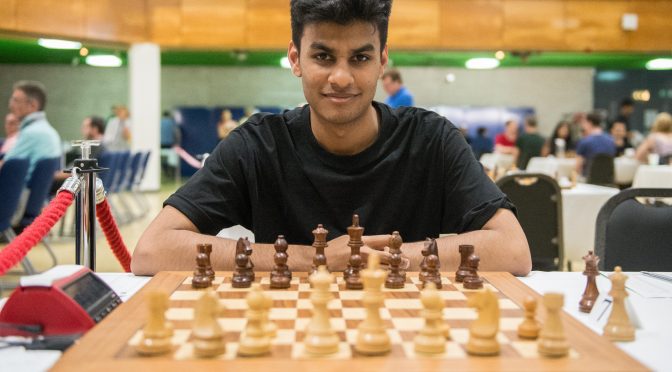
Ravi Haria was born Sunday, February 7th, 1999 in Elstree, Hertfordshire. “Maria” by Blondie was top of the hit parade. Ravi currently resides in London.
Ravi learnt at the age of 6 and joined Barnet Knights Chess Club in 2005. His first chess teacher was Angela Eyton who taught him the moves and Angela was followed by Tony Niccoli and then Julian Meszoras on his ascent of the chess ladder.
Ravi’s first recorded tournament was the 35th Barnet Knights Under-8 rapidplay on September 25th 2005. Also playing of note were Jonathan Pein and Isaac Sanders.
His first recorded standard play game was in the London Junior Under-10 Championships on December 9th 2006.
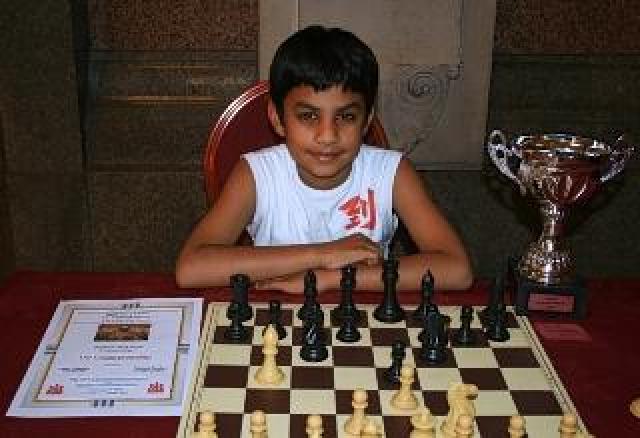
By the time he was eight he had attracted the attention of the England selectors and played in the 2008 Commonwealth Championships in New Delhi coming home with a bronze medal.
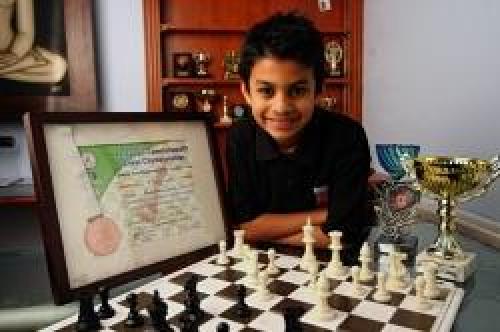
Ravi aged 8 photographed by The Borehamwood and Elstree Times in January 2008Ravi aged 9 photographed by The Borehamwood and Elstree Times in August 2008
In 2008 Ravi won the British Under-9 title in Liverpool. He said afterwards:
It was quite nice to be leading everyone and I felt proud of myself. I’m not sure how I control my nerves but it feels really good to win.
His mother Sona said:
It’s a bit overwhelming but we just support him. It means you have to give up a lot of time for him but it’s really nice to see that he’s getting somewhere.
This was followed in 2014 by winning the British Under-18 championship in Aberystwyth aged 15 and then the same title in 2017 in Llandudno.
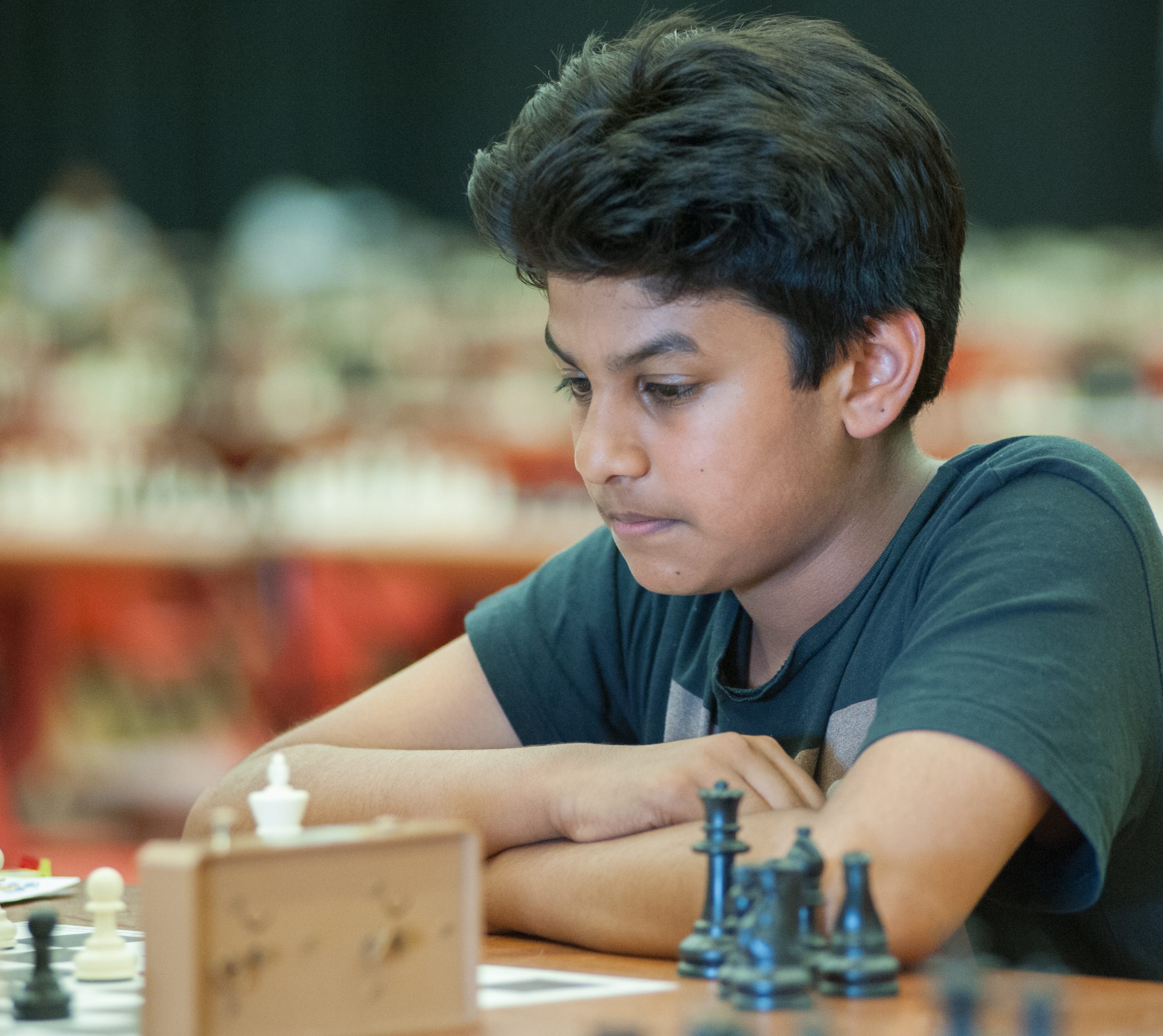
Ravi Haria, UKCC Southern Gigafinal, 2013
In 2016 Ravi was equal 2nd to Deep Sengupta at the Hastings Masters Open with an impressive 6/9 and a TPR of 2563. This performance secured his second IM norm.
The IM title was conferred at the 88th FIDE Congress 2017, 7-15 October, Goynuk, Antalya, Turkey.
He scored six points after 11 rounds at the 2017 World Junior championship in Italy and 5.5 points at the 2017 WYCC U-18 group in Uruguay.
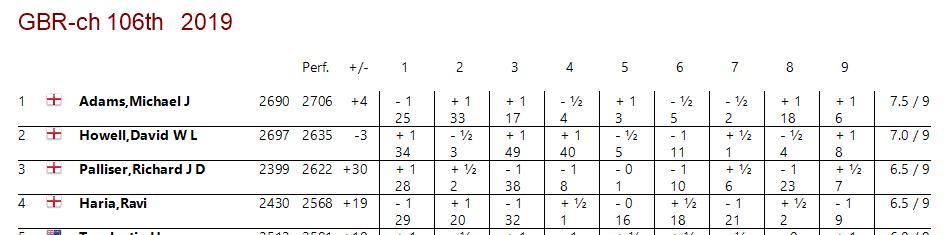
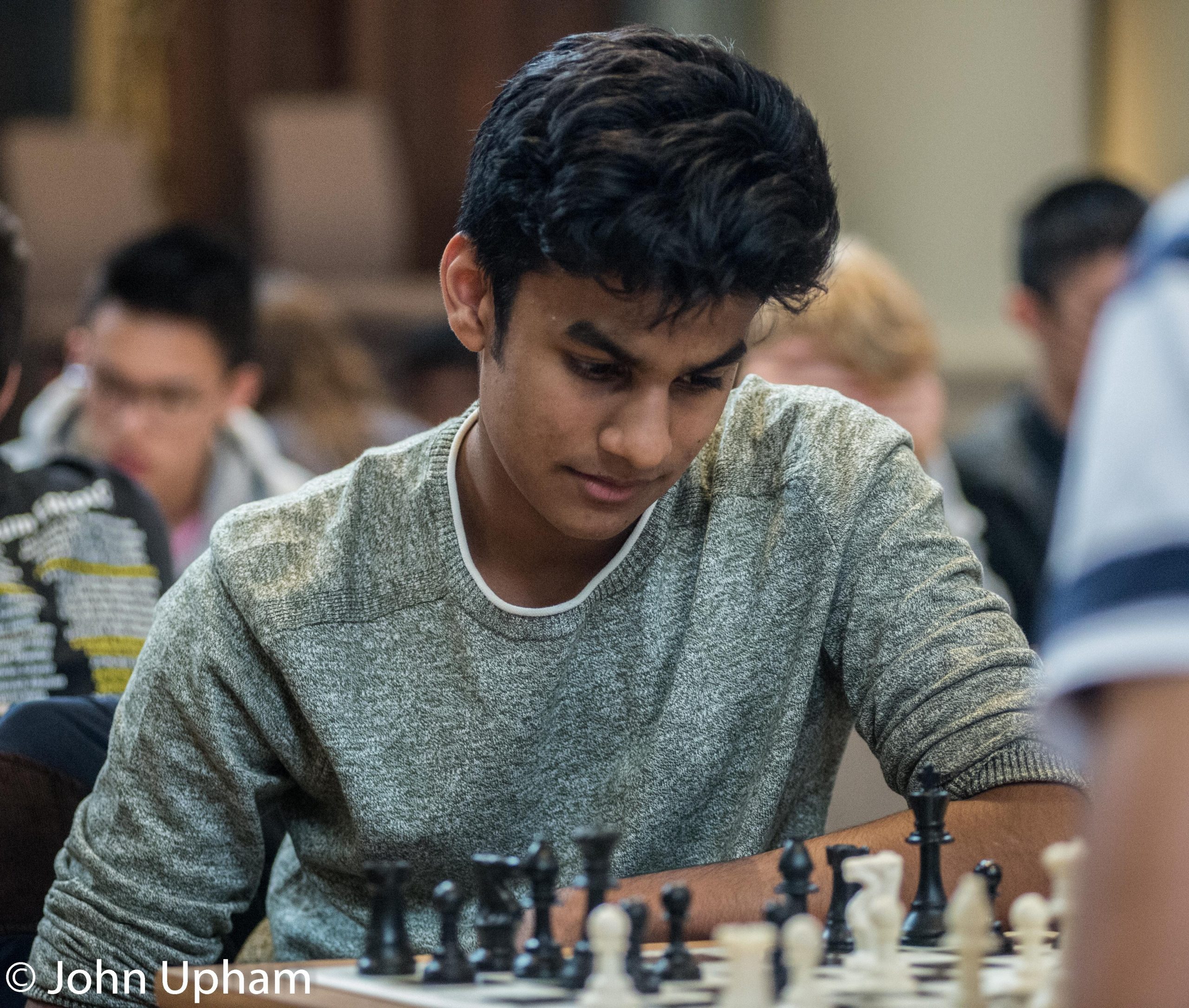
Ravi completed his British junior titles run by becoming the current (no OTB event in 2020) British Under-21 champion in 2019 in Torquay scoring an emphatic 6.5/9 securing a share of third place.
Partial crosstable for the 2019 British Championships in Torquay
Ravi became a FIDE Master in 2015 at the age of 16 and and International Master two years later making him England’s second youngest IM after Matthew Wadsworth.
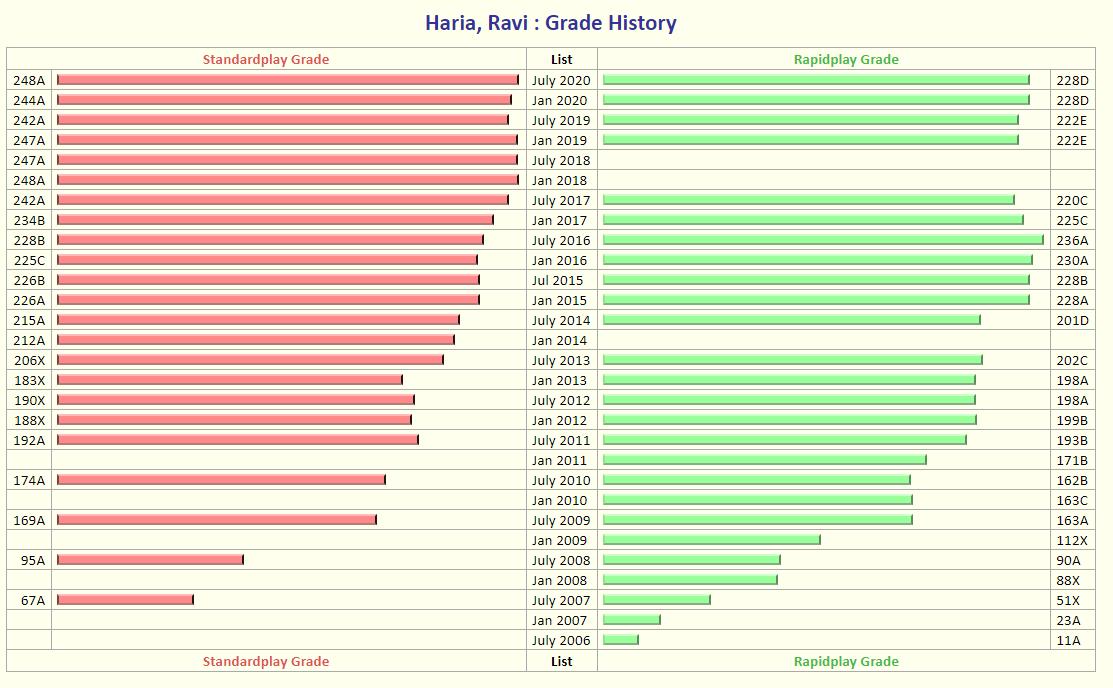
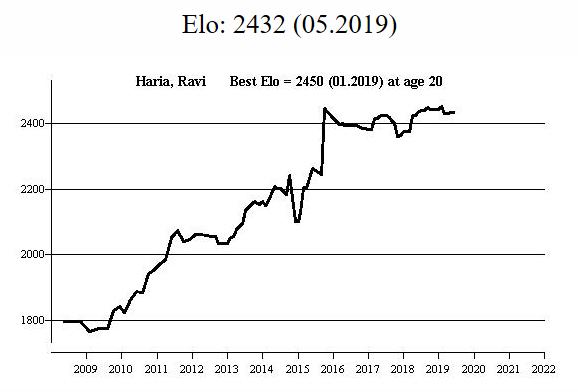
OTB Elo rating profile for IM Ravi Haria according to MegaBase 2020
His peak FIDE rating was 2497 in October 2021 and currently (February 2022) is 2490.
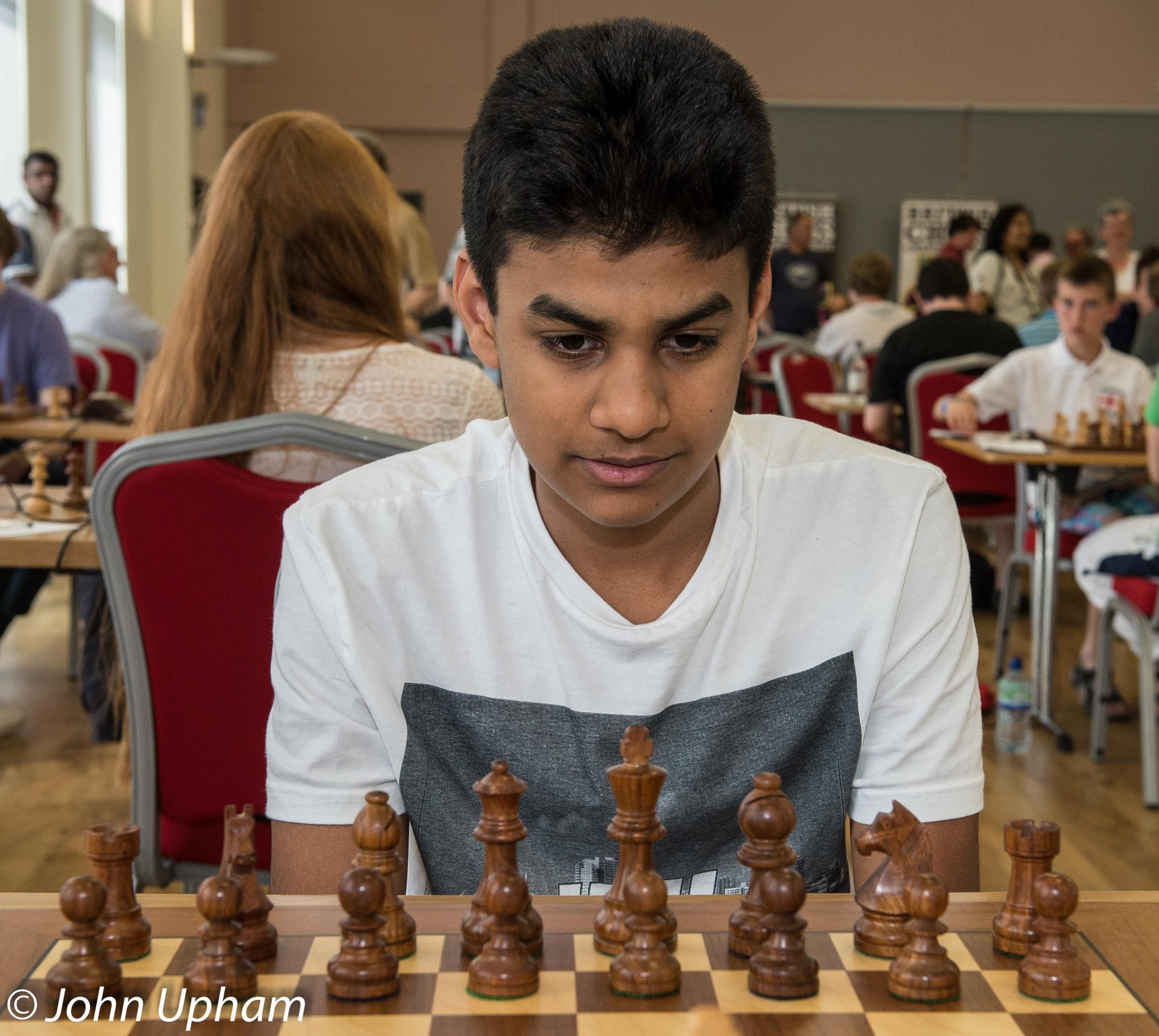
FM Ravi Haria, ECF Secondary Schools Rapidplay, 2016
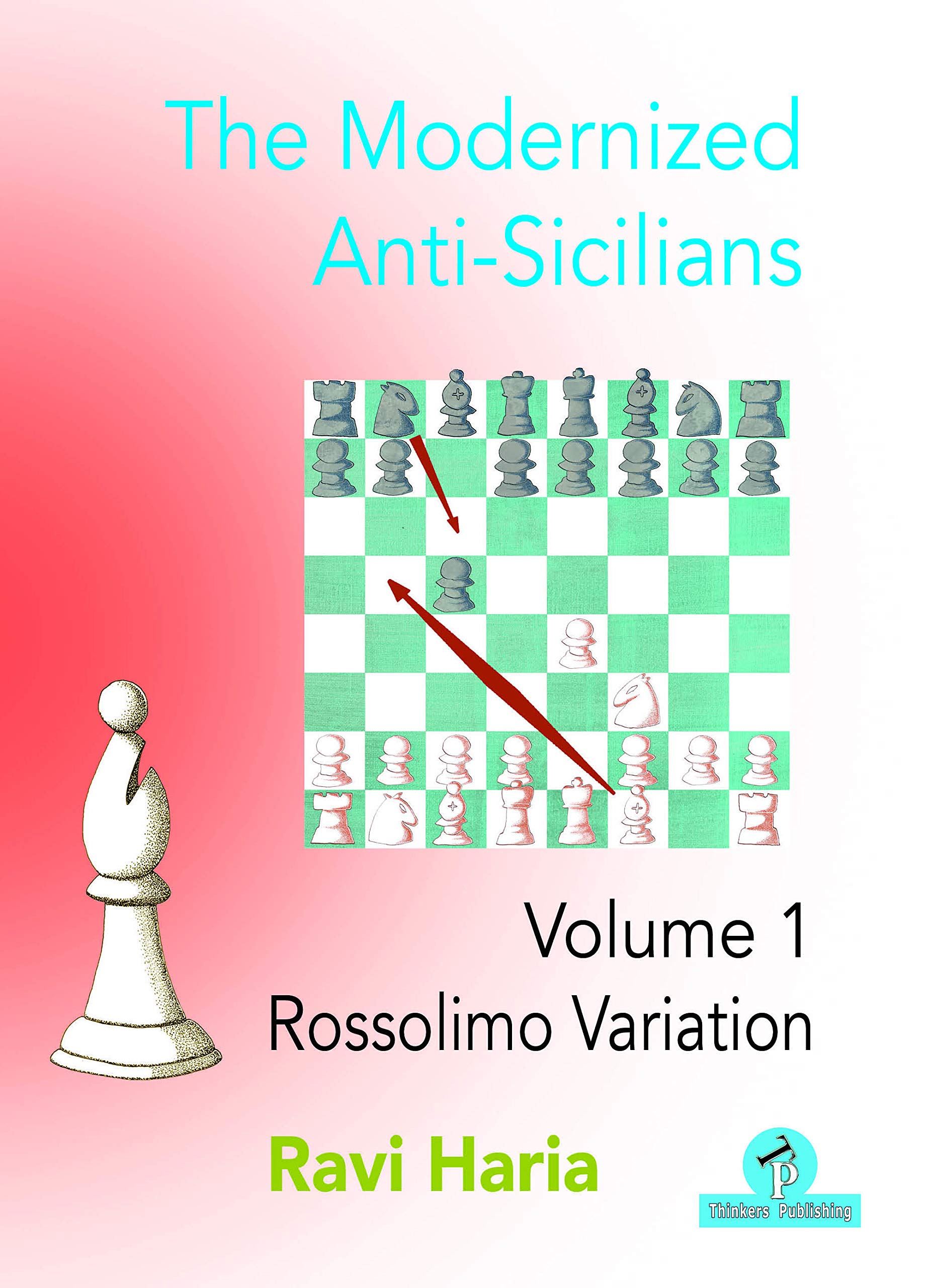
On January 28th 2021 Thinker’s Publishing released The Modernised Anti-Sicilians, Volume 1, Rossolimo Variation which is a massive 520 page tome on the following position :
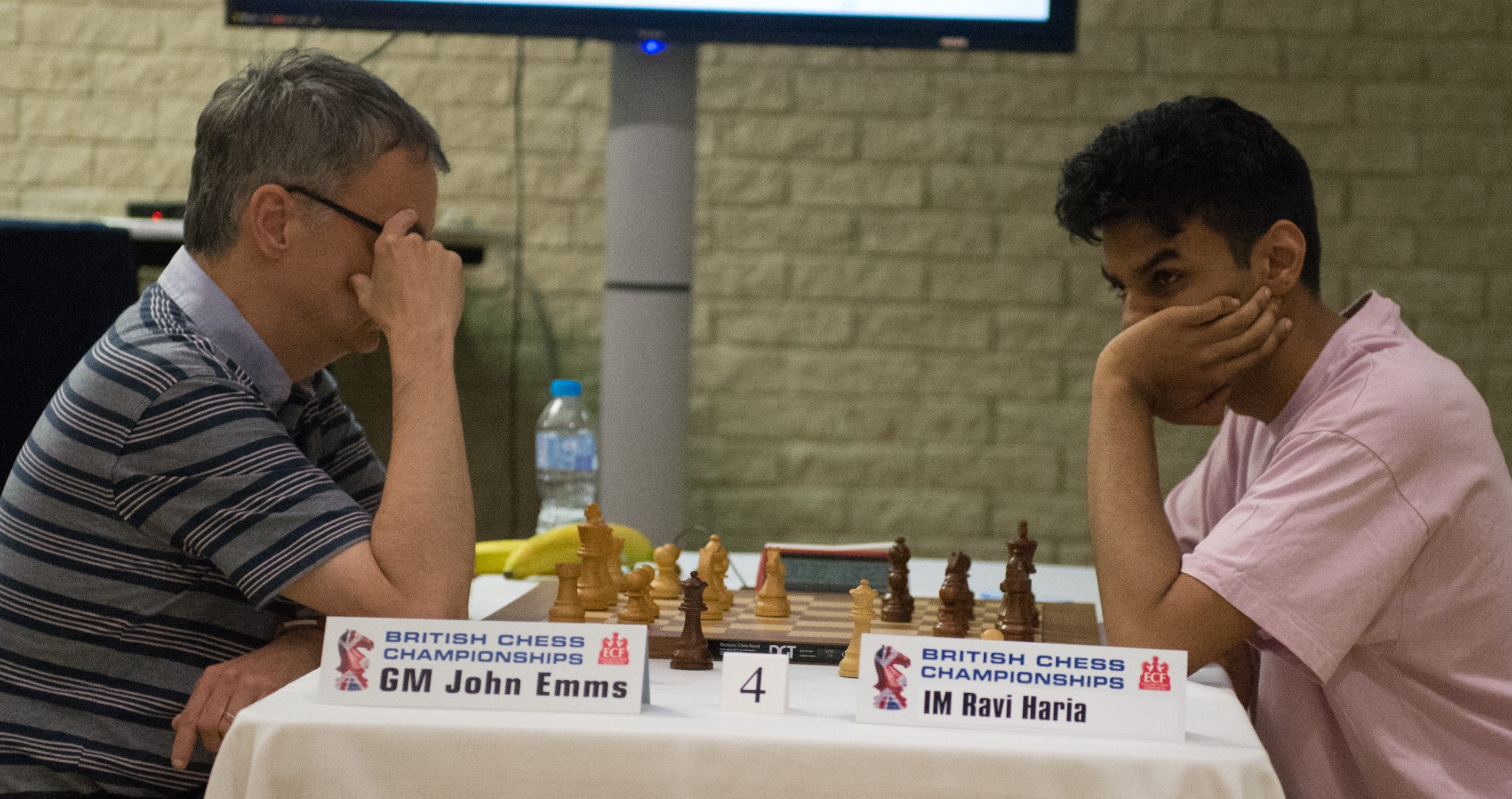
GM John Emms plays IM Ravi Haria in the final round of the 2019 British Championships in Torquay
With the white pieces Ravi unsurprisingly plays the Moscow and Rossolimo variations against the Sicilian, the Ruy Lopez and, in recent years, he has adopted the Reti/English complex.
As the second player he plays the French Winawer and (refreshingly) the Abrahams-Noteboom Variation of the Semi-Slav.
For your entertainment we have these two brevities :
and
Ravi has played for University College London. Hendon and Cavendish in the London and other leagues and in 4NCL he started with Kings Head, transferring to Cambridge in 2014 and finally moving in 2016 to Wood Green.
In this game Ravi punishes IM Malcolm Pein who has a bad day at the office :
Ravi Haria, British Championships, 2014, Aberystwyth
Over the 19th – 23rd August 2021 Ravi played in the Wood Green Invitational round-robin event at Oddfellows Hall, Stafford.
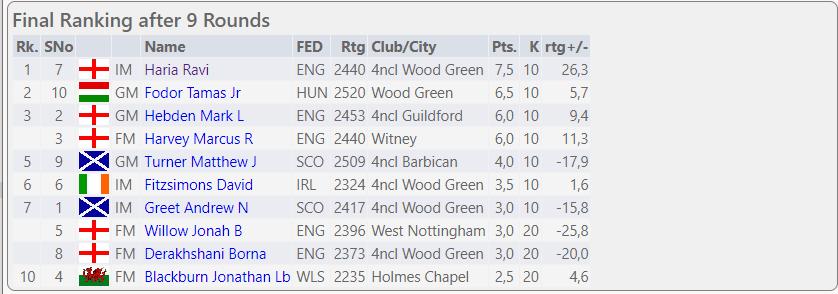
Ravi scored 7.5/10 and secured his second Grandmaster Norm and a TPR of 2680.
Wood Green Invitational Round-Robin event at Oddfellows Hall, Stafford. August Bank Holiday Weekend, 2021
Over the August Bank Holiday weekend of 2021 Ravi played in the Northumbrian Masters GM Tournament at the splendid Marriott MetroCentre, Gateshead winning jointly with Conor Murphy scoring 6.5/9 with a TPR of 2600. This gave Ravi his third and final GM norm.
The norm was ratified at a recent FIDE Congress. As of February 2022 Ravi stood at 2490 for standard-play.
Death Anniversary of Richard Griffith (22-vii-1872 11-xii-1955)
See Chess World, Volume 11, Number 6, June 1956, page 128.
Here is his Wikipedia entry.
IM Paul Littlewood. Source : British Chess, Pergamon Press, 1983.
BCN wishes Happy Birthday to Paul Littlewood
Paul Edwin Littlewood was born on Wednesday, January 18th, 1956 in Skegness, East Lindsey, Lincolnshire. His parents were John and Jean Littlewood (née) Hadwick. Paul’s chess playing uncle was Norman Littlewood.
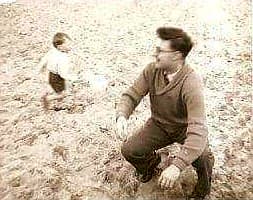
John and Paul on Skegness beach circa 1958. Kindly supplied by Paul Littlewood. George and Ringo are out of shot !
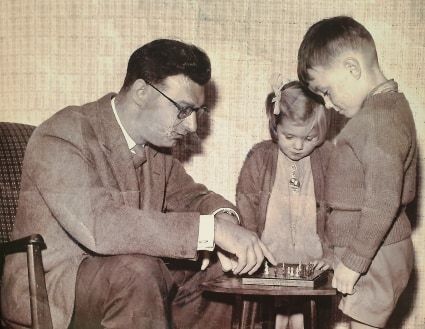
John, Jenny and Paul Littlewood, circa 1962. Kindly supplied by Paul Littlewood.
Paul attended Glenburn Comprehensive School in Skelmersdale from 1967 and then read Natural Sciences at Christ’s College, Cambridge from 1974.
Paul played badminton for Lancashire and Cambridge and, in 1971, won the English Schools Mixed Championship when he was 15 years old.
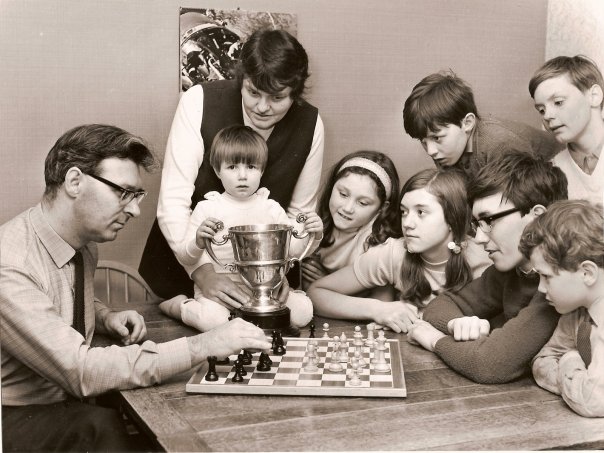
Paul and family receive a chess lesson from John following John’s win in the 1972 Southport Open
On leaving University Paul taught science at Southbrook Comprehensive, Daventry. Four years later Paul became a dealer at Phillips & Drew and followed this as an Executive Director at Goldman Sachs. Stays at Lehman Brothers and JP Morgan were followed by a change of direction and since then Paul has been director of various food supply companies retiring in 2014.
Paul is married (3rd November 2006) to (his second wife) Fiona and lives in St. Albans, Hertfordshire.
PEL won the ECF President’s Award in 2007 and from the 2008 ECF Yearbook we have the following citation :
“International Master and accomplished bridge player. From British Chess champion (1981) Paul has presided over the 4NCL as chairman during its most successful period. When he became chairman over ten years ago the league consisted of two divisions and 32 teams. The league has now expanded to four divisions and a total of 72 teams. Most of England’s juniors play 4NCL. During this time 4NCL became one of the strongest leagues in Europe, at one time boasting a Division 1 rivalling the Bundesliga in strength in the top matches.
Paul has demonstrated the sound judgement of Solomon when dealing with league disputes and has drawn on his business acumen, honed during a successful career in the City with Goldman Sachs to make 4NCL the financially stable and expanding league it is today.”
Roll of Honour
British U18 Champion 1972
British U21 Champion 1975
British Champion 1981
As a junior represented England in Glorney Cup
International Master 1980
From British Chess (Pergamon Press, 1983) by Botterill, Levy. Rice and Richardson we have this article from Richard W. O’Brien :
“Paul Littlewood was destined to become a strong player from birth. His father John was for some time one of the strongest players in the country and represented England on many occasions. His uncle Norman was for a few years not far behind. Paul, however, has surpassed them both and has become the first in the family to reach IM status. (Ed: JEL was very much worthy of the IM title but insufficient events of the right type held him back).
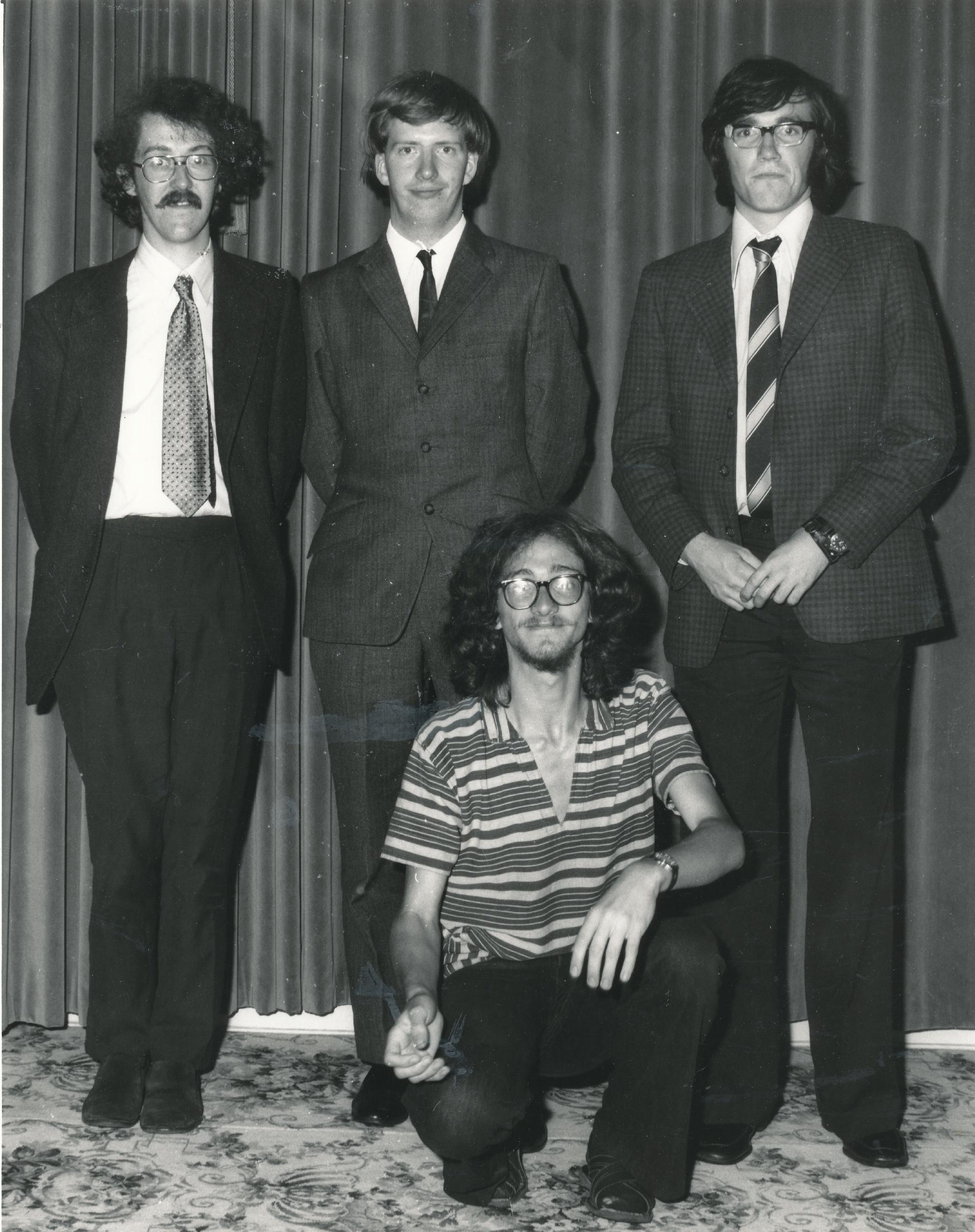
A. Howard Williams, Martyn J. Corden, Paul E. Littlewood and A. Jonathan Mestel
All three are essentially attacking players. There have been times in recent years when play at the Hastings Premier has become dull. However, Paul one of the English representatives at the last three tournaments, was certainly not to blame. (His game against Brito of Brazil which follows is a striking example of this).”
Coached by his father, Paul became British U18 champion in 1972 and three years later became British U21 champion.
Clearly more interested in an academic career he went up to Cambridge and then followed his father into the teaching profession. Opportunities to play in strong tournaments were thus very limited. These opportunities, however, were grasped in both hands. Three times in thirteen months between August 1978 and August 1979 he obtained an IM norm and thus the title.
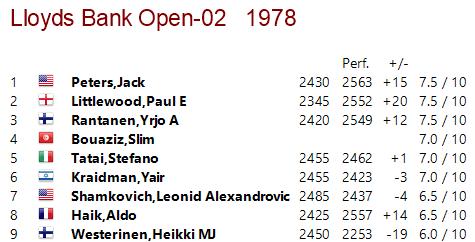
Partial crosstable for the Lloyds Bank Open, 1978
The first caused a sensation as it was totally unexpected. He shared first place at Lloyds Bank ahead of several grandmasters including Shamkovich, who was the first grandmaster he ever defeated.
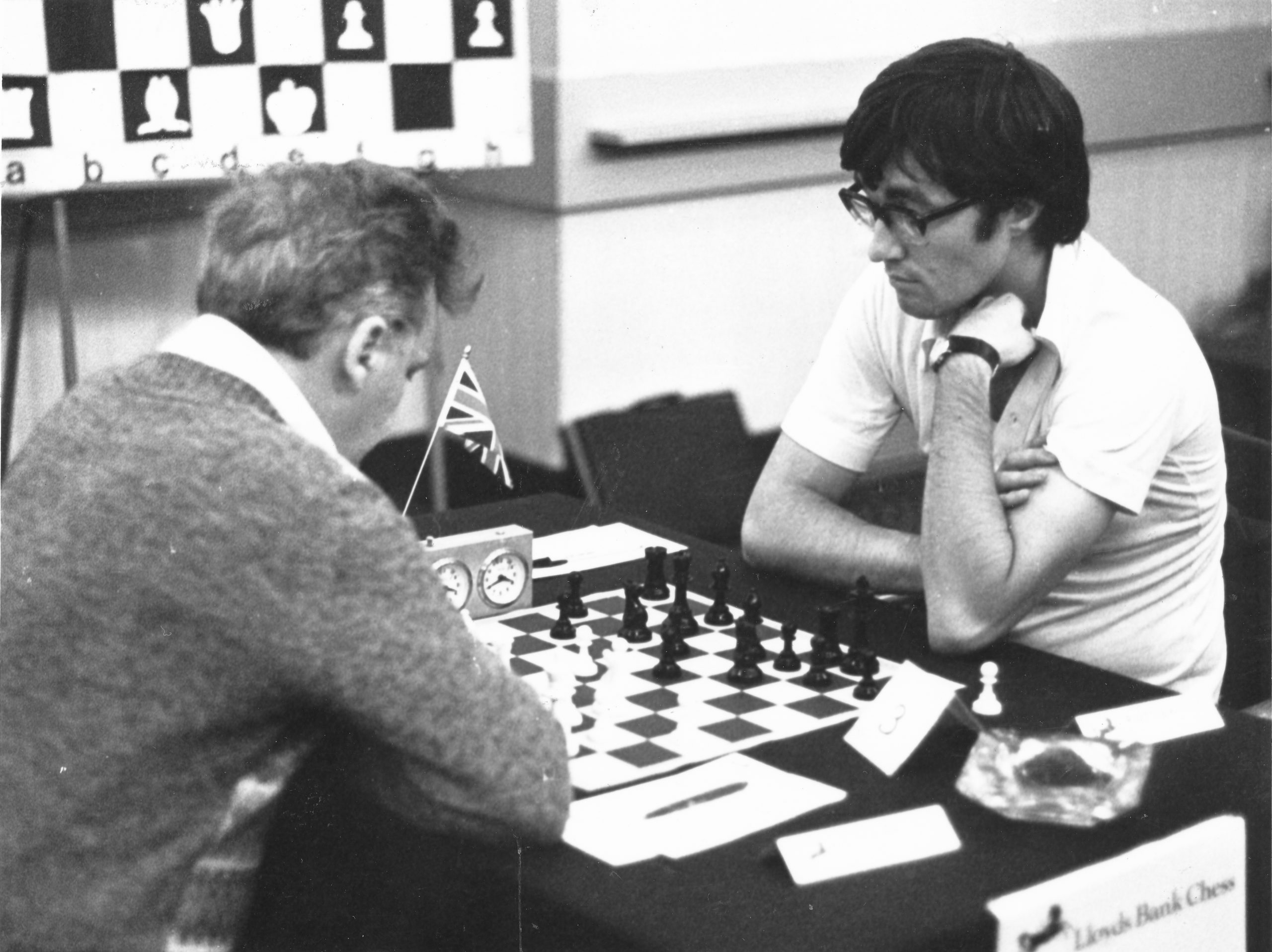
Leonid Shamkovich plays Paul Littlewood during the 1978 Lloyds Bank Masters. Paul won the game.
Eight months later Aaronson Masters was won and then came the final norm, also at Lloyds Bank.
Tournaments abroad were limited although he represented England students. He did play at Kringsja (2nd equal) in 1978 and Borovo where he scored 6.5.13 finishing ahead of 3 GMs.
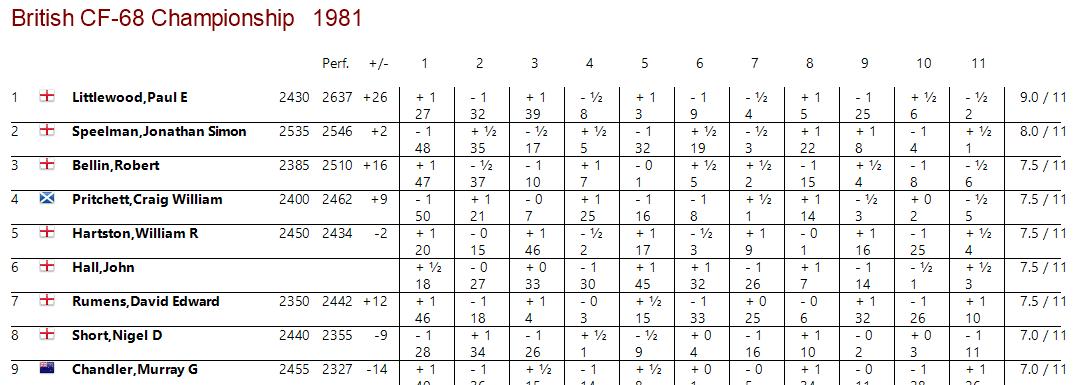
In 1981 came his finest achievement – winning the British Championship with a massive 9/11.
Partial crosstable from the 1981 British Championship in Morecambe
His father who was also competing in the championship was as proud as could be and deservedly so (he also coached Sheila Jackson who retained her British Ladies Championship that year). His excellent all round play took him to the title and only once during the tournament did he stand worse. His endgame play was so good that CHESS even published an article solely on these endings.
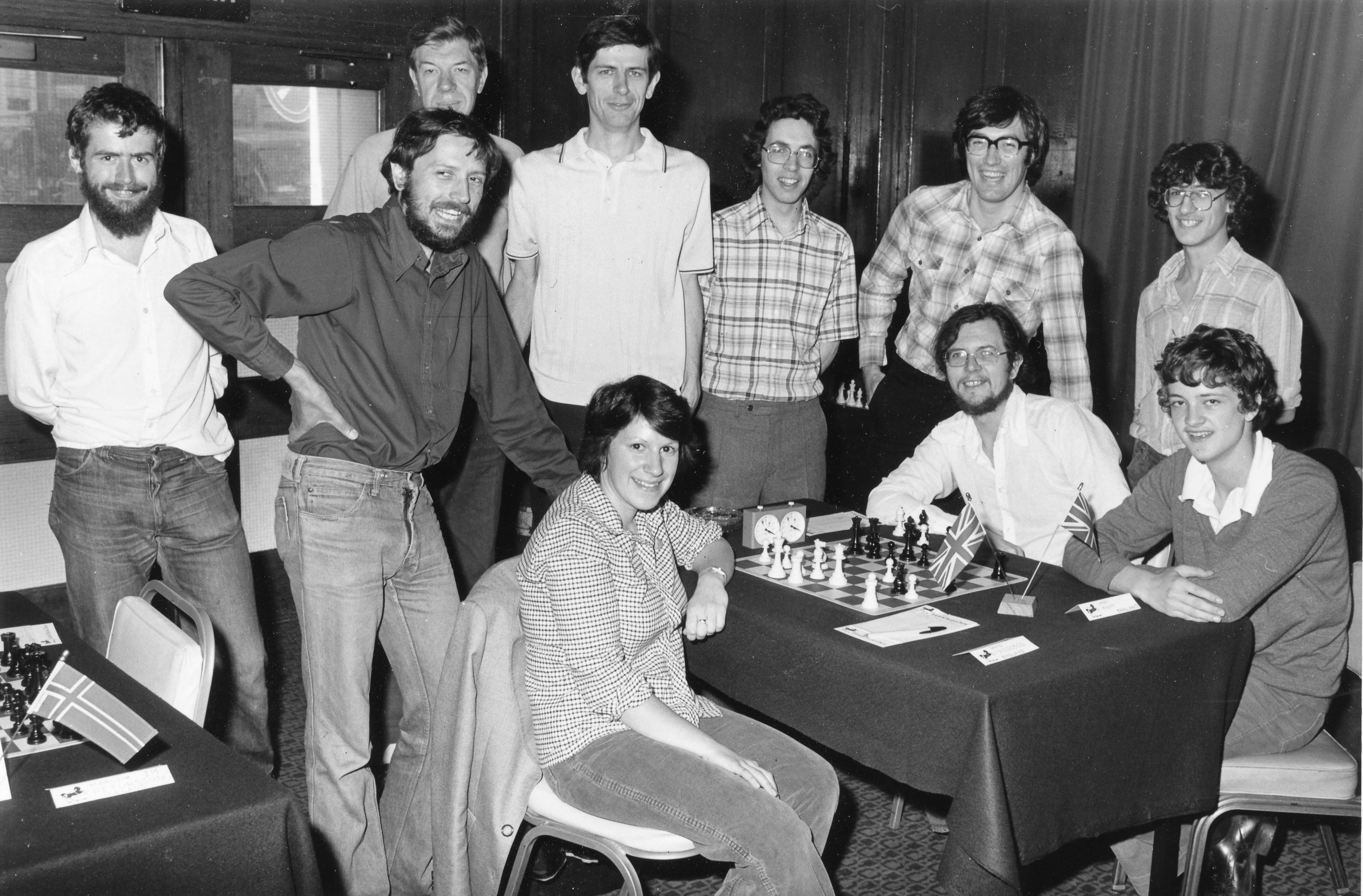
Paul Littlewood and friends during the 1978 Lloyds Bank Masters
Duties at school in Daventry meant he was, in February 1982, unable to take part in the zonal at Marbella. This followed an excellent Hastings when as British Champion he made a plus score – a rare event indeed.
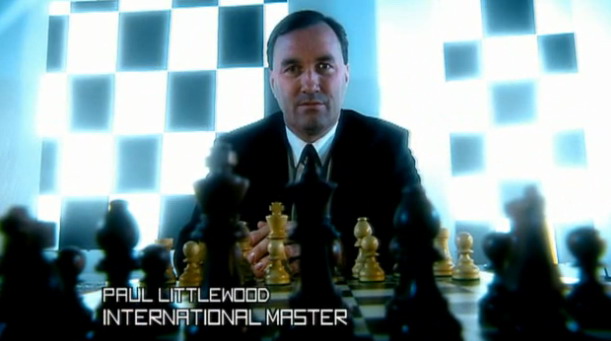
IM Paul Littlewood during filming for the “Trick of the Mind” series from Derren Brown
In the summer he gave up teaching and joined Phillips & Drew (stockbrokers). He now (ed : this was in 1983) lives with his (first) wife Sue and family in the wilds of Essex (Billericay).
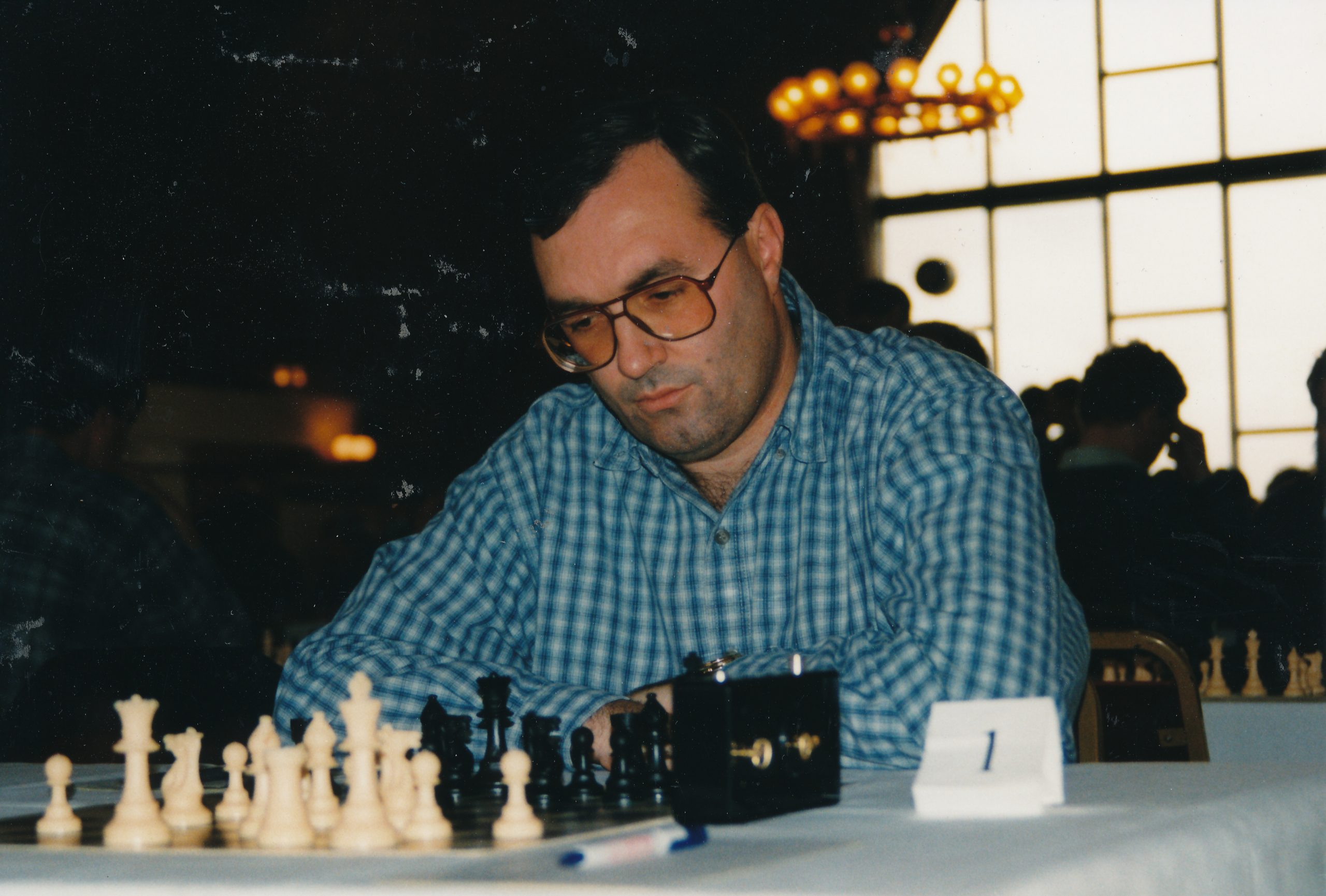
IM Paul Littlewood, event and photographer unknown
We focus on the British Chess Scene Past & Present!
This website uses cookies to improve your experience. We'll assume you're ok with this, but you can opt-out if you wish. Cookie settingsACCEPT
Privacy & Cookies Policy
Privacy Overview
This website uses cookies to improve your experience while you navigate through the website. Out of these cookies, the cookies that are categorized as necessary are stored on your browser as they are as essential for the working of basic functionalities of the website. We also use third-party cookies that help us analyze and understand how you use this website. These cookies will be stored in your browser only with your consent. You also have the option to opt-out of these cookies. But opting out of some of these cookies may have an effect on your browsing experience.
Necessary cookies are absolutely essential for the website to function properly. This category only includes cookies that ensures basic functionalities and security features of the website. These cookies do not store any personal information.