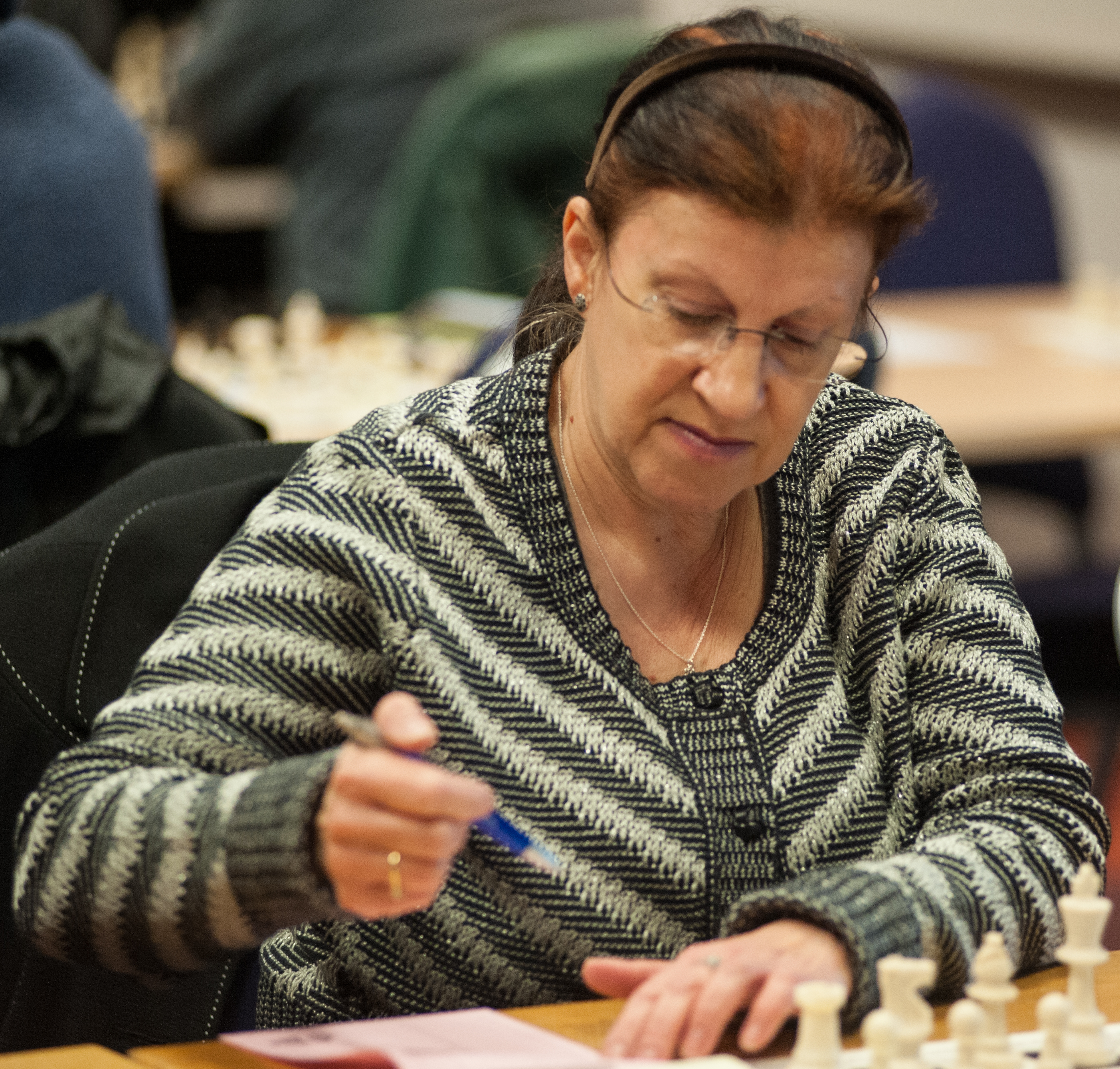
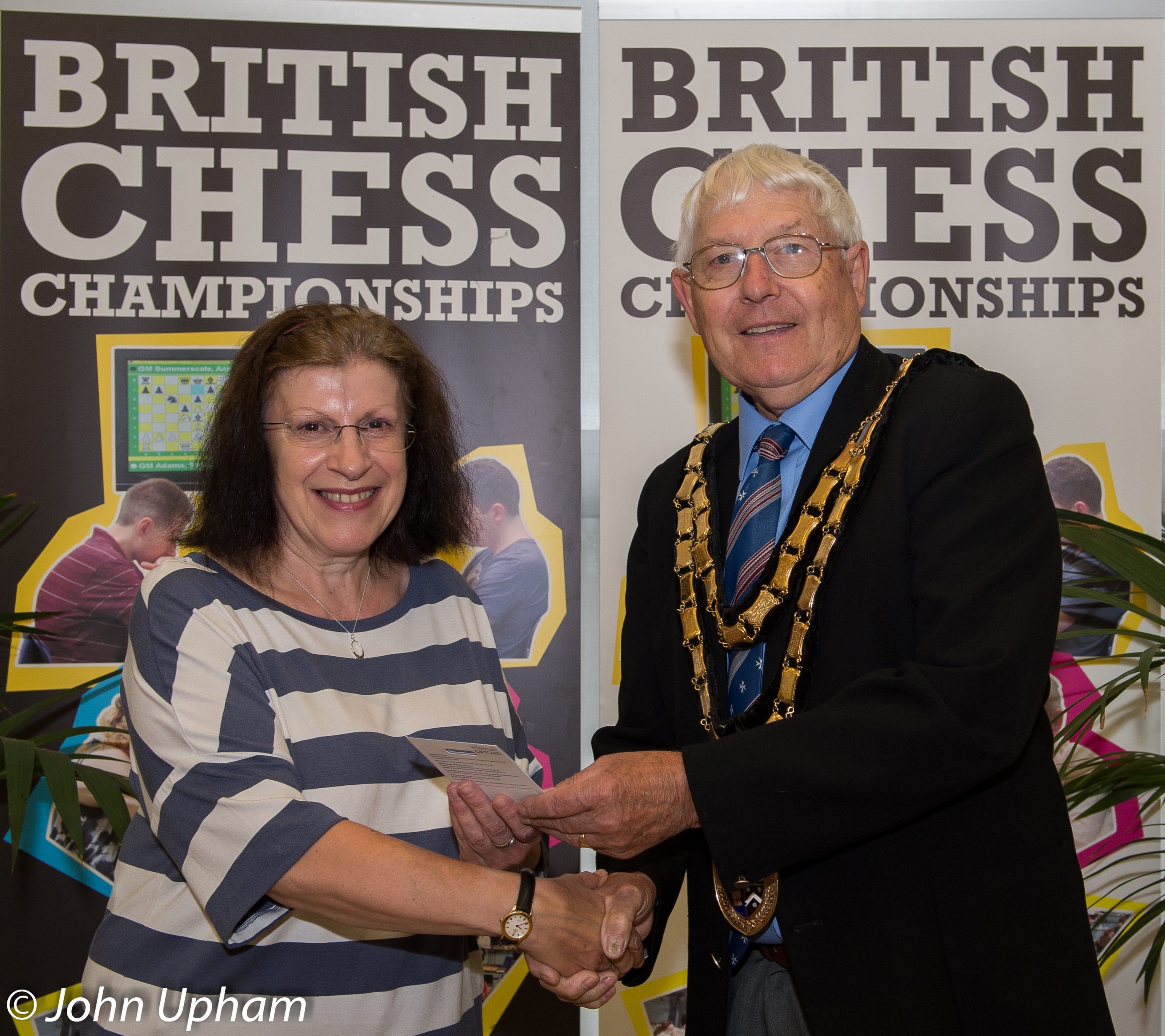
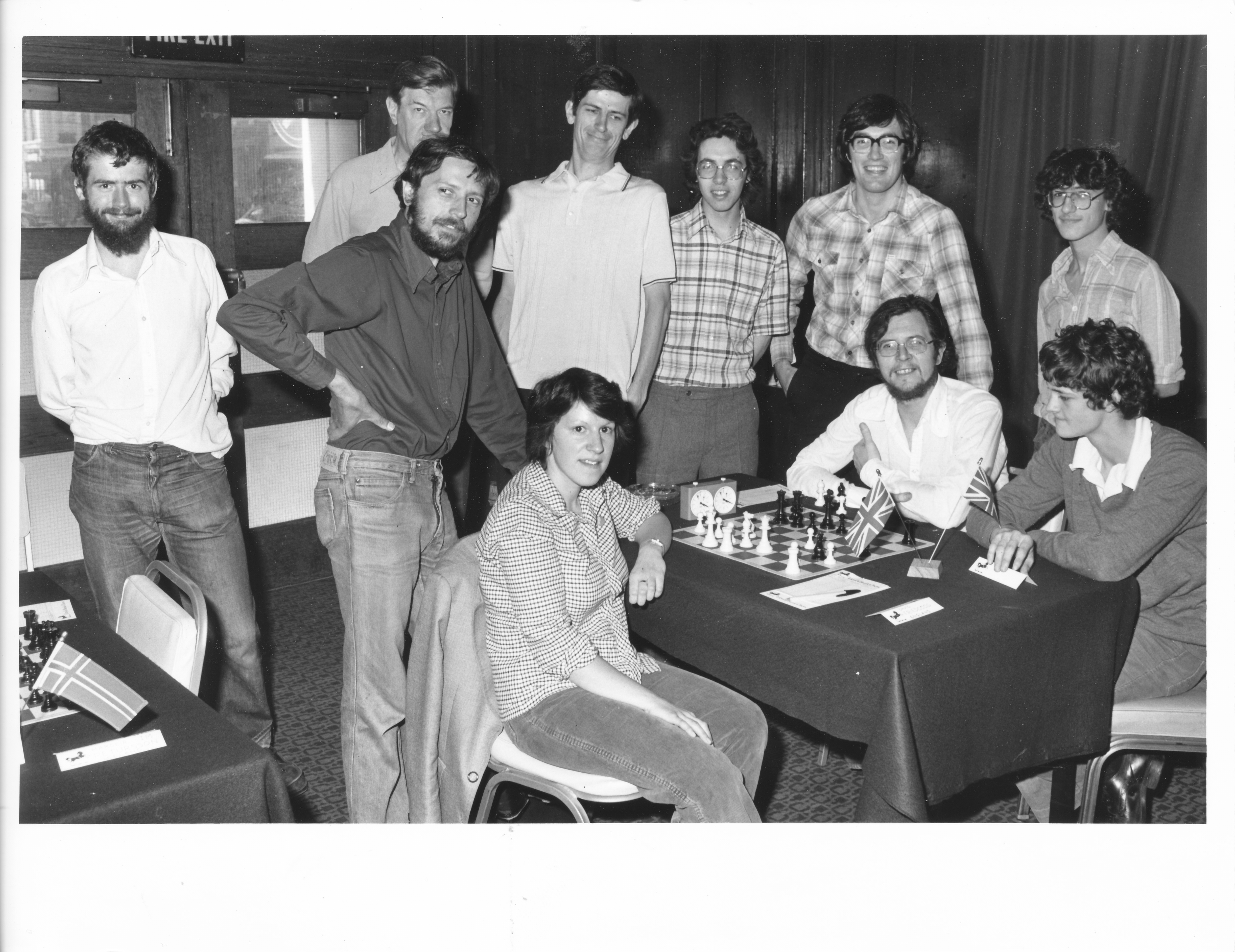
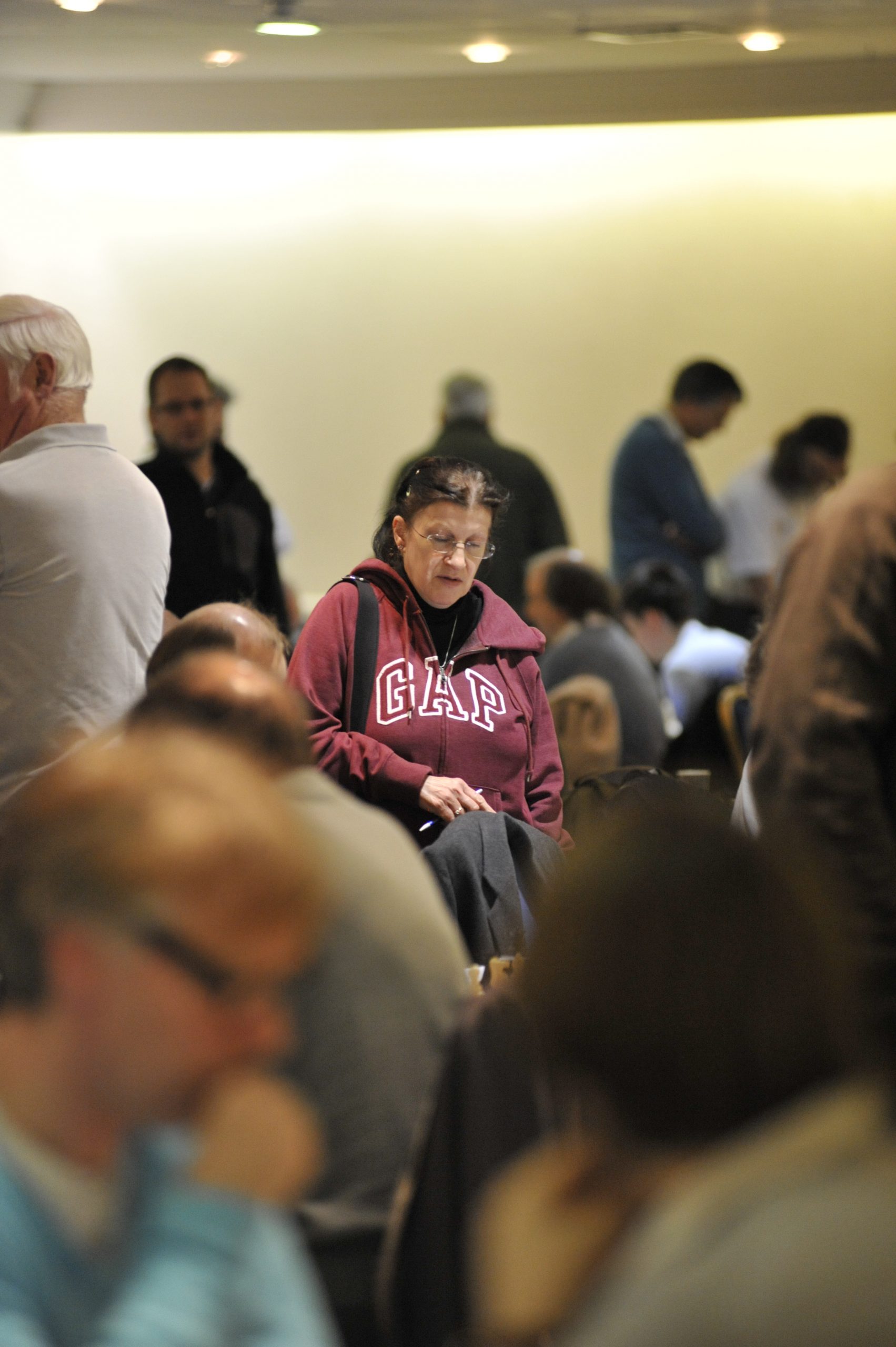
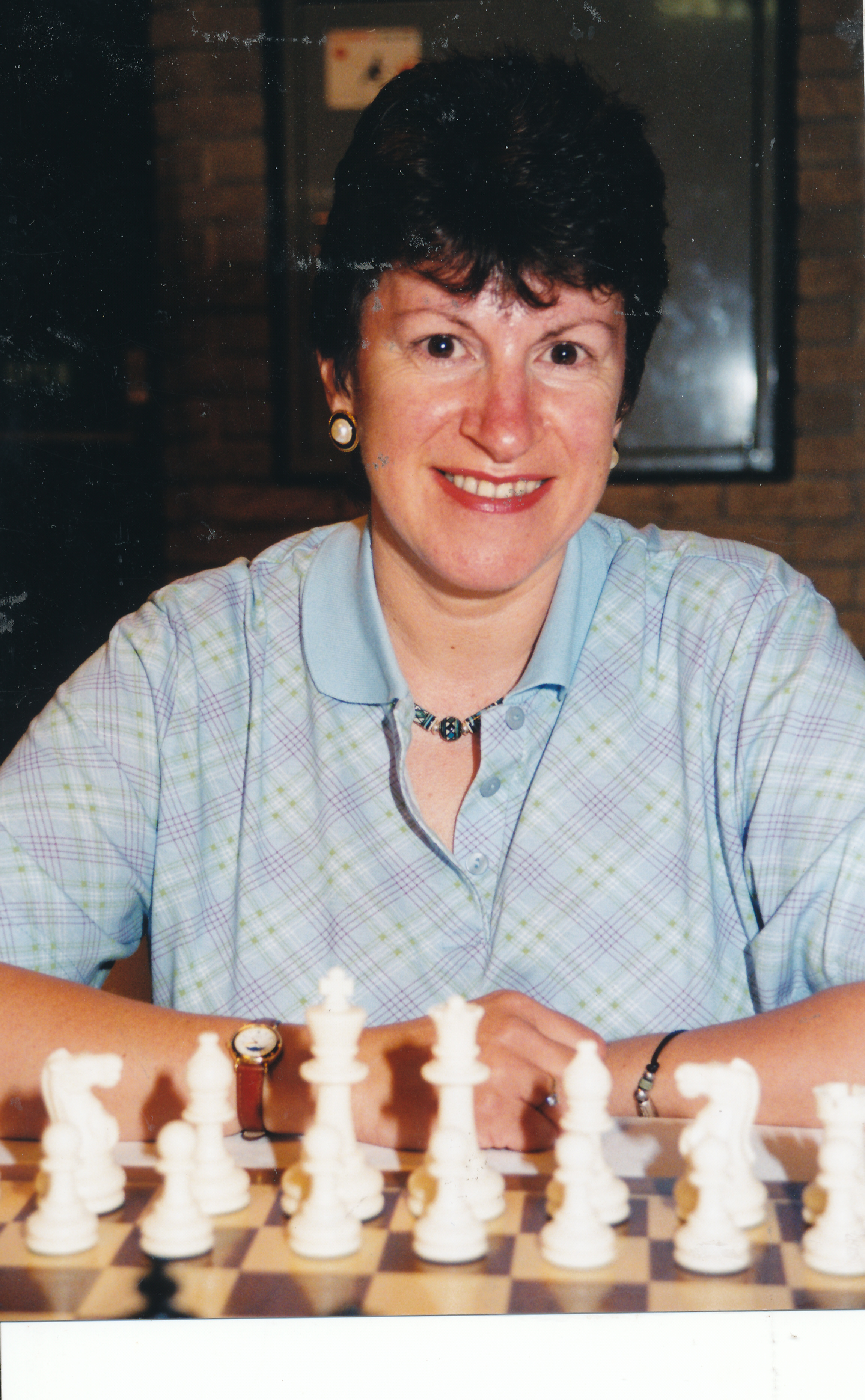
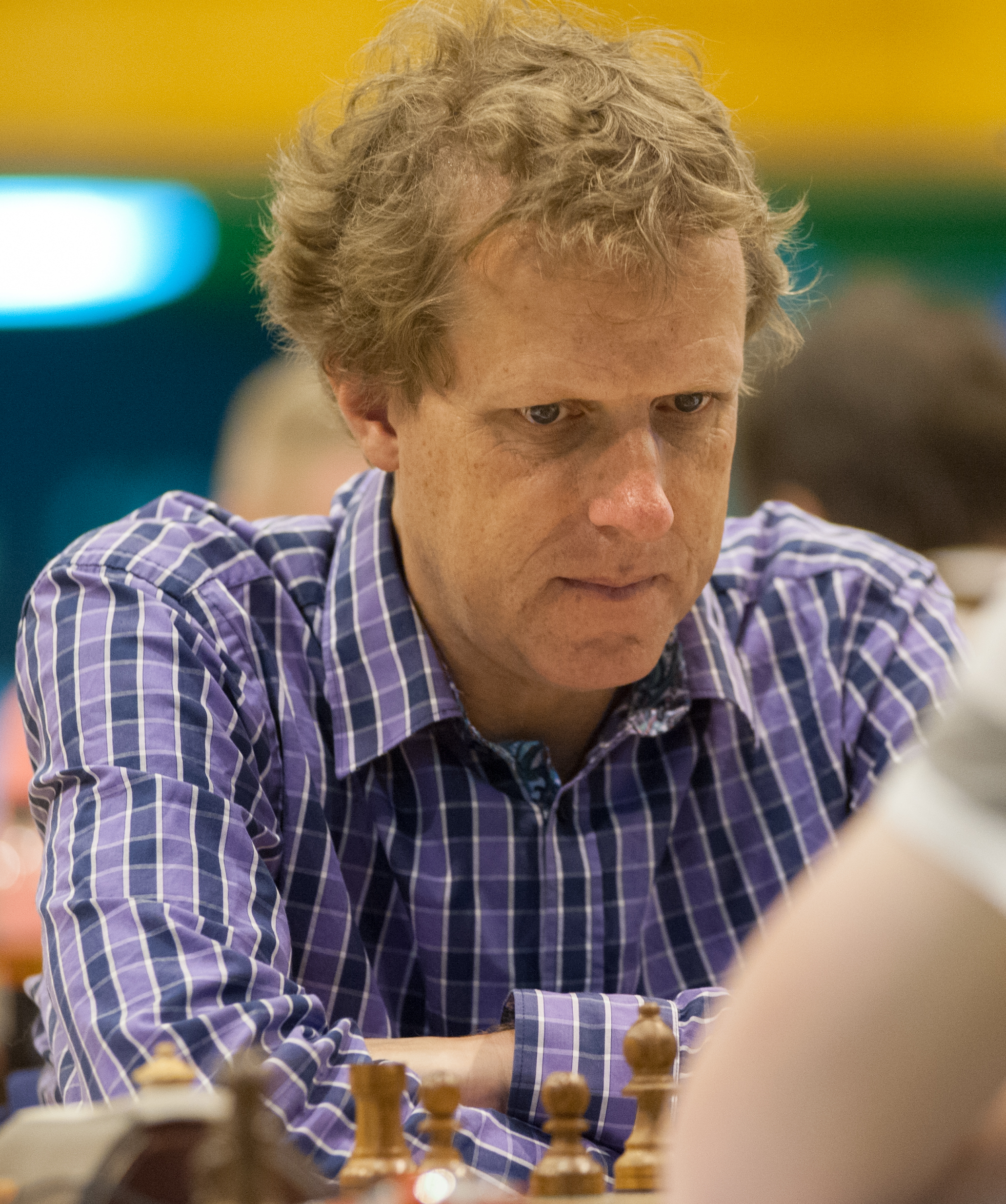
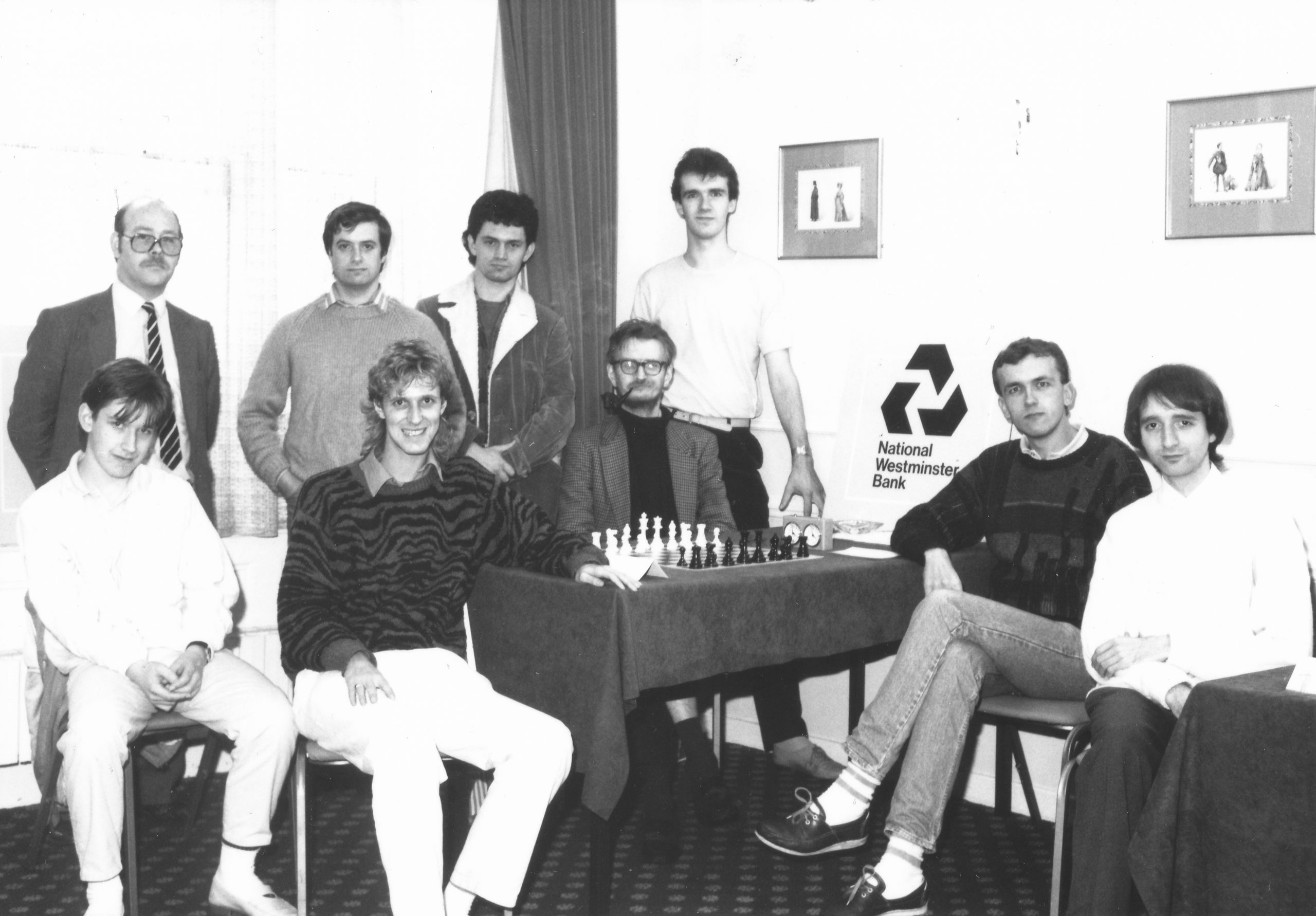
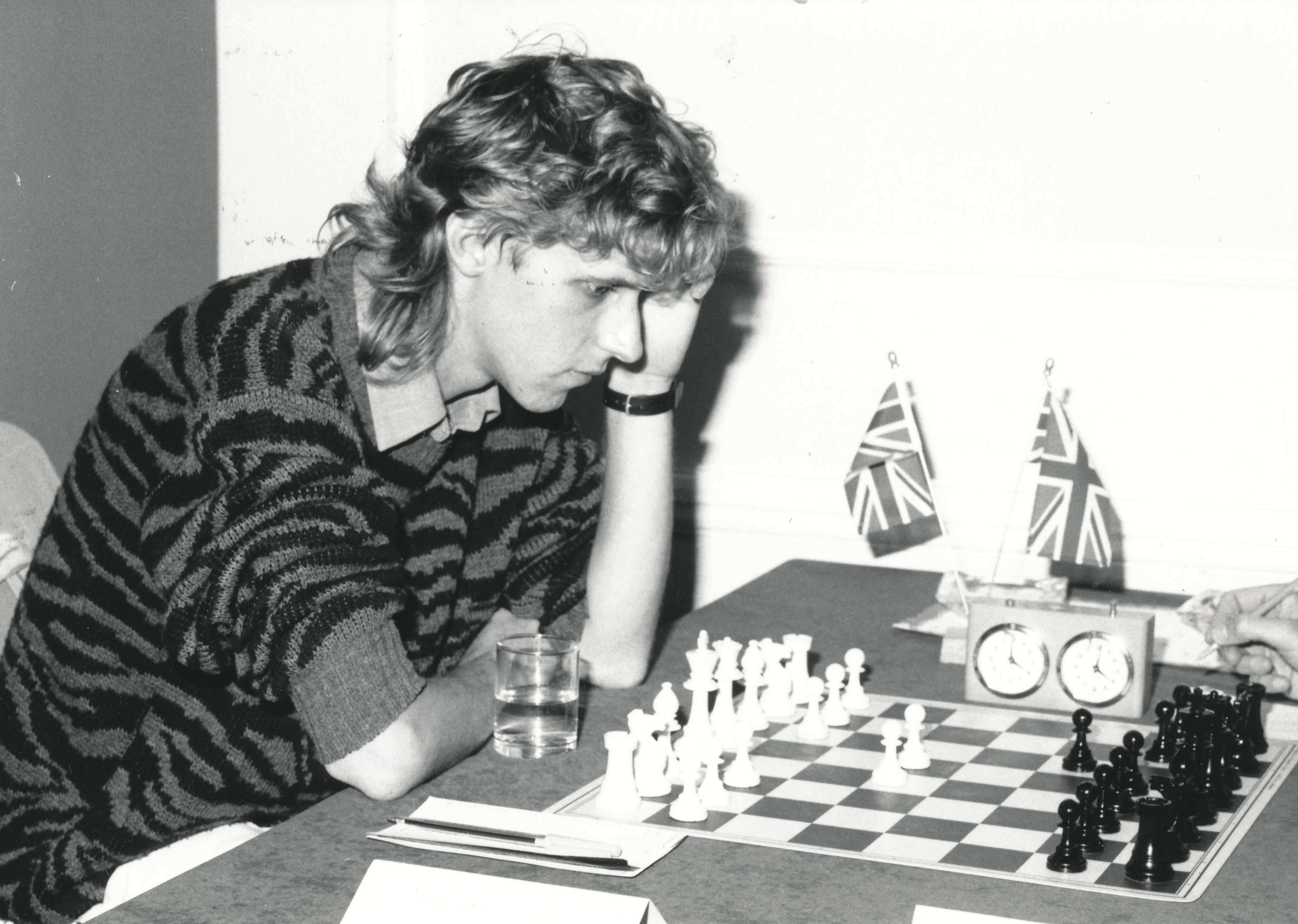
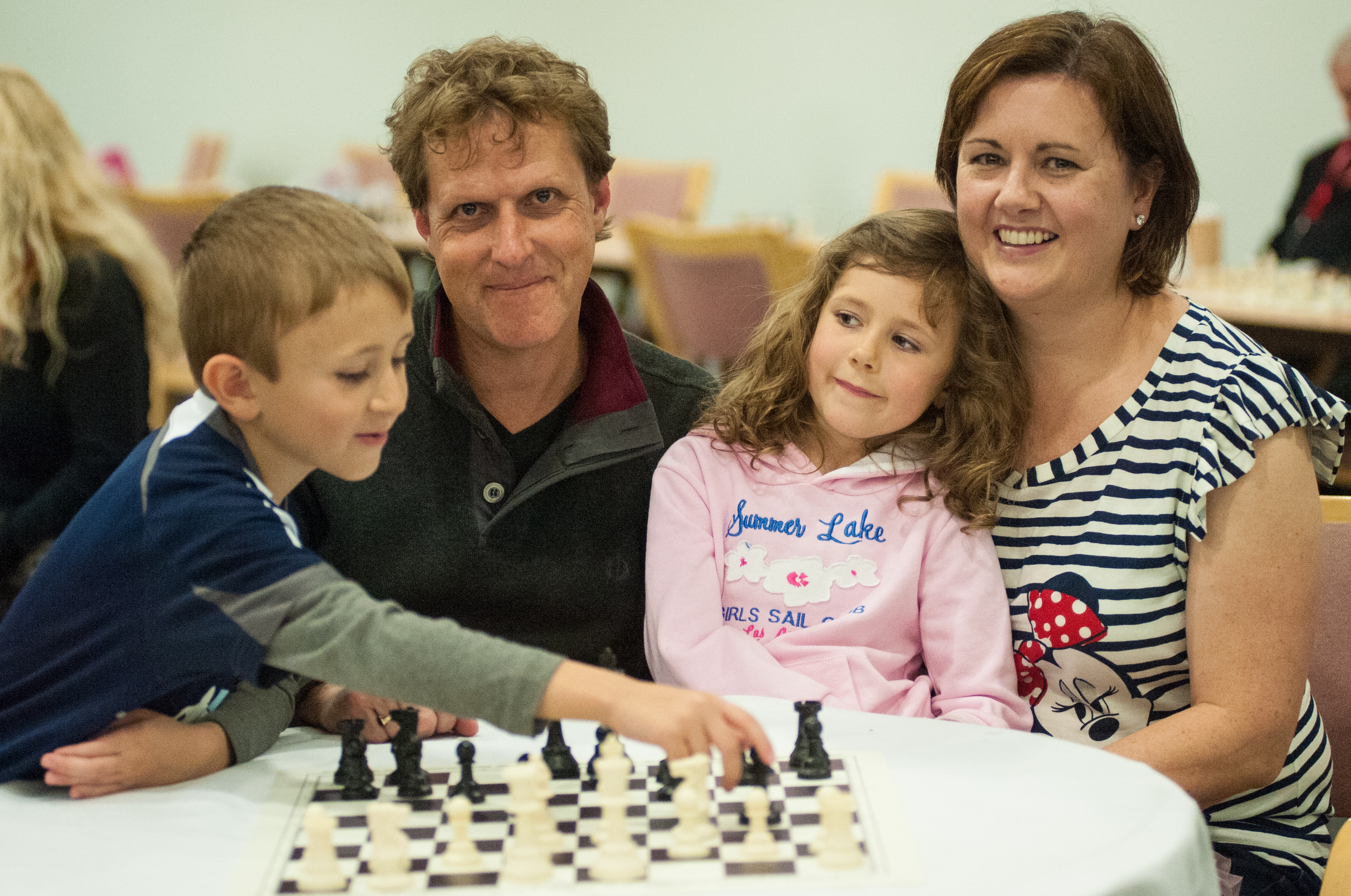
WGM Sheila Jackson, courtesy of John Upham Photography
Best wishes to WGM Sheila Jackson on her birthday.
Sheila Jackson was born on Monday, November 11th in 1957 in Liverpool, Merseyside.
(The following article is a composite from various sources including Sheila via email {many thanks!}, Richard O’Brien in British Chess, Wikipedia and others)
Sheila attended Broad Square CP School, Liverpool and started playing chess in year five when ten years old. In her final year she played on board one for the school team helping to win the first (organised by the BCF) National Primary Schools’ Team Knockout Championship. The final was played in St. Ermin’s Hotel, London in 1969.
Following this Sheila was Board 1 for Liverpool Under 11 winners of National Team Championship held in Liverpool 1969. Part of their success was due to teacher Mike Price, later to become a member of the local club Atticus, who coached Sheila.
Following this she attended Liverpool Institute High School.
At Coventry in 1970 Sheila won the British Girls Under-14 Championship (she was the first ever winner) aged 12 and she was the Under-18 Girls championship at Blackpool 1971 aged just 13.
Spurred on by keen but friendly rivalry from Susan Caldwell, eleven months her junior who had also won both the British U14 and U8 titles by the age of thirteen, Sheila went from strength to strength. At the age of 13 she represented England Girls (U18) in the Faber Cup and other events.
1973 saw her becoming Lancashire Under 15 Open Champion and two years later (aged 17) in 1975 the Lancashire Under 18 Open Championship. These events were for both boys and girls. During the event Sheila beat Manny Rayner who was later to represent Wales in the World Junior Championships.
During this year she has reached British Ladies Championship standard. John Littlewood was now her coach. John at the time was also coaching his son Paul, who was later to become British Champion.
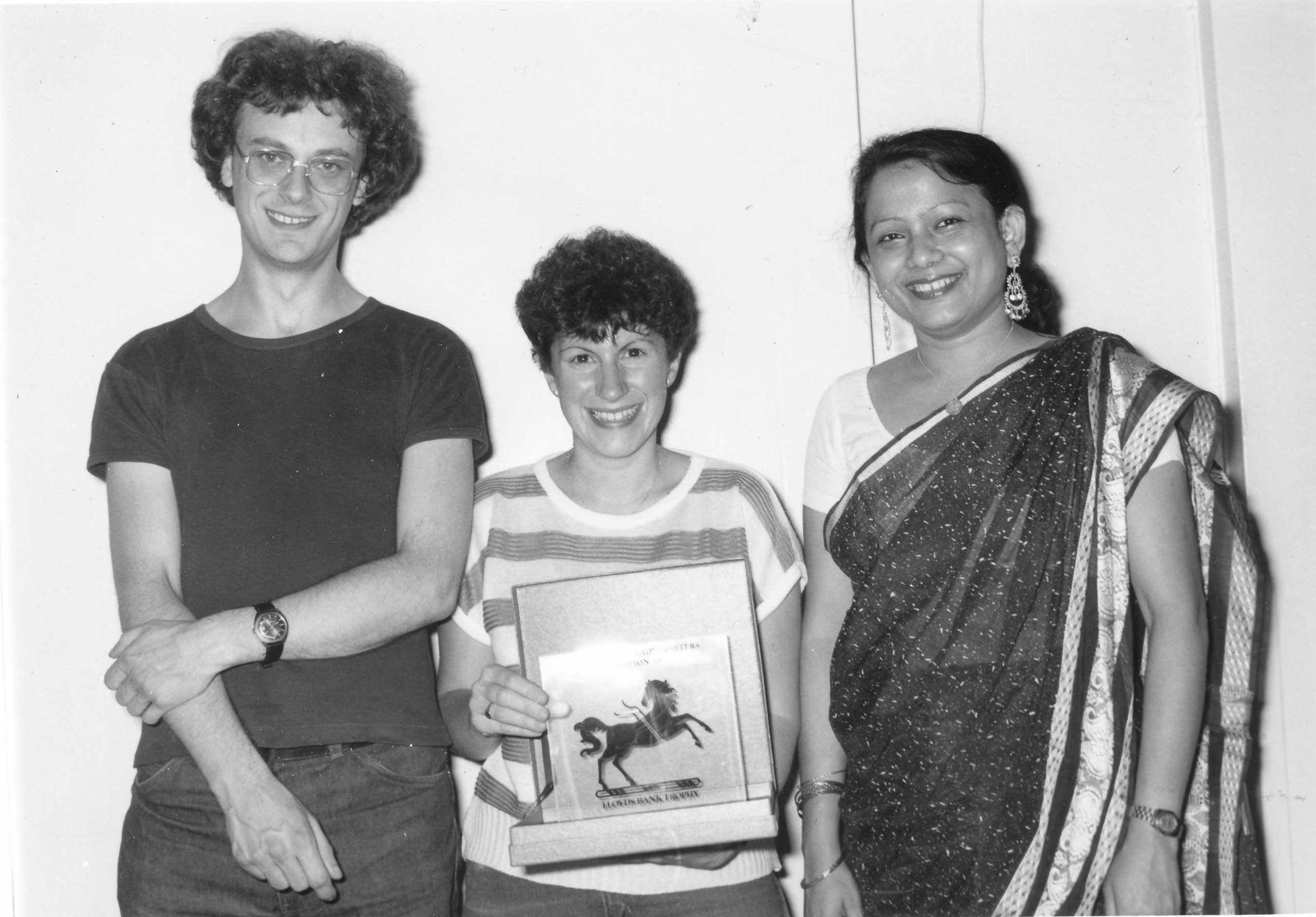
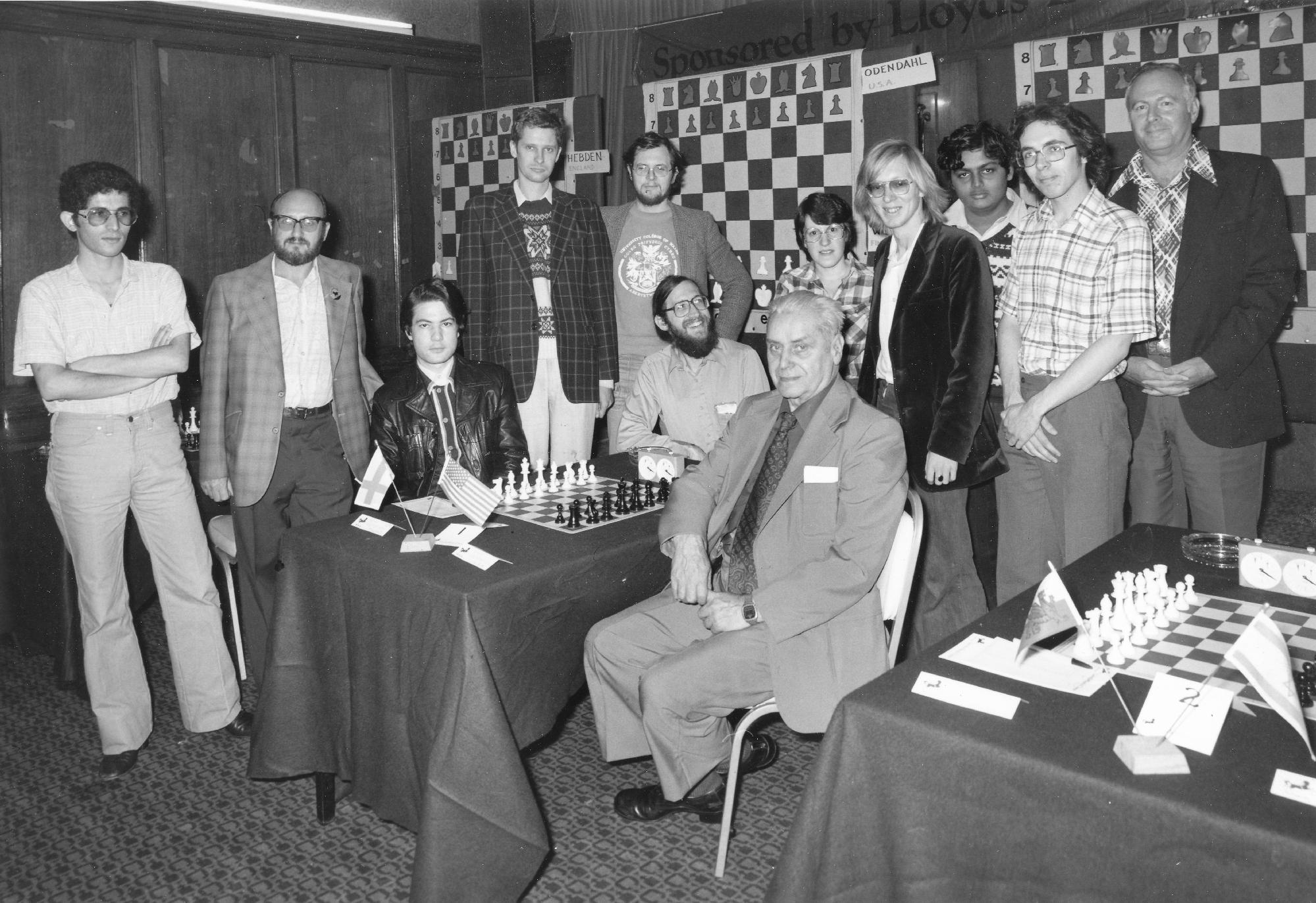
John Nunn, Sheila Jackson and ? at the Lloyds Bank Masters
Just a few days past here sixteenth birthday she took part in a six-player Women’s International event sponsored by Guardian Royal Exchange in London. She shared first place ahead of two IMs, both of whom had taken part in the Interzonals.
Since 1974 she has been a regular member of the full England team and has played in the last five Olympiads.
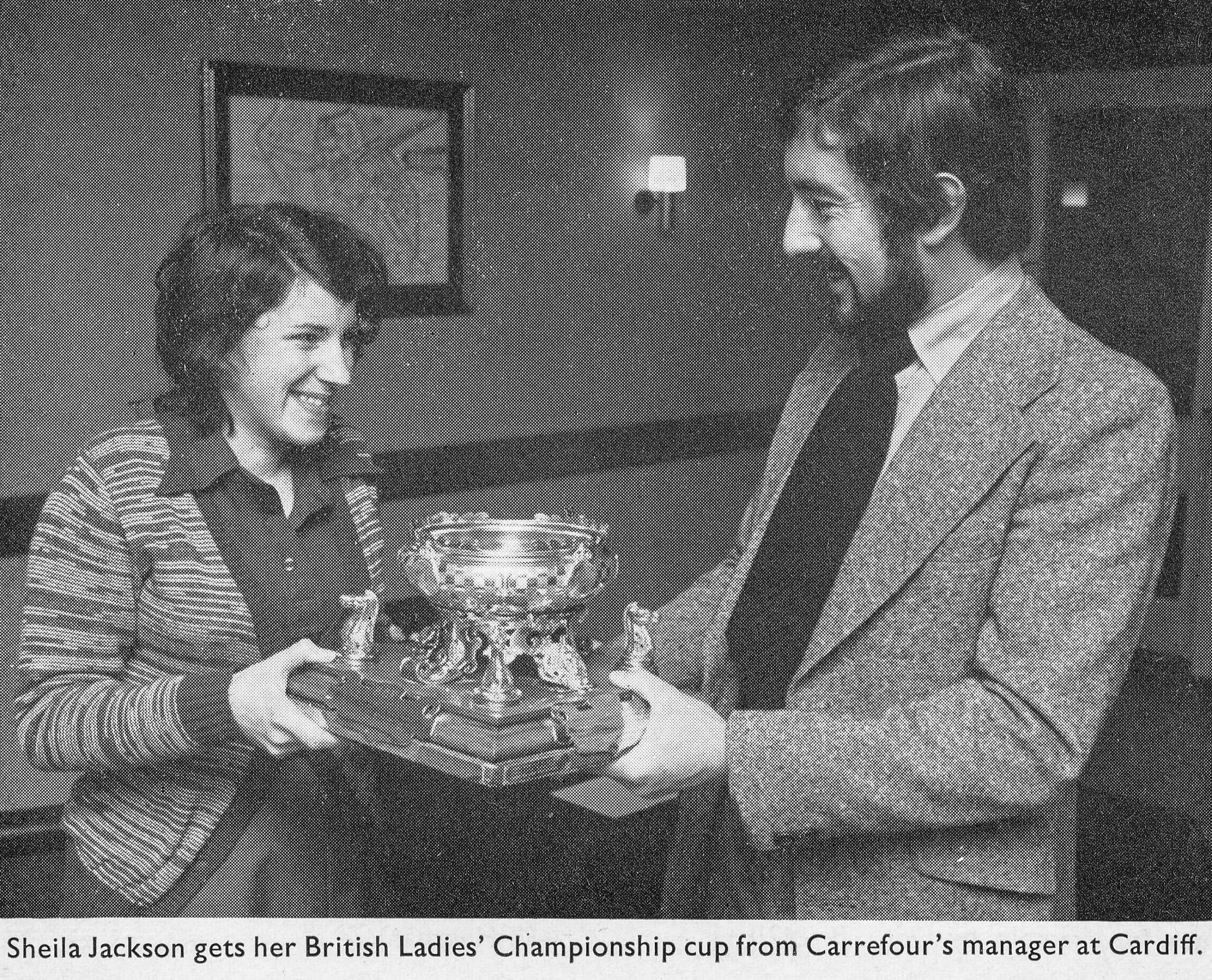
In 1975 at Morecambe she won the first of four British Ladies Championship titles. The others were in Ayr 1978, Brighton 1980 and back to Morecambe in 1981.
Sheila Jackson gets her British Ladies’ Championship cup from Carrefour’s Manager at Cardiff. Source : CHESS, Volume 41, Numbers 739-4, page 137.
The following year (1975, aged 17) she made her debut in the Women’s Zonal held in Karlovy Vary, Czechoslovakia.
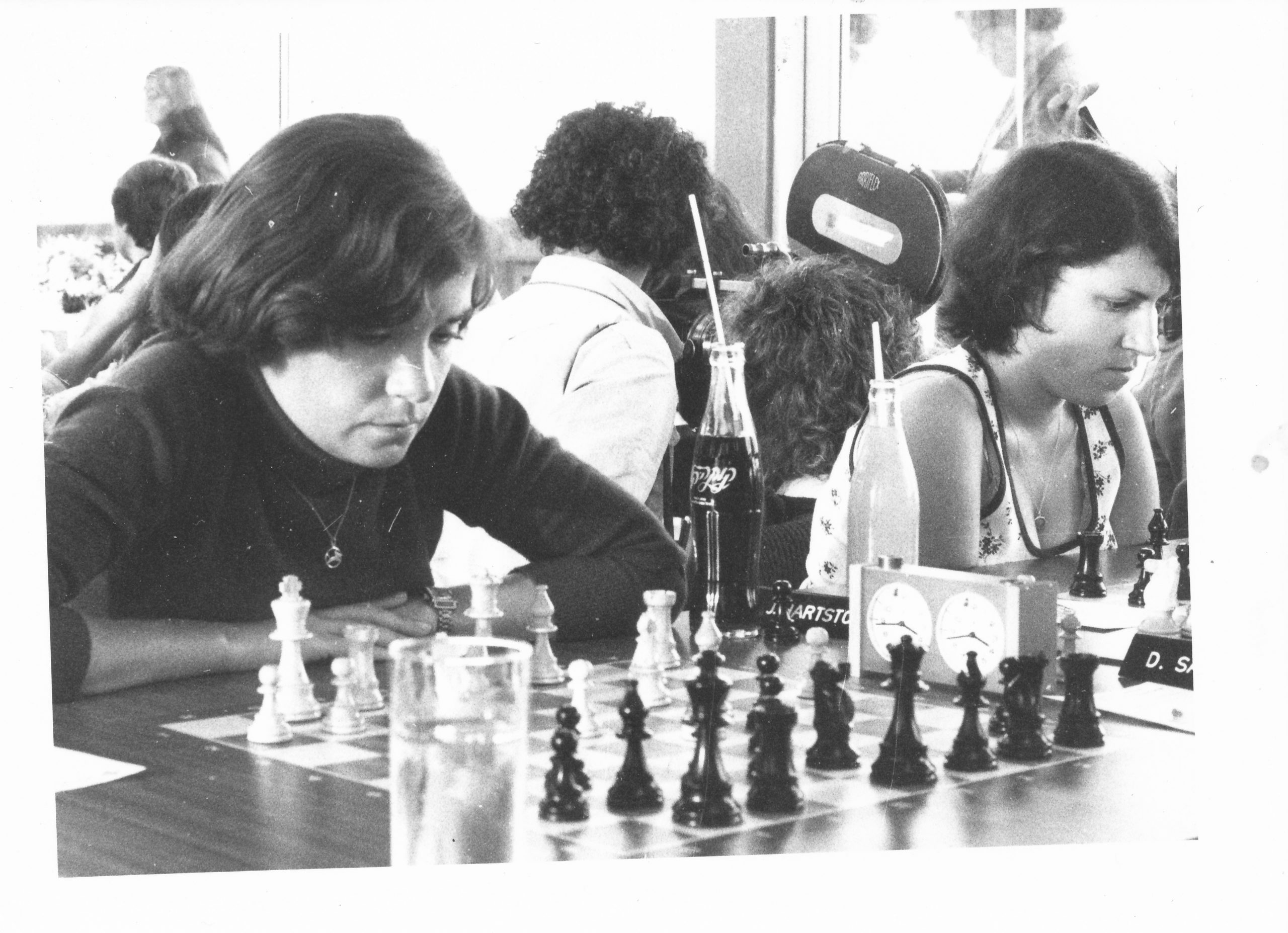
Sheila with Jana Hartston to the left
In 1976 Sheila was part of the England Team that won silver at the Haifa Olympiad. The England team was Jana Hartston, Sheila, Elaine Pritchard and Susan Caldwell. Sheila scored 6/9.
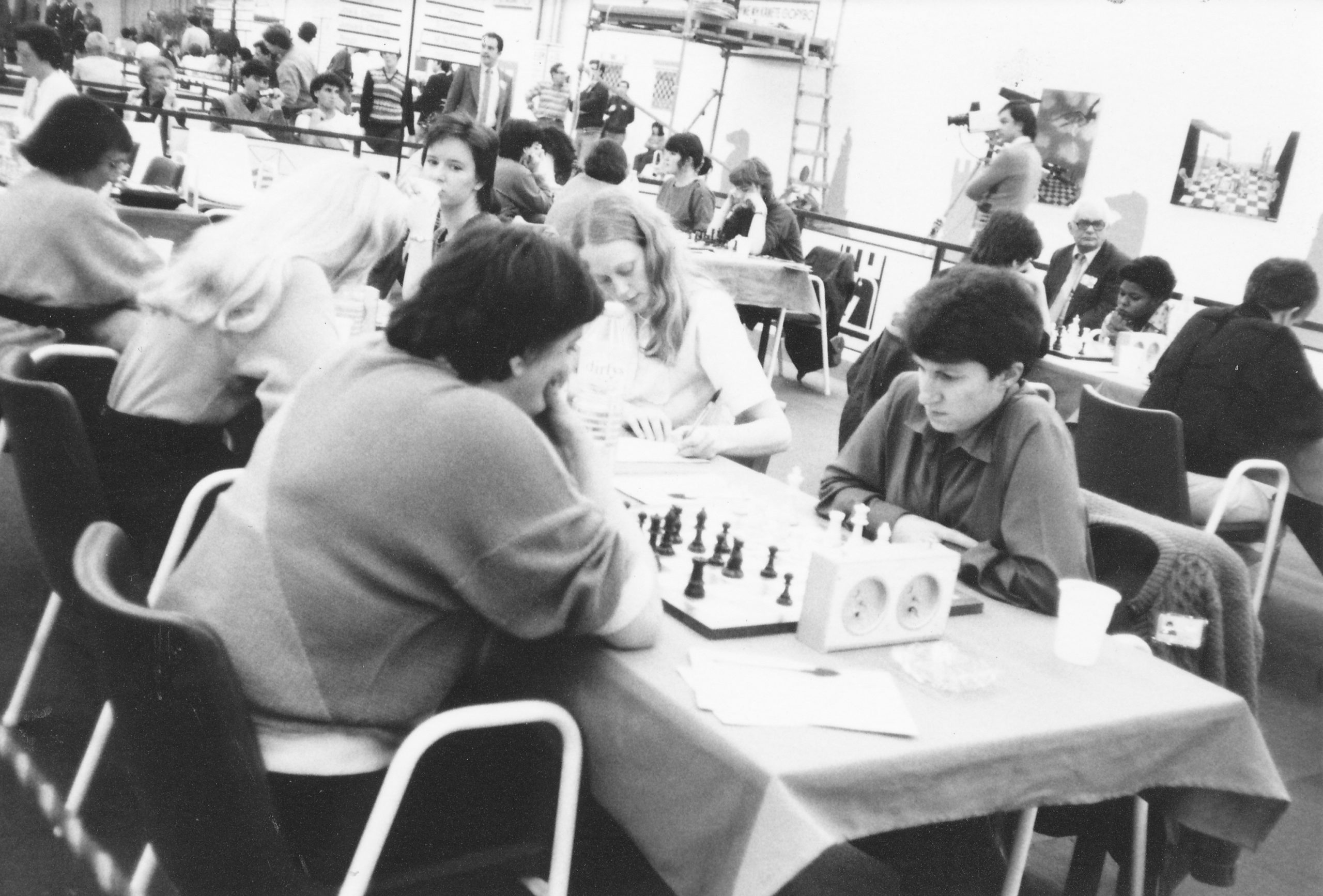
Sheila Jackson playing for England
In total Sheila played in ten consecutive Olympiads and in 1982 she won the individual silver for her board two performance in Lucerne. She scored 8.5/12, a score that won only bettered by Nana Alexandria of the Soviet Union who was shortly to be rated joint number one in the world. This result naturally improved here Elo rating and by January 1983 she was rated in the top 30.
In 1977 she was member of the Atticus squad that surprisingly won the BCF National Club Championship against all the odds. Although not playing in the final she attended as first reserve displaying her tee shirt ‘Atticus for the Cup’. After that poor John Nunn and rest of the Oxford University team had no chance.
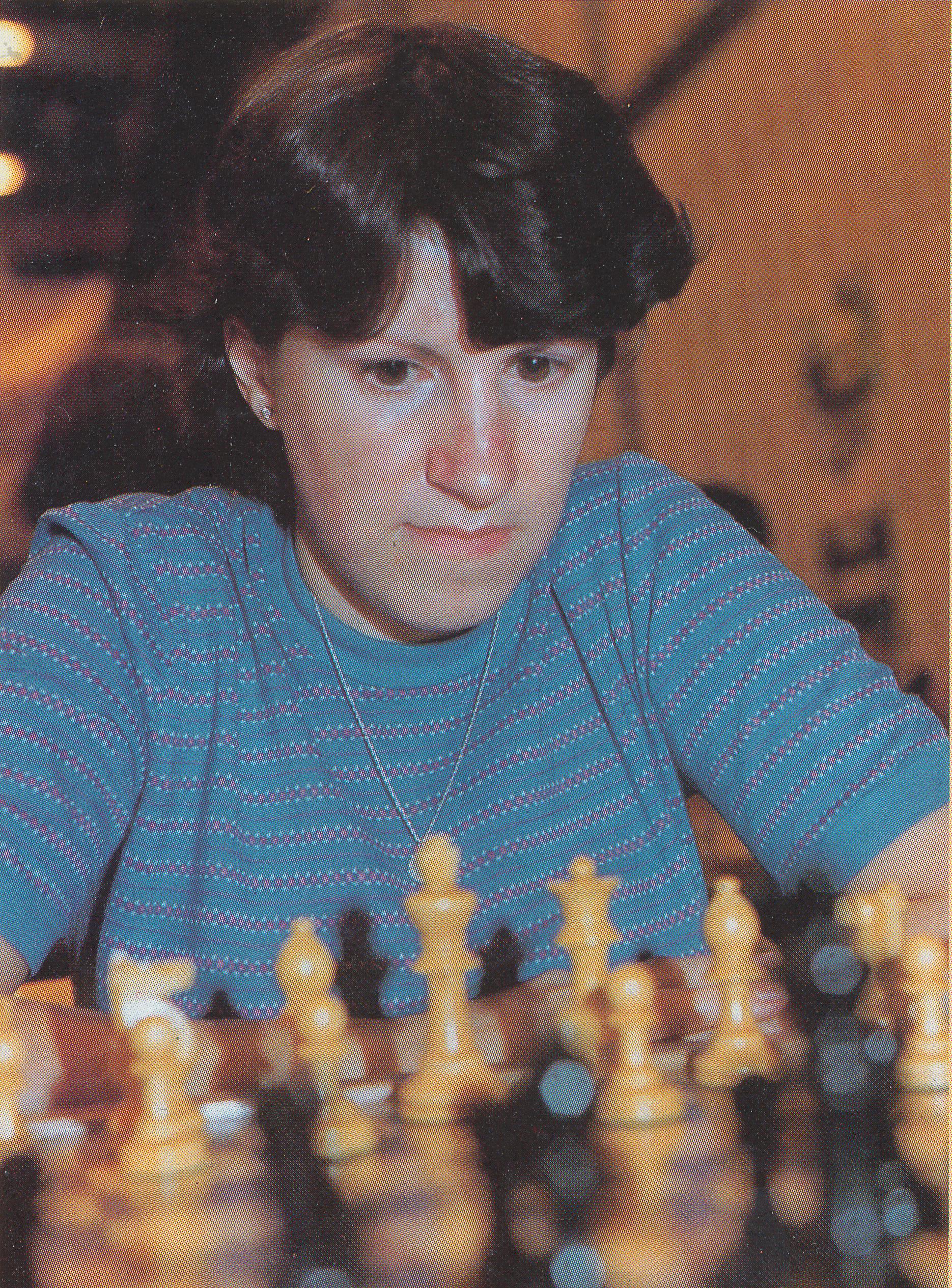
Sheila Jackson
Five times, from 1977 to 1981 inclusive she won the Grande Prixette, the women’s equivalent of the Leigh Grand Prix.
Her employers, Lambeth Council in London where she works as an accounts clerk and to a lesser extent her previous employers in Liverpool, have allowed here extra leave to play in the more important events. Her most successful results abroad have been second places at both Pernik 1979 and Wijk aan Zee the following year. In 1980 she finished fourth at Bydgoszcz ahead of two WGMs.
Sheila Jackson and players at the Lloyds Bank Masters
Sheila, being a great believer that women players are more likely to improve if they played in mixed tournaments, has certainly proved her point. In 1978/9 she scored 6/10 in the Challengers at Hastings – a 210 (BCF) performance. This included the better of a draw against IM Bert Enklaar of The Netherlands.
Sheila Jackson
1979 saw her debut in the British Championship and she was top woman this year and subsequent three more years (1982, 1983 and 1984) whilst there was still a separate Ladies’ Championship running concurrently. On the first occasion she scored a respectable 4.5/11 and on the second an excellent 5.5. This latter performance equivalent to a WGM norm was one of the best every by a woman player in this country. Of her eleven opponents one is now a GM, four are IMs and four are FMs. This included a marathon against Ray Keene which went on for four days. she has twice proved wrong those who thought that women players will always bring up the rear in this event.
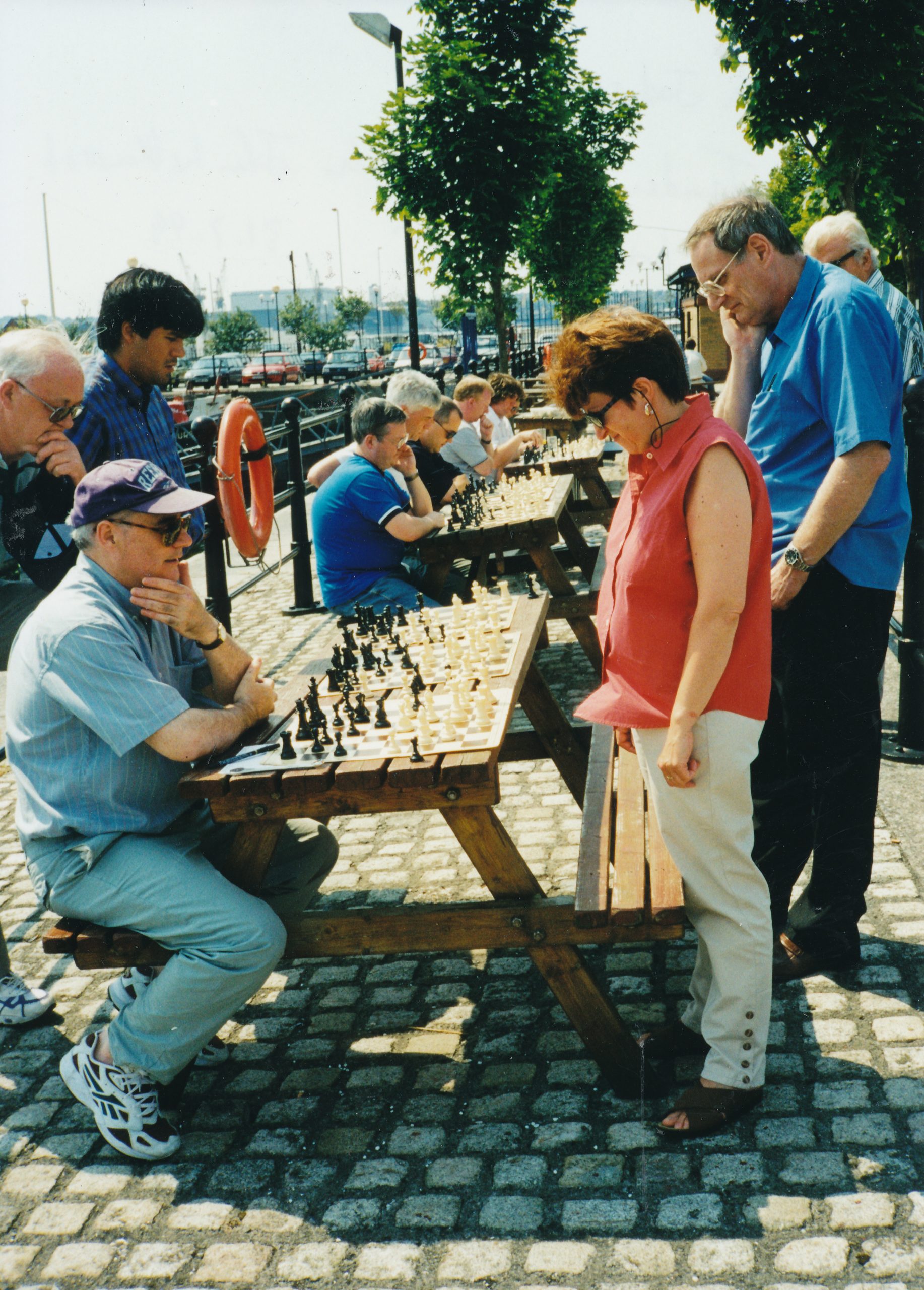
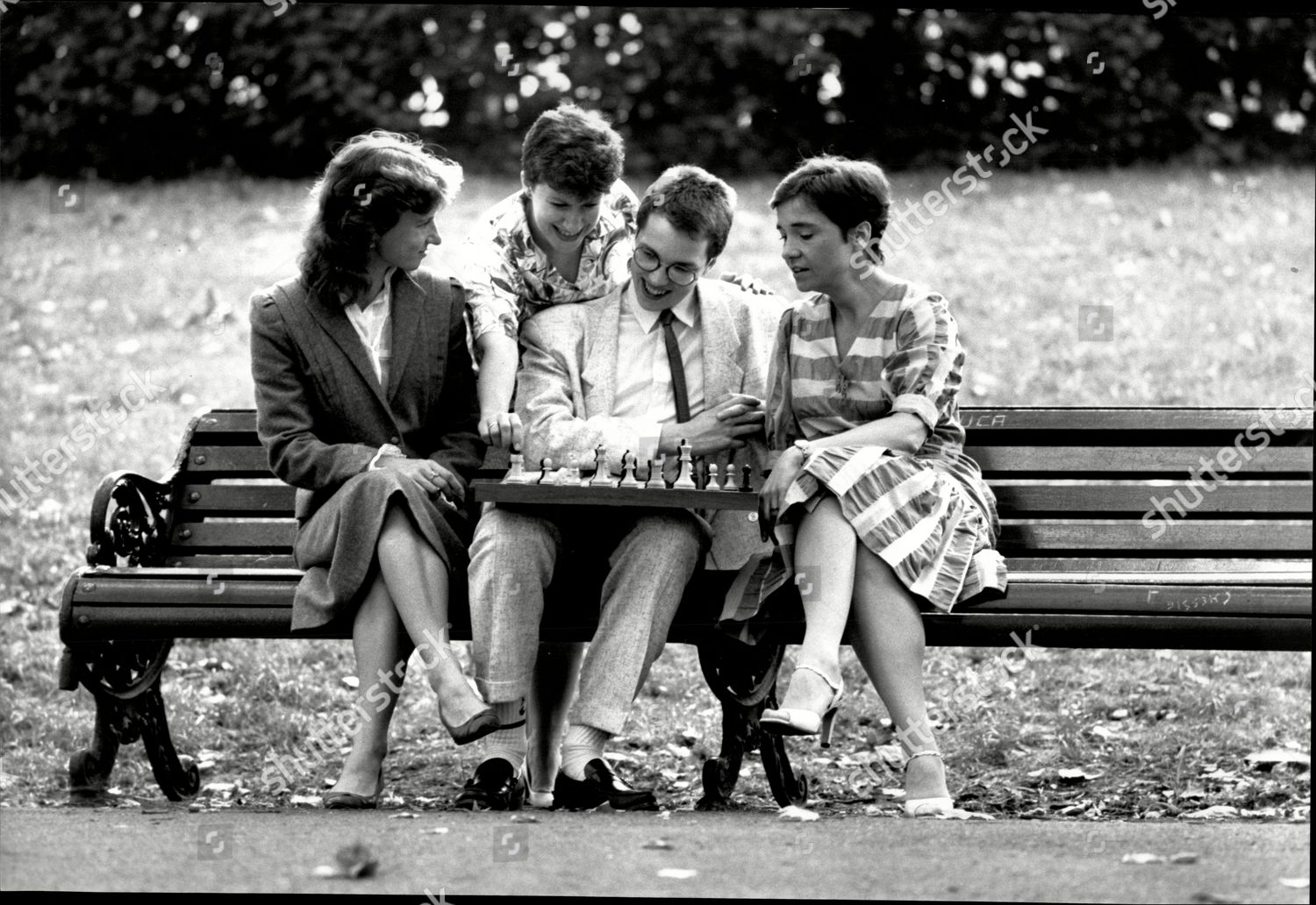
British Speed Chess Championship Grandmaster Nigel Short Playing Chess In The Park With L-r Susan Arkell Sheila Jackson And Dr Jana Miles. Courtesy of Shutterstock
In the 1984 event at Brighton she scored a 2400+ rating performance and a WGM result.
1981 saw Sheila being awarded the Women’s International Master title and in 2001 she became a Woman’s Grandmaster.
Sheila made her in 1991 debut at the Women’s Interzonal Subotica, Yugoslavia.
Sheila Jackson by Cathy Rogers
For some considerable time she has been a leading light in women’s chess not just on the board but off it as well. One of only two female BCF coaches in the county she has helped out in various coaching seminars in London and the Midlands.
In August 1982 she became President of the British Women’s Chess Association at a rather stormy meeting in Torquay. For a time she has also acted as treasurer of the association.
In 1993 she Played in one European Team Championship in Hungary as reserve player (there were only two boards).
1994 contained a disappointment and some measure of retribution : Sheila secured annual leave to play in the Moscow Olympiad but wasn’t selected despite her high rating and grandmaster norms. Following that she scored an excellent 5/7 in the 1994 Guernsey Open (just before the Olympiad) finishing a full point ahead of the Women’s number 1.
Sheila Jackson at the 2014 British Championships in Aberystwyth
In 4NCL Sheila became Female Player of the Year when playing for Wood Green.
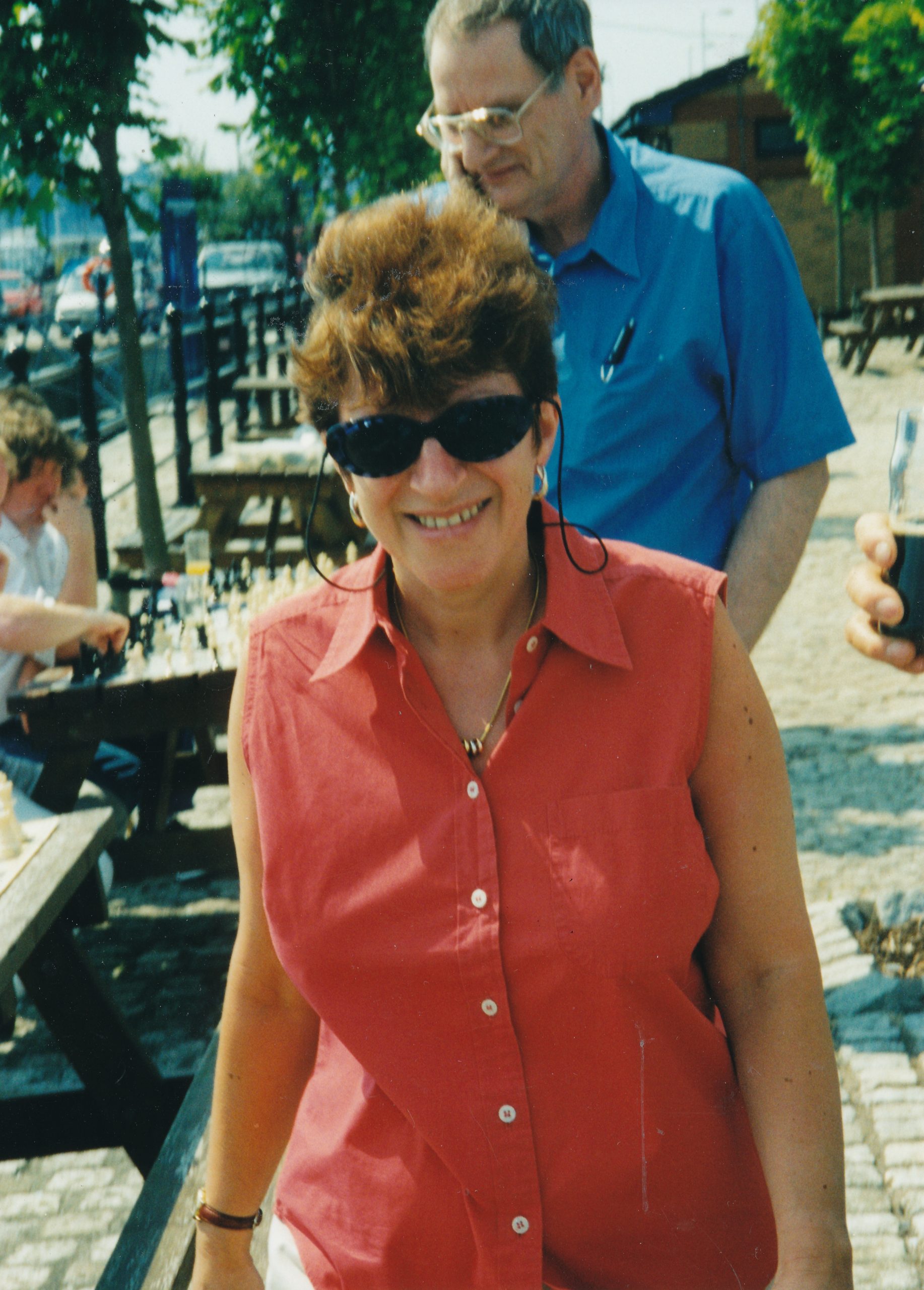
Sheila and friends during a Lloyds Bank Masters
In 2018 She made here Senior 50+ Open World Team Championships debut, winning both individual Bronze plus Team Bronze playing on board 1 for England Women.
Following that Rhodes 2018 in the European 50+ Open Team Championship she played in a mixed England 2 team and Croatia 2019 on Board 1 for a mixed England 2 Team.
She played board 1 for England Women in the Prague World Team Open in March 2020 which was cut short by the 2020 pandemic.
Sheila Jackson at the final 4NCL weekend of 2012
A believer (Ed : comments were current in 1983) in reform she has been campaigning (together with other younger members of the BWCA – Susan Caldwell, Maria Eagle and Angela Eagle in particular) for both women and girls to compete with the opposite sex at the British Championships. Slowly but surely support has grown from both inside and outside the BWCA. In junior events, which are now mixed, the girls titles are awarded to the highest placed girl competing. However the relevant organisations object to the title of Ladies Champion being awarded to the highest placed woman player in the championship itself. This means that Sheila and other women players are are strong enough to play in the main championship and thus gain opportunities to achieve WIM and WGM norms and improve their basic standard of play will be denied the realistic right to play for the British Ladies title. Hopefully notice will eventually be taken of the BWCA’s wishes and Sheila will one day compete for the title again.
According to Felice Sheila’s peak FIDE rating was 2295 in January 1987.
With the white pieces Sheila is a die hard 1.e4 player being a big fan (along with Susan Lalic) of the Sicilian Alapin and she allows the Marshall Attack.
As the second player she plays the open games and the Nimzo-Indian Defence.
From Wikipedia :
“Sheila Jackson played for England in the Women’s Chess Olympiads:
In 1974, at first reserve board in the 6th Chess Olympiad (women) in Medellín (+2, =2, -5),
In 1976, at second board in the 7th Chess Olympiad (women) in Haifa (+5, =2, -2) and won the team silver medal,
In 1978, at second board in the 8th Chess Olympiad (women) in Buenos Aires (+5, =3, -4),
In 1980, at second board in the 9th Chess Olympiad (women) in Valletta (+5, =4, -3),
In 1982, at second board in the 10th Chess Olympiad (women) in Lucerne (+7, =3, -2) and won the individual silver medal,
In 1984, at second board in the 26th Chess Olympiad (women) in Thessaloniki (+5, =7, -2),
In 1986, at second board in the 27th Chess Olympiad (women) in Dubai (+6, =2, -4),
In 1988, at third board in the 28th Chess Olympiad (women) in Thessaloniki (+6, =2, -3),
In 1990, at third board in the 29th Chess Olympiad (women) in Novi Sad (+5, =4, -3),
In 1992, at third board in the 30th Chess Olympiad (women) in Manila (+3, =6, -2).
Sheila Jackson played for England in the European Team Chess Championships:
In 1992, at second board in the 1st European Team Chess Championship (women) in Debrecen (+0, =3, -1).
In 1981, she was awarded the FIDE International Women Master (WIM) title and received the FIDE International Women Grandmaster (WGM) title seven year later.
In 1991, in Subotica Sheila Jackson participated in the Women’s World Chess Championship Interzonal Tournament where she stayed at 31st place.
Since 2000, participate in chess tournaments rarely.”
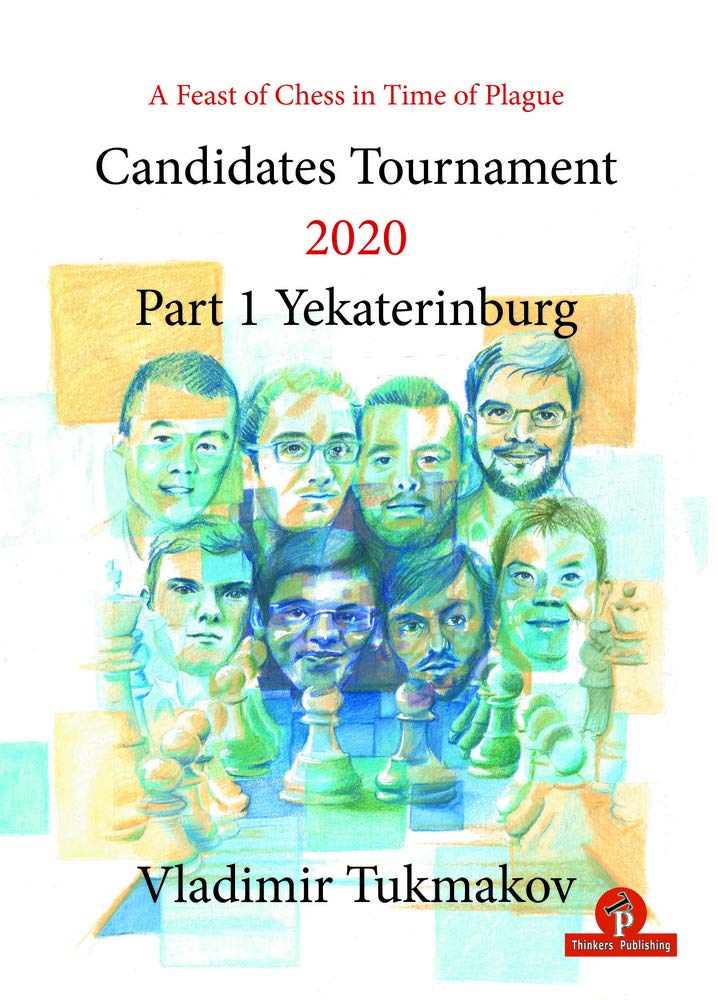
“Vladimir Tukmakov, born in Odessa 1946, was one of the strongest Ukrainian grandmasters. He was the winner of several strong tournaments, including the Ukrainian Championship in 1970, and he came second in three Soviet championships in 1970,72 and 83. After his successful period as active player, he became a coach, trainer and author. This is his second book for Thinkers Publishing, after his major success in 2019 with ‘Coaching the Chess Stars’.”
GM Vladimir Tukmakov
Also from the rear cover
“The official story of the 2020 Candidates Tournament began on November the 11th, 2019 with the signing of a contract between FIDE and the Russian Chess Federation detailing the hosting duties of said tournament in Ekaterinburg from the 15th of March to the 5th of April, 2020. At that point no one could have even imagined how difficult the road to that tournament would be nor how unexpected the outcome. Yet the significance of the actual numbers in this dramatic epic is hard to overestimate which is why the author will attempt to play the role of chronicler and try to describe as accurately as possible the key moments of this historic event. Vladimir Tukmakov was our close observer, author and wrote a historically important book on the first part of the Candidates 2020.”
Tournament books, once a staple of chess literature, have been rare in recent years and books about half a tournament have always, naturally, been rarer still. This book by GM Vladimir Tukmakov is just such a book – and in my opinion it is a very welcome one.
Of course, 2020 has been an exceptional year (in a bad sense of exceptional) and the Candidates Tournament stands out as the exceptional (in a good sense of exceptional) over-the-board elite event of the year. It is unfortunate that Covid-related reasons forced the tournament to be suspended before its conclusion. (Or was the suspension necessary? The author’s comments on the decision are interesting.)
Although the tournament started on schedule in March, it was already in somewhat controversial circumstances because Teimour Radjabov had withdrawn – citing the rapid spread of the pandemic – and had been replaced by Maxime Vachier-Lagrave. The tournament was suspended exactly half way through following an announcement by the Russian government that all international air travel had been suspended indefinitely. The eight Candidates had been due to play each other twice, and seven of the fourteen rounds had been completed.
The author of this book, now aged 74, has been pretty much inactive as a player in recent years but he was a top player for a number of years, coming second in the Soviet Championship on three occasions, and reaching number 12 in the world rankings. This quality is reflected in his game annotations even if they are – as he modestly admits – sometimes helped by his “Iron Friend” (as he refers to chess engines).
The book consists of the following sections:
Introduction: Three pages of he author’s reflections on why he chose to write this book.
Prelude: Nine pages which describe the tournament itself, its participants and its occurrence in the time when the pandemic was developing.
The Play: 121 pages of games, with each of the 28 games annotated by the author and with a summary of the situation after each round.
Unexpected Conclusion: A brief two page description of the suspension.
Interim Results: An eight page summary of the tournament (so far!) including general observations of the players and their prospects for the remainder of the tournament, whenever that will be.
The Prelude and Interim Results chapters are informative and are engagingly written. They include a number of personal reflections by the author. The annotations in The Play chapter are, I think, superb, with both textual comments and given variations always hitting the spot in their relevance. An example of this is taken from his notes to the Ding-Caruana game:
12 d5!? Another complicated decision. The position demanded 12.e3 in the hope of completing development after 12… Bb3 which was like the game. Also, worth considering was 12… Bg6!? 13.Bc4 (Although 13.Nd3 led to an even more complicated struggle. For instance, 13…Na6 14.Nxb4 Nxb4 15.dxc5 Nc2 16.Rb1 Qa5) 13… Bxc4 14.Nxc4 cxd4 15.exd4 (15.Qxd4 Qe7) 15… Nc6 with enough compensation for the pawn.
It is very revealing, that having found himself in a difficult psychological situation, the Chinese grandmaster does not rush towards simplification instead choosing a more difficult and principled continuation each time.
(The book actually uses figurines for the pieces.)
Tukmakov is generally very respectful of the great players who are taking part in the tournament (indeed he writes that the book “bears witness to my solidarity with my younger colleagues” in view of their bravery in playing under the circumstances of the pandemic), but this doesn’t stop him from criticising them. For example, their clock handling occasionally comes in for comment. On one occasion he writes:
It is difficult to understand what Giri thought about for 25 minutes.
As may perhaps be expected, Grischuk receives sterner criticism in this area – but criticism that is well reasoned (and somewhat humorous).
In summary, I really like this book. I look forward to the second instalment which I hope arises as and when the second half of the tournament is complete. Who knows, perhaps tournament books are not a thing of the past after all?
Colin Purdon, Crowthorne, Berkshire, November 11th 2020
Colin Purdon
Book Details :
Flexicover : 160 pages
Publisher: Thinkers Publishing; 1 edition (8 Dec 2020)
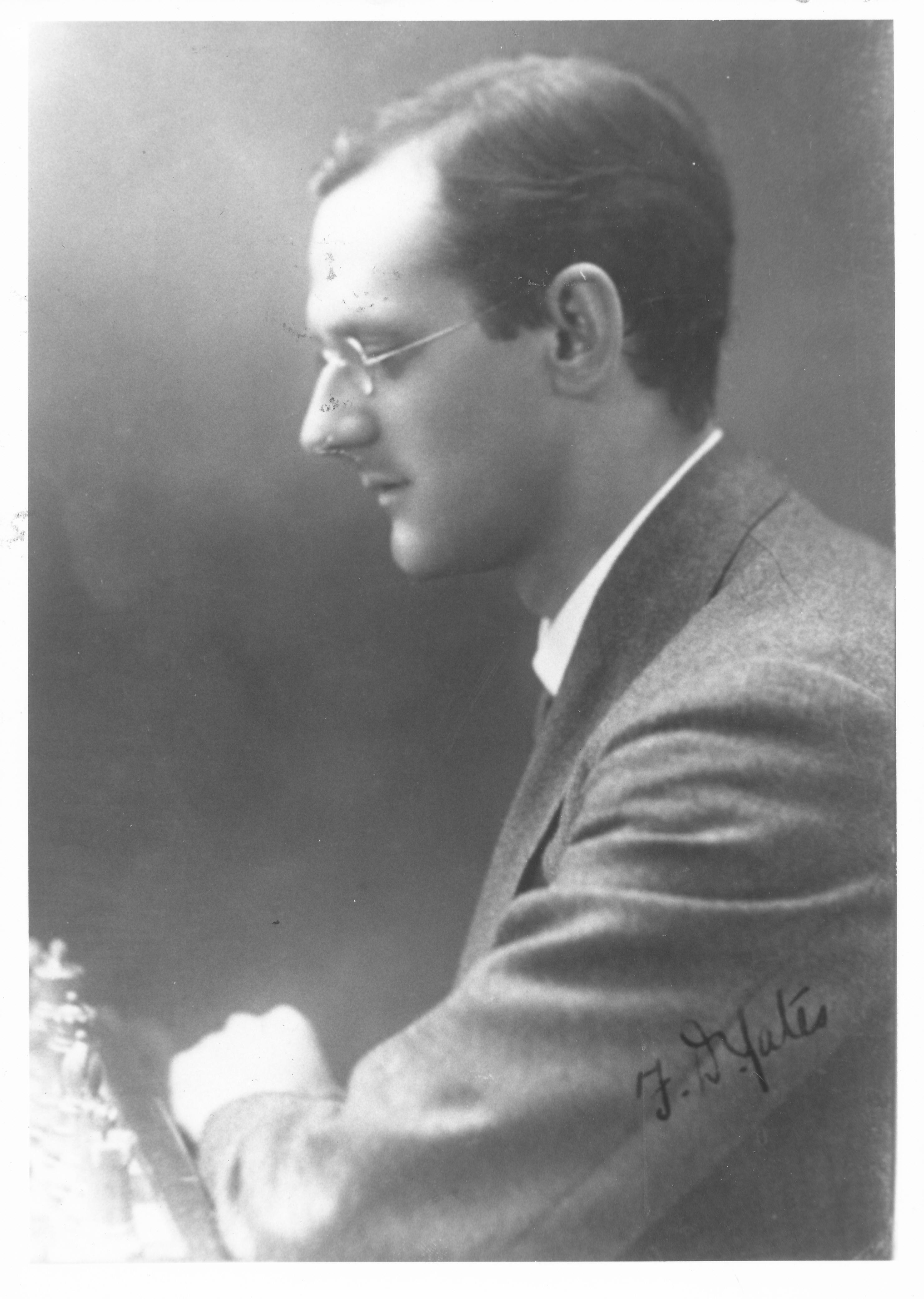
We remember Fred Yates who passed (or, at least was recorded as passing) on Friday, November 11th, 1932.
Fred (not Frederick) Dewhirst (not Dewhurst) was born in Birstall, Leeds on Wednesday, January 16th 1884, the same year as Harry S Truman and Eleanor Roosevelt.
An obituary appeared in Volume LII (52, 1932), Number 12 (December), pp.525-528 of the British Chess Magazine by PW Sergeant :
“The chess world has had many heavy bereavements during the year which is coming to an end; but to the British section of it there has been no bereavement like the last, which robbed it of F.D.Yates, when still in the prime of his chess career. The circumstances of his end were tragic. On the night of Tuesday, November 8th, he gave a very successful exhibition at Wood Green, only dropping one half-point in 16 games. On the following night he was in the company of a chess friend until fairly late, and then went back to his room in Coram Street, Bloomsbury. He was never seen alive again. It was not until Friday morning that anxiety was felt at Coram Street as to what he might be doing; for he was in the habit of secluding himself for many hours at a stretch when busy with work.
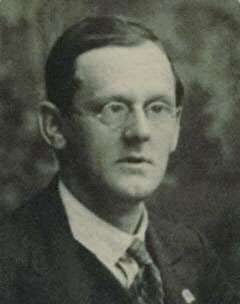
Fred Dewhirst Yates
On Friday, however, when no answer could be got to knocks on the door of his room, which was locked, and a smell of gas was noticed, the door was at last broken open, and he was found dead in bed.
It came out at the inquest before the St. Pancras coroner on November 15 that , though the gas-taps in the room were securely turned off, there had been an escape from what a gas companies official described as an obsolete type of fitting attached to the meter in the room. The meter, it appears, was on the floor, and the fitting must have been accidentally dislodged. A verdict was recorded of Accidental Death; and the coroner directed that the gas-pipes from the room should remain in the custody of the court. The body was conveyed to Leeds for burial on the morning of November 16.
So prematurely passed away one who may with justice be called one of the finest exponents of British chess, and an international master whose strength was recognised all over the world.
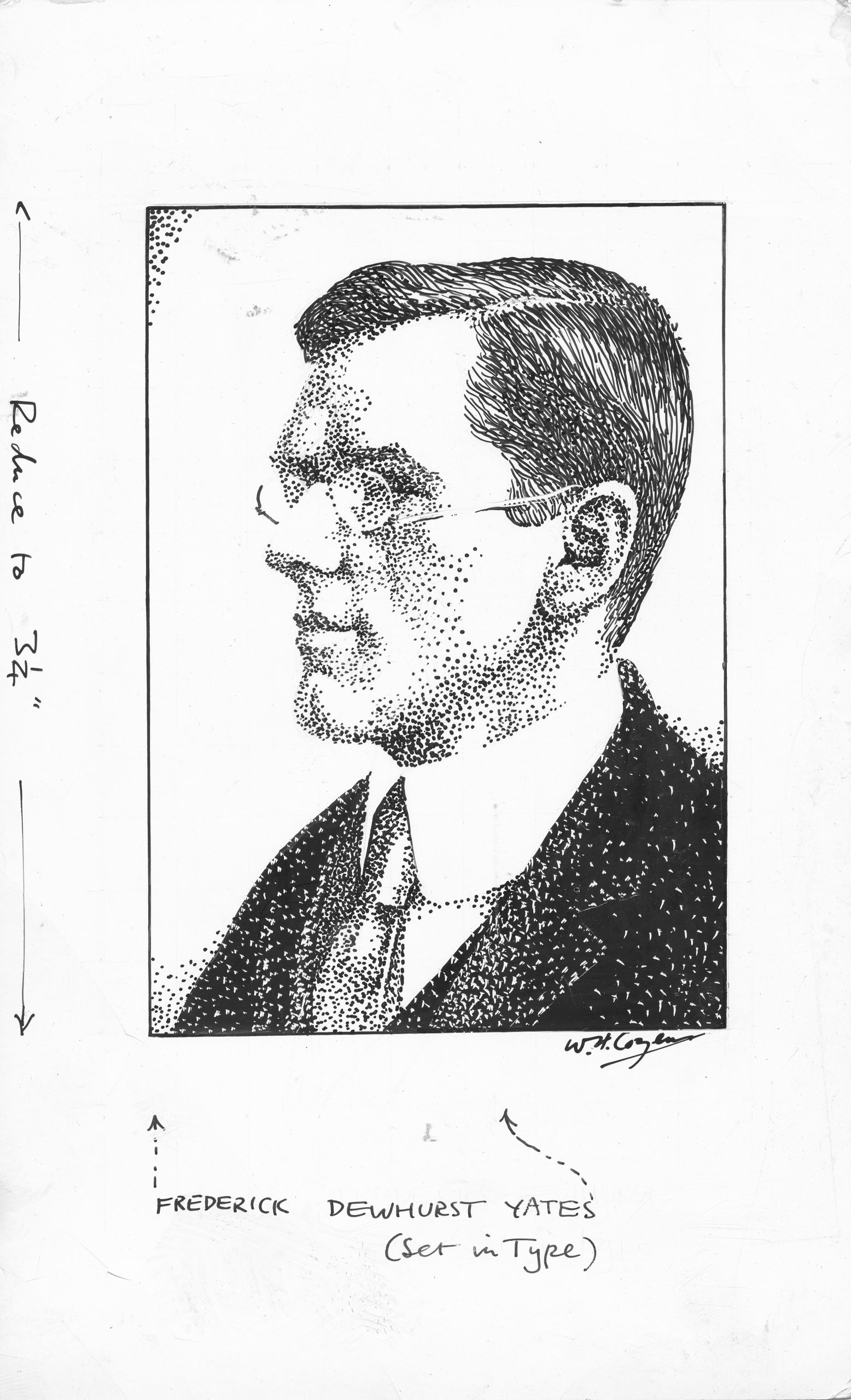
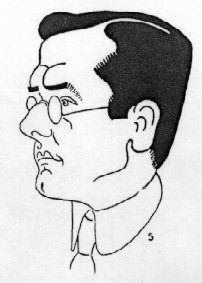
Fred Yates as drawn by WH Cozens for BCM
Frederick Dewhurst (sic) was born at Birstall, near Leeds, on January 16, 1884. He did not develop his chess power very young, at the B.C.F. congress at the Crystal Palace in 1907 only playing in the Second Class, though he then won first prize in one of the two sections. At Tunbridge Wells next year he tied for fourth place in a section of the First Class. He was admitted to the British Championship at Scarborough in 1909 (in which year he was Yorkshire Champion), and there tied with Blackburne for fourth and fifth prizes, after HE Atkins, JH Blake, and W. Ward.
In the same event at Oxford in 1910 he again tied with Blackburne, but this time for second and third prizes, Atkins being first, though losing in his individual encounter with Yates. In 1911, at Glasgow, Yates still further improved his position, this time tieing with Atkins for first place; but in the tie-match Atkins won somewhat easily.
Atkins stood down for the first time at Richmond in 1912; but the success of RC Griffith left Yates second, in company with the late HG Cole. At last in 1913, Yates gained his ambition, and at Cheltenham won the British Championship with the fine score of 9 out of a possible 11, 1.5 points above J. Mahood and 2 above Blackburne. In the ruined Congress at Chester in 1914 he tied for first place with Blackburne; and, as Blackburne was unable to play a deciding match, Yates won his second championship.
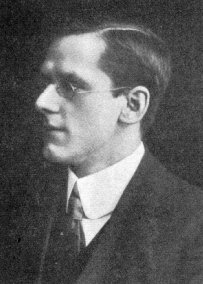
Fred Dewhirst Yates, Jacoby Archive
Since the War he gained the title again in 1921, 1926, 1928 and 1931, thus making a record of six championships, second only to Atkin’s record of nine (ed : in 1969 at the Rhyl Congress Jonathan Penrose OBE was to surpass Atkins record by one.)
Yate’s six victories were gained in sixteen attempts In addition must be mentioned his success in the Hastings tournament, in the New Year of 1921, for holders of the British Championship only.
Fred Yates
His other successes in this country, including his two wins in the in the Anglo-American cable match, in 1910-11, need not detain us; for limitations of space demand that we shall come to Yates as an international master. His first essay was at Hamburg in 1910, on the invitation of the German Chess Federation. Though he did badly, only getting one win in 16 games, the win was a remarkable effort, at the expense of no less a celebrity than Dr. Tarrasch.
At Pistyan two years later he did a little better. He had to wait until after the War for a third attempt; but it will be best to give what we believe to be a full record of his performances in international event:- (to be added).
These lists, however, furnish no just view of the strength of Yates’s play, which always was most fully exhibited against the leading competitors in tournaments. Among his triumphs must be noted his particularly his wins against Alekhine at Hastings, 1922, and Carlsbad 1923 (a brilliancy prize game); against Euwe, Scarborough, 1928; against Nimzowitsch , Carlsbad, 1929; against Bogoljuboff, London, 1922, and Baden-Baden, 1925; against Tartakover, Hastings and Kecskemet, 1927; against Kmoch and Rubinstein, Budapest, 1926; against Spielmann and Vidmar, San Remo, 1930; and his draws with Alekhine and Capablanca at New York, 1924. The harder the opposition, the better his play. Conversely, against what should have proved easier opponents he was apt. at times, to show less of his skill. In this, of course, he was not peculiar, even among the experts.
Generally speaking, however, he was a remarkably tenacious player, who would not abandon a game while there was the slightest chance of a win or a draw. This was not due to mere obstinacy, as may sometimes have appeared, but to the depth of his vision, which gained for him among the German commentators the title of ein tiefe Denker(ed : a deep thinker) – no small testimony from those from whom it came. With a robuster physique there is no knowing to what a position he might have attained in the chess world. The late Amos Burn always had the highest opinion of is powers, and always pointed out, too, the handicap under which a player labours who has to report the events in which he takes part – equivalent, he would say, to giving the other competitors Pawn and move!
Yates was unfortunate in embracing professionalism in an era when the rewards were becoming less and less, and finally reached a stage when they scarcely provided the means of a bare existence. He was a fine simultaneous player, whose exhibitions always delighted by their combination of speed, precision and flashes of brilliance.
As commentator he was very good indeed, and his contributions, especially to The Manchester Guardian, where noted alike for their accuracy and for a sense of style.
He had a journalistic training, outside chess. He was not, in fact, ‘a mere chessplayer’, in spite of his intense devotion to the game. It was his extreme reticence which gave such an impression to all but those whom he admitted to intimacy. They at least knew his widespread interest in other things; and W. Winter’s recent tribute to him in the Guardian in no way exaggerates his charm as a companion among those who knew him best. To them his loss is one which cannot be replaced.”
An Appeal
No doubt all chessplayers in England will have read with sorrow of the death of F.D.Yates at the early age of 46, and more especially will the circumstances of it be a shock to many.
An inquest was held, as has already been reported, and was attended by his two sisters, who have practically no means, as was the case of Yates himself. Certain chessplayers who attended the funeral agreed to make themselves responsible for the funeral expenses, but as the body was removed to Birstall in Yorkshire for burial in the family grave, the expenses were considerably heavier than was anticipates and, with the money owing to the landlady, comes to a total of £51 2s and 0d.
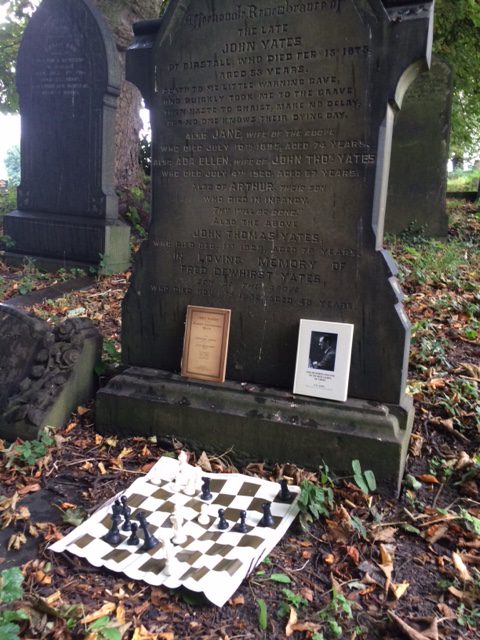
The gravestone of FD Yates, courtesy of Matthew Sadler
We feel quite sure that when our readers know, they will like to show their last recognition of the value which F.D.Yates was to English chess by giving a donation towards the sum.
The London Chess League, whose finances are not in a very satisfactory state, as in the case of most chess concerns, has agreed to donate £3 towards this. Their president has given £1 1s 0d., and one or two other members have promised donations. We shall be happy to receive any contributions towards this fund, and will give acknowledgment in future issues.”
From The Oxford Companion to Chess (OUP, 1984) by Hooper and Whyld :
“English player. British Champion 1913,1914,1921,1926,1928, and 1931, Around 1909 he gave up his profession in accountancy to become a chess professional. Of the many international tournaments in which he competed from Hamburg 1910 to Hastings 1931—2 he made his best results in the B Final, Kecskemet 1927, first (+4=2-1) equal with Tartakower, and at San Remo 1930, the strongest tournament of the year, when he came fifth after Alekhine,, Nimzowitsch, Rubinstein, and Bogoljubow ahead of Spielmann,
Vidmar, and Tartakower.
A tenacious player, he could be a dangerous opponent. In tournament play he defeated most of the greatest masters of his time on one occasion or another, and among these victories were two defeats of Alekhine (Hastings 1922, Carlsbad 1923), and three defeats of Bogoljubow (London 1922, Baden-Baden 1925, Scarborough 1927) and Rubinstein (London 1925, Moscow 1925, Budapest 1926), A careful and conscientious writer, he conducted a chess column in the Yorkshire Post, was chess correspondent of the Manchester Guardian , and wrote three books (see foot of article) in collaboration with William Winter (1898-1955).
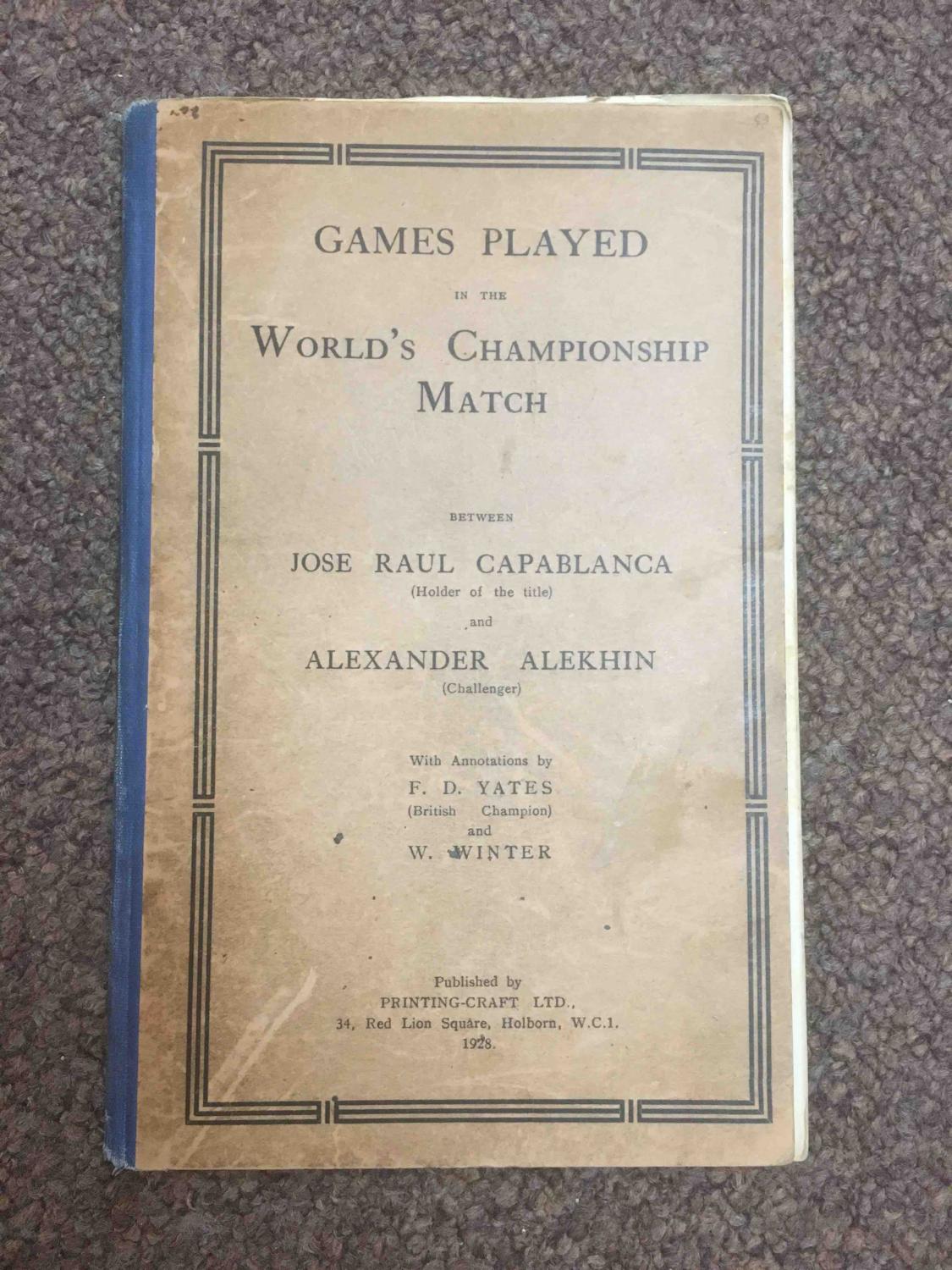
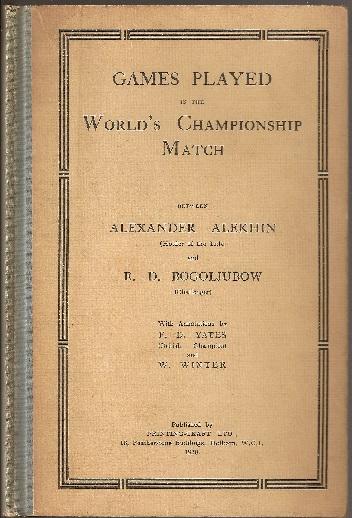
Games Played In the World’s Championship Match between Jose Paul Capablanca and Alexander Alekhine, FD Yates and W, Winter, 1928, Printing Craft LimitedGames Played in the World’s Championship Match between Alexander Alekhine (Holder of the Title) and E D Bogoljubow (Challenger), Printing Craft Limited, 1930, FD Yates and W. Winter
A leak from a faulty gas pipe connection killed Yates while he was asleep. His book One-hundred- and-one of My Best Games of Chess was published in 1934.”
From The Encyclopedia of Chess (Robert Hale, 1970 & 1976)by Anne Sunnucks :
“International Master and British Champion in 1913, 1914, 1921, 1926, 1928 and 1931.
Born in Birstall, near Leeds in Yorkshire, on 16th January 1884, Yates was 25 before he played in the British Championship for the first time. In 1909, having won the Yorkshire Championship, his entry was accepted for the British Championship at Scarborough, and he tied with Blackburne for 4th prize. The following year he again tied with Blackburne, this time for 2nd prize, and in 1911 he tied with Atkins for 1st prize but lost the play-off for the title. In 1913, he succeed in winning the British Championship for the first time.. During his career he competed in the British Championship 16 times and won the title on six occasions.
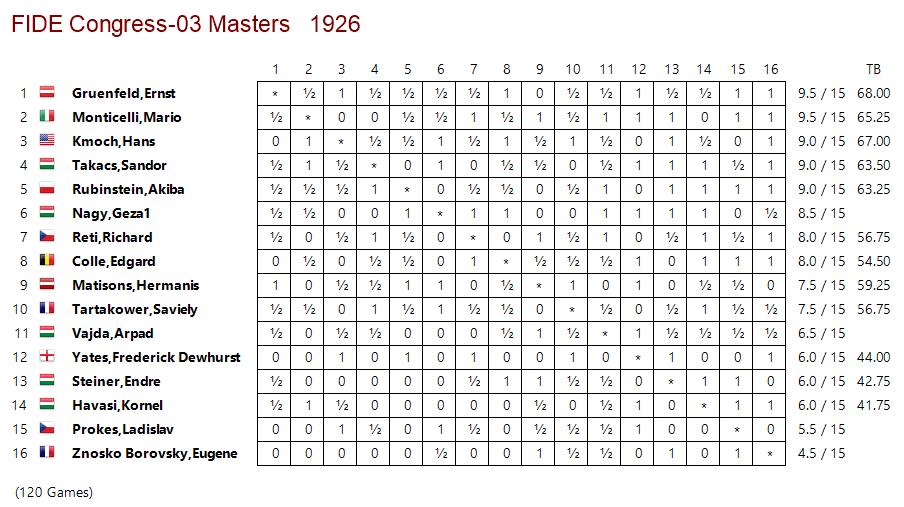
In International tournaments his record did not do him justice as far as his final placings were concerned. However, in studying his performance in detail, his wins were often against the strongest players and his losses against those at the bottom of the tables. This was particularly apparent in the results of the 1926 Budapest tournament.
Cross Table for Budapest 1926
During the course of his career, Yates beat practically every contemporary Grandmaster, with the exception of Lasker and Capablanca. His victory over Alekhine at Carlsbad 1923 came at the end of a combination 18 moves deep and won the brilliancy prize, while his victory over Vidmar at San Remo in 1930 was described by Alekhine as the finest game played since the war.
Other outstanding wins were against Bogoljubow at London 1922, against Rubinstein at Budapest 1926, against Tartakover at Hastings 1927, against Euwe at Scarborough 1928 and against Nimzowitsch at Scarborough 1929. The stronger the opposition the better Yates played.
His losses against weaker players may well have been due to ill-health and lack of necessary stamina to play consistently throughout a long tournament. He was continually troubled by a hacking cough and could not afford to carry out the medical advice that he should go to the Riviera for a cure.
He was a professional chess player at a time when it was difficult to make a livelihood out of chess and he was often handicapped by having to report an event in which he was playing. A number of his contemporaries believed that, had he lived in different circumstances his talent would have placed him among the contenders for the World Championship.
For some years Yates ran the chess column for The Manchester Guardian. He was co-author with Winter of Modern Master Play and of books on the Capablanca vs Alekhine and Alekhine v. Bogoljubov World Championship matches.
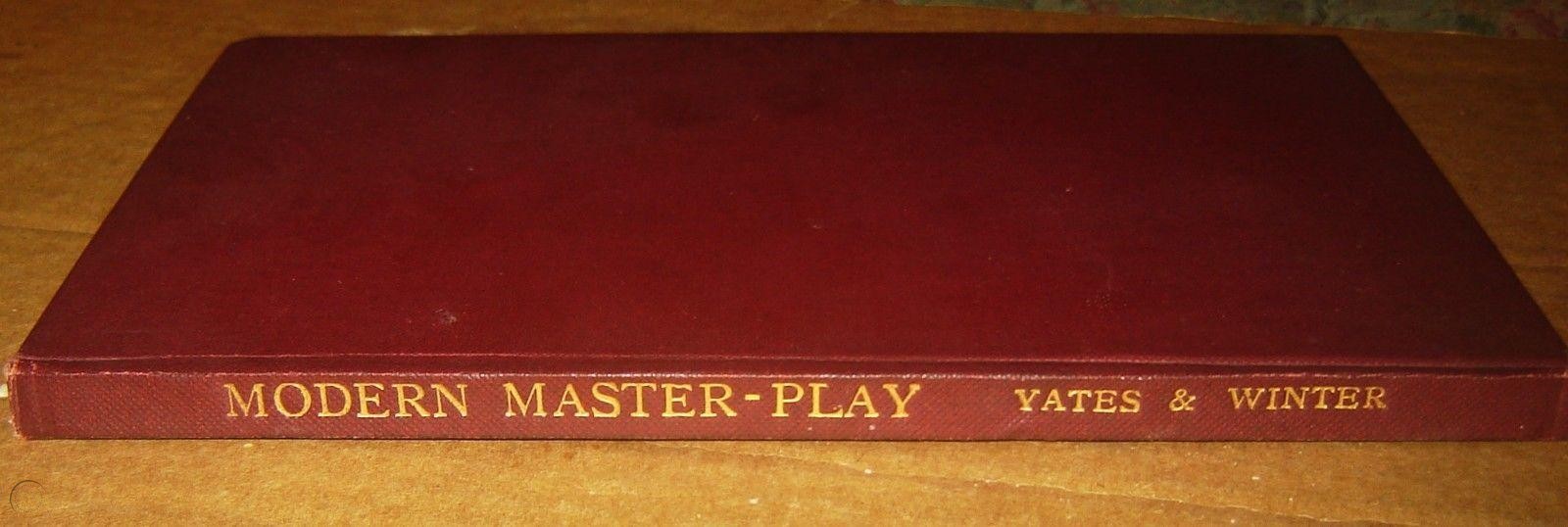
Modern Master Play, FD Yates and W. Winter, 1930
Yates had a great number of interests apart from chess and had a very versatile mind which enabled him to talk on a wide range of subjects. He was extremely modest and rarely kept the scores of his games and never submitted them to the press.
He died in tragic circumstances, On 11th November 1932, he was found dead in his bedroom from gas poisoning. At the inquest it was established that there was a faulty connection in the gas meter in his room and a verdict of accidental death was returned.”
From The Encyclopedia of Chess (Batsford, 1977) by Harry Golombek:
“A British master. Yates trained as an accountant but in 1909 abandoned this career in favour of chess and journalism. In 1911 he tied for first prize with Atkins in the British Championship losing the play-off match. Two years later he won the event – the first of six such victories (1913, 1914, 1921, 1926, 1928 and 1931).
In international tournaments Yate’s results were generally mediocre, but he was capable on occasion of defeating the strongest opposition and his victims included Alekhine, Reti, Bogoljubow, Tartakower, Rubinstein, Euwe, Nimzowitsch and Vidmar. He was a regular competitor at the Hastings Christmas Congresses, winning in 1920/1 and finishing in 3rd place on four occasions: 1923/4, 1924/5, 1926/7 and 1929/30.
Yates was for many years the chess correspondent of The Manchester Guardian and, in addition, wrote Modern Master Play, London, Philadelphia 1929 (with W. Winter as co-author) and books of the 1927 Capablanca-Alekhine, London 1928, and the 1929 Alekhine-Bogoljubow World Championship matches, London, 1930.
He died from being accidentally asphyxiated in his rooms by a faulty gas connection.”
In the March issue of CHESS for 1963, (Volume 28, Number 427, pp.147-155) William Winter wrote this:
The genius of F. D. Yates
I use the words ‘one of the most talented chess players’ advisedly. I have known personally all the world champions of my time, as well as most of the principal challengers, and I have no hesitation in saying that, at his best, he displayed a chess genius second to none. His victory over Vidmar at San Remo was described by Alekhine in 1931 as the finest game played since the war, and his win against Alekhine himself at Carlsbad is in the same category. The final combination here is eighteen moves deep. There are other games nearly as good and I am quite sure that had Yates been born a Soviet player, encouraged to develop his natural genius along proper lines, he would have been a close challenger for the world title ! Even I never knew the number of great games Yates had played until I came to write his Memorial Book. He was one of those modest souls who never kept the scores of his games and never submitted them to the press, so the only way I could get hold of many true masterpieces was to delve them out of continental magazines and tournament books.
One of the noticeable things about his play was that it took the best opposition to get the best out of him. While the tournament scores of most players are built up on points below them in the list, with Yates the reverse was often the case. I remember in particular one tournament at Budapest in 1926 when his score was made up almost entirely of wins against those above him. Rubinstein, Reti, and Tartakover were among his victims on that occasion and, at one time or another, he secured the scalp of every contemporary grand master. excepting Lasker and Capablanca. He. always played particularly well against Alekhine who once told me he was always relieved when his game with Yates was over. I was not surprised. Alekhine actually lost twice and in several others had hairbreadth escapes.
One of the principal reasons for Yates’ inconsistency was the fact that he was continually troubled by a hacking cough aggravated during the winter by the long cold journeys he had to take in the course of the exhibition tours which formed his means of livelihood. He was medically advised that a winter spent on the Riviera would probably effect a cure, but of course Yates was only an English chess genius and he could not afford it. “Couldn’t afford it.” Of how many hopes and human aspirations have these words sounded the death knell. There is scarcely one of us who, at some period of his or her life has. not found a cherished ambition frustrated by them. That is why I always laugh when I see the way of life in capitalist countries described as free. Until economic obstacles to human aspirations are removed, the words, couldn’t afford it’ deleted from the language, and man permitted to develop his natural attainments without let or hindrance, it is farcical to talk about freedom. Compared with this it is surely of little importance that we have the right to choose which press Lord we allow to poison our minds, or to put a cross opposite the name of Tweedledum or Tweedledee on a ballot paper.
Chill penury
Yates certainly is a striking example of one who was precluded from real greatness by economic sanctions. None the less he left a fine reputation behind him. He won the British Championship on six occasions and on the international field won a number of high. prizes. Lasker rightly described him as Blackburne’s legitimate successor. Of Yates the man I have already given my opinion and there is no need to say any more of his high principles or his hatred of cruelty or meanness in any form, but I cannot leave the subject without drawing attention to the extraordinary versatility of his mind. He seemed to have read something of every subject and assimilated what he had read so that he could talk entertainingly on them all.
Had crossword puzzles been fashionable in his days he would have been a first class solver. From 1926 to his death in 1932 he and I lived on the terms of the closest intimacy and I learned much from him, particularly in the line of chess literature and journalism. I have already spoken of our work for the Manchester Guardian. We also wrote three books together, the Alekhine-Capablanca and the Alekhine-Bogolyubov match books, and a more ambitious work, Modern Master Play, in which we presented profiles of the leading players of the day with annotated examples of their best games. What impressed me most about this work was the meticulous care with which he used the English language. As a writer I had always been satisfied as long as I could find words to express my ideas, but Yates wanted far more than that and I was sometimes slightly irritated by the time he took to formulate a single sentence. I never knew him spend a whole morning putting in a comma and an afternoon taking it out again, but I can quite imagine him doing it. Such literary style as I do possess owes a great deal to him.
Shock of his death
During the six years we were associated he was more like an older brother than a friend and it took me a very long time to recover from the shock when, in the Gambit Café, I heard the terrible news that he had been found dead in his bedroom from the effects of gas poisoning. I had seen him two nights before when we made plans for a new book on the lines of Modern Master Play, dealing with the younger masters of the day.
An exhaustive enquiry was held by one of the most experienced coroners in London and it was conclusively proved that death was due to a faulty gas fitting. Wynne-Williams, Yates’s pupil whom he had been teaching on the very night of his death, gave evidence of his cheerful demeanour, and the Coroner went out of his way to state categorically that this was a case of a tragic accidental death. In spite of all this some of the vile calumniators I have mentioned before, who are always seeking for slime to throw at their betters, sank so low as to suggest that Yates committed suicide. I have even heard the report quite recently. No fouler lie could possibly be invented to smirch the memory of a courageous and noble man.
“Yates almost won the British Championship in 1911, when he tied for first place with Henry Atkins, but lost the play-off. He went on to secure the title in 1913, 1914, 1921, 1926, 1928 and 1931
Despite considerable domestic success, his record in international tournaments did not do him justice. Often the winner against his strongest opponents, he would then lose to those at the bottom of the table. This was particularly apparent at the Budapest tourney of 1926.
His lack of consistency was attributed to poor health and loss of stamina. A constant hacking cough went unchecked, as his funds did not stretch to a holiday in warmer climes; the advice given by his doctor. He was also subjected to journalistic pressures, frequently reporting on the tournaments in which he was playing. Yet, dedicating himself to the playing side of chess would have earned him insufficient sums to make a living. A number of his contemporaries believed that his talent could have placed him among the world championship contenders, had his circumstances been different. Nevertheless, in his time, he defeated most of his illustrious adversaries, the most notable exceptions being Emanuel Lasker and José Raúl Capablanca. His victory against Alexander Alekhine at Karlsbad in 1923 won the brilliancy prize, while his win against Milan Vidmar at San Remo in 1930 was described by Alekhine as the finest game played since the war.”
As a journalist he was the chess columnist of The Manchester Guardian and with William Winter, the co-author of Modern Master Play (1929). He wrote accounts of two world championship encounters; those between Capablanca and Alekhine, and Alekhine and Bogoljubow.
In team competition, he played at the first, third and fourth Olympiads, representing the ‘British Empire’ team. On each occasion, he made a plus score and at London 1927, earned a team bronze medal/
His life ended prematurely, when a leaking gas pipe caused him to asphyxiate during his sleep.
According to the inscription on Yates’ gravestone,[7] his birth name was actually Fred Dewhirst Yates. However, throughout his chess career he was known by the name at the head of this article or simply as F.D. Yates, both of which featured in his posthumously published, part-biographical, ‘My Best Games’ Collection.
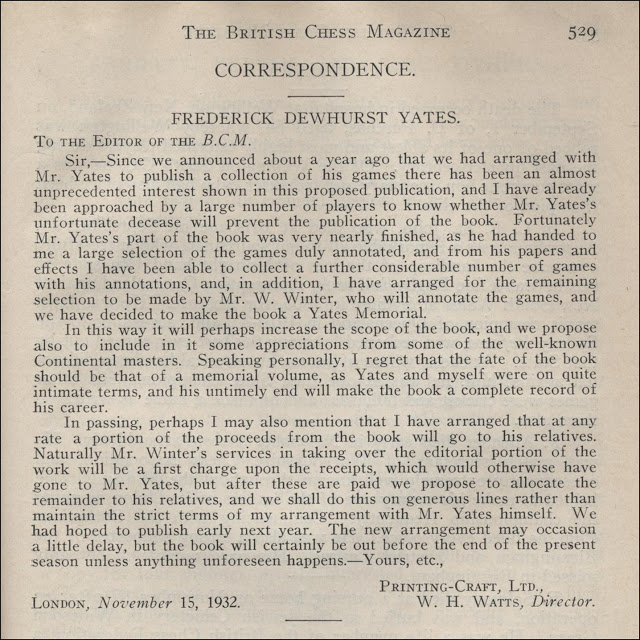
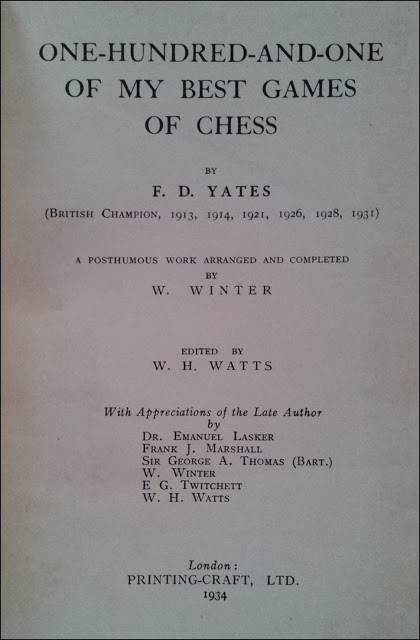
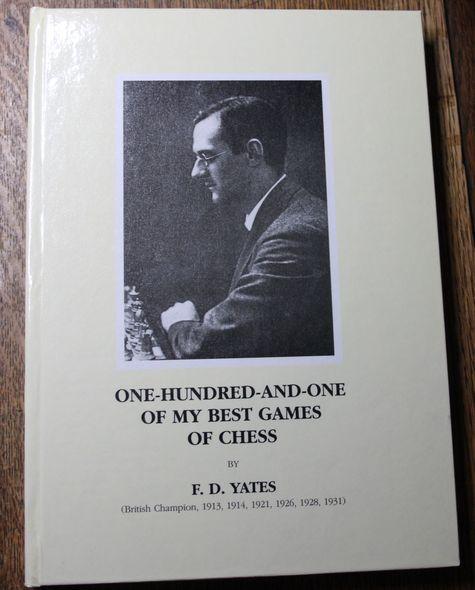
Letter to BCM from WH Watts of Printing Craft Limited announcing the publication of One-Hundred-and-one of my Best Games of Chess, by F. D. Yates, London 1934.One-Hundred-and-one of my Best Games of Chess, by F. D. Yates, London 1934.One Hundred and One of My Best Games of Chess, FD Yates
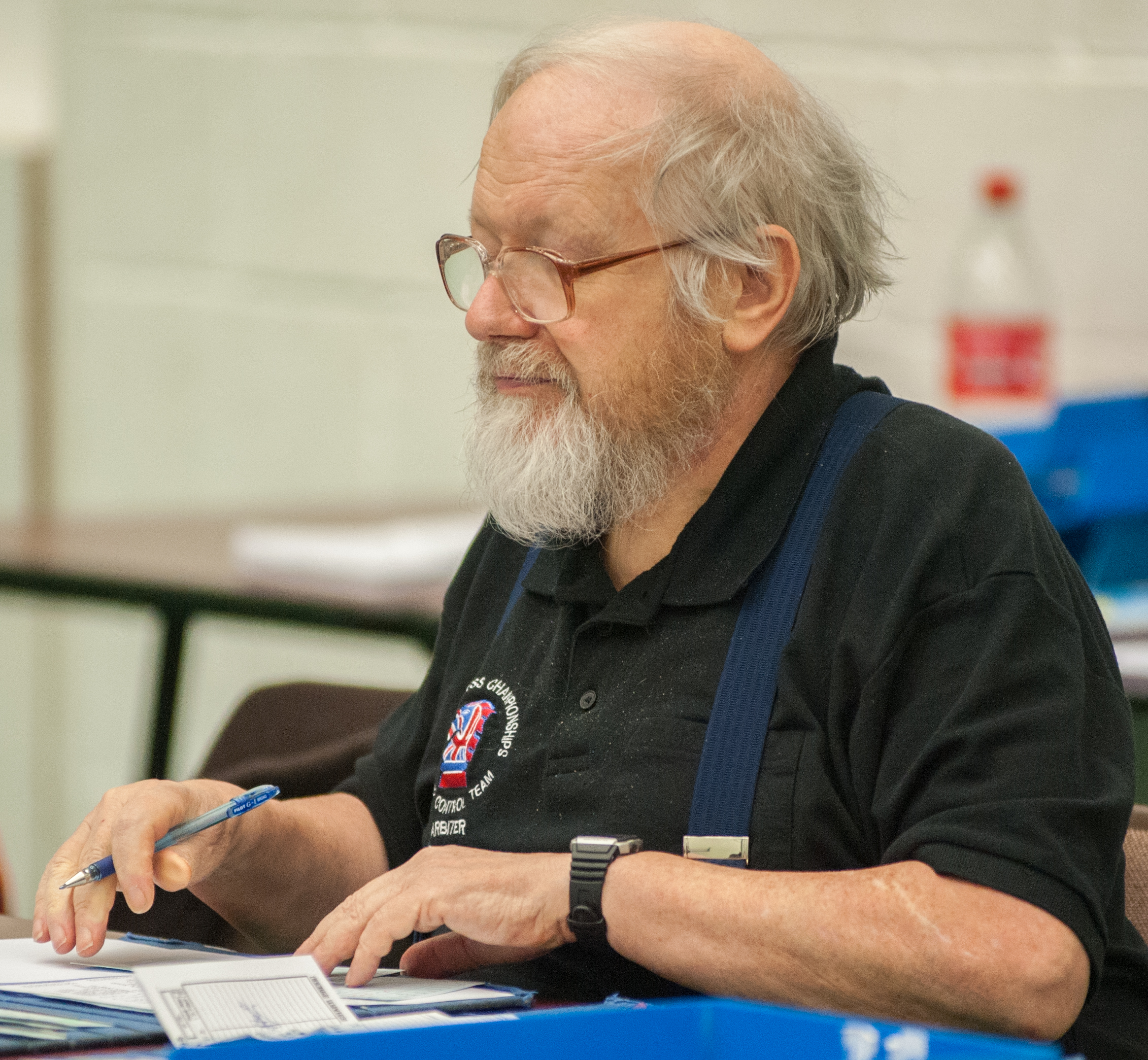
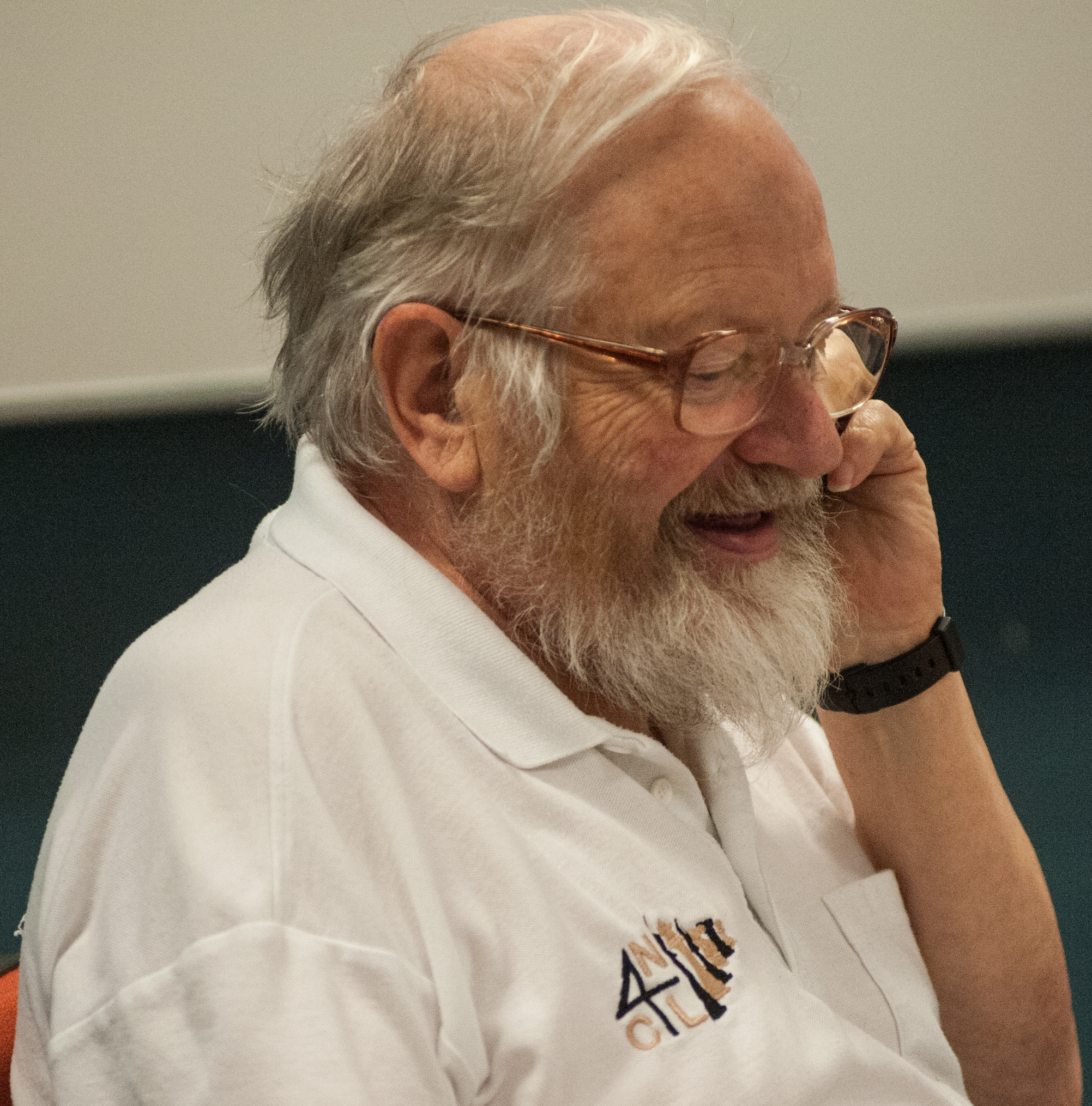
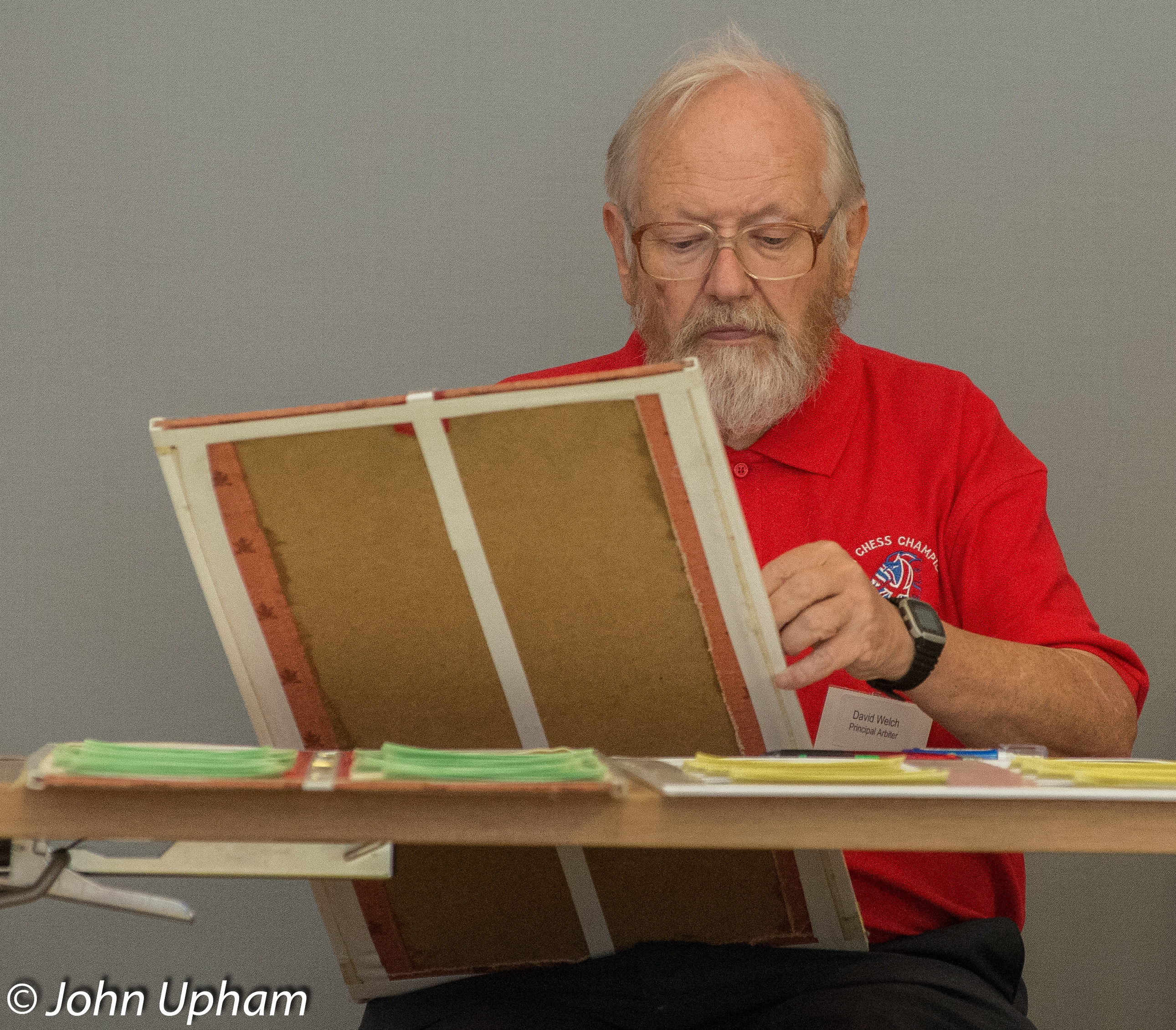
Just over two years ago today we learnt the sad news that popular longtime Arbiter and Organizer David Welch had passed away at the age of 74 after a long illness : he was being cared for in The Royal Liverpool Hospital. The funeral took place at Landican Crematorium, Arrowe Park CH49 5LW at 12 noon on Friday 6th December. Following the funeral, the wake took place at the Grove House Hotel, Grove Road, Wallasey CH44 4BT.
David was born on Tuesday, October 30th 1945 in Brampton, Chesterfield, Derbyshire and attended Chesterfield Grammar School (see below).
He played for Wallasey Chess Club for many years having initially been a member of Liverpool Chess Club.
David attended Queens’ College, Cambridge reading Natural Sciences (Chemistry) and (according to John Swain) David served Cambridge University Chess Club as Junior Treasurer, Librarian and Bulletin Editor.
In 1968 David and Peter Purland started teaching at the same Liverpool school (Liverpool College) on the same day and continued their friendship from there. David also ran the college scout troop.
In the same year David joined Liverpool Chess Club and became a leading light fairly early on.
David Welch (30-x-1945 09-xi-2019), photograph by John Upham at 2012 4NCL
David became a BCF arbiter in the early 1970s eventually becoming the BCFs Chief Arbiter and then the ECFs Chief Arbiter and was heavily involved in many British Championships around the country.
David was curator of ECF equipment for some time and personally funded much of the BCFs and ECFs early equipment stock.
He became a FIDE International Arbiter as early as 1977 and was awarded the FIDE International Organizer title in 2010.
In 2007 David received the ECF Presidents Award from Gerry Walsh. Here is the citation in full (from the 2008 ECF Yearbook) :
“David Welch started chess organisation early being captain of the Chesterfield Grammar School team that played both in the school’s league and in the local adult league. He joined the Liverpool Chess Club after leaving University in 1968 and has held various posts with them , he is now their President. He set-up the Liverpool Chess Congress in about 1978.
Additionally, he was the director of the Liverpool Chess Congress. Although now defunct this was in its day the largest junior event in the UK (perhaps even the world) having 2000 entrants at the time of Spassky-Fisher (sic). He has also been involved in the Liverpool city of culture initiative.
He had also had a considerable involvement with the ECF. He is the the Merseyside representative to the ECF. He has been helping run the British Championships since 1981; starting at one of the arbiting team he has been Director/Manager of the congress since 2005. He has been Chief Arbiter of the Federation since about 1992. He also does the arbiting at a number of congresses and is, in particular, the Chief Arbiter of the 4NCL.”
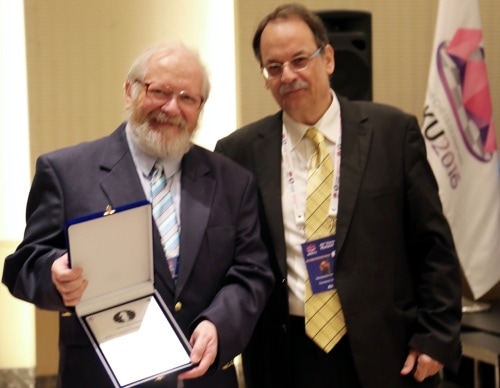
David Welch receives FIDE Arbiter Award
David shared the exact same date of birth as long time friend and fellow arbiter, Peter Purland.
in 2016 David received recognition from FIDE for his long service as an International Arbiter. David was the third English arbiter to receive the honour, following Stewart Reuben and Gerry Walsh in 2014.
We send our condolences to all of his many family and friends.
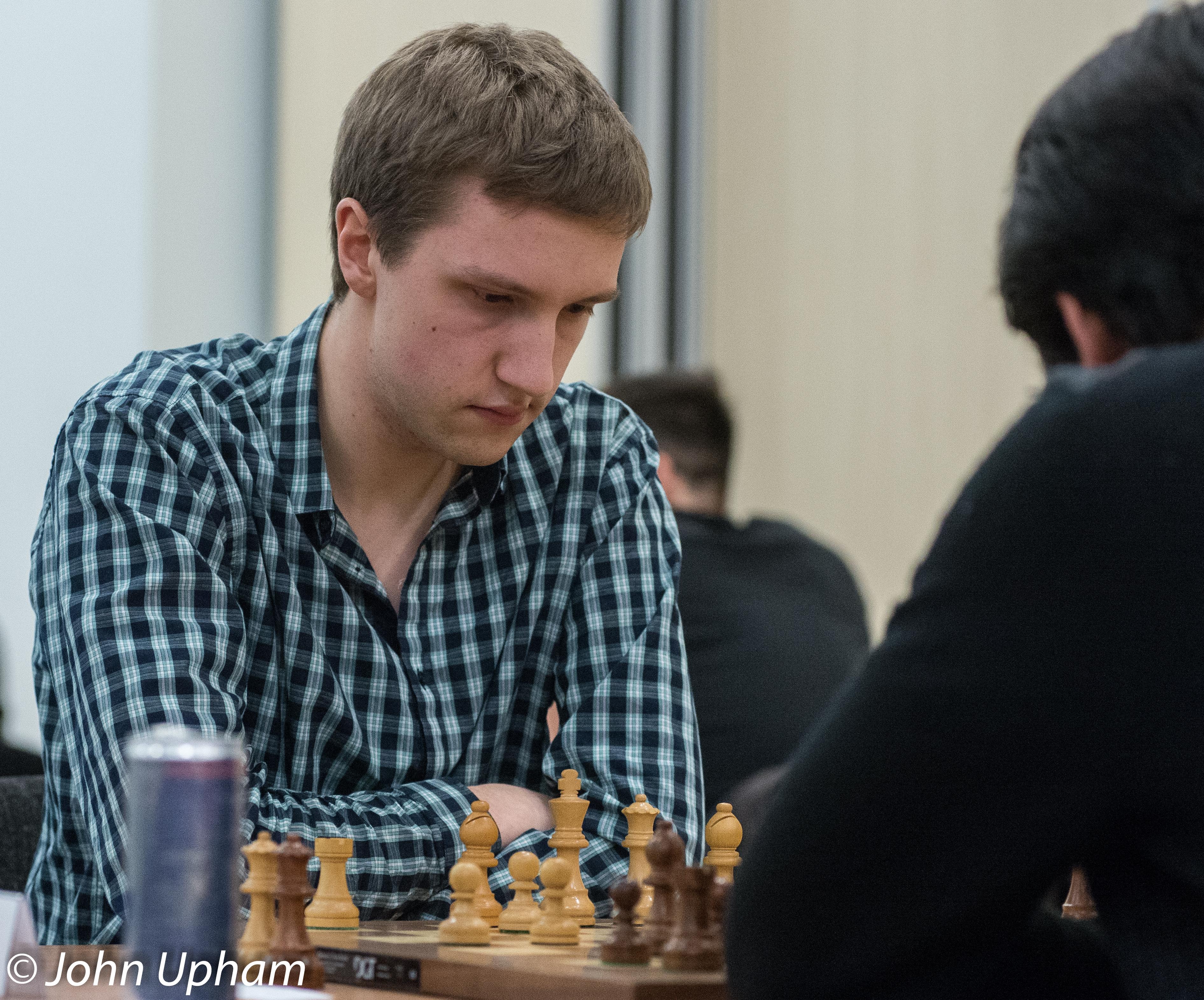
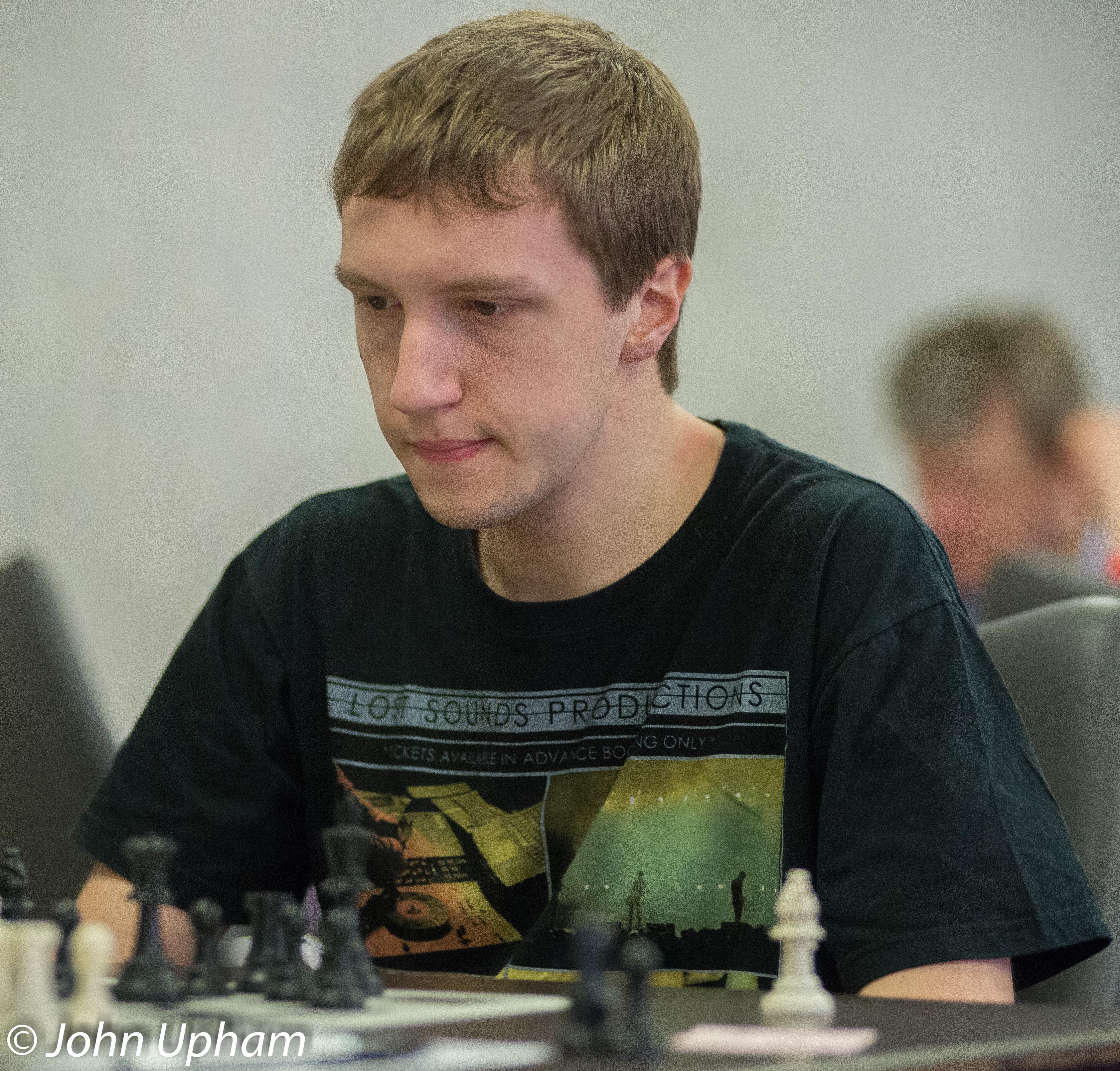
IM James Adair playing GM Hikaru Nakamura at the London Chess Classic 2014
BCN wishes Happy birthday to IM James Adair.
James Robert Adair was born on Monday, November 9th in 1992 in Reading, Berkshire.
James attended Little Heath School, Tilehurst, Reading and joined Reading Chess Club and was an active player in the Berkshire League and in the Surrey Border League. His father Andrew took up chess to support James as a junior.
He then read Mathematics at The University of York and now is employed by Aviva plc (formerly Norwich Union Assurance) in the field of insurance.
James became a FIDE Master in 2012 and gained his International Master title in August 2014.
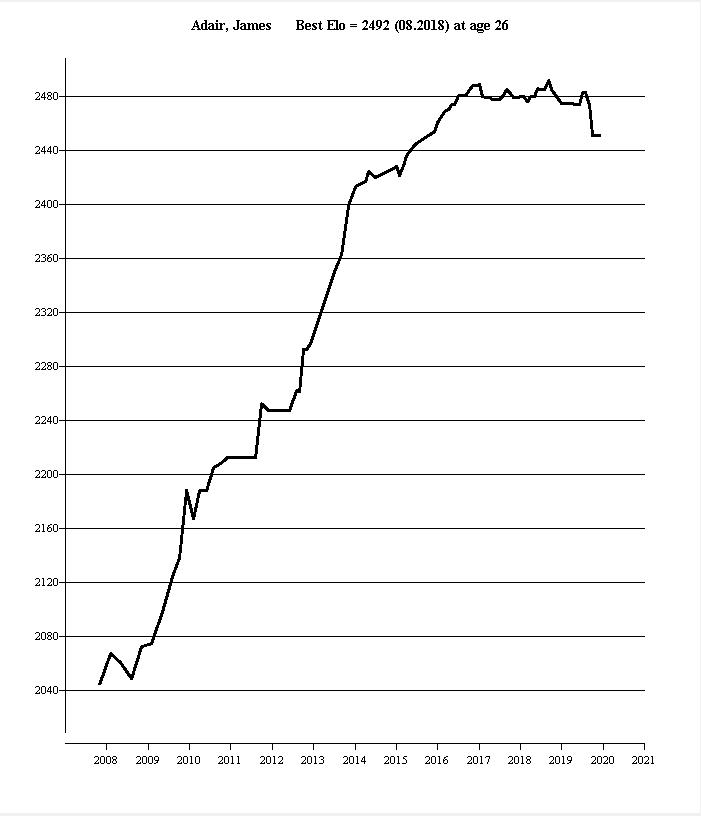
According to Felice his best FIDE rating was 2489 in December 2016. According to MegaBase 2020 it was 2492 in August 2018 at the age of 26.
James started his 4NCL career in the 2006/7 season with Conquistadors and then transferred to Guildford not long after. By 2010/11 James was playing for the bar loving Sambuca Sharks team. In 2011 James transferred to 4NCL White Rose as he had just started University in Yorkshire. He was also playing for York RI.
In 2009 he shared equal 1st (4.5/5) with Alexei Slavin in the Uxbridge Open, a sadly missed e2-e4 event. Since then James has had various tournament successes.
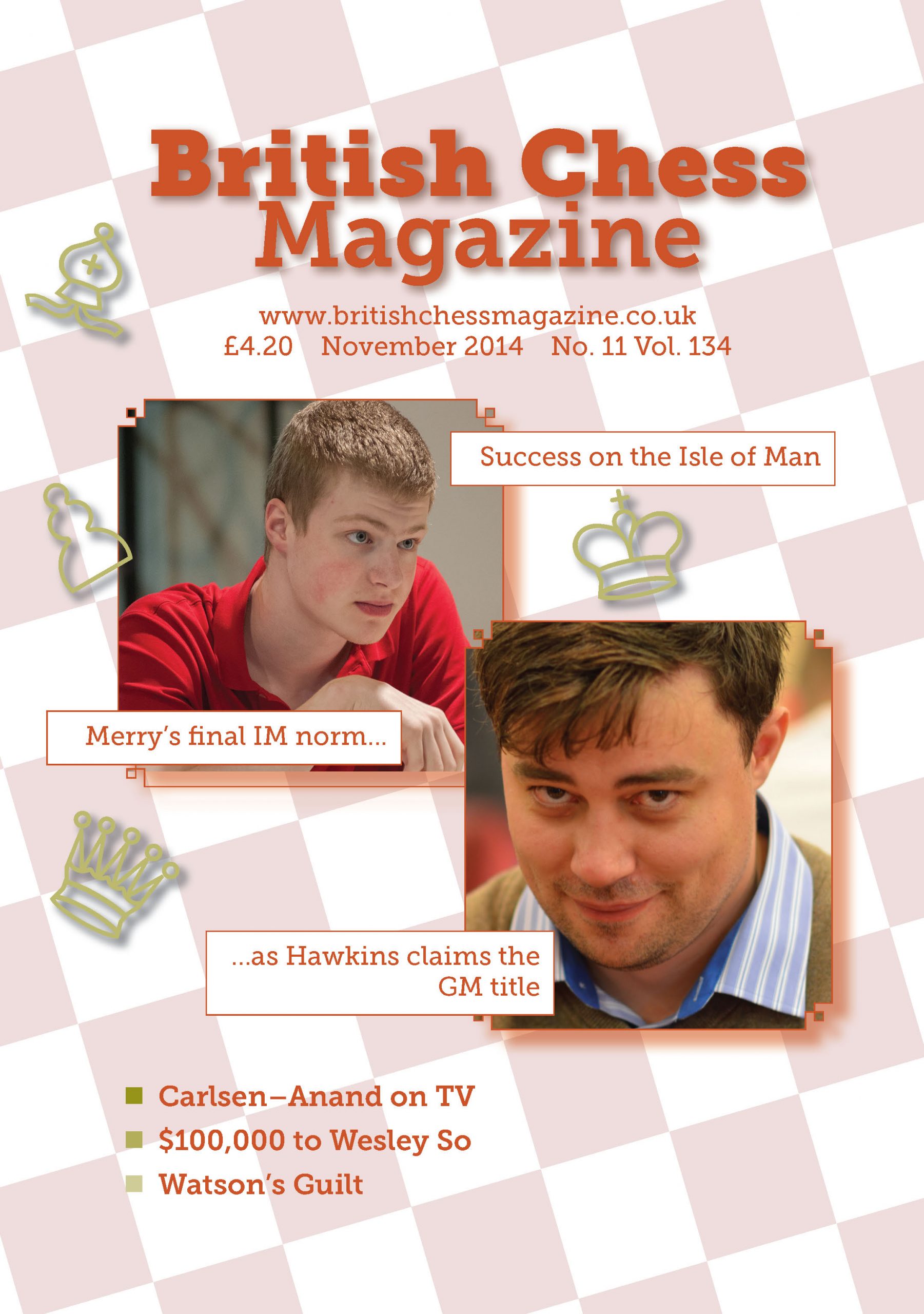
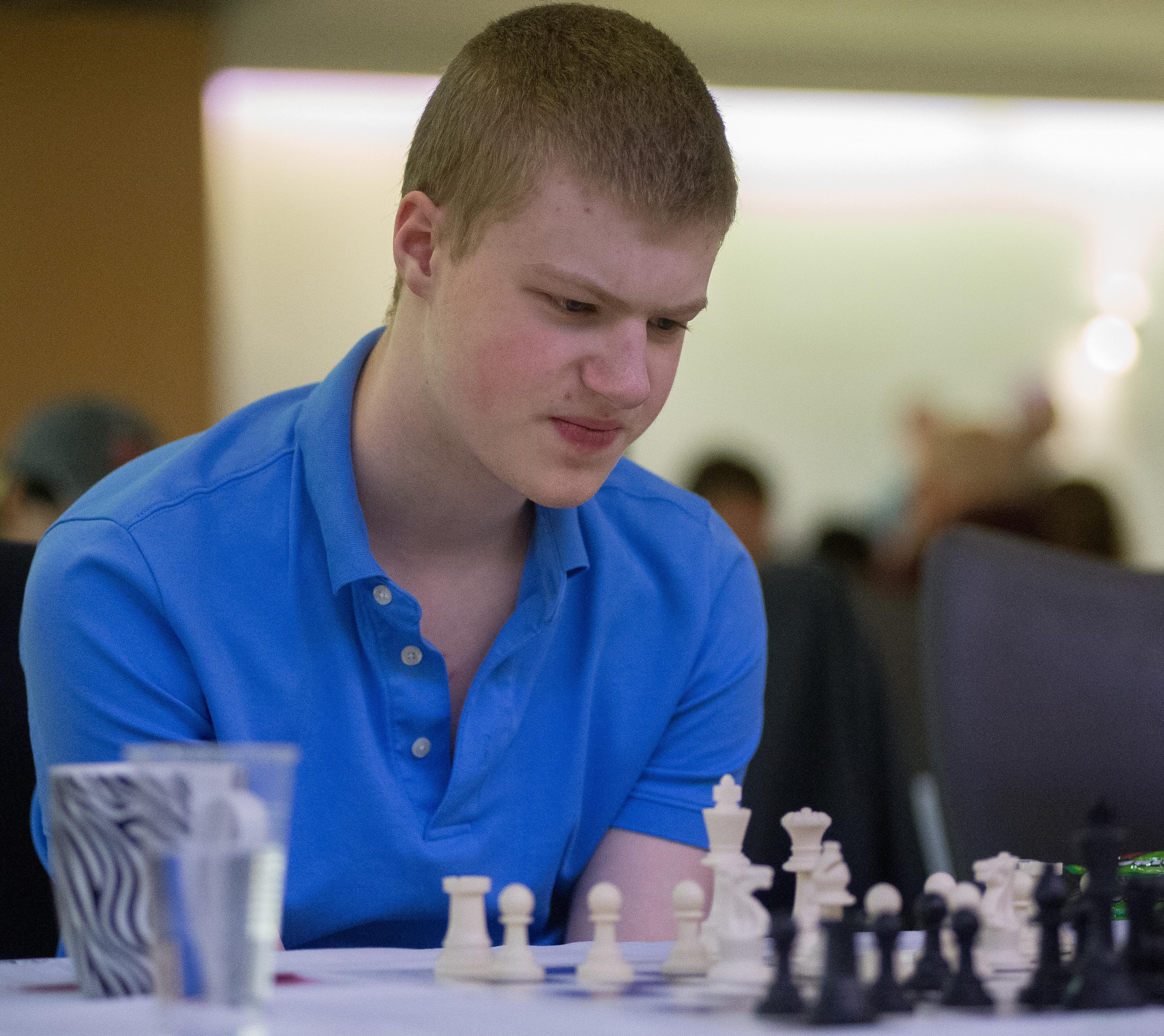
Alan Baxter Merry was born on Friday, November 8th, 1996 in Bury St. Edmunds, Suffolk. His mother’s maiden name is Guymer. Alan has a younger brother James Clayton Merry (born 1999). James is also registered with Suffolk CCA but has never had a published grading or rating.
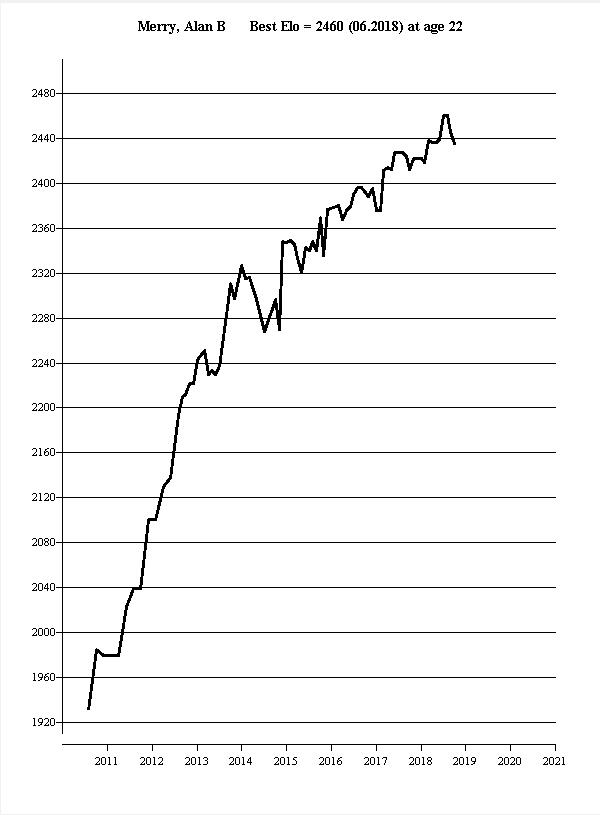
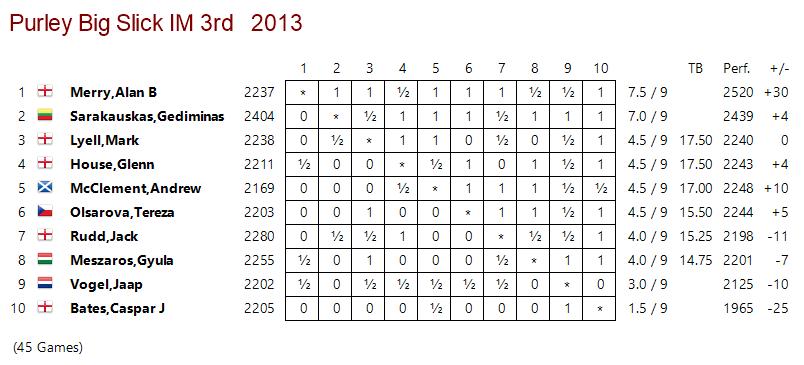
FIDE rating profile for IM Alan MerryCrosstable for Purley Big Slick International, 2013
He became a FIDE Master in 2013 and an International Master in 2016. His peak rating according to Felice was 2396 in July 2016. However this has been surpassed and according to MegaBase 2020 it is 2460 in June 2018 at the age of 22.
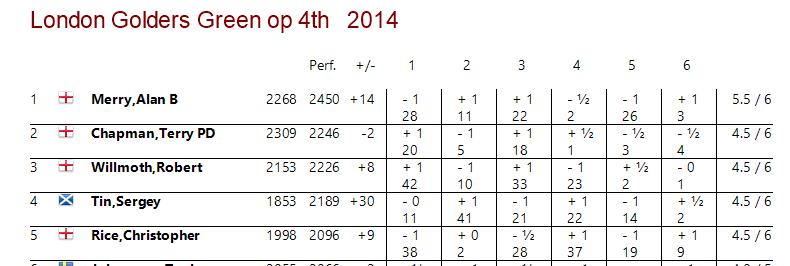
Alan won the 2014 Golders Green Open with a convincing 5.5/6 :
Part crosstable for 2014 Golders Green Open
and has won further events since including the Kingsley Healthcare Great Yarmouth Congress in 2018.
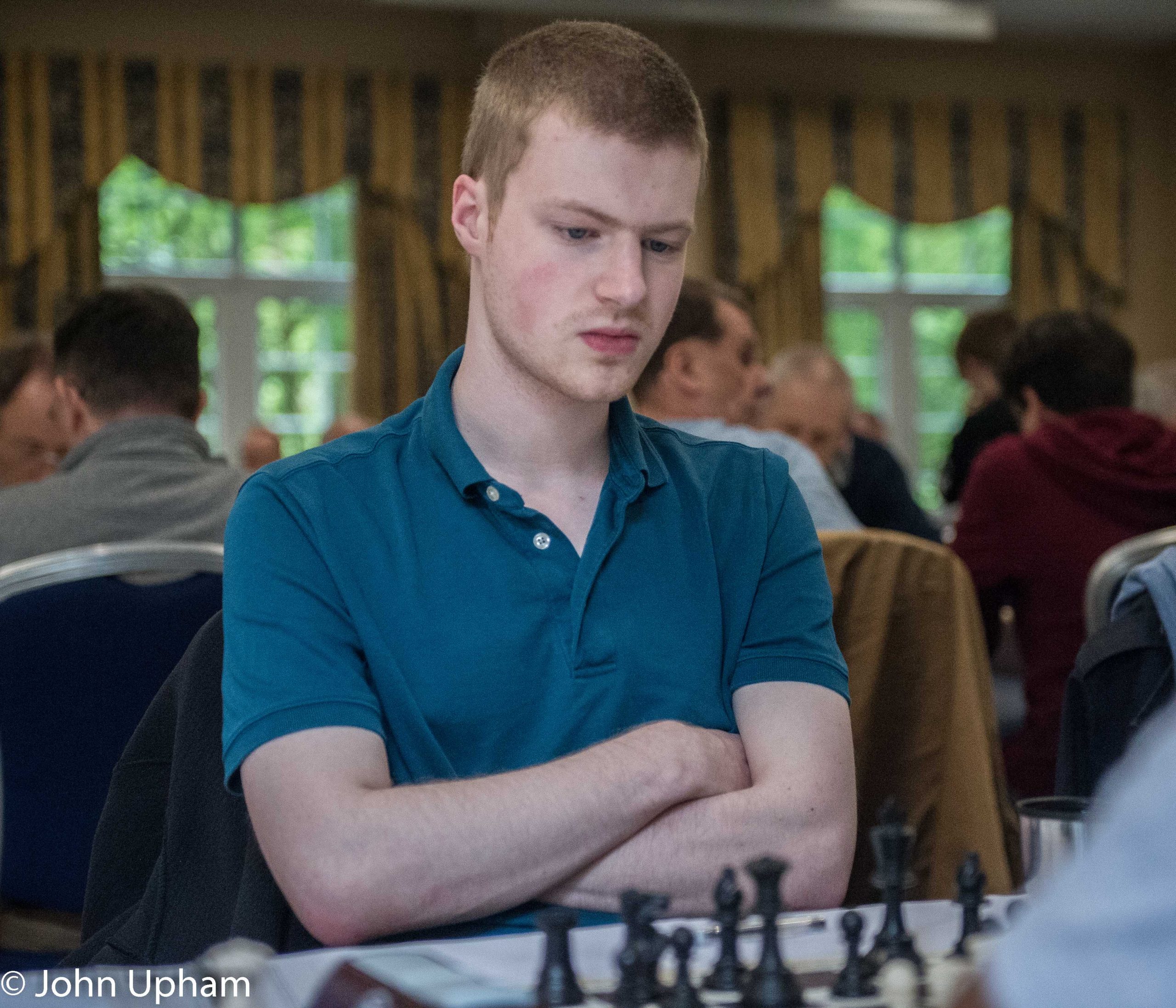
IM Alan Merry at the 2019 Basingstoke 4NCL Congress
Alan plays for Suffolk County Chess Association and in 4NCL started with Anglian Avengers, then the ADs and finally moving to Barbican in the 2015/16 season. His current ECF grading is 237A for standard-play and 236A for rapid-play. His FIDE standard play rating is 2427.
We remember Jacob Henry Sarratt who died 202 years ago today (November 6th) in 1819.
Chess historians will, of course, be familiar with JHS but the name is (probably) not well known outside these exalted circles.
Possibly his most obvious contribution to chess in England was in 1807 when he influenced the result of games that ended in stalemate. You may not know that in England prior to 1807 a game that ended in stalemate was recorded as a win for the party who was stalemated. JHS was able to encourage various major chess clubs so that the result be recorded as a draw. Much endgame theory would be different if it wasn’t for JHS !
“Jacob Henry Sarratt, born in 1772, worked primarily as schoolmaster but was much better known for his advocations which, of course, included chess.
After Philidor’s death, Verdoni (along with Leger, Carlier and Bernard – all four who co-authored Traité Théorique et Pratique du jeu des Echecs par une Societé d’ Amateurs) was considered one of the strongest players in the world, especially in England. Verdoni had taken Philidor’s place as house professional at Parsloe’s. He mentored Jacob Sarratt until he died in 1804. That year Sarratt became the house professional at the Salopian at Charing Cross in London and most of his contemporaries considered him London’s strongest player.
There he claimed the title of Professor of Chess while teaching chess at the price of a guinea per game.
By any measure Surratt was not a particularly strong player, but he was able to maintain the illusion that he was by avoiding the stronger players as he lorded over his students who didn’t know better.
Sarratt’s most important contribution to chess was that he mentored William Lewis who in turn mentored Alexander McDonnell.
Surratt had a strange notion that chess culminated in the 16th century and that everything since then had been a step backwards. This odd notion had a positive side. Philidor was the darling of the English chess scene. Almost all books at that time were versions of, or at least based on, Philidor’s book. Surratt at least kept open the possibility that there were ideas beyond those of Philidor.
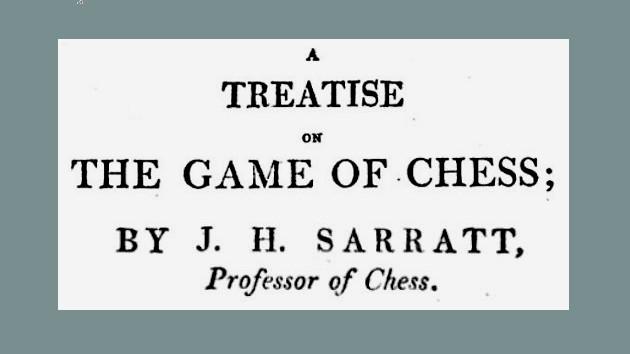
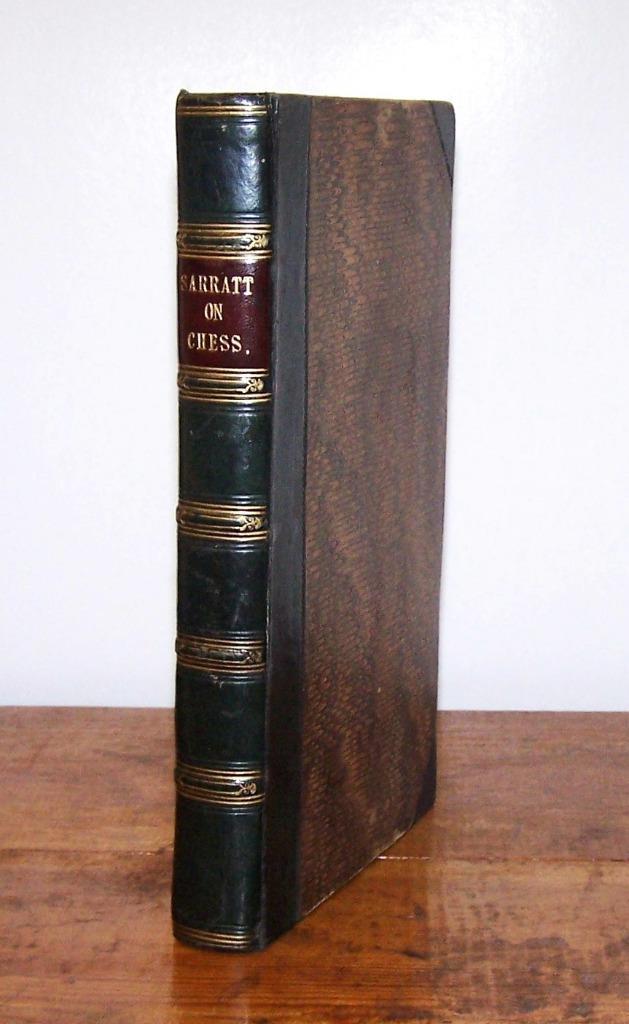
In 1808, true to his role as a teacher, Surratt published his Treatise on the Game of Chess, a book that mainly concentrated on direct attacks on the king which he lifted from the Modense writers.
He translated several older writers whom he admired (though his translations are not considered particularly good): The Works of Damiano, Ruy Lopez and Salvio in 1813. The Works of Gianutio and Gustavus Selenus in 1817.
In 1921 a posthumous edition of his Treatise, A New Treatise on the Game of Chess, was published. This copy covered the game of chess as a whole and was designed for the novice player. It also contained a 98 page analysis of the Muzio Gambit
In addition to his chess books, Surratt also published History of Man in 1802, A New Picture of London in 1803
He translated Three Monks!!! from French in 1803 and Koenigsmark the Robber from German in 1803.
His second wife, Elizabeth Camillia Dufour, was also a writer. In 1803 (before they were married, which was 1804), she published a novel called Aurora or the Mysterious Beauty.
They were married the following year. His first wife had died in 1802 at the age of 18. Both his wives were from Jersey.
Contrary to what one might expect, Sarratt has been described tall, lean and muscular and had even been a prize-fighter at one point. He had also bred dogs for fighting. He was regarded as a very affable fellow and very well-read but with limited taste (Ed : surely this applies to everyone ?)
William Hazlitt, in his essay On Coffee-House Politicians wrote:
[Dr. Whittle] was once sitting where Sarratt was playing a game at chess without seeing the board… Sarratt, who was a man of various accomplishments, afterwards bared his arm to convince us of his muscular strength…
Sarratt, the chess-player, was an extraordinary man. He had the same tenacious, epileptic faculty in other things that he had at chess, and could no more get any other ideas out of his mind than he could those of the figures on the board. He was a great reader, but had not the least taste. Indeed the violence of his memory tyrannised over and destroyed all power of selection. He could repeat [all] Ossian by heart, without knowing the best passage from the worst; and did not perceive he was tiring you to death by giving an account of the breed, education, and manners of fighting-dogs for hours together. The sense of reality quite superseded the distinction between the pleasurable and the painful. He was altogether a mechanical philosopher.”
Somewhere along the way there must have come about a complete reversal of his fortunes because Surratt died impoverished in 1819, leaving his wife destitute. But the resilient Elizabeth Sarratt was able to support herself by giving chess lessons to the aristocracy of Paris.
She must have been very well liked. In 1843 when she herself became old and unable to provide for herself, players from both England and France took up a fund to help her out. She lived until 1846.
From The Oxford Companion to Chess (OUP, 1984 & 1992) by Hooper & Whyld :
Reputedly the best player in England from around 1805 until his death. As a young man he met Philidor. Subsequently he developed his game by practice with a strong French player Hippolyte du Rourblanc (d. 1813), with whom he had a long friendship dating from 1798, and with Verdoni, Sarratt’s first important contribution to the game was in connection with the laws of chess: he persuaded the London club, founded in 1807, to accept that a game ending in stalemate should be regarded as a draw and not as a win for the player who is stalemated. He became a professional at the Salopian coffee house at Charing Cross, London,
Nos. 39-41, Charing Cross and the Timber Yard
and in 1808 wrote his Treatise on the Game of Chess.
Treatise on the Game of Chess by JH Sarratt, 1808
This, largely a compilation from the work of the Modenese masters, advocated that players should seek direct attack upon the enemy king, a style that dominated the game until the 1870s. An Oxford surgeon, W. Tuckwell, wrote that he learned chess ‘from the famous Sarratt, the great chess teacher, whose fee was as a guinea a lesson’. Lewis, who played many games with Sarratt from 1816, wrote in 1822 (after he had met both Deschapelles and Bourdonnais) that Sarratt was the most finished player he had ever met, Sarratt translated the works of several early writers on the game, making them known for the first time to English readers: The Works of Damiano, Ruy Lopez and Selenus (1813) and The Works of Gianutio and Gustavus Selenus (1817).
He died impoverished on 6 Nov. 1819 after a long illness during which he was unable lo earn a livelihood by teaching. Instead he wrote his New Treatise on the Game of Chess published posthumously in 1821, This is the first book to include a comprehensive beginner’s section: in more than 200 pages Sarratt teaches by means of question and answer. Another feature is a 98-page analysis of the Muzio gambit :
Had it been Sarratt’s ambition to become a chess professional there would have been scant opportunity during the lifetime of Philidor and Verdoni. A tall, lean, yet muscular man, sociable and talkative, he seems in his younger days to have had interests of a different kind, among them prize fighting and the breeding of fighting dogs. Hazlitt, who met Sarratt around 1812 wrote ‘He was a great reader, but had not the least taste. Indeed the violence of his memory tyrannised over and destroyed all power of selection. He could repeat Ossian by heart, without knowing the best passage from the worst.’
Sarratt’s early publications were History of Man (1802): translations of two Gothic novels, The Three Monks!!! (1803), from the French of Elisabeth Guénard (Baronne de Méré) , and Koenigsmark the Robber (1803), from the German of R. E. Raspe; A New Future of London (1803), an excellent guide that ran to several editions, the last in 1814, When war broke out with France in 1803 Sarratt became, for a short period, a lieutenant in the Royal York Mary-le-Bone Volunteers and published Life of Bonaparte * a propaganda booklet detailing Napoleon’s alleged war crimes, and warning of the desolation that would follow if he were to invade.
Not long after the birth of his second child in 1802 Sarratt’s wife died and in 1804 he married a Drury Lane singer, Elisabeth Camilla Du four. Tt would be difficult to find a more accomplished, a more amiable, or a happier couple than Mr and Mrs Sarratt’ – Mary Julia Young, Memoirs of Mrs Crouch (1806), Mrs Sarratt too was a writer contributing tales to various journals and publishing Aurora or the Mysterious Beauty (1803), a translation of a French novel. She survived her husband until 1846, ending her days giving chess lessons to the aristocracy in Paris. In 1843 Louis-Philippe and many players from England and France subscribed to a fund on her behalf. ”
From The Encyclopedia of Chess (Robert Hale, 1970 & 1976), Anne Sunnucks :
“Self-styled ‘Professor of Chess’, Sarratt was the first professional player to teach the game in England. He was the author of a A Treatise on the Game of Chess, The (1808), The Works of Damiano, Ruy Lopez and Salvio (1813), The Works of Gianutio and Gustavas Selenus (1817) and a New Treatise on the Game of Chess (1821).
There is no record of Sarratt’s date or place of birth, He began his career as a schoolmaster and later taught chess at Tom’s Coffee House, Cornhill, London, and at the London Chess Club, and was in his day considered to be the strongest player in London.”
From The Encyclopedia of Chess (Batsford, 1983), Harry Golombek OBE :
“Leading English player of the late eighteenth and early nineteenth century. Famed in his day as a teacher and author. Sarratt adopted the title of ‘Professor of Chess’, His writings include A Treatise on the Game of Chess, London 1808, The Works of Damiano, Ruy Lopez and Salvio (1813).
Sarratt is usually credited with introducing into England the Continental practise of counting a game ending in stalemate as a draw. (RDK)”
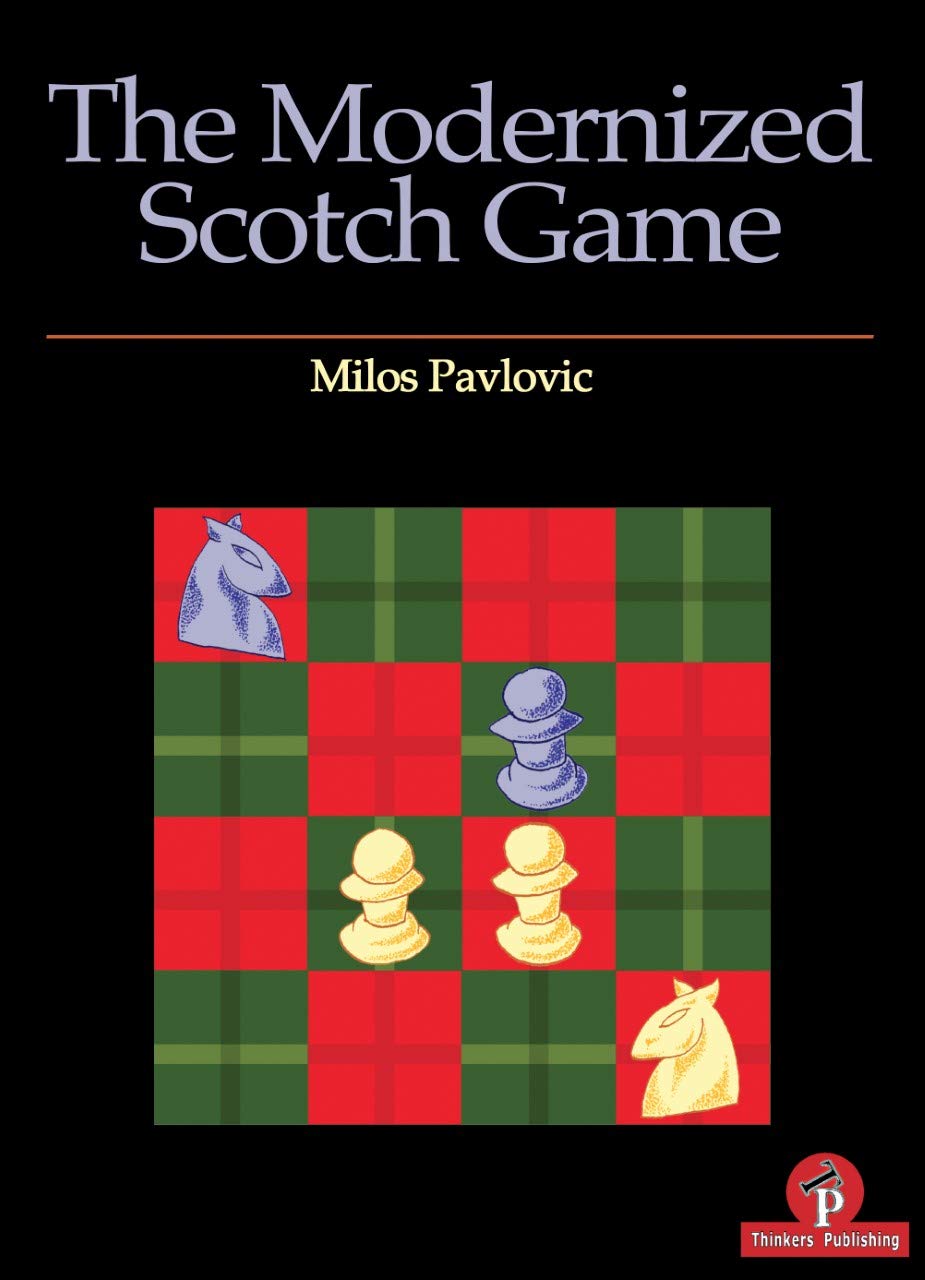
The Modernized Scotch Game : A Complete Repertoire for White and Black, Thinkers Publishing, December 2019, Milos Pavlovic
Grandmaster Milos Pavlovic was born in Belgrade in 1964 and was Yugoslav Champion in 2002. He is a well known theoretician specialising in opening theory and has written many chess books and magazine articles. Previously we have reviewed The Modernized Stonewall Defence and The Modernized Colle-Zukertort Attack by this author.
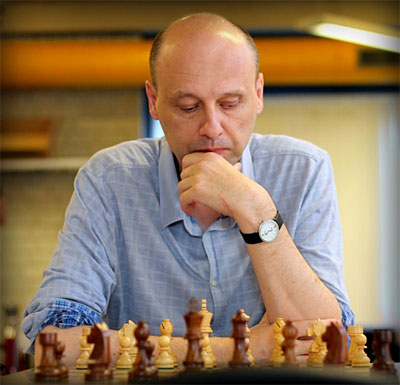
GM Milos Pavlovic
This is another title in the “Modernized” series from Thinkers Publishing with this Scotch Game book being published on December 17th 2019. We first reviewed a title in this series with The Modernized Caro-Kann from GM Daniel Fernandez and then followed by The Modernised Colle-Zukertort from Pavlovic.
As with every recent Thinkers Publishing publication high quality paper is used and the printing is clear. The book can easily be laid flat next to the board and does not require weights to prevent it from “self-closing” (a particular bugbear of ours !). Each diagram is clear and the instructional text is typeset in two column format, which, we find, enables the reader to maintain their place easily. Figurine algebraic notation is used throughout and the diagrams are placed adjacent to the relevant text and each diagram has a “to move” indicator.
Four and Half out of Five Stars
Andrew Martin, Bramley, Surrey, 5th November, 2020
Reenen duToit, Philip Gregory, Alan Hanreck, Tony Stebbings, Philip Morris, Conor Murphy
We wish IM Philip J Morris all the best on his birthday, this day (November 5th) in 1967.
Phil plays regularly for Beckenham & Charlton Chess Club in the London Chess League and has played for Invicta Knights Maidstone in the Four Nations League.
Gary became a FIDE Master in 1984 and an International Master in 1987 and won the Commonwealth Chess Championship in 1988. According to Felice and Megabase2020 his peak FIDE rating was 2464 in July 2001 aged 37.
IM Gary Lane
This was written about Gary aged 14 prior to the 1979 Spassky vs the BCF Junior Squad simultaneous display :
In 2004 won the Australian Championship and was voted Player of the Year. According to Sharpen Your Chess Tactics Gary is a well-known trainer, and has been involved in coaching some of England and Australia’s top junior players.
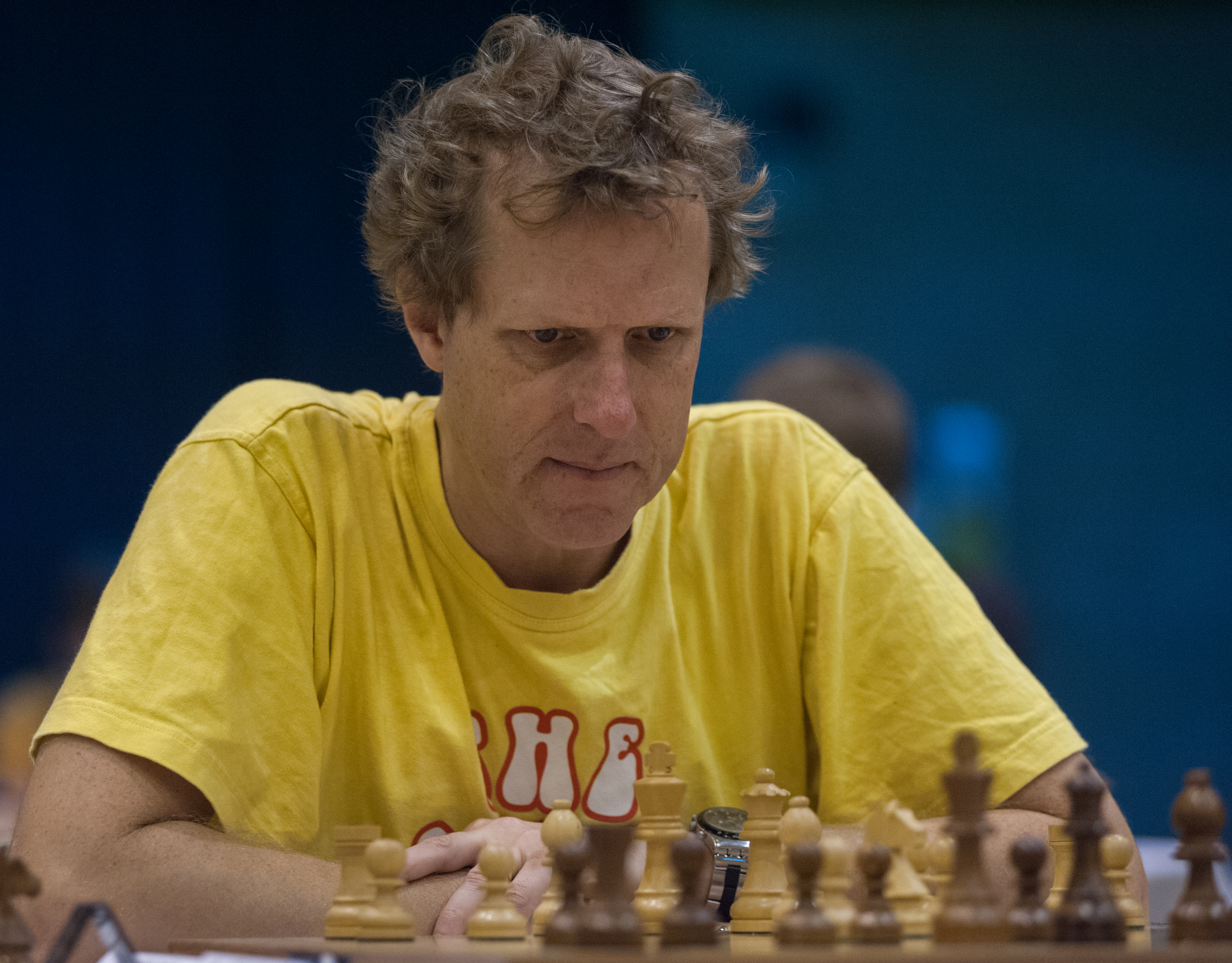
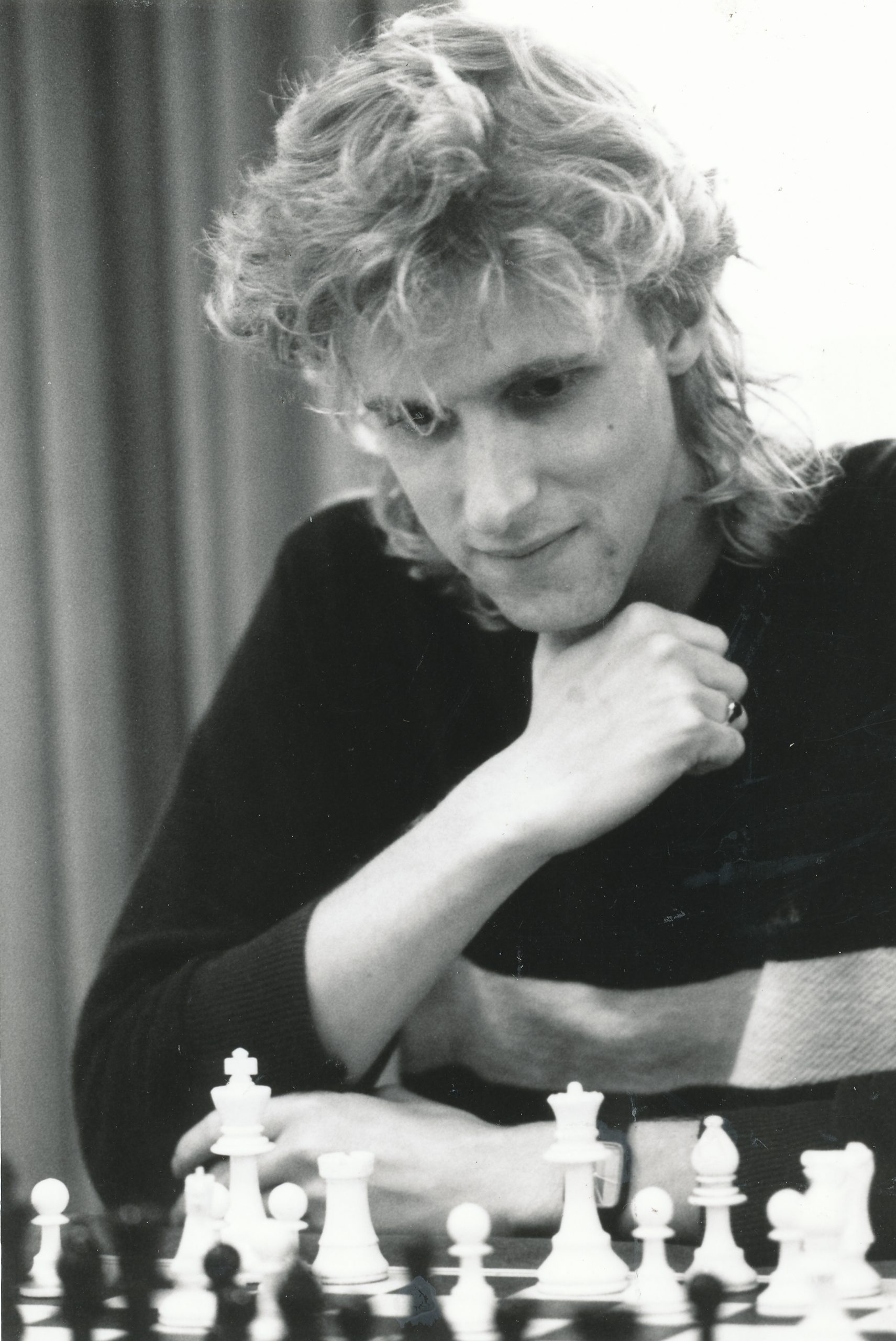
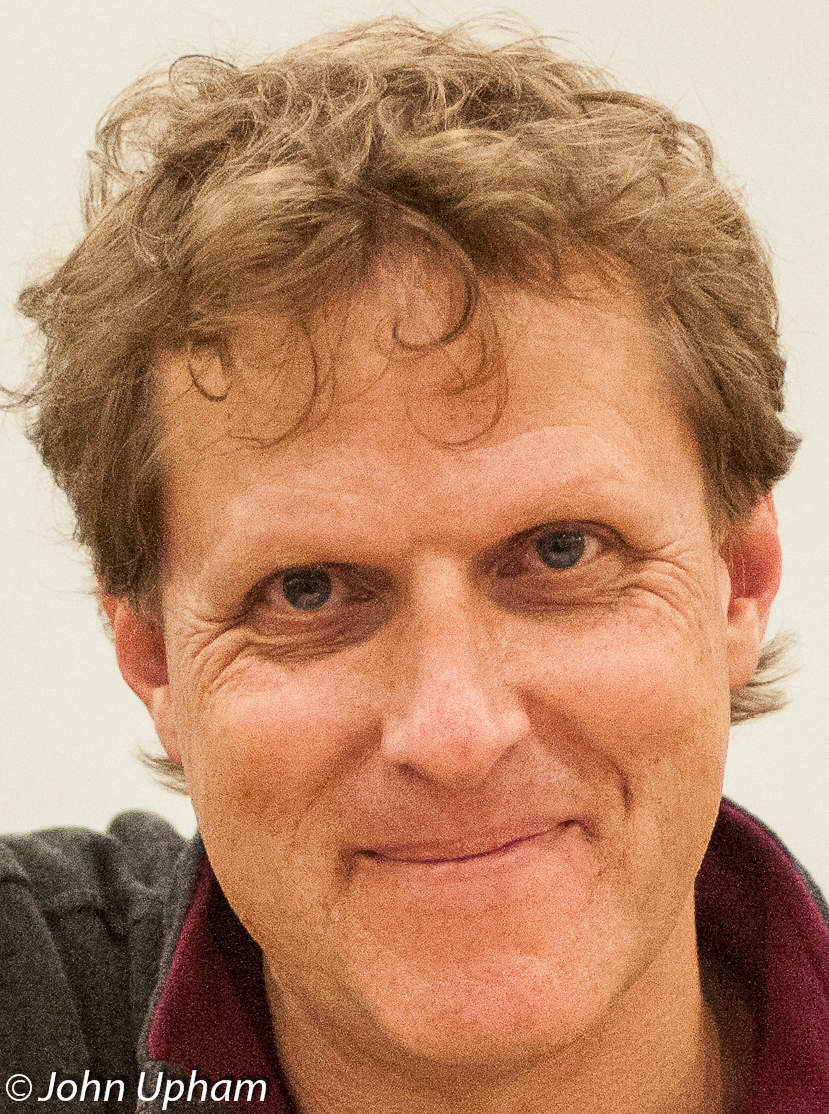
IM Gary Lane at British Chess Championships 2013, courtesy of John Upham Photography
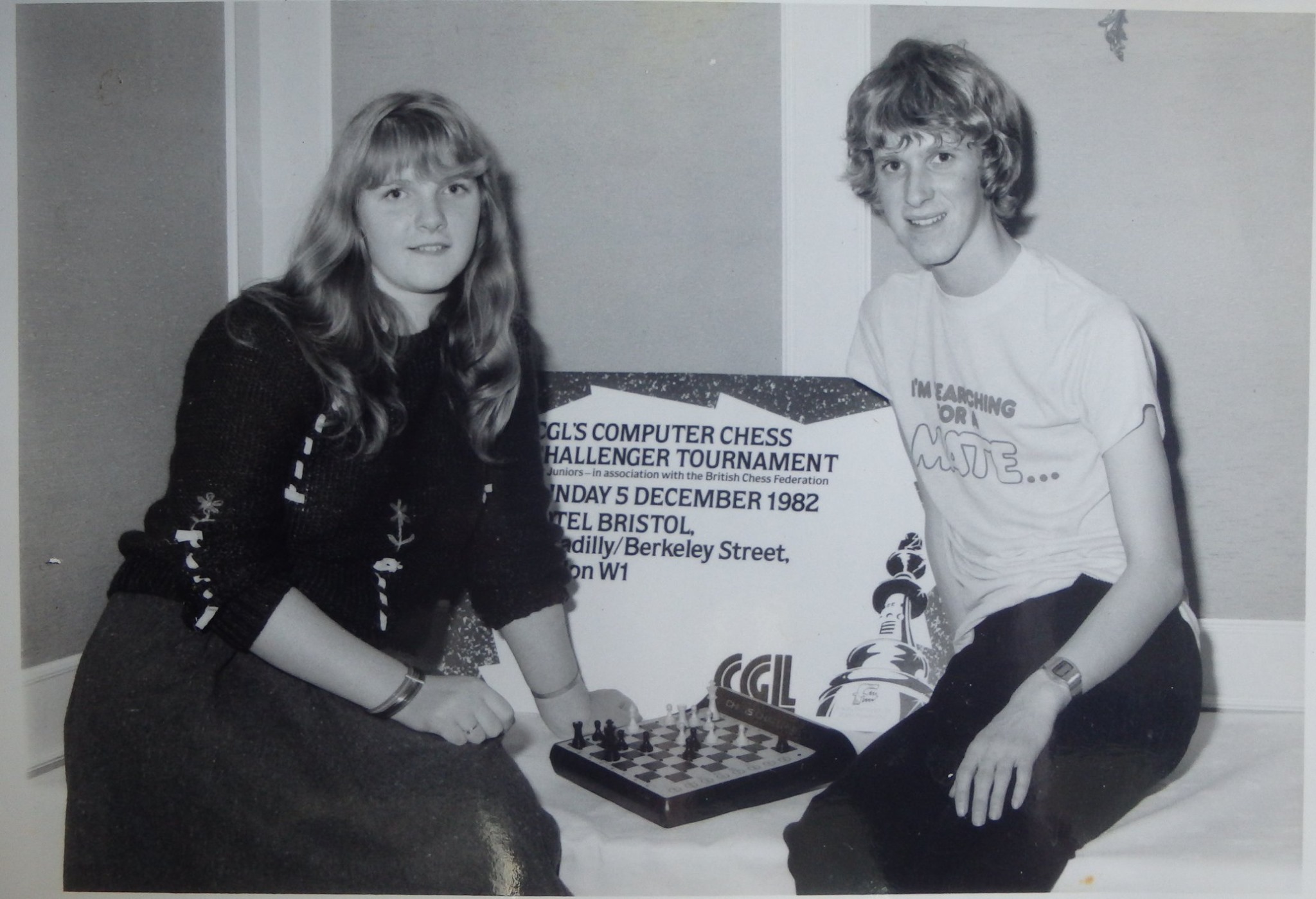
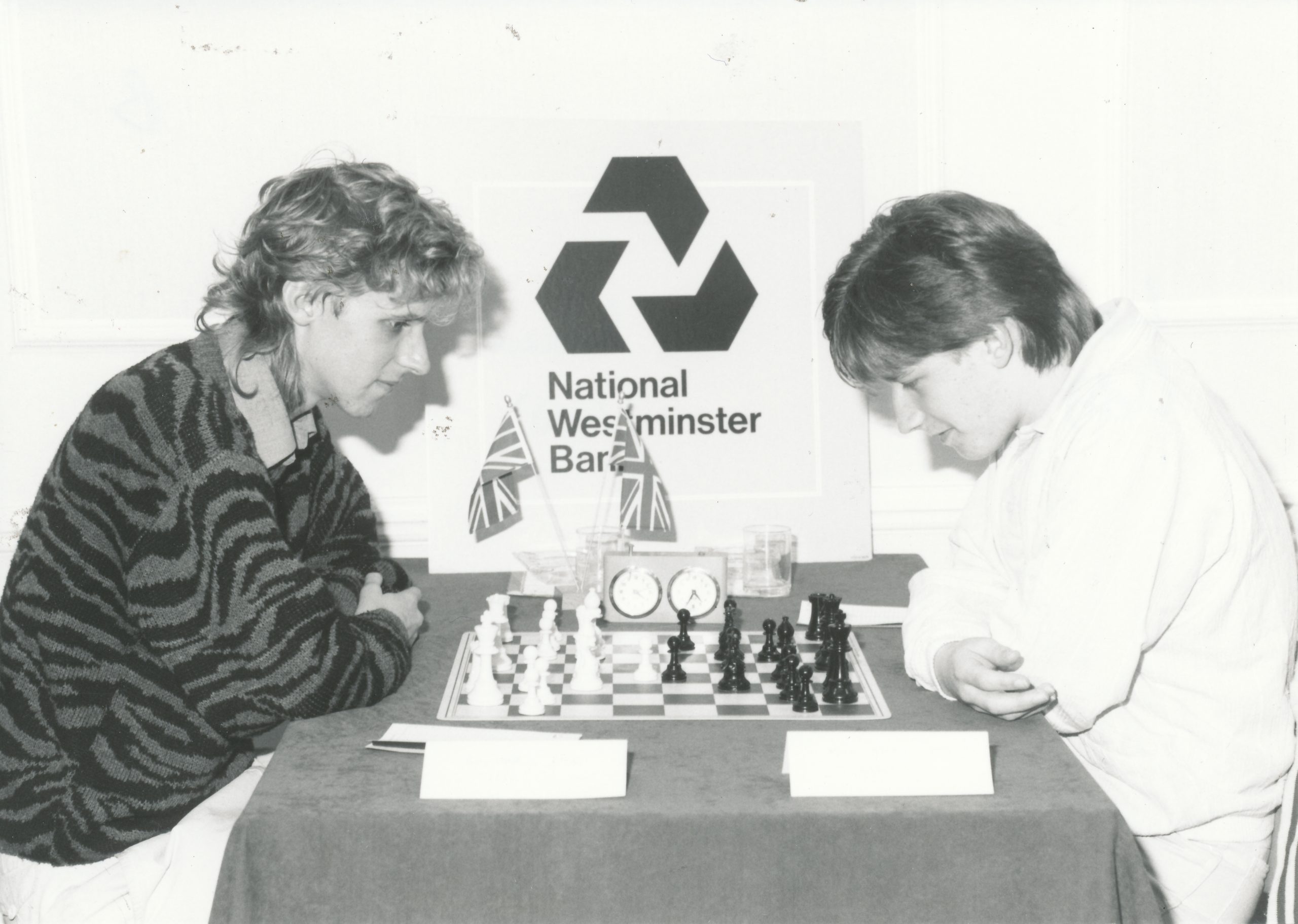
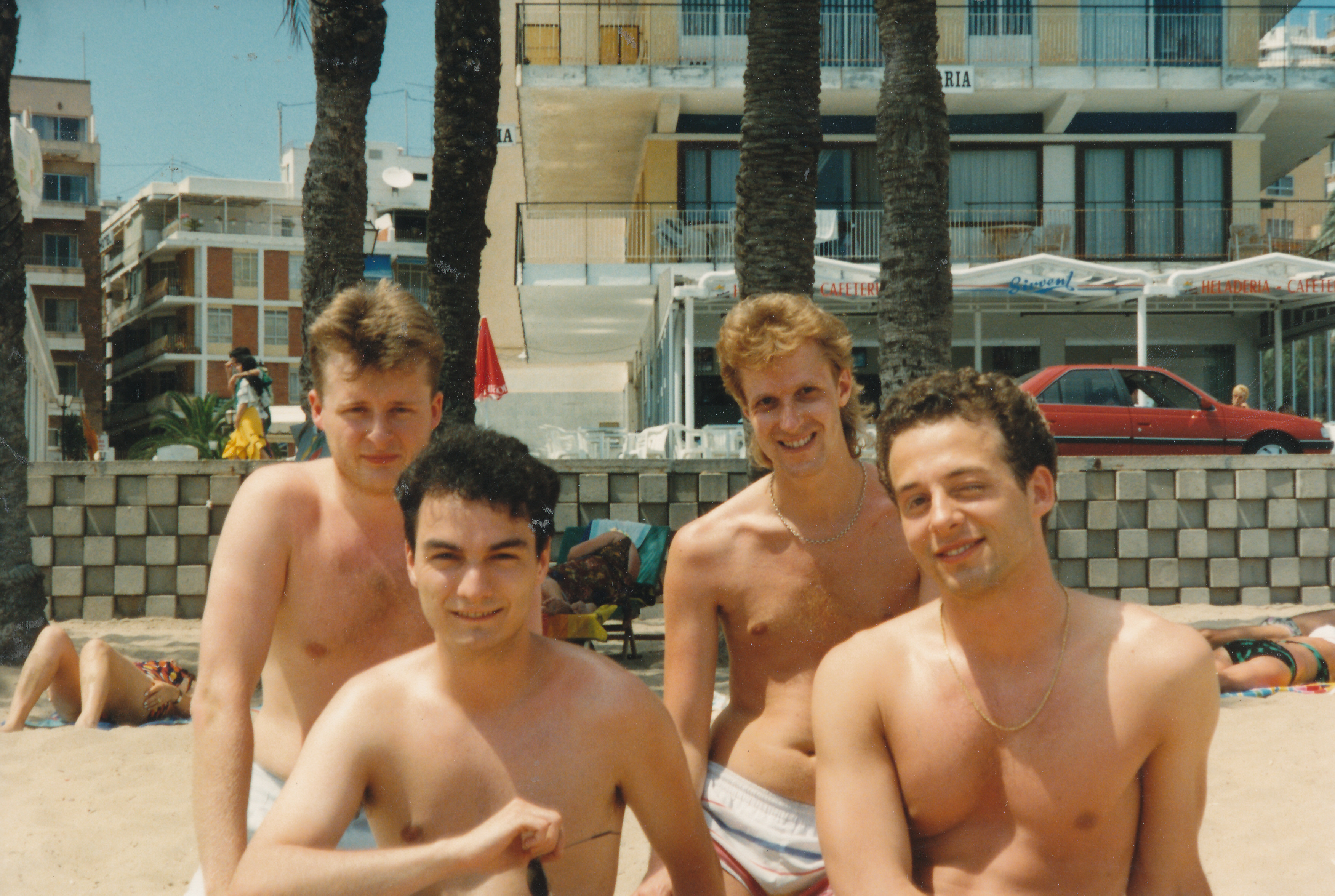
Gary and friends at the NatWest Bank Young Masters
From Wikipedia :
“Gary William Lane (born 4 November 1964) is a professional chess player and author. He became an International Master in 1987 and won the Commonwealth Chess Championship in 1988. He has written over thirty books on chess, including Find the Winning Move, Improve Your Chess in 7 Days and Prepare to Attack. There have been translations in French, Italian, Portuguese and Spanish. In the 1980s the ITV documentary “To Kill a King” was screened nationwide in Great Britain. It featured a young Michael Adams and Lane. This feature is shown regularly at chess film festivals.”
IM Gary Lane
“After his marriage to Woman International Master Nancy Jones, he moved to Australia, winning the Australian Chess Championship in 2004. He won the 2005 Oceania Chess Championship and represented Oceania at the Chess World Cup 2005.
He has also represented Australia in the 2002, 2004, and 2006 Chess Olympiads. In the 2004 Olympiad he helped Australia score a 2–2 draw with his former country England, scoring a decisive win over Nigel Short.[ He has been a chess coach for England or Australia at the World Junior and also European Junior championship for over a decade.”
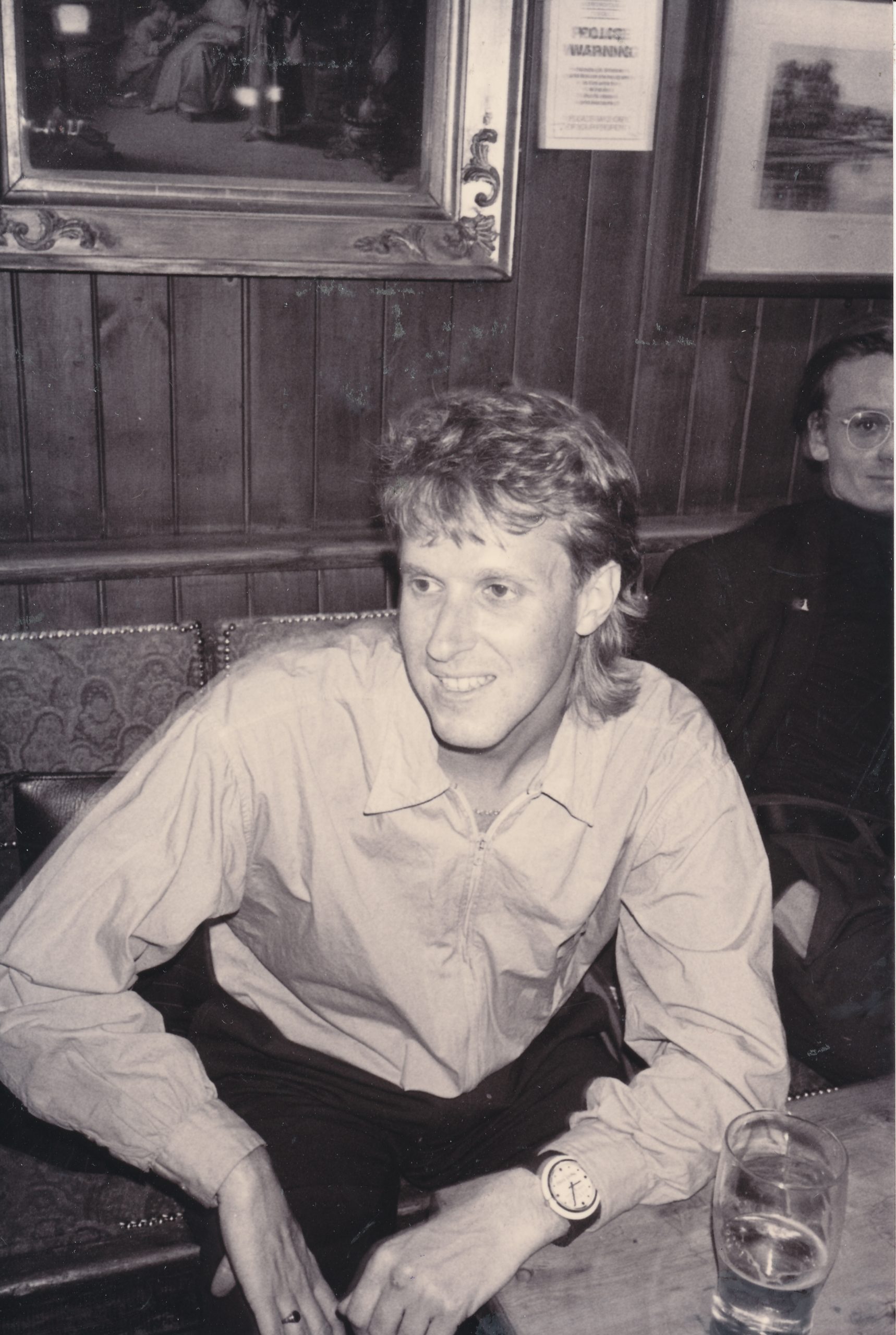
Gary Lane & family at the London Chess Classic, courtesy of John Upham Photography
“In 2012 he won the George Trundle Masters in Auckland, New Zealand with a score of 7/9,[4] and the NZ South Island Championships in Dunedin, with a score of 8/9.[5] He was unbeaten in both events.
In 2015 at the Australian tournament the Doeberl Cup he beat Loek van Wely the reigning Dutch Champion and one of the world’s leading players. He played the Closed Sicilian which he has also written about in two books. In 2016 he came =1st at George Trundle Masters in Auckland, New Zealand with a score of 7/9, and followed this up with =1st place scoring 8/9 at the NZ South Island Championships in Canterbury. He did not lose any games in the two events. At the 2nd Fiji International Open Chess Tournament Lane dominated the event winning with the perfect score of 7/7. A score of 9/9 and clear first place was the result at the 1st Fiji International Rapid Open.
Lane is a supporter of Torquay United F.C. ”
Peter Wells, Gary Lane, John Emms and David Norwood
Gary has written almost 30 chess books :
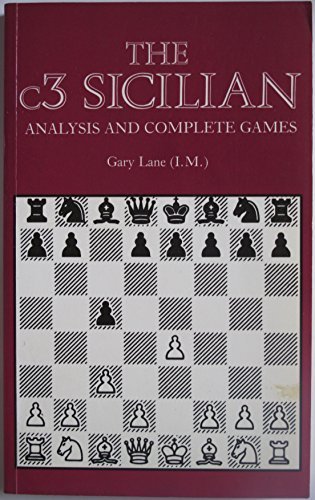
(1990) The C3 Sicilian: Analysis and Complete Games. The Crowood Press. ISBN 978-1-852233-18-1.
(1990) The C3 Sicilian: Analysis and Complete Games. The Crowood Press. ISBN 978-1-852233-18-1., Gary Lane
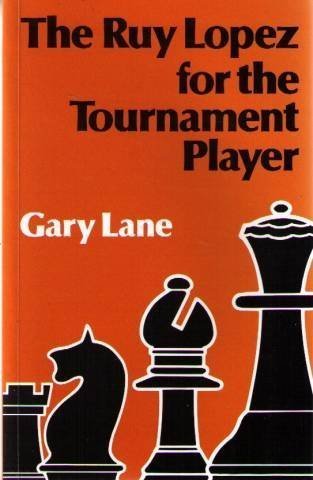
Lane, Gary (1991). The Ruy Lopez for the Tournament Player. Batsford. ISBN 978-0-713468-12-0.
Lane, Gary (1991). The Ruy Lopez for the Tournament Player. Batsford. ISBN 978-0-713468-12-0.
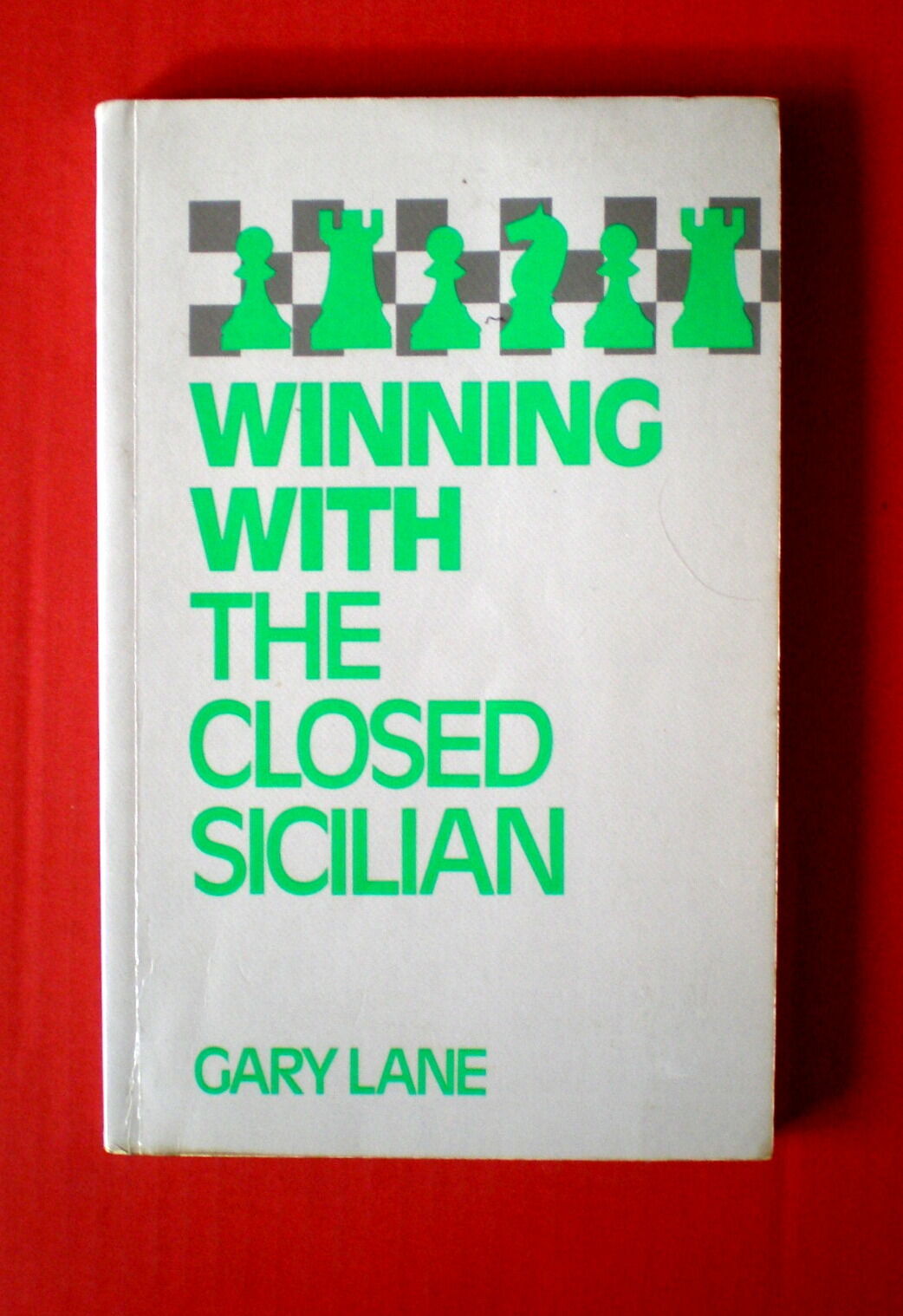
Lane, Gary (1992). Winning with the Closed Sicilian. Batsford. ISBN 978-0-713469-72-1.
Lane, Gary (1992). Winning with the Closed Sicilian. Batsford. ISBN 978-0-713469-72-1.
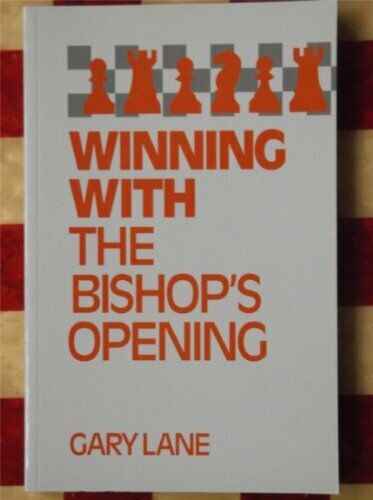
Lane, Gary (1993). Winning with the Bishop’s Opening. Batsford. ISBN 978-0-713471-13-7.
Lane, Gary (1993). Winning with the Bishop’s Opening. Batsford. ISBN 978-0-713471-13-7.
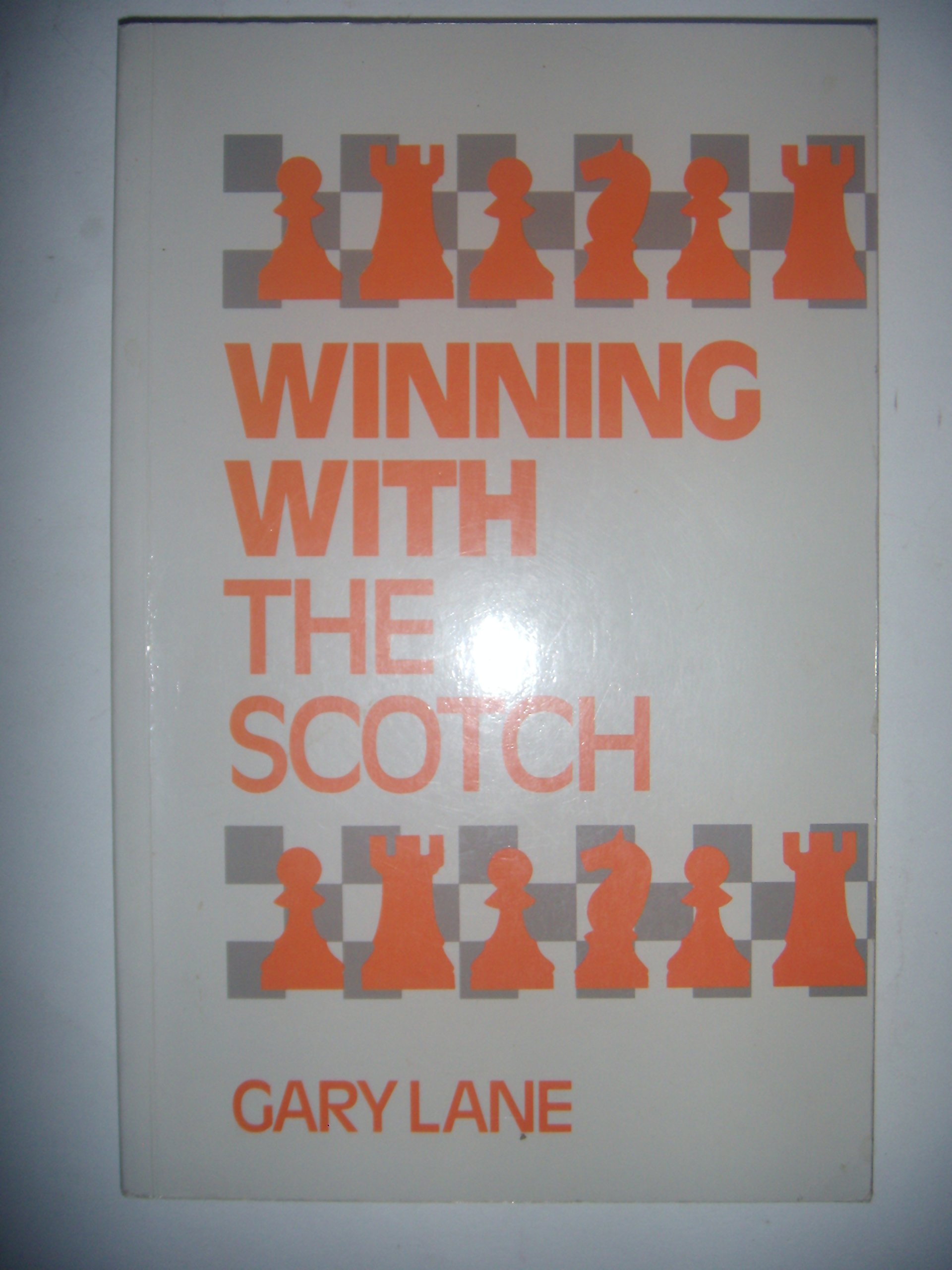
Lane, Gary (1993). Winning with the Scotch. Henry Holt. ISBN 0-8050-2940-0.
Lane, Gary (1993). Winning with the Scotch. Henry Holt. ISBN 0-8050-2940-0.
Lane, Gary (1994). Beating the French. Batsford. ISBN 978-0-713473-90-2.
Lane, Gary (1994). Beating the French. Batsford. ISBN 978-0-713473-90-2.
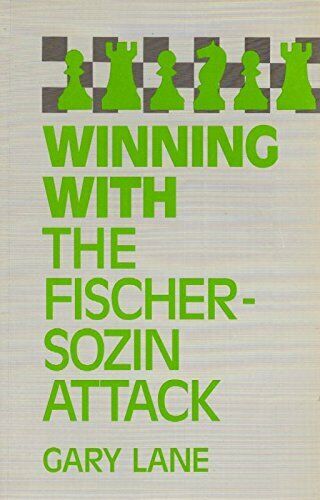
Lane, Gary (1994). Winning with the Fischer-Sozin Attack. Batsford. ISBN 978-0-713475-80-7.
Lane, Gary (1994). Winning with the Fischer-Sozin Attack. Batsford. ISBN 978-0-713475-80-7.
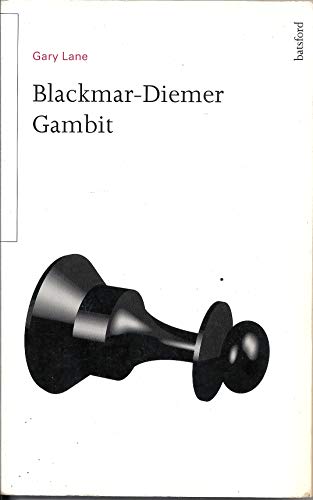
Lane, Gary (1995). Blackmar–Diemer Gambit. Batsford Chess Library / An Owl Book / Henry Holt and Company. ISBN 0-8050-4230-X.
Lane, Gary (1995). Blackmar–Diemer Gambit. Batsford Chess Library / An Owl Book / Henry Holt and Company. ISBN 0-8050-4230-X.
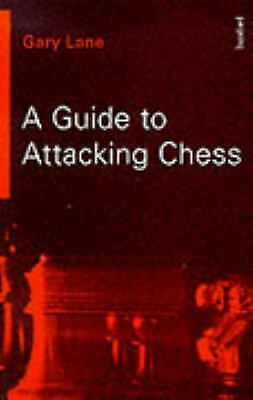
Lane, Gary (1996). A Guide to Attacking Chess. B.T.Batsford Ltd. ISBN 0-7134-8010-6.
Lane, Gary (1996). A Guide to Attacking Chess. B.T.Batsford Ltd. ISBN 0-7134-8010-6.
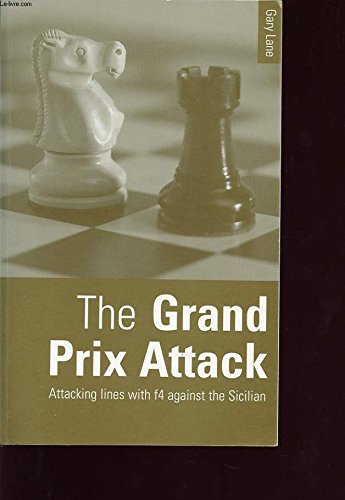
Lane, Gary (1997). The Grand Prix Attack: attacking lines with f4 against the Sicilian. Batsford. ISBN 0-8050-2940-0.
Lane, Gary (1997). The Grand Prix Attack: attacking lines with f4 against the Sicilian. Batsford. ISBN 0-8050-2940-0.
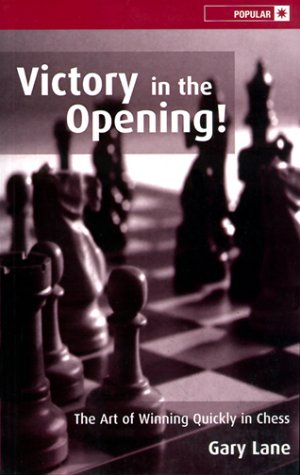
Lane, Gary (1999). Victory in the Opening. Sterling Pub Co Inc. ISBN 9780713484274.
Lane, Gary (1999). Victory in the Opening. Sterling Pub Co Inc. ISBN 9780713484274.
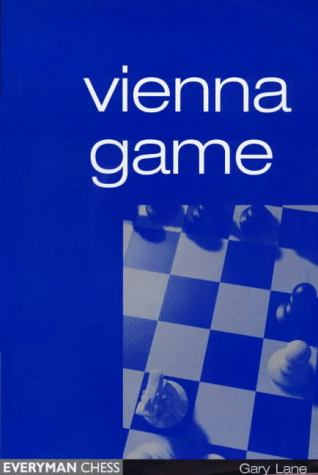
Lane, Gary (2000). The Vienna Game. Everyman Chess. ISBN 0-8050-2940-0.
Lane, Gary (2000). The Vienna Game. Everyman Chess. ISBN 0-8050-2940-0.
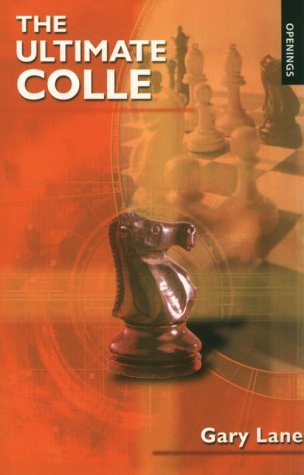
Lane, Gary (2001). The Ultimate Colle. Sterling Pub Co Inc. ISBN 9780713486865.
Lane, Gary (2001). The Ultimate Colle. Sterling Pub Co Inc. ISBN 9780713486865.
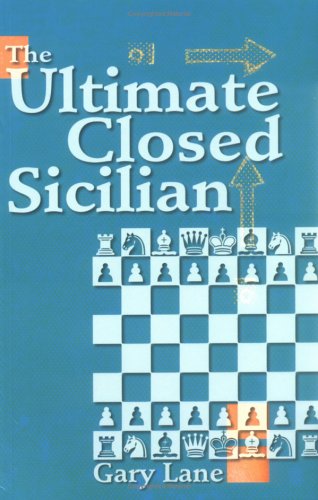
Lane, Gary (2001). The Ultimate Closed Sicilian. Batsford. ISBN 978-0-713486-87-2.
Lane, Gary (2001). The Ultimate Closed Sicilian. Batsford. ISBN 978-0-713486-87-2.
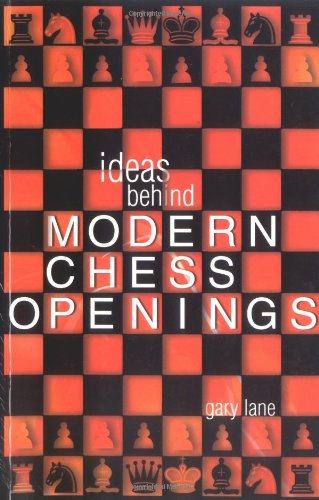
Lane, Gary (2003). Ideas Behind the Modern Chess Openings: Attacking With White. Batsford. ISBN 9780713487121.
Lane, Gary (2003). Ideas Behind the Modern Chess Openings: Attacking With White. Batsford. ISBN 9780713487121.
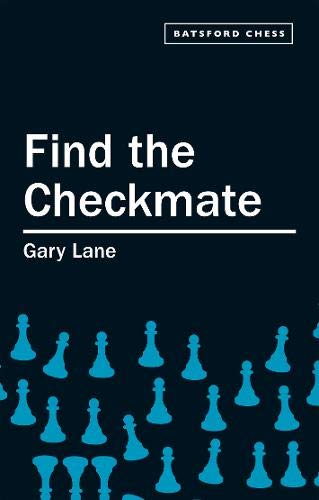
Lane, Gary (2003). Find the Checkmate. Batsford. ISBN 0-8050-2940-0.
Lane, Gary (2003). Find the Checkmate. Batsford. ISBN 0-8050-2940-0.
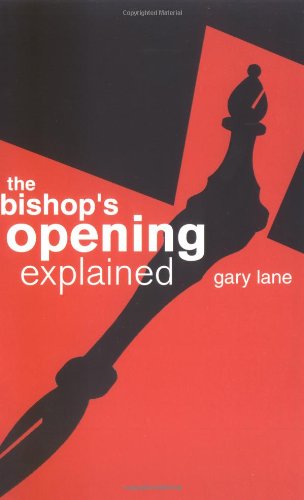
Lane, Gary (2004). The Bishop’s Opening Explained. Batsford. ISBN 0-7134-8917-0.
Lane, Gary (2004). The Bishop’s Opening Explained. Batsford. ISBN 0-7134-8917-0.
Lane, Gary (2004). ‘Find the Checkmate. Batsford. ISBN 978-0-713488-61-6.
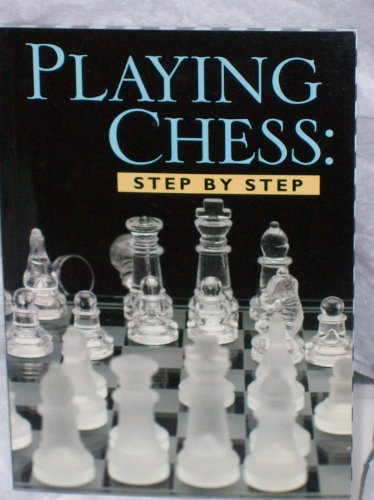
Lane, Gary (2004). Playing Chess: Step by Step. Mud Puddle Books. ISBN 978-1-594120-55-8.
Lane, Gary (2004). Playing Chess: Step by Step. Mud Puddle Books. ISBN 978-1-594120-55-8.
Lane, Gary (2005). Ideas Behind Modern Chess Openings: Black. Batsford. ISBN 9780713489507.
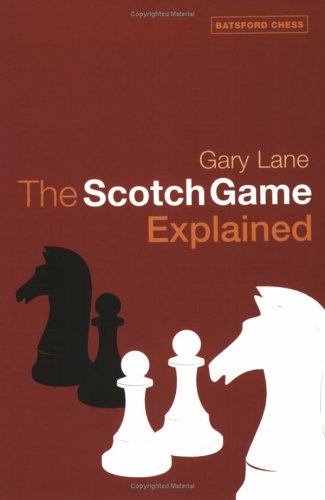
Lane, Gary (2005). The Scotch Game Explained. Batsford. ISBN 0-7134-8940-5.
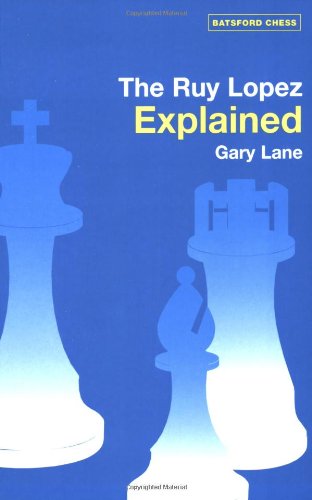
Lane, Gary (2005). The Scotch Game Explained. Batsford. ISBN 0-7134-8940-5.Lane, Gary (2006). The Ruy Lopez Explained. Batsford. ISBN 0-7134-8978-2.
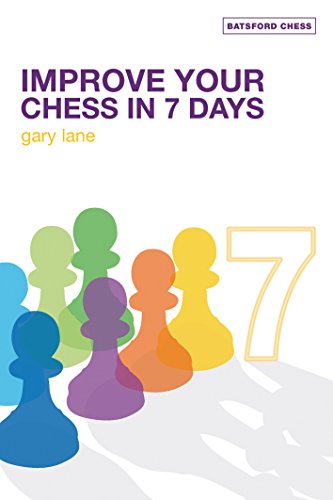
Lane, Gary (2007). Improve Your chess In 7 Days. Batsford. ISBN 978-0-7134-9050-3.
Lane, Gary (2007). Improve Your chess In 7 Days. Batsford. ISBN 978-0-7134-9050-3.
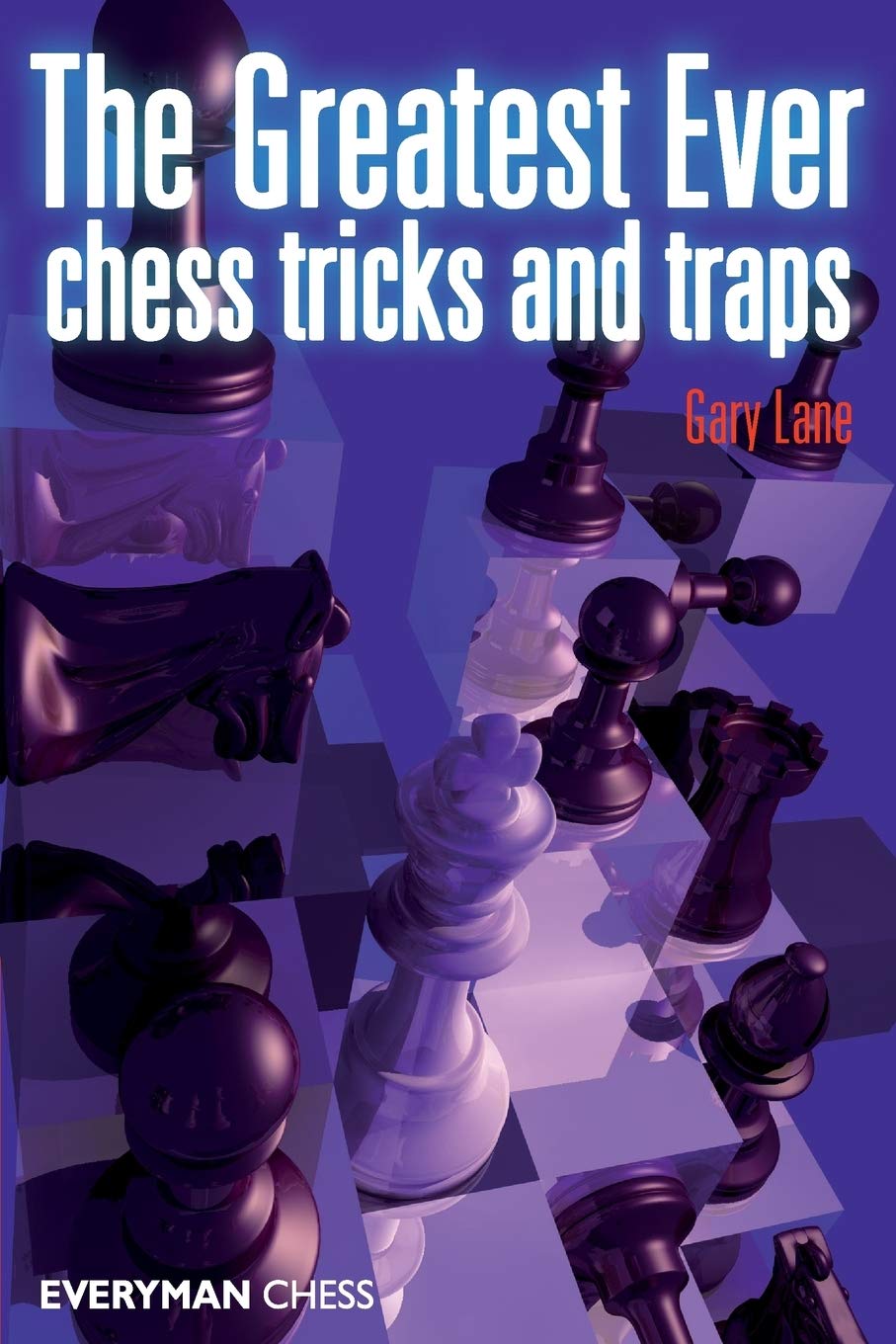
Lane, Gary (2008). The Greatest Ever Chess Tricks and Traps. Everyman Chess. ISBN 9781857445770.
Lane, Gary (2008). The Greatest Ever Chess Tricks and Traps. Everyman Chess. ISBN 9781857445770.
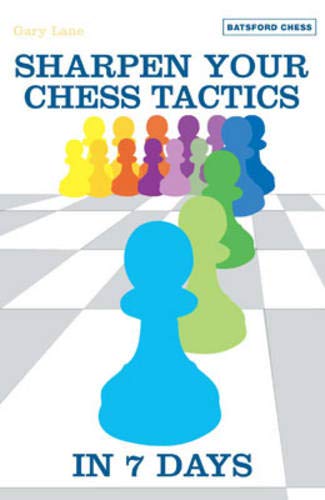
Lane, Gary (2009). Sharpen Your Chess Tactics in 7 Days. Batsford. ISBN 9781906388287.
Lane, Gary (2009). Sharpen Your Chess Tactics in 7 Days. Batsford. ISBN 9781906388287.
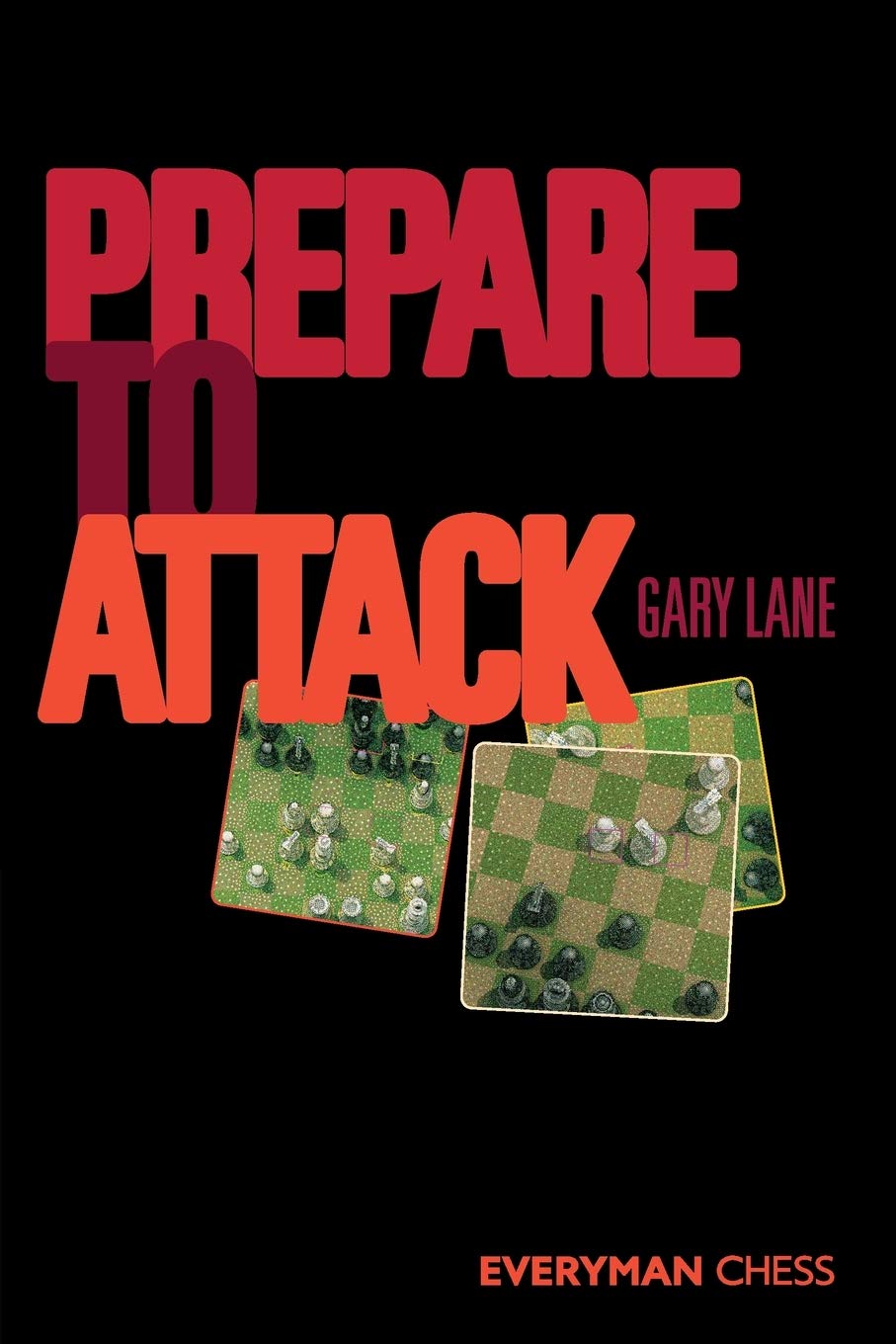
Lane, Gary (2011). Prepare to Attack. Everyman Chess. ISBN 978-1857446500.
Lane, Gary (2011). Prepare to Attack. Everyman Chess. ISBN 978-1857446500.
Lane, Gary (2013). Gary Lane’s Chess Puzzle Book. e+books. ISBN 978-1-927179-14-7.
Lane, Gary (2013). Gary Lane’s Chess Puzzle Book. e+books. ISBN 978-1-927179-14-7.IM Gary Lane, courtesy of John Upham Photography
We focus on the British Chess Scene Past & Present!
This website uses cookies to improve your experience. We'll assume you're ok with this, but you can opt-out if you wish. Cookie settingsACCEPT
Privacy & Cookies Policy
Privacy Overview
This website uses cookies to improve your experience while you navigate through the website. Out of these cookies, the cookies that are categorized as necessary are stored on your browser as they are as essential for the working of basic functionalities of the website. We also use third-party cookies that help us analyze and understand how you use this website. These cookies will be stored in your browser only with your consent. You also have the option to opt-out of these cookies. But opting out of some of these cookies may have an effect on your browsing experience.
Necessary cookies are absolutely essential for the website to function properly. This category only includes cookies that ensures basic functionalities and security features of the website. These cookies do not store any personal information.