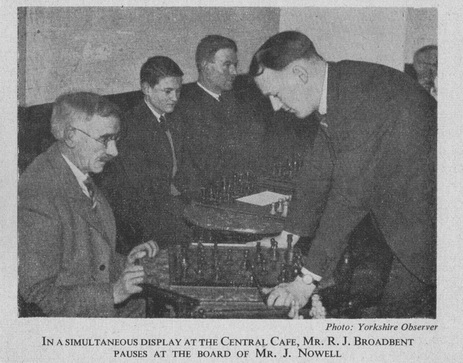
We remember Reginald Broadbent who passed away on October 29th 1988.
Reginald Joseph Broadbent was born on Friday, August 3rd 1906 (the year of the San Francisco earthquake) in Durban, South Africa. His father was Joseph Edward Broadbent (born 1879) who married Alice Cook on January 4th, 1903 in Durban.
According to the 1911 Isle of Man Census (FindMyPast, Richard James; thanks!) the Broadbent family (sans father) stayed at a guest house in Onchan on the night of February 2nd 1911. Reg (aged 4) was a boarder together with mother Alice (33), brother Roland (1) and sister Laura (4). Since Reg and Laura are both recorded as 4 years old it is reasonable to suppose that they were born as twins. We think that Reg had an additional sibling who had passed away and that the name is not recorded. Reassuringly Steve Mann agrees with this conclusion.
He married Catherine H Broadbent (née Crawford, born 19th September 1895) and were recorded as living (in 1939) in “Cheadle and Gately”, Cheshire. His profession was as a “Telephone Traffic Superintendent, Class II, Post Office Telephones” which was a a civil service occupation. Catherine carried out “unpaid domestic duties”.
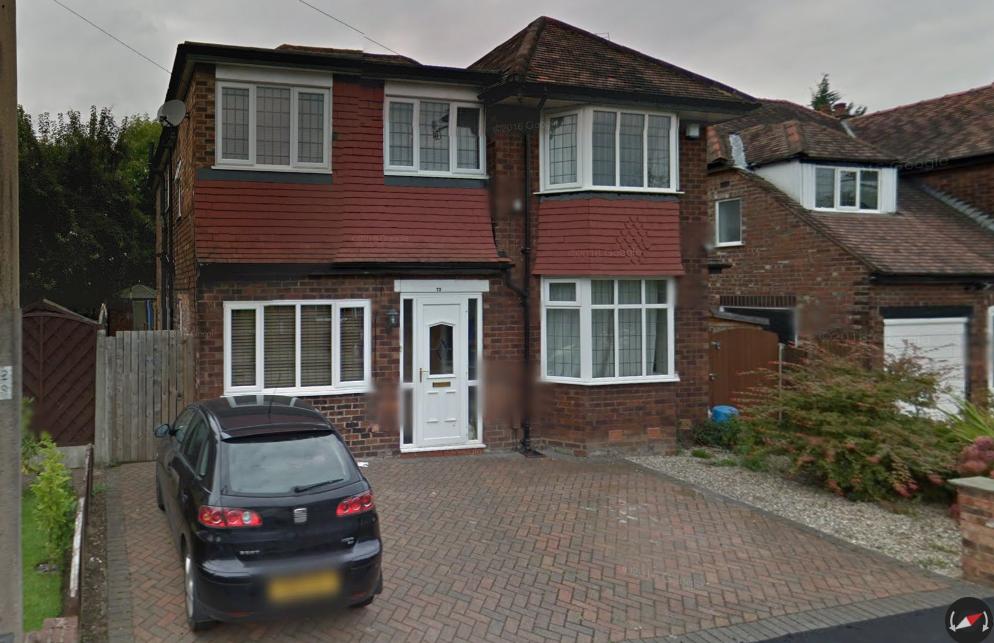
They resided at 72, South Park Road, Gatley, Cheshire :
According to Steve Mann in his excellent Yorkshire Chess web site :
“At some time in 1946 or 1947, Broadbent moved down south to live in the general vicinity of East Grinstead, at Far End, Limes Estate, Felbridge, 2 miles NW of East Grinstead, and later at Southway, Priory Road, Forest Row, 3 miles SE of East Grinstead”
Reg was eight times Northern Counties Chess Union (NCCU) Champion in 1933, 1934, 1935, 1936. 1937, 1938, 1945 and 1946.
The British Chess Magazine, Volume CVIII (108, 1988), #12 (December), p. 553 records this brief death announcement :
“Reginald J. Broadbent, British Champion 1948 and 1950 died on October 29 at the age of 82. He was a member of Manchester and Bradford Chess Clubs in his day, and was famous for his remarkable record in Anglo-Dutch matches.
After he moved to London around 1950 he was less free to play due to his senior post with the Post Office. A fuller notice will appear next month.”
As advertised in the British Chess Magazine, Volume CIX (109, 1989), #1 (January), p. 27 we have :
“Reginald Broadbent (3 viii 1906-29x 1988) was born at Durban and was British Champion in 1948 and 1950. In the latter content he actually won his last six games in a row to reach a score of 8.5 points, ahead of Klein, Penrose and Milner-Barry. He was often spoken of as “playing himself into form” in the first half of a contest as his work as a civil servant (the GPO) did not allow him the chance to practise regularly against strong opposition.
He was a member of the Manchester and Bradford clubs before the war when he built up a fine record in Anglo-Dutch matches and Northern Counties champion on many occasions.
Brian Reilly recalls that Broadbent was selected for the BCF Olympiad side in 1954, but was forced to turn down the invitation due to the exacting nature of his work in London, and thereafter his main connection with the game was a chess column in a West of England newspaper (The Western Morning News*) . He was a subscriber to BCM right up to his death.”
*Thanks Gary Lane.
With the white pieces Broadbent was a die-hard 1.e4 player who allowed the Marshall Attack against the Ruy Lopez.
As the second player RJB defended the Nimzo-Indian Defence and played Open games.
In the March issue of CHESS for 1963, (Volume 28, Number 427, pp.147-155) William Winter wrote this:
R. J. Broadbent’s one weakness
R. J. Broadbent I consider to be typical of the best type of English amateur the Atkins type. A civil servant by profession he wins the Championship title, then retires to his country home in Surrey where he happily spends his time in gardening till the next championship comes along. Occasionally he is dragged out to play in a County match but he takes a lot of dragging. As a player he has great natural attainments and a temperament for the game, but he handicaps himself by the paucity of his opening knowledge. This compels him to start thinking almost from the word ‘go’ and the result is that he invariably gets on bad terms with his clock.
One of his great assets is his endgame in which he is perhaps superior to any practising British player. His skill in this department has rescued him from many a grim position. If he had studied the openings, and played in more tournaments, he might have gone far. As it is he is, and I fear will remain, just a first class British amateur. Probably he prefers it that way.
Here is one of his best games :
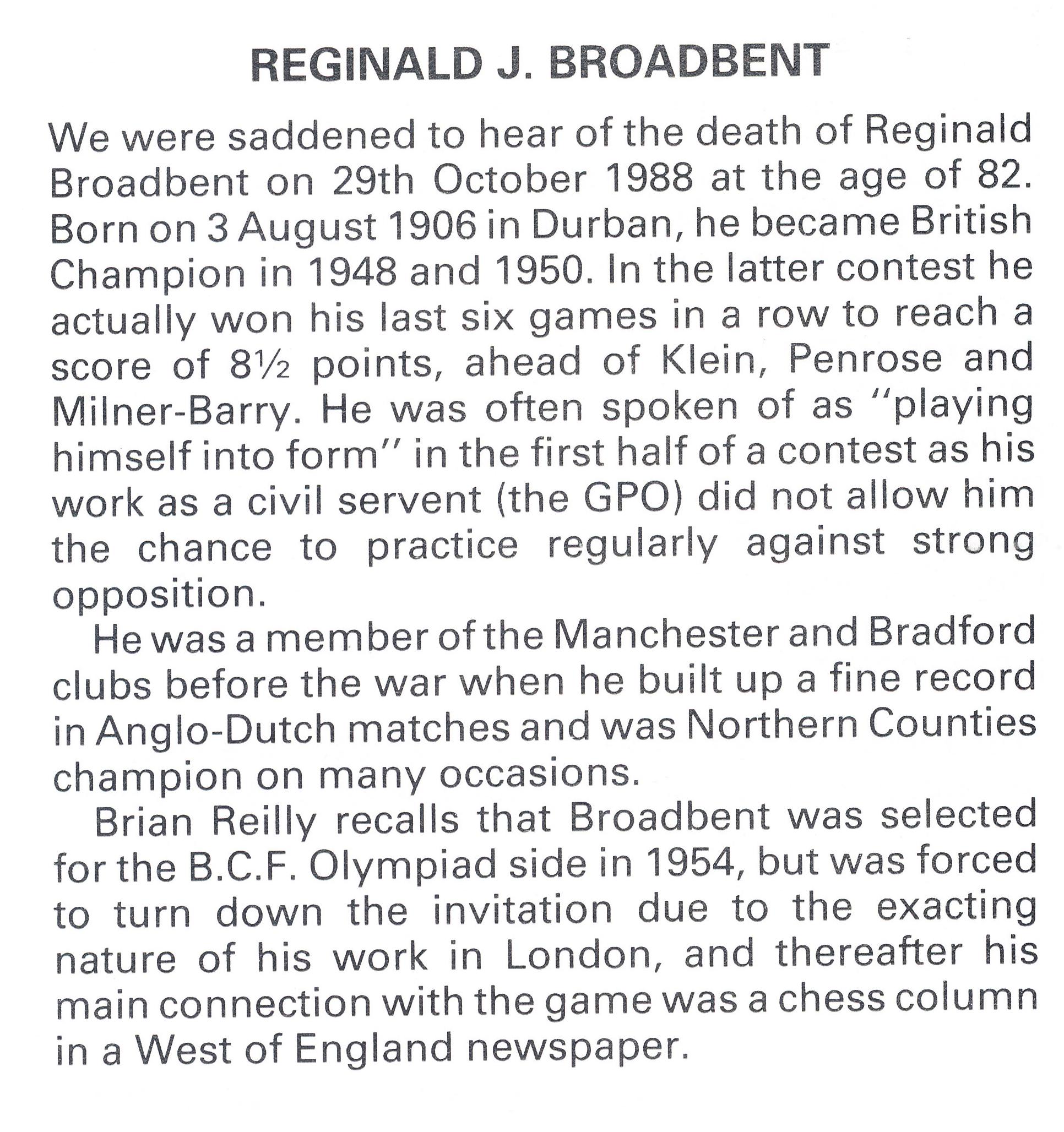
For an element of déjà vu here is RJBs obituary from the 1989 – 1990 BCF Yearbook, page 14 :
(The Yearbook editor was Brian Concannon and it would appear standard practise, at the time, not to credit or attribute sources for obituaries.)
A detailed biography (from Steve Mann) may be found here