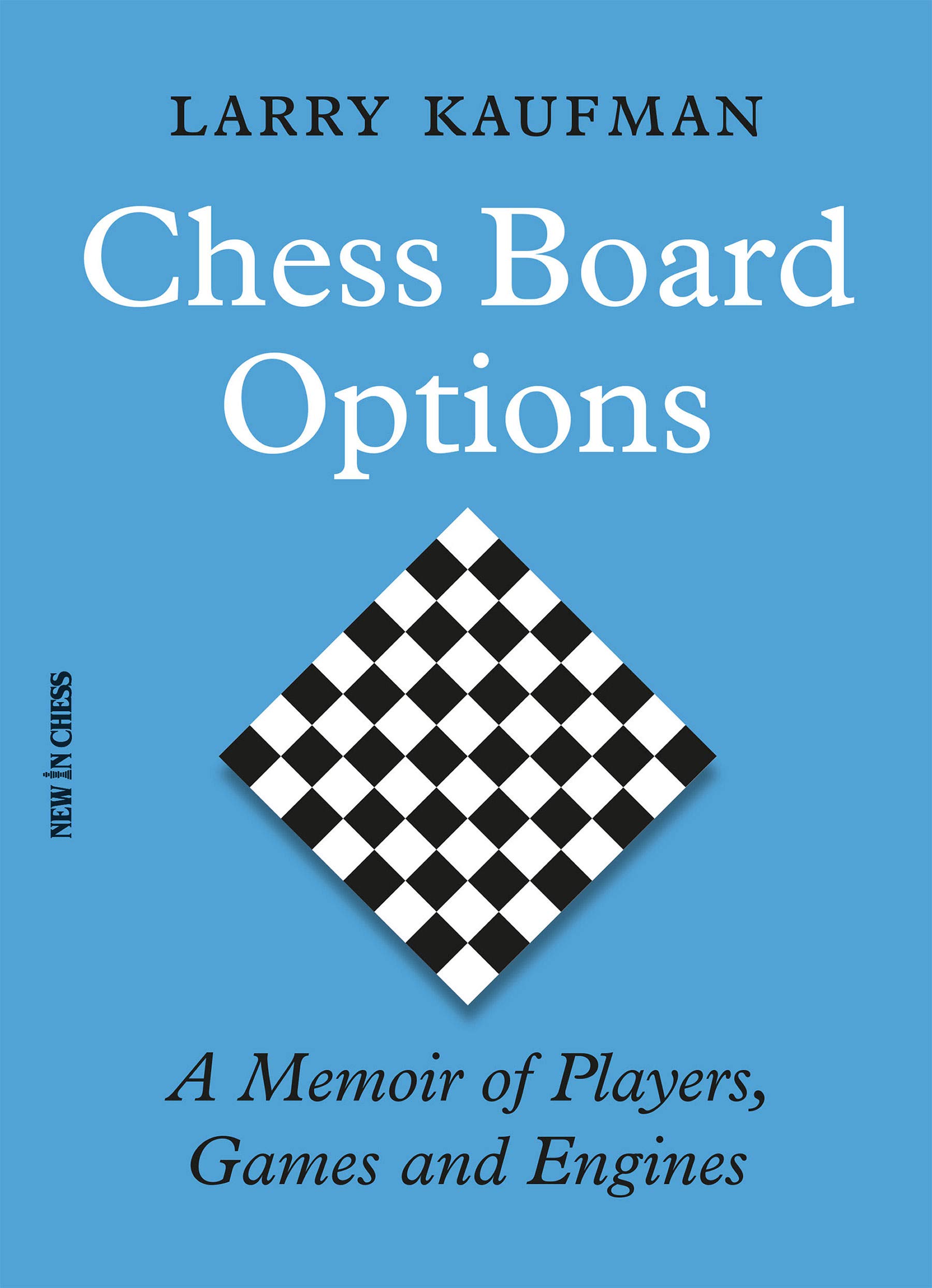
From the publisher:
“Larry Kaufman can safely be called an exceptional chess grandmaster
Larry Kaufman started out as a prodigy, however not in chess but as a whizz kid in science and math. He excels at shogi (Japanese chess) and Go, and is also a world-famous computer programmer and a highly successful option trader. Remarkably, as a chess player he only peaked at the weirdly late age of fifty.
Yet his victories in the chess arena are considerable. Over a career span of nearly sixty years Kaufman won the state championships of Massachusetts, Maryland, Florida, Virginia, D.C. and Pennsylvania. He was an American Open Champion and won the U.S. Senior Championship as well as the World Senior Championship.
‘Never a great chess player’ himself (his words), he met or played chess greats such as Bobby Fischer, Bent Larsen, Walter Browne, Boris Spassky, Viktor Kortchnoi and many others. He worked as a second to legendary grandmaster Roman Dzindzichashvili, and coached three talented youngsters to become International Master, one of them his son Raymond.
This engrossing memoir is rife with stories and anecdotes about dozens of famous and not-so-famous chess players. In one of the most remarkable chapters Larry Kaufman reveals that the American woman chess player that inspired Walter Tevis to create the Beth Harmon character of Netflix’s The Queen’s Gambit fame, is his former girlfriend. You will learn about neural networks, material values and how being a chess master helps when trading options. And find lots of memorable but little-known annotated games.
Larry Kaufman is an American Grandmaster. He has been involved in computer chess since 1967, when he worked on ‘MacHack’, the first computer that competed in tournaments with human players. More recently he has been working on the programs Rybka and Komodo.
Praise for the best-selling opening manual Kaufman’s New Repertoire for Black and White:
“Kaufman’s book is a pleasure to read.” — Miguel Ararat, Florida Chess Magazine
“Kaufman does an outstanding job.” — IM Gary Lane, Chess Moves Magazine”
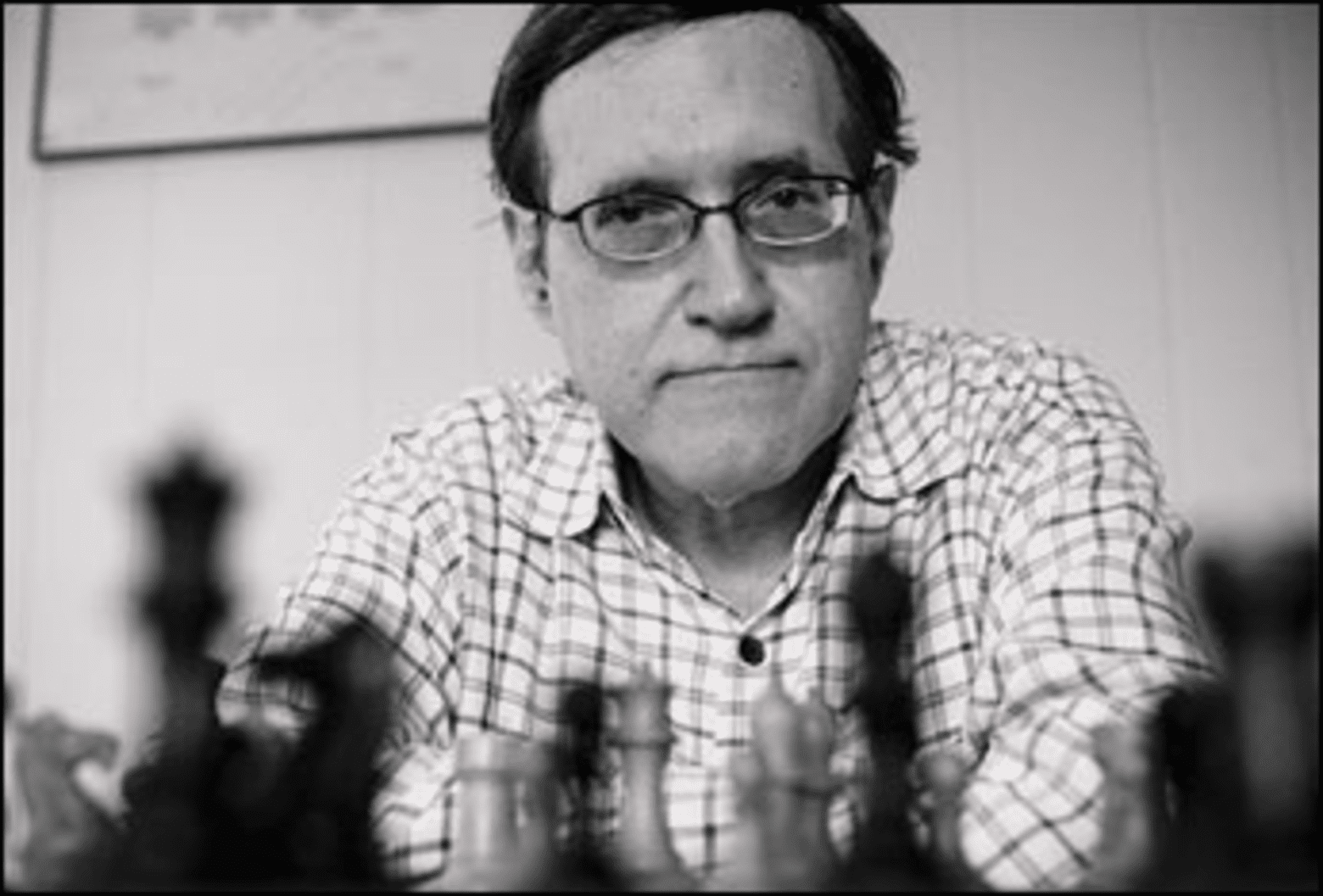
The memoirs of a relatively obscure grandmaster might not be at the top of your wish list, I guess.
The title might be considered slightly odd as well, referring in part to his career as an options trader, with perhaps also some reflections on options for the further development of chess.
Nevertheless, Larry Kaufman has some interesting stories to tell, and much to say about the future of our favourite game. You’ll also find, appropriately enough, 64 games, some played by the author, some by players he knew, and some by computers against grandmasters, all with brief but pertinent annotations. I’d urge you to stop and take a look inside rather than just pass it by.
The introduction provides some background biographical information concerning his 60 year chess career.
Here’s an early game: the book provides annotations as far as move 20.
In Part 1, Kaufman introduces us to some of the 20th century champions he has known, with plenty of anecdotes and a few games along the way. We meet Fischer, Spassky and Kasparov, Korchnoi, Larsen, Gligoric and others. For me, though, the most interesting chapters here are about the lesser known players. We go all the way back to Harold Phillips (1874-1967), a family friend, who had played Steinitz in simuls back in 1894. I guess this must make Kaufman one of the youngest players to have a shared opponent with Steinitz. In 1961 or 1962 there was a kindly old man who ‘gave generous and valuable free chess lessons to the kids’. This was the notorious Norman Whitaker: of course they knew nothing of his background at the time.
Then there was Steve Brandwein (1942-2015), a new name to me. ‘Although he retired from tournament play at only 22 years of age, … he … was a very strong player … and probably taught me more about the finer points of chess than any other individual.’ Kaufman compares him to Bernie Sanders, and describes him as ‘perhaps the best-liked chess master I’ve ever known’, who could, if he’d wanted have become a grandmaster, or perhaps, had he been prepared to compromise, a US President.
Even more interesting (although readers of New in Chess might have read about this before), is Diana Lanni, who, according to Kaufman, may have been the major inspiration behind the character of Beth Harmon in The Queens Gambit. He also sees himself as the closest match to Harry Beltik, and Walter Browne as Benny Watts.
Part 2 looks at Larry Kaufman’s life outside chess: his time as an options trader and his interest in Shogi, Go and other games.
In Part 3, he shows us some of his most memorable games and talks about his chess students, including his son Ray.
This was his first win against a grandmaster, and helped him towards his first IM norm.
This game helped propel him to a shared first place and the grandmaster title in the 2008 World Seniors.
Part 4 is about computer chess. Kaufman has been involved in this since 1967, when, as a student at MIT, he had a part-time job working on MacHack. Today, he’s part of the Komodo team. After a brief résumé of his career in computer chess, we see some recent games between engines and grandmasters. These days, the engines give the GMs considerable odds.
Particularly interesting here is a 2020 16-game match (15’+10″) between Komodo and GM Alex Lenderman. In every game, Komodo played White without a knight. In half the games, Lenderman played without a pawn, in four games he had all his pieces but without castling rights, and four games were played using Fischerrandom rules, but with kings and rooks on their usual squares. On the first day, using its standard version, Komodo lost three games, with just one draw. It then switched to the Monte Carlo Tree Search version, which seeks the best practical chances rather than the objectively best moves. In the remaining twelve games, all of which are published here, Komodo scored three wins, seven draws and only two losses.
Here’s a Komodo win. Kaufman’s brief annotations don’t mention a significant improvement for Komodo pointed out by Stockfish 14.
Part 5 comprises short essays on various topics such as: ratings, openings and piece values, along with suggestions for the reform of competitive chess and thoughts about the future.
Kaufman is perhaps best known, at least in the USA, for a 1999 Chess Life article about the values of the pieces. As someone involved in teaching beginners, this is of considerable interest to me. I’d really like to stop my pupils trading BN for RP on f7 and thinking they have an advantage because points are equal and they’ve exposed the enemy king. He suggests that, while the traditional values (1, 3, 3+, 5) are reasonable for positions without queens, in the presence of queens we should teach 1, 4, 4+, 6, 11. That will resolve my problem: the trade on f7 will now win 7 points but lose 8+ points.
I found this book a riveting read, especially parts 4 and 5, but then it covers a number of topics which are of particular interest to me. If the topics appeal to you too, or if you have a general love of chess culture, I’d give it a very strong recommendation. Fascinating, well written, and, as usual with New in Chess, well produced.
Richard James, Twickenham 19th August 2021
Book Details :
- Softcover: 224 pages
- Publisher: New In Chess (27 May 2021)
- Language: English
- ISBN-10:9056919334
- ISBN-13:978-9056919337
- Product Dimensions: 17.02 x 23.11 cm
Official web site of New in Chess
 Save as PDF